Archive for the ‘ Pakistan ’ Category

Pakistan’s Political Crisis

Reported by Farhana Bokhari for CBS News
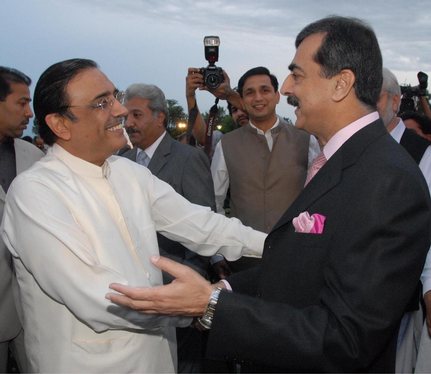
Pakistan’s pro-U.S. ruling coalition on Sunday night battled to restore calm across the country’s political landscape after a regional political party allied to president Asif Ali Zardari’s Pakistan People’s Party (PPP) quit at short notice, leaving the PPP in minority in the lower house of parliament, the national assembly.

The Muhajir Qaumi Movement (MQM), a political party mainly representing Pakistanis who migrated from India to Pakistan when the country was created in 1947, withdrew its support to the PPP, reacting to the government’s decision on Saturday to raise gasoline prices.

The move marked the first major upheaval over gasoline prices since they were raised, mainly to be kept in line with global trends. Western diplomats based in Islamabad, reacting to the latest political developments, warned it was still early to tell if Zardari or his handpicked prime minister, Yusuf Raza Gilani, were in danger of being forced out.

There were warnings that the split with the MQM may in the short term completely paralyze the government. Long term consequences are harder to predict. Pakistan has been ruled by its army for more than half the of country’s 63-year existence. Some previous periods of heightened uncertainty have been followed by the military stepping in to fill the void.

General Ashfaq Pervez Kayani, Pakistan’s present military chief, is widely known to be an apolitical figure. A western ambassador based in Islamabad, speaking to CBS News on condition of anonymity, said, “While there are no signs of the military stepping in, you have to remember that previous [military] takeovers have been preceded by fast growing turmoil. Much depends on the way things happen in future.”

For the U.S., mounting political uncertainty in Pakistan is potentially worrying. This has to do with the support that Washington receives from Pakistan in its campaign to defeat Al-Qaeda and the Taliban in the Afghanistan-Pakistan region, as well as periodic worries in the western world over Islamic hardliners making inroads into Pakistan’s politics.

A minister from the PPP who spoke on condition of anonymity to CBS News Sunday said after the split with the MQM was announced, “If a government is weak and struggling for its own survival, how will it be able to pursue interests of other countries, including the U.S.?” The minister added, “Unpopular steps like petroleum prices are forced upon governments through circumstances which are beyond their control.”

A second western diplomat in Islamabad who spoke to CBS News on condition of anonymity said while Islamic politicians have only pockets of support across Pakistan, “You can never rule out the dangerous possibility of a ground swell in their favor, especially if governments from the political mainstream become weak and unpopular.”


A Prayer for Peace

Reported by Ghazi Salahuddin for The News International

We, in Pakistan, have rang out 2010 with a general strike and noisy rallies by religious elements in defence of the blasphemy law. We also rang out the year with a massive increase in petroleum products. And these spiritually and economically debilitating influences were certainly a distraction in our celebration of the biggest night of the year.

Today, on Sunday, the New Year is more than a day old. After spending the last few days of the departed year in taking stock of 2010, we are more inclined to look ahead and wonder what the coming year is going to be like. The general mood, certainly, is depressing. The past year was the year of floods, and Wikileaks, and drone attacks and social as well as political disarray. At the same time, it was also a year of hope – of Aman ki Asha – and of some intimations of how we, as a nation, still possess a conspicuous potential for survival.

In a sense, the attempt that so many ordinary citizens desperately made to celebrate the New Year in a communal spirit of joy was a genuine reflection of the life-force of a society that yearns for peace and happiness. In Karachi, the authorities made a concerted effort to subvert the inherent desire of the people to have a good time, as they always do. Roads leading to the Sea View promenade were blocked and eating places in the area were not allowed to do business.

It is besides the point that the young were still able to put up their show and the New Year was greeted with song and dance. Yes, the more privileged were able to celebrate the occasion in their private premises. But the point here is that public expression of any social or cultural vitality is increasingly being suppressed at the same time that the obscurantist elements are openly able to project their narrow outlook. What makes this dereliction more ominous is the government’s policy of appeasement and, even, surrender when it comes to dealing with the rise of intolerance and prejudice in our society.

It would be instructive to compare the rallies that were taken out in the late afternoon on Friday and the celebrations that were held a few hours later. I had an occasion to see the main procession that was taken out in Karachi and let me confess that it left me in a depressed state of mind. I simply could not identify with that crowd and the slogans it was raising. When I returned home at six, Sydney was greeting the New Year with its spectacular fireworks.

So, where do we, as a nation, belong in this world that is forever changing and embracing new technologies and new ideas? And it is in this context that I would like to return to the inspiration that we may draw from Aman ki Asha, the campaign launched by The Times of India Group and the Jang Group one year ago to promote peace between India and Pakistan.

Since yesterday was the first anniversary of this remarkable initiative, this newspaper has already underlined its main features and the success that it has achieved in the face of the raw winds of suspicion and animosity that have for long been blowing across this region. There was an editorial on this subject and a special edition. It was very encouraging to see the piece especially written for Aman ki Asha by Karen Armstrong, the celebrated religious historian.

Hence, I would not want to replicate the points that have been made. Still, I think that the public opinion poll conducted on the first anniversary of the project deserves to be carefully analysed. Here is a message that should not be overlooked when we interpret the social and political character of our society. It is true that the results of the survey are not at all surprising for those of us who have always believed in the overwhelming imperative of peace in not just our relations with India but also in a domestic context.

Now, the survey that was independently conducted by credible professionals, has certified that 70 per cent of Pakistanis and 74 per cent of Indians want peaceful relations between the two countries. What is crucial and meaningful here is that there has been a marked increase in the popular support for peace during the year that the largest media groups in India and Pakistan had conducted their varied and well-designed programmes under the umbrella of Aman ki Asha.

At a time when there is so much confusion about the role and the impact of the media, particularly the broadcast media, here is evidence that it can make a positive difference in shaping popular opinion when its message is in harmony with the natural aspirations of the people. This should make us realise that the media also has the power to sabotage the interests of the people when it is allowed to be manipulated by vested interests and when its expression is suppressed through intolerance and mindless chauvinism.

In many ways, the rise of extremism and militancy can be attributed to conflicts that are allowed to fester, distracting the attention and the resources of the nation from attending to the economic, social, and cultural needs of the people. Nothing undermines our national security more than rampant poverty and injustice and other deprivations of our people.

Indeed, the logic for normalisation of relations between India and Pakistan is rooted in the immortal desire of the people of both countries for social justice and for progress. In fact, Aman ki Asha should be seen in a larger context. Our need for peace transcends the otherwise fundamental issue of how our national security policies have remained India-centric.

Take, for instance, the official response to the rise of religious extremism in the country. Even when there is growing awareness that the threats we confront internally are very severe and could even jeopardise the very survival of the nation, the rulers do not seem to have the time or the intellectual ability to rethink and revise their national security formulations.

Meanwhile, of course, the people are ready and eager for what may be described as a paradigm shift. Initiatives like Aman ki Asha are necessary to set the stage for change and promote an environment in which an honorable and durable peace is possible.

When Aman ki Asha was launched one year ago, it affirmed that “peace between Pakistan and India is an idea whose time has come”. It also said that “it is daybreak for the people of the two countries who have languished in the twilight of mutual animosity and distrust for over six decades”. How long would it take for the rulers in the two countries to accept this self-evident truth?

The writer is a staff member. Email: ghazi_salahuddin@hotmail .com

Pakistan, India Swap Nuclear Sites Lists

By Zhang Xiang for Xinhua News

Pakistan and India exchanged lists of nuclear installations and facilities on Saturday in spite of a tension over the 2008 Mumbai attacks that has disrupted the dialogue process between the two countries, the Foreign Ministry said.

The two countries exchange the lists of nuclear sites on the first day of the new year under an agreement signed in 1988 and came into force in January 1991.

“The government of Pakistan and India today exchanged lists of their respective nuclear installations and facilities in accordance with Article-II of the Agreement on Prohibition of Attacks against Nuclear Installations and Facilities between Pakistan and India of Dec. 31, 1988,” a Foreign Ministry statement said.

The statement said the Ministry of Foreign Affairs handed over the list of Pakistan’s nuclear installations and facilities to an officer of the Indian High Commission in Islamabad at the Foreign Office on Saturday morning.

The Indian side also handed over their list to an officer of the Pakistan High Commission at the Ministry of External Affairs in New Delhi, it said.

After the agreement was signed the first exchange took place Jan. 1, 1992.

Sources said it is the 20th consecutive list exchange between the two countries.

Pakistan and India conducted tit-for-tat nuclear tests in 1998. India conducted its first nuclear test in 1974, followed by five more in 1998. Pakistan conducted its six nuclear tests in 1998. Neither India nor Pakistan is a signatory to the Nuclear Non- Proliferation Treaty (NPT).

India considers the NPT discriminatory, while Pakistan has indicated that it won’t join the international agreement till its neighbor does so.

Neither of the two rival neighbors have signed the Comprehensive Test Ban Treaty.

In 2004 they launched a peace process, but that is now on hold following the Mumbai attacks, with New Delhi pressuring Islamabad to do more to punish those responsible for the carnage and to crack down on anti-India groups.

Meanwhile, both countries also exchanged Lists of Prisoners in the two countries, the Foreign Ministry said.

According to the Agreement on Consular Access signed between Pakistan and India on May 21, 2008, both countries are required to exchange lists of prisoners in each other’s custody on Jan. 1 and July 1 every year, the statement said.

“Consistent with the provisions of this Agreement, the Ministry of Foreign Affairs handed over the list of Indian prisoners in Pakistan to the Indian High Commission in Islamabad today,” it said.

Happy New Year Prayer for Peace

This New Year we wish you the best year you’ve ever had,
and that each New Year will be better than the one just passed.

We hope and pray for peace on earth
and that all life is seen as having equal worth

We dream of a world that has much peace,
When all the violence and wars shall cease

May that peace and calm finally happen tomorrow
May Pakistanis not have to live in so much sorrow

We hope our God hears these prayer and has great plans
to bring Peace to Pakistan and to all the troubled lands~

Happy New Year 2011~

Pakistanis for Peace

Blasphemy Cases Draw Focus in Pakistan

By Alex Rodriguez for The Los Angeles Times

NANKANA SAHIB, Pakistan | Muslim cleric Muhammad Salim isn’t worried that a court or Pakistan’s president might spare a Christian mother from this village who has been sentenced to death on blasphemy charges.

After all, if Asia Bibi escapes the hangman’s noose, he’s confident someone else will kill her.

“Any Muslim, if given the chance, would kill such a person,” Salim said calmly, seated cross-legged on a straw mat at a mosque here. “You would be rewarded in heaven for it.”

Salim isn’t the only one calling for vigilante justice. A cleric in Peshawar has offered 500,000 rupees, or $6,000, to anyone who kills Asia Bibi, if her execution doesn’t take place.

The mother of five is accused of disparaging the prophet Muhammad and the Qur’an during a dispute with three other women. She denies the charge. “My God knows that I never used those words,” she told investigators.

Her case has exposed deep rifts in Pakistan over the blasphemy law, seen by some as an appropriate measure to defend the tenets of Islam, but viewed by others as a dangerous tool easily abused in a society that is a volatile patchwork of ethnicities, religions and sects.

There have been other controversial blasphemy cases. Accused of burning pages from the Koran, Imran Latif was charged with blasphemy in Lahore but then released on bail Nov. 3. Eight days later, two men shot him to death.

This month in the southern city of Hyderabad, a Shiite doctor was arrested on blasphemy charges after police received a complaint that he had maligned the prophet Muhammad. His crime? He tossed out the business card of a pharmaceutical company representative whose first name, Muhammad, was printed on it. The doctor belongs to the smaller Shiite sect known as Ismailis.

“There’s a fundamental lunacy to it,” said Ali Dayan Hasan, South Asia researcher for Human Rights Watch. “There is no good spin to put on the blasphemy law. It’s used frequently in these preposterous ways, for preposterous reasons.”

The law dates to the 1980s and the rule of Gen. Zia ul-Haq. Since Zia’s rule, 974 people have been charged under the law, according to the Pakistani news media. No one has been put to death for a blasphemy conviction.

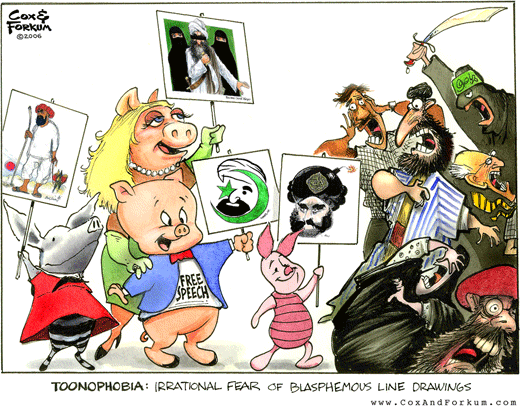
5 Arrested in Plot to attack Prophet Cartoon Paper

By Jan M Olsen for The Associated Press


COPENHAGEN, Denmark – Five men planning to shoot as many people as possible in a building housing the newsroom of a paper that published cartoons of the Prophet Muhammad were arrested Wednesday in an operation that halted an imminent attack, intelligence officials said.

Denmark’s intelligence service said that after months of surveillance they had arrested four men in two raids in suburbs of the capital, Copenhagen, and seized a submachine gun, a silencer and ammunition. Swedish police said they arrested a 37-year-old Swedish citizen of Tunisian origin living in Stockholm.

“An imminent terror attack has been foiled,” said Jakob Scharf, head of the Danish Security and Intelligence Service, or PET. He described some the suspects as “militant Islamists with relations to international terror networks” and said that more arrests were possible.

PET said it seized a 44-year-old Tunisian, a 29-year-old Lebanese-born man and a 30-year-old who were living in Sweden and had entered Denmark late Tuesday or early Wednesday. The fourth person detained was a 26-year-old Iraqi asylum-seeker living in Copenhagen.

The Danish intelligence service said the group had been planning to enter the building where the Jyllands-Posten daily has its Copenhagen newsdesk and had wanted “to kill as many of the people present as possible.” The four men face preliminary charges of attempting to carry out an act of terrorism. They will face a custody hearing Thursday.

“I am shocked that a group of people have concrete plans to commit a serious terrorist attack in this country,” Danish Prime Minister Loekke Rasmussen told reporters. “I want to stress that regardless of today’s event it remains my conviction that terrorism must not lead us to change our open society and our values, especially democracy and free speech.”

Danish and Swedish police, who appeared at a joint new conference with Loekke Rasmussen in Copenhagen, said they had been tailing the suspects for several months.

Anders Danielsson, the head of Sweden’s security police, said they had followed a car rented by the suspects from Stockholm to the Danish border.

“We knew that there were weapons in the car,” he said.

Zubair Butt Hussain, a spokesman for the Muslim Council of Denmark, called the plan “extremely worrying.”

The organization “absolutely condemns any act of terrorism regardless of the motives and motivations that may lie behind,” Hussain said.

There have been at least four plots to attack Jyllands-Posten or Kurt Westergaard, the artist who drew the most contentious of 12 cartoons, which were published by the daily in 2005 as a challenge to perceived self-censorship.

“The foiled plot is a direct attack on democracy and freedom of press,” Westergaard told the German tabloid Bild. “We may not and won’t let anyone forbid us to criticize radical Islamism. We may not be intimidated when it comes to our values.”

In January, a Somali man broke into Westergaard’s home wielding an ax and a knife but the artist escaped unharmed by locking himself in a safe-room in the house. In 2008, two Tunisians with Danish residence permits were arrested for plotting to kill him.

In September, a man was wounded when a letter bomb he was preparing exploded in a Copenhagen hotel. Police said it was intended for the daily, which has also been targeted in a number of thwarted terror plots in Norway and the United States.

U.S. citizen Tahawwur Rana faces trial in Chicago in February in connection with the 2008 terrorist attacks in the Indian city of Mumbai and a planned attack on the Jyllands-Posten.

The cartoons also provoked massive and violent protests in 2006 in Muslim countries where demonstrators considered the drawings as having profoundly insulted Islam. Islamic law generally opposes any depiction of the prophet, even favorable, for fear it could lead to idolatry.

In 2008, the Danish Embassy in Islamabad, Pakistan, was targeted by a car bomb that killed six people outside the mission.

The attacks and threats have caused concern and unprecedented security measures in Denmark, a country that prides itself on personal freedom and openness.

The JPPOL media group building, which includes Jyllands-Posten, is protected by metal fences and guards at all entrances. Mail is scanned and newspaper staff need identity cards to enter the buildings and the various floors.

Lars Munch, JPPOL chief executive, said his workers were worried.

“It is appalling for our group, for our employees and their families to see their workplace threatened,” Munch said.

Scharf said “there was no need to raise the terror threat alert level” in Denmark, although Danish Justice Minister Lars Barfoed described the plot as “terrifying.”

“The group’s plan to kill as many as possible is very frightening and is probably the most serious terror attempt in Denmark,” Barfoed said.

The head of Sweden’s security police, Anders Danielsson, said that “it has been possible to avert a serious terror crime in Denmark through efficient and close cooperation between PET and the (Swedish) security police.” Danielsson said the suspects who are residents in Sweden are also being investigated for suspected terror crimes in that country.

Pakistanis for Peace Editor’s Note– Muslims across the Islamic world, not just the ones who live in the western world, need to shed the notion that God Almighty needs them to go around taking revenge upon people on his behalf who said something blasphemous against him or any of his prophets, be they Muhammad, Jesus or others. Peace by upon them all.

We as a religion should be mature enough to  appreciate that people will not only not see eye to eye with our religious views many time, but that they can still have freedom of speech in their countries and the right, no matter how offensive, in ridiculing our, their own or anyone else’s faith. One just has to be mature enough to handle criticism of the most extreme measures.

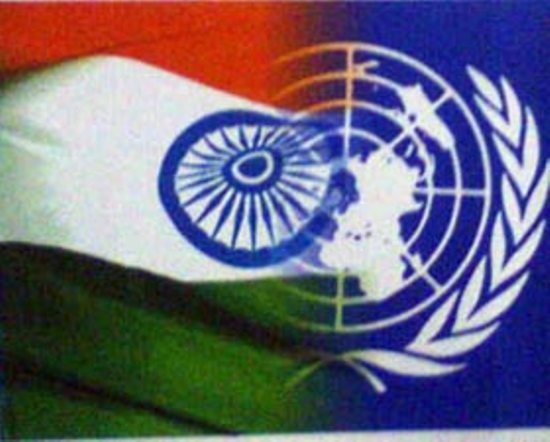
Will India Win Coveted UN Seat?

By Sunil Sharan for The Huffington Post

Indian foreign secretary Nirupama Rao says Pakistan is hypnotically obsessed with India but she and her bosses too are fixated on a coveted prize, a permanent seat at the United Nations Security Council. The mandarins of New Delhi must be pleased as punch to have had over to visit leaders of all five permanent member countries in quick succession. Inexorable appears the march but will India find the pot of gold at the end of the rainbow? And, if it does, what are the implications for itself as well as for Pakistan?

First in was David Cameron of Britain, who arrived during the summer and offered unstinting support, whetting local appetite for the main American course. And, did he fail to disappoint? No sir, Barack Obama set the cat amongst the pigeons by endorsing India for the seat, the first time ever by the US. India rejoiced while Pakistan recoiled.

But a careful examination shows him adhering closely to what he told Bob Woodward in the book, Obama’s Wars. In lieu of the seat, he expects India to resolve Kashmir. At a press conference with Manmohan Singh, Obama characterized Kashmir as a long-standing dispute making the latter stutter that the K-word was not scary. Only then did Obama hand over the endorsement in India’s Parliament but couched in such diplomatese that countless local hair were split over when “the years ahead” would dawn.

Next waltzed in Nicolas Sarkozy of France. The French, like the British, have consistently seen merit in India’s case. Sarkozy though, true to type, proved an enigma. He first tagged on the applications of Africa, the Arabs and pretty much the rest of the world onto India’s, befuddling his hosts, who are willing to concede as equal aspirants only “self-appointed frontrunners” Germany, Japan and Brazil. Just as they were about to give up on him, Sarkozy warmed the cockles of India’s heart by throwing in 2011 as early as when it could make it.

But soon came the caveat. Sarkozy, just like Obama before him, cautioned that with great power status came great responsibilities. Whereas Obama wanted India to be more mindful of human rights violations of countries such as Iran and Myanmar, Sarkozy wanted India to send military forces to keep world peace. With India already being one of the foremost contributors to UN peacekeeping missions throughout the world, the mandarins of New Delhi must have been left wondering what more was being asked of them.

No matter, three down, two to go. By now the state jets were landing at Delhi airport almost on top of one another. Wen Jiabao, the leader India was least looking forward to, came with the master key to entry. Shortly before his visit, WikiLeaks revealed China’s opposition to any council expansion. Indian hopes were up nevertheless but Wen remained inscrutable, willing only to acknowledge an understanding of India’s aspirations. No one in India knew quite what to make of him and since Wen was off to Pakistan next, all the country could do was wait with clenched teeth to hear what he would say there.

Rounding off the passage to India was Dmitry Medvedev. Relations between Russia and India have frayed considerably since the heady days of the cold war, so much so that Russia has waffled on India’s bid. Medvedev signaled that the waffle still needed baking, voicing support for India while reiterating that reforming the council was tough and required consensus.

All the while Pakistan protested vociferously against what it deemed an indulgence of Indian hegemonism. But what will India gain with a permanent UN seat? Could it block Pakistani claims on Kashmir? True a permanent member wielding veto power can stonewall but the veto seems unattainable for seekers since they themselves have forsaken it. And, while India sees red when the K-word is uttered in the UN by Pakistan, no ascension to permanency can make it strangle the latter. Nor can it efface any past security council resolutions.

So then, what is it? Nothing comes to mind but the obvious, the acceptance that any arriviste craves. Even that appears a false hankering because ever since its early years, Gandhi’s legacy and Nehru’s charisma burnished the country with global influence disproportionate to its economic and military capabilities. A bee once in one’s bonnet is hard to get rid of though. And, as every journey must have a fitting end, India has found a destination to its liking.

Flush with cash, New Delhi wants to beef up its military. All of the recent visitors bar China are major suppliers of defence equipment to India. As bees flock to honey, they arrived armed with catalogues of the most terrifying stuff. Inherent was a delicate diplomatic quid-pro-quo. The more arms you buy from us, the more we will push your candidacy. As Islamabad keeps raising the bar for India’s seat, so too will India have to up its arms binge.

Lost in Pakistan’s current rhetoric was its vote in October to put India in the security council for two years beginning January 1, 2011. Once on, we will never get off is the new mantra of India’s brave. India seemingly returned the favor by taking in stride the sale of Chinese nuclear reactors to Pakistan. Is there more afoot than meets the eye?

Every country is entitled to its obsession. Pakistan’s is obvious. By continually thumbing its nose at a NATO mired in Afghanistan, it has put the K-word in spotlight, albeit on the backstage. A deal has been blessed by the powers that be. Both the seat and Srinagar are not far away.

The writer edits a website on India: http://www.scooptime.com.

UN Halts Aid After Female Suicide Bomber Kills 46 in Pakistan

By Anwar Shaikh for Businessweek

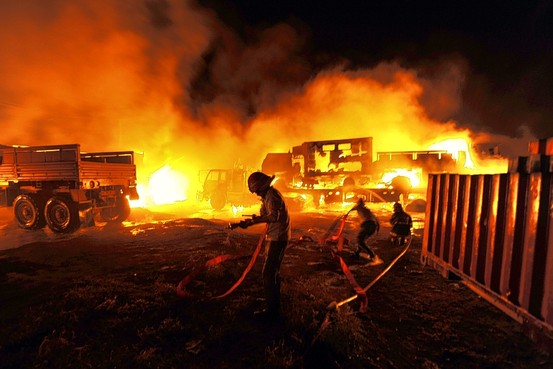
A female suicide bomber carried out a Christmas Day attack in northwest Pakistan that killed 46 people, a local official said, as the UN food agency caught up in the blast closed centers that had fed 41,000 families.

The burqa-clad woman aged between 18 and 22 lobbed grenades and detonated an explosive vest near a World Food Programme distribution center after being stopped by security personnel, Mustaqeem Khan, a government official in the tribal region of Bajaur, said by phone today. At least 96 people were injured in what Dawn newspaper said was Pakistan’s first suicide bombing known to have been carried out by a woman.

The device was detonated at about 8:30 a.m. local time on Dec. 25 as officials were handing out food to victims of this year’s floods, said Gull Rehman, a spokesman for the government of the area. Khan said officials had collected body parts of the female attacker, who had attempted to join a line of men queuing for aid.

Prime Minister Yousuf Raza Gilani condemned the attack and said his government’s fight against militants will “continue till their complete elimination,” according to an e-mailed statement issued by the Information Ministry in the capital, Islamabad. Operations at four WFP centers in the region will likely restart this week once security improves, program spokesman Amjad Jamal said by phone from Islamabad.

The death toll eclipsed the 43 people killed Dec. 6 in a suicide bombing outside a government office in the northwest tribal region of Mohmand. Four days later, 25 people died in a similar attack in the town of Hangu.

U.S. President Barack Obama condemned what he called the “outrageous attack” in Bajaur. “Killing innocent civilians outside a World Food Program distribution point is an affront to the people of Pakistan, and to all humanity,” Obama said in a written statement. “The United States stands with the people of Pakistan in this difficult time, and will strongly support Pakistan’s efforts to ensure greater peace, security and justice for its people.”

UN Secretary General Ban Ki-moon condemned an “abhorrent act of terrorism aimed at innocent people.”

Pakistan’s government blames Taliban militants based in the country’s tribal region for terrorist attacks in the country. The army last year began offensives in the Taliban stronghold of South Waziristan, after a similar operation against guerrillas in the Swat Valley.

Militants have stepped up attacks as the government is struggling to rehabilitate 17 million people who lost homes and livelihoods during floods in August. The deluge threatened to cripple Pakistan’s economy with a surge in unemployment, an increase in inflation and damage to billions

The Illiteracy of Hate

A News and Opinion Special Report by Manzer Munir for Paksitanis for Peace

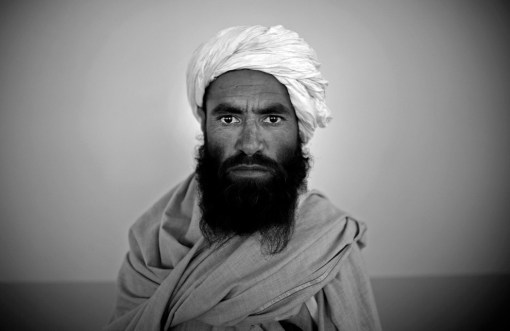
Alleged Taliban Member pic courtsey of Boston Globe

The Taliban are not just simply a bunch of illiterate thugs and bullies for they too often prove to be even worse than animals and barbarians.

Nowhere else in the world has a country experienced a more tragic and callous attack as the one on Christmas day, the birth day of Jesus, the Prince of Peace, than the one Pakistan experienced. In an attack described by President Obama as an “affront on humanity”, the cowards attacked helpless women, children and men while they queued up in food and aid distribution site such as the WFP depot, people who mind you are already suffering from the ongoing war, once in a lifetime floods, and the poverty and radicalism of a generation of desperate, hopeless and increasingly uneducated young men brainwashed by the Taliban and other radical Muslim extremists.

I am still disturbed by the disdain for basic human life that this new attack proves about this radical and extreme enemy. I imagine another one of their brain washed ‘walking zombies’, this time purportedly a woman suicide bomber, a first, even for Pakistan, killed in excess of 43 people in Bajur Pakistan at a World Food Program rations and aid storage and distribution center.

The Pakistani authorities and several domestic and foreign NGO’s who provide food aid at various centers in the area are temporarily closing these centers in order to have increased security. This means that aid distribution will come to a crawl and up to several hundred thousand people will now have to suffer at the hands of the attacker and their backers, the Taliban who have claimed responsibility. The authorities will have to ensure the safety of aid organizations and their personnel for both Pakistani and non Pakistanis relief workers involved in getting food, water and medicine to many people who are either suffering from the war or from the floods.

This catastrophe, although not of near Biblical proportions, does present both a security and humanitarian problem to both the government of Pakistan as well the suffering citizens in the northwest areas of the country where; Taliban fighters take sanctuary from the war in Afghanistan to regroup and return to the fight in warmer weather after the winter months as we have seen in years past. In fact, the reach of the Taliban in Pakistan is now not only reputed to be in the headquartered areas such as in Quetta Pakistan among the restive Baluchi population, now they are so often found to be in major cities like Karachi, Lahore, Rawalpindi, Peshawar and many points in between as they use their religious cover to endear themselves to certain impressionable, weakened or illiterate individuals that are so commonly found in throughout the country. 

Here are the some of the depressing facts. Pakistan, a nation approaching 180 million people at current estimates, perhaps only boasts to having about 60-65% of the male population at a literate level and at best, the females to be only at 40-45% of the total female population. Sadly, what this means is that 4 out of 10 Pakistani males are completely illiterate while up to as many as 6 out of 10 women are not able to read or write. Poverty breeds extremism since there is no support from any government programs or hope for any solution.

Time and time again throughout history and not just of Pakistan’s, we can see that the role of the church, synagogue or mosque in building the community is deeper than that of any government initiatives or other measures. The poverty for these young men along with the lack of jobs like for those individuals who are either very poorly paid construction site workers, household labor or servants, or beggars and sewer workers, a job sadly almost seems to have been reserved for Pakistan’s Christian community members as many can attest in Pakistan of their unfortunate and depressing state. One does not need to remind the reader of the plight of Asia Bibi (also Aasia and Ayesa), the Christian Pakistani woman who is still awaiting her fate in Pakistani courts after more than a year and a half since first being accused of a BS blasphemy charge and being in jail ever since. 

The medieval mentality of these radical extremists is not something that needs to be described as the evidence is here in this latest attack . Certainly anyone alive in any part of the world outside Pakistan and Afghanistan with eyes, TV, radio or newspaper within their reach can see plenty of near daily reminders of the carnage that many natives of these lands see, and to what they have painfully become accustomed.

 The Pakistani and Afghani Talibans have by all the various reports in newspapers and media sources over the last several years have pointed out to the fact that these groups all have too often similar goals. Not only that, these groups all share the same characteristics. The anti-Americanism, the pro-Wahaabi or Orthodox version of Islam, the need for justice for the ‘suffering of the Palestinian people’ , and the anti-colonial and often times anti western sentiment amongst these groups. The radicalization of certain Muslim groups be they Hamas and Hezbollah in the Mideast or Lashkar e taiba, or any other militant outfit operating in this part of the world as mentioned in this quote a few days before he passed, the late Richard Holbrooke of the US State department said that there are a range of militant groups such as the Afghan Taliban, the Pakistani Taliban, the Haqqani Network, Lashkar-e-Taiba, and that “an expert could add another 30.” His exact words are in quotations. 

The radical Muslim groups who take prey of the weaker, cannot think for themselves because they are scions of those abjectly illiterate segments of the society who are only educated in the madrassahs of Pakistan. This is the de facto way of educating Pakistan’s poorer children in little mosque schools which consist of nothing but Qu’ranic surahs and words of ‘wisdom’ or ‘interpretation’ by the local mullah of the said mosque/school. Most probably these children in many Pakistani madrassahs, especially the ones who live near the border areas within the NWFP or North West Frontier Province of Pakistan as this is the part of the country most affected by its close proximity to Afghanistan.

The people in this area of Pakistan, as well as their cousins in Afghanistan have been fighting one enemy or another for the better part of 100 years now. Whether to them the enemy be the British, during the height of the British Raj rule in India, or to the Soviets and the Red army and the Cold War, then in chronological order came the infighting after the Russian withdrawal as various Tajik, Afghani, Uzbek, Pakistani warlords came in to try and consolidate power to now us Americans and the Pakistanis who are our allies in this war.

Granted we do often hear that the Pakistanis can be doing more. By all accounts, the Pakistani government can do more in terms of fighting this war on terror. Numerous western reports and articles in respected dailies have alleged that small elements within both Pakistan’s Army as well as the spy agency, the ISI, have sympathizers to either the Taliban’s cause or they want to be on favorable terms with a powerful entity that most in Pakistan’s establishment believes that Pakistan will be dealing with and not a weakened Karzai once the US begins to draw down troops and end the war by 2014. If this is indeed true, then these ‘officers’ and supposed ‘leaders’ of Pakistan should realize that the colluding with the enemy, which in this case is the Taliban, is tantamount to treason, and the members of the armed forces of Pakistan as well as the intelligence community should not be assisting the enemies of all concerned: Afghanistan, Pakistan and the United States. 

Of course we must not kid ourselves and assume that only alleviating the illiteracy and poverty of the Pakistani youth will and bettering the education system of the Pakistani poor, particularly that of the refugees and residents of the northwest areas near the Afghan border. No there needs to be a study and introspection by the people of these two countries where this hatred breeds. To to get out of this darkness, the population needs be provided not only safety when delivering food aid and or medicine but aldo most importantly give them a book, a pen, and a paper. And teach them how to fish for knowledge with basic comprehension and deductive reasoning skills that can reject a radical and violent view of Islam too often manipulated by the clergy. This is the only way we can come to end this illiteracy of hate.

–Manzer Munir, is a proud and patriotic Pakistani American, an author, who plans to write a book on Pakistan, who is also a blogger and journalist, and as the Founder of Pakistanis for Peace  can be found at www.PakistanisforPeace.com, www.DigitalJournal.com ,www.Open.Salon.com, www.Examiner.com, as well at other websites as a freelance journalist and writer.

‘Attack in Pakistan Affront to Humanity’ says President Obama

As Reported by Hindustan Times from the Indo-Asian News Service

US President Barack Obama condemned a suicide bombing in Pakistan that left at least 44 people dead at a UN World Food Programme distribution point on Saturday. “Killing innocent civilians outside a World Food Programme distribution point is an affront to the people of Pakistan, and to all

humanity,” Obama said that in a statement issued from Hawaii, where he is spending Christmas with his family.
“The United States stands with the people of Pakistan in this difficult time, and will strongly support Pakistan’s efforts to ensure greater peace, security and justice for its people.”

A female suicide bomber targeted the crowd collecting food at the distribution centre in Khar. Seventy others were injured in the attack in the Bajaur tribal district, where government forces are fighting Taliban and Al Qaeda militants.

Saturday’s bombing targeted the Salarzai tribe, which has joined forces with the government against the Taliban and raised a tribal militia to drive them out of their area. The Taliban took responsibility for the attack in a message sent to various news organizations.

Holiday brings Muslims, Jews Together to Volunteer

By Niraj Warikoo for The Detroit Free Press

Detroit, Michigan– For the past 20 years, hundreds of local Jews have volunteered on Christmas to help needy people on a day when many Christians are busy celebrating the holiday.

But because Dec. 25 falls on a Saturday this year — a day of rest for observant Jews — the Muslim community will be filling in on Christmas, helping at soup kitchens, senior citizen homes and in impoverished neighborhoods.

The Council of Islamic Organizations of Michigan hopes to get 400 volunteers.

The Jewish community will move its volunteer efforts to today, Christmas Eve, as part of Mitzvah Month, which refers to good deeds. Last year, the Jewish community invited the Muslim community to help out on Christmas for the first time. That partnership continues this year, with some Muslims helping on Christmas Eve, too.

“The more contact we have, the more understanding,” said Freya Weberman, 51, of Huntington Woods, who will be delivering toys in Detroit today with the Jewish Community Relations Council of Metro Detroit. “There is fear of the unknown. By bringing people together and having shared experiences, we see our commonalities.”

When Micki Grossman of Farmington Hills read journalist Helen Thomas’ comments about Zionists earlier this month, the Jewish woman was hurt. “It caused a lot of pain for me,” she said.

“I also wish that we could have had more of our Muslim friends stand up and say, ‘This was not appropriate.’ ”

But some Muslims and Arab Americans were upset that Jewish leaders pressured Wayne State University to remove an award in her name.

At the annual banquet this month of the local chapter of the American-Arab Anti-Discrimination Committee, people wore buttons reading “Defender of Thomas,” said regional director Imad Hamad.

“You can’t punish someone for the right of freedom of expression,” Hamad said, referring to Thomas, who is of Lebanese descent.

Despite the differences of opinion, about 200 Jewish volunteers — along with 40 Muslim ones — will work together today to help serve poor people across metro Detroit.

Grossman will be among them, glad to help people in need while bringing two communities together.

Gigi Salka, 41, a Muslim from Bloomfield Township whose children attend bar mitzvahs, also will be volunteering — one of dozens of Muslims helping on Christmas.

It is one way in which local Jews and Muslims are trying to build ties despite their differences on politics and foreign affairs. Last month, a health fair run by Jews and Muslims was held in a Detroit mosque. And Muslim leaders spoke earlier this year before the board of the Jewish Community Relations Council of Metro Detroit.

The council organizes the event, which is usually held Christmas Day, but this year that is on the Jewish Sabbath, a day of rest for observant Jews.

Last year, the Jewish community invited Muslims to help them volunteer on Christmas. The partnership was a historic first, with about 60 Muslims helping 900 Jewish volunteers. This year, up to 400 Muslims led by the Council of Islamic Organizations of Michigan will take the lead on Christmas.

“We have many similarities,” Grossman said. “Let’s look for the sameness rather than the differences.”

Such partnerships are playing out across metro Detroit.

Victor Begg of Bloomfield Hills, a co-founder of the Islamic council who is helping to lead the volunteer effort with Muslims this week, said they “are part of an ongoing effort by our communities to bridge the gap.” He had no comment on the Thomas controversy.

Hamad said he was upset over the Jewish community’s pressure on WSU to drop the award in Thomas’ name, but he maintains contact with Jewish leaders such as Betsy Kellman, head of the Michigan branch of the Anti-Defamation League, a civil rights group.

“We are Americans first,” Hamad said. “We should not see ourselves as an extension of the external conflict abroad.”

Ismael Ahmed, a longtime Arab-American leader who is the director of the state Department of Human Services, spoke to the board of the Jewish council this month about poverty issues.

“The Jewish and Arab communities have a huge amount in common — a sense of family, a sense of community,” Ahmed said. “But we have different views on the Middle East.” At the same time, “I think that isn’t a major divide” because “we’re very much alike.”

Salka will be volunteering on Christmas because it is important to give back, she said. To her, interacting and forging ties with people of various backgrounds is part of her everyday life.

“My friends are from all different faith traditions,” Salka said. It’s on an individual level, “how you change hearts and minds, the personal connections.”

A Muslim Christmas on Long Island

By Farhan Husain for The Long Island Report

Christmas is turning into a cultural holiday for some Muslims in the Long Island area as they mark the occasion with gifts, decorations, and family get-togethers.

“Growing up, we did have a Christmas tree… I think just because he [dad] didn’t want us to feel left out,” said student Asra Arif, 20, from Deer Park.

Indeed, it’s becoming almost a custom to celebrate Christmas for most Muslim-Americans. Many came from countries that don’t even have a word for “Christmas” but it becomes almost inevitable to join in with friends and neighbors who go “holiday-crazy” during this time of year.

“It’s really just celebrating the season. It’s the only time of the year where families don’t have work or anything like that,” Arif said.

Arif is a first-generation Muslim-American with Pakistani parents. Her family, like many others, has made it a tradition to gather with loved ones and exchange gifts during Christmas time.

However, unlike Christian and Catholic families who celebrate the birth of Christ every Dec. 25, Arif’s family celebrates the atmosphere of the holidays. “I just enjoy the spirit of it. I’m not celebrating anything religious, just being with family…” Arif said.

Retail manager Dafina Mexhuani, 21, from Westbury, does the same. “It’ll be celebrating to the extent of, not really Christmas… but you know like the whole decorating, and the gift giving, and all that stuff. But if you call that celebrating it, then I guess I am,” she said.

She celebrates a holiday with her family every year around Christmas time, but doesn’t call it Christmas. “I grew up in an apartment building and my dad was the super. We always used to put up a tree in the lobby, and so we started doing it in my house. It’s just how it’s always been, really,” she said.

Mexhuani was born in the Bronx and her family of three siblings and her parents were born and raised in Albania. She’s never experienced a year without Christmas.

“The idea of Christmas we just think of generally as a winter holiday, so we don’t necessarily celebrate it… or have a significant religious attachment to it,” said Mehreen Syeda 27, from New Hyde Park, Long Island.

Syeda will be celebrating the holiday season with her Pakistani-American family, because it’s the only time of the year where everyone is off from work. Though she was not born or raised in the U.S., Syeda and her family wrapped and exchanged presents, solely to be part of something that was happening culturally around them.

“I think it’s important for kids to be knowing what their friends are going to be doing, and why they’re doing what they’re doing,” she said when describing how she was going to handle the holiday season with her children. Syeda said she would never steer her children away from experiencing it, though she would draw a fine line between religion and culture.

Some Muslims dislike the idea of celebrating Christmas as the “holiday season.” Things like Christmas trees and stocking stuffers tend to be associated with Christmas, so some choose to avoid those all together while still pleasing their children.

“We do give gifts and stuff, but we don’t have a tree or any of that up… It’s not a Muslim holiday, therefore, we don’t celebrate it,” said student Armend Cobovic, 19, from Manhattan. Cobovic and his family are from Montenegro and knew about Christmas before they moved here 15 years ago, but he was surprised to see that other Muslim-Americans celebrate Christmas.

“I think they [Muslim-Americans] are stuck into society nowadays instead of going back to their own culture,” he said. Thought he doesn’t celebrate Christmas, he does exchange gifts during the holidays for another reason, “I understand getting a present, just so your child isn’t left out… but say it’s for new year.”

With New Year’s and other religious holidays around the end of December, it makes it the only time families get to spend time with each other.

Musho Kolenovic, 18, from Stony Brook, always gets together with his family in their upstate house during Christmas time. “It’s one of the few times in the year where everyone has off, and we can meet up, and just have good old family time,” Kolenovic said.

His family does exchange gifts during this time of the year, but they never call it “celebrating Christmas” because they never put up lights or a tree. “I’ll take the presents over the tree anytime.”

Whether they call it Christmas or not, the family time, gifts for children, and the spirit of the holidays gets the better of Muslim-Americans because of the American culture.

“Not that my parents are opposed to it, I think their culture is different. They aren’t used to celebrations like we are,” said student Sameera Namazi, 21, Valley Stream. Culture in America has adopted Christmas as part of being American, and Sameera had no issue with it, “Muslims do believe in Jesus, we can commemorate his birth… So if we want to, we can.”

Sufi Islam: Reclaiming Muslim Spirituality

By Fahad Faruqui for The Huffington Post

After two bombs recently claimed dozens of innocent lives at the shrine of esteemed Sufi Ali Hajviri, fingers were pointed at the al-Qaeda-linked militants who see Sufism as the work of heretics. The New York Sufi Music Festival was brought to U.S. to showcase the spiritual dimension of Islam and the rich heritage of Pakistan, counteracting a view that Pakistan is predominantly a country known for its terror factories. Sadly, the image of militants waging war is overwhelming and hard to supersede.

Hearing Abida Parveen sing Bulleh Shah’s ecstatic poetry, which enriched the centuries-old Sufi tradition of the Indus valley, made me realize how the Islamists have stripped away spirituality from the religion and left believers with rituals, sketchy interpretations of the divine laws and fear of God’s wrath. Sufi Muslims of the subcontinent, who converted to Islam in the pre-partition era, were drawn to the Sufi path of knowledge that has been hijacked by the al-Qaeda ideology of violence.

The rapturous quality of Sufi poetry continues to fascinate me, but the very idea of loving and seeking God while listening to radical mullahs (like the clerics of Red Mosque) is deeply troubling. Prostration to God devoid of spirituality is no different from doing sit-ups. Surely, the label Sufi is not necessary. What’s important is the sentiment. It helps the cause of clarity to call those on the path “Sufis” rather than “mystics,” which will more likely conjure images of Aladdin on his flying carpet.

Islam is the fastest-growing religion but has too few religious scholars with requisite understanding to link rituals and divine laws to creative spiritual ascension. I reached a level of comfort with my faith through good guidance from prominent Muslim thinkers such as Hamza Yusuf, Faraz Rabbani and Zaid Shakir, who drink deeply of the Quran’s spring of wisdom.

Faith is ineffable; so is our search for God. Ecstatic poetry and Sufi treatises speaking of “annihilation of self” and “Oneness with the Creator” are merely tools to evoke the Sufi sentiment, which is not peculiar to Islam. Teresa of Avila’s “Libro de la Vida,” Bulleh Shah’s ecstatic poetry, Allama Iqbal’s intimate conversation with God in “Shikwa” (complaint) and Mansoor Al-Hallaj’s proclamation “Anal-Haq” (I am the Truth) are all expressions of the acquired wisdom gleaned from deep introspection.

Though unsuccessful, Iqbal tried to revive the true spirit of Islam. He was quick in identifying that the hardline mullah was a hopeless case. But the Sufis were either consumed in “other worldliness” or digressing from the core of Sufism. For Iqbal, a profound religious experience is one that benefits humanity, which is most unlikely if the seeker retreats to constant seclusion.

Saudi Arabia’s government is often accused of demolishing tombs of the companions of the prophet, fearing veneration of graves, and of discouraging Muslims from praying at prominent sites like the Cave of Hira (where Muhammed received his first revelation). Why they discourage is another column, but one thing is certain: visiting graves and sites mentioned in the Quran will not miraculously lead to divine illumination. The essence of Sufism is to dig into the depths of your soul to seek the One. In the shrines of Sufi masters in the subcontinent, one can expect to find numerous vagabonds pretending to be Sufis, who earn a living by giving false hopes to troubled wives, jobless men and childless couples. This defeats the premise of Sufism — absolute reliance on Almighty.

In a phone conversation, a prominent Sufi scholar, William Chittick, said, “The core of Sufism is to strive for nearness to God.” Even though God is absolutely Other, he presupposes a direct relationship with the seeker. No doubt. Allah says in the Quran (50:16): “I am closer to you than your jugular vein.”

It is our egos that have created boundaries between sects within Islam and ensuring rivalries with non-Muslims. Reviving the spiritual dimension of Islam may be the only way to fight intolerant radical elements internally.

Muslim American Artists Strive to Bridge a Chasm

By Thalia Gigerenzer for The New York Times

When Wajahat Ali, a young Muslim American playwright from Fremont, needed to build an audience for his work, he produced his plays in cramped Pakistani restaurants in the East Bay and used Facebook to get the word out.

His play “The Domestic Crusaders” went on to open at the Berkeley Repertory Theater in 2005, and then moved to Off Broadway. Now, family members who were initially skeptical of Mr. Ali’s decision to pursue writing see great power in his profession.

Mr. Ali said his uncle had told him that he wished he had “made his son into a journalist,” because “after 30 years of living in this country, I turn on the TV and see myself as a terrorist.”

Mr. Ali is one of a growing number of Bay Area artists who are reimagining one of the country’s most complicated compound identities: Muslim American.

At a time when Islam has been heavily politicized, many Muslim artists say they hope the arts can expand understanding of their faith among non-Muslims as well as bridge American and Islamic traditions.

“We’re at a point where Islam is really being defined in this country, and it’s going to be through the arts,” said Javed Ali, founder of Illume, a Muslim online news, arts and culture magazine based in Newark that serves as one of the central nodes of the Bay Area Muslim American network.

Bay Area Islamic organizations, including the much-heralded Zaytuna College in Berkeley, have embraced the shift toward culture. In January, the Islamic Cultural Center of Northern California will open a new gallery in the center to showcase Muslim artists.

The cultural center, in Oakland, decided to increase its arts programs six months ago, said Ali Sheikholeslami, its executive director. The center regularly hosts an event called “Islam and Authors,” which invites authors to discuss topics related to Islam.

“We want to break through common stereotypes and present the whole spectrum of Muslim reality,” said the cultural center’s marketing and development director, Jason van Boom.

Hatem Bazian, one of the Islamic scholars behind Zaytuna College, the first Muslim liberal arts institution in this country, echoed that thought.

“In American society,” Mr. Bazian said, “artistic expression is the way we narrate our story, so Muslims are beginning to draw their own narrative.”

The Bay Area’s Muslim population, estimated to be 250,000, is one of the most diverse in the United States.

Mr. Bazian, who is also a senior lecturer at the departments of Near Eastern and ethnic studies at the University of California, Berkeley, said the wide mix of ethnicities and large number of converts in the Bay Area’s Muslim population “creates synergies” that can be seen in new art forms that break ethnic molds.

Some local artists have taken an online entrepreneurial approach to Islam. Khadija O’Connell, a Hayward resident, started her Web-based arts and craft business, Barakah Life, in 2003 as a way to bring a modern, handcrafted aesthetic to Muslim items most commonly found in gaudy, imported styles.

Ms. O’Connell relies on online tools like blogging and Facebook to promote ideas like her pop-up crescent moon cards that would look at home on the popular crafts site Etsy.

“People used to adapt neutral Christmas ornaments, like stars, and hang them up for Ramadan,” recalled Ms. O’Connell, who converted to Islam in college. “I wanted to bring new traditions to Muslims living in the West.”

For local Muslim American artists whose art has been deemed “radical” by more conservative Muslims, the road has not been an easy one.

Audience members walked out of an early November U.C. Berkeley performance of the play “Hijabi Monologues,” which features the stories of Muslim women and contains sexual references. “I’ve spent more time and energy negotiating with the community whether music is haraam [“forbidden”] than putting out content,” said Anas Canon, a convert and the founder of the record label and Muslim artist collective Remarkable Current, which includes the Bay Area MC/spoken word artist Baraka Blue. The label’s music ranges from soul to hip hop and has collaborated with artists such as Mos Def.

When Remarkable Current, which is based in both Oakland and Los Angeles, recently held a masquerade-themed book-signing with a D.J. in an Oakland home, debate erupted online ostensibly over men and women in costumes interacting together. An impassioned Facebook note condemning the event unleashed heated comments from Muslims across the Bay Area.

In the wake of controversies like the one over a proposed Muslim cultural center near ground zero in New York City, some second-generation Muslims’ art is tinged with a sense of urgency.

“Our narrative has been stolen from us,” Wajahat Ali said, referring to the common depiction of Muslims in the American news media.

The tendency of his parents’ generation to push their children to prestigious professions like medicine and business discouraged creative voices, he said.

But Bay Area Muslim artists are fast creating new narratives. Mr. Ali’s play, which depicts a modern Pakistani-American family, is featured in McSweeney’s literary magazine this month.

For many years, Mr. Ali said, he had described the local arts scene as “latent, with a heartbeat.” But now, he said, “it’s dancing.”

What Sufi Festivals Mean to the People

By Sohail Abid at http://sohailabid.com/

It is the beginning of the Hijri year. A time that matters to me for two reasons: remembering Hussain’s determination and the Sufi festivals that will be held throughout the year across Pakistan. And this year I want to do something special: to attend all the Sufi festivals and document each of them! Wish I had undertaken this project earlier in my life when the festivals were held without any fear but I wasn’t mature enough to see what they mean to the people. I, like others, considered them ‘stupid’ and ‘superstitious’ but that’s so untre. Let’s see how:

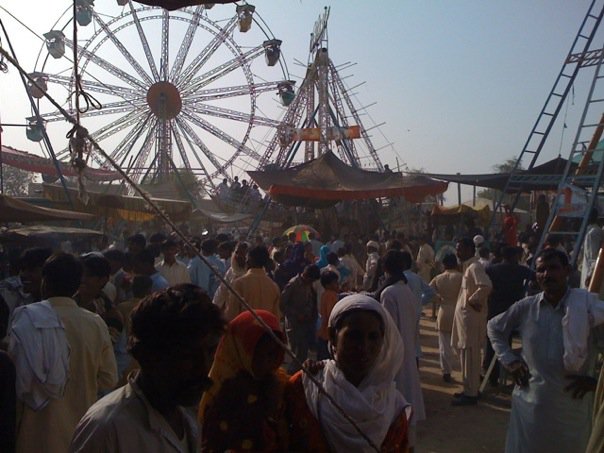
The people who actually go to the Sufi festivals don’t really call them by their urban name, Urs. They call them “mela” and it includes all kinds of activities, not just paying salam to the dead Sufi. They are *festivals* for the people, occasions to rejoice.

Last weekend, when I was on a field trip in a remote Punjabi village, a girl told me, “If you were here a couple of weeks ago, you could see our dance, Sammi; there was a wedding. We are the best in Punjab in Sammi dance! Oh, you can come to the mela next month.” Now this place, Danabad, is a small village. They remember the Sufi festival as the time they will have dance, musical concert, and what not.

On a similar visit to Chakwal, when I asked a young boy about their activities, he was so excited about this race and kabbadi they have each year. When: “during the mela”!

You see, to the people the Sufi festivals do not mean “worshipping the graves”, as some conservatives would like to put it. It is the time people await to shop, play, dance, and attend live concerts. And that’s what I would like to document because they are the events that matter to the people and keep them going. Wish me luck!

Sohail Abid is a writer, an entrepreneur, a software engineer, a cultural analyst, and a lover of all things folk. He lives in Islamabad Pakistan and manages several websites and businesses as a freelance software developer. We at Pakistanis for Peace are proud to call him a friend of the site.