Archive for the ‘ Pakistan ’ Category

Sami Yusuf – Hear Your Call (Pakistan Flood Relief)

A Charity Single Released By Sami Yusuf where all profits go to help the Flood victims of Pakistan

British singer-songwriter Sami Yusuf, dubbed “Islam’s biggest rock star”, is donating profits from his latest single to help flood victims in Pakistan. Born in Iran, but raised in the UK, the singer is urging fans to recognize the ongoing plight of those affected by the floods. Profits from Hear Your Call will go to Save the Children, which is working in the four provinces hit by the disaster.

Sami has sold more than seven million albums worldwide. He said: “This is an enormous disaster and I personally feel we all, as fellow humans, have a responsibility to help the victims in any way we can.

“The floods have completely changed many people’s lives and through our actions, we can offer hope. “In such times we have to align ourselves with the right organizations to reach out to the affected areas as effectively and urgently as possible.”

The track can be download from iTunes and the artist’s official website.
http://www.itunes.com
http://www.samiyusufofficial.com/

China’s Growing Influence on Pakistan Worries U.S.

By Farhan Bokhari for CBS news

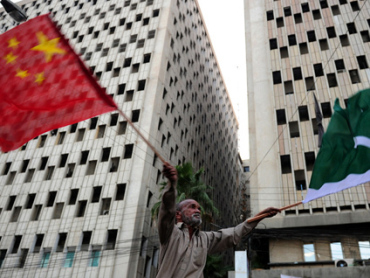
China’s premier Wen Jiabao concluded a high profile visit to Pakistan on Sunday, promising to lay the foundation for a “deeper” relationship to a country which is central to U.S. efforts for stabilizing Afghanistan.

Wen sought to broaden a relationship which has traditionally been driven by Beijing’s role as a key supplier of military hardware to Islamabad. Pakistan’s government officials said that during Wen’s visit, China signed business deals between the governments and private businesses of the two countries worth at least $29 billion, with a possibility of another $6 billion worth of contracts. These contracts were the largest ever signed during a visit by a foreign leader to Pakistan, underlining the growing importance of the country to China.

The Chinese premier also used a speech to a joint session of Pakistan’s upper and lower houses of parliament to commend the country for its efforts against terrorism. It was an apparent effort to negate criticism from the western world, including the U.S., which has urged Islamabad to take further steps against Al-Qaeda and the Taliban.

“Pakistan has given great sacrifices and made great efforts in the fight against terrorism. It is a reality and the international community should respect Pakistan’s efforts,” Wen said.

While the U.S. has poured billions of dollars into Pakistan to assist in combating terrorist groups, Pakistan’s military and civilian leaders remain committed to retaining a close alliance with China. “Let’s stand together, with a new confidence, and begin a new era of progress and prosperity, by jointly confronting all challenges,” Wen said in his speech on Sunday. To the applause of Pakistan’s ruling and opposition politicians, the Chinese continued that “China and Pakistan are all-weather strategic partners and share the sorrows and joys of each other as close brothers.”

A senior Pakistani official told CBS News that the deals signed during Wen’s visit included contracts for the development of a road and train network linking the two countries, for mineral resources, for gas and oil fields and for facilities to produce electronics.

“China is beginning to launch an important new phase to help Pakistan transform itself economically,” said the official, who spoke anonymously because he was not authorized to talk to journalists. “Unlike our western friends such as the U.S., China remains a true friend of Pakistan,” he added.

Western diplomats in Islamabad who spoke to CBS News, also on condition of anonymity, said Pakistan’s relations with China remain of concern to Washington in some areas, notably China’s continued support for Pakistan’s nuclear energy program and signs that China is stepping up its supply of conventional military hardware to Pakistan.

In the past decade, the two countries have jointly developed their first fighter plane for the Pakistan Air Force (PAF), known as the JF-17, or “Thunder.” The PAF plans to buy up to 250 of the JF-17s, making it the largest-ever purchase by the PAF of a single type of aircraft. On the other hand, Pakistani leaders frequently speak of the trust factor in their country’s relations with China, an oblique reference to the lack thereof in the country’s ties with the U.S.

In the 1990s, the U.S. sanctioned Pakistan on suspicions that the country was preparing to produce nuclear weapons, which reversed the two sides’ close cooperation when they confronted the occupation of Afghanistan by the former Soviet Union. While those sanctions were lifted after 9/11, which prompted a new partnership against terrorism, many Pakistanis remain skeptical of ties to the U.S. But a Pakistani foreign ministry official who spoke to CBS News said a growing economic relationship with China “will not come at the expense of our relations with the U.S. We want to establish and maintain a close partnership with the U.S. Our relations with China must never be seen as a replacement for our relations with the U.S.”

Chinese Premier Visits Pakistan to Reinforce Ties

By Salman Masood for The New York Times

ISLAMABAD, Pakistan — Chinese Prime Minister Wen Jiabao arrived in Islamabad on Friday for a three-day visit that Pakistani officials said was aimed at strengthening the strategic partnership and economic cooperation between the two neighboring countries.

Prime Minister Yusuf Raza Gilani and members of his cabinet welcomed Mr. Wen at Chaklala Air Base in neighboring Rawalpindi on Friday afternoon. A red carpet was rolled out and elaborate ceremonies were held to signify the importance Pakistan attaches to China, which is considered a close ally.

“Friendship with China is a matter of pride for our nation,” Mr. Gilani was quoted as saying by local media as he welcomed his Chinese counterpart.

Apart from holding meetings with Mr. Gilani and President Asif Ali Zardari, Mr. Wen was scheduled to address a special joint session of the Parliament on Sunday.

Pakistan’s military ties with China are strong and China has assisted Pakistan in tank production, fighter aircraft manufacturing and naval technology. But since the late 1990s, economic concerns have gained increased importance. Trade and energy have taken precedence in Pakistan’s relations with China.

Mr. Wen was accompanied by 260 business executives.

Pakistani officials say there is a need to enhance trade between the countries that stands around $7 billion a year. But there also are concerns here that the trade deficit is growing heavily in favor of China.

“The relationship is undergoing a qualitative change,” said Mansoor Ahmad, an independent security analyst based in Islamabad. “This change is manifested in China’s relationship with emerging markets and developing countries, which is essentially based on forging and enhancing trade linkages and securing new markets for Chinese investment.”

The Chinese are also cooperating with Pakistan in developing its civil nuclear energy program despite discontent from Washington and New Delhi.

Mr. Wen, the Chinese prime minister, arrived here after completing a two-day tour of India, the estranged neighbor of Pakistan.

China would have to undertake a fine balancing act regarding enhancing its cooperation with both India and Pakistan, said Mr. Ahmad. China and India would forge economic ties despite their continuing territorial disputes, given India’s huge market, he said. Tensions between India and Pakistan worsened after the terrorist attacks in Mumbai in 2008, which India and the United States blamed on Lashkar-e-Taiba, a militant Islamic group based in Pakistan.

The Pakistan government sees China as a counterweight to India, and officials said that closer Chinese cooperation with India would not affect Pakistani ties with China.

Nonetheless, Mr. Wen’s visit to India this week yielded greater immiediate progress on the economic front than toward resolving the more complicated geostrategic issues.

“In Pakistan’s case, we have already had a longstanding strategic partnership which is now being supplemented by increasing Chinese investment in infrastructural development, civil nuclear cooperation and establishing rail and road linkages between the two countries,” Mr. Ahmad said.

Pakistan Shifted Emphasis Away From India Border, says US

As reported by The Economic Times

WASHINGTON: Pakistan was shifting its emphasis away from its eastern border with India, a decision it had taken on its own because of a “definite shift” in Islamabad’s military posture brought about by fundamental changes within the country, the US has said.

It said while it does want Islamabad to act more aggressively against extremists within Pakistan it played little role in Islamabad’s decision to move its troops away from the border with India.

“First of all, how Pakistan decides to deploy its military forces is a decision for Pakistan,” State Department spokesman P. J. Crowley told reporters Friday what role the US had played in the movement of 140,000 troops away from the Pakistani-Indian border as mentioned by Secretary of State Hillary Clinton.

“We’ve made no secret of our desire to see Pakistan take more aggressive action against extremist elements within its own borders,” he said. “That is a threat to Pakistan itself.”

“And as the Secretary said, we have seen Pakistan shift its emphasis away from the Pakistani-Indian border and more aggressively to the Swat Valley and other areas where these extremists operate.”

“And no military has suffered more significant casualties in undertaking these operations than Pakistan. But these were obviously decisions for Pakistan to make,” Crowley said.

“But the context of increasing dialogue and reducing tensions between Pakistan and India is something that we have stressed in our dialogue with both countries,” he said.

Asked if Clinton was making an announcement, Crowley said: “Yeah, we’ve seen a definite shift in the Pakistani military’s posture. (But), it wasn’t an announcement.”

“I think it was a reflection of fundamental changes that have occurred in Pakistan as part of our strategic dialogue and our cooperation on dealing with the threat on both sides of the Afghan-Pakistan border.”

Asked about India’s role in Afghanistan after the recent review of the US Af-Pak strategy, Crowley said: “Well, we do have a regional strategy. India has legitimate interest in helping with the future of Pakistan.

“It has contributed significantly to development and reconstruction projects within Afghanistan. And we encourage that activity, even as we stress the importance of dialogue between India, Pakistan, Afghanistan, other countries. So no efforts like this are misunderstood,” he said.

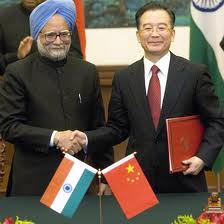
China’s Wen, India’s Singh Make Little Progress at Summit

By Mark Magnier, Los Angeles Times

Chinese Premier Wen Jiabao and Indian Prime Minister Manmohan Singh met Thursday in New Delhi, the main event of a three-day summit aimed at building trust and reducing long-standing irritants. But they announced no substantive breakthrough and little progress on border disputes, access to shared water resources or security issues.

Nor was there any apparent progress on India’s bid to open Chinese markets to its software, pharmaceuticals and farm products. New Delhi also remains wary of Beijing’s regional ambitions and its ties with Pakistan, India’s nuclear adversary.
The two rising Asian superpowers made some modest progress on the economic front, pledging to expand trade to $100 billion by 2015 from $60 billion at present and try to reduce the trade gap. China is India’s largest trading partner, but trade flows are heavily weighted in Beijing’s favor.

The two leaders also agreed to set up a hotline, and both sides spoke about the need for improved ties.

“I hope that my visit will help increase our cooperation in a wide range of fields and raise our friendship and cooperation to an even higher level,” Wen told reporters on leaving a welcoming ceremony at the presidential palace.

“A strong partnership between India and China will contribute to long-term peace, stability, prosperity and development in Asia and the world,” Singh added.

But any move to turn the regional cooperation rhetoric into reality will quickly run into roadblocks, analysts said, given the nations’ differences over Iran’s nuclear ambitions, North Korea’s long-standing conflict with the international community and continued warfare in Afghanistan.

China appeared keen to outdo the recent visit to India by President Obama. Chinese officials brought a contingent of 400 business executives, compared with the 250 American business men and women who accompanied the U.S. leader. And they signed $16 billion worth of business deals, compared with America’s $10 billion.

Singh and Wen reportedly discussed many of their nations’ core differences, including Pakistan; divided Kashmir; and the Dalai Lama, the exiled Tibetan spiritual leader based in northern India and considered by Beijing to be a “splittist” enemy of a unified China. But neither side made any significant concessions.

The two nations agreed to keep working on peacefully resolving their lingering border disputes, the focus of a brief war in 1962. Talks have languished for years.

China claims much of the Indian state of Arunachal Pradesh, whereas India wants China to back away from a slice of territory it controls in Kashmir, the disputed region largely divided between India and Pakistan.

“It will not be easy to completely resolve this question,” Wen said in a speech. “It requires patience and will take a fairly long period of time. Only with sincerity, mutual trust and perseverance can we eventually find a fair, reasonable and a mutually acceptable solution.”

In other words, said analysts: Don’t hold your breath. Add it up, they said, and this meeting — the 11th between the two leaders in five years — accomplished relatively little.

“Issues that fuel mutual mistrust, such as Kashmir for the Indians and Tibet for the Chinese, were addressed, but not substantially,” said Srikanth Kondapalli, a professor of Chinese studies at New Delhi’s Jawaharlal Nehru University. “The boundary dispute has not been resolved. There’s no road map.”


Obama and the Pakistan Dilemma

By Matthew Kaminski for The Wall Street Journal

Islamabad, Pakistan– America can’t win in Afghanistan as long as assorted Taliban insurgents find safe haven in Pakistan. That’s the no-brainer dressed up as revelation in leaks this week about the latest U.S. National Intelligence Estimate regarding both countries.

The proposed solution is tidy, too: Lean on Pakistan to cut links to extremists in the tribal regions along Afghanistan’s eastern border and in southern Baluchistan, even as the CIA ramps up the number of covert drone strikes on those groups.

The assumption is that Pakistan can bring the extremists to heel at its pleasure. After all, the Pakistani military began nurturing Afghan and other jihadists in the 1980s and has kept them on as “strategic assets” throughout the American long war brought about by 9/11. So, we think, if Islamabad cuts its support and makes life difficult for the jihadists, this unfortunate genie can be put back in the bottle. President Obama might even meet his self-imposed deadlines for drawing down the 98,000 American troops in Afghanistan.

This is all a useful fiction, maybe even a necessary one. American bribes, threats and pleas have prompted Pakistan into its own troop surge in the tribal regions. Over the past 18 months the Pakistanis have more than quadrupled their presence there, to 140,000, and have taken heavy casualties. Last year the Pakistani army cleared Swat Valley and South Waziristan, which had been overrun by militants.

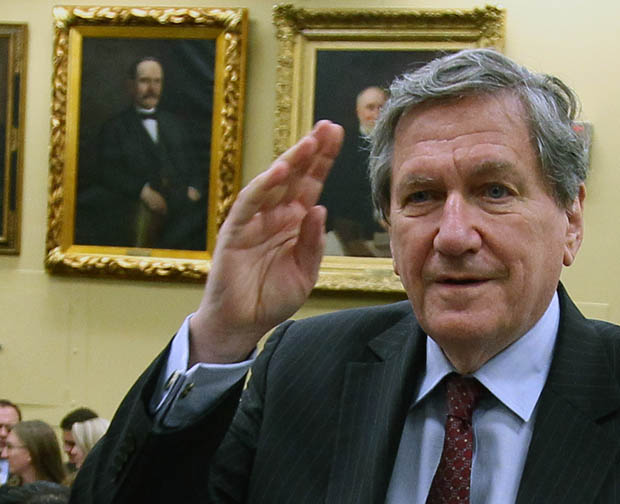
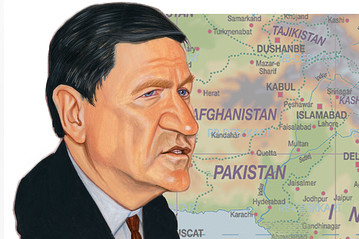
Today’s White House review of the war, which comes a year into the Obama surge, will likely highlight such progress. The president can consider his administration’s spirited engagement with Pakistan a foreign policy success. Credit is also due to “bulldozer” diplomat Richard Holbrooke, who developed close relations with the Pakistani civilian leadership before his untimely death Monday evening.

But Pakistan hasn’t turned. The insurgents who kill American troops in Afghanistan—principally the Taliban, whose leadership is in Baluchistan, and the militants loyal to the legendary fighter Jalaluddin Haqqani in the tribal regions—operate all too freely from Pakistan. President Obama should note that, too, today.

The year ends sourly for U.S.-Pakistani military relations. American frustration with Pakistan’s army chief, Gen. Ashfaq Kayani, has grown over broken Pakistani promises and a perceived lack of urgency. Summer floods diverted Pakistani troops away from the tribal areas, but the military doesn’t have that excuse now. The Pakistanis have also denied American requests to expand drone coverage to the area around Quetta, the city in Baluchistan that is the heaquarters-in-exile of the Taliban.

Pakistani officials say that Gen. Kayani will move his forces into North Waziristan, the tribal region that hosts the Haqqani network, in his own time. Some 50,000 troops are said to be ready to go in. No one wants them to lose, but they could against Haqqani’s respected force. A U.S. official says, “We don’t want them to do it if they’re not ready, but we don’t want them to think it’s not important.”

The Pakistanis may have found a way out. Analysts here say that the military is giving Haqqani time to relocate to a neighboring tribal region, Kurram, before soldiers go in to “clear” North Waziristan. A U.S. defense official here says that he’s seen no evidence to back the claim. But in the past most insurgents have simply melted away in the face of Pakistani advances.

Haqqani also figures as a trusted ally in Islamabad’s plans for a postwar Afghanistan. Afghan President Hamid Karzai and some American officials are open to talks with the Taliban, if they bring peace in exchange for power sharing. Also, who knows, America may get fed up and pull out before it wins. With all that in mind, Pakistani leaders may protect Haqqani, their favorite “asset,” thinking he and his Taliban allies may get power in Kabul one way or another.
Instead of sending drones over Quetta, the CIA this summer was allowed to set up shop on the ground. Across Pakistan, several such “fusion cells” pair CIA operatives with officials from Pakistan’s intelligence agency, the Inter-Services Intelligence. A Pakistani official says that this takes courage, as “ISI officers are murdered for helping Americans.”

Many circles here welcome U.S. pressure on the military and state to act. Islamic extremists are putting down deep roots in society, to the consternation of educated and moderate Pakistanis. This goes well beyond the mountainous regions that are the traditional home to religious warrior tribes. The state is losing its grip on Baluchistan. The country’s largest city, Karachi, is a militant hotbed. Parts of all Pakistani provinces have been radicalized, including the most populous, Punjab. Terrorism now touches all Pakistanis.

Pakistan is becoming more like Afghanistan—only with a more advanced economy and nuclear weapons. The people who cross the porous border between them, an arbitrary line drawn up by the British in the 1890s—already consider them the same country. Pakistan’s military has yet to show that it wants to—or that it can—control the Islamist wave. Many groups have slipped their leash and look at their old patron, the ISI, with distrust.
Gen. David Petraeus, the American commander in Afghanistan, certainly has contingency plans for Pakistan that go beyond extra doses of drones or diplomacy. Putting American boots in Waziristan is an obvious idea. But, like so many options, it is unappealing. The fallout in Pakistan would be hard to predict.

So for the moment, America gets to pretend that Pakistan can do this on its own. A successful terrorist attack on the U.S. with a Pakistani return address might quickly change that.

Pakistanis for Peace Editor’s Note
– As we have noted on several occasions before, Pakistan must do a lot more to hunt down the Taliban, its leaders and other militants on its side of the border. Already the violence and acts of terrorism within Pakistan are at an all time high as noted in this article and have touched every Pakistani and every corner of the country. Not eliminating the Taliban completely only allows them to get stronger.

Pakistan needs to stop playing a double game and stop thinking of the Taliban as a strategic asset as they never were nor ever will be an asset in any way. Pakistan must eliminate the safe havens for the Taliban within its territory, otherwise the United States will be compelled to act, with or without Pakistan’s blessings, and shall be correct in doing so to prevent attacks on its homeland emanating from Pakistan based militants.

Holbrooke Mentioned Afghan War Before Surgery

By Rajiv Chandrasekaran and Karen DeYoung for The Washington Post

As friends and colleagues from four decades of diplomatic life reflected on the intensity of Richard C. Holbrooke’s dedication, many were not surprised to learn that concerns about the Afghanistan war were apparently among his final thoughts.

After Holbrooke’s death Monday, The Washington Post, citing his family members, reported that the veteran diplomat had told his physician just before surgery Friday to “stop this war.”  But Tuesday, a fuller account of the tone and contents of his remarks emerged.

As physician Jehan El-Bayoumi was attending to Holbrooke in the emergency room at George Washington University Hospital, she told him to relax and asked what she could do to comfort him, according to an aide who was present.

Holbrooke, who was in severe pain, said jokingly that it was hard to relax because he had to worry about the difficult situation in Afghanistan and Pakistan.

El-Bayoumi, an Egyptian American internist who is Secretary of State Hillary Rodham Clinton’s physician, replied that she would worry for him. Holbrooke responded by telling her to end the war, the aide said.

The aide said he could not be sure of Holbrooke’s exact words. He emphasized Tuesday that the comment was made in painful banter, rather than as a serious exhortation about policy. Holbrooke also spoke extensively about his family and friends as he awaited surgery by Farzad Najam, a thoracic surgeon of Pakistani descent.

Holbrooke’s statement was seized upon quickly by critics of the Afghan war debate, some of whom interpreted it as a clarion call to end the conflict. Others viewed his comment as a last-breath disavowal of the Obama administration’s war policy, which has involved a troop surge – which Holbrooke publicly supported – to combat the Taliban. But State Department spokesman P.J. Crowley cast Holbrooke’s words simply as “humorous repartee.”

Crowley said the comment “says two things about Richard Holbrooke in my mind. Number one, he always wanted to make sure he got the last word. And secondly, it just showed how he was singularly focused on pursuing and advancing the process and the policies in Afghanistan and Pakistan to bring them to a successful conclusion.”

Holbrooke’s deputy, Frank Ruggiero, has been named to fill his post as special representative to Afghanistan and Pakistan in an acting capacity, Crowley said, adding that no significant move had been made to select a permanent replacement.

Break for the Border: Indo-Pakistan Tennis Duo’s Dream for Peace

As Reported by CNN

One half Indian, the other Pakistani, they are the most talked-about partnership in tennis.

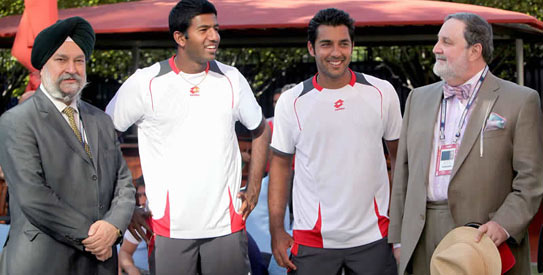
Dubbed “the Indo-Pakistan Express,” Rohan Bopanna and Aisam-Ul-Haq Qureshi hope to end their breakthrough year with a showdown at the infamous Wagah border that divides their countries.

Bopanna, an Indian Hindu, and Qureshi, a Pakistani Muslim also aged 30, reached their first major doubles final at the U.S. Open in September and climbed to eighth in the world rankings.

Yet their work off the court has attracted just as much attention as they try to soften the often-fractious relationship between their two nations since partition in 1947.

The pair have been honored with a string of awards for their humanitarian work in the past 12 months, and are determined to start picking up tournament titles in 2011.

But a showpiece clash at the notorious border crossing that hosts a nightly pageant between India and Pakistan’s border forces would be the perfect way to carry their “Stop War, Start Tennis” campaign into the new year.

“We’re thinking how to get to a wider audience and spread the message of peace through our partnership and thought,” Qureshi told CNN’s Open Court.

“How about playing a match at the Wagah border, with Rohan playing on the Pakistani side and me on the Indian side for a gesture of friendship?

“At the U.S. Open the ambassadors to the United Nations for Pakistan and India both came to watch the semifinals and finals. That was a huge deal because normally you don’t see two diplomats cheering for one cause — it was a really positive sign. I just hope in the near future we can have that match at the border, that would be great.”

The village of Wagah, near the Indian city of Amritsar and the Pakistani city of Lahore, is the only road border crossing between the two countries, and the daily ceremony — which includes a lot of strutting, stamping and saluting — regularly attracts a crowd of thousands.

A match there could be a watershed moment for a pairing that first emerged in 2003 but did not make a major impact until this season.

Their burgeoning partnership on court is allied to a deep-rooted desire to strengthen links between two countries which have a long and deep distrust of each other.

“We’re both brand ambassadors for an organization called Peace and Sport,” Bopanna said. “Right now we’re trying to see if we can help tennis in both our countries, promote it and keep the sport growing as much as we can.”

As well as receiving the Arthur Ashe Humanitarian of the Year award at the recent ATP World Tour Finals in London, they were also given the Peace and Sport Award for 2010 at a glittering ceremony in Monaco.

I’ve always told him I think he’s the most popular Indian guy in Pakistan this year!
–Aisam-Ul-Haq Qureshi on Rohan Bopanna

The citation read: “Their commitment to promoting peace between the two countries and their conviction that peace was possible was shown amply during the year.”

Joel Bouzou, president of the Peace and Sport Foundation, added of the proposed Wagah match: “The sport is ready for peace. Will the two governments rise to the occasion?”

Their partnership may have attracted plenty of headlines but for Qureshi, teaming up with his Indian counterpart made perfect sense.

“I’ve been playing with Indian players ever since I started playing tennis,” he said.

“Unfortunately there are not that many Pakistanis on the tour, and playing with an Indian was actually the most natural thing that came to me — having the same language, most of the time having the same dinner, Indian or Pakistani foods in the evening.

“The first time I ever traveled to India when I was 16, I was one of the top [Pakistani] juniors and he was one of the top juniors in India and that’s how I got to know him.

“Knowing his attacking style of play, I always knew if we played together we’d be able to make a really good impact. I think results clearly show in that way I was right, though normally he tells me that I am always wrong!”

As well as their run to the final of the U.S. Open, where they were beaten by the Bryan brothers from America, they also enjoyed success at Wimbledon which made them household names back home.

“This year we made the quarterfinal at Wimbledon and that was very, very big in Pakistan,” Qureshi said. “I’ve always told him I think he’s the most popular Indian guy in Pakistan this year!

“I can thank him enough for that because obviously without him I wouldn’t have been able to achieve all those goals, and with him being my best friend on the tour it makes it the icing on the cake. It’s been a great journey so far.”

Richard Holbrooke: The Death of a Peacemaker

By Manzer Munir for Pakistanis for Peace

President George H.W. Bush once described him as the “most persistent advocate I’ve ever run into.” President Obama’s special envoy to Afghanistan and Pakistan, Ambassador Richard Holbrooke, died earlier today after complications from heart surgery. He was a gifted diplomat and a tough negotiator who was considered one of the superstars of international diplomacy. Richard Holbrooke died Monday evening at George Washington University Hospital after doctors had performed emergency surgery Saturday to repair a tear in his aorta, the largest artery in the human body responsible for carrying blood from the heart to all parts of the body.

Described only days ago by President Obama as a “towering figure in American diplomacy,” Holbrooke was a career diplomat who started his career in 1962 as an officer during the Vietnam War where he initially worked at the US Agency of International Development. He continued to work on Vietnam issues during the war under President Lyndon B. Johnson and was a part of the delegation that presided in Paris for the peace negotiations to end the war. He also served as the director of the Peace Corps in Morocco in the early 1970’s as well as the assistant secretary of state for East Asian and Pacific Affairs in the Carter administration. He was in charge of US ties with China when relations between the two countries were “normalized” in late 1978.

Later in his career, he also held senior positions at a few prestigious Wall Street firms before returning to diplomacy under the Clinton administration. During this time he was credited with his most illustrious achievement to date when he helped orchestrate the Dayton peace agreement which ended the horrific war and genocide in Bosnia. He later went on to write a memoir titled “To End a War” and become somewhat of a celebrity in the Balkans, and is widely believed to have become the Secretary of State under Hillary Clinton if she had won. He also went on to serve as the US ambassador to Germany as well as the United Nations under President Bill Clinton before being tapped by the incoming Obama administration with the herculean task of being the special envoy of the United States to Afghanistan and Pakistan.

His last assignment was arguably his most difficult as he himself stated that “There’s no Slobodan Milosevic. There’s no Palestinian Authority. There is a widely dispersed group of people that we roughly call the enemy. There’s also al Qaeda, with which there’s no possibility of any discussion at all.” He mentioned that in the AfPak region, (a term he is credited with having coined), there are a range of militant groups such as the Afghan Taliban, the Pakistani Taliban, the Haqqani Network, Lashkar-e-Taiba, and that “an expert could add another 30.”

Such was the difficulty of his last assignment that some close to him are speculating whether the high level of stress and travels associated with shuttling between Washington, Kabul and Islamabad might have been a factor in causing a tear in his aorta. Certainly the complex and high strung meetings with Karzai and Zardari as well as the delicate balancing acts of diplomacy along with military operations in a region of the world described as “the most dangerous in the world” possibly took a toll on his health.

But to those that knew Richard Holbrooke, he was a man capable of taking on and winning the challenges of this and any difficult assignment as he had done so many times in his career. A New York Times reporter once wrote “if you want somebody to pull the trigger, or close a deal, think Holbrooke.”

Tonight in Washington DC, President Obama, Secretary Clinton, and the thousands of employees of the US State Department mourn the death of this icon of American diplomacy and celebrate his lifelong service to the United States and the American people in search of peace in troubled spots the world over. Meanwhile, thousands of miles away, a job vacancy has sadly opened up in the dangerous AfPak region of the world for an assignment that no one is capable of fulfilling quite like Mr Holbrooke. For the sake of the success in the Afghan war, peace and stability in Pakistan and securing America’s vital national interests in the region and around the world, let us hope that his successor will be half as capable a diplomat and negotiator as the late Richard C. Holbrooke, truly a giant of American diplomacy.

–Manzer Munir, a proud Pakistani American and peace activist, is the founder of Pakistanis for Peace and blogs at http://www.PakistanisforPeace.com as well at other websites as a freelance journalist and writer.

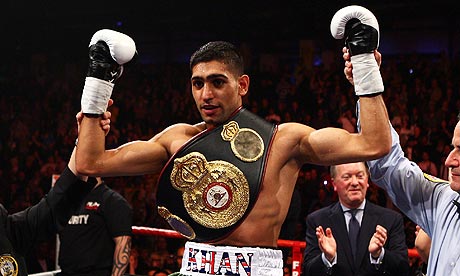
Amir Khan Does Enough to Retain Title

By Lance Pugmire for The LA Times

Amir Khan stood on his greatest American stage Saturday, and the fact that he remained standing is why he retained his World Boxing Assn. junior-welterweight world title against Marcos Maidana.

Withstanding a brutal 10th-round assault by the tough, hard-hitting Argentine, England’s Khan convincingly answered allegations that he has no chin and otherwise produced a sensational display of speed and flurry punching to win a unanimous decision by scores of 114-111 (judges Jerry Roth and C.J. Ross) and 113-112 (Glenn Trowbridge).

“I’m a boxer, I know I’m going to get hit.” Khan, 24, said in the Mandalay Bay ring. “He’s a strong puncher. I took everything he gave me.”

Khan (24-1) knocked down Maidana in the opening round, unleashing a quick flurry that closed with a hard left to the body that brought an obvious groan of pain from the challenger.

Maidana (29-2), who had knocked out 27 opponents, couldn’t match Khan’s punching or foot speed, but he did catch the Briton of Pakistani heritage often, like in the second round, when he erupted with uppercuts and rights.

Maidana threw 767 punches to Khan’s 603, but landed only 156 to Khan’s 273. Khan won four of the first five rounds on the judges’ scorecards.

Maidana’s response was pressure that backed up Khan in the sixth and seventh rounds, and dimmed some of the champion’s earlier shine.

The eighth and ninth rounds went Khan’s way and he appeared en route to quieting the critics who still bark about his first-round knockout loss in 2008, producing a resilient, entertaining style that the sport has needed from a young star who previously fought in Europe and first came to the U.S. earlier this year.

This was more than that polite introduction; it was an all-out brawl that produced the epic 10th round in which Maidana appeared poised for a knockout in the first minute.

Maidana staggered the champion to the point he was grasping for support from anywhere — a ring rope, referee Joe Cortez, Maidana — to stay upright.

At one point, it appeared tears were coming from Khan’s eyes as Maidana battered him without abandon. All three judges scored the round 10-8 for Maidana, astounding given that Khan was not knocked down.

The sense afterward was that Khan was more thrilled by his display of toughness than his defensive lapses.

“I’m sure everyone watching my fight knows I’ve made mistakes,” Khan said. “But I worked hard and came back stronger than ever. He’s a strong fighter and punches hard. My chin was tested and I proved today I’ve got a chin.”

Maidana couldn’t get Khan in the 11th round, either, and the champion rallied late in the 12th round with impressive combinations, walking with his arms raised into the embrace of trainer Freddie Roach at the bell.

Obama Prays for Holbrooke’s Recovery

As Reported by The Associated Press

Richard Holbrooke, the Obama administration’s diplomatic point man for Afghanistan and Pakistan, remained in critical condition Saturday night after surgery to repair a tear in his aorta. President Barack Obama Saturday expressed support for Holbrooke’s family in the difficult hour and prayed for his recovery.

“Earlier today, I spoke to Richard Holbrooke’s wife Kati and told her that Michelle and I are praying for Richard. Richard Holbrooke is a towering figure in American foreign policy, a critical member of my Afghanistan and Pakistan team, and a tireless public servant who has won the admiration of the American people and people around the world. I know that Secretary Clinton, Admiral Mullen, Tom Donilon, and other members of our team have been with him at George Washington hospital, and we continue to pray for his recovery, and support his family in this difficult time,” Obama said in the statment.

Holbrooke, 69, was rushed to George Washington University Hospital on Friday morning after he had chest pains during a meeting with Secretary of State Hillary Rodham Clinton, The Washington Post reported. He was almost immediately taken into surgery that extended for 21 hours into Saturday, the paper added.

With Holbrooke in intensive care only blocks away, President Obama’s senior national security advisers met at the White House on Saturday to discuss a major internal assessment of the war in Afghanistan. Obama will review the assessment Monday, with release to the public scheduled for later in the week.

Meanwhile, according to the Post, the U.S. administration officials said that Holbrooke’s condition would not affect the war review, compiled over the past month by the National Security Council staff from assessments made by Holbrooke and his staff and by the military coalition led by Gen Patreaus.

Holbrooke’s long diplomatic experience has given him a unique perspective within the administration and has positioned him perhaps better than anyone to navigate the often messy intersection of diplomacy, counterinsurgency and politics, the newspaper noted. Holbrooke, the newspaper reported, has been a strong advocate of a negotiated settlement of the war and of massive increases in development and governance aid. Under his direction, the number of U.S. civilian officials in Afghanistan has more than tripled, to exceed 1,000. He experienced health problems in August, when he underwent treatment for heart problems.

Blasphemy Trials in Pakistan Reveal a Broken Justice System

By Karin Brulliard and Shaiq Hussain for The Washington Post
With its single dirt road, friendly residents and abundance of drowsing donkeys, this village hardly seems a hotbed of religious radicalism.

Nevertheless, four years ago, dozens of angry townspeople marched and chanted, “Death to the blasphemer!” Their demands were answered. Two years later, court records show, a teenaged Muslim named Muhammad Shafique was sentenced to hang for cursing the Prophet Muhammad and tossing pages of the Koran onto “cow dung and urine.”

Today, an air of regret permeates Kulluwal. Shafique’s accusers fled town, and their relatives now say the allegations were lies. Many residents call the case a setup fueled by political and personal rivalries. But as Shafique waits on death row, his appeal stuck in Pakistan’s glacial courts, no one is quite sure what to do.

“The situation at that time was emotional. It was the responsibility of the police to sift through the facts and find the truth,” said Chaudhry Safraz Ahmed, 42, a community leader whose father was one of Shafique’s accusers. “That did not happen. And Shafique is behind bars.”

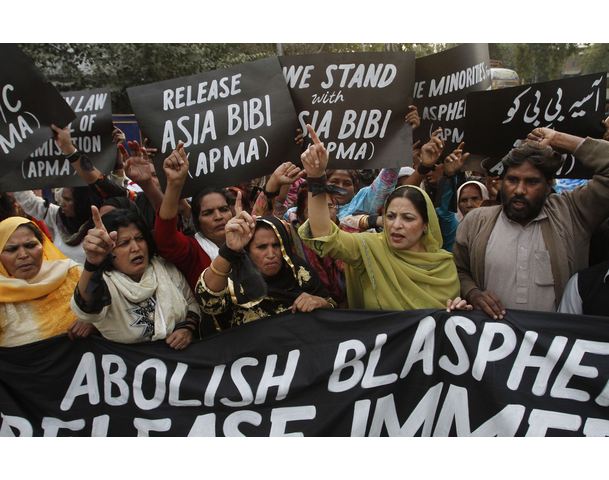
Pakistan is in the midst of a heated debate over its ban on blasphemy following the sentencing to death last month of a Christian woman, Asia Bibi. The pope condemned that sentence, which has not yet been carried out. Human rights organizations, meanwhile, have demanded the repeal of a law that they say is used to harass religious and sectarian minorities in this Sunni Muslim-majority nation.

But blasphemy cases, about half of which involve Muslim suspects such as Shafique, also point to a more fundamental problem with grave implications for the nation’s U.S.-backed fight against militancy: Pakistan’s broken justice system, corrupt and lacking in expertise, often rewards vendettas and encourages radicalism.

In this system, religious extremism is less an epidemic than a menacing shadow – just as it is across Pakistan, an unstable democracy where Islamist threats often eclipse the majority’s more peaceful views.

The law against blasphemy – which encompasses vaguely worded prohibitions on insults against Islam – gives radicals a tool with which to bully those who don’t share their hardline religious views. Legal experts say lawyers, witnesses and authorities are frequently intimidated into helping to enforce the law, leading to injustices that bolster militants’ anti-government arguments.

“These are the kind of provisions that allow space for extremists to act with impunity,” Ali Dayan Hasan, a Pakistan-based representative for Human Rights Watch, said of the blasphemy law. “This country is, in that sense, at a crossroads where it is time for people to stand up.”

Just what happened on the evening of March 17, 2006, in this agrarian corner of Punjab province remains in dispute. It took a court in the nearby city of Sialkot 73 hearings over 27 months to gather enough testimony for a verdict. Lawyers’ strikes, witnesses’ absences and a funeral caused delays. In the end, the key evidence against Shafique, now 22, was witness accounts and soiled scraps of pages from a Koran, which the judge deemed impossible to fake.

“The question arises whether . . . a Muslim can think to smear the pages of the Holy Book with cow dung and urine just to create an evidence to involve his opponents,” the judge wrote in 2008. “Not an iota of evidence has been produced by the accused in this regard.”

But Shafique’s family, along with many others in Kulluwal, cite two reasons for such a plot. Shafique, an aspiring electrician, had accused his brother’s wife of adultery. And her alleged paramour had powerful allies, among them a town politician with his own motive: Shafique’s brother was challenging him in a village election.

Whatever the case, word of Shafique’s alleged rampage spread, and a crowd beat him viciously, residents recalled. Qari Qadir, the village imam, said he declined requests to announce the offense over his mosque’s loudspeaker, fearing a “serious situation.” Instead, he led a march the next day at which protesters demanded that police file charges.

“Everybody was against him,” said Ahmed, the community leader. “The police thought it could become a law-and-order situation if they did not take action.”

According to court records, two main accusers – the politician and Ahmed’s father – did not testify. Four young men who did gave nearly identical statements about seeing Shafique curse the prophet and rip the Koran.

Shafique testified that the charges were personal and political, and that he “heatedly” loved Allah.

The court sentenced Shafique to join about 7,600 others in Pakistan on death row, about 60 of whom are convicted blasphemers, according to the Human Rights Commission of Pakistan. The country has not executed anyone since 2008, and blasphemy cases are often overturned on appeal.

But for many, that potential reprieve is little help. Suspects are often murdered in prison or after release, a fact one Pakistani court used to justify the blasphemy law – in prison, it reasoned, suspects are protected from public rage.

Blasphemy was outlawed during British colonial rule but made a capital crime in the 1980s under the Islamist military rule of Mohammed Zia ul-Haq. Now, the law is being scrutinized; a bill in parliament would shorten sentences, require evidence that the crime was committed intentionally and introduce punishment for false accusation.

But while recent international attention has galvanized opponents of the current law, it has also roused defenders. Conservative religious parties have threatened mayhem if the law is changed, an idea they deem a Western conspiracy. One cleric in northwest Pakistan went further, promising $6,000 to anyone who kills Bibi, the Christian woman.

Amid this debate, Mirza Shahid Baig, Shafique’s lawyer, sticks to technical arguments. The wrong police investigated, he said, and there was no serious look at Shafique’s side of the story.

“I am a very true lover of the holy prophet, but this case was totally false,” Baig said one recent afternoon at his dusty basement office in the bustling city of Lahore. “Whether the law is correct or not correct according to the morality, this is not my job.” In Kulluwal, most everyone seems to agree that a blasphemer deserves death. But they are certain Shafique was not one.

The investigators and witnesses who testified against him have all left town, and no one else recalls seeing Shafique’s alleged rampage. Ahmed said his father is ready to recant in court.

“This is a baseless charge,” said Ahmed, calmly sipping tea with Shafique’s parents on a recent day. “The issue is religious, so it had an influence on the police. It interfered with the investigation.”

Another resident, Mohammed Ibrahim, is the brother of the politician who accused Shafique and the father of one youth who testified. Ibrahim said his son has since told him he was pressured to lie, and that his brother forced police to file charges.

“He thought of himself as important, as someone who could not be challenged politically,” Ibrahim said of his brother, who, he added, has moved to Canada. To some Kulluwal residents, the whole affair proves elders should resolve disputes, not courts.

Shafique, meanwhile, writes letters to his family from solitary confinement. In one recent missive, he said that prison guards avoid touching him. He understands, he wrote, for he reserves no sympathy for blasphemers.

“My heart weeps for the innocent ones,” he wrote. “But I have no words of sympathy for the sinners . . . I would have killed them myself if I could.”
Trained by the Best, Amir Khan puts 140-pound Title on the Line

By Bob Velin for Usa Today

The way Amir Khan sees it, he’s spent a lot of time sparring with the best pound-for-pound boxer in the world, and is trained by arguably the No. 1 trainer in the world.

So anything that Argentine power puncher Marcos Maidana throws his way Saturday night at the MGM Grand, well, Khan, who puts his 140-pound title on the line (HBO, 9:30 p.m. ET), has already seen it, or will know how to deal with it. You want speed? Few fighters are quicker than Manny Pacquiao, whom Khan sparred with in the Philippines when Pacquiao was training to fight Antonio Margarito in November. Khan says Pacquiao told him, “I’m the fastest guy he’s ever sparred with.”

How about power, Maidana’s forte? We know how Pacquiao re-arranged Margarito’s face that night in Cowboys Stadium last month. Khan’s trainer, Freddie Roach, who is also Pacquiao’s cornerman, says Khan more than held his own against Pacquiao, and, in fact, laid some pretty good licks on the eight-division world champion.

“Yeah, Freddie likes us to spar when we’re both 100%, and when we don’t take it easy on each other,” Khan said by phone last week. “It’s better for me to get that experience and see how far I am from being pound-for-pound the best fighter in the world, which is my ambition. So, yeah, I really did well against Manny, and it was a good, controlled spar. I controlled it when I wanted to control it.”

Maidana says he feels his power can overcome Khan’s speed. “The speed doesn’t bother me because I know I have 12 rounds,” says Maidana. “But I know one thing, when I hit him with one of the my hands, the fight is over.” Khan says Roach has brought out the best in him as a fighter.
“There were times when I used to fight with my heart too much, and I have to use my brains a little bit more,” says Khan. “I’ve got the boxing skills to do that, you know, with the background of the amateurs, and going to the Olympics and everything. Freddie’s taught me to use my brain and think about things more.”

Khan (23-1, 17 KOs) respects the punching power of Maidana (29-1, 27 KOs), but says, “(Maidana’s) a lot slower than me, he’s very predictable and I think somebody’s got to punch him at the right time.” They have one common opponent: Andriy Kotelnik, who handed Maidana his only loss in February 2009, while Khan scored a near shutout victory against Kotelnik in July 2009.

As for Maidana, Khan says he and Roach have worked on the 27-year-old Argentine’s weaknesses and they expect to exploit those weaknesses.
“I think with boxers at that level, they’re always going to (have) their habits. You’re not going to change,” says Khan. “He can try to change his tactics and stuff, but I think his habits are always going to be there. We know exactly what (Maidana) does wrong, and we’ve just got to capitalize on that. We’ve also been working on the stuff I do wrong. I’ll be watching fights with Freddie and I’ll make a lot of mistakes in fights so we’ve been correcting them as well. So (Maidana) can think I make this mistake and that mistake, but he’s going to be fighting a different Amir Khan on the 11th.”

Roach says Khan has changed his style since his shocking first-round knockout by Breidis Prescott as a lightweight in 2008, the only loss of his career, a loss that led some to believe that Khan does not have a strong chin. Roach says he’s a completely different fighter now. “The thing is, he knows how to set things up now,” says Roach. “He just doesn’t go in there and look for a one-punch knockout. He knows how to break a person down and he knows how to work behind his jab and … reach for the body. He’s just become a completely different fighter. We haven’t lost a round since we’ve been together (at the beginning of 2009). I mean, we haven’t lost one round.”

Khan says he expects to stay at 140 pounds for another 12-15 months before he moves up to welterweight. But first there are some outstanding junior welterweights out there he’d like to fight. “You’ve got Timothy Bradley and Devon Alexander, there’s a lot of big names in that division,” says Khan, who just turned 24 this week. “Fighting them would be good for boxing, because that’s what people want, people want young fighters to fight (each other). They want explosive fighters instead of fighters past their peak.”

Both Khan and Richard Schaefer, the CEO of Golden Boy Promotions, which has Khan under contract, say his next fight will probably be in his native England. There had been talk that a good opponent for Khan to rebuild his popularity in England would be undefeated Brit lightweight John Murray (30-0, 18 KOs). Khan says that won’t happen because he and Murray are not on the same level. “I would get a lot of criticism for that because I’m a world-class fighter and he’s on a domestic level,” says Khan. “I want to fight world-class fighters, and I don’t think he’s in that category.”

Khan says when he moves up to welterweight, there’s no way he’d fight Pacquiao because they have become such good friends, and they share the same trainer. However, “with the strength and power and technique I have, I could fight a Floyd Mayweather,” he says.

Dr. Mahbub ul-Haq Reflects on Working Toward Peace

By Dr. Mahbub ul-Haq for Architects of Peace

Simply put, our challenge is this-can we make the twenty-first century a century of human development, when all people enjoy access to education and health, when each individual is enabled to utilize her or his full human potential, when all people have developed their basic capabilities and enjoy equal access to the opportunities of life? Now let us be clear. This is a vision of human competition, not state welfare. It is a vision of access to opportunities, not access to charity. It is a vision of the enrichment of human lives, not just the enrichment of national income or wealth, and the investment required to realize this vision is fairly modest.

We wish to move over the next fifteen years toward a society where there is universal basic education, primary health care for all, safe drinking water for all, adequate nutrition for all malnourished children, and family planning services for all willing couples. In other words, we wish to move toward a world society where basic social services are available to everyone, both men and women, and women before men; where the worst human deprivations curbing the potential of more than 1.3 billion people today have been finally overcome; where all essential ingredients for the full flowering of human potential are available in the form of adequate education, health, and nutrition. We wish to achieve all this.

What is the financial cost of achieving such a society? According to the best available estimates, the cost will be around an additional $34 billion a year-34 billion dollars. This cost is less than 1 percent of the total income if the poor nations bear all the burden themselves and this cost will be reduced to less than one-seventh of 1 percent of global income if the international community decides to share the cost along with the poor nations. That is the cost.

The question we face today is this: Can we persuade the leaders of the world to accept such a global compact for human development for the twenty-first century?

Let us again be very clear. Such a global compact is not yet another treaty requiring the formal approval of the governments of the world. It is, in fact, a shared vision of what the world can and must achieve. It requires global understanding, not a global treaty, because in the last analysis most action must begin at the national level, and often at the grassroots level, and such action must begin in the developing world itself.

These countries do not lack financial resources. What they lack is political courage. We need to ask the leaders of the Third World, and ask them bluntly, why they insist on spending $130 billion each year on the military when even a quarter of this expenditure can finance their entire essential social agenda. And we must ask them why they insist on having six soldiers for every one doctor when their people are dying of ordinary diseases, from internal disintegration, not from external aggression, from many threats to human security, not any threats to territorial security.

And we must also ask them why they are not convinced that everything they buy costs the immunization of four million children and every jet fighter they purchase costs the schooling of three million children and every submarine they store away in the waters denies safe drinking water to sixty million people. Why do we let them argue poverty of resources for human development when they have well-fed armies but unfed people and when many of these nations spend more on their armies every year than their total education and health budgets?

And at the same time, we must ask the leaders of the rich nations, why do you keep subsidizing your arms exports to poor lands when you argue against even food subsidies in these poor nations? Why is it that you refuse to close down your military bases, phase out your military assistance, and restrict the export of the sophisticated military weapons even now when the Cold War is over? What is your excuse? And why do you make such handsome profits on your exports of arms to poor, starved, disintegrating countries while giving them lectures all the time on respect for basic human rights? And we need to ask these leaders, why do they not invest in human development and instead make profits out of the future prosperity of poor lands and not out of the current state of human deprivation?

I believe, my friends, what we need to change is the mindset of our leaders in developing countries as well as in rich nations, because changes in policies will then follow and adequate resources for priority human development agendas will then be mobilized.

Let us spread the message to all world leaders that such a compact is not only desirable-it is eminently doable, it is feasible. And many years from now, we can look our grandchildren right in the eye and tell them quite proudly: “Yes, we tried.”


-Described as “the most articulate and persuasive spokesman” for the developing world, and as one of the most brilliant economists the world has ever known, Pakistan born Dr. Mahbub ul-Haq pioneered many economic policies to help the poor. He served as chief economist of Pakistan’s National Planning Commission during the 1960s, director of the World Bank’s Policy Planning Department in the 1970s, and in various Pakistani cabinet posts during the 1980s. As special advisor to the United Nations Development Program, he created the Human Development Index, which measures development by people’s well-being, rather than by their income alone. Haq was the author of six books on poverty and development. He died in 1998 in New York.

Pakistan Ready for China Bank Deal

By Matthew Green for The Financial Times

Pakistan is poised to approve an application by Industrial and Commercial Bank of China to start operating in the country, a move that Islamabad hopes will herald closer commercial ties with Beijing.

Pakistani officials see a visit by Wen Jiabao, the Chinese premier, this month as a chance to strengthen a long-standing alliance at a time when Islamabad’s relations with the US are under strain.

Shahid Kardar, Pakistan’s central bank governor, said he would grant ICBC, China’s biggest bank, a licence to open a branch in Pakistan ahead of Mr Wen’s arrival on December 17.

“I would see a greater increase in economic activity in terms of China and Pakistan,” he told the Financial Times in Karachi, Pakistan’s commercial capital. “The signal that goes out is that Pakistan is open for business.”

Mr Kardar said ICBC applied for the licence several months ago to exploit opportunities in trade and project finance generated by a growing number of Chinese companies working in Pakistan.

ICBC, which has a market capitalisation of $300bn, is pursuing an ambitious expansion drive in the Middle East and in big cities across Europe. The bank declined to comment on Mr Kardar’s remarks.

Security concerns may weigh on the company’s thinking over how much exposure it seeks in Pakistan. Karachi, home of the country’s banking sector, has witnessed an increase in politically-motivated murders and suicide bombings this year, including an attack on a police compound by Taliban insurgents last month that killed at least 15 people.

China’s activities in Pakistan, including increasing military sales and civilian nuclear co-operation, are being watched warily by India, which views both countries with suspicion.

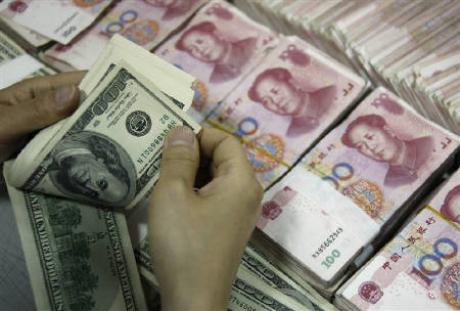
Mr Kardar believes ICBC will act as a catalyst for greater activity by Chinese companies who are already investing in infrastructure, energy, telecommunications and mining. Bilateral trade is worth some $6.2bn a year, dominated by $5bn of Chinese exports, Pakistani officials say.