Archive for the ‘ Pakistan ’ Category

Her ‘Crime’ Was Loving Schools

By Nicholas D. Kristof for The New York Times
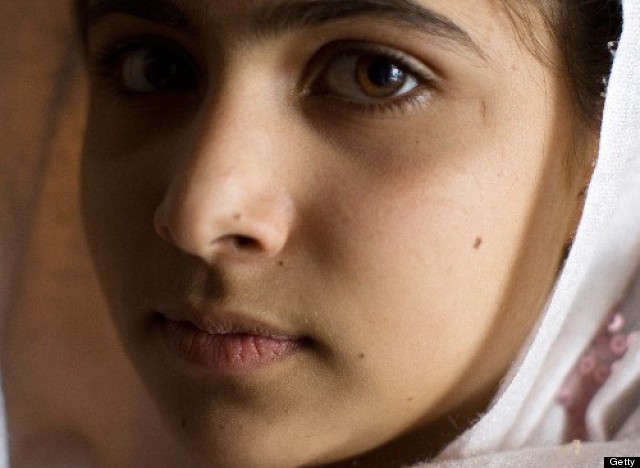
Twice the Taliban threw warning letters into the home of Malala Yousafzai, a 14-year-old Pakistan girl who is one of the world’s most persuasive advocates for girls’ education. They told her to stop her advocacy — or else.

She refused to back down, stepped up her campaign and even started a fund to help impoverished Pakistani girls get an education. So, on Tuesday, masked gunmen approached her school bus and asked for her by name. Then they shot her in the head and neck.

“Let this be a lesson,” a spokesman for the Pakistani Taliban, Ehsanullah Ehsan, said afterward. He added that if she survives, the Taliban would again try to kill her.

Surgeons have removed a bullet from Malala, and she remains unconscious in critical condition in a hospital in Peshawar. A close family friend, Fazal Moula Zahid, told me that doctors are hopeful that there has been no brain damage and that she will ultimately return to school.

“After recovery, she will continue to get an education,” Fazal said. “She will never, never drop out of school. She will go to the last.”

“Please thank all your people who are supporting us and who stand with us in this war,” he added. “You energize us.”

The day before Malala was shot, far away in Indonesia, another 14-year-old girl seeking an education suffered from a different kind of misogyny. Sex traffickers had reached out to this girl through Facebook, then detained her and raped her for a week. They released her after her disappearance made the local news.

When her private junior high school got wind of what happened, it told her she had “tarnished the school’s image,” according to an account from Indonesia’s National Commission for Protection of Child Rights. The school publicly expelled her — in front of hundreds of classmates — for having been raped.

These events coincide with the first international Day of the Girl on Thursday, and they remind us that the global struggle for gender equality is the paramount moral struggle of this century, equivalent to the campaigns against slavery in the 19th century and against totalitarianism in the 20th century.

Here in the United States, it’s easy to dismiss such incidents as distant barbarities, but we have a blind spot for our own injustices — like sex trafficking. Across America, teenage girls are trafficked by pimps on Web sites like Backpage.com, and then far too often they are treated by police as criminals rather than victims. These girls aren’t just expelled from school; they’re arrested.

Jerry Sandusky’s sex abuse of boys provoked outrage. But similar abuse is routine for trafficked girls across America, and local authorities often shrug with indifference in the same way some people at Penn State evidently did.

We also don’t appreciate the way incidents like the attack on Tuesday in Pakistan represent a broad argument about whether girls deserve human rights and equality of education. Malala was a leader of the camp that said “yes.” After earlier aspiring to be a doctor, more recently she said she wanted to be a politician — modeled on President Obama, one of her heroes — to advance the cause of girls’ education.

Pakistan is a country that has historically suffered from timid and ineffectual leadership, unwilling to stand up to militants. Instead, true leadership emerged from a courageous 14-year-old girl.

On the other side are the Taliban, who understand the stakes perfectly. They shot Malala because girls’ education threatens everything that they stand for. The greatest risk for violent extremists in Pakistan isn’t American drones. It’s educated girls.

“This is not just Malala’s war,” a 19-year-old female student in Peshawar told me. “It is a war between two ideologies, between the light of education and darkness.”

She said she was happy to be quoted by name. But after what happened to Malala, I don’t dare put her at risk.

For those wanting to honor Malala’s courage, there are excellent organizations building schools in Pakistan, such as Developments in Literacy (dil.org) and The Citizens Foundation (tcfusa.org). I’ve seen their schools and how they transform girls — and communities.

One of my greatest frustrations when I travel to Pakistan is that I routinely spot extremist madrassas, or schools, financed by medieval misogynists from Saudi Arabia or elsewhere. They provide meals, free tuition and sometimes scholarships to lure boys — because their donors understand perfectly that education shapes countries.

In contrast, American aid is mainly about supporting the Pakistani Army. We have tripled aid to Pakistani education to $170 million annually, and that’s terrific. But that’s less than one-tenth of our security aid to Pakistan.

In Malala’s most recent e-mail to a Times colleague, Adam Ellick, she wrote: “I want an access to the world of knowledge.” The Taliban clearly understands the transformative power of girls’ education.

Do we?
Nation Shocked: Hate Targets Hope

By Umer Farooq and Hazrat Ali for The Express Tribune

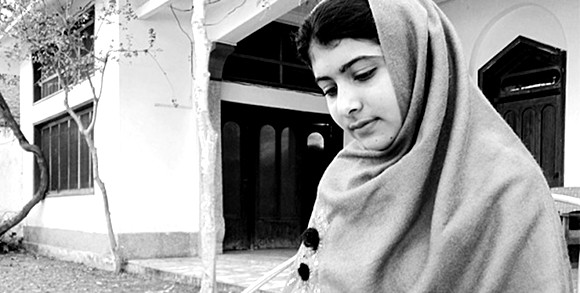
The ideology of hate has proven that it will target anything that comes in its way – even if it is a 14-year-old girl.
In a harrowing incident that shocked the nation on Tuesday, three armed men intercepted a van carrying schoolgirls, identified their target and then shot her, point blank.

Their target: iconic child activist and National Peace Award winner Malala Yousafzai.
An outspoken critic of the Taliban and vociferous proponent of female education, Yousafzai won international recognition for highlighting Taliban atrocities in Swat with a blog for the BBC three years ago when militants, led by radical cleric Maulana Fazlullah, burned girls’ schools in the valley.

Yousafzai was 11 when she started writing the blog in late 2008.

On Tuesday, she was on her way back home after sitting for a midterm examination paper, when the gunmen attacked and critically injured her. She is currently in critical condition. Three of her friends were also injured.

Tehreek-e-Taliban Pakistan (TTP) claimed responsibility for the attack, saying Yousafzai criticised the group, and called her a ‘Western-minded girl.’ In a chilling warning, TTP’s spokesman said that there would be follow up attacks if she survived.

As condemnations and expressions of shock and outrage poured in from all quarters, doctors in Peshawar battled to keep her alive.
Van ambushed

According to details, three armed men intercepted the van carrying Yousafzai and other female students near Sharifabad area of district Swat.
The armed men asked about Yousafzai, said Usman Ali, the driver of the van while talking to reporters.

“The man who stopped the vehicle signaled to his other armed accomplices that Yousafzai was inside. Another armed man went to the back of the vehicle, and started firing inside,” Ali said.

Yousafzai and her three friends –– Shahnaz, Kulsoom and Shabnam –– sustained injuries.
She was initially rushed to Saidu Hospital, where Medicinal Superintendent Lal Noor said that, despite head injuries, Yousafzai was in stable condition.

He said a bullet is still inside her body but added that Yousafzai could talk, and answered his questions.
She was shifted via helicopter to Combine Military Hospital (CMH) Peshawar where a team of senior doctors completed her medical examination, and stated her condition as critical.

“We have thoroughly examined her, she is in critical condition. The bullet travelled from her head and then lodged in the back shoulder, near the neck,” a doctor in CMH told AFP, requesting anonymity.
“The next three to four days are important for her life. She is in the intensive care unit and semi-conscious, although not on the ventilator,” he said.

TTP claims responsibility

Taliban spokesperson Ehsanullah Ehsan told AFP that his group carried out the attack after repeatedly warning Malala to stop speaking out against them.

“She is a Western-minded girl. She always speaks against us. We will target anyone who speaks against the Taliban,” he said by telephone from an undisclosed location.

“We warned her several times to stop speaking against the Taliban and to stop supporting Western NGOs, and to come to the path of Islam,” he said.
“This is a clear a message for the rest of the youth as well. Whoever is found following Yousafzai, will meet the same fate,” Ehsan said, adding the TTP will conduct follow-up attempts if Yousafzai survived this time.
The 14-year-old received the first-ever national peace award from the government last year, and was nominated for the International Children’s Peace Prize by advocacy group KidsRights Foundation in 2011.

Condemnations

Condemnations flew in from all quarters, including the president, prime minister, the opposition chief, even the US State Department.
President Zardari strongly condemned the attack, but said it would not shake Pakistan’s resolve to fight militants or the government’s determination to support women’s education.

The president also directed that Yousafzai be sent abroad for medical care.
Khyber-Pakhtunkhwa Information Minister Iftikhar Hussain, who lost his only son to militants, termed Taliban’s act ‘cowardice’ and called for a sweeping military offensive against all militants in northwest Pakistan. “A team of neurosurgeons is examining her condition and they said there are 70% chances that she will survive,” Hussain said at a late night press conference on Tuesday. The minister asked the nation to pray for her life.

Appeal for prayers

Yousafzai’s father, former Swat Peace Jirga spokesperson Ziauddin Yousafzai, made an appeal to the nation to pray for her recovery.
“She is a daughter of the nation, and represents the country’s female folk. I request the nation to pray for her recovery,” Ziauddin said.
District Police Officer (DPO) Swat Rasool Shah told The Express Tribune that an FIR of the incident has been registered, and a number of suspected persons have been arrested in search operation in different areas of Mingora.

Western Peace Activists March in Pakistan Against Drone Strikes

By Mark Mcdonald for The New York Times

Dozens of Western peace activists, including 32 Americans, participated in a convoy in Pakistan over the weekend to protest deadly American drone strikes in the tribal belt between Pakistan and Afghanistan.

The motorcade was almost certain to be turned away Sunday from entering South Waziristan and the town of Kotkai, the hometown of the founder of the Pakistani Taliban. The Pakistani government, as my colleague Salman Masood reported, was expected to block the group.

The activists, most of them from the group Codepink, object to the civilian deaths that occur in the aerial strikes against Taliban fighters and other militants. (Rendezvous recently explored the controversy over drone warfare in a piece, “Are Drone Strikes Worth the Costs?”)

“We kill a lot of innocent people,” said Medea Benjamin, a cofounder of Codepink and part of the delegation in Pakistan. She called the attacks “barbaric assassinations.”

Speaking of the tribal areas, she said, “This is a culture that very much believes in revenge, and then they seek revenge by trying to kill Americans. So we are just perpetuating a cycle of violence and it’s got to stop somewhere, and that’s why we are putting our bodies on the line by trying to go to Waziristan to say no.”

Ms. Benjamin said her group also was participating in the march to “put significant pressure on the Obama administration to come clean about these drone attacks, to recognize how inhumane and counterproductive they are.”

Before the convoy got under way in Pakistan, members of the Codepink delegation met with Richard E. Hoagland, the deputy chief of mission at the U.S. Embassy in Islamabad, and he was presented with a petition calling for an end to the drone strikes.

“I wish I could tell you how enormously, enormously careful the various deciders are before there is any strike these days,” Mr. Hoagland said. “I know you object to any strike at all, absolutely, I know that, but I wish I could also tell you the extreme process that is undertaken to avoid what is very sadly called ‘collateral damage.’ ”

“I looked at the numbers before I came here today,” Mr. Hoagland told the group, “and I saw a number for civilian casualties that officially — U.S. government classified information — since July 2008, it is in the two figures. I can’t vouch for you that that’s accurate, in any way, so I can’t talk about numbers. I wanted to see what we have on the internal record, it’s quite low.”

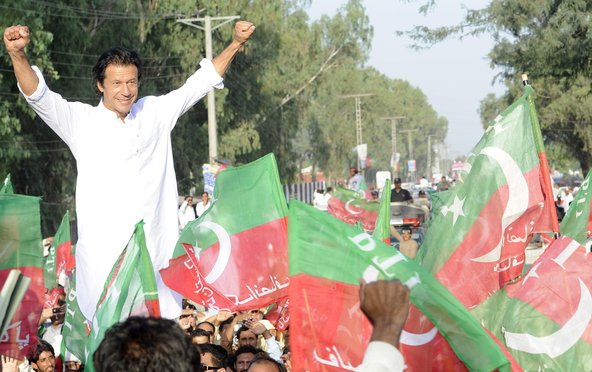
The so-called “peace march” — which was more like a motorcade — was organized by Tehreek-e-Insaaf, the opposition political party led by the cricket-star-turned-politician Imran Khan. In a recent profile in The New York Times Magazine, the writer Pankaj Mishra called Mr. Khan “Pakistan’s greatest sportsman and now its most popular politician since Benazir Bhutto.”

“His long and uncompromising opposition to American presence in the region,” the article said, “not only pleases assorted Islamic radicals; it also echoes a deep Pakistani anger about the C.I.A.’s drone attacks, whose frequency has increased under the Obama administration.”

Before the march, Mr. Khan said of the campaign of drone strikes: “It’s totally counterproductive. All it does is it helps the militants to recruit poor people. Clearly if they were succeeding, these drone attacks, we would be winning the war. But there’s a stalemate.”

In an interview on BBC Radio 4, Mr. Khan said Pakistani government officials were “completely complicit” in the U.S drone efforts, “covertly and tacitly giving their approval.”

If he becomes the Pakistani leader, Mr. Khan said, he would appeal to the United States and the United Nations to halt the aerial attacks. If those appeals failed, he said, he would have the Pakistani Air Force begin shooting down the drones.

In a scathing opinion piece Sunday in the Express Tribune newspaper from Karachi, the attorney and commentator Saroop Ijaz said Mr. Khan’s march was principally linked to domestic Pakistani politics. He also objected to Mr. Khan not denouncing Taliban suicide attacks that have killed numerous civilians. An excerpt from his commentary, headlined “Game of Drones”:

This is not about Waziristan, this is not even about drones; this is about politics and very dangerous and cowardly politics. By indulging and showing indecent deference to these murderers, Mr. Khan is insulting thousands of those dead in suicide attacks over these years.

By all means, go and play your political games and make populist, unrealistic promises, but a line needs to be drawn when the memory of thousands of our martyrs and the survival of our society is at stake. Unless, of course, Mr. Khan can give us his solemn word that his new friends are willing to lay down their weapons and stop killing our innocent civilians.
The journalist Ahmed Wali Mujeeb recently spent nearly a month in Waziristan. A condensed excerpt from his report for the BBC:

The drones do not suddenly appear over the horizon, carry out the attack and leave. At any given time of the day, at least four are hovering in the sky, emitting a distinctive and menacing buzzing sound. They call them “mosquitoes.”

“Anybody who has been listening to the buzzing all through the day usually can’t sleep at night,” says Abdul Waheed, a tribesman in North Waziristan. “It’s like a blind man’s stick — it can hit anybody at any time.”

Taliban and local tribesmen say the drones almost always depend on a local spy who gives word when the target is there. Some say the spy leaves a chip or microchip at the site, which guides drones in for the kill. Others say special marker ink is used — rather like “X” marks the spot.

Anyone coming under suspicion is unlikely to get a hearing. The Taliban kill first and decide afterwards if the suspect was involved or not. It is better to be safe than sorry, they say.
Jennifer Gibson, an attorney with Reprieve, a legal charity in Britain that represents a number of Pakistani drone victims, was a researcher in Pakistan for the recent report, “Living Under Drones,” a joint project by the law schools at Stanford University and New York University.

In a commentary for The Los Angeles Times, Ms. Gibson said drones did not simply fly to a target, launch their missiles and then withdraw to a distant base. Instead, she said, drones were “a constant presence” overhead, “with as many as six hovering over villages at any one time.”

“Parents are afraid to send their children to school,” she wrote. “Women are afraid to meet in markets. Families are afraid to gather at funerals for people wrongly killed in earlier strikes. Drivers are afraid to deliver food from other parts of the country.

“The routines of daily life have been ripped to shreds. Indisputably innocent people cower in their homes, afraid to assemble on the streets. ‘Double taps,’ or secondary strikes on the same target, have stopped residents from aiding those who have been injured. A leading humanitarian agency now delays assistance by an astonishing six hours.”

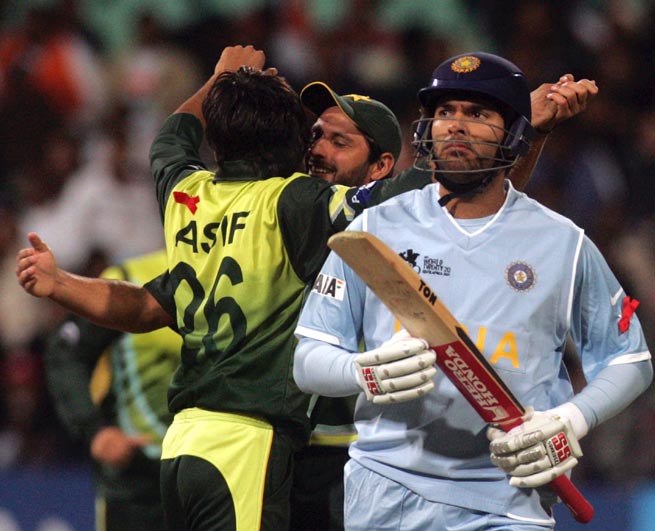
Preview: India v Pakistan, Super 8 Match

As Reported by Cricbuzz

There are a few games during which rankings, form, prospects and position in the table hardly matter. An India-Pakistan game is one such. The rivalry between the two teams has seen them produce some rivetting entertainers and this game could be no different. India could see their semi-final prospects disappear if they are to lose this game while for Pakistan a win could seal a spot in the last 4.

Both the teams have some forgettable records against their name and one of them could be broken when the arch-rivals go head-to-head. Pakistan have never registered a win against India at World Cups while India have failed to register even a single win at the Super 8s after their victorious 2007 WC campaign.

Both teams will be going all-out for the win knowing that it would give the fans and themselves much to cheer about, even if they do not end up taking the cup at the end.

India

India come into the match after having been annihilated by the mighty Aussies in their first super 8s match. India looked ill at ease with the bat and with the ball as they were walloped by Australia. Dhoni’s men may revisit the plan to play with 5 bowlers knowing that Pakistan are much better players of spin.

Irfan Pathan’s lack of firepower up top could prompt the team to bring back the swashbuckling Virender Sehwag while the over-dependance on Virat Kohli to steady the ship and provide the platform would be a serious cause for concern. Suresh Raina performance would have given India a few cheers, but they will want the left hander to do the kind of job he is known for rather than do the consolidating job. There have also been experts who have pointed out that India have rushed Yuvraj Singh back into the side. With his form and overall fitness being a concern, he might make way for another batsman.

India’s bowling will present the think-tank with the most questions. Harbhajan Singh and Piyush Chawla looked only of shadow of themselves that ripped through the England side in the group stage match. While R Ashwin too was poor.

Zaheer Khan good showing was the silver lining for India and they will hope betters his performance by picking up a few wickets.

Pakistan

Pakistan come in to game carrying a bit of momentum. They managed to snatch victory from the jaws of defeat thanks to a brilliant lower-order stand against South Africa and will hope to carry forward their momentum. Their bowling was top-drawer stuff even with Umar Gul not being used to full potential.

Pakistan’s batting will be a worry as the team buckled under pressure chasing a sub-par target. Mohd Hafeez, Imran Nazir, Nasir Jamshed, Kamran Akmal and Shoaib Malik all failed to create an impact and it was left to Umar Akmal and Umar Gul to rescue them.

Pak will be hoping the collective failure was just a one-off incident and that the top can come good in the marquee game.

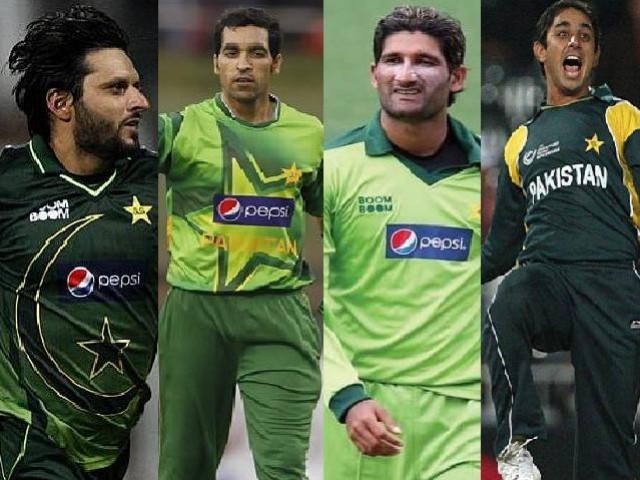
Everything looks rosy for Pakistan on the bowling front, their spinners Raza Hasan, Saeed Ajmal, Mohd Hafeez and Shahid Afridi complete a brilliant spin attack while Yasir Arafat and Umar Gul are more-than-capable bowlers with both the new ball and towards the end.

Watch out for

Yuvraj Singh: The left hander still hasn’t had the impact that he would have hoped for after his return. With India’s chances of progressing depending on this match; Yuvraj, if included, could bring out his best game.

Nasir Jamshed: The top order batsman has been widely renowned as one to look out for during this tournament and he has done his prospects no harm with a good show so far. Another big game against the arch-rivals will go a long way in emphasizing his status as a hot propect.

Quotes:

Hafeez: Since we have won against them in the warm-up game, it will give us confidence going into the match. That victory has been a real morale booster for us and the boys are upbeat and raring to go against India.

MS Dhoni: We will go out their and express ourselves without thinking too much about the result. Obviously, we can’t do worse than what we did against Australia, so we should go out there and play freely. Since we have to win two matches, we have no room for complacency.

Pakistan’s Other Taliban

By Malik Siraj Akbar for The Huffington Post

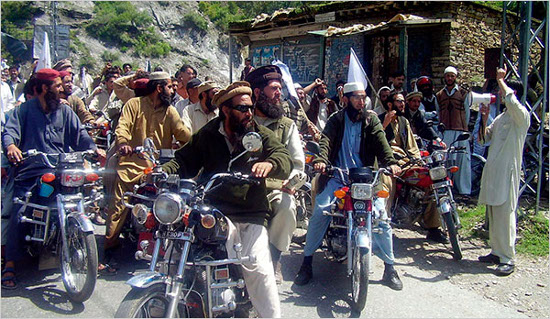
The sectarian war in Pakistan between militant Sunni and unarmed Shia Muslims is turning uglier by the day. A bomb blast targeting Shia pilgrims on September 18 in southwestern Balochistan province killed three people and also injured security guards who were officially assigned to protect the pilgrims from a terrorist attack. Sectarian offensives are expected every day but thwarted very infrequently.

The Lashkar-e-Jhangvi (LeJ), an underground Sunni extremist group that allegedly receives support from units of Pakistani intelligence agencies, has accepted responsibility for most of such attacks in the recent past.

The LeJ has extraordinarily increased its violent operations during this year. It has emerged as a dangerous force after succeeding in recruiting a new cadre of homegrown extremists. The freshly inducted fighters enjoy unmatched knowledge of local geography and safe hideouts. They are sophisticated shooters who are deeply motivated to live and die for what they deem as a “religious cause.” Theirs is a cause designed to cleanse Pakistan of Shias.

The LeJ asks Shias to either quit Pakistan or convert into Sunni Islam. Both of the demands seem unacceptable considering the fact that Pakistan has the world’s second highest Shia population. Many Shias serve as top-ranking professionals and enormously contribute to Pakistan’s politics and economy.

The LeJ is rising as a confident, self-reliant, invincible and ambitious power that will lead in the near future Balochistan’s march toward Islamization and expulsion or persecution of religious and sectarian minorities. There are scores of reasons why we should fear the rapid rise of the LeJ and Pakistani government’s inaction against it.

Pakistan’s handling of the LeJ is very similar to its disastrous experience of dealing with the Pakistani Taliban during the initial days. The country’s security establishment created and patronized radical Islamic groups but kept underestimating them until they transformed into such monsters that become impossible to micromanage or dismantle.

On August 30, the LeJ target killed Zulfiqar Hussain Naqvi, a judge in Quetta, the capital of Balochistan province, along with his driver and security guard.

Besides sectarian reasons, the larger motivation behind Mr. Naqvi’s killing was to intimidate and influence government institutions. Extremist groups carry out such attacks to dissuade government personnel from participating in counter-terrorism operations.

A LeJ spokesman says his organization would even target the Chief Justice of Pakistan if he takes stern action against some of the organization’s detained operatives.

“Any judge who sentences our arrested activists will meet the fate of Naqvi,” the spokesman warned in a statement published in the local media, “the Chief Justice and all other judges will be on our hit-list if they harden their attitude toward our activists whose cases are currently pending in the courts. We do not only issue warnings but also do what we warn to do.”

It turned out to be true.

Only a week after murdering Judge Naqvi, the LeJ killed a top police officer in Quetta on September 7, 2012. The slain officer, Jamil Ahmed Kakar, had newly been promoted as the superintendent of police (Investigation branch). Colleagues in the police department and foes in the LeJ unanimously agree that Mr. Kakar was instrumental in painstakingly investigating the Lashkar’s activities and taking action against key leaders of the terrorist outfit.

“Jamil Kakar was involved in the martyrdom of our colleagues,” confirmed the LeJ spokesman.

LeJ’s dramatic rise is perturbing for the following reasons.

All top LeJ commanders in Balochistan come from lower-middle class Baloch families. The Balochs have historically remained a secular people with rare connections with forces that fought in the name of religion. Hundreds of Muslim religious schools established across Balochistan with the covert funding of Saudi Arabia and Pakistani government to counter the ongoing Baloch separatist movement richly provide manpower to Muslim extremist groups.

Left-wing Baloch nationalists admit that self- Jihadist groups are actively engaged in employing young Balochs from religious schools for their unholy battles. The regional nationalists describe this phenomenon as a “deliberate policy” of the Pakistani intelligence agencies to undermine their movement. Radical Islam, they say, is used as an antidote to address mounting anti-Pakistan sentiments in Balochistan.

At present, there are no overt tensions between Baloch nationalists and neo-Jihadists in the Baloch-populated districts. The nationalists say they are already engaged in a full-fledged battle against the Pakistani government and cannot afford to open another front against extremist Islamic groups. But the current non-interference policy in each other’s operations may not last long. Tensions have been brewing, although slowly.

According to LeJ accounts, all of the organization’s key leaders come from Baloch families.

The growth of Sunni extremism has come with new dimensions and fresh techniques of terrorism. For example, direct suicide blasts on Shia processions reduced in 2012 but the year witnessed an upsurge in mass killings of Shia pilgrims by intercepting passenger buses in various parts of Balochistan. The LeJ is actively involved in attacks on NATO supplies, too. In 2010, as many as 34 drivers were killed in Balochistan while attempting to transport goods to foreign forces stationed in Afghanistan.

The LeJ is steadily growing so big in Balochistan that, at one point, it will start considering its anti-Shia operations as an inadequate match with its huge infrastructure and extended network of operatives and sanctuaries. The organization is already closely connected with Taliban in Afghanistan and has renewed connections with Jundullah, the anti-Iran Sunni militant group. In common, all these groups share abhorrence for the Shias.

The sectarian killers are, in fact, Pakistan’s other Taliban. Most of their top leaders do not face official action. They roam freely and make hate speeches across the country and incite violence against the Shias.

After the persecution of its chief, Abdolmalek Rigi, in the summer of 2010 by the Iranian authorities, Jundullah is too weak to continue with the robust suicide blasts it once used to conduct in Iranian cities under the leadership of Rigi. So, the Jundullah now continues (what Cricket fans call) ‘net practice’ with LeJ inside Pakistan until it fully regains the lost strength.

While the forces of Islamization consolidate their grip in Balochistan, there seems little interest on the part of the government or the regional opposition parties to cooperate with each other to collectively fight religious extremism. Promoting radicals may temporarily assist Pakistani government in fighting the nationalist-separatist insurgency but, in the long run, it is going to multiply the causes of unrest in Balochistan, making conflict resolution further impossible.

Pakistan Minister Puts Bounty on Filmmaker

As Reported by Agence France-Presse

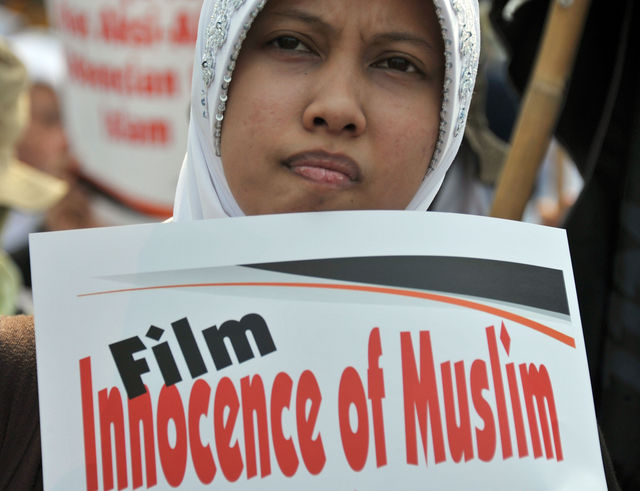
Pakistan’s railways minister Ghulam Ahmad Bilour has offered a $100,000 reward for killing the maker of the US film mocking prophet Mohammed. His comments came a day after 21 people died in violent protests against the “Innocence of Muslims” film.

A Pakistani government minister Saturday offered a $100,000 reward for the death of the maker of the anti-Islam film produced in the US that sparked violent protests across the Muslim world.

Railways Minister Ghulam Ahmed Bilour invited members of the Talban and Al-Qaeda to take part in the “noble deed”, and said given the chance he would kill the film-maker with his own hands.

Bilour was speaking to reporters in the northwestern city of Peshawar a day after violent nationwide protests against the “Innocence of Muslims” film left 21 people dead and more than 200 injured.

“I announce today that this blasphemer who has abused the holy prophet, if somebody will kill him, I will give that person a prize of $100,000,” Bilour said, urging others to shower the killer with cash and gold.

“I also invite Taliban and Al-Qaeda brothers to be partners in this noble deed,” he said.

“I also announce that if the government hands this person over to me, my heart says I will finish him with my own hands and then they can hang me.”

Protests against the film, which mocks Islam and was made by extremist Christians, have erupted across the Muslim world, leading to more than 50 deaths since the first demonstrations on September 11.

The publication this week of cartoons mocking the Prophet Mohammed in a French satirical magazine has further stoked anger.

The producer of the film, Nakoula Basseley Nakoula, is reportedly a 55-year-old Egyptian Copt and convicted fraudster — out on parole — who lives in Los Angeles.

US media say Nakoula wrote and produced the film, using the pseudonym Sam Bacile before being identified. He was questioned overnight Friday by police before going into hiding with his family.

Thousands of Islamist activists in Pakistan staged demonstrations again Saturday but there was no repeat of the previous day’s widespread violence.

More than 5,000 protesters marched towards the parliament in Islamabad, including hundreds of women, chanting “We love our Holy Prophet” and “Punishment for those who humiliated our Prophet”.

Some 1,500 people from the hardline Islamist Jamaat-ud-Dawa and Sunni religious groups rallied in front of the US consulate in the eastern city of Lahore, chanting “The US deserves only one remedy — jihad, jihad”.

Hundreds gathered in the southwestern city of Quetta, calling for the makers of the film to be killed while scores in Peshawar, where six people died in Friday’s protests, chanted anti-US slogans.

Religious groups rallied in the southern port city of Karachi, where 15 people were killed Friday, after the funerals of the demonstrators took place.

Witnesses estimated that nationwide rallies on Friday mobilised more than 45,000, mainly members of right-wing religious parties and supporters of banned terror groups, although the numbers were still small in a country of 180 million.

Police fought back with gunshots and tear gas as arsonists and looters attacked cinemas, banks, shops and restaurants in Karachi, where outbreaks of political and ethnically linked violence have killed hundreds this year.

Four more people died overnight from wounds they received during the protests, taking the number killed across Pakistan on Friday to 21, health department officials said.

The combined total of wounded in Karachi, Peshawar and in the capital Islamabad was 229. Overall, 23 people have been killed in Pakistan during protests over the past week.

Pakistanis for Peace Editor’s Note– After a bone headed government declared a public holiday allowing the people to go and protest and then watched helplessly as private property got destroyed, with billions of rupees lost in revenue form business closure and or destruction, not to mention the loss of 23 Pakistani lives and countless others injured, along comes a Pakistani Minister of Railways who publicly puts a bounty on a person’s head! Oh Pakistan, you are the gift that keeps on giving! 😩

Rand Paul Filibuster on Pakistan Aid Could Force Senate Into Overtime

By Lauren Fox for US News and World Report

Kentucky Sen. Rand Paul could push the Senate’s session into the weekend if he doesn’t back off of a promise to filibuster all legislation as long as Senate leadership keeps a bill to stop sending aid to Pakistan off of the floor.

The obstruction is a replay of last week’s Senate session when Paul stood in the way of a veterans’ jobs bill in an effort to see his anti-Pakistani funding bill on the floor.

In a letter to his colleagues, Paul requested that his fellow lawmakers join his cause to stop backing Pakistan as long as the country keeps playing “both sides of some of the most important issues while openly thwarting our objectives in the region” and continues holding Shakil Afridi, the man who assisted the U.S. with its efforts to locate and kill Osama bin Laden.

“Dr. Afridi remains under arrest for his role in finding bin Laden, and no country that arrests a man for helping to find bin Laden is an ally of the United States,” Paul wrote in his letter. “If Pakistan wants to be our ally–and receive foreign aid for being one–then they should act like it, and they must start by releasing Dr. Afridi.”

This week, however, Paul has expanded his efforts.

After rebels seized the U.S. embassy in Egypt and Libyan rebels murdered four Americans including Libyan Ambassador Christopher Stevens, Paul is calling for a bill to halt funding to those nations as well.

“I urge you to take immediate action to pass a much-needed bill demanding cooperation and accountability from the countries involved in the recent violence directed at our embassies and consulates,” Paul wrote. “The bill should send a strong clear message to these entities: You do not get foreign aid unless you are an unwavering ally of the United States.”

Meanwhile, the White House has other plans to handle the attacks on the embassies in Egypt and Libya. Because the attackers were not affiliated with the government, Secretary of State Hillary Clinton will look to Congress to authorize more funding to support Egypt in its quest for democracy.

“Particularly in the light of this kind of extremist and spoiler activity…we think it is absolutely essential that we support those forces in Egypt who want to build a peaceful, stable, democratic country with prosperity restored, jobs for people,” State Department spokeswoman Victoria Nuland said Monday during a briefing. “And that’s what the assistance that the president has pledged and that we are working with the Hill on is for.”

Paul’s protest won’t endanger the Senate’s ability to pass a continuing resolution to keep the government funded for another six months, but it could significantly affect the Senate’s ability to stay on schedule.

The House passed the stopgap measure 329 to 91, but Paul’s floor protest could push the Senate into a weekend session.

India On Look Out For Ascendance Against Pakistan

As Reported By The Hindu

Their tails up after an easy outing against hosts Sri Lanka, India would like to keep the winning momentum going when they take on arch-rivals Pakistan in their second warm-up game in Colombo on Monday ahead of the ICC World Twenty20 beginning on September 18.

The Mahendra Singh Dhoni-led Indian team would, however, want their batsman to come good against a superior Pakistani bowling unit to maintain a clean slate ahead of their World Twenty20 opener against Afghanistan on September 19.

Though, India won comfortably against the hosts in their opening warm-up game, they certainly need to put up a better show with the bat against Pakistan, who boast of quality bowlers like Saeed Ajmal and Umar Gul in their ranks.

Injury to opener Gautam Gambhir, who hurt his wrist against Sri Lanka, would be a concern for the Indians but Virender Sehwag along with other top-order batsmen need to redeem themselves against Pakistan following their dismal show with the bat in the first match.

India, in particular, would like Sehwag to fire against Pakistan and get some runs under his belt ahead of the tough battle ahead.

Virat Kohli, on the other hand, has been a consistent performer, but the young Delhi lad would look to settle down and get battle ready with a solid knock against Pakistan at the R Premadasa Stadium.

Yuvraj Singh, who made a comeback to world cricket after recovering from cancer with a cameo of 34 runs against New Zealand in the second T20 game in Chennai, also needs to get some more runs under his belt.

And the match against Pakistan will provide the gutsy left-hander with an opportunity to prove that he is ready and looking forward to take on the world with the same zeal as he had left it a year ago following the critical illness.

While Suresh Raina would also look to spend some more time on the crease, Dhoni showed why he is still rated as one of the great finishers of the game against Sri Lanka the other day.

But against Pakistan tomorrow, the Indian skipper needs to be much more focused both with the bat and with his leadership skills.

Of late, Rohit Sharma has been erratic with bat which might prompt Dhoni to give Manoj Tiwary a chance ahead of their campaign opener.

The Indian bowlers led by Irfan Pathan, however, looked in good stead in the previous match and they just need to continue their positive run against Pakistan.

Pathan continued his fine run and scalped five wickets to guide India to a comfortable 26-run victory over Sri Lanka in the first practice match yesterday.

The only concern for Dhoni would be lack of wickets in pace spearhead Zaheer Khan’s kitty.

But comeback man Harbhajan Singh looked composed against the hosts and bowled a tight line, which definitely is encouraging for the team.

Pakistan, on the other hand have been a bit inconsistent in the run-up to the sporting extravaganza. They won two successive T20 matches against Australia, but their 94-run loss to the Kangaroos in the final T20 tie showed that their batsmen are vulnerable to quality bowling.

Pakistan’s batting line-up exhibits immaturity at this level, but with the likes of Abdul Razzaq, Shahid Afridi and skipper Mohammed Hafiz in the ranks they really have the necessary fire power to upset any side.

Young Nasir Jamshed has shown tremendous promise with the bat and the game against India would certainly test his temperament.

On the bowling front, Pakistan has a much settled line-up with off-spinner Saeed Ajmal and speedster Umar Gul leading their respective departments.

The experience of Razzaq and Afridi with the ball gives Hafiz plenty of options to dismantle any batting side.

With both the teams having tasted success at the big stage — India winning the inaugural World T20 in 2007 and Pakistan lifting the trophy two years later — an exciting battle awaits cricket loving fans of both the countries.

Teams (from):

India: M S Dhoni (captain/wicket-keeper), Gautam Gambhir, Ravichandran Ashwin, Lakshmipathy Balaji, Piyush Chawla, Ashok Dinda, Harbhajan Singh, Zaheer Khan, Virat Kohli, Irfan Pathan, Suresh Raina, Virender Sehwag, Rohit Sharma, Manoj Tiwary, Yuvraj Singh.

Pakistan: Mohammad Hafeez (captain), Abdul Razzaq, Asad Shafiq, Imran Nazir, Kamran Akmal (wicket—keeper), Mohammad Sami, Nasir Jamshed, Raza Hasan, Saeed Ajmal, Shahid Afridi, Shoaib Malik, Sohail Tanvir, Umar Akmal, Umar Gul, Yasir Arafat.

More Than 300 Killed in Pakistani Factory Fires

By Zia ur-Rehman and Salman Masood for The New York Times

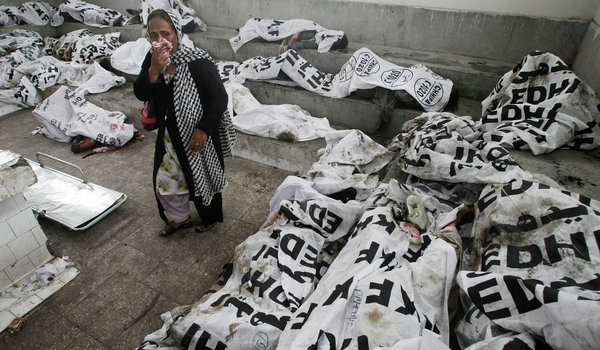
Fire ravaged a textile factory complex in the commercial hub of Karachi early Wednesday, killing almost 300 workers trapped behind locked doors and raising questions about the woeful lack of regulation in a vital sector of Pakistan’s faltering economy.

It was Pakistan’s worst industrial accident, officials said, and it came just hours after another fire, at a shoe factory in the eastern city of Lahore, had killed at least 25.

Flames and smoke swept the cramped textile factory in Baldia Town, a northwestern industrial suburb, creating panic among the hundreds of poorly paid workers who had been making undergarments and plastic tools.

They had few options of escape — every exit but one had been locked, officials said, and the windows were mostly barred. In desperation, some flung themselves from the top floors of the four-story building, sustaining serious injuries or worse, witnesses said. But many others failed to make it that far, trapped by an inferno that advanced mercilessly through a building that officials later described as a death trap.

Rescue workers said most of the victims died of smoke inhalation, and many of the survivors sustained third-degree burns. As firefighters advanced into the wreckage during the day, battling back flames, they found dozens of bodies clumped together on the lower floors.

One survivor, Muhammad Aslam, said he heard two loud blasts before the factory filled first with smoke, then with the desperate screams of his fellow workers. “Only one entrance was open. All the others were closed,” he said at a hospital, describing scenes of panic and chaos.

Mr. Aslam, who was being treated for a broken leg, said he saved himself by leaping from a third-floor window.

Hundreds of anguished relatives gathered at the site, many of them sobbing as they sought news. Some impeded the rescue operation, and baton-wielding police officers tried to disperse the crowd but failed.

“If my son does not return, I will commit suicide in front of the factory,” one woman shouted before news cameras as relatives tried to console her.

The death toll rose quickly. By evening, the Karachi commissioner, Roshan Ali Sheikh, said that 289 people had died, most of them men. The provincial health minister, Sagheer Ahmed, put the toll at 248, which he said was the number of bodies accounted for at major hospitals. The number was expected to rise further.

In the shoe factory fire in Lahore, 25 people were reported killed and dozens wounded. Officials said that blaze had been set off by a generator that caught fire and ignited chemicals stored nearby in the factory, illegally located in a residential neighborhood. Most of the victims were men under 25.

The fires immediately revived long-running questions about the regulation of Pakistan’s manufacturing sector, centered in Karachi, and of the vital textiles industry in particular.

Textiles are a major source of foreign currency for Pakistan, accounting for 7.4 percent of its gross domestic product in 2011 and employing 38 percent of the manufacturing work force. Pakistani cotton products are highly sought in neighboring India and form the backbone of a burgeoning fashion industry that caters to the elite. President Asif Ali Zardari’s government has often called on the United States to drop tariff barriers to Pakistani textile imports, which it says would be preferable to traditional aid.

But the industry suffers from weak regulation, characterized by lax oversight and corruption. Business owners often put profits over safety, workers’ rights advocates say.

On Wednesday evening the police raided the home of the owner of the Karachi factory, Abdul Aziz, who appeared to have gone into hiding. According to an online business information service, his company, Ali Enterprises, manufactured denim, knitted garments and hosiery and had capital of between $10 million and $50 million.

His nephew, Shahid Bhaila, the chief executive officer of the company, was also being sought for questioning. The police said both men had been placed on the exit control list, barring them from leaving the country.

The Muttahida Qaumi Movement, the most powerful political party in Karachi, announced three days of mourning. The city electricity company said it would cancel all outstanding bills for the families of those affected as a good will gesture.

The cause of the fire remained unclear. Geo News, the largest news channel, speculated that it had been started by extortionists, reporting that Mr. Aziz had previously faced a demand for a shakedown payment of more than $100,000, which he refused.

But others said an electrical fire was more likely. Wali Muhammad, a former electrical inspector, said that most accidental fires are caused by short circuits in equipment. But since 2003, he said, inspectors had been forbidden by law from visiting factories in Karachi and Punjab; it was not immediately clear why.

“This is criminal negligence,” he told Geo News, referring to the ban.

Another mystery surrounded the locked factory doors. Some survivors said the exits had been shuttered to prevent workers from slipping out early; others said it was the consequence of a recent break-in.

A majority of the garment workers came from Orangi Town, a poor working-class neighborhood in Karachi. Seventeen of the victims came from the same street, local news media reported.

The factory building suffered severe structural damage in the blaze, and officials feared it would collapse on rescue workers during the day.

While many distraught family members set up camp near the factory, others moved between city hospitals, seeking news of loved ones. One man said he was looking for his cousin, who earned $70 a month as a cashier. “He’s still missing. I’m afraid he may have been working in the basement,” the man said.

The Human Rights Commission of Pakistan called on the government to mount an immediate investigation. “The head of the firefighting operations in Karachi has noted that the factory was dangerous, flimsily built and had no emergency exits,” said Zohra Yusuf, chairwoman of the rights group. “Why did all of that escape official attention earlier?”

Workplace safety is guaranteed under Pakistan’s Constitution, but labor leaders say that government oversight has crumbled rapidly in recent years, along with a general decline in governance.

Sharafat Ali of the Pakistan Institute of Labor Education and Research, a labor rights group, said that 151 workers died in accidents in 2011. The state was partly responsible for the deaths, he said, because its civil servants “silently and criminally allow violation of laws and regulations established to ensure health and safety provisions at work.”

Judge Grants Bail to Young Christian Girl Accused of Blasphemy in Pakistan

As Reported by The Associated Press

A Pakistani judge granted bail Friday to a young, mentally challenged Christian girl accused of insulting Islam for burning pages of the religion’s holy book. Rights activists welcomed the decision after calling for her release since she was arrested three weeks ago.

The case has focused attention on Pakistan’s harsh blasphemy laws, which activists claim are used to persecute minorities and settle personal vendettas.

Judge Mohammed Azam Khan set bail at 1 million Pakistani rupees, or about $10,500, a significant sum in a country where many families live on only a few dollars a day. The girl’s impoverished family may need outside financial support to free her.

The young girl, who is reported to be 14 years old and suffering from some form of mental impairment, was arrested after an angry mob showed up at a police station in her neighborhood in Islamabad and accused her of burning pages from the Quran, an act punishable by life in prison under the country’s harsh blasphemy laws. Her lawyer has denied the allegation.

In an unusual twist, police arrested a Muslim cleric from her neighborhood a week ago after a follower from his mosque accused him of stashing pages of a Quran in her bag to make it seem as if she burned them. He allegedly planted the evidence to push Christians out of the neighborhood and is now being investigated for blasphemy himself. He has denied the allegation.

The head of Human Rights Watch in Pakistan, Ali Dayan Hasan, praised the judge’s decision to grant the young girl bail.

“The fact is that this child should not have been behind bars at all,” Hasan said. “All charges against her should be dropped, and Pakistan’s criminal justice system should instead concentrate on holding her accuser accountable for inciting violence against the child and members of the local Christian community.”

Hasan added, “Human Rights Watch hopes that the blatant abuse that has come to light in this case will lead to a considered re-examination of the law, and all stake-holders in Pakistan will actively seek to end frequent abuses perpetrated under cover of blasphemy allegations.”

Is Pakistan’s Hard Line on Blasphemy Softening?

By William Dalrymple for The Guardian

It is rare these days to read any good news coming out of Pakistan. It is rarer still to read good news concerning matters of religion. However, in one week two stories seem to show that Pakistan is for once bringing the force of law to bear on those who abuse religion to provoke violence against minorities.

Last Sunday Mohammed Khalid Chisti, the mullah who had accused a 14-year-old Christian girl, Rimsha Masih, of blasphemy, was himself arrested and charged with the same law. The turnaround took place after the muezzin of his mosque gave evidence that he had framed the girl and falsified evidence. More remarkable still, the far-from- moderate All Pakistan Ulema Council came to Rimsha’s defence, calling her “a daughter of the nation” and denouncing Chisthi: “Our heads are bowed with shame for what he did.”

On Tuesday an even more unexpected event took place. Malik Ishaq, the leader of the banned Sunni terrorist group Lashkar–e-Jhangvi, which is accused of killing hundreds of Shias, was arrested on his return from a fund-raising trip to Saudi Arabia. Lashkar operates quite openly in Lahore despite being officially banned; yet on this occasion Ishaq was immediately brought to court. There he was accused of involvement in more than 40 cases in which 70 people have been killed. He now resides in Kot Lakhpat jail on 14-day judicial remand.

When Pakistan was created in 1947 as a homeland for Indian Muslims, its clean-shaven, tweed-jacketed, spats-wearing and pork-eating founder, Muhammad Ali Jinnah, made sure the constitution of his new country provided the right for all its citizens to profess, practise and propagate their religion: “You may belong to any religion, caste or creed,” he said in his first address to the constituent assembly of Pakistan on August 11 1947. “That has nothing to do with the business of the state. In due course of time Hindus will cease to be Hindus and Muslims will cease to be Muslims – not in a religious sense, for that is the personal faith of an individual – but in the political sense as citizens of one state.”

It was Zulfikar Ali Bhutto who started the rot. In 1974 he bowed to pressure from the religious right and had the country’s small Ahmedi minority declared non-Muslim. The situation became worse still in the 1980s with the military coup of General Zia. Zia was responsible for initiating the fatal alliance between the conservative military and the equally reactionary mullahs that led to the use of Islamic radicals as part of state policy. At the same time Zia started tinkering with the law. He introduced the Islamic punishment of amputation for theft, and established the Hudood ordinances of sharia law, which asserted that the evidence of one man was equal to that of two women, and made any sex outside marriage a punishable offence for women. Rape was to be punished with the public flogging of the female victim as well as the perpetrator.

Between 1982 and 1986 Zia introduced radical changes to Pakistan’s blasphemy laws – the notorious sections 295 B and C of the penal code – prescribing life imprisonment for anyone who defiles a copy of the Qur’an and death for insulting or criticising the prophet Muhammad. Because there is no strict definition of blasphemy, and virtually no evidence above the word of the accuser is needed to bring a guilty verdict, the laws have often been exploited by individuals with grudges against innocent non-Muslims. In 1988 Bishop John Joseph of Faisalabad publicly committed suicide to protest against the laws; and although no one has yet been executed under the statutes, an estimated 1,200 to 4,000 blasphemy cases have been filed. The number of cases has multiplied in recent years, and the result is often prison sentences of three years or more.

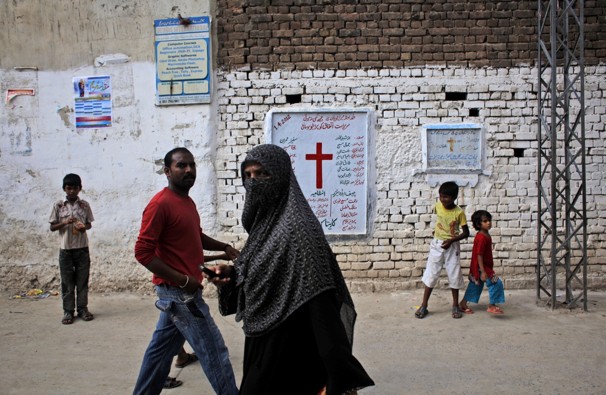
Christians are widely derided in Pakistan; most are descended from “untouchable” converts who still perform the most menial tasks: cleaning the sewers and sweeping the streets. There has been a steady stream of attacks on the community, most bloodily in the murder of 16 Christians at a church in Bahawalpur in 2001. But it is not just Christians who have suffered. Hysteria about blasphemy has also been used to target Hindus, Sikhs, Ahmadis and Shias. In addition to formal convictions, there were at least 34 extrajudicial killings of people accused of blasphemy between 1990 and 2010. Of those, 15 were Muslim, 16 Christians, two Ahmadis and a Hindu. Indeed it is the Shias, not the Christians, who have suffered the brunt of the violence meted out by Lashkar–e-Jhangvi.

The high-water mark for religious intolerance in Pakistan was reached last year when the former governor of the Punjab, Salman Taseer, and the only Christian minister in the government, Shahbaz Bhatti, were both shot dead for suggesting that the blasphemy laws should be reviewed. Last week’s turnaround seems to represent a dawning realisation that things had gone too far – that a descent into mob violence was imminent. “There has been some genuine remorse on the right,” Pakistan’s leading human rights lawyer Asma Jahangir told me. “They realised a line had been crossed.”

This is certainly good news, but it is only a beginning. Rishma remains in custody and Malik Ishaq has yet to be convicted. “I am not optimistic that the laws will be repealed,” says Jahangir. “In fact, you cannot even discuss it.” While politicians such as Imran Khan have bravely called Rishma’s arrest “shameful … against the very spirit of Islam”, neither he nor any other major political figure has called for an outright repeal of the blasphemy laws. Nor, given the fate of Salman Taseer, are they likely to any time soon.

And as long as the laws remain on the statute books, cases like these will continue to occur, and major injustices will continue to be perpetrated on all of Pakistan’s religious minorities.

Pakistan Minister ‘Hopeful’ For Blasphemy Girl Bail

As Reported by The Associated Press

A Pakistani cabinet minister says he is “very hopeful” a young Christian girl accused of blasphemy will be released on bail later this week after spending more than three weeks in custody.

Rimsha Masih is currently on remand in the high-security Adiyala jail in Islamabad’s twin city Rawalpindi after being arrested on August 16 for allegedly burning pages containing verses from the Koran.

She is “uneducated” and has a mental age of less than 14, according to a medical report, and her case has prompted international concern and anger from rights campaigners.

Proceedings to free Rimsha on bail have been repeatedly postponed, most recently on Monday when Judge Muhammad Azam Khan again adjourned the matter after the lawyer for her accuser asked for a stay to show solidarity with a provincial lawyers’ strike.

Paul Bhatti, the Minister for National Harmony told AFP in an interview on Monday he was optimistic the youngster would be released at the next hearing, on Friday.

“Unfortunately there was strike of the lawyers and that was a technical problem and it was not possible to proceed (with) the hearing,” he said.
“On the 7th we are very hopeful that she would be released.”

The case took an unexpected twist on Saturday when the imam who first gave police evidence against Rimsha was accused by his deputy of adding pages from the Koran to the burnt papers taken from Rimsha.

Activists say legislation is often abused to settle personal vendettas, and even unproven allegations can prompt a violent public response.
But it is rare to see anyone investigated for making a false allegation or interfering with evidence of blasphemy and Bhatti said it could be an important turning point.

“The disclosure about the tampering with the evidence will discourage future accusers to misuse this law,” Bhatti said.
Bhatti is Pakistan’s only Christian cabinet minister. His brother and predecessor Shahbaz was gunned down last year for speaking out against the blasphemy law.

Pakistan Should Abolish Overly-Abused Blasphemy Laws

By Arsalan Iftikhar for The Washington Post

My grandfather was one of the most well-known literary figures in Pakistan’s history and once famously told me that, “Anger is the most extravagant luxury in the world.” I am always reminded of my beloved grandfather’s poignant sentiment whenever I read stories about death sentences being meted out in accordance with Pakistan’s blasphemy laws; with the most recent example being the case of an 11-year-old Christian girl in Pakistan who is facing blasphemy charges for allegedly burning pages of the Koran in rural Pakistan.

The child was arrested last week in a Christian area of the capital Islamabad, after a crowd of people demanded that she be punished for allegedly desecrating pages of the Muslim holy book. According to BBC News, it is not clear whether she burned pages of the Koran or was just found to be carrying them in her bag. Additionally, the BBC reported that doctors in Pakistan have examined this young Christian to further determine her mental capacity (some unconfirmed reports stated that she has Down’s Syndrome), with the results due to be presented in a Pakistani court in the coming days.

Pakistan’s Minister for National Harmony, Paul Bhatti, has said she is innocent of the charges and should be released. Shortly after her arrest, Bhatti told BBC News that, “The police were initially reluctant to arrest her, but they came under a lot of pressure from a very large crowd who were threatening to burn down Christian homes.”

As an international human rights lawyer, it is my personal belief that Pakistan’s blasphemy laws are one of the most obvious obstacles preventing the nation of Pakistan from protecting its religious minorities (including members of the Christian, Hindu and Ahmadiyya communities). According to Pakistan’s penal code, here are the primary sections dealing with blasphemy charges and their potential criminal punishments:

“Whoever will fully defiles, damages or desecrates a copy of the Holy Koran or of an extract therefrom or uses it in any derogatory manner or for any unlawful purpose shall be punishable for imprisonment for life. Whoever by words, either spoken or written or by visible representation, or by any imputation, innuendo, or insinuation, directly or indirectly, defiles the sacred name of the Holy Prophet Mohammed (peace be upon him) shall be punished with death, or imprisonment for life, and shall also be liable to fine.”

In recent times, these controversial blasphemy laws in Pakistan have created major international headlines and generated debate across the globe. In November 2010, a Pakistani Christian female laborer named Asia Bibi was sentenced to death after a fellow worker accused her of insulting Islam. Her sentence is under appeal, and Bibi is still in jail. Only a few months after Bibi’s death sentence, provincial Gov. Salman Taseer and Federal Minister Shahbaz Bhatti – both prominent Pakistani politicians – were assassinated in cold blood after public calls to amend the blasphemy laws.

CNN also further reported that militants attacked two mosques in May 2010 and killed more than 90 worshipers of the Ahmadiya sect, a minority Muslim group often “viewed as heretics and blasphemers by hardline Sunnis” in Pakistan.

As a proud and practicing Muslim, I have written previously on “blasphemy” issues insulting Islam around the world and how modern Muslim societies should respond to such controversies. Most Muslims are aware of a well-known Islamic parable which tells the story of the prophet Muhammad and his daily interactions with an unruly female neighbor who used to curse him violently and then proceed to dump garbage onto him every day from her perch-top window each time he would ever walk by her house.

One day, prophet Muhammad noticed that the woman was not present to throw garbage outside of her window. In an act of true prophetic kindness, he actually went out of his way to inquire about her well-being and then proceeded to visit his hostile neighbor at her bedside inside of her own home when had found out that she had fallen sick.

This genteel act of prophetic kindness toward unfriendly (and overtly hostile) neighbors is the truly Muslim and Islamic standard that we should all use within our collective lives, not threats of violence and/or death sentences which disparately impact religious minorities in Muslim-majority nations. After all, if our prophet Muhammad treated those who cursed him with kindness, shouldn’t other Muslims do exactly the same?

Thus, although Pakistan has a very long way to go in terms of protecting religious minorities within their national borders, it can take a giant step in the right direction by abolishing its overly-abused blasphemy laws and show compassion to people of other religions, something that Islam’s prophet taught us over 1,400 years ago.

Arsalan Iftikhar is an international human rights lawyer, founder of TheMuslimGuy.com and author of “Islamic Pacifism: Global Muslims in the Post-Osama Era.”

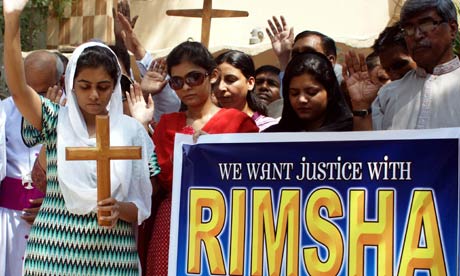
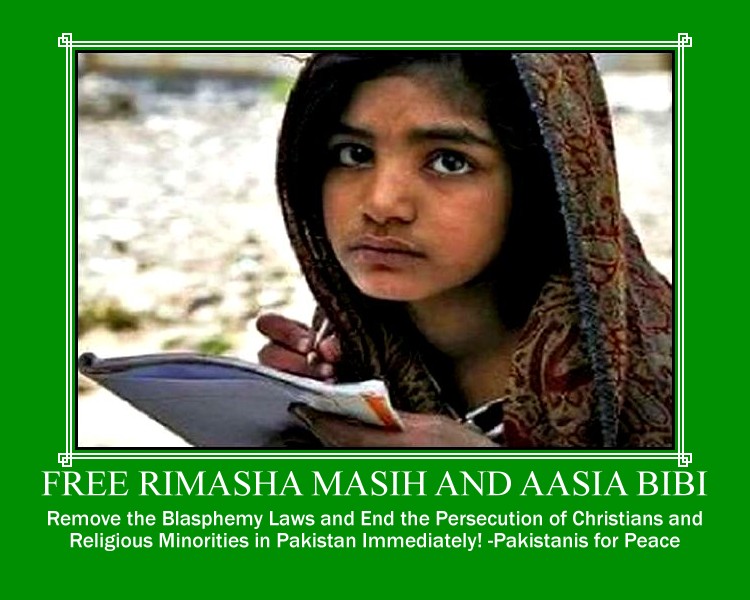
Free Rimsha Masih Now and End The Blasphemy Law Witch Hunts in Pakistan

The latest victim of Pakistan’s blasphemy laws, is an 11 year old girl suffering from Downs Syndrome. Rimshah Masih screamed pitifully as she was brutally snatched from her mother by an angry mob intent on killing her. Burnt religious texts had been mischievously planted in a bag she was carrying. We call on the Pakistani Government to take action to stop the ongoing discrimination, persecution and hatred towards minorities living there. We call on the Britisha Government the EU and the Un to intervene on behalf of this poor child and to bring about her freedom.

To bring an end to hatred towards minority faiths in conservative Pakistan and to defend otherwise helpless victims like Rimsha please sign the petition below: http://www.petitionbuzz.com/petitions/freerimshamasih

This petition will be sent to the Pakistan Government at the highest levels.

“Whilst the Burmese’s treatment of the Rohingya is indeed appalling and deserves condemnation, our minorities are living in their very own Burma right here in Pakistan.

“As the rest of the country goes about its way, having just celebrated another joyous Eid, spare a thought for a little girl with special needs, languishing in a juvenile jail.

“She is probably all alone, and scared. With her condition, she very well might not even know the reason she is in there.

“But ask her neighbours, some who are frothing at the teeth to have a go at her, and they will tell you that she deserves to die.

“Rimsha Masih, an 11-year-old Pakistani girl of the Christian faith, who reportedly suffers from Down Syndrome, was arrested on allegations that she had desecrated the Holy Quran.

“The girl and her mother were severely beaten by an enraged mob that had converged outside their house, while the rest of her family managed to flee. If the police had not intervened, there is no telling what else could have happened….”

Please sign the petition and help free Rimsha and Aasia Bibi and put an end to Pakistan’s Blasphemy Laws.