Political Instability Rises as Pakistani Court Ousts Premier
As Reported by Delcan Welsh for The New York Times
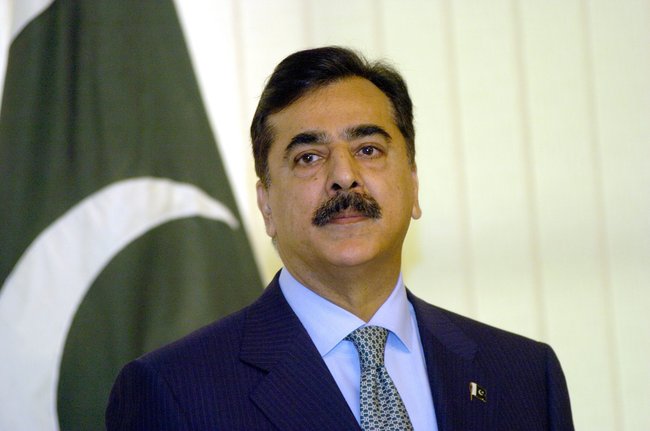
The Supreme Court dismissed Prime Minister Yousaf Raza Gilani on Tuesday, drastically escalating a confrontation between the government and the judiciary and plunging the political system into turmoil.
Chief Justice Iftikhar Muhammad Chaudhry declared that Mr. Gilani’s office had been effectively vacant since April 26 when the court convicted him on contempt charges because he refused to pursue a corruption case against President Asif Ali Zardari, his superior.
Although the decision is unlikely to topple the government, many viewed it as the product of a grudge-driven tussle between Mr. Zardari and Justice Chaudhry, with the prime minister caught in the middle.
“The court has been gunning for the prime minister for a long time,” said Najam Sethi, a veteran political analyst. “Clearly there is a lot of politics in this.”
The order left Pakistan in a state of constitutional uncertainty, with the cabinet effectively dismissed. The court instructed Mr. Zardari to “ensure continuation of the democratic process” — words widely interpreted as an order to arrange the election of a new prime minister.
Legal experts said Mr. Gilani could not appeal the decision but that he may continue in an interim role until a successor is chosen. It was unclear what impact the decision would have on troubled negotiations with the United States to reopen NATO supply lines through Pakistan into Afghanistan.
As word of the ruling spread, Pakistanis held their breath for reaction from the ruling Pakistan Peoples Party, whose top leaders held an emergency session at Mr. Zardari’s house. Television stations reported that the party had agreed in principle to accept the court’s ruling, but a final decision was not expected until later Tuesday.
Shahbaz Sharif, a senior leader of the opposition Pakistan Muslim League-N Party, which instigated the court action, hailed the decision. “It upholds the supremacy of the law and the Constitution,” Mr. Sharif said.
But it calls into question the validity of all executive decisions made since April 26, including the passing of the federal budget. One commentator said it “opened a massive legal can of worms.”
Speculation swirled about the identity of a replacement prime minister; among the names circulating were those of the foreign minister, Hina Rabbani Khar, and various stalwarts from the party’s electoral heartland in Sindh Province and southern Punjab.
Any candidate, however, will need the approval of the P.P.P.’s coalition partners — smaller, ethnically centered parties based in Karachi, Lahore and Peshawar, who are likely to seek fresh concessions from Mr. Zardari in exchange for their votes in Parliament.
The court decision advanced the likelihood that general elections, scheduled to take place by next spring, could be brought forward.
Equally, however, Mr. Zardari may wish to first resolve some of the governance failures that have marred his government’s reputation, notably widespread power outages and system failures that have continued for years. The court decision coincided with street agitation in Punjab, the country’s most populous province, where rioters burned buildings and clashed with police in several cities on Monday and Tuesday to protest power outages.
“Law has become subservient to politics, but this government had it coming. It has been singularly inept,” said Mr. Sethi, the analyst. “They had six months to anticipate the power crisis, and now it is upon them.”
In dismissing Mr. Gilani, the court chose the strongest option. It could have referred Mr. Gilani’s case to the Election Commission of Pakistan, which could have taken up to three months to adjudicate the case.
It comes at the end of a tumultuous week for the court itself. Last week, a billionaire businessman made explosive accusations in court and in the media that he had given $3.7 million in kickbacks to Justice Chaudhry’s son in order to swing several cases his way. The furor over those accusations, centered on the judge’s son, Arsalan Iftikhar, is now likely to fade as the country grapples with its latest political crisis.
Mr. Gilani’s dismissal stems from longstanding demands by the court that Mr. Gilani write a letter to the authorities in Switzerland to seek to reopen a dormant corruption investigation into Mr. Zardari’s finances that started in the 1990s.
Mr. Gilani refused, arguing that he was unable to do so because the president enjoyed immunity from prosecution. And the prime minister signaled long ago that he was ready to be dismissed or face prison in the case.
After Mr. Gilani was convicted on contempt charges on April 26, the speaker of Parliament examined calls for his dismissal from public office. The court intervened after the speaker, who is a member of the ruling party, ruled that Mr. Gilani should not be dismissed.
“What will happen to independence of judiciary if speaker or Parliament tries to scrutinize judicial rulings?” Justice Chaudhry said on Tuesday. “No one can undo a court verdict except a court of appeals.”




Pakistan: Between a Rock and A Hard Place
By Yekaterina Kudashkina for The Voice of Russia
Interview with Dr. Theodore Karasik – the Director of Research and Development at the Institute for Near East and Gulf Military Analysis (INEGMA) in Dubai.
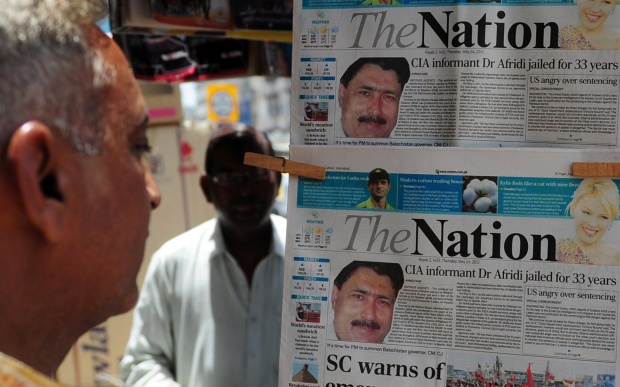
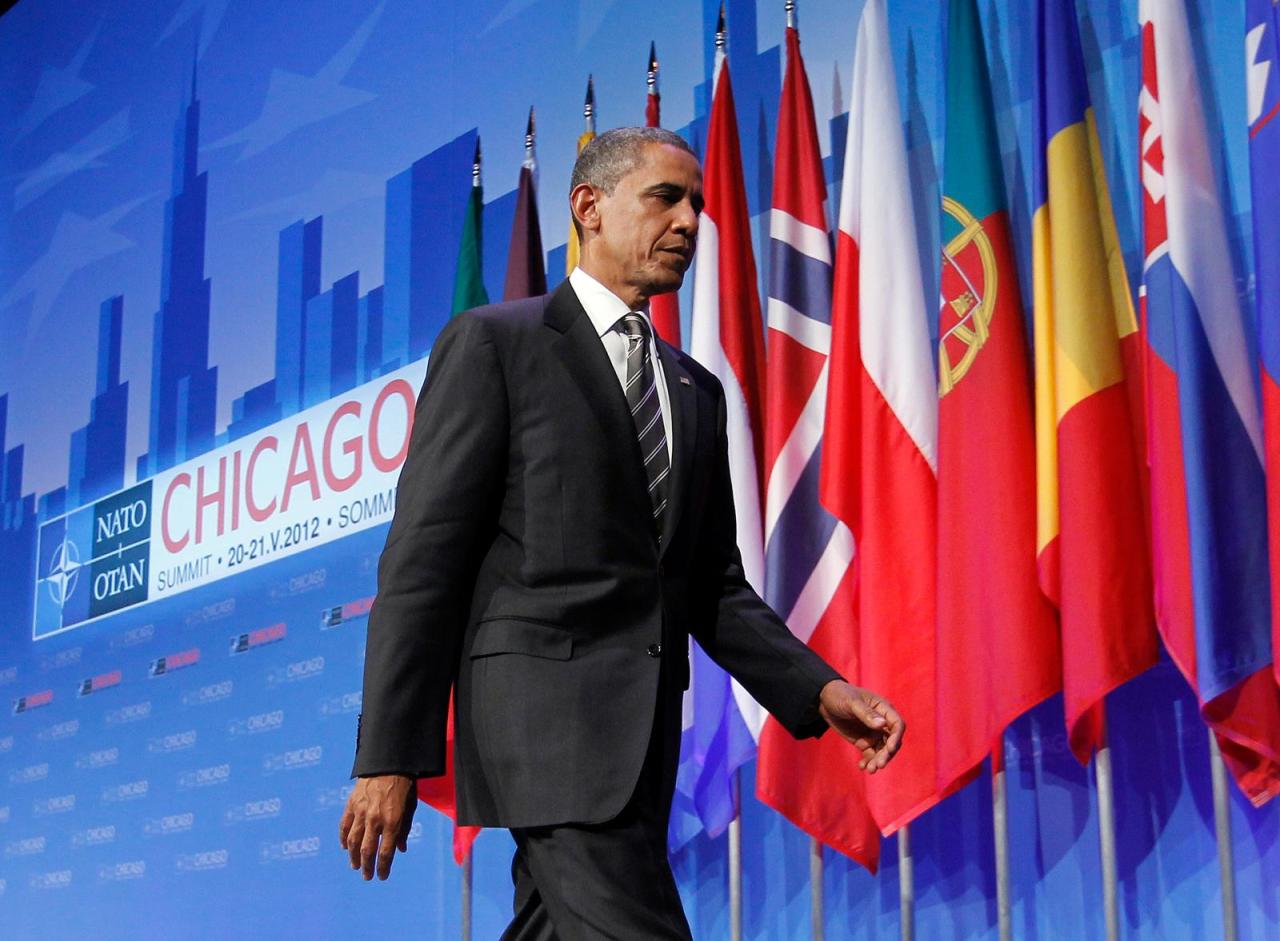
Particularly you have to first understand that the situation in Pakistan is rather icy politically, as well as on the religious scale. Pakistan now finds itself between a rock and a hard place when it comes to how it fits into the US and Western plans to halt fighting in Afghanistan as well as to get rid of terrorist events in the northwest frontier province. So, the Pakistani press is going to be very inflamed though, not only because of the NATO Summit, but also because of the sentencing of the doctor who outed Bin Laden for a sentence of 33 years.
Apparently what happened was that the US had managed to find a Pakistani physician who was able to pinpoint the location of Bin Laden’s compound and as a result of the leakage of this information in the US and foreign press this doctor was arrested and tried very quickly in Pakistan and sentenced to 33 years in jail for giving up Bin Laden’s position. This is a political trial where Pakistanis want to make an example of this individual by arguing that he managed to fail the state by giving up the secret of where Bin Laden was hiding.
Do you think that this case is going to further deteriorate the relations between the US and Pakistan or is it just a root in development?
I think it is a bit of both. I think that will embarrass the US-Pakistani relations. I think that will be pressuring the United States of why did the US revealed the identity of this doctor. There is also a discussion about how this relationship with Pakistan and the United States will continue in terms of transport of nonlethal goods to Afghanistan.
Now, talking about that issue. Do I get it right that the negotiations are still under way in Islamabad regarding the transportation routes agreement, the new one?
Yes, the negotiations are still ongoing in Islamabad about transferring nonlethal goods into the Afghan theatre. And Pakistanis are using this episode to put political pressure on US to make concessions, particularly when it comes to military aid or paying of very high prices for use of this supply lines.
Are we talking about concessions in terms of money or in some other aspects?
It’s a combination of both money and political support for the Zardari Government.
Is the US prepared to offer a political support for Zardari Government in the present circumstances?
At this time I would say that the United States is going to play quite tough with Pakistan. Let’s face it – Pakistan is just barely above a failed state. And the US needs to make sure that Pakistan does not descend in the total chaos while at the same time applying pressure on Pakistan to guarantee that the state remains somewhat coherent together.
The signals of the resumption of negotiations in Islamabad were generally seen as a sign that perhaps they could be ameliorating. And then came Zardari’s visit to Chicago. By the way, why would the Pakistanis be so disappointed with the results of his visit? What were their expectations?
I think that they were expecting to be treated more as an equal and key to solving the Afghan problem as well as to part of trying to help with the withdrawal of troops from Afghanistan. But instead you had this political issues popup and then you had Zardari acting in a very strange way by missing the key events like the group of progress of all the leaders and so on. I think that they left Chicago messed.
Does the United States want to ameliorate them and what needs to be done if there is a certain desire to make them better?
Clearly a lot of problems need to be discussed and we need to find the right remedies that would help both countries work together in this difficult time. I think it is going to get more difficult as tensions build over what to do with Afghanistan and the withdrawal from Afghanistan of NATO forces. Pakistan has an important role to play in all this because of the supply routes as we talked about previously. So, I think we are going to be entering a period of more jostling for position, negotiation that could get quite ugly at some points.
Share this:
Pakistan
Pakistan Army
Pakistanis
United States
US Army
US-Pakistan Relations
Afghanistan
Bin Laden
Commentary
Dr. Theodore Karasik
INEGMA
Institute for Near East and Gulf Military Analys
Interview
Islamabad
NATO
Obama Administration
OBL
Pakistan
Politics
U.S.- Pakistani relations
United States
US-Pakistani relations
Voice of Russia
World
Yekaterina Kudashkina