Archive for the ‘ President Obama ’ Category

Al Qaeda’s Roots Grow Deeper in Pakistan’

As Reported in Zee News

Ten years after the 9/11 terrorist attacks and the subsequent “war on terror” launched by United Stated-led forces against al Qaeda, the terrorist outfit “continues to pose a serious threat to the world as it keeps surviving and thriving mainly on the Pakistan-Afghanistan tribal belt”, a senior Pakistani journalist and author has said.

“In these rugged areas, it [al Qaeda] has established an effective jihadi network that increasingly exploits its Pakistani affiliates to carry on the global jihadi agenda of Osama bin Laden, despite his May 02 killing in a United States military raid in Abbottabad in Pakistan,” Amir Mir wrote in a piece for Asia Times Online.

Until recently, analysts have been mostly focusing on the dangers posed by the growing Talibanisation of Pakistan, he noted.

“Yet, it has now become abundantly clear that the time has come to pay more attention to the bigger dangers posed by the Pakistanisation of al Qaeda,” he added.

Mir, who has written several books on the subject of militant Islam and terrorism, the latest being ‘The Bhutto murder trail: From Waziristan to GHQ’, said that the al Qaeda leadership’s choice of using the FATA region, especially the North and South Waziristan tribal agencies as their hideout, has enabled the terror outfit to build a new power base, separate from Afghanistan.

“As a result, despite Pakistan’s extensive contribution to the “war on terror”, many questions persist about the extent to which al Qaeda and its allied groups are operating within Pakistan,” he observed.

He said that al Qaeda’s success in forging close ties to Pakistani jihadi groups has given it an increasingly secure haven in Pakistan’s mountainous tribal areas, which have “replaced Afghanistan as the key training and indoctrination grounds for al Qaeda recruits to be used in operations abroad and for training those indoctrinated and radicalised elsewhere.”

The journalist also said it appears that al Qaeda not only remains in business in its traditional stronghold in the Waziristan tribal region, it has “also clearly advanced to the urban areas in all four provinces of Pakistan”.

“This is confirmed by the growing belief of the Barack Obama administration that if there is one country that matters most to the future of al Qaeda, it is Pakistan,” he added.

Amir Khan Gets Invited to The White House

By Araiz Baqi for Sportspulse

Amir Khan, the British professional boxer of Pakistani descent, has been invited to the official residence and principal workplace of the President of the United States, also known as the White house, for a dinner, along with other Muslim sportsmen, on the eve of the tenth anniversary of the 9/11 atrocities in New York.

The currently unified IBF and WBA World Light Welterweight Champion was invited to attend the dinner by the United States Secretary of State Hilary Clinton. The event will take place on September 10. “Amir was invited there by Mrs Clinton,” a source revealed. “He will be among a group of the most prominent Muslim sportsmen in America, and as Amir is now based in the US, that offer was extended to him.”

The Irony is that IBF and WBA champion have become frustrated with the lengthy delays he has to face whenever he travels to the States. There are seven levels of security at the, with seven being the highest, and Amir comes in at full seven.

When on vacation, Amir almost everytime visits Pakistan, and most recently, he visited Egypt and Saudi Arabia (All Muslim Countries). ‘All these things are taken into account by US Homeland Security. The Khan family are kept in a holding area until the green light is given from Washington DC, as all the checks that are made.’ – reports dailymail.

The Organizers of the event have yet to confirm whether President Barack Obama will be present at the event or not. If the President attends the ceremony, Amir might find a smoother passage on future entries to the United States.

Khan, Currently rated as the best boxer in the Light Welterweight division, has made his fans, especially Pakistanis, proud after getting the invitation for the dinner. After all, in this world of racism, hatred, and diversity, who eould expect a Pakistani to get invited to the White house…

After returning from pilgrimage last week in the holy month of Ramadan, Khan will fight in the United States most likely against Mexican legend Erik Morales. He will leave the White House on Sept 11 and go on to Las Vegas, where one of his rivals, Victor Ortiz, defends the World Boxing Council welterweight title against Floyd Mayweather Jnr.

Muslims Are the Most Loyal American Religious Group, New Poll Says

As reported by The Christian Science Monitor

After the 9/11 attacks, Muslim Americans faced intense scrutiny, both individually and from federal agencies such as the Federal Bureau of Investigation. Obama is credited with helping smooth tensions through his outreach to the US Muslim community and his effort to end the Iraq war responsibly. The poll shows that 83 percent of Muslim Americans – more than any other religious group – say the war was a “mistake.”

Despite the positive signs, “there are still obstacles” for Muslim Americans, Ms. Mogahed says. “They embrace American values and democratic principles but aren’t sure if the rest of American embraces them,” she says.

Some 56 percent of Protestants said American Muslims had no sympathy for Al Qaeda, the lowest number of any faith group. By comparison, 63 percent of Catholics and 70 percent of Jews thought Muslim Americans had no sympathies for Al Qaeda.

“That’s certainly a challenge for the [US Muslim] community – to have their loyalty questioned by such a large number of their fellow Americans,” Mogahed says.

Those challenges, however, have not led Muslim Americans to try to affect change at the ballot box. They are the least likely religious group to vote, with just 65 percent of Muslims in America are registered. One reason is age: The average age of a Muslim-American is 35, while the average American Protestant is 55. Younger people tend to be less politically active, Mogahed says.

Another reason is affiliation: Poll findings show that the majority of Muslim Americans say that none of the leading Muslim organizations in the US, such as the Council on American-Islamic Relations or the Islamic Society of North America, represents their interests.

With the 2012 election around the corner, Mogahed says political parties that want to reach out to Muslim-American voters might be better off establishing partnerships with local mosques than focusing on winning endorsements from national advocacy organizations. This is especially relevant considering that Muslim Americans who attend a religious service once a week are two times more likely to be politically active than those who attend less frequently, the poll found.

“The mosque should be more the mobilization engine” for get-out-the-vote drives than it has been in the past, she says.bThe poll surveyed 2,482 adults, 475 of whom were Muslim. For Muslims, there was a margin of sampling error of plus or minus 7 percentage points.

India and Pakistan, Talking

As reported by The New York Times

With a relationship as combustible as that between India and Pakistan, it’s progress just to get the two sides in a room. Last week’s meeting was better. Their foreign ministers announced modest, but very welcome, agreements concerning the bitterly disputed region of Kashmir.

They promised to double the number of days when cross-border trade between the two parts of Kashmir — one controlled by India, the other by Pakistan — is allowed and to expand and expedite travel permits for Kashmiris who want to cross the border for family visits, tourism and religious purposes. India and Pakistan have fought three wars since 1947, two over Kashmir. Even these small steps could help chip away at their visceral mistrust.

Three weeks ago, some doubted the meeting would even happen after three explosions ripped through Mumbai, killing 24 people. The Mumbai attacks in 2008 that killed 160 people were blamed on Pakistani terrorists and sent relations with India into the deep freeze. So far, suspicion for the recent attacks has fallen on Indian terrorists.

Prime Minister Manmohan Singh of India deserves huge credit for staying engaged despite Pakistan’s failure to prosecute those responsible for the 2008 horrors. And he deserves credit for not shooting first and asking questions later after the recent attacks.

We wish we could say the same of Pakistan’s leaders. Before there can be a true reconciliation, and stability in the region, Pakistan’s Army must realize that using militants to try to counter Indian influence in Kashmir and Afghanistan is self-destructive — and that homegrown extremism, not India, is the real threat to Pakistan’s survival.

India and Pakistan have more to talk about, including cooperation on water, expanded trade and their joint stake in a stable Afghanistan. President Obama’s drawdown of American troops will go easier if India and Pakistan are part of the solution, not fighting over the spoils. New Delhi insists that it will accept no outside mediation. Washington needs to keep pressing the two to work together.

The United States and its allies are planning a conference in Bonn in December and hope to rally international support for a broad regional strategy that includes a peace deal for Afghanistan, trade agreements and ambitious energy projects. India and Pakistan need to be full participants. The payoff could be huge if their leaders muster the courage to resolve their differences.

Musharraf Moves to Mend US-Pakistan Relations

By Lydia Mulvany for The Mimami Hearld

Former Pakistani President Pervez Musharraf said Thursday that his country wasn’t complicit in hiding Osama bin Laden but was “extremely negligent” for not knowing that the al-Qaida leader was living a 75-mile drive from the Pakistani capital.

Speaking in Washington, the former military dictator sought to heal a U.S.-Pakistani relationship that’s become badly strained since the American raid May 2 that killed bin Laden, saying mutual interests in the global war on terrorism bound the countries and that blaming each other was counterproductive.

“The United States and Pakistan must restore trust,” Musharraf told an audience at the Woodrow Wilson International Center for Scholars. “Confrontation would be most unwise.”

The bin Laden incident pushed U.S.-Pakistani relations to their lowest point in years. American officials weren’t happy when, after a decade-long hunt, they found al-Qaida’s leader living in a garrison town so close to Islamabad. Pakistani officials were outraged that they weren’t told about the unilateral raid beforehand.

Since the raid, Pakistan has restricted visas for American officials and expelled military trainers. The U.S. has cut off $800 million, about one-third of its aid to Pakistan’s military. The U.S. has long complained of ties between Pakistan’s military and insurgent groups that have attacked American-led forces in neighboring Afghanistan.

But Musharraf said that if Pakistani intelligence had colluded with bin Laden, it also would have known that the CIA was operating a safe house nearby and whisked the al-Qaida leader away. He described bin Laden’s high-walled compound in the town of Abbottabad as a normal dwelling that wouldn’t have raised suspicion.

He also claimed that Abbottabad – which is home to a major military college that’s been described as Pakistan’s West Point, as well as other military installations – wasn’t a garrison town but a touristy resort area with many colleges.

The recent raid was a “violation of sovereignty,” Musharraf said, echoing a widespread Pakistani complaint. He added that Pakistani antipathy toward the U.S. also stems from the American campaign of drone strikes on militant targets, which reportedly have caused civilian casualties, as well as lingering bitterness over U.S. sanctions for developing nuclear weapons in the 1990s.

The way forward for Pakistan, Musharraf said, is to show that it isn’t complicit with terrorists and to deal with domestic extremism. It also needs to establish an honest, stable government in the 2013 elections, said the former leader, who’s expected to mount a run for president.

Musharraf, who seized power in a military coup in 1999 and resigned in 2008, embodied the frustration and contradictions of American policy toward Pakistan.

Mark Quarterman, a senior adviser at the Center for Strategic and International Studies, a nonpartisan Washington research center, said that many wanted to see Musharraf as a modern, progressive leader: He wasn’t an extremist, his wife and daughter didn’t wear veils and the family even had a dog, an animal many Muslims view as impure. Ultimately, however, Musharraf’s rule was a military dictatorship and, according to many experts, he didn’t do enough to rein in Taliban militants who were operating in remote corners of Pakistan.

Pakistan threatens to withdraw troops from Afghan border over US aid reduction

By Rob Crilly for The Telegraph

Pakistan has warned it will withdraw troops from the Afghan border where they are fighting Taliban and al-Qaeda-linked insurgents if the US does not reinstate $800m in military assistance which has been suspended amid a worsening diplomatic row.

The cash includes $300m to reimburse the Pakistan military for deploying troops in the mountainous tribal areas close to Afghanistan.

Chaudhry Ahmad Mukhtar, the country’s defence minister, said without it Pakistan could not afford to keep troops at 1,100 checkpoints near the mountainous border.

“The next step would be that the government or the armed forces will pull back the forces from the border areas,” he told the Express 24/7 news channel. “We cannot afford to keep military out in the mountains for such a long period.”

Officials say 147,000 troops are deployed in the tribal areas, where they are engaged in operations against Taliban and al-Qaeda cells.

Relations between the two countries have been fraught ever since they were forced into an awkward alliance in the aftermath of 9/11. This year they have plunged to new depths.

You might like:Prince Harry’s new girlfriend is his cousin (eight times removed)29 Jun 2011(Telegraph News)
News of the World final crossword has a message for ‘ catastrophe’ Rebekah Brooks10 Jul 2011(Telegraph News)
As Gordon and Sarah Brown learnt of son’s illness, The Sun editor Rebekah Brooks called to say she knew11 Jul 2011(Telegraph News)

Pakistan’s military officers are furious that the Pentagon did not inform them of a covert raid to kill or capture Osama bin Laden in May in the town of Abbottabad, only 30 miles from the capital Islamabad.

Since then they have stepped up condemnation of CIA drone strikes against terror suspects and expelled American military trainers, as they try noisily to distract domestic attention from their own failure to find bin Laden or spot the American helicopters as they flew through Pakistani air space.

In return, US officials have questioned Pakistan’s commitment to tackling militants and accused the government of assassinating a troublesome journalist.

At the weekend it emerged that the Pentagon was to end a third of its annual $2.7bn assistance to the Pakistan military.

In Washington, Colonel David Lapan, Pentagon spokesman, said the military aid could be resumed if Pakistan increased the number of visas for US personnel and reinstated the training missions.

However, analysts in Islamabad said such threats would be counterproductive and warned of an anti-American backlash.

“The US needs to treat Pakistan as a country it’s not trying to bully into submission,” said Cyril Almeida, a columnist with Dawn newspaper.

In the meantime, the US has begun using land routes through Central Asia to resupply troops in Afghanistan in case Pakistan shuts the Khyber Pass to convoys carrying food and fuel.

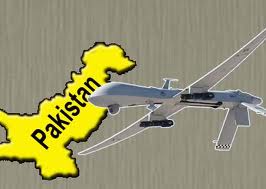
A fresh wave of drone attacks may also exacerbate tension. At least 45 suspected militants were killed by missiles in Pakistan’s northwest, according to local intelligence officials on Tuesday, one of the largest death tolls to date in the controversial air bombing campaign.

US Suspends Pakistan Military Aid as Diplomatic Relations Worsen

By Saeed Shah for The Guardian

The Pakistan military declared it did not need US military aid as the White House confirmed that it would withhold some $800m (£498m) in assistance to the country’s armed forces.

The row will worsen the already poisonous relationship between the two “allies”, which since the unilateral US raid to kill Osama bin Laden in May has lurched towards breakdown.

Pakistan recently expelled US military trainers from the country, limited the ability of US diplomats and other officials to get visas, and restricted CIA operations on its territory. “The Pakistani relationship is difficult but it must be made to work over time. But until we get through these difficulties we will hold back some of the money that the American taxpayers have committed to give them,” William Daley, the White House chief-of-staff, told ABC News on Sunday.

At stake is Pakistani co-operation against al-Qaida, the Taliban and other extremist groups, which the increasingly bitter relationship is putting at risk. Much of al-Qaida’s remaining leadership is believed to be hiding in Pakistan, while Pakistani territory is used as a safe haven by Afghan Taliban and the allied Haqqani network, fighting across the border in Afghanistan.

The new US defence secretary, Leon Panetta, said over the weekend that he believed Bin Laden’s successor, Ayman al-Zawahiri, was in Pakistan’s tribal area and “he’s one of those we would like to see the Pakistanis target”. Pakistan responded by asking for the US to share the intelligence on Zawahiri’s whereabouts.

Nuclear-armed Pakistan is meanwhile fighting its home-grown extremists in the tribal area on the border with Afghanistan, where a new offensive was launched earlier this month. Major General Athar Abbas, the chief spokesman for the Pakistan military, said that the military had received no formal notification of any aid being cut. He also pointed out that the army chief, General Ashfaq Kayani, had already declared that cash reimbursements to the military, known as coalition support funds, should go instead to the civilian government, where there was more need.

“We have conducted our [anti-extremist] military operations without external support or assistance,” said Abbas. “Reports coming out of the US are aimed at undermining the authority of our military organisations.”

Critical stories about Pakistan are leaked on an almost daily basis to the American press, riling Pakistani public and official opinion against Washington. Many in Pakistan believe there is a concerted American effort to weaken Pakistan and its armed forces, which are some of the largest in the world.

For Washington, Pakistan’s refusal to launch an offensive against the Haqqani network and suspicions that Bin Laden benefited from some kind of official support to live in Pakistan has corroded ties.

There are also questions hanging over future civilian aid, which is meant to provide $1.5bn a year in economic help.

Cyril Almeida, a columnist with Pakistan’s Dawn newspaper, said the country was in danger of becoming internationally isolated, while US policy towards Pakistan was muddled.

“The US can’t decide they if they want to stay in this relationship or cut Pakistan off,” he said. “These leaks and pressure tactics just confirm to the army generals the view that America is no friend of Pakistan and it wishes Pakistan harm.”

Since 2001, the US has provided $21bn in civilian and military assistance, including $4.5bn in the 2010-2011 financial year, as aid was increased under the Obama administration. Two proposed bills in Congress over the last week, which were voted down, would have cut off aid to Pakistan altogether.

Pakistan’s economy is spiralling downwards, with electricity shortages shutting down industry, and rising food and fuel prices causing protests on the streets. Karachi, the country’s economic powerhouse, is often shut down by ethnic gang violence, which has claimed more than 100 lives in the current spate of bloodshed.

Did Pakistan Have Reporter Killed?

By Jennifer Epstein for Politico

In another possible blow to U.S.-Pakistan relations after the killing of Osama bin Laden, Obama administration officials believe that the country’s intelligence service ordered the “barbaric and unacceptable” killing of a journalist who had written about ties between the country’s military and Al Qaeda militants, according to a report Tuesday.

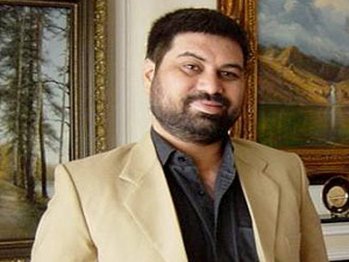
Intelligence surrounding the late May killing of Pakistani reporter Saleem Shahzad, 40, suggests that senior officials at Pakistan’s Directorate for Inter-Services Intelligence ordered the murder to silence his criticism, The New York Times reported Tuesday, citing two senior US administration officials.

American officials consider the intelligence to be “reliable and conclusive,” the Times said, with one official describing the actions of the spy agency, known as the ISI, as “barbaric and unacceptable.” Shahzad suffered 17 lacerated wounds, a ruptured liver and two broken ribs in the deadly attack.

Relations between the United States and Pakistan have become increasingly frayed since the early May killing of bin Laden in a Pakistani town with a heavy military presence, where he’d been holed up for several years. U.S. officials suspect that some members of the military and the ISI helped harbor him there, even if top Pakistani officials truly were kept in the dark about bin Laden’s presence there.

The Times’s report comes after journalists and others within Pakistan accused the ISI of being behind Shahzad’s death, and since the Pakistani government – under pressure — launched an investigation of the killing.

A Pakistani official, meanwhile, shot down the Times’s report.

“There is an international conspiracy to malign the law enforcement agencies and security forces,” Pakistani information minister Firdous Ashiq Awan said Tuesday, the Hindustan Times reported.

The allegations made by the Obama administration “are part of that conspiracy,” she said.

Awan also said that “good relations are in the interest of both” the United States and Pakistan, though “everybody safeguards their own interests” in a conflict and there have been some “ups and downs.”

In This Country, Religious Freedom Is Real

By Imran Hayee for The StarTribune

My childhood memories of celebrating Independence Day are no different than those of my fellow citizens — except that it was on Aug. 14th instead of July 4th.

I grew up in Pakistan, which obtained its independence from British rule on Aug. 14, 1947.

As a child, I marked Independence Day year after year without having a clue about what independence really meant. As I grew older, I read from a speech of Muhammad Ali Jinnah, Pakistan’s founder, which he had delivered immediately after the nation’s independence was announced.

“You are free; you are free to go to your temples,” he said. “You are free to go to your mosques or to any other places of worship in this State of Pakistan. You may belong to any religion or cast or creed — that has nothing to do with the business of the State.”

This was Jinnah’s dream, the founding principle behind the independence of Pakistan as he himself stated in the same landmark speech: “We are all citizens and equal citizens of one State. We should keep that in front of us as our ideal and you will find that in due course, Hindus would cease to be Hindus and Muslims would cease to be Muslims, not in the religious sense, because that is the personal faith of each individual, but in the political sense as citizens of the State.”

Growing up in Pakistan, as a Muslim, I never saw Jinnah’s dream materializing. The constitution of Pakistan defines who is a Muslim — any “impersonator” is subject to imprisonment or death. Temples, churches and mosques not ascribing to a single distorted version of Islam are routinely attacked.

What caused the secular ideology of Jinnah to take this U-turn?

Soon after the nation’s creation in 1947, and Jinnah’s demise a year later, Pakistan’s rulers succumbed to the demands of religious extremists who wanted to convert Pakistan into a puritanical fundamentalist state.

Gradually, the monster of religious fundamentalism grew large enough to devour Jinnah’s philosophy of spreading freedom and equality.

I never experienced independence until I came to America 18 years ago. For the first time — when Independence Day was being celebrated on July 4th instead of Aug. 14th — I wanted to rejoice once again.

I was unaware of the history behind America’s Independence Day, but still, I saw freedom and equality prevail all around me. I could freely go to my mosque without having to fear the state’s interference.

As I learned more about the history behind July 4th, it reminded me of the same philosophy of freedom and equality that Jinnah dreamed for Pakistan. What made the difference in America was that its rulers never succumbed to extremists’ demands.

Rather, its forefathers risked their wealth and lives to uphold the principles of freedom and equality. Their sacrifices paved the way for a Muslim like me to emigrate from a Muslim country and practice Islam the way I wanted to but could not do in the country of my birth.

More recently, while some European countries have banned building minarets on mosques and the wearing of veils by Muslim women, U.S. courts have struck down any such attempted restrictions as unconstitutional.

Addressing the Muslim world in Cairo, President Obama proudly announced, “Freedom in America is indivisible from the freedom to practice one’s religion. That is why there is a mosque in every state of our union, and over 1,200 mosques within our borders. That is why the U.S. government has gone to court to protect the right of women and girls to wear hijab, and to punish those who would deny it.”

As a Muslim-American, I feel proud and honored to be in America and find many reasons to celebrate Independence Day on July 4th. Among others, let me add that the founding principles of America’s Constitution are in perfect harmony with the Qur’an.

The Qur’an (2:257) proclaims, “There is no compulsion in religion. Surely, the right way has become distinct from error.” It further declares fundamental human equality: “O mankind, We have created you from male and female; and We have made you into tribes and sub-tribes that you may recognize one another” (Qur’an 49:14).

These golden principles of freedom and equality have been implemented — in America. In fact, I find the American Constitution to be more Islamic than the constitution of Pakistan or of any other Muslim country in the world today.

Imran Hayee is a professor of engineering at the University of Minnesota Duluth.

Pakistan Kicks U.S. Off Air Base

By Farhan Bokhari for CBS News

The U.S. faces the challenge of quickly establishing alternative facilities from which to launch drone aircraft inside Afghanistan after Pakistan ordered U.S. personnel and hardware out of a base believed to have been used in the past for CIA drones, two senior Western defense officials tell CBS News.

Concern mounted Wednesday over the future of Pakistan’s clandestine support for Washington’s use of drones after the country’s defense minister announced Pakistan had told the U.S. to vacate the small Shamsi air base in the southwestern Baluchistan province.

Only “Pakistani aircraft will be flown from Shamsi in future,” Pakistani defense minister Chaudhary Ahmed Mukhtar told reporters. “No U.S. aircraft will fly from Shamsi.”

“U.S. personnel will not be allowed to use the Shamsi air base,” a senior Pakistani government official added to CBS News.

Another senior Pakistani official, who spoke Thursday to CBS News on condition of anonymity, said there previously “have been U.S. activities at the Shamsi air base. All those activities are being ceased now.”

The news comes as the Obama administration details its new strategy for combating extremism across the globe — a strategy which shifts the focus sharply away from the large-scale ground operations espoused by President George W. Bush, to smaller “surgical” strikes, like drone attacks.

The official refused to specify the types of U.S. activities that have now been ceased at Shamsi.

Pakistan has always publicly criticized the U.S. for carrying out attacks using pilotless drones, and has never acknowledged that it cooperates with Washington on the use of such aircraft. The drones have become widely unpopular across Pakistan after some of the attacks reportedly resulted in civilian casualties, including women and children.

“The damage to the U.S. drone program will not be substantial. But Pakistan’s decision is a setback for efforts to improve U.S. relations with Pakistan,” a senior Western defense official based in Islamabad told CBS, also speaking on the condition of anonymity. “It will take some time for the Americans to establish the program in Afghanistan. It can be done.”

Relations between the U.S. and Pakistan have remained frosty since U.S. Navy SEALs killed Osama bin Laden in the country’s northern city of Abbottabad.

That attack was undertaken without the U.S. offering advanced information to Pakistan, out of fear that militant sympathizers in Pakistan’s intelligence and security establishment might have alerted al Qaeda or the Taliban.

The 2nd May operation has been followed by a hardening of attitude by Pakistan’s influential military, which claims the attack violated Pakistan’s sovereignty. In reaction to the raid, Pakistan has already ordered more than 150 U.S. military trainers to leave the country.

Cost Of Wars In Iraq, Afghanistan, Pakistan To Reach $3.7 Trillion: Report

By Elise Foley for The Huffington Post

Costs of War: 225,000 Lives and up to US$4 Trillion from Watson Institute on Vimeo.

WASHINGTON — The United States will have spent a total of $3.7 trillion on wars in Iraq, Afghanistan and Pakistan, costing 225,000 lives and creating 7.8 million refugees, by the time the conflicts end, according to a report released on Wednesday by Brown University.

The report, written by more than 20 economists, political scientists, lawyers, anthropologists and humanitarian personnel for Brown’s Watson Institute for International Studies, gives staggering estimates for the cost of military action in those three countries. Nearly ten years since U.S. troops first entered Afghanistan, the report estimates the final cost of all three conflicts will be between $3.7 trillion and $4.4 trillion — far higher than the $1 trillion price tag referenced by President Barack Obama earlier this year. The report estimates the U.S. government has already spent between $2.3 trillion to $2.7 trillion and will spend at least a trillion more over the next fifty years.

In a video op-ed exclusive to HuffPost, some of the report’s authors explained the high costs — both past and future — of the wars.

Long-term obligations to war veterans will cause the price tag of the conflicts to climb for decades after troops have returned home. The report puts the cost of health care for veterans at between $600 to $950 billion, not peaking until the 2050s.

“Wars, in a sense, are never over when they’re over,” Catherine Lutz, a Brown University anthropologist, said in the video op-ed. “They go on for decades, and the peak costs for this war will be incurred forty years from now.”

Because the wars have had no true front-lines, there have been a huge number of injuries, primarily to young people serving in the military. There has been a particularly large amount of casualties in Pakistan, the report says.

“The costs have been borne unevenly,” Lutz said. “The military families, contractor families, the people of Iraq and Afghanistan and Pakistan, have borne a tremendous cost.”

Even just paying the interest on the United States’ war debt will be a large endeavor, according to the report, at a time when the country is set to exceed its current debt limit of $14.29 trillion. The government has already paid about $185 billion in interest on war spending, and could accrue another $1 trillion — an amount not included in the $3.7 trillion estimate — in interest by 2020, according to the report.

“We have borrowed virtually all of the money that has been used to pay for the Iraq and Afghanistan conflicts, and that has been very expensive, adding at least $1.5 trillion to our national debt,” Linda Bilmes, an economist with Harvard University, said in the video op-ed.

Now the country is at a decision point, aligned with the current showdown over a deal to raise the debt ceiling by August.

“There is immense and urgent requirement to learn from the experience of the past decade and to try to ensure we don’t make the same mistakes all over again,” Andrew Bacevich, a Boston University military historian and veteran, said in the video.

Nominee Questions Pakistan’s Battle Plan

By Julian E Barnes for The Wall Street Journal

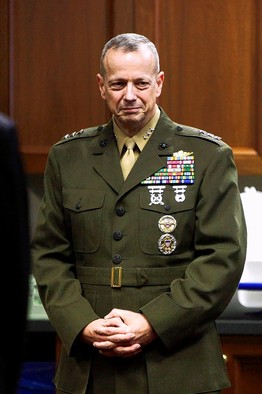
WASHINGTON—The Marine general chosen by President Barack Obama to lead the Afghanistan war raised doubts about Pakistan’s willingness to go after militants who cross the Afghan border to attack U.S. and allied troops.

In a confirmation hearing before the Senate Armed Services Committee, Lt. Gen. John Allen also said he believed that the Afghan insurgency’s momentum has been halted and even reversed in key parts of the country, and backed Mr. Obama’s troop drawdown plans.

But Pakistan, as a haven for militants, looms large over the war in Afghanistan. Gen. Allen said Pakistan continues to “hedge” against a precipitous U.S. withdrawal from Afghanistan by supporting anti-American militant groups, including the Haqqani network.

The statements were a rare public show of military skepticism about Pakistan’s intentions, reflecting the military’s increasing view that relations with Pakistan are deteriorating.

Gen. Allen, deputy commander of the U.S. Central Command, argued that it would be ultimately in Islamabad’s interest to expel militant groups from their sanctuaries in Pakistan.

“We will encourage and will continue to encourage our Pakistani friends to bring pressure to bear upon those safe havens,” he said. “It’s not just good for the outcome of our strategy and for the president’s vision on the outcome in Afghanistan; it’s good for Pakistan as well.”

Appearing alongside Gen. Allen, Adm. William McRaven, nominated to lead Special Operations Command, also said Pakistan is unlikely to move against the frontier militant havens anytime soon.

The admiral oversaw the Navy SEAL team that last month killed Osama bin Laden at his hideout in a Pakistani garrison town.

The officers’ testimony shined a light on the fragile state of U.S.-Pakistan relations, which have grown combative in the wake of the bin Laden raid.

Military leaders have made plain they are displeased with the declining cooperation by Pakistan, but insist the U.S. can’t walk away from the relationship.

“We’re giving them $4 billion,” said Sen. Scott Brown (R., Mass.). “And yet sometimes we don’t know if they’re in or they’re out, are they with us or [are] they not?”

After Adm. McRaven said Taliban leader Mullah Mohammad Omar is likely hiding in Pakistan, Sen. Lindsey Graham (R., S.C.) demanded Pakistan hand him over.

Pakistani officials have said limited military capacity—not lack of will—is inhibiting their operations against militant groups.

Gen. Allen said he backs President Obama’s decision to pull 10,000 troops out of Afghanistan this year, and the remaining 23,000 surge troops by the end of next summer. After the drawdown, the U.S. would still have 68,000 troops in the country, he said.

But he acknowledged that the military didn’t recommend a drawdown schedule as aggressive as the one Mr. Obama chose.

Under questioning from Sen. Joe Lieberman (I., Conn.), a critic of the Obama administration’s drawdown plan, Gen. Allen suggested that if conditions deteriorate he would advise Mr. Obama to alter the plan.

“It is my responsibility to the chain of command and to our commander-in-chief to ensure—should I be concerned about the progress or the execution of the campaign—that I so advise the chain of command,” he said.

Neither the Afghan Taliban nor the Haqqani network has directly targeted the Pakistani government. And Islamabad remains wary of a hasty U.S. withdrawal and sees the militant networks as potential future allies in Afghanistan.

Gen. Allen said even as troops leave Afghanistan, the military would continue to implement its current counterinsurgency strategy, which is aimed at protecting civilians from the insurgents while helping the government extend its reach and legitimacy.

Sen. Graham asked if Gen. Allen would have enough forces to continue that strategy, which requires large numbers of troops to secure population centers.

“How can we maintain counterinsurgency if all the surge forces have gone?” Sen. Graham asked.

The End of AfPak

By Scott Malcomson for The New York Times
Remember how after 9/11, Osama bin Laden’s attacks on us could be linked to almost anything, from shopping habits to the rediscovery of Western values to carbon-pricing schemes? Something similar appears to be happening with Bin Laden’s death. Jihadism sure isn’t what it used to be. After 10 years, it seems, the time has come to go home. Troops are and will be coming back to the United States from Iraq and Afghanistan. The military budget will be cut. The outgoing secretary of defense feels able to openly mock NATO because, presumably, he thinks he can afford to — because it doesn’t matter all that much. The global war on terror is being downgraded from Armageddon to something more out of Leviticus: a tricked-out police action, just as John Kerry, in this magazine, always said it should be. On Sunday, Helene Cooper and Mark Landler reported that “American success in the counterterrorism campaign would seem to bolster arguments for a swift withdrawal from Afghanistan.” By Tuesday morning, they were reporting that President Obama would announce his withdrawal plans on Wednesday. Meanwhile, a Harris poll revealed that 51 percent of Americans and 54 percent of Britons believed “the death of Bin Laden meant it was time to bring troops from their countries home.”

That isn’t quite how it looked when I was in Washington a few weeks ago and spoke with about a dozen current and former American officials and with Pakistanis. The impression they each gave was that American withdrawal would be speeded not because of Bin Laden’s death but because of Pakistan’s reaction to it. After the initial shock, Pakistan’s (government-influenced) press latched onto a narrative of “national humiliation” as a result of the American raid, rather than, say, one of jubilation at the demise of a killer whose fantasies have brought Pakistan nothing but misery. A younger generation of military officers — Pakistan is dominated by its military — seemed at times about to revolt in reaction to the insult to Pakistan’s sovereignty. And the Inter Services Intelligence (I.S.I.), Pakistan’s ubiquitous military intelligence outfit, reacted, as was subsequently reported, by scouring the neighborhood around Bin Laden’s house for … evidence of how the C.I.A. found out he was there, and to determine who had been helping the Americans.

Finally, the Pakistan government did not respond to the Bin Laden raid by pressing its new advantage and rolling up terrorist networks across the land. No, it did not do that at all. So Secretary of State Hillary Rodham Clinton and Admiral Mike Mullen, chairman of the joint chiefs of staff, went to Islamabad and on May 27 presented a list of demands. These included the arrest or elimination of Ayman al-Zawahiri (of Al Qaeda), Ilyas Kashmiri (a long-sought semi-free-agent and former Pakistani military man), Sirajuddin Haqqani (of the AfPak-border based Haqqani network) and Atiya Abdur Rahman (Al Qaeda), and the shutting down of bomb factories in Pakistan.

By June 3, Kashmiri was dead. But this promising start now seems isolated. The other wanted men are still at large. The bomb-makers might well be getting tipped off. The revolt by younger Pakistani officers seemed only to get worse.

In short, the U.S. and Pakistan are really not getting along. Among members of Congress, beating up Pakistan has become ritualized; Senators McCain and Rogers were doing it again on the Sunday programs. I wondered: How many times can Pakistan be abandoned? As Bruce Riedel, a former C.I.A. officer and the head of President Obama’s first major AfPak review, shows in his excellent new book, “Deadly Embrace: Pakistan, America and the Future of Islamist Jihad,” embrace and abandonment have formed the pattern of American-Pakistani relations since the majority-Muslim nation was formed out of the breakup of British India in 1947. Harry Truman’s lack of interest yielded to Dwight Eisenhower’s enthusiasm for Pakistan as an anti-Communist bulwark and a base for spying on the Soviets. The relationship was and remained built around security and intelligence. Lyndon Johnson reversed course when India and Pakistan went to war in 1965; he cut off both, but Pakistan had, unlike India, been a strong ally, and it felt betrayed. This set the pattern: ultimately, Pakistan was tactical and India was strategic.

Now, after almost 10 years of intense engagement, Pakistan and the U.S. appear set for another split; at least that was the consensus among the officials I spoke with. There was a pervasive sadness in these conversations. It was due in part to the sheer human effort that has gone into the U.S.-Pakistan relationship. A lot of spies and soldiers and diplomats and politicians have put years of their lives into making “AfPak” work, which requires making Pak work. A lot (not all) of that effort seems to be going down the drain, along with much of the billions of taxpayer dollars that financed it.

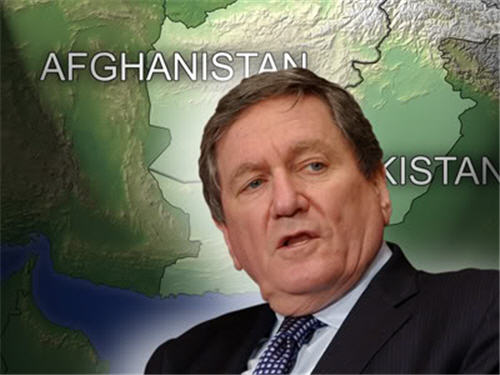
There is also personal sadness in that the AfPak effort was associated toward the end with Richard Holbrooke, whose death late last year brought the foreign-policy world up short. Holbrooke did not take great care of himself, so objectively his death could not be entirely a surprise, and among people over 70 the reactions I heard were more of the well-what-did-you-expect variety. But in the 35-to-65 range it was different. Holbrooke represented, very attractively, the assertion of youth and hope against experience. Even at 69 he had a distinct eagerness, even boyishness, alongside the baritone gravitas. He attracted bright young people. He could be young and old at the same time. Once he was gone, that sort of generational bridging disappeared. (Older figures are few in this administration.) The sense of continuity (as well as of optimism) is weakening. There’s something missing now.

There was also a sense of ideological loss of direction. For all their differences, Bill Clinton and George W. Bush shared a tangible optimism about American governmental involvement abroad. President Obama is different, and even if he weren’t the national mood is. The people’s representatives in Congress are vying to bring troops home faster, and if there is an internationalist remaining in the House he or she is keeping quiet. The Republican candidates for president seem to have settled on anti-war isolationism as a winning position. Obama’s great strength in foreign policy — his ability to repackage, and optimize, American power in a multipolar world — is the strategy that dare not speak its name, or it will bring accusations of “declinism.”

Finally, there is the tremendous sadness of Pakistan itself. The country doesn’t have enough water. It lacks the electricity to develop its industries. Literacy, by some reckonings, is actually declining. Democracy has been restored but the government is hardly stable. The one truly semi-stable institution, the military, is struggling against itself, just as Pakistanis are dividing, and attacking each other on an increasing scale (which is saying something).

But, in a way, the saddest thing of all, from a foreign-policy point of view — Pakistani or American — is that the one great card Pakistan has to play is to make itself a problem. Pakistan formed itself into a regional player through building its army, running terrorist proxies in Kashmir and Afghanistan, indulging in enough Islamist millenarianism to make itself frightening, and developing nuclear weapons. None of these strategies have a good future. But in the absence of a long-term committed relationship — what Holbrooke promoted as a “strategic partnership” — with the United States or, perhaps, with China, Pakistan is left with fear as its most successful export.

There was some discussion in Washington as to whether Mullah Omar’s name was on that list that Clinton and Mullen presented in Islamabad. It almost doesn’t matter. The doubt itself is the message: Pakistan stays valuable because it has terrorist “ties” or “links” or “proxies” or whatever. As national existential dilemmas go, Pakistan’s is particularly nightmarish. The U.S. will leave them to it — abandonment again — and choose the happier relationship with India. Secretary Clinton will be at the regional forum of the Association of Southeast Asian Nations in late July, helping to take her longtime initiative of eastward Indian engagement, and the integration of the United States into East Asian political structures, to a new level. This is part of a long-term strategy of accommodating the rise of China and of India.

And Pakistan, after 10 years, will be left behind; as the line in Washington goes, “There is no good solution.”


All Confused On the Western Front: NATO and Libya’s Rebels Don’t Jibe

By Steven Sotloff for TIME

“Where is NATO?” the rebel asks, with no small amount of frustration. It is just after midnight, Friday, June 17, and he is holed up in Dafniyah, a hamlet west of the revolutionary enclave of Misratah on the coast of western Libya. Like all the fighters in the dry fields outside the rebel city, Ashrf Ali, 30, had anticipated that the military alliance would launch a bombing campaign in the early hours of the morning last Friday, hitting Libyan leader Muammar Gaddafi’s troops to allow the rebels to push further inland. Instead, NATO planes have merely buzzed the sky in routine reconnaissance and patrol sorties, leaving Ali and his fellow fighters unable to advance.

Throughout parts of Libya under rebel control, people are frustrated with NATO. Between its slow pace of attacks and the errant strikes that have killed rebel fighters, the speculation now is that the Western coalition lacks the resources and resolve to help the rebels topple Gaddafi.

The chief problem plaguing both NATO and the rebels is lack of coordination. Rebel leaders complain that they must jump through hoops to reach NATO officials. Field commanders requesting air strikes and relaying troop movements have no direct communication with the alliance’s military command in the region, much less headquarters in Brussels, which must issue the ultimate orders. Instead, they call their senior officers via satellite phone at a rebel command center in Benghazi. The officers then relay the information to NATO officials in the same building, who only then contact Brussels. The byzantine process squanders valuable time in a war where seconds are precious.

Unable to order airstrikes, rebels in the field are forced to wait for unannounced NATO bombings before they can advance. “I never know what to tell my fighters,” says Sa’adun Zuwayhli, 29, a field commander in Dafniyah, which is how far the rebels have advanced out of Misratah in their excruciatingly slow advance toward Gaddafi’s capital Tripoli. “Advance, retreat, hold — they are all guesses until we see the bombs from NATO,” he laments.

The rebels never know when NATO will fly in to their rescue. During a fierce offensive by Gaddafi’s forces between June 7 and June 10, one that left more than 70 rebel dead under a barrage of long-range Grad rockets, the soldiers of “Free Libya” waited for a NATO counterattack that never materialized. The coalition’s failure to defend the rebels angered their commanders. “NATO is to be blamed for Friday’s deaths,” Misratah’s military council spokesman Ibrahim Bayt al-Mal told journalists. The alliance’s officials have responded to such comments in the past by noting that their mandate extends only to protecting civilians, not toppling Gaddafi.

The lack of direct communication between the two sides has left NATO unable to differentiate between Gaddafi’s forces and rebel fighters, leading to friendly fire incidents in which rebels were attacked. In April, two errant bombings in the rebel-held areas killed at least 20. Last Saturday, NATO mistakenly targeted a rebel convoy in which at least four were injured. The coalition immediately released a statement explaining that “a particularly complex and fluid battle scenario” led it to believe that the rebel column was a Gaddafi battalion because his forces “had recently been operating” in the area. All three attacks occurred in the area between the cities of Ajdabiyah and Brega in eastern Libya.

NATO’s explanation, though, did not satisfy rebel leaders. “We are upset when civilians die,” explained the rebel’s military spokesman in Benghazi Ahmad Bani. Libyans in Misratah were even blunter. “We are fighting against a dictator with advanced weapons. We can’t be fighting NATO as well,” says Khalid Elaas, 39. “They need to figure out how to run this campaign or the people will be burning pictures of NATO leaders next to those of Gaddafi’s.”

NATO’s actions have left Misratah’s rebels not only angry, but puzzled as well. After the military alliance introduced helicopters last week for the first time, it dropped illustrated Arabic leaflets declaring, “NATO forces will take all the steps necessary to destroy the war instruments that threaten civilians.” But instead of reaching their intended targets, the leaflets landed in rebel held positions, leaving the fighters there perplexed.

Confusion is the least of the rebels’ worries. By the time the sun rises on Friday, Ashrf Ali is exasperated, having waited all night for an offensive that never materialized. “If NATO does not get its act together, this war is never going to end,” he complains, as he heads for a nearby canvas tent to get some sleep.

Pakistan Aid Depends on Security Cooperation, Panetta Says

By Roxana Tiron for Bloomberg News

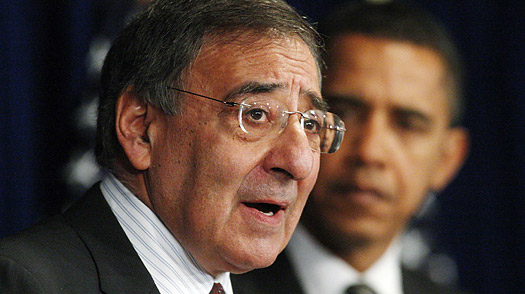
An accelerated counterterrorism campaign in the border region between Afghanistan and Pakistan is “vital” for the U.S. to defeat al-Qaeda there and prevent its return, according to CIA Director Leon Panetta, who is nominated to succeed Defense Secretary Robert Gates.

Any decisions on future U.S. security assistance “will be informed” by Pakistan’s response to the “concrete steps” the U.S. has set for counterterrorism cooperation, Panetta said in a 79-page set of answers to questions from the Senate Armed Services Committee in advance of his confirmation hearing scheduled for June 9.

Last month, the U.S. found and killed al-Qaeda leader Osama bin Laden who was hiding in a compound in the city of Abbottabad, 30 miles (50 kilometers) north of the capital, Islamabad.

The U.S. “train-advise-equip” programs with Pakistani military and paramilitary forces have been important in eliminating terrorist sanctuaries and disrupting the al-Qaeda network, Panetta said.

“It is vital, however, that Pakistan live up to its end of the bargain, cooperating more fully in counterterrorism matters and ceasing to provide sanctuary to Afghan Taliban and other insurgent groups,” he said.

Pakistan continues to lack the necessary military and civilian capacities to “hold” and “build” in areas along the border region that have been cleared of al-Qaeda forces, Panetta said.

Seeking Results

“If confirmed, I will work the Congress to ensure that the support we provide is yielding the results we seek,” he said.
Since 2009, Pakistan has undertaken counterinsurgency operations against extremist organizations in the northwest, including in Swat, South Waziristan, Mohmand and Bajaur “with varying levels of success,” said Panetta.

“Pakistan’s level of commitment is reflected in the enormous casualties it has suffered as a result of terrorism in the last few years, including more than 11,000 military personnel killed or wounded in action and more than 30,000 civilian causalities in recent years,” he said.
Panetta said that while, bin Laden’s death is a “significant blow” to al-Qaeda, the core group and its offshoots “remain a vary dangerous threat” in the region and to the U.S. homeland.

“There is a risk that decentralized affiliates may pose an increased threat to the United States,” he said
Panetta said that President Barack Obama’s Afghanistan strategy is “sound” and the U.S. has made “the progress necessary to give the President meaningful options for his decision,” on how many U.S. forces to withdraw beginning in July.
The military gains in Afghanistan are “helping to create the conditions for reconciliation,” between Afghanistan’s government and the Taliban insurgents.