Archive for the ‘ President Obama ’ Category

Pakistan Leaders Must Make Choice After Clinton’s Warning

By The Bloomberg News Editorial Board

When U.S. Secretary of State Hillary Clinton visited Pakistan last week, she noted that U.S.- Pakistani relations were at a turning point after the killing of Osama bin Laden. It was up to the Pakistanis, she said, to decide “what kind of country they wish to live in.”

The brutalized body of investigative journalist Syed Saleem Shahzad, which turned up outside of Islamabad on May 31, may provide a clue to the answer.
Shahzad disappeared after publishing the first of two promised articles linking elements of the Pakistan navy to al- Qaeda following a deadly May 22 attack on a Karachi naval station. Last fall, after being questioned about a different story by Pakistan’s Directorate for Inter-Services Intelligence (ISI), Shahzad wrote that he was threatened by the spy agency.

Alternatively, it could be that foul play like Shahzad’s murder will become a thing of the past in Pakistan. While in Islamabad May 27, Clinton and Chairman of the Joint Chiefs of Staff Admiral Mike Mullen demanded authorities take “decisive steps” to crush the violent extremists the government has long supported, which would end the need to intimidate journalists who expose that support. Whichever way the Pakistan government goes, the May warnings by the U.S. ought to be the last.

The U.S. administration has continued to insist, as President Barack Obama did in a May 22 interview with the BBC, that the Pakistanis have “generally been significant and serious partners against the terrorist threat to the West.” This simply isn’t the case.

Victim, Sponsor

For much of the past decade, Pakistan has been both a victim and a sponsor of Islamic militants. Its soldiers are fighting bravely against homegrown terrorists seeking to install an Islamic government. In 20 attacks in May, these radicals killed some 150 people.

At the same time, the Pakistani army, led by General Ashfaq Parvez Kayani, is a longstanding patron of violent groups targeting Afghanistan and India.
Guided by excessive fear bordering on paranoia about India, Pakistan’s military and intelligence services believe that nurturing those extremists is an effective way to frustrate India’s regional ambitions. The ISI largely created and continues to support the Taliban and the Haqqani Network, the principal groups battling U.S. forces in Afghanistan and the fledgling government in Kabul. It also backs Lashkar-e-Taiba, the group responsible for the 2008 attacks in Mumbai that killed more than 160 people.

Double-Dealing

President George W. Bush’s administration tried to end this double-dealing by giving Pakistan billions in economic and military assistance. Yet Bush didn’t make the aid contingent on a crackdown on extremists. The Pakistanis cooperated somewhat with U.S. efforts to dismantle al-Qaeda but refused to act against other groups, including the Afghan Taliban, which was given refuge inside Pakistan’s borders.

The Obama administration accelerated the failed Bush policy, substantially increasing military and economic assistance, again without imposing rigorous conditions. And Pakistan continued to ignore administration warnings about continued support for extremists.
In one incident reported by the Washington Post, Obama’s first national security adviser, James Jones, warned officials in Islamabad that there would be “consequences” if a terrorist attack directed at the U.S. was traced to Pakistan. Yet when a man who had trained at a terrorist camp in that country attempted to detonate a car bomb in Times Square in May 2010, the U.S. administration did nothing. Shortly thereafter, Obama watered down Jones’s words, telling Kayani that a “successful” attack would have consequences.

Meaning Business

So when U.S. authorities learned that Osama bin Laden might be housed in a villa in a Pakistani garrison town, they dispatched Navy Seals to capture or kill him without so much as notifying the Pakistanis in advance. The raid provoked great outrage from officials in Pakistan. Since then, emotions have cooled. Clinton and Mullen have delivered their warnings, public and private. And this time, the Americans may mean business.

Will the Pakistanis respond?

Shahzad’s murder is a bad sign. On the other hand, reports from Pakistani tribal leaders suggest that the Pakistani army may be preparing a serious campaign in North Waziristan, where the leaders of the Haqqani Network and other extremist groups live.
It will soon be clear whether Clinton’s latest message got through. If not, the administration must consider new ways to persuade Pakistan to change course, recognizing that the country is behaving more like an adversary than a partner.

U.S., Pakistan, Through Thick and Thin

By Gerald F Seib for The Wall Street Journal

One diplomat long involved in the tempestuous U.S.-Pakistan relationship likens it to a Catholic marriage: There may be problems, but divorce isn’t an option.

And so it is that, almost a month after U.S. Navy SEALs entered Pakistan to kill Osama bin Laden, the two troubled partners find themselves not in divorce court but in an awkward but unmistakable process of reconciliation.

Signs of healing are popping up. Despite its anger and embarrassment at being left in the dark about the bin Laden raid, Pakistan’s intelligence service has begun cooperating again on a series of sensitive matters. Meanwhile, Secretary of State Hillary Clinton and Joint Chiefs of Staff Chairman Mike Mullen have just held the obligatory kiss-and-make-up talks in Pakistan, which U.S. officials describe as blunt but useful in moving forward.

And despite widespread anger in Congress over Pakistan’s harboring, either willfully or unknowingly, the world’s leading terrorist, Obama administration officials seem to be squelching the desire to extract revenge by cutting Pakistan’s aid.

There remains the danger of a rupture, and there still could be long-term damage. Street-level anger on both sides means the relationship can’t stand too many more shocks just now.

In particular, it seems likely that one result of the trauma will be a scaling back of the drone wars—America’s use of armed drones to launch strikes inside Pakistan to attack operatives of the Taliban movement fighting U.S. forces next door in Afghanistan.

The drones likely will continue to be used against top Taliban leaders when found, but less often against lower-priority targets, and probably under new and clearer rules of cooperation with the Pakistanis, say those familiar with the effort.

Still, the reality is that the two countries don’t have much choice but to move on. Regardless of how much love is flowing at any moment, they simply need each other.

The American war against al Qaeda globally and against Taliban insurgents in Afghanistan simply can’t be won without the cooperation of Pakistan. Much as Americans are infuriated by the way elements of Pakistan’s government and intelligence service hedge their bets by playing both sides in the struggle against extremism, there’s no doubt that Pakistani intelligence has been crucial in the fight.

For its part, Pakistan has, in its fit of pique over the bin Laden raid, made its best show of playing the China card to demonstrate to the U.S. that Pakistanis can find good, powerful friends in Beijing if Americans don’t treat them better. By coincidence, this has been proclaimed, officially by the two countries, the year of China-Pakistan friendship, which is a useful card for Pakistan to play right now.

But Pakistan’s post-raid overture showed the limits of the China option as much as anything else. Pakistani Prime Minister Yousuf Raza Gilani made a four-day trip to China soon after the bin Laden operation, and came away with a Chinese pledge to speed up delivery of some previously promised fighter jets.

Mr. Gilani’s other takeaway from his visit promptly proved dubious. His defense minister announced that Pakistan had invited China to take over management of a big Pakistani port at Gwadar, and to build a new naval base there. In response, the Chinese said, essentially, “We have no idea what you’re talking about.” Whatever was discussed, it appears to be less than originally advertised.

Pakistanis as well as Americans know China has its limits as an alternative big-power friend for Islamabad. American aid can’t easily be replaced, and China doesn’t tend to dole out assistance easily. Meanwhile, the U.S. is the top market for Pakistani exports, while China ranks fifth. China’s big textile industry actually is a key international competitor to Pakistan’s own textile sector.

Ultimately, the Chinese are less likely to be helpful to Pakistan in the war against extremism than will the U.S. China tends to use partnerships abroad to solve its problems, not to help friends solve theirs.

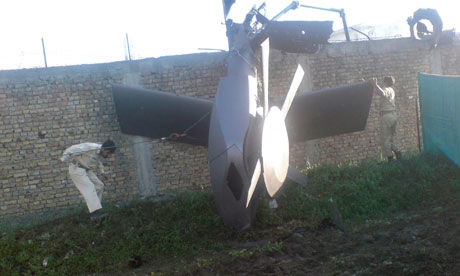
In the meantime, real and meaningful steps have resumed in the U.S.-Pakistani intelligence relationship. Pakistan has allowed American officials to speak with the bin Laden wives found in his compound. It has returned the tail section of a U.S. helicopter lost in the raid; there was stealth technology embedded in it—technology the U.S. feared an angry Pakistan might instead share with China.

And Pakistan has agreed to allow American officials into the bin Laden compound to search for more intelligence on al Qaeda operations run from there.

The U.S. now seeks more help in fighting the Taliban inside Pakistan, and there will be a three-way American-Afghan-Pakistani meeting to discuss Afghanistan next month.

All isn’t bliss between Washington and Islamabad—not by a long shot—but those aren’t the actions of partners headed their separate ways.

Gaddafi Stadium Name Must Go

By Manzer Munir for Pakistanis for Peace
It has been over three months since the Arab Spring arrived on Libyan shores. The Libyan Civil War started there in February of 2011 after Ben Ali of Tunisia and Hosni Mubarak of Egypt begrudgingly relinquished power in the neighboring North African nations. At first it had appeared that Mubarak would resort to thuggery and despotic abuse of his powers. But due to the brave people in Tharir Square in Cairo, he eventually was forced out by the Egyptian army and under American pressure once the Obama administration calibrated their stance to not support a long time ally in Mubarak and instead follow the popular opinion of the people of Egypt against his autocratic rule.

Unfortunately for the people of Libya, Muammar Gaddafi is not ready to step down from over 40 years at the helm of Libyan society. His army brutally quashed a rebellion against his rule and when it appeared that many thousands more would be killed by his troops, the US and NATO forces intervened and bombed Libyan government forces. The standoff between the Libya forces of Gaddafi and the US and NATO bombings have left Libyans in the middle as their nation continues to suffer several months into the fighting.

A brutal dictator like that who cares more about holding onto power than the fate of his nation does not deserve any honors. Instead he deserves to be tried for murdering many innocent people and if found guilty he should be hanged.

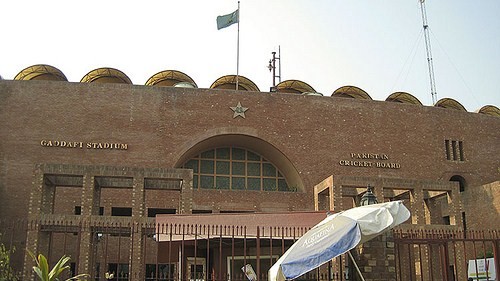
Therefore it is a shame that in Pakistan, one of the country’s most important stadium continues to bare the name of the Butcher of Tripoli. Yes, Gaddafi stadium in Lahore, a venue for many Pakistan Cricket Board sanctioned domestic and international cricket matches, is named after the Libyan dictator.

The stadium was built in 1959 and was originally named Lahore Stadium. However it was renamed in 1974 to Gaddafi stadium in honor of the Libyan ruler who had given a speech in favor of Pakistan’s right to pursue nuclear weapons at a meeting of the Organization of Islamic States Conference (OIC). The stadium also houses the headquarters of the Pakistan Cricket Board (PCB).

But now, as Qaddafi continues to kill his own people in the most brutal of ways, it is time that Pakistan’s Cricket Board changes the name of the country’s premier stadium back to Lahore stadium since honoring this man responsible for indiscriminately killing his fellow citizens unnecessarily further looks negatively upon Pakistan.

A country that already has a grave public relations image problem can surely give itself a break by doing something as simple as changing the name of this stadium. Afterall, what does it say of Pakistan if it continues to honor a man like Gaddafi? Do Pakistanis not care that this man is responsible for killing thousands of his own people?

It is time to put pressure on the Pakistan Cricket Board and on the government to immediately change the name of the stadium. I know that Pakistan has many other problems inside this fractured and unstable nation to think that changing the name of Gaddafi stadium can fix all that ails the country. Nay, it is merely a drop in the bucket. There are countless other problems facing the country that are too many and too complex to list here. But one easy fix the country can do to help improve its image is to change the name of this stadium.

There is absolutely no reason that the stadium should be associated with a lunatic such as Qaddafi. The name should never have been changed to begin with no matter what support he gave to Pakistan’s nuclear aspirations. He has never been a good or stable leader. In fact, the man is thought to have been directly responsible for numerous acts of terrorism in the 1970’s and ’80’s including the Pan Am Lockerbie bombing. And this was BEFORE he started killing his own people in order to quash a rebellion against his rule!

In light of the many recent embarrassments for the nation such as Osama Bin Laden’s hiding in their country, the continued imprisonment of Asia Bibi, the killings of Salmaan Taseer and Shahbaz Bhatti, Pakistanis must decide whether or not they want to join the community of nations or become a pariah state much like North Korea, Libya and Iran. Changing the name of the stadium is a small step, but it is indeed a step in the right direction.

–Manzer Munir, a proud Pakistani American and peace activist, is the founder of Pakistanis for Peace and blogs at http://www.PakistanisforPeace.com as well at other websites as a freelance journalist and writer.

U.S.-Pakistan Ties And The Curse of Secrecy

By Myra MacDonald for Reuters

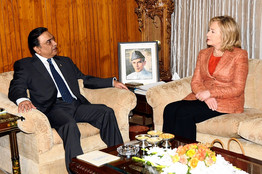
When President Barack Obama telephoned Pakistan’s president to say U.S. forces had found and killed bin Laden, he offered him a choice. He could say Pakistan helped find bin Laden, or that it knew nothing, according to a senior western official. Pakistan initially chose to stress the former – that it had helped – but later shifted to condemning what it called the U.S. violation of its sovereignty.

The story illustrates the complicity between the United States and Pakistan in their deliberately ambiguous relationship. This ambiguity has its uses. It allows Washington to keep working with Pakistan in the face of angry questions at home about why Osama bin Laden was living there. And it lets Pakistan cooperate with the United States, for example on drone attacks, while trying — not particularly successfully — to minimize the domestic backlash.

But the result of that ambiguity has been a disconnect between the leadership of both the United States and Pakistan and their own people, who have little knowledge of the understandings being reached in the many high-level meetings between the two countries (and which will continue despite the deep distrust on both sides.)

As Christine Fair says in her interview with NBR, ”the Obama administration has had no illusions about Pakistan.” When it took office, it had full knowledge of Pakistan’s reluctance to eradicate militant groups, and indeed of the rapid expansion of its nuclear programme. But she added, “the Obama administration, like past administrations, has been willing to look the other way when it deems necessary.”

And for all the furious debate in both countries about the state of U.S.-Pakistan relations, “the leaderships of both countries know that they need each other in ways that are both humiliating and difficult to explain to publics that are ever more outraged and appalled by the perfidy of the other.”

The problem with this pattern of public fury and private reconciliation is that it leaves very little room to build trust between the two countries and almost no scope for properly informed public debate. Some secrecy is of course needed in war and diplomacy. But with the United States and Pakistan, it has become the automatic default position.

This secrecy and complicity did not just start with bin Laden and drone strikes. It goes way back to U-2 spy planes flying over the Soviet Union – Gary Powers, shot down in Russia in 1960, took off from Peshawar. It goes back to the jihad against the Soviet occupation of Afghanistan from 1979-1989, when Washington knew Pakistan would be forced to lie to the Soviet Union about its involvement for fear of inviting Russian retaliation on its own soil. It goes back to the United States turning a blind eye to Pakistan’s expanding nuclear weapons programme in the 1980s.

The United States is now talking about establishing new ground rules for the U.S.-Pakistan relationship. So how about introducing some openness into those new ground rules?

Consider one example where transparency just might be less damaging than secrecy.

The United States, which has begun tentative direct talks with representatives of the Taliban, wants Pakistan to facilitate the process of reconciliation. So does Pakistan (though they may not see eye-to-eye on how it should work.) As far as I understand from conversations with officials from various countries, including from Pakistan, these talks are not about reaching a straight-forward power-sharing agreement with the Taliban that would allow U.S. troops to leave Afghanistan. Rather they are one part of a wider and complex process meant eventually to bring all Afghan parties into a broad political settlement.

Yet such is the secrecy around the talks that there is a serious risk that if enough people believe the Taliban are about to return to power, their opponents will prepare for civil war, building up arms and funding in a way that makes this a self-fulfilling prophecy.

As Ronald Neumann, a former U.S. ambassador to Afghanistan, writes here about his visit to the country in March, “there is a desperate need to clarify U.S. intentions. From President Hamid Karzai to his opponents to non-political Afghans, I found everyone asking what our long-term goals are. Afghanistan is a traumatized nation after 30 years of conflict. Doubts about American intentions lead to conspiracy theories, hedging strategies and even talk of civil war if too much haste to reach a political settlement means the Taliban could be returned to power — something that many Afghans who suffered under the Taliban’s savage rule are determined to resist at all costs. ”

I have written before that there is rather greater strategic convergence between the United States and Pakistan than appears on the surface. Both want stability in Afghanistan. Pakistan – rather than wanting to reinstall a Taliban government in Kabul – has been insisting for a while it wants a stable and neutral Afghanistan. Both the United States and Pakistan want stability in Pakistan- such a statement of the obvious that it is often overlooked.

Meanwhile, India – always the elephant in the room in discussions about Pakistan – has begun a slow but steady attempt at peace-making – its focus nowadays being very much on doing what it takes to build its economy. Pakistan desperately needs to salvage its own economy – a view, analysts say, also promoted by army chief General Ashfaq Pervez Kayani, who sees the country’s security as coming from its economic strength. If a political settlement in Afghanistan and an India-Pakistan thaw were to open up trade across the region, all three countries would benefit and the gain of one would not necessarily be at the expense of the other (this idea at the moment is largely aspirational – but the fact that it is on the table at all shows how much times have changed.)

So arguably, both the United States and Pakistan are roughly on the same page on what needs to happen. Yet their relations are a tactical and emotional disaster. Those long decades of secrecy have not helped. As Najam Sethi wrote in his column, the “carefully contrived and mutually agreed ambiguity has now run aground.”

If something needs to change in the U.S.-Pakistan relationship, there is one approach that has not been tried yet. Try breaking that habit of confining neary everything to secret understandings between military and political leaderships, and instead trusting the people of the countries affected — and that includes Afghanistan — to have a properly informed debate about what is the best way to bring stability to the region.

Pakistan Shuts Down U.S. ‘Intelligence Fusion’ Cells

By David S Cloud for The Los Angeles Times

In a clear sign of Pakistan’s deepening mistrust of the United States, Islamabad has told the Obama administration to reduce the number of U.S. troops in the country and has moved to close three military intelligence liaison centers, setting back American efforts to eliminate insurgent sanctuaries in largely lawless areas bordering Afghanistan, U.S. officials said.

The liaison centers, also known as intelligence fusion cells, in Quetta and Peshawar are the main conduits for the United States to share satellite imagery, target data and other intelligence with Pakistani ground forces conducting operations against militants, including Taliban fighters who slip into Afghanistan to attack U.S. and allied forces.

U.S. special operations units have relied on the three facilities, two in Peshawar and one in Quetta, to help coordinate operations on both sides of the border, senior U.S. officials said. The U.S. units are now being withdrawn from all three sites, the officials said, and the centers are being shut down.

It wasn’t immediately clear whether the steps are permanent. Adm. Mike Mullen, chairman of the Joint Chiefs of Staff, flew Thursday to Pakistan for a hastily arranged meeting with Gen. Ashfaq Kayani, the head of the Pakistani army. A Pentagon official said the two will probably discuss Pakistan’s demands for a smaller U.S. military presence.

The closures, which have not been publicly announced, remove U.S. advisors from the front lines of the war against militant groups in Pakistan. U.S. Army Gen. David Petraeus spearheaded the effort to increase the U.S. presence in the border areas two years ago out of frustration with Pakistan’s failure to control the militants.

The collapse of the effort will probably hinder the Obama administration’s efforts to gradually push Pakistan toward conducting ground operations against insurgent strongholds in North Waziristan and elsewhere, U.S. officials said.

The Pakistani decision has not affected the CIA’s ability to launch missiles from drone aircraft in northwest Pakistan. Those flights, which the CIA has never publicly acknowledged, receive assistance from Pakistan through intelligence channels separate from the fusion centers, current and former officials said.

The move to close the three facilities, plus a recent written demand by Pakistan to reduce the number of U.S. military personnel in the country from approximately 200, signals mounting anger in Pakistan over a series of incidents.

In January, Raymond Davis, a CIA contractor, shot dead two men in Lahore who he said were attempting to rob him. He was arrested on charges of murder but was released and left the country in mid-March, prompting violent protests in several cities.

Soon after, Pakistan ordered several dozen U.S. special operations trainers to leave the country in what U.S. officials believe was retaliation for the Davis case, according to a senior U.S. military officer.

Then, on May 2, five U.S. helicopters secretly entered Pakistani airspace and a team of U.S. Navy SEALs killed Osama bin Laden and four others at a compound in Abbottabad, a military garrison city near the capital, Islamabad. The raid deeply embarrassed Pakistan’s military and inflamed anti-U.S. sentiment across the country.

Javed Hussain, a retired Pakistani brigadier, blamed the decision to close the three intelligence centers on the mistrust that has plagued U.S.-Pakistani relations in recent months. Washington’s decision to carry out the raid against Bin Laden without informing Pakistan’s security establishment brought that mistrust to a new low, he said.

“There is lot of discontent within Pakistan’s armed forces with regard to the fact they’ve done so much in the war on terror, and yet they are not trusted,” Hussain said. “Particularly after the Abbottabad raid … the image of the armed forces in the eyes of the people has gone down. And they hold the U.S. responsible.”

The two intelligence centers in Peshawar were set up in 2009, one with the Pakistani army’s 11th Corps and the other with the paramilitary Frontier Corps, which are both headquartered in the city, capital of the troubled Khyber-Pakhtunkhwa province.

The third fusion cell was opened last year at the Pakistani army’s 12th Corps headquarters in Quetta, a city long used by Taliban fighters to mount attacks in Afghanistan’s southern provinces. U.S. troops have staffed the Quetta facility only intermittently, U.S. officials said.

The closures have effectively stopped the U.S. training of the Frontier Corps, a force that American officials had hoped could help halt infiltration of Taliban and other militants into Afghanistan, a senior U.S. military officer said.

The Frontier Corps’ facility in Peshawar, staffed by a handful of U.S. special operations personnel, was located at Bala Hissar, an old fort, according to a classified U.S. Embassy cable from 2009 that was recently made public by WikiLeaks.

The cable, which was first disclosed by Pakistan’s Dawn newspaper, hinted at U.S. hopes that special operations teams would be allowed to join the paramilitary units and the Special Services Group, a Pakistani army commando unit, in operations against militants.

“We have created Intelligence Fusion cells with embedded U.S. Special Forces with both the SSG and Frontier Corps” at Bala Hissar, Peshawar, the 2009 cable says. “But we have not been given Pakistani military permission to accompany the Pakistani forces on deployments as yet. Through these embeds, we are assisting the Pakistanis [to] collect and coordinate existing intelligence assets.”

Another U.S. Embassy cable said that a “U.S. Special Operations Command Force” was providing the Frontier Corps with “imagery, target packages and operational planning” in a campaign against Taliban insurgents in Lower Dir, an area of northwest Pakistan considered an insurgent stronghold.

In September 2009, then U.S. ambassador, Anne W. Patterson, wrote in another classified message that the fusion cells provided “enhanced capacity to share real-time intelligence with units engaged in counter-insurgency operations” and were “a significant step forward for the Pakistan military.”

The intelligence fusion cell in Quetta was not nearly as active as the facilities in Peshawar, current and former U.S. officials said. Pakistan has long resisted pressure to intensify operations against Taliban militants in Quetta. The city, capital of Baluchistan, is outside the tribal area, which explains Pakistan’s reluctance to permit a permanent U.S. military presence, a U.S. official said.

Despite the ongoing tensions, Pakistani authorities have agreed to allow a CIA team to inspect the compound where Bin Laden was killed, according to a U.S. official. The Pakistanis have signaled they will allow U.S. intelligence analysts to examine documents and other material that Pakistani authorities found at the site.

A U.S. official briefed on intelligence matters said the reams of documents and electronic data that the SEALs seized at the compound have sparked “dozens” of intelligence investigations and have produced new insights into schisms among Al Qaeda leaders.

We Should Hold Our Nose And Remain Engaged In Pakistan

By Joel Brinkley for Tribune Media Services

America’s involvement in Pakistan and Afghanistan may be the most complex foreign-policy dilemma the nation has ever faced. With the death of Osama bin Laden, along with Pakistan’s furious response, the knot is more tangled.

Right now, Afghan officials are reviling their Pakistani counterparts. Pakistan is flirting with China. American officials are threatening to curtail aid to Islamabad. Afghanistan is establishing what it calls the High Peace Council for reconciliation talks with the Taliban, while the United States is already saying the peace talks will almost certainly fail.

Meantime, Afghan Taliban leaders are trying to talk nice. Oh, we’re happy to let girls go to school, they are cooing through thin smiles. Just let us back into the government. At the same time, their fighters opened fire on an unarmed roadwork crew, massacring 36 workers and wounding 20 others.

Pakistani soldiers fired on a U.S. military helicopter flying along the Pakistan-Afghan border. But the government did display a small flash of grace. It gave the U.S. permission to haul away the ruined tail of the helicopter that crashed just outside Osama bin Laden’s home.

Think back to previous conflicts. Even the decisions behind the Vietnam War, one of the most traumatic events in American history, seem relatively simple by comparison. Now we are dealing with two nations led by perfidious, double-dealing scoundrels who take pleasure in disparaging us.

In a chorus over the last few days, President Hamid Karzai and other Afghan officials have been declaiming: You’re fighting the wrong war in the wrong place. They have their own self-interested motivations for saying that. Actually, though, they are correct.

Most analysts believe bin Laden left the tribal areas of Pakistan and moved to a compound just outside the capital to escape the rain of American drone missiles that were killing some of his minions.

Does it make any sense to believe that bin Laden would pull out all by himself, leaving behind his key aides and allies, like Mullah Omar, the Taliban leader? Of course not. Sooner or later we will learn that a half-dozen of them, at least, are hiding in full sight inside Pakistan, in their own high-walled compounds.

One frequent Afghan observation is well-taken, that all of the al-Qaeda and Taliban leaders of note are in Pakistan, not Afghanistan. The United States acknowledged years ago that few if any al-Qaeda operatives remained in Afghanistan.

But now Pakistani leaders are insulting and reviling the U.S., and senior members of Congress are threatening to withhold aid. As Sen. James Risch, an Idaho Republican, put it during a recent Foreign Relations Committee hearing, “Why are we spending our kids’ and our grandkids’ money to do this in a country that really doesn’t like us?

“It’s a hard sell to the American people.”

But the United States can’t stop providing aid to Pakistan and pull out of the country. For one thing, most of the supplies for the 100,000 American troops in Afghanistan are trucked in from Pakistan, and Pakistanis have already shown their eagerness, if provoked, to attack these caravans and torch the trucks. Look at the map, and you won’t find another politically possible supply route.

Pakistan is an extremely unstable country. Its leaders hold onto their pathological obsession with India and refuse to recognize the dire threat that the Taliban and other militants pose from within. What would happen if the government fell, and Islamic militants seized Pakistan’s 100-plus nukes?

Meanwhile, the Afghan war continues, to deprive al-Qaeda of a home there once again. But if the U.S. pulled out and al-Qaeda returned, they’d be doing the U.S. military a great favor. We’ve been trying to get at them in North Waziristan for a decade now with limited success at best. Move back to Afghanistan and they would be easy targets.

What could Karzai do about it?

This summer, President Obama is going to announce the first troop withdrawals from Afghanistan. The number being bandied about now is roughly 5,000 troops. He should ramp it up, withdraw faster. After all, now we are caught in the middle of a civil war between the previous and the present governments.

As for Pakistan, we have to hold our noses and remain engaged. The possible alternatives are simply too ugly to imagine. As Defense Secretary Robert Gates put it at the height of the rancor last week, like it or not, “we need them, and they need us.”

The Tangled Reality of US/Pakistan Relations

By Mark Urban for The BBC

WASHINGTON – The current crisis in US/Pakistan relations is not the first – but it is the most difficult one since 9/11, and it could easily be aggravated further by the intelligence arising from the raid on Osama Bin Laden’s compound.

For this reason, Washington insiders are not so sure that diplomatic moves to ease the problem will succeed.

Senator John Kerry has just been in Islamabad asking for “action not words” from the Pakistani authorities. He says he has gained some agreement for practical steps but, apart from gaining the return of remnants of the US helicopter that was destroyed at the compound, has not yet specified what these might be.

This morning he and other members of the US Senate Committee on Foreign Relations will be holding hearings on Pakistan, including the question of how the billions given in aid could be used more effectively to buy the kind of counter terrorist cooperation that the Americans are after.

Juan Zarate, counter terrorist adviser to President George W Bush, argues that the kind of benchmarks that congressmen have advocated in the past for linking aid to performance on specific actions against militant groups could prove counter-productive in the short term because the Pakistanis consider this “humiliating”.

He poses the further question, “what happens tomorrow if we have to go after Ayman al-Zawahiri?”, referring to the former Al Qaeda number two and presumed leader after Bin Laden’s death.

The question of what leads are thrown up by the intelligence trove from the raided Abottabad compound is now in itself a key factor in whether Mr Kerry and members of President Barack Obama’s administration are able to soothe the relationship. Myriad questions arise from the material seized on flash drives and laptops.

Pakistani officials insist there was no contact between their Inter-Services Intelligence (ISI) and Bin Laden – but what about possible ties with the courier who owned the house and was the key figure in sheltering him?

Will phone numbers leading to ISI officials be found in Bin Laden’s effects? Will there be intelligence that allows the CIA to quickly pinpoint Dr al-Zawahiri or other key figures who might now take control of Al Qaeda?

John McLaughlin, deputy director of the CIA until 2004, argues that even in this current difficult moment for US/Pakistan relations, America will reserve the right to act unilaterally against terrorist targets in Pakistan.

He believes though that ties can slowly be re-built with Pakistan, despite the fact that the raid, mounted without their leaders’ foreknowledge, gave them their “biggest shock for a generation”.

At previous moments of tension between the two countries, accommodations have been found. Intelligence about Al Qaeda suspects has flowed or the army has been sent in to one of the restive tribal areas on the Pakistan border. The US has signed off on new aid payments.

What tends to happen though is that within months, the Americans again accuse the Pakistanis of foot dragging in the fight against militancy, and Islamabad for its part counters with arguments that the US routinely violates its sovereignty.

The tangled reality of the situation is made worse by the fact that Pakistani ministers, mindful of anti-American sentiment in their country, will often not admit publicly to their agreement to drone strikes or other steps. Many people I have spoken to here compare the relationship to a dysfunctional marriage in which both sides need one another but find the reality of daily life increasingly unbearable.

There are those who see ways though in which the two countries might navigate their way through the perfect storm of recrimination and resentment that the Bin Laden operation has produced.

Juan Zarate and some others believe that if the materials seized in the raid produce some nugget of intelligence that leads to the discovery of Dr al-Zawahiri or other key figures, the US may chose to trust the Pakistanis with this knowledge, and make them partners in acting upon it.

If the exploitation of the intelligence went wrong and a leak was suspected the US could use this to place further pressure on Pakistani ministers. But if it all went well, trust might be re-built. The problem is though that there are many within the secret side of US counter terrorism who, because of the way that Osama Bin Laden hid for years where he did, are no longer prepared to take that risk.

Pakistan’s Nuclear Surge

By Andrew Bast for Newsweek

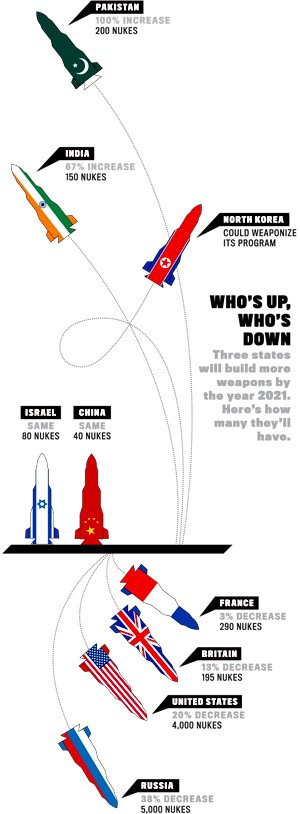
Even in the best of times, Pakistan’s nuclear-weapons program warrants alarm. But these are perilous days. At a moment of unprecedented misgiving between Washington and Islamabad, new evidence suggests that Pakistan’s nuclear program is barreling ahead at a furious clip.

According to new commercial-satellite imagery obtained exclusively by NEWSWEEK, Pakistan is aggressively accelerating construction at the Khushab nuclear site, about 140 miles south of Islamabad. The images, analysts say, prove Pakistan will soon have a fourth operational reactor, greatly expanding plutonium production for its nuclear-weapons program.

“The buildup is remarkable,” says Paul Brannan of the Institute for Science and International Security. “And that nobody in the U.S. or in the Pakistani government says anything about this—especially in this day and age—is perplexing.”

Unlike Iran, which has yet to produce highly enriched uranium, or North Korea, which has produced plutonium but still lacks any real weapons capability, Pakistan is significantly ramping up its nuclear-weapons program. Eric Edelman, undersecretary of defense in the George W. Bush administration, puts it bluntly: “You’re talking about Pakistan even potentially passing France at some point. That’s extraordinary.”

Pakistani officials say the buildup is a response to the threat from India, which is spending $50 billion over the next five years on its military. “But to say it’s just an issue between just India and Pakistan is divorced from reality,” says former senator Sam Nunn, who co-chairs the Nuclear Threat Initiative. “The U.S. and Soviet Union went through 40 years of the Cold War and came out every time from dangerous situations with lessons learned. Pakistan and India have gone through some dangerous times, and they have learned some lessons. But not all of them. Today, deterrence has fundamentally changed. The whole globe has a stake in this. It’s extremely dangerous.”

It’s dangerous because Pakistan is also stockpiling fissile material, or bomb fuel. Since Islamabad can mine uranium on its own territory and has decades of enrichment know-how—beginning with the work of nuclear scientist A. Q. Khan—the potential for production is significant.
Although the White House declined to comment, a senior U.S. congressional official who works on nuclear issues told NEWSWEEK that intelligence estimates suggest Pakistan has already developed enough fissile material to produce more than 100 warheads and manufacture between eight and 20 weapons a year. “There’s no question,” the official says, “it’s the fastest-growing program in the world.”

What has leaders around the world especially worried is what’s popularly known as “loose nukes”—nuclear weapons or fissile material falling into the wrong hands. “There’s no transparency in how the fissile material is handled or transported,” says Mansoor Ijaz, who has played an active role in back-channel diplomacy between Islamabad and New Delhi. “And the amount—they have significant quantities—is what’s so alarming.”

That Osama bin Laden was found in a Pakistani military community, and that the country is home to such jihadi groups as Lashkar-e-Taiba, only heightens concerns. “We’ve looked the other way from Pakistan’s growing program for 30 years,” says Sharon Squassoni, a director at the Center for Strategic and International Studies. What we’re facing, she says, is “a disaster waiting to happen.”

A Defense Department official told NEWSWEEK that the U.S. government is “confident that Pakistan has taken appropriate steps toward securing its nuclear arsenal.” But beyond palliatives, few in Washington want to openly discuss the nightmare scenario of terrorists getting hold of nuclear material or weapons. “The less that is said publicly, the better,” says Stephen Hadley, national-security adviser to President George W. Bush. “But don’t confuse the lack of public discussion for a lack of concern.”

The bomb lends the Pakistanis a certain diplomatic insouciance. Nukes, after all, are a valuable political tool, ensuring continued economic aid from the United States and Europe. “Pakistan knows it can outstare” the West, says Pakistani nuclear physicist Pervez Hoodbhoy. “It’s confident the West knows that Pakistan’s collapse is too big a price to pay, so the bailout is there in perpetuity. It’s the one thing we’ve been successful at.”

Pakistani leaders defend their weapons program as a strategic necessity: since they can’t match India’s military spending, they have to bridge the gap with nukes. “Regretfully, there are several destabilizing developments that have taken place in recent years,” Khalid Banuri of Pakistan’s Strategic Plans Division, the nuclear arsenal’s guardian, wrote in response to NEWSWEEK questions. Among his country’s concerns, Banuri pointed to India’s military buildup and the U.S.’s -civilian nuclear deal with India.

“Most Pakistanis believe the jihadist scenario is something that the West has created as a bogey,” says Hoodbhoy, “an excuse, so they can screw us, defang, and denuclearize us.”

“Our program is an issue of extreme sensitivity for every man, woman, and child in Pakistan,” says former Pakistani president Pervez Musharraf, adding that the nukes are “well dispersed and protected in secure locations.” When asked whether the U.S. has a role to play in securing the arsenal, Musharraf said: “A U.S. role to play? A U.S. role in helping? Zero role. No, sir. It is our own production?.?.?.?We have not and cannot now have any intrusion by any element in the U.S.” To guard its “strategic assets,” Pakistan employs two Army divisions—about 18,000 troops—and, as Musharraf drily puts it, “If you want to get into a firefight with the forces guarding our strategic assets, it will be a very sad day.”

For now, the White House appears to have made a tacit tradeoff with Islamabad: for your cooperation in Afghanistan, we’ll leave you to your own nuclear devices. “People bristle at the suggestion, but it follows, doesn’t it?” says Rolf Mowatt-Larssen, formerly the CIA’s chief officer handling terrorism and weapons of mass destruction. “The irony is that the U.S. presence in Afghanistan and Pakistan, and the money we’re giving them to fight terrorism, could inadvertently aggravate the very problem we’re trying to stop. After all, terrorism and nukes is the worst-case scenario.”

With this fourth nuclear facility at Khushab coming online as early as 2013, and the prospect of an accelerated nuclear-weapons program, the U.S. is facing a diplomatic dilemma. “The Pakistanis have gone through a humiliation with the killing of Osama bin Laden,” says Nunn. “That’s never a time to corner somebody. But with both recent and preexisting problems, we are in a race between cooperation and catastrophe. Both sides need to take a deep breath, count to 10, and find a way to cooperate.”

U.S. Attorney Sends a Message to Wall Street

By Benjamin Weiser and Peter Lattman for The New York Times

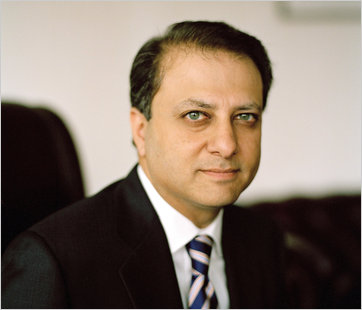
Every few days during the trial of Raj Rajaratnam, the Galleon Group’s co-founder, Preet Bharara, the United States attorney for the Southern District of New York, would quietly enter the courtroom and take a seat in the last row of the gallery.

From that unassuming vantage point, Mr. Bharara watched his colleagues try to persuade a jury to convict the former hedge fund titan of securities fraud and conspiracy.

The consistent presence of Mr. Bharara at the largest insider trading case in a generation — and the office’s resounding victory on Wednesday — signaled that the chief federal prosecutor in Manhattan was back as the sheriff of Wall Street.

Over the last decade, the New York attorney general, federal prosecutors in Brooklyn, the Manhattan district attorney and even the Justice Department in Washington angled for their share of financial fraud cases, an area traditionally dominated by the Southern District. For example, Eliot Spitzer grabbed headlines when he was New York attorney general by focusing on malfeasance at investment banks.

But Mr. Bharara has not-so-quietly reaffirmed his office’s leading role in pursuing corporate crime with this landmark insider trading case, which relied on aggressive prosecutorial methods and unprecedented tactics. For the first time, federal authorities used wiretaps to listen in on stock traders swapping illegal tips.

“What this case has done,” said Neil M. Barofsky, a former Southern District prosecutor who recently served as the special inspector general for the government’s Troubled Asset Relief Program, “goes well beyond simply putting a billionaire hedge fund manager behind bars.”

“The case will impact an entire industry,” Mr. Barofsky said. He said that Mr. Bharara “did more than just oversee and support the prosecution — he made sure that the target audience, traders on Wall Street, fully understood the extraordinary lengths that his office will go to discover these crimes, and that justice will be served.”

It has been 21 months since Mr. Bharara, 42, was appointed United States attorney by President Obama.

In that short tenure, his staff has ventured far beyond Wall Street, prosecuting some of the nation’s — and the world’s — most prominent defendants. Among them: Faisal Shahzad in the Times Square bomb plot; agents in a Russian spy ring; Ahmed Khalfan Ghailani, the first Guantánamo Bay detainee to be tried in the civilian system; Viktor Bout, a Russian accused of being an arms trafficker; a Somali man charged with piracy; and four men charged in a plot to bomb synagogues in the Bronx.

Not every case has gone smoothly. In Mr. Ghailani’s trial, the jury acquitted him of more than 280 counts of murder and conspiracy and convicting him of a single count of conspiracy to destroy government buildings and property. Nonetheless, Mr. Ghailani received a life sentence.

Some academics and newspaper columnists have also criticized Mr. Bharara for not filing criminal charges against senior executives at the center of the financial crisis. Last week, when his office filed a civil mortgage-fraud lawsuit against Deutsche Bank, he said there was not enough evidence to justify a criminal complaint.

Mr. Bharara was an infant in 1970 when he came to the United States from India with his parents. He grew up in Eatontown, N.J., and earned degrees from Harvard and Columbia Law School.

After several years in private practice, including a stint at Gibson Dunn & Crutcher in New York, Mr. Bharara became a federal prosecutor in Manhattan, handling organized crime, narcotics and securities fraud cases. In 2005, he became chief counsel to Senator Charles E. Schumer of New York, leading a Congressional inquiry into the firings of United States attorneys.

Some lawyers have wondered aloud whether Mr. Bharara may have political aspirations like his predecessors, including former New York Mayor Rudolph W. Giuliani, who filled the post in the 1980s. As with Mr. Giuliani, Mr. Bharara is a charismatic figure who is comfortable in front of cameras, can talk tough and has a knack for the witty sound bite. At a news conference announcing Mr. Rajaratnam’s arrest, Mr. Bharara riffed off a famous line from the movie “Wall Street.”

“Greed, sometimes, is not good,” he said.

Unlike Mr. Giuliani, whose political ambitions seemed barely hidden while he led the prosecutor’s office, Mr. Bharara has told friends he has no interest in elected office.

“Everything about Preet’s record suggests that he’s a federal prosecutor for all the right reasons,” said Randy Mastro, a lawyer at Gibson Dunn and a former top deputy under Mayor Giuliani. “The best prosecutors are often those who don’t have political ambitions.”

Mr. Mastro, who overlapped for a time with Mr. Bharara at Gibson Dunn, added, “But that doesn’t mean he shouldn’t be drafted into running.” Ellen Davis, Mr. Bharara’s spokeswoman, said in a statement on Thursday: “Preet loves his job and has no desire to run for public office now or ever.”

Mr. Bharara has not commented publicly on the Rajaratnam verdict, other than a short statement in a news release. But in a series of speeches, he has explained his aggressive approach to corporate crime.

“When sophisticated business people begin to adopt the methods of common criminals, we have no choice but to treat them as such,” Mr. Bharara said weeks after revealing the use of wiretaps in building a case against Mr. Rajaratnam. “To use tough tactics in these circumstances is not being heavy-handed; it is being even-handed.” He has taken that approach in other areas of financial crime.

His office secured convictions in two high-profile criminal cases against bank executives accused of stealing proprietary computer code related to high-frequency trading businesses, including a case against a former programmer at Goldman Sachs. More recently, Mr. Bharara’s prosecutors charged the operators of three popular online poker sites with fraud and money laundering.

And Mr. Bharara continues to pursue insider trading cases. Over the last 18 months, his office has charged 47 individuals with insider trading crimes, 36 of whom have pleaded guilty or been convicted. At a recent news conference, he indicated there was more to come.

“I wish I could say we were just about finished, but sadly we are not.”

The Power of Pakistani Conspiracy Theories

By Ahmed Rashid for The New Republic

Pakistan is not a failed state, or as yet a failing one, even though it may be in a state of chaos or meltdown. Unlike really failed states, it has a powerful army and a corrupt, run-down, but still functioning bureaucracy, judiciary, and police force. Pakistanis perform outstandingly well in the realm of culture: in the arts, television, fashion design, pop music, and of course cricket. What is missing are adequate social services, such as health care, education, population-control programs, and jobs for a population that is nearing 200 million people. Like many Arab countries, Pakistan faces a youth bulge, with an estimated 60 percent of its people under twenty-five years old.

For these young people without adequate education and employment, who have to deal with a corrupt system that offers no panacea to the poor, joining an Islamic extremist group is not at all unusual. It is the norm. For this reason, a replay of an “Arab awakening” in Pakistan would not lead to the dawn of true democracy, but rather to a mass movement whose leadership would swiftly fall into the hands of Islamic extremists, who would then try to overthrow the state.

What Pakistanis desperately need is a new narrative by their leaders—a narrative that does not blame the evergreen troika of India, the United States, and Israel for all of the country’s ills, that breaks the old habit of blaming outsiders and instead looks at itself more honestly and more transparently. Pakistanis as a nation seem incapable of self-analysis, of apportioning blame according to logic and reason rather than emotion.

Along with the causes that I listed above, the wave of intolerance sweeping the country is also due substantially to the conspiracy theories put about by the ruling establishment and their allies in the media. These various hallucinations paint Pakistan as the victim, maligned and wronged at the hands of foreign powers—especially the United States and India. In the imagination of many Pakistanis, the country is regularly used for some geopolitical aim by the Americans and then discarded in favor of India. These sinister outsiders want to subvert, destroy, and undermine Pakistan—but no logical reason is offered as to why. And few will publicly argue that in fact it is the selective state sponsorship of extremism that is destroying the country.

The narrative that has been peddled by the state for much of the past decade is that Pakistan is being undermined by the presence of American forces in Afghanistan, and that if they were to leave the Pakistani Taliban would go home, the suicide bombings would cease, and everything would go back to normal. The ultimate aim of the United States in Afghanistan—so the narrative continues—is to capture Pakistan’s nuclear weapons, even as India is busily dismembering Pakistan by funding Baloch separatists and the Pakistani Taliban. But if that is so, why on earth did the state allow the revival of the Afghan Taliban in 2003, which has only delayed the American withdrawal from Afghanistan? And for those demanding higher military budgets, the most self-serving conspiracy theory is that Pakistan is locked in an interminable conflict with India, which cannot be resolved.

After Bin Laden Raid, Might US-Pakistan Cooperation Get Better?

By Howard LaFranchi for The Christian Science Monitor

The United States launched a drone strike targeting militants in the North Waziristan region of Pakistan Friday, raising tantalizing questions in the aftermath of Osama bin Laden’s death.

And does the drone strike suggest, despite official Pakistani protests to the contrary, that cooperation between the two countries not only continues but may in fact end up enhanced by Sunday’s operation, which was an embarrassment for Pakistan?

It was impossible to know if the strike, which reportedly killed at least eight suspected militants gathered in a house in North Waziristan, resulted from any information seized Sunday, since word of the strike came from Pakistani military officials.

But the drone attack appeared to bolster the argument, voiced by a wide range of regional and intelligence experts, that the US would be able to use Sunday’s raid to pressure Pakistani officials to side more unequivocally with the US in battling Islamist extremists.

Also on Friday, Yemeni officials reported that a drone strike there killed two Al Qaeda operatives.

Drone strikes have been a contentious issue in US-Pakistan relations. But it is also true that a considerable increase over the past year in US strikes inside Pakistan by the unmanned aircraft has not led to a breach in the bilateral relationship.

“It was proper for Obama not to publicly rub Pakistan’s nose in” the embarrassment of having bin Laden discovered in the country, says Paul Pillar, who now directs security studies at Georgetown University in Washington after a long career in US intelligence. “But in private, they owe us something…. We do expect more cooperation.”

That perspective is riding high in Washington – especially among those security analysts and former officials who consider the relationship with Pakistan, difficult as it is, too vital for the US to simply throw up its hands and leave.

If anything, the bin Laden operation should pave the way for the US to develop closer intelligence and military ties to Pakistan, says Pete Hoekstra, a former Republican congressman from Michigan and former chairman of the House Permanent Select Committee on Intelligence.

An advantage for the US coming out of the successful raid, he says, is that America looks competent and like it may be a good friend to have in the battle with extremism.

“For the people sitting on the fence, it’s like, ‘They [the US] may be really getting good at this, and maybe now is the time to make a decision to get closer,’” said Mr. Hoekstra, speaking Thursday at a discussion on Pakistan at the American Enterprise Institute in Washington.

Dov Zakheim, a former deputy Defense secretary under President George W. Bush, agrees that the enhanced US stature after the raid should be leveraged to win stronger cooperation from countries like Pakistan that have hedged their bets about America’s staying power.

The successful operation against bin Laden “tells the world we’re not a spent power, we’re not a declining power,” said Mr. Zakheim, speaking Tuesday at a Center for the National Interest forum in Washington. “There’s a message there about US military power that is terribly important.”

Few experts in the bilateral relationship believe that Pakistan knew absolutely nothing about bin Laden’s whereabouts. But Mr. Pillar of Georgetown guesses that in the end, it may be learned that Pakistani officials simply didn’t want to know about something that existed right under their noses.

“My guess is … there was no effort to try to find things out,” said Pillar, speaking at the National Interest forum. “My guess would be, it’s not a matter of [Pakistani Army Chief] Gen. [Ashfaq Parvez] Kayani or the head of the ISI [Pakistani intelligence agency] knowing who was in that compound – but more the inquiries to find out just never having taken place.”

Kayani this week warned the US that Pakistan would not tolerate another raid like Sunday’s. But similar categorical statements have been made before about US drone attacks, some officials and experts have noted – and the attacks continue, if Friday’s strike is any indication.

Despite the bluster at both ends about the US-Pakistan relationship, a difficult but essential partnership will continue because, with Al Qaeda still in Pakistan and the US still next door in Afghanistan, there is no alternative, some say.

“What’s the alternative strategy in regards to Pakistan? We can’t overreact; we can’t back off the relationship if you don’t have a new strategy,” says Hoekstra, addressing in particular members of Congress who are calling for reduced foreign aid and cooperation. “We’ve got enough relations in the world to worry about right now, rather than adding to the list.”

With Friends Like Pakistan…

By Manzer Munir for Pakistanis for Peace

Many people in Pakistan these days are wondering why their nation often finds itself on the wrong side of recent history. First, there is the continued and unjust imprisonment of a Christian Pakistani woman named Asia Bibi who has been languishing in jail for nearly two years. She has been given a death sentence for allegedly making derogatory remarks about the prophet Muhammad.

Then there was the killing of Salman Taseer, who was the then sitting governor of Punjab, Pakistan’s most populous province, by one of his own bodyguards for his outspoken support for Asia’s rights and her freedom. Instead of swift punishment and public outcry at his actions, the killer, Malik Mumtaz Hussain Qadri, was showered with rose petals by some cheering members of the bar association of Lahore when he came to the courthouse for formal charges of murder. Yes, members of the judiciary were cheering his unilateral action of murdering another human being simply for his support towards a condemned non Muslim woman’s rights.

You can only imagine the warped sense of logic and justice in a country where lawyers cheer the cold blooded murder of an innocent man whose only crime was to come at the aid of a condemned Christian mother of two children.

Fast forward to a few months later, the extremists managed to assassinate the only Christian member of President Asif Ali Zardari’s government when the Minister for Minority Affairs, Shahbaz Bhatti, was killed in a hail of bullets by unknown gunmen who then managed to escape on their motorcycle. Bhatti being a Christian as well as a minister in the government, had campaigned for the release of Asia as well as for the repeal of the blasphemy laws in Pakistan that at help promote a culture of state sanctioned hatred against religious minorities in Pakistan.

The culture of fear and hatred as well as violence against the religious minorities has progressively gotten worse along with the security situation inside the country in the last ten years. If there is anything that has been proven by some of these recent events in Pakistan, it is only that the country has become the undisputed global hotbed of extremism, fanaticism, and Islamic militancy in the Muslim world. It has now morphed into a country where the Wahhabi and Salafi fanatics have successfully used fear and hate to silence the majority moderate Barelvi and Sufi Muslims of Pakistan.

When powerful moderate voices like those of Bhatti and Taseer are silenced despite having heavy protection, how safe can the common man feel about his life if he chooses to speak up against the radicals within Islam? To kill someone is against Islamic belief at its core, unless it is done in self defense but you would be hard pressed to hear that view from the religious fanatics in Pakistan. They have justified killing others over many insane reasons such as making derogatory remarks about Islam or the prophet Muhammad. They also rationalize the killing of someone over a family’s honor, thus honor killings where often young women are killed if they are deemed to have brought dishonor to their family. These radical Islamists will even want someone dead for simply uttering disparaging remarks against Islam or its prophet. It is both ironic and hypocritical to see that the same derogatory remarks towards other figures such as Jesus, Moses, Abraham or other prophets of the Quran do not meet the same outcry nor receive the same impassioned response from the masses as when Islam or its prophet Muhammad are criticized.

The seeds of this current fanaticism fanning the flames of hatred were planted during an earlier conflict, this one involving the Soviets against an under matched adversary in Afghanistan. It was during this time in the ‘80’s when the Pakistani dictator, General Zia ul Haq, was in power and he accepted American aid from the Reagan administration in thwarting the threat from the 1979 Soviet invasion of neighboring Afghanistan. At the time, Pakistan’s ISI worked very closely with these “freedom fighters” waging what many thought was a just jihad against a communist foe who disallowed all religious worship. In fact, a good movie to rent right now to put some of these current events in perspective would be Charlie Wilson’s War starring Tom Hanks which details this era of Pakistan-US relations and cooperation against a common enemy in the Soviets.

The trouble now however is that in this current uneasy alliance between Pakistan and the US, there is not a common enemy, at least not as how it is viewed by many in Pakistan, which recently was polled to be the most anti-American nation in the world. Even though radical Islam and fanaticism is as much a threat to Pakistan’s sovereignty and prosperity as it is to the United States, India has always been seen as the big threat by its army and rulers. Pakistan has long seen Afghanistan as a country offering it strategic depth in any future wars with India. Thus, its interests in Afghanistan do not coincide with those of the United States.

The Pakistani media also constantly feeds a steady news diet of bombings by the Taliban/Haqqani network as well as any one of the other fill-in-the-blank militants groups seemingly operating freely from within its borders. There is also the regular news reports of US drone attacks and NATO actions in the AfPak region, as well as the all ubiquitous and constant threat faced from India, who is still seething from the Mumbai bombings in 2008, which were blamed on Pakistani trained terrorists. To further add insult to their injury, not a single leader of the Lashkar E Taiba has been convicted in Pakistan for the attacks in Mumbai that claimed 174 deaths and seriously injured several hundred others.

To the Indians, the perpetrator of their version of 9/11 is not an Arab from Yemen named Osama, but rather a whole nation state with whom it has fought three wars in 60 years and who is a long time sworn enemy with which it shares a long border. Too often it is rightly assumed by many that Pakistan will not act against Lashkar E Taiba and other openly anti-Indian militant groups because these groups are seen as a strategic asset for use against India. Only the fear of an all out nuclear war between the two nations by a trigger happy Pakistan placated India enough so that New Delhi did not immediately take military action against Pakistan after the Mumbai attacks.

So this culture of fear from all enemies both foreign and domestic to Pakistan’s sovereignty is now at an all time high within the nation. With a several decade long war on its western border in Afghanistan as well as the constant threat from its arch enemy to the east in India, Pakistan has never felt more threatened or squeezed. This pressure is now only going to get ratcheted higher since last week’s killing of Osama Bin Laden at a compound in a suburb of Islamabad, Pakistan. Living for five years undetected in the compound, Bin Laden was less than a mile away from the Kakul Military Academy in Abbottabad, Pakistan’s version of the famed American military college of West Point, when he was killed by a US Navy Seal team.

For the world’s most wanted terrorist to hide in plain sight in such a manner and for so many years, rightly points a lot of suspicion on Pakistan. Long suspected by many intelligence analysts, elements within Pakistan’s spy agency, the ISI, naturally now attracts a lot of suspicion in their possible involvement in the whole affair. There are strong voices and calls within the US Congress to halt all aid to Pakistan in light of Bin Laden’s death. We certainly can assume that any other country in the world found to be harboring terrorists would already have been labeled a state sponsor of terrorism and would be facing immediate sanctions from the international community. “You are either with us or against us” were the words so famously uttered by then President Bush to Pakistan specifically after 9/11. But due to Pakistan’s importance for a successful pullout from Afghanistan of US troops, as well as its strategic position within the Islamic world, neither side can afford to cut off relations with each other.

Although the Obama administration stopped short of claiming that the corrupt civilian government of Zardari was directly involved in protecting and sheltering Bin Laden, all signs point to complicity to some extent by some segments within Pakistan’s hierarchy. There is near unanimous agreement among many in Washington, and this is true on both sides of the aisle, that there are many sympathizers of the Taliban and Al Qaeda within the ranks of the army and the intelligence agencies of Pakistan.

Having driven the Soviets out of the region with the help of militant jihadi groups like the Taliban, no doubt a cadre of army and intelligence officers must have come to espouse the belief that it is in Pakistan’s best interests to have a religiously frenzied force available to use as a weapon against India in a future conflict also. In fact, Pakistan has always had this policy of seeking strategic depth in Afghanistan against India.

The death of Osama Bin Laden in Pakistan by Special Forces of the American military illustrates just what a duplicitous game the country has been playing with the United States and more importantly with itself. In the war on terror America lost nearly 3,000 citizens in the attacks on 9/11. In that same period stretching the last ten years, Pakistan has lost nearly 31,000 citizens to terrorist attacks by the Taliban, Al Qaeda and other militant groups. So it has always been in Pakistan’s best interests to fight the militant threat brewing in its borders the last two decades that has claimed so many lives and caused so much instability.

The murders of Salman Taseer and Shahbaz Bhatti illustrates the dire situation within Pakistani society where many young underprivileged men gravitate towards Osama Bin Laden’s ideology of hate against the US, which is seen by many, as the aggressor in an already very anti-American country. Also western ideas, religious and political liberties, and freedoms, such as those for women in western society, are all seen by the Islamic clergy and religious establishment as being against Islamic doctrine and clashing with the Muslim way of life. Therefore, the madrassahs and the masjids continue to espouse rhetoric against the American and European way of life which is seen as contradicting the teachings of the Quran. Even moderate Muslims and their sites of worship have come under heavy attack by the militants as witnessed by a new strategy of attacking Sufi Muslim shrines and mosques. Pakistan may not want to admit it, but there is a raging war going on within itself for the control of Islam and the attack on moderate Islam by the extremists within the religion.

The Bin Laden killing makes Pakistan seem either highly incompetent about knowledge his whereabouts or at the very least appear to be deeply complicit in sheltering and keeping him hidden while the United States launched the biggest manhunt in US history. At this point, the United States justly feels betrayed and distrustful towards anyone in the Pakistani establishment. After all, how are they to know who now to trust in the army or the civilian government?

It is imperative that Pakistan mount an immediate and urgent investigation that has the full cooperation and assistance of the US so that both countries can discover the source of this support system that Bin Laden has had from within Pakistan. Certainly, some heads do need to roll in Islamabad over this. Whether those resignations be of the current ISI chief, Ahmad Shuja Pasha, head of the army, General Ashfaq Parvez Kayani, or Zardari and Gilani themselves, as some accountability needs to occur. This is important not just for the sake of American-Pakistani relations, but just as importantly for the benefit of the Pakistani populace who is both deeply embarrassed by breach of Pakistan’s sovereignty, but also for the intelligence failure by the government of Pakistan at Osama’s whereabouts. Until and unless Pakistan makes this investigation a top priority, USA and Pakistan relations will continue to slide downhill and will mire further in distrust.

Pakistan must realize that in this global war against religious Islamic fanaticism, it cannot continue to speak from both sides of its mouth. Not when everything, including its very existence is at stake. It cannot at once be both a front line ally in the war against terror and receive billions of dollars in US aid, and at the same time, be found to shelter or allow terrorists and militant organizations safe havens and allow them to operate within its territory.

It is up to Pakistan to salvage a quickly deteriorating situation. However at the time of publication of this article, it seems that President Asif Ali Zardari’s government is off to a horrible start in mending fences with the US. First the name and identity of the CIA station chief in Pakistan was leaked by someone in the ISI to members of the local press. This leak compromised his mission and even poses a danger to his life as the anonymity of all operatives is a necessary requirement in intelligence work.

Then later in the day, in remarks given by Pakistan’s Prime Minister Yousuf Raza Gilani to its Parliament, he defiantly stated that neither Pakistan’s army nor its intelligence agency should be suspected by the Obama administration for providing support to Bin Laden. Gilani also went as far as to say that any future unilateral action by the US or any other nation inside Pakistan’s territory will be met with like force. I thought to myself, did he really just that? Did Pakistan just threaten the United States? It is appalling to see the political posturing now being done by the Pakistani government and the long term negative consequences they will have on the nation.

For a country that is receiving nearly $3.5 billion in US aid yearly, these are very tough words that will undoubtedly only make the strained relations between the two countries worse. Pakistan should realize that United States wants to feel that it can trust it to be a full partner in the fight against militancy and extremism. And unless this distrustful and at times, very adversarial relationship changes, the United States cannot help but feel that with friends like Pakistan, it does not need enemies!

-Manzer Munir, a proud Pakistani American and peace activist, is the founder of Pakistanis for Peace and blogs at http://www.PakistanisforPeace.com as well at other websites as a freelance journalist and writer. 
India’s Own Operation Geronimo?

By Ashok K Mehta for The Wall Street Journal

Every time there is a Pakistan-sourced terrorist attack in India, the reaction in the world’s largest democracy is predictable. Demands range from “hot pursuit” of the terrorists across the border to cries for all-out war. In the last decade, analysts have proposed other alternatives: surgical air strikes, a limited armored offensive and covert operations. The latter option seems especially inviting after U.S. special forces took out Osama bin Laden last Sunday.

These demands for strong action are in stark contrast with the way the Indian government has responded to these attacks: pursuing bland diplomacy. The starker this contrast gets, the more complicated it will be for New Delhi to implement a foreign policy that is assertive, yet careful and deterrent, in the future. Instead, if the government displays the requisite will and capabilities for a targeted strike today, it can avoid the need for an actual strike later.

History offers some perspective. After the Pakistani-based Lashkar-e-Taiba (LeT) and Jaish-e-Mohammed attacked New Delhi’s Parliament in December 2001, the U.S. had to step in quickly to prevent armed clashes between the arch rivals. In May 2002, following yet another terrorist attack and after months of coercive diplomacy by both New Delhi and Washington, Pakistani dictator Pervez Musharraf offered a very strong assurance that his country’s territory would not be used to host attacks against India. This assurance was conveyed to New Delhi by then-U.S. Deputy Secretary of State Richard Armitage, who said that terrorism emanating from Pakistan would end “permanently, irreversibly, visibly and to the satisfaction of India.”

New Delhi bought that assurance and started to reach out to Islamabad diplomatically. Yet its pattern of responses since 2002 has led to six more terrorist attacks originating in Pakistan. All Islamabad has done is give similar reassurances.

After the attack on Mumbai in November 2008, India found itself in the same trap. It issued the usual protests accompanied by vague threats of retaliation and called off the dialogue that had started a few years ago. But Islamabad denied any state complicity. At that point, India’s strategic-affairs and military community noted that New Delhi had to raise Pakistan’s costs of encouraging cross-border terrorism.

However, by 2009, the Manmohan Singh government’s energies were focused on sending dossiers of evidence to Islamabad, pointing to proof of LeT’s hand in the Mumbai attacks. Pakistan’s civilian government stalled on them. Still, Mr. Singh staked his reputation on trying to start a dialogue. Earlier this year it began, most visibly at the sidelines of the cricket world cup.

These diplomatic back-and-forths have not yielded results. Despite playing nice, Islamabad has snubbed its neighbor’s friendliness. Last week, Pakistan’s government called India’s demand for the Mumbai 2008 suspects “familiar and outdated.”

What should New Delhi do then? Even with the world’s fourth largest military, India has failed to deter Pakistan’s cross-border terrorism. Now, the success of America’s Operation Geronimo in killing bin Laden has whetted its appetite to do more. Last week, when asked if India could pull off a similar mission, India’s armed service chiefs replied in the affirmative.

This could well be bravado on the chiefs’ part, because India suffers from fundamental deficiencies. For one, India’s political leadership has been risk-averse. Even before the two sides fought a limited war in Kashmir in 1999, New Delhi had already announced that it would never cross the Line of Control, the de facto border. This tied the Indian army’s hands when Pakistan crossed this amorphous line and claimed Indian soil as its down. More broadly, India has a history of strategic restraint, which means its diplomatic and military strategy hasn’t been focused on assertively achieving select goals.

As a result, India has invested in neither the legal architecture nor the physical capabilities to pull off an Operation Geronimo. For instance, U.S. counterterrorism policy declares that terrorists in breach of U.S. laws who are harbored by any state will be brought back for prosecution through “induced cooperation” and, when necessary, force. India needs something like this. Such laws would give its counterterror operators legal cover as well as set the ground for dealing with other gray legalities in the war on terror.

Then there’s the question of what intelligence and arms India can put on the ground. Its human intelligence across the border and experience in foreign clandestine operations is weak. Unlike the U.S.—which probably maintains an estimated 3,000-4,000 intelligence operatives in Pakistan—India has been scaling back its intelligence infrastructure inside that country for the past 15 years. In the late 1990s, then-Prime Minister Inder Kumar Gujral consciously dismantled this infrastructure as part of a new doctrine for peace, a grave strategic error.

Equipment- and training-wise, too, India falls short. Indian commandos freed the Mumbai hostages with much clumsiness over a prolonged 72-hour operation in November 2008, making some wonder how they would operate in alien environments.

None of this is to suggest that India should prosecute an operation similar to Geronimo in coming months. But being ready for one is necessary. It sends a strong psychological deterrent to those in Pakistan’s intelligence services who may sympathize with and assist the likes of LeT—just like possessing more tanks and fighter jets deters a conventional military threat. It suggests to Islamabad that New Delhi has the necessary political will.

Preparing for such small operations can prevent larger debacles in the future. Unless Pakistan’s military-jihadi complex is completely dismantled, it can still pose a threat to India. And the more that threat looms large and the less India prepares to stay ahead of it, there could come a day when a big terrorist attack makes India’s electorate—infuriated with its government’s bland version of diplomacy—scream for blood.

Political pressure could then compel an Indian prime minister to hurriedly send in a team of commandos without any direction. Worse, it could hurl the subcontinent into full-scale war.

Mr. Mehta is a retired major general of the Indian Army and founder member of India’s Defence Planning Staff.

Pakistan’s Man in Washington

 By Chris Frates for Politico

 As Pakistan’s top Washington lobbyist, it’s Mark Siegel’s job to convince U.S. officials not to take out their anger on the country despite the fact that Osama bin Laden spent at least five years living in relative comfort outside Islamabad.

It’s not an easy sell.

Lawmakers from across the political spectrum wonder aloud how the world’s No. 1 terrorist could be living in plain sight unbeknownst to the Pakistanis. Siegel has to make the pitch that it’s in America’s national security interests to continue its relationship with Pakistan and to keep the billions of dollars in foreign aid flowing.

It’s a message that Siegel’s firm, Locke Lord, is getting paid good money to sell; the firm brings in almost $1 million a year representing Pakistan.

In addition to Siegel, the firm has about half a dozen lobbyists representing the country including Harriet Miers, an aide to former President George W. Bush and a one-time U.S. Supreme Court nominee.

Siegel is uniquely positioned to make the country’s case to skeptics on the Hill. He’s been friends with Pakistani President Asif Ali Zardari’s family for almost three decades and has a direct line to Islamabad.

“The Pakistanis insist to me that they were not aware that Osama bin Laden was at that venue. The president made that very clear to me,” Siegel told POLITICO after speaking with Zardari this week. “I think if they had known, they would have been happy to nab him themselves.”

His connection to Zardari isn’t lost on those he lobbies, like House Homeland Security Chairman Peter King, who met with Siegel on Tuesday.

“It wasn’t so much what Mark was saying to me on Tuesday, it was what I was saying to him knowing, or feeling confident that it was going to go directly back to the president,” said King (R-N.Y.). “There is a real question of credibility and trust and faith. You can’t have the No. 1 mass murderer of Americans living in plain view in Pakistan all these years while Pakistan is claiming to be our ally and getting $3 billion a year.”

Pakistan, King said, must investigate and credibly explain how bin Laden was able to go undected and demonstrate that its intelligence services and military have not been penetrated by al Qaeda.

“Mark’s basic job is almost to tread water, to keep everything afloat until something can be done,” King said. “I think he’s trying to prevent something from happening too quickly to have the relationship severed. He wants to make sure that he keeps it together and so you can have extensive talks between the two governments.”

But King’s not the only one critical of Pakistan these days.

The Obama administration – which didn’t give its ally a heads up that Americans would be swooping into their country to take out bin Laden for fear of leaks – has been describing the relationship between the two countries with the ambiguous “it’s complicated” tag usually reserved for Facebook profiles.

And Senate Armed Services Chairman Carl Levin told ABC News Thursday that he thinks high-level Pakistani intelligence knew of bin Laden’s whereabouts and he has “no doubt” the country knows the location of other top-level targets.

“None of the people on the Hill are suggesting to me that anybody in the civilian government knew that Osama was there,” Siegel said, drawing a distinction between Zardari and the country’s military and intelligence branches.

Tony Podesta, a lobbyist who represents Egypt, knows something of representing a vilified client that is nevertheless a U.S. military ally in an unstable part of the world.

“You want to take it back to the long term strategic interests of the U.S. and to facts rather than supposition. It makes no long term strategic sense for any kind of reckless decisions to be made at this moment,” Podesta said. “That’s where he’ll leave it.”

Siegel has been friends with Zardari’s family for almost three decades, having met Zardari’s late wife, Benazir Bhutto, in 1984 when a mutual friend asked him to host a dinner party for her. The two would go on to write a book together and when Bhutto became prime minister, Siegel represented her government.

This week, Siegel said he has been reminding lawmakers that Pakistan has been a strong ally and that President Barack Obama and other administration officials have praised the country’s cooperation in fighting al Qaeda and terrorism. Pakistan itself has been a victim of terrorism – 30,000 civilians have been killed by terrorists in the last decade, he added.

Even before this week’s killing of bin Laden, Locke Lord has been active on the Hill. In February and March, firm lobbyists accompanied the Pakistani Ambassador Husain Haqqani on meetings with House Speaker John Boehner, Senate Foreign Relations Committee Chairman John Kerry, House Armed Services Committee Chairman Buck McKeon, House Intelligence Committee Chairman Mike Rogers, and Kay Granger, chairwoman of the House appropriations subcommittee on state-foreign operations.

Last year, the firm successfully lobbied for $1.5 billion in economic and social aid over the next five years — a sum that has to be reauthorized each year. The firm is also lobbying to secure foreign aid and create duty-free “reconstruction opportunity zones” inside Pakistan’s tribal lands and Afghanistan.

Pakistan Questions Legality of U.S. operation that killed bin Laden

By Karen Bulliard for The Washington Post

Pakistan’s foreign minister on Thursday appeared to question the legality of the U.S. operation that killed Osama bin Laden, and again denied that his country had knowingly sheltered the world’s most-wanted terrorist.

The comments by Foreign Secretary Salman Bashir came as Pakistani officials faced rising domestic backlash about the helicopter-borne assault in a sleepy neighborhood of a military garrison city, which they have acknowledged they did not know about in advance and — once they became aware of it — could not prevent.

The preservation of national sovereignty, particularly against incursions by U.S. troops, is a highly sensitive issue in nuclear-armed Pakistan, and both the presence of bin Laden and the dramatic American raid that killed him have greatly embarrassed the military here.

Bashir, citing United Nations Security Council resolutions on counter-terror operations, told reporters that the “modalities for combating terrorism raises certain legal and moral issues” and said that “everyone concerned ought to be mindful of their international obligations.”

On Tuesday, the foreign ministry in a statement expressed “deep concerns and reservations” that the U.S. carried out the mission in the city of Abbottabad unilaterally, without Pakistan’s knowledge or permission.

Such comments differ considerably from Pakistan’s measured statements in the hours after the killing, when Prime Minister Yousaf Raza Gillani called bin Laden’s death a “great victory.”

But though clearly directed at the United States, the suggestions that the operation might have breached international law also appeared to be a warning to Pakistan’s archenemy, India, which has been targeted in terror bombings and attacks by Pakistani militants.

On Wednesday, India’s army chief said his forces were capable of carrying out a similar raid — a notion Bashir called “bravado.”

“We feel that sort of misadventure or miscalculation could result in a terrible catastrophe,” Bashir told reporters here, while also vowing that Pakistan’s nuclear arsenal is safe. Pakistan and India, which also possesses nuclear weapons, have fought three wars.

Bashir indicated that there would be little introspection inside Pakistan about how and why bin Laden was able to reside here, under the nose of the military. Some Pakistani officials in recent days have said there would be an inquiry into intelligence failures, but Bashir played down that, saying questions about bin Laden were “for historians.”

“I would call it a ‘view,’ ” rather than an inquiry, Bashir said. “I think we are in a constant process of viewing at every level. … This is a routine. So I think we should not try to give it a slant in terms of an inquiry. There’s no such thing as an inquiry.”

Bashir provided additional details about Pakistan’s role in the years-long search for bin Laden, and about its actions the morning of the raid, when he said two Pakistani F-16 fighter jets were deployed in response to the U.S. operation. By the time the jets reached the compound, the raid was over.

He said a cellphone number for bin Laden’s trusted courier was discovered by Pakistan’s top spy agency and provided to the CIA, which used it to locate bin Laden’s compound.

U.S. officials have said they were monitoring the courier’s phone and e-mail communications and found him when he contacted a family member.

Bashir contradicted previous Pakistani statements that Abbottabad was under “sharp focus” since 2003 — a year when, a Pakistani intelligence official said earlier this week, the construction site for what would become the bin Laden compound was first raided.

Satellite images provided by U.S. officials, however, show there was no building happening on the property at that time.

On Thursday, Bashir said Abbottabad first surfaced on Pakistan’s radar as an al-Qaeda hideout in 2004, when the driver of Faraj al-Libbi, an al-Qaeda operative who would be arrested by Pakistan in 2005, was traced to the garrison city.