Archive for the ‘ SAARC ’ Category

Difficult Outlook for India-Pakistan Talks

By Tom Wright for The Wall Street Journal 

The Times of India reported today that India and Pakistan may try to rekindle peace talks in early February.

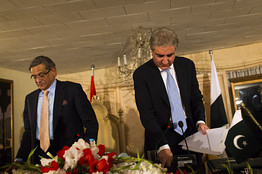
The paper says Pakistan Foreign Minister Shah Mehmood Qureshi could meet his Indian counterpart, S.M. Krishna, informally after a regional meeting in Bhutan on Feb. 8.

The report suggests that the idea is to set the ground rules for an official visit to India by Mr. Qureshi sometime later this year in a bid to normalize relations that have soured since a major terror attack in Mumbai in 2008.

Given the disastrous outcome of Mr. Krishna’s last formal visit to Pakistan – in July of last year – those ground rules will be important.

At that meeting, Mr. Qureshi became incensed during a press conference over India’s claims that Pakistan’s military intelligence services had orchestrated the Mumbai attacks in November 2008, during which 10 Pakistani gunmen killed more than 160 people over three days.

Mr. Krishna arrived back in India to criticism of being made to look a fool by Mr. Qureshi and a peace talks process begun in 2004 was put on hold amid mutual recriminations. The slow-moving (and now stalled) dialogue is an attempt to normalize relations that have been rocky ever since the two nations were created out of British India in 1947.

India has stuck to its claims of official Pakistan involvement in the Mumbai attacks and says Islamabad is not doing enough to prosecute the perpetrators and rein in India-focused militants in general.

Pakistan retorts that it is committed to fighting terrorism. It also has called on India to broaden the agenda for peace talks to include other topics, such as the disputed Himalayan territory of Kashmir, which both countries claim in its entirety.

It is uncertain whether talks at this stage can produce anything meaningful

India is set against any wider peace talks until Pakistan sentences seven militants that it has charged for involvement in the Mumbai attacks.

But the atmosphere in Pakistan right now means it is unlikely that any politician will want to be seen vigorously cracking down on Islamist groups.

The killing earlier this month of Salmaan Taseer, governor of Pakistan’s Punjab province, by one of his own police guards has uncovered the extent to which hardline religious views have permeated many layers of society.

The police guard admitted he was angered by Mr. Taseer’s defense of a Christian woman sentenced to death by a Pakistani court in November for blasphemy.

In recent days, scores of Pakistanis, including lawyers and clerics, have publicly rallied in support of the police officer.

India, Pak Almost Agreed on K-deal: Musharraf

 As Reported by The Press Trust of India

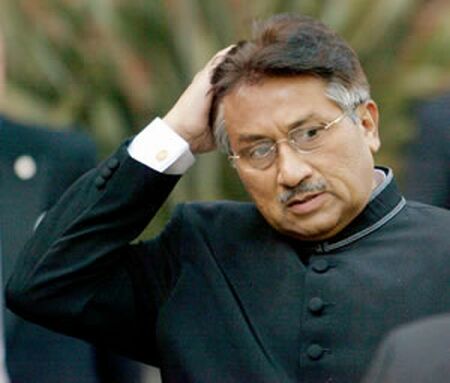
Former military ruler Pervez Musharraf on Friday said India and Pakistan were “moving forward towards drafting an agreement” on Kashmir during his tenure and that Prime Minister Manmohan Singh was genuinely committed to peace in the region. “I was certainly trying for it (peace).

And we were reaching success. I have always praised Prime Minister (of India) for his sincerity to reach peace,” said Musharraf, in an interview with NPR. Manmohan Singh and we almost reached peace on all the three issues…the third one, Kashmir, we had made some certain parameters and we were moving forward towards drafting an agreement,” he added. “Unfortunately, that was not to be, but I tried my best.”

Noting that peace is the only way forward, Musharraf noted that the deadlock on Kashmir was rendering the South Asian Association for Regional Cooperation (SAARC) useless.

“And I think the way forward is peace for the sake of world, which thinks that this is a nuclear flash point; for the sake of SAARC, which is impotent because of the conflict because of India and Pakistan,” said the former president.

“And for the sake of bilateral Pakistan-India advantages socio-economic advantages which will flow from peace between the two countries,” he noted.

Musharraf is in the US to drum up support for his comeback, which he announced earlier this year by launching a new political party — the All Pakistan Muslim League that would contest elections in 2013. Earlier this week, he accused India of trying to create an “anti-Pakistan Afghanistan.” “If I’m allowed to be very, very frank, India’s role in Afghanistan is to create an anti-Pakistan Afghanistan, said Musharraf, speaking at the Council on Foreign Relations on Tuesday.

Today, he characterised the narrative of the Indo-Pak dispute as “impartial”. “So, unfortunate reality, why I have to be so emotional about it, is every time it is Pakistan who is a rogue,” he said.

“Indian bomb is not a Hindu bomb. Pakistan bomb is a Islamic bomb. I think we are being very impartial, we are being very unfair to Pakistan…”

Indian-Pakistan Friendship Blooms Amid Games Chaos

By Amlan Chakraborty for Reuters

India has received support from an unlikely source as it races to finish preparations for the Commonwealth Games in New Delhi which start are due to start Sunday.

Following recent concerns about unhygienic athlete accommodation, security and an epidemic of Dengue Fever, in part blamed on stagnant water around unfinished construction sites, sports administrators in neighboring Pakistan are unwavering in their support for the troubled Games.

“When you host something like this, there will be issues but I’m confident it will be a success,” Lal Chand, Pakistan’s deputy chef-de-mission told Reuters by phone.

“We always had very good relation with the Indian Olympic Association and supported them. We will be arriving in full force to spread the message of peace and goodwill,” he said.

Politically, relations between the nuclear-armed neighbors, who have fought three wars, were frozen when Pakistan-based militants attacked the Indian City of Mumbai in 2008, killing 166 people.

However that has not appeared to be the case for sport and Games Organizing committee chief Suresh Kalmadi earlier this year thanked Pakistan for supporting India’s bid to host the October 3-14 event.

“Pakistan supported us to the hilt to get the Commonwealth Games to India. We can never forget their support,” Kalmadi had said in June.

‘TWO-WAY BATTLE’

“We and Canada were locked in a two-way battle for getting the hosting rights and Pakistan supported us in our bid.”

Even when complaints about dirty and unhygienic facilities at the Games Village was drawing flak from all corners, Pakistan hockey player Rehan Butt came out in support for the organisers.

“…I feel that the issue is blown out of proportion in this case. There were problems during the Manchester Games (in 2002) as well where we stayed in a university hostel,” Butt was quoted as saying by the Press Trust of India news agency.

“That was the worst experience but we did not complain. We, India and Pakistan, never do that.”

Sports historian Boria Majumdar provided a perspective on what brings the bitter neighbors closer in sport.

“I’m not surprised, after all India and Pakistan have inherited the same culture. Historically, they have always put up a united stand in international sport,” said Majumdar.

“Even when politicians were at loggerheads, sports bridged the gap,” he said.

In 1987, then Pakistan President Mohammad Zia-ul-Haq visited India for a cricket match, using the trip to help defuse tensions between the neighbors over a massive Indian military exercise held near the border just months before. The same year, the two countries jointly hosted the cricket World Cup.

The tennis duo of Rohan Bopanna from India and his Pakistani partner Aisam-ul Qureshi were U.S. Open men’s doubles finalists earlier this month.

India’s foreign minister S.M. Krishna has invited his Pakistani counterpart to watch the Commonwealth Games, and said he hoped it could also give them a chance to move on their peace dialogue.

100 fishermen Released From Pak Jails Reach City

As Reported by The Times of India

Another batch of nearly 100 fishermen, who were captured by Pakistan and released a couple of days ago, reached Rajkot on Sunday afternoon from where they departed for their respective towns, officials said.

Senior fisheries official VS Mali said earlier a batch of 100 fishermen had come Saturday and now another batch of 100 fishermen has reached here.

Pakistan has decided to release 442 Indian fishermen of which 200 have already been released. Remaining 241 would be released in next one week in two batches, the official said.

One of the fishermen, Babu Rana, said though he had been in fishing business for last two decade, after spending days in Pakistan jail, he has decided to give up fishing. “I am the only earning person in my family and I cannot afford to be in jail. I have decided to give up fishing,” Babu said, adding he would like to work in a farm.

Another fisherman Shamji Koli said he would choose any other business but never go for fishing in future. Most of the fishermen denied being tortured by Pakistan jail authorities but admitted that the quality of food given to them was not up to the mark.

Outrage in India As Mumbai Attacks Terrorist Leader Set to Be Freed By Pakistani Courts

By Manzer Munir for Pakistanis for Peace

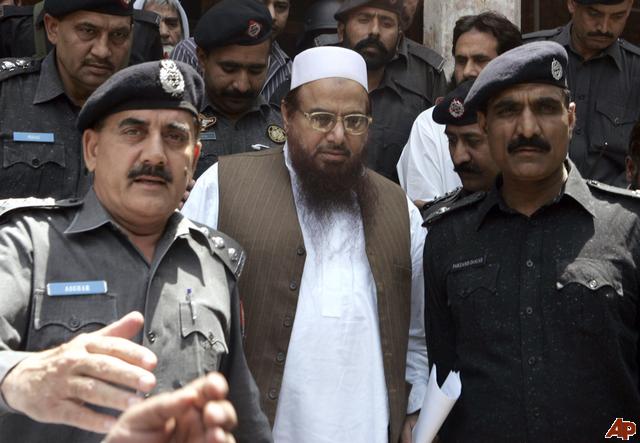
Pakistan’s Supreme Court on Tuesday upheld a lower court’s decision to free the leader of Lashkar e Taiba (LeT), a militant group that is blamed by India for masterminding  and orchestrating the November 2008 Mumbai attacks in India that killed 166 people.

Hafiz Mohammad Saeed, the leader of the terrorist group had been placed under house arrest. However, he was released a year ago by the provincial Lahore High Court due to the fact that there was insufficient evidence against Hafiz and other members of the group. The only evidence against him and the group was the confession of Mohammed Ajmal Amir Kassab, the lone person charged with attacks in India, who was given a death sentence earlier this month. Pakistan’s government appealed the decision of the Lahore High cCourt to the Supreme Court which upheld the lower court’s decision.

Lawyers for the government of Pakistan had requested that India extradite Kassab so that he could give testimony in Pakistani courts against Saeed and the militant group. However, India understandably did not hand over Kassab for fear that the sole surviving perpetrator of the Mumbai attacks could end up in a Pakistani court that sets him free. Sadly, this now happens to be the case as the masterminds of the attacks and leader of an already banned terrorist group, Hafiz Saeed, is set to be freed soon.

This obviously is very disappointing news to India to say the least. It would be the equivalent of letting the mastermind of the September 11 attacks, Khalid Sheikh Mohammed, have a long and high profile trial in New York, only to be set free for lack of evidence and or a weak case by the prosecution. The families of the victims would not stomach such a travesty and neither would the American people. In this same manner, the families of the Mumbai attacks are very upset by this decision by Pakistan the Supreme Court to release Saeed will now surelyonly serve to stall peace talks between India and Pakistan that were slowly progressing at the sidelines of the South Asian Association for Regional Cooperation (SAARC) meeting in Bhutan in April of this year.

At a time when the world’s attention is on Pakistan and Pakistanis for being associated with terrorism due to the attempt to bomb Times Square by Faisal Shahzad, the country and its courts have shot themselves in the foot by allowing to set free a known terrorist leader of a group that is not only attacking India and trying to provoke a war between the two countries, but is believed to be behind many attacks inside Pakistan also killing many innocent people.

If the shoe was on the other foot and the attackers came from India and killed 166 Pakistanis in a busy shopping area, while simultaneously attacking a major hotel, railway station and other locations throughout any of Pakistan’s major cities, then trust me, there would be demand for blood by Pakistani citizens and militias would have formed with or without the government’s blessings, and theywould have retaliated against the Indians. The Indian government and the Indian people are showing great resolve and patience with Pakistan and all along hoping that it truly becomes 100 percent committed to fighting and rooting out terrorism and terrorist groups within its borders as it is touted to be.

But as Tuesday’s decision by the Supreme Court illustrates, Pakistan’s government has a mixed record when fighting extremist groups within the country. As mentioned in previous articles on this site, the government of Pakistan and the army have supported and helped organize some of these militant groups like Lashkar e Taiba in order for the Pakistan army to have a guerrilla outfit as an ally in the event of a war with India. That is why there is reluctance by some inside the military and ISI to fully disband Saeed’s group, believed to be one of the largest and well funded militant groups in Pakistan. The government of Pakistan needs to realize that it cannot talk out of both sides of its mouth. It cannot present itself as one of the biggest allies of the US in the War on Terror, while at the same time not deal effectively with militant groups that are hostile to India.

We at Pakistanis for Peace are outraged that Hafiz Saeed, a known terrorist leader is set to be free from Pakistani courts. Our group and website Pakistanis for Peace was founded immediately after the Mumbai attacks in 2008 by concerned Pakistani Americans in response to the cowardly terrorist attacks by individuals who snuck in from Pakistan to cause one of the biggest terrorist incidents to ever hit India. These attacks certainly became their 9-11. 

To now have the leader of this terrorist group be set free by Pakistani courts only serves to strengthen the claims of opponents of Pakistan that it is not doing enough in the fight against terrorism. Certainly the families of the 166 dead Indian nationals deserve justice and better outcome than what transpired in Pakistan’s Supreme Court this week. One should make no mistake, only a just and lasting peace with India will ever lead to a prosperous Pakistan and the sooner there is an earnest effort to stop ALL militant and terrorist groups operating within inside the country by Pakistan, the sooner the two sides can sit across from each other at the peace table.

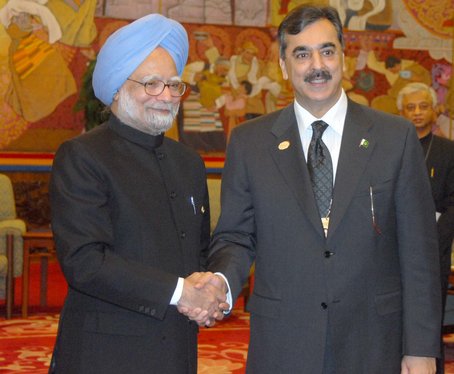
Manmohan Singh and Yusuf Raza Gilani hold the key to South Asia’s progress

By Sanjaya Baru for The Business Standard
The world is convinced that the 21st century will be Asia’s century. The only question is whether it will be only East Asia’s century or South Asia’s as well.

China’s great moderniser Deng Xiaoping famously told the late Rajiv Gandhi that “the 21st century can only be the Asian century if India and China combine to make it so”. Prime Minister Manmohan Singh can well tell his Pakistani counterpart this week that the only way South Asia can become a vibrant element of the new Asian century is if India and Pakistan combine to make it so.

As leaders of the South Asian Association for Regional Cooperation (Saarc) meet later this week in Bhutan, they must all ask themselves where this important part of Asia is headed, even as Asia to our East moves relentlessly forward.

Do any of Saarc’s members have a future that can be truly independent of their South Asian identity? Hardly. Can Pakistan hope to be part of a dynamic and rising Asia without resolving its problems at home and with India? Impossible. Can India sustain high growth for long, like China, without a more cooperative relationship with its neighbours, including Pakistan? Unlikely.

At the end of the first decade of the 21st century, South Asia stands once again at a cross roads. It can go forward, along with the more dynamic economies of East Asia, and emerge as the second engine of global growth by the middle of the century, or it can remain in a low-level equilibrium of poverty, conflict and perpetual instability.

If there are any political leaders or strategic analysts in any of the South Asian countries who think that their country can break loose from the neighbourhood and have a rosy future irrespective of what happens in the region, they live in a world of make believe.

The region has had such leaders before. Many in Pakistan thought they could delink from South Asia and attach themselves to the richer Arab and Islamic world to their west. Some in India thought New Delhi too can delink itself from its neighbourhood and “Look East” for prosperity. South Asia’s smaller countries also had fanciful notions of their individual autonomy. Some, like the Maoists in Nepal and the Sinhala chauvinists in Sri Lanka, still see a future for themselves independent of the “Mother Continent”.

The saner lot, even in Pakistan, recognise that what geography and economics propose, mere politics cannot dispose.

If Saarc has to be revived and made a more dynamic regional organisation, then India and Pakistan must get their act together. Both countries have huge internal problems and there are constituencies for peace in both countries, just as there are constituencies for exporting domestic problems across the border in both. Pakistan has used terror to thwart India’s progress, but the elephant moves on at a handsome pace of 8 per cent and more, even as Pakistan has slowed down to 2-3 per cent growth in recent years.

The last few years have, however, shown that the two neighbours owe it to their own people and their region as a whole to amicably resolve their differences, if each of the two countries and the region as a whole have to move forward.

The starting point of any meaningful dialogue between India and Pakistan is for the two to recognise each other’s concerns. Pakistan must demonstrate much greater understanding of India’s concerns about cross-border terrorism and the need to convince Indian public opinion about its sincerity in dealing with the planners and perpetrators of the 26/11 Mumbai and several other terrorist attacks.

Equally, India must address Pakistan’s genuine fears about river water utilisation and deal convincingly with the issue of Kashmir. Pakistan must rid itself of baseless fears about Indian attempts to destabilise it because any destabilisation of Pakistan can only hurt India even more.

The dialogue between Dr Singh and former Pakistan President Pervez Musharraf began with the mutual acknowledgment of these realities and each other’s concerns. It reached a critical point of mutual agreement when President Musharraf got dethroned.

It appears Prime Minister Yusuf Raza Gilani is fighting shy of picking up the threads from where President Musharraf had left them off. Much water has flown down the Indus and US President Barack Obama’s AfPak policy has muddied the waters. It has certainly encouraged Pakistan to overplay its hand.

Dr Singh should remind his counterpart that despite all the money the US is pouring into Pakistan, its economy is in doldrums, with mounting debt, 3 per cent growth and 9 per cent inflation. Pakistan has itself become a victim of the jihadi terrorism and internal conflict.

If realism on Pakistan’s part implies getting a reality check on India’s relative size and success, realism on India’s part implies coming to terms with Pakistan’s power to be a spoiler. Dr Singh and Mr Musharraf came around to getting a balanced and correct view of each other’s strengths and weaknesses. They worked out a realistic modus vivendi. Mr Gilani and his friends in the Pakistan army must catch up and get real.

A realistic and pragmatic leadership in the region is one which tries to resolve cross-border issues so that domestic problems can be handled better. The challenge for every Saarc government is at home and unless domestic problems are tackled, the region will not progress or congeal.

India and Pakistan bear a special responsibility to revitalise Saarc as the region’s biggest nations. The India-Pakistan quarrel has made Saarc non-functional. A resolution of the disputes between the two is vital to the region’s development.

It was in April 2005 that Dr Singh and Mr Musharraf began writing a new chapter in South Asian history. April 2010 would be a good month to get that project back on track.