Posts Tagged ‘ Council on Foreign Relations ’

India, Pak Almost Agreed on K-deal: Musharraf

 As Reported by The Press Trust of India

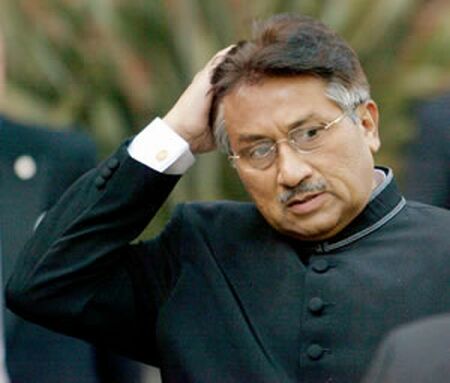
Former military ruler Pervez Musharraf on Friday said India and Pakistan were “moving forward towards drafting an agreement” on Kashmir during his tenure and that Prime Minister Manmohan Singh was genuinely committed to peace in the region. “I was certainly trying for it (peace).

And we were reaching success. I have always praised Prime Minister (of India) for his sincerity to reach peace,” said Musharraf, in an interview with NPR. Manmohan Singh and we almost reached peace on all the three issues…the third one, Kashmir, we had made some certain parameters and we were moving forward towards drafting an agreement,” he added. “Unfortunately, that was not to be, but I tried my best.”

Noting that peace is the only way forward, Musharraf noted that the deadlock on Kashmir was rendering the South Asian Association for Regional Cooperation (SAARC) useless.

“And I think the way forward is peace for the sake of world, which thinks that this is a nuclear flash point; for the sake of SAARC, which is impotent because of the conflict because of India and Pakistan,” said the former president.

“And for the sake of bilateral Pakistan-India advantages socio-economic advantages which will flow from peace between the two countries,” he noted.

Musharraf is in the US to drum up support for his comeback, which he announced earlier this year by launching a new political party — the All Pakistan Muslim League that would contest elections in 2013. Earlier this week, he accused India of trying to create an “anti-Pakistan Afghanistan.” “If I’m allowed to be very, very frank, India’s role in Afghanistan is to create an anti-Pakistan Afghanistan, said Musharraf, speaking at the Council on Foreign Relations on Tuesday.

Today, he characterised the narrative of the Indo-Pak dispute as “impartial”. “So, unfortunate reality, why I have to be so emotional about it, is every time it is Pakistan who is a rogue,” he said.

“Indian bomb is not a Hindu bomb. Pakistan bomb is a Islamic bomb. I think we are being very impartial, we are being very unfair to Pakistan…”

Meeting Pakistanis, U.S. Will Try to Fix Relations

By Mark Landler and Eric Schmitt for The New York Times

WASHINGTON — As Pakistani civilian and military leaders arrive here this week for high-level meetings, the Obama administration will begin trying to mend a relationship badly damaged by the American military’s tough new stance in the region.

Among the sweeteners on the table will be a multiyear security pact with Pakistan, complete with more reliable military aid — something the Pakistani military has long sought to complement the five-year, $7.5 billion package of nonmilitary aid approved by Congress last year. The administration will also discuss how to channel money to help Pakistan rebuild after its ruinous flood.

But the American gestures come at a time of fraying patience on the part of the Obama administration, and they will carry a familiar warning, a senior American official said: if Pakistan does not intensify its efforts to crack down on militants hiding out in the tribal areas of North Waziristan, or if another terrorist plot against the United States were to emanate from Pakistani soil, the administration would find it hard to persuade Congress or the American public to keep supporting the country.

“Pakistan has taken aggressive action within its own borders. But clearly, this is an ongoing threat and more needs to be done,” the State Department spokesman, Philip J. Crowley, said Monday. “That will be among the issues talked about.”

The Pakistanis will come with a similarly mixed message. While Pakistan is grateful for the strong American support after the flood, Pakistani officials said, it remains frustrated by what it perceives as the slow pace of economic aid, the lack of access to American markets for Pakistani goods and the administration’s continued lack of sympathy for the country’s confrontation with India.

Other potentially divisive topics are likely to come up, too, including NATO’s role in reconciliation talks between President Hamid Karzai of Afghanistan and the Taliban. Pakistani officials say they are nervous about being left out of any political settlement involving the Taliban.

Still, in a relationship suffused by tension and flare-ups — most recently over a NATO helicopter gunship that accidentally killed three Pakistani soldiers and Pakistan’s subsequent decision to close a supply route into Afghanistan — this regular meeting, known here as the strategic dialogue, serves as a lubricant to keep both countries talking.

At this meeting, Secretary of State Hillary Rodham Clinton will formally introduce the new American ambassador to Pakistan, Cameron Munter. Mr. Munter, who recently served in Iraq, replaces Anne W. Patterson, who just wrapped up her tour of duty in Islamabad.

“No country has gotten more attention from Secretary Clinton than Pakistan,” said Richard C. Holbrooke, the administration’s special representative for Afghanistan and Pakistan. Pakistan’s delegation will be led by its foreign minister, Shah Mahmood Qureshi, but much of the attention will be on another official, the military chief, Gen. Ashfaq Parvez Kayani, who is viewed by many as the most powerful man in Pakistan.

White House and Pentagon officials said one immediate goal of this meeting was to ease the tensions that led Pakistan to close the border crossing at Torkham, halting NATO supplies into Afghanistan. Officials on both sides said that acrimony from the border flare-up had already receded, soothed by the multiple apologies that American officials made to Pakistan last week.

Last week, Adm. Mike Mullen, the chairman of the Joint Chiefs of Staff, said that General Kayani had assured him that Pakistan’s army would tackle the North Waziristan haven, but on Pakistan’s timetable. In an interview, Pakistan’s ambassador to the United States, Husain Haqqani, said, “Our American partners understand that we have 34,000 troops in North Waziristan. Our soldiers have been engaged in flood relief after history’s worst floods. It is not a question of lack of will.”

The new security pact would have three parts: the sale of American military equipment to Pakistan, a program to allow Pakistani military officers to study at American war colleges and counterinsurgency assistance to Pakistani troops.

Currently, the United States spends about $1.5 billion a year to provide this same assistance, but it is doled out year by year. The new agreement, if endorsed by Congress, would approve a multiyear plan assuring stability and continuity in the programs, although Congress would continue to appropriate the financing on a yearly basis. “This is designed to make our military and security assistance to Pakistan predictable and to signal to them that they can count on us,” said a senior official.

At the last dialogue in Islamabad in July, Mrs. Clinton presented more than $500 million in economic aid, including plans to renovate hospitals, upgrade hydroelectric dams, improve water distribution and help farmers export mangoes. But the floods upended those plans, and officials said they now planned to redirect funds to more urgent needs.

This week’s meeting will also be shadowed by a new eruption of political instability in Pakistan: the government of President Asif Ali Zardari is locked in a confrontation with the Supreme Court over the court’s demand that senior ministers be fired on corruption charges. Analysts said they were less worried about the atmospherics than the underlying differences in perspective. The administration’s public contrition for the cross-border attack has largely resolved that issue, said Daniel S. Markey, senior fellow for India, Pakistan and South Asia at the Council on Foreign Relations.

But Mr. Markey said he saw potential friction stemming from the American openness to reconciliation with the Taliban. With the United States facilitating rather than guiding the talks, he said, there could be poor coordination between the Afghans, NATO and others — all of which would rattle the Pakistanis.

“Washington is opening the door to a range of negotiations with groups that it has discouraged Pakistan against working with in the past,” he said. “This sends a mixed signal, and cannot help but encourage hedging on Islamabad’s part.”

Another potential bone of contention is one of President Obama’s nuclear objectives: a global accord to end the production of new nuclear fuel. Pakistan has led the opposition to the accord. And without its agreement, the treaty would be basically useless.

Mr. Qureshi blamed the United States for the situation, saying Washington signed a civilian nuclear accord with India that discriminated against Pakistan. “You have disturbed the nuclear balance,” he said in a recent interview in New York, “and we have been forced to develop a new strategy.”

U.S. Strategy in Pakistan Is Upended by Floods

By Mark Landler for The New York Times
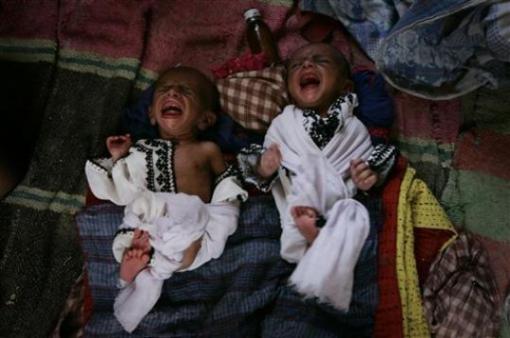
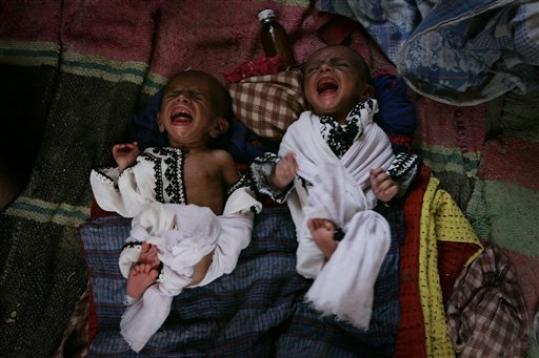
WASHINGTON — The floods in Pakistan have upended the Obama administration’s carefully honed strategy there, confronting the United States with a vast humanitarian crisis and militant groups determined to exploit the misery, in a country that was already one of its thorniest problems.

While the administration has kept its public emphasis on the relief effort, senior officials are busy assessing the longer-term strategic impact. One official said the disaster would affect virtually every aspect of the relationship between the United States and Pakistan, and could have ripple effects on the war in Afghanistan and the broader American battle against Al Qaeda.

With Pakistan’s economy suffering a grievous blow, the administration could be forced to redirect parts of its $7.5 billion economic aid package for Pakistan to urgent needs like rebuilding bridges, rather than more ambitious goals like upgrading the rickety electricity grid.

Beyond that, the United States will be dealing with a crippled Pakistani government and a military that, for now, has switched its focus from rooting out insurgents to plucking people from the floodwaters. The Pakistani authorities, a senior American official said, have been “stretched to the breaking point” by the crisis. Their ragged response has fueled fears that the Taliban will make gains by stepping in to provide emergency meals and shelter.

“It certainly has security implications,” said another official who, like others interviewed for this article, spoke on the condition of anonymity because he was not authorized to discuss internal policy deliberations. “An army that is consumed by flood relief is not conducting counterinsurgency operations.”

On Thursday, the United Nations will convene a special meeting devoted to the floods, hoping to galvanize what has been a lackluster global response. Secretary of State Hillary Rodham Clinton is expected to announce that American public aid has surpassed $100 million, an official said.

“We’re obviously not oblivious to the political and strategic implications of this catastrophe, but right now, we are fully focused on the emergency relief effort and trying to get a good assessment of the needs,” said the administration’s special representative to the region, Richard C. Holbrooke.

Noting that several weeks remain in the monsoon season, Mr. Holbrooke said, “Worse may be yet to come.”

The disaster comes after a period in which the administration seemed to have made strides in repairing the American relationship with Pakistan. Mrs. Clinton visited Islamabad in July with a long list of pledges, including the upgrading of several power plants and a plan to promote Pakistani mangoes. Now, these projects seem almost beside the point.

“Before, there were power plants in need of refurbishment,” said Daniel S. Markey, senior fellow for India, Pakistan and South Asia at the Council on Foreign Relations. “Now there are power plants underwater.”

In recent days, the United States has sent 15 helicopters, rescuing nearly 6,000 people. On Wednesday, military cargo planes delivered 60,000 pounds of food and other relief supplies, bringing total deliveries to 717,000 pounds. The speed and scale of the effort, officials in both countries said, have helped bolster the checkered American image in Pakistan.

In another hopeful sign, officials said Pakistan and India had been in close touch about the floodwaters, some of which are flowing into Pakistan from India. Such communication, between historic archenemies, could augur reduced tension in other areas, one of the officials said.

Against that, however, are the staggering dimensions of the disaster. A senior Pakistani official told the administration on Tuesday that the next flood surge was likely to inundate much of Punjab, the densely populated region that borders India and produces much of Pakistan’s food.

So far, this official said, the greatest damage has been in regions that are also hotbeds for Islamic insurgents, which has set back the army’s fight against extremist groups. Local governments in those places have largely collapsed, leaving the army as the only source of authority.

With 20 million people displaced from their homes, the Pakistani authorities are girding themselves for an immense migration to the major cities, which they fear could sow further instability.

“Americans have not yet registered the enormity of the crisis,” Pakistan’s ambassador to the United States, Husain Haqqani, said in a telephone interview from Islamabad, the capital.

Pakistani and American officials said reports of hard-line Islamic charities providing relief were exaggerated. One pointed out that the floods had hurt the insurgents as well: there was a report of small arms and ammunition belonging to a militant group floating in the water.

Still, people in both countries warned that if rebuilding and rehabilitation efforts bogged down, the Taliban and other militant groups would try to take advantage of it. “The real test is, can their government provide the most fundamental services?” said an administration official.

Parallels to this crisis are hard to find. One official cited the example of the Indonesian province of Aceh, which had been racked by a three-decade insurgency fought by the separatist Free Aceh Movement. After the tsunami swept through in 2004, killing 170,000 people, the separatists and the Indonesian government quickly signed a peace treaty, in August 2005.

There are, however, big differences between a localized separatist group and an international jihadist movement.

“If the flood proves to tilt the balance of power in Pakistan, it’s more likely to tilt toward the militants than toward the government,” said Bruce Riedel, a former intelligence official who helped the administration formulate its initial policy for Pakistan and Afghanistan.

Already, Pakistan’s president, Asif Ali Zardari, has been exposed to withering criticism at home for going on a trip to Europe during the early days of the flood. American officials said they were determined not to get drawn into the dispute, noting that in any event, Mr. Zardari had been stripped of many of his powers in a recent constitutional change.

Decisions on how the flood will affect American economic aid may be influenced by a trip to Pakistan by Senator John Kerry, the Massachusetts Democrat who co-sponsored the five-year nonmilitary assistance package with Senator Richard G. Lugar, Republican of Indiana.

Senator Kerry, accompanied by Dan Feldman, a deputy to Mr. Holbrooke, is scheduled to tour the flooded areas on Thursday. Mr. Kerry has said he is open to redirecting aid money, though some analysts said they were skeptical that Congress would approve additional financing. Military aid may also come under scrutiny, according to administration officials.

“Every dimension of our relationship — politics, economics, security — is going to see major shifts as a result of this historic disaster,” said Lt. Gen. Douglas Lute, the White House coordinator for Afghanistan and Pakistan. “All the tools of diplomacy have to be examined in light of this new reality.”