Archive for the ‘ terrorism ’ Category

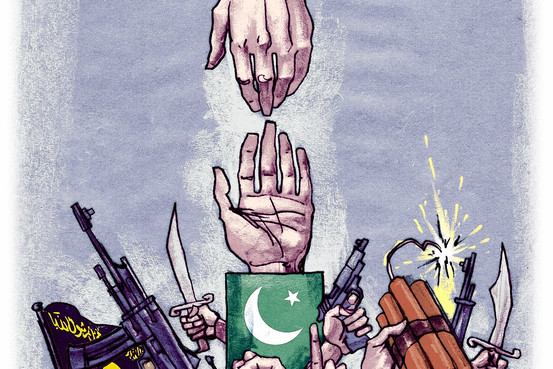
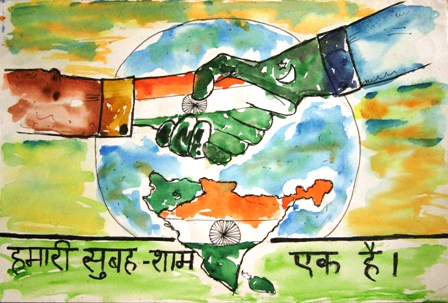
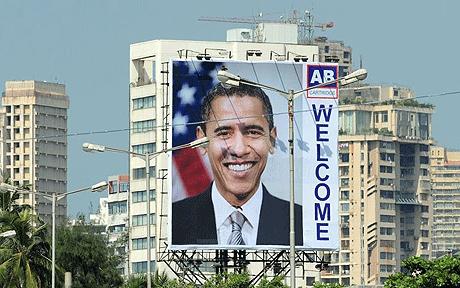
Obama Calls for India – Pakistan Peace

By Andrew Buncombe for NZ Hearald

Barack Obama has called on India and Pakistan to renew their efforts to find peace, even as he said Islamabad was not moving quickly enough to counter militants operating from inside its borders.

In comments that appeared to underscore the high-wire act of diplomacy the US president is trying to pull off while on the three-day visit to India, Mr Obama said Washington would not act as an intermediary between the two countries.

However, he told a group of students in Mumbai: “My hope is that over time, trust develops between the two countries, that dialogue begins, perhaps on less controversial issues, building up to more controversial issues. There are more Pakistanis who’ve been killed by terrorists inside Pakistan than probably anywhere else.”

The president has received criticism from some opposition parties in India after he failed to directly mention Pakistan when he arrived in India on Saturday and spoke of the 2008 attacks at the Taj Hotel and other locations in Mumbai, that left more than 160 people dead.

In the aftermath of the attacks, the so-called “composite dialogue” peace process between India and Pakistan was put on hold and while there have been a series of high-level meetings, the relationship between the two remains tense.

The president, who stayed at the seafront hotel in what aides said was a clear sign of solidarity, had talked about the militants and the terror they wrought, but was criticised by the right-wing Bharatiya Janata Party (BJP) for failing to attribute the blame to Pakistan.

Asked why he had not done so, Mr Obama reflected a reality in which the US is paying billions of dollars to Pakistan in aid as it pushes it to do more against militants responsible for cross-border strikes in Afghanistan.

“Pakistan is a strategically important country, not just for America, but for the world,” he said. “India and Pakistan can prosper and live side by side. This can happen and this should be the ultimate goal. The US can be a partner but cannot impose this process. India and Pakistan have to arrive at an understanding.”

Mr Obama started his visit to India, one of four countries he is including on a tour through Asia, by announcing more than 20 deals he said were worth up to $10bn and would help support 50,000 US jobs.

He also said the US was to relax export controls over sensitive technology, a demand of India’s that will help deepen ties between the two countries. The president is to hold formal talks today with India’s prime minister, Manmohan Singh.

On a domestic level, Mr Obama also recognised he needed to make “midcourse corrections” in the aftermath of last week’s mid-term elections if he is going to win over a frustrated and divided electorate.

America and India: The Almost-Special Relationship

By Jim Yardley for The New York Times

At a panel discussion last week on relations between India and the United States, Strobe Talbott, the former American diplomat, told an audience of Indian business leaders that he had learned a valuable lesson about India: Do not hyphenate it. As in Indo-Pak. (Or, in a close cousin of a hyphen, as in Chindia.) The audience smiled at his epiphany: India matters because it is India.

In a nutshell, President Obama is trying to deliver the same message during his three-day visit to India, the first stop on a broader Asian tour. Both countries are eager to build on their improved ties and set up a unique, special relationship, given that together they represent the world’s richest and largest democracies. Faced with a rising authoritarian China, and an economically wounded Europe, a weakened United States is casting about for global partners. India would seem a nice fit.

“This is the time to be ambitious about this relationship,” said Shivshankar Menon, India’s national security adviser, speaking on the panel with Mr. Talbott.

And yet eliminating the hyphen is not easy, especially given India’s fraught relations with its neighbors in what is perhaps the most politically complicated region on earth, one in which American lives and treasure are at stake in Pakistan and Afghanistan. And India’s evolving relationship with another neighbor, China, is also a prime concern for America. Indeed, the decision to focus Mr. Obama’s India trip on India was itself not easily achieved; some senior administration officials lobbied the president to put pressure on Indian leaders for a conciliatory gesture toward Pakistan, in hope that such a carrot might entice the Pakistanis to do more to help America against the Taliban.

These sorts of political equations have long tangled the U.S.-India relationship: The Americans, at different times, have pushed the Indians to cut a deal with Pakistan over the disputed region of Kashmir, but the Indians have bristled at any interference. The Indians still want the Americans to sponsor India for a permanent seat on the United Nations Security Council. Not such an easy thing, the Americans reply, since America alone can’t do this and it creates issues between America and China. It has sometimes seemed like a relationship built around one country asking the other to do something it considers against its self-interest.

Moreover, the economic relationship between the two countries often has been a source of friction. High unemployment in America has renewed complaints that outsourcing to India hurts American workers. Indians complain that American protectionism is hurting Indian companies and that American export restrictions on technologies that can have both military and civil uses are outdated and unnecessary in a relationship between putative allies.

Mr. Obama’s trip is an attempt to reboot or refocus the relationship away from these disputes and de-emphasize the tangible goodies (for example, contracts) that politicians call “deliverables.” Instead, the two sides are discussing how they can partner on education, clean energy, agriculture, technological development and military cooperation. The thematic emphasis of the visit is on shared democratic values — a pointed dig at China — and what the two countries say are shared opportunities. American officials say that an expected $4 billion deal for India to buy military transport aircraft — yes, a goodie — will provide thousands of American jobs. Indian officials emphasize that trade between the two countries is basically balanced — unlike with China — and that the anger over outsourcing is misplaced, especially since some Indian companies are investing and creating jobs in the United States.

Some Indian commentators have groused that all the diplospeak about shared opportunities obscures the fact that the trip lacks a “big idea” to excite or elevate the relationship, even as big, unavoidable problems are seemingly being avoided. In 2000, former President Bill Clinton spent five days in India on a door-opening visit that was credited with righting what had been a stalled relationship. Then former President George W. Bush made the most dramatic gesture by pushing through an agreement to cooperate on civilian nuclear projects; the move effectively legitimized India as a nuclear power and lifted a 30-year moratorium on nuclear trade with India even though India had not signed the Nuclear Nonproliferation Treaty. By comparison, Mr. Obama seems not to be offering much.

“The jury is out,” said Shekhar Gupta, editor of The Indian Express, speaking of how India’s political establishment views Mr. Obama.

But Ronen Sen, who recently retired from India’s diplomatic corps after serving as ambassador to the United States, says the focus on a “big idea” is misplaced. Given the litany of difficult problems between the two countries, Mr. Sen said, Mr. Obama’s approach was a reasonable way to build trust and broaden a bilateral relationship that, while greatly improved, had not yet fully matured.

“It has not yet reached a critical mass where it can be self sustaining,” Mr. Sen said.

Indeed, even the landmark civil nuclear deal remains a subject of dispute as the two sides still squabble over fine details of how American suppliers could begin doing business in the lucrative Indian market. The Americans say that rules recently approved by India are inconsistent with accepted global practice, which exempts foreign suppliers from liability in cases of accidents, leaving it solely with local operators. A senior American official said “intense discussions” were underway to find a solution. If one is found, Mr. Obama may get a nice “deliverable” — an open door through which American firms, as originally expected, can sell nuclear equipment to India and provide jobs at home.

There is less talk of the chances of solving bigger problems, like differences between America and India in global negotiations on global warming climate change and trade. And the uncertainty over the most problematic hyphens — Afghanistan and Pakistan — looms over the visit. Even as Mr. Obama seeks a way to stabilize Afghanistan and get out, Indian officials dread the day America leaves. They worry about what will be left behind, since India cannot leave the neighborhood.

“Quite obviously, we have strategic stakes there,” said Brig. Gurmeet Kanwal, director of the Center for Land Warfare Studies, a military research institute. “We do not wish to have a government in Afghanistan or a government in Kabul that is inimical to Indian interests.”

He added: “We see the United States as a stabilizing influence in Asia.”

And so a political courtship will continue, problems and all. Governmental ties already lag far behind the people-to-people relationships. America remains the premier destination for Indian students studying abroad, and Indian immigrants in America have achieved disproportionate success in business, medicine and many other fields. It is this backchannel closeness that serves as a cattle prod nudging the governments to become closer, too.

K. Subrahmanyam, a leading Indian defense analyst, believes that India and the United States represent the inevitable and necessary partnership of the 21st century because China’s rise represents a threat to a global order based on democratic principles. He said that demographic trends, too, should bind the two countries together.

“If America needs a partner, Europe is aging, Japan is aging and China is going to age,” he said. “The only two major nations in the world who will not be aging, at least for the next 30 years, are the United States and India.”

Deadly Bombings in Pakistan Target Mosques, Killing More Than 70 Worshippers

By Owais Tohid for The Christian Science Monitor

Two deadly bombings today in Pakistan targeted mosques and killed more than 70 worshipers, following an increasingly deadly pattern of Pakistani Taliban attacks on tribes that dare to defy its influence.

In the town of Dara Adam Khel, in Pakistan’s northwest territory, a young suicide bomber detonated his load amid 300 worshipers during Friday prayers. He killed at least 67 people and injured more than 100.

On Friday evening, four grenades were hurled inside a mosque in the Suleman Khel village, which is on the outskirts of Khyber tribal region. The blasts killed at least four people.

The bombing in Dara Adam Khel appeared to be targeting the Akhoorwaal tribe because it has been resisting Taliban expansion. Pakistani Taliban claimed the responsibility.

“There is no right for traitors of mujahids and Islam to live,” read a message from the Taliban, quoting notorious leader Tariq Afridi. Mr. Afridi is the commander of Tehrik-e-Taliban Pakistan (TTP), which is commonly known as the Pakistani Taliban and is linked with Al Qaeda.

The attack was seemingly designed for maximum impact, as the bomb was detonated in the middle of Friday prayers, and combined two increasingly common Taliban targets: the mosque and the jirga (council of tribal elders). The targeted mosque was inside the hujra, or congregation spot, of the tribal council leader.

The suicide attack was one of the deadliest in series of attacks by Al Qaeda and Taliban across Pakistan in which hundreds of people have lost their lives this year.

Taliban commanders are trying desperately to strengthen their hold across the region, say analysts. The US continues drone attacks on the semi-autonomous tribal region of North Waziristan along Pakistan-Afghanistan border while pressuring Pakistan to increase operations there. What’s more, Pakistani security forces are ramping up operations in other tribal regions.

The bombing was meant to “terrorize tribesmen,” says Brig. Mehmood Shah (ret.), a Peshawar-based analyst. “Taliban want to control the region so they are targeting locals who have raised voice against them. They want to eliminate the dissent,” he says.

“It is the worst revenge tactic and showing that they are desperate and weakened,” says Mr. Shah.

Dara Adam Khel lies about 31 miles south of Peshawar and links Orakzai and Khyber tribal region in the west through a hilly terrain. Pakistan’s security forces have been pounding the area with bombs in a bid to rout militants in the ongoing operation. The forces have also been going after them in Khyber region where the militants attack NATO supply convoys.


Eyewitnesses of the mosque attack described the moments before the blast occurred.

“I saw a young boy walking toward the worshipers. The moment he raised his arms, he exploded,” says Mohammad Nasir.

The attack triggered terror alerts and warnings for additional attacks by Taliban across the country, especially in the northwest.

“It’s a cowardly act. The terrorists might try to carry out more attacks but we are not afraid,” says Provincial Minister Mian Iftikhar, whose only son was assassinated by the Taliban three months ago. “It’s a long battle against terrorists and extremists. They can be defeated once we remain united.”

“The US, Afghanistan, and Pakistan should have to continue to wage war to eliminate terrorism,” he says.

In Dara Adam Khel, members of the Akhoorwaal tribe vowed to continue fighting the Taliban.

“We will not let the sacrifices of our tribesmen be in vain. We won’t let them convert our future generation into terrorists and destabilize the country. We will start mobilizing other tribes in our war against terrorists,” says tribesman Javed Ur Rehman Akhoorwaal.

Staying Nimble to Fight Al-Qaeda’s Shifting Threat

By David Ignatius for The Washington Post

Behind the latest terrorism plots is an al-Qaeda leadership that is getting battered in Pakistan but that is determined to strike back wherever it can – using a dispersed network and new tactics that are harder to detect.

The package bombs sent last week from Yemen are one face of al-Qaeda’s continuing campaign. The Yemeni operatives are nimble, adaptive and “frustratingly clever,” says a U.S. counterterrorism official. “They have one main goal, which is to mess with us.”

The Yemen-based operations came as intelligence officials were struggling to disrupt another al-Qaeda plot to launch Mumbai-style attacks in European cities. Officials say that plan involved roughly 25 al-Qaeda terrorists, organized into cells of perhaps three to five members who would stage roving assaults in one or more European cities. Of the 25, about 10 have been captured or killed, according to a second U.S. official.

While these operations are tactically separate, officials say they both reflect a secret mid-2009 directive from an embattled Osama bin Laden to his followers to demonstrate that al-Qaeda could still do damage.

For U.S. officials, these latest terror plots have been a grim reminder that there’s a long fight ahead against al-Qaeda, with no “quick fixes” available. Defense isn’t enough: The explosives sent from Yemen can’t be detected by conventional X-ray screening or sniffer dogs, so stopping these plots requires good intelligence, as was the case last week when Saudi Arabia tipped the United States about the package bombs.

Nobody wants to say so publicly, but the lesson of the past few weeks, for me at least, is that one of these days the terrorists will succeed – and people should be prepared for that likelihood. The greatest damage won’t be the attack itself but the public response. The Yemeni plotters saw the frenzy produced by their failed Christmas Day bombing attempt on a flight to Detroit. They must be hoping now, with the package bombs, to disrupt cargo-handling around the world and damage a fragile global economy.

As the CIA has stalked al-Qaeda over the past two years, this has been a story of punch and counterpunch, of escalating U.S. drone attacks over Pakistan’s tribal areas and defiant al-Qaeda responses. As the senior U.S. official says, this is a “learning enemy” that adapts its tools and tactics as the West alters its defenses.

To understand the latest news, it helps to scroll back to early 2008. The CIA gathered intelligence that al-Qaeda leaders were regrouping, forming new alliances and planning new operations in the West. At that time, the CIA’s attacks from Predator drones were sporadic, and Pakistan was consulted before each attack.

So the Bush administration escalated the drone attacks in mid-2008. Now, Pakistan was given only “concurrent” notification, which in practice meant it was informed after the drone had launched its missile. Moreover, the CIA was authorized to strike targets that had a “signature” of terrorist activity, rather than a precise identification. President Obama has increased the tempo of Predator attacks even more.

The drone attacks have pounded al-Qaeda and killed key members of its leadership. Bin Laden reacted with his mid-2009 directive, which the U.S. official summarizes this way: “Undertake operations however and wherever you can. We need to prove ourselves again.” Specifically, bin Laden directed operatives to plan assaults in Europe similar to the November 2008 attacks that killed about 175 people and terrified Mumbai.

The United States and its European allies have been working hard to disrupt the Mumbai copycat operations. Since the third week of August, the CIA has conducted more than 40 drone attacks on the tribal areas, more than in all of 2008. A British national was killed in Pakistan in September, and two Germans in October. Other plotters have been arrested in Europe and Pakistan. Officials say they can’t be sure yet whether the terror plans have been shelved.

A similar escalation is likely in Yemen, with soldiers from the U.S. Joint Special Operations Command working with Yemeni government forces. The JSOC sums up its lethal approach with the phrase “find, fix, finish,” but a U.S. official says it has been hard to keep track of al-Qaeda targets in Yemen’s tribal villages and cities.

The reality is that the adversary that declared war on the United States in 1996 is still active – morphing and mobilizing even as it is hunted by America and its allies. It’s a nasty fight, and it’s far from over.

Suspicious UPS, FedEx Packages Raise New Concerns About Al Qaeda in Yemen

By Christa Case Bryant for The Christian Science Monitor

Suspicious packages found on United Parcel Service and FedEx planes reportedly originated in Yemen. While the planes appear to be undamaged, the incidents could bring fresh scrutiny to Al Qaeda in the Arabian Peninsula (AQAP), the relatively new franchise that claimed responsibility for the failed underwear bomber plot on Christmas Day last year.

A spokesman in Yemen’s US embassy said in a statement that the Yemeni government, which has carried out numerous strikes against suspected AQAP operatives over the past 10 months, has launched a full-scale investigation.

“We are working closely with international partners – including the US – on the incident,” said Mohammed Albasha, adding that no UPS cargo planes land or take off from Yemeni airports.

However, an airport employee in Sanaa, who did not want his name used, confirmed that there are private company flights from Sanaa to the United Kingdom, where a suspicious package was found at East Midlands airport at 3:28 a.m. local time.

The UPS store in Sanaa was staffed with one employee and one guard Friday evening local time. The employee refused to talk to the media.

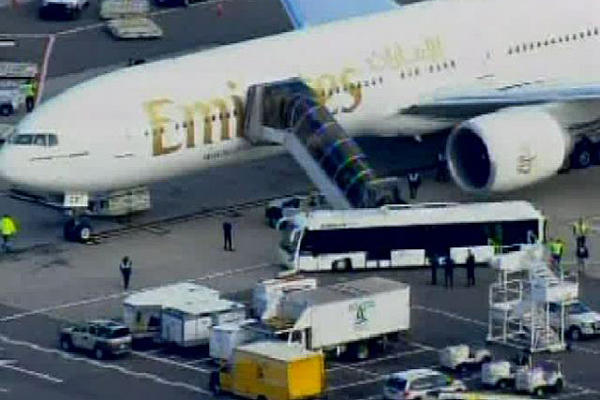
The White House said that in addition to the package found in the UK, which according to CNN contained a “manipulated” toner cartridge, another suspicious item was found in Dubai. Both were said to have originated in Yemen.

“Last night, intelligence and law enforcement agencies discovered potential suspicious packages on two planes in transit to the US,” White House spokesman Robert Gibbs said Friday. “As a result of security precautions triggered by this threat, the additional measures were taken regarding the flights at Newark Liberty and Philadelphia International Airports.”

Among the suspected targets were Chicago-area synagogues.

The incident, which CNN posited could be a “dry run” for a future terrorist plot, is one of numerous red flags raised this year about suspected Al Qaeda militants operating in Yemen.

The country’s weak central government, which has difficulty maintaining order in Yemen’s rugged mountain terrain, has over the past year quietly strengthened its cooperation with US counterterrorism officials to address the militant threat.

The US military announced early this year it would more than double the $67 million aid package to the country. Since the failed Christmas Day bombing on a Detroit-bound airliner, international concern that Yemen could become the next Afghanistan – a lawless refuge from which to launch terrorist attacks on the West – has risen.

The rise in prominence of Anwar al-Awlaki, a Yemeni-American preacher linked to the Fort Hood shootings last year and now wanted by the CIA, has heightened fears that the militants could more easily navigate Western society with his help.

Experts have cautioned, however, that focusing US and international efforts solely on containing the Al Qaeda threat could backfire.

Yemen is the Arab world’s poorest country, and faces numerous other challenges, including corruption, a violent southern secessionist movement, tensions between powerful tribes and the central government, and dwindling resources.

Accused DC Bomb Plotter Farooque Ahmed’s Goal Was ‘Killing as Many Metro Riders as Possible’

By Kerry Wills, James Gordon Meek, and Helen Kennedy for The NY Daily News

A former Staten Island man was busted in Washington on Wednesday for helping what he thought were Al Qaeda terrorists plotting to bomb the capital’s subways.

It was really the FBI stringing him along, the feds say.

Farooque Ahmed, 34, a computer engineer who lives with his wife and baby in suburban Virginia, was accused of making sketches and surveillance videos of busy subway stops near the Pentagon and tourist-packed Arlington Cemetery.

The stations Ahmed helped case are popular with Defense Department workers. He thought the stations would be blown up sometime next year, the indictment says.

His goal was “killing as many Metro riders as possible through simultaneous bomb attacks,” U.S. Attorney Neil MacBride said. “It’s chilling.”

The feds said straphangers were never in any danger.

Much like the four men convicted this month of plotting to attack a Bronx synagogue, Ahmed was stung by an undercover FBI operation and never met any real terrorists.

His face hidden by a long beard, mustache and glasses, Ahmed appeared briefly in federal court and will be held until a detention hearing tomorrow. He said he could not afford a lawyer.

A Pakistani who became a naturalized citizen in New York 17 years ago, Ahmed worked for Ericsson telecommunications in Virginia setting up routers for the Sprint network, his LinkedIn profile says.

He received a bachelor’s degree in computer science from the College of Staten Island in 2003 and studied mechanical engineering at City College, but did not receive the graduate degree, college officials said.

Ahmed’s online profile blamed that on “a political issue between computer science and (engineering) departments.” Officials said the dispute was over academic credits, not geopolitics.

He registered as a Republican in the borough in 2002.

Neighbors in Ashburn, Va., said he moved there a year ago with his British wife, Sahar Mirza, and toddler son.

Sahar Mirza is co-organizer of a Meetup.com group for mothers of new babies called Hip Muslim Moms.

He wore casual clothes – he appeared in court in jeans – but she wore more traditional garb and covered her hair.
“He was out back mowing the lawn over the weekend. He just seemed like a normal guy. He never talked about politics,” said neighbor Barbi Shires, 43. “I’m just glad it was the FBI he did it for, not al Qaeda.”

Next door neighbor, Tanya Minor, 32, who works in a doctor’s office, said Ahmed “came to look at the house with a man who spoke his language, who said he helped people from New York find apartments here. They were very quiet. They always had the blinds closed.”


Pakistanis for Peace Editor’s Note–The arrest of Faisal Shahzad and now Farooque Ahmed illustrates that unfortunately there are some within the large Pakistani and Muslim American community in the United States who mean to do us harm and they need to be caught and brought to justice. We urge all Pakistani and Muslim Americans to be vigilant and proactive in reporting anyone to the authorities who they believe have become radicalized and deemed a threat to the safety of others.

The Pakistan Paradox

By Bret Stephens for The Wall Street Journal

Any serious observer of the war in Afghanistan will tell you that we can’t win without striking hard at the safe havens the Taliban and its allies enjoy in Pakistan. That means going beyond drone strikes and deploying ground forces in places like North Waziristan.

Any serious observer of Pakistan will also tell you that such strikes would complicate, and perhaps fatally compromise, our relations with the country whose cooperation we require to win in Afghanistan.

Both observations are on the mark. Isolating the battlefield is a cardinal rule of warfare. So long as the Taliban can shrink away to Pakistan to lick their wounds and plot their return—as they have in the wake of their recent reversals in Kandahar—then we have failed to isolate them. Yet if Pakistan should begin to turn against us—as they briefly did earlier this month following the accidental killing of Pakistani border guards in a NATO strike—then we are the ones who will be isolated.

So how do we finesse the Pakistan paradox?

It helps to see the country for what it is. Pakistan suffers from an abandonment complex rooted in historical facts, especially the Pressler Amendment that cut off Pakistan-U.S. military ties throughout the 1990s. Those fears are compounded by a national paranoia that is the product of conspiracy theory, misplaced indignation and jingoism. The country’s elites typically divide between secularists, mainly feudal aristocrats or corrupt parvenus like President Asif Ali Zardari, and Islamists of either conservative or radical bent.

Standing astride the Islamist-secular divide is the military, which profits from cultivating both connections and is Pakistan’s most competent—and least accountable—institution. Down below is an ethnically fractious and largely destitute population of 170 million people, just emerging from a flood that swamped 20% of the country.

From this unsavory stew it’s unrealistic to expect a high degree of clarity or consistency in Pakistani policy. At best it leans one way or the other, never very far and rarely for very long. Mr. Zardari’s government has deployed the army against the Taliban, or parts of it, and consented to a dramatic increase in Predator strikes. But that’s happening concurrently with the intelligence service, or ISI, providing material aid to the al Qaeda-linked Haqqani network, and failing (or more likely refusing) to break up the so-called Quetta Shura of Mullah Mohammed Omar.

If there’s an overarching logic here it’s that Islamabad wants to preserve its options. Uncertainty about U.S. staying power in Afghanistan helps explain why Pakistan will not entirely forsake its erstwhile clients in the Taliban and the mujahedeen. Pakistani fears are further exacerbated by America’s recent tilt toward India. And while the Obama administration has made much of its aid packages for Pakistan—$1.5 billion a year on the civilian side, followed last week by the announcement of another $2 billion for the military—Pakistani officials complain that only a small fraction of the funds have been disbursed.

What, then, to do? First, instead of publicly lecturing Pakistanis on how they need to get tough with the Taliban, the administration would do better to make good on its existing commitments. Say what you will about Mr. Zardari’s abilities, he has aided the U.S. military effort in a way his predecessor Pervez Musharraf, supposedly a pro-American strongman, never did.

That’s a relationship to build on, quietly and incrementally, not to tear down. So it would be helpful if the administration doesn’t repeat the mistake of blabbing to Bob Woodward, whose book may have helped Mr. Obama seem more presidential but didn’t do any favors to his presidency.

Equally helpful would be to stop mindlessly demanding that military assistance to Pakistan go toward fighting the Taliban instead of arming against India. The missing ingredient in Pakistan’s counterinsurgency effort isn’t the right military tool kit, such as night-vision goggles or Apache helicopters. It’s the will of the Pakistani general staff to cooperate more fully in the fight. If that cooperation can be secured by selling conventional weapons such as F-15s and M-1 tanks to Pakistan, so much the better.

(As for India, it has less to fear from a reasonably well-armed, confident Pakistani army that has strong ties to the U.S. than it does from a poorly armed Pakistan that mistrusts the U.S. and continues to consort with jihadists as a way of compensating for its weakness.)

Finally, the administration ought to understand that Pakistan’s reluctance to defeat the Taliban at any price is a mirror image of our own reluctance. The July 2011 “deadline” to begin withdrawing troops was bound to affect Islamabad’s calculations, and not for the better. The sooner we junk it, the better the cooperation we’ll get.

It’s an old American habit to lament the incompetence and duplicity of our wartime allies, and Pakistan abounds in both qualities. But unless we are prepared to deal with Pakistan as an adversary, we must make do with it as a friend.

Police: Plot to Kill Pakistan PM Uncovered

By Frederik Pleitgen for CNN

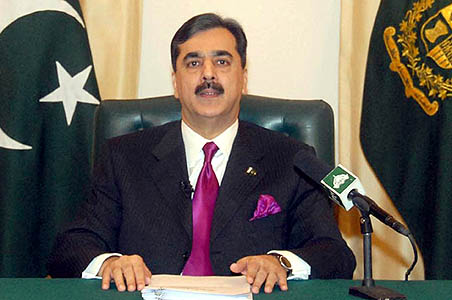
Several people have been seized in a plot to kill Pakistan’s prime minister, and the suspects claim they were getting orders from a militant in the country’s volatile tribal region, police said.

Police official Babar Bakhat Qureshi told CNN that officers arrested several suspects who were plotting to attack the compound of Pakistani Prime Minister Yousaf Raza Gilani.

Shabir Anwar, Gilani’s press secretary, had no comment on the alleged plot because it is a security matter.

The plot to strike the compound, located in the Punjab provincial city of Multan, was in its “final planning stages,” Qureshi said. The location is about 395 kilometers, or 245 miles, southeast of the nation’s capital, Islamabad.

The suspects were planning to use a car bomb for the attack, and that they had acquired large amounts of fertilizer to manufacture an improvised explosive device, since confiscated by police, he said.

A vehicle for the attack had not been acquired yet.

The police confiscated one kilogram of gold and and two and a half kilograms of silver, which the men were going to sell to fund the plot, the official said.

Qureshi said the suspects have confessed that they were getting their orders and instructions from Kari Imram, a leader of a Taliban offshoot group from Miran Shah in North Waziristan. Drone strikes said to be conducted by the United States have targeted militants in North Waziristan, one of seven of the county’s tribal districts.

The arrests were made after police stopped three suspects traveling on two motorcycles near Multan in the town of Ahmed Pur Sharkia on a check during a police patrol. Questioning led police to other suspects.

Pakistan is Not America’s Enemy

 By Ryan Crocker for The Wall Street Journal

 The news from Pakistan is grim. NATO helicopters engage suspected militants inside Pakistan, killing three, only to discover they are Pakistani soldiers. The angry Pakistani government blocks NATO fuel shipments at the Khyber Pass, and militants attack the stalled trucks. An Obama administration report to Congress charges that the Pakistanis aren’t doing enough against the Taliban and al Qaeda. Press accounts quote unnamed officials asserting that elements in Pakistani intelligence are encouraging the Taliban to step up attacks on NATO forces. And Bob Woodward cites President Obama as saying “the cancer is in Pakistan.”

One could easily conclude that we are describing an enemy, not an ally. Many in Pakistan feel the same way. And yet the prospects for stabilizing Afghanistan, defeating al Qaeda and preventing further attacks on the United States are a direct function of that strained alliance. It is time for a collective deep breath.

Pakistan’s historical narrative focuses on how the U.S. worked with Pakistanis and Afghans to drive the Soviets from Afghanistan in the 1980s: We succeeded—and then we left. And on our way out, we slapped sanctions on Pakistan, ending all security and economic assistance because of the country’s nuclear program, which we had known about since 1974 when Pakistan’s prime minister announced it publicly. We left Pakistan alone to deal with a destabilizing civil war in Afghanistan, and when the Taliban emerged as a dominant force in the mid-1990s, Islamabad supported them as a means of ending the conflict.

Then came 9/11 and the U.S. was back. Pakistanis welcomed the renewed assistance. But a constant question I heard while serving as ambassador to Pakistan from 2004-2007 was “How long will you stay this time, and what mess will you leave us with when you go?” For a fragile state with innumerable problems, including a vicious internal insurgency, these are existential questions.

Never in Pakistan’s six decades of existence has the U.S. sustained a long-term, strategic commitment in the country. The Bush administration recognized this and enacted security and economic assistance programs designed to make a long-term difference in education, health care and governance. In 2006, I argued successfully for a five-year assistance package for Pakistan’s Federally Administered Tribal Areas (FATA), which are notable both for chronic underdevelopment and extremism. The Obama administration has built on this, and last year’s Kerry-Lugar bill provided $7.5 billion in assistance over five years. So we have the architecture in place to build a strategic relationship.

Still, short-term pressures risk undermining long-term strategy. When I was ambassador, voices in Congress, the media and even the administration were constantly calling for the U.S. to get tough on Pakistan, make Pakistanis do more, threaten them with consequences. Such exhortations were—and remain—generally counterproductive, as they fuel fears that the U.S. will again abandon Pakistan.

The U.S. can better work with Pakistan if we improve our understanding of history: Given its rivalry with India and its organic disunity, which dates back to its founding, Pakistan fears for its basic survival. The country has always had a difficult relationship with Afghanistan, not least because in the 19th century the British deliberately drew the Pakistani-Afghan border, the so-called Durand Line, in order to divide the Pashtun people. Today Pashtuns make up Afghanistan’s largest community, but there are more Pashtuns in Pakistan.

The Durand Line also set the groundwork for the tribal areas, which are legally distinct from the rest of Pakistan because the British could never exert direct control over them. No central authority ever has. Winston Churchill’s first published work, “The Story of the Malakand Field Force,” is about fierce tribesmen declaring jihad against a Western army. It could be a contemporary account.

So what does this mean in concrete terms?

First, the U.S. should appreciate Pakistan’s challenges and support its government in dealing with them. This summer’s devastating floods have disappeared from the U.S. media but will continue to wreak havoc in Pakistan for a long time to come. In 2005 and 2006, after an earthquake in Kashmir killed almost 80,000 Pakistanis, the U.S. organized the largest relief operation since the Berlin Airlift. The floods’ death toll is lower, but their long-term damage will be far greater. U.S. support should be commensurate.

Second, the U.S. should not carry out cross-border military actions, which I strongly resisted as ambassador. They are clearly counterproductive, and not just because we hit the wrong target. If NATO can carry out military actions in Pakistan from the west, Pakistanis wonder, what stops India from doing the same from the east? There are other options, including drone strikes, which the U.S. is now coordinating more closely with Pakistanis.

Third, with Pakistan’s government (as with Afghanistan’s), we must be private in our criticism and public in our support

Private talks should deepen regarding challenges like the insurgent Haqqani network in North Waziristan, and we need to listen at least as much as we lecture.Fourth, any talks between the U.S. or Afghanistan and the Taliban must be transparent to the Pakistanis. A nightmare for Islamabad is the prospect that the Americans and Afghans come to some accommodation with Taliban elements that would leave them hostile to Pakistan. If Pakistan is not part of the process, we will be working at cross-purposes and only the Taliban will benefit.

Pakistan’s arrest of Taliban leader Abdul Ghani Baradar—at a time when he had begun reconciliation talks with Afghan authorities—underscored the risks of leaving Islamabad out of the loop. Going forward, the timing and nature of talks with the Taliban should be set by Afghans, Pakistanis and Americans working together.

None of this will be easy, but it is essential. A sustained U.S.-Pakistani partnership after the Soviet withdrawal from Afghanistan could have produced a very different history than the one we wrestle with today. Writing a different future requires making long-term commitments—on both sides of the Durand Line.

Mr. Crocker, the dean of Texas A&M’s George Bush School of Government and Public Service, was U.S. ambassador to Pakistan from 2004 to 2007 and U.S. ambassador to Iraq from 2007 to 2009.

How to End the War in Afghanistan

As Reported on CNN

New York (CNN) — Afghan President Hamid Karzai has started talks with representatives of the Taliban, a move that analyst Fareed Zakaria says could bring an end to the nine-year-long war.

Karzai convened a meeting Thursday with the Afghan Peace Council, which was formed to help negotiate with the Taliban. Referring to the militants, Karzai said, “I call on them once again to use this opportunity and say ‘yes’ to this endeavor. I want them to come and bring peace to this land.”

The author and host of CNN’s “Fareed Zakaria GPS” spoke to CNN on Thursday. Here is an edited transcript:

CNN: Hamid Karzai has launched a council to help negotiate with the Taliban? What’s the significance of that step?

Fareed Zakaria: I think it’s about time. If you look at any good study of civil wars, what you find is that most of them end in a negotiated settlement. Maybe because Americans have the memory of our civil war in which the North crushes the South, we somehow think that that’s how civil wars end. But that’s actually is very unusual.

What normally happens is some kind of settlement that is negotiated in which the losers are reintegrated into the political order. Civil wars are unlike normal wars, because the winners and losers are going to have to live with one another.

CNN: How does that apply to Afghanistan?

Zakaria: The Taliban, which is mounting this insurgency, is not a foreign element within the body politic. The Taliban is basically the political representative of the conservative elements of the Pashtun community.

The Pashtuns are 50 percent of Afghanistan. … It is a political force in Afghanistan. Coming to terms with it politically and seeing if there’s some way it can be reintegrated into the political order makes sense. You’re not going to kill every member of the Taliban. They’re not going to be exiled to a foreign land. They’re going to be there at the end of the day so it’s better to to have them in the tent.

CNN: The U.S. military view seems to be that the talks haven’t yielded progress so far, and a senior defense official told CNN, “We don’t think the Taliban believe that they’re losing to the degree that they’d come to terms in large numbers.” Are the talks premature because the effects of the U.S. military buildup haven’t been felt yet?

Zakaria: First the very fact that the Taliban are coming to the table in a way they had not been willing to before suggests that they are feeling some pressure.

But I also think you can’t get too hung up with this idea that you have to negotiate from a position of strength. Ideally we would have them totally prostrate on the floor and that would be the time to negotiate. But the reality is that this is a very mixed military campaign. I don’t know if it’s going to be dramatically better one year from now or three years from now.

This is a little like somebody who owns a stock, who says, it’s at six now, I need to sell it, but I’m going to wait till it goes to eight. Well maybe it will go to eight, maybe it will go to four.

You might as well start talking at this point. First of all you learn a lot in the process of negotiations. And secondly, the military campaign could move in many different directions. If the surge starts succeeding even more, that will be reflected in our negotiating posture.

CNN: Is there an idea yet of what a negotiated settlement might involve?

Zakaria: It seems as though the Taliban demands are that they want all foreign troops out. They don’t want to accept the Afghan constitution and they don’t want to lay down their arms.

Now those are obviously their opening demands. Foreign troops aren’t going to be out, but one could point out that President Obama has said there is going to be a reduction of foreign forces next year.

On the Afghan constitution, there is a compromise there where there could be a few amendments to the constitution. But on laying down their arms, that it seems to me you can’t really compromise, they would have to lay down their arms. Could some elements be integrated into the militia, or the Afghan national army? Perhaps — that’s what happened in Iraq.

CNN: Isn’t there also a clashing conception of society, with the Taliban being a closed society that doesn’t recognize an elevated role for women as opposed to a potentially democratic kind of society that’s envisioned by the Afghan constitution?

Zakaria: Yes, it is the kind of society envisioned by the Afghan constitution. But Afghanistan is a fairly conservative society. While the extreme elements of the Taliban have draconian visions which are obviously not supported by the Afghans — the polls bear this out — it’s also true that on issues of women’s rights and some of the more progressive elements of the Afghan constitution, the Karzai government is in a minority and those rights are not popularly supported.

There are clashing visions, but there is probably a reality of Afghanistan which is a lot more progressive and open than the Taliban believe but is still a society that is somewhat conservative, and often tribal, and with very traditional views on something like women’s rights.

The key is creating a situation where these rights are guaranteed but not fetishizing it. For example, one of the things the Afghan constitution has is a requirement for 25 percent representation of women in parliament. We don’t have such a requirement either in the U.S. Constitution or in the amendments. Many European countries don’t.

Is it conceivable that something like that could be compromised? Perhaps, and that’s the kind of thing where we’d have to be creative in coming up with a solution that moderates and some elements of the Taliban could live with.

CNN: Is this an honorable exit for the United States?

Zakaria: I think so, and it’s not really an exit, it’s a reduction in our forces and in our role. And I think it would be appropriate. We’ve been there for nine years. It’s not the only battleground, the only place where al Qaeda operates. There are many more members of al Qaeda in Pakistan than in Afghanistan.

You’re trying to create a political settlement, and a self-sustaining political framework in Afghanistan that can survive the departure of American troops. And finally you’re leaving enough troops in there where you could still prosecute a fairly vigorous counterterrorism operation against those elements of the Taliban or al Qaeda that continue to plot and plan to do violence to civilians, foreigners, westerners.

And I do think, if we could get this kind of a settlement, it would be an honorable way for the United States to begin reducing its exposure in Afghanistan.

Fareed Zakaria is an author and foreign affairs analyst who hosts “Fareed Zakaria GPS” on CNN

Sufi Shrine in Pakistan Is Hit by a Lethal Double Bombing

By Huma Imtiaz for The New York Times

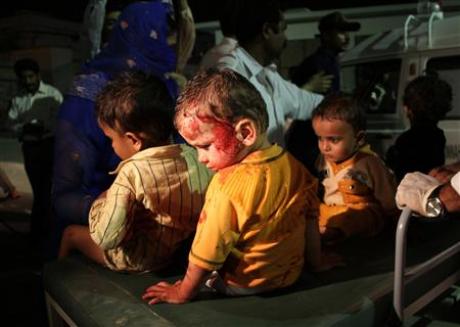
KARACHI, Pakistan — A nearly simultaneous double explosion that may have been the work of suicide bombers struck a crowded Sufi shrine in Pakistan’s main port city of Karachi on Thursday evening, killing at least 7 people and wounding 65, officials and rescue workers said. Pakistani women mourn the death of a child killed in an attack on the shrine Sufi Saint Abdullah Shah Ghazi.

It was the first attack on the shrine, the grave of the Sufi saint Abdullah Shah Ghazi, and it appeared to be an effort by hard-line militants in Pakistan to strike at the heart of Sufism, the moderate, more flexible blend of Islam practiced by most Pakistanis.

The attack came three months after militants struck one of the country’s most important Sufi shrines in the city of Lahore, which left at least 42 people dead.

The first blast at the Karachi shrine occurred at the main gate. Police officials said that within 25 seconds, the second blast hit the steps leading up to the saint’s grave.

Rescuers said three children were among the dead.

Dr. Seemi Jamali, deputy director of the emergency ward at Jinnah Hospital in Karachi, where the wounded were taken, said “many of them have severe injuries, trauma to the head and neck.”

Television channels showed body parts strewn at the site and chaotic scenes of unnerved, sobbing survivors.

The home minister of Sindh Province, Zulfiqar Mirza, told reporters that the severed heads of two suspected suicide bombers had been recovered from the site. Police officials were more circumspect, saying it was premature to conclude that the attack was by suicide bombers.

Local TV channels reported later that Tehreek-e-Taliban, or Movement of Taliban, an umbrella group of militants, had claimed responsibility for the attack. The group is known to have trained cohorts of suicide bombers for attacks in Pakistan and Afghanistan.

The attackers apparently chose Thursday night because it is one of the most crowded times of the week at the shrine, when hundreds throng to seek blessings from the saint and to receive free food.

The government closed all shrines in the city after the bombings.

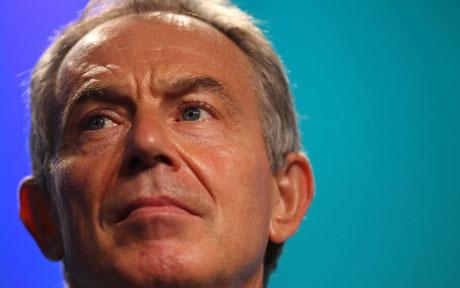
The West is Being ‘Outmanoeuvred’ by Violent Islamist Extremists: Tony Blair

By John Swaine for The Telegraph

In a speech in New York, the former prime minister said that warnings over the past week of new terrorist plots against Europe should remind people that they remain under threat.

Mr Blair said a “narrative” that Muslims were under attack from the US and its allies, who act out of support for Israel, had been allowed to take hold, aided by “websites and blogs”.

A fresh confrontation is needed because it will be impossible to defeat extremism “without defeating the narrative that nurtures it”, he said.

“The practitioners of extremism are small in number. The adherents of the narrative stretch far broader into parts of mainstream thinking,” Mr Blair told the Washington Institute for Near East Policy.

“It is a narrative that now has vast numbers of assembled websites, blogs and organizations.” Mr Blair said it was “absurd” that some people were surprised at how powerful Islamist extremist groups were, given the amount of funding they received and indoctrination they spread.

“Measure, over the years, the paucity of our counter-attack in the name of peaceful coexistence,” he said. “We have been outspent, outmaneuvered and out-strategized.”

Mr Blair said a tendency to “sympathize” with extremism was not only dangerous but also disempowering for moderate Muslims, because it made people resent them as much as extremists.

He said he was “intrigued” by the fact that western leaders, including Barack Obama, the US President, felt the need to condemn Terry Jones, a pastor who threatened to burn a Koran.

“Suppose an Imam, with thirty followers, in Karachi was to burn a bible,” he said. “I can barely imagine a murmur of protest. It wouldn’t be necessary for the President of Pakistan to condemn it because no one here would remotely consider he supported it.”

The former prime minister also called on the west to make it “crystal clear” to Iran that their acquisition of a nuclear bomb would be unacceptable to the entire “civilized world”.

“Go and read the speech of Iran’s President to the United Nations just days ago here in New York, and tell me that is someone you want with a nuclear bomb,” he told those who disagree.

He stressed that the achievement of a peace settlement between Israel and Palestine would remove “much of the poison which the extremists use”.

And he defended his decision to invade Iraq and Afghanistan, saying: “whatever you think of the original action, we enabled the people to choose their Government”.

Mr. Blair last night appeared on the Late Show with David Letterman on American television. He said that satirists like Letterman had been wrong to paint George W. Bush as unintelligent. “You don’t get to this position by being a fool,” he said.

For Better or Worse, White House Bets on Pakistan’s Civilian Government

Reported by Josh Rogin for Foreign Policy magazine
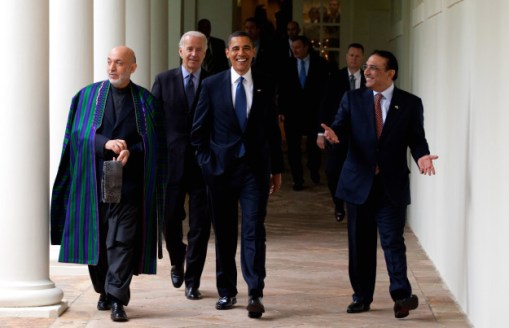
The Obama administration has always been clear that the path to winning the war in Afghanistan goes through Pakistan. But if Bob Woodward’s new book is accurate, the White House considers its war effort much more dependent on the success and survival of Pakistan’s civilian government than was previously known.

Woodward’s “Obama’s Wars,” which hit bookstores Monday, sheds new light on the Obama administration’s vast outreach to the Pakistani civilian government led by President Asif Ali Zardari. It paints a picture of an administration working hard to court the Pakistanis while remaining somewhat confused about Pakistani thinking on a range of issues.

Obama himself was confused about the nature of Pakistani intentions during two crucial decision points in his administration’s Afghan policy — the March 2009 strategy rollout and the deliberations in November 2009, which resulted in a troop surge and a huge expansion of covert operations in Pakistan. However, based on advice from the majority of his key advisers, he nonetheless tried to entice Pakistan to commit to a deep and long-term partnership with the United States by offering the Zardari government incentive after incentive, with relatively few pressures.

According to Woodward’s account, the centrality of Pakistan was championed early on by Bruce Riedel, the Brookings scholar who was brought on as a key figure in the Obama administration’s March 2009 Afghanistan strategy review.

Riedel, who referred to Islamist extremists in Pakistan as the “real, central threat” to U.S. national security, personally convinced Obama, only two months after he took office, that Pakistan needed to be the centerpiece of his new strategy. Riedel’s plan involved arming the Pakistani military for counterinsurgency and increasing economic and other forms of aid to the civilian government. This marked the beginning of the term “Af-Pak,” which drove the administration’s belief that stability in Afghanistan and Pakistan were inextricably linked.

Riedel’s Pakistan focus was not due to his confidence that the civilian government could control the military and intelligence services. In fact, he referred to Army Chief of Staff Gen. Ashfaq Parvez Kayani as a “liar” with regards to the activities of the secretive Inter Services Intelligence agency (ISI), which is widely suspected of aiding the Taliban insurgency. Then Director of National Intelligence Dennis Blair reportedly echoed Riedel’s views on this matter.

Inside the administration, Blair argued that Obama was approaching Pakistan with too many carrots and not enough sticks. He at one point advocated bombing inside Pakistan and conducting raids there without the Pakistani government’s approval. “I think Pakistan would be completely, completely pissed off and they would probably take actions against us … but they would probably adjust,” he once told Obama.

Obama, however, opted to pursue a less confrontational path. He concluded the central task would be convincing the Pakistani leadership to throw its lot in with the United States He said at the time of the initial strategy review in March 2009, “that we had to have a serious heart-to-heart with Pakistani civilian, military and intelligence leaders.”

Later that year, when making the decision to send an additional 30,000 “surge” troops to Afghanistan, Obama knew that his plans to also expand the U.S. military presence in Pakistan and widen drone strikes would be a hard sell to the Zardari government. In an attempt to sweeten the deal, Obama framed the policy as a new “strategic partnership” with Pakistan, even tying the success of the U.S. mission in Afghanistan to the survival of Zardari and the legacy of his deceased wife Benazir Bhutto.

“I know that I am speaking to you on a personal level when I say that my commitment to ending the ability of these groups to strike at our families is as much about my family’s security as it is about yours,” Obama wrote in a letter to Zardari delivered by National Security Advisor Jim Jones and counterterrorism advisor John Brennan.

Zardari’s response to that letter reinforced what many in the administration already suspected: Pakistan’s government was in the grips of an internal struggle over whether to embrace the United States. Zardari’s initial response focused heavily on India, though the Pakistani president only referred obliquely to his country’s strategic rival. Woodward reports that the White House believed the letter was written by the Pakistani military and the ISI. However, the Zardari government did end up accepting Obama’s offer.

Obama’s top advisors told the U.S. president that he would have to accept something short of complete success in convincing Pakistan to turn away from its longstanding obsession with the military threat it perceives from India.

When Obama had a meeting with Zardari in May 2009, he told the Pakistani president the he did not want U.S. taxpayers to be funding Pakistan’s military buildup against India “We are trying to change our world view,” Zardari told Obama, “but it’s not going to happen overnight.”

At times, Obama was downright puzzled by his advisors’ advice regarding Pakistan. For example, intelligence reports confirmed that Pakistani officials were afraid that the United States would leave Afghanistan too early, as they believed had occurred after the end of the resistance to the Soviet regime in the 1980s. On the other hand, Pakistan worried that if the United States was too involved in Afghanistan, it might aid in the establishment of a larger Afghan army than Islamabad was comfortable with.

“What am I to believe?” Obama asked his senior staff. Secretary of State Hillary Clinton, Special Representative Richard Holbrooke, and Defense Secretary Robert Gates all told him these were the types of contradictions that were commonplace when dealing with Pakistan.

For its part, the Pakistani government was just as confused and puzzled by the Obama administration. Woodward recounts one anecdote, in which Zardari tells the former U.S. Ambassador to Afghanistan Zalmay Khalilzad that he believed the United States was involved in orchestrating attacks by the Pakistani Taliban against the Pakistani civilian government.

Pakistan’s Ambassador to Washington Husain Haqqani, a key go-between, tried several times to explain to the Obama administration how to court Pakistani leaders, comparing the dynamic to “a man who is trying to woo a woman.”

“We all know what he wants from her. Right?” Haqqani said in a meeting with Jones, Deputy National Security Advisor Tom Donilon and the NSC’s Gen. Doug Lute.

“But she has other ideas. She wants to be taken to the theater. She wants that nice new bottle of perfume,” Haqqani told them. “If you get down on one knee and give the ring, that’s the big prize. And boy, you know, it works.”

Haqqani said the “ring” was official U.S. recognition of Pakistan’s nuclear program as legitimate. He also warned that the Pakistanis would always ask for the moon as a starting point in negotiations. He compared it to the salesmanship of rug merchants.

“The guy starts at 10,000 and you settle for 1,200,” Haqqani told the Obama team. “So be reasonable, but never let the guy walk out of the shop without a sale.”

Although the Obama administration has had some success improving the relationship between the two governments, Pakistan’s civilian leadership still faces a series of difficulties in its goal of exerting control over its entire national security structure. Stability has also been threatened by the enormous pressures resulting from the war that it is waging inside its own borders, and political attacks leveled against it from the media and the courts. Zardari’s perceived sluggish response to the devastating flood crisis has cost him even more credibility among the Pakistani public.

But while the end of Zardari regime has often been predicted, it appears that he will remain in place for the foreseeable future. The Obama administration, meanwhile, is aware of how crucial his cooperation remains for the success of the mission in Afghanistan.

When Woodward sat down for his interview with Obama earlier this year, he asked the president if the situation was still that Pakistan is the centerpiece of the U.S. strategy. “It continues to this day,” Obama replied.
God Bless Islam with Courageous Leadership

By Ebrahim Moosa for Religion Dispatches

As Muslim Americans and millions around the world celebrate the end of Ramadan 2010 what will they pray for? What was the spiritual harvest of the month of fasting, prayer, deep reflection, and discipline? Given the growing hostility directed towards Muslims in the United States and the horrible deeds perpetrated by persons aligned to Islam on 9/11 and elsewhere in the world, I for my part, will be making two prayers.

The first is to urge Muslims to affirm their solidarity with all of humanity. The words of this prayer come from a tradition of the Prophet Muhammad. It reads:

Oh Allah, Lord (Rabb) of all things. I testify that You alone are the Lord of the world, Lord of all things… I testify that all servants of God are one family… Make me and my family truthful to you in every moment of life in this world and the next. Oh powerful and generous one, hear and respond to my prayers…

My second prayer is that God bless Islam with a religious leadership that has a modicum of Solomonic wisdom and tons of moral courage.

Why these two prayers? I think many Muslims have forgotten the message of humanism and solidarity with all creation that are the cornerstones of Islam. All servants of God are part of a single family, the Prophet Muhammad taught. So how can faiths be at war, if only to serve earthly gods? Many of our religious leaders have forgotten that our theologies, teachings, and practices were means to serve a transcendent Creator; not for idolatrous ends. Many of the most prominent Muslim religious and moral authorities the world over—clergy, intellectuals, scholars, politicians—have, through silence and inaction, invited a plague of craven violence on a number of Muslim societies. In a manner of speaking, in many places, the asylum is in charge of the mosque. Religious leaders are more interested in cowing to public adulation through demagoguery than in showing courage and exhorting people to piety and sanity.

Check if the sermon in the`Id al-Fitr (End of Fasting) sermon at your mosque hinted at the cowardly acts of al-Qaeda who killed thousands on September 11 and elsewhere. Or if deeds of the Somalian Shabab who killed dozens of Ugandans watching a soccer World Cup match in the suburbs of Kampala caused outrage. Has anyone been able to keep track of the death toll inflicted in Pakistan by Taliban suicide bombers, who most recently killed more than 60 people in Quetta because they were Shi’a? Did anyone even notice that a radical Muslim group in India chopped off the hand of a Catholic professor in the state of Kerala in July for apparently offending the image of the Prophet Muhammad in an exam questionnaire?

`Id is a day of celebration with family and friends. But it is unconscionable if Muslims do not think seriously and act in unison about the deep moral crises afflicting our communities here and abroad. To think critically is not to bow to the hate of the Islamophobes, it is a sign of strength and faith. Those who claim that there are no “moderate” Muslim voices denouncing acts of violence committed by Muslims are wrong, and yes, there are many good things happening in Muslim societies that do not make the headlines. Yet it is delusional to think that the evil masquerading as faith does not erode the belief and values each Muslim.

To Muslim Americans I say, next time you wonder why young men like the Times Square bomber Faisal Shahzad become entangled in conspiracies to commit acts of violence in this country and abroad please ask the following questions: What is the qualification of the imam at your mosque? Is he enriched by the best of American and Islamic culture, in tune with his environment, or is he preaching a theology no longer even appropriate for people in Iran, Egypt, or Pakistan? Does he teach the tradition creatively and help people think imaginatively? Or does he focus on impieties and promote the virtues of paraphernalia like the dress code and the mandatory length of facial hairs? If the imam is as wise as the religious leader in the Canadian sitcom Little Mosque on the Prairie, it will be a huge step up.

Mosque committees share their burden of responsibility too. Often they appoint preachers by applying the lowest and cheapest standard; theological diversity is frequently absent and enlightened thinking is considered too challenging and burdensome for them to contemplate. Will the smart Muslims in America and around the world stand up and be counted?

-Originally printed on Sep 9, 2010 for Religion Dispatches. Ebrahim Moosa is a professor of Islamic Studies at Duke University and an author of several books on Islam.

Aisam-Ul-Haq Qureshi Delivers Message of Peace at U.S. Open After Indo-Pak Express Suffers Defeat

By Stefan Bondy for NY Daily News

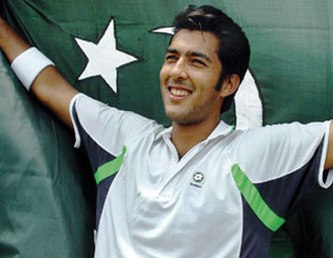
Aisam-Ul-Haq Qureshi delivered his message loud and peacefully, and it had nothing to do with forehands or backhands, or even the doubles title he failed to win.

As a Muslim from Pakistan playing in the U.S. Open doubles final, he said New York needed his words the most, as post-9/11 counsel. So the 30-year-old grabbed the microphone and addressed the estimated 15,000 at Arthur Ashe Stadium – probably the biggest crowd to watch a Grand Slam doubles final – and made sure the moment wasn’t lost.

“I want to say something on behalf of all Pakistanis,” he said following Friday’s 7-6 (5), 7-6 (4) defeat to the Bryan brothers, Bob and Mike. “Every time I come here, there’s a wrong perception about the people of Pakistan.

“They are very friendly, very loving people. We want peace in this world as much as you guys.”

The crowd cheered. By now, such poignancy is expected from Qureshi and, to a lesser extent, his doubles partner, Rohan Bopanna of India. Together, they’ve formed the politically charged tandem known as the Indo-Pak Express, breaking down barriers with their kinship and jettisoning expectations with their recent play.

Their respective neighboring countries have warred with and terrorized each other since the 1940s, citing religion as their great chasm. But Qureshi and Bopanna, a Hindu, represent peace, both on and off the court. Indian and Pakistani fans filled pockets of Arthur Ashe Friday, arriving as early as two hours before the match. U.N. ambassadors from both countries sat side-by-side in the President’s Box – the second straight match they’ve attended together – cheering the same unexpected struggle their team brought to the greatest doubles team of all time, the Bryan brothers. The 16th-seeded Qureshi and Bopanna followed up their run to the Wimbledon quarterfinals with five wins in Flushing.

“They’ve proven that when Indians and Pakistanis get together we can raise fire,” Pakistan ambassador Abdullah Hussain Haroon said. “I think on a people-to-people basis, they’re setting an example that the politicians should follow.”

Prize money and rankings were never a motivating factor, Qureshi said, only good news for his flood-stricken countrymen and a platform to express his message of American misunderstanding. He also defended the decision to build a mosque near the World Trade Center site.

“For me, as a Muslim, that’s what makes America the greatest country in the world – freedom of religion, freedom of speech,” Qureshi said. “If the mosque is built, I think it’s a huge gesture to all the Muslim community out there in the world. I would really appreciate it.”

Pakistan, which borders Afghanistan, has long been considered a headquarters of Al Qaeda.

Qureshi said he’s been stopped at airport immigration “every time” in New York – three hours at a time – including after his latest flight for the Open. And on the eve of the ninth anniversary of the 9/11 attacks, he wanted to defend his country’s masses.

“Since September 11, every time I come to the States or western countries I feel people have the wrong impression about Pakistan as a terrorist nation,” Qureshi said. “I just wanted to declare that we are very friendly, loving and caring people, and we want peace in this world as much as Americans and the rest of the world wants.

“There are extremists in every religion, but just because of them you cannot judge the whole country as a terrorist nation. I just wanted to get this message across as a Pakistani.”