Posts Tagged ‘ Tehrik-e-Taliban Pakistan ’

Gunmen Storm Pakistan’s Naval Aviation Base

By Faisal Aziz for Reuters
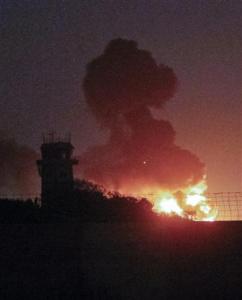
Gunmen attacked Pakistan’s naval aviation base on Sunday, starting fires, setting off explosions and fighting pitched gunbattles inside one of the country’s most heavily guarded military installations.

Officials said at least four people had been killed in the attack on PNS Mehran in the southern city of Karachi. Between 15 to 20 gunmen were inside and had attacked hangars housing aircraft, officials said. Witnesses said they could hear gunshots and see smoke rising from the base.

“They were equipped with sophisticated weapons,” navy spokesman Commodore Irfan ul-Haq told Reuters. Another spokesman said that one P-3C Orion, a maritime partrol aircraft, had been destroyed. “The attackers are still inside and intermittent firing is continuing.”

Interior Minister Rehman Malik said the militants had attacked from the rear of the base. “We have been able to confine them to one building and an operation is underway either to kill or capture them.” The Karachi attack evoked memories of an assault on Pakistan’s army headquarters in the town of Rawalpindi in 2009, and revived concerns that even the most well-guarded installations in the country remain vulnerable to militants.

Taliban militants, who have vowed to avenge the killing of al Qaeda leader Osama bin Laden by U.S. special forces, have carried out several attacks since his death on May 2.

Officials said the gunmen had attacked three hangars housing aircraft. Nine explosions were reported from the base, with jet fuel tanks possibly catching fire and exploding. Almost three hours after the start of the attack, gunbattles between presumed militants and commandos continued.

A least a dozen ambulances were parked outside the base, waiting to take wounded to hospital. Pakistani military and paramilitary reinforcements were pouring in, with four vehicles carrying about 10 troops each moving into the base. An intelligence official said four people had been killed and five wounded in the Karachi raid.

Prime Minister Yusuf Raza Gilani condemned the “terrorist” attack. “Such a cowardly act of terror could not deter the commitment of the government and people of Pakistan to fight terrorism,” Gilani said in statement.

Pakistan has faced a wave of bombings and gun assaults over the last few years, some of them claimed by the Tehrik-e-Taliban Pakistan (TTP), or Pakistani Taliban. Others have been blamed on al Qaeda-linked militant groups once nurtured by the Pakistani military which have since slipped out of control.

The discovery that bin Laden was living in the Pakistani garrison town of Abbottabad, not far from the Pakistan Military Academy, has also revived suspicions that militants may be receiving help from some people within the security establishment.

Pakistan and the United States say the senior leadership in the country did not know bin Laden was in Abbottabad.

On April 28, suspected militants detonated a roadside bomb in Karachi, killing four members of the navy, the third attack on the navy in a week. The attack came two days after two bombs hit buses carrying navy personnel, killing four people and wounding 56. Taliban insurgents took responsibility for the twin attacks.
‘Pak Must Acknowledge Terrorism is “Home Grown”, Not Indian, Jewish or US conspiracy’

As Reported by ANI

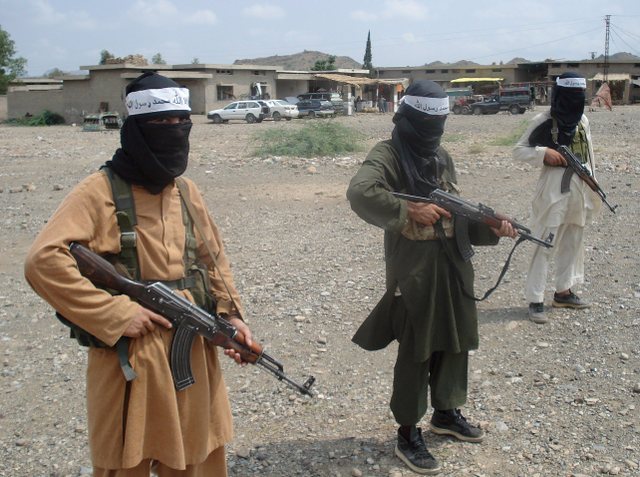
The Tehrik-e-Taliban Pakistan (TTP) attack on Karachi’s Crime Investigation Department compound should serve as an ultimate wake up call for Pakistan to swiftly act against home grown terrorism rather than blaming some Indian or US conspiracy for terror strikes on its soil.

“The assault on the CID centre must be seen for truly what it tells us in plain words: that home grown terrorism is no Indian, Jewish or American conspiracy against Pakistan or Islam,” Pakistan’s leading newspaper Dawn said.

“It also tells us that there are many misguided Pakistanis in our midst, who may even have sympathy for these zealots targeting largely Muslims that would not endorse their narrow minded view of the faith under whose banner they kill and maim innocent citizens,” it noted.

“How else does one explain the transportation of a van full of explosives along with a firing squad armed with latest weapons that came to attack the CID building during the evening rush hour no less?” the paper questioned.

It is high time that Pakistan woke up to the increasing threat posed by terror organisations and took stringent steps to tackle it.

“Much of Islam as we know it in this country today, isn’t exactly in very safe hands; it’s time we woke up to the threat and did something about it instead of issuing token mere condemnations that follow such ghastly acts of sheer murder and mayhem, from Islamabad to the provincial capitals and the other Pakistani capital of sorts, in exile, the faraway London,” the paper said.

It argued over a possibility that Thursday’s bombing took place “because no concrete action was taken after last month’s bombing at the Abdullah Shah Ghazi shrine; nor indeed the ghastly attacks before that on two Muharram processions in December and February.”

Ruing the state of Pakistan’s preparedness in combating terrorism, it expressed the hope that the latest bombing incident- at CID building in Karachi- “given its precision and intensity as well as the target hit, should serve as a final wake up call to law enforcement agencies and the authorities concerned in Karachi.”

Deadly Bombings in Pakistan Target Mosques, Killing More Than 70 Worshippers

By Owais Tohid for The Christian Science Monitor

Two deadly bombings today in Pakistan targeted mosques and killed more than 70 worshipers, following an increasingly deadly pattern of Pakistani Taliban attacks on tribes that dare to defy its influence.

In the town of Dara Adam Khel, in Pakistan’s northwest territory, a young suicide bomber detonated his load amid 300 worshipers during Friday prayers. He killed at least 67 people and injured more than 100.

On Friday evening, four grenades were hurled inside a mosque in the Suleman Khel village, which is on the outskirts of Khyber tribal region. The blasts killed at least four people.

The bombing in Dara Adam Khel appeared to be targeting the Akhoorwaal tribe because it has been resisting Taliban expansion. Pakistani Taliban claimed the responsibility.

“There is no right for traitors of mujahids and Islam to live,” read a message from the Taliban, quoting notorious leader Tariq Afridi. Mr. Afridi is the commander of Tehrik-e-Taliban Pakistan (TTP), which is commonly known as the Pakistani Taliban and is linked with Al Qaeda.

The attack was seemingly designed for maximum impact, as the bomb was detonated in the middle of Friday prayers, and combined two increasingly common Taliban targets: the mosque and the jirga (council of tribal elders). The targeted mosque was inside the hujra, or congregation spot, of the tribal council leader.

The suicide attack was one of the deadliest in series of attacks by Al Qaeda and Taliban across Pakistan in which hundreds of people have lost their lives this year.

Taliban commanders are trying desperately to strengthen their hold across the region, say analysts. The US continues drone attacks on the semi-autonomous tribal region of North Waziristan along Pakistan-Afghanistan border while pressuring Pakistan to increase operations there. What’s more, Pakistani security forces are ramping up operations in other tribal regions.

The bombing was meant to “terrorize tribesmen,” says Brig. Mehmood Shah (ret.), a Peshawar-based analyst. “Taliban want to control the region so they are targeting locals who have raised voice against them. They want to eliminate the dissent,” he says.

“It is the worst revenge tactic and showing that they are desperate and weakened,” says Mr. Shah.

Dara Adam Khel lies about 31 miles south of Peshawar and links Orakzai and Khyber tribal region in the west through a hilly terrain. Pakistan’s security forces have been pounding the area with bombs in a bid to rout militants in the ongoing operation. The forces have also been going after them in Khyber region where the militants attack NATO supply convoys.


Eyewitnesses of the mosque attack described the moments before the blast occurred.

“I saw a young boy walking toward the worshipers. The moment he raised his arms, he exploded,” says Mohammad Nasir.

The attack triggered terror alerts and warnings for additional attacks by Taliban across the country, especially in the northwest.

“It’s a cowardly act. The terrorists might try to carry out more attacks but we are not afraid,” says Provincial Minister Mian Iftikhar, whose only son was assassinated by the Taliban three months ago. “It’s a long battle against terrorists and extremists. They can be defeated once we remain united.”

“The US, Afghanistan, and Pakistan should have to continue to wage war to eliminate terrorism,” he says.

In Dara Adam Khel, members of the Akhoorwaal tribe vowed to continue fighting the Taliban.

“We will not let the sacrifices of our tribesmen be in vain. We won’t let them convert our future generation into terrorists and destabilize the country. We will start mobilizing other tribes in our war against terrorists,” says tribesman Javed Ur Rehman Akhoorwaal.