Archive for the ‘ terrorism ’ Category

Rand Paul Filibuster on Pakistan Aid Could Force Senate Into Overtime

By Lauren Fox for US News and World Report

Kentucky Sen. Rand Paul could push the Senate’s session into the weekend if he doesn’t back off of a promise to filibuster all legislation as long as Senate leadership keeps a bill to stop sending aid to Pakistan off of the floor.

The obstruction is a replay of last week’s Senate session when Paul stood in the way of a veterans’ jobs bill in an effort to see his anti-Pakistani funding bill on the floor.

In a letter to his colleagues, Paul requested that his fellow lawmakers join his cause to stop backing Pakistan as long as the country keeps playing “both sides of some of the most important issues while openly thwarting our objectives in the region” and continues holding Shakil Afridi, the man who assisted the U.S. with its efforts to locate and kill Osama bin Laden.

“Dr. Afridi remains under arrest for his role in finding bin Laden, and no country that arrests a man for helping to find bin Laden is an ally of the United States,” Paul wrote in his letter. “If Pakistan wants to be our ally–and receive foreign aid for being one–then they should act like it, and they must start by releasing Dr. Afridi.”

This week, however, Paul has expanded his efforts.

After rebels seized the U.S. embassy in Egypt and Libyan rebels murdered four Americans including Libyan Ambassador Christopher Stevens, Paul is calling for a bill to halt funding to those nations as well.

“I urge you to take immediate action to pass a much-needed bill demanding cooperation and accountability from the countries involved in the recent violence directed at our embassies and consulates,” Paul wrote. “The bill should send a strong clear message to these entities: You do not get foreign aid unless you are an unwavering ally of the United States.”

Meanwhile, the White House has other plans to handle the attacks on the embassies in Egypt and Libya. Because the attackers were not affiliated with the government, Secretary of State Hillary Clinton will look to Congress to authorize more funding to support Egypt in its quest for democracy.

“Particularly in the light of this kind of extremist and spoiler activity…we think it is absolutely essential that we support those forces in Egypt who want to build a peaceful, stable, democratic country with prosperity restored, jobs for people,” State Department spokeswoman Victoria Nuland said Monday during a briefing. “And that’s what the assistance that the president has pledged and that we are working with the Hill on is for.”

Paul’s protest won’t endanger the Senate’s ability to pass a continuing resolution to keep the government funded for another six months, but it could significantly affect the Senate’s ability to stay on schedule.

The House passed the stopgap measure 329 to 91, but Paul’s floor protest could push the Senate into a weekend session.

The Opposite of American

By E.J.Graff for The American Prospect

The Sikh temple shooting, which left seven dead including the shooter, has left me feeling more shaky than the shooting in Colorado, which seemed more random.

I write that even though the skeleton of these stories is roughly the same. One man with a grudge takes semi-automatic weapons and opens fire at a public or semi-public event where people are gathered for some socially acknowledged purpose—education, work, politics, entertainment, worship. Some people die. Others are wounded. The gunman may or may not have the presence of mind to execute himself. Or he may choose to be martyred, putting himself in line for police to kill him.

The gunman’s race and age vary, anywhere from 12 to 50. In the U.S., the majority of such gunmen are white, disproportionately (although just slightly) to their numbers in the population. They are overwhelmingly male. Sometimes the gunman has a personal motive for making others suffer: He lost his job, or girlfriend. Sometimes his motive is putatively political: Liberals are ruining Norway, or abortion clinics are killing babies. Sometimes he’s just crazy—psychotic, or with a deeply disturbing character disorder—but sane enough to follow the cultural script.

Even knowing that the story has a plot that I can strip down to familiar elements, this particular shooting upsets me more than most—because Wade Michael Page shot up a gathering of a religious minority, darker than white, in the bucolic Midwest, in what police are calling an act of domestic terrorism. The FBI has been called in. According to the Southern Poverty Law Center, Page was, as many of us suspected, a “frustrated neo-Nazi who had been the leader of a racist white-power band.” (Okay, I didn’t guess the band part.) Dave Weigel goes into the background documents and offers up the relevant nuggets in an excellent post at Slate, including a link to one of Page’s hate songs.

Sikhs have been targeted and attacked in hate crimes since 9/11; CNN has a summary of some of the publicly reported attacks here. Many of the news reports quoting Sikhs about this attack emphasize that they’re mistaken for Muslims, as if attacking Muslims would be more understandable. But post-9/11 hatred focused on the “other” hasn’t been that specific; Sikhs are visibly south Asian and, with those turbans, non-Christian. That’s enough for a neo-Nazi or any xenophobe who nurses an irrational resentment.

Here’s why this one leaves me particularly shaky. I grew up in the only Jewish family in my southern Ohio township, and probably the county; for nearly a decade, as far as I knew, I was the only Jewish kid in my jam-packed grade school, junior high, and high school. (My graduating class had 675 people.) The area was so German-American white that my medium-brown hair (see picture to the right) counted as dark, and left me irrationally unwilling to date anyone blond, although I’ve known consciously that that’s ridiculous. Somehow, I never had the presence of mind to connect my feeling of exclusion to what my dear friends the Conchas, the township’s Hispanic family, might be feeling, much less how the handful of black kids might have felt; as a child, my focus was on trying to shut off that sense of exclusion. Not until adulthood did I learn, instead, to expand it into empathy.

It’s hard to express how or why this incised me with vulnerable outsiderness so profoundly. Was it the time my friend Patti chased me around at recess, telling me that the Jews killed Jesus, and the teacher made me sit in the corner for crying? Was it having to stand every day in fourth grade as everyone said the Lord’s Prayer, which I knew wasn’t mine? (Yes, that came after the Supreme Court ruling banning prayer in schools, but I wasn’t yet well-versed enough in the law to object.) Was it getting those little choose-Christ-or-go-to-hell pamphlets in our Halloween bags, which probably went into everyone’s bags but which I interpreted as specifically meant for my Jewish family? Or having my sixth-grade teacher call me into the hall at school, asking whether the class could have a Christmas tree?

Another child might not have felt all this so keenly, of course, but I did. And my friends who grew up in urban or suburban Jewish clusters—Los Angeles, Cleveland Heights, Long Island—had a vastly different experience as American Jews. After I left for college, a Hindu temple moved in, and I was happy that my little brother and sister would have some fellow outsiders to befriend. For me, being the Jewish kid in Beavercreek, Ohio, was a lot harder than coming out later as gay. Which is probably why I never write about this subject, and why it’s so easy, comparatively, for me to write about sexuality and gender.

And it’s why, after 9/11, I was so grateful to march with members of the tiny Cambridge, Massachusetts mosque, which sits one street over from the tiny Cambridge synagogue, as befits religions that are such close cousins. However much the 9/11 bombers resembled, say, Timothy McVeigh or Eric Rudolph (who bombed a lesbian club, an abortion clinic, and the Atlanta Olympic games, in that order) in their message of politically targeted hatred, I knew that after 9/11 all Muslims would be slandered as responsible in a way that all white Christians had not been. In fact, the one thing I thought George W. Bush got absolutely right was insisting that Americans should not blame a religion for its most extreme members’ unhinged actions.

Police may not have definitively determined Wade Michael Page’s motive. But I see a group of brown people gunned down in their temple, almost certainly for their religious outsiderness, out there in the hyperwhite Midwest. I grieve for every Sikh in the country, and for every Muslim and Hindu and South Asian and Middle Eastern American who knows the message was aimed at them as well.

Page may have been a shooter like all other shooters: just another grudge-holding male who decided to feel powerful by becoming the lord of death. And yet his bullets nevertheless delivered a specifically white message of “patriotic” hatred: You don’t belong here. You are not us. Go directly to hell.

Will someone—everyone, really—please stand up and say that what Page represents is the opposite of American?

Pakistan and its Image Problem

By Eric Schmidt for Google

Pakistan, a Muslim country, has spent about half of its independent life under military governments. Today, Pakistani leadership celebrates the ruling coalitions success in almost finishing the first five year term in history (previous leaders indicted by the courts, assassinated by extremists or brushed aside by the generals.) In meetings last week with the senior General, Prime Minister and the Foreign Minister, they made the case for a new and updated image of Pakistan: one of the largest democracies in the world, with a vibrant and open press, an upcoming demographic dividend of hardworking young people, and a highly educated elite leadership of the country. Islamabad and Lahore, where we visited, were relatively safe and certainly safer than Afghanistan. It was clear to us that Pakistan has an image problem.

Pakistan also has a power problem, as in electric power. Power is now off two hours out of three all day and all night. Estimates are that the country has enough generation capacity (hydro and oil based) to handle all the load, but corruption, power stealing, poor payment rates and the classic mistake of underpricing power compared to its real generation cost means that industrial production is threatened. Everyone of means has a UPS, and the air-conditioning seldom works on a 45 Celcius day. Our meetings often were literally in the dark, a common enough occurrence that people did not even remark about it.

Pakistanis are on their way to full mobile penetration with more than 110 million users, and all effective political communication programs now rely on SMS. 3G licenses are underway and the start of a real software industry can be seen.

Against this backdrop, another side of Pakistan emerges. The consensus is that the military drives the foreign policy of the country with unforeseen consequences. Alleged use of extremist groups to fight in Kashmir enables a criminal element to flourish, and the hosting of the Taliban in the autonomous regions (called FATA) to the north and west in the mountains turned an ungoverned area into a very dangerous area. The Army Generals explained the difference between fundamentalism (which they support) and extremism (which they fight), and the political leadership explained that the extremism now comes from “seminaries” where youth are indoctrinated, housed and fed in the rural areas where there are no opportunities at all.

Until recently a strong US ally, Pakistan is now on very good terms with China, and has improving relations with India (with whom they have had three wars.) The development of a nuclear stalemate between India and Pakistan seems to have forced them to pursue accommodation and trade is now increasing rapidly. The press are generally hyper-critical of the United States policies in the region and take the view that the India-US relationship is driving much of our countries behavior. The drone strikes are universally condemned as a violation of sovereignty and their constitution and are subject to much negotiation between the two countries. The bin Laden raid is viewed with strikingly different perspectives in the two countries.

The son of the chief of the Supreme Court is under investigation for corruption, and the media in turmoil after the appearance of staged interviews. In return, the Supreme Court has ruled that the Prime Minister is unable to govern after he was sentenced to a 30 second (yes, that’s right) detention for failing to investigate a corruption case against the President. The Prime Minister, so proud of the stability of the political system in his comments a week ago, is now the former-Prime Minister. The lack of trust within the society weakens both the real and perceived effectiveness of the government on security, corruption and good government matters.

We met a number of impressive Pakistanis, none more so than Masarrat Misbah of Smile Again. Every year, hundreds of young rural women have acid thrown on their faces by men as punishment for some dishonor, including being raped by the men who pour acid on her. This horrific crime, which often leads to death or blindness, requires painful rehabilitation and rebuilding of the woman’s life. Masarrat Misbah’s home in Lahore provides a temporary safe house. The perpetrators, most often direct family members, are seldom prosecuted and almost never convicted of anything. I will never forget the faces of these shy, young women so grievously injured in such an evil way.

Much of what people say and think about Pakistan is absolutely true for most of the FATA provinces (autonomous areas) and for Baluchistan. Pakistan’s image problem results from the fact that people outside the country believe the realities of North and South Waziristan and Quetta are reflective of what the larger country looks like. Islamabad and Lahore are certainly safer than people realize, unless you are a politician (many prominent politicians still suffer assassination attempts and threats inside these cities).

Pakistan’s major security challenge comes from having two many fronts. FATA represents a Haqqani network and Taliban problem, threatening the establishment in Islamabad. Baluchistan is a persistent separatist movement. Afghanistan is a threat because Pashtuns are allowed to go back and forth undocumented. All of this, including India, is simply too much for a government like Pakistan to take on right now.

We ultimately see three Pakistans: 1) The places where the security issues are true (FATA, Baluchistan, parts of SWAT Valley, and Kashmir); 2) the rest of Pakistan for the average citizen, much larger than the first and which is reasonably misunderstood and relatively safe; 3) The politician’s and military’s Pakistan, which whether in FATA or Islamabad, is turbulent, unsafe, and complex.

There is a good case for optimism about Pakistan, simply because of the large emergent middle class (#2). The country, vast, tribal and complicated, can follow the more successful model of India. Connectivity changes the rural experience completely.. illiteracy at 43% can be overcome relatively quickly, and providing information alternatives can dissuade young males from a life of terrorism. The well educated elite can decide to further reform the countries institutions to increase confidence in the government. The war in Afghanistan, destabilizing to Pakistan in many ways, winds down after 2014 and buys time for Pakistan to address its real and continuing internal terrorism threat (more than 30,000 civilian terror deaths in the decade.)

Technology can help in other ways as well. The power problem is mostly a tracking problem (tracing corruption and mis-distribution). The problem of extreme crimes (like acid, or stoning) in poorly policed regions can be mitigated with videos and exposes that shame authorities into prosecution. The corruption problem can be tracked and traced using mobile money and transparent government finances. We met with clever Pakistani entrepreneurs who will build large, new businesses in Pakistan in the next few years and global multinational will locate sales and eventually manufacturing in the country.

The emergent middle class of Pakistan won’t settle for a corrupt system with constant terrorism and will push for reforms in a burgeoning democracy. Here’s to the new civil society of Pakistan, who will use connectivity, information and the Internet, to drive a peaceful revolution that brings Pakistan up to its true potential.

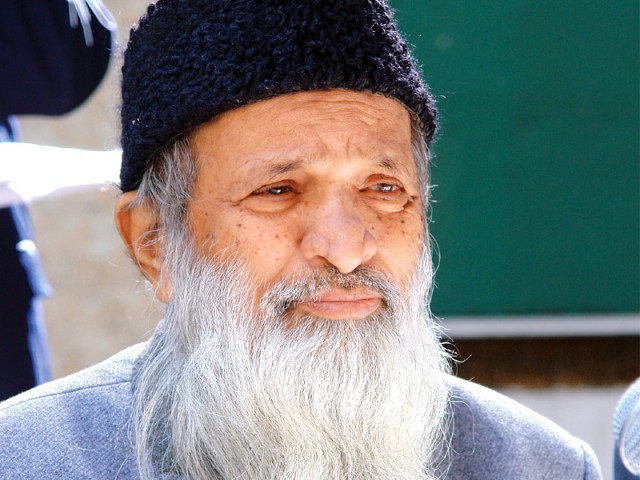
Edhi Faces Abduction Threat, Authorities Reveal

As Reported By Salman Siddiqui for The Express Tribune

Leading humanitarian worker Abdul Sattar Edhi is in danger of being taken hostage by a militant group in exchange for prisoners that it wants sprung free, authorities have revealed.
Edhi, while talking to The Express Tribune, stated that he was informed by the authorities a few weeks back that his life was in danger. “I was told that the ‘fauj’ (Pakistan Army) had intercepted a conversation of militants where it was being discussed that I may come to be harmed,” he said.
Edhi Foundation spokesperson Anwar Kazmi elaborated that the nation’s most recognisable charity worker was warned that he could be taken hostage in exchange for some prisoners that the ‘Taliban’ wanted to get released —

an allegation the militant group has denied.

Crime Investigation Department (CID) Senior Superintendent Police (SSP) Chaudhry Aslam confirmed that the intelligence reports they had received sometime back indicated that Edhi may be kidnapped by militants in exchange for either “some of their men in custody” or a “large ransom amount”.

“There was a letter in which there were three names, which included my name, Malir SSP Rao Anwar’s and Edhi’s,” he said.

This is the first time that Edhi’s name has been mentioned in a militant group’s hit list. After SSP Anwar was attacked in a suicide bomb in April, it was decided that Edhi’s security would be beefed up as a precautionary measure.

Security provisions

Despite the threat to his life, Edhi remains unfazed and calm in light of this development. “Only God knows what the truth is,” he says. “I don’t have enmity with anyone or any group. I do humanitarian work for everybody without any prejudice.”

Since the threats surfaced, Edhi is being provided with round-the-clock police security — with two official guards escorting him everywhere he goes. “Never before in his life had Edhi ever asked or given security by the state,” the spokesperson said.

Currently, two policemen from the Kharadar police station have been deployed for his security who work in two shifts of 12-hours each, according to Station House Officer (SHO) Agha Asadullah. “We can increase the number of policemen, if need be,” he said.

Edhi himself appears irritated by the presence of policemen near him at all times — especially given that he has to keep the Kharadar police station informed about his movements constantly. “I don’t want any of this security. I really feel there’s no need for it,” he said modestly. Although he is being asked to restrict his movements as a precaution, Edhi said he won’t allow anything to stop him. “I am going to Hyderabad next to do some relief work there,” he said.

TTP reaction

His son Faisal revealed that a three-member delegation of the local chapter of the Tehreek-e-Taliban Pakistan (TTP) recently came to the Edhi office to clarify their position about the alleged threats.

“They said to us that this is all government propaganda to malign the Taliban movement,” he said. “They also added that they respected Edhi for his humanitarian work and could not even think of doing him any harm.”

SSP Aslam said that the good news was that according to recent reports, Edhi’s name had not been mentioned again. “We receive a number of intelligence reports which mention a lot of famous personalities on the hit list on a weekly basis. So hopefully all will remain well.”

Reacting to the development, Edhi said: “I don’t know who [wants to harm me] or why. “I only know that I have to continue to do my work — no matter what.”

Pakistanis for Peace Editor’s Note– The Taliban have once again showed their true colors by threatening a man of Mr Edhi’s caliber. To threaten a person who is akin to Mother Teresa for Pakistan, a living saint, shows us how far off the cuckoo’s nest they really are. Just another reason for us here at Pakistanis for Peace to have great disdain for this group of people.

It’s Too Early to Consider Al-Qaeda a Dwindling Force

By Paul Koring for The Globe and Mail


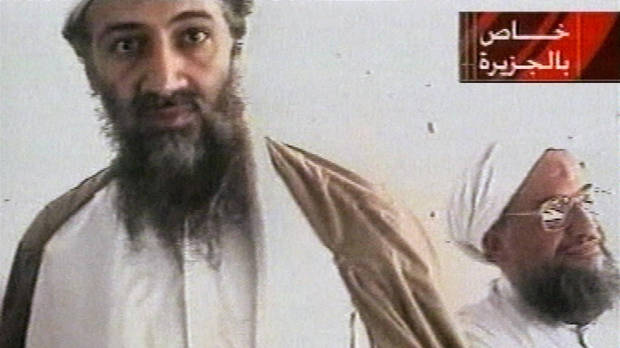
Amid an uneasy anniversary of the killing of al-Qaeda leader Osama bin Laden in a daring U.S. special forces raid, there’s a temptation to consider the war won.

Al-Qaeda’s infamous leader is dead; the cunning mastermind of the Sept. 11, 2001, suicide hijackings, Khalid Sheikh Mohammed, goes on trial this week in Guantanamo; while missile-firing Predator drones have grimly decimated al-Qaeda’s commanders in Pakistan, Yemen and Somalia

More than a decade later, wars in Afghanistan and Iraq, $1.2-trillion in spent bullion, 6,000-plus lost American lives – and perhaps 50 times that many other lives – the “war on terror” is, at least, a defunct term, banned by President Barack Obama’s administration as it shifted rhetorical focus in the struggle against violent, extremist Islam.

But the broader conflict remains unresolved and may have become far more complicated.

No significant terrorist strike has hit an American target since 2001. The Madrid and London bombings of 2004 and 2005 were the last major attacks on Western cities. Al-Qaeda has been battered and decapitated. Yet the threat still looms.

“It’s wishful thinking to say al-Qaeda is on the brink of defeat,” warns Rand analyst Seth Jones. Yet even in the Muslim world, support for al-Qaeda is way down. Only in Egypt does its approval rating top 20 per cent, according to a recent Pew Research poll. In Pakistan, where bin Laden was killed in a violation of Pakistani sovereignty and anti-U.S. fervor runs high, barely 13 per cent hold a positive view of al-Qaeda, and in much of the Arab world support is mired in single digits.

The violent fringes of radical Islam seem to have lost traction among even disenfranchised and repressed Muslims. At the same time, political Islam is emerging as a key force in the change sweeping aside repressive regimes in the Middle East.

As the terror threat and fear of another spectacular attack like the catastrophic destruction of New York’s twin towers diminishes, the nature of the struggle against radical, repressive Islam remains unfinished and the West’s role is increasingly unclear.

The U.S.-led war in Afghanistan is winding down. The coalition of Western nations that sent combat troops – including Canada – is falling apart as nations head for the exits. The dream of transforming Afghanistan from a haven for terrorists run by Taliban brutes into a modern democracy where girls go to school in an oasis of central Asian stability has been eclipsed by harsher realities.

The war’s aims have been reduced to propping up the Karzai regime, talking to the Taliban and hoping Afghanistan doesn’t slide back into a narco-state run by warlords or return to a Taliban fiefdom.

Neighbouring Pakistan, once the supposedly key ally in former president George W. Bush “war on terror” may pose an even greater threat than Afghanistan should it collapse.

Meanwhile, as popular uprisings topple repressive regime across the Arab world, the inherent contradictions in Western policy are being exposed. Backing dictators and monarchs as long as they repressed radical Islamists, kept cold peace with Israel and the oil flowing, was the pragmatic, successful, strategic policy for decades.

In its place is a rapidly evolving effort to stay on the right side of history. So Washington jettisoned longtime loyal ally, Egyptian dictator Hosni Mubarak and then sent warplanes to back the Libyan rebels who ousted and killed Col. Moammar Gadhafi. Still backing pro-democracy forces isn’t a one-size-fits-all shift in policy. Mr. Obama’s support for the Saudi royal family remains unflinching while the unfolding violence in Syria seems to have hamstrung the West.

Al-Qaeda’s new leader, Ayman al-Zawahri, continues to issue calls to arms, urging jihadists to seize the moment. That rallying cry seems, so far, to have had little resonance among the tens of millions of Muslims seeking – and in some nations tasting – freedom across the Arab world. But there has been a spate of suicide bombings – hallmarks of extremist jihadists – in Syria.

If moderate, democratic, freely-elected governments – likely including Islamists – fail to deliver in Egypt and elsewhere, the unfulfilled expectations of tens of millions may provide new recruiting grounds for the extremists.

“Al-Qaeda franchises are still a major factor,” former White House counter-terrorism chief Richard Clarke told ABC. “Groups calling themselves al-Qaeda or claiming affiliation … have large, armed formations in Yemen, Iraq, Pakistan, Somalia, Nigeria, and in the Magreb and the Sahel regions of Africa. They are conducting military-styled attacks in some countries and waves of bombings in others. They are participating in the ‘Arab Spring’ fighting in Libya and Syria.”

Pakistan Reveals Efforts to Hunt Down Osama Bin Laden

Jon Boone and Jason Burke for The Guardian
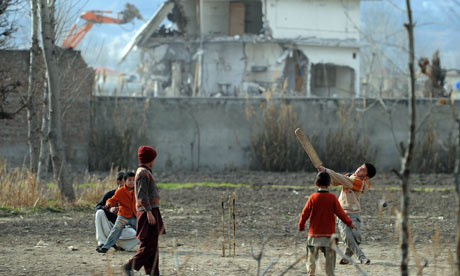
For almost a year, Pakistan‘s security establishment has been in a state of deep fury and embarrassment over the killing of Osama bin Laden. But its annoyance, US diplomats note, has not been directed at how the world’s most wanted man could have lived inside the country for so long, but rather at how a US team could have got in and out of its territory undetected.

So far, there have been no arrests of sympathisers who might have helped Bin Laden move around Pakistan undetected before settling in the town of Abbottabad. Authorities appear more concerned with investigating what they see as a gross violation of sovereignty that badly damaged the prestige and reputation of the powerful Pakistani military.

The only known arrest has been of Shakil Afridi, a Pakistani doctor who worked in Abbottabad as part of the CIA effort to try to pinpoint the al-Qaida chief. A Pakistani commission investigating Bin Laden’s death recommended Afridi be charged with “conspiracy against the state of Pakistan and high treason”.

But amid efforts on both sides to improve the terrible state of US-Pakistani relations, bitter recriminations are starting to give way to a modest effort by Pakistan’s intelligence service to put itself a little nearer the centre of events that led to Bin Laden’s killing.

Last week, a security official in Islamabad gave the Guardian details of three hitherto unknown ground missions conducted by joint CIA-Pakistani teams to capture Bin Laden.

One was in the north-western mountainous area of Chitral in 2005, though the target turned out to be a “near identical lookalike”. Two were in 2006, including one in a village called Barabcha on the border between Afghanistan and Pakistan’s Baluchistan province.

A former US official confirmed there had been some joint operations in the past, particularly in Chitral, but was unaware of the specific incidents.

“The big picture is there have been cases where [the Pakistanis] have moved on information we have given them,” said the former US official in Washington.

According to the Pakistani security official, efforts by Inter-Services Intelligence (ISI) to capture Bin Laden continued even after “the intelligence chief of a western country came to us and gave us a written report Bin Laden was dead” – in 2008.

He also said the al-Qaida operative who eventually led the CIA to Bin Laden was identified as the terrorist leader’s personal courier by Khalid Sheikh Mohammed, a senior detained militant in 2003, during interrogation by ISI. That information was passed to US agencies, he said.

This claim contradicts statements by US officials who say that Mohammed, the chief organiser of the 9/11 attacks, downplayed the importance of the courier, then known as Abu Ahmed al-Kuwaiti, and that it took several more years for his true importance to be recognised.

Shaukat Qadir, a retired brigadier who has launched a personal investigation into the Bin Laden case, has also been boosting the perception of Pakistan’s efforts as he prepares to publish a book on the subject. Based on briefings from intelligence officials, he said ISI had also been interested in Abbottabad in the months before the raid, and had even begun watching the man who would turn out to be al-Kuwaiti.

The agency became suspicious of the man, also known as Arshad Khan, when they ran a check on him after he told locals he had business interests in Peshawar, something that turned out to be false.

Their investigations became urgent when he was seen bulk-buying medicines in Peshawar useful for treating ailments Bin Laden was thought to suffer from.

“When they learned about the medicine, their suspicions were aroused and the passed those suspicions on to the CIA, probably around December 2010,” he said.

Bruce Riedel, a former senior CIA analyst and expert on Islamist militancy, said ISI’s three previous attempts to net Bin Laden “probably looked like wild goose chases from Washington’s perspective”.

“This is an effort by the Pakistanis to try to rebut the very widespread notion in the US that they must have been somehow willing accomplices of Bin Laden’s presence in their country,” he said.

Underlying the distrust between the two ostensible allies is the decision by the US not to share any of the material which the US Navy Seals took away from the house, including huge amounts of data on computer hard drives.

For its part, Pakistan is holding on to tens of thousands of documents taken from the Abbottabad house, although the Pakistani security official described these as mere “scraps” compared with the vast amount of information held by the US.

Some of the Pakistani-held documents are believed to have been seen by European and US intelligence services.

The Pakistani official said close counter-terror co-operation between the two sides was wrecked by the killing on the streets of Lahore of two Pakistani civilians by a CIA contractor, Raymond Davis, in January 2011.

“In 2009, there were 150 joint operations between us and the Americans, one every two days,” he said. “Raymond Davis put a stop to everything.”

But Riedel said Washington’s suspicions of Pakistan ran far deeper. There was “near total consensus” within the administration not to share any intelligence on Bin Laden, despite the damage they knew it would do to US-Pakistani relations.

“My judgment is that if we had told the Pakistanis in anything but the last five minutes, Osama would be alive today,” he said. “He would have escaped.”

Muhammad Amir Rana, director of a thinktank that tracks security trends, said it is much too late for Pakistan to try to take credit for tracking Bin Laden. He said the time to “reconcile and share responsibility” was in the immediate aftermath, when Barack Obama publicly thanked Pakistan for its support. “Unfortunately, they badly miscalculated – they thought Osama was a big figure, they were worried about the reaction of al-Qaida and the public in Pakistan,” he said.

But the wave of retaliatory attacks feared by some in Pakistan never happened, underling al-Qaida’s enfeebled state.

Taliban Commander Turns Self in… For Reward on ‘Wanted’ Poster

As Reported by Kevin Sieff for The Washington Post

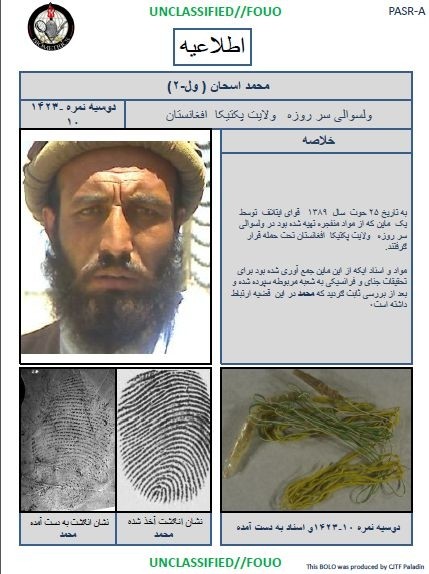
Mohammad Ashan, a mid-level Taliban commander in Paktika province, strolled toward a police checkpoint in the district of Sar Howza with a wanted poster bearing his own face. He demanded the finder’s fee referenced on the poster: $100.

Afghan officials, perplexed by the man’s misguided motives, arrested him on the spot. Ashan is suspected of plotting at least two attacks on Afghan security forces. His misdeeds prompted officials to plaster the district with hundreds of so-called “Be on the Lookout” posters emblazoned with his name and likeness.

When U.S. troops went to confirm that Ashan had in fact come forward to claim the finder’s fee, they were initially incredulous.

“We asked him, ‘Is this you?’ Mohammad Ashan answered with an incredible amount of enthusiasm, ‘Yes, yes, that’s me! Can I get my award now?’” recalled SPC Matthew Baker.

A biometric scan confirmed that the man in Afghan custody was the insurgent they had been looking for.

“This guy is the Taliban equivalent of the ‘Home Alone” burglars,” one U.S. official said.

Wanted posters are often distributed by NATO forces, but rarely have such a direct impact on the apprehension of an insurgent. In restive Paktika province, civilians are typically afraid to pass on intelligence that might lead to an arrest. And insurgents tend to shy away from the urban centers where they’re being hunted, particularly while carrying evidence of their own transgressions.

Officials have guessed at what the unusual details of Ashan’s arrest might tell us about the state of the insurgency — its desperation, its lack of resources, its defiance of law and order.

But, for now, the consensus has landed on the singularity of Ashan’s act, and the intellectual calculus that led to it.

iPakistan- Rebranding Pakistan

About

iPakistan is simply an intitative to bring Pakistan to the world and the world to Pakistan.

WHO ARE THEY?

iPakistan ia a group of university students and young professionals who are done whining about Pakistan’s image and want to do something about it. Most of them are studying in foreign universities and so have first hand experience of various kinds of stereotypes that Pakistanis overseas face as well as the tarnished image of the nation is portrayed in other countries.

Sadly, terrorism has become synonymous with Pakistan. There was this one time when a team member of this group was asked as a serious question by a Chinese students : “Does your family have any Taliban?” IMAGINE!

So iPakistan and iLahore are collaborative efforts about changing this wrongly propagated image, and even if we the group members are only able to neutralize one person’s opinion, they will feel happy that they made a small difference.

THE TEAM

Founder – Rehman Ilyas

He is the guy most pissed about Pakistan’s image and hence the one who came up with iPakistan and iLahore. He studies Economics and Finance at the University of Hong Kong and is particularly interested in Development Economics. Reads up on Chinese economy a lot and plans to heavily promote Chinese recipe of economics success, and apply it to Pakistan with a few unique ingredients of his own, through the Business section of ilahore.

Mentor – Khalid Malik

Mr. Khalid Malik is a famous Business Studies A-Levels teacher in Lahore. He is a visiting lecturer at various top schools including LGS Defence, LGS Paragon, SICAS etc. Recently he has been gaining further acclaim for his efforts to get the beloved festival of Basant, back to the people of Lahore.

Mentor – Ali Murtaza

Mr. Murtaza is a visiting professor at Beacon House National University (BNU) where he teaches design and illustration. In addition he works for a social marketing company and does commercial web site designing. His awesome illustrations, animations & creations have earned him the prestigious

Fulbright scholarship recently.

Editor Health – Burhan Ahmad
MBBS
Founder & CEO Medicalopedia, LLC

Editor Tourism – Muhammad Zargam Arshad

“BBA Accounting and Finance student at University of Hong Kong. Zargam is fondly known as “Ziggy”. He has extensive travel experience: Saudi Arabia, Hong Kong, Austria, England and of course Pakistan! Fond of reading two diverse types of poetry: Modernist and Sufi poetry. Currently working with
“YES Network” on breaking down discrimination barriers in Hong Kong society. “

Editor Fashion – Khizra Wynne

Although i have crippled my four senses while Majoring in Economics and Finance but, the sense of sight still stands to fight because it’s all about living to look ravishing.

Editor Wisdom – Hassan Riaz

Hassan is an engineering student at the University of Hong Kong and claims to be very ‘Wisdomistic’.

Editor Religion – Syed Abrar Ahamd

Abar is an active member of the Muslim Scoiety at the University of Hong Kong and wants to share his passion for Islam and peace through ‘religion’ ilahore.

Editor HumourAli – Mohiudin Ahmad

There is no single description which fits Ali, and you will get to more about him andh is personality based on his upcoming awesome humour at iPakitsan.

Editor ‘Read’ – Hinna Malik

Hinna did her Masters in Mass Communication from the University of Surrey and has worked in RBS for several years.

Editor Music – Muhammad Hamza Bukhari

Hamza is a Biotechnology major in the University of Hong Kong and claims that there isn’t a single article/ blog on metal music that hasn’t passed through his eyes.

Editor Food – Mahnum and Mahnoor

The awesome duo loves dining out and usually are present at every restaurant opening.

Editors, Romancing the Border – Pulkit Saneja, Shirin Soni, Sonica Dunichand, Rehman Ilyas

Sonica and Rehman are from Pakistan, Shirin and pulpit from India and they are typicals, fighting and arguing over Kashmir, Sania Mirza and other crucial issues on a day to day basis.

Editor The world and Us – Mark Gray

“Mark is interested in issues of law and international relations. An American and a graduate from Princeton, he is currently living in Asia doing legal research, and plans to go to law school. He enjoys travel, photography, and music.”

Editor Business – Minahil Haroon

Completing her BBA in Wealth management at the University of Hong Kong. Loves Pakistan and is hoping to represent the real Pakistan through iLahore.
But they are different too, in the sense that they love each other and want to extend their love to the entire region!

Ambassadors

UK ambassador: Bilal Mustafa(Kings College)
India Ambassador: Shirin Soni ( HKU)
Karachi Ambassador: Minahil Haroon (HKU)
Multan Ambassador : Iqra Amjad (Punjab College)
Lahore School of Economics Ambassador: Mehreen Saba
LGS (JT) Ambassador: Ahmed Awais
Salamat School group Ambassador : Rahema Hassan
And counting…

Pakistanis for Peace Editor’s Note–  Groups like iPakistan and Friends Across LOC are attempting to do the same things that we here at Pakistanis for Peace are doing as well and that is to bring the people of India and Pakistan closer together. We feel that the only solution to Pakistan and India’s problems and indeed over a billion people of the sub-continent is through a dialogue and peace. The neighborhood can not suffer another war between the two, which surely would be nuclear. Let’s hope that the our vision of peace between India and Pakistan succeeds and Pakistan is able to rid itself of a terrible image globally that its wonderful people do not deserve.

Taliban Storm Pakistani Prison: Nearly 400 Freed

By Zulfiqar Ali and Alex Rodriguez for The Los Angeles Times

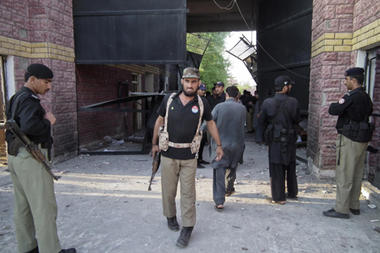
Pakistani Taliban militants stormed a prison in northwest Pakistan early Sunday and freed 390 prisoners, including 20 militants, local officials said.

The attack occurred about 2:30 a.m. at a prison in Bannu. The town is considered the gateway to North Waziristan, a tribal region along the Afghan border that has long been a stronghold for Taliban insurgents and several other militant groups.

Local police officials said as many as 200 Taliban militants drove up in pickups, lobbing hand grenades to break through the jail’s main gate.

Once inside, a two-hour firefight broke out between the attackers and roughly 30 jail guards. The militants began freeing prisoners after the guards ran out of ammunition, officials said. No one was seriously injured or killed in the attack.

One of the prisoners freed was Adnan Rashid, on death row for an assassination attempt on former Pakistani leader Pervez Musharraf when the general was president, police said.

Officials said the jail’s 944 prisoners, including some militant commanders, recently had been moved to the Bannu jail after authorities received intelligence that Taliban militants might be planning major raids on detention centers holding insurgents.

In recent years, Pakistan has sent more than 140,000 troops to battle the Pakistani Taliban across much of the tribal region along the Afghan border. The army has retaken large stretches of territory, but the militants still cling to pockets of resistance throughout the tribal belt and continue to carry out periodic attacks on a variety of targets, including military checkpoints, mosques and markets.

Like the Afghan Taliban, the Pakistani movement is made up of factions united by the goal of toppling the government and imposing Sharia, or Islamic law. It maintains links with Al Qaeda, the Afghan Taliban and other Pakistani militant groups ensconced in Pakistan’s tribal belt.

Authorities in Islamabad, the capital, have blamed the Pakistani Taliban for some of the country’s worst terrorist attacks, including the assassination of former Prime Minister Benazir Bhutto in December 2007.

Rural Tinkerer Builds The First Airplane Made in Afghanistan

By Tom A Peter for The Christian Science Monitor

Afghanistan’s rural Ghazni Province usually appears on the news radar only to herald a tragedy: Five Polish soldiers were killed by a roadside bomb days before Christmas. A group of armed men accused a widow and her daughter of adultery in November and stoned the pair before shooting them in front of their home.

In other words, it’s not the sort of place you’d expect to find a hobbyist aviator in his backyard building what he describes as the first airplane ever designed and constructed in Afghanistan.

Yet, over the past three years Ghazni-native Sabir Shah managed to fashion a one-man “microlight,” aircraft at his family home using instructions from the Internet and parts from the local market.

While impressive compared with a Wright Brothers’ creation, the plane is far from a marvel of modern aviation. But Mr. Shah hopes it’s enough to inspire government support or private investment in Afghan aviation.

So far though, aside from modest, but passing interest from a few government officials, he’s received little attention. Most Afghans, including his own family, have called him crazy and told him to get a regular job. Still, Shah remains determined to create a business building airplanes for Afghanistan.

“I believe that if you want something, you can get it,” he says.

Shah is an unlikely candidate to be Afghanistan’s aviation advocate. A high school graduate with no pilot training nor aeronautical engineering background, he’d never even traveled by airplane when he started building one.

For Afghans wishing to learn how to fly, the options are extremely limited. The country has a fledging air force, but there are no other practical opportunities for pilot training. The Ministry of Transportation and Aviation offers flight classes, but ministry officials admit that few students actually take the courses because Afghan airlines almost exclusively hire foreign pilots with better training and more experience.

After high school, Shah considered going on to college. Yet even though public universities are free, his family couldn’t afford losing the extra pair of hands.
Given his circumstances it’s easy to understand why people were skeptical when Shah announced his plans to build a microlight airplane after seeing one featured on a documentary and doing a bit of Internet research.

“I didn’t have money and there was no one to help me,” says Shah. “Everyone was saying, ‘Have you studied about airplanes? Do you know anything about airplanes?’ I would say, ‘I have got some recommendations from the Internet.’ Nobody believed I could build it.”

Undeterred, Shah continued his research and worked a series of odd jobs to save up money for parts and equipment. As he progressed, friends and family donated money. An uncle in Australia gave him a vital $2,000 donation and even Afghan Vice President Abdul Karim Khalili contributed $1,000 when he learned of the project.

After three years, Shah had constructed a microlight airplane using a propeller he made himself, a small Toyota car engine, a homemade fiberglass body, a wing made of a metal frame and cloth, and some spare gauges he bought at the market for his instrument panel. The project cost Shah a total of $12,000, a small fortune here.

When it came time for his first test flight, the Afghan Ministry of Defense agreed to use a military helicopter to transport Shah and his plane to an airfield north of Kabul. The trip was the first time Shah had ever traveled by air. “I was frightened a little when I was looking down,” he says, recalling the trip.

Before Shah climbed into the pilot seat, a retired Afghan pilot who’d flown jets for the Soviets and now managed the airport gave him a few pointers. Otherwise, he was relying on manuals he’d collected on other microlight aircraft.

As his plane sped down the runway, his fear momentarily faded. The flight lasted less than a minute before he set it down on the runway again.

In a total of four takeoffs, his longest and last flight traveled about a quarter of a mile – nothing compared with professional tests, but 11 times farther than the original Wright Brothers’ flight. However, that final flight ended when he crash-landed just off the runway. Though he walked away from the crash, the plane was damaged beyond repair.

Considering that it’s been 64 years since a pilot first broke the sound barrier and 25 years since a plane circumnavigated the globe without stopping or refueling, Shah’s achievement may seem hardly worth mentioning. But his accomplishment is much less about the actual plane he built and more about his creativity and inventiveness in a country where innovation and ingenuity are in short supply after three decades of war.

“Innovation doesn’t mean anything in this country,” says Daoud Sultanzoy, a former member of parliament from Ghanzi, who has been a pilot since 1973 and is now starting his own airline. “We always look at the past and behind us instead of looking forward…. He’s a young man who must have used his own know-how to build his own airplane, which should be encouraged.”

Despite the challenges, Shah says he’ll keep working. If he can find a scholarship to study abroad he will, but he doesn’t know how to look for such an opportunity and doubts it will happen. For now, he hopes his initial success will attract investors as he endeavors to start his next project, an eight- to 10-seater airplane that he hopes can be used for domestic travel in Afghanistan.

Pakistanis for Peace Editor’s Note– What an amazing story of ingeunity and ambition that Sabir Shah demonstrates that should make all Afghans and Pakistanis proud. Just imagine what amazing talents could be nurtured with several billion dollars in seed money in start-ups in Kabul instead of all the money lost on wars~

Pakistan Leader’s India Visit Hailed For Its Symbolism

By Mark Magnier for The Los Angeles Times

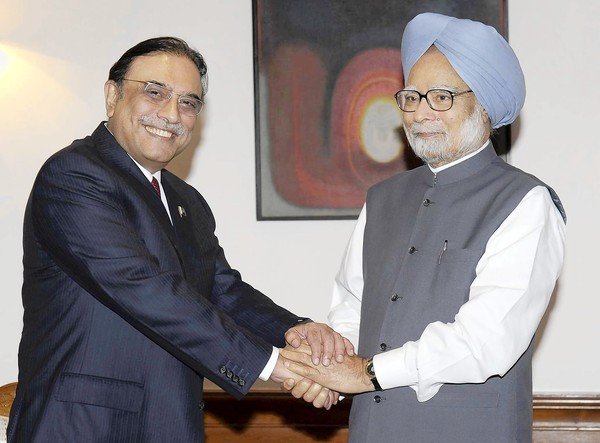
Pakistan’s president arrived in India on Sunday, the first official visit one leader of the wary neighbors has paid to the other nation in seven years. No breakthroughs were announced, but both sides hailed the meeting as a sign of easing tensions along one of the world’s most dangerous borders.

Spinmeisters on both sides worked overtime to lower public expectations of the “private” trip that saw Pakistani President Asif Ali Zardari and Indian Prime Minister Manmohan Singh discuss the 2008 terrorist attack on the Indian city of Mumbai, modest if expanding trade links, the disputed territory of Kashmir and efforts to bring various militants to justice.

The Pakistani president then visited a famous Muslim shrine for Sufi saint Moinuddin Chishti, offering a $1-million contribution.

“I am very satisfied with the outcome of this visit,” Singh said. “The relations between India and Pakistan should become normal — that is our common desire.”

The rapid-fire luncheon and shrine visit weren’t enough to overturn long-standing distrust between the nuclear neighbors, however, as summed up in a headline in India’s Mail Today tabloid newspaper: “Eat, Pray, No Love.”

The meeting is part of an apparent effort to follow the diplomatic model in place between India and China, which fought a war in 1962 over their disputed border: Put aside the most nettlesome issues for the time being and focus on building investment and trade links that benefit both sides.

This year, India and Pakistan approved a most-favored-nation agreement, lowering taxes that impede trade. Although India had offered this benefit to Pakistan in 1996, it wasn’t reciprocated until recently. Official two-way trade of about $2.6 billion is heavily weighted in India’s favor.

Sunday’s one-day visit was heavy on symbolism if not on substance. Zardari invited Singh for a reciprocal visit to Pakistan, which the Indian leader accepted, although no date was set. Zardari’s 23-year-old son, Bilawal, invited ruling Congress Party General Secretary Rahul Gandhi to Pakistan, which was also accepted, again with no date set.

On other fronts, both sides agreed in principle to ease visa restrictions. India offered its assistance in the wake of this weekend’s massive avalanche in the Siachen Glacier area, which buried about 130 people on the Pakistani-controlled side of the border in disputed Kashmir. And both sides did lots of glad-handing for the cameras.

“We had fruitful bilateral talks,” Zardari said. We “hope to meet on Pakistani soil very soon.”

But any bid to bring to justice those who planned the 2008 Mumbai attack that killed at least 166 people was sidestepped. India has long blamed Pakistani-based groups for plotting the attack.

Last week, Washington offered a $10-million reward for information leading to the capture of one Pakistani militant leader, Hafiz Muhammad Saeed, who enjoys widespread support in Pakistan.

Analysts on both sides of the divide welcomed the gradual thaw even as they acknowledged its slow pace. That no date was set for a return visit, and that Congress Party head Sonia Gandhi — characterized by some as India’s real leader behind the scenes — didn’t meet Zardari or attend the lunch, suggests the Indian government is wary of getting too far ahead of public opinion, some observers said.

“There have been some useful steps forward,” said B. Raman, director of Chennai’s Institute for Topical Studies and a former Indian intelligence officer on the Pakistan desk. “But the government has taken a cautious line.”

The fact that Zardari, 56, made the trip at all suggests that Pakistan’s military realizes improved relations are in its interest, added Talat Masood, an analyst and retired Pakistani general.

“They’re overstretched, realize the economy’s in a shambles and that you can’t have a genuine defense without a good economy,” Masood said. “It’s very sad in a way, that the process has been held hostage to jihadi groups and hard-rightists on both sides.”

Singh, 79, heading a weak government beset by corruption scandals, has pushed for improved ties with Pakistan in a bid to secure a legacy, analysts on both sides said. “Prime Minister Singh realizes he’s only going to be there a few more months,” said Masood. “He wants to do something positive so he’s remembered.”

Why President Zardari’s Visit Is A Small Bonus

By Soutik Biswas for The BBC

Hope is not a policy, but neither is despair, as South Asia expert Stephen Cohen says in a recent essay on Pakistan.

So it is with relations between India and Pakistan.

The past few days have shown how fragile the relationship can be – even as India welcomed President Asif Ali Zardari’s private trip to India on Sunday – the first by a Pakistani head of state for seven years – and PM Manmohan Singh invited him for lunch, the $10m US bounty for Hafiz Saeed, the founder of Pakistan-based militant group Lashkar-e-Taiba, provoked the cleric to openly launch a fresh attack against India (and the US).

But people live in hope, so Indian media is gung-ho about Mr Zardari’s visit.

They say the Pakistani president must be applauded for trying to end trade discrimination against India, easing petroleum imports from across the border, and moving towards a liberal visa deal.

“Under Mr Zardari’s watch, India and Pakistan are considering a sweeping agenda for economic co-operation for the first time in decades. The prime minister has every reason to welcome Mr Zardari warmly and consider the next steps in consolidating the unexpected movement in bilateral relations,” the Indian Express wrote.

Analyst C Raja Mohan believes Mr Singh must make an official trip to Pakistan after his meeting with Mr Zardari. “For his part,” he wrote, “Mr Singh should convey to Mr Zardari his readiness to move as fast and as far as the Pakistan president is willing to go.” Others like Jyoti Malhotra actually find Mr Zardari’s visit to the shrine of a famous Sufi Muslim saint in Rajasthan loaded with symbolism in these troubled times. “Clearly, Mr Zardari has stolen an imaginative moment from the bitter-sullen history of India-Pakistan, by asking to come to pay his respects to a cherished and much-beloved saint across the Indian subcontinent,” she wrote.

The relations between two neighbours remain complex. A 2010 Pew survey found 53% of the respondents in Pakistan chose India as the greater threat to their country, and only 26% chose the Taliban and al-Qaeda. At the same time 72% said it was important to improve relations with India, and about 75% wanted more trade relations and talks with India.

Pundits like Mr Cohen believe that it will “take the [Pakistan] army’s compliance, strong political leadership, and resolutely independent-minded foreign ministers to secure any significant shift of approach towards India”.

None of this appears to be in much evidence at the moment.

Both countries have seriously weakened governments that makes them unable to move towards any radical confidence building measures. In the current circumstances, President Zardari’s visit can only be a small bonus. And as scholars like Kanti Bajpai suggest, India must remain patient (even if faced with another Mumbai-style attack), continue to engage with Islamabad, help the civilian government in Pakistan politically, try to resolve a few outstanding disputes like Siachen and Sir Creek, build a relationship with the army and explore the possibility of cooperating with Islamabad on the future of Afghanistan. Despair does not help mend a stormy relationship.

Pakistani militant taunts US: ‘I will be in Lahore tomorrow’

By Sebastian Abbot for The Associated Press

One of Pakistan’s most notorious extremists mocked the United States during a defiant media conference close to the country’s military headquarters Wednesday, a day after the US slapped a $10 million bounty on him.

“I am here, I am visible. America should give that reward money to me,” said Hafiz Mohammad Saeed, referring to the fact that the bounty was given to a man whose whereabouts are not a mystery. “I will be in Lahore tomorrow. America can contact me whenever it wants to.”

Analysts have said Pakistan is unlikely to arrest Saeed, founder of the militant group Lashkar-e-Taiba, because of his alleged links with the country’s intelligence agency and the political danger of doing Washington’s bidding in a country where anti-American sentiment is rampant.

Saeed, 61, has been accused of orchestrating the 2008 attacks in the Indian city of Mumbai that killed 166 people, including six American citizens. But he operates openly in Pakistan, giving public speeches and appearing on TV talk shows.

He has used his high-profile status in recent months to lead a protest movement against US drone strikes and the resumption of NATO supplies for troops in Afghanistan sent through Pakistan. The supplies were suspended in November in retaliation for American airstrikes that accidentally killed 24 Pakistani soldiers.

Hours before Saeed spoke, US Deputy Secretary of State Thomas Nides met Pakistani Foreign Minister Hina Rabbani Khar in the nearby capital, Islamabad, for talks about rebuilding the two nation’s relationship. In a brief statement, Nides did not mention the bounty offer but reaffirmed America’s commitment to “work through” the challenges bedeviling ties.

Increasingly ‘brazen’ appearances
The US said Tuesday it issued the bounty for information leading to Saeed’s arrest and conviction in response to his increasingly “brazen” appearances. It also offered up to $2 million for Lashkar-e-Taiba’s deputy leader, Hafiz Abdul Rahman Makki, who is Saeed’s brother-in-law.

The rewards marked a shift in the long-standing US calculation that going after the leadership of an organization used as a proxy by the Pakistani military against archenemy India would cause too much friction with the Pakistani government.

This shift has occurred as the US-Pakistani relationship steadily deteriorated over the last year, and as the perception of Lashkar-e-Taiba’s potential threat to the West increased.

Bounty backfire?
The US may be hoping the bounty will force Pakistan to curb Saeed’s activities, even if it isn’t willing to arrest him. But the press conference he called at a hotel in the garrison city of Rawalpindi on Wednesday was an indication that is unlikely, and the bounty may even help him by boosting his visibility.

At the hotel, located near the Pakistani army’s main base and only a half hour drive from the US Embassy in Islamabad, Saeed was flanked by more than a dozen right-wing politicians and hardline Islamists who make up the leadership of the Difa-e-Pakistan, or Defense of Pakistan, Council. The group has held a series of large demonstrations against the US and India in recent months.

Some in the media have speculated the movement has the tacit support of the Pakistani military, possibly to put pressure on Washington.

“I want to tell America we will continue our peaceful struggle,” said Saeed. “Life and death is in the hands of God, not in the hands of America.”

Denies involvement in Mumbai massacre
He denied involvement in the Mumbai attacks and said he had been exonerated by Pakistani courts.

Pakistan kept Saeed under house arrest for several months after the attacks but released him after he challenged his detention in court. It has also resisted Indian demands to do more, saying there isn’t sufficient evidence.

The bounty offers could complicate US efforts to get the NATO supply line reopened. Pakistan’s parliament is currently debating a revised framework for ties with the US that Washington hopes will get supplies moving again. But the bounties could be seen by lawmakers and the country’s powerful army as a provocation and an attempt to gain favor with India.

Origins in the Kashmir dispute
Saeed founded Lashkar-e-Taiba in the 1980s allegedly with ISI support to pressure India over the disputed territory of Kashmir. The two countries have fought three major wars since they were carved out of the British empire in 1947, two of them over Kashmir.

Pakistan banned the group in 2002 under US pressure, but it operates with relative freedom under the name of its social welfare wing Jamaat-ud-Dawwa — even doing charity work using government money.

The US has designated both groups foreign terrorist organizations. Intelligence officials and terrorism experts say Lashkar-e-Taiba has expanded its focus beyond India in recent years and has plotted attacks in Europe and Australia. Some have called it “the next Al Qaeda” and fear it could set its sights on the US

* Associated Press writer Asif Shahzad contributed to this report from Islamabad.

U.S. and Pakistan Take Step to Mend Relations

By Salman Masood and Declan Walsh for The New York Times

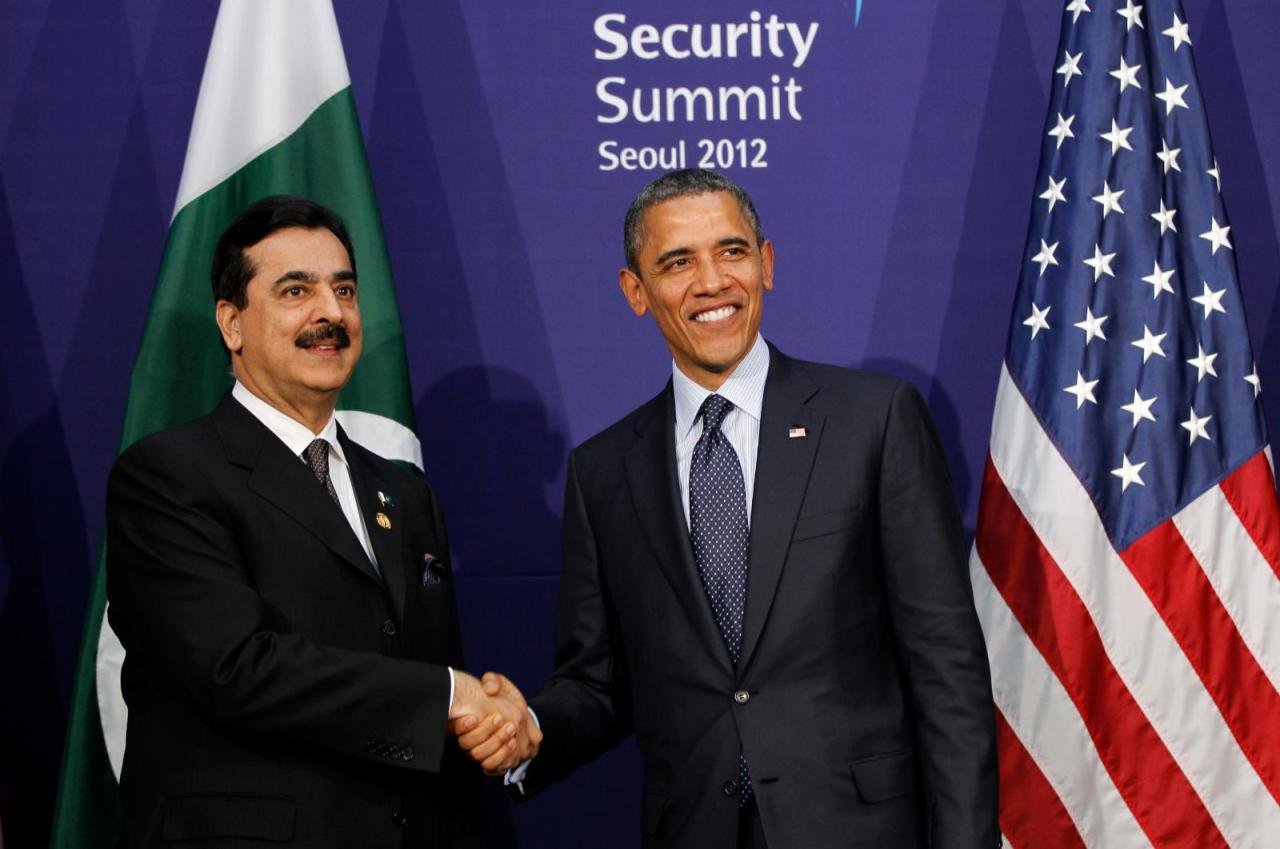
President Obama took a symbolic step toward improving ties with Pakistan on Tuesday when he met with Prime Minister Yousaf Raza Gilani on the sidelines of a nuclear summit meeting in South Korea.

But even as the two leaders made polite, if freighted, comments about improved cooperation, harsh debate in Pakistan’s Parliament on Tuesday made clear that there may be very little political upside for any Pakistani warming toward Washington.

Speaking in Seoul, President Obama acknowledged “strains” in the relationship and voiced his support for a parliamentary review process in Pakistan that aims to get the relationship back on its feet. “I think it’s important for us to get it right,” he said at a joint news conference.

But Mr. Obama added that Pakistan must also respect pressing American security concerns centered on “national security and our needs to battle terrorists who have targeted us in the past.”

Mr. Gilani replied that he would help work with Mr. Obama “to have all the peace, prosperity and progress of the whole world.”

Relations between the two countries plunged steeply after the American commando raid that killed Osama bin Laden last May, then worsened further after American warplanes fired airstrikes that killed 24 Pakistani soldiers along the border with Afghanistan in November.

The border strikes caused Pakistan to close NATO supply routes into Afghanistan and expel American officials from a remote air based used by the C.I.A. to launch drone strikes against militants from Al Qaeda and the Taliban in the northwestern Pakistani tribal belt. More recently, a Pakistani parliamentary committee on national security demanded an end to drone strikes and an unconditional American apology for the airstrikes.

In Islamabad on Tuesday, Parliament was supposed to start a long-awaited debate that would pave the way toward re-engaging diplomatically with the United States. But the opposition stalled the debate, with some lawmakers expressing fury at news reports that the government had already promised to reopen the NATO supply lines.

Ayaz Amir, an influential lawmaker with the opposition Pakistan Muslim League-N party, questioned why Pakistan even bothered blocking the supply routes if it was assumed they would start right back up again. “We are fooling ourselves, and we are also fooling the Pakistani people,” he said.

The most scathing criticism came from Maulana Fazalur Rehman, an influential religious politician, who warned that if the government failed to win broad political backing for its review of American ties, he would take his protests onto the streets.

“We will not let such a decision to be implemented in the field,” he said.

Mr. Rehman asserted that given urgent efforts by the Americans to start negotiations with the Taliban in Afghanistan, American weapons transported through NATO supply lines could ultimately be turned back on Pakistan, earning loud applause from fellow lawmakers. And he asked how the government intended to bring covert American operations in Pakistan under the law of the land.

Raza Rabbani, a senior government lawmaker, responded that the parliamentary committee’s recommendations on American policy were “broad policy guidelines” and not a final decision.

The session was adjourned until Wednesday evening, when the formal debate is due to begin. Meanwhile, outside Parliament, a newly formed alliance of religious parties and extremist groups, the Defense of Pakistan Council, held a large street rally against the reopening of the supply routes.

“If Parliament compromises on the security and sovereignty of the country, then we cannot guarantee the security of the lawmakers,” said Maulana Sami ul-Haq, head of the alliance, as hundreds of protesters chanted anti-American slogans.

Pakistan Wants U.S. Drones Out

By Indira A.R. Lakshmanan for Bloomberg News

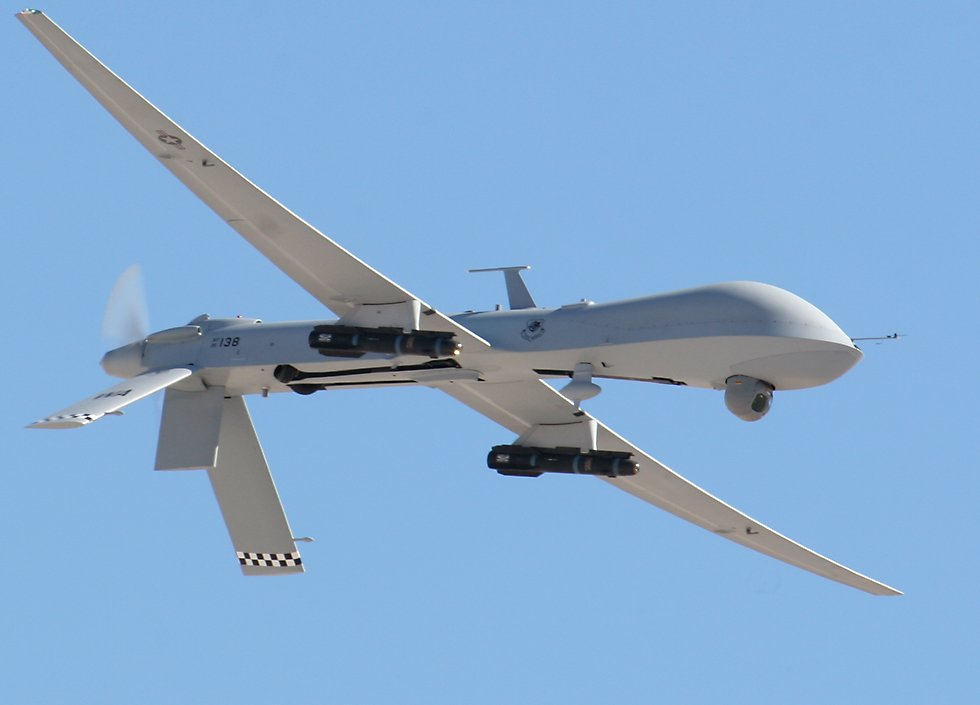
Pakistan has told the White House it no longer will permit U.S. drones to use its airspace to attack and collect intelligence on Al-Qaida and other militants, according to officials involved.

Eliminating drone missions would aid the resurgence of extremist groups operating along Pakistan’s border with Afghanistan, said Peter Singer, author of “Wired for War: The Robotics Revolution and Conflict in the 21st Century.”

Pakistan’s ambassador to Washington, Sherry Rehman, met Vice President Joe Biden’s national security adviser, Antony Blinken, on Friday and told him that Pakistan’s political parties have agreed that the drone flights over Pakistan must end, officials involved said.

Pakistan’s sovereignty over its airspace and the civilian casualties that have resulted from drone strikes are emotional issues in Pakistan, where public opinion heavily favors terminating drone missions.

The only chance for a compromise, Pakistani officials said, may be if the United States agrees to share intelligence and coordinate strikes first. The United States has resisted giving information to Pakistan in advance because of fears that some in Pakistan’s security forces might warn the targets of impending strikes.

The drone program has been part of U.S. counter-terrorism strategy in Pakistan since 2004, officials and experts say. The administration authorized 53 drone attacks in 2009 and 117 in 2010, compared with 35 in 2008 under former President George W. Bush, according to Bill Roggio, a U.S. military analyst whose website, the Long War Journal, maintains a database of the campaign.

The drone program is “critical” because it provides better real-time surveillance and reconnaissance than satellite imagery does, Seth Jones, a senior political scientist for the RAND Corp. research institute, said in an interview.

Singer said that “for several years, Pakistan has openly said, ‘How dare you violate our sovereignty,’ but it turned out the CIA was flying from Pakistani bases with Pakistan’s permission.” This time, it’s possible “they really mean it,” after a series of high-profile disputes have damaged relations, Singer said.