Archive for the ‘ terrorism ’ Category

Pakistan is a Nation at Odds With Itself, U.S.

By Stephen Magagnini for The Sacremento Bee

KARACHI, Pakistan — On a moonlit Thursday night in February, a television network executive hosted an elegant affair for journalists and diplomats at his villa above the Arabian Sea.

Karachi’s privileged dined on lamb, shrimp, chicken, mutton and fettuccine in mushroom sauce, and were surprised by a quartet of wandering minstrels, soulful Sufi poets who serenade for their supper, uncorking ballads about love.

On the south side of this city of 18 million, a group of Afghan refugees, who scrape out a living collecting cardboard and other recyclables in a slum straddling a swamp of open sewage, were mopping up gravy with roti – Pakistani bread.

About 900 Afghans live in this fetid slum, down the street from poor Pakistanis and water buffalo. They earn about $60 a month and survive on bottled water, chewing tobacco and roti.

“We’re happy in Pakistan,” said 33-year-old Shaezhad, leader of a cardboard collection station. “We get food and respect.”

At the party across town, talk-show hosts and other Pakistani elites blew cigarette smoke into the faces of U.S. journalists, criticizing U.S. foreign policy and the toll the war in Afghanistan has taken on their country.

Many Pakistanis resent American aggression in the region and want more respect from U.S. policymakers, but they don’t hold individual Americans responsible. Yet everywhere we went, we were held to answer for U.S. wars and Americans’ deep misunderstanding of Pakistan.

“You are arrogant, playing video games with our lives,” Abdul Moiz Jaferii, political analyst for CNBC Pakistan, said over lunch one day in Karachi. He was referring to U.S. drone attacks that have killed Pakistani and Afghan civilians.

“And we hate America because the U.S. has always been the biggest, closest ally of the military dictators. You have done nothing to help democracy.”

The impact of the war in Afghanistan has permeated nearly every pore of this country of 180 million. More than 2 million Afghan refugees have fled to Pakistan, and some have brought a culture of violence. Since 9/11, 35,000 Pakistanis have been killed in terrorist attacks by suicide bombers and other war-related violence, according to Pakistan’s intelligence agency. The victims include 6,000 soldiers and 29,000 civilians.

The unpredictable violence and the kidnapping of foreign workers have created a climate of fear in this country. We weren’t allowed to visit villages outside urban areas, where 40 percent of Pakistanis live. Two shotgun-wielding security guards protected our buses in Islamabad, Lahore and Karachi. We entered our hotels through metal detectors and were rarely allowed to interact with average citizens in public places.

Pakistan – strategically located between Afghanistan, India, China and Iran and influenced by Saudi Arabia – remains an enigma to many Americans, who aren’t sure whether it’s friend or foe, democracy or military dictatorship.

Pakistan has provided critical support to NATO troops in the Afghan war – drones are launched from here, NATO supplies are sent through this country, and Pakistani troops have helped recapture terrorist strongholds along the volatile Afghan border.

But distrust of the United States in the wake of deadly drone attacks and the deaths of 24 Pakistani soldiers in a cross-border battle in November is such that rather than calling for more U.S. aid to build needed power plants, schools and hospitals, a growing number of Pakistanis want nothing to do with the United States. The government of Punjab – Pakistan’s most powerful state with about 90 million people – has decided to reject U.S. aid.

The killing of Osama bin Laden by U.S. Navy SEALs in Abbottabad in the heart of this country embarrassed and angered the Pakistan military and made Americans question why bin Laden was allowed to live in essentially a resort town. Some U.S. politicians have called for an end to the $18 billion in financial aid pledged since 9/11.

An Islamic republic?

Some of the world’s largest, most beautiful mosques are here, and to celebrate the Prophet Muhammad’s birthday on Feb. 4, 10,000 people named Muhammad gathered in prayer in Karachi.

We saw few women wearing hijabs, or head coverings, except those at Islamabad’s Faisal Mosque, which can hold 10,000 people for Juma, or Friday prayer.

Professional women drive cars, dress like their counterparts in U.S. cities and run government ministries, clinics and newsrooms. Women, who constitute 52 percent of the population, are increasingly getting advanced degrees. There’s a Pakistani proverb: “Every girl who goes to university gets a husband.”

Despite Islam’s ban on liquor, at a party in Islamabad guests of both sexes repaired to a speakeasy in the basement to drink wine or Johnny Walker Black and smoke cigars.

Though most marriages are still arranged, as many as 20 percent are “love marriages,” said Samina Parvez, director general of the government’s external publicity agency. “The divorce rate is also increasing – it’s about 10 or 15 percent,” Parvez said. “The majority of us are not practicing Muslims.”

Kamoran Sani, sales and marketing director for the Sheraton Hotel in Karachi, declared, “What you’ve heard about the Islamic Republic of Pakistan’s a big farce. There are orgies, voyeurs’ lounges, raves.”

A diverse nation

Pakistan didn’t become a nation until the British sliced India into Muslim and Hindu majority states in 1947. Pakistan – an Urdu acronym for Punjab, Afghania, Kashmir, Sindh province and Baluchistan (“stan” means nation) – varies wildly from region to region.

“There is no such thing as Pakistan,” Jaferii said. “First comes your family, then your clan, third your region, fourth your province – the nation comes a distant fifth.”

Much of rural Pakistan is a feudal society dating back to the 13th century. Mullahs, or religious leaders, still invoke blasphemy laws exacting punishment against those accused of insulting Islam. Last year, the governor of Punjab was killed by his bodyguard for criticizing the law as he sought a pardon for a Christian woman sentenced to death.

But Pakistan has tremendous religious and ethnic diversity. Muslims include Sunnis, Shiites, Ismaelis, Ahmadis and Sufis – each practicing their own brand of Islam. At Lahore University of Management Sciences, I chatted with Muslims, Hindus and Christians who were all friends.

From the Sufi love poems to Pashtun folk songs about social justice, music plays a key role in Pakistani identity.

In the center of Karachi there’s a Catholic church – St. Patrick’s Cathedral, built by the Jesuits in 1931. There’s a Jewish cemetery. Sikhs worship throughout Pakistan. The ancient city of Taxila was occupied by Alexander the Great and reflects Persian, Moghul, Buddhist and Christian traditions.

Pakistan’s future

Sixty percent of Pakistan’s population is under age 30; half is under age 20. Half the kids haven’t been to school, and fifth-grade students are reading at a second-grade level, said Nadeem ul-Haq, deputy chairman of the government’s planning commission.

“We have 2 million kids a year entering the labor force. What are these kids going to do?” ul-Haq said. There is no building boom to provide jobs, and foreign investments have been scared away by terrorism.

“Entrepreneurship is the key thing we need to focus on,” he said. “Overseas Pakistanis have been very entrepreneurial, sending back $13 billion a year to their poorer relatives.”

From 7-Elevens to Silicon Valley firms and venture capital funds, ex-pat Pakistanis are thriving in the United States. The 500,000 Pakistanis in the United States, including 100,000 in California, send $100 million a year to charities in Pakistan, said Ahson Rabbani, CEO of I-Care, which connects donors with 30 nonprofits.

In Northern California, Pakistanis raised more than $100,000 for Pakistani flood relief efforts spearheaded by cricket star Imran Khan, who may lead the country if his party wins the next election. Khan has gained credibility by building a cancer hospital for the poor in honor of his late mother. His party includes a women’s wing that has direct access to him.

Philanthropy is playing a growing role in Pakistan, financing schools in poor villages and slums. The Citizens Foundation is educating 100,000 students.

“I mentored six girls,” said Karachi journalist Samia Saleem. “One was 13 and said she didn’t want to get married – she wants to be a teacher.”

Ali Shah Haider, 17, wants to be a commercial pilot. “I sleep from 2 p.m. until 4:30 p.m., then go to work at the textile factory from 8 p.m. to 5 a.m. to support my family – there are 12 of us. I do my homework between shifts.”

A nation’s dreams

Though life seems cheap in Pakistan, the people are upbeat survivors who often describe life as bo hat acha, which means “great!” in Urdu, their main language.

Last year 1,575 people were killed in Karachi, where 2 million weapons are in circulation, said Francisco Quinones of Arcis International Security. A doctor was killed in Karachi the day before we landed. Violence has been blamed on the Taliban, rival political gangs, Sunni and Shia militants, rogue security forces, and Afghan refugees.

Some refugees have been recruited by the Taliban. Others like Shaezhad, who collects recyclables in the slums of Karachi, are glad to be alive under the green and white crescent flag of this country.

Still, he wants to go home to Afghanistan. “We want our land back, we want to live with respect and we want employment.”

Azhar Abbas, the managing director of Geo TV news who hosted the party in Karachi, said that “democracy is taking hold” in his Pakistan despite the violence many here believe followed the U.S. war on terror.

The business editor of daily newspaper the News, Amir Zia, said the United States can still play a positive role in Pakistan. “If Americans pull out without getting the job done, the Islamic extremists will say it’s a victory and will become much more organized.”

But at the National Defense University, business and technology expert Bilal Munshi called Pakistan “a psychologically scarred nation suffering from a mass form of PTSD (post-traumatic stress disorder).”

If the 4 million young people entering the workforce each year get jobs, “we will be a power … but if they don’t see a future they’re going to pick up the gun, and you’re going to be in real trouble.”

The U.S. can help develop Pakistani schools, Bilal said, “but don’t interfere in our internal affairs – let us do things our way.”

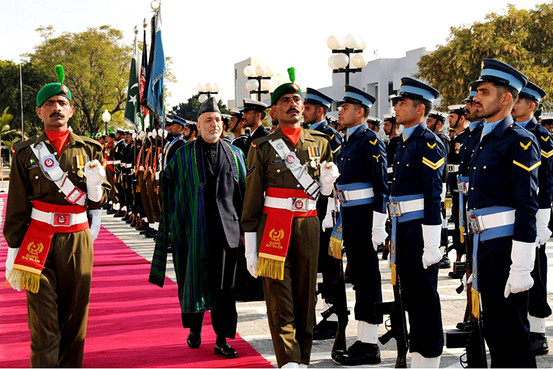
Peace Effort Takes Karzai to Pakistan .

By Yaroslav Trofimov, Tom Wright and Adam Entous for The Wall Street Journal

Afghan President Hamid Karzai on Thursday met with Pakistan’s leaders, trying to gain Islamabad’s support for his peace outreach to the Taliban, as U.S. officials worked to keep expectations in check about the strategy’s prospects for yielding direct peace talks with the Islamic militant group.

The Taliban, meanwhile, denied Mr. Karzai’s claim that they have been negotiating with the Afghan government.On the first day of his three-day visit to Pakistan, Mr. Karzai met with Pakistani Prime Minister Yousuf Raza Gilani, who promised Pakistani cooperation in investigating the September assassination of the chief Afghan peace negotiator and voiced support for an Afghan-led peace process. Pakistan’s Army Chief of Staff Gen. Ashfaq Kayani, who wields considerable influence over the country’s foreign policy, also took part in the talks.

In Islamabad, Mr. Karzai reiterated that respect for the Afghan constitution and for women’s rights remain his “crucial conditions” for any future deal with the Taliban.

Defense Secretary Leon Panetta, who has been skeptical of reconciliation efforts in the past, at a Thursday news conference lauded Mr. Karzai’s remarks—made in a Wall Street Journal interview—about Kabul’s willingness to engage with the Taliban.

“What President Karzai’s statement confirmed is that Afghanistan is very much involved in the process of reconciliation and that is extremely helpful and important to determining whether or not we are ultimately going to be able to succeed with reconciliation or not,” Mr. Panetta said. “The news that Afghanistan has joined those reconciliation discussions is important.”

Mr. Panetta said he didn’t know whether additional three-way sessions between the U.S., the Afghan government and the Taliban have been planned.

Another senior Obama administration official remained cautious about whether such confidence-building contacts would translate into direct peace talks, calling the process “complicated and precarious.”

A day after Mr. Karzai told the Journal that Afghan government representatives have had contacts with U.S. and Taliban officials in an attempt to end the 10-year war, the Taliban said they had no intention of negotiating with “the powerless Kabul administration.”

“If someone met the Karzai administration representing the Islamic Emirate, he is an impostor,” said a statement by the Taliban leadership, which calls itself the Islamic Emirate of Afghanistan. The Taliban in the past denied reports of peace talks with the U.S., only to confirm them in recent months.

U.S. officials have confirmed Mr. Karzai’s remarks, saying at least one three-way negotiating session occurred in recent weeks.

Admitting negotiations with Kabul would be fraught will political risks for the insurgent leadership, possibly undermining the morale of Taliban fighters, and weakening the militants’ resolve amid coalition offensives.

The intensity of the conflict already declined dramatically in recent months, Afghan and coalition officials say, though it is unclear whether this drop is due to the spreading news about peace talks, unusually harsh winter weather, or a strategic decision by the Taliban to hold their fire as foreign forces withdraw.

Pakistan, which U.S. officials say provides shelter and support to the Taliban leadership, plays a crucial role in Afghanistan’s peace outreach.

Mr. Karzai’s relations with Pakistan neared a rupture point after the September assassination of former President Burhanuddin Rabbani, the peace negotiator, by purported Taliban peace emissaries. At the time, Afghan officials blamed the killing on Pakistan, something that Pakistani officials denied. Two suspects have since been arrested in Pakistan.

The White House wants to show progress on the reconciliation track before a May summit of North Atlantic Treaty Organization leaders in Chicago. There, NATO leaders are expected to announce plans to shift to a train-and-assist mission in Afghanistan in 2013, giving Mr. Karzai’s security forces the lead role in combat operations before most U.S. and NATO troops pull out at the end of 2014.

Where Pakistan fits into tentative peace talks with the Taliban remains unclear. The U.S. has not kept Islamabad informed about developments in the peace process, Pakistan civilian and military leaders claim.

U.S. and Afghan officials say they are concerned Pakistan might try to undermine peace talks. In January 2010, Pakistan detained a senior Taliban leader, Mullah Abdul Ghani Baradar. Afghan and U.S. officials claim Pakistan arrested him for contacting the U.S. and Mr. Karzai’s government without Pakistan’s knowledge, a claim denied by Pakistan.

Afghanistan has asked for Pakistan to transfer Mr. Baradar to Kabul, but this hasn’t happened so far. Pakistani officials deny they back the Taliban.

Pakistan will stay on the sidelines in the tentative peace process as long as the U.S. remains distrustful of Islamabad, said Imtiaz Gul, director of the Islamabad-based Center for Research and Security Studies.

“We’re not sure to what extent the U.S. wants Pakistan to play a role,” Mr. Gul said. “The Pakistani role at this moment seems very limited.”

Pakistan’s ability to play a meaningful part in talks has further been hampered by a deterioration in relations with U.S. after an American helicopter strike in November mistakenly killed 26 Pakistani soldiers along the Afghan border.

U.S. officials say they are still trying to hammer out an agreement with Taliban representatives on a sequence of confidence-building measures aimed at laying the ground for any future direct negotiations on ending the war.

In addition to the establishment of a political office for the Taliban in Qatar, the U.S. wants the Taliban to issue a statement distancing itself from international terrorism and to agree to stop fighting in certain areas of the country.

The U.S., in turn, would transfer of up to five Taliban militants held at the U.S. military prison in Guantanamo Bay, Cuba, to Qatar. Key U.S. lawmakers have raised objections to the prospective prisoner transfers.

Officials have identified the five Guantanamo detainees who may be transferred to Qatar as Muhammad Fazl, a former senior Taliban defense official; two former local governors, Khairullah Khairkhwa and Noorullah Nori; former Taliban intelligence official Abdul Haq Wasiq; and top Taliban financier Muhammad Nabi.

Messrs. Haq Wasiq, Fazl and Nori were among the first 20 detainees who arrived at Guantanamo Bay 10 years ago, when the prison was opened on Jan. 11, 2002.

The U.S. has received assurances from Qatar that the five militants, if transferred, won’t be released by the government or handed over to the Taliban. But officials said the men could be freed later as part of a future Afghan-Taliban peace deal.

Punishing Pakistan Is Not The Way To Go

By Nancy Birdall for Foreign Policy

In the January/February 2012 issue of Foreign Affairs, Stanford political scientist Stephen Krasner claims that “current U.S. policy toward Pakistan has failed” and recommends that the United States take a radically different approach: credibly threaten to sever all forms of cooperation, including all U.S. aid – military and civilian – to force Pakistan into cooperating with the United States on security matters. Center for Global Development President Nancy Birdsall responds.

Stephen Krasner (“Talk Tough to Pakistan: How to End Islamabad’s Defiance,” Jan/Feb 2012) wants to change the Pakistani government’s behavior. He argues that its failure to cooperate with the United States on Afghanistan and on terrorism is not due to its weakness as a state. Instead, it is a rational response of Pakistan’s military leadership, whose priority is to defend itself against India – with a nuclear deterrent and support for terrorists and the Afghan Taliban. Therefore, the only way the United States can win cooperation from Pakistan is to threaten “malign neglect”- cut off military and civilian assistance, sever intelligence cooperation, maintain and possibly escalate drone strikes and initiate unilateral cross-border raids. If that isn’t enough, then the U.S. could move on to “active isolation” — declare Pakistan a state sponsor of terrorism, making it a pariah, and impose sanctions.

If only it were this easy. Krasner fails to mention that the U.S. has tried this approach before. In the 1990s it cut off military and civilian assistance to Pakistan and imposed sanctions in an effort to dissuade Pakistan from developing a nuclear capability. We all know how that story ended. But let’s suppose this time the threats or the follow-through worked and brought the military and intelligence establishment to heel in Pakistan. Let’s suppose the United States got what it wanted on the security front – helping assure a timely U.S and NATO withdrawal from Afghanistan. Would that solve the problem Pakistan poses for America’s security in the long run? No.

What Krasner doesn’t say is that the U.S. wants something more than compliance from Pakistan’s military and intelligence communities with its immediate security needs. The U.S. wants a capable and stable civilian government that plays by the rules of the international community. It wants a democratic state that would not abuse and misuse its nuclear capability and that would find its way to peaceful relations with India.

In other words the U.S. has a long-run vision for Pakistan, very much in its own interests, as well as a set of short-term demands. In the 2009 Enhanced Partnership with Pakistan Act (known as Kerry-Lugar Berman, or KLB) Congress recognized the resulting need for a two-track approach. That legislation made U.S. security assistance (not actually authorized in the legislation) conditional on Pakistani cooperation on security matters. But its fundamental purpose, and the money it authorized for civilian aid, was the rebuilding of a serious partnership with the civilian government and the people of Pakistan. With KLB as the framework, since 2009 the Obama Administration has engaged fully with the civilian government and with civil society and private sector leaders in Pakistan on a range of issues — energy, water, agriculture, macroeconomic issues, private investment and trade.

In short, the purpose of U.S. civilian aid to Pakistan is to help build a better state. It is not to bribe or reward the “government” (neither the military nor the civilian leadership). Withholding military aid would likely not punish the military anyway. It would, however, reduce the resources available to the civilian government, since the evidence is that the military can get what it wants from the government’s overall available resources. And withholding civilian aid obviously would not punish the military. It would, however, take away a modest tool of America – investing to educate kids, create jobs, and strengthen civil society and representative institutions and thus give Pakistan a better shot at becoming a stable, prosperous and democratic country in the long term.

There are of course real questions about the effectiveness of U.S engagement with the civilian government – with aid and dialogue – given the prevailing suspicion there of U.S. motives, the inherent difficulties of operating in a complex and insecure environment, and the bureaucratic shortcomings of the U.S. aid system itself. But then those are reasons to put relatively more emphasis on other forms of engagement: trade, investment, and encouraging the normalization of relations with India. They do not warrant bullying the weak civilian government that the U.S. wants to strengthen.

Krasner begins and ends his article by invoking the testimony of former chairman of the Joint Chiefs of Staff Admiral Mike Mullen during his last appearance before the Senate Armed Services Committee. Krasner is right in pointing out that Mullen was critical of Pakistan’s role in supporting extremist organizations and the need to get tough with Pakistan. Yet, Krasner fails to mention the conclusion Mullen reached in his statement. Mullen recognized that the U.S. has a variety of objectives in Pakistan and the region, and that by focusing too intensely on short term interests, the U.S. will end up short-changing itself over the long haul: “We must also move beyond counter-terrorism to address long-term foundations of Pakistan’s success – to help the Pakistanis find realistic and productive ways to achieve their aspirations of prosperity and security.” Mullen concludes, “Isolating the people of Pakistan from the world right now would be counter-productive.”

Nancy Birdsall is the founding president of the Center for Global Development, a Washington, DC based think tank.

Pakistani Doctor Helped U.S. Track Bin Laden, Panetta says

By Saeed Shah for McClatchy Newspapers

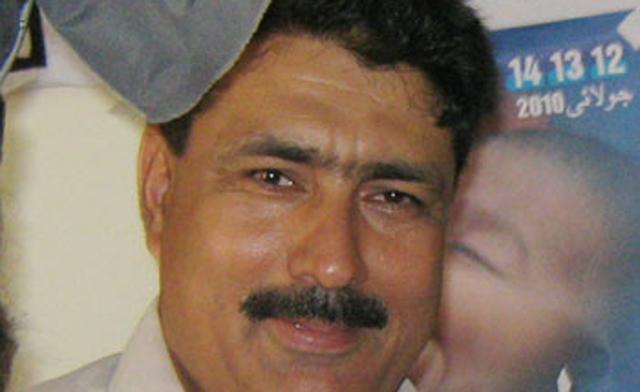
A senior American official has for the first time admitted that a Pakistani doctor played a key role in tracking Osama bin Laden to his hideout in northern Pakistan, and called for his release.

The comments by U.S. Defense Secretary Leon Panetta were the first public confirmation of a part of the bin Laden operation reported by McClatchy Newspapers in July, about how the CIA used Shakil Afridi to try to establish whether the al-Qaida leader was really living in a large house in Abbottabad, northern Pakistan.

This morning in Islamabad, Pakistan’s Inquiry Commission on the Abbottabad Operation issued an order to charge Afridi with treason, local media reported. The timing makes it appear that Pakistan is rebuking Panetta for his public acknowledgement of Afridi’s role. Afridi has been in Pakistani custody since the country’s own spy agency, Inter Services Intelligence (ISI), learned of the secret task performed by the doctor, who set up a fake vaccination program in Abbottabad to get DNA samples from those staying at the compound.

The CIA was never certain that bin Laden was present in the house. Afridi worked for the American intelligence agency in the weeks leading up to the Navy SEALs raid on May 2, setting up an elaborate scheme that was supposedly going house to house to vaccinate residents in Abbottabad.

Panetta told CBS’ “60 Minutes” “I am very concerned about what the Pakistanis did with this individual (Afridi). This was an individual who, in fact, helped provide intelligence that was very helpful with regard to this operation.” Panetta also voiced his belief that elements within Pakistan must have known that bin Laden, or at least someone significant, was present inside the compound. The interview was posted on the “60 Minutes” website. However, it was not included in the segment telecast on Sunday night. The McClatchy investigation discovered that Afridi was arrested by the ISI in late May and was tortured. It is believed that he remains in the custody of the intelligence agency, which is part of the military.

The whereabouts of Afridi’s family, including his American wife of Pakistani origin, is still unknown. The fate of the doctor has become another source of tension between Islamabad and Washington, with American officials pressing Pakistan to free him so he and his family can be resettled in the United States.

The military, which will decide what happens to Afridi, is furious that the CIA recruited Pakistani citizens for clandestine operations inside the country. Privately, officials point out that it is a crime to work for a foreign intelligence agency.
The doctor has turned into a bargaining chip in the failing U.S-Pakistan alliance. It is thought that Pakistan will let him go after public attention on the case wanes and it gets something in return from the U.S. “He was not in any way treasonous towards Pakistan. He was not in any way doing anything that would have undermined Pakistan,” Panetta told “60 Minutes.”

“Pakistan and the U.S. have a common cause here against terrorism,” he said. “And for them to take this kind of action against somebody who was helping to go after terrorism, I just think it is a real mistake on their part.”
Panetta, who was in charge of the CIA at the time of the bin Laden raid, also said that while there was no evidence of Pakistani complicity in keeping the al-Qaida chief, suspicions must have been raised about his hideout. “I personally have always felt that somebody must have had some sense of what was happening at this compound. Don’t forget, this compound had 18-foot walls. … It was the largest compound in the area.

“So you would have thought that somebody would have asked the question, ‘What the hell’s going on there?'” Panetta said.
But asked whether he knew for sure that Pakistan was aware of bin Laden’s presence, he said: “I don’t have any hard evidence, so I can’t say it for a fact.”

Pakistani Judges Press Premier to Defy President

By Salman Masood and Ismail Khan for The New York Times

The political and legal crisis in Pakistan took a new turn on Tuesday when the Supreme Court threatened to dismiss Prime Minister Yousaf Raza Gilani for failing to comply with court orders to reopen corruption cases against his political boss: President Asif Ali Zardari.

The latest pressure from the court compounds the problems of the governing Pakistan Peoples Party, already facing a political crisis over a controversial memo that sought United States support in thwarting a feared military coup.

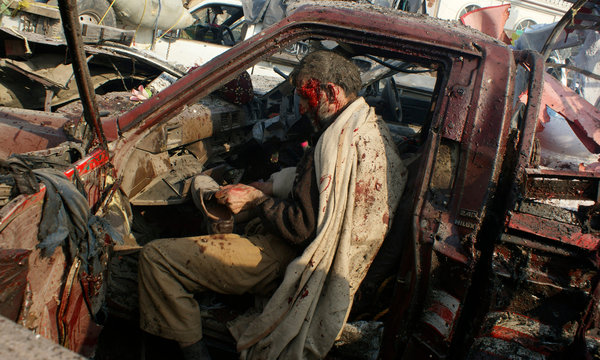
Adding to the government’s troubles is a steep increase in terrorist attacks. Another attack occurred early Tuesday, a truck bombing that the authorities said killed more than 25 people, including women and children, in northwestern Pakistan. A senior government official said the bombing appeared to be in retaliation for the recent killing of a militant leader.

Since December 2009, when the Supreme Court struck down an amnesty that nullified corruption charges against thousands of politicians, the court has insisted that the government reopen corruption cases against Mr. Zardari.

But the government has resisted court orders, and Mr. Zardari said last week that, “come what may,” officials from his party would not reopen the graft cases filed against him and his wife, Benazir Bhutto, in Switzerland. Ms. Bhutto was assassinated in 2007.

On Tuesday, a five-member panel of the Supreme Court, led by Justice Asif Saeed Khosa, ruled that the government was guilty of “willful disobedience” and said that Mr. Gilani was “dishonest” for failing to carry out the earlier court orders.

The judges laid out six options — including initiating contempt of court charges, dismissing the prime minister, forming a judicial commission and taking action against the president for violating his constitutional oath — and ordered the attorney general to explain the government’s position in court on Monday.

A three-member judicial commission that is investigating the controversial memo is scheduled to resume its hearing the same day. Apart from having an acrimonious relationship with the judiciary, the government has an uneasy relationship with the country’s top generals.

Mr. Zardari, who spent 11 years in prison on unproved corruption charges, says the corruption cases against him and Ms. Bhutto that date to the 1990s were politically motivated.

In an interview last week with GEO TV, a news network, Mr. Zardari said reopening those cases would be tantamount to “a trial of the grave” of his wife.

Mr. Zardari also claims immunity as president, but the judiciary, led by Chief Justice Iftikhar Muhammad Chaudhry, has resisted that claim and has aggressively pursued cases against Mr. Zardari’s party, leading many government officials to speculate that the judiciary was being used by the country’s powerful military to dismiss the government before the March elections for the Senate, in which the Pakistan Peoples Party is expected to win a majority.

Political analysts said the fate of Mr. Gilani, the prime minister, was in peril.

Mr. Zardari called a meeting of his party officials and coalition partners on Tuesday evening to chart strategy, and he was expected to get a statement of support from his allies.

“The situation is fast moving towards a head-on confrontation,” said Hasan Askari Rizvi, a political and military analyst based in Lahore. “It depends on what options are exercised by the Supreme Court.”

According to the Pakistani Constitution, a prime minister can be removed only by the Parliament, and the Supreme Court can disqualify the prime minister only indirectly, Mr. Rizvi said.

“If the court disqualifies the prime minister and the prime minister continues to enjoy the support of the Parliament, then the stage is set for a very dangerous confrontation,” he said.

The legal standoff is forcing the government to defer issues of greater importance, like rescuing a failing economy and fighting Taliban insurgents, as it focuses on its political survival, Mr. Rizvi said.

“The court, the military and the executive are trying to assert themselves,” he said. “It has become a free-for-all.”

There were no immediate claims of responsibility for the bombing on Tuesday, but it appeared to have been carried out by Tehrik-i-Taliban, an umbrella organization of Pakistani militant groups, against the Zakhakhel tribe, which has formed a militia in support of the government, said Mutahir Zeb, administrator for the Khyber tribal region.

Mr. Zeb said the Tehrik-i-Taliban sought to avenge the killing of Qari Kamran, a local Taliban commander, by security forces last week in an area occupied by the Zakhakhel.

Mr. Zeb said a pickup truck exploded in the middle of a bus terminal used by the Zakhakhel in the town of Jamrud.

The bomb destroyed several vehicles, damaged a nearby gasoline pump and shattered windows in the area. In addition to those killed, 27 people were reported wounded in the bombing and were taken to hospitals in Peshawar.

“I was on duty at the nearby checkpoint when I heard a big bang,” said Mir Gul, a security guard. “I rushed toward the spot and saw bodies lying around while the injured cried for help. It was devastating. There was blood everywhere.”

Pakistanis for Peace Editor’s Note-
The Pakistani people deserve better than this. The only solution to EVERYTHING that ails Pakistan is a true and long lasting peace with India. The sooner this dream becomes a reality, the sooner grim news of extremism and its grip on Pakistan will go away~

Moment Terror Suspect, 25, Arrested Over ‘Bomb Plot’ in Florida Was Caught on Camera Brawling With Christian Protesters

As Reported by The Daily Mail

A Muslim accused of plotting to bomb locations in the U.S. has apparently been identified as the same man assaulting Christian protesters in a video posted online.

Sami Osmakac, 25, an immigrant from Kosovo, was said to have been planning an attack in Tampa, Florida using a car bomb, machine guns and other explosives.

In the first video clip, a man who appears to be Osmakac, confronted Christian protesters and assaulted one outside the Tampa Bay Times Forum – leaving the man bleeding from the mouth. He was later arrested by police.

In the second video with the title ‘Convert to Islam NOW! To all Atheist Christian (Non-Muslims)’ a man who looks and sounds like Osmakac threatened members of other religions.

The message from Abdul Samia, believed to be one of Osmakac’s aliases, warns viewers to convert to Islam ‘before it is too late’.  The YouTube videos were posted in December 2010 and in April last year.

Sami Osmakac, a naturalized U.S. citizen, was charged yesterday with one count of attempted use of a weapon of mass destruction.

Osmakac, of Pinellas County, Florida, allegedly bought explosives and guns from an undercover FBI agent, which had been made unusable. He allegedly told the officer that he wanted to ‘die the Islamic way’ in attacks at locations in Ybor City and South Tampa.

After being tipped off in September, the five-month investigation culminated with a sting operation at the weekend. Shortly before his arrest he made a video of himself explaining his motives for carrying out the planned attack, authorities said.

In the eight-minute video he is seen cross-legged on the floor with a pistol in his hand and an AK-47 gun behind him. He said in the video that Muslim blood was more valuable than that of people who do not believe in Islam, according to a criminal complaint.

Osmakac allegedly added that he wanted ‘payback’ for wrong that was done to Muslims and bring terror to his ‘victims’ hearts’ in Tampa.

A confidential source allegedly told federal officials in September 2011 that Osmakac wanted Al Qaeda flags. Two months later he talked with the source and ‘discussed and identified potential targets in Tampa’ that he wanted to attack, authorities said.

Osmakac allegedly wanted help getting the firearms and explosives for the attacks, and was put in touch with an undercover FBI employee.

Last month Osmakac met with the agent and allegedly told him that he wanted to buy weapons including an AK-47-style machine gun. He also allegedly wanted Uzi submachine guns, high capacity magazines, grenades and explosive belt.

Osmakac gave the agent a $500 down payment for the items in a later meeting and outlined his intentions to build bombs, authorities said.

Osmakac allegedly said at another meeting earlier this month that he wanted to bomb night clubs, a business and the Operations Center of the Hillsborough County Sheriff’s Office. It is also believed he wanted to blow up an Irish pub and Starbucks coffee shop.

-Pakistanis for Peace Editor’s Note– We are glad that the authorities apprehended Sami Osmakac before he was able to allegedly carryout any of the attacks that he is accused of planning. Congratulations to the Hillsborough Police Department in Tampa along with the federal authorities. Loss of any life and certainly innocent loss of life goes against the fundamental nature of our being at Pakistanis for Peace. Bring a Pakistani American as well as a Muslim American, attacks attempted or carried out by other American Muslims such as Faisal Shahzad or even Maj. Nidal Hasan, and now Sam Osmakc, hits at the heart of our peaceful American dreams. As a result of the whacked out few, we as a whole are marginalized. But until these terrorists and wanna be terrorists are all taken off the street, the war on terror must go on~

Defining Terror: Better Late Than Never?

By Ahad Khan for EthanCasey.com

In his recent article “Home Free: Waging War on Ourselves,” Ethan Casey writes about what I know as “the American dream” or, as he calls it, “the ugly truth buried beneath the manicured lawns of the American suburbs.”

As a person of Pakistani heritage, I didn’t need help to notice the near exact parallel between the history of black people in America on one hand, and the plight of the U.S. government’s ghosts somewhere in “Afpakistan” on the other. I am talking about the victims of America’s drone war in the “Af-Pak” border region, home to the folks who supposedly hate the American way of life (courtesy U.S. presidents of the past decade). If we are to believe their advocates, Predator drones are so advanced that they even have their own conscience. You don’t have to worry about them mistakenly firing on women and children alike.

Our world’s affairs have arrived at a confusing point. Wars between different countries, overt and covert, increasingly appear to be conflicts between civilizations. I should not say that we can’t tell where it may lead us during the course of our own generation. History has clearly taught us time and again that struggles for freedom become inevitable wherever people are forced to live with a feeling of being suppressed. It was just such a struggle that gave birth to an America that dreamt of liberty and justice for all. It was such a struggle that solemnized the rights of the black people of America, through the brilliance of heroes like Martin Luther King and Malcolm X.

It was that same struggle that led to the creation of Pakistan, by a nation of people that – like black Americans – had grown sick and tired of being denied equal treatment in their own society. It is this freedom that we, as human beings, have shown to hold so dear, that it has served to justify our restless campaigns for the rights we demanded to live in honour and dignity.

It is no less amazing what man would do to defend what he perceives to be his freedom, or any symbol that represents it. While it still holds true that the horrific events of 9/11 raised more questions than answers (technically speaking), who would dare to challenge the notion that the USA was dealt a devastating blow to its core beliefs? To repair America’s presumably unshakeable spirit of justice, someone was going to have to pay. A determined U.S. military thus engaged in a worldwide war on ‘terror’. Over a decade later, we find the same forces holed up in Afghanistan, unwelcome and surrounded from all directions. Their enemies (those that were meant to be paid back) are stronger than they were at any point during the course of the war and easily project effective control over most of the country. The lack of a clearly defined war strategy is just one rampant example out of many to show how American leadership is completely clueless about what it’s doing there. But at least bin Laden’s dead. Mission accomplished, whatever it’s been.

As the world looks at its old ally today – they who slammed the lid on Hitler’s coffin – it’s been curious to know what the USA really aims to achieve. As America’s government continues to pursue ‘the terrorists’, it has made that country itself into the biggest victim of terror. Before anyone jumps me for contradicting other countries’ body counts: terror succeeds where people allow themselves to be terrorized; you can’t terrorize the dead. Thus, in my humble opinion, the primary victims of terror are not those that are now laid to rest in their graves; they’re the people amongst us who are ready to sacrifice their freedom for the sake of the mirage that’s presented as “threats to national security.” Those who refused to come to terms with their defeat once, failing to learn from it, are thereby damned to fail in future.

In my humble opinion the Obama administration does know that it had failed, long before the latest breakdown in relations with Pakistan after Pakistani soldiers were attacked without reason. When was the last time you heard any U.S. government official tell the world that they’re trying to “win the hearts of minds” of people on the other side of the world? They never intended to bomb their hearts and minds out, it depends on the means chosen to aim at the target. The tendencies that champion the death sentence as a means for the sake of internal security, favor the use of drones when it comes to external security.

As much as we’ve suffered as Pakistanis under America’s misleading wars, I can’t help but feel sorry for America. As this great nation’s ideology is its biggest victim of war, the defeat couldn’t be greater. The rampant paranoia at present about hunting “terrorists” does not represent the example America gave to the rest of the world in the course of the previous century. Sadly, most of our generation will remember it by the images of a shoe-throwing Iraqi journalist. Pakistan and the emerging Arab nations will learn what democracy is on their own. They’ll take an example in future of what happened in America when people allowed themselves to be governed by fear instead of by a determined leadership. Justice will be sought and found, even by some of those people that the knights of freedom would describe as terrorists.

Ahad Khan is a Dutch Pakistani whose parents hail from Karachi. A health management student from Erasmus University in Rotterdam, he’s a dental practice manager in everyday life.

The Pakistanis Have A Point

By Bill Keller for The New York Times
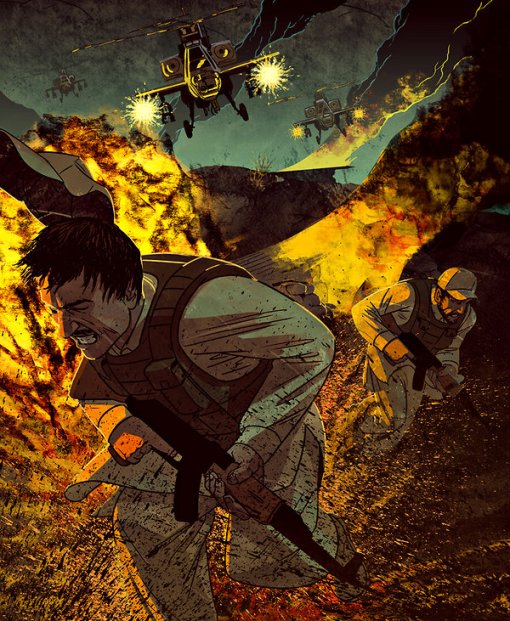
As an American visitor in the power precincts of Pakistan, from the gated enclaves of Islamabad to the manicured lawns of the military garrison in Peshawar, from the luxury fortress of the Serena Hotel to the exclusive apartments of the parliamentary housing blocks, you can expect three time-honored traditions: black tea with milk, obsequious servants and a profound sense of grievance.

Talk to Pakistani politicians, scholars, generals, businessmen, spies and journalists — as I did in October — and before long, you are beyond the realm of politics and diplomacy and into the realm of hurt feelings. Words like “ditch” and “jilt” and “betray” recur. With Americans, they complain, it’s never a commitment, it’s always a transaction. This theme is played to the hilt, for effect, but it is also heartfelt.

“The thing about us,” a Pakistani official told me, “is that we are half emotional and half irrational.”

For a relationship that has oscillated for decades between collaboration and breakdown, this has been an extraordinarily bad year, at an especially inconvenient time. As America settles onto the long path toward withdrawal from Afghanistan, Pakistan has considerable power to determine whether the end of our longest war is seen as a plausible success or a calamitous failure.

There are, of course, other reasons that Pakistan deserves our attention. It has a fast-growing population approaching 190 million, and it hosts a loose conglomerate of terrorist franchises that offer young Pakistanis employment and purpose unavailable in the suffering feudal economy. It has 100-plus nuclear weapons (Americans who monitor the program don’t know the exact number or the exact location) and a tense, heavily armed border with nuclear India. And its president, Asif Ali Zardari, oversees a ruinous kleptocracy that is spiraling deeper into economic crisis.

But it is the scramble to disengage from Afghanistan that has focused minds in Washington. Pakistan’s rough western frontier with Afghanistan is a sanctuary for militant extremists and criminal ventures, including the Afghan Taliban, the Pakistani Taliban, the notorious Haqqani clan and important remnants of the original horror story, Al Qaeda. The mistrust between Islamabad and Kabul is deep, nasty — Afghanistan was the only country to vote against letting Pakistan into the United Nations — and tribal. And to complicate matters further, Pakistan is the main military supply route for the American-led international forces and the Afghan National Army.

On Thanksgiving weekend, a month after I returned from Pakistan, the relationship veered precipitously — typically — off course again. NATO aircraft covering an operation by Afghan soldiers and American Special Forces pounded two border posts, inadvertently killing 24 Pakistani soldiers, including two officers. The Americans said that they were fired on first and that Pakistan approved the airstrikes; the Pakistanis say the Americans did not wait for clearance to fire and then bombed the wrong targets.

The fallout was painfully familiar: outrage, suspicion and recrimination, petulance and political posturing. Gen. Ashfaq Parvez Kayani, the chief of the army and by all accounts the most powerful man in Pakistan, retaliated by shutting (for now and not for the first time) the NATO supply corridor through his country. The Pakistanis abruptly dropped out of a Bonn conference on the future of Afghanistan and announced they would not cooperate with an American investigation of the airstrikes. President Obama sent condolences but balked at the suggestion of an apology; possibly the president did not want to set off another chorus of Mitt Romney’s refrain that Obama is always apologizing for America. At this writing, American officials were trying to gauge whether the errant airstrike would have, as one worried official put it, “a long half-life.”

If you survey informed Americans, you will hear Pakistanis described as duplicitous, paranoid, self-pitying and generally infuriating. In turn, Pakistanis describe us as fickle, arrogant, shortsighted and chronically unreliable.

Neither country’s caricature of the other is entirely wrong, and it makes for a relationship that is less in need of diplomacy than couples therapy, which customarily starts by trying to see things from the other point of view. While the Pakistanis have hardly been innocent, they have a point when they say America has not been the easiest of partners.

One good place to mark the beginning of this very, very bad year in U.S.-Pakistani relations is Dec. 13, 2010, when Richard C. Holbrooke died of a torn aorta. Holbrooke, the veteran of the Balkan peace, had for two years held the thankless, newly invented role of the administration’s special representative for Afghanistan and Pakistan. The antithesis of mellow, Holbrooke did not hit it off with our no-drama president, and his bluster didn’t always play well in Kabul or Islamabad either.

But Holbrooke paid aggressive attention to Pakistan. While he was characteristically blunt about the divergent U.S. and Pakistani views, he understood that they were a result of different, calculated national interests, not malevolence or mere orneriness. He was convinced that the outlooks could be, if not exactly synchronized, made more compatible. He made a concentrated effort to persuade the Pakistanis that this time the United States would not be a fair-weather friend.

“You need a Holbrooke,” says Maleeha Lodhi, a well-connected former ambassador to Washington. “Not necessarily the person but the role.” In the absence of full-on engagement, she says, “it’s become a very accident-prone relationship.”

On Jan. 27, a trigger-happy C.I.A. contractor named Raymond Davis was stuck in Lahore traffic and shot dead two motorcyclists who approached him. A backup vehicle he summoned ran over and killed a bystander. The U.S. spent heavily from its meager stock of good will to persuade the Pakistanis to set Davis free — pleading with a straight face that he was entitled to diplomatic immunity.

On May 2, a U.S. Navy Seals team caught Osama bin Laden in the military town Abbottabad and killed him. Before long, American officials were quoted questioning whether their Pakistani allies were just incompetent or actually complicit. (The Americans who deal with Pakistan believe that General Kayani and the director of the Inter-Services Intelligence agency, Gen. Ahmed Shuja Pasha, were genuinely surprised and embarrassed that Bin Laden was so close by, though the Americans fault the Pakistanis for not looking very hard.) In Pakistan, Kayani faced rumbles of insurrection for letting Americans violate Pakistani sovereignty; a defining victory for President Obama was a humiliation for Kayani and Pasha.

In September, members of the Haqqani clan (a criminal syndicate and jihadi cult that’s avowedly subservient to the Taliban leader Mullah Omar) marked the 10th anniversary of 9/11 with two theatrical attacks in Afghanistan. First a truck bomb injured 77 American soldiers in Wardak Province. Then militants rained rocket-propelled grenades on the U.S. Embassy in Kabul, forcing our ambassador to spend 20 hours locked down in a bunker.

A few days later the former Afghan president, Burhanuddin Rabbani, spread his arms to welcome an emissary from the Taliban to discuss the possibility of peace talks. As they embraced, the visitor detonated a bomb in his turban, killing himself, Rabbani and the talks. President Hamid Karzai of Afghanistan, without any evidence that American officials are aware of, accused Pakistan of masterminding the grotesque killing in order to scuttle peace talks it couldn’t control.

And two days after that, Adm. Mike Mullen, the outgoing chairman of the Joint Chiefs of Staff, took to Capitol Hill to suggest that Pakistani intelligence had blessed the truck bomb and embassy attack.

His testimony came as a particular shock, because if the turbulent affair between the United States and Pakistan had a solid center in recent years, it was the rapport between Mullen and his Pakistani counterpart, General Kayani. Over the four years from Kayani’s promotion as chief of the army staff until Mullen’s retirement in September, scarcely a month went by when the two didn’t meet. Mullen would often drop by Kayani’s home at the military enclave in Rawalpindi, arriving for dinner and staying into the early morning, discussing the pressures of command while the sullen-visaged general chain-smoked Dunhills. One time, Kayani took his American friend to the Himalayas for a flyby of the world’s second-highest peak, K2. On another occasion, Mullen hosted Kayani on the golf course at the Naval Academy. The two men seemed to have developed a genuine trust and respect for each other.

But Mullen’s faith in an underlying common purpose was rattled by the truck bombing and the embassy attack, both of which opened Mullen to the charge that his courtship of Kayani had been a failure. So — over the objection of the State Department — the admiral set out to demonstrate that he had no illusions.

The Haqqani network “acts as a veritable arm of Pakistan’s Inter-Services Intelligence agency,” he declared. “With ISI support, Haqqani operatives planned and conducted that truck-bomb attack as well as the assault on our embassy.”

Several officials with access to the intelligence told me that while the Haqqanis were implicated in both attacks, there was no evidence of direct ISI involvement. A Mullen aide said later that the admiral was referring to ISI’s ongoing sponsorship of the Haqqanis and did not mean to say Pakistan authorized those specific attacks.

No matter. In Pakistan, Mullen’s denunciation led to a ripple of alarm that U.S. military “hardliners” were contemplating an invasion. The press had hysterics. Kayani made a show of putting the Pakistani Army on alert. The Pakistani rupee fell in value.

In Washington, Mullen’s remarks captured — and fed — a vengeful mood and a rising sense of fatalism about Pakistan. Bruce O. Riedel, an influential former C.I.A. officer who led a 2009 policy review for President Obama on Pakistan and Afghanistan, captured the prevailing sentiment in an Op-Ed in The Times, in which he called for a new policy of “containment,” meaning “a more hostile relationship” toward the army and intelligence services.

“I can see how this gets worse,” Riedel told me. “And I can see how this gets catastrophically worse. . . . I don’t see how it gets a whole lot better.”

When Gen. David H. Petraeus took over the U.S. military’s Central Command in 2008, he commissioned expert briefing papers on his new domain, which sprawled from Egypt, across the Persian Gulf, to Central Asia. The paper on Afghanistan and Pakistan began, according to an American who has read it, roughly this way: “The United States has no vital national interests in Afghanistan. Our vital national interests are in Pakistan,” notably the security of those nuclear weapons and the infiltration by Al Qaeda. The paper then went on for the remaining pages to discuss Afghanistan. Pakistan hardly got a mention. “That’s typical,” my source said. Pakistan tends to be an afterthought.

The Pakistani version of modern history is one of American betrayal, going back at least to the Kennedy administration’s arming of Pakistan’s archrival, India, in the wake of its 1962 border war with China.

The most consequential feat of American opportunism came when we enlisted Pakistan to bedevil the Soviet occupiers of Afghanistan in the 1980s. The intelligence agencies of the U.S. and Pakistan — with help from Saudi Arabia — created the perfect thorn in the Soviet underbelly: young Muslim “freedom fighters,” schooled in jihad at Pakistani madrassas, laden with American surface-to-air missiles and led by charismatic warriors who set aside tribal rivalries to war against foreign occupation.

After the Soviets admitted defeat in 1989, the U.S. — mission accomplished! — pulled out, leaving Pakistan holding the bag: several million refugees, an Afghanistan torn by civil war and a population of jihadists who would find new targets for their American-supplied arms. In the ensuing struggle for control of Afghanistan, Pakistan eventually sided with the Taliban, who were dominated by the Pashtun tribe that populates the Pakistan-Afghanistan frontier. The rival Northern Alliance was run by Tajiks and Uzbeks and backed by India; and the one thing you can never underestimate is Pakistan’s obsession with bigger, richer, better-armed India.

As long as Pakistan was our partner in tormenting the Soviet Union, the U.S. winked at Pakistan’s nuclear-weapons program. After all, India was developing a nuclear arsenal, and it was inevitable that Pakistan would follow suit. But after the Soviets retreated, Pakistan was ostracized under a Congressional antiproliferation measure called the Pressler Amendment, stripped of military aid (some of it budgeted to bring Pakistani officers to the U.S. for exposure to American military values and discipline) and civilian assistance (most of it used to promote civil society and buy good will).

Our relationship with Pakistan sometimes seems like a case study in unintended consequences. The spawning of the mujahadeen is, of course, Exhibit A. The Pressler Amendment is Exhibit B. And Exhibit C might be America’s protectionist tariffs on Pakistan’s most important export, textiles. For years, experts, including a series of American ambassadors in Islamabad, have said that the single best thing the U.S. could do to pull Pakistan into the modern world is to ease trade barriers, as it has done with many other countries. Instead of sending foreign aid and hoping it trickles down, we could make it easier for Americans to buy Pakistani shirts, towels and denims, thus lifting an industry that is an incubator of the middle class and employs many women. Congress, answerable to domestic textile interests, has had none of it.

“Pakistan the afterthought” was the theme very late one night when I visited the home of Pakistan’s finance minister, Abdul Hafeez Shaikh. After showing me his impressive art collection, Shaikh flopped on a sofa and ran through the roll call of American infidelity. He worked his way, decade by decade, to the war on terror. Now, he said, Pakistan is tasked by the Americans with simultaneously helping to kill terrorists and — the newest twist — using its influence to bring them to the bargaining table. Congress, meanwhile, angry about terrorist sanctuaries, is squeezing off much of the financial aid that is supposed to be the lubricant in our alliance.

“Pakistan was the cold-war friend, the Soviet-Afghan-war friend, the terror-war friend,” the minister said. “As soon as the wars ended, so did the assistance. The sense of being discarded is so recent.”

A Boston University-educated economist who made his money in private equity investing — in other words, a cosmopolitan man — Shaikh seemed slightly abashed by his own bitterness.

“I’m not saying that this style of Pakistani thinking is analytically correct,” he said. “I’m just telling you how people feel.”

He waved an arm toward his dining room, where he hung a Warhol of Muhammad Ali. “We’re just supposed to be like Ali — take the beating for seven rounds from Foreman,” he said. “But this time the Pakistanis have wised up. We are playing the game, but we know you can’t take these people at their word.”

With a timetable that has the United States out of Afghanistan, or mostly out, by the end of 2014, Pakistan has leverage it did not have when the war began.

One day after 9/11, Richard Armitage, the deputy secretary of state, summoned the head of Pakistani intelligence for a talking to. “We are asking all of our friends: Do they stand with us or against us?” he said. The following day, Armitage handed over a list of seven demands, which included stopping Al Qaeda operations on the Pakistani border, giving American invaders access to Pakistani bases and airspace and breaking all ties with the Taliban regime.

The Pakistanis believed from the beginning that Afghanistan had “American quagmire” written all over it. Moreover, what America had in mind for Afghanistan was antithetical to Pakistan’s self-interest.

“The only time period between 1947 and the American invasion of Afghanistan that Pakistanis have felt secure about Afghanistan is during the Taliban period,” from 1996 to 2001, says Vali Nasr, an American scholar of the region who is listened to in both academia and government. Now the Bush administration would attempt to supplant the Taliban with a strong independent government in Kabul and a muscular military. “Everything about this vision is dangerous to Pakistan,” Nasr says.

Pakistan’s military ruler at the time, Pervez Musharraf, saw the folly of defying an American ultimatum. He quickly agreed to the American demands and delivered on many of them. In practice, though, the accommodation with the Taliban was never fully curtailed. Pakistan knew America’s mission in Afghanistan would end, and it spread its bets.

The Bush-Musharraf relationship, Vali Nasr says, “was sort of a Hollywood suspension of disbelief. Musharraf was a convenient person who created a myth that we subscribed to — basically that Pakistan was on the same page with us, it was an ally in the war on terror and it subscribed to our agenda for Afghanistan.”

But the longer the war in Afghanistan dragged on, the harder it was to sustain the illusion.

In October, I took the highway west from Islamabad to Peshawar, headquarters of the Pakistan Army corps responsible for the frontier with Afghanistan. Over tea and cookies, Lt. Gen. Asif Yasin Malik, the three-star who commanded the frontier (he retired this month) talked about how the Afghan war looked from his side of the border.

The official American version of the current situation in Afghanistan goes like this: By applying the counterinsurgency strategy that worked in Iraq and relying on a surge of troops and the increasingly sophisticated use of drones, the United States has been beating the insurgency into submission, while at the same time standing up an indigenous Afghan Army that could take over the mission. If only Pakistan would police its side of the border — where the bad guys find safe haven, fresh recruits and financing — we’d be on track for an exit in 2014.

The Pakistanis have a different narrative. First, a central government has never successfully ruled Afghanistan. Second, Karzai is an unreliable neighbor — a reputation that has not been dispelled by his recent, manic declarations of brotherhood. And third, they believe that despite substantial investment by the United States, the Afghan Army and the police are a long way from being ready to hold the country. In other words, America is preparing to leave behind an Afghanistan that looks like incipient chaos to Pakistan.

In Peshawar, General Malik talked with polite disdain about his neighbor to the west. His biggest fear — one I’m told Kayani stresses in every meeting with his American counterparts — is the capability of the Afghan National Security Forces, an army of 170,000 and another 135,000 police, responsible for preventing Afghanistan from disintegrating back into failed-state status. If the U.S. succeeds in creating such a potent fighting force, that makes Pakistanis nervous, because they see it (rightly) as potentially unfriendly and (probably wrongly) as a potential agent of Indian influence. The more likely and equally unsettling outcome, Pakistanis believe, is that the Afghan military — immature, fractious and dependent on the U.S. Treasury — will disintegrate into heavily armed tribal claques and bandit syndicates. And America, as always, will be gone when hell breaks loose.

General Malik studied on an exchange at Fort McNair, in Washington, D.C., and has visited 23 American states. He likes to think he is not clueless about how things work in our country.

“Come 2015, which senator would be ready to vote $9 billion, or $7 billion, to be spent on this army?” he asked. “Even $5 billion a year. O.K., maybe one year, maybe two years. But with the economy going downhill, how does the future afford this? Very challenging.”

American officials will tell you, not for attribution, that Malik’s concerns are quite reasonable.

So I asked the general if that was why his forces have not been more aggressive about mopping up terrorist sanctuaries along the border. Still hedging their bets? His answer was elaborate and not entirely facile.

First of all, the general pointed out that Pakistan has done some serious fighting in terrorist strongholds and shed a lot of blood. Over the past two years, Malik’s forces have been enlarged to 147,000 soldiers, mainly by relocating more than 50,000 from the Indian border. They have largely controlled militant activities in the Swat Valley, for example, which entailed two hard offensives with major casualties. But they have steadfastly declined to mount a major assault against North Waziristan — a mountainous region of terrorist Deadwoods populated by battle-toughened outlaws.

Yes, Malik said, North Waziristan is a terrible situation, but his forces are responsible for roughly 1,500 miles of border, they police an archipelago of rough towns in the so-called Federally Administered Tribal Areas, or FATA, and by the way, they had a devastating flood to handle last year.

“If you are not able to close the Mexican border, when you have the technology at your call, when there is no war,” he said, “how can you expect us to close our border, especially if you are not locking the doors on your side?”

Americans who know the area well concede that, for all our complaints, Pakistan doesn’t push harder in large part because it can’t. The Pakistan Army has been trained to patrol the Indian border, not to battle hardened insurgents. They have comparatively crude weaponry. When they go up against a ruthless outfit like the Haqqanis, they tend to get killed. Roughly 4,000 Pakistani troops have died in these border wars — more than the number of all the allied soldiers killed in Afghanistan.

“They’re obviously reluctant to go against the Haqqanis, but reluctant for a couple of reasons,” an American official told me. “Not just the reason that they see them as a potential proxy force if Afghanistan doesn’t go well, but also because they just literally lack the capability to take them on. They’ve got enough wars on their hands. They’ve not been able to consolidate their gains up in the northern part of the FATA, they have continued problems in other areas and they just can’t deal with another campaign, which is what North Waziristan would be.”

And there is another, fundamental problem, Malik said. There is simply no popular support for stepping up the fight in what is seen as America’s war. Ordinary Pakistanis feel they have paid a high price in collateral damage, between the civilian casualties from unmanned drone attacks and the blowback from terror groups within Pakistan.

“When you go into North Waziristan and carry out some major operation, there is going to be a terrorist backlash in the rest of the country,” Malik told me. “The political mood, or the public mood, is ‘no more operations.’ ”

In late October, Hillary Clinton arrived in Islamabad, leading a delegation that included Petraeus, recently confirmed as C.I.A. director, and Gen. Martin E. Dempsey, Mullen’s successor as chairman of the Joint Chiefs. Petraeus used to refer to Holbrooke as “my diplomatic wingman,” a bit of condescension he apparently intended as a tribute. This time, the security contingent served as diplomacy’s wingmen.

The trip was intended as a show of unity and resolve by an administration that has spoken with conflicting voices when it has focused on Pakistan at all. For more than four hours, the Americans and a potent lineup of Pakistani counterparts talked over a dinner table.

Perhaps the most revealing thing about the dinner was the guest list. The nine participants included Kayani and Pasha, but not President Zardari or Prime Minister Yousuf Raza Gilani, who provided the dining room at his own residence and made himself scarce. The only representative of the civilian government was Clinton’s counterpart, the new foreign minister, Hina Rabbani Khar, a 34-year-old rising star with the dark-haired beauty of a Bollywood leading lady, a degree in hospitality management from the University of Massachusetts and, most important, close ties to the Pakistani military.

For a country that cherishes civilian democracy, we have a surprising affinity for strong men in uniform. Based on my conversations with American officials across the government, the U.S. has developed a grudging respect for Kayani, whom they regard as astute, straightforward, respectful of the idea of democratic government but genuinely disgusted by the current regime’s thievery and ineptitude. (We know from the secret diplomatic cables disclosed by WikiLeaks that Kayani has confided to American officials his utter contempt for his president and “hinted that he might, however reluctantly, have to persuade President Zardari to resign.”) Zardari, whose principal claim to office is that he is the widower of the assassinated and virtually canonized Benazir Bhutto, has been mainly preoccupied with building up his patronage machine for elections in 2013. The Americans expect little from him and don’t see a likely savior among his would-be political challengers. (As this article goes to press, Zardari is recovering from chest pains in a hospital in Dubai; there are rumors he won’t return.) So, Kayani it is. The official American consensus is less enamored of Kayani’s loyal intelligence underling, General Pasha, whose agency consorts with terrorists and is suspected of torturing and killing troublemakers, including journalists, but Pasha is too powerful to ignore.

The day after the marathon dinner, Clinton’s entourage took over the Serena Hotel for a festival of public diplomacy — a press conference with the foreign minister, followed by a town meeting with young Pakistanis and then a hardball round-table interview with a circle of top editors and anchors.

Clinton’s visit was generally portrayed, not least in the Pakistani press, as a familiar ritual of America talking tough to Pakistan. In the town meeting, a woman asked why America always played the role of bossy mother-in-law, and that theme delighted editorial cartoonists for days.

But the private message to the Pakistanis — and a more careful reading of Clinton’s public performance — reflected a serious effort to reboot a troubled relationship. Clinton took care to pay tribute to Pakistani losses in the war against terror in the past decade — in addition to the military, an estimated 30,000 civilian dead, the equivalent of a 9/11 every year. She ruled out sending American ground troops into Pakistani territory. She endorsed a Pakistani plea that U.S. forces in Afghanistan do a better job of cleaning up militant sanctuaries on their own side of the border.

Questioned by a prominent television anchor, she repudiated Mullen’s testimony, not only disavowing any evidence of ISI complicity in the attack on America’s embassy in Kabul but also soft-peddling the spy agency’s coziness with terrorists.

“Now, every intelligence agency has contacts with unsavory characters,” she said. “I don’t think you would get any denial from either the ISI or the C.I.A. that people in their respective organizations have contacts with members of groups that have different agendas than the governments’. But that doesn’t mean that they are being directed or being approved or otherwise given a seal of approval.”

That particular riff may have caused jaws to clench at the C.I.A. compound in Langley, Va. The truth is, according to half a dozen senior officials with access to the intelligence, the evidence of Pakistan’s affinity for terrorists is often circumstantial and ambiguous, a matter of intercepted conversations in coded language, and their dealings are thought to be more pragmatic than ideological, more a matter of tolerating than directing, but the relationship goes way beyond “contacts with unsavory characters.”

“They’re facilitating,” one official told me. “They provide information to the Haqqanis, they let them cross back and forth across the border, they let this L.E.T. guy (the leader of the dangerous Lashkar-e-Taiba faction of Kashmiri terrorists) be in prison and not be in prison at the same time.”

And yet the Pakistanis have been helpful — Abbottabad aside — against Al Qaeda, which is America’s first priority and which the Pakistanis recognize as a menace to everyone. They have shared intelligence, provided access to interrogations and coordinated operations. Before the fatal border mishap Thanksgiving weekend, one U.S. official told me, anti-terror cooperation between the C.I.A. and Pakistani intelligence had been “very much on the upswing.”

The most striking aspect of Clinton’s trip, however, was her enthusiastic embrace of what is now called “reconciliation” — which is the polite word for negotiating with the Taliban.

Pakistan has long argued that the way to keep Afghanistan from coming to grief is to cut a deal with at least some of the Taliban. That would also mean Afghanistan could get by with a smaller, cheaper army. The notion has been anathema to the Americans tasked with killing Taliban; a principled stand against negotiating with terrorists is also a political meme that acquires particular potency in election seasons, as viewers of the Republican debates can attest.

Almost unnoticed, though, reconciliation has moved to a central place in America’s strategy and has become the principal assignment for U.S. officials in the region. Clinton first signaled this in a speech to the Asia Society last February, when she refocused Afghanistan strategy on its original purpose, isolating the terrorists at war with America, meaning Al Qaeda.

The speech was buried beneath other news at the time, but in early October, Tom Donilon, Obama’s national security adviser, met Kayani in Abu Dhabi to stress to skeptical Pakistani leaders that she was serious. Clinton’s visit to Islamabad with her generals in tow was designed to put the full weight of the U.S. behind it.

Clinton publicly acknowledged that the ISI (in fact, it was General Pasha in person) had already brokered a preliminary meeting between a top American diplomat and a member of the Haqqani clan. Nothing much came of the meeting, news of which promptly leaked, but Clinton said America was willing to sit down with the Taliban. She said that what had once been preconditions for negotiations — renouncing violence, shunning Al Qaeda and accepting Afghanistan’s constitution, including freedoms for women — were now “goals.”

In diplomacy, no process is fully initiated until it has been named. A meeting of Pakistani political parties in Islamabad had adopted a rubric for peace talks with the Taliban, a slogan the Pakistanis repeated at every opportunity: “Give peace a chance.” If having this project boiled down to a John Lennon lyric diminished the gravitas of the occasion, Clinton didn’t let on.

Within the American policy conglomerate, not everyone is terribly upbeat about the prospect of reconciling with the Taliban. The Taliban have so far publicly rejected talks, and the turban-bomb killing of Rabbani was a serious reversal. There is still some suspicion — encouraged by Afghanistan and India — about Pakistan’s real agenda. One theory is that Pakistan secretly wants the Taliban restored to power in Afghanistan, believing the Pashtun Islamists would be more susceptible to Pakistani influence. A more cynical theory, which I heard quite a bit in New Delhi, is that the Pakistani Army actually wants chaos on its various borders to justify its large payroll. Most Americans I met who are immersed in this problem put little stock in either of those notions. The Pakistanis may not be the most trustworthy partners in Asia, but they aren’t idiots. They know, at least at the senior levels, that a resurgent Taliban means not just perpetual mayhem on the border but also an emboldening of indigenous jihadists whose aim is nothing less than a takeover of nuclear Pakistan. But agreeing on the principle of a “stable Afghanistan” is easier than defining it, or getting there.

After Clinton left Islamabad, a senior Pakistani intelligence official I wanted to meet arrived for breakfast with me and a colleague at Islamabad’s finest hotel. With a genial air of command, he ordered eggs Benedict for the table, declined my request to turn on a tape recorder, (“Just keep my name out of it,” he instructed later) and settled into an hour of polished spin.

“The Taliban learned its lesson in the madrassas and applied them ruthlessly,” he said, as the Hollandaise congealed. “Now the older ones have seen 10 years of war, and reconciliation is possible. Their outlook has been tempered by reason and contact with the modern world. They have relatives and friends in Kabul. They have money from the opium trade. They watch satellite TV. They are on the Internet.”

On the other hand, he continued, “if you kill off the midtier Taliban, the ones who are going to replace them — and there are many waiting in line, sadly — are younger, more aggressive and eager to prove themselves.”

So what would it take to bring the Taliban into a settlement? First, he said, stop killing them. Second, an end to foreign military presence, the one thing that always mobilizes the occupied in that part of the world. Third, an Afghan constitution framed to give more local autonomy, so that Pashtun regions could be run by Pashtuns.

On the face of it, as my breakfast companion surely knows, those sound like three nonstarters, and taken together they sound rather like surrender. Even Clinton is not calling for a break in hostilities, which the Americans see as the way to drive the Taliban to the bargaining table. As for foreign presence, both the Americans and the Afghans expect some long-term residual force to stay in Afghanistan, to backstop the Afghan Army and carry out drone attacks against Al Qaeda. And while it is not hard to imagine a decentralized Afghanistan — in which Islamic traditionalists hold sway in the rural areas but cede the urban areas, where modern notions like educating girls have already made considerable headway — that would be hard for Americans to swallow.

Clinton herself sounded pretty categorical on that last point when she told Pakistani interviewers: “I cannot in good faith participate in any process that I think would lead the women of Afghanistan back to the dark ages. I will not participate in that.”

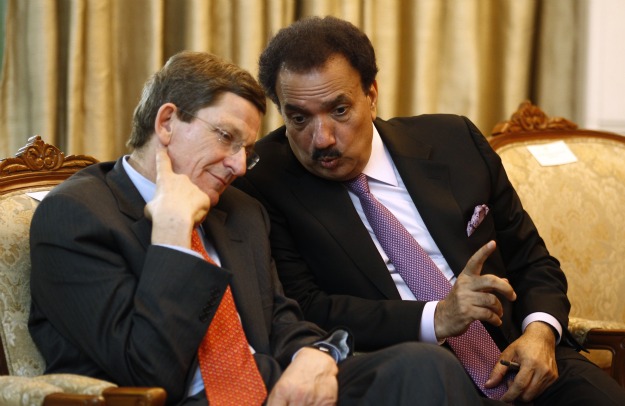
To questions of how these seemingly insurmountable differences might be surmounted, Marc Grossman, who replaced Holbrooke as Clinton’s special representative, replies simply: “I don’t know whether these people are reconcilable or not. But the job we’ve been given is to find out.”

If you look at reconciliation as a route to peace, it requires a huge leap of faith. Surely the Taliban have marked our withdrawal date on their calendars. The idea that they are so deeply weary of war — – let alone watching YouTube and yearning to join the world they see on their laptops — feels like wishful thinking.

But if you look at reconciliation as a step in couples therapy — a shared project in managing a highly problematic, ultimately critical relationship — it makes more sense. It gives Pakistan something it craves: a seat at the table where the future of Afghanistan is plotted. It gets Pakistan and Afghanistan talking to each other. It offers a supporting role to other players in the region — notably Turkey, which has taken on a more active part as an Islamic peace broker. It could drain some of the acrimony and paranoia from the U.S.-Pakistan rhetoric.

It might not save Afghanistan, but it could be a helpful start to saving Pakistan.

What Clinton and company are seeking is a course of patient commitment that America, frankly, is not usually so good at. The relationship has given off some glimmers of hope — with U.S. encouragement, Pakistan and India have agreed to normalize trade relations; the ISI has given American interrogators access to Osama bin Laden’s wives — but the funerals of those Pakistani troops last month remind us that the country is still a graveyard of optimism.

At least the U.S. seems, for now, to be paying attention to the right problem.

“If you stand back,” said one American who is in the thick of the American strategy-making, “and say, by the year 2020, you’ve got two countries — 30 million people in this country, 200 million people with nuclear weapons in this country, American troops in neither. Which matters? It’s not Afghanistan.”

Bill Keller, a former executive editor of The Times, writes a column for the Op-Ed page.
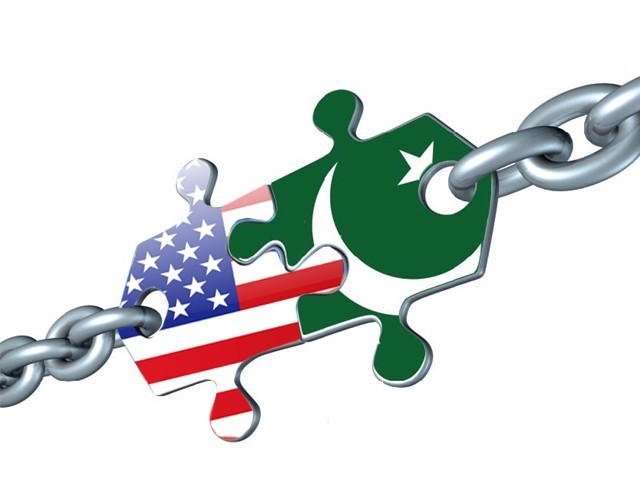
Pakistani Taliban Splintering Into Factions

By Kathy Gannon for The Associated Press

Battered by Pakistani military operations and U.S. drone strikes, the once-formidable Pakistani Taliban has splintered into more than 100 smaller factions, weakened and running short of cash, according to security officials, analysts and tribesmen from the insurgent heartland.

The group, allied with al Qaeda and based in northwest Pakistan close to the Afghan border, has been behind much of the violence tearing apart Pakistan over the last 4½ years. Known as the Tehrik-e-Taliban, or TTP, the Taliban want to oust the U.S.-backed government and install a hard-line Islamist regime. They also have international ambitions and trained the Pakistani-American who tried to detonate a car bomb in New York’s Times Square in 2010.

“Today, the command structure of the TTP is splintered, weak and divided, and they are running out of money,” said Mansur Mahsud, a senior researcher at the FATA (Federally Administered Tribal Area) Research Center. “In the bigger picture, this helps the army and the government because the Taliban are now divided.”

The first signs of cracks within the Pakistani Taliban appeared after its leader, Baitullah Mehsud, was killed in a drone strike in August 2009, Mr. Mahsud said. Since then, the group has deteriorated steadily.

Set up in 2007, the Pakistani Taliban is an umbrella organization created to represent roughly 40 insurgent groups in the tribal belt plus al-Qaeda-linked groups headquartered in Pakistan‘s eastern Punjab province.

“In the different areas, leaders are making their own peace talks with the government,” Mr. Mahsud added. “It could help the Pakistani government and military separate more leaders from the TTP and more foot soldiers from their commanders.”

The two biggest factors hammering away at the Taliban’s unity are U.S. drone strikes and Pakistani army operations in the tribal region.

Turf wars have flared as militants fleeing the Pakistani military operations have moved into territory controlled by other militants, sometimes sparking clashes between groups. And as leaders have been killed either by drones or the Pakistani army, lieutenants have fought among themselves over who will replace them.

“The disintegration … has accelerated with the Pakistan military operation in South Waziristan and the drone attacks by the United States in North Waziristan,” Mr. Mahsud said, referring to the two tribal agencies that are the heartland of the Pakistani Taliban.

Another factor is the divide-and-conquer strategy that Pakistan‘s military long has employed in its dealings with militants. Commanders have broken away from the TTP and set up their own factions, weakening the organization. Battles have broken out among the breakaway factions, and in one particularly remote tribal region the TTP was thrown out. These growing signs of fissures among the disparate groups that make up the Pakistani Taliban indicate the military’s strategy could be paying off.

That would explain the mixed signals this month coming out of the tribal belt, where some militants are mulling the idea of peace talks with the government, others are offering to stop fighting, and still others are disavowing both peace and a cease-fire. It might also explain a steady decline in suicide attacks in Pakistan, according to the privately run Pak Institute for Peace Studies.

The U.S. is eager to see some benefits in neighboring Afghanistan, where its troops have come under attack from militants based across the border in Pakistan. NATO forces in Afghanistan are trying to break the back of the Afghan insurgency before the end of the U.S.-led coalition’s combat mission in 2014.

There is no evidence so far that fissures within the militant structure in Pakistan are helping NATO and U.S. forces.

The deadly Haqqani network, which has bases both in Pakistan and Afghanistan and is affiliated with al Qaeda, is one of the most lethal threats to coalition troops. It long has found safe haven in Pakistan‘s tribal belt and has used the Pakistani Taliban as a source of recruits. Senior U.S. officials say the Haqqanis also receive support from Pakistan‘s army and intelligence agency, a charge Islamabad denies.

Analysts predict that over time, however, the internecine feuding in the Pakistani Taliban will take a toll on militants fighting in Afghanistan, making it increasingly difficult for them to find recruits and restricting territory available to them.

Pakistan‘s military has rebuffed appeals from Washington to take on all of the insurgent groups in the tribal region, saying it has neither the men nor the weapons to do so. Instead, Islamabad has pushed its divide-and-conquer approach, which is gaining some traction in the United States, according to two Western officials in the region.

The officials say the success of this approach will be measured in Washington by its ability to curb Haqqani network attacks in Afghanistan. The officials requested to remain anonymous in order to speak candidly.

Cooperation between the U.S. and Pakistan suffered a serious setback a week ago when NATO aircraft killed 24 Pakistani soldiers at two border posts. The Nov. 26 incident seems certain to blunt any prospect of Pakistan taking direct steps to curb the Haqqani network, analysts say.

In the wake of the attack, intelligence sharing has stopped, military-to-military contact has been suspended, routes supplying nonlethal goods to NATO in Afghanistan have been shut, and Pakistan has withdrawn its offer to bring Taliban and representatives of the Haqqani network to the negotiating table.

Pakistan also announced it will boycott next month’s conference in Bonn, Germany, to find ways to stabilize Afghanistan.

There is no independent figure on how many Taliban fighters operate in the tribal regions, but it is estimated to be in the thousands. Upward of 130 groups are in the area, Mr. Mahsud said, some of them small, violent offshoots of larger groups.

They have varying loyalties to a handful of key commanders such as Hakimullah Mehsud, the current leader of the Pakistani Taliban.

Popular support dwindled for Mr. Mehsud after his group was driven out of South Waziristan by the military and relocated to North Waziristan, according to tribesmen in the area. They spoke to the Associated Press on condition of anonymity because they feared reprisals from militants.

The Pakistani army has brokered agreements with some Taliban factions, according to a senior Pakistani security official who spoke to the Associated Press on condition of anonymity to discuss the sensitive topic. But there are no peace talks under way with Mr. Mehsud, who has declared war on Pakistan, the official said.

A brash and heavy-handed insurgent, Mr. Mehsud has killed former allies, defied orders from the Haqqani network’s chief and developed close links with criminal gangs who kidnap, extort and exploit the local population.

He also has made enemies of former lieutenants in other parts of the tribal region, such as neighboring Kurram Agency, where a deputy, Fazl Saeed Haqqani, split with Mr. Mehsud three months ago and formed his own Islami-Tehrik-e-Taliban group.

In yet another tribal region of Orakzai, where Mr. Mehsud once held sway, members of feuding groups are now killing one another.

Obama Refrains From a Formal ‘I’m Sorry’ to Pakistan

By Helene Cooper and Mark Mazzetti for The New York Times

The White House has decided that President Obama will not offer formal condolences — at least for now — to Pakistan for the deaths of two dozen soldiers inNATO airstrikes last week, overruling State Department officials who argued for such a show of remorse to help salvage America’s relationship with Pakistan, administration officials said.

On Monday, Cameron Munter, the United States ambassador to Pakistan, told a group of White House officials that a formal video statement from Mr. Obama was needed to help prevent the rapidly deteriorating relations between Islamabad and Washington from cratering, administration officials said. The ambassador, speaking by videoconference from Islamabad, said that anger in Pakistan had reached a fever pitch, and that the United States needed to move to defuse it as quickly as possible, the officials recounted.

Defense Department officials balked. While they did not deny some American culpability in the episode, they said expressions of remorse offered by senior department officials and Secretary of State Hillary Rodham Clinton were enough, at least until the completion of a United States military investigation establishing what went wrong.

Some administration aides also worried that if Mr. Obama were to overrule the military and apologize to Pakistan, such a step could become fodder for his Republican opponents in the presidential campaign, according to several officials who declined to be named because they were not authorized to speak publicly.

On Wednesday, White House officials said Mr. Obama was unlikely to say anything further on the matter in the coming days.

“The U.S. government has offered its deepest condolences for the loss of life, from the White House and from Secretary Clinton and Secretary Panetta,” said Tommy Vietor, spokesman for the National Security Council, referring to Defense Secretary Leon E. Panetta, “and we are conducting an investigation into the incident. We cannot offer additional comment on the circumstances of the incident until we have the results.”

The American and Pakistani accounts of the NATO strikes vary widely. A former senior American official briefed on the exchange said Wednesday that the airstrikes came in the last 15 to 20 minutes of a running three-hour skirmish, presumably with Taliban fighters on one or both sides of the border. That is at odds with the Pakistani account that its troops were in a two-hour firefight with the Americans.

Pakistan, rejecting the American account, has blocked all NATO logistical supplies that cross the border into Afghanistan, given the Central Intelligence Agency 15 days to vacate the Shamsi air base from which it has run drone strikes into Pakistani tribal areas and announced that it will boycott an international conference on Afghanistan’s security and development next week in Bonn, Germany.

With everything at stake in the relationship with Pakistan, which the United States sees as vital as it plans to exit from Afghanistan, some former Obama administration officials said the president should make public remarks on the border episode, including a formal apology.

“Without some effective measures of defusing this issue, Pakistan will cooperate less rather than more with us, and we won’t be able to achieve our goals in Afghanistan,” said Vali Nasr, a former State Department official who specialized in Pakistan.

But David Rothkopf, a former Clinton administration official and the author of “Running the World: The Inside Story of the National Security Council and the Architects of American Power,” said Pakistani officials need to understand that in the next year, the Obama administration will be less accommodating to Pakistani sensibilities.

“I do think that it’s important for them to recognize that political dynamics in the United States will lead to a hardening of U.S. positions, and the president will have less and less flexibility to accept the kind of behavior that he has in the past,” Mr. Rothkopf said. “The prognosis for U.S.-Pakistani relations is bleak.”

America’s strained ties with Pakistan have been buffeted by crises this year, from the killing of two Pakistanis by a C.I.A. contractor to the raid inside Pakistan that killed Osama bin Laden.

The headaches of the relationship have meant that Pakistan has few friends inside the administration. As one former senior United States official who has been briefed on the administration’s recent deliberations put it, “Right now there are no Pakistan friendlies” at the White House.

But the administration desperately needs Pakistan’s cooperation in the American plan to withdraw militarily from Afghanistan by 2014. Several senior American officials have said Pakistani help is essential to persuade the Taliban to negotiate for peace.

Twice recently, the administration has solicited help from Senator John Kerry, Democrat of Massachusetts, to deliver messages to Islamabad to help defuse crises in the relationship.

On Wednesday, Mr. Kerry was guarded in his comments about the border episode. “We all appreciate how deeply this tragedy has affected the Pakistani people, and we have conveyed our heartfelt condolences through multiple channels,” Mr. Kerry said in an e-mail. “Ultimately, the only way to move the ball forward is to focus on areas where our interests align and where we can really make progress. Our two countries need each other.”

Why They Get Pakistan Wrong

By Mohsin Hamid for The New York Review of Books

Nearly ten years after the terrorist attacks of September 11, 2001, and the commencement of the US-led war in Afghanistan, the alliance between the US and Pakistan is on shaky ground. The killing of Osama bin Laden by US special forces this May in Abbottabad, Pakistan, has incensed officials on both sides: on the American side because bin Laden’s hiding place appears to suggest Pakistani perfidy; and on the Pakistani side because the US raid humiliatingly violated Pakistan’s sovereignty.

As Ted Poe, a Republican congressman on the House Foreign Affairs Committee, puts it: “Unless the State Department can certify to Congress that Pakistan was not harboring America’s number one enemy, Pakistan should not receive one more cent of American funding.” Dramatic words,1 for Pakistan has been allocated quite a few cents of American funding. Yet this money has bought little love. According to the Pew Global Attitudes Project, only 12 percent of Pakistanis have a favorable opinion of the United States, and only 8 percent would like to see US troops “stay in Afghanistan until the situation has stabilized.” Why might this be the case?

The past decade has been devastating for Pakistan. The country’s annual death toll from terrorist attacks rose from 164 in 2003 to 3,318 in 2009, a level exceeding the number of Americans killed on September 11. Some 35,000 Pakistanis, including 3,500 members of security forces, have died in terror and counterterror violence. Millions more have been displaced by fighting. It is difficult to convey how profoundly the country has been wounded. In 1989, my Lahore American School classmates and I (including children from Pakistan, America, Canada, Sweden, Germany, and Korea) were able to go to the beautiful valley of Swat by bus for a weeklong field trip with no security arrangements whatsoever. In 2009, the battle to retake Swat from Taliban militants involved two full divisions of the Pakistani army and hundreds of casualties among Pakistani soldiers. (Similarly, until a few years ago, there had never been a suicide bombing in Lahore. Now one occurs every three or four months.) The Pakistani government puts direct and indirect economic losses from terrorism over the last ten years at $68 billion.

Of the $20.7 billion in US funding allocated to Pakistan from 2002 to 2010, $14.2 billion was for the Pakistani military. On paper, economic assistance came to $6.5 billion, less than a third of the total. In reality the civilian share was even smaller, probably less than a quarter, for the $6.5 billion figure reflects “commitments” (amounts budgeted by the US), not “disbursements” (amounts actually given to Pakistan). The United States Government Accountability Office reports that only 12 percent of the $1.5 billion in economic assistance to Pakistan authorized for 2010 was actually disbursed that year. Independent calculations by the Center for Global Development suggest that $2.2 billion of civilian aid budgeted for Pakistan is currently undisbursed, meaning that total economic assistance actually received from the US over the past nine years is in the vicinity of $4.3 billion, or $480 million per year. (By comparison, Pakistanis abroad remit $11 billion to their families in Pakistan annually, over twenty times the flow of US economic aid.)

Pakistan is a large country, with a population of 180 million and a GDP of $175 billion. Average annual US economic assistance comes to less than 0.3 percent of Pakistan’s current GDP, or $2.67 per Pakistani citizen. Here in Lahore, that’s the price of a six-inch personal-size pizza with no extra toppings from Pizza Hut.

The alliance between the US and Pakistan is thus predominantly between the US and the Pakistani military. To enter the US as a Pakistani civilian “ally” now (a Herculean task, given ever-tighter visa restrictions) is to be subjected to hours of inane secondary screening upon arrival. (“Have you ever had combat training, sir?”) For a decade, meanwhile, successive civilian Pakistani finance ministers have gone to Washington reciting a mantra of “trade not aid.” They have been rebuffed, despite a WikiLeaked 2010 cable from the US embassy in Islamabad strongly supporting a free trade agreement with Pakistan and citing research showing that such an arrangement would likely create 1.4 million new jobs in Pakistan, increase Pakistani GDP growth by 1.5 percent per year, double inflows of foreign direct investment to Pakistan, and (because Pakistani exports would come largely from textile industries that US-based manufacturers are already exiting) have “no discernible impact” on future US employment.

Perhaps the vast majority of Pakistanis with an unfavorable view of the United States simply believe their annual free pizza is not worth the price of a conflict that claims the lives of thousands of their fellow citizens each year.

Pakistani journalist Zahid Hussain, in The Scorpion’s Tail, his examination of the rise of militants in Pakistan, makes clear that both sides of the alliance between the US and the Pakistani military share blame for the violence currently afflicting Pakistan. A long series of mutual policy missteps led to the present bloodshed.

As Hussain reminds us, the US and the Pakistani military together backed the Afghanistan guerrilla campaign against the Soviet invasion in the 1980s, thereby bequeathing to the world unprecedented international networks of well-trained jihadist militants. For the US, as in its previous alliance with the Pakistani military in the 1950s and 1960s, the primary objective was to counter the Soviets. For the Pakistani military, as ever, the primary objective of the alliance was to lessen India’s superiority in conventional arms. The US gained a proxy fighting force in the form of the Afghan Mujahideen (literally: “people who do jihad”). The Pakistani military gained access to advanced US-made weapons, the most important of which were forty F-16 fighter aircraft: too few, obviously, to resist any full-blown Soviet air assault, but enough to strengthen meaningfully the Pakistan air force against its Indian rival.

With the Soviet withdrawal, America turned abruptly away from the region and washed its hands of its militant cocreations; in the ensuing power vacuum Afghanistan descended into a bloody civil war among former Mujahideen. The US also severed its alliance with the Pakistani military, cutting off supplies of spare parts for Pakistan’s American weapons and withholding delivery of further F-16s that Pakistan had paid for but not yet received.

The outraged Pakistani military was seriously weakened as a conventional fighting force vis-à-vis India. But it now, as Hussain shows, had enormous experience of projecting power through jihadist militants and two opportunities to continue doing so. One was in the Indian-controlled part of Kashmir (the divided Muslim-majority territory at the center of the Indian–Pakistani conflict, claimed in its entirety by both Hindu-majority India and Muslim-majority Pakistan), where an insurgency against Indian troops had broken out in 1989 following a disputed election.

The other was in Afghanistan, where the largely ethnic-Pashtun, Pakistan-backed Taliban were battling the largely non-Pashtun, India-backed Northern Alliance, consisting of Tajiks, Uzbeks, Hazaras, and others. During the 1990s, Hussain writes,

the jihadist movement in Pakistan was focused entirely on supporting the regional strategy of the Pakistani military establishment: to liberate Kashmir from India and install a Pashtun government in Afghanistan.
But following the terrorist attacks of September 11, linked to members of al-Qaeda living under Taliban protection in Afghanistan, the US returned to the region in force and demanded that Pakistan choose sides. President Pervez Musharraf’s subsequent decision to align Pakistan with the US was perceived by many militants as a “betrayal.” Still, Musharraf hoped the Pakistani military’s conflict with its infuriated, jihadist offspring could be circumscribed, that it might be possible “to drive a wedge between the Pakistani militants and the al-Qaeda foreigners.”

This plan, besides denying the extent of the militant threat to Pakistan, was also undermined by US strategy, a strategy that suffered from the outset from what Hussein identifies as two “fundamental flaws.” The first of these was a failure to understand that unless Pashtun grievances were addressed—particularly their demand for a fair share of power—the war in Afghanistan would become “a Pashtun war, and that the Pashtuns in Pakistan would become…strongly allied with both al Qaeda and the Taliban.”

As the US campaign in Afghanistan began, Hussain writes, Musharraf “warned the United States not to allow the [Northern] Alliance forces to enter Kabul before a broad-based Afghan national government was put in place.” But the US ignored this advice, and later, at the Bonn conference of December 2001, Hamid Karzai was installed as chairman (and subsequently president) as Pashtun “window dressing, while the Northern Alliance took over the most powerful sections of the government.”

By backing the Northern Alliance against the Taliban and then failing to include a meaningful representation of Pashtuns in a power-sharing deal in Kabul, the US not only sided with India in the Indian–Pakistani proxy war in Afghanistan, it also elevated a coalition of Afghanistan’s smaller ethnicities above its largest ethnic group, the Pashtuns. Conflict was inevitable, and since twice as many Pashtuns live in Pakistan as in Afghanistan, it was also inevitable that this conflict would spill over the border.

The results for Pakistan were catastrophic. Over the following decade, as Hussain describes in detail, the Pakistani military’s attempts to separate “good” militants from “bad” foundered. Instead, strong networks developed between radical groups in Pakistan’s Punjabi east and those in its Pashtun west. With each move of the Pakistani military against them, the frequency and lethality of counterattacks by terrorists inside Pakistan, on both military and civilian targets, intensified. Pakistani casualties soared.

The only way out of this trap, in which an unwinnable “Pashtun war” threatens to swamp an essential Pakistani program to neutralize militants, Hussain suggests, is to address the second “fundamental flaw” in US strategy: the “failure to appreciate that combating the militant threat required something far more than a military campaign,” namely a “political settlement with the insurgents, requiring direct talks with the Taliban.”

Equally vital, it must be added, is a push toward political settlement between India and Pakistan over Kashmir. This simmering conflict fuels the Indian–Pakistani proxy war between the Northern Alliance and the Taliban in Afghanistan, encourages the Pakistani military’s embrace of militants, and helps subordinate Pakistani civilian governments to the Pakistani military (by allowing a near-perpetual state of security crisis to be maintained in Pakistan). The outlines of a deal on Kashmir were reportedly secretly agreed upon in 2007, but progress has been frozen since Musharraf’s fall from power in 2008 and the terrorist attacks on Mumbai that same year.

As a presidential candidate, Barack Obama acknowledged Kashmir’s central role. “The most important thing we’re going to have to do with respect to Afghanistan is actually deal with Pakistan,” he said in October 2008.

We should probably try to facilitate a better understanding between Pakistan and India, and try to resolve the Kashmir crisis so that they can stay focused not on India but on the situation with those militants.
Once he was elected, however, talk of Kashmir and peace between India and Pakistan receded from President Obama’s official pronouncements, and he embarked upon an Afghanistan policy that might be described as “shoot first, talk later.” US drone strikes in Pakistan’s Pashtun belt intensified, with more—53—in 2009, Obama’s first year in office, than during the entire Bush administration—42—followed by a further sharp increase in 2010, to 118. This unmanned assault was accompanied by a tripling of US military manpower in Afghanistan, which in turn resulted in a fourfold increase in the American fatality rate, with more deaths there of US soldiers in twenty-nine months under Obama (974) than in eighty-seven months under Bush (630).

Obama has now begun to reverse his Afghanistan escalation. His June 22 speech announced that 33,000 US forces (described as those of his “surge,” but more accurately representing the second of his two roughly equal-sized surges) would begin withdrawing this summer and be gone by the end of the next. There will then, he said, be a “steady pace” of further reductions until by 2014 the change of mission “from combat to support…will be complete.” He also stated that “America will join initiatives that reconcile the Afghan people, including the Taliban.”

The following day, in an interview with the Voice of America, Obama acknowledged a US “focus shifted to Pakistan” and declared:

I think what’s happened is that the [US–Pakistan] relationship has become more honest over time and that raises some differences that are real. And obviously the operation to take out Osama bin Laden created additional tensions, but I had always been very clear with Pakistan that if we ever found him and had a shot, that we would take it. We think that if Pakistan recognizes the threat to its sovereignty that comes out of the extremists in its midst, that there’s no reason why we can’t work cooperatively….
The tone of Obama’s underlying message to Pakistan is certainly much improved from that of the US in September 2001, when Deputy Secretary of State Richard Armitage reportedly told Pakistan to cooperate with the imminent US campaign in Afghanistan or be prepared to be bombed “back to the stone age.” But implicit in Obama’s words, and explicit in his actions, is a continued willingness to escalate US armed intervention in Pakistan should Pakistani cooperation prove insufficient. The alliance between the US and the Pakistani military remains, therefore, a relationship between parties viewing one another through gunsights. Each side blames the other for putting its citizens in grave danger, and each is correct to do so.

A gunsight is not, however, the primary lens through which King’s College professor and former London Times journalist Anatol Lieven sees Pakistan. Quite the opposite: his Pakistan: A Hard Country, by far the most insightful survey of Pakistan I have read in recent years, reflects sensitivity and considerable, if clear-eyed, affection. Lieven has traveled extensively through Pakistan (dismayingly atypical for a contemporary foreign commentator), exploring all of its provinces and speaking with Pakistanis from a very broad range of backgrounds. He has also immersed himself in written sources, including pertinent anthropological research produced over a period of some two hundred years.

Pakistan’s is a diverse society, so diverse, in fact, that observers who deal best in generalizations are bound to get the country horribly wrong. Lieven recognizes this diversity and makes it central to his analysis. For him, Pakistan is a place of competing and overlapping clans, sects, tribes, beliefs, and practices. Its society, in order to function, has evolved powerful mechanisms to deal with rivalries inside shared localities. As a result, Lieven argues, Pakistan is characterized by structures—military, bureaucratic, social, political, spiritual, judicial—that are profoundly “Janus-faced,” in the manner of the two-faced Roman deity who gazes and speaks in opposite, contradictory directions. These structures, at once predatory and protective, operate to make the country both (frustratingly for reformers) very difficult to change and (bafflingly for forecasters of its demise) remarkably resilient.2

At the heart of Lieven’s account of Pakistan is kinship, pervasive networks of clans and biradiris (groups of extended kin) that he identifies as “the most important force in society,” usually far stronger than any competing religious, ethnic, or political cause. Several millennia of invasions, occupations, colonizations, and rule by self-interested states resulted in a “collective solidarity for interest and defense” based on kinship becoming paramount in the area that is Pakistan. It now, as Lieven points out, “is a cultural system so strong that it can persuade a father to kill a much-loved daughter, not even for having an affair or becoming pregnant, but for marrying outside her kinship group without permission.” Moreover it is enduring, having survived, for example, “more than half a century of transplantation of Pakistani immigrants to the very different climes of Britain.” It has done much the same in the far less dislocating shift to Pakistan’s cities, sustained, as in Britain, through constant replenishment by newly migrating kin from the countryside.

The effects of kinship on Pakistani politics are profound. Most of Pakistan’s leading political parties are dynastic, including the Bhutto family’s PPP and the Sharif family’s PML-N; even individual members of parliament are often elected on the basis of clan alliances and support. Politics is therefore about patronage far more than ideology. Furthermore, the Pakistani state is relatively weak, collecting taxes that amount to less than 10 percent of GDP.

As a consequence, Lieven notes, Pakistani governments follow a predictable pattern. They are elected (usually as coalitions, Pakistan’s many divisions making absolute majorities exceedingly rare) on general promises of higher living standards for the population and individual promises to particular politicians, families, and districts. The governments lack the resources to keep many of these promises (which are, in any case, often conflicting); their majorities ebb away; they lose power and await another turn.

Yet because of patronage, much of what politicians extract financially from official positions circulates among their kinship groups, which cut across class. Lieven believes this system, while hugely ineffective at driving real change, helps explain “Pakistan’s remarkably low inequality rating according to the Gini Co-efficient, measuring the ratio of the income of the poorest group in society relative to the richest.” By that measure in 2002 “the figure for Pakistan was 30.6, compared with 36.8 for India, 40.8 for the US, and 43.7 for Nigeria.”

The role of religion in Pakistan, a source of much hand-wringing in policy think tanks, is similarly complex. As Lieven points out: “the Islam of the Pakistani masses contains very different traditions.” Moreover, unlike in Saudi Arabia or Iran, where an oil-bankrolled state has tried to impose one monolithic version of Islam, “the Pakistani state is too weak to achieve this even if it wanted to.” Lieven describes the theological divisions among Sunnis sustained by Pakistan’s clan and kinship diversity. The Ahl-e-Hadith, heavily influenced by Wahabism, loathe saintly traditions. The Deobandis may praise saints but object to worshiping them. The Barelvis, Pakistan’s most numerous (and “fissiparous”) school, tend to embrace the intercession of saints with God. Veneration of saints is also central to Pakistan’s Shias. Because saintliness can be inherited, the heads of Pakistan’s powerful landowning “pir families remain of immense political importance.” They can actively create bridges among religious groups and they serve as major bosses in several mainstream political parties, especially the “secular” PPP.

Religiosity thus fuses with kinship networks and politics to reinforce Pakistan’s existing elite. But it also helps marginalize Pakistan’s Islamist parties, drawn primarily from the Ahl-e-Hadith and Deobandi schools, which struggle to capture more than a few percent of the country’s vote. (Away from politics and “hardly noticed outside the country,” Lieven believes Pakistan’s religiosity also softens “the misery of Pakistan’s poor” by contributing to an astounding level of charitable donation, which, “at almost 5 percent of GDP, is one of the highest rates in the world.”)

Throughout his analysis, Lieven rejects the notion that Pakistan fits somehow in a category apart from the rest of the South Asian subcontinent, a sui generis nuclear-armed “failed state” on the verge of collapse. Rather, he writes,

Pakistan is in fact a great deal more like India—or India like Pakistan—than either country would wish to admit. If Pakistan were an Indian state, then in terms of development, order and per capita income it would find itself somewhere in the middle, considerably below Karnataka but considerably above Bihar.

Indeed, even in the violent challenges confronting its state authority, Pakistan is like its subcontinental neighbors: “All of the states of this region have faced insurgencies over the past generation,” Lieven notes, and by comparison to the Taliban conflict in Pakistan, Sri Lanka’s Tamil rebellion “caused proportionally far more casualties” and India’s Naxalite Maoist insurgency controls “a far greater proportion of India.”

Lieven has evident sympathy for the Pakistani military (indeed there are points when, in referring to a uniformed ancestor who served during British rule in what is now Pakistan, one suspects Lieven may have his own feelings of kinship with the Pakistan army). But he is clear about the role the army has played in fomenting militancy, and about the deadly threat militants now pose to Pakistan, especially the potential for far worse bloodshed if the remaining militant groups that have not yet turned on the military and are therefore being kept “in existence ‘on the shelf ‘”—including Pashtun militants focused on Afghanistan and Punjabi militants focused on India—were to do so.

Still, despite the ineffectiveness of much of the Pakistani state, he believes Pakistan’s kinship groups and its stabilizing and antireformist social structures give the country a combination of diversity and toughness that makes successful revolution highly unlikely. He also writes that the Pakistani army, as it demonstrated in the “brutal but in the end brutally effective” operation to liberate Swat from militant control in 2009, is fully capable of routing guerrillas who seize territory when it sets its mind to doing so.

A key question, therefore, is whether the army itself could split. Lieven thinks not (and we must fervently hope that he is right). The army, he explains, is an all-volunteer institution with a strong shared ethos, nationalistic rather than pan-Islamic in outlook, and increasingly vigilant against Taliban sympathizers within—”after all, we are not suicidal idiots,” an officer tells him. The real risk, which Lieven argues must be avoided at all costs, is of “open intervention of US ground forces” in Pakistan. For if ordered by their commanders not to resist, “parts of the Pakistani army would mutiny in order to fight the invaders,” and in such an eventuality “Islamist upheaval and the collapse of the state would indeed be all too likely.”

In passages such as this, Lieven comes close to describing Pakistan as if through a gunsight; but the gunsight belongs to an American decision-maker on the hunt, with Lieven playing the role of preservationist guide. The best Western strategy, he counsels, would “stem from a recognition that Pakistan’s goals in Afghanistan are in part legitimate—even if the means with which they have been sought have not been”—and would “seek a peaceful solution to the Kashmir dispute, despite all the immense obstacles in both India and Pakistan.” For in the end, “not even the greatest imaginable benefits of US–Indian friendship could compensate for the actual collapse of Pakistan, with all the frightful dangers this would create not just for the West but for India too.”

Lieven’s is a vital book, with much wisdom in its advice for the West. But equally importantly, this detailed and nuanced survey offers Pakistanis a mirror in which to look hard at their country and themselves. Pakistan’s resilience is bound up with its resistance to reform, yet reform will be essential for facing the great challenges ahead, including the potentially devastating impacts of climate change on a dry and overpopulated land that is dependent on a single river and its tributaries. Pakistanis, and above all members of Pakistan’s military, would do well finally to reject their country’s disastrous embrace of militants. Pakistan must urgently mend its relationships in its own neighborhood and refocus on taking care of itself. Time is not on its side.

1
Indeed, perhaps more than just words: on July 9 the US announced it was holding back $800 million of military aid for Pakistan. ↩

2
Lieven is careful to point out that his analysis refers only to Pakistan as it has been configured for the past forty years, a territory with “more of a natural unity…[and] a degree of common history and ethnic intertwining stretching back long before British rule,” and not to what he terms 1947–1971’s “freak of history…[with] its two ethnically and culturally very different wings separated by 1,000 miles of hostile India,” a situation from which Bangladesh should have been given a “civilized divorce” but which instead “ended in horrible bloodshed.”

-Mohsin Hamid is the author of the novels Moth Smoke and The Reluctant Fundamentalist. He lives in Lahore, London, and New York. (Article originally appeared late September 2011)

Pakistanis for Peace Editor’s Note– The views expressed in this article are the solely the opinions of the writer and although interesting, do not necessarily reflect nor represent the views of Pakistanis for Peace and or Manzer Munir. 

U.S.-Pakistan Ties Further Strained by Air Strike

By Saeed Shah and Nancy A. Youssef for McClatchy Newspapers

Tension between Pakistan and the United States rose Sunday over a U.S. air strike that killed 24 Pakistani soldiers, as the two sides offered widely disparate accounts of what might have happened.

NATO officials said Afghan and U.S. troops operating inside Afghanistan early Saturday had been fired on from the Pakistani side of the border and had requested close air support to help defend themselves. What happened next is still under investigation, officials said.

But Pakistan’s chief military spokesman said he did not believe that there had been any fire directed at the Americans from Pakistan, and said he did not believe the attack could have been inadvertent.

Major Gen. Athar Abbas said the military outpost on a mountain top at Salala in the Mohmand part of Pakistan near the Afghan border was well-marked on maps that both Pakistan and NATO have, and that the U.S. air assault lasted for more than an hour.

“I cannot rule out the possibility that this was a deliberate attack by ISAF,” Abbas said, referring to NATO’s International Security Assistance Force. “This was a visible, well-made post, on top of ridges, made of concrete. Militants don’t operate from mountaintops, from concrete structures.”

The incident sent U.S.-Pakistani relations to their lowest point since the May raid on Osama bin Laden’s hideout, when U.S. troops entered Pakistan without notifying Pakistani officials and killed the al Qaeda leader. U.S. officials believe bin Laden had lived for years in Abbottabod, the site of Pakistan’s premier military academy.

NATO Secretary General Anders Fogh Rasmussen said in a prepared statement that Saturday’s events were a “tragic unintended incident.” But NATO provided no details on what happened. U.S. Army Col. Greg Julian, a NATO spokesman, said officials are still investigating.

The Pakistan positions hit are about 300 yards inside Pakistan, Abbas said, and ISAF troops made “no attempt” to contact the Pakistani side using the established border coordination system. He said that the map references to the Pakistani positions had been previously passed to ISAF.

Taliban fighters often use Pakistan’s tribal area as a sanctuary, from which to launch artillery or rockets, or as a place to retreat under fire from NATO.

Pakistan announced Saturday that it would “review” all military, intelligence and diplomatic cooperation with the United States and ISAF forces in response to the incident.

Pakistan also closed its border with Afghanistan to trucks carrying supplies for ISAF, and announced that American forces would be expelled from Shamsi, a remote air base in Pakistan that was turned over to U.S. forces after the Sept. 11, 2001, attacks and used as a launching point for the U.S.’ controversial drone program.

On Sunday, Pakistan raised the possibility that it would also boycott a conference next month in Bonn, Germany, on Afghanistan’s future. Pakistan’s cooperation is considered vital for stabilizing Afghanistan and bringing the Taliban into negotiations.

Republicans Sharply Criticize Pakistan in Debate

By Arshad Mohammed for Reuters

Pakistan took a lot of criticism in Saturday’s Republican presidential debate, with a leading candidate saying it was nearly a failed state and another suggesting the United States cut its foreign aid to zero.

But it is unclear whether any of their ideas is likely to be imposed on a country that has nuclear weapons and whose cooperation is seen as vital to stabilizing Afghanistan as the United States prepares to pull out from there by the end of 2014.

Former Massachusetts Governor Mitt Romney said Pakistan has multiple centers of power including the relatively weak civilian leadership, the military and the powerful intelligence agency know as the Inter-Services Intelligence Directorate.

“The right way to deal with Pakistan is to recognize that Pakistan is not a country, like other countries, with a strong political center that you can go to and say, ‘Gee, can we come here, will you take care of this problem?'” Romney said.

“This is instead a nation which is close to being a failed state. I hope it doesn’t reach that point, but it’s really a fragile nation,” he said.

Polls point to Romney as the Republican who would be the most likely among the party’s crop of candidates to defeat President Barack Obama, a Democrat, in the November 2012 U.S. presidential election. The Republicans begin choosing their nominee in state contests beginning in January.

Texas Governor Rick Perry suggested that every country, including Pakistan, should see its U.S. aid eliminated each year and then should convince the United States why it deserves any money at all.

“Then we’ll have a conversation in this country about whether or not a penny of our taxpayer dollars needs to go into those countries,” Perry said in response to a question about whether Islamabad was playing a double game with Washington.

“Pakistan is clearly sending us messages … that they don’t deserve our foreign aid … because they’re not being honest with us,” he added.

“American soldiers’ lives are being put at jeopardy because of that country … and it’s time for us as a country to say no to foreign aid to countries that don’t support the United States of America,” he said.

‘FRIEND OR FOE’

Businessman Herman Cain had difficulty offering a direct response when asked whether Pakistan was ultimately an ally or adversary. “There isn’t a clear answer as to whether or not Pakistan is a friend or foe,” Cain said.”

U.S. officials have long argued that the Taliban and other militants enjoy safe havens in Pakistan from which they attack U.S. soldiers in neighboring Afghanistan.

They privately argue Pakistan plays a double game, taking billions of dollars in U.S. aid while elements of its government tolerate militant groups such as the Haqqani network blamed for a September attack on the U.S. embassy in Kabul.

Pakistan says it has made more sacrifices than any other country in the war against militancy, losing about 10,000 members of its military and security forces.

There have been growing questions in Washington about whether U.S. troops should to go after Taliban safe havens in Pakistan, an idea sure to be deeply unpopular in a population already embittered by U.S. drone strikes.

Some Republican candidates argued that the United States has little choice but to nurture relations with Pakistan, citing the fact that it has nuclear arms and that it has to be part of the solution in Afghanistan.

“Pakistan must be a friend of the United States for the reason that Michele (Bachmann) outlined. Pakistan is a nuclear power,” said former Pennsylvania Senator Rick Santorum, referring to fellow Republican candidate Bachmann.

“It’s important for us, with a nuclear power with a very vast number of people in Pakistan who are radicalizing, that we keep a solid and stable relationship and work through our difficulties,” he added.

Satirical Song, a YouTube Hit, Challenges Extremism in Pakistan

By Salman Masood for The New York Times


A satirical song that takes a tongue-in-cheek swipe at religious extremism, militancy and contradictions in Pakistani society has become an instant hit here, drawing widespread attention as a rare voice of the country’s embattled liberals.

The song, “Aalu Anday,” which means “Potatoes and Eggs,” comes from a group of three young men who call themselves Beygairat Brigade, or A Brigade Without Honor, openly mocking the military, religious conservatives, nationalist politicians and conspiracy theorists.

Their YouTube video has been viewed more than 350,000 times since it was uploaded in mid-October. The song is getting glowing reviews in the news media here and is widely talked about — and shared — on social networking sites like Twitter and Facebook.

The name of the band is itself a satire of Pakistan’s nationalists and conservatives, who are often described in the local news media as the Ghairat Brigade, or Honor Brigade.

Local musicians have produced work in the past vilifying the West, especially the United States, but rarely do they ridicule the military or religious extremists, and none have had Beygairat Brigade’s kind of success.

Sung in Punjabi, the language of the most populous and prosperous province, the song delivers biting commentary on the current socio-political milieu of the country, in which religious radicalism and militancy have steadily risen over the years and tolerance for religious minorities is waning.

Just this year, a governor who opposed Pakistan’s contentious blasphemy law was killed by one of his guards. The assassin was then celebrated by many in the country, including lawyers who greeted him with rose petals and garlands.

The song rues the fact that killers and religious extremists are hailed as heroes in Pakistan, while someone like Abdus Salam, the nation’s only Nobel Prize-winning scientist, is often ignored because he belonged to the minority Ahmadi sect.

“Qadri is treated like a royal,” wonders the goofy-looking lead vocalist in the song, referring to Malik Mumtaz Qadri, the elite police guard who killed the governor of Punjab, Salman Taseer, in January after he challenged the blasphemy law.

Another line in the song, “where Ajmal Kasab is a hero,” makes a reference to the only surviving Pakistani gunman involved in the 2008 terrorist attacks in Mumbai, India. Still another line, “cleric tried to escape in a veil,” alludes to the head cleric of Islamabad’s Red Mosque — which was the target of a siege in 2007 by the Pakistani government against Islamic militants — who tried unsuccessfully to break the security cordon by wearing a veil.

The song even makes fun of the powerful army chief, Gen. Ashfaq Parvez Kayani, for extending his role for another three years.

Potatoes and eggs “never tasted so good,” wrote Fahd Husain in a commentary on Tuesday in The Daily Times, a newspaper based in Lahore. “They will always be credited for being politically incorrect when most needed, and giving voice to all those Pakistanis who live in fear.”

The popularity of the song on the Internet has made it a sensation across the border in India as well, surprising the band members, who have been incessantly asked whether they feel they have put their lives in danger by ridiculing the mighty.

There are certainly enough provocations to rile nationalists and conservatives. At one point in the music video, the lead singer holds a placard that reads, in English: “This video is sponsored by Zionists.”

The band members chose to upload the song on YouTube instead of handing it to television networks because they said the work was too offbeat and might be censored. Not surprisingly, some have criticized the song and its taunts as pedestrian and in bad taste.

“We were not expecting such a huge response,” said Ali Aftab Saeed, 27, the lead vocalist, who lives in Lahore, a city that is often considered the country’s cultural capital.

He said the assassination of Mr. Taseer was the inspiration for the song and its lyrics.

Resistance poetry and literature are not new to Pakistan, and they raised spirits during the somber years of military dictatorships.

During the protest rallies of the seminal lawyers movement in 2007, when they led the campaign to oust the president, Pervez Musharraf, the lawyers would sing and dance to a poem written by Faiz Ahmad Faiz, considered a giant of Urdu literature. Habib Jalib, another famous Pakistani poet, wrote several poems against Gen. Mohammad Zia ul-Haq, the military dictator in the 1980s.

But “Jalib is irrelevant to the generation of urban, young, middle-class kids that Beygairat Brigade is addressing,” said Nadeem Farooq Paracha, a culture critic based in Karachi.

“This band is offering an alternative narrative to the one this generation has grown up on, and provides a counternarrative to establishmentarian and conservative notions of politics, history and society advocated by televangelists, conspiracy theorists and, of course, the right-wing electronic media,” Mr. Paracha added. “And what better and more effective way to do this than by using satire and pop music.”

The band members, on the other hand, have no pretensions of being revolutionaries, activists or intellectuals, though they do feel that the song represents those who do not believe in extremism and want to live peacefully.

“At the end of the day,” said Mr. Saeed, the lead vocalist, “we are just musicians who raised some questions.”

Pakistan, India take Another Cautious Step Forward

By Alex Rodriguez and Mark Magnier for The Los Angeles Times


In cautious increments, nuclear archrivals Pakistan and Indiahave been easing the pall of tension that has overshadowed the two nations in recent years, as Islamabad increasingly worries about another neighbor: volatile Afghanistan.

The latest move toward rapprochement came last week, when the Pakistani Cabinet announced it would normalize trade relations with India by granting its longtime foe “most favored nation” status.

The designation has practical ramifications, including the elimination of discriminatory pricing and mutual imposition of lower tariffs and high import quotas. More important, however, it marks the latest in a series of decisions and events that signals a warming in relations between two countries that have fought three wars since their independence after the 1947 partition of British India.

Driving the move toward improved relations with India is Pakistan’s belief that strained ties with traditional allies such as the U.S. and Afghanistan are leaving it increasingly isolated, analysts say. India and Afghanistan signed a strategic partnership pact last month that included the training of Afghan troops by Indian forces — a move that rankled Islamabad.

The steps between the two South Asian neighbors have been small yet striking.

After an Indian military helicopter flying in bad weather strayed into Pakistani-controlled territory Oct. 23, Pakistani troops promptly released the aircraft and its crew and returned them to India, averting a crisis. Earlier this year, the two countries also resumed peace talks scuttled by the 2008 attacks in Mumbai that killed 166 people. Pakistani militants carried out the attacks, and India has accused Pakistan’s ISI spy agency of involvement in the assault.

Both countries are also discussing a deal that would allow Pakistan to import electricity from India to relieve massive power shortages crippling the Muslim nation’s economy. In addition, India didn’t oppose Pakistan’s nonpermanent seat on the United Nations Security Council last month, which passed by a single vote. And, earlier this year, New Delhi didn’t fight a European Union bid to allow duty-free imports of Pakistani textiles, even though it would cost competing Indian textile makers an estimated $1 billion a year in lost sales.

Experts warn that major roadblocks still loom. At the top of that list is the divided Himalayan region of Kashmir, claimed by both countries and the cause of two wars since 1947. A dispute over water rights remains unresolved, and New Delhi continues to accuse the ISI of backing militant groups that target India.

Still, bolstering trade relations between the two countries, said Zafar Hilaly, a former Pakistani ambassador to the U.S., “is a good first step. It shows a genuine feeling within Pakistan that the relationship should be normalized.”

Particularly significant is the Pakistani military’s decision to endorse granting MFN status to India. Foreign policy remains the purview of Pakistan’s security establishment, especially when it comes to the country historically regarded by the military as its chief enemy.

“All the stakeholders, including the military … are on board,” Pakistani Information Minister Firdous Ashiq Awan said in announcing the decision. “Such a big step could not be taken alone.”

The military’s backing of MFN status for India, Hilaly said, likely represents a realization that an easing of tensions with New Delhi may now be in Pakistan’s best interests, particularly at a time when relations with Washington and Kabul have soured. Both the U.S. and Afghanistan assert that their efforts to battle Afghan Taliban insurgents have been hampered by Pakistan’s backing of the insurgency there, a charge that Islamabad denies.

“What has happened is that, with respect to issues that the military faces, the priorities have changed,” Hilaly said. “India is still the main culprit as far as security is concerned, but the eastern front is much less active than the one developing in Afghanistan.”

Officials in Washington have been encouraged by the movement toward trade normalization between Islamabad and New Delhi, especially because economic interdependence is seen as an ideal path toward stability in South Asia. Testifying before the House Foreign Affairs Committee last month, Secretary of State Hillary Rodham Clinton called the Pakistan-India relationship “the real game-changer in the region.”

“We have in Pakistan today a leadership, both civilian and military, that wants to see progress with India, and we have the same on the Indian side,” Clinton told lawmakers. “I firmly believe greater regional economic integration would revolutionize the economy in Pakistan.”

Though India extended MFN status to Pakistan in 1996, Pakistan had not reciprocated until now. Observers in India wondered why it took Islamabad so long to see the value in the move. “Not allowing MFN status hurt Pakistan more than India and was shortsighted,” said Satish Chandra, an analyst and former Indian ambassador to Pakistan. “It was an exercise in cutting your nose to spite your face.”

With trade normalization, experts estimate two-way trade could triple to $8 billion within five years. Official trade flows currently run nearly 7 to 1 in New Delhi’s favor, with Indian exports to Pakistan totaling about $2.33 billion versus $332 million in the other direction.

“When trade picks up, there’s more and more confidence to ease political and other differences,” said Shaqeel Qalander, a furniture maker and former president of a business group on the Indian-held portion of Kashmir. “It’s a very good decision.”