Archive for the ‘ Uncategorized ’ Category

Militant Factions With Global Aims Are Spreading Roots Throughout Pakistan

By Karin Brulliard and Pamela Constable for The Washington Post
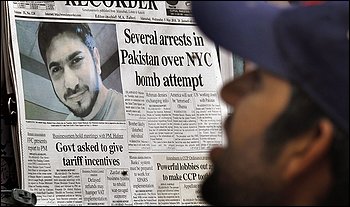
KARACHI, PAKISTAN- Terrorism suspect Faisal Shahzad’s alleged path to Times Square reflects what experts say is a militant support network that spans Pakistan and is eager to shepherd aspiring terrorists from around the globe. In this teeming southern metropolis, authorities are focusing on a domestic militant outfit that might have escorted Shahzad to distant northern peaks where U.S. investigators allege he received training with the al-Qaeda-affiliated Pakistani Taliban. In Pakistan’s heartland, extremist organizations freely build compounds and campaign with politicians, while their foot soldiers fight alongside the Taliban in the borderlands, intelligence officials say.

The overall picture is one of a jumbled scaffolding of militancy that supports al-Qaeda and the Taliban with money and safe houses, and can provide entrance tickets to mountain training camps for aspiring terrorists, one U.S. counterterrorism official said. Although the planners of most serious terror plots against the West in recent years have received direction or training from groups in the Afghanistan Pakistan border region, the reach of extremist organizations across Pakistan underscores the limits of Pakistani military offensives and of U.S. airstrikes that target the Taliban and al-Qaeda only along the frontier.

“Our cells are working everywhere,” one Pakistani Taliban fighter said in a telephone interview. New foreign recruits, among them Europeans and Americans, undergo days of isolation and “complete observation” by militants outside the tribal areas before gaining access to camps, he said.
Many such aspirants do not make it, the Taliban fighter said, because they are deemed to be spies. That happened to five Northern Virginia men, who were rebuffed by Jaish-e-Mohammed and Lashkar-i-Taiba last year despite the reference of an online recruiter, according to Pakistani authorities. However, those aspirants deemed sincere represent a “one in a million” opportunity for militants to strike in the West, said Masood Sharif Khattak, a former Pakistani Intelligence Bureau chief. Their first stop is typically not the mountains of Waziristan, where Shahzad told U.S. investigators he had trained, but 1,000 miles south in Karachi, the Taliban fighter said.

An Arabian Sea gateway of 18 million people, the city is awash in weapons and dotted with mosques where, police say, jihadist literature is freely distributed and clerics deliver vitriolic anti-American sermons. Among them is the Bath’ha mosque and seminary, an unassuming building known locally as a bastion for Jaish-e-Mohammed, a banned Kashmir-focused group. Authorities said they have arrested a man at the mosque who escorted Shahzad to the northwestern city of Peshawar.

Operatives from Pakistan’s array of jihadist groups find haven in Karachi’s multiethnic sprawl; Afghan Taliban deputy leader Mullah Abdul Ghani Baradar was arrested in the city earlier this year.

The groups form a nexus, according to recent local intelligence reports. One report, obtained by The Washington Post, warns of coordinated plans by the Pakistani Taliban — a group based in the tribal areas that has focused its attacks inside Pakistan — and the traditionally anti-India militant groups of Punjab province. The target: NATO supply convoys in Karachi.

Farther north in the expanse of Punjab, experts say the major anti-India militant groups and other radical Sunni organizations need little cover: They are tolerated and even supported by the state. Banned groups such as Lashkar-i-Taiba and Jaish-e-Mohammed have formed organizations with new names that operate freely. Some of their leaders have been arrested for alleged links to terrorist attacks, then released by the courts.
The groups have in recent years increasingly focused attacks within Punjab as provincial officials have tried to placate them, both to capitalize on their popularity and in hopes of moderating their views.

The chief provincial minister, Shahbaz Sharif, was widely criticized in March for calling on the Pakistani Taliban to “spare Punjab,” which he suggested had common cause with the militants by rejecting Western dictates. Another provincial minister visited the seminary of a banned group and campaigned for office with the leader of another. Jaish-e-Mohammed recently built a large walled compound in the southern Punjabi city of Bahawalpur.

“These groups have not been touched,” said Ahmed Rashid, a leading Pakistani expert on the Taliban and Islamist extremism. “They have been through a metamorphosis and turned their guns inward and linked up with other groups in the northwest, but no one is acknowledging it. The word is out that if you hang with them, you’re safe.”

The counterinsurgency tactics used in the tribal areas — missiles and military operations — are widely thought to be unfeasible in Pakistan’s populous mainland. But critics say Pakistani police, security agencies and officials could at least start to clamp down on extremist organizations by vocally condemning them, monitoring mosques and madrassas and denying public space and private property to militant-linked groups.

Pakistan says it is still investigating the extent of Shahzad’s militant links; some security officials have said that he definitely had ties to Jaish-e-Mohammed. Terrorism analyst Muhammad Amir Rana said that what appears to be a lack of political will to tackle militant organizations in Pakistan’s heartland is actually rooted in a problem with far greater implications for the global battle against terror: The groups’ reach and presence in cities has made them a beast that cannot easily be dismantled. “It’s very complex,” Rana said. “They have infrastructure in all different areas.”
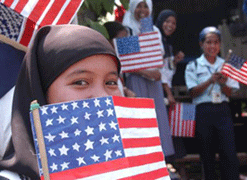
Media Ignore The Fact That Man Who Alerted Police To Failed Times Square Bombing Is A Muslim Immigrant

By Zaid Jilani for ThinkProgress.org

The chief suspect in the case of the failed Times Square car bombing is Pakistani-American Faisal Shahzad, who has confessed to the plot. Much of the media has latched onto Shahzad’s Muslim faith and his Pakistani identity, making inflammatory remarks and suggestions about Muslims and Pakistanis:

– CNN contributor and Redstate.com blogger Erick Erickson complained that the words “muslim” and “Islam” are “not mentioned” enough in stories about Shahzad. He wrote, “It really is pathetic that you’re more likely to see the words “racist” and “Republican” together in the newspaper these days than “terrorism” and “Islam.” [5/4/2010]

– Hate radio host Neal Boortz tweeted, “OMG! The Times Square Bomber is a Muslim! Shocker! Who would have believed it?” [5/4/2010]

– The cover of today’s Washington Post-published Express features a black-and-white photo of Shahzad with the sensationalist headline “MADE IN PAKISTAN” [5/5/2010]

Yet one fact being ignored in the American media’s sensationalist narrative about the failed bombing is that the man who was responsible for police finding the bomb was Muslim. The UK’s Times Online reports that Aliou Niasse, a Senagalese Muslim immigrant who works as a photograph vendor on Times Square, was the first to bring the smoking car to the police’s attention:

Aliou Niasse, a street vendor selling framed photographs of New York, said that he was the first to spot the car containing the bomb, which pulled up right in front of his cart on the corner of 45th street and Broadway next to the Marriott hotel.

“I didn’t see the car pull up or notice the driver because I was busy with customers. But when I looked up I saw that smoke appeared to be coming from the car. This would have been around 6.30pm.”

“I thought I should call 911, but my English is not very good and I had no credit left on my phone, so I walked over to Lance, who has the T-shirt stall next to mine, and told him. He said we shouldn’t call 911. Immediately he alerted a police officer near by,” said Mr Niasse, who is originally from Senegal and who has been a vendor in Times Square for about eight years.

As the Leadership Conference on Civil Rights notes, “South Asian, and Muslim communities may yield useful information to those fighting terrorism. Arabs and Arab Americans also offer the government an important source of Arabic speakers and translators. The singling out of Arabs, South Asians, Muslims, and Sikhs for investigation regardless of whether any credible evidence links them to terrorism will simply alienate these individuals and compromise the anti-terrorism effort.”

Reflecting on Niasse’s good samaritanism Muslim-American author Sumbul Ali-Karamali writes, “It’s somewhat consoling to know that the man who first noticed the smoking Nissan Pathfinder and sought help is also Muslim, a Senegalese immigrant. … I grew up Muslim in this country, with Muslim friends and non-Muslim friends, and there was very little difference between the two groups. We were all American.”

Some Of My Best Friends Are Pakistanis

As I write this, the news that the man arrested for trying to blow up Times Square is a U.S. citizen of Pakistani origin has only begun to sink in. What is this going to mean for other U.S. citizens of Pakistani origin – and for me, as their friend?

This article’s headline is an ironic allusion to something people used to say to disavow bigotry: “Some of my best friends are Jews.” It’s also a straight statement of fact: some of my best friends are Pakistanis. And I want the world to know that, especially in these times and at this moment, because I think it’s very important for us to remember that not all U.S. citizens of Pakistani origin blow stuff up.

Assuming we’re being told the truth about 30-year-old Faisal Shahzad of Bridgeport, Connecticut, it might be fair to ask: With friends like these, who needs enemies? But it’s precisely because of the horrific misguidedness of a dangerous few that we need to stay calm and remind ourselves and each other that we’re all in this together. I said exactly this, in fact, on Sunday when I spoke in support of The Citizens Foundation at the South Asian American Arts Festival put on by Zanbeel Art at the Santa Monica Art Studios. I’ll say it again tonight, when I speak to the Pakistani Students Association at UC-San Diego.

The Citizens Foundation is one of several well-run nonprofits supported by the largely very suburban and middle-class Pakistani-American community that are quietly doing the most urgently necessary work: providing education, and thereby hope and self-respect, to the burgeoning young generation of the Pakistani poor. Too quietly: groups like TCF-USA must start tooting their own horns more assertively to the American public. I would go so far as to say that countering the impression of Pakistanis conveyed by the likes of Faisal Shahzad is not only an opportunity for the Pakistani-American community, but an obligation.

I’m not saying that Pakistani Americans have to prove that they’re not terrorists. The rest of us must remember that there is no such thing as collective guilt, and that the presumption of innocence is a basic American principle. I am saying that the existing institutions of Pakistani America need to move – now – beyond inviting each other to the existing endless round of charity fundraisers, worthy and useful as those are. Pakistani Americans are a remarkably talented and resourceful community who pay a lot of money to the U.S. Treasury in taxes and contribute very substantially to American society as physicians, engineers, teachers and business people. For better or worse, Americans listen to people who insist on being heard, and if you don’t toot your own horn, nobody else is gonna toot it for you.

My writing and public speaking are all about emphasizing to Americans the humanity of Pakistanis, their experience of and views on contemporary history, the complexity of their political and geographical situation, and the enjoyable and interesting apects of my own experience of Pakistan, dating back to 1995. As my friend Todd Shea likes to say, Americans hear 2% of Pakistan’s story 98% of the time. I feel very fortunate to have experienced Pakistan directly at a relatively innocent time both in history and in my own life, before the country’s name became a dirty word in the West. We can’t go back to that time, but we can remember it – and we can and should take a deep breath, reach out to each other as allies, and work together to do what needs to be done.

What needs to be done? Young Pakistanis need to be given hope and self-respect by way of education and jobs. This is already being done by The Citizens Foundation, by Developments in Literacy – at whose San Diego fundraiser I’ll be speaking this Saturday, May 8 – by the Human Development Foundation, by Pakistani pop star Shehzad Roy’s Zindagi Trust, and famously by Greg Mortenson.

But why is Greg Mortenson’s the only one of these efforts that’s well known? Part of the answer, of course, is that he’s white: church ladies and Oprah watchers can relate to him as a virtual nephew or brother-in-law. This is fine. But we need to get beyond the toxic supposition that America is primarily a “white” and/or Christian country. It’s not, anymore, and that’s a good thing.

So the other thing that needs to be done is that the Pakistani community needs to ratchet up both its involvement in American society and politics and its visibility. Call up your local schools and churches, invite your neighbors to your home, all that good stuff, and by all means enlist me, Todd Shea, and Greg Mortenson as envoys. But also support Pakistani-American and other Muslim candidates for public office; insist on meetings with existing officeholders, not only but especially those you consider hostile to Muslims or Pakistan; and support and expand the lobbying work of groups like the Pakistani American Leadership Center and the Council of Pakistan American Affairs. Get in the American public’s face, as fellow Americans, and help us all begin having a more honest conversation about Pakistan, America, terrorism, and where our countries and world are headed.

And I ask two things of my fellow non-Pakistani Americans: Go to the trouble of educating yourselves about Pakistan – my books and inviting me to speak are, indeed, good places to start. And, when you see pictures of Faisal Shahzad over the coming days, keep in mind that, except for the buzz cut, Tim McVeigh looked a lot like me.

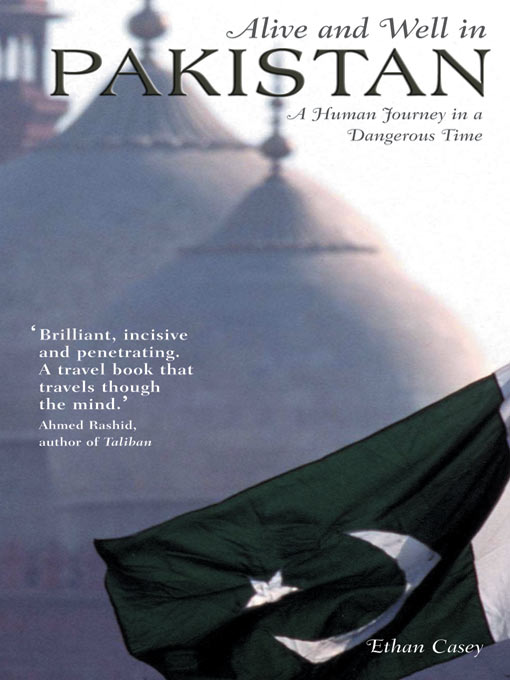
Written By Pakistanis for Peace group member ETHAN CASEY who is the author of the travel books Alive and Well in Pakistan: A Human Journey in a Dangerous Time (2004) and Overtaken By Events: A Pakistan Road Trip (2010).
They are available online at http://www.aliveandwellinpakistan.com/books/ and http://www.facebook.com/ethancaseyfans, and he can be emailed at ethan@ethancasey.com.

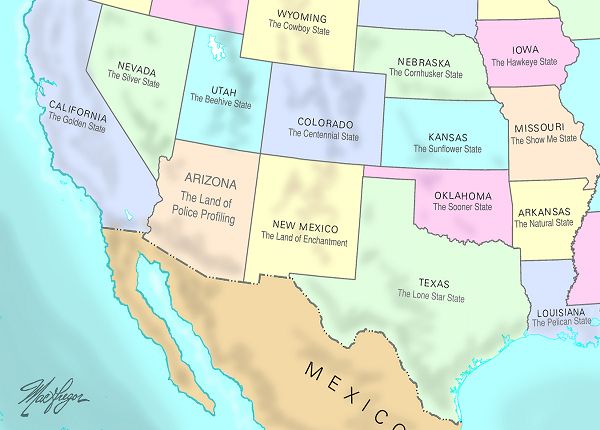
Arizona Becomes The Racial Profiling State

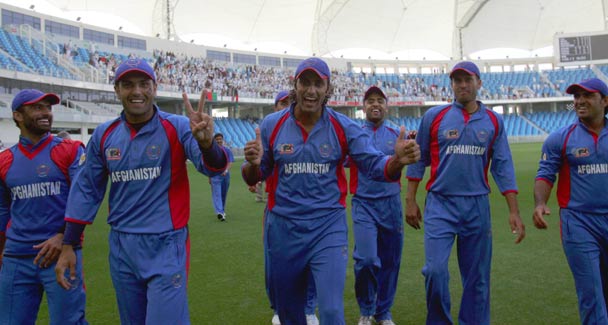
Afghanistan Is Feel-Good Element in Twenty20

By Huw Richards for The New York Times

Cricketing contrast rarely comes more vividly than it will Saturday when India plays Afghanistan on day two of the World Twenty20 tournament on the West Indian island of St. Lucia.

India is cricket’s economic giant, generating around three quarters of its income. Its players count both their fans and their personal fortunes in millions. They have just been playing in the India Premier League, the hugely lucrative competition that has brought unprecedented riches — accompanied by allegations of corruption — into the game.

Afghanistan is the tournament newcomer, taking its first steps on the game’s biggest stages. It is cricket’s almost-too-good-to-be-true story.

A team from an impoverished and war-torn nation with no real cricket history has risen with incredible speed. That this success is a bizarre byproduct of those wider sufferings, with Afghans learning the game in refugee camps in Pakistan, only adds to the joyous unlikelihood of the whole story.

Saturday will be Afghanistan’s first competitive meeting with any of cricket’s established giants. Its players bring with them not only the fearlessness of youth — none admits to being older than 26 — but whose life experiences put mere sporting disappointment in context.

As Graeme Smith, captain of South Africa, the third team in the same initial pool, said when told that an Afghan batsman had declared himself unafraid of paceman Dale Steyn: “I wouldn’t be either, if I had grown up in a war zone.”

Afghanistan, a fifth-division team in the International Cricket Council’s league system only two years ago, should, logically, have finally reached the limit of its abilities. Yet that has been said of it at most stages in its rise. India will be wary. It remembers its elimination by Bangladesh in the 2007 World Cup, the last major tournament played in the West Indies. Lose to the Afghans and it will be tough for India to find a way back — it plays its second pool match only 24 hours later against South Africa, traditionally a fast starter in big tournaments.

There is nothing like an early shock to animate a championship. Ireland, the other qualifier from outside the 10 test-playing nations, will hope to provide one before Afghanistan even takes the field, when it plays host West Indies on Friday.

The West Indians will be seeking success on and off the field. It needs the 12-team, 27 match, 17 day tournament — the final is May 16 in Barbados — to be everything the 2007 World Cup was not. Then, overpriced tickets and heavy-handed crowd control seemed expressly designed to eliminate the distinctive ambience of Caribbean cricket.

It also needs its team to play with the vibrant spirit shown by Trinidad and Tobago in the Champions League competition for regional and national title-holders. Trinidad contributes four men to its 15-strong squad including the volcanic hitter Keiron Pollard.

In the tournament opener, Sri Lanka, runner-up in the 2009 World Twenty20, takes on New Zealand. The Sri Lankans field a 40-year-old member of Parliament, Sanath Jayasuriya, and a clutch of unorthodox but highly effective bowlers.

Predicting Twenty20 matches is notoriously tough. The short length of matches — only 20 six-ball overs apiece — and the limited number of international contests make for the unexpected.

There are, though, indications that Australia — which has won the World Cup, in which teams have innings of 50 overs, three times in a row — is coming to terms with the shorter format. It has won four of its last five official matches, drawing the other. Its teams dominated the Champions League. Paceman Doug Bollinger has emerged as a real force. On the other hand, it lost its warm-up contest against Zimbabwe.

This is the third Twenty20 World Cup. Pakistan won last year and was the runner-up in 2007. It comfortably has the best winning percentage in this format.

Pakistan should, by logic, be a prohibitive favorite. Logic, though, is in short supply in Pakistan. Several of its winning team, including inspirational captain Younis Khan, have since been thrown off the team following internal disputes.

Afghanistan owes much of its aggressive playing style to examples set by Pakistan. It must be hoped it will take its administrative models from elsewhere.

The pool stages might see Bangladesh trouble Pakistan’s traditionally slow starters. Two weeks beyond that, it would be no surprise to see Australia and Sri Lanka reprise their roles as finalists in 2007 World Cup in the 50-over format.

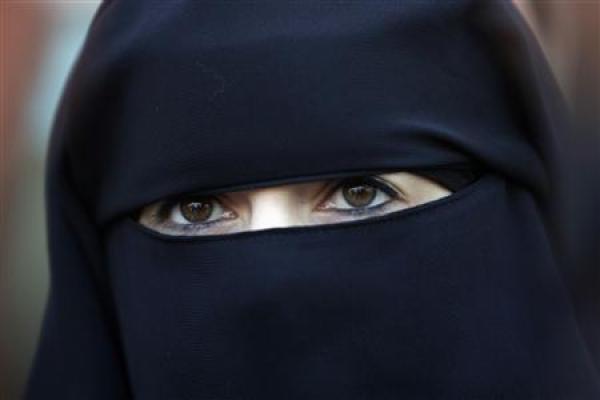
France Pushes Ahead With Controversial Law To Ban The Veil in Public

By Manzer Munir for Pakistanis for Peace

President Nicolas Sarkozy of France has ordered the French government to draw up legislation that will allow for the total ban on the Islamic veil or niqab. This includes not just state or government offices or buildings, but in fact it will make it illegal anywhere in public. The government of Sarkozy is pressing ahead with writing and planning to enact this law despite many legal analysts in France and in Europe stating that it could eventually prove to be unconstitutional.

Despite having Western Europe’s largest Muslim population, France was one of the first to enact laws outlawing the veil in government buildings and schools in 2004. The move comes after a French driver was stopped last week for driving while veiled in the French city of Nantes. She was penalized a 22-Euro or $29 fine as police cited her for posing a “safety risk” while driving.

French government spokesman Luc Chatel said that the proposals for a full ban on the niqab and burqa would be submitted to parliament in the coming months and could theoretically be made into law by this summer.

The plans to ban the veil, he stated, were “in line with the wishes of the head of state”, who has made clear on numerous occasions his opposition to face covering garments prevalent in the Muslim culture. “The ban on the full veil must be total in all public places because women’s dignity cannot be watered down,” said Chatel, as he kept to the official view that a ban would be in keeping with “republican French values of gender equality and secularism.”

He added: “Everything must be done to ensure that no one feels stigmatized because of their faith or religious beliefs. The president and the prime minister have asked all members of the government to commit to this point.” Clearly, these are contradicting actions to many Muslims across France and Europe as they feel signaled out for the differential treatment. There is no attempt to include other religious articles of clothing from being banned such as the turban for Sikhs or the habits for the Catholic nuns.

Sarkozy’s right-wing UMP party and other groups within France have been lobbying for well over a year in support of the ban. The French Council of State, a body made up of legal experts and is a part of the executive branch in charge of giving the government legal advice, has said that the burqa ban may be unconstitutional under French and European law as it violates the protections for religion. In fact, the French Republic is based on the principle of “laicite” or freedom of conscience preserved in the 1789 Declaration of the Rights of Man and of the Citizen. Undeterred, French president Sarkozy is pressing ahead with his attempts to push the law through in the next few weeks.

The Muslim veil has become the symbol of a cultural clash between a secular France concerned with preserving its Christian and Western identity, with the rise of a Muslim population that is estimated at roughly 5 million people, making 1 in 10 Frenchmen, a Muslim. Although the presence of Muslims in France started in the 8th century when Muslims had conquered Spain and pushed into France. But Islam then totally disappeared from France until the 20th century. After World War II, many people emigrated from former colonies in Morocco, Algeria, Tunisia and elsewhere, putting Islam in a distant second place as next most practiced religion after Catholicism which is roughly 85% of the population. Of France’s estimated 5 million Muslims, only as little as perhaps 3,000 women wear the veil, according to French government estimates.

The ban on the veil is not constitutional as it conflicts with the country’s freedom of religion and conscience that are ingrained in the French constitution and indeed psyche. Furthermore, to explicitly single out the Muslim religious articles of clothing, the law is blatantly discriminatory and certainly therefore unconstitutional. There is a big concern in France and indeed across Europe over the Arabization or Talibanization of Europe.

Many people in France see the Muslim religion as being repressive towards women and the veil is the symbol of that oppression. It may even seem commendable that France is standing up for the rights of oppressed Muslim women. However, the banning of the veil will certainly be seen by the Muslims of France as a direct assault on their personal and religious rights of expression. In a country where the majority of Muslim women do not wear the veil and have successfully assimilated into French society, the ban will actually serve to further divide and alienate the Muslim population already feeling stigmatized in France and across Europe since 9-11.

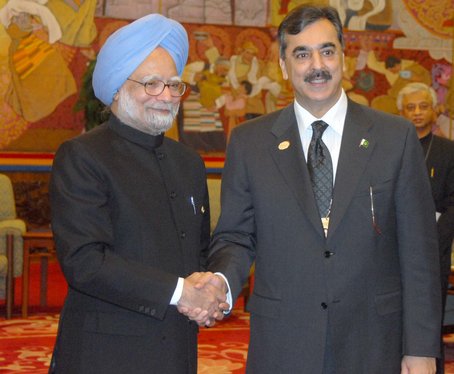
Manmohan Singh and Yusuf Raza Gilani hold the key to South Asia’s progress

By Sanjaya Baru for The Business Standard

The world is convinced that the 21st century will be Asia’s century. The only question is whether it will be only East Asia’s century or South Asia’s as well.

China’s great moderniser Deng Xiaoping famously told the late Rajiv Gandhi that “the 21st century can only be the Asian century if India and China combine to make it so”. Prime Minister Manmohan Singh can well tell his Pakistani counterpart this week that the only way South Asia can become a vibrant element of the new Asian century is if India and Pakistan combine to make it so.

As leaders of the South Asian Association for Regional Cooperation (Saarc) meet later this week in Bhutan, they must all ask themselves where this important part of Asia is headed, even as Asia to our East moves relentlessly forward.

Do any of Saarc’s members have a future that can be truly independent of their South Asian identity? Hardly. Can Pakistan hope to be part of a dynamic and rising Asia without resolving its problems at home and with India? Impossible. Can India sustain high growth for long, like China, without a more cooperative relationship with its neighbours, including Pakistan? Unlikely.

At the end of the first decade of the 21st century, South Asia stands once again at a cross roads. It can go forward, along with the more dynamic economies of East Asia, and emerge as the second engine of global growth by the middle of the century, or it can remain in a low-level equilibrium of poverty, conflict and perpetual instability.

If there are any political leaders or strategic analysts in any of the South Asian countries who think that their country can break loose from the neighbourhood and have a rosy future irrespective of what happens in the region, they live in a world of make believe.

The region has had such leaders before. Many in Pakistan thought they could delink from South Asia and attach themselves to the richer Arab and Islamic world to their west. Some in India thought New Delhi too can delink itself from its neighbourhood and “Look East” for prosperity. South Asia’s smaller countries also had fanciful notions of their individual autonomy. Some, like the Maoists in Nepal and the Sinhala chauvinists in Sri Lanka, still see a future for themselves independent of the “Mother Continent”.

The saner lot, even in Pakistan, recognise that what geography and economics propose, mere politics cannot dispose.

If Saarc has to be revived and made a more dynamic regional organisation, then India and Pakistan must get their act together. Both countries have huge internal problems and there are constituencies for peace in both countries, just as there are constituencies for exporting domestic problems across the border in both. Pakistan has used terror to thwart India’s progress, but the elephant moves on at a handsome pace of 8 per cent and more, even as Pakistan has slowed down to 2-3 per cent growth in recent years.

The last few years have, however, shown that the two neighbours owe it to their own people and their region as a whole to amicably resolve their differences, if each of the two countries and the region as a whole have to move forward.

The starting point of any meaningful dialogue between India and Pakistan is for the two to recognise each other’s concerns. Pakistan must demonstrate much greater understanding of India’s concerns about cross-border terrorism and the need to convince Indian public opinion about its sincerity in dealing with the planners and perpetrators of the 26/11 Mumbai and several other terrorist attacks.

Equally, India must address Pakistan’s genuine fears about river water utilisation and deal convincingly with the issue of Kashmir. Pakistan must rid itself of baseless fears about Indian attempts to destabilise it because any destabilisation of Pakistan can only hurt India even more.

The dialogue between Dr Singh and former Pakistan President Pervez Musharraf began with the mutual acknowledgment of these realities and each other’s concerns. It reached a critical point of mutual agreement when President Musharraf got dethroned.

It appears Prime Minister Yusuf Raza Gilani is fighting shy of picking up the threads from where President Musharraf had left them off. Much water has flown down the Indus and US President Barack Obama’s AfPak policy has muddied the waters. It has certainly encouraged Pakistan to overplay its hand.

Dr Singh should remind his counterpart that despite all the money the US is pouring into Pakistan, its economy is in doldrums, with mounting debt, 3 per cent growth and 9 per cent inflation. Pakistan has itself become a victim of the jihadi terrorism and internal conflict.

If realism on Pakistan’s part implies getting a reality check on India’s relative size and success, realism on India’s part implies coming to terms with Pakistan’s power to be a spoiler. Dr Singh and Mr Musharraf came around to getting a balanced and correct view of each other’s strengths and weaknesses. They worked out a realistic modus vivendi. Mr Gilani and his friends in the Pakistan army must catch up and get real.

A realistic and pragmatic leadership in the region is one which tries to resolve cross-border issues so that domestic problems can be handled better. The challenge for every Saarc government is at home and unless domestic problems are tackled, the region will not progress or congeal.

India and Pakistan bear a special responsibility to revitalise Saarc as the region’s biggest nations. The India-Pakistan quarrel has made Saarc non-functional. A resolution of the disputes between the two is vital to the region’s development.

It was in April 2005 that Dr Singh and Mr Musharraf began writing a new chapter in South Asian history. April 2010 would be a good month to get that project back on track.

Time to end the impasse with Pakistan

By Siggharth Varadarajan for The Hindu.com

Forget Kashmir and terrorism or even Afghanistan and water, the current stalemate between India and Pakistan is all down to one word. Both countries publicly say that Dialogue is the only way forward. Yet each is paralysed by the name Composite’. New Delhi is so allergic to it that it will not accept its use, while Islamabad has become so attached to the C word that it insists there can be nothing else.

This Indian allergy and Pakistani attachment is paradoxical, since the composite dialogue approach has suited India more than it has Pakistan. Under the guise of moving ahead simultaneously on all issues, the framework has allowed progress on trade and other subjects considered important by New Delhi, even as the status quo on major disputes like Kashmir and Siachen key concerns for Islamabad has held. Of course, the dialogue did not end cross-border terrorism or extinguish the links between the Pakistani security agencies and violent extremism as some on the Indian side might have hoped. But that was always an improbable shot given the DNA of the Pakistani establishment. Over time, India has realised the best way to deal with the threat of terror is by strengthening its internal capabilities while utilising engagement as a lever for influencing Pakistan’s behaviour over the long run.

The two most important issues for the Pakistani side today going by its public statements are Kashmir and water. But here’s the paradox: the composite dialogue, from its point of view, has produced no forward movement whatsoever on these two fronts. In four and a half rounds of talks within that framework, the total amount of time spent by the two foreign secretaries in discussing the Kashmir dispute has perhaps been 10 hours. During which neither side did anything beyond restating its national positions. As for water, it does not even figure as a separate head under this format. The only water-related dispute covered by the composite dialogue is the Tulbul navigation project, also known as the Wullar barrage. There, too, progress has been insignificant.

In contrast to the composite dialogue framework, the back channel between Satinder Lambah and Tariq Aziz was far more effective and productive. Between 2004 and 2007, the two special envoys, who reported directly to Prime Minister Manmohan Singh and General Pervez Musharraf respectively, discussed Kashmir for hundreds of hours. More significantly, their exertions produced a framework solution that was cleared on the Indian side by the Cabinet Committee on Security and on the Pakistani side by the Corps Commanders conference, before domestic political difficulties triggered by his dismissal of the chief justice forced Musharraf to back off. As for water, the Indus Water Commissioners have been meeting continuously for more than 40 years and their forum represents the best platform for Pakistan because all the Indian projects it opposes on the Indus, Chenab and Jhelum rivers can be referred to an outside arbitrator whose decisions are final and binding. Compared to such a powerful dispute resolution mechanism, the existing dialogue framework is surely inferior. And yet, even though Islamabad’s best shot at making progress on water and Kashmir lies outside the composite dialogue, it has got locked into a situation where it is refusing any form of engagement or talks other than that.

Now let’s consider India. The Indian position has been in a state of flux since it suspended the composite dialogue following the terrorist attacks on Mumbai in November 2008. Broadly speaking, however, India has maintained that there can be no resumption of the composite dialogue till Pakistan moves to punish the Mumbai conspirators and dismantles the infrastructure of terror on its soil. In September last year, Prime Minister Manmohan Singh made a distinction between meaningful dialogue on disputes, which would have to await Pakistani action on terrorism, and talks on humanitarian and other issues. Since then, the Indian position has evolved further. When Pakistan’s Foreign Secretary, Salman Bashir, was invited to Delhi in February 2010, India clarified that while its own priority was terrorism, it was ready to discuss all issues with Pakistan. That is still the official Indian position. At a press conference on April 22, Foreign Secretary Nirupama Rao said dialogue represents a concrete method to move forward in our relationship It is always useful. It helps clear the atmosphere and especially between neighbors, such as India and Pakistan. Dialogue is really the only way forward.

But if India believes dialogue is really the way forward, why is it unable to accept Pakistan’s call for the composite dialogue to be resumed? The paradox here is that from the traditional Indian perspective, the composite dialogue has worked pretty well. Discussions on Kashmir have not led to any change in the territorial status quo but have provided a cover for India to move ahead with other parts of the bilateral agenda that suit it more, like trade and cross-border confidence-building measures. And if the Indian side is opposed to talks on the water issue’, the composite framework of dialogue is ideal because water does not figure as a standalone topic under any of the subject heads. Despite this, India is the one saying no to composite’ dialogue.

India suspended the composite dialogue in order to get Pakistan to take action against terrorism. Some action has been taken but the Manmohan Singh government rightly believes that Pakistan can and must do more. It also knows the continued absence of dialogue is unlikely to produce greater action on the terrorism front and might even be counter-productive. Yet it fears the resumption of the suspended dialogue will be seen as a sign of weakness by the Opposition.

India’s options have been further complicated by the hardening of the Pakistani position on cooperation and dialogue since November 2009, when Barack Obama’s new AfPak policy dealt the military establishment in Rawalpindi a stronger hand in the Afghan endgame. Even as the Pakistan army has stepped up its offensive against the Tehreek-e-Taliban and, to a lesser extent, anti-American extremists on its border with Afghanistan, it has played up the India threat’ card to balance the perception that it is too subservient to the U.S. The rhetoric on water, the Azm-e-Nau III exercises, the loosening of the leash on Lashkar-e-Taiba chief Hafiz Saeed and the increase in infiltration across the Line of Control are all evidence of the hardening of the Pakistani military’s attitude. At the same time, the domestic political situation in Pakistan is fluid. The 18th amendment to the constitution has opened up the possibility of the civilian government and the provinces strengthening themselves vis-a-vis the military. The revival of the Benazir Bhutto assassination case in the wake of the recent U.N. report could also provide political ammunition against the establishment.

In the run up to this week’s Saarc summit in Bhutan, where Prime Minister Manmohan Singh will meet Yusuf Raza Gilani on the sidelines, Indian officials are resigned to keeping the bilateral relationship in a holding pattern.’ Their logic is that if relations cannot improve, then they should not be allowed to deteriorate either. As a short-term strategy, the holding pattern strategy works fine. There are always small things that can be done at that level too. But an aeroplane cannot circle the runway endlessly. The longer it is up in the air, the greater is the likelihood of a disastrous descent. That is why planning for an orderly landing is a much better strategy.

In Thimphu, Dr. Singh must try and find a way of doing that. One possibility is for the two prime ministers to task their foreign secretaries with reviewing what has been accomplished on the terrorism front as well as in the last few rounds of the composite dialogue, with a view to expediting the resolution of existing problems and disputes. Such a mandate would foreground the necessity of a dialogue addressing all outstanding issues while sidestepping, for the moment, any nomenclatural disagreement. It would accomplish the stated Indian objective while allowing Mr. Gilani to return without having surrendered Islamabad’s stand on the resumption of the composite dialogue.

Parallel to this process, the Prime Minister should meet with the leaders of all major political parties in order to explain the reasons why India and Pakistan need to end the current stalemate. Finally, a strict moratorium on grandstanding and posturing, finger-pointing and name-calling is necessary. When the Prime Minister is directly crafting India’s approach to Pakistan, ministers, officials and anonymous sources’ must not confuse the public with contradictory messages and statements.

Pakistan and India- The Love-Hate Relationship of Two Brothers

By Manzer Munir for Pakistanis for Peace

Since the bitter partition that resulted in the creation of Pakistan and India in 1947, and three subsequent wars with each other, not to mention countless near incidents, the two neighbors have not had an easy relationship, to say the least.

However, mixed in with fear and hatred towards each other is a fascination and affinity to the arch rival on the other side of the Line of Control. In fact, one could say that the two have a love-hate relationship with each other. The recent wedding of Pakistani cricketer Shoaib Malik to Indian tennis sensation Sania Mirza is an indication to the amount of interest and hype given to the couple in media from both sides of the border, making them instantly one of the hottest and most talked about young couples in this Bollywood and glamour obsessed culture.

In Pakistani schools, children are taught very little if anything at all about Pakistan’s pre-Islamic history. Instead the children are told of the glories of the Muslim Caliphate from the time of the prophet Mohammed and then the grand rule of the Moguls of India with the construction of immortal buildings like the Taj Mahal in Agra, or the Badshahi Masjid and the Shalimar Gardens in Lahore, all three built on the Islamic style of architecture. Not very much emphasis is given to the great contributions that the people of present day Pakistan made as Hindus for centuries prior to the arrival of Islam in the subcontinent.

Criticisms abound by Muslims that in India, Muslim contributions to modern India are down played or not explored in the manner they are deserved. However, In Pakistan it is well documented those Pakistani textbooks not only do not teach about Hindu history and achievements, they actually teach hatred against India and Hindus. There is an underlying culture of hate and inequality based on religious grounds that permeates in the society despite Islam teaching respect for all religions and faiths. It’s as if thinking of someone as a polytheist makes them less equal as a human.

The mindset becomes that these non believers are infidels and this somehow makes it easy to dehumanize them or in some way think them to be inferior to you as a human being. Even the current terrorism situation in Pakistan has its roots in this culture of hate and to some level a dehumanization of people of other faiths, especially non-Abrahamic like Hinduism or Buddhism. To not recognize that ancient Indian/Hindu history is also the history of Pakistan does a great injustice to the shared history of one of the most ancient of cultures.

The natural history of this region shows that the origins of the Indian/Pakistani civilization go back to the end of the last Ice Age, more than 10,000 years ago, making this one of the oldest civilizations of the ancient world. This area of the world is a place which gave the world not only Hinduism, but also Buddhism, Sikhism, Jainism, and other religions and has been a source of spiritual inspiration since the earliest of times. But maybe even more important than the contributions in the field of religion are the ancient civilization’s gifts to science and medicine.

Albert Einstein once said “We owe a lot to the Indians, who taught us how to count, without which no worthwhile scientific discovery could have been made.” Indeed, Indian civilization is credited with the creation of the decimal number system, the binary numbering system, negative number, the origins of algebra, and even the all important concept mathematically of zero came from ancient Indian mathematicians.

Archaeologically, India has the most extensive and continuous record of all ancient civilizations, much more than Egypt, Sumeria or Mesopotamia of the same time periods. The ruins in Mohenjo-Daro and Taxila in modern day Pakistan point to the fact that there was a very advanced civilization present here and even the beginnings of one of the early urban settlements of the ancient world as they were remarkably constructed, considering its antiquity. Taxila is also the site of what is believed to be the first university or school of higher learning in the ancient world.

Also the ancient Vedic literature is the largest in the ancient world and contains thousands upon thousands of pages dwarfing what little has been successfully preserved by the rest of the world. This literature contains profound spiritual concepts, skills in mathematics, astronomy and medicine. Sanskrit is the mother of all European languages and Ayurveda is the earliest school of medicine known to man.

Indian culture not only gave the world the game of chess, but was also was a place where some of the earliest innovations in the fields of surgery and advanced dentistry were developed as there is evidence of complex dental procedures being performed in the Indus valley some 8,000 years ago!

The celebrated American author Mark Twain once famously said of India that “India is the cradle of the human race, the birthplace of human speech, the mother of history, the grandmother of legend, and the great grandmother of tradition. Our most valuable and most constructive materials in the history of man are treasured up in India only.” And not so long ago, in a statement made by China’s former ambassador to the US, Hu Shih stated that “India conquered and dominated China culturally for 20 centuries without ever having to send a single soldier across her border.” This is further validated by the fact that the Indian civilization is considered unique in that it never invaded any country in the last 10,000 years of its history!

By denying its centuries old Hindu/Indian ancestry and history, modern day Pakistan is willfully abandoning its participation and hand in some of the greatest contributions made by one civilization to mankind. Not teaching children the importance of the pre-Islamic history and beginnings of what is now Pakistan is actually a disservice to its people. Also, since the ancestors of all Pakistanis were at some point or another Indian Hindus, disrespecting Hinduism and pre-Islamic Indian culture in essence disrespects one’s own ancestors!

Pakistan can learn a great deal from its ancient brother in the fields of democracy, constitutional freedoms, economic empowerment and technological advancements. A culture of hate has only bred more hate that has now begun to consume internally a nation that has for too long wearily looked outside to its larger neighbor as its chief enemy, instead of as a brother.

Safety of Pakistan’s Nukes from Terrorist Hands a Concern for Obama Administration

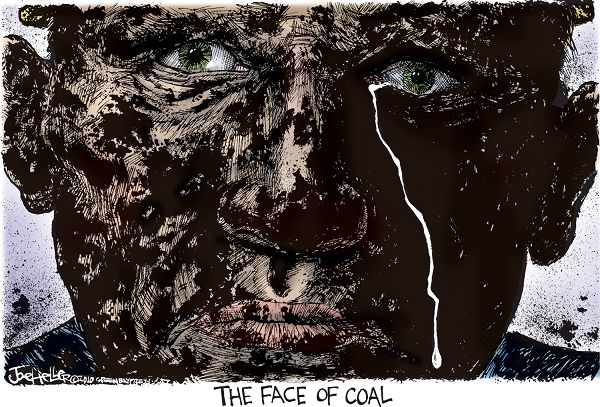
The High Cost of Deaths of West Virginian Coal Miners Disproves that Coal is A Cheap Energy

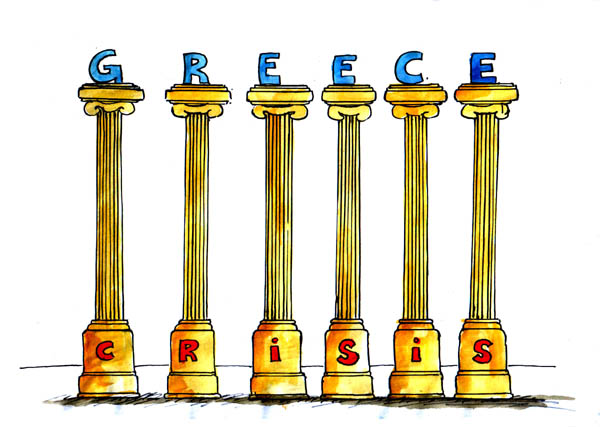
Greek Debt Crisis Affects Europe, World Economy

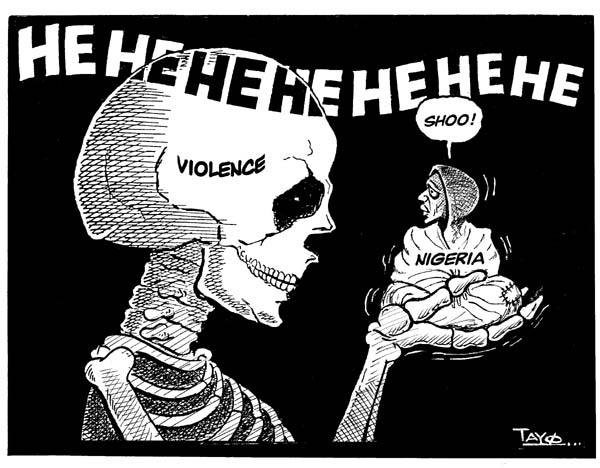
Nigeria’s Muslim-Christian Violence Blamed For Hundreds Of Deaths

By Ahmed Saka and Jon Gambrell for The Associated Press

JOS, Nigeria — Christians and Muslims once shared their lives together in Nigeria’s fertile central belt, buying each other’s goods in mixed neighborhoods and cultivating each other’s farms across a sun-baked plateau.

But growing religious hatred, political and ethnic rivalries, and increasing poverty have led to two outbursts of savage violence already this year. Men, women, children and even babies were butchered, and that harmony seems lost forever.

Now, many people carry weapons and man impromptu road blocks, fearful of the military, the police and each other.

Sunday’s bloodshed was mostly about revenge: Christian villages near the city of Jos were attacked before dawn, less than two months after Muslims were targeted and a mosque torched. Hundreds had been killed in January, their corpses stuffed into wells and sewage pits.

Survivors of the weekend attack say simple, one-room houses were set ablaze, the flames illuminating villages that have no electricity. Residents, mostly of the minority Berom ethnic group, ran from their burning homes. Assailants with machetes were waiting. Many of those who were cut down were children. At least 200 people died.

One 20-year-old man arrested for allegedly taking part in Sunday’s attacks said his family members died at the hands of rioters in January. Of those who were attacked on Sunday, he said: “There are some people that kill all our parents. We went to avenge what they did to us.”

Nigeria, a nation of 150 million people, is almost evenly split between Sunni Muslims in the north and the predominantly Christian south. The recent bloodshed has been happening in central Nigeria, where dozens of ethnic groups vie for control of the nation’s fertile “middle belt.”

“Jos is a mini-Nigeria. All segments of Nigeria are here,” said state police commissioner Ikechukwu Aduba.

After the January violence, human rights groups said text messages had been sent with the addresses of mosques and churches. Texts also offered instructions on how to dispose of bodies. One read: “Kill them before they kill you.”

Survivors said the weekend attackers asked people “Who are you?” in Fulani, a language used mostly by Muslims, and killed those who did not answer back in Fulani.

Aduba, though, said some attackers had been paid by organizers to commit the killings Sunday, but he declined to give any specifics.

National leaders appear to have little control over this region in Africa’s most populous nation. The police and army failed to prevent these horrific massacres. Acting President Goodluck Jonathan promised security forces will bring the city and outlying areas where 1 million people live under control, but many of Jos’ Protestant Christians fear the Muslim-dominated police force and military.

Local youths armed with kitchen knives and machetes have formed self-protection gangs in neighborhoods and scrutinize each passing vehicle.

Sixty kilometers (38 miles) from Jos, in the village of Ku-Got, men armed with machetes, homemade swords, slingshots, and bows and arrows stand guard amid arid cornfields. Barricades made of boulders and cacti manned by frightened locals block many roads. Nigerian security forces rarely, if ever, patrol these areas. They’re usually beyond cell phone range and there’s no electricity.

“It’s clear these people are unprotected here. If you have to carry a bow and arrows in your own town, you are unprotected,” said Mark Lipdo, who leads a Christian foundation in Jos.

Despite once working on farms belonging to the Muslim Fulani ethnic group, the Berom people of Ku-Got now look out over the silhouetted mountains and worry that armed Fulani herders will be coming down the ridge. Villagers say they buried two old women killed by Fulani raiders Sunday. The attackers razed their homes, broke a glass pulpit at the Christian church and destroyed the community’s only satellite television receiver.

“They want to inherit the land,” said the Rev. Joshua T. Dafom, who preaches at the church. “They want to wipe us out to inherit the land to graze their animals.”

Fulani community leader Sale Bayari denied that Fulanis took part in Sunday’s killings.

He says groups of armed Fulanis now guard their herds of cattle rather than watching over their animals alone and unarmed as they once did. The men fear another “guerrilla war” against the ethnic group that left many of them dead during the January rioting.

Bayari says they are prepared: “My people have an instinct for survival,” he said.

Bayari is being sought by police for allegedly inciting the Sunday attacks. He spoke to The Associated Press by mobile telephone from a neighboring state.

Plateau state, of which Jos is the capital, has long been known as “The Home of Peace and Tourism.” It has unspoiled savannas, wild animals like leopards and hippos, waterfalls and curious rock outcroppings. But the monicker is now a sad irony.

Jos was also once a hub for tin mining, but its economic fortunes have waned in the last decades. Muslims are locked out of stable government jobs because the state views them as settlers, not Christian “indigenes.” Christians have a strained relationship with the Hausa-speaking Muslims who run businesses and live in the region.

All these tensions boiled over in September 2001 in rioting that killed more than 1,000 people. Mobs of Christian young men roved the streets of Jos, asking people if they were Christian or Muslim. When a person answered Muslim, the mob would attack with knives, machetes and sticks.

Another convulsion of violence hit in 2004, in which 700 people were killed. More than 300 residents died during a similar upheaval in 2008.

Now, instead of talk of peace, there is talk of more revenge and of pre-emptive attacks.

“Plateau state has become a jungle,” Bayari said.

With or without Republicans, Healthcare needs to be passed in the United States

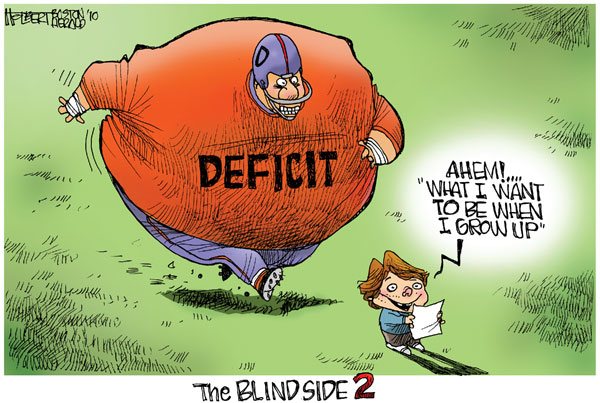
Prosperity of Future US Generations in Harm’s Way From Current Deficit Spending