Archive for the ‘ Uncategorized ’ Category

Some Experts See Fatwa As A Significant Blow To Terrorist Recruiting

By Kiran Khalid  for CNN.com
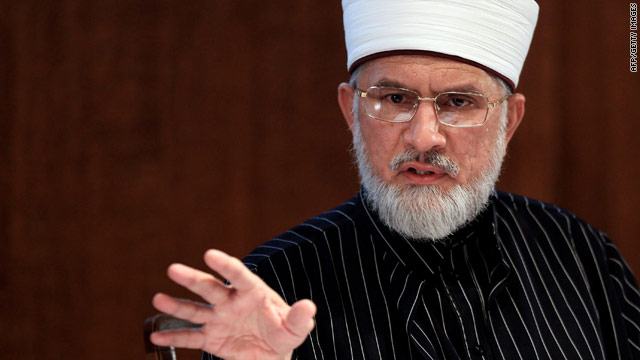
A fatwa, or religious ruling, issued this week is roiling theological waters after it took aim at those notorious for targeting others: terrorists.  The anti-terrorism fatwa by renowned Muslim scholar Muhammad Tahir ul-Qadri pulled no punches, declaring that terrorism was “haraam,” or forbidden by the Quran, and that suicide bombers would be rewarded not by 72 virgins in heaven, as many terrorist recruiters promise, but with a suite in hell.

Qadri, the founder of the Minhaj-ul-Quran International, an Islamic movement with centers in 90 countries, told a news conference in London, England, on Tuesday that his decree categorically condemns terrorism and suicide bombings in the name of Islam. “Until now, scholars who were condemning terrorism were conditional and qualified what they said,” Qadri said in a phone interview, noting that his 600-page ruling left no room for interpretation. “I didn’t leave a single, minor aspect that, in the mind of radicals or extremists, can take them to the direction of martyrdom.”

The 59-year-old Pakistani scholar called his fatwa an “absolute” condemnation, going as far as to label the terrorists themselves “kafirs,” a term in the Quran meaning “unbeliever.” “This fatwa has the potential to be a highly significant step towards eradicating Islamist terrorism,” Quilliam, a counter-extremism think tank based in London, said in a statement.

Manan Ahmed, assistant professor of Islam in South and Southeast Asia at the Institute for Islamic Studies in Berlin, agreed, calling the fatwa “unprecedented.” “This is a landmark theological study — a careful and systematic treatment of a thousand years of legal tradition dealing with armed resistance against the state, rules of engagement, aspects. The fatwa itself … is categorically and comprehensively against terrorism in any form and for any cause,” Ahmed said.

Many skeptics questioned whether an intellectual dismantling of al Qaeda’s religious philosophy could have any impact on recruiting terrorists in places like Pakistan, where many potential foot soldiers don’t have access to education, much less academic discourse. Ahmed says it can. “This is not an academic or an intellectual argument alone. This is a theological argument, based in the Qur’an and Sunnah [practice of the Prophet],” Ahmed said. “What it provides are easily available argumentation and proof for the millions of preachers across Pakistan, who can, in turn, incorporate this into their weekly sermons.”

Ahmed says where it will undoubtedly leave an indelible mark is online. Just this week, U.S. Army Brig. Gen. John Custer, head of intelligence at the U.S. military’s Central Command, told the CBS program “60 Minutes” that “without a doubt, the Internet is the single most important venue for the radicalization of Islamic youth.”

In the recent case involving five young Americans from the Virginia area, known as the “D.C. Five,” who are in a Pakistani jail potentially facing terrorism charges, the so-called ringleader Ramy Zamzam allegedly had contact with radical Islamist Web sites. Last week, 24 year-old Afghan-born American Najibullah Zazi pleaded guilty to conspiring to blow up high-density targets in New York City. Prosecutors allege he, too, communicated online with terrorists.

Salman Ahmad, the lead singer of the Pakistani rock band “Junoon” and author of “Rock & Roll Jihad: A Muslim Rock Star’s Revolution,” says it’s young men in the West who can be influenced the most by Qadri’s arguments.

“The fatwa by the Pakistani Islamic scholar is an important positive religious ruling and it has been made in the West, where a lot of young impressionable Muslim kids are being brainwashed by the terrorists to commit murder and suicide in the name of Islam,” Ahmad said.

“It’s about time Osama bin Laden and Al Qaeda realize that Muslims will not allow their faith and identity to be hijacked by a bunch of thugs masquerading as holy men.”
U.S. to Offer Smart-Bomb Kits, Drones to Pakistan

By  Yochi Dewazen The Wall Street Journal

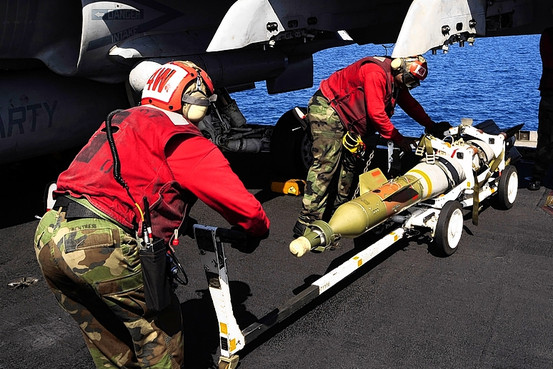
Washington DC—The Pentagon will transfer sophisticated laser-guided-bomb kits to Pakistan, escalating the Obama administration’s recent push to better arm Islamabad for its military campaign against the country’s Islamic militants. U.S. military officials said Pakistan will soon receive equipment capable of converting 1,000 traditional munitions into “smart bombs” that can more precisely strike targets on the ground. American officials hope the reconfigured bombs will help Pakistan minimize civilian casualties as it battles insurgents in the country’s tribal regions.

Pakistan will also soon take possession of a dozen American-made surveillance drones and 18 late-model F-16 fighter jets, sharply expanding the Pakistani military’s ability to track and strike targets in remote, insurgent-controlled parts of the country. The laser-guided-bomb kits could spark some unease in India, where officials have been warily watching the expanded U.S. military aid to Pakistan and wondering if the weapons would one day be turned against them. India lobbied against recent U.S. legislation giving Pakistan billions of dollars in new nonmilitary aid, though the measure passed anyway.

The Indian reaction to the planned American F-16 sale to Islamabad was far more muted, in part because India’s air force is far larger than Pakistan’s and employs more-advanced planes. Providing advanced munitions to Pakistan would once have aroused fierce opposition within the U.S. Congress, where powerful lawmakers from both parties have questioned Islamabad’s willingness to take tough measures against the country’s militants. Washington has also long charged that elements in Pakistan’s intelligence service maintain close ties to the Afghan Taliban, an accusation Islamabad denies. But the new weapons transfers are unlikely to spark much controversy in Washington, a reflection of how much the concern about Pakistan has ebbed in recent months as Islamabad deepens its military and intelligence cooperation with the U.S. In mid-February, Pakistani and American intelligence operatives jointly captured Mullah Abdul Ghani Baradar, the top military commander of the Afghan Taliban. Islamabad has also tacitly allowed the U.S. to sharply expand its campaign of drone missile strikes against insurgent targets inside Pakistani territory.

Pentagon spokesman Geoff Morrell last week praised Pakistan for mounting a serious campaign against the militants operating along the porous Afghan-Pakistani border. U.S. officials say they believe the leadership of both al Qaeda and the Afghan Taliban are hiding in Pakistan, with several top officials allegedly operating out of the Pakistani city of Quetta. “The commitment that the Pakistani government, the military, its intelligence forces have demonstrated over the past several months to combating this threat within their midst is commendable,” Mr. Morrell said. “We are here to help them in any which way they are comfortable.” The clearest example of that assistance is the stepped-up U.S. military aid to Pakistan. A new American counterinsurgency assistance fund for Pakistan is slated to increase to $1.2 billion in fiscal year 2011 from $700 million in fiscal year 2010, allowing Islamabad to acquire more U.S.-made helicopters, night-vision goggles and other military equipment.

Pakistan, which is smaller and poorer than neighboring India, uses American grants to fund most of its arms purchases. The smart bombs should help Pakistan expand its military offensive in the insurgent stronghold of South Waziristan. The laser-guided munitions can be dropped from Pakistan’s current fleet of U.S.-made F-16 fighter jets, allowing Islamabad to improve the accuracy of its bombing runs while it waits to take possession of new F-16s later this year. “This is sort of a short-term discussion, but it’s one that’s important to them because they’re involved in current operations right now,” Air Force Secretary Michael Donley told reporters Tuesday. “They’ve been trying to improve their capabilities in the short term while they wait for these aircraft.”

Lt. Col. Jeffry Glenn, an Air Force spokesman, said Pakistan will receive 700 kits capable of converting 500-pound traditional bombs into laser-guided munitions, as well as 300 kits that can be used with larger 2,000-pound bombs. The kits, which are made by Lockheed Martin Corp. and Raytheon Co., contain computerized guidance systems for the fronts of the bombs and fins that are designed to be attached to the backs of the munitions for better lift and stability. Once the kits have been properly configured, pilots or ground-based troops can use laser beams to guide the smart bombs to their targets.

Seaworld Tragedy Makes It Clear That Wild Animals Are Indeed Wild At Heart

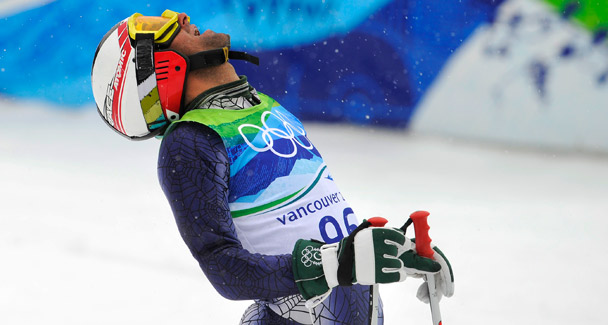
Pakistan’s first Winter Olympian conquers slopes of Whistler

By Paul Watson for The Toronto Star

WHISTLER, B.C.– In his quest to become an Olympian, Muhammad Abbas first had to tame a mountain beast called Malam Jabba. High above northwest Pakistan’s Swat valley, Malam Jabba’s runs were so wild the International Ski Federation refused to certify them for competition until a bulldozer smoothed out some of the most dangerous stretches. It made no difference to Abbas. He was born and raised in the Karakoram, a monstrous range that cuts across northeast Pakistan and includes K2, the world’s second-highest peak. As a village boy, he learned to race on skis that he chiseled and planed out planks hewed from forest firs and beech trees. He tied the strips of wood to rubber boots.

For the poor son of a troubled nation, where a corps of Olympic believers was determined to make history by sending the first Pakistani athlete to a Winter Games, Malam Jabba might have been an ideal training ground. But the Taliban seized the mountain, 150 km north of the capital Islamabad, in the summer of 2008. By year’s end, they controlled the whole Swat valley. The Talibs’ severe reading of the holy Koran permitted no place for a ski resort. They torched the luxury hotel and lifts, built with Austrian help, sending up in flames any hope that Malam Jabba would be a world-class site for alpine competition. Swat, once a place so peaceful and stunningly beautiful that tourists called it the Switzerland of South Asia, suddenly had more in common with the ruins of Bosnia. War has shadowed the Olympics from the beginning. But the ancient Greeks wanted to make sure human conflict did not get in the way of good sportsmanship. In 776 BC, the kings of Elis, Pisa and Sparta signed a treaty establishing the tradition of a truce, or Ekecheiria, so that athletes, trainers, artists, and spectators could safely reach Olympus and make it home alive.

The International Olympic Committee says it has revived the ancient concept of an Olympic truce “with the view to protecting, as far as possible, the interests of the athletes and sport in general, and to encourage searching for peaceful and diplomatic solutions to the conflicts around the world.” In the real world, ideals of truce and peace were just a pipe dream these last two weeks. Hours before the Olympic flame, lit in the name of peace, ignited Vancouver’s cauldron, thousands of Canadian, U.S. and allied troops launched their biggest offensive in Afghanistan since the war began in 2001. U.S. Special Forces helicopters attacked a convoy in Afghanistan on Feb. 21, expecting to kill guerrillas fleeing the fighting. Instead, they massacred up to 27 civilians. The force commander apologized, but national anger was stoked. On Feb. 20, Pakistan’s air force bombed a suspected militant base in South Waziristan, where the war was supposed to be over, and killing 30 people.

Idealists who hoped for restraint on foreign battlefields during the Winter Games, and demand a bigger push for peace from the Olympics, may overestimate the tradition of the truce. “That was to protect the games,” says Bruce Kidd, who heads the University of Toronto’s Faculty of Physical Education and Health. “It never pretended to, or effected an end to war, or a cessation of war. “The ancient Greeks were not so naïve that they thought that even a powerful oracle at Delphi could bring war to an end.” But Pierre de Coubertin, the French aristocrat considered the father of the modern Olympics, believed that pitting countries against one another in stadiums could promote enough cultural understanding to keep them off battlefields. “We hope that by bringing people together, through sport and culture, people will respect each other more,” says Kidd, a former Olympic athlete in track and field who is in Canada’s Sports Hall of Fame. “Or at least learn to talk to each other with respect, and as a result, less frequently resort to violence and armed combat as a way of resolving disputes.” The contest between combat and sport is still undecided, but de Coubertin’s philosophy has been severely tested.

Since the start of the modern Olympics in Athens in 1896, world wars forced the cancellation of three Olympiads: in 1916, 1940 and 1944. Invasions, including the Soviet assaults on Hungary in 1956 and Afghanistan in 1979, provoked Olympic boycotts. “In the Golden Age there was an Olympic truce and all warfare stopped during the period of the games, [but] after two thousand years of civilization, we stop the games and continue our wars,” IOC president Avery Brundage lamented when the 1956 games were almost cancelled. Olympic purists also complain the games are as much about moving merchandise and providing positive branding opportunities to corporations as sport and goodwill.

Pakistan is one country where the Olympics is not a commercial enterprise. Fierce courage against enormous odds got Abbas to the slopes of Whistler, not any big-name logos. He is the second of seven children, born to an air force security guard who retired to farming in the village of Naltar, about 50 kilometers from Gilgit in the Karakoram mountains. The local ski hill was about 500 meters long, with a 100-metre drop – good enough to turn Abbas’ father, Gulab Shah, into a national champion in a country where skiing is trifling amusement up against passions like cricket and soccer. Abbas lived for the slopes. While other village kids were satisfied sliding through the snow on crude planks, Abbas used a plane to make skis that he strapped to ordinary boots with rope and rubber bands.

Zahid Farooq, now a retired air force colonel from the southern city of Lahore, discovered Abbas in 1996 while training Pakistan air force pilots in mountain survival. The village’s 1,200 families were so badly off, “they were self-sufficient in children – nothing else,” says Farooq, Abbas’ coach. Impressed by his burning desire to ski, Farooq and other air force officers chose Abbas for one of eight pairs of proper skis and boots scrounged from donations. Abbas’ race in the Olympic giant slalom Tuesday was his first competition this season. He didn’t have money to compete elsewhere.

The Pakistan Ski Federation figured that spending between $6,000 and $8,000 on training might move him five or so places up the rankings. Pakistani ski and air force officials decided the money was better invested in the next generation. So they bought ski equipment for the kids coming up, Farooq says. In 2003, Abbas’ backers sent Abbas to Japan for 15 days of training. He could only race abroad if he found free room and board, which restricted him to one or two competitions a year. Four years later, the qualification deadline for the Vancouver Olympics bearing down fast, the federation sent Abbas to Austria for 15 days, with a Macedonian coach. He got into two more races. Last year, he received six weeks’ training under an Austrian coach, with races in Iran, Lebanon and Turkey. Then he was thrown into the Olympic fire. He placed 79th, better than two skiers. “There was a lot of pressure from back home and people were emphasizing that he must finish the race,” his coach says.

And that he did, on a day when a titan of the sport, American Bode Miller, tripped up on a gate and was listed under “Did Not Finish Run” along with 15 other racers. Three more didn’t even start. “It was awesome,” Abbas says. “I wanted to bring Pakistan’s name to people’s attention in a positive way.” He won’t leave the Vancouver Olympics a loser. He led a country at war into its first Winter Games and proved Pakistanis could challenge the best. Now Pakistan hopes to send six athletes, including women, to Sochi, Russia in 1014. And for that Muhammad Abbas is a champion.

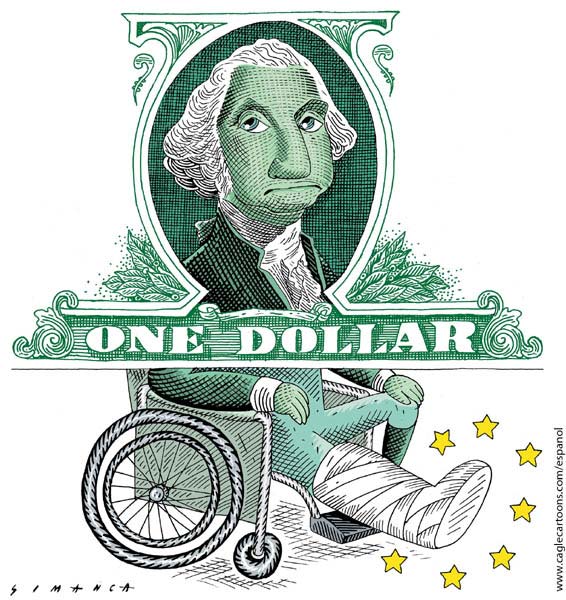
Dollar stumbles as Federal Chairman Ben Bernanke testifies that the US recovery will be slow

By Manzer Munir

Washington DC- Federal Reserve chairman Ben Bernanke was on Capitol Hill Wednesday during his twice yearly monetary policy testimony to give an update to Congress regarding the country’s economic health. He warned Congress that despite various government actions to spur economic growth, the sluggish jobs market is still a huge concern for the markets. The US dollar also came under heavy pressure as a result of the recovery doubts cast by Bernanke earlier to congressional leaders. The fears on Wall Street were also boosted by a report that showed new home sales plunged in January.

“The dollar has fallen across the board in response to Bernanke’s initial statements,” said Kathy Lien, director of currency research at Global Forex Trading. “The fact that Bernanke is not entirely optimistic about U.S. economic recovery and the fact that he did not telegraph additional tightening proves to be disappointing for dollar bulls.” Lien said the dollar has rallied since the middle of February on the chance that the Fed would be more aggressive than other central banks, but Bernanke’s comments suggest that the central bank will not be as aggressive as previously hoped.

A weaker dollar does have some benefits according to analysts. For one, the cost of US produced goods becomes more affordable to consumers in other countries and therefore can help decrease the trade deficit as more American goods are sold. A weak dollar can also be good news for American manufacturers. Their products become less expensive, so they can sell more. That is why companies such as Lockheed and John Deer like a weak dollar. This is also why many economists like it since as the big U.S. manufacturers sell more, the U.S. trade deficit shrinks.

But the negative effects of a weaker dollar can also be bad for the economy as a weaker dollar means that there is a cut in the real spending power of American consumers, which in effect makes for a reduction in real income. Secondly, a weaker dollar also lowers the role of the US currency as the world’s reserve currency of choice. Also, a weaker dollar can make inflation soar as this will increase the costs of Imports. A weaker dollar would encourage foreign investments to go to other countries and not invest their money in American markets. Most economists agree that the value of a currency reflects the perceived value of a country in the global marketplace. Therefore, maintaining and strengthening the dollar would be in the best interests of American consumers, investors, and the economy.

Pakistani Makes History as Nation’s First Winter Olympian

By Manzer Munir

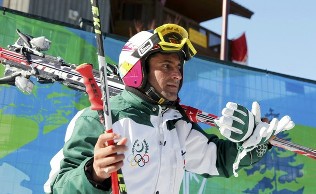
Vancouver, Canada- On Tuesday February 23, 2010, Pakistan will field its very first entry into its very first Winter Olympics. While the nation has won three gold, three silver and four bronze medals in its history at the Olympics since becoming a nation in 1947, this is the first time Pakistan will field an athlete for the Vancouver Olympics in Canada. The sole member of Pakistan’s Winter Olympics team is a 24 year old Pakistani skier by the name of Mohammad Abbas. He was the first Pakistani to qualify for a Winter Olympic event and will participate in the Alpine Skiing in the Giant Slalom category.

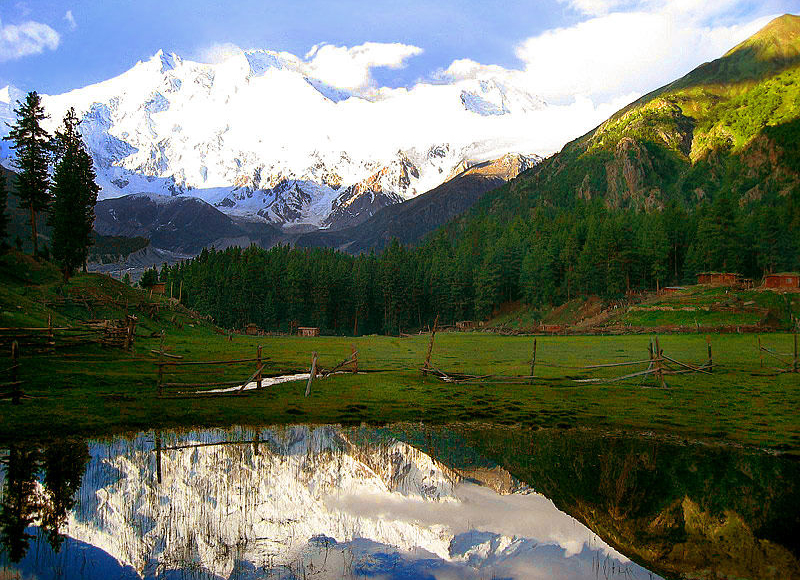
Mohammad Abbas hails from Pakistan’s northern Nalthar valley near Gilgit, Balistan and the now troubled beautiful Swat valley of Pakistan. For years very popular with the British and since with affluent Pakistanis, this picturesque and scenic area of Pakistan is nestled at the foothills of the Himalayas and receives a good amount of snow fall in the winter months. There are not many ski hills in hot weather Pakistan, but there is one in the Nalthar valley where Abbas grew up as one of the local boys. He grew up in a small village near the ski slopes.

When the idea of creating a ski team first developed, all the candidates were local children. Unfortunately out of the original 9 hopefuls, only Abbas qualified for the Vancouver games. “I started skating in 1995 using homemade wooden skates, which is how all the children in our village used to learn. We didn’t have ski boots so we tied our feet to the skis with traditional woolen foot bindings. It was pretty precarious so we had to get our balance right,” he said.

For Abbas, it has been a long and at times arduous 15 year journey since 1995 when he first took interest in skiing at the age of 9 in his village near the ski slopes of Pakistan’s Nalthar valley watching Pakistani and foreign tourists skiing spurned young Abbas and many of his cousins to take up the sport. In a cricket mad country, not very many people pick up skiing. Very few people in Pakistan can afford ski equipment and also only a very small portion of the country gets snow, so it is a surprise that the nation is even fielding an athlete at the Winter Olympics.

Sitting in the Olympics athletes village in Vancouver, Abbas admits that he does not have the camaraderie or the support of Olympic teammates that most other nations participants share, and he was concerned that he may feel a bit lonely representing his country by himself at such a big stage. But the boy from Nalthar valley was greeted with great enthusiasm and support by the rather large Pakistani Canadian community of British Columbia. “The support from my fellow countrymen has really helped me deal with the lack of teammates,” said Abbas.

Abbas said that he “achieved his ambition through hard work” and hopes he has inspired other Pakistani athletes to take up the challenge and aim for future Winter Olympic games. He also realized that his chances of bringing home Pakistan’s first Winter Olympic gold are very small but he said he wants to finish the race in an “honorable manner and make his country proud.”

Although not expected to medal, he is considered the fastest of the first time entrants to compete in the Giant Slalom that is scheduled to take place at Tuesday. It is perhaps an accomplishment to have finally fielded a Winter Olympics team, but for Pakistan it is also a moral victory to have a young man represent the country from the same troubled yet beautiful valley that has been now for months fighting for its life from Taliban insurgents. He represents not just Pakistan’s Olympic hopes, but the spirit of the people of the area to make the best of their situation and rise above the adversity of their daily struggles in a very beautiful part of the world that has also long been known as the “Switzerland of Pakistan.”

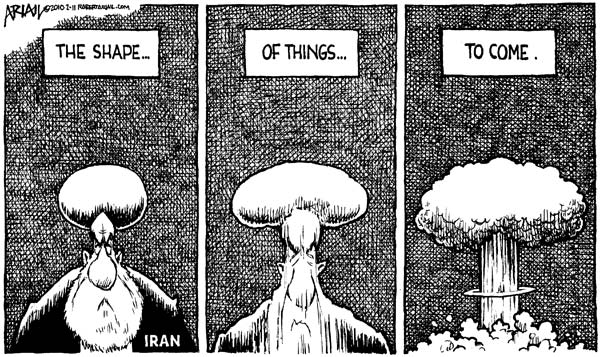
Iran Presses Ahead with Nuclear Enrichment Despite Warning from the US and Others

By Manzer Munir

Tehran, Iran- France, Russia and the United States on Tuesday voiced their displeasure with Iran’s escalation of its uranium enrichment and saw this as a great a concern for its neighbors and other countries around the globe. The three countries, nuclear club members themselves, sent a letter to the International Atomic Energy Agency (IAEA) expressing worry about Iran’s actions and demonstrating renewed pressure on the regime of President Ahmadinejad.

This alarm by the US and other countries comes after February 7 when Iran announced it intended to start producing 20 percent enriched uranium for a medical research reactor, defying ultimatums by members of the UN security council that it faces strict UN sanctions unless it halts its nuclear weapons ambitions. The concern is that Iran is enriching uranium not for a medical research reactor but rather for making atomic weapons since enriched uranium in high purity form can be used in the fissile core of a nuclear bomb. “If Iran goes forward with this escalation, it would raise concerns about Iran’s nuclear intentions,” said the joint letter, which was obtained by AFP. “Iran’s enrichment of its LEU (low-enriched uranium) stockpile to higher levels is not only unnecessary, but would serve to further undermine the confidence of the international community in Iran’s actions,” it said.

The US and other powers are trying to convince Iran to accept an IAEA backed deal where Iran is supplied with nuclear fuel for the research reactor in exchange for its low enriched uranium. This is a deal that is not acceptable to the regime in Iran. Iran’s announcement that it would enrich on its own and its “subsequent formal notification to the IAEA are wholly unjustified,” the three countries wrote in the letter to IAEA chief Yukiya Amano. The moves “represent a further step toward a capability to produce highly enriched uranium.” The countries “recognize the need in Iran for medical radioisotopes,” the letter continued. “If Iran does not wish to accept the IAEA offer, we note that these are available on the world market and could be obtained as a responsible, timely and cost effective alternative to the IAEA’s proposal.

The pressure on Iran to not acquire nuclear weapons in the troubled neighborhood of the Middle East is justified. The area has long been very unstable and Iran and Israel have already for several years been fighting a proxy war with each other through Hezbollah in Lebanon and allegedly through arming Hamas in the West Bank and Gaza. But one must also realize that as long as Israel maintains nuclear weapons and there remains no peace in the Middle East, its enemies in the region, namely Syria, Iran, and until recently Iraq would stop at nothing to acquire nuclear weapons technology also. Therefore, the core of this issue as with many other problems involving regional security and even global terrorism have their roots in the situation in the Middle East between Israel, Palestine and its neighbors.

Al-Qaeda itself gives Israel and the United States backing of it as a reason to attack America and its interests. So as long as there is not a resolution to the problem of the Palestinian state, there will be friction and a charged atmosphere in the region. Believe me, it has not calmed down much in the last 62 years. One can continue to expect countries like Iran, Libya, Syria, Egypt, Saudi Arabia and others to continue to desire nuclear weapons in order to feel less threatened by Israel’s arsenal and military supremacy. The real solution to Iran’s nuclear ambitions and other regional security threats to Israel and American interests in the region is the need to get back to the table and return to the difficult task of making peace between the Israelis and its neighbors. Only a lasting and durable peace between the Israelis and the Arabs will encourage nuclear disarmament and make the neighborhood safe from a looming nuclear mushroom cloud.

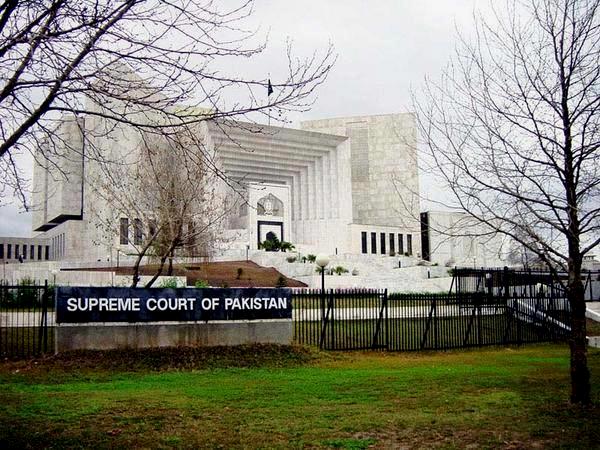
Top Judge Suspends President’s Judicial Appointment in Pakistan

By Sabrina Tavernise and Waqar Gillani for The New York Times

Islamabad, Pakistan — A simmering power struggle in Pakistan erupted into open confrontation on Saturday, when the country’s top judge clashed with President Asif Ali Zardari over a judicial appointment.

The dispute over the choice of a Supreme Court judge is part of broader political battle between Mr. Zardari and the top judge, Iftikhar, a powerful figure who has opened old corruption cases against Mr. Zardari and his allies.

It was not clear on Saturday night whether the standoff would deepen into crisis, or be resolved peacefully by Mr. Zardari backing down from his position, which officials of his party said simply followed legal precedent set by the court itself in 1996. Late Saturday, Mr. Chaudhry suspended the work of the Supreme Court next week to take up the matter.

The dispute centers around a constitutional ambiguity over how top judges are appointed in Pakistan. Under Pakistani law, the president has the right to appoint justices to the Supreme Court, but must consult with the chief justice.

On Saturday, Mr. Zardari named the senior judge of the Lahore High Court, Khwaja Sharif, to fill an opening on the Supreme Court, against the wishes of Mr. Chaudhry. Within hours, Mr. Chaudhry had convened an emergency legal panel, which ruled to suspend Mr. Zardari’s order, openly defying the president’s command.

But analysts argue the details are less important than the fact that the dispute pits a weak, unpopular president against a powerful chief justice. Cyril Almeida, a columnist for Dawn, an English-language newspaper, said he did not believe that this standoff would explode into crisis, but that it represented a worrying trend.

The last time the two openly clashed was last year, when Mr. Chaudhry led a national protest march to get Mr. Zardari to reinstate him as chief justice. Mr. Chaudhry eventually prevailed, gaining immense popularity in the process. “This is part of a larger power struggle being fought in very personalized terms,” Mr. Almeida said.

“It doesn’t look good,” he added. “Two sides digging in their heels. Something’s got to give.”

Senior officials in Mr. Zardari’s party said that Mr. Chaudhry was simply playing politics, behavior that has begun to alienate some of his former supporters, including the country’s top human rights advocate.

Much will depend on the position of the opposition leader, Nawaz Sharif, who faced a similar situation as prime minister in the late 1990s. An aide to Mr. Sharif said on Saturday that Mr. Sharif had warned Pakistan’s prime minister, who is also a member of Mr. Zardari’s party, that the president should “act according to the recommendations of the chief justice.” But that advice was not heeded, the aide said. Mr. Sharif called a meeting of his party for Sunday.

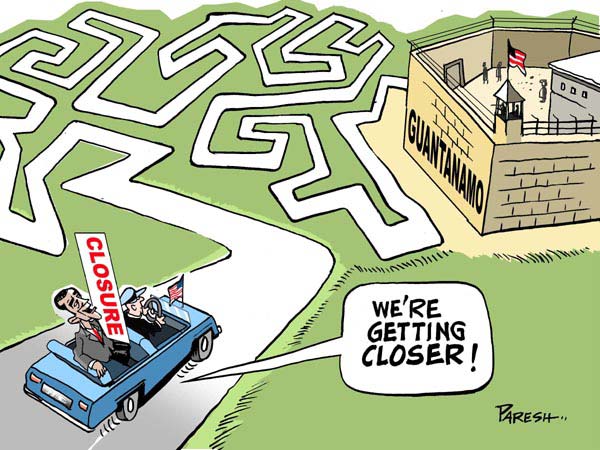
Obama’s Campaign Promise of Guantanamo Closure Proves Difficult to Fulfill

The Lessons of History

By Irfan Husain for Dawn.com

Is there — can there ever be — such a thing as accurate, objective history? If history is a true record of the past, how do we know we can trust the record-keepers? And years later, as historians sift through the past, can they be depended on not to let their own biases creep in?

As a student of history, I have long been fascinated with the problem of ascertaining which set of facts about the past to accept, and which to discard. Indeed, how can we even tell what has been handed to us over the years has not been deliberately or accidentally distorted?

This is not just idle speculation. Just as the present shapes the future, so too does the past determine the present. In a sense, we are all prisoners of history, and time has us by the jugular. This is not to say we have no control over our future: each choice we make determines which road we will take. Thus, I do not believe our future is predetermined. We all have the freedom to decide which path we take.
Individuals can decide for themselves, and suffer or prosper from the choices they have made. However, the choices nations make are the culmination of a host of factors, and this makes changing directions a more difficult task.

For instance, we in Pakistan are quick to blame the Americans for the rise of fundamentalism in our region. We are forever recalling how they walked out after the Soviets withdrew, leaving us with the jihadis who had helped win the Afghan war. But we have had years to prevent the problem from reaching this point. However, in our version of the history of the period, the Americans are to blame. In the American narrative, though, they had come to kick the Soviets out of Afghanistan, and avenge their debacle in Vietnam. After the Red Army’s defeat, there was nothing to keep them.

These are relatively recent events, and our memory is already selective. Let’s go further back to the 1965 Indo-Pakistan war. A generation of Pakistanis have been taught that our military’s position was rendered difficult due to the arms embargo the Americans had imposed on both sides at the start of the conflict. This hurt us more than it did India, because our foe hardly bought any arms from the US, while we were largely dependent on American equipment.

What our students and young military cadets are not told is that in terms of the military agreement under which American arms were supplied to us, they could only be used against a communist threat. Thus, by using them against India, we had breached our agreement.

Similarly, many Pakistanis blame the Americans for not bailing us out during the 1971 war. When Kissinger and Nixon stuck their necks out and sent in the Seventh Fleet, this gave the Indians pause, and they did not send in their forces deep into West Pakistan. Nevertheless, in the Pakistani psyche, there is a strong sense of being let down by the Americans.

Cumulatively, these misinterpretations of past events have made the Americans hugely unpopular with both the Pakistani right and left. Rather than correcting these errors by putting the record straight, our media pundits constantly hammer away at them, adding fuel to a raging fire.

In a talk he gave at the Galle Literary Festival recently, the famous historian Antony Beevor made an interesting point. While bemoaning the lack of historical accuracy in much of the media, he said we had entered a “post-literate phase”. By this he meant that images had superseded the printed word as the vehicle for disseminating history. Consequently, TV and movies now determine which historical narrative is believed.

Beevor gave the example of Loose Change, a documentary that has been viewed by millions on the Internet. This film has been spliced together by inter-cutting video clips from 9/11 with spurious interviews and bizarre counter-factual comments. The result is an over-arching conspiracy theory that presents the events of Sept 11, 2001 as a plot hatched by mysterious elements in the American establishment.

Often, when I have tried to debunk conspiracy theories in this space, I have been referred to Loose Change. Many readers clearly believe that this lightweight effort is the gold standard of investigative film-making. Indeed, this phenomenon shows that people will end up believing what they want to believe. Facts are cherry-picked to suit an argument. Historical accuracy is too dull for TV anchors to bother with.

Caught up with the pressure of deadlines and the race for ratings, they will grab the first factoid available and run with it at the drop of a hat. Even more pernicious is the tendency to deliberately distort the truth. I have often had the depressing experience of watching Urdu chat shows on TV where all sorts of wild allegations fly around. Apparently, the only requirement for winning an argument is to have a loud voice and an aggressive manner. Truth and accuracy are for pedants.

Given this large and growing disconnect between reality and our perceptions, the future looks bleak indeed. Before we can solve a problem, we have to understand it. Clear analysis needs facts and a detached outlook. Unfortunately, our approach is just the opposite: we shoot off at the mouth before we have even begun to understand the issue.

This kind of emotionally charged thinking shapes the perceptions and outlook of millions of Pakistanis today. And because it influences the present, it is crucial in shaping the future.

Today, even fundamentalist Pakistanis will agree that our biggest threat comes from the terrorists of the Tehrik-i-Taliban Pakistan and their partners in crime. To combat these foes, our troops and our police need training and equipment. To win the hearts and minds of our radicalised youth, we need to impart modern education and provide job opportunities.

It is clear that we do not have the resources to do all this on our own. The only country that can help is the United States, and it has made its intentions to come to our aid very clear. And yet we are caught up in the ill-informed conspiracy theories of the past. Rather than forming a solid regional alliance to fight a common foe, we are hemming and hawing. But a sound policy cannot be based on equivocation and wilful ignorance.

Our national self-interest demands that we free ourselves from the demons of the past that we have created and nurtured. History is a hard taskmaster, and those who refuse to learn its lessons seldom prosper.

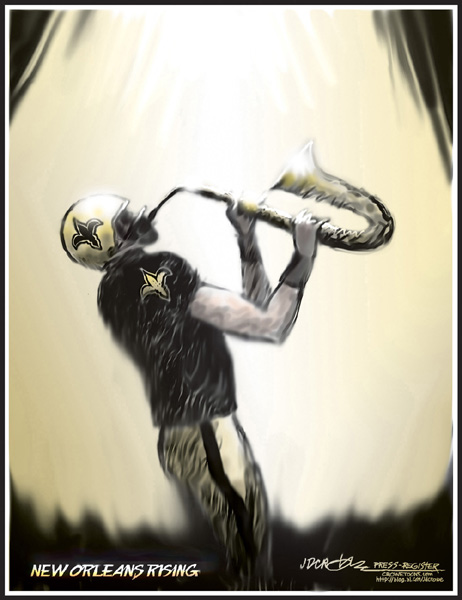
The New Orleans Saints Win the Superbowl 5 years after hurricane Katrina are a feel good story

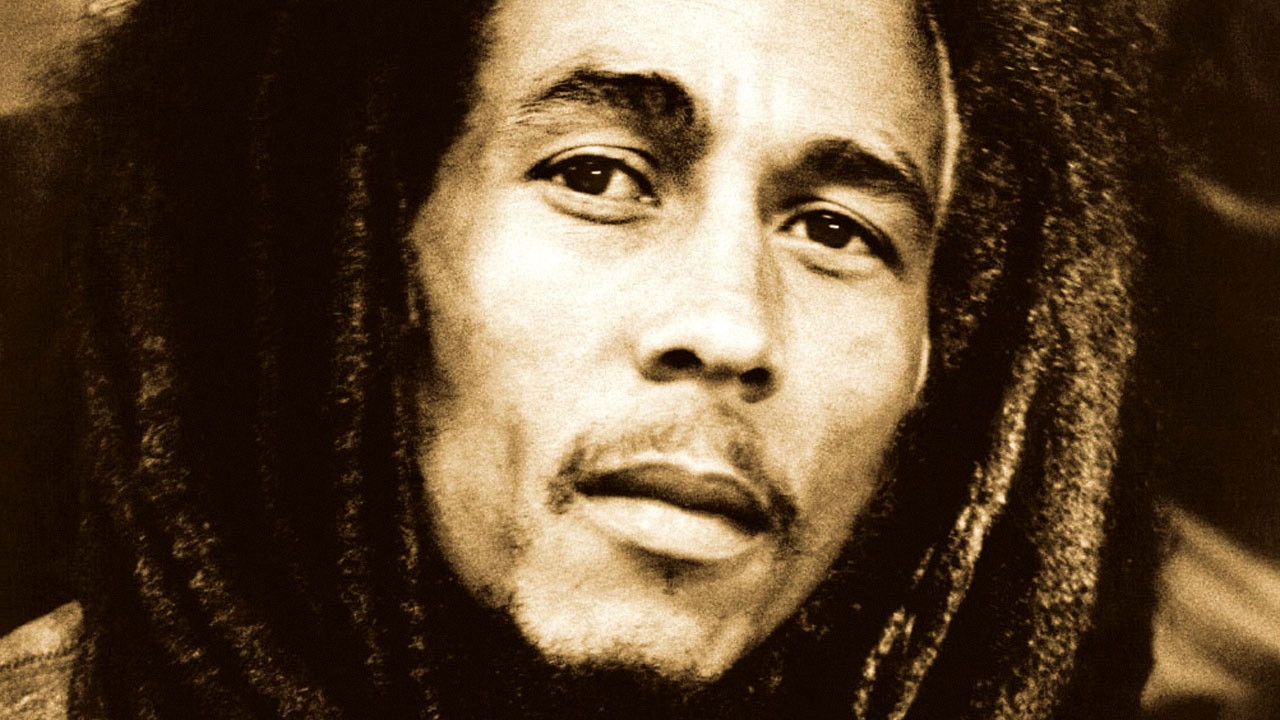
Exodus: Is Bob Marley the only third world superstar?

In a captivating new book on one of the most influential musicians of the 20th century, Jason Toynbee at The Open University sheds new light on Bob Marley’s contribution as a musician and public intellectual, how he was granted access to the global media system, and what his music means in cultural and political terms.

‘Bob Marley: Herald of a Postcolonial World?’ is released by publishers Polity and uncovers the legacy this world icon left not just to music, but to politics, society and humanity. Jason Toynbee is Senior Lecturer in Media Studies in the Department of Sociology at The Open University and admits he has been fascinated by Marley’s legacy. He said: “Bob Marley combined qualities rarely seen together in one person – extraordinary determination, huge creative powers, and a brave and principled commitment to freeing the world from oppression. Still, just because he was so exceptional his life and work have been the subject of myth-making. In this book I try to explore the myths while at the same time locating Bob in the cultural and political tumult of the mid-20th century.”

Tracing Marley’s life and work from Jamaica to the world stage, Toynbee suggests that we need to understand Marley first and foremost as a ‘social author’: “Trained in the co-operative yet also highly competitive musical laboratory of downtown Kingston, Marley went on to translate reggae into a successful international style. His crowning achievement was to mix postcolonial anger and hope with Jamaican textures and beats to produce the first world music.

“However the period since his death has been marked by brutal and intensifying inequality in the capitalist world system. There is an urgent need, then, to reconsider the nature of his legacy. The concluding chapters weigh Marley’s impact as advocate of human emancipation against his marginalisation as a ‘Natural Mystic’ and pretext for disengagement from radical politics.”

Published originally on The Open University UK website & now again in honor of Bob Marley’s 65th birthday 2/6/10 here on http://www.Pakistanisforpeace.com

Why Pakistanis are more Muslim than thou

An Opinion Piece By Razib Khan for Science Blog-Gene Expression

The contradictions of Persians in relation to Islam and Arabs have always perplexed me, and my Persian American friends have never been able to unpack the sentiments coherently. On the one hand Persians are resolutely Muslim, have been by and large for over 1,000 years. Their script is derived from Arabic, Farsi has been strongly influenced by Arabic, and many Persians have names of Arabic provenance. Muhammad, Ali and Husayn were Arabs. On the other hand, Persians are often racist against Arabs, something which takes concrete form against Iranian Arabs. As far back as Ferdowsi’s Shahnameh you see Muslim Persians looking back to a glorious past, and bemoaning their cultural enslavement by barbaric bedouins.

When it comes to the Islamic regime’s ambivalence, and on occasion outright hostility, toward the glories of pre-Islamic Iran, the authorities need to tread a fine line. The Persians may be Muslims, and have synthesized their culture with Islam so that the religion is part & parcel of a modern Persian identity, but they also retain their ethnic-national identity as distinct from the Arabs, and later Turks, who ruled them. The customs, traditions and physical monuments from pre-Islamic Iran are witness to the concrete aspects of Persian identity which are prior, or independent of, Islam.

The issue with Egyptians is somewhat different, because the Egyptians became Arabs, abandoning the Coptic language, which descends from ancient Egyptian. After the decline of Baghdad Cairo became the cultural capital of the Arab world, and more recently was the locus of pan-Arabism. In contrast to the Persians the Egyptians subsumed their own identity with that of the Muslim Arab conquerors. But, they retain pride in their ancient civilization, which is still concrete in the form of the pyramids. I don’t think this is particularly surprising; from what I can tell the Greeks take pride in the achievements of the ancient Greeks, the Chinese believe that the ancient Chinese invented everything, while black African and northern European racial nationalists have concocted an alternative history whereby all of antiquity was the handiwork of their own ethnic groups. If one’s history includes Egypt of the Pharaohs, I am skeptical that any Muslim group would disavow it on account of it being pre-Islamic.

Which brings me to Pakistan. A recent Pew survey indicated that 90% of Pakistanis view themselves as “Muslim first” (as opposed to being citizens of their country first). The numbers in Egypt, Jordan, Turkey and Indonesia are 60%, 70%, 50% and 35% respectively. Why is the number so high for Pakistan? One straightforward reason is that the raison d’etre of Pakistan is to be a state for Muslims. In other words, the Muslim identity of Pakistan is operationally coterminous with national identity. The conflict with India is generally couched in terms of the communal divide (even if India promotes itself as a secular state, it is perceived as a Hindu nation). This strong contrast along the axis of religion, as well as the history of Pakistan’s origin, are obviously important.

But there is something deeper about Pakistani identity which I have always perceived, and that is that Pakistanis, and to some extent South Asians Muslims generally, highlight and emphasize the non-South Asian antecedents of their identity. By this, I mean that South Asian Muslims are no different genetically, by and large, from Hindus (Hindu Sindhis vs. Muslim Sindhis, Hindu Bengalis vs. Muslim Bengalis), and yet seem to have an affinity for the alien Turkic conquerors of South Asia. Here’s a criticism of Pakistani history textbooks:

Nayyar, Jalal, Hoodbhoy and Saigol suggest that associated with the ‘Ideology of Pakistan’ is an essential component of hate against India and Hindus. Some time after Pakistan’s defeat in the 1971 war, Indo-Pakistan history was replaced with Pakistan Studies, whose sole purpose was to define Pakistan as an Islamic state. Students were deprived of learning about pre-Islamic history of their region. Instead, history books now started with the Arab conquest of Sindh and swiftly jumped to the Muslim conquerors from Central Asia.

The history of the geographic region of Pakistan began during the epoch of the Indus Valley Civilization, which is arguably the most antique hearth of city-culture outside of the Middle East. This is not a trivial history. Additionally, the region of Pakistan played a major role as an area which served as a jumping off point of Buddhism into Central Asia, and from there to China. In other words, there are thousands of years of history before the conquest of Sindh by the armies of the Umayyads.

Why the difference between Pakistan and Iran and Egypt? Iranians and Egyptians are no less Muslim than Pakistanis, and Egyptians are even Arabs, and yet they take great national pride in their antiquities which pre-date Islam. By national pride, I mean that ancient Egypt is of interest to those outside of the elites or specialist scholars, while the Shahnameh, which is a chronicle of pre-Islamic Iran, is presumably known outside scholarly circles. The Vedas were composed in the Punjab, which is the geographic and cultural core of Pakistan, but I presume that most Pakistanis are unfamiliar with their contents (I am willing to be corrected here).

And I think that points to a difference between Egypt and Iran, and Pakistan: India exists in continuity from the pre-Islamic period, while the Copts and Zoroastrians in Egypt and Iran are arguably simply fossil identities which do not impinge upon the central role of Islam in Egypt and Iran. A few years ago I read an article about the shift from Persian to Arabic names among elite Persian families in the centuries after the Muslim conquest concomitant with their conversion to the new religion. Only when the vast majority of Persians were Muslim did Persian names start to reappear among the elites! At that point Persian names were no longer associated with a vital non-Muslim Persian cultural tradition which might be seen as a rival to the Muslim Persian cultural tradition, and so the pre-Islamic past in the form of names could be accepted without it being taken as a sign that one was not a Muslim.

The situation in Pakistan then is one where its own pre-Islamic glory has a distasteful valence in a nation which finds itself facing an India which is a living expression of pre-Islamic South Asian civilization, manifest in the religion that is Hinduism. In fact, from what I have seen and heard Indians take great pride in the Indus Valley civilization, even if it was mostly centered within the modern confines of Pakistan. Additionally, about 60% of Pakistanis are ethnic Punjabis. This group is also prominent in India, but they are mostly Hindus and Sikhs. The Sikh religion has to some extent become a de facto Punjabi ethnic religion; the Sikh scriptures are in Punjabi.

Pakistani cuisine, language and physique all point toward the affinity with India. If Indians magically became Muslim then I assume Pakistanis would look at their indisputable South Asianness, and take pride in those aspects which mark them as a more antique civilized people than the Arabs who gave them their religion. But as it is Indians are witness to that ancient history, claim it as their own, respect the Vedas not as documents of historical interest but of contemporary piety.

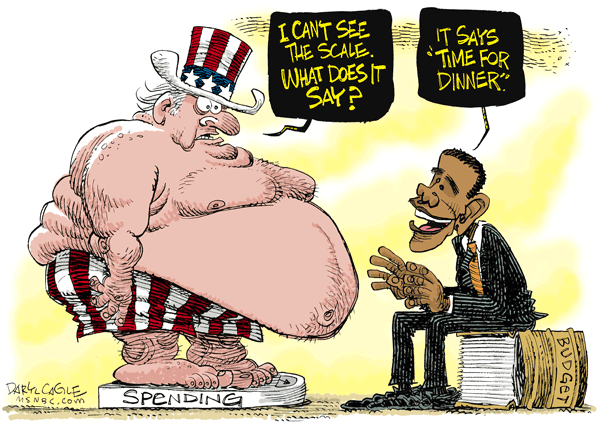
US Deficit in 2010 Expected to Reach Over 1.5 Trillion USD

Obama seeks boost in Pakistan aid

By Adam Entous and Susan Cornwell for Reuters

U.S. President Barack Obama on Monday proposed a half-billion-dollar increase in funding next year to help train and equip Pakistani security forces to fight Islamist militants and also asked for a big hike in economic aid for Islamabad. The proposed increases in Obama’s budget reflects Washington’s attempt at long-term stabilization of Pakistan.

The United States is Pakistan’s biggest aid donor. Washington wants Pakistan to help hunt for al Qaeda leaders and to stop Islamist militants from crossing the border into Afghanistan to fight U.S.-led forces there.

Obama requested $1.2 billion for the Pakistan Counterinsurgency Capability Fund for fiscal 2011, a jump from $700 million budgeted the previous year for the fund to help Pakistan defeat extremists within its own borders.

The president also requested $1.322 billion for Pakistan from what is known as the Economic Support Fund (ESF), a House Democratic aide who had seen detailed budget documents told Reuters. This fund promotes economic and political stability in strategically important regions where the United States has special security interests.

That’s a proposed increase of $289 million, or not quite a third, in economic aid from that fund to Pakistan from a year earlier, and is consistent with U.S. promises to step up economic aid to Islamabad.

Last year, Obama signed legislation pledging to provide $7.5 billion in non-military aid to Pakistan over five years. The money must be appropriated by Congress year to year.

Economic support funds are provided on a grant basis and are available for many economic purposes, like infrastructure and development projects. The House aide did not know what how the new funds would be spent in Pakistan.

The administration also asked Congress to approve $296 million for Pakistan from a program called Foreign Military Financing, the House aide said. These are grants given to foreign governments to finance the purchase of American-made weapons, services and training. The amount is roughly the same as last year’s request. Obama’s budget proposals must be approved by Congress, which holds the purse strings; this usually takes months.