Archive for the ‘ Uncategorized ’ Category

Where is the Freedom for Afghan Women?
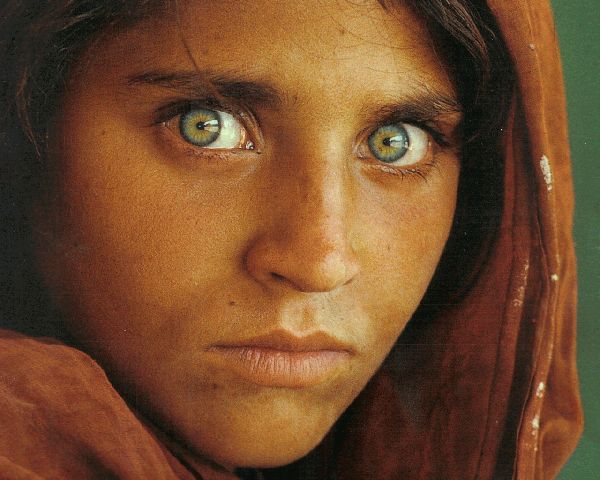
In 2001 as the impending invasion of Afghanistan beat like a drum through the newly traumatized nation then President George W. Bush declared the liberation of Afghan women as a primary goal of the war. While the current U.S. and Afghanistan governments continue to work to defeat the Taliban insurgency in Afghanistan, the eight-year-old promise to help relieve the oppression of women and girls has largely gone unmet.

During his address last week at the U.S. Military Academy at West Point, President Obama relayed several military goals and a commitment to law and order. But he did not mention women and girls. This week Human Rights Watch released the report “We have the Promises of the World,” chronicling the oppressive conditions women and girls continue to face in Afghanistan.

The Karzai government will now work with Taliban fighters who are willing to give up violence and support the efforts of the Afghan government. “Women have concerns about reconciliation with Taliban but their priority is peace. What is needed is honest discussion about what reconciliation agreements mean for women,” said Rachel Reid, researcher for Human Rights Watch and co-author of this weeks report. Reid went on to say, “Women want to be apart of the conversation. They want to be engaged because they bear the biggest cost.”

Similarly, both the U.S. and Afghan administrations have committed to support local tribal leaders in establishing militias in rural areas to police the Taliban. “In the past local militias given guns and money have disappeared or committed human rights abuses themselves or they start polarizing with another group,” Reid said. But Reid, who has lived and worked in Afghanistan for more than two years, said sometimes there is little difference in the mindset of the Taliban, tribal leaders or the parliament when it comes to the rights of women and girls. “In the Jirgess or traditional councils where Afghans go if there is a crime or they have a complaint, a girl can be given as compensation for the crime, it’s called baad. Girls are traded like property,” Reid said.

The entrenched cultural norms take time to change. “Many organizations are on a six month to one year funding cycle. This will take a generation to change,” she said. While Reid was disappointed that President Obama’s address did not mention women’s needs she said the U.S. congress has approved programs for women and girls.

Sivanka Dhanapala, a senior regional coordinator for the United Nations High Commission on Refugees (UNHCR), said “Some women find the situation intolerable because of forced marriage at a young age. Some set themselves on fire as an attempt to escape.” Because of that, he added, there is a special burn unit in a hospital in the province of Hera. While on paper President Hamid Karzai’s government promises the equality of women and men in Article 22 of the Constitution, many argue the situation on the ground does not reflect that commitment. According to the United Nations Development Fund for Women’s (UNIFEM) gender development index Afghan women are second to last in the entire world.

Many young women are forced into marriages some before the legal age of 16. The controversial Shia Personal Status Law that received international attention in April of 2009 was often referred to in the international media as the rape law. It mandated women have sex with their husbands every fourth night. The law was amended and signed by president Karzai in July of this year. It now states that women cannot leave their homes without the permission of their husbands or fathers, that custody of children will be given to fathers and grandfathers, and their husbands can refuse food to women if they refuse to oblige their husbands sexually.

“The Shia Personal Status Law sets a terrible precedent. The law reflects the realities of many women’s lives but it doesn’t mean you take customary law and enshrine as state law. It just makes it harder for women.” Reid said.

Currently, there is one female minister in the government, the minister of women’s affairs. Over the past few years, women in public life have come under severe threat. Lt. Col. Malalai Kakar was the highest-ranking female police officer. She was shot on her way to work in 2008. Similarly, Sitara Achakzai a member of a provincial council and respected local leader was shot in 2009. In both incidents the Taliban claimed responsibility but there has not been an arrest in either case. The murders and threats often have a ripple affect for women in Afghanistan, which contributes to a culture of fear and intimidation. This extends into the Afghan refugee population in neighboring Pakistan and Iran. “Afghan women living in Iran would rather stay in Iran than return to Afghanistan because they have access to education and can work in Iran,” Dhanapal said. “Not all the news is bad. One of the more heartening aspects is the opening of many girls schools,” said Dhanapala. He went on to say, “when you drive through the countryside and see girls going to school in their bright uniforms it gives you hope to persevere.” Senzil Nawid, author and scholar on Afghan women, said the women of Afghanistan are incredibly resilient. “If security is improved the women will bounce right back,” Nawid said.

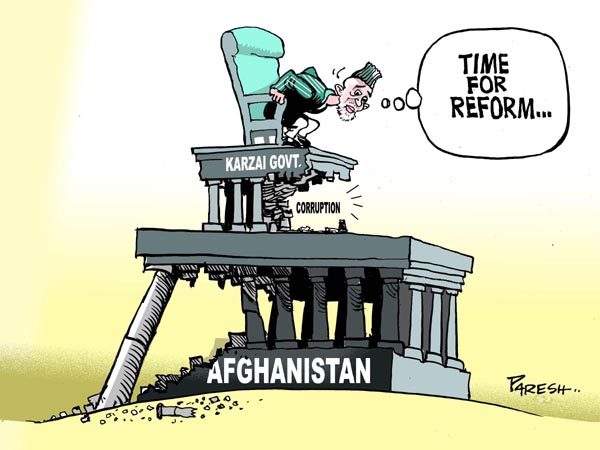
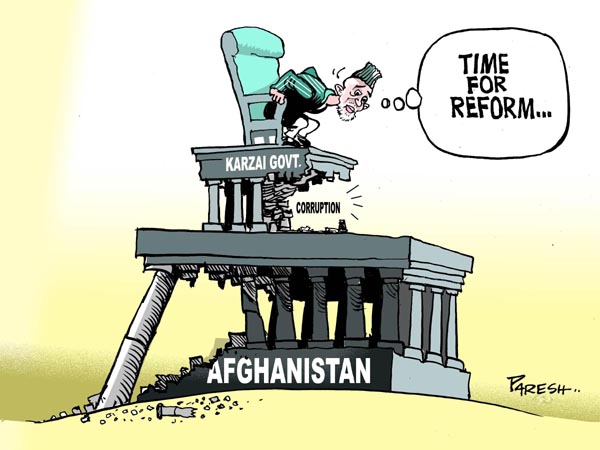
Nawid points out that the cultural oppression of women began when the Afghan communist parties overthrew the first Afghan president in 1978. At that point a bloody civil war ensued. “Women were the victims, they were treated horribly under the radical Marxists regimes and the Mujahadeen forces,” Nawid Said. She went on to say that orphaned young men were trained in Pakistan and part of the training was based in Pashtun and Wahhabist Islamic traditions. These customs forbid women from working outside the home or pursuing formal education. “The Obama administration has to address the corruption within the Afghan government. The culture of impunity needs to be tackled. It’s a huge factor in the rise of the insurgencies,” Reid said. Over the next few weeks President Karzai will be appointing ministers and cabinet people. “The government has lost credibility. We have to be very watchful in terms of the appointments,” Dhanapal said. McChrystal and President Obama have stressed the training of Afghan security forces and the rule of law.

Yet, according to Reid the police force is poorly trained. “They do not have enough civilian law enforcement training they are trained as paramilitary troops really. They have to know the law to enforce it,” she said. Nawid said President Karzai is in a difficult position. “He started the country from scratch. There was nothing, no army, no educational institutions, no economy or civil servants,” she said. While assuring the international community that he wants equality for women through commitments like the millennium development goals that state “achievement of primary education for everyone and the promotion of gender equality and the empowerment of women.” But President Karzai’s actions and desire to retain Shia support appear to contradict these goals.

While the situation that women face is profoundly challenging, they continue to speak out in spite of threats. Reid shared a story about a 13-year-old girl who ran away from the man she was forced to marry. Through a series of unbelievable and courageous steps, the young woman ended up at a safe house in the capital Kabul. While the parliament, local leaders and her husband’s family demanded she go back, the girl refused. Reid said her actions are threatening because it’s a young woman standing up for herself. “She told me she met with the president who told her it was safe to go back to her husband’s family. She said she told him ‘if you think it’s safe why don’t you send your wife or one of your children.” Reid finds great hope in the courage of this young woman whose attempt to demand her rights have not come from outside Western influence. “She knows her rights and is fighting for them,” Reid said. It is hard to know how the Obama administration will support women’s rights in Afghanistan, as there has been little public attention to the matter. Reid said that sustained work by local Afghan NGO’s is essential. “The biggest question in Afghanistan, is if you have a willing partner in the Afghan government,” Reid said.

Charity Tooze, a freelance journalist originally published this article on The Huffington Post on Dec 10, 2009. Currently she is producing a documentary about Iraqi refugees. Previously she produced a television series by and for young women, http://www.ritesofpassage.tv
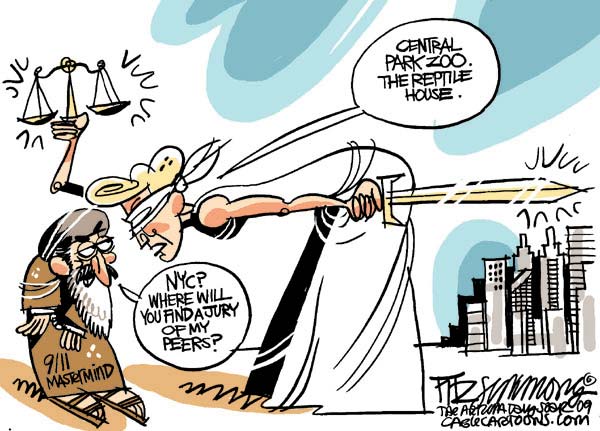
Accused 9/11 Mastermind to Have Civilian Trial in NY Despite Controversy

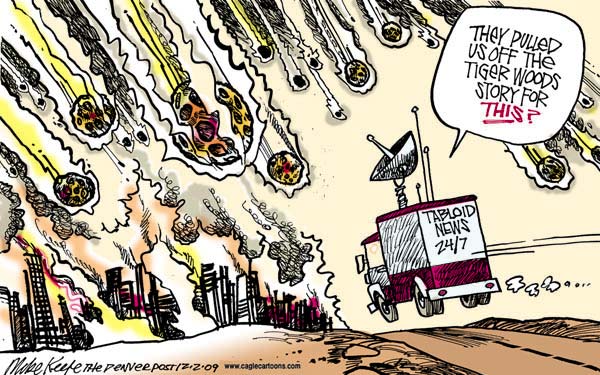
Tiger Wood’s Story Grips US News Media All Week

And

And This One Among Others….

Neutrality be Damned- Switzerland’s Ban on Minarets Seen as a Violation of Freedom of Religion

Geneva, Switzerland- In a referendum seen across Europe and much of the world as a strong rebuke of the perceived Islamization of the continent, Swiss voters on Sunday passed a bill that bans the construction of new minarets for mosques inside Switzerland. The bill championed by the nationalist leaning Swiss People’s Party was approved by 57 percent of the vote. The conservative leaning Swiss People’s Party had labeled the minarets as symbols of rising Muslim political power that somehow could have transformed the Alpine country into an Islamic nation. This is indeed very peculiar since in a country of 7.5 million people, Muslims only make up roughly 6 percent of the population.

The majority of Muslims in Switzerland are refugees from the Yugoslav wars of the 1990’s and according to governmental figures, only 1 in 10 actively practices Islam.  Nonetheless, anti-immigrant and specifically anti-Muslim sentiments have been growing in Switzerland and in other European countries since after 9-11 and there have been other efforts across the continent to stifle Islamic populations for example with the banning of headscarves in public universities and institutions in France and other similar measures on many ballots in Germany, Belgium, Denmark, Italy, Greece and other countries. But none of these countries went as far as Switzerland which is now restricting the unique architecture of mosques by banning the minarets. This is akin to churches not being allowed to display the cross on their roofs as the minaret is perhaps the most prominent symbol of a mosque and an important part of its architecture designed to signify a house of worship from other buildings in an area.

In ancient times the function of a minaret was for the imam or religious leader to climb to the highest vantage point of the mosque and call out the faithful to pray. This gave the imam a good location to maximize the call to prayer five times a day so as many Muslims nearby as possible could hear the call and come pray. Over time, the minaret became to symbolize mosques in general as the unique tower came to be a symbol of mosques around the world and a part of the distinctive Muslim architecture along with domes and arches. In modern times, the Imams now utilize microphones and speakers to ensure that the maximum number of adherents can hear the call to prayer and this need for the minaret became less about the call to prayer and more about the aesthetic look of mosques that Muslims had come to identify with over the centuries.

Switzerland currently has four mosques with standing minarets, which will not be affected by the ban. These mosques do not broadcast the daily call to prayer outside their own buildings. The sponsors of the referendum had provoked complaints of bias and bigotry by some local officials, human rights organizations and Muslim groups across Europe and around the world. Campaign posters supporting the ban on minarets showed minarets rising like missiles from the Swiss flag next to a veiled Muslim woman with menacing eyes, according to many who see the poster. Backers of the ban have stated that the growing Muslim population was a strain on the country and have implied that Muslims do not just practice religion, a clear reference to more sinister actions on the part of all adherents.

“It’s a sad day for freedom of religion,” said Mohammed Shafiq, the chief executive of the Ramadhan Foundation, a British youth organization. “A constitutional amendment that’s targeted towards one religious community is discriminatory and abhorrent.” He also stated that he was concerned that the vote could have implications in other European countries.  Amnesty International also stated that the ban violated the freedom of religion and may be eventually overturned by the Swiss Supreme Court or the European Court of Human Rights.

It is a sad fact that Muslims today across the world feel very much maligned by the press and media of most Western countries and the religion of Islam as many detractors and opponents who want to make it synonymous with terrorism and violence. Unfortunately the actions of 19 hijackers on September 11 changed forever the way non-Muslims see the religion of Islam. Furthermore, many incidents of violence and barbarianism perpetrated by individuals calling themselves Muslim have soured the non-Muslim world’s view of this great religion. There is indeed a need for dialogue and a better understanding between Islam and other faiths. Some readers may point out to the fact that in Muslim countries such as Saudi Arabia, Afghanistan, Pakistan and others, Christians and other minorities do not have many freedoms and one does not see the construction of new churches or synagogues. This is true, and yet these countries never professed to be bastions of freedom or tolerance and neither did they ever strive to be as have many European countries.

To further elaborate their point though, far too often, Muslims either have not spoke up loudly enough against violence or are afraid to speak up against the militants and extremists in fear of their lives for doing so. Many moderate Muslims feel there is enough blame to go around in the Muslim community for its inaction and muted responses to many horrific stories that come out about women’s rights, female mutilation, treatment of minorities and other stories that paint a very bad image of Islam. Too often one turns on the news to hear about another “Muslim” who blew himself up for one cause or another in some part of the world and it is no wonder that there are many misgivings about this religion of over 1 billion people.  However, there is also a clear bias against the religion of Islam that has persisted for centuries and has simmered and grown since the last Crusade. In an ever shrinking global community where we must all learn to live with each other, banning basic religious freedoms and expressions such as the ban by the government of Switzerland on minarets sends a clear signal to extremists on both sides that the ratcheting up of hatred and misunderstandings is now set to a new level of intolerance.

Reported by Manzer Munir for www.PakistanisforPeace.com

The Mumbai Attacks, 1 Year Later

Mumbai (Bombay), India- It has been a year since November 26, 2008, when 10 Pakistani militants of the group Lakshar-e-Taiba coordinated and carried out simultaneous and deadly bombings and shootings in the heart of several important Mumbai buildings and institutions. The lone surviving gunman from that rampage, Mohammed Ajmal Amir Kasab, admitted to his role in the attacks during his trial in Mumbai and he could be executed if found guilty. No other individuals have been charged in India with the killings of over 170 people and injuries to scores of others.

In his visit to the United States this week, Prime Minister Manmohan Singh has expressed India’s concern over Pakistan’s efforts in bringing the perpetrators of the Mumbai attacks to justice. “No they haven’t done enough,” he told CNN television in an interview telecast as he landed in Washington for a four-day state visit Sunday. Manmohan Singh said when he met Pakistan Prime Minister Yousuf Raza Gilani in Sharm-el-Sheikh, Egypt, in July this year, he (Gilani) had assured that his government would do all that’s possible to bring the perpetrators to justice. “That’s not happening.”  

Then three days after that statement by Singh, seven people were indicted in a Pakistani anti-terrorism court Wednesday in connection with the attacks of last year. All have denied the charges and are planning to plead not guilty. This is the first indictment in Pakistan in a case that is closely being followed in India and in the United States. The seven men charged in Pakistan allegedly belong to the militant group Lashkar-e-Taiba which is believed to be behind the coordinated attacks carried out simultaneously at numerous locations in Mumbai that lasted up to three days when all except Ajmal Kasab were killed.

Earlier in the week Prime Minister Manmohan Singh called on world powers to put pressure on Pakistan to rein in militants amid the rise in Taliban linked violence inside Pakistan and also in neighboring Afghanistan. Britain “will work shoulder to shoulder with India and our international partners to confront this common threat”, Prime Minister Gordon Brown said Thursday, while French Foreign Minister Bernard Kouchner pledged “unreserved support” for India in the fight against terrorism.

India’s minister for external affairs, Shashi Tharoor told a vigil at the Chabad House Jewish center, where six people died, including the rabbi who ran it and his pregnant wife, that the gunmen had killed “in cold blood”.”The terrorists demonstrated that their brand of fanaticism was anchored less in the absolutism of pure faith than in the geopolitics of pure hatred,” he told the congregation, including the slain couple’s parents.

The Mumbai attacks ended the peace dialogue between India and Pakistan that has been off and on over the last 60 years, remaining unresolved over the disputed Kashmir region. The militants groups in Pakistan that were left unchecked through the 80’s and the 90’s have now gotten out of control as the level of violence and attacks inside Pakistan has reached an unprecedented level. All cities of Pakistan have been touched by attacks and violence either blamed on religious zealots like the Taliban or militant groups like Lashkar-e-Taiba, which was allegedly formed with the help of the Pakistani intelligence agency ISI to infiltrate and fight Indians in Kashmir.

Bringing the perpetrators of the Mumbai attacks to justice is not only needed for the victims of these attacks in India, but finding and punishing these individuals and prosecuting them to the full extent of the law is also in Pakistan’s best interests. With a crime and violence rate currently in Pakistan that is off the charts, the average Pakistani citizen has no sense of security inside their own country. Near daily news of attacks inside some part of the country or another has also given many civilians a siege mentality.

Pakistan’s biggest neighbor is India. It is also considered by many inside the country to be its biggest enemy. The two share a border of approximately 1800 miles. They also share over 5,000 years of common history, language, culture, and customs. India is not the biggest threat facing Pakistan as India is too big and complex to focus on just Pakistan. India is fast approaching world power status as it now competes with the likes of China, Russia and the Unites States in various fields due to its robust economy, fast growing middle class, and ever increasing influence around the world.

Pakistan’s biggest enemies are the Taliban and the various militant and extremist groups that are now causing havoc within the country and also are attempting to incite a war between India and Pakistan with attacks such as the attacks of November 26 of last year. Bringing these seven individuals to justice in front of the country and the whole world will go along ways to show its neighbor and the United States that it is serious in confronting these groups and putting an end to terror both within and outside its borders.


Reported by Manzer Munir for www.PakistanisforPeace.com, a group and website started by Pakistanis dedicated to peace between India and Pakistan and outraged by the Mumbai attacks of Nov 26, 2008.

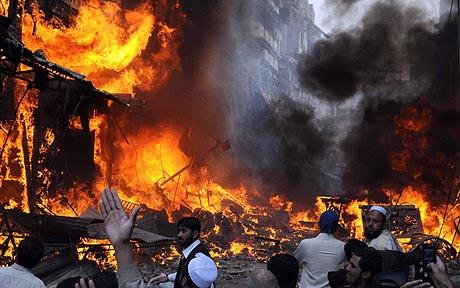
Suicide bomber in Pakistan kills 19 at courthouse in Peshawar

Peshawar, Pakistan — A suicide bomb strike on a crowded courthouse in Peshawar killed 19 people today, the 10th bomb attack in six weeks for a city bearing the brunt of retaliation from Taliban militants battling Pakistani troops along the Afghan border.

Now in its fifth week, Pakistan’s military offensive has succeeded in retaking much of the ground held by Taliban and Al Qaeda fighters in South Waziristan, for years the militants’ primary stronghold. That success, however, has been tempered by a wave of militant attacks since early October that have claimed more than 300 lives across Pakistan.

Peshawar, a city of nearly 3 million people situated on the fringe of Pakistan’s largely ungoverned tribal areas, has been hardest hit by the violence. Suicide bombers have struck bustling markets, police stations and checkposts, and even the regional headquarters of the country’s vaunted intelligence agency. With today’s strike, the death toll from the wave of attacks around Peshawar since early October has reached at least 247 people.

Authorities said the attacker tried to push his way into the city’s Judicial Complex but was stopped by police officers at the courthouse’s main gate. When they tried to search him, he detonated a jacket filled with explosives, said Sahibzada Muhammad Anees, a Peshawar city official. At least three of those killed were police officers. The blast occurred about 10:30 a.m., a period when the building is filled with Pakistani citizens and lawyers shuttling between courtrooms. Doctors said several lawyers were among the critically injured brought to the city’s Lady Reading Hospital. At least 51 people were wounded in the attack. Authorities said the toll would have been far worse if police officers at the main gate had not stopped the attacker. Their actions marked the third time in five days that police in the Peshawar region kept an attacker from causing far greater loss of life. Suicide car bomb attacks on Saturday and Monday occurred at police checkposts on the outskirts of the city, which authorities believe were not the intended targets. Nevertheless, the wave of attacks has cast a pall on everyday life in Peshawar, where Pakistanis are limiting their trips to markets and many parents are keeping their children from attending school. Dozens of streets have been closed off with barricades.

Local officials blame much of the violence in Peshawar on the federal government’s decision to announce its intent to launch an offensive against the Taliban in South Waziristan weeks before sending troops into the region. That gave militants ample time to escape and seek refuge in places like Peshawar’s suburbs. Many of the attacks hitting the city are being launched from those suburbs. “If you look at Peshawar, it’s a hub for dozens of smaller towns,” said Imtiaz Gul, an Islamabad-based security analyst. “To create a scare, the easiest place to hit is Peshawar. What you need is penetration into the militants’ networks in the suburbs, and that’s missing right now. We don’t have the required intelligence resources. There have been arrests, but that’s not enough.”

Authorities have beefed up security throughout the city and have begun using sophisticated explosive detector equipment at checkposts, but the sheer number of entry points into the city — at least 110 — make it extremely difficult to thwart every potential bomb attack. “We are facing an extraordinary situation,” said Anees. “Police are there, but it’s not humanly possible to check each and every person.”

As reported by Alex Rodriguez and Zulfiqar Ali for the Los Angeles Times


Karzai to take office for another term as US calls for reform

Pakistani pop star uses music to educate

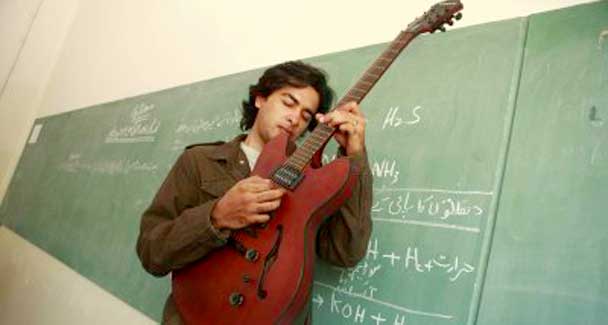
Shahzad Roy

Shehzad Roy, 32, a Pakistani pop star turned humanitarian, was in Chicago last week as the Chicago Council on Global Affairs’ 2009 Koldyke fellow. Winner of two Pakistani MTV awards and the youngest-ever recipient of one of Pakistan’s highest honors, Roy started Zindagi Trust in 2002, raising funds through concerts and offering underprivileged kids a chance to get a quality education with his “I am Paid to Learn” schools. He is now working at reforming the country’s public school system.

Q- Why did a rock star decide to reform Pakistani schools?

A- Why not? One of my cousins used to come to Pakistan from (America) and he’d always ask, “Why are there so many kids begging on the street and not in school?” Music is a powerful medium to spread the word, and since this was always pricking me, I wanted to raise funds and push people to do something about it. In 2002, we began with paying working children 20 rupees (25 cents) to come to school. We tried to compensate them for what they were making outside. These were street-smart kids, so we used to assess them to see if they went to school and studied hard. Only then, we’d pay them. This program was really successful, and we still have about 3,000 students in the program.

Q- How did you find children for your “I am Paid to Learn” schools?

A- We used to go to different areas where these kids were working. We’d ask the employer, “Can you spare them for three hours?” And whatever the monetary amount (the children) were losing, we would try to compensate them. We couldn’t attract beggars because they earn a lot of money, but a lot of these kids were working as carpenters, or they’d be selling something on the road, serving snacks, working for a tailor. Some were in the carpet industry. They were all sorts of working children. We found that the same parents who used to stop their kids from going to school (so they could work), were checking up on their kids to see if they were attending classes.

Q- The trust now manages Fatima Jinnah Government Girls School in Karachi. Why take on the public school system in Pakistan?

A- I realized I wouldn’t be able to bring all the street children, all the working children into schools until and unless I start reforming the public school sector. The majority of the kids in Pakistan go to public school, and you can’t educate the masses until you reform these schools. Children in these schools don’t develop any analytical skills. They don’t develop any critical thinking. All they’re doing is rote learning and no thinking. They can’t even write a letter in Urdu, their own language.

The government temporarily transferred management of a school in our name. Then we got (government permission) to change the textbooks. Then we built programs in sports and art. We turned around the school. We now have underprivileged girls rowing. They compete against elite private schools, and they won a competition in Sri Lanka. What we’re trying to tell the government and everyone is that this is a model of good governance. If you give a chance to underprivileged children, they can excel.

Q- How do you end extremism in Pakistan?

A- I represent the youth in Pakistan. The youth in Pakistan they want to play music. They want to play sports. But we don’t have institutions available in Pakistan. Extremism is in America also…but it is not spreading in America because the class difference is not huge. In Pakistan, they’re not addressing the issue of poverty. There’s a vacuum in Pakistan so extremism will spread in this vacuum. If you’re going to do economic development, economic growth, improve education and people’s health, I cannot say there will be no extremism, but it will not spread like this. Just killing the terrorists is not enough. There needs to be economic growth in Pakistan. Otherwise people will exploit the vacuum.

Q- Chicago Public Schools are facing an increase in youth violence. You visited several CPS schools. What did you learn?

A- There’s poverty and so there’s a vacuum here too. These kids are getting into gangs or turning to violence because of poverty. They don’t have any goals in their life just like underprivileged children in Pakistan.

Q- What were you impressed by during your visit to Chicago?

A- (Chicago first lady Maggie Daley’s) After School Matters. It’s the work of a scientist what she’s doing. This is what education is all about. It’s not just about books. It’s about a child realizing his own talent. Everyone has some talent. Once you find it, you have to nurture it.

Noreen S. Ahmed-Ullah is a Chicago Tribune reporter who originally reported this story in the Tribune today on Nov 13, 2009

Shahzad Roy’s charitable organization to educate children can be found at http://www.zindagitrust.org/

A Soldier’s Miracle

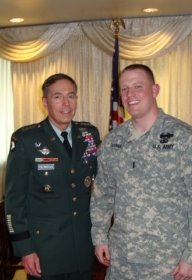
Lt Brennan Brian_and_general_petraeus

Lt. Brian Brennan is a walking, talking miracle. There are no other words for it. One year ago today, he lost both his legs to a roadside bomb in Afghanistan, and now his mother is watching him learn to run all over again, reports CBS News correspondent David Martin.

The 44 pounds of explosives which tore off his legs and killed three fellow soldiers in the 101st Airborne Division also left Brennan with a brain injury so traumatic there seemed little hope for recovery.

“He didn’t wake up,” said Joanne, his mother. “That’s when the real terror struck us all. Oh my, he may never wake up. They said on scale of 1 to 10, 1 being the worst, he was a 1.”
Then one day last June he had a visitor.
“It was a very, very grim situation, very tough one,” said General David Petraeus.

Petraeus, who once commanded the 101st Airborne, tried the usual words of encouragement.
“Hang tough, big guy,” he said. “Your troopers need you back out there.”
But Petraeus’ four stars carried no weight.
“There was absolutely no response whatsoever,” Petraeus said.
“Did you think there was any hope?” Martin asked.
“Not really,” Petraeus said.

“I see his beautiful blue eyes but he’s staring straight right through me, and he doesn’t know who I am and he doesn’t know I’m there,” Joanne said.
Petraeus turned to leave, then decided to give it one last try.
“I just decided to shout out ‘Currihee.'” That’s right, “Currihee.” It’s a Cherokee Indian word that the was the motto for the famous “Brand of Brothers” regiment in the 101st.
“We counted ‘One, two, three, Currihee,'” Petraeus said.
“That’s when he kind of sat up in the bed as best as he could,” said Brennan’s dad Jim.
“Like saying, ‘I’m in here, I’m in here,'” Joanne said.
“All of a sudden, the lieutenant, his stumps are banging up and down on the sheets,” Petraeus said. “His head is moving around and very clearly responding to his unit’s nickname.”
“Everybody in the facility was clapping and crying,” Joanne said. “The doctors who had been working on him and giving us all the bad news came running down the hall, ‘We heard, we heard.'”

For three weeks, he had not responded to the voices of his family, but that Band of Brothers motto brought him back from the living dead.
“It’s just so awesome to be part of that historic unit,” Brennan said. “It’s just always in the back of my head.”  “And then it came to the front,” Martin said. “Yes it did,” Brennan said. “After that, he just every day got a little better, a little better, a little better,” Jim said.

Just last week, Petraeus introduced Brennan as the unsung hero of the New Jersey Hall of Fame. That walk across the stage brought the house down, and overwhelmed his father.
“I know how tough he is,” Jim said. “If there was anybody in this world who could do it, he was the one.”

Less than a year after being comatose and unresponsive, he delivered an acceptance speech to a crowd of 2,000. And guess what happened next.
“One, two, three, Curihee,” shouted the crowd.

Know what Currihee means?
It means “stand alone.” How perfect is that?

As Reported by David Martin for CBS Evening News

Fort Hood Tragedy: The Enemy from Within

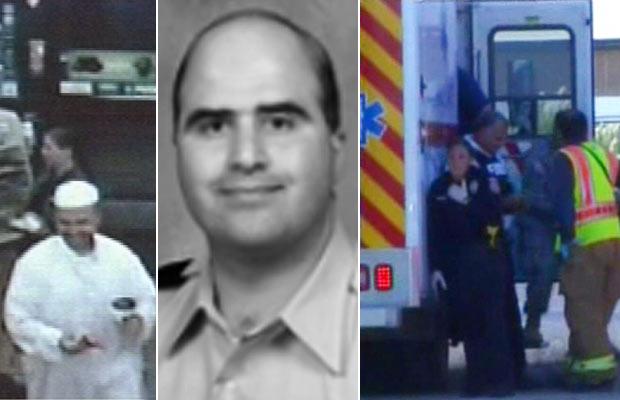
Major Nidal Hasan Shooter

Fort Hood, Texas, USA- US Army Major Nidal Malik Hasan stands accused of brutally killing up to at least 13 fellow soldiers and wounding at least more than 30 others  at FT Hood, the largest military base in the world  in Texas Thursday afternoon.  Major Nidal who was educated by the army as a psychiatrist that completed medical schooling as a soldier and was scheduled to be shipped out to Iraq  or Afghanistan soon on deployment as a medical professional.

Major Hasan also interned at Walter Reed Army Medical Center and was known to be a devout Muslim whose commitment to the army may have collided with his opposition to the wars in Iraq and Afghanistan. He was reportedly firmly against his deployment to the war zone and had argued with his superiors and others. Investigators in the US are examining internet posts promoting suicide bombings which they believe could have been written by Major Hasan.

Armed with two handguns, he walked into a training center and opened fire on fellow soldiers who were undergoing last minute medical check-ups before deployment to Iraq.

The FBI was also already aware of inflammatory internet postings by a blogger called Nidal Hasan regarding using suicide bombings, but officials have yet to confirm if this is the same as Major Hasan.

“If one suicide bomber can kill 100 enemy soldiers because they were caught off guard that would be considered a strategic victory” said the blogger on the website Scribd.

Hasan, a Muslim by birth, was born in Virginia, and his family is believed to have come from Jordan. “He was just normal, loved sports, never got into trouble” said his cousin Nader Hasan . The family was “shocked and baffled” by the incident said Nader to reporters. Nader says that his cousin Major Hasan became more devout after his parents died in 1998 and 2001.“His parents didn’t want him to go into the military,”  says the cousin.  But according to Nader, Major Hasan had said, “No, I was born and raised here, I’m going to do my duty to the country. ”

Authorities are piecing together the details of this story and trying to understand who one of their own can commit such a despicable act on fellow soldiers. President Obama said that “It’s difficult enough when we lose these brave Americans in battle overseas. It is horrifying that they should come under fire at an army base on American soil.” 

Attacks such as these do nothing to stop the prejudice and stereotyping of the vast Muslim communities in the US and in Europe where millions of decent and peaceful Muslims citizens live their lives in their adopted countries.

There are a couple of wars going on, most of us know that already. But I am not only talking about the wars in Iraq and Afghanistan. I am referring to one war between the moderate and secular West and the one between the religious and at times seemingly intolerant Islam in the East. This was termed as the clash of civilizations by scientist and writer Samuel P Huntington. An ongoing conflict going back to at least the Crusades, this conflict between the West and the East is centuries old.

Another, and some may say more important conflict, rages on within Islam itself between the extremists and Jihadi elements and between the moderate and progressive vast majority of the Muslim population worldwide. The smaller yet more vocal and certainly more violent extremists in countries like Pakistan, Afghanistan, Algeria, Iraq, Iran, Indonesia, Egypt and elsewhere around the world want to bring about this clash between the civilizations. These individuals envision the creation of country out of the  Ummah  (Community of Believers) similar to the grouping together as one nation under the caliphate of prophet Mohammed’s time.

To them, an inevitable struggle and war with the West is a foregone conclusion. The problem is that apparently as evidenced with the alleged actions of Major Hasan, these demented and disillusioned individuals do not just reside in the countries above. But tragically, some of them such as Major Hasan are the enemy from within.

Reported by Manzer Munir for http://www.PakistanisforPeace.com

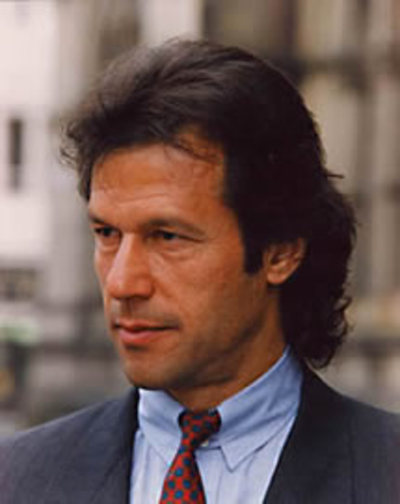
Imran Khan: Why the West craves materialism & why the East sticks to religion

imran khan's article on why the east sticks to religion

My generation grew up at a time when colonial hang up was at its peak. Our older generation had been slaves and had a huge inferiority complex of the British. The school I went to was similar to all elite schools in Pakistan. Despite gaining independent, they were, and still are, producing replicas of public schoolboys rather than Pakistanis.

I read Shakespeare, which was fine, but no Allama Iqbal – the national poet of Pakistan. The class on Islamic studies was not taken seriously, and when I left school I was considered among the elite of the country because I could speak English and wore Western clothes. Despite periodically shouting ‘Pakistan Zindabad’ in school functions, I considered my own culture backward and religion outdated. Among our group if any one talked about religion, prayed or kept a b talked about religion, prayed or kept a beard he was immediately branded a Mullah. Because of the power of the Western media, our heroes were Western movie stars or pop stars.

When I went to Oxford already burdened with this hang up, things didn’t get any easier. At Oxford, not just Islam, but all religions were considered anachronism. Science had replaced religion and if something couldn’t be logically proved it did not exist. All supernatural stuff was confined to the movies. Philosophers like Darwin, who with his half-baked theory of evolution had supposedly disproved the creation of men and hence religion, were read and revered. Moreover, European history reflected its awful experience with religion. The horrors committed by the Christian clergy during the Inquisition era had left a powerful impact on the Western mind.

To understand why the West is so keen on secularism, one should go to places like Cordoba in Spain and see the torture apparatus used during the Spanish Inquisition. Also the persecution of scientists as heretics by the clergy had convinced the Europeans that all religions are regressive. However, the biggest factor that drove people like me away from religion was the selective Islam practiced by most of its preachers. In short, there was a huge difference between what they practiced and what they preached. Also, rather than explaining the philosophy behind the religion, there was an overemphasis on rituals. I feel that humans are different to animals. While, the latter can be drilled, humans need to be intellectually convinced. That is why the Qur’an constantly appeals to reason. The worst, of course, was the exploitation of Islam for political gains by various individuals or groups. Hence, it was a miracle I did not become an atheist. The only reason why I did not was the powerful religious influence my mother wielded on me since my childhood. It was not so much out of conviction but love for her that I stayed a Muslim. However, my Islam was selective. I accepted only parts of the religion that suited me. Prayers were restricted to Eid days and occasionally on Fridays, when my father insisted on taking me to the mosque with him. All in all I was smoothly moving to becoming a Pukka Brown Sahib. After all I had the right credentials in terms of school, university and, above all, acceptability in the English aristocracy, something that our brown sahibs would give their lives for. So what led me to do a ‘lota’ on the Brown Sahib culture and instead become a ‘desi’? Well it did not just happen overnight. Firstly, the inferiority complex that my generation had inherited gradually went as I developed into a world-class athlete. Secondly, I was in the unique position of living between two cultures. I began to see the advantages and the disadvantages of both societies. In Western societies, institutions were strong while they were collapsing in our country.

However, there was an area where we were and still are superior, and that is our family life. I began to realize that this was the Western society’s biggest loss. In trying to free itself from the oppression of the clergy, they had removed both God and religion from their lives. While science, no matter how much it progresses, can answer a lot of questions – two questions it will never be able to answer: One, what is the purpose of our existence and two, what happens to us when we die? It is this vacuum that I felt created the materialistic and the hedonistic culture. If this is the only life then one must make hay while the sun shines – and in order to do so one needs money.

Such a culture is bound to cause psychological problems in a human being, as there was going to be an imbalance between the body and the soul. Consequently, in the US, which has shown the greatest materialistic progress while giving its citizens numerous rights, almost 60 percent of the population consult psychiatrists. Yet, amazingly in modern psychology, there is no study of the human soul. Sweden and Switzerland, who provide the most welfare to their citizens, also have the highest suicide rates. Hence, man is not necessarily content with material well being and needs something more. Since all morality has it roots in religion, once religion was removed, immorality has progressively grown since the 70s. Its direct impact has been on family life.

In the UK, the divorce rate is 60 percent, while it is estimated that there are over 35 percent single mothers. The crime rate is rising in almost all Western societies, but the most disturbing fact is the alarming increase in racism. While science always tries to prove the inequality of man (recent survey showing the American Black to be genetically less intelligent than whites) it is only religion that preaches the equality of man. Between 1991 and 1997, it was estimated that total immigration into Europe was around 520,000, and there were racially motivated attacks all over, especially in Britain, France and Germany.

In Pakistan during the Afghan war, we had over four million refugees, and despite the people being so much poorer, there was no racial tension. There was a sequence of events in the 80s that moved me toward God as the Qur’an says: “There are signs for people of understanding.” One of them was cricket. As I was a student of the game, the more I understood the game, the more I began to realize that what I considered to be chance was, in fact, the will of Allah. A pattern which became clearer with time. But it was not until Salman Rushdie’s “Satanic Verses” that my understanding of Islam began to develop. People like me who were living in the Western world bore the brunt of anti-Islam prejudice that followed the Muslim reaction to the book. We were left with two choices: fight or flight. Since I felt strongly that the attacks on Islam were unfair, I decided to fight. It was then I realized that I was not equipped to do so as my knowledge of Islam was inadequate.

Hence I started my research and for me a period of my greatest enlightenment. I read scholars like Ali Shariati, Muhammad Asad, Iqbal, Gai Eaton, plus of course, a study of Qur’an. I will try to explain as concisely as is possible, what “discovering the truth” meant for me. When the believers are addressed in the Qur’an, it always says, “Those who believe and do good deeds.” In other words, a Muslim has dual function, one toward God and the other toward fellow human beings. The greatest impact of believing in God for me, meant that I lost all fear of human beings. The Qur’an liberates man from man when it says that life and death and respect and humiliation are God’s jurisdiction, so we do not have to bow before other human beings. Moreover, since this is a transitory world where we prepare for the eternal one, I broke out of the self-imposed prisons, such as growing old (such a curse in the Western world, as a result of which, plastic surgeons are having a field day), materialism, ego, what people say and so on. It is important to note that one does not eliminate earthly desires. But instead of being controlled by them, one controls them.

By following the second part of believing in Islam, I have become a better human being. Rather than being self-centered and living for the self, I feel that because the Almighty gave so much to me, in turn I must use that blessing to help the less privileged. This I did by following the fundamentals of Islam rather than becoming a Kalashnikov-wielding fanatic. I have become a tolerant and a giving human being who feels compassion for the underprivileged. Instead of attributing success to myself, I know it is because of God’s will, hence I learned humility instead of arrogance. Also, instead of the snobbish Brown Sahib attitude toward our masses, I believe in egalitarianism and strongly feel against the injustice done to the weak in our society.

According to the Qur’an, “Oppression is worse than killing.” In fact only now do I understand the true meaning of Islam, if you submit to the will of Allah, you have inner peace. Through my faith, I have discovered strength within me that I never knew existed and that has released my potential in life. I feel that in Pakistan we have selective Islam. Just believing in God and going through the rituals is not enough. One also has to be a good human being. I feel there are certain Western countries with far more Islamic traits than us in Pakistan, especially in the way they protect the rights of their citizens, or for that matter their justice system. In fact some of the finest individuals I know live there. What I dislike about them is their double standards in the way they protect the rights of their citizens but consider citizens of other countries as being somehow inferior to them as human being, e.g. dumping toxic waste in the Third World, advertising cigarettes that are not allowed in the West and selling drugs that are banned in the West.

One of the problems facing Pakistan is the polarization of two reactionary groups. On the one side is the Westernized group that looks upon Islam through Western eyes and has inadequate knowledge about the subject. It reacts strongly to anyone trying to impose Islam in society and wants only a selective part of the religion. On the other extreme is the group that reacts to this Westernized elite and in trying to become a defender of the faith, takes up such intolerant and self-righteous attitudes that are repugnant to the spirit of Islam. What needs to be done is to somehow start a dialogue between the two extreme. In order for this to happen, the group on whom the greatest proportion of our educational resources are spent in this country must study Islam properly. Whether they become practicing Muslims or believe in God is entirely a personal choice.

As the Qur’an tells us there is “no compulsion in religion.” However, they must arm themselves with knowledge as a weapon to fight extremism. Just by turning up their noses at extremism the problem is not going to be solved. The Qur’an calls Muslims “the middle nation”, not of extremes. The Holy Prophet (peace be upon him) was told to simply give the message and not worry whether people converted or not, therefore, there is no question in Islam of forcing your opinions on anyone else. Moreover, we are told to respect other religions, their places of worship and their prophets. It should be noted that no Muslim missionaries or armies ever went to Malaysia or Indonesia. The people converted to Islam due to the high principles and impeccable character of the Muslim traders.

At the moment, the worst advertisements for Islam are the countries with their selective Islam, especially where religion is used to deprive people of their rights. In fact, a society that obeys fundamentals of Islam has to be a liberal one. If Pakistan’s Westernized class starts to study Islam, not only will it be able to help society fight sectarianism and extremism, but it will also make them realize what a progressive religion Islam is. They will also be able to help the Western world by articulating Islamic concepts.

Recently, Prince Charles accepted that the Western world can learn from Islam. But how can this happen if the group that is in the best position to project Islam gets its attitudes from the West and considers Islam backward? Islam is a universal religion and that is why our Prophet (peace be upon him) was called a Mercy for all mankind.

(Mr. Imran Khan is the Chairman of political party Pakistan Tehreek-i-Insaf PTI and a former world class international cricket sensation who played for Pakistan and captained them to the Cricket World Cup Championship in 1992. His article first appeared in the Arabnews)

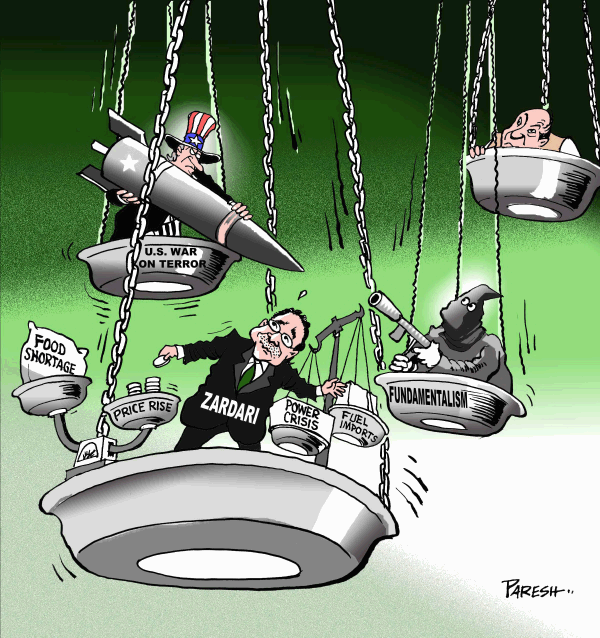
Zardari faces a host of issues in Pakistan as confidence in his government plummets

Zardari Pakistan problems cartoon

Loadshedding in Pakistan gives birth to new cottage industry

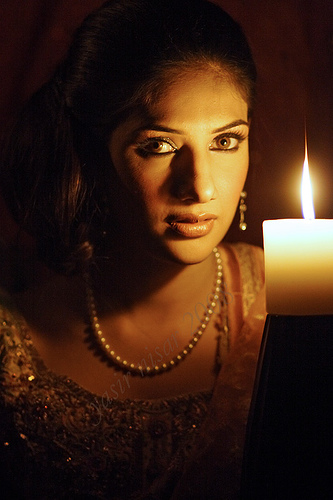
candle

LAHORE: The unending loadshedding was giving rise to a new form of cottage industry which was producing scores of goods to counter the power outages. Loadshedding, though, has adversely affected the big industries, yet it helped small industry to grow.

Small manufacturers, who were actually exploiting loadshedding, are getting handsome amount by making emergency lights, candles, generators, UPS and many others. The ignored and even dying business of artificial power sources got strength in the current “era of darkness.” This loadshedding crisis started for a long time ago, which gave birth to the electrical equipments price-hike. Since that period, the price has not come down and the manufacturers earning abnormal profits for energy articles. An industry has come into being which was creating jobs (sort of cottage industry) and has expanded to many homes from workshop or factory and manual labour has been benefitted.

According to an estimate, there are 10,000 factories in Lahore, among which approximately 30-40 percent factories have been closed because of loadshedding. These factories were utilising electricity and sui gas in a huge amount. In these factories, plastic molding, rubber articles, leather garments, cotton, iron-made goods, and many other things were being produced.

According to the labour department sources, approximately 800,000 labourers have been dispelled from their jobs. While, 400,000 to 800,000 labourers were receiving less wage. “The owners have finished the overtime facility because of loadshedding and this was increasing our hardships,” said Mubarak, a worker at Band Road.

However, on the other hand, many producers are making Ultra Power Supply (UPS) of 500-1000w and selling them on various prices ranging from Rs 6,000-12,000. They claimed that at least two tube lights, two fans, one computer and one TV could be run, but the price, they are charging, did not include the cost of battery of 48A or more, which was available in the market at Rs 2,400 to Rs 4,500. Moreover, the battery age was approximately one-year and if the battery spoiled, the consumers have to bear more charges for its repairing or replacing.

Rashid, a generator dealer said that 2007 has recorded an increase in the prices of ordinary generator by Rs 2,000 to Rs 5,000 depending on different brands, sizes and quality. Usually, the China made generators were being used more, as compared to other imported ones, whose rates were very high.

Saleem, a generator dealer, told The Post that the market was stocked with various varieties of generators in accordance with their power capacity, some were operated on diesel, and petrol and some on gas.

It is pertinent to mention here that replica articles have also captured the markets due to its low price, although there was a serious concern about their quality. Most of the shopkeepers were selling artificial light gadgets because, they said, the common people forced them to bring these goods to the markets. But the risk of these commodities, being a substandard quality, pose a grave risk that it might be exploded.

In summer season, coolers and fans demand would also rise, especially in schools, colleges, homes, offices etc. and in case of continuity of loadshedding, the demand of artificial energy resources would likely to rise.

By Nafees Tahir

Originally posted at The Post

One Oppressed Woman Talks to Another

Of Mormons and Muslims

Why You Never Trust or make deals with the Taliban

Moderate Taliban