Archive for the ‘ United States ’ Category

Jeremy Lin: Where’s The Indian Version?

By Palash R Ghosh for International Business Times

I am as excited and thrilled with the sudden meteoric climb of New York Knicks point guard Jeremy Lin as anyone else. I am completely immersed in ‘Linsanity’ and hope he becomes a dominant superstar in the NBA over a nice long career.

Jeremy Lin is the greatest sports story I’ve seen in years, perhaps decades. As an Asian-American, Lin’s brilliant play has special meaning and significance to me.

However, I must admit, since I am neither Chinese nor Taiwanese, my appreciation of Lin is somewhat as an ā€œoutsider.ā€ That is, I can’t quite reach the same level of excitement about No. 17 as my Chinese and Taiwanese friends have.

I have waited many years for an Indian boy in the United States to become a professional sports superstar. Thus far, such a thing hasn’t happened, and, sadly, I doubt it will in my lifetime.

The term ā€œAsian-Americanā€ is impossibly vague, broad and diverse, encompassing everyone who claims descent from the Philippines to Afghanistan. Indeed, it’s a rather meaningless phrase, but, for the sake of simplicity, it really means Americans whose parents or ancestors immigrated from a handful of major Asian nations.

According to the 2010 U.S. Census, there were 17.3-million Americans of ā€œAsianā€ descent, representing about 5.6 percent of the total population.

I found a breakdown of that population for 2008, which indicated that the Chinese formed the largest group among Asian-Americans at 3.6 million, followed by Filipinos (3.1 million), East Indians (2.7 million), Vietnamese (1.7 million), Koreans (1.6 million) and Japanese (1.3 million).

In the popular vernacular, Indians are sometimes not even considered ā€œAsianā€ since they are sometimes more associated with Middle Eastern peoples, especially since 9-11.

No matter, I consider the people of India, Pakistan, Bangladesh, Sri Lanka, Nepal and Afghanistan as ā€œAsians.ā€

So, with these large numbers, why are there no Indian star athletes in the United States?

To the best of my knowledge, no Indian lad has ever reached the NBA or Major League Baseball.

Sanjay Beach had a brief career as a wide receiver for the San Francisco 49ers and the Green Bay Packers; Brandon Chillar (whose father is Indian) played linebacker for the Green Bay Packers; and Manny Malhotra (an Indo-Canadian), plays for the Vancouver Canucks in NHL.

And that’s it — and none of them are exactly ‘household names’ or superstars.

Part of the problem is that Indian parents pressure their children to succeed in academics and to shun ‘frivolous’ pursuits like sports, arts and music. Hence, the large number of Indian-American doctors, engineers, accountants, mathematicians, scientists, corporate executives, and, uh, underpaid journalists.

Indeed, Indians (like Chinese and Koreans) are among the highest-earning, best-educated people in the U.S. The residue of being a dreaded ā€œmodel minority.ā€

This is all fine and dandy… but, frankly, I’m rather tired of Indians in America being pigeonholed into dull, safe careers. I would be much happier if an Indian boy could pitch a 95-mile-an-hour fast-ball, or slam dunk a basketball or throw a football with pinpoint accuracy for 60 yards.

Realistically, an Indian reaching the NBA and NFL is probably beyond the realm of reality. But what about America’s grand old pastime, baseball?

After all, Indians have excelled at cricket – a sport that requires skills similar to baseball.

If Sachin Tendulkar had grown up in California, perhaps he would now be the starting centerfielder for the Los Angeles Dodgers. If Muttiah Muralitharan were raised in New Jersey, maybe he’d be a 20-game winning pitcher for the Philadelphia Phillies. They certainly have the ability to excel in baseball.

What about U.S. football? Indians are pretty good at soccer — surely some NFL club could find place for an Indian placekicker or punter, no? NFL teams have, over the years, employed a number of former European soccer players for such humble (non-violent) duties.

Will we see an Indian-American athletic superstar in my lifetime (I probably have about 30 years left on this earth)? My guess is no.

Most Indian parents compel their children to study subjects in school that will lead to good, solid, stable high-paying jobs. Sports are fine as long as they don’t become an obsession or, worse, a career goal.

Indian parents likely tell their children that becoming a professional athlete is the longest of long shots (even if one has great talent) — and indeed, they are right. Consider that in the NBA there are 30 teams with a roster of 12 players each.

That’s just 360 players.

Thus, for every NBA player, there are about 850,000 people in the United States.

It makes no logical sense to pursue a career in sports – unless your name is Jeremy Lin, of course.

And let me add that if a young Indian man rose to the top of any American sports leagues, he would likely become the number one celebrity on the planet, especially if he is telegenic.

He would not only enjoy the fame and wealth that is bestowed upon those lucky few that reach the zenith of pro sports in the western world, but he would also have about one-billion people on the Indian subcontinent as rabid, devoted followers. He would be like a combination of Michael Jordan, Tom Brady, Joe DiMaggio, Elvis Presley, John Wayne and Salman Khan.

It would be utterly incredible… but highly unlikely.
Valentine’s Day in Islam?

By Paul Salahuddin Armstrong Co-Director,Ā Association of British Muslims

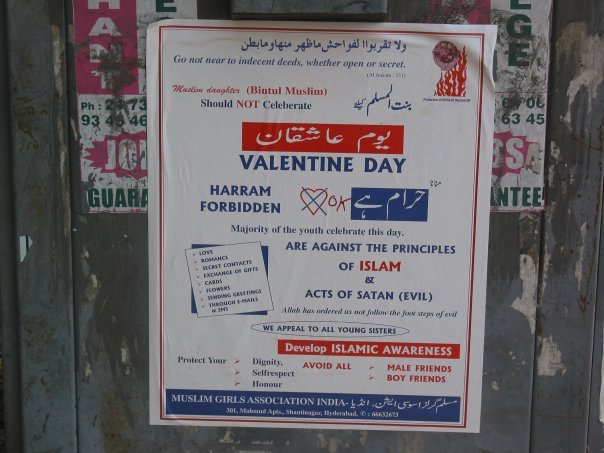
I was asked to share my views on Valentine’s Day. Personally, I really don’t see what’s the problem that some people seem to have with this celebration. The fact that it’s a Western, originally Christian festival is in all honesty, completely besides the point. We should celebrate Love everyday!

Many cultures have something similar, a day to celebrate love, to send a message of love to your beloved – a person whom you would like to marry or is already your husband or wife. Seriously, what’s wrong with that? What could possibly be wrong with that?
The only argument I’ve heard against Valentine’s Day, is the same one I hear about every other festival besides the two Eids – it’s not part of Islam. Well, sorry, if that’s the best these people can come up with, it’s a pathetic argument – cars and aeroplanes aren’t technically part of Islam either, but we still use them!

More to the point, a Muslim can celebrate any festival, even the social aspect of those of other religions, as long as this doesn’t mean they end up committing shirk – i.e. worshipping another deity besides God or associating partners with God – and this is the position of the mainstream scholars of Al-Azhar University in Egypt.

Indeed, for the vast majority of people who celebrate it, Valentine’s Day isn’t even that religious, rather it’s just a wonderful opportunity to show loved ones how much you appreciate them – which is something every Muslim should do anyway, even if they do not celebrate Valentine’s Day!

Pakistanis for Peace Editor’s Note– Finally, a Muslim perspective on Valentine’s Day that we can agree with! As compared to many other articles that decry Valentine’s Day as a pagan holiday and it is shirk to celebrate it, Paul has succinctly yet effectively given a great differing Muslim angle on this day as compared to the Orthodox Muslim view.

Study: US Muslims Don’t Want Shariah, Either

By Omar Sacirbey for The Houston Chronicle

North American Muslims are more than satisfied with the secular legal system and do not want a set of parallel courts for Islamic law, according to a new study of U.S. and Canadian Muslims by a Washington-based think tank.

The study, by University of Windsor law professor Judy Macfarlane for the Institute for Social Policy and Understanding, refutes critics’ claims that American Muslims want to impose Shariah, or Islamic law.

In fact, the study indicates that Muslims are just as unwilling to accept Islamic law as non-Muslims.

Macfarlane interviewed 212 Muslim Americans, including 41 imams and 70 community leaders who used aspects of Shariah in their daily lives. The other 101 interviewees were divorced Muslim men and women. About a quarter of the interviewees were from Canada, and the rest from the United States.

“Aside from formal religious observance, American Muslims relate to their Shariah responsibilities primarily through rituals of marriage and divorce,” Macfarlane wrote.

“They see these as compatible with the civil law – almost all the respondents in this study married and divorced twice, once in Islam and once in law – and will use the courts where they cannot agree outcomes, just like any other couple.”

When asked whether they thought American courts should apply Shariah to non-Muslims in the legal system, all of the respondents answered no. Just three of the 41 imams said they wanted parallel Shariah tribunals where Muslims could handle civil issues like marriage, divorce, and inheritance.

Macfarlane began her research after a Muslim group in Ontario petitioned the provincial government in 2003 to establish a separate Islamic family tribunal where Muslims could get binding legal decisions on family law issues. The Ontario government denied the request, and later that year abolished similar tribunals for Catholic and Jewish citizens that had been allowed in 1991.ˇ

The study follows a Jan. 10 decision by a federal appeals court that upheld a lower court’s ruling to overturn a 2010 Oklahoma constitutional amendment to prohibit judges from using Shariah in their deliberations.

Tennessee and Louisiana have passed similar laws, while 20 other states are considering such legislation.

Punishing Pakistan Is Not The Way To Go

By Nancy Birdall for Foreign Policy

In the January/February 2012 issue of Foreign Affairs, Stanford political scientist Stephen Krasner claims that “current U.S. policy toward Pakistan has failed” and recommends that the United States take a radically different approach: credibly threaten to sever all forms of cooperation, including all U.S. aid – military and civilian – to force Pakistan into cooperating with the United States on security matters. Center for Global Development President Nancy Birdsall responds.

Stephen Krasner (“Talk Tough to Pakistan: How to End Islamabad’s Defiance,” Jan/Feb 2012) wants to change the Pakistani government’s behavior. He argues that its failure to cooperate with the United States on Afghanistan and on terrorism is not due to its weakness as a state. Instead, it is a rational response of Pakistan’s military leadership, whose priority is to defend itself against India – with a nuclear deterrent and support for terrorists and the Afghan Taliban. Therefore, the only way the United States can win cooperation from Pakistan is to threaten “malign neglect”- cut off military and civilian assistance, sever intelligence cooperation, maintain and possibly escalate drone strikes and initiate unilateral cross-border raids. If that isn’t enough, then the U.S. could move on to “active isolation” — declare Pakistan a state sponsor of terrorism, making it a pariah, and impose sanctions.

If only it were this easy. Krasner fails to mention that the U.S. has tried this approach before. In the 1990s it cut off military and civilian assistance to Pakistan and imposed sanctions in an effort to dissuade Pakistan from developing a nuclear capability. We all know how that story ended. But let’s suppose this time the threats or the follow-through worked and brought the military and intelligence establishment to heel in Pakistan. Let’s suppose the United States got what it wanted on the security front – helping assure a timely U.S and NATO withdrawal from Afghanistan. Would that solve the problem Pakistan poses for America’s security in the long run? No.

What Krasner doesn’t say is that the U.S. wants something more than compliance from Pakistan’s military and intelligence communities with its immediate security needs. The U.S. wants a capable and stable civilian government that plays by the rules of the international community. It wants a democratic state that would not abuse and misuse its nuclear capability and that would find its way to peaceful relations with India.

In other words the U.S. has a long-run vision for Pakistan, very much in its own interests, as well as a set of short-term demands. In the 2009 Enhanced Partnership with Pakistan Act (known as Kerry-Lugar Berman, or KLB) Congress recognized the resulting need for a two-track approach. That legislation made U.S. security assistance (not actually authorized in the legislation) conditional on Pakistani cooperation on security matters. But its fundamental purpose, and the money it authorized for civilian aid, was the rebuilding of a serious partnership with the civilian government and the people of Pakistan. With KLB as the framework, since 2009 the Obama Administration has engaged fully with the civilian government and with civil society and private sector leaders in Pakistan on a range of issues — energy, water, agriculture, macroeconomic issues, private investment and trade.

In short, the purpose of U.S. civilian aid to Pakistan is to help build a better state. It is not to bribe or reward the “government” (neither the military nor the civilian leadership). Withholding military aid would likely not punish the military anyway. It would, however, reduce the resources available to the civilian government, since the evidence is that the military can get what it wants from the government’s overall available resources. And withholding civilian aid obviously would not punish the military. It would, however, take away a modest tool of America – investing to educate kids, create jobs, and strengthen civil society and representative institutions and thus give Pakistan a better shot at becoming a stable, prosperous and democratic country in the long term.

There are of course real questions about the effectiveness of U.S engagement with the civilian government – with aid and dialogue – given the prevailing suspicion there of U.S. motives, the inherent difficulties of operating in a complex and insecure environment, and the bureaucratic shortcomings of the U.S. aid system itself. But then those are reasons to put relatively more emphasis on other forms of engagement: trade, investment, and encouraging the normalization of relations with India. They do not warrant bullying the weak civilian government that the U.S. wants to strengthen.

Krasner begins and ends his article by invoking the testimony of former chairman of the Joint Chiefs of Staff Admiral Mike Mullen during his last appearance before the Senate Armed Services Committee. Krasner is right in pointing out that Mullen was critical of Pakistan’s role in supporting extremist organizations and the need to get tough with Pakistan. Yet, Krasner fails to mention the conclusion Mullen reached in his statement. Mullen recognized that the U.S. has a variety of objectives in Pakistan and the region, and that by focusing too intensely on short term interests, the U.S. will end up short-changing itself over the long haul: “We must also move beyond counter-terrorism to address long-term foundations of Pakistan’s success – to help the Pakistanis find realistic and productive ways to achieve their aspirations of prosperity and security.” Mullen concludes, “Isolating the people of Pakistan from the world right now would be counter-productive.”

Nancy Birdsall is the founding president of the Center for Global Development, a Washington, DC based think tank.

Husain Haqqani, former Pakistan envoy to US, allowed to travel abroad

By Richard Leiby for The Washington Post

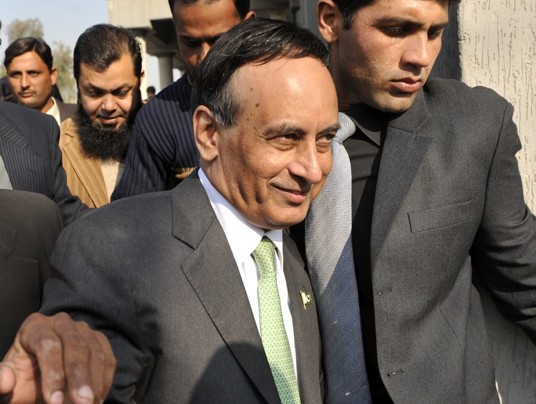
Husain Haqqani, Pakistan’s former ambassador to the United States, was permitted to travel abroad Monday by the nation’s Supreme Court after two months of fending off treason allegations over his purported involvement in a mysterious memo that sought Washington’s help to neuter Pakistan’s powerful military.

The court ruling indicated that authorities seem to have lost interest in continuing to probe Haqqani’s role in the scandal, known here as Memogate, which at one point threatened to bring down the civilian leadership of this coup-prone country.

Haqqani, a confidant of President Asif Ali Zardari, was forced to resign, recalled to Islamabad and ordered not to travel abroad after a Pakistani American tycoon, Mansoor Ijaz, alleged that the diplomat engineered an unsigned missive to the Pentagon hoping to block a coup in the turbulent days after the killing of Osama bin Laden.

Haqqani denied involvement and said Ijaz, a onetime acquaintance, cooked up the memo.

In an e-mail to Agence France-Presse, Haqqani said: ā€œI am glad that the Supreme Court has restored my right to travel, which had been rescinded without any charges being filed against me.ā€ He added that he planned to join his family in the United States.

Memogate prompted a showdown between the army and the civilian leadership, which technically oversees the military, and brought an already shaky government to the verge of collapse. The fissures between the two sides now seem to have been repaired, and the incessant political and media interest in the scandal has waned in recent days.

One reason seemed to be the dwindling credibility of Ijaz, who has yet to appear to testify about his role in the memo, saying he fears for his safety. The bulk of evidence has come from Ijaz, who released logs of what he says are BlackBerry message conversations between him and Haqqani.

Since his return to Islamabad, Haqqani has stayed within the walls of the official government residence, saying he feared for his life.

Earlier this month, U.S. Sens. John McCain (R-Ariz.), Mark Kirk (R-Ill.) and Joseph I. Lieberman (I-Conn.) issued a statement condemning the ā€œharassmentā€ of Haqqani, a former journalist and Boston University professor. They called him a ā€œprincipled advocateā€ for Pakistan.

Despite allowing the erstwhile diplomat to travel, the Supreme Court did not drop the matter entirely: It granted a two-month extension to the judicial commission that is probing Memogate. And Haqqani’s lawyer had to guarantee that the former envoy would appear before the court if called, on four days’ notice.

A separate parliamentary investigation is also underway.

Pakistani Doctor Helped U.S. Track Bin Laden, Panetta says

By Saeed Shah for McClatchy Newspapers

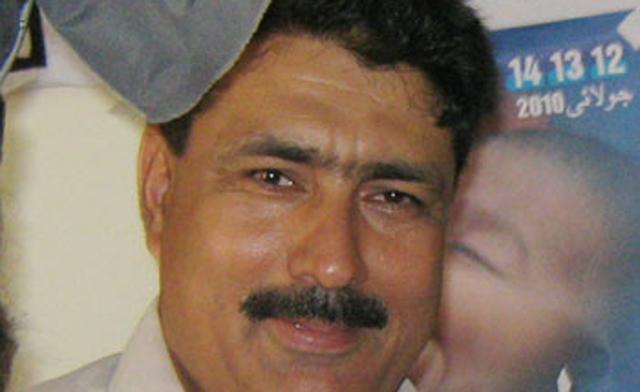
A senior American official has for the first time admitted that a Pakistani doctor played a key role in tracking Osama bin Laden to his hideout in northern Pakistan, and called for his release.

The comments by U.S. Defense Secretary Leon Panetta were the first public confirmation of a part of the bin Laden operation reported by McClatchy Newspapers in July, about how the CIA used Shakil Afridi to try to establish whether the al-Qaida leader was really living in a large house in Abbottabad, northern Pakistan.

This morning in Islamabad, Pakistan’s Inquiry Commission on the Abbottabad Operation issued an order to charge Afridi with treason, local media reported. The timing makes it appear that Pakistan is rebuking Panetta for his public acknowledgement of Afridi’s role. Afridi has been in Pakistani custody since the country’s own spy agency, Inter Services Intelligence (ISI), learned of the secret task performed by the doctor, who set up a fake vaccination program in Abbottabad to get DNA samples from those staying at the compound.

The CIA was never certain that bin Laden was present in the house. Afridi worked for the American intelligence agency in the weeks leading up to the Navy SEALs raid on May 2, setting up an elaborate scheme that was supposedly going house to house to vaccinate residents in Abbottabad.

Panetta told CBS’ “60 Minutes” “I am very concerned about what the Pakistanis did with this individual (Afridi). This was an individual who, in fact, helped provide intelligence that was very helpful with regard to this operation.” Panetta also voiced his belief that elements within Pakistan must have known that bin Laden, or at least someone significant, was present inside the compound. The interview was posted on the “60 Minutes” website. However, it was not included in the segment telecast on Sunday night. The McClatchy investigation discovered that Afridi was arrested by the ISI in late May and was tortured. It is believed that he remains in the custody of the intelligence agency, which is part of the military.

The whereabouts of Afridi’s family, including his American wife of Pakistani origin, is still unknown. The fate of the doctor has become another source of tension between Islamabad and Washington, with American officials pressing Pakistan to free him so he and his family can be resettled in the United States.

The military, which will decide what happens to Afridi, is furious that the CIA recruited Pakistani citizens for clandestine operations inside the country. Privately, officials point out that it is a crime to work for a foreign intelligence agency.
The doctor has turned into a bargaining chip in the failing U.S-Pakistan alliance. It is thought that Pakistan will let him go after public attention on the case wanes and it gets something in return from the U.S. “He was not in any way treasonous towards Pakistan. He was not in any way doing anything that would have undermined Pakistan,” Panetta told “60 Minutes.”

“Pakistan and the U.S. have a common cause here against terrorism,” he said. “And for them to take this kind of action against somebody who was helping to go after terrorism, I just think it is a real mistake on their part.”
Panetta, who was in charge of the CIA at the time of the bin Laden raid, also said that while there was no evidence of Pakistani complicity in keeping the al-Qaida chief, suspicions must have been raised about his hideout. “I personally have always felt that somebody must have had some sense of what was happening at this compound. Don’t forget, this compound had 18-foot walls. … It was the largest compound in the area.

“So you would have thought that somebody would have asked the question, ‘What the hell’s going on there?'” Panetta said.
But asked whether he knew for sure that Pakistan was aware of bin Laden’s presence, he said: “I don’t have any hard evidence, so I can’t say it for a fact.”

Peace Pipeline Moves Closer To Fruition

By Mohammed Aasim Saleem for Deutsche Welle

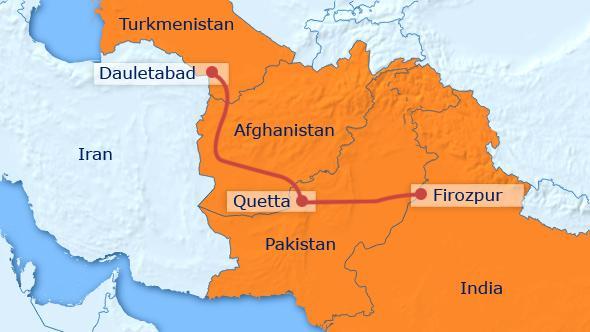
Officials from India and Pakistan have announced they are moving closer to inking a deal to import gas from Turkmenistan via a pipeline through Afghanistan. The 1,700-kilometer “TAPI” duct will transport over 30 billion cubic meters of gas annually from fields in Dauletabad in southeastern Turkmenistan.

In high-level talks in New Delhi this week, Indian Oil Minister S. Jaipal Reddy said “considerable progress” has been made on the project. His Pakistani counterpart, Asim Hussain, added at the meeting that “the issue of transit fees is being discussed with Afghanistan. A joint strategy is also being created between India and Pakistan.”

When the four countries signed a framework agreement back in 2008, the Asian Development Bank estimated the cost of the TAPI pipeline project at around $7.6 billion.

After the talks in New Delhi, the Indian oil minister emphasized that the pipeline would help address the energy needs of the region. Reddy also clarified that security concerns were discussed with Afghan officials, who themselves sought to provide reassurance that necessary measures would be taken to protect the TAPI project.

“We consider it a pipeline of peace,” Reddy said. “Everyone needs gas.”

Improving cooperation between the nuclear armed and traditionally hostile neighbors is seen as a positive development towards establishing long term stability in South Asia.

Pakistan gave India a “Most Favored Nation” trading status when the countries’ commerce secretaries met in New Delhi in November last year to discuss energy and bilateral trade. Indian commerce chief Rahul Khullar expressed his desire to boost bilateral trade to $6 billion within the next three years. Currently, total trade amounts to $2.7 billion.

Reddy said that Pakistan had pledged to also consider a proposal to import Indian petroleum products, highlighting the cost advantages for Pakistan. India, meanwhile, offered electricity to Pakistan through its power plants in Punjab and Gujrat.

The Indian oil minister went on to express disappointment over a failed Iran-Pakistan-India gas pipeline project. With the US leaving no stone unturned in trying to corner Iran over its nuclear ambitions, any possibility of India, Afghanistan or Pakistan going against the Obama administration is somewhat remote. India imports 12 to 14 percent of its oil from Iran, making the Islamic Republic India’s second largest source of oil after Saudi Arabia.

There was significant domestic pressure in India as the analysts and masses called for a stern stand against the US in determining trade relations with Iran. With other regional countries, including China, also refusing to follow US directions, India is still continuing with the import of oil from Iran. In this regard, Reddy said that New Delhi would continue importing oil from Iran and was not bound by new sanctions imposed by the European Union on the Islamic Republic earlier this week.

“We, as a member of the UN, are obliged to follow UN sanctions. Other sanctions imposed by big blocs of countries, we can have some freedom there,” he added further.

Improving relations and cooperation in the energy sector between India and Pakistan will go a long way to establishing harmony and stability in the region. Pakistan is experiencing a severe energy crisis whilst India needs to feed its rapidly developing economy. Mutual dependency and cooperation in this sector with projects such as the TAPI pipeline can also ensure smoother political ties.

Pakistanis for Peace Editor’s Note– A Peace pipe was often used between the Native American tribes when they ended their wars and called a truce. A different sort of peace pipe between Turkmenistan and India via Pakistan can do great wonders for the bilateral relations of the two feuding neighbors and must be encouraged to fruition.

A Bronx Tale

By Ted Regencia and Lindsay Minerva for Tablet Mag

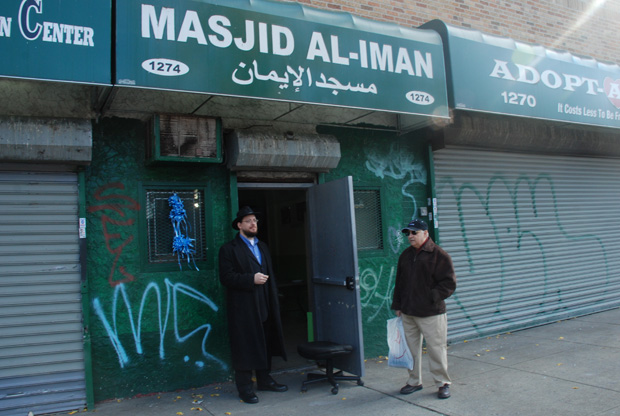
Near the corner of Westchester Avenue and Pugsley Street in Parkchester, just off the elevated tracks of the No. 6 train, Yaakov Wayne Baumann stood outside a graffiti-covered storefront on a chilly Saturday morning. Suited up in a black overcoat with a matching wide-brimmed black fedora, the thickly bearded 42-year-old chatted with elderly congregants as they entered the building for Shabbat service.

The only unusual detail: This synagogue is a mosque.

Or rather, it’s housed inside a mosque. That’s right: Members of the Chabad of East Bronx, an ultra-Orthodox synagogue, worship in the Islamic Cultural Center of North America, which is home to the Al-Iman mosque.

ā€œPeople have a misconception that Muslims hate Jews,ā€ said Baumann. ā€œBut here is an example of them working with us.ā€

Indeed, though conventionally viewed as adversaries both here and abroad, the Jews and Muslims of the Bronx have been propelled into an unlikely bond by a demographic shift. The borough was once home to an estimated 630,000 Jews, but by 2002 that number had dropped to 45,100, according to a study by the Jewish Community Relations Council. At the same time, the Muslim population has been increasing. In Parkchester alone, there are currently five mosques, including Masjid Al-Iman.

ā€œNowhere in the world would Jews and Muslims be meeting under the same roof,ā€ said Patricia Tomasulo, the Catholic Democratic precinct captain and Parkchester community organizer, who first introduced the leaders of the synagogue and mosque to each other. ā€œIt’s so unique.ā€

The relationship started years ago, when the Young Israel Congregation, then located on Virginia Avenue in Parkchester, was running clothing drives for needy families, according to Leon Bleckman, now 78, who was at the time the treasurer of the congregation. One of the recipients was Sheikh Moussa Drammeh, the founder of the Al-Iman Mosque, who was collecting donations for his congregants—many of whom are immigrants from Africa. The 49-year-old imam is an immigrant from Gambia in West Africa who came to the United States in 1986. After a year in Harlem, he moved to Parkchester, where he eventually founded the Muslim center and later established an Islamic grade school. Through that initial meeting, a rapport developed between the two houses of worship, and the synagogue continued to donate to the Islamic center, among other organizations.

But in 2003, after years of declining membership, Young Israel was forced to sell its building at 1375 Virginia Ave., according to a database maintained by Yeshiva University, which keeps historical records of synagogues. Before the closing, non-religious items were given away; in fact, among the beneficiaries was none other than Drammeh, who took some chairs and tables for his center.

Meanwhile, Bleckman and the remaining members moved to a nearby storefront location, renting it for $2,000 a month including utilities. With mostly elderly congregants, Young Israel struggled to survive financially and, at the end of 2007, was forced to close for good. The remaining congregants were left without a place to pray. During the synagogue’s farewell service, four young men from the Chabad Lubavitch world headquarters in Crown Heights showed up. Three months earlier, Bleckman, then chairman of the synagogue’s emergency fund, had appealed for help from the Chabad.

ā€œThe boys from the Chabad said they came to save us,ā€ said Bleckman. ā€œWe were crying.ā€

At this point, Chabad took over the congregational reins from Young Israel, with members officially adopting the new name Chabad of East Bronx. Still, for the next six to seven weeks, Bleckman said they could not even hold a service because they had nowhere to hold it.

When Drammeh learned of their plight, he immediately volunteered to accommodate them at the Muslim center at 2006 Westchester Ave.—for free.

ā€œThey don’t pay anything, because these are old folks whose income are very limited now,ā€ said Drammeh, adding that he felt it was his turn to help the people who had once helped him and his community. ā€œNot every Muslim likes us, because not every Muslim believes that Muslims and Jews should be like this,ā€ Drammeh said, referring to the shared space. But ā€œthere’s no reason why we should hate each other, why we cannot be families.ā€ Drammeh in particular admires the dedication of the Chabad rabbis, who walked 15 miles from Brooklyn every Saturday to run prayer services for the small Parkchester community.

For the first six months, congregants held Friday night Sabbath services inside Drammeh’s cramped office. As more people began joining the congregation, Drammeh offered them a bigger room where they could set up a makeshift shul. (When it’s not in use, students from the Islamic school use it as their classroom.) Inside the synagogue, a worn, beige cotton curtain separates the men and women who attend the service. A solitary chandelier hangs just above the black wooden arc that holds the borrowed Torah, which is brought weekly from the Chabad headquarters. A large table covered with prayer books stands in the center, and a picture of the Lubavitcher Rebbe is displayed prominently on a nearby wall. During Shabbat, when Jewish congregants are strictly prohibited from working, they have to rely on the Muslim workers at the center or on Drammeh to do simple chores such as turning on the light and switching on the heater.

At first, it did not make sense, said Hana Kabakow, wife of Rabbi Meir Kabakow. ā€œI was surprised,ā€ said the 26-year-old congregant who was born and raised in Israel. ā€œBut when I came here I understood.ā€ The Kabakows have been coming to the service from Brooklyn for the last two years.

Harriet Miller, another congregant, said she appreciated the center’s accommodating the synagogue. ā€œThey are very sweet people,ā€ said the 79-year-old Bronx native and long-time resident of Parkchester, who added that she welcomes the new Muslim immigrants in her neighborhood: ā€œWe were not brought up to hate.ā€

Drammeh also understands the importance of teaching tolerance more broadly, and for turning the school—which was itself founded at the nearby St. Helena Catholic Church on, of all days, Sept. 11, 2001—into a model of sorts for religious tolerance in New York.

ā€œWe’re not as divided as the media portrays us to be,ā€ Drammeh said. ā€œAlmost 90 percent of Jewish, Muslim, and Christian teachings are the same.ā€

His latest project involves introducing fifth-grade Jewish and Islamic school students to each other’s religious traditions. Other participants of the program, now in its sixth year, include the Solomon Schechter School of Manhattan, the Al Ihsan Academy of Queens, and the Kinneret Day School of Riverdale. At the end of the program, students organize an exhibit that shows family artifacts of their respective cultures and religion. The principal of the Islamic school, who is also Sheik Drammeh’s wife, said that even after the program ended, the participants became ā€œfast friendsā€ and would visit each other’s homes.

ā€œThey would have birthday parties together,ā€ Shireena Drammeh said. ā€œWhen someone invites you to their house, I mean, that says it all right there and then.ā€

While the Jewish congregants are thankful for their new home, they hope that one day they can rebuild their own synagogue. That day may be far off: Even now that they have space to worship, they still struggle to operate. They don’t have proper heating inside, and the portable working heater could not reach the separate area where the elderly women are seated, forcing them to wear their jackets during the entire service. Congregants are appealing for financial support from the Jewish community and other congregations.

But Leon Bleckman and others say they now also have loftier goals, including reviving the Jewish presence in the neighborhood and reaffirming the positive relationship with their Muslim friends. ā€œWe are able to co-exist together side by side in the same building,ā€ said Assistant Rabbi Avi Friedman, 42. ā€œThat’s sort of like a taste of the future world to come—the messianic future where all people live in peace.ā€

Ted Regencia is a digital media student at the Columbia Journalism School. His Twitter feed is at @tedregencia. Lindsay Minerva, a digital media student at the Columbia Graduate School of Journalism, is an intern at Newsweek. Her Twitter feed is at @lindsayminerva.


Pakistanis for Peace Editor’s Note– A story like this illustrates the good in all of us. A few months ago, we highlighted an article on Heartsong Church in Cordova, Tennessee where Christians in that part of the US welcomed a Muslim community that was undergoing construction of their mosque nearby. Now this kind deed is being passed forward to another flock of faithful when Muslims in New York are offering a helping hand to Jewish members of their community. This is the type of love for one another God of all religions wants and appreciates. May God bless them all.

How Pakistan Continues to Help US Drone Campaign Despite Political Tensions

As Reported by Reuters

The death of a senior Al-Qaeda leader in a US drone strike in Pakistan’s tribal badlands, the first strike in almost two months, signaled that the US-Pakistan intelligence partnership is still in operation despite political tensions. The Jan 10 strike-and its follow-up two days later- were joint operations, a Pakistani security source based in the tribal areas told Reuters. They made use of Pakistani ā€œspottersā€ on the ground and demonstrated a level of coordination that both sides have sought to downplay since tensions erupted in January 2011 with the killing of two Pakistanis by a CIA contractor in Lahore.

ā€œOur working relationship is a bit different from our political relationship,ā€ the source told Reuters, requesting anonymity. ā€œIt’s more productive.ā€ US and Pakistani sources told Reuters that the target of the Jan 10 attack was Aslam Awan, a Pakistani national from Abbottabad, the town where Osama bin Laden was killed last May by a US commando team.

They said he was targeted in a strike by a US-operated drone directed at what news reports said was a compound near the town of Miranshah in the border province of North Waziristan. That strike broke an undeclared eight-week hiatus in attacks by the armed, unmanned drones that patrol the tribal areas and are a key weapon in US President Barack Obama’s counter-terrorism strategy.

The sources described Awan, also known by the nom-de-guerre Abdullah Khorasani, as a significant figure in the remaining core leadership of al Qaeda, which US officials say has been sharply reduced by the drone campaign. Most of the drone attacks are conducted as part of a clandestine CIA operation.

The Pakistani source, who helped target Awan, could not confirm that he was killed, but the US official said he was. European officials said Awan had spent time in London and had ties to British extremists before returning to Pakistan. The source, who says he runs a network of spotters primarily in North and South Waziristan, described for the first time how US-Pakistani cooperation on strikes works, with his Pakistani agents keeping close tabs on suspected militants and building a pattern of their movements and associations. ā€œWe run a network of human intelligence sources,ā€ he said. ā€œSeparately, we monitor their cell and satellite phones. ā€œThirdly, we run joint monitoring operations with our US and UK friends,ā€ he added, noting that cooperation with British intelligence was also extensive. Pakistani and US intelligence officers, using their own sources, hash out a joint ā€œpriority of targets listsā€ in regular face-to-face meetings, he said. ā€œAl-Qaeda is our top priority,ā€ he said. He declined to say where the meetings take place. Once a target is identified and ā€œmarked,ā€ his network coordinates with drone operators on the US side. He said the United States bases drones outside Kabul, likely at Bagram airfield about 25 miles (40 km) north of the capital. From spotting to firing a missile ā€œhardly takes about two to three hoursā€, he said.

It was impossible to verify the source’s claims and American experts, who decline to discuss the drone program, say the Pakistanis’ cooperation has been less helpful in the past. US officials have complained that when information on drone strikes was shared with the Pakistanis beforehand, the targets were often tipped off, allowing them to escape. Drone strikes have been a sore point with the public and Pakistani politicians, who describe them as violations of sovereignty that produce unacceptable civilian casualties. The last strike before January had been on Nov 16, 10 days before 24 Pakistani soldiers were killed in what NATO says was an inadvertent cross-border attack on a Pakistani border post. That incident sent US-Pakistan relations into the deepest crisis since Islamabad joined the US-led war on militancy following the Sept 11, 2001 attacks. On Thursday, Pakistani foreign minister Hina Rabbani Khar said ties were ā€œon holdā€ while Pakistan completes a review of the alliance.

The End of a Geopolitical Affair

By Pramit Pal Chaudhri for The Hindustan Times

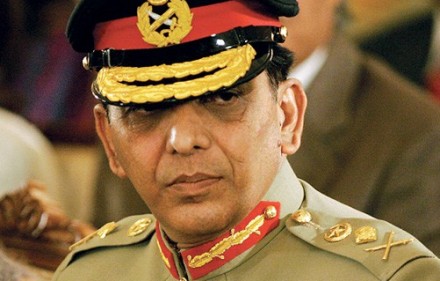
In Pakistan’s current crisis, why is its military is so reluctant to consider simply seizing power? One reason is that General Ashfaq Pervez Kayani cannot count on the US looking the other way. At a minimum, Washington would have to slap sanctions on an economically faltering country. At a maximum, it would be the last straw in a bilateral relationship at its lowest ebb since it was first woven in the 1950s.

Pakistan’s establishment claims it has been used and abused by the US, the most serious violation being that country’s stealth attack on Abbottabad that led to Osama bin Laden’s death. There has been the Raymond Davies affair, the endless drone attacks and the increasingly public accusation of double-dealing by senior US officials – the most notable being Admiral Mike Mullen’s linking of the Inter-Services Intelligence with terrorist groups.

There is some satisfaction for India in all this. It has been persistently claiming the existence of a military-terrorist nexus. Many in Washington agree. After Abbottabad, there is no one in Washington who doesn’t. The US-Pakistan relationship, says Daniel Twining of the German Marshall Fund, ā€œwas really at a historic high for the past decade but is diminishing.ā€ But it might not matter as much to the US if relations fall apart, he says.

Other events are undermining the basis of the US-Pakistani bond. Islamabad had expected the US to totally retreat from Afghanistan, leaving Pakistan’s Taliban allies in charge. Instead, the US will leave a substantial force behind along with many drone bases. The US is talking with the Taliban, but only desultorily with groups that Islamabad patronises.

With the US Congress also pulling the plug on aid to Pakistan, what is left? The answer is nukes. ā€œIf Pakistan didn’t have nuclear weapons, with Al Qaeda almost gone, no one would care a fig about that country,ā€ said one ex-US ambassador to the region. As they realise this, Islamabad is getting more paranoid about the security of its ā€œstrategic assets.ā€ The more unstable they look, the more willing the US will be to try and do something risky to salvage Pakistan’s nuclear weapons.

US officials are talking about a ā€œnew normalā€ in their Pakistan relations. This would cut ties to the bare bones: counterterrorism cooperation, limited military transit requirements, Afghan talks, narcotics and some humanitarian assistance. ā€œWe’ll have to work with the Pakistan military on a limited basis while negotiations with the Taliban proceed,ā€ says John Schlosser, a former state department South Asia hand.

There seems to be no real understanding among Pakistanis that their leverage is dwindling or how much Abbottabad vapourised their credibility in the US. A parliamentary committee report on how to change the US relationship bizarrely demanded, for example, a civilian nuclear agreement.

It could get worse. ā€œThe relationship will fall further if the US finds [Al Qaeda chief] Zawahiri in Pakistan. Or there are terror strikes on India or the US,ā€ says Bruce Riedel, former AfPak advisor to Barack Obama.

The worst thing is that Washington is decoupling just at a time when Pakistan, economically and otherwise, can least afford to lose their most generous international partner.

Newt Gingrich Creeping Up On Mitt Romney In A Creepy Way

By David Horsey for The Los Angeles Times

Newt Gingrich is surging and the guy ahead of him, Mitt Romney, as well the guy behind him, Rick Santorum, are rattled.

Only days ago, Romney was sitting on a comfortable lead in South Carolina’s Republican primary race. Santorum was anticipating a positive bump in his numbers, thanks to the endorsement he received from top Christian evangelical leaders and the good chance that a final, official count of votes in the Iowa caucuses would show he actually beat Romney in that state.

Instead, with Saturday’s vote just two days away, the portly, aloof, intellectually promiscuous and thrice-married ex-speaker of the House seems to be winning the minds, if not the hearts, of more and more staunch conservatives in the Palmetto State.

In fact, Gingrich was even getting a bit of love, as well as respect, from a crowd of several hundred jammed into the banquet hall of Bobby’s Bar-BQ Buffet in Warrenville on Wednesday. Every seat was filled; those without seats stood along the walls and those that couldn’t get inside craned their necks to get a peek through the front door.

Gingrich spoke in front of a Model T Ford – a car only a little more ancient than a great many members of the audience. Clever lines that fell flat when Gingrich delivered them at the tea party convention Tuesday got big laughs with this much-less-grim crowd — like his somewhat-stale knee-slapper about letting Barack Obama use a teleprompter when the two debate.

They loved the parts of his stump speech that are well worn – our rights come from God and cannot be taken away by government – and a new attack on Obama spun off the day’s news – the president’s refusal to approve the Keystone oil pipeline is stupidly driving Canada into the arms of China. And they loved Callista, Newt’s exquisitely coiffed wife.

One audience ā€œquestionā€ was this: ā€œI think your wife would make a beautiful first lady, don’t you?ā€Ā  In the receiving line after the event, a Callista fan said, ā€œI’m anxious to see how you do Christmas in the White House.ā€ There seemed to be a lot of warmth for the once-controversial Callista and for her candidate husband, though he is not all that good at exhibiting warmth himself.

In campaign mode, Gingrich is the polar opposite of Mitt Romney. Reportedly a bit shy, Romney, nevertheless, dives in, shakes every hand, signs every autograph, banters with everyone and smiles, smiles, smiles. It may be rehearsed and straight from some ā€œHow to Succeed in Politicsā€ primer, but he’s as good at it as any TV game show host.

Mitt’s even good with babies. At a rally on the outskirts of Columbia on Wednesday night, he held a baby for the cameras and then pretended to walk off with her, delighting the crowd – even the child’s mother. And the baby never cried.

In contrast, Gingrich seems more like the queen of England. On Monday afternoon, at the end of his remarks at Rioz Brazilian Steakhouse in Myrtle Beach, Gingrich remained on the speaker’s platform while the crowd lined up like kids waiting to see a department store Santa. They were shuffled through rapidly; the candidate barely made eye contact, offered the tiniest of smiles and made the briefest request for support.

Is he merely reserved? Awkward? Overly formal? Or simply a man with a busy mind and a lot to get done; sort of like a college professor who resents wasting attention on the undergrads who mob him after class.

Of course, Gingrich actually is a former college professor, and his campaign speech is a lively academic ramble. He interprets history, dives into interesting new economic theories, wickedly picks apart the fallacious ideas of competing practitioners of the political arts and uses terminology that tells you he’s oh-so-much smarter than your typical governor of Texas or Massachusetts.

Gingrich drops names of the intellectual and political elite he has known and boldly lays claim to a major share of the legacy of two presidents, Reagan and Clinton. He brags that his candidacy is so historically significant and so utterly different from any other that it is nearly incomprehensible to the dullards in the media. In front of the South Carolina Chamber of Commerce, after presenting a litany of intractable problems faced by the nation, he said of himself, ā€œIf you have a leader who knows what he is doing, we can turn this around in a year.ā€

Just one year? The guy seems so full of himself that it is surprising he has caught on with so many voters. He is not the cliche candidate Americans are supposed to prefer – somebody you’d want to have a beer with because he’s just like you. Yet, here he is, still very much in the race and on the verge of messing up smiling Mitt Romney’s big-money campaign.

Gandhi and King- Two Martyrs Who Will Never Die

By Manzer Munir for Pakistanis for Peace

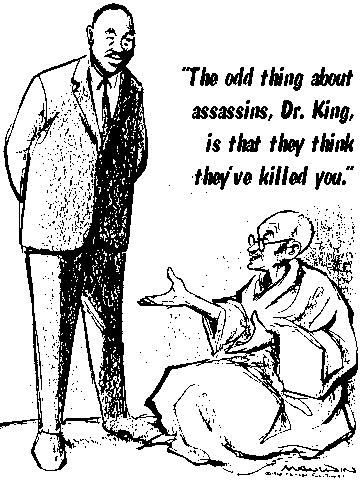
Today is MLK Day in the United States where it is a federal holiday commemorating the life and legacy of the Rev Dr Martin Luther King Jr, an icon who would have been 83 years old on January 15.

MLK was a great believer in the teachings of non-violence if Mohandas K Gandhi, the leader of India’s independence movement from Britain. King saw that Gandhi’s peaceful civil disobedience and non-violent methods of protest were very effective in bringing down the British Empire in India and as a result Pakistan and the rest of the Indian Subcontinent after some 300 years of direct and indirect rule. Gandhi had believed that people could resist immoral government action by simply refusing to cooperate. Gandhi adopted many peaceful resistance techniques in developing his concept of Satyagraha, which was a philosophy and practice of passive nonviolent resistance.

Gandhi had earlier used this resistance technique in his struggles for freedom and equality for blacks and Indians in South Africa where both minorities were subjected to second and third class citizenry. His methods and refusal to bow down to the injustices that Indians faced in colonial South Africa inspired Nelson Mandela several years later to start his own peaceful struggle that eventually led to the end of Apartheid in South Africa in 1990.

While at Morehouse College, King learned about Gandhi and became very excited about his ideas. He wanted to further educate himself and read many books on Gandhi and his life and beliefs. In his book, Stride Toward Freedom, King states that ā€œGandhi was probably the first person in history to lift the love ethic of Jesus above mere interaction between individuals to a powerful and effective social force on a large scale. He further writes in his book that ā€œIt was in this Gandhian emphasis on love and nonviolence that I discovered the method for social reform that I had been seeking. I came to feel that this was the only morally and practically sound method open to oppressed people in their struggle for freedom.ā€

King felt that he had finally found a way to where oppressed people could successfully unlock social protest through Jesus’ teachings of love. In fact Gandhi himself had said ā€œWhat does Jesus mean to me? To me, he was one of the greatest teachers humanity has ever had.ā€ He also once mentioned Jesus as the ā€œmost active resister known perhaps to history. His was non-violence par excellenceā€ Therefore to the Christian minister living in the pre-civil rights era in the South in America, Gandhi appeared to King as a follower of Christ, someone who preached peace and love even at the expense of suffering. Martin Luther King once said of Gandhi ā€œIt is ironic yet inescapably true that the greatest Christian of the modern world was a man who never embraced Christianity.ā€

In 1959, King visited India and became fully convinced that Satyagraha could be effectively applied to the struggle by blacks in the United States for racial integration. He came back to the United States where he continued the struggle for freedom and equality for all Americans. Like Gandhi, King also talked about suffering as a path to self purification and spiritual growth. He not only experienced this suffering by being jailed, beaten and harassed by the authorities of the day, but he eventually ended up paying for this cause for freedom for all with his life.

Today there is a black man that sits in the White House, minorities are on the Supreme Court bench, and black heads of Fortune 500 companies who have reached the proverbial mountaintop in every possible endeavor. Yet there is little doubt that despite how far we have come as a nation, we still have a ways to go to achieve equality for minorities and women. Without Dr King’s struggle, leadership and personal sacrifice, the United States, and indeed the world, would be in far worse shape.

Mohandas K Gandhi and Martin Luther King Jr were arguably two of the greatest men of the last century. Both men believed that ā€œinjustice anywhere was a threat to justice everywhere.ā€ They both led their people and millions of others out of slavery and servitude against seemingly insurmountable odds to freedom and salvation. On what would have been his 83rd birthday, let us recognize that in the greatest democracy in the history of the world, and despite an assassin’s bullet, the spirit and dream of a King still lives on.

Manzer Munir, a proud American of Pakistani descent, is a practicing Sufi Muslim and member of Muslims for Progressive Values, he is also the founder of Pakistanis for Peace and blogs at http://www.PakistanisforPeace.com as well at other websites as a freelance journalist and writer.

Early Elections Seen as Possible Solution to Pakistan’s Political Crisis

By Saeed Shah for The Miami Herald

Pakistan’s political crisis, which pits its president against determined opponents in foes in Parliament, the Supreme Court and the military, is likely to reach fever pitch on Monday with a confidence vote scheduled in Parliament and hearings scheduled in two critical court cases.

The crisis is so intense that President Asif Zardari’s administration may be willing to call elections for as soon as October, according to members of his ruling coalition and its advisers. But that may not be enough to mollify the opposition, which wants earlier elections, or the country’s powerful military establishment, which is believed to be trying to force a so-called “soft coup,” under which Zardari, a critic of the military’s traditional dominance of Pakistan, would be forced out by Parliament or the courts.

The threat of an outright coup also hangs over the crisis, if the politicians cannot find a way out or the court proceedings reach absolute stalemate.

Whether the government can reach agreement with opposition leader Nawaz Sharif is unclear. Zardari’s Pakistan Peoples Party doesn’t want to announce elections until after voting in March for a new Senate, which the PPP is widely expected to win. But Sharif would like the new elections to be in the summer, perhaps June, which would require an earlier announcement.

“There is no other option for the government to come out of the current crisis without elections,” said an adviser to the PPP leadership, who spoke on condition of anonymity because of the sensitivity of the issue, as did the other coalition members. “It is in the interests of the PPP to reach an agreement with Nawaz.”

The PPP rules with three major coalition partners, but the alliance is looking shaky. Two of the parties, the Muttahida Quami Movement (MQM) and the Pakistan Muslim League-Q, have distanced themselves somewhat from the government.

A senior member of the coalition said the parties so far have agreed internally only to a general election to be held in October. That would be just a few months before the February 2013 date when Parliament would complete its five-year term and elections would have to be held anyway.

An early election should also placate the courts and the military. A supposedly neutral caretaker government would have to be installed to oversee a three-month electioneering period.

Another coalition member said: “It is 100 percent certain that there will be elections in 2012. The only solution is elections. It doesn’t matter whether they are held in June or October.”

Zardari’s coalition itself brought Monday’s confidence vote resolution to Parliament, cleverly wording it so that it asks for support not for the prime minister or even the government, but for democracy. That makes it difficult to oppose.

But the PPP’s troubles in Parliament are only one of the fronts in its battle for survival. The courts and the military are both maneuvering against the party’s leaders, with two explosive cases coming up for hearings Monday.

The first stems from a 2007 decree by President Pervez Musharraf that granted immunity from prosecution to Zardari and other exiled PPP politicians in an effort to persuade them to return to Pakistan to participate in elections that Musharraf was being pressured by the United States to hold.

The Supreme Court later ruled, however, that the decree was illegal and demanded that the government reopen corruption charges against Zardari stemming from the time when his wife, the assassinated PPP leader Benazir Bhutto, was prime minister.

The government declined, however, and now the court has summoned the government to explain its actions. The court could declare Prime Minister Yousaf Raza Gilani in contempt of court, which would in effect remove him from office.

The other case involves the the scandal in which a judicial commission is investigating allegations that Husain Haqqani, a close Zardari adviser and former ambassador to the U.S., wrote a memo that was passed to U.S. officials in May. That memo offered to replace the Pakistan military’s top officials in return for U.S. support should the military attempt to push Zardari aside.

Haqqani, who was forced to resign, says he had nothing to do with the memo, which the military has said amounted to treason.

The judicial commission may take testimony this week from an American businessman, and occasional news commentator, Mansoor Ijaz, who claimed that he had delivered the memo to U.S. officials, in a column that appeared in the British newspaper the Financial Times in October. Ijaz has said he will show up as a witness, though he apparently has yet to receive a visa to enter Pakistan.

Sold Into Slavery As a Girl, Shyima Hall Becomes a U.S. Citizen

By Phil Willon, Los Angeles Times

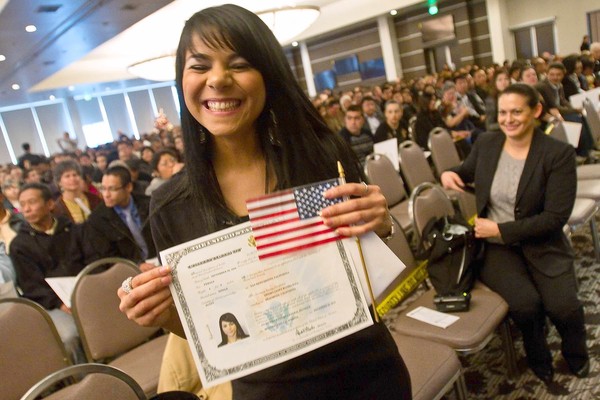
A decade ago, Shyima Hall was smuggled into the United States as a 10-year-old slave, forced to cook and clean inside the home of a wealthy Irvine family and, at night, sleep on a squalid mattress in a windowless garage.

On Thursday, the Egyptian-born 22-year-old stood before a federal judge in Montebello with nearly 900 others and was sworn in as naturalized U.S. citizen. The ceremony capped a hard-scrabble journey that began with Hall’s rescue, wound through the foster care system and ended with her living on her own, working, and with ambitions to become a federal agent.

“I went through something terrible, but right now I’m in a great place,” Hall said after Thursday’s citizenship ceremony at the Quiet Cannon Country Club. “I can’t imagine anything greater than having my own life.”

Hall’s Egyptian parents sold her into slavery when she was 8 for $30 a month, according to authorities. The Cairo couple who bought her moved to Irvine two years later, smuggling Hall into the U.S. where she toiled for them and their five children until she was 13.

Hall said she worked 16 hour days, scrubbing floors, cooking meals and cleaning house, and was rarely allowed outside the spacious home. She was forced to wash her own clothes in a bucket and was forbidden from going to school. She never visited a doctor or dentist and didn’t speak a word of English.

Her captors, Abdel Nasser Eid Youssef Ibrahim and his former wife, Amal Ahmed Ewis-abd Motelib, berated her and occasionally slapped her around, authorities said.

“I didn’t know anything about what America was about. My only hope was to go back home and live a normal life with my family, my brothers and sisters,” she said. “That’s all I wanted.”

In 2002, acting on a tip from a concerned neighbor, child welfare authorities rescued her from the house. Her case was investigated by U.S. Immigration and Customs Enforcement, leading to the prosecution, federal imprisonment and, later, deportation of Ibrahim and Motelib.

Hall formed a tight bond with one of the lead federal agents, Mark Abend of ICE’s Homeland Security Investigations, who has served as a friend and mentor. He was at Hall’s citizenship ceremony Thursday.

“I’m really proud of her. Think of everything she’s been through. Being sold into slavery at an early age. Coming over here. Not having a family,” Abend said. “The resiliency she has is just amazing. The fortitude. Not falling apart. Not being a destroyed soul.”

Abend remembers interviewing Hall, then 13, with the help of an Arabic interpreter for the first time when she was being cared for at the Orangewood Children’s Home in Orange. Her captors told her to never speak to police, that officers would beat her. She stayed tight-lipped until she was allowed to call her parents in Egypt, and her father ordered her to go back with her captors.

“That’s when I saw a spark,” Abend said. “She stood up to her dad. She said, ‘No! This is not right. What they did to me was not right. You sold me into slavery.'”

At 13, Hall decided that she wanted to stay in the U.S. She hasn’t returned to Egypt or seen her family.

In recent years, Hall has spoken to groups across the country about combating human trafficking. She’s briefed ICE agents about the emotional and physical trauma victims face.

In 2010-11, federal immigration officials launched 651 investigations into human trafficking, arresting 300 people. According to the U.S. State Department, there are more than 12 million people entrapped in some form of slavery worldwide.

Hall said her dream now is to become a federal agent for ICE to help crack down on human trafficking and free the enslaved.

“That’s my top goal,” Hall said. “I’ve been through it. I know I can help.”

Los Angeles immigration attorney Angelo Paparelli, who represented Hall pro bono, said that her citizenship application was filed under a special provision for juvenile immigrants and that county officials from the outset supported her decision to stay in the U.S.

“She has literally gone through a living hell, and now she wants to give back,” said Paparelli, of the national law firm Seyfarth Shaw. “She’s there to give other people courage.”

For now, Hall is living in Beaumont in Riverside County and working at the Cabazon outlets as a store supervisor. She’s deciding whether to go back to college to finish a degree or to apply for the local police force.

“I’m very excited. I can start my career now,” she said. “I can start my life.”

Unhappy Anniversary, Guantanamo!

By Carlos Harrison for The Huffington Post

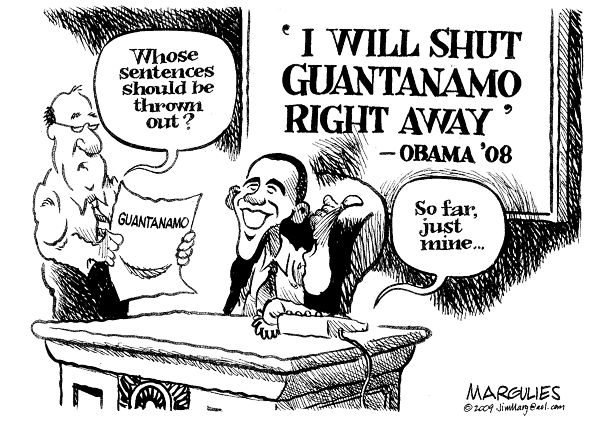
It’s been a troubled – some might say, tragic – 10 years for the detention camps at the GuantĆ”namo Naval Base in Cuba. And as they slouch into their 11th year on January 11, there’s no end in sight.

“We say to ourselves, in sort of gallows humor: GuantĆ”namo will close when the last detainee there dies of natural causes,” Jeremy Varon, an organizer with Witness Against Torture, told the Huffington Post on Wednesday.

Franz Kafka himself would have been hard-pressed to concoct a more bewildering and brutal contradictory reality. Allegations over the years have included sexual humiliation, waterboarding, and the use of dogs to scare detainees. Released detainees reported being locked in in sensory deprivation cells, beaten repeatedly, and forced to race while wearing leg shackles. If they fell, they were punished.

If it sounds like Abu Ghraib, it should. The U.S. Senate Armed Services Committee found that intelligence teams transported the “aggressive” interrogation techniques perfected at GuantĆ”namo to Afghanistan and Iraq.

The link between Cuba and the war zones, the New York Times reported, was Maj. Gen. Geoffrey D. Miller, then the head of detention operations at GuantƔnamo. At his insistence, the Times wrote, the Defense Department sent training teams on 90-day tours in Iraq, showing the soldiers there the techniques utilized on the island. The timing, Amnesty International points out, happened to coincide with when the worst abuses occurred at Abu Ghraib.

Thanks to reports like those, the detention camps have become an international symbol of what democracy and justice are not. They’ve been plagued by suicide attempts by desperate detainees and condemned by the United Nations, human rights groups, even former U.S. Secretary of State Colin Powell, who called for the immediate closing of the camps in 2006.
“The value of holding prisoners there was unclear, but the price we were paying around the world for doing so was obvious,” Powell said.

The camps were created in 2002 as a deliberately “extraterritorial” place to extract information from captives in the “War on Terror.” By putting them at Guantanamo, the United States, meant to be beyond the jurisdiction of both the Geneva Conventions and U.S. courts.

That didn’t put them outside the range of public opinion. The camps sparked outrage on day one. Pictures flew around the world of shackled and handcuffed detainees on their knees on the ground with black hoods over their heads and mittens on their hands.

The indignation grew as the first 20 captives went into wire cages at Camp X-Ray, described by critics as “kennels.” Soon, though, the detainees were transferred to permanent cells, and Camp X-Ray was closed.

But the human rights complaints continued, even from some of America’s closest allies.
In 2006, speaking on BBC radio, British Foreign Secretary Jack Straw said:

“I am absolutely clear that the U.S. has no intention of maintaining a Gulag in Guantanamo Bay. They want to see the situation resolved and they would like it other than it is. However, that is the situation that they have.”

In all 779 detainees have been held in the camps. Eight have died there, including six suicides. One man died of colon cancer, another after an apparent heart attack.

And, in the 10 years since it opened, only six detainees have been convicted of war crimes.
The last 171 still there are caught at the conflicting conjunction where bureaucracy, politics, and military regulations collide – offering little chance, at least for the foreseeable future, of gaining their release.

Forty-six are classified as “indefinite detainees,” held without charges, but considered too dangerous to be released; 89 are eligible for release or transfer but in perpetual custody because there is no place to send them. Five more have been convicted of war crimes; and six face trial – perhaps this year – for the 9/11 attacks and the October 2000 U.S.S. Cole bombing.
That makes Guantanamo, as Carol Rosenberg of the Miami Herald described it in a piece for Foreign Affairs, “arguably the most expensive prison camp on earth, with a staff of 1,850 U.S. troops and civilians managing a compound that contains 171 captives, at a cost of $800,000 a year per detainee.”

But even the budget conscious Congress resists closing the base. In fact, it has used its spending oversight powers to thwart the president’s efforts to do just that. It has used that authority to prevent the trial of detainees on U.S. soil and to block the purchase of a dedicated prison facility in Illinois to house transferred detainees.
And no one wants to risk having a released captive later become involved in an act of terrorism or insurgency, which happened with at least one-fourth of the 500 detainees set free under President George W. Bush.

So, the captives remain in Guantanamo. Until when no one knows.
As Marc Thiessen, a fellow at the American Enterprise Institute, told CNN:

“We have the right to continue to hold them as long as al Qaeda is at war with us.”

Having the right, though, doesn’t make it right, said Geneve Mantri, government relations director for national security, Amnesty International.

Speaking to The Huffington Post on Wednesday, he said the 89 cleared for release by both the Bush administration and a review ordered by President Obama, “represent little or no threat.”

“This has always been sold as a question of the worst of the worst and the reality is that a large number of the people that have been picked up, I hate to say it are in the insignificant and rather pathetically sad story category,” he said.

“There is a minority of people (in the camps) that no one doubts are truly dangerous. That minority of people should be placed in front of a US court. Because we have the most efficient system, the fastest and cheapest and best system for looking at all the evidence. You produce it all in a court of law. Have a real defense — an internationally recognized defense. And then put them away forever.”