Posts Tagged ‘ Afghanistan ’

U.S. Aims to Ease India-Pakistan Tension

By Peter Spiegel and Matthew Rosenberg for The Wall Street Journal
President Barack Obama issued a secret directive in December to intensify American diplomacy aimed at easing tensions between India and Pakistan, asserting that without détente between the two rivals, the administration’s efforts to win Pakistani cooperation in Afghanistan would suffer.

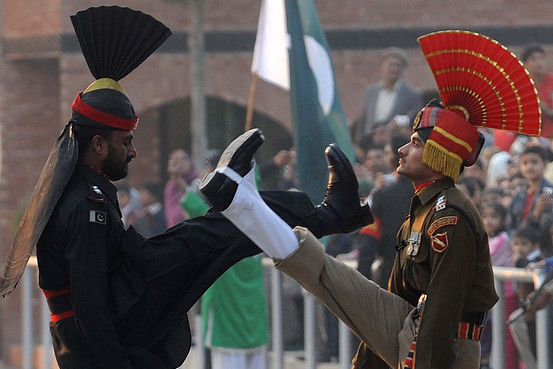
Pakistani Rangers (L) and Indian Border Security Force (BSF) personnel perform the daily retreat ceremony at the India-Pakistan Border at Wagah on December 26, 2009. The directive concluded that India must make resolving its tensions with Pakistan a priority for progress to be made on U.S. goals in the region, according to people familiar with its contents.

The U.S. has invested heavily in its own relations with Pakistan in recent months, agreeing to a $7.5 billion aid package and sending top military and diplomatic officials to Islamabad on repeated visits. The public embrace, which reached a high point last month in high-profile talks in Washington, reflects the Obama administration’s belief that Pakistan must be convinced to change its strategic calculus and take a more assertive stance against militants based in its western tribal regions over the course of the next year in order to turn the tide in Afghanistan.

A debate continues within the administration over how hard to push India, which has long resisted outside intervention in the conflict with its neighbor. The Pentagon, in particular, has sought more pressure on New Delhi, according to U.S. and Indian officials. Current and former U.S. officials said the discussion in Washington over how to approach India has intensified as Pakistan ratchets up requests that the U.S. intercede in a series of continuing disputes.

Pakistan has long regarded Afghanistan as providing “strategic depth”—essentially, a buffer zone—in a potential conflict with India. Some U.S. officials believe Islamabad will remain reluctant to wholeheartedly fight the Islamic militants based on its Afghan border unless the sense of threat from India is reduced.

Indian Prime Minister Manmohan Singh has already taken the political risk of pursuing peace talks with Pakistan, but faces significant domestic opposition to any additional outreach without Pakistani moves to further clamp down on Islamic militants who have targeted India.

U.S. and Indian officials say the Obama administration has so far made few concrete demands of New Delhi. According to U.S. officials, the only specific request has been to discourage India from getting more involved in training the Afghan military, to ease Pakistani concerns about getting squeezed by India on two borders.

“This is an administration that’s deeply divided about the wisdom of leaning on India to solve U.S. problems with Pakistan,” said Ashley Tellis, an analyst at the Carnegie Endowment for International Peace who has discussed the issue with senior officials in the U.S. and India. “There are still important constituencies within the administration that have not given up hope that India represents the answer.”

India has long resisted outside involvement in its differences with Pakistan, particularly over the disputed region of Kashmir. But, according to a U.S. government official, a 56-page dossier presented by the Pakistani government to the Obama administration ahead of high-level talks in Washington last month contained a litany of accusations against the Indian government, and suggestions the U.S. intercede on Pakistan’s behalf.

The official said the document alleges that India has never accepted Pakistan’s sovereignty as an independent state, and accuses India of diverting water from the Indus River and fomenting separatism in the southwestern Pakistani province of Baluchistan.

Secretary of State Hillary Clinton has signaled that Washington isn’t interested in mediating on water issues, which are covered by a bilateral treaty.

The White House declined to comment on Mr. Obama’s directive or on the debate within the administration over India policy. The directive to top foreign-policy and national-security officials was summarized in a memo written by National Security Adviser James Jones at the end of the White House’s three-month review of Afghan war policy in December.

An Indian government official said the U.S.’s increasing attention to Pakistani concerns hasn’t hurt bilateral relations overall. “Our relationship is mature—of course we have disagreements, but we’re trying not to have knee-jerk reactions,” the Indian official said.

According to U.S. and Indian officials, the Pentagon has emerged in internal Obama administration debates as an active lobbyist for more pressure on India, with some officials already informally pressing Indian officials to take Pakistan’s concerns more seriously. Adm. Mike Mullen, chairman of the Joint Chiefs of Staff and the U.S. government’s prime interlocutor with the powerful head of the Pakistani army, Gen. Ashfaq Kayani, has been among the more vocal advocates of a greater Indian role, according to a U.S. military official, encouraging New Delhi to be more “transparent” about its activities along the countries’ shared border and to cooperate more with Pakistan.

In interviews, U.S. military officials were circumspect about what specific moves they would like to see from New Delhi. But according to people who have discussed India policy with Pentagon officials, the ideas discussed in internal debates include reducing the number of Indian troops in Kashmir or pulling back forces along the border.

“They say, ‘The Pakistanis have this perception and you have to deal with the perception’,” said one foreign diplomat who has discussed India’s role with Pentagon officials. An Indian defense ministry spokesman said his country’s army has already moved about 30,000 troops out of Kashmir in recent years.

The State Department has resisted such moves to pressure India, according to current and former U.S. officials, insisting they could backfire. These officials have argued that the most recent promising peace effort—secret reconciliation talks several years ago between Indian Prime Minster Singh and then-Pakistani President Pervez Musharraf—occurred without U.S. involvement.
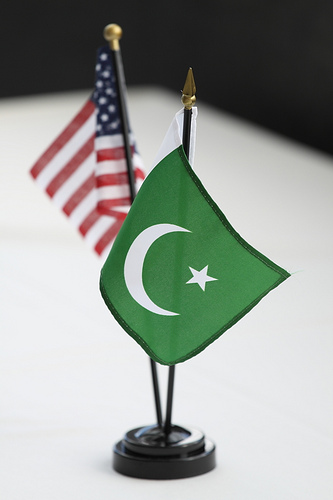
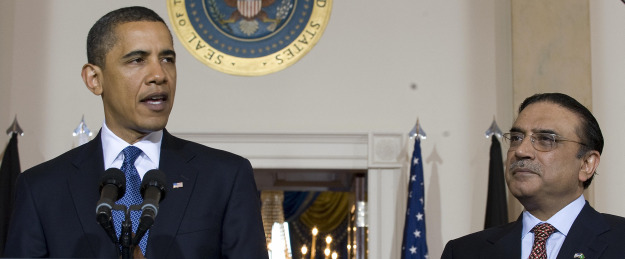
Progress, For a Price, in Pakistan

By Doyle McManus for The Los Angeles Times

In 2001, on the eve of the U.S. invasion of Afghanistan, President George W. Bush gave Pakistan’s then-leader, Gen. Pervez Musharraf, a choice: He was either with us or against us. Musharraf chose to become an ally, but the question ever since has been whether that shotgun marriage can mature into a healthy adult relationship. At times, the prospect has seemed far from reach.

The world’s second-most-populous Muslim country is caught in a brutal internal struggle between extremism and moderation. Most of its people tell pollsters they don’t like the United States and wish we’d go away. The tribesmen of its western frontier shelter Osama bin Laden and the leaders of Afghanistan’s Taliban. And the United States can’t forget how, in the 1980s, Pakistan built nuclear weapons — and then later exported nuclear technology to North Korea and Iran.

But in recent months, there has been progress in the relationship. Military and intelligence cooperation between the United States and Pakistan has increased significantly. Pakistan has allowed the CIA to increase its missile strikes against Al Qaeda and Taliban targets in Pakistani territory. Pakistani authorities have arrested several Taliban leaders and allowed U.S. intelligence officers to question them. And now Pakistan is offering to increase its own military operations in North Waziristan, the presumed lair of Bin Laden. All that cooperation came at a price, of course: a flood of U.S. military and economic aid.

And last week, the Pakistanis came to Washington to press for more. The academic criticism of the U.S.-Pakistani relationship is that it is “transactional” — nothing more than a series of bargains between buyers and sellers who don’t trust each other much. That’s still mostly true. Pakistan’s delegation arrived with a 56-page shopping list covering everything from military equipment to education and cultural exchanges. And one Pakistani official, asked during the visit whether his government was truly willing to act against the havens that allow the Taliban to maintain bases in Pakistan, replied frankly: “Yes — but at a price.”

After a series of meetings with Secretary of State Hillary Rodham Clinton, Pakistan’s ebullient foreign minister, Shah Mehmood Qureshi, declared: “I think we are going to move from a relationship to a partnership.” But he used the future tense. In the meantime, there are things to work out. Pakistan is clearly worried about what happens when the United States begins pulling troops out of Afghanistan in 2011.

Although Obama administration officials have tried to reassure Pakistan that Washington’s commitment to the region is for the long haul, uncertainty remains. “Our fear is . . . that we get into a fight with these guys [the Taliban], and you walk away, and we’re still there,” a Pakistani official said. Pakistan’s powerful army chief of staff, Gen. Ashfaq Kayani, spent part of his time in Washington visiting Congress with PowerPoint slides to show that Pakistan has committed more troops to its fight against insurgents than the United States has on the ground in Afghanistan, and that it has suffered almost 30,000 killed and wounded in the process.

According to U.S. officials, Kayani made a strong case that Pakistan can do more if it gets more modern military equipment from the United States, especially helicopters to ferry troops into the rugged badlands where Al Qaeda and the Taliban hide. The United States has helped Pakistan acquire some helicopters, but not as many and not as quickly as the Pakistanis would like. U.S. officials said they would try to speed the delivery of more. In the past, U.S. officials complained that Pakistan used much of its U.S. military aid to bolster its eastern front with India instead of its fight with internal insurgents; but since Pakistan’s 2009 offensive in the Swat Valley, that criticism has been stilled.

The delegation also added a new item to Islamabad’s wish list: a nuclear agreement under which the United States would help Pakistan develop its civilian nuclear energy industry — to mirror a similar U.S. agreement with India, Pakistan’s longtime enemy. The United States told the Pakistanis that would have to wait. The memory of having to clamp sanctions on Pakistan for its nuclear weapons program is still too fresh. But it was a sign of improving relations that the idea wasn’t rejected completely.

 In 2001, the United States sought a new relationship with Pakistan mostly because it was next to Afghanistan — and thus a country we would need for moving military supplies and basing drones. But that thinking has slowly evolved. In the long run, with its population of 170 million people — not to mention its cache of nuclear weapons — Pakistan is more important than Afghanistan.

“We’re engaging with Pakistan because we’re afraid of it,” says Christine Fair, a Pakistan expert at Georgetown University. “It’s the scariest country in the region. Because of Afghanistan, it’s been treated as if it were a subsidiary issue. But Pakistan should be the primary issue.” The Americans are working hard to convince the Pakistanis that they are interested in Pakistan’s stability for its own sake, not just because it’s next door to Afghanistan. The Pakistanis are working hard to convince the Americans that they are committed to defeating the extremists in their midst. It’s not a strategic relationship yet. If it’s a partnership, it’s still a wary one. But that’s progress.

A Victory For Obama, From An Unlikely Quarter-Pakistan

By Fareed Zakaria for Newsweek

President Obama gets much credit for changing America’s image in the world—he was probably awarded the Nobel Prize for doing so. But if you asked even devoted fans to cite a specific foreign-policy achievement, they would probably hesitate. “It’s too soon for that,” they would say. But in fact, there is a place where Barack Obama’s foreign policy is working, and one that is crucial to U.S. national security—Pakistan.

There has been a spate of good news coming out of that complicated country, which has long promised to take action against Islamic militants but rarely done so. (The reason: Pakistan has used many of these same militants to destabilize its traditional foe, India, and to gain influence in Afghanistan.) Over the past few months, the Pakistani military has engaged in serious and successful operations in the militant havens of Swat, Malakand, South Waziristan, and Bajaur. Some of these areas are badlands where no Pakistani government has been able to establish its writ, so the achievement is all the more important. The Pakistanis have also ramped up their intelligence sharing with the U.S. This latter process led to the arrest a month ago of Mullah Abdul Ghani Baradar, the deputy leader of the Afghan Taliban, among other Taliban figures.

Some caveats: most of the Taliban who have been captured are small fish, and the Pakistani military has a history of “catching and releasing” terrorists so that they can impress Americans but still maintain their ties with the militants. But there does seem to be a shift in Pakistani behavior. Why it’s taken place and how it might continue is a case study in the nature and limits of foreign-policy successes.

First, the Obama administration de-fined the problem correctly. Senior ad-ministration officials stopped referring to America’s efforts in Afghanistan and instead spoke constantly of “AfPak,” to emphasize the notion that success in Afghanistan depended on actions taken in Pakistan. This dismayed the Pakistanis but they got the message. They were on notice to show they were part of the solution, not the problem.

Second, the administration used both sticks and carrots. For his first state dinner, Obama pointedly invited Indian Prime Minister Manmohan Singh—clearly not Pakistan’s first choice. Obama made clear that America would continue to pursue the special relationship forged with India under the Bush administration, including a far-reaching deal on nuclear cooperation. But at the same time, the White House insisted it wanted a deep, long-term, and positive relationship with Pakistan. Sens. John Kerry and Dick Lugar put together the largest nonmilitary package of U.S. assistance for the country ever. Aid to the Pakistani military is also growing rapidly.

Third, it put in time and effort. The administration has adopted what Central Command’s Gen. David Petraeus calls a “whole of government” approach to Pakistan. All elements of U.S. power and diplomacy have been deployed. Pakistan has received more than 25 visits by senior administration officials in the past year, all pushing the Pakistani military to deliver on commitments to fight the militants.

Finally, as always, luck and timing have played a key role. The militants in Pakistan, like those associated with Al Qaeda almost everywhere, went too far, brutally killing civilians, shutting down girls’ schools, and creating an atmosphere of medievalism. Pakistan’s public, which had tended to downplay the problem of terrorism, now saw it as “Pakistan’s war.” The Army, reading the street, felt it had to show results.

These results are still tentative. Pakistan’s military retains its obsession with India—how else to justify a vast budget in a small, poor nation? It has still not acted seriously against any of the major militant groups active against Afghanistan, India, or the United States. The Afghan Taliban, the Haqqani group, Gulbuddin Hekmatyar, Lashkar-e-Taiba, and many smaller groups all operate with impunity within Pakistan. But the Pakistani military is doing more than it has before, and that counts as success in the world of foreign policy.

Such success will endure only if the Obama administration keeps at it. There are some who believe that Pakistan has changed its basic strategy and now understands that it should cut its ties to these groups altogether. Strangely this naive view is held by the U.S. military, whose top brass have spent so many hours with their counterparts in Islamabad that they’ve gone native. It’s up to Obama and his team to remind the generals that pressing Pakistan is a lot like running on a treadmill. If you stop, you move backward, and, most likely, you fall down.

Lahore bombing is Pakistan’s bloodiest this year

By Saeed Shah for The Guardian

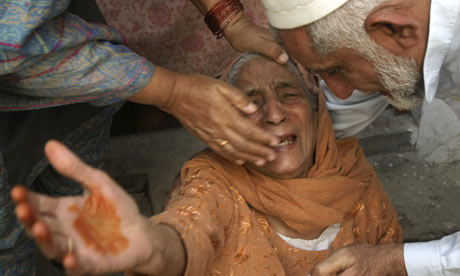
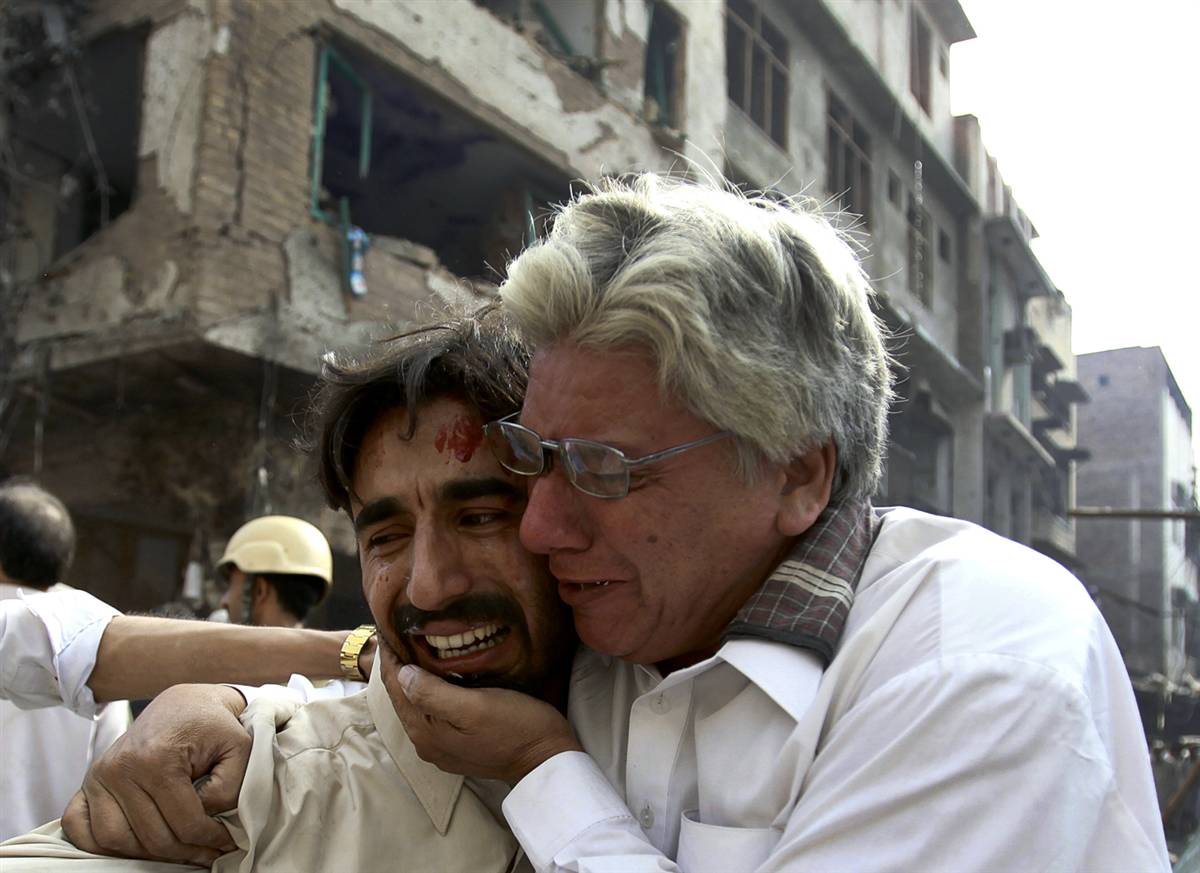
A bombing in the eastern city of Lahore has killed at least 43 people – the fifth terrorist attack this week as extremists in Pakistan demonstrate their continued ability to strike.

The bloodiest terrorist strike in Pakistan this year was carried out by two attackers wearing suicide jackets who walked into a busy market in a high security military district and blew themselves up. The target appeared to be passing military vehicles but most of the victims were civilians. Shops in the market were ripped apart, with children crossing the road and people waiting at a bus stop among the victims. About 10 soldiers were killed and 100 injured, said the Lahore police chief, Parvaiz Rathore.

“There were about 10 to 15 seconds between the blasts. Both were suicide attacks,” a senior local government official, Sajjad Bhutta, said at the site. “The maximum preventative measures were being taken but these people find support from somewhere.” The bombers struck at 1pm, around the time of Friday prayers, in the cantonment area, home to the local army garrison and one of Lahore’s most upmarket residential districts.

Lahore is the bustling cultural hub of Pakistan and had enjoyed several weeks of relative peace. It is the capital of the eastern Punjab province, Pakistan’s most densely populated area and its political heartland. The suicide bombings were followed in the evening by three smaller blasts in a residential area across town. They caused panic but damage was reported to be minor. The authorities repeated their regular assertion that the Taliban and other extremist groups have been defeated. The provincial law minister, Rana Sanaullah , said: “We broke their networks. That’s why they have not been able to strike for a considerable time.”

But it was the second bombing this week in Lahore. A car bombing on Monday at a police interrogation centre killed 14 people. Other attacks this week included a gun and grenade assault on a US Christian aid agency’s office in the north-west, killing six of its staff, all Pakistani nationals. “They (the extremists) are trying to project their power, telling the government that they are still alive,” said analyst Imtiaz Gul, author of The al-Qaida Connection. “They are still far from broken. It’s going to be a long haul.”

In 2009 that Lahore was dragged into the bloody insurgency in Pakistan, which claimed around 3,000 lives last year, with a series of spectacular attacks including a gun assault on the visiting Sri Lankan cricket team. The last major attack in Lahore was in December when a market was bombed, killing at least 49 people. The launch of a military offensive in South Waziristan, on the Afghan border, the base of the Pakistani Taliban, in October last year was accompanied by a vicious spate of terrorist reprisals but the country had been relatively peaceful this year.

Attacks By the Taliban Illustrate their Growing Strength in the Region

Peshawar, Pakistan- A suicide bomber detonated his vehicle packed with explosives on New Year’s Day in a crowd of people watching a volleyball tournament killing at least 75 people, wounding another 60, of which 13 are in critical condition. Police stated that they believed that the attack was directed towards anti-Taliban leaders of local groups made up of ordinary residents of the area who had recently formed armed local militias to help the government fight the Taliban. The blasts demonstrate the capabilities of the Taliban who also were responsible for the killing of seven American CIA employees at an agency base in Khost, Afghanistan the same day.

The targeting and the killing of both the anti-Taliban civilians as well as the CIA employees is an alarming start to a new year in the region as the Taliban have stepped up their efforts against American troops, Pakistani security forces, civilians and anyone else that challenges them.

Analysts believe that the Afghani Taliban has agreed to bury its differences with the Pakistani Taliban and join forces after President Obama announced plans to increase troop levels in Afghanistan and hunker down for the foreseeable future in a protracted conflict with the armed group. The Pakistani Taliban is an offshoot of the Afghani Taliban and is led by veterans of the fighting in Afghanistan who come from the border regions with Pakistan. Although they have always supported the fight against foreign forces in Afghanistan by supplying fighters, training and logistical aid, they have concentrated on battling the Pakistani government. Many believe that the Pakistani Taliban provides an essential rear base to for the Taliban insurgency in Afghanistan.

This new Taliban alliance has raised concerns for the US and NATO forces where generals are forecasting that the conflict will only worsen this year as Friday’s attacks are proving the grave assessment correct. The attack was not far from South Waziristan, where the Pakistan army is waging an offensive against the Pakistan Taliban. Western intelligence agencies believe that time is running out in the fight to eradicate the Taliban from Afghanistan as they are evolving, adapting and getting better organized and resilient as the nearly decade long conflict rages on.

The insurgency is organized, increasingly effective and growing more cohesive, said a senior intelligence officer with NATO’s International Security Assistance Force (ISAF). “The insurgent strength is enabled by the weakness of the Afghan government,” the officer told reporters on condition of anonymity.

The Taliban is funding its operations, which he estimated to cost between 100 million to 200 million dollars a year, through “Al-Qaeda, drugs and taxing the people. “Its goal is to “establish Al-Qaeda as a global entity”, ridding the region of foreign forces and establishing a caliphate, or Islamic state, and the Taliban in Afghanistan and Pakistan work together to those ends stated the officer.

It is apparent that the stepped up offensive on the security forces and civilians by both the Pakistani and the Afghani Taliban on both sides of the border is an illustration of both their strength and resolve in the fighting the government forces. Pakistan, Afghanistan, the US and NATO forces must redouble their efforts and provide increased financial, military and logistical support if this formidable enemy is to be defeated, let alone eradicated from the region.

 Reported by Manzer Munir for www.PakistanisforPeace.com

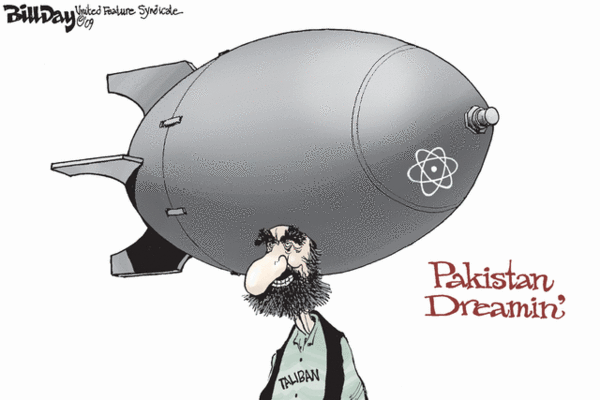
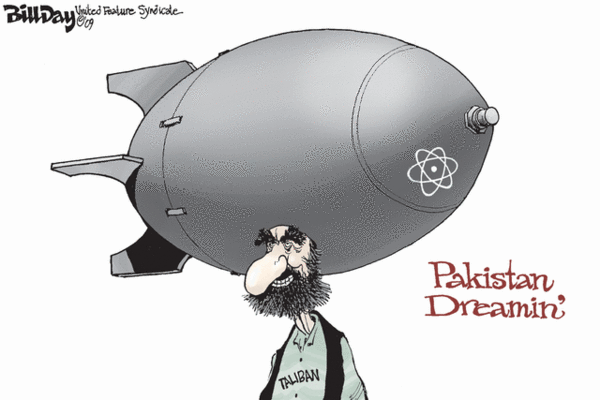
The Taliban’s Nuclear Desires

Taliban's Nuclear Aspirations

Kahuta, Pakistan- As the Pakistani army battles Taliban militants just 60 miles from Islamabad in Swat, Pakistan, one question frightens intelligence experts around the world: How safe are Pakistan’s nuclear weapons from getting in the hands of the Taliban?

Pakistan has roughly 100-150 nuclear warheads, and they are guarded by an elite army unit that is screened for loyalty. The prevailing expert opinion is that as long as the Pakistani army holds together and does not show signs of cracks, then these weapons are in well guarded secret locations.

However, Pakistan’s nuclear research and production facilities are another story. Kahuta, which is Pakistan’s main research and development complex, covers many square miles and employs thousands of workers. It is also simply the biggest of more than a dozen sites around the country. It was also the workplace where disgraced former scientist A Q Khan managed to sell nuclear blueprints and technology to several rogue regimes including Libya and North Korea.

There are concerns that the militants have made determined efforts to infiltrate some of these nuclear facilities, perhaps even applying for jobs there. Taliban militants, Al-Qaeda operatives and other extremists may not be able to get their hands on any warheads at these facilities as they are not kept there, but even a little leftover uranium to make a dirty bomb could have serious consequences and plenty of terror for the region and the world. Pakistan and its ally the United States must ensure that the government of Asif Ali Zardari have all the resources and safety measures in place to ensure that nothing like this ever occurs as the ramifications of such a breach would be catastrophic.

Reported by Manzer Munir for www.PakistanisforPeace.com

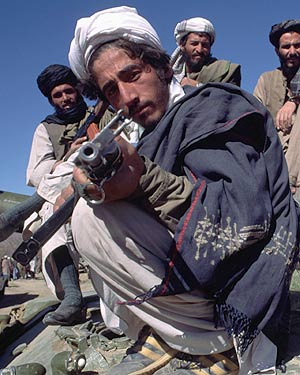
Taliban 101- Origins and History

Reporting by Manzer Munir for http://www.PakistanisforPeace.com

Pakistan’s month long offensive against the Taliban continues in the Swat valley displacing up to 2.4 million people from their homes as the army fights the militants. The fighting is fierce and ongoing. Just who are the Taliban, where did they originate, and how did they become so powerful?

In December of 1979, the Soviet Union invaded Afghanistan with over a 100,000 Russian troops. In response to the Soviet occupation and as a part of its overall Cold War strategy, the United States responded by arming and militarily supporting the mujahideen who were Afghan citizens opposed to the Soviet invasion of their country and the pro-Soviet Afghan government at the time.
 

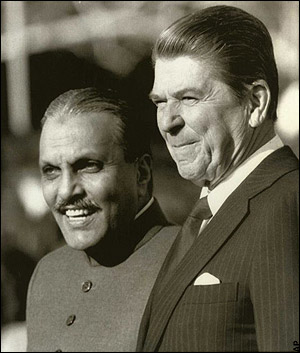
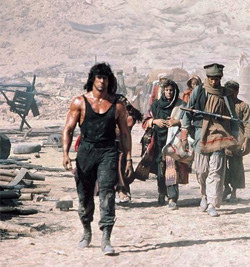
President Reagan’s administration found a great ally in the form of Pakistani leader General Zia ul Haq who was willing to allow Pakistan to be used as a base to receive American weapons and support to be funneled to the Afghani resistance fighting the Soviets. The United States and Pakistan’s spy agency the ISI, provided arms and funding to the Afghans resisting the invasion of Afghanistan. The ISI also assisted in the process of gathering radical Muslims from Afghanistan, Pakistan and indeed around the world to help in fighting the Soviets. With the help of the US, Saudi Arabia, and Pakistan, a fundamentalist and well financed Saudi by the name of Osama Bin Laden became one of the key players in organizing training camps of radicalized Muslims eager to wage jihad against the communist regime of the Soviet Union. Soon, over 35,000 fundamentalists came to fight alongside the Afghani holy warriors. Sylvester Stallone’s Rambo III (1988) was based on this vision of the world: when the “good” guys were the Bin Laden and mujahideen “holy warriors” fighting the “evil communist” Soviet empire.

Rambo III-1

The origins of the Taliban started inside Pakistani religious schools known as madrassahs during this time as General Zia sought a steady flow of young men willing to die for the cause and saw it as their religious duty to defend Afghanistan against the atheist communists. It is estimated that there were as many as 11,000 to 15,000 madrassahs or religious schools throughout Pakistan helping churn out radicalized young men with a very strict and narrow interpretation of Islam.

After the Soviets accepted defeat and withdrew from Afghanistan, the various Afghani factions controlled by different hostile warlords started to fight each other and a civil war between the various groups ensued for several years. Fed up with lawlessness and chaos in their country, a group of Talibs or religious students with the help of the Pakistani army quickly won some territory in a few cities. Soon the average Afghani citizen supported these Talibans as they promised to bring order and a rule of law to a land that was without any form of governance thanks to the warlords. Eventually the Taliban managed to conquer several important provinces as well as Kabul in 1996.

The Taliban considered Osama Bin Laden a guest of their country and felt indebted to him for helping in fight the Soviets. During their rule leading up to 9-11, Al-Qaeda operated freely within Afghanistan and in fact had the support of the ruling Taliban government and Mullah Omar, their leader. With American forces dispatched by President Bush soon after 9-11 to go after Bin Laden and Al-Qaeda and their supporters, the Taliban quickly fled to the hills of the Afghanistan-Pakistan region where they have been ever since, deploying guerrilla tactics and insurgency towards both the government of Afghanistan’s Hamid Karzai as well as within Pakistan.

This brings us to the present time where the Taliban have used the rugged mountainous region of the Afghan-Pakistan border as well as the sympathies of the local population to find multiple bases from within which to operate. After trying to make peace deals with the Taliban in the Swat region of Pakistan only to see it fail, the Pakistani army has been unrelenting in its offensive against the Taliban and now the fighting has gone on for more than a month with over 2 million people displaced.

The people of Pakistan are fed up with the Taliban and although want to see peace return to the Swat valley as soon as possible, they are willing to wait as long as it takes to make sure the Taliban threat is eliminated from within Pakistan once and for all. And in order for the US to eradicate the Taliban in Afghanistan, they have to first eliminate all places of sanctuary for them inside Pakistan and that is why the current offensive against the Taliban in the Swat valley is of such paramount importance in defeating the Taliban in the region.

It is commendable that the Pakistani and US governments are now cooperating in working together to defeat the Taliban as this enemy is a very skillful and determined opponent who is used to a long fight. After all, they fought the Soviets for nearly a decade before the Russians admitted defeat and withdrew. The forces of Pakistan’s army and the people of Pakistan must realize that this fight will take many months, perhaps years before the Taliban threat is eliminated from this region.

But then again, nothing worthwhile comes easily and peace in the Swat valley, Pakistan and in Afghanistan is something that is well worth all the blood, sweat and tears as this enemy is not one you negotiate with as their actions in the past have proven. One hopes that the government does not lighten up on the Taliban and that the people of Pakistan continue to provide their support in this war against the militants.

Pakistan government accepts defeat by Taliban in Swat Valley and allows Sharia Law in region


Swat Valley, Pakistan- In a move roundly criticized around the world, Pakistan announced that it had reached a deal with the Taliban militants to allow them to implement Sharia, or Islamic Law, in the Swat Valley of Pakistan in return for a truce with the Taliban militants in the region. Sharia law refers to the Islamic system of law and the totality of the Islamic way of life. An example of Sharia law is the allowance of getting revenge by an injured plaintiff to exact revenge-physical eye for a physical eye, and a tooth for a tooth. It allows for a thief to be punished by cutting off their hand. It allows for adulterers to be stoned to death by a mob as another example of what is allowed under Sharia law.

The Swat Valley which is a naturally beautiful area of Pakistan has for many years been immensely popular with domestic and foreign tourists. However in recent months, increased offensives by the Taliban and attacks on girls schools, civilians appearing to be too western in attire and mannerisms and anything or anyone that is deemed anti-Islamic has come under indiscriminate attacks by them. The once popular tourist industry in the area has all but evaporated as foreigners and Pakistanis alike are staying away from a region that is now engulfed in violence.

There has also been a rash of beheading by the Taliban of locals who have spoke up against their bullying and their savage tactics. This violence is not only isolated to the people living in the Swat region. Recently, a New York Times article reported that even Pakistani Americans living in the New York area from the Swat region are now being signaled out for ransoms and kidnapping by the Taliban in the region. http://www.nytimes.com/2009/02/17/nyregion/17swat.html

According to a former CIA official, the Taliban in the region perhaps number 3000 militants. They have been able to take on a force of roughly 12,000 Pakistani Army soldiers due to their brazen and indiscriminate attacks. Also, the Pakistani Army has not helped matters by firing at the Taliban positions from a great distance and often in the process killing local civilians who now do not know which side to trust for their safety. This decision by the Pakistani government to capitulate to the Taliban and agree to impose Sharia law in the region leads some international observers to claim that this demonstrated the weakness of the Pakistani army in facing and defeating the much smaller Taliban fighters. The Information Minister of Pakistan, Sherry Rehman, denied that the state made any “concessions” to the militants. “It is in no way a sign of the state’s weakness. The public will of the local population of the Swat region in wanting Sharia law is at the center of all efforts and it should be taken into account while debating the merits of this agreement.” The Pakistani government is now hoping that the agreement with the Taliban will prompt them to now disarm in the Swat valley and the violence will stop.

Unfortunately, two previous agreements with the Taliban have failed to materialize any peace in the region and each time the treaty was broken in exchange for fresh violence. Each time, the Taliban have gotten very brazen and they are acting with impunity knowing that they now have the upper hand in the fight with the Pakistani army. US and NATO forces have criticized previous deals with the militants and stated that each time they saw an increase in suicide attacks on international and Afghan forces across the border in Afghanistan. It seems obvious to this reporter that each time the Taliban reach an agreement with the Pakistani forces they are then able to better concentrate their attacks and and violence against the US, NATO and Afghan forces inside Afghanistan. Allowing the Taliban to circumvent the rule of law in Swat and parts of the North West Frontier Province (NWFP) in exchange for a fragile peace is a foolish policy that not only does not work in the long run but actually allows these militants to become emboldened and stronger as a result. Also, this sends a clear message to the Taliban and militants in other parts of Pakistan and Afghanistan that the state is willing to compromise their principles and given enough of a fight, will relent and accept defeat.

We at Pakistanis for Peace are extremely disappointed by the government of Pakistan’s decision to acquiesce to the demands of these same militants who on one hand behead people who disagree with them and on the other hand destroy girls schools because somehow in their narrow and closed minded interpretation of Islam, teaching girls education is deemed by them to be un-Islamic. This decision not only makes these militants stronger but also further has the effect of having people in the region and around Pakistan lose faith in the government’s ability to fight and protect the civilians from what are nothing more than thugs with guns who profess to be “Talibs” or students of Islam. If one was truly a student of Islam and a follower of the religion of peace, then brutal acts of violence against women, foreigners, and Pakistani citizens would not be a routine course of action by them.

The Taliban are enemy number one for the people of Pakistan and Afghanistan and of Islam itself and of Islam and Islam’s image both at home and abroad. How else but to categorize them as savages after they bombed two of the oldest Buddhist statues of Bamyan Afghanistan in 2001? Does Islam not teach respect for all religions and respect for differences of opinion? Where in the Koran does it say it is okay to throw acid on a woman’s face so you can intimidate other women in not attending school? Where does it say it is okay to behead a young man and make an example out of him because he did not repeatedly heed your warning to stop listening to western music? All these actions by the Taliban is a clear indication of the absence of logic in the minds of these people. And for the Pakistani government to fool itself into thinking that any agreements with them will bring peace to the region is absurd. We at Pakistanis for Peace urge the Pakistani government to break this foolish treaty with the Taliban as there should never be any compromises with these people as one can not reason with someone who has no reason. Common sense in not very common among the Taliban and the Pakistani government is doing itself and the people of Swat and of Pakistan a disservice by compromising with these militants.


Reported for www.PakistanisforPeace.com by Manzer Munir

American United Nations Diplomat kidnapped by militants in Quetta Pakistan


Quetta, Pakistan- On the heels of our recent report regarding an up tick in Taliban and militant activity in the Pakistani city of Quetta comes word that the head of the UN Agency for Refugees in Quetta Pakistan has been kidnapped by militants. American diplomat John Solecki, was seized by gunmen and taken hostage and his Pakistani driver was shot and killed Friday as he was headed in the morning to his UN agency office.

His United Nations labeled SUV was found rammed against the wall and at least one bullet hole was found on the vehicle. When the Pakistani police reached the vehicle, they found the driver shot and dead at the steering wheel and Mr. Solecki missing. The US expressed “extreme shock and dismay” at the abduction and the Pakistani government called his kidnapping and the killing of the driver a “dastardly terrorist act.”

The city of Quetta in Pakistan borders Afghanistan and the UN High Commissioner for Refugees has been involved for at least 30 years in the area helping the Afghani refugees from the war with the Soviets and then the internal conflict between the warlords and eventually the Taliban and now fleeing the war on terror between the American forces and the militants.

Police has increased patrols in the region and are fearing that Solecki may have been taken to the Afghani side of the region or he may very well even be hidden in a house in and around Quetta. Local police has confirmed that the American citizen Solecki has been working in Quetta for at least the last two years. He did not have a police escort and it is known that he did not like to have an escort with him on his way to the office.

A few hours after his abduction, a video was released by the kidnappers who identified themselves as being with the little known Baluchistan Liberation United Front, suggesting a link to local separatist groups who have waged an insurgency against Pakistan’s government. This suggests that the persons responsible may not be Al-Qaeda or even Taliban militants but rather local insurgents who are seeking an independent Baluchistan from Pakistan.

In the 20 second video, Solecki appears blindfolded and has a shawl draped over his shoulders and states that his message is addressed to the United Nations. “I am not feeling well. I am sick and in trouble. Please help solve the problem soon so I can gain my release,” he says. The kidnappers have threatened to kill Solecki within 72 hours if their demands of the immediate release of 141 women it says were held by the authorities. The militants recently beheaded a Polish engineer in the area after negogations for his release last week failed. It is feared that they intend to carryout their threat on Solecki if their demands are not met.

Pakistanis for Peace and the majority of the peace loving people of Pakistan and Afghanistan are extremely disturbed and saddened by the death of the Pakistani driver and of the abduction of Mr John Solecki. A committed humanitarian and diplomat interested in solving the refugee problem for the Afghani people in the area, all he was doing in the region was helping the people of Afghanistan and Pakistan. He and his agency’s work in this violent and volatile region is of paramount importance in providing assistance and relief to many thousands of people in the area. At risk to his life and liberty he happily worked in this part of the world as he believed in the cause of the UN Refugee agency. We are tremendously saddened by these turn of events and pray that there is a peaceful solution to the situation and that Mr Solecki be released immediately. The cowards responsible for his abduction should realize that individuals such as Mr Solecki are doing nothing but helping the people of Afghanistan and Pakistan and for them to threaten his life goes against everything the religion of Islam and the hospitable nature of the people of the area in how their custom is to treat visitors and guests in their country. We Pray that he is released safely and immediately and that the terrorists responsible for his abduction be caught and brought to justice.

This is an image from mobile phone footage released by Online Photos Friday Feb.
Reported for www.PakistanisforPeace.com by Manzer Munir

Obama to focus on terrorist safe havens inside Pakistan


The new US envoy to Afghanistan and Pakistan, Richard Holbrooke is scheduled to meet leaders of Pakistan and Afghanistan in Islamabad this week as part of a major US policy review aimed at combating the Taliban and extremists in the region. He is scheduled to meet Pakistan’s President Asif Ali Zardari, the Prime Minister Yousuf Raza Gilani, and key military leaders as well as members of the Foreign Ministry.

US President Obama has stated that he is planning on sending an additional 30,000 troops into Afghanistan and has promised to stabilize the Afghanistan and Pakistan region as this was one of his stated goals during the presidential campaign. He is also hoping for additional troops from NATO in battling a resurgent insurgency in the Afghanistan and Pakistan border areas. Holbrooke will also be holding top level talks with Afghani and Indian leaders before reporting back to Secretary of State Hillary Clinton and President Obama.

In his first televised prime time speech Monday evening, President Obama was asked about the safe havens inside Pakistan and what he was doing to root out the terrorists on the Pakistani side of the border. Obama stated that there is “no doubt” that there are safe havens on Pakistan’s side of the border and his envoy Holbrooke is going to try and convince Pakistan’s new government of President Zardari that the Pakistanis are endangered just as much as the United States from the threat presented by the Taliban operating from these areas. He stated that it is important for Pakistan to know that it is “not acceptable” for either the United States or Pakistan to have people in the border region who will act “with impunity” to kill innocent people. He also stated that he believes that the government of Pakistan “cares deeply” about getting control of the situation and that Pakistan will be effective partners in the anti-terror fight against the Taliban and the extremists.

The New York Times reported Monday that the Taliban have set up complex operations in the Pakistani city of Quetta, where Taliban leaders are believed to play a significant role in stirring violence in southern Afghanistan and disrupting the supply of goods and services en route to US forces in Afghanistan. Although there has been some success against the Taliban and Al-Qaeda in the tribal areas of the North West Frontier Provience (NWFP) of Pakistan, the city of Quetta has fast become a central operations point for the Taliban in planning and carrying out attacks against the US forces out of this Pakistani city. Secretary of State Hillary Clinton has stated that the US will have a tough love approach to Pakistan and will threaten to cut off military aid to Islamabad if it does not cut down on militants operating from inside its territory.

Pakistan’s ambassador to the United States, Husain Haqqani stated in an interview that if there is actionable intelligence against Al-Qaeda or Taliban in its territory, than Pakistan will act on that intelligence. However he admitted that there is not always good information coming out of Quetta as this is a very “messy area.” The province of Baluchistan where Quetta is the capital has long been hostile to the federal government of Pakistan. In fact, for several years now there has been a low level insurgency against the Pakistani government led by the Baluchistan Liberation Army (BLA) who’s goal is the establishment of a separate Baluchistan government.

The BLA has been listed as a terrorist organization since 2006 by the Pakistani and British governments. It is a partnership of convenience for the Taliban and Al-Qaeda fighters to unite with the BLA and base their operations from Quetta in Pakistan in fighting the American forces in Afghanistan. This new development is very troubling for the US forces as it allows the Taliban to organize and coordinate their attacks without much repercussion from the Americans as they are well inside Pakistani territory. Last week the Talliban was blamed for the execution and brutal beheading of a Polish engineer in the Baluchistan region who was held captive for several months before being savagely killed after negotiation for his release failed. Privately US officials admit that the Pakistani government has their hands full as they have been fighting the BLA for several years in and around Quetta and have not had great luck in building a network of sources and spies in the region as the Baluchi people of the area are sympathetic to the BLA against the Pakistani government.

It is the hope of peaceful groups like Pakistanis for Peace that the US, Afghanistan, and Pakistan cooperate fully in their fight against the extremists in the region as they all share a common enemy. Whether the perpetrators of violence are Taliban, Al-Qaeda, or Baluchi separatists, they are the common enemy of the United States, Afghanistan, and Pakistan. It does not matter if the acts of terrorism are committed against Americans, Afghans, foreigners such as the Polish engineer, or average Pakistani citizens, it is high time that the allies on the war on terror unite and join forces in rooting out this evil from the area. It is going to require the united efforts and resources of all involved to bring the fight to the enemy. Pakistan must understand that the enemy within its borders is a much more serious threat to its sovereignty and statehood than any foreign army operating close to its borders. One hopes that the governments of Pakistan and the US settle their differences regarding terrorist safe havens in Pakistan and are able to find a successful strategy in battling and rooting out the terrorists operating in the region both inside Afghanistan and Pakistan as this is in the best interest for all countries involved in attaining peace and winning the war on terror.

Reported for http://www.PakistanisforPeace.com by Manzer Munir

Bullseye for the Bullies


The Taliban are the people’s enemy #1 for Pakistan and for people in Afghanistan. This menace must be wiped out and its leaders jailed and their weapons confiscated and if they are not willing to lay down arms peacefully to the will of the state, they should be made to bear full punishment by the rule of the law.

Editorial opinion by Manzer Munir for www.PakistanisforPeace.com

Acid Attacks on School Girls by the Taliban


A 19-year-old and her 16-year-old sister were attacked by two men with
acid in Kandahar, Afghanistan. The assailants wanted to deter the girls
from attending school. These were not the only attacks carried out that
November day of 2008. Several other students and teachers were attacked
on their way to the Meir Weis Mena School in Kandahar, the third-largest
city in Afghanistan. Families were frightened and the children did not
go to school for many weeks after the attacks.

In Kandahar, the Taliban had set up their headquarters and it was also
home for the Taliban leader Mullah Omar. The Taliban were in power for
five years during which time they forbade girls to attend schools. If
they tried to go to school they were beaten. Their parents and family
members were harassed or even killed for allowing the girls to attend
school.

Since the Taliban fell in 2001, the government of Afghanistan has made
an effort to educate boys as well as girls. According to the government
figures, 2 out of the 6 million children attending schools are girls.

The President of Afghanistan, Hamid Karzai and the President
of Pakistan, Asif Ali Zardari met to diffuse the tensions and agreed to
bring the perpetrators of these crimes to justice. Afghanistan and
Pakistan both have radical groups who are against the education of
girls. Pakistan cooperated fully and in a brotherly fashion to the issue at hand. In the past each has accused the other of doing such crimes but this meeting proved to be different.

As for Shamsia, revenge would be getting an education. “Why wouldn’t I
want to come to school? I want our
country to persevere. I have to do something for my country, I must go
to school.”

This story brings to light the injustices in many countries that still
occurs in the name of religion and culture but they are nothing but
oppression. Islam has given women and men equal rights and education
empowers each to attain a better future for themselves and their future
generations. Islamic education as well as school education are
extremely important since each play a vital role in an individual’s
life. Due to the lack of education on both fronts, radical groups
ensnare and entrap their victims and use them to commit atrocious crimes
as above and worse. Education must be made as common as food and water
for all the people of the world so that hatred, poverty and terrorism
can be brought to an end.

Most of the 1300 girls of the Meir Weis Mena School, including all if the wounded ones in the attack two months ago have refused to be intimidated and cowed by the Taliban and are back in class studying and defying the demands of a group of ignorant men with guns and filled with hate. It is a testament to the world that their desire to defy their oppressors is greater than the Taliban’s desire of supression of basic human rights.

Pakistanis for Peace believes that the horrific attacks against girls by Taliban and other militants must end. The education of both boys and girls is necessary for a society to advance. Islamic teachings are very supportive of education and seeking of knowledge. Nowhere in the Koran does it specifically forbid educating girls and the use of religious rhetoric by the Taliban and its supporters seeks to confuse the public into believing that teaching girls is not Islamic.

Reported by M. Lameesa Ali and Manzer Munir for http://www.PakistanisforPeace.com

Seasoned Diplomat Appointed Special Envoy to Afghanistan and Pakistan

richard-holbrooke

On her very first day as the new Secretary of State, Hillary Clinton called on the Prime Minister of Pakistan Asif Ali Zardari to advise him and the Pakistani government that the Obama administration has designated former US ambassador to the UN, Richard Holbrooke as a special envoy for Afghanistan and Pakistan.

A senior diplomat at the State department stated that it was a touch-base meeting between Clinton and Zardari but she also wanted to advise him that Pakistan would continue to be a crucial ally to the US and also a partner in fighting extremists in the region. It is noted that back in the 80’s the United States had appointed a similar envoy during the Afghan-Russian war and the individual had been instrumental in helping the Afghan resistance groups comprised of the mujhaideens fighters successful in repelling the Soviets with US and Pakistani backed assistance.

The US government terminated the special envoy position after the end of the war and the pullout of the Soviets but the incoming Obama administration is keen on reestablishing the important position.

Richard Holbrooke is seen as a very capable career diplomat very familiar with the two countries from his time as the American ambassador for the UN. He was also nominated 7 times for the Nobel Peace prize and is also the only person to have held the assistant secretary of state for two different regions of the world. He also was instrumental in brokering the peace agreement among the Bosnian warring factions that led to the Dayton Peace Accord in 1995. During Bill Clinton he was considered heavily for the Secretary of State position before eventually losing out to Madeline Albright as the head person in charge at the State department.

More recently he also served as a senior advisor for Hillary Clinton’s campaign for President and is seen as a close confidant of the former first lady.  President Obama and Secretary Clinton have stated that the Afghanistan and Pakistan border and the situation in the two couuntries will be one of their top foreign policy concerns. The appointment of such an experience and powerful diplomat underscores this commitment by the new administration.

Pakistanis for Peace believes that the appointment of Richard Holbrooke as the special envoy to the region is a welcome sign to a region that will be a critial focus for the US and for this new president. An accomplished and well experienced diplomat such as Mr. Holbrooke will ensure that when he talks, Kabul and Islamabad are aware that it is essentially Secretary Clinton or President Obama himself that they are conversing with and this direct link back to Washington will enable the two countries to fight the militants better. There is not just change afoot in Washington DC, the appointment of Richard Holbrook signals the arrival of a more robust and engaging US policy towards Afghanistan and Pakistan.

-Reporting by Manzer Munir for  www.pakistanisforpeace.com .