Posts Tagged ‘ Afghanistan ’

Pakistan Suicide Bomber Targets Mourners

As Reported by BBC News

A suicide bomb near Peshawar has killed seven people near a gathering mourning a cabinet minister’s son murdered in a suspected Taliban attack, police say.

About 20 people were also injured when the bomber struck on foot near the home of Provincial Information Minister Mian Iftikhar Hussain in the town of Pabbi. Three policemen and four civilians died. The minister was not among the mourners.

The Taliban has told the BBC it killed his 28-year-old only son two days ago. The suicide bomber detonated his explosives near a mosque where people had gathered in mourning on Monday.

Police said the attacker was dropped off by a man on a motorcycle near the minister’s home in the town, 26km (16 miles) east of Peshawar.

“He [the bomber] was a young boy,” senior police officer Liaquat Ali told news agency Reuters.

“He was trying to cross the checkpost but when our policemen caught him, he exploded himself.”

Mian Iftikhar Hussain is considered the provincial government’s most outspoken critic of the Taliban militants who have carried out dozens of bombings in the area.

BBC Islamabad correspondent Ilyas Khan, whose hometown is Pabbi, says the minister and other VIPs were probably not the direct targets of this blast, as it was well known they were gathering at a college building several kilometres away.

Our correspondent says the militants may have been sending a message that they can reach Mr Hussain’s home should they choose.

A spokesman for the Pakistani Taliban, Ehsabullah Ehsan, has told the BBC the group was responsible for gunning down the minister’s son, Rashid Hussain, near his home in Pabbi on Saturday.

The town is close to the home village of Pakistani-American Faisal Shahzad, who admitted to trying to blow up New York’s Times Square in May.

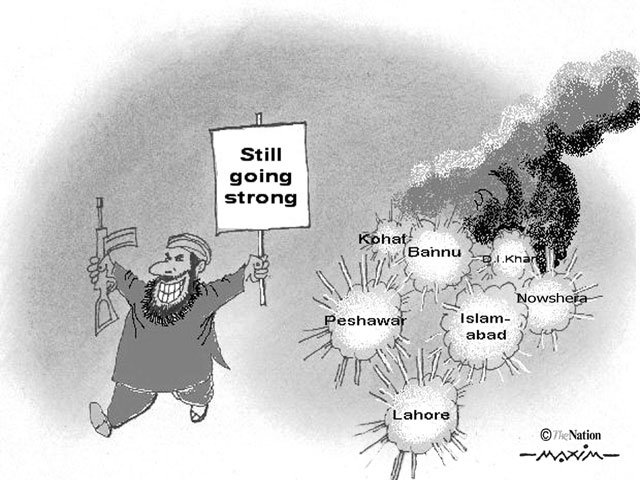
Bombs and attacks blamed on Taliban and al-Qaeda-linked militants have killed more than 3,500 people across Pakistan, it is estimated, since government troops besieged a radical mosque in Islamabad in July 2007.

Much of the violence has focused on north-west Pakistan’s border area with Afghanistan, where US and Nato troops are battling to turn around a nine-year war against the Taliban.

Going After the Haqqani Network

From the Editors of The Express Tribune

The question of the Haqqani network and how it is to be handled continues to fester. The US special envoy, Richard Holbrooke, this time in London, has suggested that Pakistan needs to go after the group with more force. The warning from Mr Holbrooke will have dashed hopes, raised during Hillary Clinton’s visit, that Washington was prepared to go along with a Pakistani strategy of dialogue with the network — led by Jalaluddin Haqqani and his son Sirajuddin. Links between the Pakistani intelligence forces and the Haqqanis have existed since the Afghan war and they have never been explicitly denied by either party. The elder Haqqani made his name as a formidable mujahideen commander during the Soviet occupation of Afghanistan when he was a member of Maulvi Yunis Khalis’s Hizb-i-Islami. He was also, according to American investigative journalist Steve Coll (who recently wrote Ghost Wars : The Secret History of the CIA, Afghanistan and Bin Laden, from the Soviet Invasion to September 10, 2001), offered a major role in the government by Afghan President Hamid Karzai some years ago.

For Islamabad, the pressure is on again. The Haqqani network is seen in Afghanistan as a key problem; it has carried out numerous attacks there. Washington believes Pakistan needs to do more to support the efforts against the militants in that country. The Pakistan military meanwhile, following its operation in South Waziristan, has avoided any move into North Waziristan – despite some gentle nudging from the US – reportedly following the intervention of the Haqqanis. They are also said to be facilitating talks with other militant factions across the conflict zone.

This brings us to an old issue: that of ‘good’ and ‘bad’ militants. It is clear that in the minds of the Pakistani military and the agencies allied to it this line of distinction continues to exist. Of course, Washington is in many ways responsible for creating this. The ghosts of the Afghan war, the alliance it formed with the mujahideen fighting the former Soviets and the engagement of Pakistan’s agencies, notably the ISI, are today coming back to haunt it. This is not to say that the CIA didn’t have its own connections to some of these actors in the past, but the point that is missed by most people is that it is America which calls the shots in this part of the world (or perhaps in most other parts as well).

There is a need for Islamabad to think things through. The division of militants into various camps, for example, so-called ‘good’ Taliban versus so-called ‘bad’ Taliban, has to stop. Essentially, these men of violence do more harm than good. The fact that a particular faction directs its wrath outside the country and avoids targeting Pakistani security forces should not be enough to cast it in the role of an ally. The effort against militancy does need to be seen in the wider regional context, and not as a matter of narrow allegiances and temporary agreements. The people who make decisions in Islamabad should keep in mind just how unsuccessful past efforts to do deals with the militants have been — with such attempts giving groups making up the complex Taliban network in the North a chance to reorganise and strengthen themselves on more than one occasion. There is reason to believe that this has contributed to the terrorism that has claimed thousands of lives. Even if the Haqqani network did not itself send out the bombers it has acted to back forces that have played a part in encouraging militant trends. The so-called Quetta Shura, led by the elusive Mullah Omar, is among these.

This having been said, Washington too needs also to review its own demands. There have been mixed signals over recent weeks. It is possible there is a lack of clarity on strategy within the US capital. This of course means the confusion in Islamabad has grown. A clear course of action needs to be planned in unison so the militants that Washington helped nurture can be driven away.

Pakistan Extends Gen. Kayani’s Term

By Zahid Hussain for The Wall Street Journal

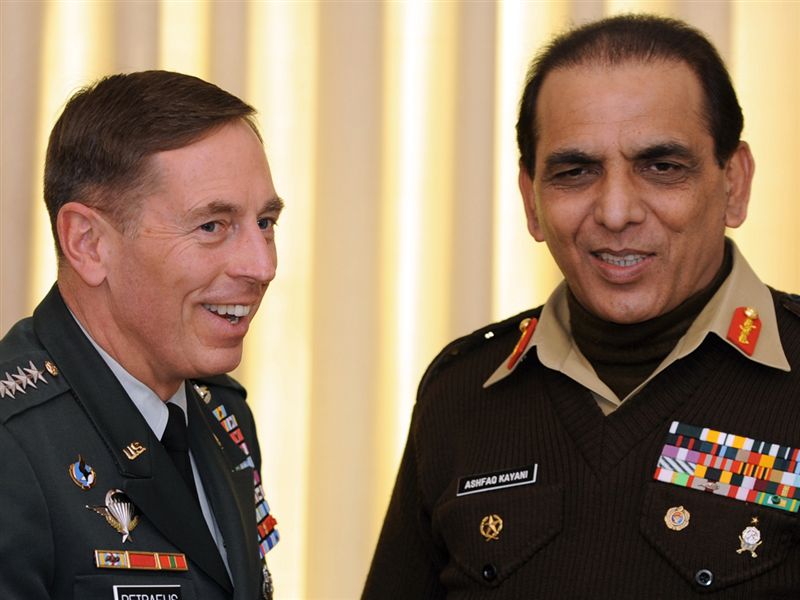
Pakistan’s civilian government late Thursday extended the term of army chief General Ashfaq Kayani for three more years to ensure continuity in the military leadership at a crucial stage in the country’s battle against Islamic militants.  The announcement was made by Prime Minister Yousuf Raza Gilani in a televised speech.

“The decision is taken to maintain continuity in the military’s command as the country is passing through very critical times,” Mr. Gilani said. Gen. Kayani, 58 years old, was appointed army chief in December 2007 and was to retire at the end of the year under normal tenure limitations.

The general has won praise for leading two successful military operations against Islamic militants last year in Pakistan’s Swat Valley and South Waziristan tribal region. But militants have regrouped in many areas and continue to unleash suicide strikes across the country.

More than 50,000 Pakistani troops are still engaged in fighting al Qaeda backed Islamic militants in the Pakistan’s troubled northwestern region, which borders Afghanistan. They are aided by unmanned U.S. drone strikes.

The war is seen as a crucial piece of the ongoing conflict in Afghanistan as many Taliban fighters use Pakistan’s tribal regions as a safe haven.

A senior government official said Gen. Kayani’s good rapport with Gen. David Petraeus, the commander of North Atlantic Treaty Organization forces in Afghanistan, and other American military leaders was a major factor in the decision to extend his term.

“He has worked closely with the current American military leadership and it is important for both Pakistan and the U.S. at this point for Gen. Kayani to stay at the helm,” said the official.

Other analysts agreed continuity was important at the current juncture of the war. “His leadership is crucial at the time when Pakistani army is fighting a decisive battle against the militants,” said Hasan-Askari Rizvi, an independent defense analyst.

Still, the extension of his tenure is likely to raise concerns among some pro-democracy activists about the pre-eminent role of the military in Pakistan.

The country has a democratically elected civilian government under President Asif Ali Zardari. But the country has been ruled more by military leaders in its 63-year history, most recently between 1999 and 2008.

Mr. Zardari’s government faces growing opposition and some analysts fear the army may step in again if they deem it necessary. Gen. Kayani, though, has focused on fighting militants. “We have to defeat them decisively,” he said during a recent discussion with a group of journalists.

Gen. Kayani received his commission in the Pakistani army in 1971. He served as the chief of Inter-Services Intelligence, Pakistan’s powerful spy agency, before his elevation to army chief.

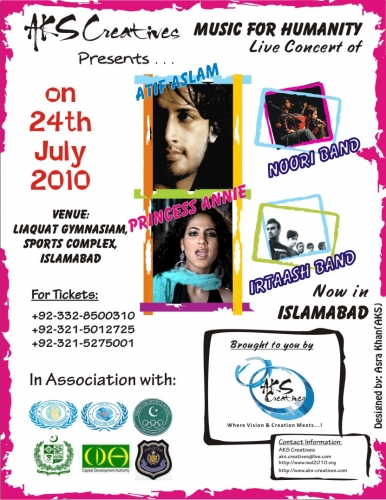
The Pakistan America Peace Through Music Project

A Musical Journey to Peace, Freedom and Understanding
(A Collaboration of The Sonic Peace Makers and SHINE HUMANITY)

The following information in this article is taken from the Peace Through Music webpage on Global Giving at:  http://www.globalgiving.org/projects/peace-through-music/  

Peace Through Music (#5719)

Mention Pakistan today and what comes to the minds of most Americans is terrorism, poverty, and hopelessness. That’s all they see in the news. But Pakistan also has one of the world’s most diverse and rich cultures, equaled only by its spectacular natural beauty as home to part of Kashmir, the Khyber Pass and high mountain peaks like K2. Once upon a time in the not so distant past, Texan gun enthusiasts brought their prized antique revolvers to Peshawar’s gun smiths to make copies, actor Robert DeNiro posed for pictures with restaurant owners while vacationing in Chitral, and Mick Jagger tested his dance skills with Lahore’s most well-known Mujra dancers. And many of Pakistan’s greatest musicians and singers like Nusrat Fateh Ali Khan regularly collaborated with their counterparts in Europe and America such as Peter Gabriel and Pearl Jam’s Eddie Vedder.

Two decades ago, we failed to uphold our principles and fulfill a moral obligation to help rebuild Afghanistan and assist Pakistan with the painful aftermath of the Soviet-Afghan war, which included millions of Afghan refugees who still reside in Pakistan. In stark contrast, we helped rebuild our enemies Germany and Japan after WWII, but inexplicably abandoned our friends after the war in Afghanistan, a key factor in allowing extremists to begin their destructive swarm across Afghanistan and Pakistan’s western frontier and become a grave threat to the security and stability of the entire world. But today, while the wounds are deep and the challenges are great, the forces of light and sonic harmony are again on the ascendance. Pakistan today is home not just to 11 music video channels and has one of the most innovative and vibrant music scenes anywhere in the world. A country that has produced some of the greatest sitar and tabla players is today home of some of the finest singers, guitar shredders and drummers. Music pioneers like Junoon, the godfathers of “Sufi Rock,” are joined by Qawwali rockers like Mekaal Hasan and Aaroh, indie projects like Peshawar’s Sajid and Zeeshan, and Heavy Metal innovators like Akash and Karavan. In recent years Atif Aslam has become the most successful Pop singer in all of South Asia with a growing following world-wide.

The Pakistan America Peace Through Music Project was inspired by the work of Greg Mortenson (author of the bestseller “Three Cups of Tea” and “Stones Into Schools”) and is based, among other things, on world music pioneer Manu Dibango’s declaration that musicians are “all from the same tribe” regardless of their race, nationality or religion and John Coltrane’s belief in the power of music to spread peace and harmony. Building on the millennia-long tradition of musical and cultural exchange in Pakistan and South and Central Asia more broadly, we will bring a group of leading musicians from the U.S. to Pakistan led by guitarist/producer Lanny Cordola (House of Lords, Giuffria, The Beach Boys), drummer/producer Matt Sorum (Guns ‘n’ Roses, Velvet Revolver), singer/guitarist Todd Shea and many others for a month long musical caravan throughout the country, creating and performing with some of Pakistan’s most well known, talented and innovative artists such as Atif Aslam, Shehzad Roy, Strings, Arieb Azhar, Abda Parveen, Ustad Fateh Ali Khan, Rustam Fateh Ali Khan, Beo Rana Zafar and celebrated record producer Rohail Hyatt (Vital Signs, Coke Studio). The inspiring poetry of Allama Iqbal and other revered poets will be prominently featured as an artistic and cultural base for the musical collaboration. Later on in the year, the Pakistani musicians will come to the U.S. for performances and events joined by their American comrades (including members of Guns ‘n’ Roses, Velvet Revolver, Red Hot Chili Peppers, etc.), which will also include time for more song writing and recording. Both the Pakistani and American “legs” of the gathering will be filmed for a documentary. The music and film will then be completed and released for sale on CDs & DVDs.

Goals
The project’s goals will be to bring Americans and Pakistanis closer together by erasing misconceptions and raising awareness of the diversity and beauty of Pakistan and its people, ultimately revealing the commonalities between Pakistani/Muslim and American cultures, to show Americans the Pakistan they never see in the mainstream media and to support Pakistan’s courageous artistic community, as well as raise funds and awareness to help establish and equip music schools and fund innovative health and education projects across Pakistan and Afghanistan. Once the initial project has been released, the music will continue with a series of collaborations with musicians and artists from all over the world to bring people together and help people in need.

Help bring people from all over the world closer together through a musical journey designed to erase misconceptions and build bridges of Peace and understanding between Human Beings.
Go to http://www.globalgiving.org/projects/peace-through-music and donate to the project.

More Information About this Project
Project Needs and Beneficiaries
SHINE Humanity and The Sonic Peacemakers need your support to help raise the funding needed to produce, record, film and document musical collaborations between singers and musicians from all over the world to promote peace and support humanitarian aid projects.

Activities
Musical fusion and celebration of diverse cultures will erase misconceptions and raise funding which will lead to a lasting positive effect on vulnerable children in developing nations, and help create a better, safer world for all Humanity

Funding Information
Total Funding Received to Date: $9,620
Remaining Goal to be Funded: $490,380
Total Funding Goal: $500,000

Why this Project is Important
Potential Long Term Impact

Project Message
“Music has incredible power to inspire and energize Human Beings to bridge divides and create a better world”
– Todd Shea, Chief Operating Officer

Who is Running This Project
Contact
Todd Shea
Executive Director
8020 N. Nob Hill Road
#201
Tamarac, FL 33321
Pakistan
Email: toddshea@cdrspakistan.org

Project Sponsor
GlobalGiving
Organization
Comprehensive Disaster Response Services
Chikar Rural Health Center
Chikar, Dist. Muzaffarabad 131000
Pakistan
011-92-300-502-9705
http://www.ShineHumanity.org

Additional organizations worthy of your donations
http://www.penniesforpeace.org/
http://www.ikat.org/

Clinton Reaffirms US Commitment to Pakistan

By Ayaz Gul for The Voice of America

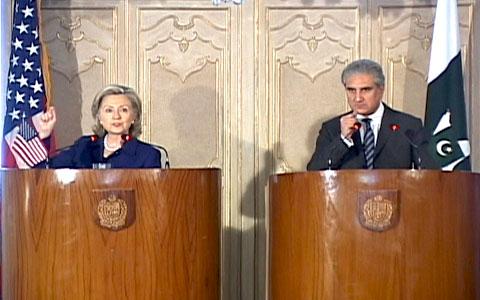
Concluding a second round of the so-called U.S.-Pakistan strategic dialogue in Islamabad, Secretary of State Hillary Clinton on Monday announced more than $500 million in several new aid programs for Pakistan.

The string of new projects unveiled by Clinton during a joint press conference with Pakistani Foreign Minister Shah Memood Qureshi are designed to help Pakistan meet its energy needs and boost power generation, health and agricultural development. The programs are the first to be launched under U.S legislation passed last year tripling civilian aid for Pakistan to $7.5 billion during the next five years.

Secretary Clinton said the United States hopes the new aid will translate into real life improvements for families and communities, describing them as long-term investments in Pakistan’s future.

“We are committed to building a partnership with Pakistan that of course strengthens security and protects the people of Pakistan, but goes far beyond security,” Clinton said. “We want to help you drive economic growth and prosperity, strengthen your democratic government institutions and expand access to the tools of opportunity.”

Pakistan is playing a key role in the international fighting against Taliban insurgents in Afghanistan. But public opinion in Pakistan still views U.S. motives with a considerable amount of suspicion. The skepticism stems from the U.S decision to abandon support for Pakistan after Soviet forces withdrew from Afghanistan.

But Secretary Clinton says she can see positive change resulting from what she called deeper and broader bilateral engagements in recent years.

“We have moved beyond a standoff of our misunderstandings that were allowed to fester and not addressed… to a position where we are engaged in the most open dialogue that I think our two countries have ever had,” she said.

Foreign minister Qureshi also agreed that the enhanced U.S cooperation in various fields such as energy, power, health, agricultural and education sector is critical for changing the public perception in Pakistan.

“The opinion of the United States will change when the people of Pakistan see that their lives have changed,” said Mr. Qureshi.

Sunday, Clinton attended the signing of a landmark trade deal reached by Pakistan and Afghanistan, after years of negotiations. The United States has been pushing Afghan and Pakistani leaders to improve bilateral relations it says will contribute to the fight against extremists.

Secretary Clinton’s next stop as part of her Asia trip will be Kabul, where she will attend an international conference on Tuesday.

At the news conference in Islamabad, she reiterated that insurgents who wish to reconcile must lay down their arms, renounce partnership with al-Qaida and accept Afghanistan’s constitution.

“It seems to us that there will be some who are willing to meet those conditions and others who are not. And we would strongly advise our friends in Afghanistan to deal with those who are committed to a peaceful future where their ideas can compete in the political arena through the ballot box, not through the force of arms.”

Taliban insurgents have stepped up attacks against Afghan and U.S-led coalition forces in recent months. More than 50 foreign troops have died in July while the previous month was the deadliest for international forces since the war against Taliban and its allies began nine years ago.

Clinton, With Initiatives in Hand, Arrives in Pakistan

By Mark Landler for The New York Times

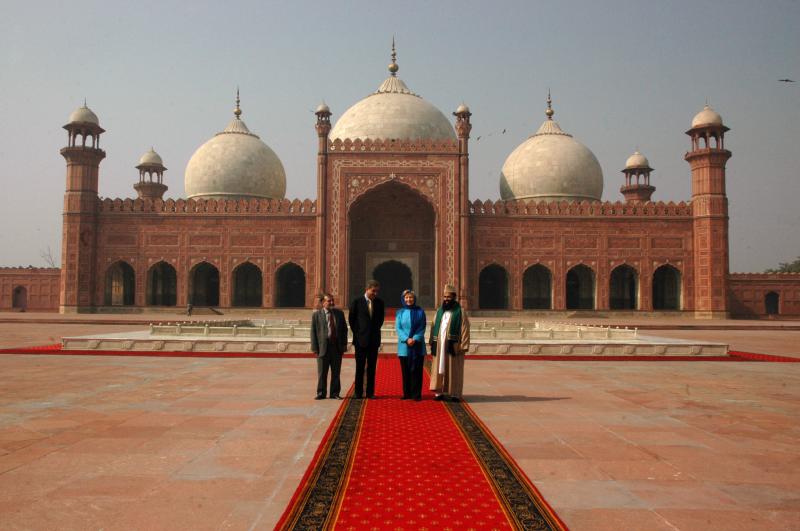
Secretary of State Hillary Rodham Clinton arrived here Sunday for high-level deliberations with Pakistani leaders, the latest in a series of encounters that the Obama administration hopes will chip away at decades of suspicion between Pakistan and the United States.

Hillary Rodham ClintonMrs. Clinton will announce a raft of initiatives to help Pakistan in public health, water distribution and agriculture, to be funded by $500 million in American economic aid. Among other things, the United States will build a 60-bed hospital in Karachi and help farmers export their mangoes.

Yet these projects, however beneficial to this economically fragile country, do not disguise several nagging sources of friction between the two sides. American officials still question Pakistan’s commitment to root out Taliban insurgents in its frontier areas, its motives in reaching out to war-torn Afghanistan and its determination to expand its own nuclear program.

Pakistan plans to buy two nuclear reactors from China — a deal that alarms the United States because it is cloaked in secrecy and is being conducted outside the global nonproliferation regime. Administration officials said they did not know if Mrs. Clinton planned to raise the purchase.

Relations could be further tested if the Obama administration decides to place a major Pakistani insurgent group, the Haqqani network, on the State Department’s list of terrorist organizations. Islamabad maintains ties to the group through its intelligence service, and it is seeking to exploit those connections as a way to extend its influence over Afghanistan.

For all that, tensions between the two sides have ebbed since Mrs. Clinton’s last visit here in October, when she was peppered with hostile questions in public meetings and bluntly suggested that people in the Pakistani government know the whereabouts of Osama bin Laden and Mullah Omar.

“We needed to change the core of the relationship with Pakistan,” said Richard C. Holbrooke, the special representative to Afghanistan and Pakistan. “The evolution of the strategic dialogue, and the fact that we are delivering, is producing a change in Pakistani attitudes.”

Mr. Holbrooke noted a U-turn in Pakistan’s policy on issuing visas to American diplomats. For months, Pakistani officials had held up those applications, creating a huge backlog and frustrating the United States. But Pakistan issued 450 visas in the last five days, he said.

Mr. Holbrooke conceded that public-opinion polls toward the United States had yet to show much of a change. Mrs. Clinton may receive more criticism on Monday at a town-hall meeting in Islamabad. Her visit, which was not announced due to security concerns, is being conducted under tight security.

Vali Nasr, a senior advisor to Mr. Holbrooke, said it was unrealistic to expect “to change 30 years of foreign policy of Pakistan on a dime.” But he said, “On foreign policy issues, we’re seeing a lot more convergence.”

The United States is encouraged by the burgeoning dialogue between President Hamid Karzai of Afghanistan and Pakistani leaders, including the chief of the staff of the army, Gen. Ashfaq Parvez Kayani. Any resolution of the war, Mr. Holbrooke said, must involve Pakistan.

While American officials would like to see a more aggressive Pakistani military push in North Waziristan, the stronghold of the Haqqani network, they praise the military’s campaigns in South Waziristan and the Swat Valley, where Taliban insurgents had also made gains.

Pakistan’s battle against insurgents has exacted a fearful civilian toll. Last week, a suicide bomber killed 45 people, and injured 175, in an attack on a 1,000-year-old Sufi shrine in Lahore. Many Pakistanis blame the American-led war in Afghanistan for fomenting anti-Pakistan terrorism.

A coalition of protest groups issued a statement Sunday, timed to Mrs. Clinton’s arrival, which calls for an end to the war in Afghanistan and for Americans and Pakistanis who are involved in clandestine air strikes on Pakistani targets to be tried for war crimes.

Mrs. Clinton is to meet General Kayani on Monday, after meetings on Sunday with President Asif Ali Zardari and Prime Minister Yousaf Raza Gillani. She was also scheduled to meet Pakistani business leaders and the head of the Pakistani opposition, Nawaz Sharif.

Mrs. Clinton has brought a shopping-bag full of commitments for Pakistan, drawn from the $7.5 billion in non-military aid, over five years, pledged by Congress last year. The emphasis is on basic services like electricity and water, politically-charged issues in this country, particularly during the hot summer.

“Our commitment is broad and deep,” said Rajiv Shah, the administrator of the United States Agency for International Development, who is with Mrs. Clinton. “We will not do what we’ve done in the past.”

Administration officials said the project to upgrade Pakistan’s creaky power grid, which involves building hydroelectric dams and rehabilitating power plants, had helped reduce chronic power outages. But on the day Mrs. Clinton landed, television reports here warned of further outages.

Government in Pakistan Calls Meeting on Terrorism

By Jane Perlez for The New York Times

In an unusual sign of accord between the two major political parties, Prime Minister Yousaf Raza Gilani announced over the weekend that the government and the opposition would hold a national conference on ways to combat terrorism.

The announcement came days after 42 people were killed and hundreds were wounded when two suicide bombers struck the famed Sufi shrine Data Darbar on Thursday night in Lahore, the capital of Punjab Province.

The attack incited street protests in Lahore on Saturday, and it provoked complaints that law enforcement was not doing enough to protect holy sites from sectarian militant groups.

Nawaz Sharif, the leader of the main opposition party, Pakistan Muslim League-N,  deplored the attack at a news conference on Saturday. It is time, he said, for the government to hold a national conference on terrorism and open talks with the Pakistani Taliban, “who are ready to talk and ready to listen.”

Mr. Sharif, whose brother Shahbaz Sharif  is the chief minister of Punjab, did not specify which Taliban figures such talks should include.

Prime Minister Gilani agreed late Saturday to the proposal for a national conference, though it appeared unlikely that it would involve representatives of any militant groups. The conference will discuss how to better fight back against the militants, and show concern for the problem, politicians said.

The creation of such a conference was interpreted as an encouraging step by politicians who have called for greater leadership by the civilian government against terrorism. Until now the army has mostly led the effort against the Pakistani Taliban, fighting the militants in the tribal areas adjacent to Afghanistan.

The Pakistani Taliban denied responsibility for the Data Darbar attack. The shrine, one of the most popular in Lahore, is considered un-Islamic by followers of the Wahhabi and Salafi schools of Islamic thought that Taliban fighters generally adhere to.

Some religious scholars were so outraged by the attack on the shrine that they called for the resignations of Chief Minister Sharif and the Punjab law minister, Rana Sanaullah.

Earlier this year, Chief Minister Sharif was criticized by the national government, led by the more secular Pakistan Peoples Party, when he appealed to the Taliban to stop attacking Punjab on the grounds that the Muslim League and the Taliban had a common enemy in the United States. Since then, he has been accused of not doing enough to crack down on militant groups that have coalesced under the umbrella of the Punjabi Taliban.

The federal Interior Ministry said after the assault on the shrine that it had warned Punjab authorities of a possible terrorist attack in Lahore last week.

A rare joint statement by the prime minister and Nawaz Sharif on Sunday said now was “not the time for blame games.”

A similar conference on terrorism by the two main political parties was held in Islamabad two years ago, but those talks petered out and responsibility for tackling terrorism was handed to the army.

An effective national strategy by the civilian government would need stronger and more cohesive leadership and more money for the poorly financed police forces in the major cities, according to law enforcement officials.

Sectarianism Has Poisoned Pakistan

By Basim Usmani for The Guardian

The recent attacks on a prominent shrine in Lahore demonstrate how the unrest in Pakistan is caused by a minority of few who cannot tolerate the plurality of beliefs in Pakistan. The Tehrik-e-Taliban are lying through their teeth when they claim that they do not attack public places. It’s becoming more and more apparent that these militants aren’t resisting American hegemony; this a war to determine Pakistan’s future and, by proxy, the future of Islam.

Whether the Tehrik-e-Taliban actually arranged the bombers’ suicide belts is irrelevant; they have created a domino effect that’s likely to spread from commercial capitals such as Lahore to cities with historic shrines and Pakistani historical sites, such as Multan, or Taxila.

Unlike Baghdad, where violence between Islamic sects is a product of the war America is waging, the onus of last Thursday’s blasts falls squarely on us, the citizens of Pakistan. We have been complacent about sectarianism for too long.

A good friend who works for a transportation company told me in 2007 that in villages along the highways to Waziristan where the Taliban had seized control were the bodies of butchered Shia Muslims. That year, Lahore’s public was too busy mobilising about the judiciary and President Musharraf to pay the violence any mind.

Sectarianism has a brutal history in Pakistan that existed long before militants in Afghanistan began calling themselves the Taliban. I remember as a child in Lahore the broadcasts of gun violence outside Shia houses of worship during the early 1990s.

Many Pakistanis feel that the attacks on two Ahmadiyya mosques last May, where gunmen unloaded bullets and grenades on Friday prayer-goers, were unprecedented. Certainly the Ahmadiyya community doesn’t think they are.

To have a Pakistani passport requires citizens to assert that they are not part of the Ahmadiyya community. In a sense, holding that passport also makes you complicit in the blasts that killed dozens in Lahore’s most famous Sufi shrine last week. Our inability to understand that this war is about national identity is rooted in the same complacency.

We are OK with the state deciding for us who is or isn’t Muslim. In this regard, the Pakistani government has the weakest moral fibre in taking on this growing strand of extremism. It is hypocritical to fight the Taliban in Waziristan if we are okay about denying citizenship to millions of Muslims born in Pakistan.

It may sound extreme of me, but we should be jailing clerics in Pakistan that give edicts declaring believers to be non-Muslim or anti-Pakistani. It may seem extreme to an American that writers who deny the Holocaust are imprisoned in Europe, but extreme contexts call for extreme measures.

Pakistanis must stress how being born or raised in their country is enough to be Pakistani; laws preventing Ahmadis from referring to themselves as Muslims were amended to the constitution by Zulfikar Ali Bhutto in the 1970s.

I remember being uneasy at my desk in middle school when I was studying at Aitchison College in Lahore, and some of my classmates were getting bullied for having marks on them after returning from Shia processions during Muharram. Pakistanis themselves are the only ones capable of stamping out this discriminatory culture.

Some proactiveness is necessary on our part to make it clear that mystics, Shias, Ahmadis and Christians are all fellow Pakistanis. When you are pulled over by street police in any major Pakistani city, the first bit of information the police ask for is your family name. From one name your caste, religious beliefs and affluence is determined.

This came as a shock to all of my family who have emigrated away: that collectively our stock in our own nationhood has plummeted so. In a sense, these problems are all accrued debt we’ve accumulated for being so complacent. In the light of our bigoted constitution and deterministic culture we have to – for ourselves – decide that being Pakistani is enough to make us all countrymen. Otherwise, we might as well just refer to ourselves as Taliban, Muslim extremists, Islamic militants, and so forth.

Vengeful New Militant Group Emerges in Pakistan

By Kathy Gannon for The Associated Press
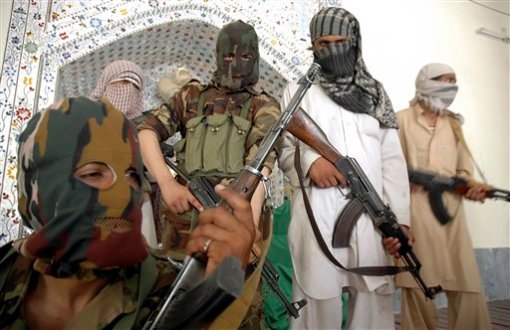
Pakistani authorities now believe a dangerous new militant group, out to avenge a deadly army assault on a mosque in Islamabad three years ago, has carried out several major bombings in the capital previously blamed on the Taliban.

The emergence of the Ghazi Force was part of the outrage among many deeply religious Pakistani Muslims over the July 2007 attack by security forces against the Lal Masjid, or Red Mosque, a stronghold of Islamic militants.

The fierce attack, in which scores of young, heavily armed religious students died, inspired a new generation of militants. These Pakistanis have turned against a government they felt has betrayed them and, to their dismay, backed the U.S. role in neighboring Afghanistan.

The brief but bloody history of the Ghazi Force illustrates the unintended results of Pakistan’s policy of promoting Islamic extremists to fight India in the disputed area of Kashmir. That policy — which Pakistan denies it pursues — now threatens regional stability as the U.S. and Pakistan’s other Western partners pour billions of dollars into the country to stop the rise of Islamic militancy.

The new group is made up of relatives of students who died in the Red Mosque assault. It is named after the students’ leader, Maulana Abdul Rashid Ghazi, who was also killed. The mosque’s religious school, or madrassa, had been a sanctuary for militants opposed to Pakistan’s support of the U.S.-run war in Afghanistan.

Private television stations broadcast vivid scenes of the assault — commandos in black fatigues rapelling down ropes, the crackle of gunfire, bodies of black-shrouded girls carried out through the smoldering gates. Those images stunned the nation, especially families of the students and Pakistanis with deep religious feelings.

“Before the Lal Masjid, militants hadn’t yet declared war on the state of Pakistan. That changed with Lal Masjid,” said Zahid Hussain, author and terrorism expert who has written extensively about Pakistan.

Islamabad’s inspector general of police, Kalim Imam, told The Associated Press that the Ghazi Force was behind most of the deadliest attacks in the capital during the last three years. The attacks targeted the military, the Inter-Services Intelligence agency or ISI — which had ties to a number of militants — and a five-star hotel frequented by foreigners and the Pakistani elite.

The Ghazi Force helped recruit a security official who blew himself up inside the office of the World Food Program last October, killing five people, according to Imam. The force also sent a suicide bomber in September 2007 into the mess hall of the commando unit that attacked the Red Mosque, killing 22 people, he said.

Ghazi Force members may also have been involved in the audacious June 9 attack north of the capital that killed seven people and destroyed 60 vehicles ferrying supplies to NATO and U.S. soldiers next door in Afghanistan, Imam said.

Many of those attacks had been attributed to the Pakistani Taliban, which operates in the remote tribal areas of the northwest along the border with Afghanistan. There is evidence of close ties between the Ghazi Force and the Pakistani Taliban, which the government has vowed to crush.

The Ghazi Force is believed to be headquartered in the Orakzai region of the border area, where the leader of the Pakistan Taliban, Hakimullah Mehsud, held sway for years. The leader of the Ghazi Force is believed to be Maulana Niaz Raheem, a former student at the Red Mosque.

Anger over the bloodshed at the mosque was all the greater because many of the militants and their supporters felt betrayed by a government that had once supported them. Both Ghazi and his brother Maulana Abdul Aziz Ghazi, who was freed on bail this year after two years in jail, were widely believed to have been on the payrolls of both the government and the ISI intelligence service.

Their father, Maulana Mohammed Abdullah, enjoyed a close relationship with the late President Mohammad Zia ul-Haq, and the mosque was a center for recruiting volunteers to fight against the Soviets in Afghanistan in the 1980s.

As opposition grew to Pakistan’s support of the U.S. role in Afghanistan, the mosque became a center of religious agitation against the government, with armed students taking over the complex and police laying siege.

A former senior official in the Interior Ministry told The Associated Press that the police wanted to storm the mosque and end the siege at its outset, send the students home and shut down the religious school and a neighboring library until tempers cooled.

President Gen. Pervez Musharraf refused, the official said, even though police knew that members of al-Qaida’s affiliate organization Jaish-e-Mohammed, which is banned in Pakistan, were bringing in weapons for the students.

Musharraf relented and ordered the assault after militants kidnapped several Chinese nationals running a massage parlor in Islamabad, accusing them of prostitution. The death toll remains in dispute. Red Mosque officials say hundreds died. The government says fewer than 100 were killed.

In a rare interview, Abdul Aziz Ghazi told AP he warned the government that an assault on the mosque would unleash forces that no one could control.

“I have been in jail. I did not form this force and I don’t condone the violence but they are angry at the injustices done,” he said this week.

Although the assault turned many Islamic hard-liners against the government, Pakistan remains unwilling to break all ties to the militants, instead following a high-risk strategy of coddling “good militants” while fighting those deemed “bad militants,” analysts say.

“The military and the ISI have given importance to these militants as assets. But those who have openly declared war, and there is no chance of them returning back to the state, the army is going after them,” said Manzar Jameel, a terrorism expert and researcher on the growth of extremism in Pakistan. “Yet they still believe that some are still assets and that they can keep control of the assets. It’s a failure of strategy.”

Army spokesman Maj. Gen. Athar Abbas denies any assistance to militant groups, saying past ties have long since been severed. He says the Ghazi Force is among the groups the 120,000 Pakistani soldiers waging war in the tribal regions are fighting.

Yet Anatol Lieven, a terrorism expert with the Department of War Studies at London’s King College, said it’s clear that the ISI continues to protect some militant groups, even if it has broken with others.

In a June report, the Rand Corporation think tank also alleged that Pakistan’s military and intelligence still support some militant groups “as a tool of its foreign and domestic policy.”

“A key objective of U.S. policy must be to alter Pakistan’s strategic calculus and end its support to militant groups,” the report said.

Christine Fair, a co-author of that report and an assistant professor at Georgetown University’s Center for Peace and Security Studies, said the battle against extremists in Pakistan is mired in layers of subterfuge by Pakistani intelligence and a “mystifying” acceptance by the CIA of Pakistan’s “good-militant, bad-militant” policy.

She said U.S. intelligence knows Pakistan protects one group — Lashkar-e-Taiba, which India blames for the 2008 Mumbai assault and Afghanistan accuses of masterminding deadly attacks against the Indian Embassy in Kabul.

“Lashkar-e-Taiba remains intact. I have had conversations with … officials in Washington. It is not their priority. Lashkar-e-Taiba is not an issue,” she said in an interview. “Yet Lashkar-e-Taiba has been attacking us in Afghanistan since 2004.”
Taliban Hangs 7 Year Old Afghan Boy For Spying

By Tucker Reals for CBS News

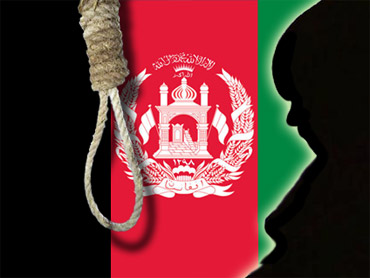
Taliban militants accused a seven-year-old boy of spying and hanged him earlier this week in Afghanistan’s southern Helmand province, a local government official tells CBS News.  

Provincial government spokesman Daud Ahmadi confirmed the incident which took place on Tuesday in the Taliban stronghold of Sangin, in Helmand. Ahmadi told CBS News’ Fazul Rahim the boy was hanged in public after a Taliban commander read a verdict out loud, accusing the youth of spying for international forces.

Afghan President Hamid Karzai said Thursday that, if confirmed by his national government, the hanging would be “heart breaking and shocking.”

Karzai spoke in Kabul at a joint news conference with Britain’s new Prime Minister David Cameron, who was in town for his first visit as head of state. Cameron said the alleged hanging would be a “horrific crime… a crime against humanity,” if proven.

A local resident in the remote village of Sang e Hissar, in the Sangin valley, tells CBS News he witnessed the hanging. The man says three militants brought the boy before a crowd of about 150 people, read the short verdict, and then hanged him from a tree.

The youngster was the grandson of a respected local elder, the resident tells CBS. According to the villager, the Taliban have intensified their campaign of intimidation in the area in recent months.

A Taliban source in Helmand told CBS News’ Sami Yousafzai on Thursday he was aware of the boy being killed, but that it was a case of a militant settling a personal vendetta against the boy’s family, then using the spying charges as an excuse. The source said he believed the boy’s executor had fled across the border to Pakistan.

The hanging comes as a Taliban commander in neighboring Kandahar province — the Taliban’s traditional home territory — tells CBS News that a suicide attack on a wedding party that left 40 people dead was “collective punishment” for villagers standing up to the Islamic militants’ control in the region.

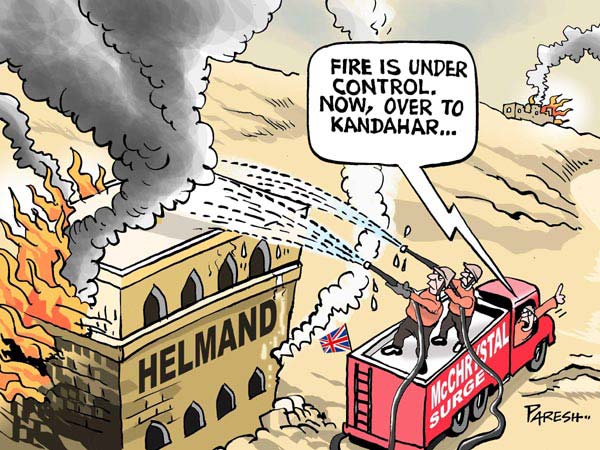
Situation in Afghanistan Remains Unstable Despite Gen McChrystal’s Troop Surge

Behind the Scenes of a Pakistani Suicide Bombing

By Chris Brummit and Asif Shahzad for The Associated Press

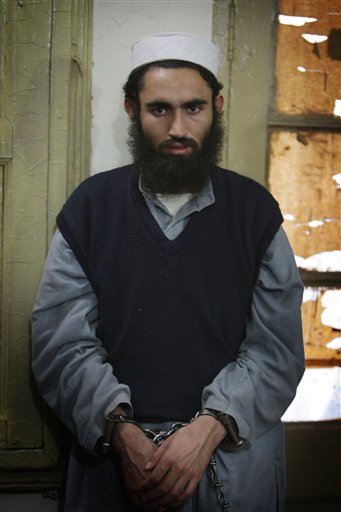
Abdul Baseer sent the grenades and explosive vest ahead, then boarded a bus that would take him to his target, accompanied by the 14-year-old boy he had groomed as his suicide bomber.

But before they could blow up their target, a luxury hotel in Lahore where they believed Americans would be staying, the two were arrested and are now in jail — Baseer unrepentant about having plotted to send a boy to his death, and the boy saying he never knew what was in store for him.

The story that unfolded in an interview with The Associated Press offers a rare insight into the world of a Pakistani militant, from his education at hard-line Islamic schools, through his professed participation in an attack on a U.S. patrol in Afghanistan, up to his arrest by Pakistani police along with the the boy, Mohi-ud-Din. His tale shares much with that of the thousands of other foot soldiers who make up the Taliban-led insurgency that is ravaging Pakistan, experts say. It also shows how the wars here and in neighboring Afghanistan bleed into each other.

The Associated Press, after several requests, was allowed to interview the two detainees, with police present for most of the meeting at a police interrogation center in Lahore, a political and military power center in eastern Pakistan. Baseer was born in 1985 close to the Swat Valley, which last year was overrun by Taliban and recaptured by the Pakistanis. The eldest of seven children, his father was a wheat farmer and earned barely enough to feed the family. Meat was reserved for guests, he recalled.

Like many who cannot afford a regular education, Baseer attended three Islamic boarding schools where children learn the Quran by heart and spend little time on secular subjects. The religious schools provide free board and lodging, but are widely criticized for indoctrinating students with an extreme version of Islam. At least one of the schools Baseer attended, Jamia Faridia in the capital, Islamabad, has been linked to terror.

“Through my studies, I became aware that this is the time for jihad and fighting the infidels, and I saw that a jihad was going on in Afghanistan,” said Basser, a rail-thin man speaking just louder than whisper. “I looked for a way to get there.” “A trip to Afghanistan is considered part of the profession for a militant,” said Imtiaz Gul, director of the Center for Research and Security Studies in Islamabad. “It is almost like you need to do it for graduation. “The American troops are there, and it’s a cause of resentment.”

Baseer said he spent three summer vacation periods in Kunar, an Afghan province just across the border from northwest Pakistan, which he reached through a network of sympathetic clerics. On his first trip, in his mid-teens, he cooked for around 30 or 40 other militants, most of them Afghans, who were living in a large cave complex. On his second stay he had military training and learned to make suicide jackets. On the final trip he took part in the ambush of a U.S. patrol after he and other fighters had lain in wait in the snow for two days.”I was happy to be in place where I could kill unbelievers,” he said. “I thank God that we all returned safely and had a successful mission.”

He said he was in the rear of the attack, in which automatic weapons and rocket-propelled grenades were fired. He said the vehicles were left smoldering and that later the assailants were told two U.S. soldiers were killed, but there was no way of confirming that.

Back in Pakistan, Baseer worked as a mosque preacher in the Khyber region, not far from the northwestern capital, Peshawar. He said it was there that he hooked up with a man named Nazir, a commander in the Pakistani Taliban, who was plotting the attack in Lahore. Baseer said he made 10 suicide vests for Nazir.

Lahore, a city of around 9 million, has suffered scores of attacks by gunmen and suicide bombers over the last 1 1/2 years. Last month, two suicide bombers killed 43 people in near-simultaneous blasts. Baseer boarded a passenger bus along with the boy, Mohi-ud-Din, heading down the smooth highway to Lahore, where they were supposed to pick up the bomb and grenades.

Police officer Waris Bharawan, as well as Baseer, said the plan was to hook up with other militants and storm the PC International, one of Lahore’s grandest hotels. They said the suicide vest for the attack was sent to the city before the strike. Baseeer gave only a rough outline of the plan: He and others were to hurl the grenades around the lobby or entrance gate of the hotel, and then Mohid-ud-Din was to run in and detonate his explosive belt. Did he feel any guilt about what lay in store for his traveling companion? No, he said. “I was feeling good because he was going to be used against Americans.”

As he sat in Bharawan’s office, handcuffed and dressed in robe and baggy pants, an officer brought in the vest, dropping it on the floor with a thud. The explosive pads studded with ballbearings looked like slices of honeycomb. Also in the evidence bag were 26 grenades. Baseer obliged with a demonstration, miming the yanking of a white cable that would detonate the vest. “My instructors used to say this was the most important weapon in the fight against the enemy,” he said. In the same lockup, a crumbling building built when Britain ruled the Indian subcontinent, police also briefly presented Mohi-ud-Din to the AP. He seemed nervous and tongue-tied, claiming only that he knew nothing about the alleged attack.

The pair were arrested as they arrived at the house of another suspect, just days before the attack was due to have taken place, said Bharawan, who led the arresting officers. He said they acted on surveillance work in Lahore, but declined to give details. Torture and beatings are common inside Pakistani jails, according to rights groups. During a short time when no police were present, Baseer was asked how he was treated. He said he was beaten, but by members of Pakistan’s shadowy and powerful intelligence agencies soon after his arrest, not by the police. Police said Baseer and the boy would be tried for terrorist offenses behind closed doors and without a jury, as is customary in Pakistan

Freelance Journalist Missing, Feared Kidnapped from Pakistan’s Northwest Frontier Province

By Nayana Jayarajan for International Press Institute

A freelance journalist and filmmaker has gone missing under suspicious circumstances from the tribal areas around the city of Kohat in the Northwest Frontier Province of Pakistan according to a senior editor for a broadcaster with whom the reporter was working, and a source at Pakistan’s Dawn newspaper.

The senior broadcast editor asked that neither he nor the broadcaster be identified out of concern for the safety of the reporter.

The Dawn newspaper source also requested anonymity for security reasons. He identified the journalist as freelance reporter and filmmaker Asad Qureshi.

According to Dawn, which first reported the story, Qureshi was traveling with two retired officers from Pakistan’s intelligence agency, the Inter-Services Intelligence (ISI).

The Dawn source told IPI that Qureshi and the two former ISI operatives had been returning from a meeting with Taliban representatives when they were all intercepted and kidnapped by unknown individuals. The two officers have been identified by local media as Col (R) Imam and Sq Leader (R) Khalid Khawaja.

So far, the source told IPI, no group has claimed responsibility. “Everything is shrouded in mystery,” he said.

The senior broadcast editor said: “I think we can say that something has happened.” He said that the journalist and the two retired ISI operatives had been believed to merely have been delayed until yesterday morning, when it was suddenly reported that they had gone missing and had been kidnapped.

When IPI called a mobile phone number for Qureshi listed on his website, it was switched off.

A reporter working in the NWFP told IPI that the son of one of the missing ISI operatives had spoken to his father before the kidnapping, and had been told that the trio would return in about two hours time. They have not been heard from since. The source was not able to confirm the exact time of the kidnapping, but estimated it to have taken place two to three days ago.

“We are gravely concerned for Qureshi’s well-being and safety”, said IPI Director David Dadge. “We call on the authorities to investigate his disappearance and to do everything possible to ensure his safe release.”

The North West Frontier Province has witnessed a long-running battle for control between the Pakistani military and tribal and Islamist political factions.

On Monday 5 April, forty people were killed and over a 100 injured in a suicide bomb attack at Timergarah of the Lower Dir district in the northwest province. The bomb was planted at a party meeting of the ANP, the Awami National Party, which is in a ruling coalition in the NWFP, along with Pakistani President Asif Ali Zardari’s ruling Pakistan People’s Party.

The rising levels of violence have made the region one of the world’s most dangerous for journalists.

According to IPI’s Death Watch, in the last two years alone 14 journalists have been killed in Pakistan. Seven of the deaths occurred in the Northwest Frontier Province. In August 2009, Aaj TV correspondent Sadiq Bacha Khan was gunned down in broad daylight on his way to work in Mardan, a town in the province. On 4 January 2009, Muhammad Imran, 20, a trainee cameraman with Express TV, and Saleem Tahir Awan, 45, a freelance reporter with the local dailies Eitedal and Apna Akhbar, were killed when a suicide bomber blew himself up in front of The Government Polytechnic College in Dera Ismail Khan in the North West Frontier Province. And on 18 February 2009, Musa Khankhel, a reporter for Geo TV and the English-language newspaper The News, was shot dead by unidentified gunmen while on assignment covering a peace march led by Muslim cleric Sufi Muhammad in the Swat valley.

-Read more about Asad Qureshi in his own words from his website prior to his disappearance at http://www.asadqureshi.com

Hamid Karzai Is Losing All His Marbles and His Credibility

By Manzer Munir for Pakistanis for Peace

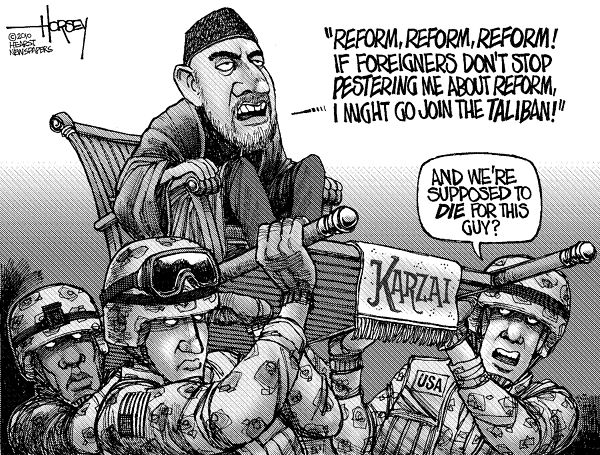
Kabul, Afghanistan- President Hamid Karzai’s troubling remarks this past Saturday that he would join the Taliban if he continues to come under pressure to reform by the United States and other “outsiders” has caused a stir in Washington DC.  Karzai’s comments came a week after President Obama’s surprise visit to Afghanistan at the end of March to pressure Karzai’s government to reform the political system, end corruption, and do a better job of fighting the Taliban.

Instead, what Karza delivered was a threat of the worse kind and quite possibly the most offensive and troubling thing one can say to a country that is risking countless soldiers lives daily to secure the country from the Taliban and other militant warlords in Afghanistan. In 8 short years, Hamid Karzai has gone from being the special guest of honor at George Bush’s State of the Union address to a leader who threatened to join our worst enemy. All because he feels that the US needs to stop badgering him to be a more responsible, fair, and an equitable leader as well as an effective partner in fighting the Taliban.

Karzai apparently made these unusual comments at a closed door meeting of lawmakers on Saturday, just days after accusing “foreigners” presumably the Unites States of being behind the fraud of the disputed elections of 2009. “He said that if I come under foreign pressure, I might join the Taliban”, said Farooq Marenai, a lawmaker from the eastern province of Nangarhar.  Mareni also stated that Karzai appeared nervous and demanded to know why parliament last week rejected legal reforms that would have strengthened Karzai’s authority over the country’s electoral institutions. Several other lawmakers confirmed that Karzai twice threatened to join the insurgency and the Taliban.

Karzai’s comments are troubling on many levels. First and foremost, he gives legitimacy and strength to the Taliban as his comments present the Taliban as an alternative option to American support or view on the situation. Karzai’s statement will no doubt have traveled the length and breadth of Afghanistan as word will spread that there is a weakness in the American-Afghan coalition that has been fighting and hunting the Taliban since October of 2001, post 9-11. The remarks by Karzai also puts every American, NATO, and Pakistani soldier at risk as instead of liberators, the foreign armies would be thought of as invaders, literally overnight. Lastly, Karzai’s remarks prove to the fact that Karzai is no longer an ally nor a credible partner for the US , NATO, and Pakistani army that have been fighting the Taliban with all their might.

There are reports of widespread nepotism, corruption, fraud, looting of the treasuries, and even drug trafficking, as Karzai’s brother, Ahmed Wali Karzai, has been alleged to be a prominent figure in Afghanistan’s world leading illegal heroin production, cultivation and its global distribution. These facts along with his inability to rule effectively and assist the United States in its exit strategy out of Afghanistan by end of 2011 has made the Obama administration weary of dealing with Karzai. Also his typically slow response in instituting political and social freedoms along with a renewed focus in fighting the Taliban, has also been a factor in displeasure from Washington.

The Obama administration has refocused on the Afghan war with 30,000 additional troops to help with the war effort and that initial surge has helped the commanders on the ground in running the Taliban out of certain areas. There have also been great recent victories by the Pakistani army to go after the Taliban militants on its side of the border and in helping cut down the bases of support for the Afghan Taliban from the Pakistani tribal areas sympathetic to their cause. So these comments come at the worst possible time when the Taliban are on the run both in Afghanistan and Pakistan and a strong coalition of US-Afghan-Pakistan resistance against them could help eliminate or destroy the militants for good. But instead, the US and its allies are left wondering what to do with Karzai and how much he could be trusted in this tenuous partnership against the Taliban.

Taliban 201- The Rise of The Pakistani Taliban

By Manzer Munir for Pakistanis for Peace

Peshawar, Pakistan- Taliban militants attacked the U.S. consulate in the Pakistani city of Peshawar on Monday, using  powerful bombs and rocket launchers in a sophisticated and daring attack killing 8 people, just hours after a suicide bomber killed 48 people elsewhere in the Swat valley. The attacks came as the United States has increased its airstrikes on targets both inside Afghanistan and Pakistan. The nearly decade long war waged against the Taliban in neighboring Afghanistan since 9-11 has created safe areas inside Pakistan for these militants to regroup and band with Pakistani militants sympathetic to their cause. Often, the militants on the Pakistani side and the Afghani Taliban share the Pashtun tribal and ethnic links among the border areas of both countries.
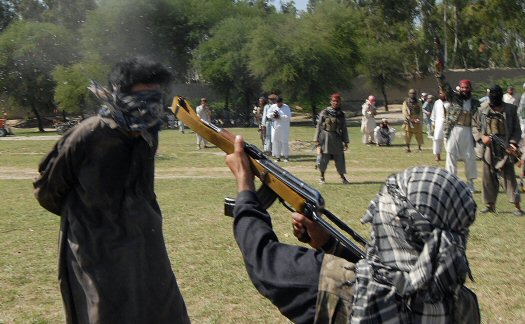
The US bombing of Afghanistan since late 2001 had pushed the Taliban and Al Qaeda militants to the mountains near the border with Pakistan. With help from sympathetic militant tribal warriors from the Pakistani side, the Taliban were able to dig in and have been able to fight the American forces for nearly a decade now. The onslaught by US and NATO forces continues in Afghanistan, but now for most of last year and certainly this year, the war has shifted to the streets and cities of Pakistan.

Now, much like Afghanistan, Pakistan too is a country that finds itself engulfed in the flames of religious extremism at the hands of determined and highly disciplined thugs. It used to be back during the Soviet-Afghan War, the only place perhaps not entirely safe inside Pakistan was Peshawar. Now, not one city or town of Pakistan has been spared from the violence by the Taliban. Back then, Peshawar was a city where attacks would happen frequently and often. During the 1980’s, the city became a haven for both jihadi militants fighting against the godless system of communism, and a base for spies as both the United States and Saudi Arabia funded a mujahedeen guerrilla war to defeat the Soviet troops from Afghanistan. President Reagan and General Zia of Pakistan used the fervor of religion to incite able bodied boys and men of Afghanistan and their distant cousins from the border area in Pakistan, along with thousands of volunteer Muslim fighters from across the Arab and Muslim world, to come and fight the Soviet Red Army. It was seen as a duty to come defend a Muslim land from occupation by a regime that would not allow the worship of Allah as communism discourages religion and encourages a sectarian society.

That strategy by General Zia ul Haq to promote the fight against the Russians as a holy war or jihad was brilliant at first. It mobilized not just every Muslim male in Afghanistan to stand and fight for his faith and their way of life, while also defending the country from invaders, but it also garnered the sympathy and enlistment of thousands upon thousands of Pakistani and Arab Muslim fighters to join the cause of these mujahedeen, as one who engages in jihad is called. The riling up of religious fervor and militant Islam was deemed necessary by both Reagan and Zia at the time as they sought to defeat the communists at all costs from succeeding in Afghanistan. It would not seem likely at the time, that this very same entity would become enemy number one of both the US and Pakistan a decade later.

It was monumental, it was historic,” retired Pakistani general Hamid Gul, who headed the ISI military spy agency from 1987-1989, said of Reagan’s role in defeating the Soviets. “We were receiving arms and logistics from the CIA, we were partners in this struggle,” Gul said, estimating the CIA spent up to $7bn in supplying arms and logistics to Islamic fighters or “jihadis.” “The jihadis he supported. It was their resistance against the forces of occupation and repression – that’s what jihad is – that Reagan identified himself with,” Gul said. “His greatest achievement was that he stood behind the Islamic world when it was arrayed against the Soviet empire.”

Pakistani analyst Hasan Askari Rivzi stated that “Al-Qaeda and the Taliban took shape later on, but they grew from this period of jihadism against the Soviets and with the initial help of Pakistan, Saudi Arabia along with the military and economic assistance from the United States to fight the Soviets during the ‘80’s. Rizvi sees the roots of the militancy that now ravages Pakistan and Afghanistan as having its beginnings from this period of war against the Soviets army.

That war with the Russians lasted almost 10 years. By the time the USSR pulled out all its troops from Afghanistan in 1989, the country had been completely destroyed. What was left of any government or authority of any sort was now held in the hands of a few militias and various warriors who commanded thousands of tribal and other ethnic fighters under them. These militias immediately started warring amongst themselves for more and more control of the country. The already weak, nonexistent central government of Afghanistan, post Soviet pullout was not able to cope and quickly capitulated. During the power vacuum that resulted, Pakistan’s spy agency, the ISI, realized the chance to wield power inside Afghanistan and threw its support behind a religious student movement based out of Kandahar. The ISI had previously assisted the cause to fight the Soviets by helping gather and organize radical Muslims from around the world to come and assist the Afghani mujahedeen in fighting the Soviets and had therefore developed good contacts with various religious groups including the young Taliban students and the fast growing movement.

The Afghani population initially welcomed the Taliban as they represented fairness and a rule of law over the notorious corruption, brutality and constant infighting of the warlord militias. Soon, with popular citizen support, along with Pakistan’s help, the Taliban became the dominant group within the country and soon held the seat of power in Kabul. Its leader Mullah Omar, was a friend of Osama Bin Laden and when the US forces came to Afghanistan in the hunt for Bin Laden, he gave the Al Qaeda leader refuge and in essence, became a fugitive of the US in the process for harboring America’s Most Wanted.

Fast forward to nearly nine years later as the war in Afghanistan continues against the Taliban and remnants of Al Qaeda responsible for the 9-11 attacks. However, the Taliban have grown and laid roots inside Pakistan also now as the nearly decade long war at the border with Afghanistan has ratcheted up sympathy by locals Pakistani Pashtun tribes for their brethren being bombed by both Pakistani and American forces. The Tehrik-i-Taliban Pakistan known as the Pakistani Taliban formed soon after the US invasion of Afghanistan and the Pakistani army’s offensive at the tribal areas near the border to combat the militants. The Pakistani Taliban led by the recently killed Baitullah Mehsud, has been largely responsible for hundreds of attacks in all major cities of Pakistan including Monday’s bombing of the American consulate in Peshawar.

The war in Afghanistan by the US against the Taliban that harbored and sheltered Bin Laden and the 9-11 killers of Al Qaeda is much the same as the war between the Pakistani army and the Pakistani Taliban in the Swat valley and the North West Frontier Province as well as in various cities of the country. This war has been brought home to the citizens of Pakistan. Over the last few months, bomb blasts in Lahore, Karachi, Islamabad and various other cities have now personalized this conflict for the average Pakistani as no longer a battle or skirmish at the border far away in the northwest of Pakistan near its border with Afghanistan.

No, the nearly daily attacks all over the country by the militants on government installations, public institutions like universities, factories and residential areas as well as markets and restaurants has made the country much less safer than at any time in its 63 year history. Many Pakistanis now are beginning to realize that the Taliban, operating with impunity all over Pakistan, pose a much bigger threat to the sovereignty and republic of Pakistan than any threat from anywhere else, including from that eternal archrival to the east, India. It is now well understood by both partners in this fight that only a sustained and vigorous fight taken to the militants inside both countries by the US and Pakistan over a long period of time can hope to defeat this disease known as the Taliban.

For an earlier report titled Taliban 101- Origins and History, Please click on this link:

https://pakistanisforpeace.wordpress.com/2009/05/25/taliban-101-origins-and-history/