Posts Tagged ‘ American Muslims ’

Study: US Muslims Don’t Want Shariah, Either

By Omar Sacirbey for The Houston Chronicle

North American Muslims are more than satisfied with the secular legal system and do not want a set of parallel courts for Islamic law, according to a new study of U.S. and Canadian Muslims by a Washington-based think tank.

The study, by University of Windsor law professor Judy Macfarlane for the Institute for Social Policy and Understanding, refutes critics’ claims that American Muslims want to impose Shariah, or Islamic law.

In fact, the study indicates that Muslims are just as unwilling to accept Islamic law as non-Muslims.

Macfarlane interviewed 212 Muslim Americans, including 41 imams and 70 community leaders who used aspects of Shariah in their daily lives. The other 101 interviewees were divorced Muslim men and women. About a quarter of the interviewees were from Canada, and the rest from the United States.

“Aside from formal religious observance, American Muslims relate to their Shariah responsibilities primarily through rituals of marriage and divorce,” Macfarlane wrote.

“They see these as compatible with the civil law – almost all the respondents in this study married and divorced twice, once in Islam and once in law – and will use the courts where they cannot agree outcomes, just like any other couple.”

When asked whether they thought American courts should apply Shariah to non-Muslims in the legal system, all of the respondents answered no. Just three of the 41 imams said they wanted parallel Shariah tribunals where Muslims could handle civil issues like marriage, divorce, and inheritance.

Macfarlane began her research after a Muslim group in Ontario petitioned the provincial government in 2003 to establish a separate Islamic family tribunal where Muslims could get binding legal decisions on family law issues. The Ontario government denied the request, and later that year abolished similar tribunals for Catholic and Jewish citizens that had been allowed in 1991.ˇ

The study follows a Jan. 10 decision by a federal appeals court that upheld a lower court’s ruling to overturn a 2010 Oklahoma constitutional amendment to prohibit judges from using Shariah in their deliberations.

Tennessee and Louisiana have passed similar laws, while 20 other states are considering such legislation.

Sold Into Slavery As a Girl, Shyima Hall Becomes a U.S. Citizen

By Phil Willon, Los Angeles Times

A decade ago, Shyima Hall was smuggled into the United States as a 10-year-old slave, forced to cook and clean inside the home of a wealthy Irvine family and, at night, sleep on a squalid mattress in a windowless garage.

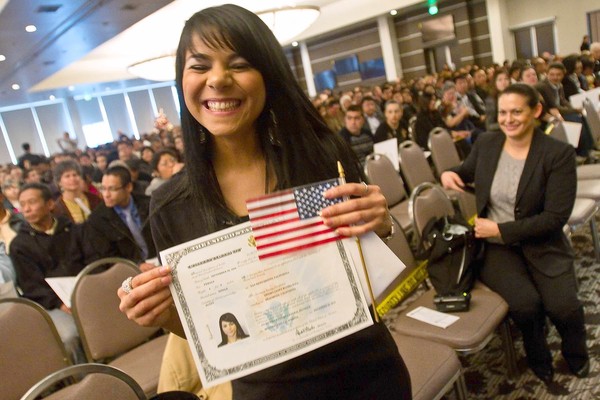
On Thursday, the Egyptian-born 22-year-old stood before a federal judge in Montebello with nearly 900 others and was sworn in as naturalized U.S. citizen. The ceremony capped a hard-scrabble journey that began with Hall’s rescue, wound through the foster care system and ended with her living on her own, working, and with ambitions to become a federal agent.

“I went through something terrible, but right now I’m in a great place,” Hall said after Thursday’s citizenship ceremony at the Quiet Cannon Country Club. “I can’t imagine anything greater than having my own life.”

Hall’s Egyptian parents sold her into slavery when she was 8 for $30 a month, according to authorities. The Cairo couple who bought her moved to Irvine two years later, smuggling Hall into the U.S. where she toiled for them and their five children until she was 13.

Hall said she worked 16 hour days, scrubbing floors, cooking meals and cleaning house, and was rarely allowed outside the spacious home. She was forced to wash her own clothes in a bucket and was forbidden from going to school. She never visited a doctor or dentist and didn’t speak a word of English.

Her captors, Abdel Nasser Eid Youssef Ibrahim and his former wife, Amal Ahmed Ewis-abd Motelib, berated her and occasionally slapped her around, authorities said.

“I didn’t know anything about what America was about. My only hope was to go back home and live a normal life with my family, my brothers and sisters,” she said. “That’s all I wanted.”

In 2002, acting on a tip from a concerned neighbor, child welfare authorities rescued her from the house. Her case was investigated by U.S. Immigration and Customs Enforcement, leading to the prosecution, federal imprisonment and, later, deportation of Ibrahim and Motelib.

Hall formed a tight bond with one of the lead federal agents, Mark Abend of ICE’s Homeland Security Investigations, who has served as a friend and mentor. He was at Hall’s citizenship ceremony Thursday.

“I’m really proud of her. Think of everything she’s been through. Being sold into slavery at an early age. Coming over here. Not having a family,” Abend said. “The resiliency she has is just amazing. The fortitude. Not falling apart. Not being a destroyed soul.”

Abend remembers interviewing Hall, then 13, with the help of an Arabic interpreter for the first time when she was being cared for at the Orangewood Children’s Home in Orange. Her captors told her to never speak to police, that officers would beat her. She stayed tight-lipped until she was allowed to call her parents in Egypt, and her father ordered her to go back with her captors.

“That’s when I saw a spark,” Abend said. “She stood up to her dad. She said, ‘No! This is not right. What they did to me was not right. You sold me into slavery.'”

At 13, Hall decided that she wanted to stay in the U.S. She hasn’t returned to Egypt or seen her family.

In recent years, Hall has spoken to groups across the country about combating human trafficking. She’s briefed ICE agents about the emotional and physical trauma victims face.

In 2010-11, federal immigration officials launched 651 investigations into human trafficking, arresting 300 people. According to the U.S. State Department, there are more than 12 million people entrapped in some form of slavery worldwide.

Hall said her dream now is to become a federal agent for ICE to help crack down on human trafficking and free the enslaved.

“That’s my top goal,” Hall said. “I’ve been through it. I know I can help.”

Los Angeles immigration attorney Angelo Paparelli, who represented Hall pro bono, said that her citizenship application was filed under a special provision for juvenile immigrants and that county officials from the outset supported her decision to stay in the U.S.

“She has literally gone through a living hell, and now she wants to give back,” said Paparelli, of the national law firm Seyfarth Shaw. “She’s there to give other people courage.”

For now, Hall is living in Beaumont in Riverside County and working at the Cabazon outlets as a store supervisor. She’s deciding whether to go back to college to finish a degree or to apply for the local police force.

“I’m very excited. I can start my career now,” she said. “I can start my life.”

Moment Terror Suspect, 25, Arrested Over ‘Bomb Plot’ in Florida Was Caught on Camera Brawling With Christian Protesters

As Reported by The Daily Mail

A Muslim accused of plotting to bomb locations in the U.S. has apparently been identified as the same man assaulting Christian protesters in a video posted online.

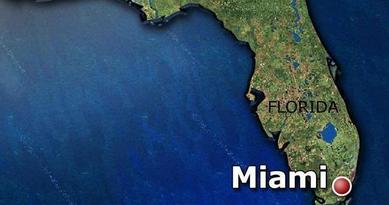
Sami Osmakac, 25, an immigrant from Kosovo, was said to have been planning an attack in Tampa, Florida using a car bomb, machine guns and other explosives.

In the first video clip, a man who appears to be Osmakac, confronted Christian protesters and assaulted one outside the Tampa Bay Times Forum – leaving the man bleeding from the mouth. He was later arrested by police.

In the second video with the title ‘Convert to Islam NOW! To all Atheist Christian (Non-Muslims)’ a man who looks and sounds like Osmakac threatened members of other religions.

The message from Abdul Samia, believed to be one of Osmakac’s aliases, warns viewers to convert to Islam ‘before it is too late’.  The YouTube videos were posted in December 2010 and in April last year.

Sami Osmakac, a naturalized U.S. citizen, was charged yesterday with one count of attempted use of a weapon of mass destruction.

Osmakac, of Pinellas County, Florida, allegedly bought explosives and guns from an undercover FBI agent, which had been made unusable. He allegedly told the officer that he wanted to ‘die the Islamic way’ in attacks at locations in Ybor City and South Tampa.

After being tipped off in September, the five-month investigation culminated with a sting operation at the weekend. Shortly before his arrest he made a video of himself explaining his motives for carrying out the planned attack, authorities said.

In the eight-minute video he is seen cross-legged on the floor with a pistol in his hand and an AK-47 gun behind him. He said in the video that Muslim blood was more valuable than that of people who do not believe in Islam, according to a criminal complaint.

Osmakac allegedly added that he wanted ‘payback’ for wrong that was done to Muslims and bring terror to his ‘victims’ hearts’ in Tampa.

A confidential source allegedly told federal officials in September 2011 that Osmakac wanted Al Qaeda flags. Two months later he talked with the source and ‘discussed and identified potential targets in Tampa’ that he wanted to attack, authorities said.

Osmakac allegedly wanted help getting the firearms and explosives for the attacks, and was put in touch with an undercover FBI employee.

Last month Osmakac met with the agent and allegedly told him that he wanted to buy weapons including an AK-47-style machine gun. He also allegedly wanted Uzi submachine guns, high capacity magazines, grenades and explosive belt.

Osmakac gave the agent a $500 down payment for the items in a later meeting and outlined his intentions to build bombs, authorities said.

Osmakac allegedly said at another meeting earlier this month that he wanted to bomb night clubs, a business and the Operations Center of the Hillsborough County Sheriff’s Office. It is also believed he wanted to blow up an Irish pub and Starbucks coffee shop.

-Pakistanis for Peace Editor’s Note– We are glad that the authorities apprehended Sami Osmakac before he was able to allegedly carryout any of the attacks that he is accused of planning. Congratulations to the Hillsborough Police Department in Tampa along with the federal authorities. Loss of any life and certainly innocent loss of life goes against the fundamental nature of our being at Pakistanis for Peace. Bring a Pakistani American as well as a Muslim American, attacks attempted or carried out by other American Muslims such as Faisal Shahzad or even Maj. Nidal Hasan, and now Sam Osmakc, hits at the heart of our peaceful American dreams. As a result of the whacked out few, we as a whole are marginalized. But until these terrorists and wanna be terrorists are all taken off the street, the war on terror must go on~

All American Muslims Better Get Ready for a New Reality

By Nida Khan for The Huffington Post

While many Muslims (and people outside the faith for that matter) were heavily embedded in a debate over the controversy surrounding hardware store Lowe’s and its recent decision to remove ads from TLC’s reality show All American Muslim, a more detrimental attack against their future was all but finalized. Reversing an earlier decision to veto provisions of the National Defense Authorization Act (NDAA) for 2012, President Obama made the disturbing announcement that he would sign this legislation into law and thereby solidify the ability of the military and other factions to indefinitely detain anyone they deem an enemy of the state. And on New Year’s Eve, the President unfortunately made good on this promise with the stroke of his pen. At a time when the United States is grossly engaged in both active combat and covert drone campaigns in a multitude of Muslim nations, and when loosely defined terms like ‘terrorist’ can be arbitrarily thrown about, Muslims specifically — and all of society generally — shouldn’t take this disturbing development lightly.

In post-9/11 America, many have sadly grown accustomed and tolerant to routine practices of racial profiling, bias and even attacks against Muslims and those perceived to be Muslim. But in addition to blatant violence, workplace discrimination and subliminal acts of racism, Muslims have also become aware of another nuance that other Americans may not even realize exists — hesitation to give to charity. Because of fear that any charitable Muslim organization or mosque could suddenly be called out for links to a lone extremist faction (whether it’s justified or not), many pulled their money and cut back on donations to the extent that long-established charities found it virtually impossible to survive. Usually without any valid reason, many stopped supporting Muslim aide groups for the simple notion that anyone, anywhere could at any moment single out that organization and in turn put all those who gave money out of goodwill at risk for associating with them. The victims in all this? The impoverished and destitute in many “third world” countries.

At the same time, tragically, other active Muslims who were entrenched in the community or worked in an organizing capacity (much like our president once did for the disenfranchised), ceased their activities over trepidation as to how their efforts towards equality could one day be misconstrued for something nefarious. The climate of society forced many followers of the Islamic faith to alter their involvement on a plethora of levels. Even today, as forces like the NYPD keep Muslims under intrusive surveillance and continued cases of FBI entrapment emerge, many have stopped attending mosques or interacting too much within the community out of sheer apprehension over unwarranted government action. It is an unfortunate reflection of how marginalized groups often times suffer under the radar without a representative voice in government and in the mainstream.

Throughout modern history, we’ve had other instances of outrageous fear mongering, bias and injustice against those whose patriotism we questioned. Though it is rarely covered in classrooms, the internment of hundreds of thousands of Japanese and those of Japanese ancestry during WWII is a perfect example. Literally rounded up and “excluded” from living in the cities and towns they resided in, these “suspicious” individuals were interned in camps because their allegiance to the country “could not be determined.”

In 1950, at the height of the great red scare, Congress passed the Internal Security Act which required the American Communist Party, affiliated organizations and all ‘subversives’ to get fingerprinted and officially register with the Attorney General. This draconian law was so outrageous that then-President Harry Truman even vetoed it (though Congress overruled his veto in the end). The truly tragic and troubling thing about today’s NDAA is that President Obama isn’t even attempting to veto it anymore; he is instead giving it his stamp of approval. Even though the president stated that he has “serious reservations” regarding the detention, interrogation and prosecution of suspected terrorists, and even though he emphasizes that his administration will not indefinitely militarily detain American citizens without trial, what happens after he is no longer in office? Future leaders of the free world, after all, have absolutely no obligation to honor Obama’s signing statement, nor follow in his footsteps.

Yes, our first African American president has changed much of the vitriolic language used when covering the topic of terrorism, and yes he has taken great caution to ensure that Muslims and terror itself are not juxtaposed together. For that, he should be commended. But by finalizing the ability of any president to deem persons — including U.S. citizens (if they so interpret this bill) — an enemy that could then be indefinitely detained without charge or without trial, he sets into motion a frightening precedent. As a former constitutional law professor, President Obama should be inherently aware of the impending ramifications.

During the struggle for civil rights, many journalists, activists and those vocal citizens working alongside Martin Luther King Jr., Malcolm X and other leaders suddenly found themselves targeted for their activities. Countless advocates became political prisoners and others saw their careers and lives ruined. Now at a time when we already have legislation like the Patriot Act renewed, and warrantless wiretapping is openly put into practice, this defense act not only indoctrinates AUMF (2001 Authorization for use of Military Force) and many activities that were previously in existence, but it also leaves open the possibility of silencing anyone on a level with which we never even imagined.

As American Muslims, we’re happy that some are starting to ease the negative imaging and stereotyping against us, and are instead open to learning more about what the Islamic faith truly stands for. As a routinely alienated group, we’re overly ecstatic when a program like All American Muslim actually portrays us in a light other than that of some extremist radical. But while we should embrace the boycott of Lowe’s for its open bigotry, and praise folks like Russell Simmons for stepping up to the plate to purchase ads for the program, we should put just as much focus into the potential of someone like a Newt Gingrich or Rick Santorum taking over the White House and having full reign to detain whomever he pleases. Just remember the Bush-era verbiage of “you’re either with us or against us” and the atmosphere of intolerance that permeated under his presidency, and couple that with the ability of someone with his mentality being able to willfully determine any one of us a “traitor,” lock us up and throw away the key.

If Muslims scaled back their activities in the community and their charitable donations out of paranoia over the unrealistic possibility of being tied to something suspicious, just imagine the fear that will ensue if anyone can be instantly and militarily detained over accusations where the burden of proof won’t even be on the accuser. It is indeed an alarming scenario that can (and in all likelihood will) give new meaning to the term reality — no TV required.

Nida Khan is an independent journalist and producer working in print, radio and TV. As a news correspondent for WRKS 98.7 Kiss FM NY, she has covered everything from Barack Obama’s presidential campaign to protests for the defense of Sean Bell.

America’s Dark Age of Islamophobia

By Tony Norman for Philly.com

Muslims really thought they were doing the world a favor by pulling Europe and its mostly illiterate Christians out of the Dark Ages. But just because they foisted algebra, trigonometry, optics, astronomical charts, the classics, Arabic numerals, advanced surgical techniques, perspective in art, the lute, and artichokes on the world – while the Christian kings of Europe were smothering free inquiry – we’re not about to give them any credit a thousand years later.

Particularly in America, we remain ignorant of Islamic contributions to Western life. We suffer from a profound cultural amnesia when it comes to remembering our millennia-long debt to our Muslim brethren. But as the song goes, what has Averroes done for us lately?

Americans are so used to thinking of Muslims as an exotic “other” that many fail to realize they’re an inextricable part of who we are and have been since the nation’s earliest days. Unfortunately, too many non-Muslims see them as Manchurian candidates crouching in the shadows with explosive vests, waiting for the signal to wage terror on America’s malls. If you ask the average American citizen about Islam’s role as an incubator of Western ideas, expect stares of incomprehension.

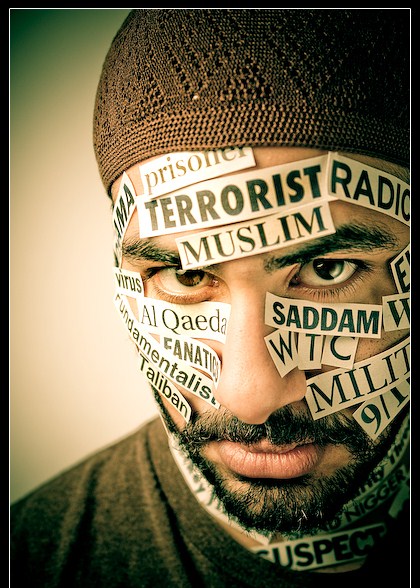
If this ignorance were restricted to the margins of society, it wouldn’t be half as embarrassing. But Islamophobia, like its twin brother, anti-Semitism, has a way of injecting itself into the cultural discourse. Contempt for Muslims remains an acceptable prejudice for millions who continue to equate the religion with terrorism.

Recently, TLC began running an innocuous reality show called All-American Muslim. It documents the lives of five Muslim families in a Detroit suburb that boasts the highest concentration of Arabs and Muslims in America. The 99 percent of Americans who don’t share their faith are invited to explore the possibility that these very misunderstood Americans don’t have horns or drink the blood of infant Christians and Jews.

It didn’t take long for a conservative group calling itself the Florida Family Association to complain that the TLC series is “propaganda that riskily [sic] hides the Islamic agenda’s clear and present danger to American liberties and traditional values.”

Of course, there’s nothing on the show to indicate a subversive religious agenda, other than its blatant attempt to portray Muslims as humans.

Lowe’s Home Improvement couldn’t be bothered with such nuances. It pulled its ads from the show and issued the wimpiest justification of corporate cowardice ever: “Individuals and groups have strong political and societal views on this topic, and this program became a lightning rod for many of those views.”

Ted Lieu, a state senator in California, called Lowe’s capitulation to intolerance “un-American” and is considering calling for a boycott of the retailer. Lowe’s isn’t worried about a boycott from America’s Muslims, who number fewer than two million, but a sympathy boycott by fair-minded Americans of all faiths and political persuasions would be a nightmare for the company.

Crawling out of this depressing sequel to the Dark Ages won’t be easy.

Lowe’s Errs in Muslim Ad Uproar

By Laura Berman for The Detroit News

Lowe’s used to be the home supply store for macho do-it-yourselfers who want to pick up a chain saw or a sledge hammer along with a box of garbage bags.

Now it’s steeping in a political mess, the result of acceding to the demands of a “pro-family” group — a warm-and-fuzzy sounding way to describe a group that specializes in email campaigns targeted against TV shows that treat minorities as human beings.

In this case, the target was “All-American Muslim,” The Learning Channel’s new reality show that depicts five Muslim families in Dearborn as they entertain, bicker, laugh and get married. The show’s premise — that Muslims are Americans, too — verges on the silly in its obviousness, or so most would think. But the Florida Family Association branded the show, which premiered a month ago, as “propaganda that riskily hides the Islamic agenda’s clear and present danger to American liberties and traditional values.”

The group launched its email campaign in November, then triumphed when Lowe’s — among dozens of other sponsors — disappeared from the show in subsequent episodes.

Its big beef was the lack of negative portrayals of Muslims on the show: Insufficient underwear bombers and radical clerics. The FFA wants ordinary, tooth-brushing, family-friendly Muslims “balanced” with scary, America-hating radical Muslims, apparently as a way to keep suspicion and prejudice alive.

This strikes me as un-Christian to the max. But Lowe’s bought in or, more likely, tried to gracefully bow out of the political arena by removing itself from the show’s list of sponsors.

Lowe’s next error: releasing paragraphs of corporate mumbo-jumbo, pseudo-apologies that fueled the growing uproar. Now there’s a festive holiday season cultural eruption centered on Dearborn. Dearborn’s Muslim community leaders are denouncing Lowe’s, while the Florida Family Association brags online about its successful campaign to eliminate advertisers for “All-American Muslim.”

In the FFA’s version of All-American, only “God fearing” Christians are real Americans, released from requirements to be portrayed, at least some of the time, as crucial components of the axis of evil.

This xenophobic, self-justifying bigotry is, in fact, just as American as our more widely copied ideas about equality for all and a universal right to pursue happiness. But it’s hard to believe what a persistent undercurrent conspiracy theories are in American culture.

The Pulitzer-Prize winning historian Richard Hofstadter described 50 years ago what he called “the paranoid style” in American politics, giving as an example a 1964 campaign by the John Birch society to boycott Xerox for advertising on a television show about the United Nations.

Just as American Muslims are now subjected to bigotry and suspicion, Masons and Catholics were singled out by 19th century Americans bent on protecting their country through conspiracy theories, and Japanese Americans were forced into 20th century concentration camps.

“American politics has often been an arena for angry minds,” Hofstadter wrote, describing a state of mind that flourishes in America today.

The problem isn’t only anger but, also, how fear so easily drowns out even a chain-saw-wielding corporation’s All-American supply of courage.

Ten Years After 9/11, We’re Still in the Dark

By Omar S. Ashmawy for The Washington Post

I joined the U.S. military after law school to help my country defend itself against the threat of Islamic extremism. My final assignment in my eight years in the Air Forcewas as a war crimes prosecutor in Guantanamo Bay, Cuba. With access to our nation’s most intimate secrets, I shuttled between Guantanamo and the Pentagon from the summer of 2007 to the winter of 2009. I learned many lessons, but on the anniversary of the Sept. 11 attacks, the most important lesson I can share is the most alarming: After so many years and so much sacrifice, nothing has changed.

Our greatest weakness remains today what it was 10 years ago, and what it was eight years before that, when the World Trade Center was bombed in 1993. We don’t understand Islam or Arab culture, and that ignorance prevents us from accurately predicting our relationship with Arab and Muslim countries and identifying our enemies.

From our government to the front lines, individuals are making decisions based on inaccurate, biased information. The White House’s August announcement on combating radical Islam acknowledged this reality. Our soldiers, agents and analysts don’t have the facts they need to make informed decisions about whom to trust, what to believe and how to keep the threat at bay.

Whether it’s the FBI recommending its agents read books by a known anti-Muslim author, misplaced anxiety over “sharia law,” the near absence of linguistic and cultural training in the military, or our government’s collective surprise at the Arab Spring, the effect of what we don’t know reverberates through U.S. policy. But the result is the same: We are caught off guard by events we should have anticipated or, worse, we confuse our enemy’s propaganda with knowledge.

As an American Muslim born and raised in New Jersey, I am frustrated that America still struggles with the basics: We don’t understand the difference between Islam and Islamic extremism, or that Arab culture is not the same as the religion. We divide Muslims into secularists and extremists and can’t tell the devout from the radical, the sympathizer from the opportunist.

Two of the most enduring examples are the military commissions and Guantanamo Bay — intractable problems that will never be resolved to anyone’s satisfaction. They’re once and future disasters built by people who should have known better — people America trusted to know more. Both were operated and sustained by individuals so uninformed of our enemy’s religion, language and culture that they could not accurately process the information available to them. Attorneys couldn’t tell good cases from bad ones, and the agents assigned to the commissions didn’t know what questions to ask detainees.

I saw it firsthand. From lawyers to interrogators, the vacuum was enormous. It filled Guantanamo Bay with men who did not need to be there and barred their release. It was fuel on a fire set by a legal process that initially conflated the mutually exclusive missions of intelligence-gathering and the rendering of justice. The absence of knowledge and leadership permitted the worst of what happened — reports of the abuse of prisoners, the desecration of holy books, the legal pantomimes — and continues to prevent a resolution to the human drama playing out on that island.

We cannot close Guantanamo because the trials of the detainees who remain would be tainted by evidence from botched interrogations and because the men there are now radicalized — the result of decisions based in an ignorance tantamount to racism.

This ignorance is a degenerative disease that debilitates our efforts to protect our nation. It was tempting to think that with Osama bin Laden’s death we could end this conflict, if only we could end the wars in Iraq and Afghanistan. While those wars must be concluded, neither their end nor the death of any individual terrorist will secure us against another attack by Islamic extremists. We’re not fighting a single enemy but a decentralized patchwork of groups that adhere to the same twisted, bankrupt ideology. Whether it is Jemaah Islamiah in Southeast Asia or al-Shabab in Somalia, our enemies are motivated and wait — patiently — until we forget.

As we honor the past, we must also commit to the future. This commitment must include an expectation that all Americans responsible for protecting us possess the education and knowledge to do so and be committed to accuracy and learning. A good place to start would be language and culture training for our soldiers, and training in Islam and Arab culture and history for policymakers. Similar education should be made available to local law enforcement and community leaders. At the height of the Cold War, we encouraged our best and brightest to study Russian language and history. Ten years after Sept. 11, this is a basic but necessary step. Ignorance is our vulnerability, and we must begin somewhere. Those individuals we remember Sunday deserve better. We all do.

The writer is a former Air Force officer and war crimes prosecutor. He prosecuted U.S. v. Hamdan and U.S. v. Al Bahlul, the first two litigated cases to be brought before a military tribunal since the Nuremberg trials after World War II.

Muslims Are the Most Loyal American Religious Group, New Poll Says

As reported by The Christian Science Monitor

After the 9/11 attacks, Muslim Americans faced intense scrutiny, both individually and from federal agencies such as the Federal Bureau of Investigation. Obama is credited with helping smooth tensions through his outreach to the US Muslim community and his effort to end the Iraq war responsibly. The poll shows that 83 percent of Muslim Americans – more than any other religious group – say the war was a “mistake.”

Despite the positive signs, “there are still obstacles” for Muslim Americans, Ms. Mogahed says. “They embrace American values and democratic principles but aren’t sure if the rest of American embraces them,” she says.

Some 56 percent of Protestants said American Muslims had no sympathy for Al Qaeda, the lowest number of any faith group. By comparison, 63 percent of Catholics and 70 percent of Jews thought Muslim Americans had no sympathies for Al Qaeda.

“That’s certainly a challenge for the [US Muslim] community – to have their loyalty questioned by such a large number of their fellow Americans,” Mogahed says.

Those challenges, however, have not led Muslim Americans to try to affect change at the ballot box. They are the least likely religious group to vote, with just 65 percent of Muslims in America are registered. One reason is age: The average age of a Muslim-American is 35, while the average American Protestant is 55. Younger people tend to be less politically active, Mogahed says.

Another reason is affiliation: Poll findings show that the majority of Muslim Americans say that none of the leading Muslim organizations in the US, such as the Council on American-Islamic Relations or the Islamic Society of North America, represents their interests.

With the 2012 election around the corner, Mogahed says political parties that want to reach out to Muslim-American voters might be better off establishing partnerships with local mosques than focusing on winning endorsements from national advocacy organizations. This is especially relevant considering that Muslim Americans who attend a religious service once a week are two times more likely to be politically active than those who attend less frequently, the poll found.

“The mosque should be more the mobilization engine” for get-out-the-vote drives than it has been in the past, she says.bThe poll surveyed 2,482 adults, 475 of whom were Muslim. For Muslims, there was a margin of sampling error of plus or minus 7 percentage points.

Florida Men Accused of Aiding Pakistani Taliban

By Gardiner Harris for The New York Times

The F.B.I. on Saturday arrested three Pakistani-Americans, including father and son imams from South Florida mosques, charging them with providing financing and other material support to the Pakistani Taliban.
Related

Three people living in Pakistan were also charged in the indictment, which was made public by Wilfredo A. Ferrer, the United States attorney for the Southern District of Florida. The F.B.I. said that the indictment grew out of a review of suspicious financial transactions and other evidence and not from an undercover sting operation. The arrests seem to be unrelated to the raid that killed Osama bin Laden a week ago.

The four-count indictment charges that the six sought to aid the Pakistani Taliban’s fight against the Pakistani government and its allies, including the United States, by supporting acts of murder, kidnapping and maiming in Pakistan and elsewhere in order to displace the government and establish strict Islamic law known as Shariah.

“Today, terrorists have lost another funding source to use against innocent people and U.S. interests,” said John V. Gillies, the special agent in charge of the F.B.I.’s Miami office.

Five of the six people charged are related. Arrested in the United States were Hafiz Muhammed Sher Ali Khan, 76, of Miami; and two of his sons, Izhar Khan, 24, of Miami; and Irfan Khan, 37, of North Lauderdale.

Hafiz Khan is the imam at the Miami Mosque, also known as the Flagler Mosque. Izhar Khan is an imam at the Jamaat Al-Mu’mineen Mosque in Margate, Fla. Hafiz and Izhar Khan were arrested Saturday in South Florida, while Irfan Khan was arrested in Los Angeles. All three are originally from Pakistan.

The three people residing in Pakistan who were charged were Amina Khan, Hafiz Khan’s daughter, and Alam Zeb, her son, as well as Ali Rehman, also known as Faisal Ali Rehman. A statement from prosecutors said that the defendants were assisted “by others in the United States and Pakistan.”

The indictment said that the six transferred money to the Pakistani Taliban that was intended to buy guns and sustain militants and their families. Hafiz Khan is also accused of supporting the Pakistani Taliban through a madrasa, or Islamic school, that he founded and controlled in the Swat Valley region of Pakistan. He was charged with using the madrasa to provide shelter and other support for the Pakistani Taliban and sending children from his madrasa to learn to kill Americans in Afghanistan.

The indictment does not charge the mosques with any wrongdoing. The Muslim Communities Association of South Florida announced that that Hafiz Khan had been suspended indefinitely from his mosque.

“Our organizations, together through the Coalition of South Florida Muslim Organizations, has been working with the U.S. Attorney’s Office and the Miami F.B.I. office,” the association said in a statement released Saturday afternoon, “and appreciate the efforts of law enforcement to root out potential sources and supporters of terrorism.”

“We stand together with the U.S. attorney, Wilfredo Ferrer, and the men and women of the F.B.I., and have been and will be cooperating with law enforcement to our fullest ability,” it added.

The F.B.I. news release took pains to describe the charges as reflecting only the actions of the defendants, not of their mosques or Islam. “Let me be clear that this is not an indictment against a particular community or religion,” Mr. Ferrer said. “Instead, today’s indictment charges six individuals for promoting terror and violence through their financial and other support of the Pakistani Taliban. Radical extremists know no boundaries; they come in all shapes and sizes and are not limited by religion, age or geography.”

“The indictment does not charge the mosques themselves with any wrongdoing,” it continued, “and the individual defendants are charged based on their provision of material support to terrorism, not on their religious beliefs or teachings.”

The inclusion of those statements were “well appreciated” by the Muslim community in South Florida, said Asad Ba-Yunus, who is a legal adviser to the Muslim Communities Association of South Florida.

“We have been working with the U.S. attorney’s office over last few months” to improve relations, Mr. Ba-Yunus said, adding that he had spoken with the office Saturday morning before the indictment was announced.

The charges against the Florida men accusing them of supporting the Pakistani Taliban but not actually carrying out operations themselves are the most common types of terrorism prosecutions that United States authorities have pursued since the attacks of Sept. 11, 2001. Of the 50 leading terrorism cases since those attacks, about 70 percent have involved financing or other support to terrorist groups, according to the Center on Law and Security at the New York University School of Law.

The Pakistani Taliban were officially designated as a terrorist organization by the State Department on Aug. 12, 2010.

The Pakistani Taliban are closely allied with Al Qaeda, and is responsible for a series of attacks against Pakistani police and military targets in recent years. Pakistani authorities believe a splinter group of the Pakistani Taliban was responsible for the suicide attack in northwestern Pakistan on Friday that killed more than 80 cadets from a government paramilitary force. According to American officials, the Pakistani Taliban have been involved in or claimed responsibility for attacks on United States interests, including an attack on a military base in Khost, Afghanistan, along the border with Pakistan, and a suicide bombing against the consulate in Peshawar, Pakistan.

American officials say the failed attempt to detonate a car bomb in Times Square last May was developed and financed by the Pakistani Taliban. The convicted bomb plotter, Faisal Shahzad, contacted the Pakistani Taliban via computer to confer with handlers over what he had done, the government wrote in court papers in September.

Pakistanis for Peace Editor’s Note– As peace loving Americans of Pakistani descent, we are upset to hear that some members of the US Muslim community would want to do the great nation of the Unites States harm. If found guilty, we hope that they are severly punished and a message is sent to anyone else intending to do us harm. We commend the FBI and the Department of Justice in these arrests and in keeping the American homeland safe.

Islamophobia and Radicalization

By James Zogby for Counter Punch
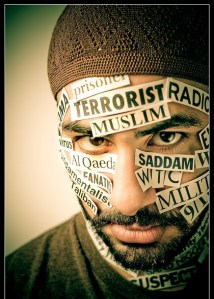
Let me state quite directly: Islamophobia and those who promote it are a greater threat to the United States than Anwar Al-Awlaqi and his rag-tag team of terrorists.

On one level, Al-Awlaqi, from his cave hide out in Yemen, can only prey off alienation where it exists. Adopting the persona of a latter-day Malcolm X (though he seems not to have read the last chapters of the “Autobiography” or learned the lessons of Malcolm’s ultimate conversion), he appears street-smart, brash, self- assured and assertive — all of the assets needed to attract lost or wounded souls looking for certainty and an outlet for their rage. Like some parasites, Al-Awlaqi cannot create his own prey. He must wait for others to create his opportunities, which until now have been isolated and limited: a disturbed young man here, an increasingly deranged soldier there.

Islamophobia, on the other hand, if left unchecked, may serve to erect barriers to Muslim inclusion in America, increasing alienation, especially among young Muslims. Not only would such a situation do grave damage to one of the fundamental cornerstones of America’s unique democracy, it would simultaneously and rapidly expand the pool of recruits for future radicalisation.

I have often remarked that America is different, in concept and reality, from our European allies. Third generation Kurds in Germany, Pakistanis in the UK, or Algerians in France, for example, may succeed and obtain citizenship, but they do not become German, British or French. Last year, I debated a German government official on this issue. She kept referring to “migrants” — a term she used to describe all those of Turkish descent living in her country — regardless of the number of generations they had been there. Similarly, following their last election, a leading British newspaper commented on the “number of immigrants” who won seats, without noting that many of those “immigrants” were third generation citizens.

America has prided itself on being different. Being “American” is not the possession of a single ethnic group, nor does any group define “America”. Not only do new immigrants become citizens, they also secure a new identity. More than that, as new groups become American and are transformed, the idea of “America” itself has also changed to embrace these new cultures.

Within a generation, diverse ethnic and religious groups from every corner or the globe have become Americans, dramatically changing America in the process. Problems remain and intolerant bigots, in every age, have reared up against new groups, but history demonstrates that, in the end, the newcomers have been accepted, incorporated and absorbed into the American mainstream.

This defines not only our national experience, but our defining narrative as well. When immigrant school children in Europe learn French, German or British history, they are learning their host’s history. In the US, from the outset, we are taught that this is “our new story” — that it includes all of us, and has included us all, from the beginning.

It is because new immigrants and diverse ethnic and religious communities have found their place and acceptance in the American mainstream that the country, during the last century, survived and prospered despite being sorely tested with world wars, economic upheaval and bouts with internal strife. During this time we had to contend with anti-black, anti-Asian, anti-Catholic, anti-Jewish, anti-immigrant, and anti-Japanese movements. In the end, after creating their moment of pain, these efforts have always lost.

They lose, but they don’t always go away. The Islamophobia we are witnessing today is the latest campaign by bigots to tear apart the very fabric of America. We know the groups promoting it. First, there is the well-funded “cottage industry”, on the right, of groups and individuals with a long history of anti-Arab or anti-Muslim activity. Some of the individuals associated with these efforts have been given legitimacy as commentators on “terrorism”, “radicalisation” or “national security concerns”, despite their obvious bias and even obsession with all things Arab or Muslim (in this, they remind me of good old-fashioned anti-Semites who never tired of warning of Jewish threats or conspiracies or who while always claiming to like individual Jews rallied against any and all Jewish organisations).

If these “professional bigots” have provided the grist, the mill itself was run by the vast network of right-wing talk radio and TV shows and websites, and prominent preachers who have combined to amplify the anti-Muslim message nationwide. Their efforts have done real damage. They have tormented decent public servants, created protests that have shuttered legitimate institutions, fomented hate crimes, and produced fear in the Muslim community.

In just the past two years, we have seen a dramatic upsurge in the activity of these bigots. More ominously, their cause has been embraced by national political leaders and by elements in the Republican Party, who appear to have decided, in 2010, to use “fear of Islam” as a base-building theme and a wedge issue against Democrats for electoral advantage.

In the past, only obscure or outrageous members of congress (like North Carolina’s Sue Myrick who expressed nervousness and insecurity because of “who was owning all those 7/11’s”; or Colorado’s Tom Tancredo who once warned that he “would bomb Mecca”) were outspoken Islamophobes. After the National Republican Congressional Campaign Committee embraced opposition to Park 51 as a campaign theme, it is hard to find a leading Republican who has not railed on some issue involving Islam or Muslims in the US.

The net impact here is that this current wave of Islamophobia has both played to the Republican base while firming up that base around this agenda. The polling numbers are striking and deeply disturbing. Some 54 per cent of Democrats have a favourable attitude towards Muslims, while 34 per cent do not. Among Republicans, on the other hand, only 12 per cent hold a favourable view of Muslims, with 85 per cent saying they have unfavourable views. Additionally, 74 per cent of Republicans believe “Islam teaches hate” and 60 per cent believe that “Muslims tend to be religious fanatics”.

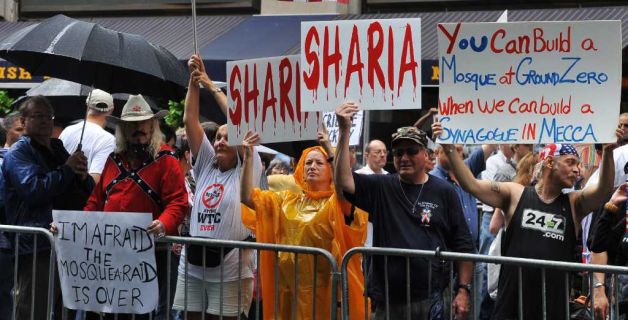
The danger here is that to the degree that this issue has become a partisan — and in some cases a proven vote getter — issue for the Republican Party, it will not go away any time soon. The longer we are plagued by this bigotry, and the displays of intolerance it breeds (the anti-mosque building demonstrations or the anti-Sharia law efforts now spreading across the country) the longer young Muslims will feel that the “promise of America” does not include them, and they will feel like aliens in their own country.

It is this concern that has prompted many inter-faith religious groups and leaders and a diverse coalition of ethnic and civil rights organisations to so vigorously oppose Congressman Peter King’s (R-NY) hearings that will deal with the radicalisation of American Muslims later this week. They know, from previous statements made by King, of his personal hostility to American Muslims. They also know that what King is doing will only aggravate an already raw wound, creating greater fear and concern among young Muslims who have already witnessed too much bigotry and intolerance.

What they should also know is that in the process of targeting a religion in this way, and engaging in this most “un-American activity”, King and company are, in fact, opening the door for increased alienation and future radicalisation. Al-Awlaqi must be smiling from inside his cave.

-Dr James Zogby is president of the Arab American Institute and is a Roman Catholic of Lebanese descent and brother of prominent American political pollster and founder of Zogby Polls, John Zogby.
U.S. Companies Urged to Tap Into $170 Billion Muslim Consumer Market

By Brittany Hutson for The Atlanta Post

U.S. companies are loosing out by neglecting a rather attractive and overlooked consumer: American Muslims.

There is an estimate number of six to eight million Muslims in this country that possess an annual spending power between $170 and $200 billion. It is believed that two-thirds of Muslim households make more than $50,000 a year and a quarter earn over $100,000. Miles Young, chief executive officer of Ogilvy & Mather Worldwide, an international advertising, marketing and public relations agency, said in a speech at this past December’s second annual American Muslim Consumer Conference that Muslims are the best-educated religious group in America and over 40% have bachelors’ degrees. Clearly, this is a consumer that companies cannot afford to not attract.

According to the Associated Press, corporations in Europe have long been catering to Muslim communities there. Nestle has about 20 factories with halal-certified production lines and advertises to Western Muslims through its marketing campaign called “Taste of Home.”

So why is it that companies in Europe have been able to successfully attract and retain the interest of their Muslim consumers?

Part of it has to do with Muslims in Europe having lived there for multiple generations, said Ponn Sabra, founder and owner of the online blog community for American Muslim Moms, AmericanMuslimMom.com.  Also, “European Muslims are extremely strong in faith, very vocal, [and] much more confident in their practice of our faith than the majority of Muslims living in America.”

It also helps that Muslims in Europe are not stereotyped like Muslims in America, added Sabra. It’s only been recent that businesses in the U.S. have started to tap into the Muslim consumer market. McDonald’s and Wal-Mart have entered the halal arena and last August, Whole Foods began selling its first nationally distributed halal food product—frozen Indian entrees called Saffron Road. But because there is still intensified anti-Muslim feeling throughout the country, this is causing companies to worry that they will be attacked for going after this consumer.

But Muslims do not necessarily want companies to be their advocates against opposition, more so as they would appreciate that companies get to understand their values. Mohammed Abdullah, director of the 2009 Conference, said in a press release, “Muslims want to be acknowledged in mainstream media. You don’t need to change your product of show Muslims in your ads. Instead, consider advertising in a Muslim media outlet. Say Eid Mubarak or Ramadan Kareem during the holidays. The Muslim community will respond. When we see an ad we like we send it to our friends and share it with each other,” he said.

Of course, the worldwide market for Islamically permitted goods, also known as halal, is the best option for companies interested in attracting the American Muslim. The industry includes foods and seasoning that omit alcohol, pork products, cosmetics, finance and clothing. According to Young, the global halal market is worth $2.1 trillion dollars and it is growing at $500 billion dollars a year.

Muslims as entrepreneurs shouldn’t be underestimated either. For example, Tariq Farid developed and launched one of today’s successful and international companies in the floral industry that many know and love as Edible Arrangements.

“The American Muslim Consumer is extremely loyal, wealthy, educated and well-connected on and offline,” said Sabra. “Companies who jump at the opportunity have the potential for life-long happy customers who willfully recommend their products and services.”

The Founding Fathers and Islam

By James H Hutson for The Library of Congress

With more than 55 million items, the Library’s Manuscript Division contains the papers of 23 presidents, from George Washington to Calvin Coolidge. In this article, Manuscript Division Chief James Hutson draws upon the papers of Washington, Thomas Jefferson and other primary documents to discuss the relationship of Islam to the new nation.

Many Muslims feel unwelcome in the United States in the aftermath of September 11, according to newspaper reports. Anecdotal evidence suggests that substantial numbers of Americans view their Muslim neighbors as an alien presence outside the limits of American life and history. While other minorities—African Americans, Hispanics and Native Americans—were living within the boundaries of the present United States from the earliest days of the nation, Muslims are perceived to have had no part in the American experience.

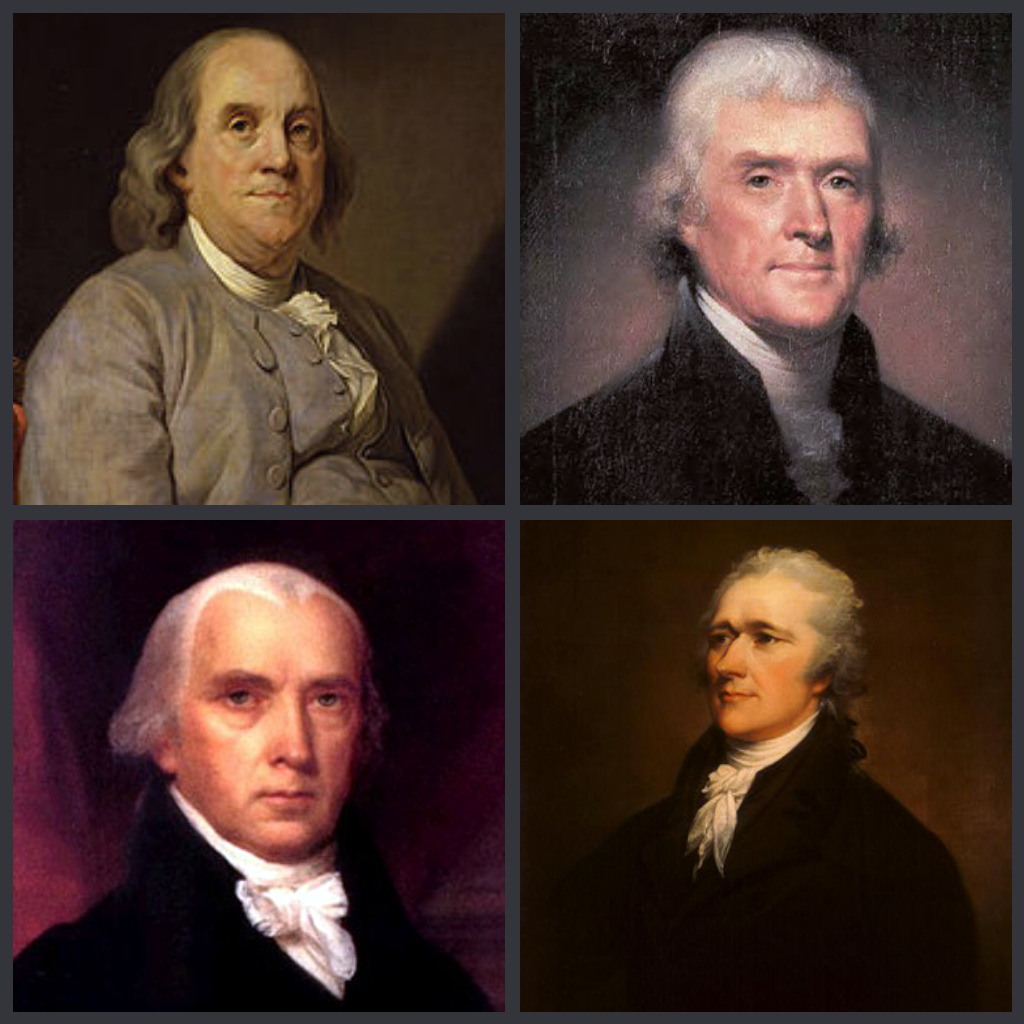
Readers may be surprised to learn that there may have been hundreds, perhaps thousands, of Muslims in the United States in 1776—imported as slaves from areas of Africa where Islam flourished. Although there is no evidence that the Founders were aware of the religious convictions of their bondsmen, it is clear that the Founding Fathers thought about the relationship of Islam to the new nation and were prepared to make a place for it in the republic.

In his seminal Letter on Toleration (1689), John Locke insisted that Muslims and all others who believed in God be tolerated in England. Campaigning for religious freedom in Virginia, Jefferson followed Locke, his idol, in demanding recognition of the religious rights of the “Mahamdan,” the Jew and the “pagan.” Supporting Jefferson was his old ally, Richard Henry Lee, who had made a motion in Congress on June 7, 1776, that the American colonies declare independence. “True freedom,” Lee asserted, “embraces the Mahomitan and the Gentoo (Hindu) as well as the Christian religion.”

In his autobiography, Jefferson recounted with satisfaction that in the struggle to pass his landmark Bill for Establishing Religious Freedom (1786), the Virginia legislature “rejected by a great majority” an effort to limit the bill’s scope “in proof that they meant to comprehend, within the mantle of its protection, the Jew and the Gentile, the Christian and Mahometan.” George Washington suggested a way for Muslims to “obtain proper relief” from a proposed Virginia bill, laying taxes to support Christian worship. On another occasion, the first president declared that he would welcome “Mohometans” to Mount Vernon if they were “good workmen” (see page 96). Officials in Massachusetts were equally insistent that their influential Constitution of 1780 afforded “the most ample liberty of conscience … to Deists, Mahometans, Jews and Christians,” a point that Chief Justice Theophilus Parsons resoundingly affirmed in 1810.

Toward Islam itself the Founding generation held differing views. An evangelical Baptist spokesman denounced “Mahomet” as a “hateful” figure who, unlike the meek and gentle Jesus, spread his religion at the point of a sword. A Presbyterian preacher in rural South Carolina dusted off Grotius’ 17th century reproach that the “religion of Mahomet originated in arms, breathes nothing but arms, is propagated by arms.” Other, more influential observers had a different view of Muslims. In 1783, the president of Yale College, Ezra Stiles, cited a study showing that “Mohammadan” morals were “far superior to the Christian.” Another New Englander believed that the “moral principles that were inculcated by their teachers had a happy tendency to render them good members of society.” The reference here, as other commentators made clear, was to Islam’s belief, which it shared with Christianity, in a “future state of rewards and punishments,” a system of celestial carrots and sticks which the Founding generation considered necessary to guarantee good social conduct.

“A Mahometan,” wrote a Boston newspaper columnist, “is excited to the practice of good morals in hopes that after the resurrection he shall enjoy the beautiful girls of paradise to all eternity; he is afraid to commit murder, adultery and theft, lest he should be cast into hell, where he must drink scalding water and the scum of the damned.” Benjamin Rush, the Pennsylvania signer of the Declaration of Independence and friend of Adams and Jefferson, applauded this feature of Islam, asserting that he had “rather see the opinions of Confucius or Mohammed inculcated upon our youth than see them grow up wholly devoid of a system of religious principles.”

That ordinary citizens shared these positive views is demonstrated by a petition of a group of citizens of Chesterfield County, Va., to the state assembly, Nov. 14, 1785: “Let Jews, Mehometans and Christians of every denomination enjoy religious liberty…thrust them not out now by establishing the Christian religion lest thereby we become our own enemys and weaken this infant state. It is mens labour in our Manufactories, their services by sea and land that aggrandize our Country and not their creeds. Chain your citizens to the state by their Interest. Let Jews, Mehometans, and Christians of every denomination find their advantage in living under your laws.”

The Founders of this nation explicitly included Islam in their vision of the future of the republic. Freedom of religion, as they conceived it, encompassed it. Adherents of the faith were, with some exceptions, regarded as men and women who would make law-abiding, productive citizens. Far from fearing Islam, the Founders would have incorporated it into the fabric of American life.

James H. Hutson is chief of the Manuscript Division and the author of many books, including, most recently, “Religion and the Founding of the American Republic,” 1998.

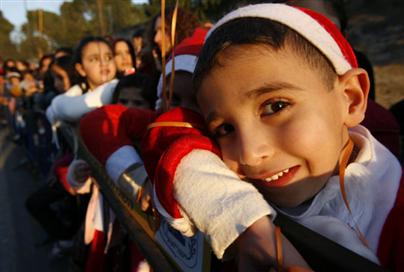
A Muslim Christmas on Long Island

By Farhan Husain for The Long Island Report

Christmas is turning into a cultural holiday for some Muslims in the Long Island area as they mark the occasion with gifts, decorations, and family get-togethers.

“Growing up, we did have a Christmas tree… I think just because he [dad] didn’t want us to feel left out,” said student Asra Arif, 20, from Deer Park.

Indeed, it’s becoming almost a custom to celebrate Christmas for most Muslim-Americans. Many came from countries that don’t even have a word for “Christmas” but it becomes almost inevitable to join in with friends and neighbors who go “holiday-crazy” during this time of year.

“It’s really just celebrating the season. It’s the only time of the year where families don’t have work or anything like that,” Arif said.

Arif is a first-generation Muslim-American with Pakistani parents. Her family, like many others, has made it a tradition to gather with loved ones and exchange gifts during Christmas time.

However, unlike Christian and Catholic families who celebrate the birth of Christ every Dec. 25, Arif’s family celebrates the atmosphere of the holidays. “I just enjoy the spirit of it. I’m not celebrating anything religious, just being with family…” Arif said.

Retail manager Dafina Mexhuani, 21, from Westbury, does the same. “It’ll be celebrating to the extent of, not really Christmas… but you know like the whole decorating, and the gift giving, and all that stuff. But if you call that celebrating it, then I guess I am,” she said.

She celebrates a holiday with her family every year around Christmas time, but doesn’t call it Christmas. “I grew up in an apartment building and my dad was the super. We always used to put up a tree in the lobby, and so we started doing it in my house. It’s just how it’s always been, really,” she said.

Mexhuani was born in the Bronx and her family of three siblings and her parents were born and raised in Albania. She’s never experienced a year without Christmas.

“The idea of Christmas we just think of generally as a winter holiday, so we don’t necessarily celebrate it… or have a significant religious attachment to it,” said Mehreen Syeda 27, from New Hyde Park, Long Island.

Syeda will be celebrating the holiday season with her Pakistani-American family, because it’s the only time of the year where everyone is off from work. Though she was not born or raised in the U.S., Syeda and her family wrapped and exchanged presents, solely to be part of something that was happening culturally around them.

“I think it’s important for kids to be knowing what their friends are going to be doing, and why they’re doing what they’re doing,” she said when describing how she was going to handle the holiday season with her children. Syeda said she would never steer her children away from experiencing it, though she would draw a fine line between religion and culture.

Some Muslims dislike the idea of celebrating Christmas as the “holiday season.” Things like Christmas trees and stocking stuffers tend to be associated with Christmas, so some choose to avoid those all together while still pleasing their children.

“We do give gifts and stuff, but we don’t have a tree or any of that up… It’s not a Muslim holiday, therefore, we don’t celebrate it,” said student Armend Cobovic, 19, from Manhattan. Cobovic and his family are from Montenegro and knew about Christmas before they moved here 15 years ago, but he was surprised to see that other Muslim-Americans celebrate Christmas.

“I think they [Muslim-Americans] are stuck into society nowadays instead of going back to their own culture,” he said. Thought he doesn’t celebrate Christmas, he does exchange gifts during the holidays for another reason, “I understand getting a present, just so your child isn’t left out… but say it’s for new year.”

With New Year’s and other religious holidays around the end of December, it makes it the only time families get to spend time with each other.

Musho Kolenovic, 18, from Stony Brook, always gets together with his family in their upstate house during Christmas time. “It’s one of the few times in the year where everyone has off, and we can meet up, and just have good old family time,” Kolenovic said.

His family does exchange gifts during this time of the year, but they never call it “celebrating Christmas” because they never put up lights or a tree. “I’ll take the presents over the tree anytime.”

Whether they call it Christmas or not, the family time, gifts for children, and the spirit of the holidays gets the better of Muslim-Americans because of the American culture.

“Not that my parents are opposed to it, I think their culture is different. They aren’t used to celebrations like we are,” said student Sameera Namazi, 21, Valley Stream. Culture in America has adopted Christmas as part of being American, and Sameera had no issue with it, “Muslims do believe in Jesus, we can commemorate his birth… So if we want to, we can.”

Muslim American Artists Strive to Bridge a Chasm

By Thalia Gigerenzer for The New York Times

When Wajahat Ali, a young Muslim American playwright from Fremont, needed to build an audience for his work, he produced his plays in cramped Pakistani restaurants in the East Bay and used Facebook to get the word out.

His play “The Domestic Crusaders” went on to open at the Berkeley Repertory Theater in 2005, and then moved to Off Broadway. Now, family members who were initially skeptical of Mr. Ali’s decision to pursue writing see great power in his profession.

Mr. Ali said his uncle had told him that he wished he had “made his son into a journalist,” because “after 30 years of living in this country, I turn on the TV and see myself as a terrorist.”

Mr. Ali is one of a growing number of Bay Area artists who are reimagining one of the country’s most complicated compound identities: Muslim American.

At a time when Islam has been heavily politicized, many Muslim artists say they hope the arts can expand understanding of their faith among non-Muslims as well as bridge American and Islamic traditions.

“We’re at a point where Islam is really being defined in this country, and it’s going to be through the arts,” said Javed Ali, founder of Illume, a Muslim online news, arts and culture magazine based in Newark that serves as one of the central nodes of the Bay Area Muslim American network.

Bay Area Islamic organizations, including the much-heralded Zaytuna College in Berkeley, have embraced the shift toward culture. In January, the Islamic Cultural Center of Northern California will open a new gallery in the center to showcase Muslim artists.

The cultural center, in Oakland, decided to increase its arts programs six months ago, said Ali Sheikholeslami, its executive director. The center regularly hosts an event called “Islam and Authors,” which invites authors to discuss topics related to Islam.

“We want to break through common stereotypes and present the whole spectrum of Muslim reality,” said the cultural center’s marketing and development director, Jason van Boom.

Hatem Bazian, one of the Islamic scholars behind Zaytuna College, the first Muslim liberal arts institution in this country, echoed that thought.

“In American society,” Mr. Bazian said, “artistic expression is the way we narrate our story, so Muslims are beginning to draw their own narrative.”

The Bay Area’s Muslim population, estimated to be 250,000, is one of the most diverse in the United States.

Mr. Bazian, who is also a senior lecturer at the departments of Near Eastern and ethnic studies at the University of California, Berkeley, said the wide mix of ethnicities and large number of converts in the Bay Area’s Muslim population “creates synergies” that can be seen in new art forms that break ethnic molds.

Some local artists have taken an online entrepreneurial approach to Islam. Khadija O’Connell, a Hayward resident, started her Web-based arts and craft business, Barakah Life, in 2003 as a way to bring a modern, handcrafted aesthetic to Muslim items most commonly found in gaudy, imported styles.

Ms. O’Connell relies on online tools like blogging and Facebook to promote ideas like her pop-up crescent moon cards that would look at home on the popular crafts site Etsy.

“People used to adapt neutral Christmas ornaments, like stars, and hang them up for Ramadan,” recalled Ms. O’Connell, who converted to Islam in college. “I wanted to bring new traditions to Muslims living in the West.”

For local Muslim American artists whose art has been deemed “radical” by more conservative Muslims, the road has not been an easy one.

Audience members walked out of an early November U.C. Berkeley performance of the play “Hijabi Monologues,” which features the stories of Muslim women and contains sexual references. “I’ve spent more time and energy negotiating with the community whether music is haraam [“forbidden”] than putting out content,” said Anas Canon, a convert and the founder of the record label and Muslim artist collective Remarkable Current, which includes the Bay Area MC/spoken word artist Baraka Blue. The label’s music ranges from soul to hip hop and has collaborated with artists such as Mos Def.

When Remarkable Current, which is based in both Oakland and Los Angeles, recently held a masquerade-themed book-signing with a D.J. in an Oakland home, debate erupted online ostensibly over men and women in costumes interacting together. An impassioned Facebook note condemning the event unleashed heated comments from Muslims across the Bay Area.

In the wake of controversies like the one over a proposed Muslim cultural center near ground zero in New York City, some second-generation Muslims’ art is tinged with a sense of urgency.

“Our narrative has been stolen from us,” Wajahat Ali said, referring to the common depiction of Muslims in the American news media.

The tendency of his parents’ generation to push their children to prestigious professions like medicine and business discouraged creative voices, he said.

But Bay Area Muslim artists are fast creating new narratives. Mr. Ali’s play, which depicts a modern Pakistani-American family, is featured in McSweeney’s literary magazine this month.

For many years, Mr. Ali said, he had described the local arts scene as “latent, with a heartbeat.” But now, he said, “it’s dancing.”

Bill O’Reilly’s Full Of It..

By Gotham Chopra for The Huffington Post

A clip from The view is making the rounds today showing hosts Joy Behar and Whoopi Goldberg walking off set after engaging in a heated dialogue with guest Bill O’Reilly.

I’ve been talking dogs so long that it almost slipped my attention before I realized that this is the stuff I live for. Commenting on blustery (Fox) commentators like O’Reilly and Sean Hannity and just how unperceptive and misdirected they really are.

The gist of it: O’Reilly’s view that the Ground Zero Mosque should not be constructed because 1) 70% of Americans allegedly are against it and 2) Because Muslims killed Americans on 9/11. (His words, not mine)

1) So what? 65% of Americans also admit to knowing little or nothing about Islam. Crossover with O’Reilly’s aforementioned 70%? I’ll bet. Let’s not be led astray by the admittedly ignorant and misinformed.

Btw – those 70% are perfectly welcome to line up across the street and peaceably protest. Along with Muslims and everyone else practicing their faith free of persecution and prejudice, it’s one of the great privileges our constitution affords us. Yeah America!!!

2) Declaring Muslims killed Americans on 9/11 is dangerously inflammatory. Radicals who happened to be Muslim killed Americans and well over a dozen other nationalities that fateful and tragic day. By Mr. O’Reilly’s logic, Christians shouldn’t be allowed to build churches in Oklahoma City because Tim McVeigh was, after all, Christian and killed 168 people there. Wait, what? Yeah…

Here’s the thing: there are 1.3 billion Muslims in the world and growing. We can either go Bill’s way which is to perpetuate misconception, ignorance, conflict, rage, antagonism, and moral arrogance or we can engage in dialogue, empathy, creative conflict resolution and non-violent communication and possible create a more secure and sustainable future for our grandchildren. And yes, it will take time because evolution always does.

I’ll take the latter, but know Mr. O’Reilly will take the former because, he after all has ratings and book sales to consider…which I indeed empathize with.

You can buy Walking Wisdom wherever books are sold 🙂

Gotham Chopra, is the founder of Liquid Comics, the author of Walking Wisdom and other fine books, and the son of Dr. Deepak Chopra.