Posts Tagged ‘ American Muslims ’

Message to Muslims: I’m Sorry

By Nicholas D Kristof for The New York Times

Many Americans have suggested that more moderate Muslims should stand up to extremists, speak out for tolerance, and apologize for sins committed by their brethren.

Go to Columnist Page »That’s reasonable advice, and as a moderate myself, I’m going to take it. (Throat clearing.) I hereby apologize to Muslims for the wave of bigotry and simple nuttiness that has lately been directed at you. The venom on the airwaves, equating Muslims with terrorists, should embarrass us more than you. Muslims are one of the last minorities in the United States that it is still possible to demean openly, and I apologize for the slurs.

I’m inspired by another journalistic apology. The Portland Press Herald in Maine published an innocuous front-page article and photo a week ago about 3,000 local Muslims praying together to mark the end of Ramadan. Readers were upset, because publication coincided with the ninth anniversary of 9/11, and they deluged the paper with protests.

So the newspaper published a groveling front-page apology for being too respectful of Muslims. “We sincerely apologize,” wrote the editor and publisher, Richard Connor, and he added: “we erred by at least not offering balance to the story and its prominent position on the front page.” As a blog by James Poniewozik of Time paraphrased it: “Sorry for Portraying Muslims as Human.”

I called Mr. Connor, and he seems like a nice guy. Surely his front page isn’t reserved for stories about Bad Muslims, with articles about Good Muslims going inside. Must coverage of law-abiding Muslims be “balanced” by a discussion of Muslim terrorists?

Ah, balance — who can be against that? But should reporting of Pope Benedict’s trip to Britain be “balanced” by a discussion of Catholic terrorists in Ireland? And what about journalism itself?

I interrupt this discussion of peaceful journalism in Maine to provide some “balance.” Journalists can also be terrorists, murderers and rapists. For example, radio journalists in Rwanda promoted genocide.

I apologize to Muslims for another reason. This isn’t about them, but about us. I want to defend Muslims from intolerance, but I also want to defend America against extremists engineering a spasm of religious hatred.

Granted, the reason for the nastiness isn’t hard to understand. Extremist Muslims have led to fear and repugnance toward Islam as a whole. Threats by Muslim crazies just in the last few days forced a Seattle cartoonist, Molly Norris, to go into hiding after she drew a cartoon about Muhammad that went viral.

And then there’s 9/11. When I recently compared today’s prejudice toward Muslims to the historical bigotry toward Catholics, Mormons, Jews and Asian-Americans, many readers protested that it was a false parallel. As one, Carla, put it on my blog: “Catholics and Jews did not come here and kill thousands of people.”

That’s true, but Japanese did attack Pearl Harbor and in the end killed far more Americans than Al Qaeda ever did. Consumed by our fears, we lumped together anyone of Japanese ancestry and rounded them up in internment camps. The threat was real, but so were the hysteria and the overreaction.

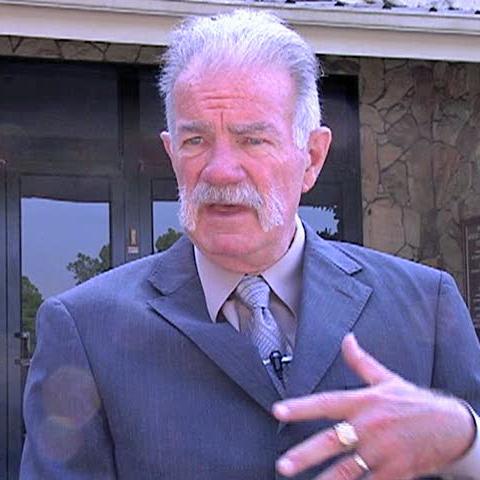
Radicals tend to empower radicals, creating a gulf of mutual misunderstanding and anger. Many Americans believe that Osama bin Laden is representative of Muslims, and many Afghans believe that the Rev. Terry Jones (who talked about burning Korans) is representative of Christians.

Many Americans honestly believe that Muslims are prone to violence, but humans are too complicated and diverse to lump into groups that we form invidious conclusions about. We’ve mostly learned that about blacks, Jews and other groups that suffered historic discrimination, but it’s still O.K. to make sweeping statements about “Muslims” as an undifferentiated mass.

In my travels, I’ve seen some of the worst of Islam: theocratic mullahs oppressing people in Iran; girls kept out of school in Afghanistan in the name of religion; girls subjected to genital mutilation in Africa in the name of Islam; warlords in Yemen and Sudan who wield AK-47s and claim to be doing God’s bidding.

But I’ve also seen the exact opposite: Muslim aid workers in Afghanistan who risk their lives to educate girls; a Pakistani imam who shelters rape victims; Muslim leaders who campaign against female genital mutilation and note that it is not really an Islamic practice; Pakistani Muslims who stand up for oppressed Christians and Hindus; and above all, the innumerable Muslim aid workers in Congo, Darfur, Bangladesh and so many other parts of the world who are inspired by the Koran to risk their lives to help others. Those Muslims have helped keep me alive, and they set a standard of compassion, peacefulness and altruism that we should all emulate.

I’m sickened when I hear such gentle souls lumped in with Qaeda terrorists, and when I hear the faith they hold sacred excoriated and mocked. To them and to others smeared, I apologize.

For Imam in Muslim Center Furor, a Hard Balancing Act

By Anne Barnard for The New York Times
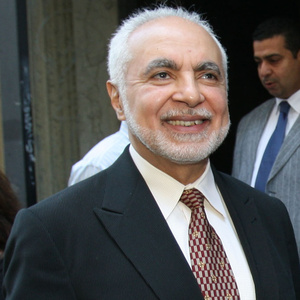
Not everyone in the Cairo lecture hall last February was buying the imam Feisal Abdul Rauf’s message. As he talked of reconciliation between America and Middle Eastern Muslims — his voice soft, almost New Agey — some questioners were so suspicious that he felt the need to declare that he was not an American agent.

Muslims need to understand and soothe Americans who fear them, the imam said; they should be conciliatory, not judgmental, toward the West and Israel.

But one young Egyptian asked: Wasn’t the United States financing the speaking tour that had brought the imam to Cairo because his message conveniently echoed United States interests?

“I’m not an agent from any government, even if some of you may not believe it,” the imam replied. “I’m not. I’m a peacemaker.”

That talk, recorded on video six months ago, was part of what now might be called Mr. Abdul Rauf’s prior life, before he became the center of an uproar over his proposal for a Muslim community center two blocks from the World Trade Center. He watched his father, an Egyptian Muslim scholar, pioneer interfaith dialogue in 1960s New York; led a mystical Sufi mosque in Lower Manhattan; and, after the Sept. 11 attacks, became a spokesman for the notion that being American and Muslim is no contradiction — and that a truly American brand of Islam could modernize and moderate the faith worldwide.

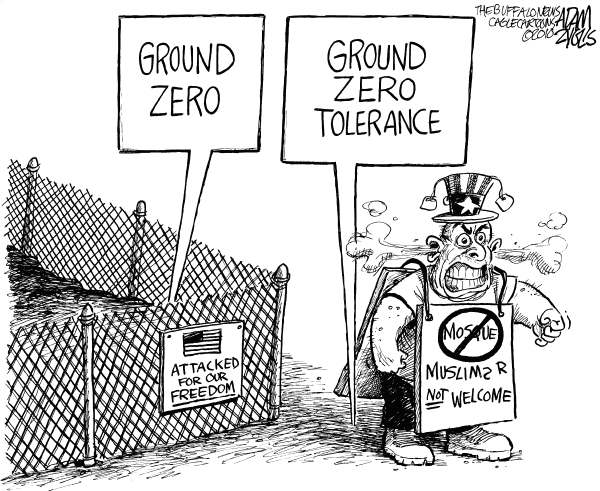
In recent weeks, Mr. Abdul Rauf has barely been heard from as a national political debate explodes over his dream project, including, somewhere in its planned 15 stories, a mosque. Opponents have called his project an act of insensitivity, even a monument to terrorism.

In his absence — he is now on another Middle East speaking tour sponsored by the State Department — a host of allegations have been floated: that he supports terrorism; that his father, who worked at the behest of the Egyptian government, was a militant; that his publicly expressed views mask stealth extremism. Some charges, the available record suggests, are unsupported. Some are simplifications of his ideas. In any case, calling him a jihadist appears even less credible than calling him a United States agent.

Growing Up in America

Mr. Abdul Rauf, 61, grew up in multiple worlds. He was raised in a conservative religious home but arrived in America as a teenager in the turbulent 1960s; his father came to New York and later Washington to run growing Islamic centers. His parents were taken hostage not once, but twice, by American Muslim splinter groups. He attended Columbia University, where, during the Six-Day War in 1967 between Israel and Arab states like Egypt, he talked daily with a Jewish classmate, each seeking to understand the other’s perspective.

He consistently denounces violence. Some of his views on the interplay between terrorism and American foreign policy — or his search for commonalities between Islamic law and this country’s Constitution — have proved jarring to some American ears, but still place him as pro-American within the Muslim world. He devotes himself to befriending Christians and Jews — so much, some Muslim Americans say, that he has lost touch with their own concerns.

“To stereotype him as an extremist is just nuts,” said the Very Rev. James P. Morton, of the Church of St. John the Divine, in Manhattan, who has known the family for decades.

Since 9/11, Mr. Abdul Rauf, like almost any Muslim leader with a public profile, has had to navigate the fraught path between those suspicious of Muslims and eager to brand them as violent or disloyal and a Muslim constituency that believes itself more than ever in need of forceful leaders.

One critique of the imam, said Omid Safi, a professor of religious studies at the University of North Carolina, was that he had not been outspoken enough on issues “near and dear to many Muslims,” like United States policy on Israel and treatment of Muslims after 9/11, “because of the need that he has had — whether taken upon himself or thrust upon him — to be the ‘American imam,’ to be the ‘New York imam,’ to be the ‘accommodationist imam.’ ”

Akbar Ahmed, chairman of Islamic studies at American University, said Mr. Abdul Rauf’s holistic Sufi practices could make more orthodox Muslims uncomfortable, and his focus on like-minded interfaith leaders made him underestimate the uproar over his plans.

“He hurtles in, to the dead-center eye of the storm simmering around Muslims in America, expecting it to be like at his mosque — we all love each other, we all think happy thoughts,” Mr. Ahmed said.

“Now he has set up, unwittingly, a symbol of this growing tension between America and Muslims: this mosque that Muslims see as a symbol of Islam under attack and the opponents as an insult to America,” he added. “So this mild-mannered guy is in the eye of a storm for which he’s not suited at all. He’s not a political leader of Muslims, yet he now somehow represents the Muslim community.”

Andrew Sinanoglou, who was married by Mr. Abdul Rauf last fall, said he was surprised that the imam had become a contentious figure. His greatest knack, Mr. Sinanoglou said, was making disparate groups comfortable. At the wedding, he brought together Mr. Sinanoglou’s family, descended from Greek Christians thrown out of Asia Minor by Muslims, and his wife’s conservative Muslim father.

“He’s an excellent schmoozer,” Mr. Sinanoglou said of the imam.

Mr. Abdul Rauf was born in Kuwait. His father, Muhammad Abdul Rauf, graduated from Cairo’s Al-Azhar University, the foremost center of mainstream Sunni Muslim learning. He was one of many scholars Egypt sent abroad to staff universities and mosques, a government-approved effort unlikely to have tolerated a militant. He moved his family to England, studying at Cambridge and the University of London; then to Malaysia, where he eventually became the first rector of the International Islamic University of Malaysia.

As a boy, Feisal absorbed his father’s talks with religious scholars from around the world, learning to respect theological debate, said his wife, Daisy Khan. He is also steeped in Malaysian culture, whose ethnic diversity has influenced an Islam different than that of his parents’ homeland.

In 1965, he came to New York. His father ran the Islamic Center of New York; the family lived over its small mosque in a brownstone on West 72nd Street, which served mainly Arabs and African-American converts. Like his son, the older imam announced plans for a community center for a growing Muslim population — the mosque eventually built on East 96th Street. It was financed by Muslim countries and controlled by Muslim diplomats at the United Nations — at the time a fairly noncontroversial proposition. Like his son, he joined interfaith groups, invited by Mr. Morton of St. John the Divine.

Hostage Crisis

Unlike his son, he was conservative in gender relations; he asked his wife, Buthayna, to not drive. But in 1977, he was heading the Islamic Center in Washington when he and Buthayna were taken hostage by a Muslim faction; it was his wife who challenged the gunmen on their lack of knowledge of Islam.

“My husband didn’t open his mouth, but I really gave it to them,” she told The New York Times then.

Meanwhile, the younger Mr. Abdul Rauf studied physics at Columbia. At first, he recalled in interviews last year, it was hard to adjust to American social mores. By 1967, he and a Yale student, Kurt Tolksdorf, had bonded at summer school over their shared taste in women and fast cars. But Mr. Tolksdorf said his friend never subscribed to the “free love” of the era.

When the 1967 war broke out in the Middle East, Mr. Tolksdorf said, Mr. Abdul Rauf reacted calmly when Israeli students tried to pick a fight. A classmate, Alan M. Silberstein, remembers debating each day’s news over lunch.

“He was genuinely trying to understand the interests of American Jews — what Israel’s importance was to me,” he said. “There was a genuine openness.”

In his 20s, Mr. Abdul Rauf dabbled in teaching and real estate, married an American-born woman and had three children. Studying Islam and searching for his place in it, he was asked to lead a Sufi mosque, Masjid al-Farah. It was one of few with a female prayer leader, where women and men sat together at some rituals and some women do not cover their hair. And it was 12 blocks from the World Trade Center.

Divorced, he met his second wife, Ms. Khan, when she came to the mosque looking for a gentler Islam than the politicized version she rejected after Iran’s revolution. Theirs is an equal partnership, whether Mr. Abdul Rauf is shopping and cooking a hearty soup, she said, or running organizations that promote an American-influenced Islam.

A similar idea comes up in the video of his visit to Cairo this year. Mr. Abdul Rauf, with Ms. Khan, unveiled as usual, beside him, tells a questioner not to worry so much about one issue of the moment — Switzerland’s ban on minarets — saying Islam has always adapted to and been influenced by places it spreads to. “Why not have a mosque that looks Swiss?” he joked. “Make a mosque that looks like Swiss cheese. Make a mosque that looks like a Rolex.”

In the 1990s, the couple became fixtures of the interfaith scene, even taking a cruise to Spain and Morocco with prominent rabbis and pastors.

Mr. Abdul Rauf also founded the Shariah Index Project — an effort to formally rate which governments best follow Islamic law. Critics see in it support for Taliban-style Shariah or imposing Islamic law in America.

Shariah, though, like Halakha, or Jewish law, has a spectrum of interpretations. The ratings, Ms. Kahn said, measure how well states uphold Shariah’s core principles like rights to life, dignity and education, not Taliban strong points. The imam has written that some Western states unwittingly apply Shariah better than self-styled Islamic states that kill wantonly, stone women and deny education — to him, violations of Shariah.

After 9/11, Mr. Abdul Rauf was all over the airwaves denouncing terrorism, urging Muslims to confront its presence among them, and saying that killing civilians violated Islam. He wrote a book, “What’s Right With Islam Is What’s Right With America,” asserting the congruence of American democracy and Islam.

That ample public record — interviews, writings, sermons — is now being examined by opponents of the downtown center.

Those opponents repeat often that Mr. Abdul Rauf, in one radio interview, refused to describe the Palestinian group that pioneered suicide bombings against Israel, Hamas, as a terrorist organization. In the lengthy interview, Mr. Abdul Rauf clumsily tries to say that people around the globe define terrorism differently and labeling any group would sap his ability to build bridges. He also says: “Targeting civilians is wrong. It is a sin in our religion,” and, “I am a supporter of the state of Israel.”

“If I were an imam today I would be saying, ‘What am I supposed to do?’ ” said John Esposito, a professor of Islamic studies at Georgetown University. “ ‘Can an imam be critical of any aspect of U.S. foreign policy? Can I weigh in on things that others could weigh in on?’ Or is someone going to say, ‘He’s got to be a radical!’ ”
Religious Leaders Denounce Anti-Muslim ‘Bigotry’ in US

By Carla Babb for The Voice of America

As a pastor from a small church in the U.S. state of Florida plans to burn Korans on September 11, Christian, Jewish and Muslim leaders stood side by side at the National Press Club in Washington Tuesday to show their solidarity against anti-Muslim acts of discrimination in the U.S.

A group of religious leaders from Christian and Jewish faiths joined together with the Islamic Society of North America for an emergency meeting to discuss a recent increase in anti-Muslim rhetoric and intolerance.

Baptist Pastor Gerald Durley spoke for the group. “As religious leaders in this great country, we have come together in our nation’s capital to denounce categorically the derision, misinformation and outright bigotry being directed against America’s Muslim community,” he said.

The group said people around the world have seen non-Muslim Americans show fear and contempt toward their Muslim neighbors–emotions that have generated from a national debate about a planned Islamic Center near the site of the September 11, 2001 terrorist attacks in New York City.

Catholic Cardinal Theadore McCarrick, Archbishop of Washington, said he wants the international community to understand that the U.S was built on the principle of valuing one another.

 “I have a great fear that the story of bigotry, the story of hatred, the story of animosity to others is going to be taken by some to be the story of the real America and it’s not. This is not our country and we have to make sure our country is known around the world as a place where liberty of religion, where respect for your neighbor, where love for your neighbor, where these things are the most prominent in our society,” he said.

A Christian pastor in Florida says his church will burn Korans on Saturday, the ninth anniversary of the terrorist attacks on the United States. He says the act serves as a protest against violent Islamist extremists. The local government has denied the church a permit to conduct the public burning. But the pastor of the Dove World Outreach Center has vowed to go ahead with his plan.

Rabbi Nancy Fuchs-Kreimer says the interfaith group strongly condemns the desecration of a sacred text. “We stand by the principle that to attack any religion in the United States is to do violence to the religious freedom of all Americans,” she said. Farhana Khera, president of the organization Muslim Advocates, was part of a separate group of religious leaders that met with U.S. Attorney General Eric Holder at the Justice Department. She said Holder also condemned the plan. “To quote the attorney general, he called the Gainesville plans, burning of Korans, idiotic and dangerous,” Khera said.

The plan has sparked protests in Indonesia and Afghanistan. Demonstrators in the Afghan capital burned the American flag and shouted “Death to America.” Islamic Society of North America President Ingrid Mattson says American Muslims must show the world that the U.S. is a place where all religions can live together in peace. “American Muslims have a unique ability to be this bridge and to show the Muslims who do not live in this kind of freedom that an open, pluralistic atmosphere where there are diverse religions together can really be good for everyone,” she said.

Tensions have heightened in America as the anniversary of the attacks approaches. In 2001, Islamist extremists killed nearly 3,000 people by ramming passenger planes into the twin towers of the World Trade Center in New York and the Pentagon.

For US Muslims, a 9/11 Anniversary Like No Other

By Rachel Zoll for The Associated Press

American Muslims are boosting security at mosques, seeking help from leaders of other faiths and airing ads underscoring their loyalty to the United States — all ahead of a 9/11 anniversary they fear could bring more trouble for their communities.

Their goal is not only to protect Muslims, but also to prevent them from retaliating if provoked. One Sept. 11 protest in New York against the proposed mosque near ground zero is expected to feature Geert Wilders, the aggressively anti-Islam Dutch lawmaker. The same day in Gainesville, Fla., the Dove World Outreach Center plans to burn copies of the Quran.

“We can expect crazy people out there will do things, but we don’t want to create a hysteria,” among Muslims, said Victor Begg of the Council of Islamic Organizations of Michigan. “Americans, in general, they support pluralism. It’s just that there’s a lot of misinformation out there that has created confusion.”

On Tuesday, the Islamic Society of North America will hold a summit of Christian, Muslim and Jewish leaders in Washington “to address the growing tide of fear and intolerance” in the furor over the planned New York mosque.

Islamic centers in many cities are intensifying surveillance and keeping closer contact with law enforcement. Adding to Muslim concern is a fluke of the lunar calendar: Eid al-Fitr, a joyous holiday marking the end of Ramadan, will fall around Sept. 11 this year. Muslim leaders fear festivities could be misinterpreted as celebrating the 2001 terror strikes.

“We’re telling everyone to keep their eyes open and report anything suspicious to authorities and call us,” said Ramzy Kilic of the Tampa, Fla., chapter of the Council on American Islamic Relations.

Other efforts around 9/11 aim to fight bigotry. Muslims will clean parks, feed the homeless, and give toys to sick children as part of Muslim Serve, a national campaign to demonstrate Islamic commitment to serving humanity.

Separately, groups are distributing ads to combat persistent suspicions about Islam. One spot, called “My Faith, My Voice,” features American Muslims saying, “I don’t want to take over this country.”

Sept. 11 anniversaries have always been challenging for U.S. Muslims, who have been under scrutiny since the attacks. This year, the commemoration follows a stunning summer in which opposition to a planned Islamic community center near the World Trade Center site escalated into a national uproar over Islam, extremism and religious freedom.

Islamic centers as far away as Tennessee and California faced protests and vandalism. In western New York, police said a group of teenagers recently yelled obscenities, set off a car alarm and fired a shotgun during two nights of drive-by harassment at a small-town mosque near Lake Ontario.

Usama Shami, board chairman for the Islamic Community Center of Phoenix, said a new mosque the congregation has been building for years drew little attention until recently, when some resistance emerged in the neighborhood and from some in city government. Recently, vandals broke into the new building, spilled paint on the floor and broke expensive windows.

Shami believes the ground zero dispute is partly to blame for the trouble, along with passions unleashed by Arizona’s strict new law that would require police to question people about their immigration status if there is reason to suspect they are in the country illegally.

“All of these issues came at the same time,” Shami said. “When things like that happen, I think they bring out the worst in some people.”

On Sept. 11 in Chicago, Zeenat Rahman, a 34-year-old native of the city, will visit a local nursing home with Muslim and non-Muslim friends to spend time with residents and help serve a meal.

“This is when people are going to look at our community, and when they do, what are they going to see?” said Rahman, a policy director for the Interfaith Youth Core, which promotes pluralism. “Sometimes, saying `Islam means peace,’ feels a little defensive and apologetic, whereas service is really core to our faith.”

Unity Productions Foundation, a Washington-area group that specializes in films about Islam and Muslim Americans, will hold an interfaith talk on Sept. 11 at the Washington Jewish Community Center.

Speakers include Monem Salam, the subject of a Unity Productions film titled, “On a Wing and a Prayer: An American Muslim Learns to Fly.” Unity recently launched groundzerodialogue.org, where visitors can view films and use them for community discussion about Islam in the U.S.

Salam, 38, of Bellingham, Wash., usually spends the Eid weekend with his wife and three young children, but said he persuaded his wife he had to participate in the event.

“I have to leave them and go across the country to answer questions about Islam,” said Salam, a portfolio manager who was 4 years old when his family left Pakistan for the U.S. “It’s unfortunate. It’s the time that we live in.”

Muslims for Peace- A Public Service Announcement

This is an amazing Public Service Announcement by my friend Ani Zonneveld, founder of Muslims for Progressive Values, a peace activist and an award winning singer/songwriter as well as a great ambassador for moderate Muslims everywhere and a voice of reason within Islam during these difficult times. This video is a must watch for Muslims and non-Muslims alike for helping build bridges and understanding between moderate voices of Islam within and outside the Muslim world.

For more information, please visit http://www.mpvusa.org

Ground Zero Mosque Controversy Helps Give Rise to Islamophobia Across the US

By Manzer Munir for Pakistanis for Peace

A man was accused of attempted murder for his vicious knife attack on a Muslim New York City Cab driver Tuesday evening in what is being described as a hate crime by the authorities.

Michael Enright, a college student who also did some volunteer work in Afghanistan, was being held without bail on charges of assault and attempted murder as hate crimes.

In a criminal complaint filed by the New York Police Department, Michael Enright allegedly asked the driver if he was a Muslim. The cab driver, Ahmed H Sharif, an immigrant from Bangladesh, replied that yes he was indeed a Muslim. At this point, Mr. Enright is alleged to have uttered the customary Arabic greeting of “Aslaam-a-laikum” (Peace be with you) and brutally attacked the cab driver with a knife, slashing him badly on the face, hands and neck. During the attack, Mr Enright also uttered “Consider this a checkpoint” to the cab driver, all the while brutally attacking him with his knife.

 Besides a serious neck wound, the cab driver, Mr Sharif, suffered cuts on his forearms, face, and hands while trying to defend himself from the attacker.

Inexplicably, Einright had volunteered with Intersections International, a group that promotes interfaith dialogue between religions and an organization that has also supported the plans for the Islamic center and mosque 2 blocks from Ground Zero. He had also recently returned from Afghanistan where he volunteered to be embedded with a combat battalion so that he could document their experiences as soldiers that Einright wanted to showcase in an upcoming documentary.

Police stated that Einright was drunk and intoxicated at the time of the attack on Mr Sharif and it is not clear what his motive was for perpetrating the violence on the cab driver. There is growing speculation however amongst members of the American Muslim community as well as several civil rights organizations such as the ACLU and CAIR that the attack is a result of the growing Islamophobia and fear amongst the American public as a direct result of the Ground Zero Mosque controversy that has been brewing for weeks and has been front and center in the media and the American public for some time now.

The plan to build an Islamic community center and mosque two blocks from the 9/11 tragedy and the site of the World Trade Center towers became controversial as right wing groups seized on what they believed to be “an insensitive provocation towards the American public”. Muslim groups demanded their First Amendment rights of freedom of religion and pointed to the New York City council vote allowing them the permit to build as reasons for what they are doing as legal and in fact an effort to build bridges between Islam and other faiths following the events of September 11. However, the issue became nationally prominent and controversial by then as fanned by right wing blogs and ad campaigns, the majority of the American public became against the building of the mosque, according to recent polls.

Thankfully, the voice of reason in this whole debate has been none other than the billionaire Jewish mayor of New York, Mayor Michael Bloomberg. His stance and views in support of the mosque as a constitutionally protected right has been welcomed by Muslims as well as civil rights organizations and he should be commended for standing up for what is constitutionally the right thing to do. Briefly, President Obama also came out in support of the group’s right to build the mosque as being a constitutional right, before making statements the next day that “questioned the wisdom” of building it there.

Nonetheless, a link has been made by the right wing, no matter how unfairly, that Islam promotes terror and violence. This can be seen in the fact that the vast majority of Americans now have a negative and unfavorable view of Muslims. For the country to be even having a debate whether a group of Americans can build a house of worship is a testament to how far things have regressed.

No one would ever have thought that a constitutionally protected right such as that of freedom of religion would ever seem controversial. Many have argued that only the area around Ground Zero is off limits to Muslims and they are free to build their mosques elsewhere. This does not appear to be the case as mosques thousands of miles away from Ground Zero in California, Tennessee, Ohio and elsewhere across the country have now come under heavy opposition by local zoning boards and people in those communities. The fear and hatred of Muslims is becoming a growing problem as the Ground Zero Mosque controversy has began to fuel acts of violence against Muslims as seen in the attack on the NYC cab driver. It is a message that is being sent to the American public that Muslims in the United States do not deserve the same rights and privileges enjoyed by all others. In fact, there is an attempt to link all mosques to terror somehow, which is very offensive to millions of peaceful Muslims who abhor violence and who live decent hard working lives in their communities.

At first I was not happy to learn that Muslims planned to build a mosque near Ground Zero as I knew that this would become controversial. But as the opposition to mosques has grown across the nation, and not just for building near Ground Zero, but hundreds and thousands of miles away, it has become clear that this anti-mosque movement is not just about that hallowed area near the World Trade Center site but is in fact becoming an opposition to the religion of Islam as a whole.

This idea by the opponents of the mosque and the right wingers that somehow it is perverted and insensitive to build a mosque several blocks from Ground Zero is in reality only true if we buy into the belief that Muslims and Islam brought down the towers and not a handful of radical extremists of the religion of Islam. If we believe that mainstream Islam itself was responsible for all those deaths on American soil and not Osama Bin Laden and his Al-Qaida network, only then would building the mosque there be insensitive. But for us to somehow associate the whole religion of Islam of over 1.5 billion people by the actions of 19 terrorists is ridiculous.

It is my fear that attacks similar to the one a few days ago on the NYC cab driver will continue to grow as we allow an environment of hate to perpetuate and grow against a group of people. At the very least, this opposition to mosques across the country will certainly grow and continue to spread the notion that ALL Muslims are violent and terrorists. This is simply not true as the 5-7 million American Muslims and the 1.5 billion Muslims around the world will attest.

We must remember that we have a war on terror and not a war on Islam. Far away from Ground Zero in cities across the US as more and more mosques come under opposition in their communities, we must hold steadfast to our ideals, principles and to the US Constitution. As the best nation in the world, we have to defend our ideal and the basis of what makes us the best and that is the US Constitution. Speaking as an American and not even as a Muslim, I know that if we stop defending it for fear of being distasteful, insensitive, or inconsiderate, then we lose what makes us who we are as the freest nation in the world and we must not ever let that happen!

-Manzer Munir, a peace activist, and the founder of Pakistanis for Peace, is a freelance journalist who writes for www.PakistanisforPeace.com and other online journals.

Mosque Near Ground Zero Divides Sept. 11 Relatives

By Samantha Gross for The Associated Press

Talat Hamdani traveled to Mecca to pray that her missing son, an EMT, was safe in the days after 9/11. She held out hope that his Muslim background had led to his detention as a suspect, considering it better than the alternative.

When part of his body was returned to her — his lower half shattered into 34 pieces — it was final proof he had indeed been killed when Islamic extremists brought down the World Trade Center. As Americans take sides over plans to build an Islamic cultural center and mosque blocks away, Hamdani says it feels personal.

“Why are we paying the price? Why are we being ostracized? Our loved ones died,” she said at her Lake Grove, N.Y., home. “America was founded on the grounds of religious freedom,” and opposition to the cultural center “is un-American. It’s unethical. And it is wrong.”

The thousands of relatives of the 2,976 victims have no single representative and no unified voice, even as another 9/11 anniversary approaches. The conflict is dividing a group that in many ways has never been united, with some saying the cultural center would reopen old wounds too close to hallowed ground and others saying that opposing it is tantamount to bigotry.
And some, like Vandna Jain, walk a middle ground.

“It is unfair to persecute the group, however, in turn, there should be some respect for the feelings of the people that are forever attached to this site due to their losses,” the New City, N.Y., resident, whose father, Yudh, died in the north tower, wrote in an e-mail. “I think people have a right to be upset about it, just as much as people have a right to build a mosque.” Jim Riches, a former New York Fire Department deputy chief whose son, Jimmy, was killed at the trade center, believes the dispute has nothing to do with religious freedom.

“We’re not telling them not to practice their religion. … It’s about location, location, location,” he said, asking why the mosque couldn’t be built farther away from the land that he still considers a cemetery. “It’s disrespectful. You wouldn’t put a Japanese cultural center at Pearl Harbor.”

Liza Murphy feels differently. Her brother, Charlie, died at ground zero, but she says she doesn’t lay claim to the sprawling, 16-acre site. “It’s a place where a terrible tragedy took place, but I don’t see what makes it sacred,” said the Brooklyn resident. “Nine years later, that now belongs to the public. And my brother and his death are private and belong to me.” Murphy says she has no objection to the planned mosque and wouldn’t want to judge one group of Muslims based on the actions of another.

But Peter Gadiel says he owes no apologies for singling one group out. Since his son, James, was killed at the trade center, Gadiel has argued publicly that all Muslims should share some collective guilt for what happened on 9/11.

“The fact is that Islam does not coexist well with other religions, and you can’t separate that from Islam,” the Kent, Conn., resident said, explaining his stand against the mosque. “If that sounds intolerant on my part, that’s too bad.” The families’ impassioned responses to the prospect of the mosque have influenced the public debate.

Gov. David Paterson has suggested moving the project further away from the trade center site out of respect for opponents’ feelings, while Mayor Michael Bloomberg came out in support of the mosque, calling it a test of the separation of church and state.
President Barack Obama has said he believes Muslims have the right to build the Islamic center as a matter of religious freedom, though he’s also said he won’t take a position on whether they should actually build it.

The imam leading plans for the center on Friday called extremism a security threat in both the West and the Muslim world. Feisal Abdul Rauf made his comments to Associated Press Television News in Bahrain during a Mideast tour funded by the U.S. State Department, but he wouldn’t discuss the uproar over the Islamic center.

Relatives of those slain on Sept. 11 have made their diverging voices heard on a number of issues over the years — from whether to try the suspects in a civilian court to the location of a proposed freedom museum at ground zero that is no longer planned for the site.

Charles Wolf, who lost his wife, Katherine, at the trade center, says emotions among family members are especially raw right now.
“This is anniversary season. It’s really, really hard,” the Manhattanite said. “Passions are up and this is bringing up a lot of hurt in people.”

He says he worries that any decision to respond to public pressure and move the mosque would be used by extremists to paint Americans as intolerant.

“The powers of evil were piloting those airplanes,” he said of the Sept. 11 attackers. Now, with the mosque dispute, “here is where we’re falling into the terrorists’ trap … trying to tear each other apart. Good people fighting other good people — does that sound like evil at work?”

Keith Olbermann – Special Comment, Muslim Community Center

“THEY CAME FIRST for the Communists,
and I didn’t speak up because I wasn’t a Communist.

THEN THEY CAME for the trade unionists,
and I didn’t speak up because I wasn’t a trade unionist.

THEN THEY CAME for the Jews,
and I didn’t speak up because I wasn’t a Jew.

THEN THEY CAME for me
and by that time no one was left to speak up.”
-Martin Niemöller

“This is America damn it! And in America when somebody comes for your neighbor, or his Bible, or his Torah, or his Athiest Manifesto, or his Koran, you and I do what our fathers did and our grandmothers did, and our founders did, you and I SPEAK UP!”
– Keith Olbermann

Religious Freedom in America Includes Everyone

By Alex Howard for The Pueblo Chieftain

One of the fundamental freedoms we enjoy as citizens is to worship in whatever manner we want to and wherever we want to.

There are virtually no restrictions on this freedom, even when a particular exercise of a belief might be illegal for the general public. Within the scope of religious expression, even the use of drugs can be legitimate. For example, the use of peyote, a hallucinogenic cactus, is legit for members of Native American communities but illegal for the rest of us.

Moreover, the freedom of religion principle extends well beyond what most people think of as acceptable.

While all the mainstream religions are represented within the military services, we also find niches carved out for not-so-common expressions.

Wicca, also known as witchcraft, druidism, paganism and other names, is officially recognized by the United States military as a legitimate form of religious expression.

So, what I’m saying is that the freedom of religious expression is wide-ranging and as diverse as the citizenry in America. Christians, Jews, Hindus, Muslims, Buddhists, Rastafarians, Sikhs, Scientologists, Baha’i and all the others have their places in the worldwide religious worship palette, including here in America.

And I’ve named just a few religions. There are many more, some with which our culture has no familiarity despite a large number of adherents.

So, what should we think when a group of citizens objects to the construction of a place of worship by a religious group? We’d have to wonder whether that basic freedom of religion has some kind of limits, wouldn’t we?

Yet, this is exactly a discussion that’s taking place in New York City right now. A group of Muslims that has been using a building not too far from the site of the former World Trade Center for religious and cultural purposes wants to demolish it and build a new mosque and cultural center.

Survivors and family members of victims of the terrorist attack are not happy. The general feelings they express are of anger and unresolved emotional pain over the death of family members, friends and co-workers.

They blame (accurately of course) the attack on those who flew the airplanes and their co-conspirators. Sadly, however, the anger at the attackers has been enlarged to include Muslims in general.

That being acknowledged, prejudicial and misguided as it is, the discussion is taking on the aura of denial of the freedom of religious expression. What those objecting to the construction of the mosque seem to have ignored is that the Muslims who want to build it are American citizens, some of them second- or third-generation Americans.

These are not people who are trying to establish a radical, wacko religious cult on foreign soil. They’re Americans exercising their freedoms, just as you and I are free to do.

Should the pain of those who lost loved ones in the villainous attack on the WTC hold sway over the decision to build the mosque near that site? I don’t think so. Otherwise, any group with an emotional connection to an event could claim the right to object to some other religious building. American Muslims have just as much right to freedom of worship as other Americans. To think otherwise is, well, un-American.

-Alex Howard is a retired Episcopal priest.