Posts Tagged ‘ CIA ’

Going After the Haqqani Network

From the Editors of The Express Tribune
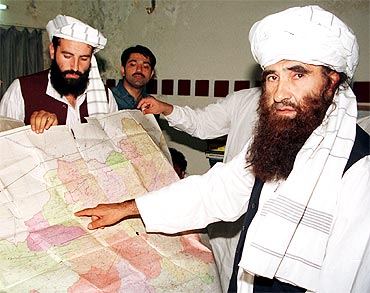
The question of the Haqqani network and how it is to be handled continues to fester. The US special envoy, Richard Holbrooke, this time in London, has suggested that Pakistan needs to go after the group with more force. The warning from Mr Holbrooke will have dashed hopes, raised during Hillary Clinton’s visit, that Washington was prepared to go along with a Pakistani strategy of dialogue with the network — led by Jalaluddin Haqqani and his son Sirajuddin. Links between the Pakistani intelligence forces and the Haqqanis have existed since the Afghan war and they have never been explicitly denied by either party. The elder Haqqani made his name as a formidable mujahideen commander during the Soviet occupation of Afghanistan when he was a member of Maulvi Yunis Khalis’s Hizb-i-Islami. He was also, according to American investigative journalist Steve Coll (who recently wrote Ghost Wars : The Secret History of the CIA, Afghanistan and Bin Laden, from the Soviet Invasion to September 10, 2001), offered a major role in the government by Afghan President Hamid Karzai some years ago.

For Islamabad, the pressure is on again. The Haqqani network is seen in Afghanistan as a key problem; it has carried out numerous attacks there. Washington believes Pakistan needs to do more to support the efforts against the militants in that country. The Pakistan military meanwhile, following its operation in South Waziristan, has avoided any move into North Waziristan – despite some gentle nudging from the US – reportedly following the intervention of the Haqqanis. They are also said to be facilitating talks with other militant factions across the conflict zone.

This brings us to an old issue: that of ‘good’ and ‘bad’ militants. It is clear that in the minds of the Pakistani military and the agencies allied to it this line of distinction continues to exist. Of course, Washington is in many ways responsible for creating this. The ghosts of the Afghan war, the alliance it formed with the mujahideen fighting the former Soviets and the engagement of Pakistan’s agencies, notably the ISI, are today coming back to haunt it. This is not to say that the CIA didn’t have its own connections to some of these actors in the past, but the point that is missed by most people is that it is America which calls the shots in this part of the world (or perhaps in most other parts as well).

There is a need for Islamabad to think things through. The division of militants into various camps, for example, so-called ‘good’ Taliban versus so-called ‘bad’ Taliban, has to stop. Essentially, these men of violence do more harm than good. The fact that a particular faction directs its wrath outside the country and avoids targeting Pakistani security forces should not be enough to cast it in the role of an ally. The effort against militancy does need to be seen in the wider regional context, and not as a matter of narrow allegiances and temporary agreements. The people who make decisions in Islamabad should keep in mind just how unsuccessful past efforts to do deals with the militants have been — with such attempts giving groups making up the complex Taliban network in the North a chance to reorganise and strengthen themselves on more than one occasion. There is reason to believe that this has contributed to the terrorism that has claimed thousands of lives. Even if the Haqqani network did not itself send out the bombers it has acted to back forces that have played a part in encouraging militant trends. The so-called Quetta Shura, led by the elusive Mullah Omar, is among these.

This having been said, Washington too needs also to review its own demands. There have been mixed signals over recent weeks. It is possible there is a lack of clarity on strategy within the US capital. This of course means the confusion in Islamabad has grown. A clear course of action needs to be planned in unison so the militants that Washington helped nurture can be driven away.
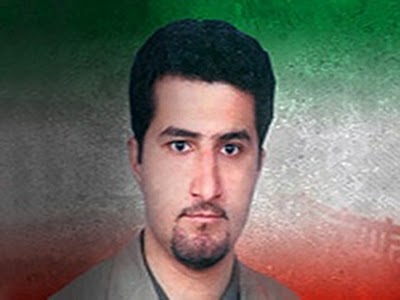

‘Abducted’ Nuclear Scientist Returns to Iran

By Nasser Karimi and Brian Murphy for The Associated Press

TEHRAN, Iran – Flashing a victory sign, an Iranian nuclear scientist who claims he was abducted and abused by U.S. agents a year ago returned Thursday to his homeland and into the heart of the latest crossfire between Washington and Tehran.

The conflicting accounts about Shahram Amiri — captive or defector who got cold feet — are unlikely to alter the Western-led pressure on Iran over its nuclear program.

But Iran’s leaders are expected to use Amiri to ring up as many propaganda points as possible against Washington — showing that relations remain in a deep freeze and hopes of breakthrough talks appear as distant as ever.

It also gives the ruling clerics a welcome distraction at a time when domestic protests are growing over Iran’s stumbling economy and worries about the fallout from international sanctions.

Amiri’s return “shows the strength of the Islamic republic,” boasted lawmaker Amir Taherkhani. Another prominent parliament member, Alaeddin Boroujerdi, called the alleged kidnapping a “terrorist act.”

But the Washington Post reported that the CIA paid Amiri $5 million to provide intelligence on Iran’s nuclear program. The Post in its online edition late Wednesday said the money came from a secret program aimed at inducing scientists and others with information on Iran’s nuclear program to defect.

U.S. officials also told the Post that Amiri should be unable to get to that money now that he’s returned to Iran, which is under financial sanctions.

It remains unclear how Iranian authorities will ultimately deal with Amiri — and the U.S. claims he cooperated with American authorities — despite his hero-style welcome.

Foreign Minister Manouchehr Mottaki called Amiri a “dear compatriot” and said Iran was keenly interested in learning more about the reasons for his alleged abduction.

Journalists were allowed to cover Amiri’s first steps back in Iran in a rare relaxation of media restrictions. The last such press gathering permitted at Tehran’s international airport was linked to another tussle with Washington: the May visit by the mothers of three jailed Americans arrested last year on the Iran-Iraq border.

Amiri’s pre-dawn arrival capped a stunning tumble of events over the past month that included leaked videos with mixed messages, Amiri surfacing at a diplomatic compound in Washington and the White House finally acknowledging his presence in the country.

The U.S. says he was a willing defector who changed his mind and decided to board a plane home from Washington. Amiri has told a very different tale, claiming he was snatched while on a pilgrimage in Saudi Arabia and bundled off to the United States to be harshly interrogated and offered millions of dollars by the CIA to speak against Iran.

Amiri was embraced by his family — including his tearful 7-year-old son — and greeted by a top envoy from Iran’s Foreign Ministry. The 32-year-old Amiri smiled and gave the V-for-victory sign.

Speaking to journalists after a flight via Qatar, Amiri repeated his earlier claims that he was snatched while in the Saudi holy city of Medina and carried off to the United States.

The first months were full of intense pressures, he alleged. “I was under the harshest mental and physical torture,” he said at the Tehran airport, with his young son sitting on his lap.

He also alleged that Israeli agents were present during the interrogations and that CIA officers offered him $50 million to remain in America. He gave no further details to back up the claims or shed any new light on his time in the United States, but promised to reveal more later.

“I have some documents proving that I’ve not been free in the United States and have always been under the control of armed agents of U.S. intelligence services,” Amiri told reporters.

Previously he claimed that CIA agents “pressured me to help with their propaganda against Iran,” he said, including offering him up to $10 million to talk to U.S. media and claim to have documents on a laptop against Iran. He said he refused to take the money.

Amiri refused to say how — if under guard — he could have escaped U.S. agents to release videos in which he alleges that he had been snatched by American and Saudi kidnap teams while on a pilgrimage in Saudi Arabia. He said that to disclose such information now could harm national security, and said he would explain everything later.

On Thursday, Amiri sought to play down his role in Iran’s nuclear program — which Washington and allies fear could be used to create atomic weapons. Iran says it only seeks energy-producing reactors.

“I am a simple researcher who was working in the university,” he said. “I’m not involved in any confidential jobs. I had no classified information.”

His case was often raised by Iranian officials in the past year, but Washington offered no public response. It took a higher profile after Iranian authorities decided to pursue charges against the three Americans arrested along the border with Iraq in July 2009.

Iran’s deputy foreign minister, Hassan Qashqavi, said there would be “no link” between Amiri’s return and the case of the three Americans, whose families say they were hiking in northern Iraq and that if they crossed the border, they did so inadvertently.

U.S. officials also have repeatedly asked Iran for information about Robert Levinson, a former FBI agent who disappeared in Iran in 2007.

Amiri was generally a footnote in the international showdown over Iran’s nuclear ambitions until last month. Iranian state TV aired a video he purportedly made from an Internet cafe in Tucson, Arizona, to claim he was taken captive by U.S. and Saudi “terror and kidnap teams.”

The video was shortly followed by another, professionally produced clip in which he said he was happily studying for a doctorate in the United States. In a third, shaky piece of video, Amiri claimed to have escaped from U.S. agents in Virginia and insisted the second video was “a complete lie” that the Americans put out.

U.S. officials never acknowledged he was on American soil until Tuesday, hours after he turned up at the Iranian interests section at the Pakistani Embassy in Washington asking to be sent home. Secretary of State Hillary Rodham Clinton said Amiri had been in the United States “of his own free will and he is free to go.”

On Thursday in Tehran, he asked American authorities to explain their secrecy.

“Why didn’t they allow me to have an open interview with the media in the United States?” he said. “Why didn’t they ever announce my presence?”

U.S. officials would say little about the circumstances of what they assert was a willing defection by Amiri and what went wrong. But there were suggestions that threats to his family in Iran pushed Amiri to first make the claims he was kidnapped. Amiri, however, claimed his family faced no problems. “My family was completely free and they were under financial support of the Iranian government,” he said.

3 Arrested in Norway al-Qaida Bombing Plot

By Ian Macdougall, Matt Apuzzo, and Adam Goldman for The Associated Press

Three suspected al-Qaida members were arrested Thursday for what Norwegian and U.S. officials said was a terrorist plot linked to similar plans to bomb New York’s subway and blow up a shopping mall in England.

Officials believe the men were planning attacks with portable but powerful bombs like the ones at the heart of last year’s failed suicide attack in the New York City subway, an attack U.S. Attorney General Eric Holder has called one of the most serious plots since 9/11. On Wednesday, U.S. prosecutors revealed the existence of a related plot in Manchester, England.

The plots underscore al-Qaida’s interest in smaller-level attacks that don’t require the intricate planning and coordination of the Sept. 11, 2001 attacks in which airplanes were hijacked and flown into the World Trade Center towers in New York City and the Pentagon in Arlington, Va. And they follow a trend in which the terrorist group has used operatives inside potential target countries, rather than trying to sneak people across increasingly secure borders.

The three men, whose names were not released, had been under surveillance for more than a year. Two were arrested in Norway and one in Germany. Officials would not say what country or site was the target of the latest terror threat, or even whether they believed the men had selected a target.

Those arrested in Norway included a 39-year-old Norwegian of Uighur origin who has lived in the country since 1999 and a 31-year-old citizen of Uzbekistan who had a permanent Norwegian residency permit, said Janne Kristiansen, head of Norway’s Police Security Service. The man arrested in Germany was a 37-year-old Iraqi with a Norwegian residency permit, Kristiansen said.

She did not say exactly where the arrests took place but said all three men “had connections to Oslo.”

Norwegian and U.S. officials believe the Norway plan was organized by Salah al-Somali, al-Qaida’s former chief of external operations who is in charge of plotting attacks worldwide. Al-Qaida usually keeps its plots compartmentalized, and officials do not believe the suspects in Norway knew about the other plots. The officials spoke on condition of anonymity because they were not authorized to discuss the case.

Al-Somali, who was killed in a CIA drone airstrike last year, has been identified in U.S. court documents as one of the masterminds of the New York subway plot. Two men have pleaded guilty in that case, admitting they planned to detonate explosives during rush hour. A third man awaits trial.

Officials said the men were attempting to make peroxide bombs, the powerful homemade explosives that prosecutors say were attempted in both New York and England. Norwegian and U.S. officials said it was unclear whether the men ever perfected the recipe for the bomb and said investigators had contained the plot.

“According to our evaluation, the public has never been at risk,” Kristiansen said.

The Associated Press learned of the investigation in recent weeks and approached U.S. and Norwegian officials. Authorities told the AP that reporting on the case could jeopardize public safety and allow dangerous suspects to go free. The AP agreed not to report on the investigation until arrests were made.

“AP’s knowledge of the case was only one of several factors that was taken into consideration when deciding on the timing of the arrests,” Police Security Service spokesman Trond Hugubakken said. “It was not the decisive factor.”

U.S. and Norwegian counterterrorism officials worked closely together to unravel the Norwegian plot, officials said. Kristiansen traveled to the U.S. this spring to discuss the closely held intelligence gathered in the case.

Norwegian Prime Minister Jens Stoltenberg urged Norwegians not to judge large groups of people because of the arrests.

“These are separate individuals that are responsible for criminal acts,” Stoltenberg said. “It is always bad to judge a whole group of people from what individuals are doing and that is independently of what group these people belong to.”

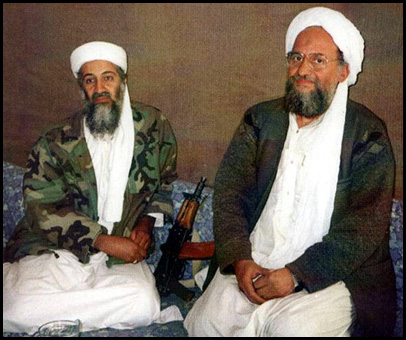
Even though it was not clear if Norway was a target, Al-Qaida’s No. 2 leader, Ayman al-Zawahri, has called for attacks on Norway, among other countries.

Magnus Norell, a terrorism expert at the Swedish Defense Research Agency, said Norway’s 500 troops in Afghanistan could be a factor, as could the 2006 controversy sparked by a Danish newspaper’s publication of 12 cartoons depicting the Prophet Muhammad.

Norell said the controversy has extended to neighboring Norway and Sweden after newspapers there republished the cartoons and later published similar cartoons. Images of Muhammad, even favorable ones, are considered blasphemous by many Muslims.

British police and security officials have never provided details of the alleged target of the purported English plot, but said it was likely focused on a major shopping center in northern England. Media speculation centered on Manchester’s Arndale shopping center.

A judge said last year the gang was plotting a “mass casualty” attack in northern England.

Imran Khan Moves Supreme Court Against Drone Attacks

As reported on Despardes.com

Cricketing legend-turned politician Imran Khan has filed a lawsuit in Pakistan’s apex court asking it to declare drone attacks as war crimes.

According to published reports, the Pakistan Tehrik-i-Insaf (PTI) chief on Wednesday filed a petition in the Supreme Court asking it to declare drone attacks as attacks on the sovereignty and defence of Pakistan and a war crime.

The petition, filed by Imran Khan’s lawyer Shaukat Aziz Siddiqui, argues that the provisions of logistics and facilities to any foreign country or alliance for mass destruction through drone strikes inside the territory of Pakistan resulting into killings of Pakistani citizen is illegal, unwarranted, unconstitutional, in violation the United Nations Charter, universal declaration of human rights, international law as well as the international humanitarian law, a war crime and an attack on the sovereignty, solidarity, integrity and defence of Pakistan.

Imran Khan’s petition was filed today after a Lahore court Lahore cort ruled against drone strikes and called on the government to take appropriate measures to halt strikes by unmanned drones in Pakistan if they aren’t approved by Islamabad.

Federal authorities should take measures to stop drone attacks in Pakistan if they are carried out without formal approval, the court said on Wednesday. The court was responding to a petition that said drone strikes were a violation of national sovereignty.

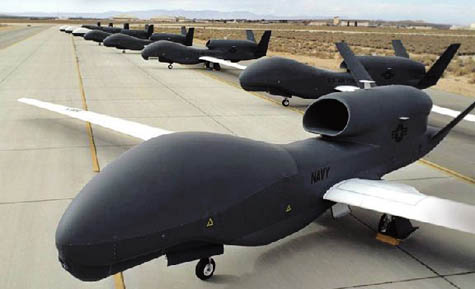
Drone attacks have increased under the authority of U.S. President Barack Obama, notably inside Pakistan. The CIA, a civilian entity, said it is acting according to the code of law in carrying out the strikes.

Pakistan’s government publicly objects to the attacks, saying they violate its sovereignty. But it is widely thought there is a tacit agreement between the U.S. intelligence agency, the CIA, and Islamabad to allow such strikes, reported Voice of America on its website today.(http://www1.voanews.com/english/news/asia/Suspected-US-Missile-Strike-Kills-10-in-Pakistan-97396999.html)

Two missiles believed fired Tuesday by an unmanned drone struck a village in the tribal regions of Pakistan, killing militants including Hamza al-Jufi, an Egyptian allied with al-Qaida.

Attacks By the Taliban Illustrate their Growing Strength in the Region

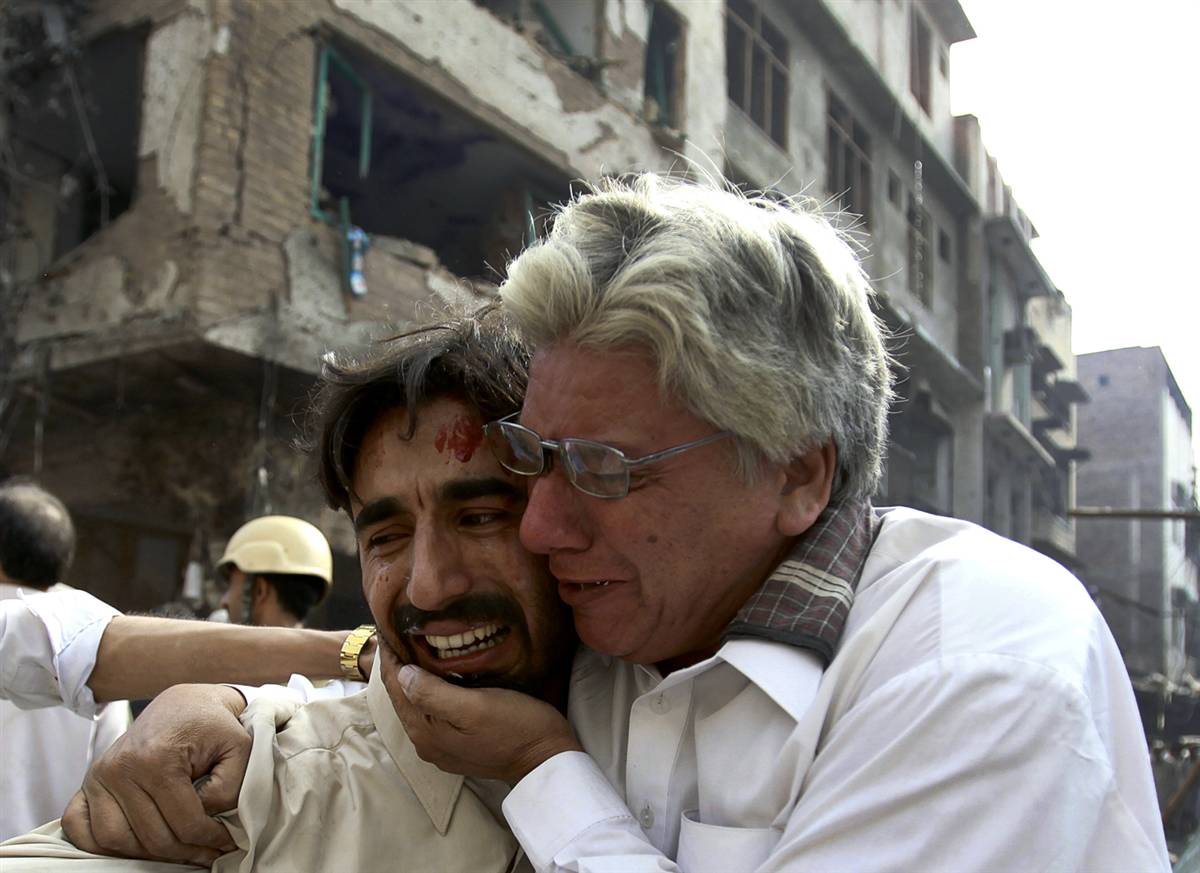
Peshawar, Pakistan- A suicide bomber detonated his vehicle packed with explosives on New Year’s Day in a crowd of people watching a volleyball tournament killing at least 75 people, wounding another 60, of which 13 are in critical condition. Police stated that they believed that the attack was directed towards anti-Taliban leaders of local groups made up of ordinary residents of the area who had recently formed armed local militias to help the government fight the Taliban. The blasts demonstrate the capabilities of the Taliban who also were responsible for the killing of seven American CIA employees at an agency base in Khost, Afghanistan the same day.

The targeting and the killing of both the anti-Taliban civilians as well as the CIA employees is an alarming start to a new year in the region as the Taliban have stepped up their efforts against American troops, Pakistani security forces, civilians and anyone else that challenges them.

Analysts believe that the Afghani Taliban has agreed to bury its differences with the Pakistani Taliban and join forces after President Obama announced plans to increase troop levels in Afghanistan and hunker down for the foreseeable future in a protracted conflict with the armed group. The Pakistani Taliban is an offshoot of the Afghani Taliban and is led by veterans of the fighting in Afghanistan who come from the border regions with Pakistan. Although they have always supported the fight against foreign forces in Afghanistan by supplying fighters, training and logistical aid, they have concentrated on battling the Pakistani government. Many believe that the Pakistani Taliban provides an essential rear base to for the Taliban insurgency in Afghanistan.

This new Taliban alliance has raised concerns for the US and NATO forces where generals are forecasting that the conflict will only worsen this year as Friday’s attacks are proving the grave assessment correct. The attack was not far from South Waziristan, where the Pakistan army is waging an offensive against the Pakistan Taliban. Western intelligence agencies believe that time is running out in the fight to eradicate the Taliban from Afghanistan as they are evolving, adapting and getting better organized and resilient as the nearly decade long conflict rages on.

The insurgency is organized, increasingly effective and growing more cohesive, said a senior intelligence officer with NATO’s International Security Assistance Force (ISAF). “The insurgent strength is enabled by the weakness of the Afghan government,” the officer told reporters on condition of anonymity.

The Taliban is funding its operations, which he estimated to cost between 100 million to 200 million dollars a year, through “Al-Qaeda, drugs and taxing the people. “Its goal is to “establish Al-Qaeda as a global entity”, ridding the region of foreign forces and establishing a caliphate, or Islamic state, and the Taliban in Afghanistan and Pakistan work together to those ends stated the officer.

It is apparent that the stepped up offensive on the security forces and civilians by both the Pakistani and the Afghani Taliban on both sides of the border is an illustration of both their strength and resolve in the fighting the government forces. Pakistan, Afghanistan, the US and NATO forces must redouble their efforts and provide increased financial, military and logistical support if this formidable enemy is to be defeated, let alone eradicated from the region.

 Reported by Manzer Munir for www.PakistanisforPeace.com