Posts Tagged ‘ Norway ’

The Norway Tragedy

By Farooq Sulehria for The News International
One does not expect funeral processions in paradise. The horrific events in Norway on July 22 – the bomb blast outside the office of Prime Minister Jens Stoltenberg in Oslo, followed by a shooting spree in the holiday island of Utoya, which together claimed 92 lives – were this kind of tragedy, because they happened in a country which is a haven of peace.

The Oslo massacre has taken away its innocence from Norway. In the same way as the murder of Prime Minister Olof Palme in February 1986 marked the end of the fond myth of an eternally peaceful Sweden. He was shot as he walked home with his wife from a cinema in Stockholm.

As Pakistani-born activist Toni Usman notes in an email to his friends, Norwegian democracy is unique in that the prime minister and other ministers can go about their daily lives without security by their side. King Harald V “can travel by public transport without anyone batting an eyelid, and it is this democracy which is under attack.” A successful TV and stage actor, Usman himself is a shining example of tolerance in Norway, a country where royals, elite politicians and celebrities freely mix with commoners. Ordinary citizens live a life unheard-of in much of Europe, without violence or fear of theft. The Norwegian lifestyle may appear naive even to Europeans.

Secret addresses or telephone numbers are rare. Online, Yellow Pages will offer aerial shots of people’s homes, maps of areas where they live, even their email addresses. The press runs details on celebrities’ incomes and fortunes. “To them, living in an open society has been not just a privilege, but also a statement to the rest of the world; a display of how it is possible to live together in peace,” as a BBC correspondent commented.

After another assassination there in September 2003, when Foreign Minister Anna Lindh was stabbed in Stockholm, Sweden drew a security wedge between top politicians and ordinary Swedes. But Norway still resisted calls for greater home security.

Since July 22, all public places such as clubs and restaurants have been closed as these lines are being written on July 24. Parliament House is surrounded by troops. The Oslo city centre looks like a war zone.

Anders Behring Breivik, apparently the lone director and scriptwriter of the tragedy, has confessed to his crime. Norwegian and Swedish media are rife with reports about his extreme Islamophobic and anti-left views. It is not coincidence that Breivik unleashed his terror on activists of the Labour Youth Club, the youth wing of the Norwegian Labour Party.

Both the Labour Party and the AUF have been campaigning against racism. Ever since the 1950s, a summer camp at the island of Utoya has been a regular feature of AUF activities. (Most Scandinavian left parties, big or small, hold summer schools for the political education of their cadres.)

The Norwegian Labour Party, perhaps the most radical wing of social democracy in Europe, has a unique history. Once a member of Lenin’s Third International, the Norwegian Labour Party is staunchly pro-immigrant, in a country that has seen the phenomenal growth of the anti-Muslim Fremskritts Party (Progress Party). Breivik had been a member of the Fremskritts Party between 1999 and 2006.

In Norway, “Muslim” has become synonymous with the word “Pakistanien.” The carnage is therefore extremely significant for Pakistan because Pakistanis constitute Norway’s biggest immigrant community.

Until Breveik’s identity was revealed, Pakistani Norwegians remained behind closed doors, hoping against hope that no Pakistani link was found to the atrocity.

Ironically, when Breveik’s identity had been established, the Pakistani community began to invoke victimhood. Whitewashing even the crimes for which Al-Qaeda & Co. have claimed responsibility, some community leaders were heard saying, “Look! We are always implicated for nothing.”

In terms of proportion, Norway hosts the largest immigrant population of Pakistani origin in any European country. Yet the Pakistani media downplayed the tragedy, out of ignorance perhaps. An Al-Qaeda signature on the tragedy would have proved fatal not merely for Norwegian Pakistanis but also for the sizable Pakistani-Danish and the small Pakistani-Swedish populations.

The Norwegian leadership, as well as the media especially the daily Dagbladet, played a praiseworthy role in the immediate aftermath of twin tragedy. No knee-jerk response.

However, refusing to learn any lessons from the News of the World scandal, the Murdoch press was quick to discover Al-Qaeda footprints in Utoya. The Sun, the flagship of Rupert Murdoch’s media empire in Britain, described the tragedy as “Norway’s 9/11.” The headline screamed: “AL-QAEDA MASSACRE.” (Yes, in capital letters.)

Qatar’s Al-Jazeera, as if in a bid to outdo even the Murdoch media, attributed the tragedy to Mullah Krekar, a Kurd from northern Iraq living in Norway. Mullah Krekar is a controversial character. When his asylum plea was rejected, he appealed to the courts to reconsider his case. However, he keeps declaring that his mission is to annihilate Western civilisation.

But such lucky escapes do not offer any respite from the growing fascism and religious fanaticism in Europe. Norwegian police seems to have been monitoring extremist Muslim outfits too closely to keep an eye on their Christian counterparts. The tragedy demonstrates yet again the dangers inherent in the “othering” of Muslims on the continent.

One hopes that the Norwegian paradise has been lost only temporarily, not forever. Prime Minister Stoltenberg has advised Norwegians to stay optimistic despite the tragedy. “The answer to violence is even more democracy. Even more humanity,” he says.
Norway Suspect Wanted European Anti-Muslim Crusade

As Reported by The Associated Press

The man blamed for killing at least 93 people during terrorist attacks on Norway’s government headquarters and an island retreat for young people wanted to trigger an anti-Muslim revolution in Norwegian society, his lawyer said Sunday.

A chief surgeon treating the wounded from Friday’s mass shooting, meanwhile, said he believes the attacker used special “dum-dum” bullets that cause massive internal injuries. The doctor told The Associated Press that the killer’s chosen ammo “exploded inside the body.”

The manifesto that 32-year-old suspect Anders Behring Breivik published online ranted against Muslim immigration to Europe and vowed revenge on those “indigenous Europeans” whom he deemed had betrayed their heritage. The document said they would be punished for their “treasonous acts.”

Police said they were analyzing the approximately 1,500-page document. They said it was published Friday shortly before the back-to-back bomb and gun attacks.

Breivik’s lawyer, Geir Lippestad, said his client wrote the document alone. While police said they were investigating reports of a second assailant on the island, the lawyer said Breivik claims no one helped him.

The treatise detailed plans to acquire firearms and explosives, and even appeared to describe a test explosion: “BOOM! The detonation was successful!!!” It ends with a note dated 12:51 p.m. on July 22: “I believe this will be my last entry.”

That day, a bomb killed seven people in downtown Oslo and, about 90 minutes later, a gunman began opening fire on about 600 young people at a retreat on Utoya Island. Police said the death toll in the shooting rose by one Sunday to 86.

That brings total fatalities to 93, with more than 90 wounded. People remain missing at both scenes. Police have not released the names of any victims.

Authorities revealed Sunday that one of the attacker’s first victims on the island was an off-duty police officer who had been hired by the camp directors to provide private security in his spare time. Oslo Police Union Chairman Sigve Bolstad declined to identify the victim.

That detail sheds new light on the confusion many survivors described during the 90-minute massacre. The attacker arrived dressed as a policeman, and some campers were killed when they approached the killer thinking he was there to save them.

Dr. Colin Poole, head of surgery at Ringriket Hospital in Honefoss northwest of Oslo, told The Associated Press the gunman used special bullets designed to disintegrate inside the body and cause maximum internal damage. Poole said surgeons treating 16 gunshot victims have recovered no full bullets.

“These bullets more or less exploded inside the body,” Poole said. “It’s caused us all kinds of extra problems in dealing with the wounds they cause, with very strange trajectories.”

Ballistics experts say the so-called “dum-dum” bullets also are lighter in weight and can be fired with greater accuracy over varying distances. They commonly are used by air marshals and hunters of small animals. Such characteristics potentially would have allowed the gunman to carry more ammunition and fire his weapons at varying targets without adjusting his sights.

Officials at the lakeside scene of the island shooting spent Sunday continuing to account for the dead.

Six hearses pulled up at the shoreline as orange-jacketed Red Cross searchers on small boats slowly explored the extensive shoreline.

Body parts remain inside the Oslo building, which housed the prime minister’s office. In a chilling allusion to the fact that the tragedy could have even been greater, police said Sunday that Breivik still had “a considerable amount” of ammunition for both his guns — a pistol and an automatic rifle — when he surrendered.

Police and his lawyer have said that Breivik confessed to the twin attacks, but denied criminal responsibility for a day that shook peaceful Norway to its core and was the deadliest ever in peacetime. Breivik has been charged with terrorism and will be arraigned Monday.

Lippestad said his client has asked for an open court hearing “because he wants to explain himself.”

Police Chief Sveinung Sponheim said a forensics expert from Interpol was joining the investigation Sunday.

European security officials said they were aware of increased Internet chatter from individuals claiming they belonged to the Knights Templar group that Breivik describes, in fantastical terms, in the manifesto. They said they were still investigating claims that Breivik, and other far-right individuals, attended a London meeting of the group in 2002. The two officials spoke on condition of anonymity because they were not authorized to speak about the investigation.

The officials would not confirm whether they had identified Breivik as a potential threat.

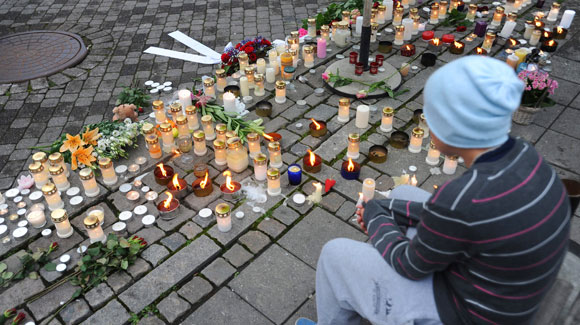
As authorities pursued the suspect’s motives, Oslo mourned the victims. Norway’s King Harald V and his wife Queen Sonja and Prime Minister Jens Stoltenberg crowded into Oslo Cathedral, where the pews were packed, and people spilled into the plaza outside. The area was strewn with flowers and candles, and people who could not fit inside the grand church huddled under umbrellas amid drizzling rain.

The king and queen both wiped tears from their eyes during the service themed on “sorrow and hope.”

Afterward, people sobbed and hugged one another in the streets. Many lingered over the flowers and candles. The royal couple and prime minister later visited the site of the bombing in Oslo. The royals then visited shooting survivors at Ringriket Hospital.

The attacker picked targets linked to Norway’s left-wing Labor Party. Breivik’s manifesto pilloried the political correctness of liberals and warned that their work would end in the colonization of Europe by Muslims.

Such fears may derive, at least in part, from the fact that Norway has grown increasingly multicultural in recent years as the prosperous Nordic nation has opened its arms to thousands of conflict refugees from Pakistan, Iraq and Somalia. The annual Labor Party retreat — which the prime minister, Stoltenberg, fondly remembers attending in his own youth — reflected the country’s changing demographics as the children of immigrants have grown increasingly involved in Labor politics.

The assaults have rattled Norway, home to the Nobel Prize for Peace and where the average policeman patrolling in the streets doesn’t carry a firearm. Norwegians pride themselves on the openness of their society and cherish the idea of free expression.

“He wanted a change in society and, from his perspective, he needed to force through a revolution,” Lippestad, the lawyer, told public broadcaster NRK. “He wished to attack society and the structure of society.”

Lippestad said Breivik spent years writing the manifesto titled “2083 – A European Declaration of Independence.” It was signed “Andrew Berwick.” The document later explained that 2083 was to be the year when European government would be overthrown en masse.

Sponheim, the police chief, said there was no indication whether Breivik had selected his targets or fired randomly on the island. The manifesto vowed revenge on those it accused of betraying Europe.

“We, the free indigenous peoples of Europe, hereby declare a pre-emptive war on all cultural Marxist/multiculturalist elites of Western Europe. … We know who you are, where you live and we are coming for you,” the document said. “We are in the process of flagging every single multculturalist traitor in Western Europe. You will be punished for your treasonous acts against Europe and Europeans.”

The use of an anglicized pseudonym could be explained by a passage in the manifesto describing the founding, in April 2002 in London, of a group he calls a new Knights Templar. The Knights Templar was a medieval order created to protect Christian pilgrims in the Holy Land after the First Crusade in the 11th century.

A 12-minute video clip posted on YouTube with the same title as the manifesto featured symbolic imagery of the Knights Templar and crusader kings as well as slides suggesting Europe is being overrun by Muslims.

Police could not confirm whether Breivik posted the video, which also featured photographs of him dressed in a formal military uniform and in a wet suit pointing an assault rifle.

The video contained a series of slides that accused left-wing politicians in Europe of allowing Muslims to overrun the continent. One image showed the BBC’s logo with the “C” changed into an Islamic crescent. Another referenced the former Soviet Union, declaring that the end result of the left’s actions would be an “EUSSR.”

In London, the leader of Ramadhan Foundation, one of Britain’s largest Muslim groups, said mosques are being extra vigilant in the wake of the attacks. Mohammed Shafiq told The AP he was talking to European Muslim leaders and British police about the need to increase security.

The last 100 pages of the manifesto apparently lay out details of Breivik’s social and personal life, including his steroid use and an intention to solicit prostitutes in the days before the attack.

Also Sunday, police carried out raids in an Oslo neighborhood seeking explosives. Police spokesman Henning Holtaas said no explosives were found and no one was arrested.

Police said the bomb used in the Oslo blast was a mixture of fertilizer and fuel similar to what home-grown U.S. terrorists used to blow up a federal building in Oklahoma City in 1995.

A farm supply store said Saturday they had alerted police that Breivik bought six metric tons of fertilizer, a popular terrorist component for car bombs.

Norway Attacks Shatter a Nation’s Innocence

By Edmund Sanders for The Los Angeles Times

After a bombing and a shooting rampage that left 93 people dead, some believe the open and trusting attitude that’s been a hallmark of the Norwegian psyche is forever lost. The prime minister tells mourners, ‘Our answer is more democracy, more openness, more humanity, but never naivete.’

Norwegians have always taken pride in their open, trusting society.

It’s a country where you might encounter the prime minister at the grocery store and offer a hug. Many police don’t carry guns and most government buildings are unprotected. Homicide is rare, with only a handful of gun-related deaths a year.

But as Otto Lovik stood Sunday on a muddy lakeshore overlooking Utoya Island and recalled how he rescued about 60 people fleeing Friday’s massacre by a gunman, the 56-year-old prison guard, still shaking from the experience, said his country must change.

“We can’t go back to being open and trusting after this,” said Lovik, who loaded his boat with so many terrified, bleeding victims that he feared it would capsize. “This is the price we must pay.”

As Norway recovers from the initial shock of the shooting rampage and earlier Oslo bombing and begins the mourning process for 93 people who were slain, many predict the nation will never be the same.

“It’s going to have a deep, long-lasting impact,” said Atle Dyregrov, director of Norway’s Center for Crisis Psychology, which has helped other countries recover from disasters such as the 2008 China earthquake and this year’s Japanese tsunami.

“Our innocence is lost,” he said. “We used to think that these things only happened in other countries, not here. Now that illusion is shattered forever.”

He predicted that Norway’s relaxed security policies and reluctance to impinge of civil rights will give way to familiar restrictions already in place in other Western nations, including limited access to government facilities and increased surveillance of suspected extremist groups. He likened the changes to Sweden’s security tightening after the 1986 assassination of Prime Minister Olof Palme.

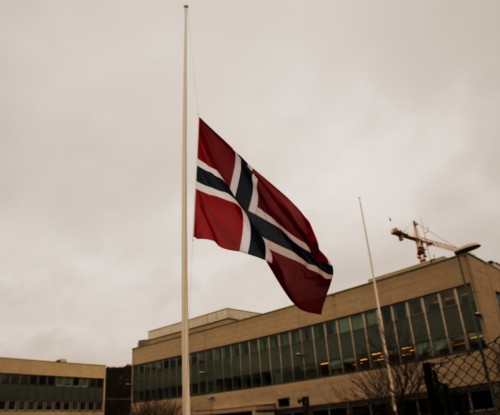
On Sunday, however, the nation’s focus was on grieving and healing. National flags throughout the capital flew at half staff.

At the ornate Oslo Domkirken cathedral in the heart of the capital, hundreds participated in a national mourning ceremony attended by the prime minister, King Harald, Queen Sonja and some of the young people who escaped the island attack. The suspect, Anders Behring Breivik, is expected to be formally charged Monday.

“A heavy darkness is now clouding our lives,” Bishop Helga Haugland Byfuglien told tearful mourners, urging them to maintain their faith in the goodness of Norway’s people and commitment toward an open society.

In an emotional address, Norwegian Prime Minister Jens Stoltenberg said Norway would not be cowed. “Our answer is more democracy, more openness, more humanity, but never naivete,” he said.

Outside the cathedral, just blocks from the site of the Friday bomb blast that killed at least eight people, well-wishers laid flowers and candles in a makeshift memorial that by nightfall was spreading into the streets.

Waiting in line to enter the cathedral to pay her respects, Oslo resident Christine Arnese, a 47-year-old nurse, stood alone with tears streaming down her cheeks.

“I think this might bring us all closer together,” she said. “It’s important that we keep our country free and open.”

But as the scale of the tragedy sunk in, fears about possible future attacks were already leading some Norwegians to call on the government to bolster security. Some said that police guards who were dispatched to government facilities in the hours after the attacks should become permanent fixtures.

Others called for tougher punishments for terrorists, complaining that estimates Breivik that would face only 21 years in prison if convicted underscores the inadequacy of current law.

“We have to do more to protect ourselves,” said Julie Groseth, who works at a small market overlooking Utoya Island in the community of Hole. She said she worried about copy-cat attacks.

“Maybe that means not being as open to other countries,” she said. “This has showed us how weak Norway is in the war against terrorism. We are not prepared.”

At one of Oslo’s main mosques, many Pakistan-born immigrants expressed apprehension about how the attacks may affect Norwegian society and its tolerance of foreigners.

“When we first heard about the attacks, we all gathered together and prayed,” said mosque official Mohamed Sulieman, who moved to Norway 35 years ago. First they prayed for the victims, he said. Then they prayed that the perpetrators would not turn out to be Islamic extremists. The country has reason enough to fear retribution from overseas extremists: Its troops serve in Afghanistan, where 10 Norwegian soldiers have been killed.

Though he said they were relieved to hear authorities describe Breivik as a home-grown terrorist who acted alone, some remain concerned that any tighter security rules or rising public anxieties might nevertheless trigger a backlash against them. At times in the past, the increasing presence of immigrants and foreigners in Norway has come under criticism from conservative parties.

“We’ve never really had a problem before,” Sulieman said. “But still, it’s in the back of our minds.”

Pakistan to Approve $1 Billion Boost for Wind Energy Production

By Ben Edwards and Haris Anwar for Bloomberg News

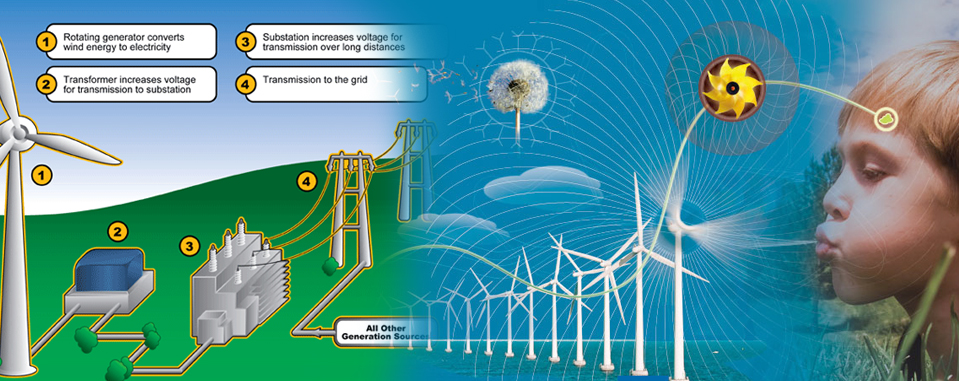
Pakistan is ready to approve a Norwegian company’s request to build a 150-megawatt wind farm, the first part of a $1 billion plan that could boost by a third the announced capacity for clean-energy power plants.

Pakistan is seeking to diversify its energy supplies away from oil and gas and boost electricity production. The nation has a power deficit of 3.6 gigawatts a day, or more than the output of two nuclear reactors, triggering 12-hour blackouts that cause riots and close factories in cities nationwide.

The Alternative Energy Development Board is willing to allow a project proposed by NBT AS, a Lysaker-based clean energy company that plans to build the facility in the Sindh province “wind corridor” north of Karachi, according to Said Arif Alauddin, chief executive of the government agency.

“They came to us saying they have got the money and relationship with the Chinese and they want to invest,” Alauddin said from the port city of Karachi. “As soon as they pay the fee, we will issue that letter to them. We will be able to give them the land if we can see they can deliver.”

Pakistan has almost 1 gigawatt of projects under construction or with financing agreed and 498.5 megawatts more of wind programs announced, according to Bloomberg New Energy Finance data. Only 6 megawatts of wind energy facilities are operating in the nation. It’s the ninth-poorest in the Asia- Pacific region with a 2009 gross domestic product per capita of $2,609, according to Bloomberg data.

Chinese Financing
NBT Chief Executive Officer Joar Viken said he plans to tap financing for his project from one of three Chinese turbine makers that his company is talking with about supplying machinery for the facilities.

“We think Pakistan is a very good environment and has a very good framework,” Viken said in a phone interview from New York. “Because we get everything in U.S. dollars, we don’t have a huge currency risk.”

Viken said NBT would issue a tender to Goldwind Science & Technology Co., Sinovel Wind Group Co. and China Energine International Holdings Ltd. (1185) to supply the turbines. Each of the companies have credit lines with the China Development Bank Corp., a state-owned lender.

“Goldwind now is actively seeking more cooperation opportunities with domestic as well as foreign wind farm developers to expand Goldwind’s presence in overseas markets,” Thomas Yao, a spokesman for the company, said in an e-mail. “Norway’s NBT AS is among the international opportunities we are currently considering.”

A spokesman for China Energine, who asked not to be named in line with company policy, said he doesn’t know about the talks and can’t comment. Officials at Sinovel couldn’t be reached.

Financing ‘Feasible’
The financing arrangements are “feasible” because the Chinese turbine makers would not develop the projects themselves, said Eduardo Tabbush, an industry analyst at Bloomberg New Energy Finance in London.

“This is something we’ve seen happening more and more,” Tabbush said.

NBT envisions developing as much as 650 megawatts of wind power in Pakistan over the next few years. It already has purchased land suitable for 50 megawatts in Sindh province and is seeking a partnership with Zulfikar Ali Bhutto Institute of Science and Technology, a university in Karachi, for land for the other 100 megawatts, Alauddin said.

Support Mechanism
Alauddin said NBT has proposed to install as much as 250 megawatts of capacity over the next two years. He said the government board is working “very hard” to provide the Norwegian company with an “upfront tariff” that would help guarantee a price for power sold from the wind farms.

The last tariff it approved was worth about 13 U.S. cents a kilowatt-hour, he said.

The board could approve an additional 500-megawatt project if NBT is able to line up funding from a Chinese partner where it has existing wind developments.

NBT already has two wind power projects working in China with AEI China Power Ltd. and China Datang Corp. Renewable Power Co., Viken said. Another is under construction, and further developments are planned.

Pakistan is seeking to derive at least 5 percent of its energy from renewable sources by 2030, the development board said in March. Last year, 53 percent came from natural gas, 30 percent from oil and the rest from coal, nuclear and hydropower, according to data from BP Plc. The London-based oil company didn’t measure any sources of renewable energy there.

The country’s electricity shortfall reaches as much as 3,628 megawatts per day, according to demand-supply data available on the ministry of power and water website.

Dig Deeper and You’ll Find the Other Oslo

By Rick Steves,Tribune Media Services

In the Norwegian capital of Oslo, a big statue of a tiger sits in front of the train station. A local once explained that Oslo is nicknamed the Tiger City because in the 19th century, when country boys visited the wild and crazy “New York City of Norway,” it made “a mark on their soul.”

I find Oslo more of a kitten than a tiger. Its mix of grand neoclassical facades, boxy 1960s-style modernism, pastoral parks and homogenous culture always have felt a bit tame for my taste. But by digging deeper, you can find more texture here, from gritty neighborhoods to troubled artists.

The city’s grand boulevard, Karl Johans Gate (street), cuts from the train station through the center of town to the Royal Palace. Lively with restaurants, parks and people, the street is lined with landmarks, including Oslo Cathedral, Parliament and Stortorvet Square, with its lively flower and produce market.

The boulevard also is the address of the Grand Cafe, once the meeting place of Oslo’s intellectual and creative elite. At the back of the cafe, a mural shows Norway’s literary and artistic clientele enjoying this fine hangout, from playwright Henrik Ibsen (who came in every day at 1 p.m.) to Edvard Munch, leaning against the window, looking drugged.

Munch is Norway’s most famous and influential painter. To see his most important work, head to the nearby National Gallery. Munch helped to pioneer a new style, expressionism, using lurid colors and bold lines to “express” inner turmoil and the angst of the modern world. His most iconic painting is The Scream, which he described as “the work of a madman.”

A few blocks down from the National Gallery is Oslo’s people-friendly harbor front, situated at the head of the 60-mile-long Oslofjord. As in many European cities, residents are reclaiming their waterfront area. In the past, you would have dodged several lanes of traffic to get to the harborfront, but now, most traffic has been diverted through tunnels under the city.

Facing the harbor, Oslo’s striking city hall is famous for hosting the Nobel Peace Prize ceremony. Completed in 1950 to celebrate the city’s 900th birthday, the building was an avant-garde thrill in its day. Entering here, I’m reminded that in this most highly taxed corner of Europe, city halls, rather than churches, are the dominant buildings. Though the state religion is Lutheranism, people rarely go to church. Instead, they seem to almost worship good government. The main hall actually feels like a temple.

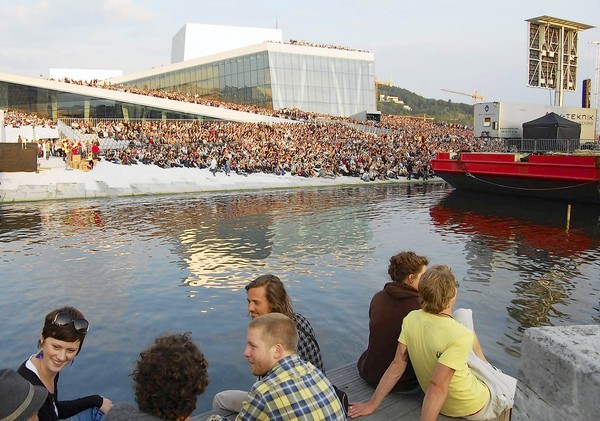
Along the eastern harbor, the marble Opera House seems to rise like an iceberg from the sea. This is the only opera house in the world that doubles as a public plaza, with a roof designed to be walked on. Opened in 2008, this cultural venue is a huge hit. On my last visit, I joined 8,000 people on the rooftop to watch a hot English group named Antony and the Johnsons (with a lead singer who looks like a cross between Meatloaf and Marilyn Manson) perform on a stage raft anchored just offshore.

In summer, Norwegians practically live outdoors. Frogner Park not only offers a great peek at Norwegians at play but also features a fine sculpture garden showcasing a lifetime of work by Norway’s greatest sculptor, Gustav Vigeland.

From 1924 to 1943, Vigeland created a world of bronze and granite statues — around 600 nude figures in all. The centerpiece is a teeming monolith of life, with 121 figures carved out of a single block of stone rocketing skyward. Like Munch, Vigeland was troubled. Those who know his life story can read it clearly in the granite and bronze, but I ignore it all and simply see his art as observations on the bittersweet cycle of life.

As much as I love Norway, goat cheese and my blond cousins, sometimes I need to inject some color into my days. At night, I head to two trendy multiethnic zones. Grunerlokka is the Greenwich Village of Oslo. A former working-class district, this neighborhood of funky shops, old hippies and bohemian cafes is a favorite of Oslo’s artsy set. Locals come here for its convivial night scene and colorful eateries.

Oslo’s rough and tumble immigrant zone is a stretch of a street called Gronland. This is where Turks, Indians, Pakistanis and the rest of Oslo’s immigrant community congregate. Colorful green grocer carts spill onto sidewalks. Various kebabs and spicy borek cost just $2 to go. Dueling tandoori restaurants offer meals for under $10, otherwise unheard of in Oslo.

I love dining street-side here. It’s cheap — and seeing a rainbow of people and a few rough edges makes the city feel less like Wonder bread. But that’s the beauty of Oslo. Just when you think you have it figured out, it gives you a taste of something different.

Rick Steves (ricksteves.com) writes European travel guidebooks and hosts travel shows on public television and public radio. E-mail him at rick@ricksteves.com and follow his Facebook blog.


U.N. Speakers Urge Pakistan to Free Up Arms Talks

By Patrick Worsnip for Reuters

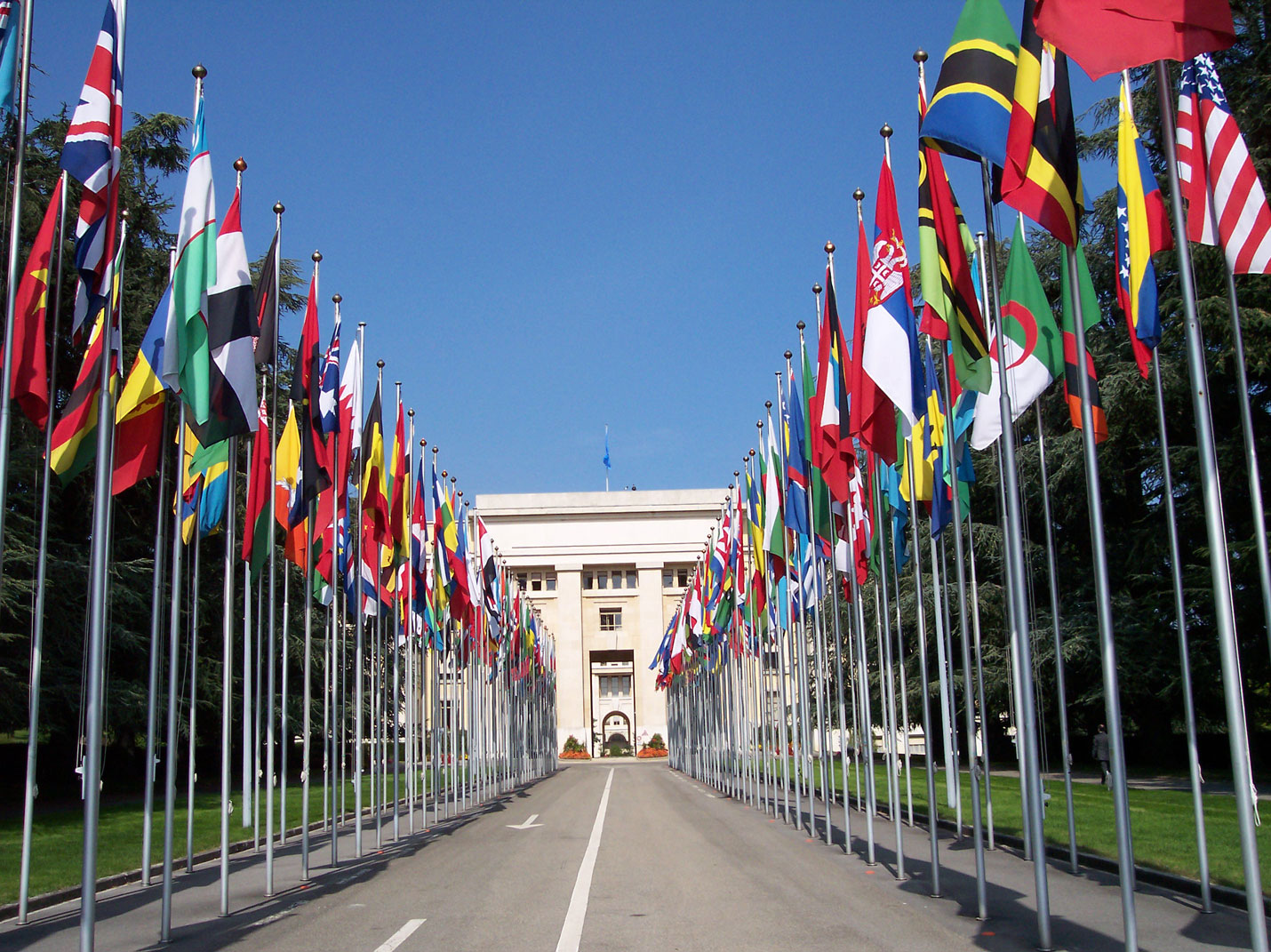
Heaping pressure on Pakistan, a high-level U.N. meeting called on Friday for talks to start immediately on a treaty to ban production of fissile material used as fuel for nuclear weapons.

But Pakistan has insisted it will continue to block such talks, arguing that a ban would put it at a permanent disadvantage to its nuclear rival India. The dispute has led to deadlock at the 65-nation Conference on Disarmament in Geneva.

At the U.N. meeting of some 70 states to discuss the paralysis at the conference, speakers avoided openly naming Pakistan, but several referred to “one country” that was causing the problem.

In a closing summary of the views expressed, U.N. Secretary-General Ban Ki-moon said there was “broad agreement on the need to immediately start negotiations on a … treaty banning the production of fissile material.”

Continued impasse could result in states going outside the Geneva conference, known as the “CD,” to tackle the issue, Ban warned.

Support has appeared to be growing in Geneva to find another approach — possibly small-group talks in parallel to CD sessions. A precedent was set when Canada and Norway moved talks on a landmine ban out of the forum, eventually clinching the landmark 1997 Ottawa Treaty.

At Friday’s U.N. meeting, Western powers sharply attacked Pakistan’s blockage of the CD, which requires consensus for its actions.

“It strikes us as unwarranted for a single country to abuse the consensus principle and thereby frustrate everyone else’s desire to resume serious disarmament efforts,” said U.S. delegate Gary Samore, a special adviser to President Barack Obama.

Washington understood that all countries needed to protect their security interests, and with that principle in place, “no country need fear the prospect of (fissile material) negotiations,” Samore said.

NO CONSENSUS

British junior foreign minister Alistair Burt said blocking the negotiations was “damaging for multilateral arms control.”

Launched in 1978, the CD has clinched treaties banning biological and chemical weapons as well as underground nuclear tests. Its members include all five official nuclear powers — the United States, Russia, Britain, France and China.

But it has been unable to reach consensus on substantive work for the past 12 years. Pakistan’s refusal since January to launch negotiations on fissile material like plutonium and highly enriched uranium is the latest obstacle.

Zamir Akram, Pakistan’s ambassador to the United Nations in Geneva, said earlier this month his country would continue to hold out, arguing that India has an unfair advantage with bigger fissile material stockpiles and “discriminatory” nuclear cooperation deals with the United States.

“Pakistan’s security concerns can be addressed only once we have developed sufficient capacity to ensure our deterrent is credible in the face of growing asymmetry,” he told Reuters. “My instructions are, ‘We continue to maintain our position.'”

Pakistan did not speak at Friday’s meeting in New York. No decisions were made, but Ban said he would ask a panel of advisers to review the issues raised.

Separately, French delegate Jacques Audibert said Paris would host a meeting of the five official nuclear powers next year to discuss their obligations stemming from a May conference on nuclear non-proliferation.

The conference called on the powers to pursue negotiations ultimately aimed at the total abolition of nuclear weapons.

3 Arrested in Norway al-Qaida Bombing Plot

By Ian Macdougall, Matt Apuzzo, and Adam Goldman for The Associated Press

Three suspected al-Qaida members were arrested Thursday for what Norwegian and U.S. officials said was a terrorist plot linked to similar plans to bomb New York’s subway and blow up a shopping mall in England.

Officials believe the men were planning attacks with portable but powerful bombs like the ones at the heart of last year’s failed suicide attack in the New York City subway, an attack U.S. Attorney General Eric Holder has called one of the most serious plots since 9/11. On Wednesday, U.S. prosecutors revealed the existence of a related plot in Manchester, England.

The plots underscore al-Qaida’s interest in smaller-level attacks that don’t require the intricate planning and coordination of the Sept. 11, 2001 attacks in which airplanes were hijacked and flown into the World Trade Center towers in New York City and the Pentagon in Arlington, Va. And they follow a trend in which the terrorist group has used operatives inside potential target countries, rather than trying to sneak people across increasingly secure borders.

The three men, whose names were not released, had been under surveillance for more than a year. Two were arrested in Norway and one in Germany. Officials would not say what country or site was the target of the latest terror threat, or even whether they believed the men had selected a target.

Those arrested in Norway included a 39-year-old Norwegian of Uighur origin who has lived in the country since 1999 and a 31-year-old citizen of Uzbekistan who had a permanent Norwegian residency permit, said Janne Kristiansen, head of Norway’s Police Security Service. The man arrested in Germany was a 37-year-old Iraqi with a Norwegian residency permit, Kristiansen said.

She did not say exactly where the arrests took place but said all three men “had connections to Oslo.”

Norwegian and U.S. officials believe the Norway plan was organized by Salah al-Somali, al-Qaida’s former chief of external operations who is in charge of plotting attacks worldwide. Al-Qaida usually keeps its plots compartmentalized, and officials do not believe the suspects in Norway knew about the other plots. The officials spoke on condition of anonymity because they were not authorized to discuss the case.

Al-Somali, who was killed in a CIA drone airstrike last year, has been identified in U.S. court documents as one of the masterminds of the New York subway plot. Two men have pleaded guilty in that case, admitting they planned to detonate explosives during rush hour. A third man awaits trial.

Officials said the men were attempting to make peroxide bombs, the powerful homemade explosives that prosecutors say were attempted in both New York and England. Norwegian and U.S. officials said it was unclear whether the men ever perfected the recipe for the bomb and said investigators had contained the plot.

“According to our evaluation, the public has never been at risk,” Kristiansen said.

The Associated Press learned of the investigation in recent weeks and approached U.S. and Norwegian officials. Authorities told the AP that reporting on the case could jeopardize public safety and allow dangerous suspects to go free. The AP agreed not to report on the investigation until arrests were made.

“AP’s knowledge of the case was only one of several factors that was taken into consideration when deciding on the timing of the arrests,” Police Security Service spokesman Trond Hugubakken said. “It was not the decisive factor.”

U.S. and Norwegian counterterrorism officials worked closely together to unravel the Norwegian plot, officials said. Kristiansen traveled to the U.S. this spring to discuss the closely held intelligence gathered in the case.

Norwegian Prime Minister Jens Stoltenberg urged Norwegians not to judge large groups of people because of the arrests.

“These are separate individuals that are responsible for criminal acts,” Stoltenberg said. “It is always bad to judge a whole group of people from what individuals are doing and that is independently of what group these people belong to.”

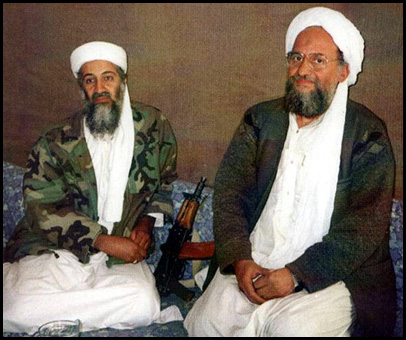
Even though it was not clear if Norway was a target, Al-Qaida’s No. 2 leader, Ayman al-Zawahri, has called for attacks on Norway, among other countries.

Magnus Norell, a terrorism expert at the Swedish Defense Research Agency, said Norway’s 500 troops in Afghanistan could be a factor, as could the 2006 controversy sparked by a Danish newspaper’s publication of 12 cartoons depicting the Prophet Muhammad.

Norell said the controversy has extended to neighboring Norway and Sweden after newspapers there republished the cartoons and later published similar cartoons. Images of Muhammad, even favorable ones, are considered blasphemous by many Muslims.

British police and security officials have never provided details of the alleged target of the purported English plot, but said it was likely focused on a major shopping center in northern England. Media speculation centered on Manchester’s Arndale shopping center.

A judge said last year the gang was plotting a “mass casualty” attack in northern England.