Posts Tagged ‘ England ’

Pakistan Are Over Here But Thinking About Home

By Stephen Brenkley for The Independent

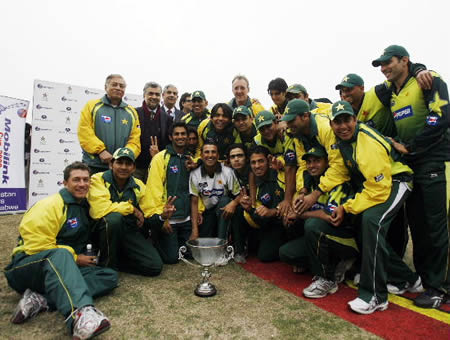
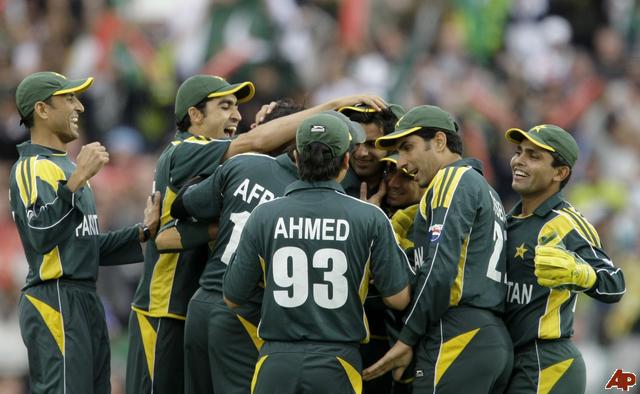
Pakistan are here to win. Anybody who thought that they were in England this summer to make up the numbers, licking their wounds, grateful to be given a temporary home, would be misguided. 

They may indeed be the refugees of world cricket, unable to play in their own country because teams refuse to go there, but they will be nobody’s fools. It is the most bizarre of tours they have embarked on. Starting on Tuesday at Lord’s, they play the first of two Tests against Australia, which will be considered as home matches.

 They then play four Tests against England in which they will be the touring side. Such have been the ramifications of the terrorist activities at home. Pakistan have been forced to play where they can. “It’s a big tour. It’s not easy to get hold of 17 boys, a lot on their first tour here, and I don’t think we have ever played six Test matches in two months,” said Yawar Saeed, their wise, veteran manager.

 “We have a young side here and it was important to keep them together. There is plenty of talent in this team. The one sitting there, Umar Akmal, is just a bundle of talent, God is so kind to him. I have told him, if he doesn’t use his talent I will beat him one of these days. I see him as a future Vivian Richards. Look at his confidence at his age and look at the way he’s playing. He’s a very good kid and I’m trying to help him and the left-arm fast bowler, [Mohammad] Aamer, who’s only 18 and can also do great things.”

There is, of course, no physical intent by Yawar towards the precocious Umar, he merely makes the point to reinforce his desire not to waste his gifts. There has been precious little sign of that so far.

Yawar is on his 26th or 27th tour – he really has lost count – as manager. At 75, he thought he had unpacked for the last time but with the shifting of officials yet again in the Pakistan Cricket Board he has returned as a safe pair of hands. He is an Anglophile who was educated at Millfield, played for Somerset for three seasons in the mid-Fifties and whose father, Mohammad Saeed, was the first captain of Pakistan post-partition and pre-Tests.

At the core of the thinking of those who run cricket in Pakistan is the day when they can play at home again. Somehow, cricket is being sustained despite the lack of international competition but Yawar and the PCB hierarchy know that cannot last while understanding the virtual boycott.

The memory is still raw of the Sri Lanka team being attacked on the way to a Test in Lahore last year. Yawar and the Pakistan team were in a coach 40 yards behind. “The whole thing is dependent on the conditions and security within the country,” he said. “You have to ask: Yawar, if you were an Australian or an Englishman, would you go there? It’s very difficult, I don’t blame any of the people who are hesitant to come there. But all I can say is it’s not as bad as it looks from here. I’m not saying it’s perfect.”

Pakistan have taken a big risk by appointing as captain Shahid Afridi, who has been in regular trouble for ill-discipline. He has not so far shown diplomatic tendencies when they may be needed. In England four years ago, Pakistan’s tour was almost derailed when the Fourth Test was abandoned amid allegations of ball-tampering.

On the tour of Australia last winter, disharmony led to a whitewash and a series of disciplinary actions later on. Shahid himself was penalised for being spotted biting a ball. “We had problems about the captain,” said Yawar. “I can see in Shahid the one who can get them all together, mould them into one team. People who matter have had a chat with Shahid. I am very confident he’s going to be OK. Even this ball-biting thing, it’s just that he’s so keen, he’s keen to win like a lot of people, so he does lose control at times. I don’t think he will as captain.”

So to Australia on Tuesday. “Playing Australia you have got to be mentally tough. That’s where I’m working on them. I have seen Australia play, I have seen these boys play, I know their psyche. I can’t say that overnight we will become X, Y, Z, but you will see a graph going up by the Test match.”

But nobody in Pakistan will rest until the next touring team arrives to play this attractive, gifted young team. “It has to be reintroduced. I can’t put a date on it but I think that something should happen within the next three or four years. I would love to see cricket being played in Pakistan again. Before I say goodbye to this world, I would love to see that.”


“This Passport is valid for all the countries of the World, except Israel”

By Junaid Ghumman for Mideast Youth
The world Zionist movement should not be neglectful of the dangers of Pakistan to it. And Pakistan now should be its first target, for this ideological State is a threat to our existence. And Pakistan, the whole of it, hates the Jews and loves the Arabs. This lover of the Arabs is more dangerous to us than the Arabs themselves. For that matter, it is most essential for the world Zionism that it should now take immediate steps against Pakistan.” Ben-Gurion, the Prime Minister of Israel.

This speech was first published in Jewish Chronicles on 9th August 1967. This statement risen many controversies bloggers like me have quoted it many times; various explanations were also given to disprove this statement, but still we read it on every article related to Pakistan and Israel.

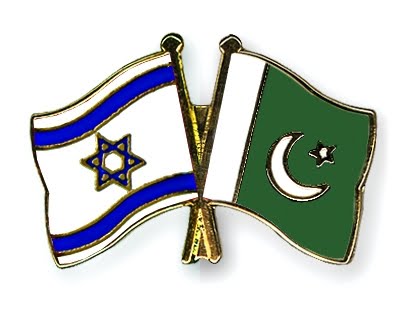
Pakistan and Israel do share some history and ideology. These are only two countries in the world created in the name of Religion; Pakistan for Islam, Israel for Judaism and both countries have taken independence from same British Empire after World War II.

Then why my passport still says, “This Passport is valid for all the countries of the World, except Israel”?

Pakistan claimed its independence from foreign invaders after two centuries of struggle. In 1757 after Battle of Plessey, East India Company started ruling Indian Sub-continent. The first armed resistance was Battle of Independence in 1857 after which the power was transferred to British government. In 1885 the political movement of independence started as Indian National Congress. Some of the Muslim leaders soon separated and launched new movement in 1906 as All India Muslim League for separate Muslim state which led to the creation of independent Islamic state Pakistan on 14th August 1947, which then became Islamic Republic of Pakistan in 1973.

For Israel the timings was same and the rulers were also same as of Indian sub-continents, but events and circumstances were totally different. Israel declared its independence on 14th May 1948 from British Mandate of Palestine. But Israel independence movement was not against British Occupation; rather it was a movement of creating a Jewish State by silently invading the markets, trades and areas to make Jewish settlements. Hovevei Zion or Hibbat Zion refers to organizations that are considered the foundations of the modern Zionist movement. These movements led to creation of Rishon LeZion in 1882 which is the first Jewish settlement in Palestine; which was at that time under Ottoman Empire. First Zionist Congress held in 1897 started the unified Zionist Movement which was converted to World Zionist Organization in 1960. This movement was successful in legalizing its demand of separate Jewish state in Palestine after Balfour Declaration 1917, in which British Mandate of Palestine’s (1917 – 1948) foreign Secretary Arthur James Balfour wrote letter to the leader of British Jewish Community Baron Rothschild, pledging British Empire support of creation of Jewish State in Palestinian Land.

So what kind of relationship does Pakistan and Israel has over period of 60 years?

While writing this blog I also tried to ask couple Pakistanis; their view points about Pakistan-Israel Relationship. Yousaf is Pakistani Engineer living and working in Saudi Arabia. Being in the region, Pakistanis here are emotionally and regionally attached to Middle East crisis. I asked him what kind of relationship both countries have. “Relationship between Pakistan and Israel are tied to the fact that how Israel government treats the Palestinians. In general, as Jerusalem is considered as one of the holiest places in Islam; this fact serves as a thorn in the eyes of Pakistanis.” Yousaf said.

Pakistan is among those 20 UN member nations which do not recognize Israel as an independent state. These 20 countries also include Afghanistan, Algeria, Bahrain, Bangladesh, Chad, Cuba, Indonesia, Iran, Iraq, Kuwait, Lebanon, Libya, Malaysia, North Korea, Saudi Arabia, Sudan, Syria, United Arab Emirates and Yemen. Unofficial media reports say that first Prime Minister of Israel David Ben-Gurion send secret message to Muhammad Ali Jinnah to formally accept its existence, but no response was given back to him. At the time of independence of Pakistan, it was reported that some 2,000 Jews remained in Pakistan, mostly Bene Yisrale Jews. Many left to Israel after its declaration of independence. Jews from Karachi, Pakistan, now live in Ramla, Israel, and they also built a synagogue they named Magen Shalome after the Pakistani Synagogue which was demolished in 1980.

60s, 70s and beginning of 80s were the decades when for the first time both countries came face to face when Arab-Israel war started. In “Six-day Arab Israeli War” of 1967; Royal Jordanian Air Force (RJAF) and Pakistan Air Force (PAF) were flying under a joint command. PAF pilot Flt. Lt. Saiful Azam became the only pilot from the Arab side to have shot down 3 IDF/AF aircraft within 72 hours.

In 1973 Arab-Israeli Yom Kippur War, 16 PAF pilots volunteered to support Syria and Egypt. On 23 October 1973 Flt. Lt. M. Hatif shot down the Israeli Phantom. On 26 April 1974, PAF pilot Flt. Lt. A. Sattar Alvi became the first Pakistani pilot, during the Yom Kippur War; to shoot down an Israeli Mirage in air combat. He was honoured by the Syrian government. Nur Khan, who was the Wing Commander received praised from Israeli President Ezer Weizman who wrote in his autobiography that: “He was a formidable fellow and I was glad that he was Pakistani and not Egyptian”. Pakistan also sent medical ambulances to Egypt and Syria.

After the Israeli attack on Iraq’s under-construction French-built nuclear Osirak-type reactor, Tammuz-I, south of Baghdad on 7 June 1981, Pakistan’s then President President Zia-ul-Haq directed PAF Air Headquarters (AHQ) to make contingency plans for a possible Israeli attack on Kahuta. Kahuta is noted for its nuclear research studies and nuclear development technologies in Kahuta Research Laboratories. On 10 July 1982, a special contingency plan was issued. In the event of an Israeli attack on Pakistan’s strategic installations, plans were drawn up for a retaliatory Pakistani strike on Negev Nuclear Research Centre. The Negev Nuclear Research Centre is an Israeli nuclear installation located in the Negev desert, about thirteen kilometres to the south-east of the city of Dimona.

On political level many statements were given. As chair of the Second Islamic Summit in 1974, then Pakistan’s Prime Minister Zulfiqar Ali Bhutto said: “To Jews as Jews we bear no malice; to Jews as Zionists, intoxicated with their militarism and reeking with technological arrogance, we refuse to be hospitable.”

In of his speeches in National Assembly of Pakistan, before Zulfiqar Ali Bhutto was hanged in 1979, he said, “Mr. Speaker Sir! This is not Desi (local) conspiracy, it’s an international conspiracy. Let me make it quite clear for the history, whatever the future and fate of this individual will be; that doesn’t matter, but let me tell you again this is not a desi (local) conspiracy, this is not PNA conspiracy, this is massive, huge and colossal international conspiracy against the Islamic State of Pakistan.” (PNA was Pakistan National Alliance against the ruling Pakistan Peoples Party). Nowadays people like to refer this international controversy as Zionist or Israeli Conspiracy.

A controversial book was published in 2003, named Charlie’s Wilson war which conspire about use of Israeli weapons supplied to General Zia ul Haq to fight Soviets in Afghanistan (1979 – 1989). Famous Hollywood movie Charlie’s Wilson War was also released in 2007. After that the back door politics started between Pakistan and Israel.

The President of Pakistan General Zia ul Haq was assassinated in plane crash on 17 August 1988. Among the conspiracy theories; Mossad (Israeli Intelligence Agency) involvement is also believed to exist. In the fall 2005 World Policy Journal, John Gunther Dean, a former US ambassador to India, blamed the Mossad for orchestrating Zia’s assassination in retaliation for Pakistan developing a nuclear weapon to counteract India and Israel.

Ali is my friend living in Middle East. I asked him, can there ever be any friendship or peace between Pakistan and Israel, to which he replied, “Yes there can be, Israel is a small country with a group of people belonging to a group of faith. And also it is in its interest that it should be at peace with every country, and especially those countries that it feels can threaten its existence.”

It is believed that, at the time of Benazir Bhutto’s Government both countries had very strong relationship especially in countering terrorism. In 1993 Benazir Bhutto, along with her then-Director-General of Military Operations, Pervez Musharraf, intensified the ISI’s liaison with Mossad in 1993, and she too began to cultivate the American Jewish lobby. Bhutto is said to have had a secret meeting in New York with a senior Israeli diplomat, who flew to the U.S. during her visit to Washington, D.C. in 1995.

In 1996, Pakistan’s Intelligence Agency, FIA, started a secret war against Extremist in Pakistan under Rehman Malik. According to sources, FIA also contacted Israeli intelligence agency Mossad to help and send its officers to investigate the extremism. Even after these strong ties, controversies never left the scenario. Benazir Bhutto was assassinated on 27 December 2007 in one political rally. This was considered to be typical Mossad Assassination style. It is believed that she was the one knowing the reality of 9/11 being inside job and death of Osama Bin Laden, which she also publicly stated in David Frost TV program. That program was edited before telecasting. But Jewish Journals and Media still believed in the opposite way. According to Jewish media, Miss Bhutto asked for Mossad help to protect her on her return to Pakistan as she was afraid she will be killed.

In 1998 Pakistan and Israel were again on the verge of war. On 27 May 1998, day before Pakistan conducted its nuclear test in Chaghi, Southern Province of Baluchistan, Pakistan; unidentified F-16 was found hovering around skies on border areas of Pakistan. Pakistan Air Force; taking is as repetition of Israeli Conspiracy similar to 1981, Air Bourne its fighters to foil any attack. But Pakistan and Israeli UN delegation met in UN soon after Pakistan Nuclear tests in 1998 to give assurance that Pakistan will not transfer its technologies to Iran, the arch enemy of Israel.

Musharraf’s nine years of rule was also golden times for both countries. In 2003, General Pervaiz Musharraf said on television interview, “Mainly Muslim Pakistan must seriously take up the issue of recognizing Israel and avoid dealing with it on emotional grounds”. This statement gave birth to local opposition, esp. among Religious Parties in Pakistan. “Jerusalem is not just an Arab issue, it is linked to the faith of every Muslim” said Qazi Hussain Ahmed, chief of Jamaat-i-Islami Pakistan, the largest and oldest religious political party. “Presenting Palestine as a sole Arab issue is a heinous conspiracy of the imperialists and colonists aimed at disintegrating the Muslims and shattering the concept of Muslim unity. It is for the same reason the colonist forces are trying to portray every Muslim issue as regional or bilateral” said Qazi.

In 2005 Pakistani Foreign Minister Khurshid Kasuri and his Israeli counterpart Silvan Shalom met in Istanbul after Israel withdrew its forces from Gaza, Palestine hoping to start peace talks. However, following the meeting Musharraf said, “Pakistan will not recognize the state of Israel until an independent Palestinian state is established”.

An unofficial Pakistan-Israel Peace Forum was created the next day of the meeting. It was created by 3 friends Waleed Ziad (Pakistan), Dror Topf (Israel), and Michael Berenhaus (US), all currently based in Washington, DC. This forum was an unsuccessful attempt to lobby in UN, US, Israel and Pakistani political establishments, hoping that Pakistani might accept Israel as independent legal state.

Pakistan and Israel are also secretly involved in Weapons and Arms Development Race. Close ties between India and Israel, and arms business between them forces Pakistan to keep an eye on Israel’s weapons industry. Like for example; Pakistan Ordinance Factory (POF) developed POF Eye Gun and exhibited in 2008 to counter the Israeli made Cornershot Rifle which is also known as Jews Gun in Arab World.

Shall Pakistan recognize Israel as an independent state to which Yousaf and Ali shared the same answer, “Pakistan should only consider recognizing Israel if it gives an independent state to the Palestinians with Jerusalem at its capital. And completely cut off itself from the internal affairs of that state, only then Pakistan should even start to consider recognizing them.”

I thought why not to ask some of Palestinians who have been living in exile for almost six decades. Abdul-Rahman is originally from Nabulus, West Bank and Qasim is from Gaza. I asked them what role Pakistan can play any role in solving Middle East Crisis, to which Abdul Rahman replied, “May be or may be not. Pakistan has its own problems with India, in Kashmir and in Afghanistan.” And Qasim said, “Pakistan cannot play any role especially with the current government which is only thinking of business but not Islam or Muslims.” Which actually hit me hard but truth is truth. On inquiring the Pakistan’s nuclear threat to Israel, Abdul Rahman said, “Israelis are even scared of stones so obviously Israel want end to Pakistan’s Nuclear technology, the Islamic Bomb.” But Qasim stuck to his same point, “If Pakistani government wants it can use nuclear technology against Israel, not in war or something but also to play politics.” Then in the end I asked, shall Pakistan Recognize Israel as independent country. Both of them came up with different and interesting answers. Abdul Rahman said, “There is should be a procedure of acceptance. Israel should balance the power and control of every city between themselves and Palestinians, then Pakistan can recognize Israel.” Whereas Qasim said, “Pakistan should recognize Israel. Sitting outside and ending any communication will not resolve the Middle East problem. We need to enter the region to solve the problem and if Pakistan wants it can do that by taking first step of recognizing Israel.”

It was interesting journey going through all the historic events which Pakistan and Israel share and knowing different ideas and opinions. All these events which I have mentioned above, cannot be confirmed from any credible or authentic source as all this happened back stage, behind the camera. But whatever governments’ relationship may be it is true that people of Pakistan still want to call every conspiracy as Zionist conspiracy and this will keep on going until some peaceful solution is devised to Middle East crisis between Muslim Palestinians and Jewish Israelis
3 Arrested in Norway al-Qaida Bombing Plot

By Ian Macdougall, Matt Apuzzo, and Adam Goldman for The Associated Press

Three suspected al-Qaida members were arrested Thursday for what Norwegian and U.S. officials said was a terrorist plot linked to similar plans to bomb New York’s subway and blow up a shopping mall in England.

Officials believe the men were planning attacks with portable but powerful bombs like the ones at the heart of last year’s failed suicide attack in the New York City subway, an attack U.S. Attorney General Eric Holder has called one of the most serious plots since 9/11. On Wednesday, U.S. prosecutors revealed the existence of a related plot in Manchester, England.

The plots underscore al-Qaida’s interest in smaller-level attacks that don’t require the intricate planning and coordination of the Sept. 11, 2001 attacks in which airplanes were hijacked and flown into the World Trade Center towers in New York City and the Pentagon in Arlington, Va. And they follow a trend in which the terrorist group has used operatives inside potential target countries, rather than trying to sneak people across increasingly secure borders.

The three men, whose names were not released, had been under surveillance for more than a year. Two were arrested in Norway and one in Germany. Officials would not say what country or site was the target of the latest terror threat, or even whether they believed the men had selected a target.

Those arrested in Norway included a 39-year-old Norwegian of Uighur origin who has lived in the country since 1999 and a 31-year-old citizen of Uzbekistan who had a permanent Norwegian residency permit, said Janne Kristiansen, head of Norway’s Police Security Service. The man arrested in Germany was a 37-year-old Iraqi with a Norwegian residency permit, Kristiansen said.

She did not say exactly where the arrests took place but said all three men “had connections to Oslo.”

Norwegian and U.S. officials believe the Norway plan was organized by Salah al-Somali, al-Qaida’s former chief of external operations who is in charge of plotting attacks worldwide. Al-Qaida usually keeps its plots compartmentalized, and officials do not believe the suspects in Norway knew about the other plots. The officials spoke on condition of anonymity because they were not authorized to discuss the case.

Al-Somali, who was killed in a CIA drone airstrike last year, has been identified in U.S. court documents as one of the masterminds of the New York subway plot. Two men have pleaded guilty in that case, admitting they planned to detonate explosives during rush hour. A third man awaits trial.

Officials said the men were attempting to make peroxide bombs, the powerful homemade explosives that prosecutors say were attempted in both New York and England. Norwegian and U.S. officials said it was unclear whether the men ever perfected the recipe for the bomb and said investigators had contained the plot.

“According to our evaluation, the public has never been at risk,” Kristiansen said.

The Associated Press learned of the investigation in recent weeks and approached U.S. and Norwegian officials. Authorities told the AP that reporting on the case could jeopardize public safety and allow dangerous suspects to go free. The AP agreed not to report on the investigation until arrests were made.

“AP’s knowledge of the case was only one of several factors that was taken into consideration when deciding on the timing of the arrests,” Police Security Service spokesman Trond Hugubakken said. “It was not the decisive factor.”

U.S. and Norwegian counterterrorism officials worked closely together to unravel the Norwegian plot, officials said. Kristiansen traveled to the U.S. this spring to discuss the closely held intelligence gathered in the case.

Norwegian Prime Minister Jens Stoltenberg urged Norwegians not to judge large groups of people because of the arrests.

“These are separate individuals that are responsible for criminal acts,” Stoltenberg said. “It is always bad to judge a whole group of people from what individuals are doing and that is independently of what group these people belong to.”

Even though it was not clear if Norway was a target, Al-Qaida’s No. 2 leader, Ayman al-Zawahri, has called for attacks on Norway, among other countries.

Magnus Norell, a terrorism expert at the Swedish Defense Research Agency, said Norway’s 500 troops in Afghanistan could be a factor, as could the 2006 controversy sparked by a Danish newspaper’s publication of 12 cartoons depicting the Prophet Muhammad.

Norell said the controversy has extended to neighboring Norway and Sweden after newspapers there republished the cartoons and later published similar cartoons. Images of Muhammad, even favorable ones, are considered blasphemous by many Muslims.

British police and security officials have never provided details of the alleged target of the purported English plot, but said it was likely focused on a major shopping center in northern England. Media speculation centered on Manchester’s Arndale shopping center.

A judge said last year the gang was plotting a “mass casualty” attack in northern England.

World Cup 2010: Football’s India vs Pakistan

By Paul Beckett for The Wall Street Journal

It is standard for newspapers, including ours, to include the following sentence in almost any story about India and Pakistan: The two countries have fought three wars since Independence in 1947. You do not read the same about England and Germany: The two countries have fought two World Wars since 1914. Except at times like this.

For a series of reasons, part historical part psychological, there may be no match up in soccer that is quite equivalent to England versus Germany. Not for the quality of the football although Germany last night ran over England at the FIFA World Cup 2010 with some of the best football of the tournament so far, winning 4-1. Germany now advances to the quarter finals.

Nor does the significance of the game come from the fervor of football in each country. Yes, both are football crazy but there are plenty of countries that take football as seriously, if not more so, as these two do.

But there may be no bigger game when it comes to two nations who view each other as former enemies, now allies and rivals. Indeed, it is hard to imagine any other sporting event where two major nations weave so much national drama into men running around on grass, with the possible exception of when India and Pakistan play at cricket.

Why is this so?

India and Pakistan may have been separated at birth, but England and Germany have their own shared attributes (which certainly don’t get any attention at times like this): They are both northern, beer-drinking, sausage-eating nations; Britain’s current monarchy, the House of Windsor, has German origins; they may be more alike as nations than England is when compared with any nation outside the British Isles (just don;t tell the English.)

Of course, the situations have as many similarities as they do differences. England and Germany are friendly nations (despite what you read in the British press at times like this) bound together by the European Union and NATO. “It is high time to forget (World War II),” said Germany coach Joachim Loew, according to the Associated Press. “This is year 2010, we are all in the EU and it’s highly inappropriate to raise this subject.”

India and Pakistan, meanwhile, are caught in a diplomatic netherworld between war and peace that only now is showing signs of some thaw.

England and Germany, overall, have prospered in the past few decades, even if Germany’s industrial might means its economy has eclipsed that of the U.K.; India has prospered while Pakistan has struggled as the two nations took dramatically different courses, politically and economically, post Independence.

Yet there are times when sport comes to represent something that defines relations, seizes national imaginations and confirms dearly-held stereotypes, and that is the case with England versus Germany at football and India versus Pakistan at cricket.

It is not that the fans of either team hate the fans of the other (despite what you read in the British press at times like this.) It is a strange mix of respect, rivalry, historic ties, insecurities, bluster, hope, fear and a desire to read deeper meaning in a game of football that makes these games so compelling.

It is a time when entire nations stop to watch. When everything else is eclipsed in favor of one game and people want to think they are watching something that will go down in the history books, a marker of where they were when.

“It’s insane, the roads are completely empty here right now,” an Indian friend said in a text from London before yesterday’s kick-off. When Miroslav Klose in the 20th minute pierced a sloppy England defense to score, he followed with: “And the pub goes quiet.”

England also got the required controversial referee’s decision that will let it, as a nation, worry over its beads for years: a shot by Frank Lampard that clearly bounced over the line but which was not allowed as a goal.

That would have equalized the game at 2-2 and who knows what would have happened next, mate, it would have done the England team no end of good mate, you hear what I’m saying, it’s all about the psychology and that was devastating for the lads, just devastating wasn’t it and I’m not saying that Germany didn’t outplay them, mate, but you’re never gonna win when the ref’s an #%^& and mine’s a pint of lager.

“Fabio’s flops are battered in Bloemfontein,” said The Sun, a reference to English manager Fabio Capello. The headline ran on top of a picture of Frank Lampard realizing he hadn’t scored. “Three Lions Muller-ed by Germans…and the Ref,” said The Mirror, a reference to Thomas Muller, who scored goals three and four for Germany and the referee. Imagine an umpiring decision that incorrectly dismisssed Sachin Tendulkar from the crease against Pakistan.

This was a matchup that probably carried greater weight for England than for Germany, even before the opening whistle. Germany has had the better of England in big tournaments in the last several years. Germany also took a famously young side to these World Cup finals; many of them will return four years from now.

Not so England. Only are handful – and not including Steven Gerrard, John Terry, or Mr. Lampard – are likely to have a shot at Brazil 2014.

And now England can sink into its other national sport: getting depressed over the underperformance of its football team. As my friend in London texted: “All you hear is the german girl laughing. Totally quiet otherwise. This is amazing.” Not long after, he added: “This really tortured drunk guy screamed at Rooney at that last corner. And then put his head in his hands. Awesome.”