Posts Tagged ‘ Google ’

Google Celebrates Pakistan’s Independence Day

By Sanain for Allvoices
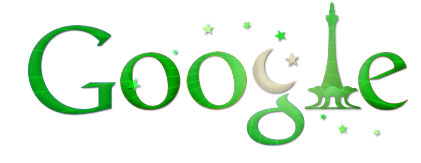
For the very first time in the history of Google, a Google Doodle has been especially designed for Pakistan, on their 64th Independence Day. Google has put a green-colored doodle representing the color of Pakistan’s national flag on the Pakistani Google homepage.

The doodle is an absolute eye-catcher. The “l” of Google is replaced by “Minar-e-Pakistan”, which is the National Tower of Pakistan in Lahore. The upper half of the “g” is replaced by “A Crescent and a Star”, which represents an important part of Pakistan’s national flag. There can also be seen small-colored stars around the logo.

Pakistan’s Independence Day is observed every year on August 14, the day Pakistan was made an independent country based on borderlines created by the British towards the end of their rule of India. On this special day, Pakistan, in 1947, became an independent country and also the largest Muslim country of Asia.

The day is a national holiday in Pakistan. Main events of the day include flag raising ceremonies, tributes to national heroes, fireworks taking place in Islamabad, the capital of the country, changing of the guards at the mausoleum of Mohammed Ali Jinnah (Mazar-e-Quaid), Wagah Border ceremonies, patriotic fashion shows and musical concerts.

On its Independence Day, Pakistan also releases some prisoners who were arrested for illegally crossing into Pakistan from the neighboring and archrival country, India.

The main celebrations take place in Islamabad, where the president and prime minister raise the national flag at the presidential and parliament buildings and deliver speeches to the people of Pakistan. These speeches basically highlight the achievements of the government, goals set for the future and in the words of the father of the nation, Quaid-e-Azam Muhammad Ali Jinnah, bring “Unity, Faith and Discipline” to its people.
The credit for Pakistan’s independence goes to their famous leader, Muhammad Ali Jinnah, also known as the Quaid-e-Azam. His unparallel struggle and endeavors made it possible for Muslims of the Indian subcontinent to get a country for themselves.

The struggle for Pakistan’s independence has a background behind it. Pakistan was achieved to establish a Muslim country, which would prove as an example of piety, fair play and unity for the rest of the Muslim brotherhood.

It should be noted that last year, Pakistani government did not celebrate the Independence Day to show solidarity and moral support with the people affected by floods in 2010.
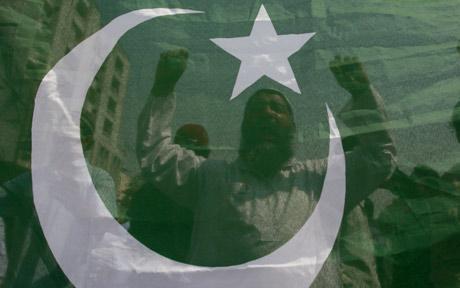
Pakistan Set to Ban More Web Blasphemy and Monitor Yahoo!, Google, Amazon, Bing…

By Rik Myslewski for The Register

Pakistan announced Friday that it will monitor Yahoo, Google, MSN, Hotmail, YouTube, Amazon, and Bing, and will block links and content that it deems anti-Islamic.

“If any particular link with offensive content appears on these websites, the [link] shall be blocked immediately without disturbing the main website,” Pakistan Telecommunication Authority spokesman Khurram Mehran told the Associated Press.

In addition to the link-blockage of the seven named high-traffic sites, Pakistan web-watchers have also completely blocked 17 lesser sites, including, for example, Islam Exposed, which includes links to blaspheming articles such as “Muhammad, A Symbol Of Terrorism” along with over-the-top posts such as “Joe Lieberman Spews Excrement!”.

The monitoring and blockage comes in response to a court order, as did Pakistan’s recent ban on Facebook due to its hosting of an “Everybody Draw Mohammed Day” page — a page that was subsequently taken down, although Facebook officials claimed to have had no part in its removal.

The complete banning of Facebook was lifted after censorship official Najibullah Malik was satisfied that the site had lifted all all “sacrilegious material”.

In addition to the Facebook ban, Pakistan last month blocked, then unblocked YouTube for depictions of the prophet Muhammad, a practice that many Muslims find blasphemous.

“We decided that this kind of information was going to hurt people’s feelings. We have directed the [Pakistan Telecommunications Authority] to block all and any sites that display those caricatures,” Malik told The Guardian at the time of the YouTube ban.

The Guardian, reporting on internal controversy surrounding the YouTube ban, quoted one Pakistani tweeter as tweeting: “Way to go assholes. Why don’t you just cut us off from the internet and get it over and done with.”

Despite lifting the Facebook and YouTube bans, Pakistan hasn’t given up its censorship efforts. “At least 800 individual web pages and URLs have been blocked since the government’s orders to shut Facebook and YouTube,” Wahaj us Siraj, a spokesman for the Internet Service Providers Association of Pakistan (ISPAK), told AFP.

In perhaps the most bizarre development in the country’s campaign to remove blasphemy from its interwebs, Pakistan’s Deputy Attorney General recently launched a criminal investigation against Facebook founder and CEO Mark Zuckerberg for his role in the “Everybody Draw Mohammed Day” dust-up.

Although no charges have been filed in the case, the Pakistani newspaper The News International reports that the law that prompted the Zuckerberg investigation, Section 295-C of the penal code, carries with it penalties of “death, or imprisonment for life”.

Not all Pakistanis, of course, are in support of their government’s draconian crackdown on what Section 295-C refers to as “Use of derogatory remark etc, in respect of the Holy Prophet … either spoken or written, or by visible representation, or by any imputation, innuendo, or insinuation, directly or indirectly.”

“It’s absurd,” journalist and filmmaker Hasan Zaidi told The Guardian. “They haven’t thought this through. The logical conclusion is that we should shut our eyes, stick our fingers in our ears and ban the entire internet, even email.”

Nadeem Paracha of Pakistan’s Dawn news service wrote in his “Smokers’ Corner” column: “By continuing to tolerate a psychotic faith-based fringe for so long, we have actually helped it metamorphose into an unrestrained monster that has zero tolerance for what we think or do.” The problem, Paracha told The Guardian, is that “Anything to do with Allah, or the prophet, and everyone keeps quiet.”

And it must also be noted that the more extreme members of the Muslim world aren’t alone in taking angry offense at what they perceive as “blasphemy”. Remember, for example, the hue-and-cry that resulted from artist Chris Ofili’s elephant dung–encrusted The Holy Virgin Mary, or the attacks on the US National Endowment for the Arts over works such as Andres Serrano’s photograph, Piss Christ. But, to be fair, we must also note that neither Ofili nor Serrano were subject to a possible government-sanctioned death sentence.

–Editor’s note for Pakistanis for Peace- A true  democracy should  protect freedom of speech, no matter how hateful and unpleasant. Banning and censoring content on the interent is the action of communist states, dictatorships, monarchies or theocratic nations like Iran, not a democracy that Pakistan aims to be. There are certainly bigger problems in Pakistan than people visiting websites that are disparaging to Islam.  This is a clear indication of the power in the society still held by the mullahs~