Posts Tagged ‘ Imran Khan ’

Jacksonville Jaguars- Allah’s NFL Team?

By Manzer Munir for Pakistanis for Peace
The last few days have not been easy ones for me. I have had to watch as my adopted homeland, the United States, is accused by Pakistan, the nation of my forefathers, for being responsible for the deaths of 24 Pakistani soldiers by “friendly” fire.

So it wasn’t hard to imagine that once again I would be hurting for being both American and Muslim as I was on 9/11, and now I am once again feeling the pinch of being both Pakistani and American as well. Believe it or not, you can love two countries; just ask Italian or Irish Americans. I am sure you know that this is not the first time and certainly will not be the last time that as a Pakistani American I will be reeling from news concerning Pakistan. Yet the covert attack and neutralization of Osama Bin Laden in May of this year in Pakistan, a country long suspected to be his hiding place, have all but shattered any remaining doubts to the American public regarding which side of the fence Pakistan finds itself. As President Bush so famously said “You’re either with us, or against us” to President Pervez Musharraf immediately following the attacks of September 11, 2011.

At least since Bin Laden’s killing on May 2, 2011, as far as the average American, John Q Public is concerned, it appears that Pakistan was against us all along, and merely only was paying lip service the last 10 years. However staffers at the US State Department, all the way up to Secretary Hillary Clinton and President Obama will rightly admit, that this simply is not the case. Pakistan has been a difficult ally to be sure, but the country has been an ally nonetheless and has proven time and time again to be invaluable not just in this current fight for the strategic direction of Afghanistan, but also was critical in the last great fight involving this land against the former USSR in the ‘80’s.

One can go even further back and talk about the historically strong US and Pakistan relations that go all the way back to at least President Eisenhower and the Southeast Asia Treaty Organization (SEATO), a security pact similar to NATO, but for Asia and parts of the Pacific, it was an organization of which Pakistan and the US comprised membership, along with six other nations namely Australia, France, Great Britain, New Zealand, the Philippines, and Thailand. This was an eclectic bunch of nations to be sure, but a defense pact tying Pakistan and the US, this once brought the two together in a treaty of mutual defense and cooperation going back as early as 1954.

One would also be remiss if we forget that the famous US Air force pilot Gary Powers flew on a U-2 secret mission from Pakistan’s Peshawar airbase at the request of Eisenhower and at Pakistan’s acquiescence. He had been doing a reconnaissance mission against the Soviets at the height of the Cold War when his plane was shot down causing the then famous 1960 U-2 incident. Amazingly, it was less than just a couple generations ago when President Dwight D. Eisenhower famously called Pakistan America’s “most allied ally in Asia. Wow, as the old Virginia Slim’s cigarette ad tagline used to go “ You’ve come a long way baby!” Haven’t you, Pakistan?

I suppose before we get lost on another few paragraphs on US-Pakistan alliances of old and their longstanding history of cooperation and friendship, whether from the days of the Cold War or the far more recent war on terror, let me get back to the original purpose of this article. So, there I was, in my now seemingly regular funk, on account of all the rapidly downward spiraling US-Pak relations, and then, there it was, a glimmer of hope for a bit of positive news. Maybe a chance for something unrelated to terror, bombs, Taliban, Shiite-Sunni violence, blasphemy laws, honor killings or anyone of the myriad of utterly negative topics that so easily and regularly grace the top of the headline news on any cable news channel on any given day regarding Pakistan.

So here finally was some positive news regarding this nation. Initially I wondered if perhaps this feel good story would be along the lines of the usual sports filled beacons of hope for the otherwise unfortunate Pakistani masses such as in the form of when an Amir Khan gains world boxing glory or when an Imran Khan led cricket team of old wins a Cricket World Cup or maybe it was similar to the legend of the Khan boys, Jahanghir and Jansher Khan who were busy conquering the world of squash (racquetball) for decades. Perhaps this news I so eagerly awaited to get me out of this rut was related to a scientific or professional endeavor that highlighted Pakistani achievements and success stories such as that of Pakistani born neurologist Dr Malik M Hasan, the man who single-handedly helped change the medical industry in the US for the better, when over the course of a few years through a process of mergers and acquisitions, he helped eventually form HSI, a multi-billion dollar healthcare provider that in 1993, which was an organization with about 1.4 million members, 40,000 doctors, and nearly 400 member hospitals! His innovative and entrepreneurial management style led to the very first modern Health Management Organization (HMO) in the United States, and thereby brought more affordable healthcare to the vast majority of Americans in the 1980’s. Dr Hasan eventually grew the business to be worth more than $10 billion dollars and countless thousands jobs for professionals through many midwestern and western states.

Maybe a boldly similar idea or solution in today’s rapidly increasing costs of healthcare and lack of insurance for over 40 million Americans can come, if not from a Pakistani American like Dr Hasan, then perhaps from another of the world’s brightest who still yearn to come to these shores with their dreams and aspirations for success and achieving a piece of the American Dream that millions of their countryman from Europe had done years before them. Along the way, people like Dr Hasan employed hundreds and thousands of Americans and become a mega job creator, kind of like the ones that Republicans say they love.

It could be that the Pakistani American feel good story bringing much needed good news to the Pakistani global diaspora, and indeed by that realization, at the very least, to a Pakistani American like myself was going to be similar to a fellow Lahore born compatriot like Tariq Farid, the founder of the wildly popular Edible Arrangements, a US based international franchise that specializes in fresh fruit arrangements for special occasions and gifts. With nearly a 1000 locations in the US and a few countries abroad, I am sure many a Congressman from both Red and Blue states would love to attract job creators like him to their state and lure his growing and profitable company, during these economically depressed times, to their state from their Headquarters in Connecticut.

I suppose I could go on and on at the long list of distinguished Pakistani Americans from the renowned NASA physicist, Dr Bashir A Syed, to Gibran Latif Hamdan, the first person of Pakistani descent to play in the NFL. Other major contributions not in the field of science, sports or business, yet still as inspirational to Pakistani Americans could have been the story of the American hero of Pakistani descent, Sgt. Wasim Khan, the first Purple Heart winner from that nation who won the award for valor during Operation Iraqi Freedom, costing him numerous injuries while fighting for our freedoms.

Certainly no one to date has better demonstrated a greater sacrifice to this nation than the story of Cpl. Kareem R Khan, another Pakistani American, one who gave the ultimate sacrifice for his beloved country, the United States, when he gave his life for American freedom, liberty and ideals dying on Iraqi soil during combat there. He also earned the Purple Heart and has the honor of being buried at the resting place of fallen American heroes, the venerated Arlington National Cemetery. One can do their own Google search for a list of Pakistani Americans to find out that this list comprises far more accomplished and good citizens of Pakistani descent than the occasional delusional individual like Faisal Shahzad, of the Times Square bomb fame.

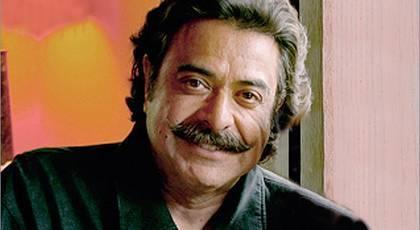
So you bet it was good news for me to hear a few days ago that a successful and hard working American businessman and multi-millionaire from the midwest, Shahid Khan, a Pakistani American owner of a large automobile parts manufacturer, Flex-N-Gate, had just bought an NFL team, the Jacksonville Jaguars! My rare good optimism however seems to perhaps been ill placed though because it seems that even a positive and notable news story like this can quickly turn into something far more twisted and sinister as witnessed by the scores of Islamophobic and racial comments being left on the Jacksonville Jaguars Facebook page and other sports blogs and boards, hours since the sale and the origins and national background of the new owner became public. The deal which still has to go to an NFL owner’s vote would only then be complete and final. Whether the NFL owner’s vote affirmatively on the deal or not, the rancid and clearly Un-American comments on the team’s fan page demonstrate that a majority of the local fans of this NFL team seem only to care about his Pakistani background and not of the fact that he is committed to staying and keeping the team in the small Jacksonville market and that he is a genuine fan of football and by all accounts would make a great manager/owner of the franchise.

The sad fact remains that there is a possibility that despite all the countless contributions to this great nation made by Pakistani Americans, many of these die hard football fans have no problem with risking losing their team to a different owner who would take the team out possibly west to the vacant Los Angeles market than to have a “Paki” keep the team in Florida’s small Jacksonville market and try and build a contender there.

Maybe its his IRS troubles that Shahid had a few years ago that prevented him from buying the St Louis Ram’s majority ownership stake last year or maybe it really is his very interesting moustache that scares people away. Regardless, I will gladly take either reason for his bid not being approved than anything that points to his national origin or racial makeup. Afterall, us Americans should never forget the words of the late great Rev. Dr. Martin Luther King, Jr when he said that we should ”not judge a man by the color of his skin, but rather by the content of his character.” All I know is that this Pakistani American still keeps alive Dr King’s dream. So no amount of paranoia should let the die-hard Jaguar fans fear that Muslims and Allah are on their way to taking over their beloved NFL franchise. Now gentlemen, let’s play ball!

–Manzer Munir, a proud American of Pakistani descent, is a former US State Department Foreign Service Officer Management Selectee, and the founder of Pakistanis for Peace. He is also an often tormented fan of the Kansas City Chiefs of the NFL as well as having the good fortune of being a lifelong fan of Kansas Jayhawk Basketball.
Our Man in Pakistan?

By Ed Husain for The Council on Foreign Relations

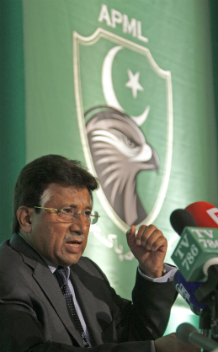
His close proximity to former U.S. president George W. Bush earned him the popular moniker, “Busharraf.” So it was with some intrigue that I went to hear Pakistan’s former president, Pervez Musharraf, address a prestigious and influential U.S. audience at a packed meeting at the Council on Foreign Relations’ headquarters in New York this week.

I was struck by what was, essentially, his appeal for U.S. political sponsorship of his bid to contest elections in Pakistan next year. He spoke eloquently about the poor state of U.S.-Pakistan relations, the need for a peace settlement with elements of the Taliban, and his country’s—and his own—unhelpful Machiavellian attitude toward India and Afghanistan. Nevertheless, the following facts left me worried:
First, for a man who prosecuted the war on terror with such vigor, it was unforgivable for him to say to an Indian journalist who asked about Pakistan’s export of terrorism, ‘Sir, your terrorist is someone else’s freedom fighter.” This moral equivocation is the same justification used by terrorists to inflict harm on innocent lives around the world. Musharraf should know better.

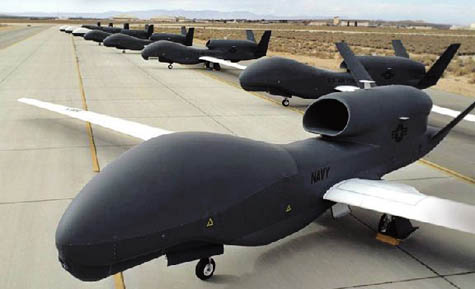
Second, a major cause for widespread, ongoing anti-American radicalization in Pakistan is the CIA-led drone attacks in the country’s tribal regions. Musharraf did not make any references to the drones, their many innocent victims, and the perceived violation of Pakistani sovereignty. It would have been wiser to reassure the audience that a Pakistan under his control would be a nation in which the United States would not need to use drones because terrorists would be brought to justice. Ignoring the issue of drones is self-defeating all around.

Third, his confidence that Pakistan’s nuclear weapons arsenal is safe is questionable. The premise of his assurance was that extremists seeking access to these weapons would need to fight elite battalions of the Pakistani armed forces. The assumption there, of course, is that the Pakistani army is immune from extremism. Sadly, that thinking is flawed. Since General Zia’s time, and increasingly so in recent years, Islamist radicalization within Pakistan’s armed forces has been a cause for concern.

It wasn’t all bad. Fortunately, he spoke somewhat candidly about the economic and energy generation challenges faced by Pakistan. My colleague Isobel Coleman, who was also in attendance, has analyzed his remarks on her thoughtful blog, “Democracy in Development.”
With Imran Khan and Pervez Musharraf both gearing up for elections in Pakistan in 2013, the next two years will be eventful and heated in Pakistan’s fractious political landscape.

Imran Khan Laps Up Acclaim in Pakistan

Declan Walsh for The Guardian

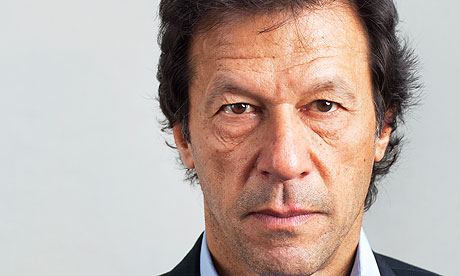
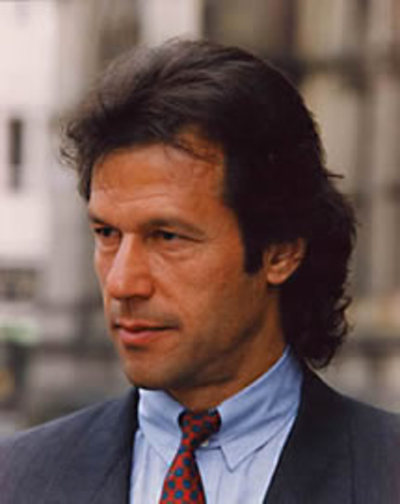
For a decade Imran Khan has occupied the hinterland, if not quite the wilderness, of Pakistani politics. The cricket legend has won just one seat in parliament – his own – and been scorned by critics as a celebrity windbag at best and a Taliban sympathiser at worst.

But this weekend Khan dramatically transformed his standing at a stroke, bursting onto the national stage with an impressive show of street power that jolted Pakistan’s largest parties and turned received wisdom on its head.

At least 100,000 people gathered to hear Khan issue a rousing call to political “revolution” spiced with strident denunciations of government corruption.

“Declare your assets or face the wrath of the people,” he shouted, drawing roars of approval, in the largest rally for decades in Lahore, Pakistan’s political heartland.

The crowd reflected the vein that Khan has tapped – young, urban and mostly educated Pakistanis who have grown disillusioned by the chaotic politicking and inept governance of the traditional political elite. “It’s an activation of the upper middle class – people who, over the years, haven’t had a voice in Pakistani politics,” said political analyst Mosharraf Zaidi.

In contrast Khan enjoys a reputation for being incorruptible and straight-talking, polished by a glint of fame. Also in Lahore was his ex-wife Jemima, who remains a supporter, and Jennifer Robinson, a London media lawyer whose clients include WikiLeaks founder Julian Assange. “Yes we Khan,” she tweeted afterwards.

The rally set the political scene abuzz with speculation; “Imran’s Lahore rally stuns opponents” read the headline in Dawn. But large questions loom about whether he can transform his acclaim into power.

Despite his claims of a “revolution” against President Asif Ali Zardari, Khan is more likely to hurt Nawaz Sharif, the opposition leader who considers Lahore his political base. Sunday’s rally crowned a wave of smaller yet well-attended rallies across the surrounding Punjab province over the past three months.

“It’s been slowly taking root. People are getting disillusioned, they saw Imran as more dynamic and focused,” said Najam Sethi, a veteran journalist and analyst.

National elections are not scheduled until 2013, although a midterm Senate election next March – which is likely to see the Pakistan People’s party led by Zardari seize control of the upper house of parliament – has caused the political temperature to soar.

Electoral success for Khan would likely fracture politics further – a prospect that would please Pakistan’s spymasters and generals, who have traditionally liked their civilian leaders both shaken and stirred. Khan has faced accusations that his new-found popularity is being quietly boosted by the military, and his Lahore speech was notable for his lack of criticism of the army. Khan denies any link. “I think Imran and the army will get along very well – if he ever comes to power,” said Sethi. He entered politics in 1996 as one of the most loved public figures in a cricket-crazy nation, and the founder of a cancer hospital that remains one of Pakistan’s most respected charities.

But his politics have been more controversial. He supported Pervez Musharraf’s coup in 1999, sided with Islamist mullahs and, in 2009, opposed an army operation against the Taliban in the Swat valley, arguing it was better to talk than fight. He boycotted the 2008 election, a move that relegated him to the chat show fringe of politics.

But in recent years he has steadily built his popularity among young Pakistanis, capitalising on disillusionment with political corruption and anger at US drone strikes in the tribal belt.

His Lahore rally echoed many of those themes. Pakistan wanted “independence, not slavery” in its relations with the US, he said, before announcing that he would be leaving for China hours later. “I am leaving at the invitation of the Chinese government. Friendship with them will be pursued to the fullest,” he said.

But critics said that while his speech was high on inflammatory rhetoric – including gratuitous attacks at some rivals and one diplomat – it was lacking in concrete prescriptions. “His next challenge is to show that he understands Pakistan’s problems – and can formulate policy to deal with them” said Zaidi.

Afridi Asks Zardari For Help

As Reported by The AFP

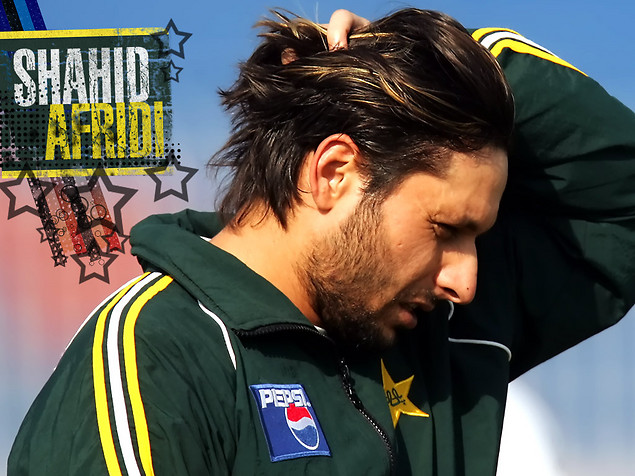
Former captain Shahid Afridi appealed to President Asif Ali Zardari for help on Wednesday after his central contract was suspended when he announced his retirement from international cricket. “I have appealed to the president to intervene urgently, also deal with other issues and save the game from getting into more crises,” Afridi told AFP by telephone from Southampton.

Afridi confirmed that the England and Wales Cricket Board stopped him from playing after the PCB revoked its permission.
“The captaincy was not an issue as I have already played under senior players, but it was a matter of self respect and honour which was hurt,” said Afridi who refused to speak about the PCB sanctions.

The opposition Pakistan Muslim League-N party has already submitted an adjournment motion in the national assembly against Afridi’s punishment.
Former Pakistan captain Imran Khan, who now heads his own opposition party, said the PCB was not run professionally.
“The board is not run like an institution,” Khan told a television channel. “Afridi feels injustice is done so he has taken a decision and you don’t change four-five captains in a year.”

“Just recently everyone was praising Afridi after he led Pakistan to the semi-final of the World Cup and then suddenly this happened,” said Khan. “The board is also run on ad-hoc basis like the country,” he added.
The Muttahida Qaumi Movement (MQM), which belongs to the coalition government headed by Zardari’s Pakistan People’s Party, also objected to the sanctions on Afridi. “President Zardari should take notice of the biased attitude of the board,” said MQM leader Farooq Sattar. “You don’t treat national heroes like this.”

Sports Minister Shaukatullah Khan lashed out at PCB chairman Ijaz Butt over the “injustice” and said he would discuss the matter with Prime Minister Yousuf Raza Gilani.

Abdul Ghaffar Qureshi, who heads the sports committee in the upper house of parliament, demanded Butt’s sacking.
“A change in the PCB is imperative,” said Qureshi. “Butt has not allowed any captain to settle so it will be better to sack him.”

The 31-year-old all-rounder, dumped as one-day captain following a row with coach Waqar Younis last month, quit international cricket in protest at his treatment by the Pakistan Cricket Board (PCB).
In response, the PCB suspended his central contract and revoked all his no-objection certificates, meaning he will not be officially permitted to play overseas.

The move will stop him from playing for Hampshire in England’s Twenty20 league and in next month’s Sri Lankan Premier League.
Afridi said that he came to know about his removal from the team’s captaincy through media and the board did not bother to inform him about that decision.

Imran Khan Moves Supreme Court Against Drone Attacks

As reported on Despardes.com

Cricketing legend-turned politician Imran Khan has filed a lawsuit in Pakistan’s apex court asking it to declare drone attacks as war crimes.

According to published reports, the Pakistan Tehrik-i-Insaf (PTI) chief on Wednesday filed a petition in the Supreme Court asking it to declare drone attacks as attacks on the sovereignty and defence of Pakistan and a war crime.

The petition, filed by Imran Khan’s lawyer Shaukat Aziz Siddiqui, argues that the provisions of logistics and facilities to any foreign country or alliance for mass destruction through drone strikes inside the territory of Pakistan resulting into killings of Pakistani citizen is illegal, unwarranted, unconstitutional, in violation the United Nations Charter, universal declaration of human rights, international law as well as the international humanitarian law, a war crime and an attack on the sovereignty, solidarity, integrity and defence of Pakistan.

Imran Khan’s petition was filed today after a Lahore court Lahore cort ruled against drone strikes and called on the government to take appropriate measures to halt strikes by unmanned drones in Pakistan if they aren’t approved by Islamabad.

Federal authorities should take measures to stop drone attacks in Pakistan if they are carried out without formal approval, the court said on Wednesday. The court was responding to a petition that said drone strikes were a violation of national sovereignty.

Drone attacks have increased under the authority of U.S. President Barack Obama, notably inside Pakistan. The CIA, a civilian entity, said it is acting according to the code of law in carrying out the strikes.

Pakistan’s government publicly objects to the attacks, saying they violate its sovereignty. But it is widely thought there is a tacit agreement between the U.S. intelligence agency, the CIA, and Islamabad to allow such strikes, reported Voice of America on its website today.(http://www1.voanews.com/english/news/asia/Suspected-US-Missile-Strike-Kills-10-in-Pakistan-97396999.html)

Two missiles believed fired Tuesday by an unmanned drone struck a village in the tribal regions of Pakistan, killing militants including Hamza al-Jufi, an Egyptian allied with al-Qaida.

Haiti crisis triggers quake nightmare for Pakistan legend

Reported by Paul Armstrong originally on CNN.com 1/14/10

Pakistan cricket legend Imran Khan has described how the unfolding crisis in Haiti revived harrowing memories of a similar earthquake in his own region.

The devastating 7.6 magnitude quake struck northern Pakistan and the divided Kashmir region in October 2005, claiming the lives of almost 80,000 people, according to official estimates, and leaving millions homeless.

Khan, who is now a prominent politician and campaigner for social issues in Pakistan, told CNN Thursday that he was left numbed by the scenes which greeted him as he traveled to some of the worst-affected areas in the aftermath.

“It was one of the most traumatic experiences I’ve ever had. Just watching human suffering, he said. “It was the children that really disturbed me … their crushed limbs.

“There were so many people needing attention. I remember seeing makeshift hospitals where they were amputating. That was difficult to take. “Families were torn apart as parents lost their children and children were orphaned. Whole families were caught inside buildings, while few escaped.”

Khan recalled being overwhelmed by the sight of an entire town being reduced to rubble.

“We arrived in the town of Balakot and it was totally flattened. You don’t know what to do or say. So many people needing help at one time and you don’t have the infrastructure, you don’t have the hospitals to help.”

Balakot was one of the worst-hit places, with one in 10 of about 20,000 residents killed, according to the local government of the Mansehra district, where the town of is located. Thousands more were injured. Pakistani authorities later planned to move the town in the country’s North West Frontier Province to a completely new location, owing to its current position on a volatile fault line.

The destruction of Balakot brought home to Khan how much people had lost. “Their livelihoods disappeared overnight,” he said. “They had nothing, no business, money, food.

“From what I’ve seen on television it’s similar to what is happening now in Haiti. Clearly they (Haiti) won’t have the resources to cope with it, so it will require a real outside effort.”

While acknowledging the importance of the international aid effort, Khan pointed to role ordinary Pakistanis played in 2005. “It was incredible. The government was incapacitated but there were little charities and groups forming all over the area trying to help.

“I was in an earthquake-hit area on the second day and I’ll never forget seeing a three-mile queue of people trying to get to what was a largely remote area to help with whatever they could put in their cars.

“The government was paralyzed but people came forward, from rich to poor, young to old.”

He also pointed to the success volunteer networks had in adopting villages and towns, taking responsibility for providing basic shelter, food and medicine. “Everyone took responsibility,” recalled Khan. “Each group would look after a specific issue until the local population was able to get back on its feet.”It’s so important that the aid effort continues months after the disaster.”