Posts Tagged ‘ India ’

India and Pakistan’s Leaders Meet

As reported by BBC.com

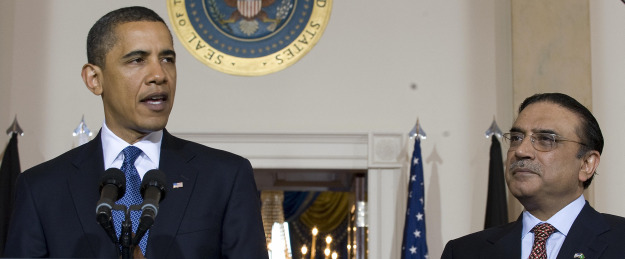
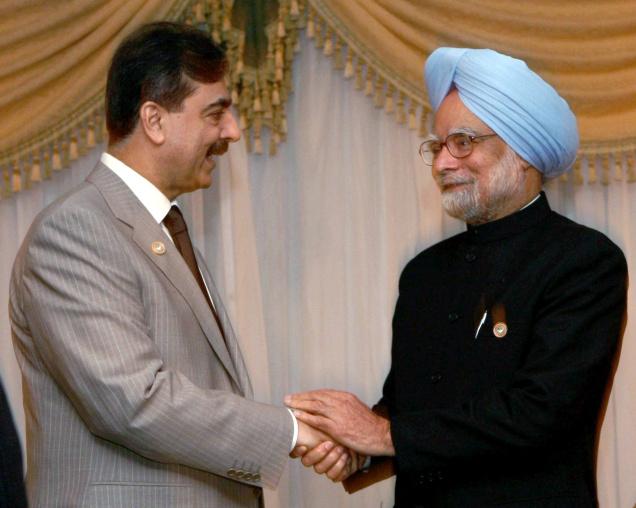
Pakistan PM Yousuf Raza Gilani spoke to his Indian counterpart Manmohan Singh at a reception hosted by the US President Barack Obama, reports said. The prime ministers of India and Pakistan met briefly during a nuclear summit attended by 47 world leaders in Washington DC.

A Pakistani embassy spokesman said it was “not a formal meeting”. cIt comes a day after Mr Singh told Mr Obama that Pakistan’s government lacked the will to punish those responsible for the Mumbai attacks. The November 2008 attacks left 174 people dead, including nine gunmen, and soured ties between India and Pakistan. Late last year, Pakistan charged seven people in connection with the attacks.

They include the suspected mastermind Zaki-ur-Rehman Lakhvi, who is allegedly the leader of the Pakistan-based militant group Lashkar-e-Taiba. Mr Singh and Mr Gilani spoke to each other at a reception hosted by Mr Obama, Pakistani embassy spokesman Nadeem Kiani said.

“Both leaders were present at the same place and so they shook hands and talked,” he said. A spokesman for India’s foreign ministry, Vishnu Prakash, told The Hindu newspaper that the two leaders “exchanged pleasantries”.
‘State elements’

India put peace talks on hold after the attacks, blaming them on Pakistan-based militants. Pakistan admitted they had been partly planned on its soil. India has also suggested what it calls “state elements” were involved. Both Pakistan and Lashkar-e-Taiba have denied any involvement.

In February, the two sides held their first formal talks since the 2008 attacks and agreed to “remain in touch”. Leaders from 40 states are attending the meeting in Washington which is expected to focus on how to secure nuclear material.

Taliban 201- The Rise of The Pakistani Taliban

By Manzer Munir for Pakistanis for Peace

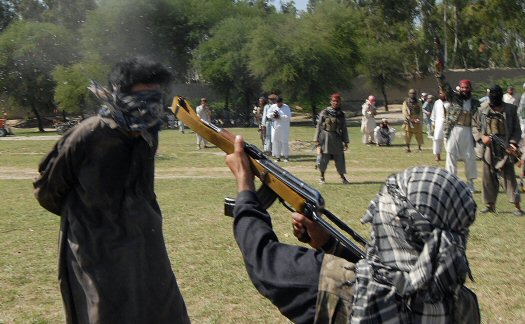
Peshawar, Pakistan- Taliban militants attacked the U.S. consulate in the Pakistani city of Peshawar on Monday, using  powerful bombs and rocket launchers in a sophisticated and daring attack killing 8 people, just hours after a suicide bomber killed 48 people elsewhere in the Swat valley. The attacks came as the United States has increased its airstrikes on targets both inside Afghanistan and Pakistan. The nearly decade long war waged against the Taliban in neighboring Afghanistan since 9-11 has created safe areas inside Pakistan for these militants to regroup and band with Pakistani militants sympathetic to their cause. Often, the militants on the Pakistani side and the Afghani Taliban share the Pashtun tribal and ethnic links among the border areas of both countries.

The US bombing of Afghanistan since late 2001 had pushed the Taliban and Al Qaeda militants to the mountains near the border with Pakistan. With help from sympathetic militant tribal warriors from the Pakistani side, the Taliban were able to dig in and have been able to fight the American forces for nearly a decade now. The onslaught by US and NATO forces continues in Afghanistan, but now for most of last year and certainly this year, the war has shifted to the streets and cities of Pakistan.

Now, much like Afghanistan, Pakistan too is a country that finds itself engulfed in the flames of religious extremism at the hands of determined and highly disciplined thugs. It used to be back during the Soviet-Afghan War, the only place perhaps not entirely safe inside Pakistan was Peshawar. Now, not one city or town of Pakistan has been spared from the violence by the Taliban. Back then, Peshawar was a city where attacks would happen frequently and often. During the 1980’s, the city became a haven for both jihadi militants fighting against the godless system of communism, and a base for spies as both the United States and Saudi Arabia funded a mujahedeen guerrilla war to defeat the Soviet troops from Afghanistan. President Reagan and General Zia of Pakistan used the fervor of religion to incite able bodied boys and men of Afghanistan and their distant cousins from the border area in Pakistan, along with thousands of volunteer Muslim fighters from across the Arab and Muslim world, to come and fight the Soviet Red Army. It was seen as a duty to come defend a Muslim land from occupation by a regime that would not allow the worship of Allah as communism discourages religion and encourages a sectarian society.

That strategy by General Zia ul Haq to promote the fight against the Russians as a holy war or jihad was brilliant at first. It mobilized not just every Muslim male in Afghanistan to stand and fight for his faith and their way of life, while also defending the country from invaders, but it also garnered the sympathy and enlistment of thousands upon thousands of Pakistani and Arab Muslim fighters to join the cause of these mujahedeen, as one who engages in jihad is called. The riling up of religious fervor and militant Islam was deemed necessary by both Reagan and Zia at the time as they sought to defeat the communists at all costs from succeeding in Afghanistan. It would not seem likely at the time, that this very same entity would become enemy number one of both the US and Pakistan a decade later.

It was monumental, it was historic,” retired Pakistani general Hamid Gul, who headed the ISI military spy agency from 1987-1989, said of Reagan’s role in defeating the Soviets. “We were receiving arms and logistics from the CIA, we were partners in this struggle,” Gul said, estimating the CIA spent up to $7bn in supplying arms and logistics to Islamic fighters or “jihadis.” “The jihadis he supported. It was their resistance against the forces of occupation and repression – that’s what jihad is – that Reagan identified himself with,” Gul said. “His greatest achievement was that he stood behind the Islamic world when it was arrayed against the Soviet empire.”

Pakistani analyst Hasan Askari Rivzi stated that “Al-Qaeda and the Taliban took shape later on, but they grew from this period of jihadism against the Soviets and with the initial help of Pakistan, Saudi Arabia along with the military and economic assistance from the United States to fight the Soviets during the ‘80’s. Rizvi sees the roots of the militancy that now ravages Pakistan and Afghanistan as having its beginnings from this period of war against the Soviets army.

That war with the Russians lasted almost 10 years. By the time the USSR pulled out all its troops from Afghanistan in 1989, the country had been completely destroyed. What was left of any government or authority of any sort was now held in the hands of a few militias and various warriors who commanded thousands of tribal and other ethnic fighters under them. These militias immediately started warring amongst themselves for more and more control of the country. The already weak, nonexistent central government of Afghanistan, post Soviet pullout was not able to cope and quickly capitulated. During the power vacuum that resulted, Pakistan’s spy agency, the ISI, realized the chance to wield power inside Afghanistan and threw its support behind a religious student movement based out of Kandahar. The ISI had previously assisted the cause to fight the Soviets by helping gather and organize radical Muslims from around the world to come and assist the Afghani mujahedeen in fighting the Soviets and had therefore developed good contacts with various religious groups including the young Taliban students and the fast growing movement.

The Afghani population initially welcomed the Taliban as they represented fairness and a rule of law over the notorious corruption, brutality and constant infighting of the warlord militias. Soon, with popular citizen support, along with Pakistan’s help, the Taliban became the dominant group within the country and soon held the seat of power in Kabul. Its leader Mullah Omar, was a friend of Osama Bin Laden and when the US forces came to Afghanistan in the hunt for Bin Laden, he gave the Al Qaeda leader refuge and in essence, became a fugitive of the US in the process for harboring America’s Most Wanted.

Fast forward to nearly nine years later as the war in Afghanistan continues against the Taliban and remnants of Al Qaeda responsible for the 9-11 attacks. However, the Taliban have grown and laid roots inside Pakistan also now as the nearly decade long war at the border with Afghanistan has ratcheted up sympathy by locals Pakistani Pashtun tribes for their brethren being bombed by both Pakistani and American forces. The Tehrik-i-Taliban Pakistan known as the Pakistani Taliban formed soon after the US invasion of Afghanistan and the Pakistani army’s offensive at the tribal areas near the border to combat the militants. The Pakistani Taliban led by the recently killed Baitullah Mehsud, has been largely responsible for hundreds of attacks in all major cities of Pakistan including Monday’s bombing of the American consulate in Peshawar.

The war in Afghanistan by the US against the Taliban that harbored and sheltered Bin Laden and the 9-11 killers of Al Qaeda is much the same as the war between the Pakistani army and the Pakistani Taliban in the Swat valley and the North West Frontier Province as well as in various cities of the country. This war has been brought home to the citizens of Pakistan. Over the last few months, bomb blasts in Lahore, Karachi, Islamabad and various other cities have now personalized this conflict for the average Pakistani as no longer a battle or skirmish at the border far away in the northwest of Pakistan near its border with Afghanistan.

No, the nearly daily attacks all over the country by the militants on government installations, public institutions like universities, factories and residential areas as well as markets and restaurants has made the country much less safer than at any time in its 63 year history. Many Pakistanis now are beginning to realize that the Taliban, operating with impunity all over Pakistan, pose a much bigger threat to the sovereignty and republic of Pakistan than any threat from anywhere else, including from that eternal archrival to the east, India. It is now well understood by both partners in this fight that only a sustained and vigorous fight taken to the militants inside both countries by the US and Pakistan over a long period of time can hope to defeat this disease known as the Taliban.

For an earlier report titled Taliban 101- Origins and History, Please click on this link:

https://pakistanisforpeace.wordpress.com/2009/05/25/taliban-101-origins-and-history/

U.S. Aims to Ease India-Pakistan Tension

By Peter Spiegel and Matthew Rosenberg for The Wall Street Journal

President Barack Obama issued a secret directive in December to intensify American diplomacy aimed at easing tensions between India and Pakistan, asserting that without détente between the two rivals, the administration’s efforts to win Pakistani cooperation in Afghanistan would suffer.

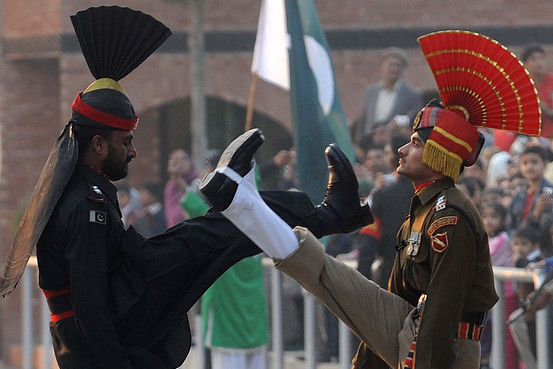
Pakistani Rangers (L) and Indian Border Security Force (BSF) personnel perform the daily retreat ceremony at the India-Pakistan Border at Wagah on December 26, 2009. The directive concluded that India must make resolving its tensions with Pakistan a priority for progress to be made on U.S. goals in the region, according to people familiar with its contents.

The U.S. has invested heavily in its own relations with Pakistan in recent months, agreeing to a $7.5 billion aid package and sending top military and diplomatic officials to Islamabad on repeated visits. The public embrace, which reached a high point last month in high-profile talks in Washington, reflects the Obama administration’s belief that Pakistan must be convinced to change its strategic calculus and take a more assertive stance against militants based in its western tribal regions over the course of the next year in order to turn the tide in Afghanistan.

A debate continues within the administration over how hard to push India, which has long resisted outside intervention in the conflict with its neighbor. The Pentagon, in particular, has sought more pressure on New Delhi, according to U.S. and Indian officials. Current and former U.S. officials said the discussion in Washington over how to approach India has intensified as Pakistan ratchets up requests that the U.S. intercede in a series of continuing disputes.

Pakistan has long regarded Afghanistan as providing “strategic depth”—essentially, a buffer zone—in a potential conflict with India. Some U.S. officials believe Islamabad will remain reluctant to wholeheartedly fight the Islamic militants based on its Afghan border unless the sense of threat from India is reduced.

Indian Prime Minister Manmohan Singh has already taken the political risk of pursuing peace talks with Pakistan, but faces significant domestic opposition to any additional outreach without Pakistani moves to further clamp down on Islamic militants who have targeted India.

U.S. and Indian officials say the Obama administration has so far made few concrete demands of New Delhi. According to U.S. officials, the only specific request has been to discourage India from getting more involved in training the Afghan military, to ease Pakistani concerns about getting squeezed by India on two borders.

“This is an administration that’s deeply divided about the wisdom of leaning on India to solve U.S. problems with Pakistan,” said Ashley Tellis, an analyst at the Carnegie Endowment for International Peace who has discussed the issue with senior officials in the U.S. and India. “There are still important constituencies within the administration that have not given up hope that India represents the answer.”

India has long resisted outside involvement in its differences with Pakistan, particularly over the disputed region of Kashmir. But, according to a U.S. government official, a 56-page dossier presented by the Pakistani government to the Obama administration ahead of high-level talks in Washington last month contained a litany of accusations against the Indian government, and suggestions the U.S. intercede on Pakistan’s behalf.

The official said the document alleges that India has never accepted Pakistan’s sovereignty as an independent state, and accuses India of diverting water from the Indus River and fomenting separatism in the southwestern Pakistani province of Baluchistan.

Secretary of State Hillary Clinton has signaled that Washington isn’t interested in mediating on water issues, which are covered by a bilateral treaty.

The White House declined to comment on Mr. Obama’s directive or on the debate within the administration over India policy. The directive to top foreign-policy and national-security officials was summarized in a memo written by National Security Adviser James Jones at the end of the White House’s three-month review of Afghan war policy in December.

An Indian government official said the U.S.’s increasing attention to Pakistani concerns hasn’t hurt bilateral relations overall. “Our relationship is mature—of course we have disagreements, but we’re trying not to have knee-jerk reactions,” the Indian official said.

According to U.S. and Indian officials, the Pentagon has emerged in internal Obama administration debates as an active lobbyist for more pressure on India, with some officials already informally pressing Indian officials to take Pakistan’s concerns more seriously. Adm. Mike Mullen, chairman of the Joint Chiefs of Staff and the U.S. government’s prime interlocutor with the powerful head of the Pakistani army, Gen. Ashfaq Kayani, has been among the more vocal advocates of a greater Indian role, according to a U.S. military official, encouraging New Delhi to be more “transparent” about its activities along the countries’ shared border and to cooperate more with Pakistan.

In interviews, U.S. military officials were circumspect about what specific moves they would like to see from New Delhi. But according to people who have discussed India policy with Pentagon officials, the ideas discussed in internal debates include reducing the number of Indian troops in Kashmir or pulling back forces along the border.

“They say, ‘The Pakistanis have this perception and you have to deal with the perception’,” said one foreign diplomat who has discussed India’s role with Pentagon officials. An Indian defense ministry spokesman said his country’s army has already moved about 30,000 troops out of Kashmir in recent years.

The State Department has resisted such moves to pressure India, according to current and former U.S. officials, insisting they could backfire. These officials have argued that the most recent promising peace effort—secret reconciliation talks several years ago between Indian Prime Minster Singh and then-Pakistani President Pervez Musharraf—occurred without U.S. involvement.

Progress, For a Price, in Pakistan

By Doyle McManus for The Los Angeles Times

In 2001, on the eve of the U.S. invasion of Afghanistan, President George W. Bush gave Pakistan’s then-leader, Gen. Pervez Musharraf, a choice: He was either with us or against us. Musharraf chose to become an ally, but the question ever since has been whether that shotgun marriage can mature into a healthy adult relationship. At times, the prospect has seemed far from reach.

The world’s second-most-populous Muslim country is caught in a brutal internal struggle between extremism and moderation. Most of its people tell pollsters they don’t like the United States and wish we’d go away. The tribesmen of its western frontier shelter Osama bin Laden and the leaders of Afghanistan’s Taliban. And the United States can’t forget how, in the 1980s, Pakistan built nuclear weapons — and then later exported nuclear technology to North Korea and Iran.

But in recent months, there has been progress in the relationship. Military and intelligence cooperation between the United States and Pakistan has increased significantly. Pakistan has allowed the CIA to increase its missile strikes against Al Qaeda and Taliban targets in Pakistani territory. Pakistani authorities have arrested several Taliban leaders and allowed U.S. intelligence officers to question them. And now Pakistan is offering to increase its own military operations in North Waziristan, the presumed lair of Bin Laden. All that cooperation came at a price, of course: a flood of U.S. military and economic aid.

And last week, the Pakistanis came to Washington to press for more. The academic criticism of the U.S.-Pakistani relationship is that it is “transactional” — nothing more than a series of bargains between buyers and sellers who don’t trust each other much. That’s still mostly true. Pakistan’s delegation arrived with a 56-page shopping list covering everything from military equipment to education and cultural exchanges. And one Pakistani official, asked during the visit whether his government was truly willing to act against the havens that allow the Taliban to maintain bases in Pakistan, replied frankly: “Yes — but at a price.”

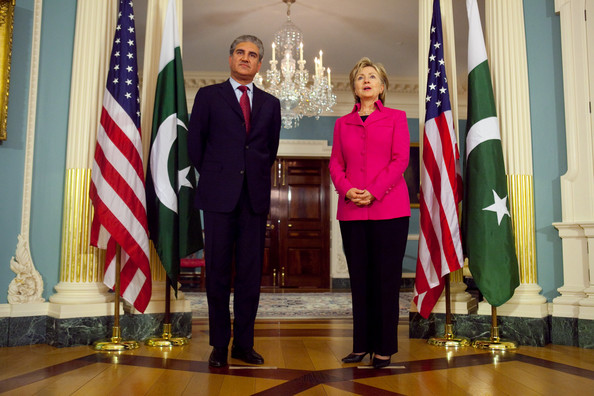
After a series of meetings with Secretary of State Hillary Rodham Clinton, Pakistan’s ebullient foreign minister, Shah Mehmood Qureshi, declared: “I think we are going to move from a relationship to a partnership.” But he used the future tense. In the meantime, there are things to work out. Pakistan is clearly worried about what happens when the United States begins pulling troops out of Afghanistan in 2011.

Although Obama administration officials have tried to reassure Pakistan that Washington’s commitment to the region is for the long haul, uncertainty remains. “Our fear is . . . that we get into a fight with these guys [the Taliban], and you walk away, and we’re still there,” a Pakistani official said. Pakistan’s powerful army chief of staff, Gen. Ashfaq Kayani, spent part of his time in Washington visiting Congress with PowerPoint slides to show that Pakistan has committed more troops to its fight against insurgents than the United States has on the ground in Afghanistan, and that it has suffered almost 30,000 killed and wounded in the process.

According to U.S. officials, Kayani made a strong case that Pakistan can do more if it gets more modern military equipment from the United States, especially helicopters to ferry troops into the rugged badlands where Al Qaeda and the Taliban hide. The United States has helped Pakistan acquire some helicopters, but not as many and not as quickly as the Pakistanis would like. U.S. officials said they would try to speed the delivery of more. In the past, U.S. officials complained that Pakistan used much of its U.S. military aid to bolster its eastern front with India instead of its fight with internal insurgents; but since Pakistan’s 2009 offensive in the Swat Valley, that criticism has been stilled.

The delegation also added a new item to Islamabad’s wish list: a nuclear agreement under which the United States would help Pakistan develop its civilian nuclear energy industry — to mirror a similar U.S. agreement with India, Pakistan’s longtime enemy. The United States told the Pakistanis that would have to wait. The memory of having to clamp sanctions on Pakistan for its nuclear weapons program is still too fresh. But it was a sign of improving relations that the idea wasn’t rejected completely.

 In 2001, the United States sought a new relationship with Pakistan mostly because it was next to Afghanistan — and thus a country we would need for moving military supplies and basing drones. But that thinking has slowly evolved. In the long run, with its population of 170 million people — not to mention its cache of nuclear weapons — Pakistan is more important than Afghanistan.

“We’re engaging with Pakistan because we’re afraid of it,” says Christine Fair, a Pakistan expert at Georgetown University. “It’s the scariest country in the region. Because of Afghanistan, it’s been treated as if it were a subsidiary issue. But Pakistan should be the primary issue.” The Americans are working hard to convince the Pakistanis that they are interested in Pakistan’s stability for its own sake, not just because it’s next door to Afghanistan. The Pakistanis are working hard to convince the Americans that they are committed to defeating the extremists in their midst. It’s not a strategic relationship yet. If it’s a partnership, it’s still a wary one. But that’s progress.

India Becomes Only Country In the World To Possess Maneuverable Supersonic Missiles

By DEUTSCHE PRESSE-AGENTUR  for ArabNews.com


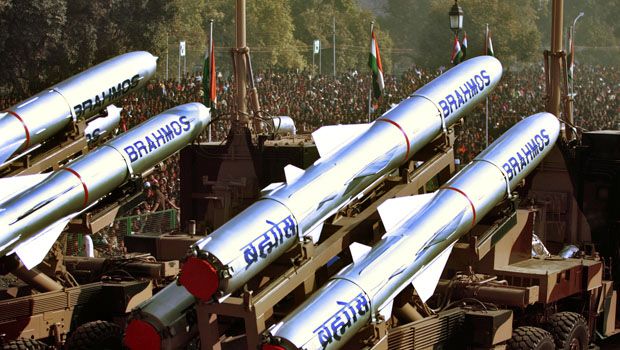
NEW DELHI: India successfully tested Sunday a “maneuverable” version of the BrahMos supersonic cruise missile which it has jointly developed with Russia, news reports said.

The vertical-launch version of the 290-kilometer range BrahMos was tested from a warship in the Bay of Bengal off India’s eastern coast, the PTI news agency reported. “The vertical-launch version of missile was launched at 11:30 (0600 GMT) hours today from Indian Navy ship INS Ranvir and it manoeuvred successfully hitting the target ship. It was a perfect hit and a perfect mission,” BrahMos aerospace chief A Sivathanu Pillai was quoted as saying. ”

After today’s test, India has become the first and only country in the world to have a maneuverable supersonic cruise missile in its inventory,” Pillai said.

Named after India’s Brahmaputra and Russia’s Moskva rivers, the BrahMos can carry a 200-kilogram conventional warhead. Variants of the missile fitted with inclined launchers are already in service with the Indian Navy, NDTV news channel quoted defense sources as saying. Sunday’s firing was part of pre-induction tests for the vertical launcher variant, the sources said. The BrahMos has also been inducted into the India Army and preparations are on to develop air-launched and the submarine- launched versions, the sources said.

US-Pakistan Talks Mark ‘Intensification’ of Partnership

By Suzanne Presto for Voice of America News

The United States and Pakistan will hold their first strategic dialogue at the ministerial level in Washington next Wednesday (March 24). U.S. Special Representative for Afghanistan and Pakistan Richard Holbrooke told reporters at the State Department Friday that these talks mark a “major intensification” of the U.S.-Pakistan partnership. Wednesday’s talks will be co-chaired by Secretary of State Hillary Clinton and Pakistani Foreign Minister Shah Mehmood Qureshi.

Holbrooke says delegations from both sides will include senior officials of their nation’s defense, diplomacy, finance and agriculture departments. The U.S. delegation will also include aid and trade officials, and Pakistan’s will include officials who handle water, power and social issues.
“This is a partnership that goes far beyond security, but security is an important part of it,” he said. Holbrooke told reporters Friday that U.S. officials want to see aid money for Pakistan distributed more quickly.

“We are doing more. We will announce more. We want to do as much as the Congress will support,” Holbrooke said. The Obama administration has made improving and broadening relations with Pakistan a top priority, but U.S. policies and drone strikes targeting militants in the region remain unpopular. Holbrooke said the U.S. supports Pakistan as it seeks to strengthen democratic institutions and economic development, handle energy and water problems, as well as defeat extremists. “Everyone is aware of the popular public-opinion polls, and we think that our support for Pakistan deserves more recognition among the people,” he added.

Speaking to reporters in Islamabad Thursday, Foreign Minister Qureshi said Pakistani and U.S. officials have been talking a lot, and in his words, “the time has come to walk the talk.” Holbrooke responded to Qureshi’s statement that next week’s talks would be a good opportunity to rebuild confidence and trust on both sides. “The first time I went to Pakistan, Foreign Minister Qureshi introduced me to the phrase “trust deficit,” and so I have heard it many times,” he said. “The last time I was there, we both said in a press conference that we thought we had made huge advances in that,” Holbrooke added. Secretary of State Clinton last visited Pakistan in October, where she spoke with officials and students alike.

Holbrooke said there are plans to hold the next set of strategic talks in Pakistan, likely within the next six months. He underscored that these bilateral talks do not replace the trilateral talks among the U.S., Pakistan and Afghanistan which he said are expected to resume later this year.

A Victory For Obama, From An Unlikely Quarter-Pakistan

By Fareed Zakaria for Newsweek

President Obama gets much credit for changing America’s image in the world—he was probably awarded the Nobel Prize for doing so. But if you asked even devoted fans to cite a specific foreign-policy achievement, they would probably hesitate. “It’s too soon for that,” they would say. But in fact, there is a place where Barack Obama’s foreign policy is working, and one that is crucial to U.S. national security—Pakistan.

There has been a spate of good news coming out of that complicated country, which has long promised to take action against Islamic militants but rarely done so. (The reason: Pakistan has used many of these same militants to destabilize its traditional foe, India, and to gain influence in Afghanistan.) Over the past few months, the Pakistani military has engaged in serious and successful operations in the militant havens of Swat, Malakand, South Waziristan, and Bajaur. Some of these areas are badlands where no Pakistani government has been able to establish its writ, so the achievement is all the more important. The Pakistanis have also ramped up their intelligence sharing with the U.S. This latter process led to the arrest a month ago of Mullah Abdul Ghani Baradar, the deputy leader of the Afghan Taliban, among other Taliban figures.

Some caveats: most of the Taliban who have been captured are small fish, and the Pakistani military has a history of “catching and releasing” terrorists so that they can impress Americans but still maintain their ties with the militants. But there does seem to be a shift in Pakistani behavior. Why it’s taken place and how it might continue is a case study in the nature and limits of foreign-policy successes.

First, the Obama administration de-fined the problem correctly. Senior ad-ministration officials stopped referring to America’s efforts in Afghanistan and instead spoke constantly of “AfPak,” to emphasize the notion that success in Afghanistan depended on actions taken in Pakistan. This dismayed the Pakistanis but they got the message. They were on notice to show they were part of the solution, not the problem.

Second, the administration used both sticks and carrots. For his first state dinner, Obama pointedly invited Indian Prime Minister Manmohan Singh—clearly not Pakistan’s first choice. Obama made clear that America would continue to pursue the special relationship forged with India under the Bush administration, including a far-reaching deal on nuclear cooperation. But at the same time, the White House insisted it wanted a deep, long-term, and positive relationship with Pakistan. Sens. John Kerry and Dick Lugar put together the largest nonmilitary package of U.S. assistance for the country ever. Aid to the Pakistani military is also growing rapidly.

Third, it put in time and effort. The administration has adopted what Central Command’s Gen. David Petraeus calls a “whole of government” approach to Pakistan. All elements of U.S. power and diplomacy have been deployed. Pakistan has received more than 25 visits by senior administration officials in the past year, all pushing the Pakistani military to deliver on commitments to fight the militants.

Finally, as always, luck and timing have played a key role. The militants in Pakistan, like those associated with Al Qaeda almost everywhere, went too far, brutally killing civilians, shutting down girls’ schools, and creating an atmosphere of medievalism. Pakistan’s public, which had tended to downplay the problem of terrorism, now saw it as “Pakistan’s war.” The Army, reading the street, felt it had to show results.

These results are still tentative. Pakistan’s military retains its obsession with India—how else to justify a vast budget in a small, poor nation? It has still not acted seriously against any of the major militant groups active against Afghanistan, India, or the United States. The Afghan Taliban, the Haqqani group, Gulbuddin Hekmatyar, Lashkar-e-Taiba, and many smaller groups all operate with impunity within Pakistan. But the Pakistani military is doing more than it has before, and that counts as success in the world of foreign policy.

Such success will endure only if the Obama administration keeps at it. There are some who believe that Pakistan has changed its basic strategy and now understands that it should cut its ties to these groups altogether. Strangely this naive view is held by the U.S. military, whose top brass have spent so many hours with their counterparts in Islamabad that they’ve gone native. It’s up to Obama and his team to remind the generals that pressing Pakistan is a lot like running on a treadmill. If you stop, you move backward, and, most likely, you fall down.

U.S. to Offer Smart-Bomb Kits, Drones to Pakistan

By  Yochi Dewazen The Wall Street Journal

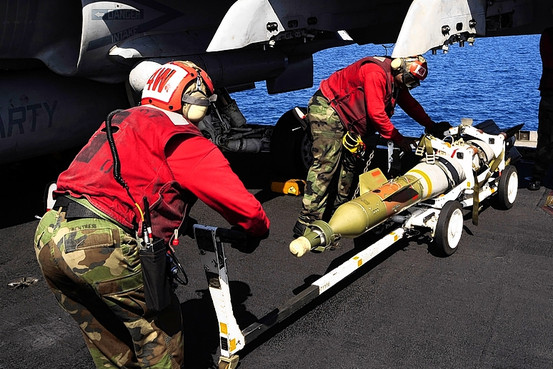
Washington DC—The Pentagon will transfer sophisticated laser-guided-bomb kits to Pakistan, escalating the Obama administration’s recent push to better arm Islamabad for its military campaign against the country’s Islamic militants. U.S. military officials said Pakistan will soon receive equipment capable of converting 1,000 traditional munitions into “smart bombs” that can more precisely strike targets on the ground. American officials hope the reconfigured bombs will help Pakistan minimize civilian casualties as it battles insurgents in the country’s tribal regions.

Pakistan will also soon take possession of a dozen American-made surveillance drones and 18 late-model F-16 fighter jets, sharply expanding the Pakistani military’s ability to track and strike targets in remote, insurgent-controlled parts of the country. The laser-guided-bomb kits could spark some unease in India, where officials have been warily watching the expanded U.S. military aid to Pakistan and wondering if the weapons would one day be turned against them. India lobbied against recent U.S. legislation giving Pakistan billions of dollars in new nonmilitary aid, though the measure passed anyway.

The Indian reaction to the planned American F-16 sale to Islamabad was far more muted, in part because India’s air force is far larger than Pakistan’s and employs more-advanced planes. Providing advanced munitions to Pakistan would once have aroused fierce opposition within the U.S. Congress, where powerful lawmakers from both parties have questioned Islamabad’s willingness to take tough measures against the country’s militants. Washington has also long charged that elements in Pakistan’s intelligence service maintain close ties to the Afghan Taliban, an accusation Islamabad denies. But the new weapons transfers are unlikely to spark much controversy in Washington, a reflection of how much the concern about Pakistan has ebbed in recent months as Islamabad deepens its military and intelligence cooperation with the U.S. In mid-February, Pakistani and American intelligence operatives jointly captured Mullah Abdul Ghani Baradar, the top military commander of the Afghan Taliban. Islamabad has also tacitly allowed the U.S. to sharply expand its campaign of drone missile strikes against insurgent targets inside Pakistani territory.

Pentagon spokesman Geoff Morrell last week praised Pakistan for mounting a serious campaign against the militants operating along the porous Afghan-Pakistani border. U.S. officials say they believe the leadership of both al Qaeda and the Afghan Taliban are hiding in Pakistan, with several top officials allegedly operating out of the Pakistani city of Quetta. “The commitment that the Pakistani government, the military, its intelligence forces have demonstrated over the past several months to combating this threat within their midst is commendable,” Mr. Morrell said. “We are here to help them in any which way they are comfortable.” The clearest example of that assistance is the stepped-up U.S. military aid to Pakistan. A new American counterinsurgency assistance fund for Pakistan is slated to increase to $1.2 billion in fiscal year 2011 from $700 million in fiscal year 2010, allowing Islamabad to acquire more U.S.-made helicopters, night-vision goggles and other military equipment.

Pakistan, which is smaller and poorer than neighboring India, uses American grants to fund most of its arms purchases. The smart bombs should help Pakistan expand its military offensive in the insurgent stronghold of South Waziristan. The laser-guided munitions can be dropped from Pakistan’s current fleet of U.S.-made F-16 fighter jets, allowing Islamabad to improve the accuracy of its bombing runs while it waits to take possession of new F-16s later this year. “This is sort of a short-term discussion, but it’s one that’s important to them because they’re involved in current operations right now,” Air Force Secretary Michael Donley told reporters Tuesday. “They’ve been trying to improve their capabilities in the short term while they wait for these aircraft.”

Lt. Col. Jeffry Glenn, an Air Force spokesman, said Pakistan will receive 700 kits capable of converting 500-pound traditional bombs into laser-guided munitions, as well as 300 kits that can be used with larger 2,000-pound bombs. The kits, which are made by Lockheed Martin Corp. and Raytheon Co., contain computerized guidance systems for the fronts of the bombs and fins that are designed to be attached to the backs of the munitions for better lift and stability. Once the kits have been properly configured, pilots or ground-based troops can use laser beams to guide the smart bombs to their targets.

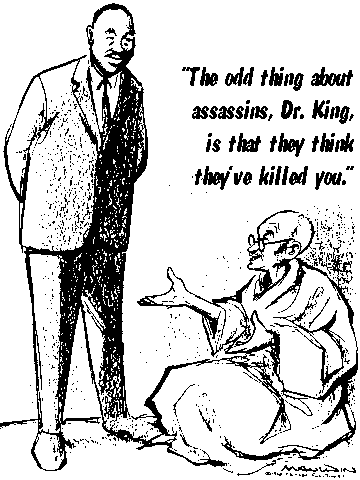
Gandhi and King- Two Martyrs Who Will Never Die

By Manzer Munir

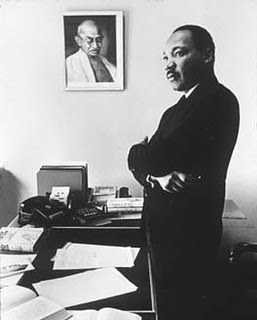
Martin Luther King Jr, who would have been 81 years old January 15, was a great believer of Mohandas K Gandhi, the leader of India’s independence movement from Brittan. King saw that Gandhi’s peaceful civil disobedience and non-violent methods of protest were very effective in bringing down the British Empire in India and as a result Pakistan after some 300 years of direct and indirect rule. Gandhi had believed that people could resist immoral government action by simply refusing to cooperate. Gandhi adopted many peaceful resistance techniques in developing his concept of Satyagraha, which was a philosophy and practice of passive nonviolent resistance.

Gandhi had earlier used this resistance technique in his struggles for freedom and equality for blacks and Indians in South Africa where both minorities were subjected to second and third class citizenry. His methods and refusal to bow down to the injustices that Indians faced in colonial South Africa inspired Nelson Mandela several years later to start his own peaceful struggle that eventually led to the end of Apartheid in South Africa in 1990.

While at Morehouse College, King learned about Gandhi and became very excited about his ideas. He wanted to further educate himself and read many books on Gandhi and his life and beliefs. In his book, Stride Toward Freedom, King states that “Gandhi was probably the first person in history to lift the love ethic of Jesus above mere interaction between individuals to a powerful and effective social force on a large scale. He further writes in his book that “It was in this Gandhian emphasis on love and nonviolence that I discovered the method for social reform that I had been seeking. I came to feel that this was the only morally and practically sound method open to oppressed people in their struggle for freedom.”

King felt that he had finally found a way to where oppressed people could successfully unlock social protest through Jesus’ teachings of love. In fact Gandhi himself had said “What does Jesus mean to me? To me, he was one of the greatest teachers humanity has ever had.” He also once mentioned Jesus as the “most active resister known perhaps to history. His was non-violence par excellence” Therefore to the Christian minister living in the pre-civil rights era in the South in America, Gandhi appeared to King as a follower of Christ, someone who preached peace and love even at the expense of suffering. Martin Luther King once said of Gandhi “It is ironic yet inescapably true that the greatest Christian of the modern world was a man who never embraced Christianity.”

In 1959, King visited India and became fully convinced that Satyagraha could be effectively applied to the struggle by blacks in the United States for racial integration. He came back to the United States where he continued the struggle for freedom and equality for all Americans. Like Gandhi, King also talked about suffering as a path to self purification and spiritual growth. He not only experienced this suffering by being jailed, beaten and harassed by the authorities of the day, but he eventually ended up paying for this cause for freedom for all with his life.

 Mohandas K Gandhi and Martin Luther King Jr arguably were two of the greatest men of the last century.  Both men believed that “injustice anywhere was a threat to justice everywhere.” They both led their people and millions of others out of slavery and servitude against seemingly insurmountable odds to freedom and salvation. On what would have been his 81st birthday, let us recognize that despite an assassin’s bullet and in the greatest democracy in the history of the world, the spirit and dream of a King still live on.

Tribute to a Pakistani Icon

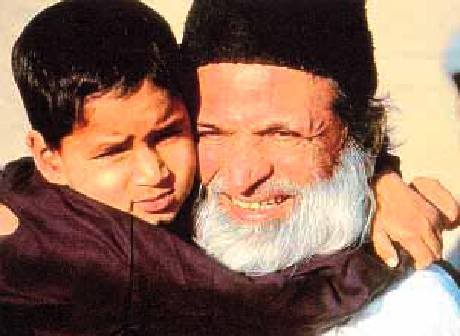
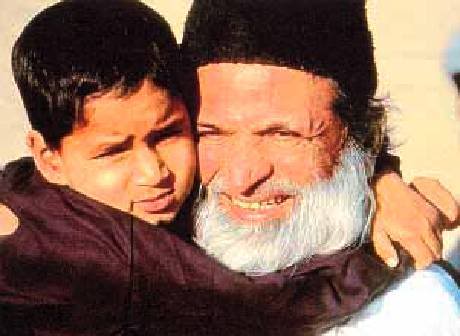
The story of Abdul Sattar Edhi is an awe inspiring one. Amidst the daily materialism, frenetic rat race, ambition and angst which envelops one, here is a man who only thinks of others and their suffering.

Edhi single-handedly set up the Edhi Foundation in 1957, and continued to operate it as a non-profit social welfare organisation. Over 300 centres of the Edhi Foundation span the length and breadth of Pakistan, and provide the needy with medical aid, family planning, emergency assistance and education. There are also maternity homes, mental asylums, homes for the physically handicapped, blood banks and orphanages, among other services.

The remarkable Abdul Sattar Edhi has no qualms about going where others fear to tread, and for taking a stand against extremism. He went to Tank, the gateway to the tribal areas, although he was advised against travelling to such a volatile and dangerous place.

There were fears that he might be killed by the Taliban, but instead they welcomed him with open arms. Edhi tried to reason with the Taliban and told them bluntly that they should renounce their violent way of life, which is against the teachings of Islam. The Taliban called him a ‘’Khudai Faqir’’ and listened to him with great respect, and provided him with safe passage.

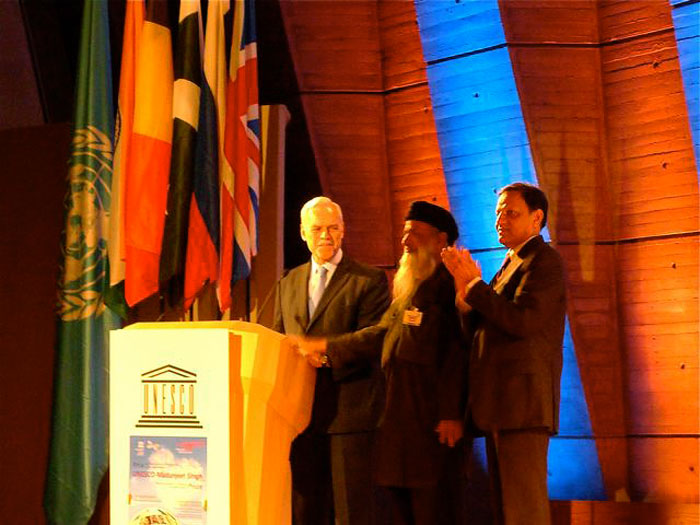
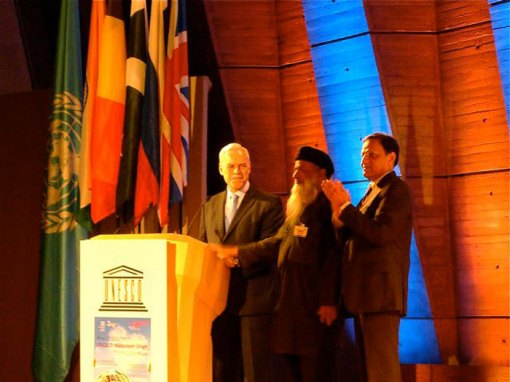
Edhi was recently awarded the UNESCO Madanjit Singh Prize for the Promotion of Tolerance and Non Violence. He was conferred the award in recognition of his life long efforts to ameliorate the condition of the most disadvantaged groups in Pakistan and South Asia, and for promoting the ideals of human dignity, human rights, mutual respect and tolerance.

The prize giving ceremony was held on November 16, the International Day for Tolerance, at the sprawling United Nations edifice in Paris. Amidst all the fancy suits, designer coats and gleaming shoes, Abdul Sattar Edhi stood out in his simple Shalwar Kameez and worn slippers. A documentary was also screened, which showed Edhi and Bilquis Edhi, his wife and companion of 50 years, engaged in their charity work amidst the poor, disadvantaged and outcasts of society.

As Edhi rose with difficulty to receive the UNESCO award, there was prolonged applause for this great Pakistani. Many Europeans remarked on how privileged they felt to have the opportunity of meeting such a great man. An Indian couple postponed their flight home, and came to the UN to pay homage to Edhi, saying that they only wanted his blessings.

As soon as the impressive ceremony was over, Abdul Sattar Edhi was surrounded by a bevy of delighted Pakistanis. Their stimulating interaction with Edhi and the countless photo opportunities went on and on, until some UN officials started glancing at their watches, and it was obvious that it was time to leave the hall. But then the dinner invitations started rolling in.

At times, Edhi looked a trifle tired, but he never lost his composure. At 88, and grappling with diabetes, life could not be easy for him, but he always seems to think of others. Accustomed to sleeping at 7pm and waking up at 4 am, jet lag and the constant socialising must have been draining. When asked how he was feeling, Edhi admitted that he was exhausted, but said that he did not want to turn down the opportunity of meeting with Pakistanis.

Many Pakistanis sought his blessings and said they were willing to contribute to his organisation. Despite all the hero worship, Edhi remained calm and focused, displaying none of the whims and attitude which signifies the behaviour of many Pakistanis who have not achieved even an iota of what he has.

Notwithstanding his lack of formal schooling, Edhi came across as alert, witty, mature and savvy. Talking to him is an enriching experience indeed. He refuses to espouse any political party, because he likes to steer clear of politics.

What motivates this octogenarian to work for such long and punishing hours. and refuse to take time off? When he was still a child, Edhi’s mother became very ill and he nursed her for years until she passed away.

“I had accepted at the outset that charity was distorted and unrelated to its original concept. Another major obstacle in the promotion of welfare was the disgust of man towards mankind. There was only one reaction from everyone ñ cringing. From the grimacing faces of my colleagues, I understood that I was the only one not disgusted. They washed their hands vigorously, smelt their clothes repeatedly and complained incessantly of the stench having seeped under their skins.

Then they rushed home to bathe, scrubbed their clothes and disinfected them, sometimes gave them away saying, ‘The very weave was stricken.’ We could not reduce suffering unless we rose above our senses”

Abdul Sattar Edhi has devoted his life to a thorny field where hardly any one can match his dedication, focus, common sense and sagacity. Being in his presence gives one hope for the future, because it is his belief that there are no people more generous than Pakistanis in giving aid, and there is no place in the world as great as Pakistan.
Originally Printed December 14, 2009
By Maheen Usmani
The News, Karachi

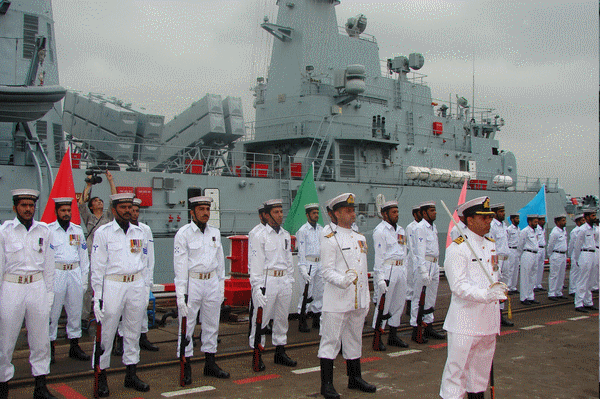
Pakistan and China increase military spending and cooperation as India shows concern

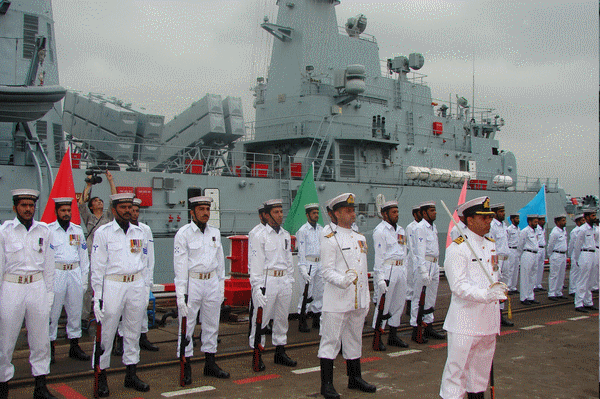
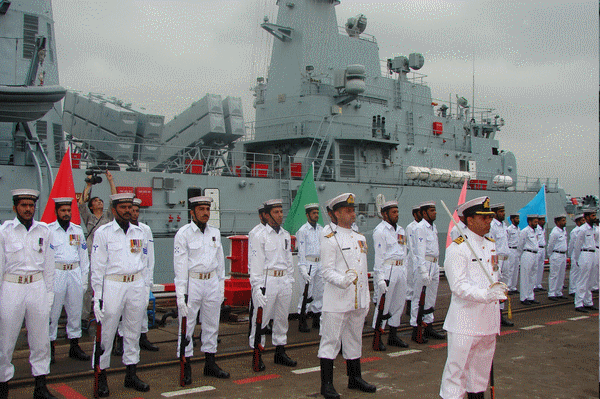
Beijing, China- A senior Chinese defense official has justified Chinese sales of warships and submarines to Pakistan on the grounds that Russia and the United States were selling similar systems to India.

The defense official also indicated that China was aware of the fact that India may not be happy with its deal with Pakistan. “The initiative may invite concerns from its neighboring countries. But the doubts are unnecessary,” Zhai Dequan, deputy director of China Arms Control and Disarmament Association , was quoted as saying by the official media.

Pakistan’s chief of naval staff, Norman Bashir, also made a push to persuade China to sell higher capacity ships compared to the F22P frigates that China began delivering in June.  Chinese official Zhai said that Pakistan’s   desire for higher capacity ships is normal for an independent nation seeking to bolster its security. “India has also entered into deals for military hardware from the Unites States and Russia. India’s aircraft carrier has already cost it billions of dollars”, said Zhai.

Bashir also met with the Chinese defense minister, Liang Guanglie, and discussed with him Pakistan’s needs in terms of modernizing their armed forces to try and keep up with the torrid pace of rival India’s defense spending. “The Chinese armed forces would like to improve friendly and cooperative relations with the Pakistani armed forces,” defense minister Liang Guangile said, according to China’s state-run Xinhua press agency.” China attached great importance to its traditional friendship with Pakistan, Liang said, adding that the two countries had conducted comprehensive and multi-level military exchanges and cooperation in various areas.”

“The Pakistani armed forces and people cherished their friendship with the Chinese armed forces and people”, Noman Bashir said, noting that “Pakistan would like to work with China to promote the comprehensive and cooperative partnership.” Bashir also stated that Pakistan was keen on buying bigger ships and more JF-17 fighter planes from China in addition to submarines and that Pakistan will be buying more weapons from China, including missiles. 

“These growing military ties between China and Pakistan are a serious concern to India,” stated Defense Minister A K Antony. India worries about China’s rising influence in South Asia and the Indian Ocean region, a neighborhood traditionally considered as its sphere of influence.

India’s relations with Pakistan, never easy after three wars since 1947, went downhill fast after last November’s Mumbai attacks blamed on Pakistani originated militants. Meanwhile, Chinese and Pakistani cooperation on military and economic projects has increased in the last few years. “The increasing nexus between China and Pakistan in military sphere remains an area of serious concern,” Antony said in a speech. “We have to carry out continuous appraisals of Chinese military capabilities and shape our responses accordingly. At the same time, we need to be vigilant at all times.” Tensions between India and China, who fought a brief war in 1962, flared again in recent months, especially with the re-emergence of a long-standing border dispute made worse by a visit by the Dalai Lama, the Tibetan spiritual leader, to Indian territory claimed by Beijing.

India increased defense spending by 24% for this year’s budget to $28.4 billion a year dwarfing Pakistan’s budget of $4.2 billion for the same period. Meanwhile, China and India are together set to make Asia the highest regional spender on defense in the next seven years replacing North America as their economies continue to fund their weapons appetite.

Pakistan cannot compete with the likes of India and China militarily. Just as Taiwan could not compete with China militarily, but went on to become an economic powerhouse and used its influence economically,  so too must Pakistan focus on growing its economy rather than growing militarily. Even though Pakistan possesses the nuclear bomb, and that very well may end up being a strong deterrent against India in the likelihood of a war, it still is loathe to use it, for the consequences from India would be similar and far worse due to their increased warheads and military might.

Also, although Pakistan’s military and previous leadership have articulated the right to a preemptive nuclear strike or a nuclear first use option in the event of hostilities with India, this choice is often seen as a losing option by the military due to the aftermath of a nuclear exchange between the two countries. India’s budget and its technological advancements make it impossible for Pakistan to ever win a conventional war with India. And a nuclear exchange between these two neighbors will leave neither side feeling as the winner.  

Pakistan’s most beneficial strategy must consist of directing its full armed forces against the Taliban and militant groups within its territory and re-engaging India back to the peace table in hopes of resolving the long disputed Kashmir region because war with India will certainly not leave Pakistan the victor. However a peace treaty can open the long border between India and Pakistan for trade, goods, ideas, money and people to move freely across the border and allowing much needed investments and flow of technology to Pakistan that will go a long ways in helping the country and its people catch up with the rest of the world.

Reported by Manzer Munir for www.PakistanisforPeace.com

The Mumbai Attacks, 1 Year Later

Mumbai (Bombay), India- It has been a year since November 26, 2008, when 10 Pakistani militants of the group Lakshar-e-Taiba coordinated and carried out simultaneous and deadly bombings and shootings in the heart of several important Mumbai buildings and institutions. The lone surviving gunman from that rampage, Mohammed Ajmal Amir Kasab, admitted to his role in the attacks during his trial in Mumbai and he could be executed if found guilty. No other individuals have been charged in India with the killings of over 170 people and injuries to scores of others.

In his visit to the United States this week, Prime Minister Manmohan Singh has expressed India’s concern over Pakistan’s efforts in bringing the perpetrators of the Mumbai attacks to justice. “No they haven’t done enough,” he told CNN television in an interview telecast as he landed in Washington for a four-day state visit Sunday. Manmohan Singh said when he met Pakistan Prime Minister Yousuf Raza Gilani in Sharm-el-Sheikh, Egypt, in July this year, he (Gilani) had assured that his government would do all that’s possible to bring the perpetrators to justice. “That’s not happening.”  

Then three days after that statement by Singh, seven people were indicted in a Pakistani anti-terrorism court Wednesday in connection with the attacks of last year. All have denied the charges and are planning to plead not guilty. This is the first indictment in Pakistan in a case that is closely being followed in India and in the United States. The seven men charged in Pakistan allegedly belong to the militant group Lashkar-e-Taiba which is believed to be behind the coordinated attacks carried out simultaneously at numerous locations in Mumbai that lasted up to three days when all except Ajmal Kasab were killed.

Earlier in the week Prime Minister Manmohan Singh called on world powers to put pressure on Pakistan to rein in militants amid the rise in Taliban linked violence inside Pakistan and also in neighboring Afghanistan. Britain “will work shoulder to shoulder with India and our international partners to confront this common threat”, Prime Minister Gordon Brown said Thursday, while French Foreign Minister Bernard Kouchner pledged “unreserved support” for India in the fight against terrorism.

India’s minister for external affairs, Shashi Tharoor told a vigil at the Chabad House Jewish center, where six people died, including the rabbi who ran it and his pregnant wife, that the gunmen had killed “in cold blood”.”The terrorists demonstrated that their brand of fanaticism was anchored less in the absolutism of pure faith than in the geopolitics of pure hatred,” he told the congregation, including the slain couple’s parents.

The Mumbai attacks ended the peace dialogue between India and Pakistan that has been off and on over the last 60 years, remaining unresolved over the disputed Kashmir region. The militants groups in Pakistan that were left unchecked through the 80’s and the 90’s have now gotten out of control as the level of violence and attacks inside Pakistan has reached an unprecedented level. All cities of Pakistan have been touched by attacks and violence either blamed on religious zealots like the Taliban or militant groups like Lashkar-e-Taiba, which was allegedly formed with the help of the Pakistani intelligence agency ISI to infiltrate and fight Indians in Kashmir.

Bringing the perpetrators of the Mumbai attacks to justice is not only needed for the victims of these attacks in India, but finding and punishing these individuals and prosecuting them to the full extent of the law is also in Pakistan’s best interests. With a crime and violence rate currently in Pakistan that is off the charts, the average Pakistani citizen has no sense of security inside their own country. Near daily news of attacks inside some part of the country or another has also given many civilians a siege mentality.

Pakistan’s biggest neighbor is India. It is also considered by many inside the country to be its biggest enemy. The two share a border of approximately 1800 miles. They also share over 5,000 years of common history, language, culture, and customs. India is not the biggest threat facing Pakistan as India is too big and complex to focus on just Pakistan. India is fast approaching world power status as it now competes with the likes of China, Russia and the Unites States in various fields due to its robust economy, fast growing middle class, and ever increasing influence around the world.

Pakistan’s biggest enemies are the Taliban and the various militant and extremist groups that are now causing havoc within the country and also are attempting to incite a war between India and Pakistan with attacks such as the attacks of November 26 of last year. Bringing these seven individuals to justice in front of the country and the whole world will go along ways to show its neighbor and the United States that it is serious in confronting these groups and putting an end to terror both within and outside its borders.


Reported by Manzer Munir for www.PakistanisforPeace.com, a group and website started by Pakistanis dedicated to peace between India and Pakistan and outraged by the Mumbai attacks of Nov 26, 2008.

Happy Birthday Pakistan! May You Reach Your Full Potential~

 Islamabad, Pakistan- 62 years ago, Pakistan and India gained their independence from Britain after a long struggle for freedom and self determination. For centuries, the Hindus and Muslims of India had lived together as part of one country under multiple rulers, from Hindu princes to Muslim emperors. But once the British came and colonized the country, religious differences became more evident as oppressed Indians of Muslim and Hindu backgrounds became keenly aware of their differences.

Mahatma Gandhi was opposed to the division of India into two countries. However that is exactly what happened as Pakistan was the country designated for the Muslims of India.
One of the oldest civilizations in the world with more than 9,000 years of history, became newly independent modern day states of Pakistan and India on August 14 and 15 1947, respectively. Although other countries in history have been founded on freedom of religion, most notably the United States, only Pakistan has been specifically created as a nation for Muslims, carved out of India.

Even though he advocated for a homeland for the Muslims of India, the founder of Pakistan, Mohammed Ali Jinnah, was a secularist and wanted a nation that was democratic, moderate and a model for other Muslim nations. However the last 62 years of the country’s turbulent history has shown that true religious freedom and democracy is still a concept that is trying to get a solid foothold in the country as over half its existence has been dominated by military dictatorships and coups as well as allegations of corruption by the elected leaders.

A country founded on religious freedom for the Muslims of India also finds itself struggling with religious espressions between Muslims as routine violence between Shiites and Sunnis as well as violence against the minority Christian population is not uncommon.

One of the most populous yet poorest countries of the world, Pakistan is an enigmatic and perplexing country for many analysts and observers. A country that has a literacy rate of just 49.9% according to the CIA fact book also happens to have the 7th most engineers in the world! A nation that does not possess abdundant clean water for all its citizens, yet is one of only a handful of nations that possesses nuclear weapons and technology. One of the few nations of the world  to have elected a female as a leader of the country, only to watch in despair as she was tragically gunned down in December of 2007 as she ran for the top spot in the elections of 2008.

Pakistan has tremendous potential that has not been and is not being realized. A surplus of manpower, vast quantities of resources such as natural gas, coal, hydroelectric power, iron, copper and fertile land for crops. It is also situated in a very strategic location of the world at the mouth of the Persian Gulf in the Indian Ocean near the oil rich countries of the Middle East and busy shipping lanes between Asia and Europe and Africa.

What Pakistan is missing is strong and competent leadership that needs to focus on eliminating corruption, disbanding terror groups and militias, and fostering a long term peace process with its neighbor and arch rival India. Once that is done, the rest of the issues will be easier to solve such as illiteracy, health improvement of the people, economy and security.

One more important ingredient Pakistan is not lacking is a strong sense of patriotism and pride among its citizens throughout the country and around the world. Pakistanis have high hopes and aspirations for their homeland and on this independence day they look forward to better days ahead in achieving the kind of state that the founding father Jinnah had hoped for when the country became independent from Britain on August 14, 1947. Let us hope that this dream lives on and becomes a reality as a stable and prosperous Pakistan is vital for the region, the Muslim world and global security and prosperity.

Reporting by Manzer Munir for www.PakistanisforPeace.com

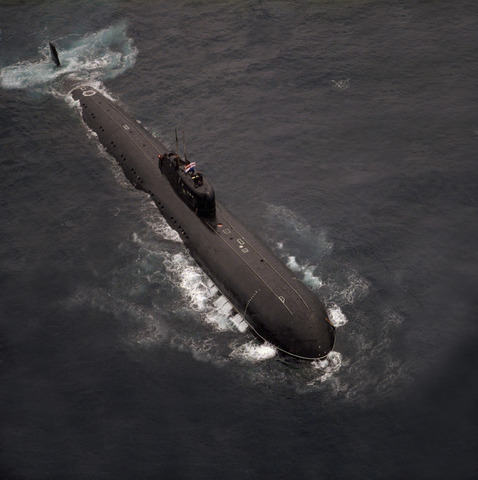
India Launches Nuclear Submarine Produced Domestically

DN-SC-89-03179


New Delhi, India- Pakistan has stated that India’s launch of a nuclear submarine is a threat to regional peace and stability in South Asia.

The Foreign office spokesman Abdul Basit stated that “Pakistan will take appropriate steps to safeguard its security without entering an arms race.”

The submarine, unveiled at a ceremony on Sunday, will be able to launch nuclear missiles at targets close to 500 miles away.

At Sunday’s launch, Prime Minister Manmohan Singh said India had no aggressive designs on anyone. However Pakistan, India’s arch-rival, a fellow nuclear power, and a country that has fought three wars with India in the last 60 years, certainly feels threatened.

With the launch of the submarine, India has become only the sixth country in the world to build its own nuclear-powered submarine, until now only the US, Russia, France, Britain and China had the capability to manufacture its own nuclear subs. Till now, India had relied on Russian made submarines for its fleet.

The 6,000 ton Arihant will be deployed in a few years after trials and testing. The Hindi meaning of Arihant is “destroyer of enemies.” Up till now, India has been capable of launching missiles only by air and land with its army and air force. Now the ability to launch nuclear missiles and weapons by sea gives it a triple dimension to its already impressive armed forces in the region.

The submarine will have the ability to carry up to 100 sailors on board and will have the capability to stay underwater for long periods of time, making it harder to detect. Analysts believe that the Indian government is looking to not only have an upper hand against Pakistan by having nuclear submarines that the Pakistanis do not possess, but also are attempting to thwart any threats from China which has a huge major naval presence in the Indian and Pacific Oceans.

Nonetheless, the launching of the Indian nuclear submarine will only make an already nervous Pakistan do everything in its power to also either purchase submarines from China, Germany, France or other countries or perhaps start its own long term plans of keeping pace with India by developing its own nuclear submarines with or without assistance from its arms suppliers.

The region does not need a buildup and an increase in the nuclear arms race and one hopes that the two countries focus on diplomacy and a stalled peace process rather than arming themselves to the teeth. The region already is one of the most militarized in the world with three of the world’s exclusive nuclear club countries side by side with each other in Pakistan, India and China.

 Reported by Manzer Munir for www.PakistanisforPeace.com

Lone Surviving Mumbai Attacker Pleads Guilty

Mumbai, India- The only surviving gunman from last year’s Mumbai attacks in India’s financial and entertainment capital which killed at least 173 people and wounded more than 300, pleaded guilty today in an Indian court. The confession of guilt from Pakistani citizen Mohammad Ajmal Kasab, 21 years of age, took many in the court by surprise including the lead prosecutor, Ujjwal Nikam.

“He pleaded guilty in court today “a senior police officer told the Associated Press reporter. “He has confessed to his role and the fact that he was involved in the attacks that killed so many people during the attacks. He admitted to both being a part of the planning as well as the execution of the attacks”, stated the officer who was present in court.

Kasab, had earlier pleaded not guilty in May prior to the start of the trial, now faces a  possible death sentence as the court can proceed to the sentencing portion rather than continue with the trial in bringing about a guilty verdict.  During a routine interrogation of the witnesses in his trial, Kasab got up and told the court he had something to say and proceeded to confess his involvement in the attacks.  He also admitted that the closed-circuit video was of him, and he narrated the entire of sequence of events in detail to corroborate his involvement in the crime.

Analysts believe the guilty plea will help Pakistan’s President Asif Ali Zardari’s stance that the country must confront the truth about its militant ties and organizations that operate within its borders. Zardari himself is a victim of such terrorist attacks as his wife, the former Prime Minister Benazir Bhutto too was killed by suspected militants in December of 2007 while campaigning for office and running on a platform of wiping out the militant threat inside Pakistan.

This admission of guilt on the part of Kasab also should allow Pakistan to press the individuals in its custody that are believed to have been a part of Kasab’s network to be brought to justice as well. One hopes that Pakistan is able to secure guilty pleas against the individuals in its custody and brings some justice to the hundreds of families who have lost loved ones or who were seriously injured by the cowardly attackers preying on innocent civilians. A just and fair trial with guilty pleas and full cooperation is needed on the part of the Pakistani government before India would agree to move ahead with the now stalled peace process between the two nuclear armed hostile nations.

 by Manzer Munir for www.PakistanisforPeace.com