Posts Tagged ‘ India ’

Pakistani Troops Dig for 135 Missing in Avalanche

By Chris Brummitt for The Associated Press

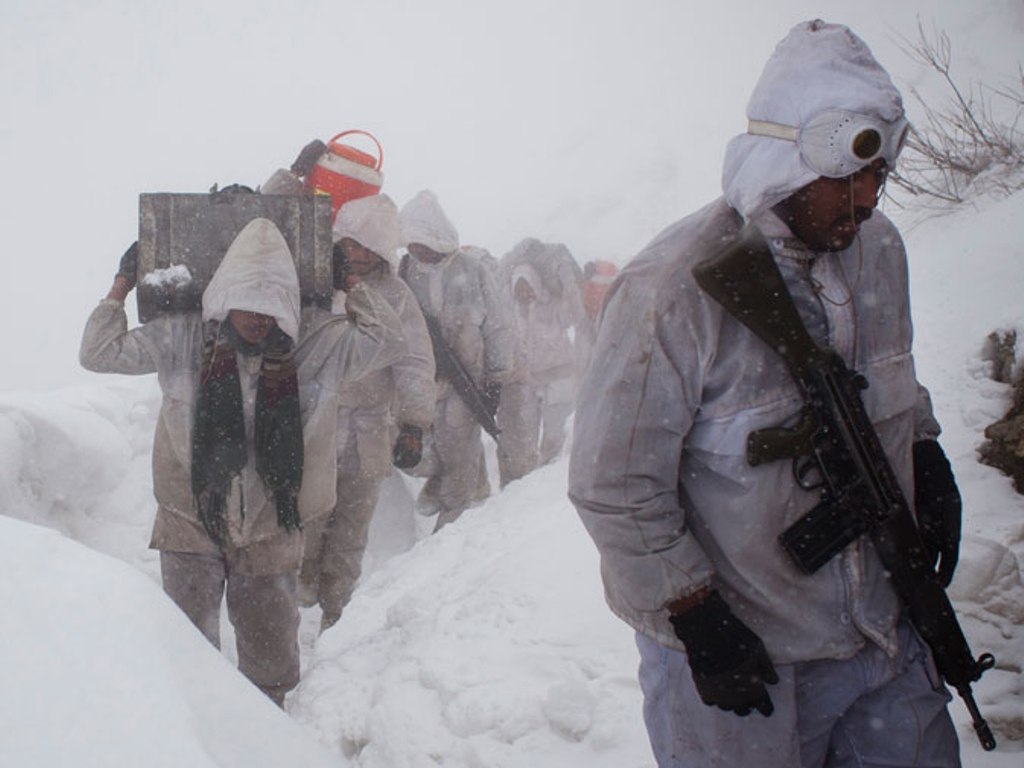
Pakistani soldiers dug into a massive avalanche in a mountain battleground close to the Indian border on Saturday, searching for at least 135 people buried when the wall of snow engulfed a military complex.

More than 12 hours after the disaster at the entrance to the Siachen Glacier, no survivors had been found.

“We are waiting for news and keeping our fingers crossed,” said army spokesman Maj. Gen. Athar Abbas.

Hundreds of troops, sniffer dogs and mechanical equipment were at the scene, but were struggling to make much headway into the avalanche, which crashed down onto the rear headquarters building in the Gayari sector early in the morning, burying it under some 21 meters (70 feet) of snow, Abbas said.

“It’s on a massive scale,” he added. “Everything is completely covered.”

The military said in a statement that at least 124 soldiers and 11 civilian contractors were missing.

Siachen is on the northern tip of the divided Kashmir region claimed by both India and Pakistan.

The accident highlighted the risks of deploying troops to one of the most inhospitable places on earth.

The thousands of troops from both nations stationed there brave viciously cold temperatures, altitude sickness, high winds and isolation for months at a time. Troops have been deployed at elevations of up to 6,700 meters (22,000 feet) and have skirmished intermittently since 1984, though the area has been quiet since a cease-fire in 2003. The glacier is known as the world’s highest battlefield.

Prime Minister Yousuf Raza Gilani expressed his shock at the incident, which he said “would in no way would undermine the high morale of soldiers and officers.”

The headquarters in Gayari, situated at around 4,572 meters (15,000 feet) is the main gateway through which troops and supplies pass on their to other more remote outposts in the sector. It is situated in a valley between two high mountains, close to a military hospital, according to an officer who was stationed there in 2003.

“I can’t comprehend how an avalanche can reach that place,” said the officer, who didn’t give his name because he is not authorized to speak to the media. “It was supposed to be safe.”

More soldiers have died from the weather than combat on the glacier, which was uninhabited before troops moved there.

Conflict there began in 1984 when India occupied the heights of the 78-kilometer (49-mile)-long glacier, fearing Pakistan wanted to claim the territory. Pakistan also deployed its troops. Both armies remain entrenched despite the cease-fire, costing the poverty-stricken countries many millions of dollars each year.

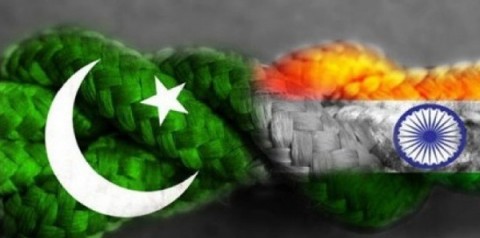
Pakistan and India have fought three wars since the partition of the subcontinent on independence from Britain in 1947. Two of the wars have been over Kashmir, which both claim in its entirety.

Pakistanis for Peace Editor’s Note– The death of these 135 and allegedly more soldiers should prove to be a defining moment for Pakistan in regards to the urgency of peace with India just as the death of the 24 killed by “friendly” NATO attack that killed so many near the Afghanistan border last November.  It is high time India and Pakistan find a way to make peace and end this 60+ year battle and hatred with ourselves as we are one people.  This may not completely apply for India, but the ONLY way to fix EVERYTHING that ails Pakistan is a peace treaty with India~ RIP to the patriots of my sacred land~ MM

Haley’s Comment

As Reported By Robert Walker for The Huffington Post

Like a comet streaking across the heavens, Governor Nikki Haley’s comment on The View about women not caring about contraception is drawing a lot of attention. And rightly so.

Poll after poll suggests that women do care about contraception. Case in point: Mitt Romney’s plan to shut down the family planning clinics run by Planned Parenthood has cost him dearly. His support among women has dropped precipitously in the past few months as voters learn more about his views on family planning.

When Haley and other Republican leaders opine about the lack of voter interest in contraception, it’s more wishful thinking than political insight. They recognize that the positions taken by the GOP presidential aspirants on family planning may help them in the primaries, but it will undoubtedly hurt them in the general election. As a result, they want to change the subject in the worst way.

Unfortunately for them, comments like those made by Governor Haley do nothing to shift voter attention to the issues they want to talk about, like deficits and the economy. To the contrary, they reinforce the idea that Republicans are tone-deaf on women’s issues.

Haley’s comment, in particular, appears to suggest that Republican leaders, even women like her, don’t care about a women’s access to contraception. Before making her claim, maybe she should have checked in with another Republican leader, Senator Olympia Snowe, who earlier this week said that the political attacks on contraception were “retro.”

What’s even more “retro,” however, is the unspoken half of Haley’s comment. By suggesting that women don’t really care about contraception, she’s suggesting that men could care even less. So much less that it’s not even worth discussing.

Polls, of course, suggest to the contrary. While men may feel less strongly than women do, they also care about contraception. Most men recognize that they also benefit when women are able to determine the number and timing of their pregnancies. Some men may want to keep women “barefoot and pregnant,” but it’s a pretty small minority. This is, after all, the 21st century.

As governor of South Carolina, Nikki Haley ought to appreciate the critical need for family planning services. Nearly half of all pregnancies in the United States are unintended. According to the Guttmacher Institute, South Carolina’s rate of unintended pregnancy is significantly higher than the national average. In 2006, 52,000 South Carolina residents had an unintended pregnancy, a rate of 58 per 1,000 women aged 15 to 44. Guttmacher report that births resulting from these unintended pregnancies cost the state and federal governments $254 million in 2006.

And South Carolina’s teenage pregnancy rate, while it’s been declining in recent years, is still about 25 percent higher than the national average according to the Centers for Disease Control.

A poll released earlier this year indicated that 95 percent of South Carolinians believe that teenage pregnancy is an important issue, with 85 percent supporting school-based sexuality education. Maybe, Governor Haley should go on a listening tour in South Carolina before declaring that women don’t care about contraception.

Many regard Governor Haley as a rising political star in the political firmament. She’s frequently mentioned as a possible vice presidential selection. Given Romney’s “gender gap,” adding a woman to the ticket might be a smart move, but, maybe he should find a woman who understands how women — and men — genuinely feel about contraception.

Governor Haley’s comment, like the famed Halley’s comet, will soon fade from public view, but the issue of contraception will not fade anytime soon. The war on contraception is real. State cutbacks, like those in Texas, are forcing family-planning clinics to close their doors, and if GOP leaders succeed in their efforts to eliminate Title X, the federal program that provides low-income women with improved access to family planning, more shutdowns will inevitably occur.

That’s why it’s so critically important that women — and men — pledge to speak out in support of reproductive health and rights. Don’t let the Governor Haleys of the world speak for you.

Pakistanis for Peace Editor’s Note– We profiled Governor Nikki Haley a few days before she was elected as the first Indian born female governor as well as minority woman governor of a US state and wished her well here. However, her party and ideals diametrically are opposed to ours as Democratic voters in the US elections as many Pakistani Americans now are. Thus, some of her ideas and beliefs are not necessarily our own, but we still wish her well as she is a fellow Desi~

Why President Zardari’s Visit Is A Small Bonus

By Soutik Biswas for The BBC

Hope is not a policy, but neither is despair, as South Asia expert Stephen Cohen says in a recent essay on Pakistan.

So it is with relations between India and Pakistan.

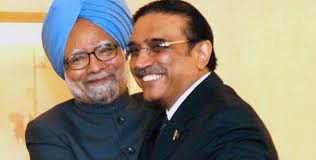
The past few days have shown how fragile the relationship can be – even as India welcomed President Asif Ali Zardari’s private trip to India on Sunday – the first by a Pakistani head of state for seven years – and PM Manmohan Singh invited him for lunch, the $10m US bounty for Hafiz Saeed, the founder of Pakistan-based militant group Lashkar-e-Taiba, provoked the cleric to openly launch a fresh attack against India (and the US).

But people live in hope, so Indian media is gung-ho about Mr Zardari’s visit.

They say the Pakistani president must be applauded for trying to end trade discrimination against India, easing petroleum imports from across the border, and moving towards a liberal visa deal.

“Under Mr Zardari’s watch, India and Pakistan are considering a sweeping agenda for economic co-operation for the first time in decades. The prime minister has every reason to welcome Mr Zardari warmly and consider the next steps in consolidating the unexpected movement in bilateral relations,” the Indian Express wrote.

Analyst C Raja Mohan believes Mr Singh must make an official trip to Pakistan after his meeting with Mr Zardari. “For his part,” he wrote, “Mr Singh should convey to Mr Zardari his readiness to move as fast and as far as the Pakistan president is willing to go.” Others like Jyoti Malhotra actually find Mr Zardari’s visit to the shrine of a famous Sufi Muslim saint in Rajasthan loaded with symbolism in these troubled times. “Clearly, Mr Zardari has stolen an imaginative moment from the bitter-sullen history of India-Pakistan, by asking to come to pay his respects to a cherished and much-beloved saint across the Indian subcontinent,” she wrote.

The relations between two neighbours remain complex. A 2010 Pew survey found 53% of the respondents in Pakistan chose India as the greater threat to their country, and only 26% chose the Taliban and al-Qaeda. At the same time 72% said it was important to improve relations with India, and about 75% wanted more trade relations and talks with India.

Pundits like Mr Cohen believe that it will “take the [Pakistan] army’s compliance, strong political leadership, and resolutely independent-minded foreign ministers to secure any significant shift of approach towards India”.

None of this appears to be in much evidence at the moment.

Both countries have seriously weakened governments that makes them unable to move towards any radical confidence building measures. In the current circumstances, President Zardari’s visit can only be a small bonus. And as scholars like Kanti Bajpai suggest, India must remain patient (even if faced with another Mumbai-style attack), continue to engage with Islamabad, help the civilian government in Pakistan politically, try to resolve a few outstanding disputes like Siachen and Sir Creek, build a relationship with the army and explore the possibility of cooperating with Islamabad on the future of Afghanistan. Despair does not help mend a stormy relationship.

Pakistani militant taunts US: ‘I will be in Lahore tomorrow’

By Sebastian Abbot for The Associated Press

One of Pakistan’s most notorious extremists mocked the United States during a defiant media conference close to the country’s military headquarters Wednesday, a day after the US slapped a $10 million bounty on him.

“I am here, I am visible. America should give that reward money to me,” said Hafiz Mohammad Saeed, referring to the fact that the bounty was given to a man whose whereabouts are not a mystery. “I will be in Lahore tomorrow. America can contact me whenever it wants to.”

Analysts have said Pakistan is unlikely to arrest Saeed, founder of the militant group Lashkar-e-Taiba, because of his alleged links with the country’s intelligence agency and the political danger of doing Washington’s bidding in a country where anti-American sentiment is rampant.

Saeed, 61, has been accused of orchestrating the 2008 attacks in the Indian city of Mumbai that killed 166 people, including six American citizens. But he operates openly in Pakistan, giving public speeches and appearing on TV talk shows.

He has used his high-profile status in recent months to lead a protest movement against US drone strikes and the resumption of NATO supplies for troops in Afghanistan sent through Pakistan. The supplies were suspended in November in retaliation for American airstrikes that accidentally killed 24 Pakistani soldiers.

Hours before Saeed spoke, US Deputy Secretary of State Thomas Nides met Pakistani Foreign Minister Hina Rabbani Khar in the nearby capital, Islamabad, for talks about rebuilding the two nation’s relationship. In a brief statement, Nides did not mention the bounty offer but reaffirmed America’s commitment to “work through” the challenges bedeviling ties.

Increasingly ‘brazen’ appearances
The US said Tuesday it issued the bounty for information leading to Saeed’s arrest and conviction in response to his increasingly “brazen” appearances. It also offered up to $2 million for Lashkar-e-Taiba’s deputy leader, Hafiz Abdul Rahman Makki, who is Saeed’s brother-in-law.

The rewards marked a shift in the long-standing US calculation that going after the leadership of an organization used as a proxy by the Pakistani military against archenemy India would cause too much friction with the Pakistani government.

This shift has occurred as the US-Pakistani relationship steadily deteriorated over the last year, and as the perception of Lashkar-e-Taiba’s potential threat to the West increased.

Bounty backfire?
The US may be hoping the bounty will force Pakistan to curb Saeed’s activities, even if it isn’t willing to arrest him. But the press conference he called at a hotel in the garrison city of Rawalpindi on Wednesday was an indication that is unlikely, and the bounty may even help him by boosting his visibility.

At the hotel, located near the Pakistani army’s main base and only a half hour drive from the US Embassy in Islamabad, Saeed was flanked by more than a dozen right-wing politicians and hardline Islamists who make up the leadership of the Difa-e-Pakistan, or Defense of Pakistan, Council. The group has held a series of large demonstrations against the US and India in recent months.

Some in the media have speculated the movement has the tacit support of the Pakistani military, possibly to put pressure on Washington.

“I want to tell America we will continue our peaceful struggle,” said Saeed. “Life and death is in the hands of God, not in the hands of America.”

Denies involvement in Mumbai massacre
He denied involvement in the Mumbai attacks and said he had been exonerated by Pakistani courts.

Pakistan kept Saeed under house arrest for several months after the attacks but released him after he challenged his detention in court. It has also resisted Indian demands to do more, saying there isn’t sufficient evidence.

The bounty offers could complicate US efforts to get the NATO supply line reopened. Pakistan’s parliament is currently debating a revised framework for ties with the US that Washington hopes will get supplies moving again. But the bounties could be seen by lawmakers and the country’s powerful army as a provocation and an attempt to gain favor with India.

Origins in the Kashmir dispute
Saeed founded Lashkar-e-Taiba in the 1980s allegedly with ISI support to pressure India over the disputed territory of Kashmir. The two countries have fought three major wars since they were carved out of the British empire in 1947, two of them over Kashmir.

Pakistan banned the group in 2002 under US pressure, but it operates with relative freedom under the name of its social welfare wing Jamaat-ud-Dawwa — even doing charity work using government money.

The US has designated both groups foreign terrorist organizations. Intelligence officials and terrorism experts say Lashkar-e-Taiba has expanded its focus beyond India in recent years and has plotted attacks in Europe and Australia. Some have called it “the next Al Qaeda” and fear it could set its sights on the US

* Associated Press writer Asif Shahzad contributed to this report from Islamabad.

Pakistan’s Deputy Attorney General Works Off Taliban’s Sins at Gurdwaras and Shrines

By Rakhi Chakrabarty for Aman Ki Asha

A man in a maroon kurta sits hunched on the floor on Sunday afternoon,polishing the shoes of devotees at a room in Delhi’s Gurdwara Rakabganj.
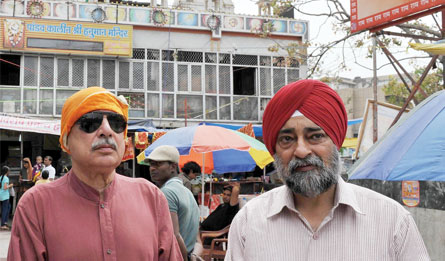
It’s a common sight in gurdwaras, except that this man is Pakistan’s deputy attorney general, Muhammad Khurshid Khan, who had requested he be allowed to perform seva (community service) at the shrine.

Khan, 62, is an eminent lawyer and a devout Muslim from Pakistan’s Peshawar province. He was recently in Delhi for a judicial conference. “I have been very keen to visit various places of worship here to promote harmony between India and Pakistan,” says Khan.
Khan’s tryst with temples and gurdwaras began in 2010 to “heal the wounds of minorities in Pakistan by becoming their sevadar (performer of service)”.

For him, it was a “penance” for crimes committed by the Taliban. In February that year, the Taliban had kidnapped three Sikhs from Peshawar and demanded a $235,000 ransom. Pakistan army rescued two of them, but the third, Jaspal Singh, was beheaded by the captors. It was after the killing, that Khan first performed service at a gurdwara in Peshawar. “I seek harmony among all religions,” says Khan, citing Pakistan’s pluralistic heritage.

“I am a Muslim, not a terrorist; I am a Khan, not a terrorist; I am from Pakistan, but not a terrorist.” This is Pakistani deputy attorney general Muhammad Khurshid Khan’s humble submission as he visits gurdwaras across New Delhi and performs seva (community service).
The Taliban, he says, has plundered Pakistan’s pluralistic heritage. “But I want to tell the world it’s unfair to tarnish a whole community for the sins of a few,” says the Pakhtoon who ran for Pakistan’s National Assembly twice.

In Delhi for a conference (along with some 200 members of the Supreme Court Bar Association of Pakistan), Khan, accompanied by Surinder Singh, a Delhi-based businessman whose father was a comrade of Subhas Chandra Bose, polished shoes at Gurdwara Sisganj and visited Birla Temple and Hanuman Mandir.

Khan told TOI that he turned to other faiths after the Taliban beheaded Jaspal Singh in Peshawar in February 2010. “When I visited the house of Jaspal, I was filled with remorse.” The killing weighed on his conscience.

He was perturbed that violence in the name of Islam brought a bad name not only to Muslims and Pakistan but also to his people, the Pakhtoons.
The next day, he went to Gurdwara Bhai Joga Singh in Peshawar and sat on the steps. He could hear the chants wafting out of the shrine. “I felt peace,” he says.The lawyer started reading about Guru Nanak and approached a member of the gurdwara management committee to allow him the opportunity for seva. After discussions, the gurdwara management committee allowed to perform seva.

“For two months, I went to the gurdwara daily before the maghrib azaan (call to prayer at sunset) and polished shoes of devotees. Sevadari is ibaadat (worship),” he says.In Delhi, Khan also went to Jantar Mantar in the hope of meeting Anna. He sent his visiting card and waited for close to an hour but could not meet Anna. But he left the place “charmed”. “It is amazing. This is democracy,” he said.
On his way back to Pakistan, he will visit the Golden Temple at Amritsar for the ‘Jora Ghar Seva (polishing shoes of devotees). He had written to PM Manmohan Singh last year to allow him a chance to perform seva at Amritsar.

“I am yet to get a reply,” he said.He has performed similar service at Hindu temples and joins church prayers every Sunday in Pakistan. “I live in a rigid society. But the ulema have never criticised me. The Hadees says anything good must be spread all around,” said Khan.
His gesture has been appreciated by Muslims and as well as religious minorities in Pakistan.

Pakistan Salute Record-Setting Tendulkar’s Achievement

As Reported by The AFP

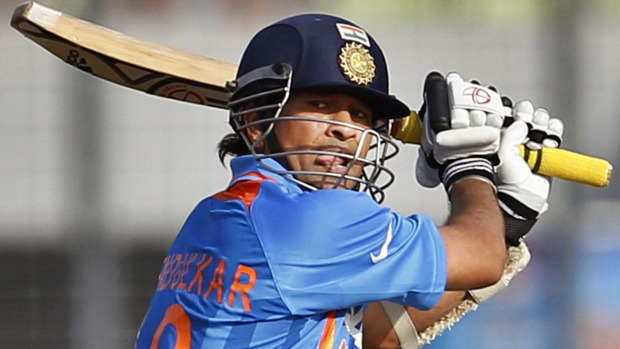
Former cricketing greats and fans in Pakistan paid tribute to Indian batting superstar Sachin Tendulkar after he became the first player ever to score 100 international centuries.

“It is a great achievement which other players of his era and those who come after him will not even think of achieving,” said former Pakistan captain Javed Miandad.

“When he played against us in 1989 he showed glimpses of what was in store for world cricket and the kind of sincerity he has shown with the game has only made him immortal and prolonged his career to 23 years and he can still go on.”

Miandad hailed the father of two, known variously as the “Little Master” or “Bombay Blaster“, as a role model for the cricketing world.

Another former Pakistan captain Moin Khan, who played against Tendulkar from 1992-2004, also joined the chorus of praise.

“He has achieved something which will be tough to match. He has been a trend–setter and if players emulate him we will get more great players.

“Tendulkar’s speciality is that he is very professional, loves the game and lusts for runs. With no controversy in his career he has been a role model for future cricketers,” said Moin.

“Great players are not those who do great achievements but those who, with their great character on and off the field, become role models.”

Fans in the street also acknowledged Tendulkar’s feat.

“Tendulkar is adored in Pakistan and we are happy at his achievement. We are happy that he has not hit his 100th hundred against Pakistan,” said Babar Khan, a local resident

Rushdie Coming, Imran Backs Out

By Imtiaz Ahmad for The Hindustan Times

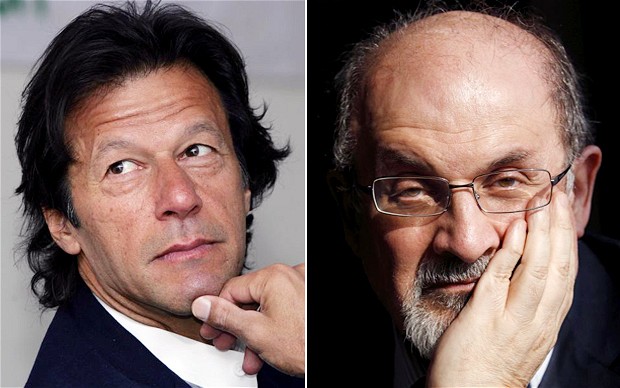
Pakistan Tehreek-e-Insaf (PTI) chairman Imran Khan has refused to attend a function in New Delhi later this week after learning that British author Salman Rushdie will also be a participant.

Senior PTI leader Shireen Mazari said in a statement on Wednesday that Khan cancelled his participation as keynote speaker at the event, stating that he could not even think of taking part in a programme that included Rushdie, who has caused “immeasurable hurt to Muslims across the globe”.

Quoting Khan, Mazari said the party leader received the full programme of the event on Tuesday night and took his decision on Wednesday morning.

The organisers of the event announced on Tuesday that Rushdie would deliver a speech titled The Liberty Verses —I Am What I Am And That’s All That I Am.

Rushdie’s works are banned in Pakistan. He is seen to have committed blasphemy in his book, The Satanic Verses.

Several people in Pakistan have been killed in the past couple of years on suspicion of blasphemy, the most high-profile case being that of Punjab governor Salman Taseer, who was shot dead in 2011 by a member of his security detail.

Taseer opposed Pakistan’s blasphemy law and had backed a mercy petition for Asia Bibi, a Christian woman sentenced to death for blasphemy.

Khan’s party recently aligned with the Difa-e-Pakistan council — a collection of religious parties, including many banned outfits — which has been campaigning against US drone attacks and allowing transit passage for Nato supplies.

A Nobel Prize for Edhi

Pakistanis for Peace and Manzer Munir cordially and humbly request you to please sign this petition to nominate Abdul Sattar Edhi for the Nobel Peace Prize.

The Nobel Peace prize is an annual prize awarded to individuals who have made formidable contributions to the pursuit of peace and have, through their work, changed the world for the better.

As the founder of Pakistan’s largest welfare organization, the Edhi Foundation and trust, Mr Abdul Sattar Edhi embodies the spirit of this prize, and is a deserving candidate for this honour. He has single-handedly served countless Pakistani’s and has left a lasting impact on his fellow countrymen and the world.

Quite simply, there has never been anyone more deserving of the Nobel Peace prize in its entire history than Mr Abdul Sattar Edhi. Please help us get him his dues by having him finally nominated this year.

Please sign this petition to show your support for the nomination of Mr.Edhi for the 2012 Nobel Peace Prize.


Security Forces in Kashmir Charged With Rights Abuses

By Riyaz Masroor for The BBC

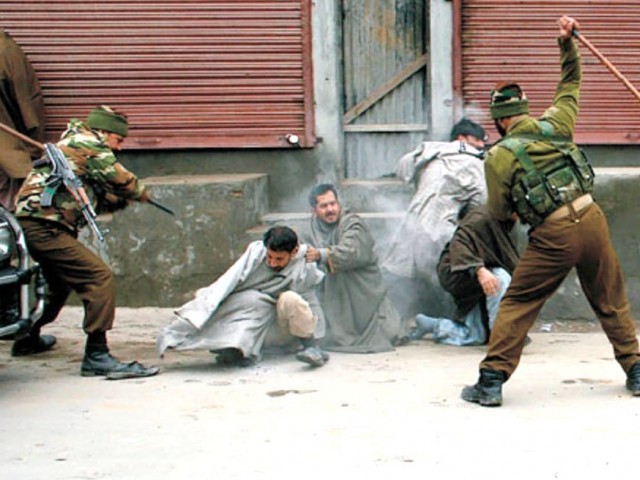
The authorities in Indian-administered Kashmir have launched more than 400 cases of alleged human rights abuses against security forces personnel. The region’s minister for internal security released the figures in the Jammu and Kashmir legislative assembly.

Kashmiri officials want to revoke the Armed Forces Special Powers Act, which prevents prosecution of security staff. There has been a rebellion against Indian rule in divided Kashmir, which is also claimed by Pakistan.

Thousands of people have been killed in the region since the rebellion began in 1989, though violence has dropped off recently. India’s defence ministry has resisted moves to revoke the Armed Forces Special Powers Act (AFSPA).

According to the state government of Indian-administered Kashmir, 444 soldiers, police and security officials have been charged in the past three years.

Nearly 300 cases have been seen in local courts, the government said on Monday in a written response to the Jammu and Kashmir assembly. Human rights activists say the Indian authorities are forcing the Kashmir government to move slowly on these cases.

Kashmiri officials have been pleading with Delhi to scrap the AFSPA so they can proceed with prosecuting security officials against whom cases are pending.

But army officials say it is needed to prevent militant groups based in Pakistan from focusing their resources on Kashmir.

Pakistan’s Hindu Girls Forced into Muslim Marriages

As Reported by IRIN

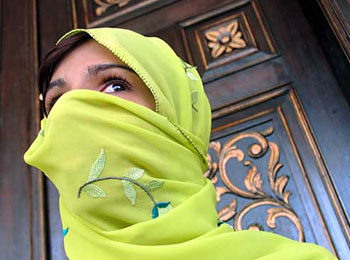
Sixteen-year-old Ameena Ahmed*, now living in the town of Rahim Yar Khan in Pakistan’s Punjab Province, does not always respond when her mother-in-law calls out to her. 


“Even after a year of `marriage’ I am not used to my new name. I was called Radha before,” she told IRIN on a rare occasion when she was allowed to go to the corner shop on her own to buy vegetables. 


Ameena, or Radha as she still calls herself, was abducted from Karachi about 13 months ago by a group of young men who offered her ice-cream and a ride in their car. Before she knew what was happening, she was dragged into a larger van, and driven to an area she did not know. 


She was then pressured into signing forms which she later found meant she was married to Ahmed Salim, 25; she was converted to a Muslim after being asked to recite some verses in front of a cleric. She was obliged to wear a veil. Seven months ago, Ameena, who has not seen her parents or three siblings since then and “misses them a lot”, moved with her new family to southern Punjab. 


“The abduction and kidnapping of Hindu girls is becoming more and more common,” Amarnath Motumal, a lawyer and leader of Karachi’s Hindu community, told IRIN. “This trend has been growing over the past four or five years, and it is getting worse day by day.

Pakistan is one of several nations across Asia suffering from a shortage of females as sex-selective abortion has played growing role in the deficit. Portable ultrasound machines have made gender selection much easier. A 2005 study quoted by Wiki estimated that more than 90 million females were “missing” from the expected populations in Afghanistan, Bangladesh, China, India, Pakistan, South Korea and Taiwan alone.

He said there were at least 15-20 forced abductions and conversions of young girls from Karachi each month, mainly from the multi-ethnic Lyari area. The fact that more and more people were moving to Karachi from the interior of Sindh Province added to the dangers, as there were now more Hindus in Karachi, he said. 


“They come to search for better schooling, for work and to escape growing extremism,” said Motumal who believes Muslim religious schools are involved in the conversion business. 


“Hindus are non-believers. They believe in many gods, not one, and are heretics. So they should be converted,” said Abdul Mannan, 20, a Muslim student. He said he would be willing to marry a Hindu girl, if asked to by his teachers, “because conversions brought big rewards from Allah [God]. But later I will marry a `real’ Muslim girl as my second wife,” he said. 


According to local law, a Muslim man can take more than one wife, but rights activists argue that the law infringes the rights of women and needs to be altered. 


Motumal says Hindu organizations are concerned only with the “forced conversion” of girls under 18. “Adult women are of course free to choose,” he said. 


“Lured away”

Sunil Sushmt, 40, who lives in a village close to the city of Mirpurkhas in central Sindh Province, said his 14-year-old daughter was “lured away” by an older neighbour and, her parents believe, forcibly converted after marriage to a Muslim. “She was a child. What choice did she have?” her father asked. He said her mother still cries for her “almost daily” a year after the event. 


Sushmat is also concerned about how his daughter is being treated. “We know many converts are treated like slaves, not wives,” he said. 


According to official figures, Hindus based mainly in Sindh make up 2 percent of Pakistan’s total population of 165 million. “We believe this figure could be higher,” Motumal said. 


According to media reports, a growing number of Hindus have been fleeing Pakistan, mainly for neighbouring India. The kidnapping of girls and other forms of persecution is a factor in this, according to those who have decided not to stay in the country any longer. 


“My family has lived in Sindh for generations,” Parvati Devi, 70, told IRIN. “But now I worry for the future of my granddaughters and their children. Maybe we too should leave,” she said. “The entire family is seriously considering this.” 


Pakistanis for Peace Editor’s Note– This is an absolutely despicable practice that the Pakistani government needs to put an end to just like the blasphemy laws of the nation. The religious minorities of Pakistan deserve equal rights, protections and freedoms.

Pakistan’s Move on Trade With India Can Help in Wider Normalization of Ties

As Reported by The Economic Times

The reported move by the Pakistan government to phase out major restrictions on trade with India by switching to the negative list, and doing away with that too by the end of the year, is wholly welcome. Normalising trade relations with India will help establish a template of wider normalization of mutual ties.

An indication of deep-rooted animosities and suspicions which have stymied that goal can be seen in the opposition from quarters within Pakistan to Islamabad’s declared – and logical – aim of granting India the World Trade Organization-compliant Most Favoured Nation status next year.

But the arrangement to separate commerce from thornier issues like Kashmir and Pakistan’s actions against those accused of terror attacks against India can lay a foundation for minimising mutual distrust. For New Delhi, this would be in keeping with the idea of engaging various power centres in Pakistan, given the fractured power structure in that country.

While being perfectly aware that policy on India, like in other areas deemed to be ‘strategic’ by the military, is mostly determined by the latter, the aim should be to defang and isolate hardline elements by positing the real and tangible benefits enhanced mutual trade can offer Pakistan.

And there certainly is ample scope to do that: direct Indo-Pak trade is less than 1% of their global trade; annual mutual trade was around $2.7 billion through March 2011, which, despite being up 50% from the previous year is still measly compared to, say, India’s $60 billion annual trade with China or the potential.

But a beginning has been made with Pakistani industry backing the new move, which, in turn, can help allay fears that Indian goods will swamp Pakistani markets. What will happen is the ending of trade routed through third countries (mostly Dubai).

Legitimate mutual trade can lead to both countries envisaging cooperation in a wider trading entity comprising Afghanistan and Central Asia, with obvious benefits for regional stability. This might sound utopian for now, but mutually-beneficial commerce does have a way of tempering hostilities.

The Pornification of New India

By Damayanti Datta for India Today

On February 7, three Karnataka ministers were captured on television poring over a phone screen, watching a woman in a petticoat gyrating wildly. They lost their jobs for watching pornography in the sacred precincts of the Legislative Assembly. The incident is a high-profile sample of a definitive reality: porn is pervasive through the Internet across India, easily and freely available, not just to leery politicians but to children and adults in millions of ordinary homes.

It is a sign of the times that the most famous international porn star has Indian roots and was on Indian television. Sunny Leone, 30, appeared on the reality show Big Boss 5 and has now launched a clothes-on Bollywood career. Her fake breasts, that won the 2010 fame Award for Favourite Breasts in Los Angeles, have brought her the honour of being named among the 50 Most Desirable Women by the nation’s biggest daily this month.

The organised $12 billion (Rs.60,000 crore) American adult entertainment industry, to which Leone belongs, has bred explicit images beyond the limits of imagination. And they are free. Fuelled by the Internet and facilitated by high-speed data service, pornography, born in dozens of studio lofts around the world, has entered teenagers’ mobile phones with the force and sweep of a dangerous flood. It threatens to swamp conventional notions of morality, raise tensions in bedrooms, lure children into a world they do not understand, and initiate a culture that threatens the mores of family life as we know it.

The writing is on the wall. Google Trends show the search volume index for the word ‘porn’ has doubled in India between 2010 and 2012. With instant Net connectivity and flexible payment options, online porn is increasingly affordable, accessible and acceptable. Seven Indian cities are among the top 10 in the world on porn search, reports Google Trends, 2011. One out of five mobile users in India wants adult content on his 3G-enabled phone, according to an 2011 IMRB Survey. Over 47 per cent students discuss porn every day, says a public school survey by Max Hospital in Delhi. Porn tops the list of cyber crimes in India, according to the National Crime Records Bureau.

Rape, penetration, oral, anal, lesbian, gay or group porn are yesterday’s news. There is now a hectic crossover of porn subcultures on the World Wide Web. Consider MILF (or Mothers I Like to F***) porn. “Check out the most notorious hot, mature moms going crazy and getting f****d by young studs,” invites one of the 40,600,000 MILF websites. “A hot and sexy bride is getting raped brutally,” says a ‘ravished bride’ porn site. There is ‘pregnant porn’ (“Are you ready to see these moms-to-be in action?). There is ‘incest porn’ that welcomes you to sites with “xxx videos full of mother and son, dad and daughter”. Child porn blends with ‘teen porn’, promising “fascinating porn actions starring our young models”.

New jargon and innovative formats, borrowed from foreign cultures, are trendy on the web. For the uninitiated, chikan (“to grope” in Japanese) porn is all about public molestation in trains. ‘Bukkake’ parties involve repeated ejaculation on a woman by several men. Shemale and futanari porn mean “live action” with transsexuals. Anime and manga refer to Japanese formats of sexually-explicit comics and animation. A new focus is the service sector, with “shy massage girls” seducing clients, doctors and “hot babes in nurse uniforms” getting wild. In ‘corporate porn’ “busty secretaries” go down on their knees to pleasure their boss.

Sunny Leone (or Karen Malhotra) takes credit for the ‘pornification’ of India. “My presence on Bigg Boss has empowered a lot of people to be open about their sexuality,” she tells India Today. One of the richest adult actresses in the industry, with her SunLust Pictures in Los Angeles reporting a top line of over $1 million (Rs.5 crore), she is now getting ready to debut in filmmaker Mahesh Bhatt’s Jism 2, playing a professional body double. The most-searched Google celebrity-powered by India, Bangladesh and Pakistan-she has 1,47,326 Twitter followers.

Leone’s success indicates the greater acceptability of porn in daily life. Internet is the new tool, exploding every embarrassing sexual adventure of public personalities and making every lurid detail an item of private consumption. Coming after the midwife Bhanwri Devi’s sex cds with Rajasthan politician Mahipal Maderna in November 2011, public reaction to the Karnataka fiasco has ranged from indignation to amusement, but not shock: if political parties engaged in a morality-in-politics war, social activist Anna Hazare demanded the ministers be sent to jail and media professional Pritish Nandy summed up Bollywood’s reaction by calling them the “3 idiots”.

“A porn star doesn’t automatically mean prostitute,” says Leone, now seeking respectability. She talks about her parents’ initial shock turning into respect, how they taught her to be a “good person”, years of hard work, restrained personal life, professionalism and lack of regrets. Like the girl-next-door, she tweets how she is learning Hindi, cooking sabzi and massaging hair oil. Her endeavour will not be too difficult. Young adults, who grew up with cable TV, DVD players and the Internet, have been exposed to much more adult material than their parents. As filmmaker Pooja Bhatt points out, “Young people don’t respond negatively to Sunny because they have already logged on to her website.”

She is not wrong. Even school students discuss porn. Dr Samir Parikh, chief psychiatrist, Max Healthcare, calls it “risky indulgences”. In a survey on 1,000 children from top public schools in Delhi in 2010, he found 47 per cent boys and 29 per cent girls visiting porn sites and talking about it in school. “I understand sexual inquisitiveness and peer pressure around sexuality, but pornography on the Internet is fake, unreal, often violent and downright perverted,” he says. “Moreover, a new technology in young hands could lead to irresponsible behaviour and ruin their lives.” He obviously has in mind the stream of MMS scandals that have hit campuses across the country since 2004, when two Class XI students of a school in Delhi created a sensation. In many of these cases, either one partner was not aware of being filmed or did not anticipate the videos would get circulated-as in May 2011 when JNU student Janardan Kumar, 22, made a video of the girl he was intimate with and used it to blackmail her after being rejected.

Campus porn is a thriving subterranean culture. Try talking to students in various campuses of Delhi: “Have you ever heard of MMS videos of students being circulated on the campus?”

Diksha Singh, 20: “Every couple of months there is a fresh case. It’s so common, I don’t even blink.”

Raghav Verma, 19: “All the time. It’s shocking to see a classmate’s intimate details on video camera.”

Mehak Suri, 18: “My ex-boyfriend tried that with me, and when it didn’t work he sent me threatening emails and messages.”

Amaira Kapoor, 20: “You will be surprised to know how many cases go unreported and unaccounted for.”

Sakshi Wakhlu, 21: “A year ago, one girl got high, went with a group of boys and had sex with them. The men came back and talked.”

The arrival of smartphones is changing the country’s porn landscape further. India has the lowest penetration of smartphones, 10 per cent, among the youth globally. But with email, social networking, chatting, messaging and gaming, it is a device every youth craves for. And now there are even porn applications. Imagine a ‘pocket’ girlfriend or boyfriend, who can strip, talk dirty, make sexual noises. “These are some of the ‘apps’ that can be downloaded on smartphones,” says Pranesh Prakash, programme manager with Bangalore-based think-tank Centre for Internet and Society. “App download data shows the popularity of sex-themed apps on smartphones, apart from the adults-only stores,” he says. Age restrictions for applications? Mostly a pop-up asking if one is over 17. With over 50 per cent of all Internet users in the country accessing the web via mobile phones already, as estimated by TRAI, smartphones are the future of anytime-anywhere porn.

The threshold of what can be called ‘pornography’ is shifting. Mainstream and hardcore entertainment are coming closer. The Dirty Picture, biopic of south siren Silk Smitha, raked in Rs.50 crore in its very first week in December 2011, with its noisy orgasms, titillating cleavage and fiery dialogues. It’s also hard to draw the line between porn and art in raunchy item numbers, from Sheila ki Jawani to Munni Badnam Hui. “What heroines do in films today is what vamps did yesterday,” says filmmaker Mahesh Bhatt. Some item numbers are more obscene than nudity, he feels. “People tell me, how can someone who made Saaransh, Arth and Zakhm, make films like Jism and Murder” he adds. “I say, get off the high horse.”

Kolkata certainly is getting off the high horse. A city with the least taste for pornography, going by India Today Sex Surveys, is also one of the top seekers of porn online, reports Google Trends. Leone’s CDs are bestsellers here. Teenage boys creep up and ask, “Sunny Leone ka CD chahiye?” (Want Sunny Leone’s CDs?), at Chandni Chowk market in central Kolkata, the city’s piracy hub. Step inside the dingy alleys between shops selling electronic goods, and piles of pirated blue film come out of hiding-Rs.120 for just a CD and Rs.250 for one with Leone on the cover. Ask too many questions and they show you the door. The police are their friends, although motorcycles stand ready for sudden crackdowns. “Sunny’s CD is selling like hot cakes, 200 a day,” says one. Leone is not pleased. “If you are stealing my movies in Kolkata, that is flipping horrible,” she has tweeted. But who cares? A 33-year-old customer puts away her CD in his plastic bag with quiet satisfaction. “I will have to watch when the wife is not looking,” he grins.

If a married man watches porn,is it considered cheating??

My husband secretly watches porn. Why are men like this? He knows I hate porn.

My husband watches porn alone. He refuses to watch it with me.

My husband watches porn very often. Should I be worried?

I feel insulted whenever my boyfriend watches porn.

There are 2,690,000 such postings on Google, from wives and girlfriends globally, on a range of sites on the web-health, marriage, empowerment, agony.

Watching porn alone is a rising trend among men, thanks to the Internet. Check out India Today Sex Surveys: in 2009, with video as the most popular porn format, just 10 per cent men out of 2,661 watched porn alone. This year, with smarter access and gadgets, it zoomed to 44 per cent. “It is usually a sign of cybersex addiction,” says Dr Vijay Nagaswami, Chennai-based expert on sexual psychotherapy. “Compulsive pornwatchers often become dysfunctional. They stay up late for online porn to get active on instant messengers, webcams, demand more private time, neglect family, work and normal sexual activity.”

Even five years back, it was difficult to get locals to dub foreign porn films in Gujarati. But now, mobile shop owners in Ahmedabad do brisk business in porn, supplying primarily to youngsters. They download content on hard discs and then transfer those to the memory cards of eager youngsters-Rs.100 to Rs.200 for a 30-minute film. “It’s good business. Sometimes I get more than six customers, all boys,” says Rajesh Patel, a porn-provider.

It’s good business in Chennai, too. In a small shop opposite the high court in Burma Bazaar, the hub of pirated movies in Chennai, Ramu is doing his puja. He throws flowers at the gods, and looks at his customer. “English, Tamil also.” His voice goes an octave lower, “Triple.” Who cares for storylines? Many of these films are shot in the city or taken off the Net. Ramu sells at least 100 discs a day, mostly to distributors. The CDs are mostly of Indian couples having sex, sometimes verging on rape. “This business can’t be hit by recession,” Ramu says. “People will always buy porn.”

The buzz is, although the Karnataka ministers claimed they were watching clips of a real-life gang-rape at a rave party, they were either watching Indonesian hardcore ‘abik’ porn or model Poonam Pandey’s YouTube video, Bathroom Secrets. But what do most Indians watch? Google Trends indicates that the average Indian pornwatcher opts for more tame keywords, ‘sex’ and ‘how to kiss’, the most. New research by computational neuroscientists Ogi Ogas and Sai Gaddam from Boston University, US, on a billion porn and erotic web searches across the world, shows that the five most popular porn sites for men are webcam or video sites featuring anonymous graphic sex, with a monthly traffic of 7-16 million visitors. For women, the most popular is the “erotic” site fanfiction.net, which gets over 1.5 million visitors a month and has more than two million stories, 50 per cent being “romance”.

How big is pornography in India? Of the 500 top Indian websites this month ranked by the leading global web information company Alexa, at least 24 are porn sites. Nearly a dozen porn sites are more popular than some leading news sites and that of the Bombay Stock Exchange. Leone, one of the top five global porn stars, says 80 per cent of her web traffic and 60 per cent of her “high six figures” revenue come from India. The content, she says, is “everything and above”. “I can sell anything you want as long as you have a credit card.”

The only other major-league porn actor of Indian origin in the US, Priya Anjali Rai, also says she has a lot of fans in India, but not many paying customers. Adopted from New Delhi by American parents and brought up in Arizona, Rai keeps her Indian name for her work: “That’s what makes me different from everybody else.” Both Leone and Rai insist they only do “vanilla” porn, “boy-girl stuff”. The US, specifically the Los Angeles area, has the biggest porn industry in the world, followed by London and Budapest, estimated between $4 billion (Rs.20,000 crore) and $15 billion (Rs.75,000 crore) annually. Top porn stars easily earn a quarter of a million dollars annually.

Those who think production and distribution of pornography in India are not allowed, think again. “A lot of amateur videos are being produced,” says Namita Malhotra, author of Porn: Law, Video and Technology. “They have been there for long. But now from print they have gone digital. Amateur videos are a new phenomenon,” says a lawyer associated with Alternative Law Forum in Bangalore. “It’s unorganised,” says a Bangalore-based photographer involved with the porn industry. There are a few big houses who run multi-crore businesses. The small players use small video cameras so that they can be seen on mobile phones. “Ever since the mms scandal, we make false scandal videos, called kaand,” the photographer says. “It’s normal sex. Not like those foreign videos where they use horses and 10 men at the same time.” Do they go online? Sometimes they are sold, but always with the permission of the model, “No force,” he insists. “The money is good, so that we don’t tell anyone.” His best moment? When a model asked him to shoot her in different ways, to try to create a scandal and get noticed.

Has the battle against porn been lost? Anti-porn feminists in the US have admitted defeat. India is not quite there. Despite the hyper-sexualised climate, ministers do get thrown out over porn. To cyber law expert and senior associate of SNG & Partners Rahul Sud, India is on the right track. “Personal consumption of porn has never been an offence,” he points out. “Child pornography, publishing and transmitting are.” Press Council of India Chairperson Justice Markandey Katju has rolled out the red carpet for Leone, but not before comparing her to history’s “fallen women”, Amrapali or Mary Magdalene.

Does Leone care? She is busy stretching, bending and sweating. Not in a girl-boy-girl orgy online but on a Bikram Yoga mat in Hollywood. “OMG, I’m so tired,” she tweets. She has the same vital statistics as Marilyn Monroe, 36-24-34, and she is determined to look her best for those semi-nude scenes in Jism 2. “We Indians are proud of you!,” tweets one of her admirers. “Thank you,” she tweets back. She has every reason to be grateful.

– With Indira Kannan, Nishat Bari, Kiran Tare, Gunjeet Sra, Shravya Jain, Avantika Sharma, Lakshmi Kumaraswami, Uday Mahurkar and Tithi Sarkar contributing.

Pakistanis for Peace Editor’s Note– The porn phenomena is not isolated to just India in the subcontinent. Across the border, Pakistan was recently ranked as first in the world in terms of pornographic Google searches. This is a result of two conservative societies where sex is a taboo. One can only hope that these ancient and slow changing cultures can adapt to the new realities regarding sex.

Jeremy Lin: Where’s The Indian Version?

By Palash R Ghosh for International Business Times

I am as excited and thrilled with the sudden meteoric climb of New York Knicks point guard Jeremy Lin as anyone else. I am completely immersed in ‘Linsanity’ and hope he becomes a dominant superstar in the NBA over a nice long career.

Jeremy Lin is the greatest sports story I’ve seen in years, perhaps decades. As an Asian-American, Lin’s brilliant play has special meaning and significance to me.

However, I must admit, since I am neither Chinese nor Taiwanese, my appreciation of Lin is somewhat as an “outsider.” That is, I can’t quite reach the same level of excitement about No. 17 as my Chinese and Taiwanese friends have.

I have waited many years for an Indian boy in the United States to become a professional sports superstar. Thus far, such a thing hasn’t happened, and, sadly, I doubt it will in my lifetime.

The term “Asian-American” is impossibly vague, broad and diverse, encompassing everyone who claims descent from the Philippines to Afghanistan. Indeed, it’s a rather meaningless phrase, but, for the sake of simplicity, it really means Americans whose parents or ancestors immigrated from a handful of major Asian nations.

According to the 2010 U.S. Census, there were 17.3-million Americans of “Asian” descent, representing about 5.6 percent of the total population.

I found a breakdown of that population for 2008, which indicated that the Chinese formed the largest group among Asian-Americans at 3.6 million, followed by Filipinos (3.1 million), East Indians (2.7 million), Vietnamese (1.7 million), Koreans (1.6 million) and Japanese (1.3 million).

In the popular vernacular, Indians are sometimes not even considered “Asian” since they are sometimes more associated with Middle Eastern peoples, especially since 9-11.

No matter, I consider the people of India, Pakistan, Bangladesh, Sri Lanka, Nepal and Afghanistan as “Asians.”

So, with these large numbers, why are there no Indian star athletes in the United States?

To the best of my knowledge, no Indian lad has ever reached the NBA or Major League Baseball.

Sanjay Beach had a brief career as a wide receiver for the San Francisco 49ers and the Green Bay Packers; Brandon Chillar (whose father is Indian) played linebacker for the Green Bay Packers; and Manny Malhotra (an Indo-Canadian), plays for the Vancouver Canucks in NHL.

And that’s it — and none of them are exactly ‘household names’ or superstars.

Part of the problem is that Indian parents pressure their children to succeed in academics and to shun ‘frivolous’ pursuits like sports, arts and music. Hence, the large number of Indian-American doctors, engineers, accountants, mathematicians, scientists, corporate executives, and, uh, underpaid journalists.

Indeed, Indians (like Chinese and Koreans) are among the highest-earning, best-educated people in the U.S. The residue of being a dreaded “model minority.”

This is all fine and dandy… but, frankly, I’m rather tired of Indians in America being pigeonholed into dull, safe careers. I would be much happier if an Indian boy could pitch a 95-mile-an-hour fast-ball, or slam dunk a basketball or throw a football with pinpoint accuracy for 60 yards.

Realistically, an Indian reaching the NBA and NFL is probably beyond the realm of reality. But what about America’s grand old pastime, baseball?

After all, Indians have excelled at cricket – a sport that requires skills similar to baseball.

If Sachin Tendulkar had grown up in California, perhaps he would now be the starting centerfielder for the Los Angeles Dodgers. If Muttiah Muralitharan were raised in New Jersey, maybe he’d be a 20-game winning pitcher for the Philadelphia Phillies. They certainly have the ability to excel in baseball.

What about U.S. football? Indians are pretty good at soccer — surely some NFL club could find place for an Indian placekicker or punter, no? NFL teams have, over the years, employed a number of former European soccer players for such humble (non-violent) duties.

Will we see an Indian-American athletic superstar in my lifetime (I probably have about 30 years left on this earth)? My guess is no.

Most Indian parents compel their children to study subjects in school that will lead to good, solid, stable high-paying jobs. Sports are fine as long as they don’t become an obsession or, worse, a career goal.

Indian parents likely tell their children that becoming a professional athlete is the longest of long shots (even if one has great talent) — and indeed, they are right. Consider that in the NBA there are 30 teams with a roster of 12 players each.

That’s just 360 players.

Thus, for every NBA player, there are about 850,000 people in the United States.

It makes no logical sense to pursue a career in sports – unless your name is Jeremy Lin, of course.

And let me add that if a young Indian man rose to the top of any American sports leagues, he would likely become the number one celebrity on the planet, especially if he is telegenic.

He would not only enjoy the fame and wealth that is bestowed upon those lucky few that reach the zenith of pro sports in the western world, but he would also have about one-billion people on the Indian subcontinent as rabid, devoted followers. He would be like a combination of Michael Jordan, Tom Brady, Joe DiMaggio, Elvis Presley, John Wayne and Salman Khan.

It would be utterly incredible… but highly unlikely.

Made in India’ Show in Pakistan as Both Talk to Boost Trade

By Surojit Gupta for The Times of India

Trade ties between India and Pakistan are expected to get a boost as New Delhi reaches out to the business community across the border, starting Monday to assure them about the positive impact of normal trade ties. Commerce minister Anand Sharma will undertake a rare journey to Pakistan, leading a large delegation of senior officials and top businessmen as the two hostile neighbours take baby steps to normalise trade and economic relations.

The private sector led by industry chambers has put up an “India show”, in Lahore and Karachi – the first ever trade exhibitions from India where over 100 exhibitors are participating. Firms representing pharmaceuticals, textile, gems and jewellery, chemicals and petro-chemicals are showcasing products.

The move is a follow up to the efforts to normalise trade ties. The Pakistan government announced granting of Most Favoured Nation (MFN) status to India in November last year. But, criticism from a section of industry in Pakistan has forced Islamabad to take measured steps on the issue. But, officials said they were optimistic that by the end of 2012, the transition to full MFN status would be complete.

Officials said they will launch outreach programme to assure businessmen in Pakistan that Indian goods will not swamp the Pakistan market if trade is normalised. “We will tell them that there are enough trade safeguards measures to ensure that Indian goods do not flood the Pakistani market. Let us first liberalise trade and see the impact,” said a senior government official.

Pakistan allows exports to India but has a positive list of 1,938 items which are officially allowed to be imported from India. Latest data shows that formal trade between India and Pakistan rose to $2.7 billion in 2010-11 from $144 million in 2001, while informal trade including third country trade is estimated at $10 billion, according to a Ficci status paper. “I have no doubt in my mind that bilateral trade, which currently stands at $3 billion, can be raised to $10 billion if trade through third countries (Dubai, Singapore and Central Asian countries) is channelised into direct exchange between the two countries,” said R V Kanoria, president, Ficci.

The government has undertaken a series of measures to increase bilateral trade. There is a move to open a second gate at the Attari-Wagah border, which is expected to increase the number of trucks crossing the border to 500-600 daily from 150-200 at present. Pakistan has agreed to remove restrictions on the number of commodities traded by the land route once the infrastructure in Wagah is ready, while both countries have agreed to avoid arbitrary stoppage of goods at ports. Suggestions have been made for opening up of an additional land route at Monabao-Khokhara Par on the Sindh border for faster movement of goods.

“We are taking significant steps to improve the border infrastructure. India has invested nearly Rs 150 crore to develop infrastructure at the Integrated Check post near Attari,” said a senior government official. He said the visa regime for business travel is also expected to be liberalised soon with multiple entry visas for 10 Indian cities, along with exemptions for police reporting. The formal announcement is expected to be made soon. Talks to expand trade in petroleum products are progressing, while efforts are also on to start negotiations for trade in electricity between the two nuclear-armed neighbours. Both sides have agreed on grid-connectivity between Amritsar and Lahore, which would pave the way for trade of up to 500 MW of power.

Trade experts said they were optimistic about the latest moves and said the effort will go a long way in helping faster regional integration. “The positive spin off for normalisation of trade is enormous. Pakistan has given signals and India now needs to take the initiative. Normalisation of bilateral trade relations will help in putting much of the political bickering on the backburner,” said Biswajit Dhar, director-general at Research and Information System for Developing Countries, an economic and trade thinktank. Experts said there was huge potential for forging joint ventures between Indian and Pakistani companies in sectors such as information technology, fish-processing, drugs and pharmaceuticals, agro chemicals, chemicals, automobile ancillary and light engineering.

Pakistanis for Peace Editor’s Note– The best chance of peace between India and Pakistan can only be achieved through trade and normalization of ties. The India Show at the Lahore International Expo Centre Feb 11-13 will go a long ways to bridging the gap and move us closer to achieving peace one day, which is the best scenario for both nations long term.

The Stars of Pakistan’s Resurgence

By Jamie Alter for Cricket Next

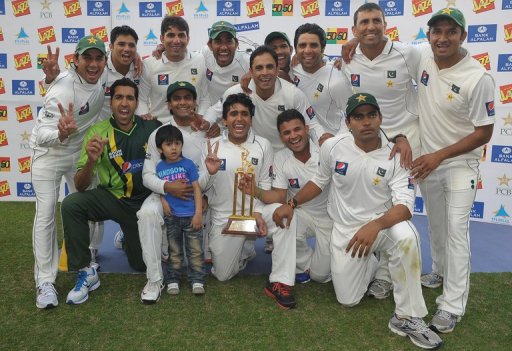
Pakistan’s 3-0 sweep of England, the No. 1 Test team, in the UAE was the most glittering result for a team that has managed to hold its own on the field despite facing a mountain of problems off it. Here’s a look at the key players in Pakistan’s resurgence as a Test team.

Misbah-ul-Haq

Ten months ago, Misbah-ul-Haq was a condemned man whose time as an international cricketer seemed over after he was made the scapegoat for Pakistan’s defeat to India in the World Cup semi-final in Mohali. Today, he is being heralded as an astute leader of a team bristling with pride and rightful claims to being a top-level Test side. Handed the captaincy ahead of Pakistan’s series against South Africa in the UAE in 2010, the soft-spoken, almost laidback Misbah has been hugely influential in steering Pakistan from a host of troubles and to series wins over New Zealand, Zimbabwe, Sri Lanka, Bangladesh and England – not to forget a draw with South Africa – and just the anomaly of a 1-1 scoreline against West Indies.

He hasn’t always been a proactive captain – his reluctance to push for a win against Sri Lanka in Sharjah last November attracted criticism – but his numbers as leader have been highly impressive: 15 matches, 1165 runs, average 64.72, with one century and 12 fifties. That one century – an unbeaten 102 in the second innings at Basseterre – played a big role in Pakistan leveling the two-Test series in the West Indies in May 2011. Innings of 99 and 70 not out earned him the Man-of-the-Match award in Wellington in January 2011, and those were clutch innings in a draw that gave Pakistan their first series victory outside the subcontinent since a triumph in New Zealand in 2003-04, and their first anywhere since 2006-07. In the first innings of the second Test against England in Abu Dhabi, Misbah top-scored with 84 on day in which the opposition dominated, and what a key innings it proved.

Saeed Ajmal

If there is one player who personifies Pakistan’s new-found aggression and fluency, it is the leader of their immensely proficient spin attack. Ajmal, 34, has been a constant threat to opposing teams with his accurate, nagging and attacking offspin, with his doosra causing batsmen much strife. His role as a strike bowler – he has bowled 696 overs in those 12 Tests, the most for any Pakistan bowler – has taken pressure off Umar Gul and meant he has been relied on to consistently take wickets. His success is staggering.

In 12 Tests under Misbah, Ajmal has reaped 77 wickets an average of 22.63 and strike-rate of 54.20 – significantly lower than career figures of 26.70 and 61.20. Along the way he picked up Man-of-the-Match awards for eight wickets in a nine-wicket win over Sri Lanka and in Dubai and 10 – including a career-best 7 for 55 – in a 10-wicket win over England at the same venue. He was the leading Test wicket-taker in 2011, and so far this year he has grabbed 24 wickets in three Tests against England.

In this recent series, the England batsmen were largely baffled by Ajmal’s variety. In the second Test, he became the fastest Pakistan bowler to 100 Tests, and to make his achievement more remarkable, he has not played a single of his 20 Tests at home.

Abdur Rehman

If Ajmal has been an expected success during Pakistan’s run under Misbah, then the 31-year-old Abdur Rehman has been a surprise package. In 13 Tests, this canny left-arm spinner – enjoying unexpected success in his late-blooming career – has been a constant threat with 64 wickets at an average of 26.57. With an almost immaculate line and length he has attained turn and dip while convincing batsmen to play back when they should have been forward. Nothing summed this up better than the series against England, when he made several reputed batsmen appear hapless against spin, none more so than Eoin Morgan.

However, it was Rehman’s Man-of-the-Match performance against New Zealand at Hamilton in January 2011 that really made him a certainty in the playing XI. His three wickets in each innings and a crucial innings of 28 helped propel Pakistan to victory in the first Test. This year, a career-best 6 for 25 routed England for 72 as Pakistan grabbed the series in Abu Dhabi, and in the final Test his 5 for 40 was decisive in Pakistan reducing England’s lead to 42. His 19 wickets in the series played a huge role in a 3-0 scoreline, and highlighted what a key ingredient Rehman has been for Pakistan.

Like Ajmal, he has bowled a lot of overs – 683.4 – while rarely allowing the batsmen to dominate. Rehman’s batting has been handy too, with an average of 13.s8 and a half-century offering some stability to the lower order.

Umar Gul

The only fast bowler to play consistently under Misbah, Umar Gul has carried himself with discipline all throughout. Ajmal and Rehman have hogged the wickets, but Gul’s 49 victims at 29.79 have been every bit as crucial in the team’s success.
The reliance on spin has eased Gul’s workload – he has bowled 452.5 overs in 13 matches – and this has undoubtedly led to the tall fast bowler not breaking down from injury, as he was prone to do so earlier in his career. His eight-wicket haul at Wellington was a stand-out effort in overseas conditions, and even on tracks in the UAE he has plugged away relentlessly, as 29 wickets from eight matches show.

In the first Test in Abu Dhabi, Gul responded to a flat surface with a hostile spell on the third day – during which he surpassed 150 Test wickets – as his new-ball incursions bagged him four wickets before Ajmal and Rehman wrapped up the rest. In the third Test in Abu Dhabi, Gul’s four wickets on the final day set the course of the match categorically towards Pakistan. The spinners have been the talking point of Pakistan’s success, but Gul’s role cannot he underestimated.

Mohammad Hafeez

At last looking like he belongs at Test-match level, Mohammad Hafeez has flourished in his latest avatar as opener and key ingredient in Pakistan’s spin-heavy bowling attack.

With the bat, he has offered solidity to a top order that has for too long been shaky, scoring 967 runs in 15 Tests at an average of 38.68, including two centuries and four fifties. With Taufeeq Umar – another cricketer enjoying a new lease on his international career – Hafeez has stitched together three century stands and four of 50 or more. For a side that used to regularly chop and change openers during the last decade, Hafeez’s pairing with Taufeeq over 15 Tests has been nothing short of solid.

Relied on heavily with the ball – he has bowled 250 overs – Hafeez has repaid the faith with 51 wickets at 26.36. His brisk offspin has helped Ajmal and Rehman take much-needed breaks in the field, and when tossed the new ball in Guyana he responded with wickets. The highlight of Hafeez’s run over these 15 Tests was a fine all-round performance against Zimbabwe in Bulawayo, where Hafeez followed a quick-fire 119 with four wickets and a brisk 38 in a successful chase.

Taufeeq Umar

Given an extended run as opener after a four-year hiatus, the 30-year-old Taufeeq has scored 1055 runs in 15 Tests under Misbah while averaging 39.07. His batting hasn’t always been attractive, as a strike-rate of 43.18 indicates, but the fact that he has been able to deliver platforms has been immense. Two fifties in New Zealand helped blunt the threat of the home team’s pace bowlers in seam-friendly conditions, and his 135 in the second innings against West Indies at Basseterre helped Pakistan level the series.

A career-best 236 followed against Sri Lanka in Abu Dhabi, as Pakistan drew the first Test. It was a marathon effort that helped grind Sri Lanka patiently through the second day, and Taufeeq was just pipped by Kumar Sangakkara for the Man-of-the-Match award. A seventh Test hundred would come against Bangladesh soon after.

Taufeeq’s form trailed off after a fifty in the first innings of the series against England, but his success in Pakistan’s resurgence merits further persistence.

Younis Khan

The former Pakistan captain has come back excellently from a ban imposed by the PCB after allegations that he had been partially responsible for infighting within the team. His 1138 runs at 66.94, including four centuries and four fifties, have been invaluable to Pakistan.
His presence in the middle order has steadied the team numerous times, not least when he scored centuries against South Africa and Sri Lanka to go with twin fifties against New Zealand at Wellington. But his most responsible innings came in the second innings of the third Test against England, as an out of form Younis took the game away from the opposition with a superbly crafted century. Yet again, he had summoned the resolve to produce a century when his detractors were gunning for him.

Azhar Ali

Of the younger players that have flourished under Misbah, 26-year-old Azhar Ali has been the most successful. His 1220 runs from 15 matches at 50.83 include two centuries and 11 fifties, and he has been a consistent performer at No. 3. Three consecutive half-centuries against South Africa got him going after an indifferent start to his career, and from there he ploughed on with fifties against each of the teams he played. His two centuries – 100 against Sri Lanka and 157 against England – were proof that Azhar has a long career ahead of him.