Posts Tagged ‘ India ’

Pakistani and Indian Chefs Compete on Reality TV

By Sebastian Abbot for The Associated Press
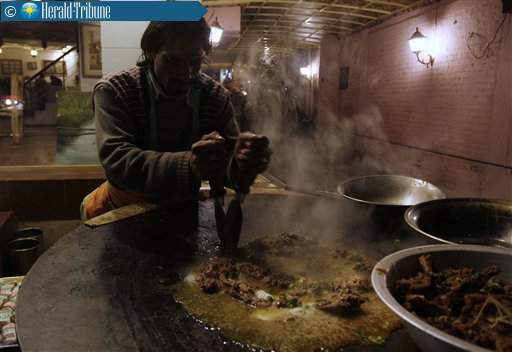
For decades, archenemies Pakistan and India have engaged in a dangerous nuclear arms race. Now they’re also competing in a more cheerful forum. The outcome will be mouthwatering curries and soothing Sufi ballads, not violent conflict.

The fractious neighbors are going head-to-head in a pair of reality TV shows that pit chefs and musicians against each other. Producers hope the contests will help bridge the gulf between two nations that were born from the same womb and have been at each other’s throats ever since.

But so far it hasn’t completely worked out that way. The top Pakistani chef on the cooking show, which is called Foodistan, quit the contest early. He accused the judges of bias toward India and is threatening to sue. The producers denied the allegations.

Pakistan and India were founded in 1947 following the breakup of the British empire. They have fought three major wars, two of them over the disputed territory of Kashmir.

The TV shows do not try to hide or brush over this painful history. They make light of it.

“Now the world’s greatest rivalry is going to get spicier,” said co-host Ira Dubey during one of the early episodes of Foodistan, which first aired in India on Jan. 23 and will be shown in Pakistan starting in mid-February.

Her counterpart, Aly Khan, said the aim of the two teams “would be to grind the opposition into chutney, to make them eat humble pie, to dice them, slice them and fry them on their way to culinary glory.”

Eight chefs from each country were scheduled for individual and team competitions over 26 one-hour episodes, with the winner authoring the first Foodistan cookbook and receiving a trip to three cities of his or her choice anywhere in the world.

There is significant overlap in the cuisines of both countries, as there is in language, music and culture. Pakistanis and Indians both love curry, kebab and biryani – a spiced rice dish. But they often use different ingredients, and dishes can also vary from one region to another within the same country.

Pakistani dishes often include beef, which is not eaten by many people in majority Hindu India for religious reasons. India has more vegetarian dishes, and the food is often cooked with ingredients like coconut milk that are rarely found in Pakistan.

Many Pakistanis and Indians have missed out on enjoying the varied tastes of the other country because mutual enmity has made cross-border travel difficult.

“Even though they are neighbors, Indians don’t know what Pakistani food is like and vice versa,” said Mirza Fahad, a production assistant at India’s NDTV, which developed Foodistan. “It was long overdue to get to know each other’s foods.”

During the first cook-off on the show, filmed in New Delhi, the judges gave four chefs from each side two hours to prepare a biryani, curry, kebab and dessert. Each of the three judges gave the team’s meal a score out of 10.

The judges loved the Iranian-inspired fish biryani cooked by the Pakistanis, their chicken kebab stuffed with figs, olives, bread and mango chutney, and their shahi tukda – a dessert of fried bread soaked in hot milk with spices. They scored 21 out of a possible 30, losing points because a dish of chicken in shalimar curry was a tad chewy.

The Indians ended up winning the first contest by one point with a menu that included chicken tikka with truffle cream, cheese kofta in a tomato and water chestnut curry, lamb biryani and phirni – a sweet rice pudding that they topped with strawberry granita.

The captain of the Pakistani team, Mohammed Naeem, executive chef at the Park Plaza Hotel in Lahore, alleged the judges didn’t have enough knowledge of Pakistani food and were destined from the beginning to pick an Indian to win.

The judges included a British chef, an Indian food critic and a Bollywood actress of Pakistani and French descent.

Another member of the team, Akhtar Rehman, a chef at the Marriott Hotel in Islamabad, said concerns about the judges were fairly widespread on the Pakistani side, but Naeem was the only one to quit.

It remains to be seen whether the music competition – Sur Kshetra, or Musical Battlefield – also will spark ill will.

The contest, which is being filmed in Dubai, is scheduled to air in Pakistan and India starting in mid-February, said Mohammed Zeeshan Khan, a general manager at Pakistan’s Geo TV, which is developing the show.

“Music can unite people across borders and bring them closer together,” said Khan.

The competition will include teams of six musicians from each country between the ages of 18 and 27. The teams will be mentored by two well-known pop singers and actors, Pakistani Atif Aslam and Indian Himesh Reshammiya. They will compete across a range of genres, including jazz, pop, rock and qawwali – traditional Sufi Muslim ballads that are popular in both countries, said Khan.

The grand prize is still being worked out, but Khan said the winner can claim to be “the new musical icon for the subcontinent.”
Peace Pipeline Moves Closer To Fruition

By Mohammed Aasim Saleem for Deutsche Welle

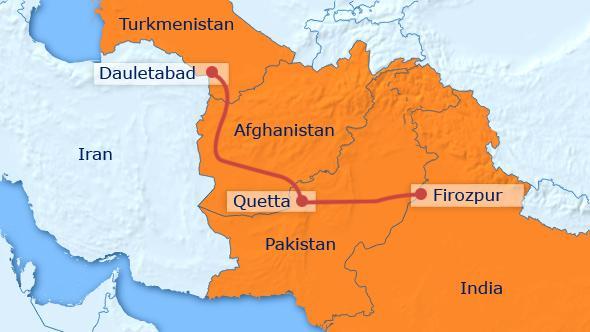
Officials from India and Pakistan have announced they are moving closer to inking a deal to import gas from Turkmenistan via a pipeline through Afghanistan. The 1,700-kilometer “TAPI” duct will transport over 30 billion cubic meters of gas annually from fields in Dauletabad in southeastern Turkmenistan.

In high-level talks in New Delhi this week, Indian Oil Minister S. Jaipal Reddy said “considerable progress” has been made on the project. His Pakistani counterpart, Asim Hussain, added at the meeting that “the issue of transit fees is being discussed with Afghanistan. A joint strategy is also being created between India and Pakistan.”

When the four countries signed a framework agreement back in 2008, the Asian Development Bank estimated the cost of the TAPI pipeline project at around $7.6 billion.

After the talks in New Delhi, the Indian oil minister emphasized that the pipeline would help address the energy needs of the region. Reddy also clarified that security concerns were discussed with Afghan officials, who themselves sought to provide reassurance that necessary measures would be taken to protect the TAPI project.

“We consider it a pipeline of peace,” Reddy said. “Everyone needs gas.”

Improving cooperation between the nuclear armed and traditionally hostile neighbors is seen as a positive development towards establishing long term stability in South Asia.

Pakistan gave India a “Most Favored Nation” trading status when the countries’ commerce secretaries met in New Delhi in November last year to discuss energy and bilateral trade. Indian commerce chief Rahul Khullar expressed his desire to boost bilateral trade to $6 billion within the next three years. Currently, total trade amounts to $2.7 billion.

Reddy said that Pakistan had pledged to also consider a proposal to import Indian petroleum products, highlighting the cost advantages for Pakistan. India, meanwhile, offered electricity to Pakistan through its power plants in Punjab and Gujrat.

The Indian oil minister went on to express disappointment over a failed Iran-Pakistan-India gas pipeline project. With the US leaving no stone unturned in trying to corner Iran over its nuclear ambitions, any possibility of India, Afghanistan or Pakistan going against the Obama administration is somewhat remote. India imports 12 to 14 percent of its oil from Iran, making the Islamic Republic India’s second largest source of oil after Saudi Arabia.

There was significant domestic pressure in India as the analysts and masses called for a stern stand against the US in determining trade relations with Iran. With other regional countries, including China, also refusing to follow US directions, India is still continuing with the import of oil from Iran. In this regard, Reddy said that New Delhi would continue importing oil from Iran and was not bound by new sanctions imposed by the European Union on the Islamic Republic earlier this week.

“We, as a member of the UN, are obliged to follow UN sanctions. Other sanctions imposed by big blocs of countries, we can have some freedom there,” he added further.

Improving relations and cooperation in the energy sector between India and Pakistan will go a long way to establishing harmony and stability in the region. Pakistan is experiencing a severe energy crisis whilst India needs to feed its rapidly developing economy. Mutual dependency and cooperation in this sector with projects such as the TAPI pipeline can also ensure smoother political ties.

Pakistanis for Peace Editor’s Note– A Peace pipe was often used between the Native American tribes when they ended their wars and called a truce. A different sort of peace pipe between Turkmenistan and India via Pakistan can do great wonders for the bilateral relations of the two feuding neighbors and must be encouraged to fruition.

The End of a Geopolitical Affair

By Pramit Pal Chaudhri for The Hindustan Times

In Pakistan’s current crisis, why is its military is so reluctant to consider simply seizing power? One reason is that General Ashfaq Pervez Kayani cannot count on the US looking the other way. At a minimum, Washington would have to slap sanctions on an economically faltering country. At a maximum, it would be the last straw in a bilateral relationship at its lowest ebb since it was first woven in the 1950s.

Pakistan’s establishment claims it has been used and abused by the US, the most serious violation being that country’s stealth attack on Abbottabad that led to Osama bin Laden’s death. There has been the Raymond Davies affair, the endless drone attacks and the increasingly public accusation of double-dealing by senior US officials – the most notable being Admiral Mike Mullen’s linking of the Inter-Services Intelligence with terrorist groups.

There is some satisfaction for India in all this. It has been persistently claiming the existence of a military-terrorist nexus. Many in Washington agree. After Abbottabad, there is no one in Washington who doesn’t. The US-Pakistan relationship, says Daniel Twining of the German Marshall Fund, “was really at a historic high for the past decade but is diminishing.” But it might not matter as much to the US if relations fall apart, he says.

Other events are undermining the basis of the US-Pakistani bond. Islamabad had expected the US to totally retreat from Afghanistan, leaving Pakistan’s Taliban allies in charge. Instead, the US will leave a substantial force behind along with many drone bases. The US is talking with the Taliban, but only desultorily with groups that Islamabad patronises.

With the US Congress also pulling the plug on aid to Pakistan, what is left? The answer is nukes. “If Pakistan didn’t have nuclear weapons, with Al Qaeda almost gone, no one would care a fig about that country,” said one ex-US ambassador to the region. As they realise this, Islamabad is getting more paranoid about the security of its “strategic assets.” The more unstable they look, the more willing the US will be to try and do something risky to salvage Pakistan’s nuclear weapons.

US officials are talking about a “new normal” in their Pakistan relations. This would cut ties to the bare bones: counterterrorism cooperation, limited military transit requirements, Afghan talks, narcotics and some humanitarian assistance. “We’ll have to work with the Pakistan military on a limited basis while negotiations with the Taliban proceed,” says John Schlosser, a former state department South Asia hand.

There seems to be no real understanding among Pakistanis that their leverage is dwindling or how much Abbottabad vapourised their credibility in the US. A parliamentary committee report on how to change the US relationship bizarrely demanded, for example, a civilian nuclear agreement.

It could get worse. “The relationship will fall further if the US finds [Al Qaeda chief] Zawahiri in Pakistan. Or there are terror strikes on India or the US,” says Bruce Riedel, former AfPak advisor to Barack Obama.

The worst thing is that Washington is decoupling just at a time when Pakistan, economically and otherwise, can least afford to lose their most generous international partner.

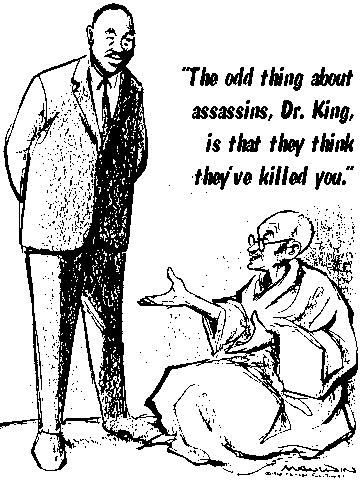
Gandhi and King- Two Martyrs Who Will Never Die

By Manzer Munir for Pakistanis for Peace

Today is MLK Day in the United States where it is a federal holiday commemorating the life and legacy of the Rev Dr Martin Luther King Jr, an icon who would have been 83 years old on January 15.

MLK was a great believer in the teachings of non-violence if Mohandas K Gandhi, the leader of India’s independence movement from Britain. King saw that Gandhi’s peaceful civil disobedience and non-violent methods of protest were very effective in bringing down the British Empire in India and as a result Pakistan and the rest of the Indian Subcontinent after some 300 years of direct and indirect rule. Gandhi had believed that people could resist immoral government action by simply refusing to cooperate. Gandhi adopted many peaceful resistance techniques in developing his concept of Satyagraha, which was a philosophy and practice of passive nonviolent resistance.

Gandhi had earlier used this resistance technique in his struggles for freedom and equality for blacks and Indians in South Africa where both minorities were subjected to second and third class citizenry. His methods and refusal to bow down to the injustices that Indians faced in colonial South Africa inspired Nelson Mandela several years later to start his own peaceful struggle that eventually led to the end of Apartheid in South Africa in 1990.

While at Morehouse College, King learned about Gandhi and became very excited about his ideas. He wanted to further educate himself and read many books on Gandhi and his life and beliefs. In his book, Stride Toward Freedom, King states that “Gandhi was probably the first person in history to lift the love ethic of Jesus above mere interaction between individuals to a powerful and effective social force on a large scale. He further writes in his book that “It was in this Gandhian emphasis on love and nonviolence that I discovered the method for social reform that I had been seeking. I came to feel that this was the only morally and practically sound method open to oppressed people in their struggle for freedom.”

King felt that he had finally found a way to where oppressed people could successfully unlock social protest through Jesus’ teachings of love. In fact Gandhi himself had said “What does Jesus mean to me? To me, he was one of the greatest teachers humanity has ever had.” He also once mentioned Jesus as the “most active resister known perhaps to history. His was non-violence par excellence” Therefore to the Christian minister living in the pre-civil rights era in the South in America, Gandhi appeared to King as a follower of Christ, someone who preached peace and love even at the expense of suffering. Martin Luther King once said of Gandhi “It is ironic yet inescapably true that the greatest Christian of the modern world was a man who never embraced Christianity.”

In 1959, King visited India and became fully convinced that Satyagraha could be effectively applied to the struggle by blacks in the United States for racial integration. He came back to the United States where he continued the struggle for freedom and equality for all Americans. Like Gandhi, King also talked about suffering as a path to self purification and spiritual growth. He not only experienced this suffering by being jailed, beaten and harassed by the authorities of the day, but he eventually ended up paying for this cause for freedom for all with his life.

Today there is a black man that sits in the White House, minorities are on the Supreme Court bench, and black heads of Fortune 500 companies who have reached the proverbial mountaintop in every possible endeavor. Yet there is little doubt that despite how far we have come as a nation, we still have a ways to go to achieve equality for minorities and women. Without Dr King’s struggle, leadership and personal sacrifice, the United States, and indeed the world, would be in far worse shape.

Mohandas K Gandhi and Martin Luther King Jr were arguably two of the greatest men of the last century. Both men believed that “injustice anywhere was a threat to justice everywhere.” They both led their people and millions of others out of slavery and servitude against seemingly insurmountable odds to freedom and salvation. On what would have been his 83rd birthday, let us recognize that in the greatest democracy in the history of the world, and despite an assassin’s bullet, the spirit and dream of a King still lives on.

Manzer Munir, a proud American of Pakistani descent, is a practicing Sufi Muslim and member of Muslims for Progressive Values, he is also the founder of Pakistanis for Peace and blogs at http://www.PakistanisforPeace.com as well at other websites as a freelance journalist and writer.

India Marks Milestone in Fight Against Polio

By Ravi Nessman for The Associated Press

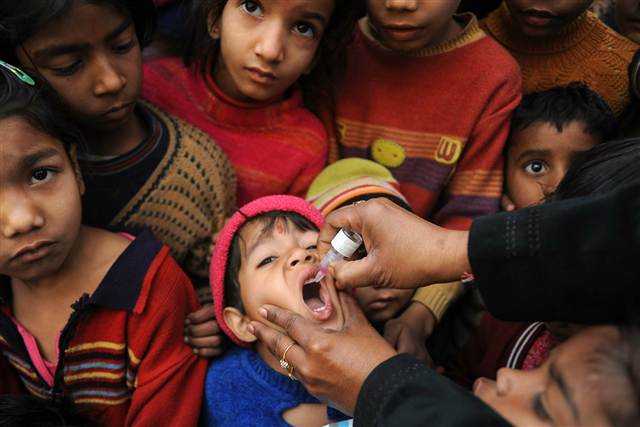
India will celebrate a full year since its last reported case of polio on Friday, a major victory in a global eradication effort that seemed stalled just a few years ago.

If no previously undisclosed cases of the crippling disease are discovered, India will no longer be considered polio endemic, leaving only Pakistan, Afghanistan and Nigeria on that list.

“This is a game changer in a huge way,” said Bruce Aylward, head of the World Health Organization’s global polio campaign.

The achievement gives a major morale boost to health advocates and donors who had begun to lose hope of ever defeating the stubborn disease that the world had promised to eradicate by 2000.

It also helps India, which bills itself as one of the world’s emerging powers, shed the embarrassing link to a disease associated with poverty and chaos, one that had been conquered long ago by most of the globe.

The government cautiously welcomed the milestone as a confirmation of its commitment to fighting the disease and the 120 billion rupees ($2.4 billion) it has spent on the program.

“We are excited and hopeful. At the same time, vigilant and alert,” Health Minister Ghulam Nabi Azad said in a statement. Azad warned that India needed to push forward with its vaccination campaign to ensure the elimination of any residual virus and to prevent the import and spread of virus from abroad.

The polio virus, which usually infects children in unsanitary conditions, attacks the central nervous system, sometimes causing paralysis, muscular atrophy, deformation and, in some cases, death.

With its dense population, poor sanitation, high levels of migration and weak public health system, India had been seen as “the perfect storm of polio,” Aylward said. Even some vaccinated children fell ill with the virus because malnutrition and chronic diarrhea made their bodies too weak to properly process the oral vaccine.

In 2009, India had 741 cases. That plunged to 42 in 2010. Last year, there was a single case, an 18-month-old girl named Ruksana Khatun who fell ill in West Bengal state Jan. 13. She was the country’s last reported polio victim.

Part of the sudden success is credited to tighter monitoring that allowed health officials to quickly hit areas of outbreaks with emergency vaccinations. Part is also attributed to the rollout of a new vaccine in 2010 that more powerfully targeted the two remaining strains of the disease.

Under the $300 million-a-year campaign the government runs with help from the WHO and UNICEF, 2.5 million workers fan out across the country twice a year to give the vaccine to 175 million children.

They hike to remote villages, wander through trains to reach migrating families and stop along roadsides to vaccinate the homeless.

Philanthropist Bill Gates, whose foundation has made polio eradication a priority, hailed India’s achievement as an example of the progress that can be made on difficult development problems.

“Polio can be stopped when countries combine the right elements: political will, quality immunization campaigns and an entire nation’s determination. We must build on this historic moment and ensure that India’s polio program continues to move full-steam ahead until eradication is achieved,” he said in a statement.

Health officials are working to make polio the second human disease eradicated, after smallpox. But while smallpox carriers were easy to find because everyone infected developed symptoms, only a tiny fraction of those infected with the polio virus ever contract the disease. So while no one in India is reported to have suffered from polio in a year, the virus — which travels through human waste — could still be lingering.

That’s why the country will not be certified as completely polio-free until at least three full years pass without a case. And it is why public health advocates warn against complacency in the massive vaccination efforts.

“We are at a threshold. If we take a long step, we may be in trouble,” said Dr. Yash Paul, a pediatrician in the northern city of Jaipur who was a member of the Indian Academy of Pediatrics’ polio eradication committee until it was dismantled last year because the academy felt it was no longer needed.

Paul also appealed to public health officials to begin switching from the oral vaccine, which is easy to administer but contains live virus that can cause the disease in rare cases, to an injectible vaccine that uses dead virus.

The last time a country came off the endemic list was Egypt in 2006. If India succeeds in getting removed from the list in the coming weeks, only Pakistan, Afghanistan and Nigeria will remain. All three saw a rise in cases last year over 2010, and Pakistan is suffering a particularly explosive outbreak, Aylward said.

In addition, 22 other countries that had eradicated the disease suffered new outbreaks. However, some of those outbreaks stemmed from polio imported from India, so getting rid of the virus here is expected to lessen such outbreaks in the future.

Dr. Donald Henderson, who headed WHO’s smallpox eradication program and had long been skeptical of the possibility of eradicating polio, said Thursday he was now hopeful the disease could be conquered across the world by the end of next year.

“You look at a series of dominoes, this is the big one. The others are definitely easier. If we can do it in India, than I’m more optimistic that we can do it in these other countries,” he said. “I’m celebrating a bit. I’ll certainly drink a glass tomorrow … and keep my fingers crossed.”

Aylward hopes India’s success will spur donors to dedicate more money to the polio fight, partly because full eradication could free up funds for other global health issues.

The WHO program needs another $500 million to fund operations for the rest of the year, and some programs could run out of funding by March, he said.

“If we fail at this point, it’s an issue of will,” he said.

Pakistanis for Peace Editor’s Note– Congratulations to India on a great achievement. Despite massive poverty and numerous internal problems, India is working towards the betterment of its people, something Pakistan can learn a great deal from~

Fire at Indian Hospital Kills 89, Injures Dozens

By Mark Magnier for The LA Times

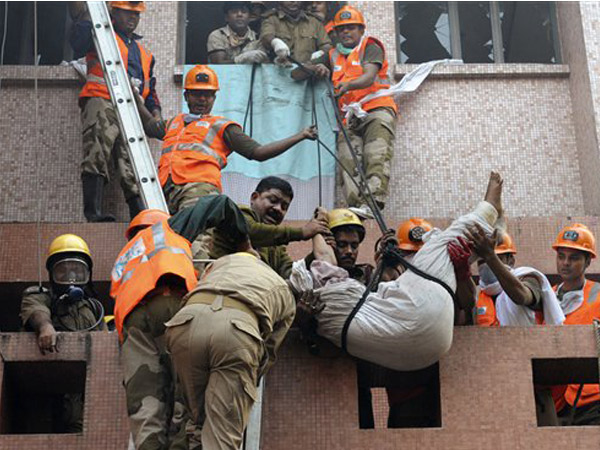
At least 89 patients died and dozens were injured when a fire raced through a hospital in India’s eastern city of Kolkata early Friday amid unconfirmed reports that it started in an underground parking lot used to store oxygen cylinders and flammable material.

Most of those who died in the multistory AMRI hospital in the southern part of the city died of suffocation, fire officials said. Hundreds of angry relatives, distraught at the lack of information and the idea that such a tragedy had occurred in a place dedicated to healing, reportedly went on a rampage, smashing glass in the reception area and looting hospital registers.

This was the second fire at that hospital in three years and one of the worst in Indian history. Mamata Banerjee, the top elected official in West Bengal state, where Kolkata is located, called it an “unforgivable crime,” adding that the private hospital’s license had been revoked. She promised a full investigation and harsh punishment for those found guilty of wrongdoing. Five fire engines brought the fire under control a few hours after the 3 a.m. blaze broke out, their arrival delayed by the narrow, congested streets surrounding the site.

Neighbors and passersby helped rescue stranded occupants of the 160-bed facility. Some told local television reporters that hospital staff had abandoned patients and fled for safety. Among the 73 people confirmed dead in the conflagration, three were hospital workers, said Satyabrata Upadhyay, a senior vice president of the AMRI hospital company.

Indian television showed dead bodies being removed from the building wrapped in sheets, with some of the living and dead lowered from windows by rope.

Pakistanis for Peace Editor’s Note- We are saddened by this loss of life in neighboring India and pay our condolences to the relatives of the deceased. We urge the Indian government to make an urgent inqury into the cause of this disaster and hope that better emergency plans are laid out as a result on all public buildings, especially hospitals and nursing homes.

Pakistani Actress Veena Malik Sues FHM Magazine Over Nude Cover Photo

A nude shot of a sultry Pakistani starlet on the cover of an Indian lad mag has sparked an uproar between the two nuclear rivals.

Pakistani actress Veena Malik appears on the cover of FHM India’s December issue wearing nothing but a steamy gaze and the initials of Pakistan’s fearsome intelligence agency, ISI, tattooed across her arm.

Conservative Muslim clerics in her home country slammed the shot as an insult to Islam, while Pakistan’s government has promised to investigate whether the image was doctored, London’s The Telegraph reported.

Malik, meanwhile, has filed a lawsuit against the magazine, saying that she agreed to pose topless — along with a cheeky dig at her home country’s spy service — but the editors digitally altered the shot to make her appear totally nude.

“I agreed to a photo shoot and having an ISI tattoo in a humorous way but I did not have any nude photos. My pictures have been morphed,” she told a Pakistani television station.

The suit is seeking $2 million in damages. FHM India editor Kabeer Sharma insists the cover is legit.

“Maybe she is facing some kind of backlash, so maybe that’s why she is denying it,” Sharma told Agence France-Presse.

“We have not photoshopped or faked the cover. This is what she looks like, she has an amazing body.” Sharma says a video from the cover shoot would prove the photos are real.

An alternate cover that has surfaced online shows Malik clad in a dinky military cargo belt while nibbling on the pin of a grenade.

The 33-year-old Muslim actress and model was best known as a Pakistani TV star before hitting it big in India in 2010 as a contestant on the fourth season of the reality show “Bigg Boss,” a version of “Big Brother.”

In January, she got in a much-publicized verbal spat with a conservative Muslim cleric, who called her an insult to Pakistan and Islam for cozying up with a dashing Indian actor on the show.

Pakistan Spy Agency Picks the Wrong Fight

By Jeffrey Goldberg for Bloomberg News

The Pakistani military and its spy agency, the Directorate for Inter-Services Intelligence, have an expansive menu of options before them in their endless campaign to subvert democracy.

And subverting democracy (as opposed to, say, winning wars against India, or helping the U.S. defeat the Haqqani terrorist network in Afghanistan) is the real specialty of Pakistan’s military.

On many occasions, the intelligence service, known as the ISI, achieves its goals through sheer brutality. Such was the case in the beating death of Saleem Shahzad, a Pakistani investigative journalist, in May. His murder was sanctioned by the ISI, according to Admiral Mike Mullen, the just-retired chairman of the U.S. Joint Chiefs of Staff. In a recent article in the Atlantic, Marc Ambinder and I reported that U.S. officials saw intelligence showing that officials in the office of General Ashfaq Kayani, the head of Pakistan’s army (and the most powerful man in a country ostensibly led by a civilian president), ordered the head of the ISI to “take care of the problem” posed by Shahzad. His body was soon found on the bank of a canal.

On other occasions, the ISI executes its mission with slightly more politesse. Such is the case in a controversy now raging around the alleged activities of the Pakistani ambassador to the U.S., Husain Haqqani. He stands accused of something akin to treason for allegedly trying to enlist American help to undermine the Pakistani military’s hold on the country’s elected government.

An Absurd Campaign

Haqqani (no relation to the Haqqanis of terrorism fame) has long been known as a pro-democracy activist and a critic of the army’s meddling in Pakistan’s civilian affairs. As a scholar (he was a professor at Boston University before taking his current post), he wrote the definitive book on the Pakistani military’s unholy alliance with jihadists, “Pakistan: Between Mosque and Military.” Haqqani was appointed ambassador to the U.S. in 2008 over the objections of the ISI, which has been gunning for him ever since. This is an absurd campaign for the ISI to wage: Haqqani is one of the few Pakistani officials who have any credibility in Washington, and he has carried water for the ISI numerous times. Self-destructive behavior, however, is also an ISI specialty.

Last month, the Financial Times published an op-ed article by Mansoor Ijaz, a Pakistani-American businessman. In it, Ijaz claimed that he had helped deliver a memo, ostensibly on behalf of partisans of President Asif Ali Zardari, to Mullen, asking the chairman to help curtail the Pakistani military’s power in politics. (Mullen later said he ignored it.) The article intimated that Haqqani was behind the memo.
Ijaz keeps turning up in the most unlikely places. In the 1990s, he has said, he was involved in discussions in which the Sudanese government offered to deliver Osama bin Laden to justice, a claim denied by Clinton administration officials. In 2006, he suggested that he knew of evidence that Iran had already produced a nuclear weapon.

But the ISI apparently sees him as very credible. And they found in his op-ed a chance to move against Haqqani. The spy agency quickly fomented an anti-Haqqani campaign among the more pliant of Pakistan’s newspapers (the ISI is also known to keep journalists directly on its payroll, which is a timesaver for its media-manipulation department), and Zardari was forced to recall Haqqani to Islamabad. Haqqani denies drafting the memo, and has already offered to resign, in order to protect Pakistan’s civilian president.

Some Obvious Questions

Like many people who know Haqqani, I feared that he would be met at the airport by a Benigno Aquino-type arrival ceremony, or at the very least by ISI officers more interested in interrogation than explanation. But Haqqani, with whom I e- mailed several times in the past few days, seemed to be handling the pressure coolly: At one point this weekend he wrote, “Someone’s game plan was to scare me and my President into submission without a fight.”

He also raised some obvious questions about Ijaz and his motivations. Ijaz says he is a critic of the ISI and claims to be opposed to military rule in Pakistan. Yet, according to reports in the Pakistani press, he recently met with General Ahmed Shuja Pasha, the head of the ISI, and turned over his BlackBerry.

Ijaz’s behavior suggests that he is either an epically erratic operator or someone who from the outset was attempting to subvert Haqqani.
It’s not at all clear how this scandal (known as “Memogate” in the obsessed Pakistani press) will end, but if it results in Haqqani’s removal as ambassador, it would be a minor tragedy for an already tragic country. Military rule has brought Pakistan nothing but violence, stagnation and political repression. Many Pakistanis see the Haqqani network — the pro-Taliban terrorists who are killing American troops — as a more serious threat than a pro-democracy academic. But as long as the military and the ISI are in charge of Pakistan, the wrong Haqqanis will be ascendant.

In the Name of ‘Honour’: Brazen Shikarpur Killings Shake Hindu Community

By Sarfaraz Memon for The Express Tribune

Most shops in Taluka Chak in Shikarpur were open on Wednesday but there was an uneasy calm. Three Hindu men are dead and no one knows the whereabouts of Seema Bhayo, the girl at the centre of the storm. Residents fear that she may also have been killed. The police have no clue.

It is a simple tale of a love affair that turned tragic. The president has ordered an inquiry into the matter. Not to be outdone, the Sindh home minister has suspended the SHO of the area but neither of these moves brought any comfort to the families who lost their loved ones.

The brutal attack took place on Monday, the first day of Eid, when four armed men on two motorcycles barged into the house of one Naresh Kumar, where he and his friends Dr Ajeet Kumar, Dr Satya Pal and Ashok Kumar were present. The intruders opened fire and killed Ashok and Naresh on the spot, injuring  Dr Ajeet Kumar and Dr Satya Pal.

Dr Ajeet Kumar later died of his wounds at a Sukkur Hospital, more so because no one was willing to take him to the hospital. The policemen who were supposed to guard the house were nowhere to be seen. They did not turn up that day, despite the fact that they had been stationed on fear that such an attack was imminent.

The “crime” that these four men apparently committed was that they intervened on behalf of two young men of their community who had been apprehended two weeks earlier and charged with criminally assaulting a Muslim girl. The real story, as told by area residents, was that Seema and Sandeep Kumar fell in love and were caught while they were meeting at the house of Sandeep’s friend, Nakash Kumar.

This correspondent also visited Qazi mohalla where Seema’s home is situated on the right side of the road and the shops of Sandeep and Nakash were on the left side. A neighbour said that Seema and Sandeep used to meet at Nakash’s house. On that fateful day, area residents saw them going in and raided the house and thus the affair was revealed.

It was the promise of a better life which attracted Seema towards Sandeep, said another resident, adding that Seema’s father Nazir Ahmed Bhayo was a mason by profession. When the couple was caught, the Hindu community intervened to settle the matter. President of the Hindu Panchayat in Chak, Prem Kumar, said “We went to the Bhayo elders and told them that we are ready to pay any fine to reconcile the matter.”

Area resident Moulvi Allah Bux confirmed that the Hindu community were trying to reconcile with the Bhayo clansmen and for this they had met Sardar Babul Bhayo, who gave them a positive response and told them that the date of the reconciliatory meeting would be announced on the second day of Eid. But before the meeting could be held, the murders were committed.

While Babul Khan Bhayo was not available, clan chieftan Sardar Wahid Bux Bhayo  said that it was the Hindu community which had resorted to aggression by sexually assaulting a Bhayo girl. According to him, the three Hindus were killed in retaliation for that incident. But he added that he condemned both incidents.

On Tuesday, hundreds participated in the last rites of the three men. The rituals were performed near the Sadhu Bela temple in Sukkur.

Following the notice by the president, the Chak police has swung into action. During raids in different localities, they have apprehended more than 25 people. DIG Larkana Sain Rakhiyo Mirani said that the murder was an act of terrorism. But the Hindu community maintains that the real perpetrators of the crime have so far not been arrested.

Seeking Solace in Sufism

By Renuka Deshpande for Daily News & Analysis

The city’s metamorphosis from a sleepy town to a metropolis has left most of us long for peace and contentment. This is why Punekars are taking to Sufism as a quest for harmony and the need to seek refuge in the promise of hope and love.

Sufism or Tasawwuf, the mystical arm of Islam, which is inwardly directed, deals with the soul’s relationship with god. It advocates oneness with god and urges that everything men do, be driven by one sole motivation — the love of god. The word Sufi means ‘clothed in wool’, reveals Dr Zubair Fattani in his article The Meaning of Tasawwuf, and is metaphoric of the inwardness of Islam wrapped in its exterior expressions.

Over the centuries, it has found expression in the ecstatic and reflective poetry of Jalaluddin Rumi, Baba Bulleh Shah, Hafiz, Rabia and Moinuddin Chisti and others, which is increasingly popular in the city.

Bookshelves laden with books on Sufism and its various expressions in poetry, music and dance are a common sight, as are the collections featuring Sufi music maestros like Nusrat Fateh Ali Khan, Abida Parveen, Kailash Kher and the Sabri brothers, among many illustrious others.

Jyoti Mate, a city Sufi music and dance therapist, uses this mystical dimension to heal all those who seek solace in it. The whirling dervishes, the most iconic symbol of Sufism, are the basic element of Sufi dance and represent the earth rotating around the sun, also symbolic of the universe.

“Sufi dance helps stir pent-up and suppressed emotions within oneself. The hands are outspread while whirling and the head is thrown off-centre. A lot is metaphorical in Sufism, dance being no exception. The raising of the right hand and facing it skyward indicates absorption of knowledge from the heavens and the left hand which is pointed downwards, palm-down, passes it on to others.The head thrown off-centre is an urge to be non-egocentric, so that the ego doesn’t grow further. The cap used by Sufis is made of camel hair and is of a specific height, again symbolising the curtailing of the ego,” she says.

Mate adds that response to her therapy sessions has steadily grown since she first started in June 2008 and people often break into tears after the session is over.

On the music front, there is Ruhaniyat, the all-India Sufi and mystic music festival presented by Banyan Tree, which has been coming to Pune for the past eight years. The seven-city festival brings with it Baul musicians from West Bengal, comprising Sufi Muslims and Vaishnav Hindus, the Manganiars from Rajasthan singing Sufi folk music from the state, qawwals like the Sabri brothers and Turkish Sufi musician Latif Bolat, among others. Nandini Mukesh, director of Banyan Tree, who also emcees Ruhaniyat, says that the festival has elicited phenomenal response in the city.

“Last year, our attendance read around 1,800 people. We found ourselves continually adding chairs,” she says adding that the audience in Pune is very evolved and sophisticated and comes with an understanding of the music played at the festival.

Speaking of the musical response she receives at Ruhaniyat, Nandini says, “Baul songs are incredibly symbolic and metaphorical and touch a chord within people. Qawwalis comprise incredibly powerful musical compositions and progressions, but the Hindi and Urdu lyrics are simple to understand. Beyond a point, however, words cease to matter and the musical experience turns mystical and takes precedence.”

The popularity of Sufi rock bands like Junoon from Pakistan, along with Coke Studio, has also led to the emergence of Sufi rock bands like Chakra in the city, which does a lot of covers of Pakistani Sufi music songs, along with some original compositions featuring dohas of Baba Bulleh Shah and Kabir.

The Osho Meditation Resort in Koregaon Park, has whirling meditation sessions every Wednesday. Ma Amrit Sadhana of the resort, says the eyes are kept open and unfocused while whirling, which forms the first stage of the meditation technique, the second being rest.

“The response to these sessions is great. Watching so many people be a part of the session, and the sight of them totally engrossed in whirling is beautiful,” she adds.

Sheetal Sanghvi of The Urban Ashram, which hosts many Sufi music and dance workshops, is bringing Sheikha Khadija to Pune in November for a whirling meditation workshop. Khadija is a Sheikha in the Mevlevi Order of America.

“Sufism promotes unity and love and the response to our Sufi workshops is really growing. This is because orthodox systems of religious beliefs sometimes don’t narrate to the soul as well as they should. Sufism, with its teachings, gives hope to people,” he adds.

Islamic scholar Anees Chishti, who isn’t a Sufi but has studied it, is skeptical of this current trend of what he feels is pop-Sufism.

“Sufism requires penance and meditation. Sufi rock and dances are nothing but a Western concept. They call the whirling movements dervishes, but the term, is durvesh, dur meaning pearl and vesh meaning hanging, in Persian. So the composite means ‘hanging like a pearl’. In Turkey, during the time of Rumi, the head of the khanqah or mystic hall, was a durvesh. When he played the daf and sang mystical poetry, people listening to him would go in a trance and start whirling. So ‘durvesh’ refers to a person and not a bodily movement. All this pageantry is a marketing tactic,” he says.

Opinions on the topic are many and varied, but most will agree that Sufism in its numerous interpretations in literature, music and dance does feel divine.

Pakistanis for Peace Editor’s Note– Amongst literally hundreds of favorite Rumi quotes, one of our top one sums up life very well when he said: “All day I think about it, then at night I say it. Where did I come from, and what am I supposed to be doing? I have no idea. My soul is from elsewhere, I’m sure of that, and I intend to end up there.”

Indo-Pak Tennis Duo Lifts Paris Crown

By Khalid Hussain for The Arab News

The Indo-Pak Express of Pakistan’s Aisam-ul-Haq Qureshi and India’s Rohan Bopanna claimed their first ever ATP Masters crown when they crushed France’s Julien Benneteau and Nicolas Mahut in a one-sided final in Paris on Sunday.

Aisam and Bopanna were in full flow in a final that jusxt lasted for 65 minutes as they raced to a 6-2, 6-4 triumph in the Paris Masters final in the French capital to bag their third title of the season.

Before Sunday’s title-winning triumph, the Aisam-Bopanna duo had won the Gerry Weber Open at Halle and the Stockholm Open. Ranked seventh in the world doubles rankings, Aisam and Bopanna had already qualified for the year-ending ATP Masters finale to be played in London later this month. The Paris win gave the pair 1000 ranking points and a prize purse of 134,500 euros.

Aisam and Bopanna were on the attack right from the word go and broke their rivals in the third and fifth games to open up a comprehensive 4-1 lead in the opening set within 20 minutes into the final. Twice they were down 0-30 but did not lose control over the set as they bounced back to win it with ease.

Benneteau and Mahut, who had shocked top seeds Mike and Bob Bryan en route to the final, managed to put up a better show in the second set but failed to stop their rampaging opponents from winning the title.

Both the pairs were locked in a close battle in second set and at one stage were locked at 4-4. But the Indo-Pak team broke Mahut when the Frenchman committed his second double fault in the ninth game, sixth overall, to offer a break chance. Aisam and Bopanna then served out the match in the next game after facing a few anxious moments.

The result should come as a huge morale-booster for Aisam and Bopanna in the lead up to the London finale where the duo will be competing for the first time.

“We’ve been working hard and hopefully will produce more positive results in the future,” said Aisam, who together with Bopanna, reached the final of the US Open men’s doubles event last year.

The Aisam-Bopanna duo has been making headlines for all the right reasons in recent times. And it’s not just their exploits on the international tennis circuit that’s keeping them in the spotlight. Aisam and Bopanna – regarded among leading sport stars in the sub-continent – are also campaigning for peace between Pakistan and India, two neighboring countries, which have been at loggerheads for the best part of the last six decades.

Pakistanis for Peace Editor’s Note
– Congratulations to the Indo-Pak Express for winning their first major ATP Championship! Clearly, together India and Pakistan can conquer the world!

India, Pakistan PMs Vow to Start ‘New Chapter’

As Reported by The Economic Times

The prime ministers of India and Pakistan said Thursday they expected to open a “new chapter” at future talks between the rival nations after they met at a regional summit in the Maldives.

India’s Manmohan Singh and his Pakistani counterpart Yousuf Raza Gilani said their often strained ties were improving, but they declined to give a date for their next meeting.

“The time has come to write a new chapter in the history of our countries,” Singh told reporters. “The next round of talks should be far more productive and far more practical-orientated in bringing the two countries closer.”

Gilani said that “all issues” had been discussed during their one-hour meeting including the contentious subject of Kashmir, a Muslim-majority region divided between the two nuclear rivals and claimed in its entirety by both.

“I am ready to discuss each and every issue,” Gilani said. “I think that the next round of the talks would be more constructive, more positive, and will open a new chapter in the history of both the countries.”

The leaders did not give further details of their discussions on the sidelines of the South Asian Association for Regional Cooperation (SAARC) gathering in the Maldives.

However Singh added that the two sides should push to make real progress as they had “wasted lot of time in the past in acrimonious debates”.

The two men emphasised their warm friendship and shook hands twice to oblige photographers at the start of closed-door talks at the luxury Shangri-La Villingili island resort.

After the meeting, the two men headed for the opening of the SAARC summit, where their host, Maldivian President Mohamed Nasheed, hailed their dialogue.

“These developments are extremely welcome,” he said. “I hope this summit will be enthused with optimism.”

The two prime ministers last met in March when Gilani accepted Singh’s invitation to watch the India-Pakistan cricket World Cup semi-final. Their previous talks were at the April 2010 SAARC summit in Bhutan.

Both countries, who have fought three wars since independence in 1947, struck an upbeat note ahead of the Maldives summit, with officials describing the cross-border atmosphere as “considerably improved”.

However the vexed subject of Kashmir and the threat of Pakistan-based extremism remain major obstacles to their ongoing peace process.

A full peace dialogue — suspended by India after the 2008 Mumbai attacks blamed on Pakistan-based militants — was resumed in February this year.

The process remains tentative with only incremental progress on issues such as trade.

Last week, Pakistan’s cabinet announced it had approved a proposal giving India the status of “most favoured nation” but there has been confusion about when it will be implemented.

Efforts to reduce tensions have been complicated by concern over Afghanistan’s prospects as international troops begin departing after ten years of fighting the Taliban.

Indian involvement in Afghanistan is sensitive, with Pakistan vehemently opposed to its arch foe meddling in what it considers its backyard.

Islamabad’s suspicions were fuelled when Afghanistan and India signed a strategic partnership pact last month.

Afghan President Hamid Karzai is also attending the SAARC summit, along with the leaders of other member nations Bangladesh, Bhutan, the Maldives, Nepal and Sri Lanka.

Satirical Song, a YouTube Hit, Challenges Extremism in Pakistan

By Salman Masood for The New York Times


A satirical song that takes a tongue-in-cheek swipe at religious extremism, militancy and contradictions in Pakistani society has become an instant hit here, drawing widespread attention as a rare voice of the country’s embattled liberals.

The song, “Aalu Anday,” which means “Potatoes and Eggs,” comes from a group of three young men who call themselves Beygairat Brigade, or A Brigade Without Honor, openly mocking the military, religious conservatives, nationalist politicians and conspiracy theorists.

Their YouTube video has been viewed more than 350,000 times since it was uploaded in mid-October. The song is getting glowing reviews in the news media here and is widely talked about — and shared — on social networking sites like Twitter and Facebook.

The name of the band is itself a satire of Pakistan’s nationalists and conservatives, who are often described in the local news media as the Ghairat Brigade, or Honor Brigade.

Local musicians have produced work in the past vilifying the West, especially the United States, but rarely do they ridicule the military or religious extremists, and none have had Beygairat Brigade’s kind of success.

Sung in Punjabi, the language of the most populous and prosperous province, the song delivers biting commentary on the current socio-political milieu of the country, in which religious radicalism and militancy have steadily risen over the years and tolerance for religious minorities is waning.

Just this year, a governor who opposed Pakistan’s contentious blasphemy law was killed by one of his guards. The assassin was then celebrated by many in the country, including lawyers who greeted him with rose petals and garlands.

The song rues the fact that killers and religious extremists are hailed as heroes in Pakistan, while someone like Abdus Salam, the nation’s only Nobel Prize-winning scientist, is often ignored because he belonged to the minority Ahmadi sect.

“Qadri is treated like a royal,” wonders the goofy-looking lead vocalist in the song, referring to Malik Mumtaz Qadri, the elite police guard who killed the governor of Punjab, Salman Taseer, in January after he challenged the blasphemy law.

Another line in the song, “where Ajmal Kasab is a hero,” makes a reference to the only surviving Pakistani gunman involved in the 2008 terrorist attacks in Mumbai, India. Still another line, “cleric tried to escape in a veil,” alludes to the head cleric of Islamabad’s Red Mosque — which was the target of a siege in 2007 by the Pakistani government against Islamic militants — who tried unsuccessfully to break the security cordon by wearing a veil.

The song even makes fun of the powerful army chief, Gen. Ashfaq Parvez Kayani, for extending his role for another three years.

Potatoes and eggs “never tasted so good,” wrote Fahd Husain in a commentary on Tuesday in The Daily Times, a newspaper based in Lahore. “They will always be credited for being politically incorrect when most needed, and giving voice to all those Pakistanis who live in fear.”

The popularity of the song on the Internet has made it a sensation across the border in India as well, surprising the band members, who have been incessantly asked whether they feel they have put their lives in danger by ridiculing the mighty.

There are certainly enough provocations to rile nationalists and conservatives. At one point in the music video, the lead singer holds a placard that reads, in English: “This video is sponsored by Zionists.”

The band members chose to upload the song on YouTube instead of handing it to television networks because they said the work was too offbeat and might be censored. Not surprisingly, some have criticized the song and its taunts as pedestrian and in bad taste.

“We were not expecting such a huge response,” said Ali Aftab Saeed, 27, the lead vocalist, who lives in Lahore, a city that is often considered the country’s cultural capital.

He said the assassination of Mr. Taseer was the inspiration for the song and its lyrics.

Resistance poetry and literature are not new to Pakistan, and they raised spirits during the somber years of military dictatorships.

During the protest rallies of the seminal lawyers movement in 2007, when they led the campaign to oust the president, Pervez Musharraf, the lawyers would sing and dance to a poem written by Faiz Ahmad Faiz, considered a giant of Urdu literature. Habib Jalib, another famous Pakistani poet, wrote several poems against Gen. Mohammad Zia ul-Haq, the military dictator in the 1980s.

But “Jalib is irrelevant to the generation of urban, young, middle-class kids that Beygairat Brigade is addressing,” said Nadeem Farooq Paracha, a culture critic based in Karachi.

“This band is offering an alternative narrative to the one this generation has grown up on, and provides a counternarrative to establishmentarian and conservative notions of politics, history and society advocated by televangelists, conspiracy theorists and, of course, the right-wing electronic media,” Mr. Paracha added. “And what better and more effective way to do this than by using satire and pop music.”

The band members, on the other hand, have no pretensions of being revolutionaries, activists or intellectuals, though they do feel that the song represents those who do not believe in extremism and want to live peacefully.

“At the end of the day,” said Mr. Saeed, the lead vocalist, “we are just musicians who raised some questions.”

Pakistan, India take Another Cautious Step Forward

By Alex Rodriguez and Mark Magnier for The Los Angeles Times


In cautious increments, nuclear archrivals Pakistan and Indiahave been easing the pall of tension that has overshadowed the two nations in recent years, as Islamabad increasingly worries about another neighbor: volatile Afghanistan.

The latest move toward rapprochement came last week, when the Pakistani Cabinet announced it would normalize trade relations with India by granting its longtime foe “most favored nation” status.

The designation has practical ramifications, including the elimination of discriminatory pricing and mutual imposition of lower tariffs and high import quotas. More important, however, it marks the latest in a series of decisions and events that signals a warming in relations between two countries that have fought three wars since their independence after the 1947 partition of British India.

Driving the move toward improved relations with India is Pakistan’s belief that strained ties with traditional allies such as the U.S. and Afghanistan are leaving it increasingly isolated, analysts say. India and Afghanistan signed a strategic partnership pact last month that included the training of Afghan troops by Indian forces — a move that rankled Islamabad.

The steps between the two South Asian neighbors have been small yet striking.

After an Indian military helicopter flying in bad weather strayed into Pakistani-controlled territory Oct. 23, Pakistani troops promptly released the aircraft and its crew and returned them to India, averting a crisis. Earlier this year, the two countries also resumed peace talks scuttled by the 2008 attacks in Mumbai that killed 166 people. Pakistani militants carried out the attacks, and India has accused Pakistan’s ISI spy agency of involvement in the assault.

Both countries are also discussing a deal that would allow Pakistan to import electricity from India to relieve massive power shortages crippling the Muslim nation’s economy. In addition, India didn’t oppose Pakistan’s nonpermanent seat on the United Nations Security Council last month, which passed by a single vote. And, earlier this year, New Delhi didn’t fight a European Union bid to allow duty-free imports of Pakistani textiles, even though it would cost competing Indian textile makers an estimated $1 billion a year in lost sales.

Experts warn that major roadblocks still loom. At the top of that list is the divided Himalayan region of Kashmir, claimed by both countries and the cause of two wars since 1947. A dispute over water rights remains unresolved, and New Delhi continues to accuse the ISI of backing militant groups that target India.

Still, bolstering trade relations between the two countries, said Zafar Hilaly, a former Pakistani ambassador to the U.S., “is a good first step. It shows a genuine feeling within Pakistan that the relationship should be normalized.”

Particularly significant is the Pakistani military’s decision to endorse granting MFN status to India. Foreign policy remains the purview of Pakistan’s security establishment, especially when it comes to the country historically regarded by the military as its chief enemy.

“All the stakeholders, including the military … are on board,” Pakistani Information Minister Firdous Ashiq Awan said in announcing the decision. “Such a big step could not be taken alone.”

The military’s backing of MFN status for India, Hilaly said, likely represents a realization that an easing of tensions with New Delhi may now be in Pakistan’s best interests, particularly at a time when relations with Washington and Kabul have soured. Both the U.S. and Afghanistan assert that their efforts to battle Afghan Taliban insurgents have been hampered by Pakistan’s backing of the insurgency there, a charge that Islamabad denies.

“What has happened is that, with respect to issues that the military faces, the priorities have changed,” Hilaly said. “India is still the main culprit as far as security is concerned, but the eastern front is much less active than the one developing in Afghanistan.”

Officials in Washington have been encouraged by the movement toward trade normalization between Islamabad and New Delhi, especially because economic interdependence is seen as an ideal path toward stability in South Asia. Testifying before the House Foreign Affairs Committee last month, Secretary of State Hillary Rodham Clinton called the Pakistan-India relationship “the real game-changer in the region.”

“We have in Pakistan today a leadership, both civilian and military, that wants to see progress with India, and we have the same on the Indian side,” Clinton told lawmakers. “I firmly believe greater regional economic integration would revolutionize the economy in Pakistan.”

Though India extended MFN status to Pakistan in 1996, Pakistan had not reciprocated until now. Observers in India wondered why it took Islamabad so long to see the value in the move. “Not allowing MFN status hurt Pakistan more than India and was shortsighted,” said Satish Chandra, an analyst and former Indian ambassador to Pakistan. “It was an exercise in cutting your nose to spite your face.”

With trade normalization, experts estimate two-way trade could triple to $8 billion within five years. Official trade flows currently run nearly 7 to 1 in New Delhi’s favor, with Indian exports to Pakistan totaling about $2.33 billion versus $332 million in the other direction.

“When trade picks up, there’s more and more confidence to ease political and other differences,” said Shaqeel Qalander, a furniture maker and former president of a business group on the Indian-held portion of Kashmir. “It’s a very good decision.”

Our Man in Pakistan?

By Ed Husain for The Council on Foreign Relations

His close proximity to former U.S. president George W. Bush earned him the popular moniker, “Busharraf.” So it was with some intrigue that I went to hear Pakistan’s former president, Pervez Musharraf, address a prestigious and influential U.S. audience at a packed meeting at the Council on Foreign Relations’ headquarters in New York this week.

I was struck by what was, essentially, his appeal for U.S. political sponsorship of his bid to contest elections in Pakistan next year. He spoke eloquently about the poor state of U.S.-Pakistan relations, the need for a peace settlement with elements of the Taliban, and his country’s—and his own—unhelpful Machiavellian attitude toward India and Afghanistan. Nevertheless, the following facts left me worried:
First, for a man who prosecuted the war on terror with such vigor, it was unforgivable for him to say to an Indian journalist who asked about Pakistan’s export of terrorism, ‘Sir, your terrorist is someone else’s freedom fighter.” This moral equivocation is the same justification used by terrorists to inflict harm on innocent lives around the world. Musharraf should know better.

Second, a major cause for widespread, ongoing anti-American radicalization in Pakistan is the CIA-led drone attacks in the country’s tribal regions. Musharraf did not make any references to the drones, their many innocent victims, and the perceived violation of Pakistani sovereignty. It would have been wiser to reassure the audience that a Pakistan under his control would be a nation in which the United States would not need to use drones because terrorists would be brought to justice. Ignoring the issue of drones is self-defeating all around.

Third, his confidence that Pakistan’s nuclear weapons arsenal is safe is questionable. The premise of his assurance was that extremists seeking access to these weapons would need to fight elite battalions of the Pakistani armed forces. The assumption there, of course, is that the Pakistani army is immune from extremism. Sadly, that thinking is flawed. Since General Zia’s time, and increasingly so in recent years, Islamist radicalization within Pakistan’s armed forces has been a cause for concern.

It wasn’t all bad. Fortunately, he spoke somewhat candidly about the economic and energy generation challenges faced by Pakistan. My colleague Isobel Coleman, who was also in attendance, has analyzed his remarks on her thoughtful blog, “Democracy in Development.”
With Imran Khan and Pervez Musharraf both gearing up for elections in Pakistan in 2013, the next two years will be eventful and heated in Pakistan’s fractious political landscape.