Posts Tagged ‘ Indians ’

Dig Deeper and You’ll Find the Other Oslo

By Rick Steves,Tribune Media Services

In the Norwegian capital of Oslo, a big statue of a tiger sits in front of the train station. A local once explained that Oslo is nicknamed the Tiger City because in the 19th century, when country boys visited the wild and crazy “New York City of Norway,” it made “a mark on their soul.”

I find Oslo more of a kitten than a tiger. Its mix of grand neoclassical facades, boxy 1960s-style modernism, pastoral parks and homogenous culture always have felt a bit tame for my taste. But by digging deeper, you can find more texture here, from gritty neighborhoods to troubled artists.

The city’s grand boulevard, Karl Johans Gate (street), cuts from the train station through the center of town to the Royal Palace. Lively with restaurants, parks and people, the street is lined with landmarks, including Oslo Cathedral, Parliament and Stortorvet Square, with its lively flower and produce market.

The boulevard also is the address of the Grand Cafe, once the meeting place of Oslo’s intellectual and creative elite. At the back of the cafe, a mural shows Norway’s literary and artistic clientele enjoying this fine hangout, from playwright Henrik Ibsen (who came in every day at 1 p.m.) to Edvard Munch, leaning against the window, looking drugged.

Munch is Norway’s most famous and influential painter. To see his most important work, head to the nearby National Gallery. Munch helped to pioneer a new style, expressionism, using lurid colors and bold lines to “express” inner turmoil and the angst of the modern world. His most iconic painting is The Scream, which he described as “the work of a madman.”

A few blocks down from the National Gallery is Oslo’s people-friendly harbor front, situated at the head of the 60-mile-long Oslofjord. As in many European cities, residents are reclaiming their waterfront area. In the past, you would have dodged several lanes of traffic to get to the harborfront, but now, most traffic has been diverted through tunnels under the city.

Facing the harbor, Oslo’s striking city hall is famous for hosting the Nobel Peace Prize ceremony. Completed in 1950 to celebrate the city’s 900th birthday, the building was an avant-garde thrill in its day. Entering here, I’m reminded that in this most highly taxed corner of Europe, city halls, rather than churches, are the dominant buildings. Though the state religion is Lutheranism, people rarely go to church. Instead, they seem to almost worship good government. The main hall actually feels like a temple.

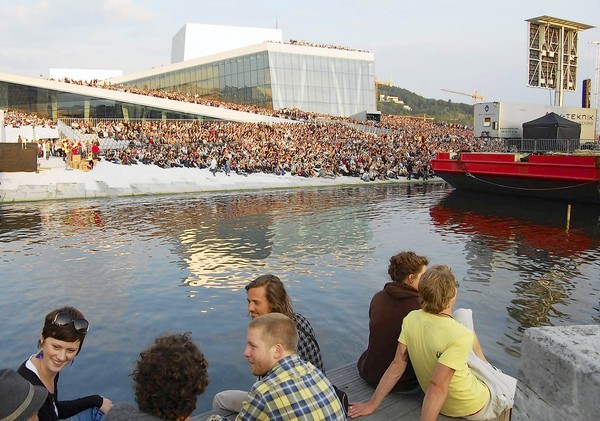
Along the eastern harbor, the marble Opera House seems to rise like an iceberg from the sea. This is the only opera house in the world that doubles as a public plaza, with a roof designed to be walked on. Opened in 2008, this cultural venue is a huge hit. On my last visit, I joined 8,000 people on the rooftop to watch a hot English group named Antony and the Johnsons (with a lead singer who looks like a cross between Meatloaf and Marilyn Manson) perform on a stage raft anchored just offshore.

In summer, Norwegians practically live outdoors. Frogner Park not only offers a great peek at Norwegians at play but also features a fine sculpture garden showcasing a lifetime of work by Norway’s greatest sculptor, Gustav Vigeland.

From 1924 to 1943, Vigeland created a world of bronze and granite statues — around 600 nude figures in all. The centerpiece is a teeming monolith of life, with 121 figures carved out of a single block of stone rocketing skyward. Like Munch, Vigeland was troubled. Those who know his life story can read it clearly in the granite and bronze, but I ignore it all and simply see his art as observations on the bittersweet cycle of life.

As much as I love Norway, goat cheese and my blond cousins, sometimes I need to inject some color into my days. At night, I head to two trendy multiethnic zones. Grunerlokka is the Greenwich Village of Oslo. A former working-class district, this neighborhood of funky shops, old hippies and bohemian cafes is a favorite of Oslo’s artsy set. Locals come here for its convivial night scene and colorful eateries.

Oslo’s rough and tumble immigrant zone is a stretch of a street called Gronland. This is where Turks, Indians, Pakistanis and the rest of Oslo’s immigrant community congregate. Colorful green grocer carts spill onto sidewalks. Various kebabs and spicy borek cost just $2 to go. Dueling tandoori restaurants offer meals for under $10, otherwise unheard of in Oslo.

I love dining street-side here. It’s cheap — and seeing a rainbow of people and a few rough edges makes the city feel less like Wonder bread. But that’s the beauty of Oslo. Just when you think you have it figured out, it gives you a taste of something different.

Rick Steves (ricksteves.com) writes European travel guidebooks and hosts travel shows on public television and public radio. E-mail him at rick@ricksteves.com and follow his Facebook blog.


Global Sufi Fest Attracts Thousands

As Reported by the Times of India

Soulful renderings of Sufi music by wandering minstrels from different parts of the world left the listeners spellbound here at the three-day ‘Sufi Sutra’ which ended on Sunday.

Besides Indians, Sufi singers and musicians from Afghanistan, Bangladesh, Egypt, Iran, Syria and Tajikistan presented mystic Islam through songs, dance and poetry.

Notwithstanding the current political turmoil back home, an eight-member Egyptian Mawlawyiah troupe enthralled the audience by an audio-visual of music and circular dervish dance whirling around singers in a circle.

A Bangladeshi team, led by Anusheh Anadil, sang the household songs of the famous 18th century poet-philosopher Fakir Lalon Shah, on whom based the recent Golden Peacock winning Bengali film ‘Moner Manush’.

The ‘bauls’ and ‘fakirs’ of West Bengal’s Nadia and Murshidabad districts were huge hits by their spontaneous, simple and meaningful lyrics.

Another Bengal team led by Armaan Fakir presented the little-known ‘Bangla Qawwali’. Traditionally performed at the Dargahs, the devotional songs had ‘Dhol’ and ‘Khol’ as percussions replacing Tabla.

The first Sufi ensemble also included the ‘Warsi Brothers’ from Hyderabad, Delhi’s ‘Druv Sangari’ and team, ‘Mirs’ from Bikaner and ‘Haji Md Ahmed Khan Warsi’s team from Uttar Pradesh.

“It is a peace concert in times of violence. We want to bring a convergence of ideas about truth, harmony, self-belief and peace through music. It is a celebration of the quest for the divine through love,” organiser Amitava Bhattacharya said.

Besides musical performances, the festival included workshops and exhibitions to showcase the traditional culture, beliefs and music of the Sufi mystics.

“We had more than 10,000 people at the open-air concert, while more than 700 people, including young students, learnt about Sufism at the pre-concert workshops,” Bhattacharya said.

The event would also help the poor musicians, most of whom were from the rural areas, to earn a livelihood, he said.  The festival was organised by Banglanatak.com in collaboration.

Pakistanis for Peace Editor’s Note– It’s a sad reality that singers from a  country rich in Sufi history and traditions like Pakistan, are  unable to attend this festival due to the 60+ year friction between the two brothers India and Pakistan. They are two halves of one nation.

Cultural exchanges like these, billions in cross border trade, Bollywood and Lollywood collaborations, sports matches, etc are just some of the things the two are missing out on due to their relations. We hope one day peace can finally come to this ancient and holy land that is the subcontinent.

India Urges Pakistan to Resume Onion Exports

As Reported by The BBC

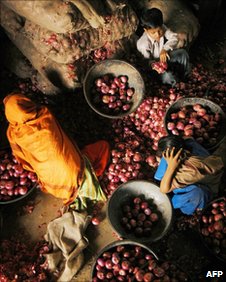
India is trying to persuade Pakistan to resume exporting onions overland to curb soaring prices. The matter has been taken up with the government of Pakistan, External Affairs Minister SM Krishna said.

Pakistan banned overland exports of onions to India on Tuesday with traders saying they feared shortages at home. Last month, India abolished import taxes on onions after prices nearly tripled in a month.

“We have initiated talks and before not too long, we are hopeful we will find a solution to this, easing pressure within our country for onions,” Mr Krishna told a press conference in Delhi.

Pakistan banned exports to India through the land route via the Attari-Wagah border crossing, although the sea route is still open. Much of the trade, however, is by road and rail which are cheaper and quicker.

India’s food inflation has risen for the fifth straight week this week to 18.32% – the highest in more than a year.

The price of onions, a key food staple for Indian families used in almost all dishes, has risen dramatically over the past month.

A kilogram which usually costs 20 rupees went up to 85 rupees ($1.87; £1.20) last month. At present, it is 65 to 70 rupees a kilo.

The rise has been blamed on unusually heavy rains in the bulk-producing western states of Maharashtra and Gujarat and in southern states, as well as on hoarders and speculators.

Discontent over food inflation has been a major headache for the government.

High prices of essential commodities such as onions have previously sparked unrest and helped bring down the national government in 2004.

The Nexus of US-India-Pakistan Relations

By Manzer Munir for Pakistanis for Peace

As President Obama wraps up his visit to India in the next day, a couple of things are important to point out about relations between the United States and India as well as how Pakistan fits into the equation.

The balance of power between India and the US still lies with the United States, however, India is set to make more and more gains in becoming more influential as its economy grows and as the United States looks to it to counter China in Asia.

The strategic partnership between the two countries and the importance of India for the United States is going to become vital as America uses India to contain China’s influence in the region and around the world.

We do believe that President Obama is correct in stating that relations between the two countries warrant being called the defining relationship of the century as there is no other country that compliments the United States presently in the world as does India. Not only do both countries share democratic ideals and a multiethnic population, but both countries are also increasingly dependent on each other’s economies. Add to this the nuclear cooperation as well as America’s support for India to get a permanent seat on the UN Security Council, and it becomes evident that this relationship will continue to grow over time.

President Obama has offered criticism on Pakistan already but is careful in trying to walk the tight rope act that is India-Pakistan relations. There are certainly more behind the scene steps taking place that will chide Pakistan into doing more. But in our view, the single most important thing that the US and the Obama administration can do is to help India and Pakistan come back to the table to get the peace process moving along. There is widespread agreement with the President’s assessment that a prosperous and stable Pakistan is in the best interests of India, Afghanistan and the region. In this effort, we believe there needs to be done more by all parties involved.

India’s argument has always been that the terrorist infrastructure and support for some anti-India militant groups needs to end before New Delhi will resume the peace process with Pakistan.

India should not refuse extensive trade relationships with the US due to American support of Pakistan as it does not do anything to help India. India realizes the situation both inside Pakistan and America’s dependency of the Pakistan Army’s support in flushing out the Taliban. It would go against India’s interests if it put its relationship and advancement with the United States as being dependent on American support for Pakistan and its vital assistance in the war in Afghanistan and on terror.

Peace between India and Pakistan and in the Kashmir valley is the only solution to both the conflict between the two nations as well as it is in America’s interests for both countries and the region. Furthermore, peace between the two countries will allow both Pakistan’s full focus on the Afghan border in helping American troops against the Taliban as well as the elimination of anti-India militant groups within Pakistan, many of whom are alleged to still be receiving support from elements within Pakistan’s ISI spy agency, much to India’s chagrin.

Obama Calls for India – Pakistan Peace

By Andrew Buncombe for NZ Hearald

Barack Obama has called on India and Pakistan to renew their efforts to find peace, even as he said Islamabad was not moving quickly enough to counter militants operating from inside its borders.

In comments that appeared to underscore the high-wire act of diplomacy the US president is trying to pull off while on the three-day visit to India, Mr Obama said Washington would not act as an intermediary between the two countries.

However, he told a group of students in Mumbai: “My hope is that over time, trust develops between the two countries, that dialogue begins, perhaps on less controversial issues, building up to more controversial issues. There are more Pakistanis who’ve been killed by terrorists inside Pakistan than probably anywhere else.”

The president has received criticism from some opposition parties in India after he failed to directly mention Pakistan when he arrived in India on Saturday and spoke of the 2008 attacks at the Taj Hotel and other locations in Mumbai, that left more than 160 people dead.

In the aftermath of the attacks, the so-called “composite dialogue” peace process between India and Pakistan was put on hold and while there have been a series of high-level meetings, the relationship between the two remains tense.

The president, who stayed at the seafront hotel in what aides said was a clear sign of solidarity, had talked about the militants and the terror they wrought, but was criticised by the right-wing Bharatiya Janata Party (BJP) for failing to attribute the blame to Pakistan.

Asked why he had not done so, Mr Obama reflected a reality in which the US is paying billions of dollars to Pakistan in aid as it pushes it to do more against militants responsible for cross-border strikes in Afghanistan.

“Pakistan is a strategically important country, not just for America, but for the world,” he said. “India and Pakistan can prosper and live side by side. This can happen and this should be the ultimate goal. The US can be a partner but cannot impose this process. India and Pakistan have to arrive at an understanding.”

Mr Obama started his visit to India, one of four countries he is including on a tour through Asia, by announcing more than 20 deals he said were worth up to $10bn and would help support 50,000 US jobs.

He also said the US was to relax export controls over sensitive technology, a demand of India’s that will help deepen ties between the two countries. The president is to hold formal talks today with India’s prime minister, Manmohan Singh.

On a domestic level, Mr Obama also recognised he needed to make “midcourse corrections” in the aftermath of last week’s mid-term elections if he is going to win over a frustrated and divided electorate.

Arundhati’s Statement From Srinagar: Full Text

By Arundhati Roy
October 26, 2010
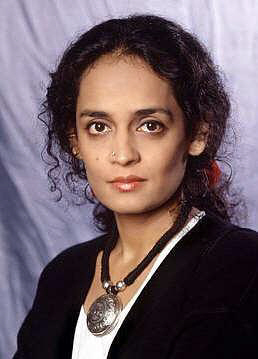
Noted Indian Hindu writer Arundhati Roy Tuesday said her speeches supporting the call for azadi were what “millions” in Kashmir say every day and were “fundamentally a call for justice”. Following is the full text of the statement that she has issued.
 
“I write this from Srinagar, Kashmir. This morning’s papers say that I may be arrested on charges of sedition for what I have said at recent public meetings on Kashmir. I said what millions of people here say every day. I said what I, as well as other commentators have written and said for years. Anybody who cares to read the transcripts of my speeches will see that they were fundamentally a call for justice. I spoke about justice for the people of Kashmir who live under one of the most brutal military occupations in the world; for Kashmiri Pandits who live out the tragedy of having been driven out of their homeland; for Dalit soldiers killed in Kashmir whose graves I visited on garbage heaps in their villags in Cuddalore; for the Indian poor who pay the price of this occupation in material ways and who are now learning to live in the terror of what is becoming a police state.  

“Yesterday I traveled to Shopian, the apple-town in South Kashmir which had remained closed for 47 days last year in protest against the brutal rape and murder of Asiya and Nilofer, the young women whose bodies were found in a shallow stream near their homes and whose murderers have still not been brought to justice. I met Shakeel, who is Nilofer’s husband and Asiya’s brother. We sat in a circle of people crazed with grief and anger who had lost hope that they would ever get ‘insaf’—justice—from India, and now believed that Azadi—freedom— was their only hope. I met young stone pelters who had been shot through their eyes. I traveled with a young man who told me how three of his friends, teenagers in Anantnag district, had been taken into custody and had their finger-nails pulled out as punishment for throwing stones.

“In the papers some have accused me of giving ‘hate-speeches’, of wanting India to break up. On the contrary, what I say comes from love and pride. It comes from not wanting people to be killed, raped, imprisoned or have their finger-nails pulled out in order to force them to say they are Indians. It comes from wanting to live in a society that is striving to be a just one. Pity the nation that has to silence its writers for speaking their minds. Pity the nation that needs to jail those who ask for justice, while communal killers, mass murderers, corporate scamsters, looters, rapists, and those who prey on the poorest of the poor, roam free.”

Arundhati Roy is a novelist, essayist and human rights activist. She won a Booker Prize in 1997 for her novel, The God of Small Things. For more on her read http://en.wikipedia.org/wiki/Arundhati_Roy

Pakistanis for Peace Editor’s Note– Arundhati Roy’s courageous plea to her country is to be lauded. Although branded a traitor by many in India and within the government, she knows that she stands for peace, justice and fairness for all humanity. She wants self determination for all Kashmiris, be they Muslim, Hindu, Buddhist or Christian.

We at Pakistanis for Peace want nothing more than peace between India and Pakistan and therefore understand that Kashmir is the one and single most important issue between the two countries. Solve it and you do not have the threat of cross border attacks, friction, animosity, perpetual war and a tense border between two neighbors of nearly 2,000 miles. If we continue to ignore it then it will eventually be the crisis that starts a 4th and possibly nuclear war between the two neighbors. A war that neither the neighborhood nor the world can afford.

Pakistan Should Celebrate Gandhi’s Life, Legacy and Contributions

By Manzer Munir for Pakistanis for Peace

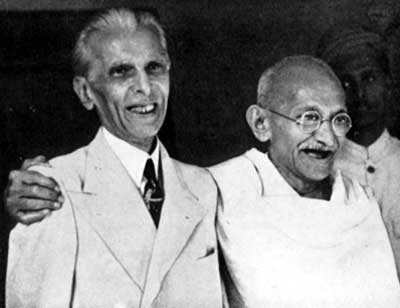
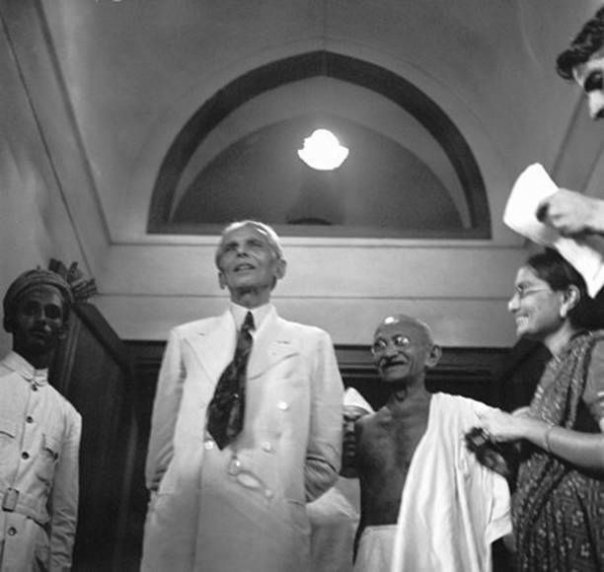
Mohandas Karamchand Gandhi, who was born 141 years ago today on October 2, 1869, is a revered figure in India as well as in many countries around the world for his peaceful civil disobedience techniques that succeeded in granting India its independence from Britain. He is also credited by Martin Luther King Jr., the American civil rights leader, as an inspiration in using similar peaceful protests to change unjust laws against blacks and other minorities in the United States. These protests and opposition eventually led to the Civil Rights Act of 1965 being passed granting all Americans of every ethnicity equal freedoms and protection in the eyes of the law.

Gandhi’s birthday, October 2nd, is celebrated by the United Nations as International Day of Non-Violence. He is an admired figure in India where his contributions for the freedom of his countrymen is celebrated on stamps, currency, and folklore. Gandhi is also appreciated in many other countries outside the Indian subcontinent. Statues of him are found in such disparate places like New York’s Union Square, Gandhi Square in Moscow, the Johannesburg city center in South Africa, and even as far away as Waikiki Hawaii where a statue to the leader stands in Kapiolani Park in Honolulu.  

Yet in Pakistan, a country that also benefitted from Gandhi’s movement for independence, he is vilified and not thought of highly. Many in Pakistan blame Gandhi for his failing to prevent the deaths of thousands of Muslims during the religious violence the precipitated the independence of both countries. In many Pakistani books he is depicted as a villain; however few people know that he died because of his great favour for Pakistan and that he was seen by right wing Hindu groups as someone who was concerned with the appeasement of the Muslims of India.

India’s first prime minister, Jawaharlal Nehru, had refused to give Pakistan their share of the money that was due to them after partition. But Gandhi went on a fast till death to protest against this injustice against the newly created Pakistani state and this pressure led to Nehru’s agreeing to pay the money so direly needed by the new Muslim nation.

He was assassinated by a young Hindu fanatical, Nathuram Godse, who felt that M.K. Gandhi was more of a hindrance to India than an asset. Godse, like many fanatical right wing Hindus felt that Gandhi was solely responsible for the partition of India into a country for Hindus and one country for the Muslims and he felt that he was a traitor to other Hindus.

Sadly, this man who ultimately gave his life in the cause of others is not very appreciated in Pakistan and neither are his contributions for freedom and independence from the British colonizers taught to today’s school children. In a country rife with violence, intolerance and instability, many Pakistanis can learn a great deal in the lessons of brotherhood and peaceful co-existence preached by Mahatma, the great soul. He would be the perfect anti-Taliban in today’s Pakistan, a country inflamed by animosity and hatred between all ethnic and religious groups. His ideas of tolerance and harmony with others would go a long way against the barbaric views of the Taliban, the enemies of man.

His belief that violence was not a solution towards any objective would benefit today’s Pakistani society if his message was given importance and taught at an early age. His reasoning towards peace and nonviolence lead him to once say that “An eye for an eye leaves the whole world blind.”  In today’s chaotic and violent Pakistan, there is a lot that my fellow Pakistanis can learn from this man and how he lived his life with humility, simplicity and non-violence as well as towards his service of others. More people inside Pakistan should be taught about Gandhi as he is as much responsible for Pakistan’s independence from Britain as was Jinnah, the founder of the country.

-Manzer Munir, a proud Pakistani American and peace activist, is the founder of Pakistanis for Peace and blogs at www.PakistanisforPeace.com as well at other websites as a freelance journalist and writer.

Cross-Border Unions: How Indo-Pakistani Marriages Prosper

By Vinita Bharadwaj for The National-UAE

While relations between their countries may be at an all-time low, Indians and Pakistanis who marry each other often find extended family ties confound their nations’ mutual hostility.

It is a truth universally acknowledged, that when two South Asians wed, they not only marry each other, they also marry into each other’s family.

And family matters between Indians and Pakistanis might be expected to be highly charged, given those two countries’ mutual antipathy for more than 60 years.

“When an Indian marries a Pakistani, it’s a loaded event that can only be matched by the energy of a cricket match between the two countries,” says Amra Hyder, a Pakistani.

The partition of British India into Pakistan and India is historically recorded as the largest human migration ever. It displaced millions and forced people of a common culture to choose a new geography and subscribe overnight to the idea of previously non-existent nations.

Most tragically, it split families. The ghosts of the 1947 partition loom large in the psyches of both countries’ modern histories that include three wars, a continuing dispute over Kashmir and terrorism.

Amra is originally from Pakistan and is married to Zulfiqar Hyder, who hails from India. Amra and Zulfiqar, now Canadian citizens, have lived in Sharjah with their four children since 2006.

In 1992, when the gregarious, romantic 23-year-old Amra married the 33-year old Zulfiqar, a studious man from India, she did not quite know what to expect – from married life, her in-laws and most importantly, her husband’s country. “I also never would have imagined I would be apologetic for both countries’ ridiculous obsession with ‘Shonia’,” she says of the media brouhaha over the recent nuptials of the Pakistani cricketer Shoaib Malik and the Indian tennis player Sania Mirza.

For long before the Malik-Mirza marriage, thousands of Indians and Pakistanis, mostly from families divided by the 1947 partition, have been marrying each other.

The difference is that now these marital alliances are formed outside the extended family circuit. Amra and Zulfiqar did not have an arranged marriage, and neither of them had any intention of settling in either India or Pakistan. They opted to overcome predictable visa hassles by initially residing in the UAE soon after their wedding, and migrated to Canada in 1996 to obtain citizenship, in the hope that it would ease their trips between India and Pakistan.

 
Masooma Syed, from Lahore, met her Keralan husband Sumedh Rajendran at an artists’ residency programme in Delhi. ‘I knew he understood me perfectly.’ Charla Jones

The couple first met in Abu Dhabi at a mutual friend’s party, and married within a year. The wedding took place in Karachi, with Zulfiqar’s entire family flying in from the northern Indian city of Lucknow. “It was a lovely wedding,” Amra recalls, adding that the questioning – albeit, in jest – began soon after they were married. “It was like, ‘Now you’re an Indian daughter-in-law’ and ‘Who will you support in cricket’ or even ‘Who will you support in war’?”

Her response was simple. “I married an Indian, not India. Having said that, I have been welcomed so warmly and given unbelievable respect by Indians, whenever I visit. My relationship with the people, I cherish. The politics, I don’t care for.”

Amra grew up in Abu Dhabi and returned to Lahore for university. Her childhood perception of Indians was to lump them all as people from the Southern Indian state of Kerala. “It was so wrong,” she says regretfully admitting to an error of judgment on her part, “but I honestly never really gave it any thought.” Although her grandfather was an active political leader – initially in the Indian independence struggle and later in the Muslim League, which pressed for Pakistan’s creation – she was uninterested in matters of politics.

On numerous trips to Northern India in the last 18 years, Amra has returned amazed by the cultural similarities she has observed between Indians – including non-Muslims – and her community in Pakistan. “We speak the same kind of language, we appreciate the same food, we like the same clothes, we place the same importance on family values. We even share similar pre-wedding festivities. It’s hardly an alien experience,” she says.

The differences were more to do with class and little do with the country. “Compared to my husband’s childhood, mine was very privileged. He is a self-made man and has single-handedly contributed to his family’s success. If I had to get used to anything, it was holidaying in a home that would experience power cuts and water shortages.”

Amra and Zulfiqar’s children – Hira (17), Anum (13), Zahra (11) and Ali (10) – describe themselves as desi, a generic, originally sanskrit, term used by South Asian immigrants that loosely denotes their origins. They are an animated group and debate the definition of desi among themselves, as their parents look on proudly. The conclusion: among younger generations in urban settings, desi communities have spawned a culture bound by a fondness for Bollywood, cricket, South Asian food and fused elements of their upbringing at home with the globalised, western outlook they are exposed to outside.

Having said that, India and Pakistan enjoy enormous cultural riches – largely attributable to their ethnic, regional and linguistic diversity. Both countries together are akin to the European Union – with each of their provinces having their own quirks, tastes and sensibilities. These subtleties within communities are apparent when embedded among the people in their own land.

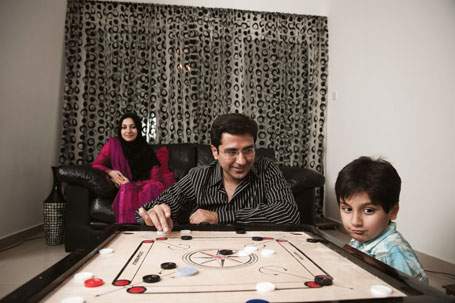
Shadab Raza, from Lucknow, India, his Pakistani wife Sana Zehri and their six-year-old son Ali have relatives on both sides of the border. ‘There’s never been this India-Pakistan mentality in our families,’ Shadab said. Siddharth Siva / Arabian Eye

Masooma Syed, an artist from Lahore, lives in Delhi with her husband Sumedh Rajendran, also an artist, but from the south of India. They were introduced to each other at an artists’ residency programme in the Indian capital Delhi in 2003. Following that, they would arrange to meet in Manchester, Sri Lanka and New York before finally geting married in July 2008.

Their cultural backgrounds could not be more different, as are their temperaments and artistic styles. “And yet, I knew he understood me perfectly,” says Masooma of the decision to marry across the border and step into the cumbersome world of visas, soon after exchanging wedding vows in Sri Lanka.

“We never thought about a third country [to live in]. Sumedh has lived in Delhi for the last 15 years and I’ve had absolutely no problem in adjusting to living here. It’s just like Lahore. Ironically, I find Sumedh is more of a foreigner in his own country’s capital than I am. We have discussed moving to a neutral country, especially if visa regulations became tighter, but then as artists all our inspirations stem from this region. Relocating would uproot those emotions and we wonder what impact that would have on our work.”

Kerala, where Sumedh is from, however, is an altogether different milieu. “The first time Masooma visited, she was stunned,” says Sumedh.

“I thought to myself, how lucky am I to be able to see and discover these different facets of India,” she says recalling her reaction to the abundant greenery, the aromatic spices, the swaying coconut palms and the simple people.

But since marrying Sumedh, Masooma has found herself saddled with the unexpected baggage of acting as an ambassador of sorts for both countries. “It’s annoying at times,” she says. “And really it’s all because of immature media reportage in one country about the other. So I end up having to either justify, explain or make excuses for India when in Pakistan or vice versa. I’m not used to being accountable to anyone and this new role is quite tiring, even if it does come with special treatment in some instances.”
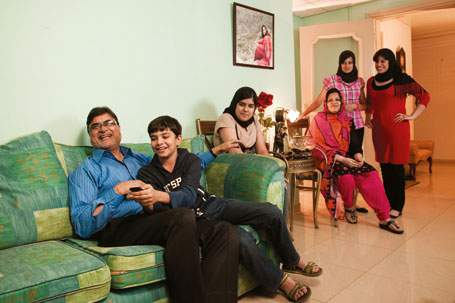
The challenges within an Indo-Pak marriage, according to Masooma, seem to be similar to any mixed-culture marriage. Except that among South Asian communities, tradition dictates the wife follows the husband to his home, or homeland. In the specific India-Pakistan context of the 21st century, the complications of visas and work permits make it harder for educated women to carve out an identity for themselves in their new environment. “It’s definitely much easier to be in a third country – either resident or citizen – when in an Indo-Pak marriage. Also, in today’s world, the younger generations of Indians and Pakistanis are meeting and interacting abroad, first as students and then as professionals. Marriages between different faiths among this demographic is on the rise and logistics is no longer a deterrent to falling in love.”

Masooma has been visiting India since 2003 and as an artist she has travelled, exhibited and worked in both countries. “I go through the same motions as all Pakistani nationals applying for an Indian visa. It’s a process and is easy or difficult depending entirely on how you want to look at it,” she says. In early June, the Indian government announced it was relaxing the requirements for granting the extension of long-term visas to four categories of Pakistani nationals, including Pakistani women married to Indian nationals and staying in India. The announcement was welcomed by individuals in her situation.

Her current visa is a ‘visit visa’ valid for nine months that is split into three visits of 90 days each. She has to exit India after each ‘visit’, but says it suits her work commitments that require her to travel abroad. “And I can visit my family in Lahore,” she adds.

Pakistani nationals issued visas to India are typically allowed to visit a maximum of three cities and must report to a police station on arrival and before leaving for their next destination. Masooma is now exempted from the police reporting, as she is a regular traveller between India and Pakistan and is also now married to an Indian national. “I’m allowed to visit more than three cities each time, but it will be a while before I am given complete freedom to travel like any other foreigner,” she says.

She could apply for a residence permit, but would be compelled to stay in India until the paperwork is completed, but it’s diffiuclt to predict how long that would take. Nationality, however, remains a touchy issue, particularly among the educated and liberal women of either country, who see no reason in giving up the passport of the country they originally belong to.

“Unfortunately, political relations keep changing and this spills over into visas and affects people-to-people relationships,” says Zulfiqar Hyder, a staunch believer in encouraging contact between the two countries. The Hyder family hold Canadian passports, but they still have to apply for visas to visit India and Pakistan.

In the wake of the David Headley arrest – a US citizen of Pakistani origin – over his alleged terrorist connections and involvement in the 2008 Mumbai attack, Zulfiqar says having the Canadian passport makes little difference towards easing the process. “I’m trying to get a PIO (Person of Indian Origin) card for the children,” he says of the document issued by the Indian government that functions as a long-term multiple entry visa. As things stand, the foreign spouse of an Indian national is eligible for the PIO card, but the spouses from Pakistan are not, effectively ruling out Amra and her two elder daughters, as they were previously travelling on her passport. “I don’t understand the logic that my children cannot get the PIO card, because their mother is Pakistani,” says Zulfiqar.

The national security argument does not resonate with him as much as it does with Amra. “Frankly, if my family can be assured of safe travel, I don’t mind a little more waiting or dealing with a bit more bureaucracy,” she says. He shakes his head furiously, looks at me and asks: “Did the 26/11 terrorists enter India with passports? Did they? How did they enter India?”

They arrived by night. Across the Arabian Sea, first on a small boat, then a hijacked fishing trawler and finally entered Mumbai’s waters on a rubber dinghy.

Visa-related policies in both countries are updated depending on the warmth or frostiness of the political relationship. Shadab Raza, a 35-year old Indian also from Lucknow, married Pakistani national Sana Zehri, who grew up in the UAE. They have a six-year-old son who has an Indian passport. The families arranged their marriage, as Shadab’s maternal aunts live in Pakistan. “There’s never been this India-Pakistan mentality in our families, because we have relatives on both sides of the border,” says Shadab.

Sana’s ancestry can be traced back to Lucknow, as her grandparents migrated to Pakistan at the time of the partition. On her first visit to the city after her marriage, she visited the ancestral home of her grandparents and filmed it to share with them. “I filmed the house, the neighbourhood and some of the people recorded messages for them. When they watched the video they were consumed by nostalgic sadness. I think partition hurt their generation the most. Our parents to a lesser extent, but they still feel the impact of it as they grew up hearing about it from their parents and visiting immediate relatives in the other country. For my generation, the degree of the trauma is even more reduced, because we haven’t experienced much of the consequences of it directly,” she says.

Shadab and Sana’s son, Ali, however, is quite clear about where he is from. “India,” he says firmly.

Sana laughs and recalls an incident of him wanting a carrom board specifically ‘made in India’. “My father-in-law had to get the lettering customised because the shop, where they bought it didn’t sell carrom boards with a ‘made in India’ label,” she says. In the meantime, Ali brings out his carrom board and empties out the coins from their container. He then calls out to Shadab to come and play with him.

“There’s never been this India-Pakistan mentality in our families, because we have relatives on both sides of the border,” says Shadab sitting down at the board, across from Ali, who flicks the large striker coin towards the arrangement of smaller black and white coins stacked by colour in the centre of the board. The two towers collapse, some of the coins disperse in four directions, but none of them is pocketed.

“What a mess,” exclaims Ali.
India and Pakistan’s Leaders Meet

As reported by BBC.com

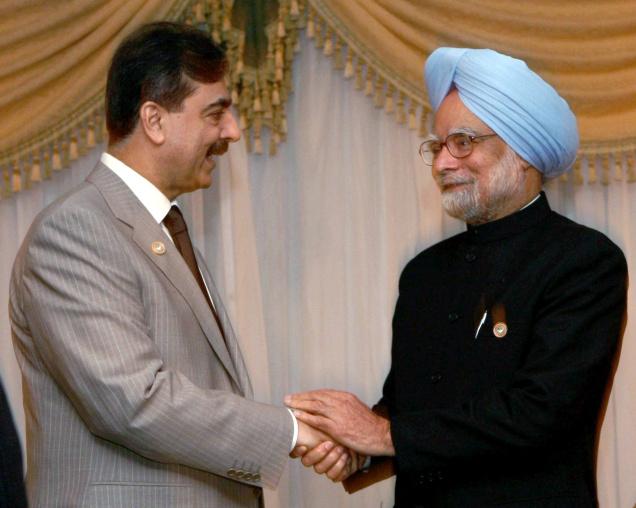
Pakistan PM Yousuf Raza Gilani spoke to his Indian counterpart Manmohan Singh at a reception hosted by the US President Barack Obama, reports said. The prime ministers of India and Pakistan met briefly during a nuclear summit attended by 47 world leaders in Washington DC.

A Pakistani embassy spokesman said it was “not a formal meeting”. cIt comes a day after Mr Singh told Mr Obama that Pakistan’s government lacked the will to punish those responsible for the Mumbai attacks. The November 2008 attacks left 174 people dead, including nine gunmen, and soured ties between India and Pakistan. Late last year, Pakistan charged seven people in connection with the attacks.

They include the suspected mastermind Zaki-ur-Rehman Lakhvi, who is allegedly the leader of the Pakistan-based militant group Lashkar-e-Taiba. Mr Singh and Mr Gilani spoke to each other at a reception hosted by Mr Obama, Pakistani embassy spokesman Nadeem Kiani said.

“Both leaders were present at the same place and so they shook hands and talked,” he said. A spokesman for India’s foreign ministry, Vishnu Prakash, told The Hindu newspaper that the two leaders “exchanged pleasantries”.
‘State elements’

India put peace talks on hold after the attacks, blaming them on Pakistan-based militants. Pakistan admitted they had been partly planned on its soil. India has also suggested what it calls “state elements” were involved. Both Pakistan and Lashkar-e-Taiba have denied any involvement.

In February, the two sides held their first formal talks since the 2008 attacks and agreed to “remain in touch”. Leaders from 40 states are attending the meeting in Washington which is expected to focus on how to secure nuclear material.

Progress, For a Price, in Pakistan

By Doyle McManus for The Los Angeles Times

In 2001, on the eve of the U.S. invasion of Afghanistan, President George W. Bush gave Pakistan’s then-leader, Gen. Pervez Musharraf, a choice: He was either with us or against us. Musharraf chose to become an ally, but the question ever since has been whether that shotgun marriage can mature into a healthy adult relationship. At times, the prospect has seemed far from reach.

The world’s second-most-populous Muslim country is caught in a brutal internal struggle between extremism and moderation. Most of its people tell pollsters they don’t like the United States and wish we’d go away. The tribesmen of its western frontier shelter Osama bin Laden and the leaders of Afghanistan’s Taliban. And the United States can’t forget how, in the 1980s, Pakistan built nuclear weapons — and then later exported nuclear technology to North Korea and Iran.

But in recent months, there has been progress in the relationship. Military and intelligence cooperation between the United States and Pakistan has increased significantly. Pakistan has allowed the CIA to increase its missile strikes against Al Qaeda and Taliban targets in Pakistani territory. Pakistani authorities have arrested several Taliban leaders and allowed U.S. intelligence officers to question them. And now Pakistan is offering to increase its own military operations in North Waziristan, the presumed lair of Bin Laden. All that cooperation came at a price, of course: a flood of U.S. military and economic aid.

And last week, the Pakistanis came to Washington to press for more. The academic criticism of the U.S.-Pakistani relationship is that it is “transactional” — nothing more than a series of bargains between buyers and sellers who don’t trust each other much. That’s still mostly true. Pakistan’s delegation arrived with a 56-page shopping list covering everything from military equipment to education and cultural exchanges. And one Pakistani official, asked during the visit whether his government was truly willing to act against the havens that allow the Taliban to maintain bases in Pakistan, replied frankly: “Yes — but at a price.”

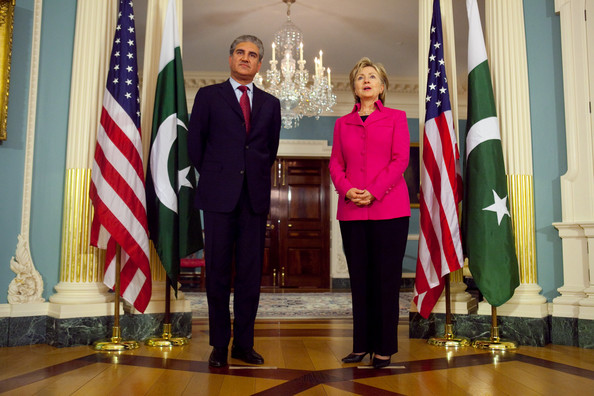
After a series of meetings with Secretary of State Hillary Rodham Clinton, Pakistan’s ebullient foreign minister, Shah Mehmood Qureshi, declared: “I think we are going to move from a relationship to a partnership.” But he used the future tense. In the meantime, there are things to work out. Pakistan is clearly worried about what happens when the United States begins pulling troops out of Afghanistan in 2011.

Although Obama administration officials have tried to reassure Pakistan that Washington’s commitment to the region is for the long haul, uncertainty remains. “Our fear is . . . that we get into a fight with these guys [the Taliban], and you walk away, and we’re still there,” a Pakistani official said. Pakistan’s powerful army chief of staff, Gen. Ashfaq Kayani, spent part of his time in Washington visiting Congress with PowerPoint slides to show that Pakistan has committed more troops to its fight against insurgents than the United States has on the ground in Afghanistan, and that it has suffered almost 30,000 killed and wounded in the process.

According to U.S. officials, Kayani made a strong case that Pakistan can do more if it gets more modern military equipment from the United States, especially helicopters to ferry troops into the rugged badlands where Al Qaeda and the Taliban hide. The United States has helped Pakistan acquire some helicopters, but not as many and not as quickly as the Pakistanis would like. U.S. officials said they would try to speed the delivery of more. In the past, U.S. officials complained that Pakistan used much of its U.S. military aid to bolster its eastern front with India instead of its fight with internal insurgents; but since Pakistan’s 2009 offensive in the Swat Valley, that criticism has been stilled.

The delegation also added a new item to Islamabad’s wish list: a nuclear agreement under which the United States would help Pakistan develop its civilian nuclear energy industry — to mirror a similar U.S. agreement with India, Pakistan’s longtime enemy. The United States told the Pakistanis that would have to wait. The memory of having to clamp sanctions on Pakistan for its nuclear weapons program is still too fresh. But it was a sign of improving relations that the idea wasn’t rejected completely.

 In 2001, the United States sought a new relationship with Pakistan mostly because it was next to Afghanistan — and thus a country we would need for moving military supplies and basing drones. But that thinking has slowly evolved. In the long run, with its population of 170 million people — not to mention its cache of nuclear weapons — Pakistan is more important than Afghanistan.

“We’re engaging with Pakistan because we’re afraid of it,” says Christine Fair, a Pakistan expert at Georgetown University. “It’s the scariest country in the region. Because of Afghanistan, it’s been treated as if it were a subsidiary issue. But Pakistan should be the primary issue.” The Americans are working hard to convince the Pakistanis that they are interested in Pakistan’s stability for its own sake, not just because it’s next door to Afghanistan. The Pakistanis are working hard to convince the Americans that they are committed to defeating the extremists in their midst. It’s not a strategic relationship yet. If it’s a partnership, it’s still a wary one. But that’s progress.

India Becomes Only Country In the World To Possess Maneuverable Supersonic Missiles

By DEUTSCHE PRESSE-AGENTUR  for ArabNews.com


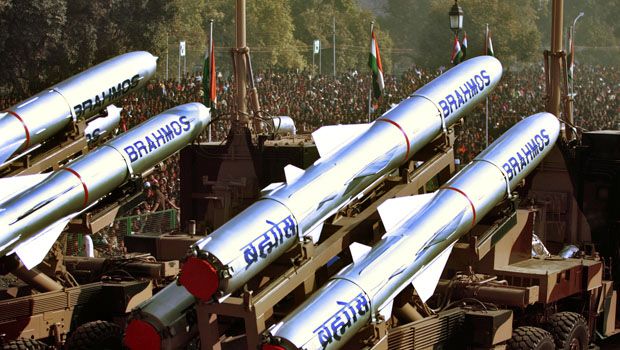
NEW DELHI: India successfully tested Sunday a “maneuverable” version of the BrahMos supersonic cruise missile which it has jointly developed with Russia, news reports said.

The vertical-launch version of the 290-kilometer range BrahMos was tested from a warship in the Bay of Bengal off India’s eastern coast, the PTI news agency reported. “The vertical-launch version of missile was launched at 11:30 (0600 GMT) hours today from Indian Navy ship INS Ranvir and it manoeuvred successfully hitting the target ship. It was a perfect hit and a perfect mission,” BrahMos aerospace chief A Sivathanu Pillai was quoted as saying. ”

After today’s test, India has become the first and only country in the world to have a maneuverable supersonic cruise missile in its inventory,” Pillai said.

Named after India’s Brahmaputra and Russia’s Moskva rivers, the BrahMos can carry a 200-kilogram conventional warhead. Variants of the missile fitted with inclined launchers are already in service with the Indian Navy, NDTV news channel quoted defense sources as saying. Sunday’s firing was part of pre-induction tests for the vertical launcher variant, the sources said. The BrahMos has also been inducted into the India Army and preparations are on to develop air-launched and the submarine- launched versions, the sources said.

US-Pakistan Talks Mark ‘Intensification’ of Partnership

By Suzanne Presto for Voice of America News

The United States and Pakistan will hold their first strategic dialogue at the ministerial level in Washington next Wednesday (March 24). U.S. Special Representative for Afghanistan and Pakistan Richard Holbrooke told reporters at the State Department Friday that these talks mark a “major intensification” of the U.S.-Pakistan partnership. Wednesday’s talks will be co-chaired by Secretary of State Hillary Clinton and Pakistani Foreign Minister Shah Mehmood Qureshi.

Holbrooke says delegations from both sides will include senior officials of their nation’s defense, diplomacy, finance and agriculture departments. The U.S. delegation will also include aid and trade officials, and Pakistan’s will include officials who handle water, power and social issues.
“This is a partnership that goes far beyond security, but security is an important part of it,” he said. Holbrooke told reporters Friday that U.S. officials want to see aid money for Pakistan distributed more quickly.

“We are doing more. We will announce more. We want to do as much as the Congress will support,” Holbrooke said. The Obama administration has made improving and broadening relations with Pakistan a top priority, but U.S. policies and drone strikes targeting militants in the region remain unpopular. Holbrooke said the U.S. supports Pakistan as it seeks to strengthen democratic institutions and economic development, handle energy and water problems, as well as defeat extremists. “Everyone is aware of the popular public-opinion polls, and we think that our support for Pakistan deserves more recognition among the people,” he added.

Speaking to reporters in Islamabad Thursday, Foreign Minister Qureshi said Pakistani and U.S. officials have been talking a lot, and in his words, “the time has come to walk the talk.” Holbrooke responded to Qureshi’s statement that next week’s talks would be a good opportunity to rebuild confidence and trust on both sides. “The first time I went to Pakistan, Foreign Minister Qureshi introduced me to the phrase “trust deficit,” and so I have heard it many times,” he said. “The last time I was there, we both said in a press conference that we thought we had made huge advances in that,” Holbrooke added. Secretary of State Clinton last visited Pakistan in October, where she spoke with officials and students alike.

Holbrooke said there are plans to hold the next set of strategic talks in Pakistan, likely within the next six months. He underscored that these bilateral talks do not replace the trilateral talks among the U.S., Pakistan and Afghanistan which he said are expected to resume later this year.

U.S. to Offer Smart-Bomb Kits, Drones to Pakistan

By  Yochi Dewazen The Wall Street Journal

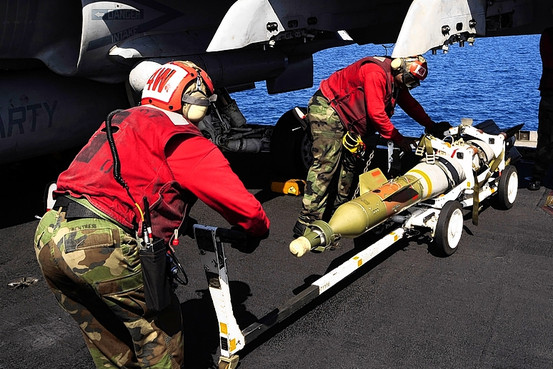
Washington DC—The Pentagon will transfer sophisticated laser-guided-bomb kits to Pakistan, escalating the Obama administration’s recent push to better arm Islamabad for its military campaign against the country’s Islamic militants. U.S. military officials said Pakistan will soon receive equipment capable of converting 1,000 traditional munitions into “smart bombs” that can more precisely strike targets on the ground. American officials hope the reconfigured bombs will help Pakistan minimize civilian casualties as it battles insurgents in the country’s tribal regions.

Pakistan will also soon take possession of a dozen American-made surveillance drones and 18 late-model F-16 fighter jets, sharply expanding the Pakistani military’s ability to track and strike targets in remote, insurgent-controlled parts of the country. The laser-guided-bomb kits could spark some unease in India, where officials have been warily watching the expanded U.S. military aid to Pakistan and wondering if the weapons would one day be turned against them. India lobbied against recent U.S. legislation giving Pakistan billions of dollars in new nonmilitary aid, though the measure passed anyway.

The Indian reaction to the planned American F-16 sale to Islamabad was far more muted, in part because India’s air force is far larger than Pakistan’s and employs more-advanced planes. Providing advanced munitions to Pakistan would once have aroused fierce opposition within the U.S. Congress, where powerful lawmakers from both parties have questioned Islamabad’s willingness to take tough measures against the country’s militants. Washington has also long charged that elements in Pakistan’s intelligence service maintain close ties to the Afghan Taliban, an accusation Islamabad denies. But the new weapons transfers are unlikely to spark much controversy in Washington, a reflection of how much the concern about Pakistan has ebbed in recent months as Islamabad deepens its military and intelligence cooperation with the U.S. In mid-February, Pakistani and American intelligence operatives jointly captured Mullah Abdul Ghani Baradar, the top military commander of the Afghan Taliban. Islamabad has also tacitly allowed the U.S. to sharply expand its campaign of drone missile strikes against insurgent targets inside Pakistani territory.

Pentagon spokesman Geoff Morrell last week praised Pakistan for mounting a serious campaign against the militants operating along the porous Afghan-Pakistani border. U.S. officials say they believe the leadership of both al Qaeda and the Afghan Taliban are hiding in Pakistan, with several top officials allegedly operating out of the Pakistani city of Quetta. “The commitment that the Pakistani government, the military, its intelligence forces have demonstrated over the past several months to combating this threat within their midst is commendable,” Mr. Morrell said. “We are here to help them in any which way they are comfortable.” The clearest example of that assistance is the stepped-up U.S. military aid to Pakistan. A new American counterinsurgency assistance fund for Pakistan is slated to increase to $1.2 billion in fiscal year 2011 from $700 million in fiscal year 2010, allowing Islamabad to acquire more U.S.-made helicopters, night-vision goggles and other military equipment.

Pakistan, which is smaller and poorer than neighboring India, uses American grants to fund most of its arms purchases. The smart bombs should help Pakistan expand its military offensive in the insurgent stronghold of South Waziristan. The laser-guided munitions can be dropped from Pakistan’s current fleet of U.S.-made F-16 fighter jets, allowing Islamabad to improve the accuracy of its bombing runs while it waits to take possession of new F-16s later this year. “This is sort of a short-term discussion, but it’s one that’s important to them because they’re involved in current operations right now,” Air Force Secretary Michael Donley told reporters Tuesday. “They’ve been trying to improve their capabilities in the short term while they wait for these aircraft.”

Lt. Col. Jeffry Glenn, an Air Force spokesman, said Pakistan will receive 700 kits capable of converting 500-pound traditional bombs into laser-guided munitions, as well as 300 kits that can be used with larger 2,000-pound bombs. The kits, which are made by Lockheed Martin Corp. and Raytheon Co., contain computerized guidance systems for the fronts of the bombs and fins that are designed to be attached to the backs of the munitions for better lift and stability. Once the kits have been properly configured, pilots or ground-based troops can use laser beams to guide the smart bombs to their targets.

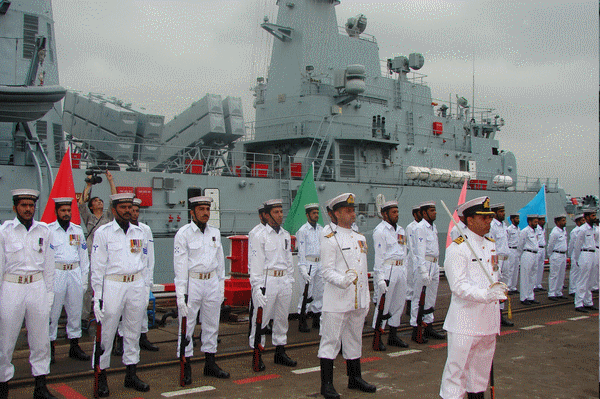
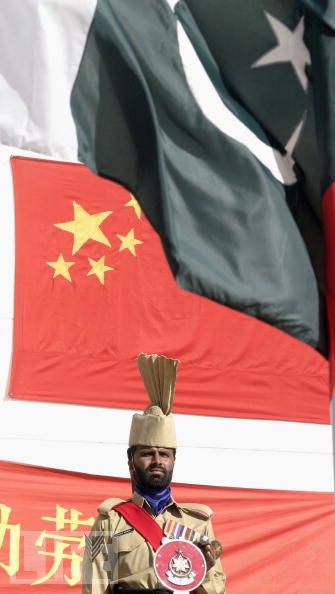
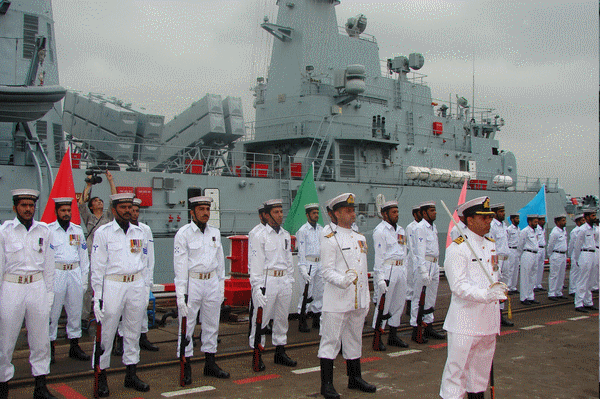
Pakistan and China increase military spending and cooperation as India shows concern

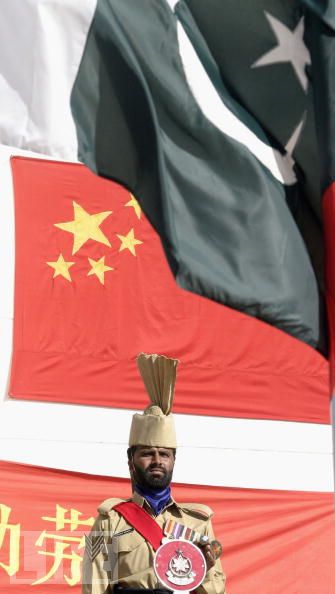
Beijing, China- A senior Chinese defense official has justified Chinese sales of warships and submarines to Pakistan on the grounds that Russia and the United States were selling similar systems to India.

The defense official also indicated that China was aware of the fact that India may not be happy with its deal with Pakistan. “The initiative may invite concerns from its neighboring countries. But the doubts are unnecessary,” Zhai Dequan, deputy director of China Arms Control and Disarmament Association , was quoted as saying by the official media.

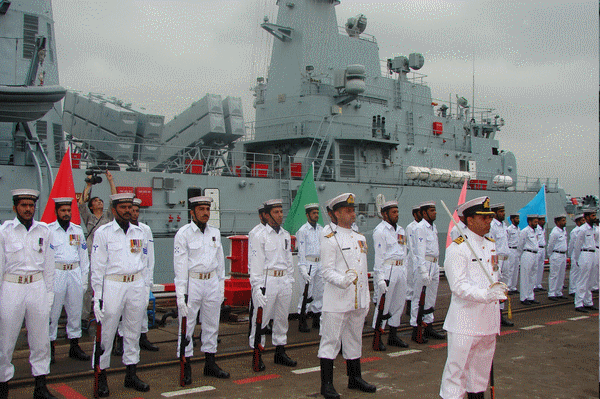
Pakistan’s chief of naval staff, Norman Bashir, also made a push to persuade China to sell higher capacity ships compared to the F22P frigates that China began delivering in June.  Chinese official Zhai said that Pakistan’s   desire for higher capacity ships is normal for an independent nation seeking to bolster its security. “India has also entered into deals for military hardware from the Unites States and Russia. India’s aircraft carrier has already cost it billions of dollars”, said Zhai.

Bashir also met with the Chinese defense minister, Liang Guanglie, and discussed with him Pakistan’s needs in terms of modernizing their armed forces to try and keep up with the torrid pace of rival India’s defense spending. “The Chinese armed forces would like to improve friendly and cooperative relations with the Pakistani armed forces,” defense minister Liang Guangile said, according to China’s state-run Xinhua press agency.” China attached great importance to its traditional friendship with Pakistan, Liang said, adding that the two countries had conducted comprehensive and multi-level military exchanges and cooperation in various areas.”

“The Pakistani armed forces and people cherished their friendship with the Chinese armed forces and people”, Noman Bashir said, noting that “Pakistan would like to work with China to promote the comprehensive and cooperative partnership.” Bashir also stated that Pakistan was keen on buying bigger ships and more JF-17 fighter planes from China in addition to submarines and that Pakistan will be buying more weapons from China, including missiles. 

“These growing military ties between China and Pakistan are a serious concern to India,” stated Defense Minister A K Antony. India worries about China’s rising influence in South Asia and the Indian Ocean region, a neighborhood traditionally considered as its sphere of influence.

India’s relations with Pakistan, never easy after three wars since 1947, went downhill fast after last November’s Mumbai attacks blamed on Pakistani originated militants. Meanwhile, Chinese and Pakistani cooperation on military and economic projects has increased in the last few years. “The increasing nexus between China and Pakistan in military sphere remains an area of serious concern,” Antony said in a speech. “We have to carry out continuous appraisals of Chinese military capabilities and shape our responses accordingly. At the same time, we need to be vigilant at all times.” Tensions between India and China, who fought a brief war in 1962, flared again in recent months, especially with the re-emergence of a long-standing border dispute made worse by a visit by the Dalai Lama, the Tibetan spiritual leader, to Indian territory claimed by Beijing.

India increased defense spending by 24% for this year’s budget to $28.4 billion a year dwarfing Pakistan’s budget of $4.2 billion for the same period. Meanwhile, China and India are together set to make Asia the highest regional spender on defense in the next seven years replacing North America as their economies continue to fund their weapons appetite.

Pakistan cannot compete with the likes of India and China militarily. Just as Taiwan could not compete with China militarily, but went on to become an economic powerhouse and used its influence economically,  so too must Pakistan focus on growing its economy rather than growing militarily. Even though Pakistan possesses the nuclear bomb, and that very well may end up being a strong deterrent against India in the likelihood of a war, it still is loathe to use it, for the consequences from India would be similar and far worse due to their increased warheads and military might.

Also, although Pakistan’s military and previous leadership have articulated the right to a preemptive nuclear strike or a nuclear first use option in the event of hostilities with India, this choice is often seen as a losing option by the military due to the aftermath of a nuclear exchange between the two countries. India’s budget and its technological advancements make it impossible for Pakistan to ever win a conventional war with India. And a nuclear exchange between these two neighbors will leave neither side feeling as the winner.  

Pakistan’s most beneficial strategy must consist of directing its full armed forces against the Taliban and militant groups within its territory and re-engaging India back to the peace table in hopes of resolving the long disputed Kashmir region because war with India will certainly not leave Pakistan the victor. However a peace treaty can open the long border between India and Pakistan for trade, goods, ideas, money and people to move freely across the border and allowing much needed investments and flow of technology to Pakistan that will go a long ways in helping the country and its people catch up with the rest of the world.

Reported by Manzer Munir for www.PakistanisforPeace.com

Pakistanis for Peace

A little over two weeks have passed since the attacks in Mumbai, India. Since then there has been new information presented to Pakistani authorities providing evidence that militant extremist groups inside Pakistan were involved in planning and carrying out the attacks. Although at this time it is unlikely that a full scale war will break out between India and Pakistan, It is assumed that India may be considering several options including strategic attacks inside Pakistan where these groups are operating and have their camps. Combined with the American bombings inside Pakistan’s border with Afghanistan, this is exactly the sort of thing the army has feared. Having two borders to worry about in addition to unrest within the country due to the lack of safety and security for citizens and foreigners alike makes it a very difficult time to be the head of the army as is General Kiyani.

From the attacks that happened in India 2 weeks ago, arose a small but determined movement within the Pakistani community inside Pakistan and abroad where 3-6 million people of Pakistani origin live around the world. Pakistanis for Peace stared as a group on Facebook into an idea for a global forum for Pakistani and non Pakistani people to come together and demand a change for peace with India. We are tired of seeing Muslims killing Muslims because one is Shia and one is Sunni. We are tired seeing death and destruction brought to every corner of our beautiful country. First it was Peshawer during the Afghan-Russian war. Then the bombs and attacks happened frequently in Karachi. Finally Lahore and other cities were engulfed in constant violence. And now finally even Islamabad is not left untouched with the recent violence at the Lal Masjid and more recently with the horrific destruction of the Islamabad Marriott. Most importantly, decent and law abiding Pakistanis and Overseas Pakistanis are sick and tired of having to feel embarassed when we now have to tell someone when we first meet them about where we are from. A sample conversation goes like this: “Hi, nice to meet you. I am So and so.” “Where am I from?” “I am originally from Pakistan. Oh and by the way, no I am not a terrorist, I am one of the nice guys from Pakistan you never hear about”

Honestly, it should never come to that in real life. But it really has. Many Pakistanis who have never left the country do not know what it is like to go outside Pakistan. Especially to Europe or North America. We are looked upon with more suspicion now than ever. In a recent survey done in the United Kingdom, the average person assumed that Pakistan was either the country most responsible for terrorism around the world or was in the top 5 of countries listed by the survey respondant. It is a damn shame and I for one as a Pakistani American am going to do everything I can to get people inside and outside Pakistan to join us in our quest to bring a normalization of relations between India and Pakistan. Over 60 years of hostility has now only made things that much more dangerous for the neighborhood. We are both nuclear armed nations and with rampant corruption in both countries, poverty and extremist groups and terrorists makes it a very volatile situation with a very dangerous outcome. It is time for peace. Unconditional and uncontested. The people of both nations are demanding it. Now there is a momement within Pakistan and the Pakistani community. The silent majority is standing up and demanding peace. India and the world need to know that there are Pakistanis who are as determined about peace as the terrorists are about terror. The nations needs to understand that Pakistanis for Peace because Pakistan is for Peace.

This blog started as an idea on Facebook and is set up so that we can discuss the current situation from a peaceful Pakistani prespective. Keep checking for daily updates. And Please also join us on Facebook for a vibrant discussion as a group member and help support peace between India and Pakistan as well as in the Middle East and around the world!