Posts Tagged ‘ Muslims ’

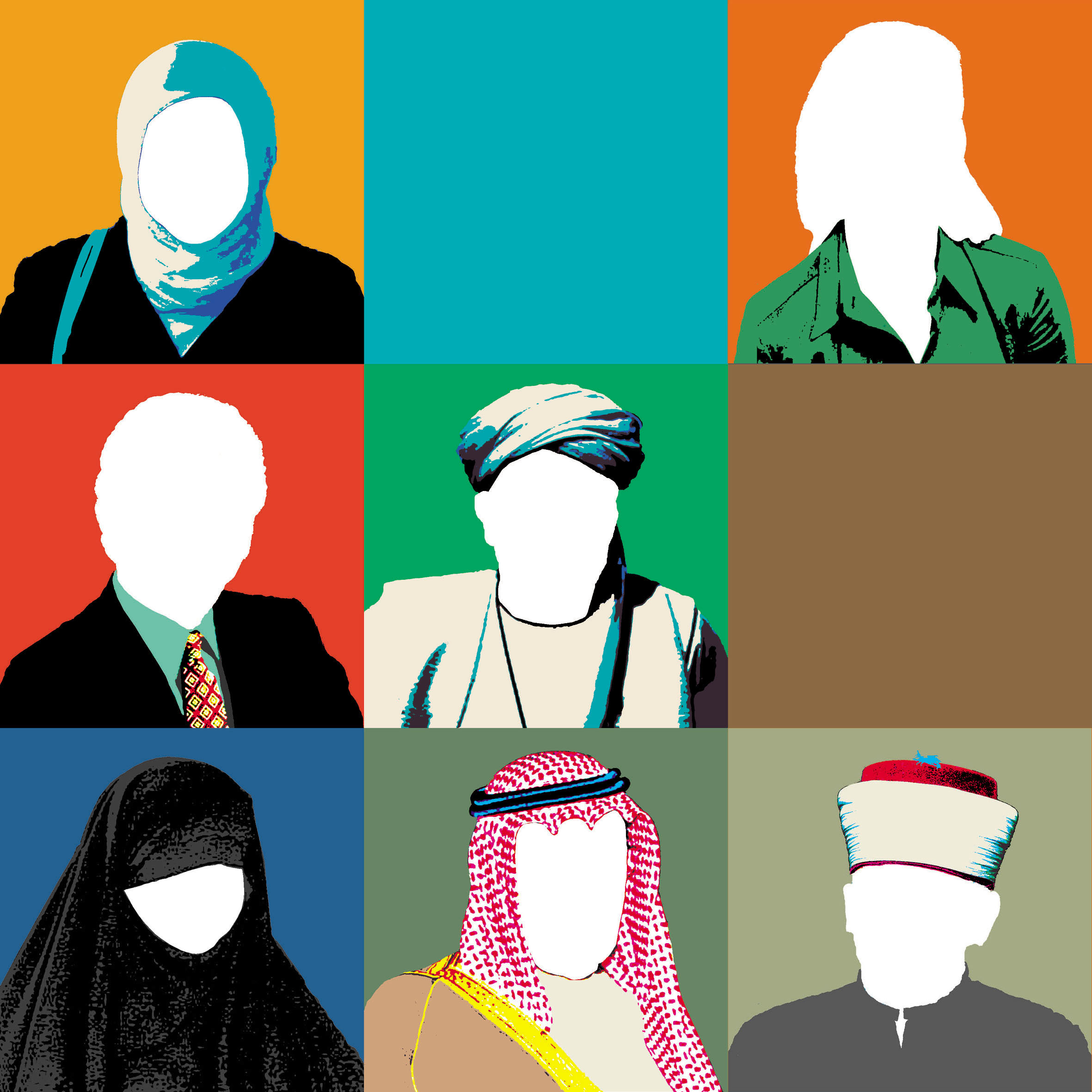
U.S. Companies Urged to Tap Into $170 Billion Muslim Consumer Market

By Brittany Hutson for The Atlanta Post

U.S. companies are loosing out by neglecting a rather attractive and overlooked consumer: American Muslims.

There is an estimate number of six to eight million Muslims in this country that possess an annual spending power between $170 and $200 billion. It is believed that two-thirds of Muslim households make more than $50,000 a year and a quarter earn over $100,000. Miles Young, chief executive officer of Ogilvy & Mather Worldwide, an international advertising, marketing and public relations agency, said in a speech at this past December’s second annual American Muslim Consumer Conference that Muslims are the best-educated religious group in America and over 40% have bachelors’ degrees. Clearly, this is a consumer that companies cannot afford to not attract.

According to the Associated Press, corporations in Europe have long been catering to Muslim communities there. Nestle has about 20 factories with halal-certified production lines and advertises to Western Muslims through its marketing campaign called “Taste of Home.”

So why is it that companies in Europe have been able to successfully attract and retain the interest of their Muslim consumers?

Part of it has to do with Muslims in Europe having lived there for multiple generations, said Ponn Sabra, founder and owner of the online blog community for American Muslim Moms, AmericanMuslimMom.com.  Also, “European Muslims are extremely strong in faith, very vocal, [and] much more confident in their practice of our faith than the majority of Muslims living in America.”

It also helps that Muslims in Europe are not stereotyped like Muslims in America, added Sabra. It’s only been recent that businesses in the U.S. have started to tap into the Muslim consumer market. McDonald’s and Wal-Mart have entered the halal arena and last August, Whole Foods began selling its first nationally distributed halal food product—frozen Indian entrees called Saffron Road. But because there is still intensified anti-Muslim feeling throughout the country, this is causing companies to worry that they will be attacked for going after this consumer.

But Muslims do not necessarily want companies to be their advocates against opposition, more so as they would appreciate that companies get to understand their values. Mohammed Abdullah, director of the 2009 Conference, said in a press release, “Muslims want to be acknowledged in mainstream media. You don’t need to change your product of show Muslims in your ads. Instead, consider advertising in a Muslim media outlet. Say Eid Mubarak or Ramadan Kareem during the holidays. The Muslim community will respond. When we see an ad we like we send it to our friends and share it with each other,” he said.

Of course, the worldwide market for Islamically permitted goods, also known as halal, is the best option for companies interested in attracting the American Muslim. The industry includes foods and seasoning that omit alcohol, pork products, cosmetics, finance and clothing. According to Young, the global halal market is worth $2.1 trillion dollars and it is growing at $500 billion dollars a year.

Muslims as entrepreneurs shouldn’t be underestimated either. For example, Tariq Farid developed and launched one of today’s successful and international companies in the floral industry that many know and love as Edible Arrangements.

“The American Muslim Consumer is extremely loyal, wealthy, educated and well-connected on and offline,” said Sabra. “Companies who jump at the opportunity have the potential for life-long happy customers who willfully recommend their products and services.”

Thou Shalt not Mock or It May Cost You Your Life!

By Manzer Munir for Pakistanis for Peace

In the wake of the murder of Salmaan Taseer, the Governor of Punjab a couple weeks back, I did a great deal of contemplation about the situation in Pakistan and the current state of affairs of Pakistan and indeed in much of the Muslim world.

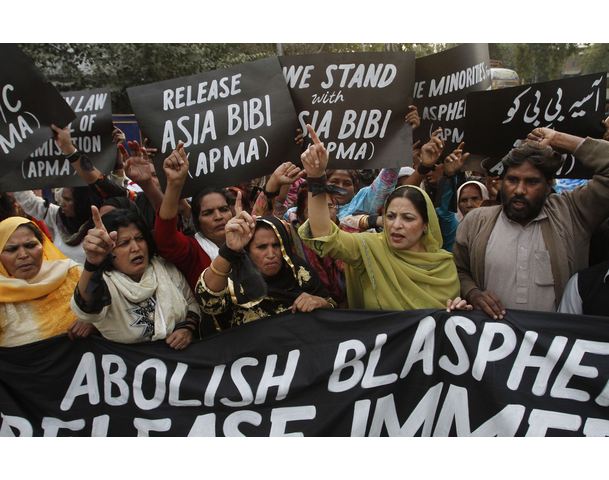
The current situation, especially in Pakistan and when it concerns the rights of the non-Muslims, is apparently the worst of anywhere in the Muslim world. Indeed, the plight of Asia Bibi, (also known as Aasia, Ayesa Noreen) Islam and Islamic Blasphemy laws have come under rightful scrutiny as of late.

One question that tugs at the heart of the debate for me is why is it that Muslims seem to get so very offended to the point they want to KILL you over a remark or something that comes out of your mouth? As Americans, we wonder to ourselves, “Haven’t they ever heard of sticks and stones may break my bones, but words don’t hurt me?!

Sadly, what the fundamentalist preachers at all the podiums of their Friday sermon or khutbah, nor any of their brethren on the run and in caves like the Taliban and Al Qaeda fail to realize that we are all God’s children. And God, Allah, Yahweh, Jesus, or whatever name you assign him, he is One and the same God of all religions. He is too big to fit into just one religion, concept, version or story of him.

And we all are his creations. Not one of us is superior over the other in his eyes and he judges us all equally. To him, the children of these three religions and its offspring’s are all related to each other. Adam being the first man, then Eve, and then all the Biblical figures and names such as Noah, Abraham, Moses, Jesus, yes especially Jesus. He is their Messiah too!

Jesus, in fact is mentioned some 28 times in the Muslim holy book, Qu’ran whereas their own prophet Muhammad is mentioned only 4 times. And the fact that Jesus is also considered by Muslims to be the Messiah, it is sad that his followers should get such abject treatment in Pakistan and sadly, many Muslim countries.

If only the bad guys realized the connections between Christians and Jesus only then would a Pakistani Christian woman, suffering needlessly in a cell tonight going on 2 years away from her children in solitude, and constantly fearful for her life, would see her horrific ordeal come to an end.

These people are incapable of understanding basic rights, freedoms and even the unhindered concept of free will. No, they are primitive minded in their their spiritual and daily lives. They fail to see that a Christian’s God and a Muslim’s God are the one and the same. And he never would agree to laws like Pakistan’s Blasphemy laws at all. Why? Well because the Muslim God is known first and foremost as a Gracious, Merciful, Compassionate God.

In fact, the Arabic phrase Bismillah ir-Rahman ir-Rahim is a beautifully poetic phrase which offers both deep insight and brilliant inspiration to the average Muslim who says it countless times as he or she starts each day and till they rest their head to sleep. “ It has often been said that the phrase Bismillah ir-Rahman ir-Rahim contains the true essence of the entire Qur’an, as well as the true essence of all religions. Muslims often say this phrase when embarking on any significant endeavor and the phrase is considered by some to be a major pillar of Islam. This expression is so magnificent and so concise that all except one chapter of the Qur’an begins with the words Bismillah ir-Rahman ir-Rahim.”

The common translation:”In the name of God, most Gracious, most Compassionate” essentially is saying that God is compassionate, and full of grace. So how would this God punish Asia Bibi? What would he do if he is so full of compassion and mercy? Would he even punish her? And if he is such a gracious and a compassionate God, then wouldn’t he feel that nearly a two year jail sentence in solitary is already far more than her crime not to mention being away from husband and children and being worried about mob vengeance on her or the death penalty?

That God may act in a multitude of ways and we cannot ever know till said Judgment Day. That is what Judgment Day is all about after all. In fact, this is probably one day when the man upstairs works overtime judging all of us mankind, from the beginning with Adam to the last standing comes till Tribulation and the End of Days. It is only he, the Creator who will do the judging and this is something that the men with the loudspeakers who climb to the top of the minaret five times a day to call the faithful to prayers, just do not really understand, in my opinion. They apparently constantly seem to forget and pass judgment from the pulpit and this in turn helps set the “popular” opinion amongst the ultra-religious faithful of Pakistan’s society.

My only prayer to this Creator is that may he keep Asia Bibi safe tonight and continue to give her strength. And if God should call her home and have her die a death at the hands of the real savages those that not only kill but shockingly, in your name, then please Allah grant her heaven just as you should governor Salmaan Taseer, a man who was only defending the rights of all your children, including those of other faiths. He was being compassionate and gracious towards a fellow human being God, as he was only trying to emulate his creator, You Lord. Ameen.

And while you are at it Lord, will you also please let the imam at the microphone know that “Thou shall not mock, should not cost you your life.” Afterall, “Thou shall not kill is one of your top 10 commandments, whereas mocking prophets or religious figures does not make the list!

Manzer Munir, a proud Pakistani American and peace activist, is a Sufi Muslim who is also the founder of Pakistanis for Peace and blogs at www.PakistanisforPeace.com and at other websites such as www.DigitalJournal.com, www.Allvoices.com, www.Examiner.com and www.open.salon.com as a freelance journalist and writer. He asks that you like the Official Facebook Page of Pakistanis for Peace to get the latest articles as they publish here: http://www.facebook.com/home.php#!/pages/Pakistanis-for-Peace/141071882613054

The Founding Fathers and Islam

By James H Hutson for The Library of Congress

With more than 55 million items, the Library’s Manuscript Division contains the papers of 23 presidents, from George Washington to Calvin Coolidge. In this article, Manuscript Division Chief James Hutson draws upon the papers of Washington, Thomas Jefferson and other primary documents to discuss the relationship of Islam to the new nation.

Many Muslims feel unwelcome in the United States in the aftermath of September 11, according to newspaper reports. Anecdotal evidence suggests that substantial numbers of Americans view their Muslim neighbors as an alien presence outside the limits of American life and history. While other minorities—African Americans, Hispanics and Native Americans—were living within the boundaries of the present United States from the earliest days of the nation, Muslims are perceived to have had no part in the American experience.

Readers may be surprised to learn that there may have been hundreds, perhaps thousands, of Muslims in the United States in 1776—imported as slaves from areas of Africa where Islam flourished. Although there is no evidence that the Founders were aware of the religious convictions of their bondsmen, it is clear that the Founding Fathers thought about the relationship of Islam to the new nation and were prepared to make a place for it in the republic.

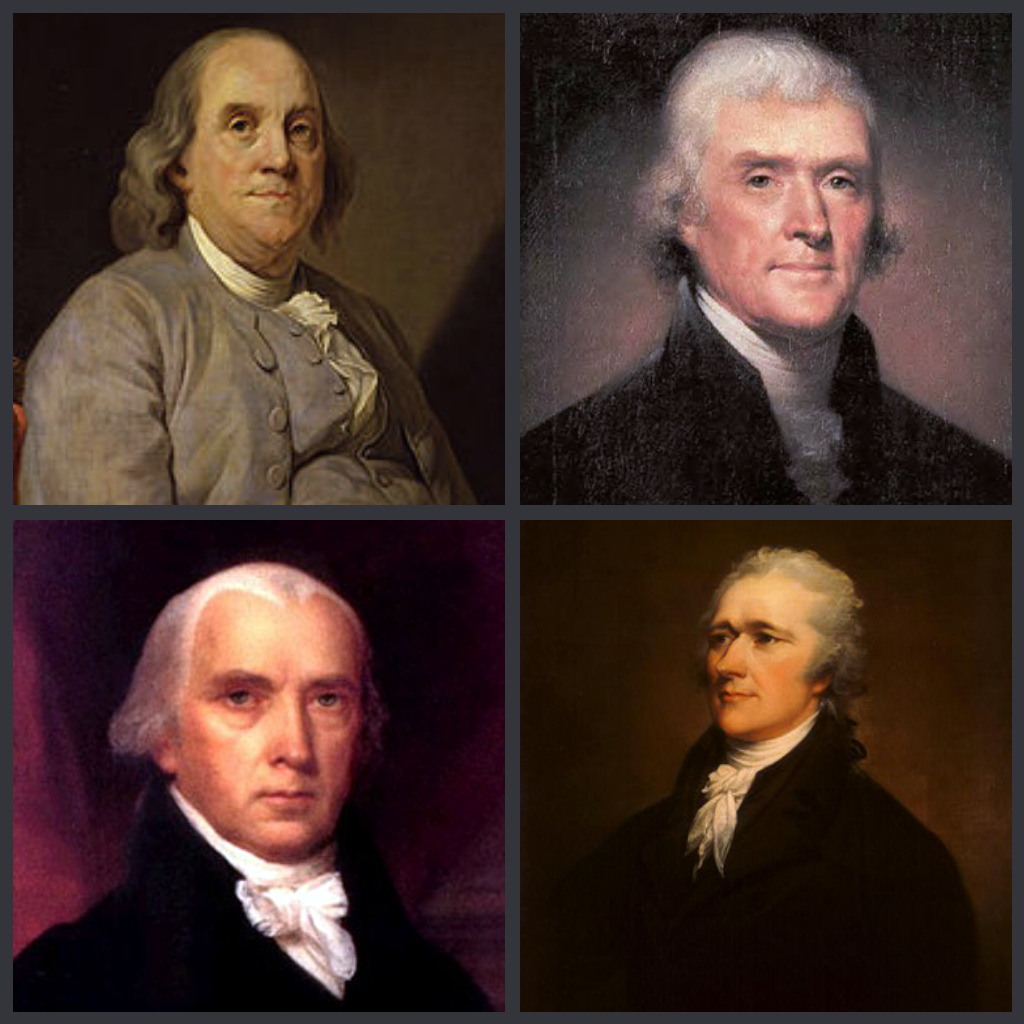
In his seminal Letter on Toleration (1689), John Locke insisted that Muslims and all others who believed in God be tolerated in England. Campaigning for religious freedom in Virginia, Jefferson followed Locke, his idol, in demanding recognition of the religious rights of the “Mahamdan,” the Jew and the “pagan.” Supporting Jefferson was his old ally, Richard Henry Lee, who had made a motion in Congress on June 7, 1776, that the American colonies declare independence. “True freedom,” Lee asserted, “embraces the Mahomitan and the Gentoo (Hindu) as well as the Christian religion.”

In his autobiography, Jefferson recounted with satisfaction that in the struggle to pass his landmark Bill for Establishing Religious Freedom (1786), the Virginia legislature “rejected by a great majority” an effort to limit the bill’s scope “in proof that they meant to comprehend, within the mantle of its protection, the Jew and the Gentile, the Christian and Mahometan.” George Washington suggested a way for Muslims to “obtain proper relief” from a proposed Virginia bill, laying taxes to support Christian worship. On another occasion, the first president declared that he would welcome “Mohometans” to Mount Vernon if they were “good workmen” (see page 96). Officials in Massachusetts were equally insistent that their influential Constitution of 1780 afforded “the most ample liberty of conscience … to Deists, Mahometans, Jews and Christians,” a point that Chief Justice Theophilus Parsons resoundingly affirmed in 1810.

Toward Islam itself the Founding generation held differing views. An evangelical Baptist spokesman denounced “Mahomet” as a “hateful” figure who, unlike the meek and gentle Jesus, spread his religion at the point of a sword. A Presbyterian preacher in rural South Carolina dusted off Grotius’ 17th century reproach that the “religion of Mahomet originated in arms, breathes nothing but arms, is propagated by arms.” Other, more influential observers had a different view of Muslims. In 1783, the president of Yale College, Ezra Stiles, cited a study showing that “Mohammadan” morals were “far superior to the Christian.” Another New Englander believed that the “moral principles that were inculcated by their teachers had a happy tendency to render them good members of society.” The reference here, as other commentators made clear, was to Islam’s belief, which it shared with Christianity, in a “future state of rewards and punishments,” a system of celestial carrots and sticks which the Founding generation considered necessary to guarantee good social conduct.

“A Mahometan,” wrote a Boston newspaper columnist, “is excited to the practice of good morals in hopes that after the resurrection he shall enjoy the beautiful girls of paradise to all eternity; he is afraid to commit murder, adultery and theft, lest he should be cast into hell, where he must drink scalding water and the scum of the damned.” Benjamin Rush, the Pennsylvania signer of the Declaration of Independence and friend of Adams and Jefferson, applauded this feature of Islam, asserting that he had “rather see the opinions of Confucius or Mohammed inculcated upon our youth than see them grow up wholly devoid of a system of religious principles.”

That ordinary citizens shared these positive views is demonstrated by a petition of a group of citizens of Chesterfield County, Va., to the state assembly, Nov. 14, 1785: “Let Jews, Mehometans and Christians of every denomination enjoy religious liberty…thrust them not out now by establishing the Christian religion lest thereby we become our own enemys and weaken this infant state. It is mens labour in our Manufactories, their services by sea and land that aggrandize our Country and not their creeds. Chain your citizens to the state by their Interest. Let Jews, Mehometans, and Christians of every denomination find their advantage in living under your laws.”

The Founders of this nation explicitly included Islam in their vision of the future of the republic. Freedom of religion, as they conceived it, encompassed it. Adherents of the faith were, with some exceptions, regarded as men and women who would make law-abiding, productive citizens. Far from fearing Islam, the Founders would have incorporated it into the fabric of American life.

James H. Hutson is chief of the Manuscript Division and the author of many books, including, most recently, “Religion and the Founding of the American Republic,” 1998.

5 Arrested in Plot to attack Prophet Cartoon Paper

By Jan M Olsen for The Associated Press


COPENHAGEN, Denmark – Five men planning to shoot as many people as possible in a building housing the newsroom of a paper that published cartoons of the Prophet Muhammad were arrested Wednesday in an operation that halted an imminent attack, intelligence officials said.

Denmark’s intelligence service said that after months of surveillance they had arrested four men in two raids in suburbs of the capital, Copenhagen, and seized a submachine gun, a silencer and ammunition. Swedish police said they arrested a 37-year-old Swedish citizen of Tunisian origin living in Stockholm.

“An imminent terror attack has been foiled,” said Jakob Scharf, head of the Danish Security and Intelligence Service, or PET. He described some the suspects as “militant Islamists with relations to international terror networks” and said that more arrests were possible.

PET said it seized a 44-year-old Tunisian, a 29-year-old Lebanese-born man and a 30-year-old who were living in Sweden and had entered Denmark late Tuesday or early Wednesday. The fourth person detained was a 26-year-old Iraqi asylum-seeker living in Copenhagen.

The Danish intelligence service said the group had been planning to enter the building where the Jyllands-Posten daily has its Copenhagen newsdesk and had wanted “to kill as many of the people present as possible.” The four men face preliminary charges of attempting to carry out an act of terrorism. They will face a custody hearing Thursday.

“I am shocked that a group of people have concrete plans to commit a serious terrorist attack in this country,” Danish Prime Minister Loekke Rasmussen told reporters. “I want to stress that regardless of today’s event it remains my conviction that terrorism must not lead us to change our open society and our values, especially democracy and free speech.”

Danish and Swedish police, who appeared at a joint new conference with Loekke Rasmussen in Copenhagen, said they had been tailing the suspects for several months.

Anders Danielsson, the head of Sweden’s security police, said they had followed a car rented by the suspects from Stockholm to the Danish border.

“We knew that there were weapons in the car,” he said.

Zubair Butt Hussain, a spokesman for the Muslim Council of Denmark, called the plan “extremely worrying.”

The organization “absolutely condemns any act of terrorism regardless of the motives and motivations that may lie behind,” Hussain said.

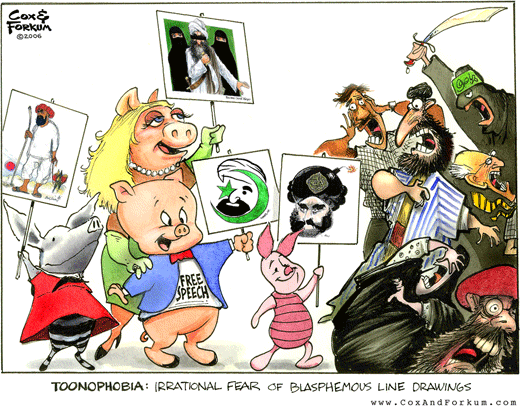
There have been at least four plots to attack Jyllands-Posten or Kurt Westergaard, the artist who drew the most contentious of 12 cartoons, which were published by the daily in 2005 as a challenge to perceived self-censorship.

“The foiled plot is a direct attack on democracy and freedom of press,” Westergaard told the German tabloid Bild. “We may not and won’t let anyone forbid us to criticize radical Islamism. We may not be intimidated when it comes to our values.”

In January, a Somali man broke into Westergaard’s home wielding an ax and a knife but the artist escaped unharmed by locking himself in a safe-room in the house. In 2008, two Tunisians with Danish residence permits were arrested for plotting to kill him.

In September, a man was wounded when a letter bomb he was preparing exploded in a Copenhagen hotel. Police said it was intended for the daily, which has also been targeted in a number of thwarted terror plots in Norway and the United States.

U.S. citizen Tahawwur Rana faces trial in Chicago in February in connection with the 2008 terrorist attacks in the Indian city of Mumbai and a planned attack on the Jyllands-Posten.

The cartoons also provoked massive and violent protests in 2006 in Muslim countries where demonstrators considered the drawings as having profoundly insulted Islam. Islamic law generally opposes any depiction of the prophet, even favorable, for fear it could lead to idolatry.

In 2008, the Danish Embassy in Islamabad, Pakistan, was targeted by a car bomb that killed six people outside the mission.

The attacks and threats have caused concern and unprecedented security measures in Denmark, a country that prides itself on personal freedom and openness.

The JPPOL media group building, which includes Jyllands-Posten, is protected by metal fences and guards at all entrances. Mail is scanned and newspaper staff need identity cards to enter the buildings and the various floors.

Lars Munch, JPPOL chief executive, said his workers were worried.

“It is appalling for our group, for our employees and their families to see their workplace threatened,” Munch said.

Scharf said “there was no need to raise the terror threat alert level” in Denmark, although Danish Justice Minister Lars Barfoed described the plot as “terrifying.”

“The group’s plan to kill as many as possible is very frightening and is probably the most serious terror attempt in Denmark,” Barfoed said.

The head of Sweden’s security police, Anders Danielsson, said that “it has been possible to avert a serious terror crime in Denmark through efficient and close cooperation between PET and the (Swedish) security police.” Danielsson said the suspects who are residents in Sweden are also being investigated for suspected terror crimes in that country.

Pakistanis for Peace Editor’s Note– Muslims across the Islamic world, not just the ones who live in the western world, need to shed the notion that God Almighty needs them to go around taking revenge upon people on his behalf who said something blasphemous against him or any of his prophets, be they Muhammad, Jesus or others. Peace by upon them all.

We as a religion should be mature enough to  appreciate that people will not only not see eye to eye with our religious views many time, but that they can still have freedom of speech in their countries and the right, no matter how offensive, in ridiculing our, their own or anyone else’s faith. One just has to be mature enough to handle criticism of the most extreme measures.

Holiday brings Muslims, Jews Together to Volunteer

By Niraj Warikoo for The Detroit Free Press

Detroit, Michigan– For the past 20 years, hundreds of local Jews have volunteered on Christmas to help needy people on a day when many Christians are busy celebrating the holiday.

But because Dec. 25 falls on a Saturday this year — a day of rest for observant Jews — the Muslim community will be filling in on Christmas, helping at soup kitchens, senior citizen homes and in impoverished neighborhoods.

The Council of Islamic Organizations of Michigan hopes to get 400 volunteers.

The Jewish community will move its volunteer efforts to today, Christmas Eve, as part of Mitzvah Month, which refers to good deeds. Last year, the Jewish community invited the Muslim community to help out on Christmas for the first time. That partnership continues this year, with some Muslims helping on Christmas Eve, too.

“The more contact we have, the more understanding,” said Freya Weberman, 51, of Huntington Woods, who will be delivering toys in Detroit today with the Jewish Community Relations Council of Metro Detroit. “There is fear of the unknown. By bringing people together and having shared experiences, we see our commonalities.”

When Micki Grossman of Farmington Hills read journalist Helen Thomas’ comments about Zionists earlier this month, the Jewish woman was hurt. “It caused a lot of pain for me,” she said.

“I also wish that we could have had more of our Muslim friends stand up and say, ‘This was not appropriate.’ ”

But some Muslims and Arab Americans were upset that Jewish leaders pressured Wayne State University to remove an award in her name.

At the annual banquet this month of the local chapter of the American-Arab Anti-Discrimination Committee, people wore buttons reading “Defender of Thomas,” said regional director Imad Hamad.

“You can’t punish someone for the right of freedom of expression,” Hamad said, referring to Thomas, who is of Lebanese descent.

Despite the differences of opinion, about 200 Jewish volunteers — along with 40 Muslim ones — will work together today to help serve poor people across metro Detroit.

Grossman will be among them, glad to help people in need while bringing two communities together.

Gigi Salka, 41, a Muslim from Bloomfield Township whose children attend bar mitzvahs, also will be volunteering — one of dozens of Muslims helping on Christmas.

It is one way in which local Jews and Muslims are trying to build ties despite their differences on politics and foreign affairs. Last month, a health fair run by Jews and Muslims was held in a Detroit mosque. And Muslim leaders spoke earlier this year before the board of the Jewish Community Relations Council of Metro Detroit.

The council organizes the event, which is usually held Christmas Day, but this year that is on the Jewish Sabbath, a day of rest for observant Jews.

Last year, the Jewish community invited Muslims to help them volunteer on Christmas. The partnership was a historic first, with about 60 Muslims helping 900 Jewish volunteers. This year, up to 400 Muslims led by the Council of Islamic Organizations of Michigan will take the lead on Christmas.

“We have many similarities,” Grossman said. “Let’s look for the sameness rather than the differences.”

Such partnerships are playing out across metro Detroit.

Victor Begg of Bloomfield Hills, a co-founder of the Islamic council who is helping to lead the volunteer effort with Muslims this week, said they “are part of an ongoing effort by our communities to bridge the gap.” He had no comment on the Thomas controversy.

Hamad said he was upset over the Jewish community’s pressure on WSU to drop the award in Thomas’ name, but he maintains contact with Jewish leaders such as Betsy Kellman, head of the Michigan branch of the Anti-Defamation League, a civil rights group.

“We are Americans first,” Hamad said. “We should not see ourselves as an extension of the external conflict abroad.”

Ismael Ahmed, a longtime Arab-American leader who is the director of the state Department of Human Services, spoke to the board of the Jewish council this month about poverty issues.

“The Jewish and Arab communities have a huge amount in common — a sense of family, a sense of community,” Ahmed said. “But we have different views on the Middle East.” At the same time, “I think that isn’t a major divide” because “we’re very much alike.”

Salka will be volunteering on Christmas because it is important to give back, she said. To her, interacting and forging ties with people of various backgrounds is part of her everyday life.

“My friends are from all different faith traditions,” Salka said. It’s on an individual level, “how you change hearts and minds, the personal connections.”

Blasphemy Trials in Pakistan Reveal a Broken Justice System

By Karin Brulliard and Shaiq Hussain for The Washington Post
With its single dirt road, friendly residents and abundance of drowsing donkeys, this village hardly seems a hotbed of religious radicalism.

Nevertheless, four years ago, dozens of angry townspeople marched and chanted, “Death to the blasphemer!” Their demands were answered. Two years later, court records show, a teenaged Muslim named Muhammad Shafique was sentenced to hang for cursing the Prophet Muhammad and tossing pages of the Koran onto “cow dung and urine.”

Today, an air of regret permeates Kulluwal. Shafique’s accusers fled town, and their relatives now say the allegations were lies. Many residents call the case a setup fueled by political and personal rivalries. But as Shafique waits on death row, his appeal stuck in Pakistan’s glacial courts, no one is quite sure what to do.

“The situation at that time was emotional. It was the responsibility of the police to sift through the facts and find the truth,” said Chaudhry Safraz Ahmed, 42, a community leader whose father was one of Shafique’s accusers. “That did not happen. And Shafique is behind bars.”

Pakistan is in the midst of a heated debate over its ban on blasphemy following the sentencing to death last month of a Christian woman, Asia Bibi. The pope condemned that sentence, which has not yet been carried out. Human rights organizations, meanwhile, have demanded the repeal of a law that they say is used to harass religious and sectarian minorities in this Sunni Muslim-majority nation.

But blasphemy cases, about half of which involve Muslim suspects such as Shafique, also point to a more fundamental problem with grave implications for the nation’s U.S.-backed fight against militancy: Pakistan’s broken justice system, corrupt and lacking in expertise, often rewards vendettas and encourages radicalism.

In this system, religious extremism is less an epidemic than a menacing shadow – just as it is across Pakistan, an unstable democracy where Islamist threats often eclipse the majority’s more peaceful views.

The law against blasphemy – which encompasses vaguely worded prohibitions on insults against Islam – gives radicals a tool with which to bully those who don’t share their hardline religious views. Legal experts say lawyers, witnesses and authorities are frequently intimidated into helping to enforce the law, leading to injustices that bolster militants’ anti-government arguments.

“These are the kind of provisions that allow space for extremists to act with impunity,” Ali Dayan Hasan, a Pakistan-based representative for Human Rights Watch, said of the blasphemy law. “This country is, in that sense, at a crossroads where it is time for people to stand up.”

Just what happened on the evening of March 17, 2006, in this agrarian corner of Punjab province remains in dispute. It took a court in the nearby city of Sialkot 73 hearings over 27 months to gather enough testimony for a verdict. Lawyers’ strikes, witnesses’ absences and a funeral caused delays. In the end, the key evidence against Shafique, now 22, was witness accounts and soiled scraps of pages from a Koran, which the judge deemed impossible to fake.

“The question arises whether . . . a Muslim can think to smear the pages of the Holy Book with cow dung and urine just to create an evidence to involve his opponents,” the judge wrote in 2008. “Not an iota of evidence has been produced by the accused in this regard.”

But Shafique’s family, along with many others in Kulluwal, cite two reasons for such a plot. Shafique, an aspiring electrician, had accused his brother’s wife of adultery. And her alleged paramour had powerful allies, among them a town politician with his own motive: Shafique’s brother was challenging him in a village election.

Whatever the case, word of Shafique’s alleged rampage spread, and a crowd beat him viciously, residents recalled. Qari Qadir, the village imam, said he declined requests to announce the offense over his mosque’s loudspeaker, fearing a “serious situation.” Instead, he led a march the next day at which protesters demanded that police file charges.

“Everybody was against him,” said Ahmed, the community leader. “The police thought it could become a law-and-order situation if they did not take action.”

According to court records, two main accusers – the politician and Ahmed’s father – did not testify. Four young men who did gave nearly identical statements about seeing Shafique curse the prophet and rip the Koran.

Shafique testified that the charges were personal and political, and that he “heatedly” loved Allah.

The court sentenced Shafique to join about 7,600 others in Pakistan on death row, about 60 of whom are convicted blasphemers, according to the Human Rights Commission of Pakistan. The country has not executed anyone since 2008, and blasphemy cases are often overturned on appeal.

But for many, that potential reprieve is little help. Suspects are often murdered in prison or after release, a fact one Pakistani court used to justify the blasphemy law – in prison, it reasoned, suspects are protected from public rage.

Blasphemy was outlawed during British colonial rule but made a capital crime in the 1980s under the Islamist military rule of Mohammed Zia ul-Haq. Now, the law is being scrutinized; a bill in parliament would shorten sentences, require evidence that the crime was committed intentionally and introduce punishment for false accusation.

But while recent international attention has galvanized opponents of the current law, it has also roused defenders. Conservative religious parties have threatened mayhem if the law is changed, an idea they deem a Western conspiracy. One cleric in northwest Pakistan went further, promising $6,000 to anyone who kills Bibi, the Christian woman.

Amid this debate, Mirza Shahid Baig, Shafique’s lawyer, sticks to technical arguments. The wrong police investigated, he said, and there was no serious look at Shafique’s side of the story.

“I am a very true lover of the holy prophet, but this case was totally false,” Baig said one recent afternoon at his dusty basement office in the bustling city of Lahore. “Whether the law is correct or not correct according to the morality, this is not my job.” In Kulluwal, most everyone seems to agree that a blasphemer deserves death. But they are certain Shafique was not one.

The investigators and witnesses who testified against him have all left town, and no one else recalls seeing Shafique’s alleged rampage. Ahmed said his father is ready to recant in court.

“This is a baseless charge,” said Ahmed, calmly sipping tea with Shafique’s parents on a recent day. “The issue is religious, so it had an influence on the police. It interfered with the investigation.”

Another resident, Mohammed Ibrahim, is the brother of the politician who accused Shafique and the father of one youth who testified. Ibrahim said his son has since told him he was pressured to lie, and that his brother forced police to file charges.

“He thought of himself as important, as someone who could not be challenged politically,” Ibrahim said of his brother, who, he added, has moved to Canada. To some Kulluwal residents, the whole affair proves elders should resolve disputes, not courts.

Shafique, meanwhile, writes letters to his family from solitary confinement. In one recent missive, he said that prison guards avoid touching him. He understands, he wrote, for he reserves no sympathy for blasphemers.

“My heart weeps for the innocent ones,” he wrote. “But I have no words of sympathy for the sinners . . . I would have killed them myself if I could.”

Aasia Bibi and Impurities in the Land of the Pure

By Manzer Munir for Pakistanis for Peace

The case of Aasia Noreen aka Aasia Bibi illustrates how far Pakistan has to go to secure freedoms for its religious minorities. Christians and Hindus are not the only minorities who are persecuted for their beliefs but it is also Muslim minorities such as the Ismailis, Ahmadis, and Shiites who are routinely harassed, discriminated and also killed. Sadly, it is the case of Aasia Bibi that has brought some much needed attention to Pakistan’s sad state of affairs towards the treatment of its religious minorities.

Several sections of Pakistan’s Criminal Code consist of its blasphemy laws and of all the Muslim countries of the world that have anti-blasphemy laws, Pakistan’s anti-blasphemy laws are by far the strictest. There is section 295 that forbids damaging or defiling a place of worship or a sacred object. Then there is section 295-A that “forbids outraging religious feelings.” There is also 295-B which prohibits defiling the Qu’ran and was originally punishable by life imprisonment but has since been amended to up to three years imprisonment.

No section of the blasphemy law is more controversial or harder to prove than Article 295-C, the law that Aasia Bibi is allegedly charged with having broken. In respect to prophet Muhammad, this statute states that ” Whoever by words, either spoken or written, or by visible representation, or by any imputation, innuendo, or insinuation, directly or indirectly defiles the sacred name of the Holy Prophet Muhammad shall be punished with death, or imprisonment for life and shall also be liable to a fine.”

Aasia’s case and charges against her started almost a year and a half ago when there was a quarrel over a bowl of water in a dusty village in the heart of Pakistan’s Punjab province. A group of women were working the fields in the heat of the Pakistani sun when one of them, Aasia Bibi, dipped her glass in the communal bucket of drinking water to fetch herself and others a glass of water to drink and immediately was rebuffed by the other women who claimed that the water was now unclean as it had been touched by a non-Muslim. According to witnesses, instead of quietly bowing her head and taking the indignities, Aasia’s crime was that she mounted a strong defense of her faith and remained steadfast in her demeanor that she did nothing wrong. Too often in Pakistan, the blasphemy laws are used against religious minorities to settle personal vendettas and old scores according to Pakistan’s Human Rights Watch, a watchdog group monitoring the case.

The news traveled fast in Aasia’s village of Ittan Wali, in Punjab’s Sheikhupura district that a Christian woman had insulted the prophet. The local mullah got on the mosque loudspeakers, urging the “faithful” to take action against Aasia Bibi. In sad but familiar pattern, her defense of her faith was somehow twisted into an accusation of blasphemy, according to her family and others familiar with the case. Soon as a mob gathered outside her home ready to take the law into their own hands and handing out vigilante justice, the police moved in and took her into custody. But instead of protecting her, they charged her with insulting Islam and its prophet under the blasphemy laws.

And then on Nov. 8, after suffering 18 months in prison, Aasia Bibi was sentenced to death by a district court, making her the first person to be handed the death penalty in Pakistan under the blasphemy laws. Many before her over the years have been charged, but punishment had been commuted to lesser penalties than the death sentence imposed on Aasia Bibi. No concrete evidence was ever presented against Aasia, according to Pakistan’s Human Rights Watch. Instead, the district judge relied on the testimonies of three other women, all of whom were hostile towards her.

Unfortunately this is a common insult hurled at many of Pakistan’s 2 million Christians who make up just 1.59% of the total population. Often, Christians in Pakistan are discriminated and persecuted and many times only get the lowest of the low jobs such as street sweepers, janitorial and sanitation workers. In fact, in Pakistan, the term ‘Chura‘ has become synonym with the Christian community as it relates to an unclean person akin to how the untouchables or Dalit community is seen in India. In India however, the Dalits are not subjected to arcane state blasphemy laws geared towards religious minorities as in Pakistan or are threatened with their lives at the hands of the Hindu majority.

As discussed in a couple of my previous articles, Taliban 1o1, History and Origins and Taliban 201, The Rise of the Pakistani Taliban, the Islamization of Pakistan started under the late General Zia ul Haq of Pakistan who took over the leadership of the country through a military coup in 1977 when he hung the deposed and democratically elected Prime Minister Zulfiqar Ali Bhutto. Earlier in 1973, the 1973 Constitution of Pakistan had declared that “Islam shall be the religion of the Pakistan” and had systematically begun the process of restricting the participation of religious minorities in government and politics.

Before General Zia, there were only two reported cases of blasphemy. Since the death sentence was inserted in 1986 into the Penal Code for the blasphemy laws, this number has now reached 962 — including 340 members of the Ahmadi Muslim community, 119 Christians, and 14 Hindus. A close examination of the cases reveals the blasphemy laws are often invoked to settle personal scores, or they are used by Islamist extremists as cover to persecute religious minorities, sadly with the help of the state under these laws.

General Zia began this policy of Islamization of Pakistan in conjunction with his support for the war against the Russians and assistance to the Afghan Mujahedeen as well as the building of thousands of madrassahs or religious schools across Afghanistan and Pakistan which nurtured the young men into what later became the Taliban. Many of these blasphemy laws fully came into being under his reign, although some were around since as early as more than 100 years prior when the British drew up the Indian Penal Code of 1860 which was initially an ill foreseen aim at keeping the peace among the many fractured faiths of the subcontinent. For instance, section 295-A, which “forbids outraging religious feelings”, could have been applied against a Muslim who insulted a Hindu or a Hindu who taunted a Sikh or Christian or vice versa. However under Zia, the blasphemy laws were expanded and almost exclusively applied against Muslim minorities such as the Ahmadis, Islamilis and Shiites as well as against the Christian and Hindu populations.

Recently, a religious ‘leader’ came out and has offered over $6000 to anyone who can kill Aasia Bibi while she awaits her punishment in police custody. Outrage and denunciations on this case are coming from across the world as many people are appalled at the sad state of rights for religious minorities in Pakistan. The Pope has intervened also asking for clemency for Aasia Bibi from Pakistan’s President Asif Ali Zardari. Against all manner of reason and justice, Lahore’s High Court recently issued an order on November 29, 2o1o, preventing Zardari from exercising his constitutional authority to pardon Aasia Bibi.

In a country rife with violence and chaos and one that has become synonymous with terror the world over, the case of Aasia Bibi is yet another dark stain on the country’s image around the world. The Taliban and the extremist groups ravaging Pakistan can be explained as being a violent minority and do not and should not reflect on the nation as a whole as the majority of people in Pakistan are opposed to them and their views of Islam. But the blasphemy laws, for as long as they have stayed on the books in Pakistan and in the constitution, cannot and should not be excused in any shape or form. These laws need to be repealed and the constitution needs to be amended in an emergency manner so that Aasia Bibi and other religious minority citizens of Pakistan are not subjected to cruel and subjective laws that are almost exclusively used against minorities to settle scores, personal vendettas, and instill terror in less than 3 percent of the country that is not part of the religious majority of Sunni Muslims.

There needs to be international pressure placed on Pakistan from the United Nations, the United States, Europe and others to modify the constitution immediately and to pardon this 45 year old mother of five children. It is ironic that in a country where many people sympathize with Osama’s Al Qaeda and profess to hate the west with one hand, they decry with the other why not enough western aid has came to their country when it recently saw the worst flooding in its history. Can you blame the American citizens, the Europeans or citizens of any other Christian nation from hesitating to give aid to a country that not only plays a duplicitous game when it comes to terrorists and terror havens but also treats Christians and other religious minorities in the manner as in the case of Aasia Bibi?

The name Pakistan literally translates into “The Land of the Pure”. And as a child growing up I was told that the meaning of Pakistan’s flag is this: “The green is a traditional Islamic color and the crescent moon and star are also Islamic symbols. The white stripe represents the non-Muslim minority and religious groups of Pakistan and there place in the country.” In my view, as long as the nation sanctions and tolerates these utterly unjust and biased blasphemy laws, the religious minorities of Pakistan clearly have no place in this land of the ‘pure’.

-Manzer Munir, a proud Pakistani American and peace activist, is the founder of Pakistanis for Peace and blogs at www.PakistanisforPeace.com as well at other websites as a freelance journalist and writer.

Majority of Muslims Reject Al-Qaeda

As Reported by Sandra Johnson for The Daily Mail

Muslims in many parts of the Islamic world overwhelmingly reject al Qaeda, support a large role for their faith in government and believe democracy is preferable to any other kind of political structure, according to a new survey released by Pew Research Center’s Global Attitudes Project.

The study also found falling support for suicide bombings, as well as mixed attitudes towards Hamas and Hezbollah, Islamic groups designated as terrorist organizations by Western governments but which operate extensive social services networks in parts of the Muslim world.

The survey, conducted this spring in Jordan, Lebanon, Nigeria, Indonesia, Egypt, Pakistan and Turkey, found that only in Nigeria did Muslim populations have anything approaching a favorable view of al Qaeda, with 49 percent expressing positive views and 34 percent holding an unfavorable opinion.

At least seven in 10 Muslims had unfavorable views of the group in Egypt, Turkey and Lebanon, as did lesser majorities in Jordan and Indonesia, according to the study.

But views of Hamas and Hezbollah were more mixed. Both groups got favorable ratings from a majority of Jordanian Muslims, with 60 percent supporting Hamas and 55 percent holding favorable views of Hezbollah, Pew reported.

Muslims in every nation but Turkey expressed a positive feeling about Islam’s influence in their nation’s politics. More than nine in 10 Indonesian Muslims said its influence is positive, as did more than eight in 10 Egyptian and Nigerian Muslims. In Jordan, 76 percent of Muslims approved of Islam’s influence, as did 69 percent in Pakistan and 58 percent in Lebanon.

In Turkey, 38 percent had a positive opinion of Islam’s influence in political life.

At the same time, majorities of Muslims in every country but Turkey said they were concerned about Islamic extremism in the world and their own countries.

Democracy was favored by a majority of Muslims in every country but Pakistan, although even there it received the largest share of responses. Lebanese Muslims were most favorable toward democracy, followed by those in Turkey, Jordan, Nigeria, Indonesia and Egypt.

Support for suicide bombing had also fallen by double digits since 2002 in every country except Turkey, where it was never well-received among Muslims, according to the study.

Visiting Each Other’s Holy Places in North America

By Habeeb Ali for Common Ground News Service

I can see your stares! I get them every time I say we are twinning our mosques and synagogues this month. “Really?” people ask, jaws dropping.

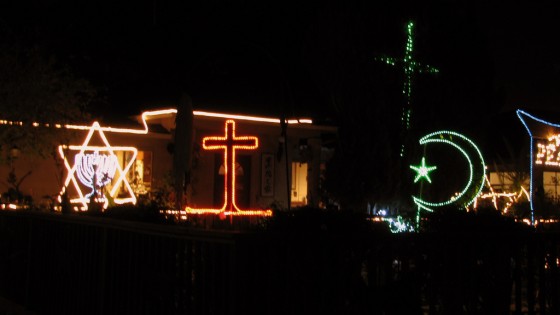
For the third year, this exercise of interfaith exchange has progressed in good faith. Synagogues agree to twin with nearby mosques, with congregants visiting each other during Jewish Sabbath and Muslim Friday prayer services and, in some cases, inviting guest speakers or jointly carrying out a community service project like doing a Hanukkah and Eid party together.

I have personally taken students to the synagogue. One young Pakistani-born boy marveled at how cordial Jews were and how familiar the service is. One Palestinian girl at first refused to enter the synagogue but after meeting a warm female rabbi, left saying how different it was from what she’d thought.

Many people wonder about the term “Twinning” to describe the event. But the history of the Muslims genealogically is an ancestral path that leads to Ishmael, a son of Abraham, while that of the Bani Israel, the Quranic term for the Jewish people, leads to another of Abraham’s sons, Isaac.

So we’re children of two brothers – a good reminder actually – since around this time Muslims commemorate Abraham’s story during the hajj, the pilgrimage to Mecca, on Eid al-Adha.

Twinning was initiated to encourage a better understanding between Muslims and Jews living in the West, regardless of political inclinations, with a more direct opportunity to have a dialogue about their faith traditions specifically.

In Toronto, in addition to Jewish visits to hear imams’ Friday sermons at mosques and Muslim visits to hear the Torah read in synagogues, the Noor Cultural Centre – which promotes cultural education and bridge-building in the Muslim Canadian community – has organized a weekend-long educational study conducted by Rabbi Dr. Reuven Firestone and Dr. Mahmoud Ayoub. The focus of the study is to reach out to students of both communities and discuss images of war and violence in Jews’ and Muslims’ scriptural texts.

According to Walter Ruby, the man behind the scenes at the New York-based Centre for Ethnic Understanding: “Twinning has brought together thousands of Muslims and Jews to jointly promote tolerance, understanding, education and goodwill in an effort to combat Islamophobia and anti-Semitism.”

It has grown from a mere 50 places joining hands last year in North America to more than 100 mosques and 100 synagogues in 22 countries on four continents.

Normally hosted the first weekend in November, Twinning events also take place throughout the month, providing meaningful exchanges for Muslims and Jews to understand each other’s faith – or participate in community initiatives, no matter how creative or how basic, like simply having a rabbi and an imam chat over coffee.

In Toronto, Dr. Barbara Landau plays a key role in promoting the Twinning and works to ensure such events are not limited only to November.

Landau is a friend and long-standing peace activist in Toronto among Jews and Muslims. She has participated in missions to conflict areas in the Middle East to share how Canadians can serve as role models. She has worked tirelessly with others, including her co-chair at the Canadian Association of Jews and Muslims, Shahid Akhtar, since 9/11 to see that young people in our communities understand each other and work on common projects for the goodness of humanity.

“The Weekend of Twinning has time and time again shown us that Jews and Muslims can not only live together peacefully as neighbors, but also partner together to build a better community at-large,” said Rabbi Marc Schneier, president of The Foundation for Ethnic Understanding and lead organizer of the Weekend of Twinning.

And, with many more mosques and synagogues notifying her of their willingness to participate in the event, Landau is optimistic that next year’s Twinning weekend will be even bigger and better.

Righteous Among the Nations: Muslims Who Saved Jews from Holocaust

By Tim Townsend for The St. Louis Dispatch

In 2003, Norman Gershman was looking for some of the righteous.

What he found astonished the investment banker-turned-photographer, and led him toward a project now on display in a St. Louis synagogue.

The Righteous Among Nations are gentile rescuers who make up “a small minority who mustered extraordinary courage to uphold human values,” according to Yad Vashem, Israel’s Holocaust memorial museum.

They are, the museum says, “the few who helped Jews in the darkest time in their history.”

Gershman’s story begins during the Holocaust and involves Albanian Muslims — villagers, peasants and farmers — who risked their lives and the lives of their families to shelter Jews fleeing Nazi Germany.

Italy invaded Albania in 1939 and occupied the country until the overthrow of Benito Mussolini in 1943. Germany then took over the Albanian occupation. Before the war, Gershman estimates from his research, only about 200 Jews lived in Albania, a country that is about 70 percent Muslim.

During the years of occupation, 10 times as many Jews streamed into Albania to escape persecution from Poland, Yugoslavia, Czechoslovakia, Greece and Italy. Gershman says it was the only country in Europe where the Jewish population grew by the end of the war.

Most of the hidden Jews either fled to Israel or back to their native countries after the war. Albania’s postwar communist regime made it impossible for the Jews who had been hidden to stay in touch with the Albanian Muslims who had provided shelter.

In 2003, New Jersey native Gershman heard hints of the story and began doing research, eventually traveling to Albania to begin interviewing those Muslims who took part and who were still alive. Gershman said it wasn’t just Muslim families who shielded Jews from the Nazis, but also Orthodox and Catholic families.

All of them were motivated by an Albanian code of honor called “besa,” a concept that can be translated into “keeping the promise,” Gershman says. The Albanian villagers were motivated to risk their lives by the simple concept of helping one’s neighbor.

“We chose to focus on the Muslims because, who ever heard of Muslims saving Jews?” Gershman said in a telephone interview from Israel, where he is at work on his next project.

Gershman’s research eventually led to an exhibit of his photographs, “Besa: A Code to Live By,” which opened recently at Congregation Temple Emanuel, and a book, Besa: Muslims Who Saved Jews in World War II.

The exhibit makes the case that the Muslim Albanian villagers who sheltered Jews from deportation to concentration camps did so from a sense of religious obligation.

“Besa is a cultural idea, but for the Muslims in Albania it was ingrained in their faith as well,” Gershman said.

Ahmet Karamustafa, professor of history and religious studies at Washington University, said saving a life is a universally acknowledged Muslim value.

Protecting a life, Karamustafa said, “has always ranked at the very top of moral and legal categories articulated by legal and theological scholars in Islam.”

The exhibit has been traveling the world since 2006, opening in Yad Vashem in Israel, the United Nations in New York, and synagogues, mosques, college campuses and Holocaust museums from Turkey to El Paso, Texas.

The exhibit of 30 photographs includes one of Lime Balla, born in 1910, who told Gershman that a group of 17 Jews came from the capital city of Tirana to her village of Gjergi in 1943 during the holy month of Ramadan.

“We divided them amongst the villagers,” Balla said, according to Gershman. “We were poor. We had no dining table, but we didn’t allow them to pay for food or shelter. We grew vegetables for all to eat. For 15 months, we dressed them as farmers like us. Even the local police knew.”

David Sherman, president of Temple Emanuel, said the synagogue “decided it could be an opportunity to educate the public about this piece of history that was a model of dialogue and tolerance.”

The synagogue’s rabbi, Justin Kerber, said one of the Reform congregation’s goals with the exhibit is to combat a common depiction of the modern relationship between Jews and Muslims.

“There’s so much coverage about Muslim-Jewish strife and conflict,” Kerber said. “It’s important to tell people that’s not the whole story, and these are examples of Muslim-Jewish respect, tolerance and love. This was a good opportunity for us to be part of that conversation.”

‘Islam in a Nutshell’ Explained at Episcopal Church

By Mitchell Landsberg for The Los Angeles Times

The Rev. J. Edwin Bacon, rector of All Saints Church in Pasadena, had just returned from vacation when he heard about a Florida pastor who was threatening to burn copies of the Koran, Islam’s holy book.

“I was disgusted,” said Bacon, whose Episcopal church is known for its progressive stance on many issues, interfaith relations among them. He said he thought: “Rather than burning Korans, we should be studying them.”

The Koran burning never took place. But from Bacon’s reaction was born “Islam 101,” a speaker series that ended Saturday with a lecture by Dr. Maher Hathout, senior advisor to the Muslim Public Affairs Council and a leading voice of Muslims in Southern California.

About 75 people went to the church to hear Hathout give a brief overview of “Islam in a nutshell,” then answer questions from a friendly audience that seemed concerned about both Muslim extremism and American hostility toward Islam.

Hathout told the audience that as the “new kid on the block” among the three Abrahamic faiths, which include Judaism and Christianity, Islam has had two options: “to be accepted by other religions or to fight with them.”

He continued: “We are now discovering … that we can be different without fighting, or it will be a miserable life. And it is a miserable life right now, if you ask me.”

Hathout expressed horror at the discovery of explosives bound from Yemen to the United States, part of a suspected Al Qaeda terrorist plot. He said terrorism violates Islamic theology and could ultimately destroy Islam. By using it “to defend Islam, you sacrifice Islam,” he said.

At the same time, Hathout complained about the use of the term “Muslim terrorist.” No one ever says a “Christian terrorist” bombed an abortion clinic, he said, adding, “They will not give the religious adjective to that person.”

And he said he is angered by people who say that moderate Muslims have been too reluctant to denounce extremism.

“If I shout and you don’t hear me, it means you are deaf,” he said. “It doesn’t mean I didn’t shout.”

All Saints is not alone in reaching out to the Muslim community in an attempt to better understand Islam. In the years since Sept. 11, 2001, numerous churches and synagogues, generally those associated with the progressive or liberal wings of their faiths, have invited Muslim speakers or partnered with Islamic organizations on interfaith events.

During the question-and-answer session, one member of the audience observed that if Hathout were to attend a “Christianity 101” lecture at All Saints, it would be different than a similar lecture at an evangelical church. She wondered if the same were true of Islam. Hathout said there is diversity within Islam, but also boundaries that cannot be crossed.

The question also spoke to another point: To a large degree, Saturday’s event was a meeting of like-minded sensibilities. There probably weren’t any prospective Koran burners in the audience. Hathout wasn’t changing minds so much as informing them.

Bacon acknowledged as much afterward. “I’ve always thought that preaching to the choir is a very important thing,” he said, “because the choir needs to be radicalized. On one level, you want to get the message taught. But on another level, you want them to be equipped and empowered to go out and courageously act.”

Those who attended the three-lecture series, he said, will be better able to explain to others that “most of the 1.6 billion Muslims in the world view their religion as a religion of peace, not as a religion of terrorism.”

“This is the real Islam,” he said.

Islam: A Religion of Love

By William C Chittick for The Huffington Post

In the field of religious studies, the word “religion” is commonly understood to designate a worldview along with the various cultural phenomena that embody it, such as doctrine, ritual and art. In this broad sense of the term, everyone has a “religion,” whether acknowledged or not.

By studying the religions of others we can hope to gain a bit of distance from the unquestioned worldviews that underlie our own thinking. Such study is much like learning a new language — we gradually come to see the strengths and weaknesses of our own way of talking and writing. So also each religion, including the atheistic versions, has its own genius and its own limitations.

It seems fairly clear that most thoughtful people nowadays think that we live in interesting times. Some look to other worldviews precisely to gain insight into their own lives. This is a major factor in the great popularity of religious studies in North American universities. The fact that Rumi has become a household name points in the same direction.

Part of Islam’s intellectual heritage is a vast literature exploring and elucidating the nature of love, that most precious of human experiences. Now that I have been offered this forum and told to write about anything I feel like, well, I feel like talking about love. My two previous posts and the responses to them have highlighted the fact that most people have already made up their minds as to the nature of “true Islam.” So let me turn to something that most people, Muslim or not, typically leave out of their understanding of Islam, not least because of their obsession with the world of politics and catastrophes.

Ibn Qayyim al-Jawziyya was a famous theologian from Baghdad who died in 1350. Part of his fame lies in the fact that he was the leading disciple of one of the most cantankerous theologians of Islamic history, Ibn Taymiyya, a favorite of Sunni ideologues. Surprisingly for those who think that people of this ilk were narrow-minded bigots, Ibn Qayyim dedicated a large part of his prolific output to love, compassion, forgiveness and other such mild-mannered themes.

In one of his many books, written late in life — Ighathat al-lahfan, “Aid for the Sorrowful” — Ibn Qayyim says that the root of Islam is “love for God, intimacy with Him, and yearning to encounter Him.” He also says, “The revealed books of God, from the first to the last, revolve around the commandment to love.”

Remember that Muslim scholars traditionally spoke of “124,000 prophets,” beginning with Adam and ending with Muhammad. What Ibn Qayyim is trying to say is that every true religion — that is, all the religions established by the 124,000 prophets — are founded on love. It makes no difference who these prophets were or where they lived. When Muslims settled down in China, for example, they soon recognized that Confucius had been a prophet.

Claiming that “love” is the heart of Islam or of religion generally is not unusual in the Islamic context. Another example is provided by the major Sunni scholar Rashid al-Din Maybudi, who completed the longest pre-modern Persian commentary on the Quran in 1126. In explaining why the Quran calls itself “a book from God” (verse 2:89), he says that the book deserves to be titled “the eternal love” and that its content is “the story of love and lovers.”

One hundred years after Maybudi and as many years before Ibn Qayyim, Rumi’s famous teacher, Shams-i Tabrizi (who disappeared in the year 1247), said that the Quran is “a book of love,” or “a love letter” from God. He explained that if lawyers, philosophers and theologians fail to see it this way, that is because they are too preoccupied with their own specialties. First, you need to love God rather than law or theology or philosophy (or politics). Then, you should read the book. It is worth noting here that Shams, despite his reputation as an unlearned rascal of spirituality, was a professional Quran-teacher.

No one is surprised to hear that Rumi saw the Quran as a book of love, but most seem to think that Rumi was out of kilter with the Islamic mainstream. Nothing could be further from the truth. It is no accident that his six-volume epic poem in celebration of love, the Mathnawi, has often been called “the Quran in the Persian language.”

Shams al-Din Muhammad, the greatest and most beloved of Persian poets, provides another example. He is known by his chosen pen name, “Hafiz,” a word that designates someone who has memorized the Quran. Anyone familiar with his poetry knows that it is permeated with love and beauty, so much so that native-speakers can become intoxicated simply by listening to it. Hafiz holds that all religion and indeed, all human striving, is rooted in love. One verse will have to suffice:

Everyone, sober or drunk, is seeking a beloved,
everywhere, mosque or synagogue, is the house of love.

Muslim scholars who talk about love as the heart of Islam and of religion generally take the position that God’s love and compassion motivated him to create human beings so that they could love him in return. The goal of creation is to bring lovers into existence, and the goal of lovers — that is, you, me and everyone else — is to escape false loves and return to what we really love. This, for them, is the key message of the Quran, “the story of love and lovers.”

William C. Chittick, is a Professor of Religious Studies, Department of Asian and Asian American Studies, State University of New York, Stony Brook. For a survey of the role of love in religion generally, including his essay on Islam, see the volume edited by Jeff Levin and Stephen G. Post, Divine Love: Perspectives from the World’s Religious Traditions.

Muslim-Jewish Evening Raises $$ For Pakistanis

By Cristina Costantini for The New Haven Independent

Farhan and Shahida Soomro became American citizens on Friday. Originally from the Sindh Province in Pakistan, they have lived in the U.S. for ten years. Two days after becoming Americans, they held an event with their friends Ron Miller and his wife Cathie Miller to raise money and awareness about the floods which have ravaged their province in Pakistan. “It’s been a busy weekend!” said Shahida Soomro.

The event—“An Evening to Support Pakistani Flood Relief at the Community Foundation for Greater New Haven”—was held Sunday night at the Community Foundation for Greater New Haven on Audubon.

The Soomro family is Muslim; the Miller family, of Westville, is Jewish. The idea for the event, a “Jewish-Muslim collaboration,” came about over a dinner with old friends, Cathie Miller said. The Millers then sought the support of the Social Action Committees of the Temple Emanuel of Greater New Haven and the Congregation Mishkan Israel of Hamden, which were instrumental in the organization of the event.

After guests Sunday night enjoyed a wide spread of ethnic foods, Farhan Soomro opened the presentation by relaying the severity of the crisis. While the Soomro family was not present during the flooding, they have stayed in constant contact with their relatives in the region. With a fifth of Pakistan underwater, 20 million people displaced, and two million homes destroyed, Soomro explained, farmers have lost two seasons of crops and the Pakistani government cannot meet the food and shelter demands the disaster has triggered.

The event raised about $3,000.

Timothy Rogers, the director of charitable gifts for Save the Children in Westport described to guests where their donations would go. “We have been in Pakistan for 31 years now,” said Rogers. “What are we doing in Pakistan now? We’re providing emergency medical care, we’re distributing tents, shelter kits, food, and other supplies, we’re distributing water purification tablets, and bed nets.”

According to Cathie Miller, Save the Children was chosen as the charity for the event because over 90 percent of money donated goes to direct relief, and the Soomros have heard anecdotal evidence from their relatives and friends in the Sindh province that Save the Children has been effective in the region.

Rogers raised questions about the lack of American response and media coverage to the tragedy. Americans have given disproportionally less than other developed nations in the world. Although Save the Children has sent about $46 million to help alleviate suffering in Pakistan, the American public’s contribution makes up only $2.3 million of this total. Norwegian citizens, a country with a much smaller population, has already donated over $4 million in assistance funds through Save the Children. Rogers posited that donations might be down because of “donor fatigue due to recent tragedies” or because of a lack of media coverage. Ron Miller linked the trend to Islamophobia.

“I think even though we don’t want to say it, Americans have a hard time understanding and appreciating Muslims,” Miller said. “And one of the reasons that, myself as a Jew, and I’ve talked with various synagogues which they are present here today, is the importance for both Jews and Muslims and Muslims and Americans to come to grips with who we are, what our cultures are and what our values are. One of our reasons for doing this, was in our small way, a Muslim family, and a Jewish family, over dinner decided to try to do something to show that that gulf doesn’t exist between us and our Muslim colleagues.”

One audience member admitted her initial hesitations about donating to the cause. “My knee-jerk reaction, when I heard about this event, was how do I know my money isn’t going to go to the Taliban? Of course this was ignorant, and I really think the reason we don’t talk about this flood is that our government is struggling with Pakistan,” she said.

A Pakistani member of the audience responded to her comments, suggesting that crisis alleviation in the area is one of the best ways to win a war of ideas: “The Pakistani people realize that Save the Children is coming from the American people. Winning the hearts and minds is the key thing, our policy makers have allocated $30 million to public diplomacy work in Pakistan. It should be a no-brainer that if we use our resources to help get their homes together that this will be much more effective.”

“This is a great opportunity for us to change and affect the hearts and the minds of the Pakistani people,” he concluded.

The event drew around 50 guests.

Donations are still being accepted. Checks can be made out to “Save the Children” with a memo note: “Pakistani Flood.” In order to count as a part of the Greater New Haven response to this disaster the check must be sent to The Community Foundation for Greater New Haven, 70 Audubon Str., New Haven 06510 Attn: Lee Cruz. All donations will be sent to Save the Children within the week.

The West is Being ‘Outmanoeuvred’ by Violent Islamist Extremists: Tony Blair

By John Swaine for The Telegraph

In a speech in New York, the former prime minister said that warnings over the past week of new terrorist plots against Europe should remind people that they remain under threat.

Mr Blair said a “narrative” that Muslims were under attack from the US and its allies, who act out of support for Israel, had been allowed to take hold, aided by “websites and blogs”.

A fresh confrontation is needed because it will be impossible to defeat extremism “without defeating the narrative that nurtures it”, he said.

“The practitioners of extremism are small in number. The adherents of the narrative stretch far broader into parts of mainstream thinking,” Mr Blair told the Washington Institute for Near East Policy.

“It is a narrative that now has vast numbers of assembled websites, blogs and organizations.” Mr Blair said it was “absurd” that some people were surprised at how powerful Islamist extremist groups were, given the amount of funding they received and indoctrination they spread.

“Measure, over the years, the paucity of our counter-attack in the name of peaceful coexistence,” he said. “We have been outspent, outmaneuvered and out-strategized.”

Mr Blair said a tendency to “sympathize” with extremism was not only dangerous but also disempowering for moderate Muslims, because it made people resent them as much as extremists.

He said he was “intrigued” by the fact that western leaders, including Barack Obama, the US President, felt the need to condemn Terry Jones, a pastor who threatened to burn a Koran.

“Suppose an Imam, with thirty followers, in Karachi was to burn a bible,” he said. “I can barely imagine a murmur of protest. It wouldn’t be necessary for the President of Pakistan to condemn it because no one here would remotely consider he supported it.”

The former prime minister also called on the west to make it “crystal clear” to Iran that their acquisition of a nuclear bomb would be unacceptable to the entire “civilized world”.

“Go and read the speech of Iran’s President to the United Nations just days ago here in New York, and tell me that is someone you want with a nuclear bomb,” he told those who disagree.

He stressed that the achievement of a peace settlement between Israel and Palestine would remove “much of the poison which the extremists use”.

And he defended his decision to invade Iraq and Afghanistan, saying: “whatever you think of the original action, we enabled the people to choose their Government”.

Mr. Blair last night appeared on the Late Show with David Letterman on American television. He said that satirists like Letterman had been wrong to paint George W. Bush as unintelligent. “You don’t get to this position by being a fool,” he said.

Message to Muslims: I’m Sorry

By Nicholas D Kristof for The New York Times

Many Americans have suggested that more moderate Muslims should stand up to extremists, speak out for tolerance, and apologize for sins committed by their brethren.

Go to Columnist Page »That’s reasonable advice, and as a moderate myself, I’m going to take it. (Throat clearing.) I hereby apologize to Muslims for the wave of bigotry and simple nuttiness that has lately been directed at you. The venom on the airwaves, equating Muslims with terrorists, should embarrass us more than you. Muslims are one of the last minorities in the United States that it is still possible to demean openly, and I apologize for the slurs.

I’m inspired by another journalistic apology. The Portland Press Herald in Maine published an innocuous front-page article and photo a week ago about 3,000 local Muslims praying together to mark the end of Ramadan. Readers were upset, because publication coincided with the ninth anniversary of 9/11, and they deluged the paper with protests.

So the newspaper published a groveling front-page apology for being too respectful of Muslims. “We sincerely apologize,” wrote the editor and publisher, Richard Connor, and he added: “we erred by at least not offering balance to the story and its prominent position on the front page.” As a blog by James Poniewozik of Time paraphrased it: “Sorry for Portraying Muslims as Human.”

I called Mr. Connor, and he seems like a nice guy. Surely his front page isn’t reserved for stories about Bad Muslims, with articles about Good Muslims going inside. Must coverage of law-abiding Muslims be “balanced” by a discussion of Muslim terrorists?

Ah, balance — who can be against that? But should reporting of Pope Benedict’s trip to Britain be “balanced” by a discussion of Catholic terrorists in Ireland? And what about journalism itself?

I interrupt this discussion of peaceful journalism in Maine to provide some “balance.” Journalists can also be terrorists, murderers and rapists. For example, radio journalists in Rwanda promoted genocide.

I apologize to Muslims for another reason. This isn’t about them, but about us. I want to defend Muslims from intolerance, but I also want to defend America against extremists engineering a spasm of religious hatred.

Granted, the reason for the nastiness isn’t hard to understand. Extremist Muslims have led to fear and repugnance toward Islam as a whole. Threats by Muslim crazies just in the last few days forced a Seattle cartoonist, Molly Norris, to go into hiding after she drew a cartoon about Muhammad that went viral.

And then there’s 9/11. When I recently compared today’s prejudice toward Muslims to the historical bigotry toward Catholics, Mormons, Jews and Asian-Americans, many readers protested that it was a false parallel. As one, Carla, put it on my blog: “Catholics and Jews did not come here and kill thousands of people.”

That’s true, but Japanese did attack Pearl Harbor and in the end killed far more Americans than Al Qaeda ever did. Consumed by our fears, we lumped together anyone of Japanese ancestry and rounded them up in internment camps. The threat was real, but so were the hysteria and the overreaction.

Radicals tend to empower radicals, creating a gulf of mutual misunderstanding and anger. Many Americans believe that Osama bin Laden is representative of Muslims, and many Afghans believe that the Rev. Terry Jones (who talked about burning Korans) is representative of Christians.

Many Americans honestly believe that Muslims are prone to violence, but humans are too complicated and diverse to lump into groups that we form invidious conclusions about. We’ve mostly learned that about blacks, Jews and other groups that suffered historic discrimination, but it’s still O.K. to make sweeping statements about “Muslims” as an undifferentiated mass.

In my travels, I’ve seen some of the worst of Islam: theocratic mullahs oppressing people in Iran; girls kept out of school in Afghanistan in the name of religion; girls subjected to genital mutilation in Africa in the name of Islam; warlords in Yemen and Sudan who wield AK-47s and claim to be doing God’s bidding.

But I’ve also seen the exact opposite: Muslim aid workers in Afghanistan who risk their lives to educate girls; a Pakistani imam who shelters rape victims; Muslim leaders who campaign against female genital mutilation and note that it is not really an Islamic practice; Pakistani Muslims who stand up for oppressed Christians and Hindus; and above all, the innumerable Muslim aid workers in Congo, Darfur, Bangladesh and so many other parts of the world who are inspired by the Koran to risk their lives to help others. Those Muslims have helped keep me alive, and they set a standard of compassion, peacefulness and altruism that we should all emulate.

I’m sickened when I hear such gentle souls lumped in with Qaeda terrorists, and when I hear the faith they hold sacred excoriated and mocked. To them and to others smeared, I apologize.