Posts Tagged ‘ New York ’

For US Muslims, a 9/11 Anniversary Like No Other

By Rachel Zoll for The Associated Press

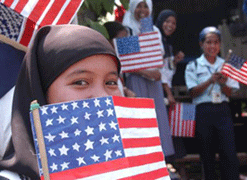
American Muslims are boosting security at mosques, seeking help from leaders of other faiths and airing ads underscoring their loyalty to the United States — all ahead of a 9/11 anniversary they fear could bring more trouble for their communities.

Their goal is not only to protect Muslims, but also to prevent them from retaliating if provoked. One Sept. 11 protest in New York against the proposed mosque near ground zero is expected to feature Geert Wilders, the aggressively anti-Islam Dutch lawmaker. The same day in Gainesville, Fla., the Dove World Outreach Center plans to burn copies of the Quran.

“We can expect crazy people out there will do things, but we don’t want to create a hysteria,” among Muslims, said Victor Begg of the Council of Islamic Organizations of Michigan. “Americans, in general, they support pluralism. It’s just that there’s a lot of misinformation out there that has created confusion.”

On Tuesday, the Islamic Society of North America will hold a summit of Christian, Muslim and Jewish leaders in Washington “to address the growing tide of fear and intolerance” in the furor over the planned New York mosque.

Islamic centers in many cities are intensifying surveillance and keeping closer contact with law enforcement. Adding to Muslim concern is a fluke of the lunar calendar: Eid al-Fitr, a joyous holiday marking the end of Ramadan, will fall around Sept. 11 this year. Muslim leaders fear festivities could be misinterpreted as celebrating the 2001 terror strikes.

“We’re telling everyone to keep their eyes open and report anything suspicious to authorities and call us,” said Ramzy Kilic of the Tampa, Fla., chapter of the Council on American Islamic Relations.

Other efforts around 9/11 aim to fight bigotry. Muslims will clean parks, feed the homeless, and give toys to sick children as part of Muslim Serve, a national campaign to demonstrate Islamic commitment to serving humanity.

Separately, groups are distributing ads to combat persistent suspicions about Islam. One spot, called “My Faith, My Voice,” features American Muslims saying, “I don’t want to take over this country.”

Sept. 11 anniversaries have always been challenging for U.S. Muslims, who have been under scrutiny since the attacks. This year, the commemoration follows a stunning summer in which opposition to a planned Islamic community center near the World Trade Center site escalated into a national uproar over Islam, extremism and religious freedom.

Islamic centers as far away as Tennessee and California faced protests and vandalism. In western New York, police said a group of teenagers recently yelled obscenities, set off a car alarm and fired a shotgun during two nights of drive-by harassment at a small-town mosque near Lake Ontario.

Usama Shami, board chairman for the Islamic Community Center of Phoenix, said a new mosque the congregation has been building for years drew little attention until recently, when some resistance emerged in the neighborhood and from some in city government. Recently, vandals broke into the new building, spilled paint on the floor and broke expensive windows.

Shami believes the ground zero dispute is partly to blame for the trouble, along with passions unleashed by Arizona’s strict new law that would require police to question people about their immigration status if there is reason to suspect they are in the country illegally.

“All of these issues came at the same time,” Shami said. “When things like that happen, I think they bring out the worst in some people.”

On Sept. 11 in Chicago, Zeenat Rahman, a 34-year-old native of the city, will visit a local nursing home with Muslim and non-Muslim friends to spend time with residents and help serve a meal.

“This is when people are going to look at our community, and when they do, what are they going to see?” said Rahman, a policy director for the Interfaith Youth Core, which promotes pluralism. “Sometimes, saying `Islam means peace,’ feels a little defensive and apologetic, whereas service is really core to our faith.”

Unity Productions Foundation, a Washington-area group that specializes in films about Islam and Muslim Americans, will hold an interfaith talk on Sept. 11 at the Washington Jewish Community Center.

Speakers include Monem Salam, the subject of a Unity Productions film titled, “On a Wing and a Prayer: An American Muslim Learns to Fly.” Unity recently launched groundzerodialogue.org, where visitors can view films and use them for community discussion about Islam in the U.S.

Salam, 38, of Bellingham, Wash., usually spends the Eid weekend with his wife and three young children, but said he persuaded his wife he had to participate in the event.

“I have to leave them and go across the country to answer questions about Islam,” said Salam, a portfolio manager who was 4 years old when his family left Pakistan for the U.S. “It’s unfortunate. It’s the time that we live in.”
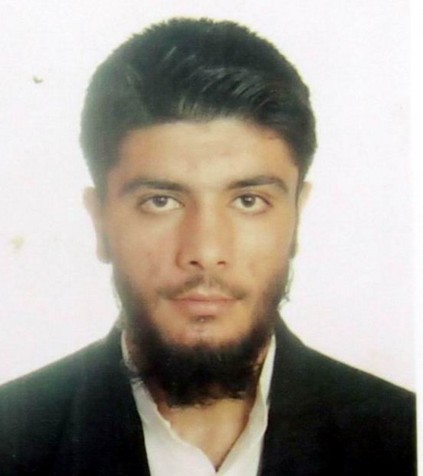
3 Arrested in Norway al-Qaida Bombing Plot

By Ian Macdougall, Matt Apuzzo, and Adam Goldman for The Associated Press

Three suspected al-Qaida members were arrested Thursday for what Norwegian and U.S. officials said was a terrorist plot linked to similar plans to bomb New York’s subway and blow up a shopping mall in England.

Officials believe the men were planning attacks with portable but powerful bombs like the ones at the heart of last year’s failed suicide attack in the New York City subway, an attack U.S. Attorney General Eric Holder has called one of the most serious plots since 9/11. On Wednesday, U.S. prosecutors revealed the existence of a related plot in Manchester, England.

The plots underscore al-Qaida’s interest in smaller-level attacks that don’t require the intricate planning and coordination of the Sept. 11, 2001 attacks in which airplanes were hijacked and flown into the World Trade Center towers in New York City and the Pentagon in Arlington, Va. And they follow a trend in which the terrorist group has used operatives inside potential target countries, rather than trying to sneak people across increasingly secure borders.

The three men, whose names were not released, had been under surveillance for more than a year. Two were arrested in Norway and one in Germany. Officials would not say what country or site was the target of the latest terror threat, or even whether they believed the men had selected a target.

Those arrested in Norway included a 39-year-old Norwegian of Uighur origin who has lived in the country since 1999 and a 31-year-old citizen of Uzbekistan who had a permanent Norwegian residency permit, said Janne Kristiansen, head of Norway’s Police Security Service. The man arrested in Germany was a 37-year-old Iraqi with a Norwegian residency permit, Kristiansen said.

She did not say exactly where the arrests took place but said all three men “had connections to Oslo.”

Norwegian and U.S. officials believe the Norway plan was organized by Salah al-Somali, al-Qaida’s former chief of external operations who is in charge of plotting attacks worldwide. Al-Qaida usually keeps its plots compartmentalized, and officials do not believe the suspects in Norway knew about the other plots. The officials spoke on condition of anonymity because they were not authorized to discuss the case.

Al-Somali, who was killed in a CIA drone airstrike last year, has been identified in U.S. court documents as one of the masterminds of the New York subway plot. Two men have pleaded guilty in that case, admitting they planned to detonate explosives during rush hour. A third man awaits trial.

Officials said the men were attempting to make peroxide bombs, the powerful homemade explosives that prosecutors say were attempted in both New York and England. Norwegian and U.S. officials said it was unclear whether the men ever perfected the recipe for the bomb and said investigators had contained the plot.

“According to our evaluation, the public has never been at risk,” Kristiansen said.

The Associated Press learned of the investigation in recent weeks and approached U.S. and Norwegian officials. Authorities told the AP that reporting on the case could jeopardize public safety and allow dangerous suspects to go free. The AP agreed not to report on the investigation until arrests were made.

“AP’s knowledge of the case was only one of several factors that was taken into consideration when deciding on the timing of the arrests,” Police Security Service spokesman Trond Hugubakken said. “It was not the decisive factor.”

U.S. and Norwegian counterterrorism officials worked closely together to unravel the Norwegian plot, officials said. Kristiansen traveled to the U.S. this spring to discuss the closely held intelligence gathered in the case.

Norwegian Prime Minister Jens Stoltenberg urged Norwegians not to judge large groups of people because of the arrests.

“These are separate individuals that are responsible for criminal acts,” Stoltenberg said. “It is always bad to judge a whole group of people from what individuals are doing and that is independently of what group these people belong to.”

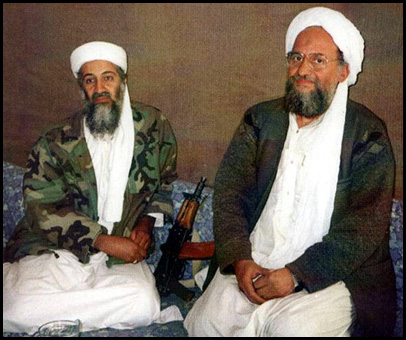
Even though it was not clear if Norway was a target, Al-Qaida’s No. 2 leader, Ayman al-Zawahri, has called for attacks on Norway, among other countries.

Magnus Norell, a terrorism expert at the Swedish Defense Research Agency, said Norway’s 500 troops in Afghanistan could be a factor, as could the 2006 controversy sparked by a Danish newspaper’s publication of 12 cartoons depicting the Prophet Muhammad.

Norell said the controversy has extended to neighboring Norway and Sweden after newspapers there republished the cartoons and later published similar cartoons. Images of Muhammad, even favorable ones, are considered blasphemous by many Muslims.

British police and security officials have never provided details of the alleged target of the purported English plot, but said it was likely focused on a major shopping center in northern England. Media speculation centered on Manchester’s Arndale shopping center.

A judge said last year the gang was plotting a “mass casualty” attack in northern England.

Pakistani Student Britain Couldn’t Deport was ‘Involved in Planning Attack in US’

By Duncan Gardham for The Daily Telegraph

A suspected terrorist who Britain is unable to deport has been arrested on suspicion of plotting to bomb New York’s underground system. A US warrant was issued for Abid Naseer, who is accused of helping an al-Qaeda cell planning suicide bomb attacks in the city. Naseer was arrested on Wednesday in Middlesbrough, sources said, and the US authorities have requested he is extradited for trial.

He was among a group of 12 men arrested in Manchester last year accused of plotting to blow up shopping centres, but was never charged. Naseer, 24, was subsequently released and is thought to have been put under a control order and electronically tagged. In May the Special Immigration and Appeals Commission ruled that he was connected to al-Qaeda but could not be deported back to Pakistan on human rights grounds.

However, US authorities believe he stockpiled July 7-style bomb making materials for the planned attack in Manchester. The same type of material was to be used in the thwarted bomb attacks on the New York Metro.

He is also believed to have been in touch with the same senior al-Qaeda commanders.

The US Department of Justice (USDoJ) said the American plot was “directly related to a scheme by al-Qaeda plotters in Pakistan to use Western operatives to attack a target in the United Kingdom.”

Naseer is accused of providing material support to al-Qaeda and conspiracy to use a firearm in New York and elsewhere. According to a US statement, “large quantities of flour and oil were found” when Naseer’s address in Cheetham Hill, Manchester was raided by police.

The operation, codenamed Pathway, had to be brought forward 24 hours after Assistant Commissioner Bob Quick was photographed entering Downing Street to brief the Prime Minister with details of the raids visible.

Two members of the US cell, Najibullah Zazi and Zarein Ahmedzay have pleaded guilty to planning to conduct suicide bombings in New York using improvised explosive devices made from supplies such as hydrogen peroxide, acetone, flour and oil – ingredients similar to those used in the July 7 attacks five years ago.

In other addresses, Greater Manchester Police allegedly found surveillance photographs of public areas in Manchester – thought to be the Arndale shopping centre – and maps of Manchester’s city centre posted on the wall with one of the locations from the surveillance photographs highlighted.

Another student called Tariq ur-Rehman who returned to Pakistan after he was released from British custody, was allegedly recruited at the same time. The US Department of Justice said ur-Rehman was not in custody.

A US indictment says Naseer and ur-Rehman were members of a terrorist cell coordinated by Rashid Rauf – a British al-Qaeda commander who was also involved in the July 7 attacks of 2005.

Rauf is thought to have been killed in Pakistan by a missile from a US drone in November 2008 but according to the indictment the plot was also allegedly directed by Adnan el-Shukrijumah, known as “Hamad”, a 34-year-old Saudi citizen with a $5m price on his head from the FBI, and Saleh al-Somali, another al-Qaeda commander.

All three were said by the US to be leaders of al-Qaeda’s “external operations programme”.

The students were allegedly recruited in Peshawar, Pakistan in November 2008 along with the leader of the US plot, Najibullah Zazi.

After returning to Britain, Naseer allegedly sent emails to the same account that a man calling himself Sohaib, but also known as Ahmad and Zahid, was using to communicate with the US cell on behalf of al-Somali.

The Daily Telegraph previously reported that MI5 tipped off the FBI about the US plot and published the emails that used the names of girls as code words for bomb-making ingredients and a wedding to refer to the planned attack between April 15 and 20 last year.

Zazi had agreed a similar code, the Americans say, and emailed Sohaib that the “marriage is ready” just before he left Colorado for New York City in early September last year.

Militant Factions With Global Aims Are Spreading Roots Throughout Pakistan

By Karin Brulliard and Pamela Constable for The Washington Post

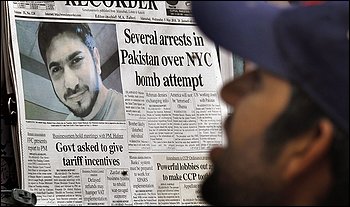
KARACHI, PAKISTAN- Terrorism suspect Faisal Shahzad’s alleged path to Times Square reflects what experts say is a militant support network that spans Pakistan and is eager to shepherd aspiring terrorists from around the globe. In this teeming southern metropolis, authorities are focusing on a domestic militant outfit that might have escorted Shahzad to distant northern peaks where U.S. investigators allege he received training with the al-Qaeda-affiliated Pakistani Taliban. In Pakistan’s heartland, extremist organizations freely build compounds and campaign with politicians, while their foot soldiers fight alongside the Taliban in the borderlands, intelligence officials say.

The overall picture is one of a jumbled scaffolding of militancy that supports al-Qaeda and the Taliban with money and safe houses, and can provide entrance tickets to mountain training camps for aspiring terrorists, one U.S. counterterrorism official said. Although the planners of most serious terror plots against the West in recent years have received direction or training from groups in the Afghanistan Pakistan border region, the reach of extremist organizations across Pakistan underscores the limits of Pakistani military offensives and of U.S. airstrikes that target the Taliban and al-Qaeda only along the frontier.

“Our cells are working everywhere,” one Pakistani Taliban fighter said in a telephone interview. New foreign recruits, among them Europeans and Americans, undergo days of isolation and “complete observation” by militants outside the tribal areas before gaining access to camps, he said.
Many such aspirants do not make it, the Taliban fighter said, because they are deemed to be spies. That happened to five Northern Virginia men, who were rebuffed by Jaish-e-Mohammed and Lashkar-i-Taiba last year despite the reference of an online recruiter, according to Pakistani authorities. However, those aspirants deemed sincere represent a “one in a million” opportunity for militants to strike in the West, said Masood Sharif Khattak, a former Pakistani Intelligence Bureau chief. Their first stop is typically not the mountains of Waziristan, where Shahzad told U.S. investigators he had trained, but 1,000 miles south in Karachi, the Taliban fighter said.

An Arabian Sea gateway of 18 million people, the city is awash in weapons and dotted with mosques where, police say, jihadist literature is freely distributed and clerics deliver vitriolic anti-American sermons. Among them is the Bath’ha mosque and seminary, an unassuming building known locally as a bastion for Jaish-e-Mohammed, a banned Kashmir-focused group. Authorities said they have arrested a man at the mosque who escorted Shahzad to the northwestern city of Peshawar.

Operatives from Pakistan’s array of jihadist groups find haven in Karachi’s multiethnic sprawl; Afghan Taliban deputy leader Mullah Abdul Ghani Baradar was arrested in the city earlier this year.

The groups form a nexus, according to recent local intelligence reports. One report, obtained by The Washington Post, warns of coordinated plans by the Pakistani Taliban — a group based in the tribal areas that has focused its attacks inside Pakistan — and the traditionally anti-India militant groups of Punjab province. The target: NATO supply convoys in Karachi.

Farther north in the expanse of Punjab, experts say the major anti-India militant groups and other radical Sunni organizations need little cover: They are tolerated and even supported by the state. Banned groups such as Lashkar-i-Taiba and Jaish-e-Mohammed have formed organizations with new names that operate freely. Some of their leaders have been arrested for alleged links to terrorist attacks, then released by the courts.
The groups have in recent years increasingly focused attacks within Punjab as provincial officials have tried to placate them, both to capitalize on their popularity and in hopes of moderating their views.

The chief provincial minister, Shahbaz Sharif, was widely criticized in March for calling on the Pakistani Taliban to “spare Punjab,” which he suggested had common cause with the militants by rejecting Western dictates. Another provincial minister visited the seminary of a banned group and campaigned for office with the leader of another. Jaish-e-Mohammed recently built a large walled compound in the southern Punjabi city of Bahawalpur.

“These groups have not been touched,” said Ahmed Rashid, a leading Pakistani expert on the Taliban and Islamist extremism. “They have been through a metamorphosis and turned their guns inward and linked up with other groups in the northwest, but no one is acknowledging it. The word is out that if you hang with them, you’re safe.”

The counterinsurgency tactics used in the tribal areas — missiles and military operations — are widely thought to be unfeasible in Pakistan’s populous mainland. But critics say Pakistani police, security agencies and officials could at least start to clamp down on extremist organizations by vocally condemning them, monitoring mosques and madrassas and denying public space and private property to militant-linked groups.

Pakistan says it is still investigating the extent of Shahzad’s militant links; some security officials have said that he definitely had ties to Jaish-e-Mohammed. Terrorism analyst Muhammad Amir Rana said that what appears to be a lack of political will to tackle militant organizations in Pakistan’s heartland is actually rooted in a problem with far greater implications for the global battle against terror: The groups’ reach and presence in cities has made them a beast that cannot easily be dismantled. “It’s very complex,” Rana said. “They have infrastructure in all different areas.”

Media Ignore The Fact That Man Who Alerted Police To Failed Times Square Bombing Is A Muslim Immigrant

By Zaid Jilani for ThinkProgress.org

The chief suspect in the case of the failed Times Square car bombing is Pakistani-American Faisal Shahzad, who has confessed to the plot. Much of the media has latched onto Shahzad’s Muslim faith and his Pakistani identity, making inflammatory remarks and suggestions about Muslims and Pakistanis:

– CNN contributor and Redstate.com blogger Erick Erickson complained that the words “muslim” and “Islam” are “not mentioned” enough in stories about Shahzad. He wrote, “It really is pathetic that you’re more likely to see the words “racist” and “Republican” together in the newspaper these days than “terrorism” and “Islam.” [5/4/2010]

– Hate radio host Neal Boortz tweeted, “OMG! The Times Square Bomber is a Muslim! Shocker! Who would have believed it?” [5/4/2010]

– The cover of today’s Washington Post-published Express features a black-and-white photo of Shahzad with the sensationalist headline “MADE IN PAKISTAN” [5/5/2010]

Yet one fact being ignored in the American media’s sensationalist narrative about the failed bombing is that the man who was responsible for police finding the bomb was Muslim. The UK’s Times Online reports that Aliou Niasse, a Senagalese Muslim immigrant who works as a photograph vendor on Times Square, was the first to bring the smoking car to the police’s attention:

Aliou Niasse, a street vendor selling framed photographs of New York, said that he was the first to spot the car containing the bomb, which pulled up right in front of his cart on the corner of 45th street and Broadway next to the Marriott hotel.

“I didn’t see the car pull up or notice the driver because I was busy with customers. But when I looked up I saw that smoke appeared to be coming from the car. This would have been around 6.30pm.”

“I thought I should call 911, but my English is not very good and I had no credit left on my phone, so I walked over to Lance, who has the T-shirt stall next to mine, and told him. He said we shouldn’t call 911. Immediately he alerted a police officer near by,” said Mr Niasse, who is originally from Senegal and who has been a vendor in Times Square for about eight years.

As the Leadership Conference on Civil Rights notes, “South Asian, and Muslim communities may yield useful information to those fighting terrorism. Arabs and Arab Americans also offer the government an important source of Arabic speakers and translators. The singling out of Arabs, South Asians, Muslims, and Sikhs for investigation regardless of whether any credible evidence links them to terrorism will simply alienate these individuals and compromise the anti-terrorism effort.”

Reflecting on Niasse’s good samaritanism Muslim-American author Sumbul Ali-Karamali writes, “It’s somewhat consoling to know that the man who first noticed the smoking Nissan Pathfinder and sought help is also Muslim, a Senegalese immigrant. … I grew up Muslim in this country, with Muslim friends and non-Muslim friends, and there was very little difference between the two groups. We were all American.”