Posts Tagged ‘ UN Office for the Coordination of Humanitarian Affairs ’

Grandsons of Mahatma Gandhi and Sir Abdullah Haroon Appeal for Pakistan Flood Relief

As reported by The United Nations
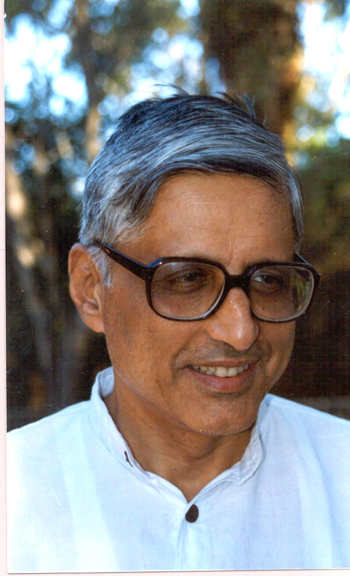
Miseries of millions unleashed by unprecedented floods in Pakistan brought together grandsons of two famous men in the Indian sub-continent to raise money for the sufferers.

Rajmohan Gandhi, grandson of Mahatma Gandhi and Abdullah Hussain Haroon, Pakistani ambassador to the UN, reached across the lines of history to make a joint appeal here to people to open their wallets to help the flood devastated people of Pakistan.

Acknowledging the gesture of Gandhi’s grandson, Hussain Haroon said Mahatma Gandhi was not only the father of nation to Indians, but also for Pakistanis and the people of entire sub-continent.

Appearing in a joint appeal at the UN headquarters, the Pakistani ambassador introduced Rajmohan saying “Mahatma Gandhi had a very special relationship with all of the Indian sub-continent and also the Muslims” and noted that their grandfathers were very personal friends.

Hussain’s grandfather Sir Abdullah Haroon was a close associate of Mohammad Ali Jinnah, whom the founder of Pakistan described as one of the strongest pillars of Muslim League.

But Haroon acknowledged that though Gandhi and his grandfather were on opposite side of the political spectrum, yet they had immense strength and respect for each other.

“My grandfather Sir Abdullah Haroon was a very personal friend of his (Gandhi), and when my grandfather passed away, we still have Gandhi’s letter where he said to my grandmother, I would have trusted your husband with a blank check,” Haroon said, making reference to the history.

And many a time Mahatma Gandhi proved his selflessness, he asserted.

“When I remember the fledgling Pakistani state did not receive its share from the then newly formed Indian government, the Mahatma went on a fast unto death in Delhi, and the Indian government had to buckle down and pay Pakistan its share,” the Pakistani ambassador acknowledged.

“When the Hindu-Muslim riots took place in Calcutta, he not only went there with Huseyn Shaheed Suhrawardy, he brought together both elements, and the rioting stopped in the city because he was fasting until it would stop. And people realised that it had to stop,” he said, adding it was because of one of these very reasons that he was assassinated.

Adding his voice to the appeal for generous support for the people of Pakistan, Rajmohan Gandhi said, “Now, in this catastrophe, as in all wars and conflicts, the poorest are once more the prime sufferers, losing not a portion of what they had, but all they had. Their sorrows are unrecorded, their heroism unsung, their pain unremembered. I pray that this flood will help us in South Asia to reorder our priorities.”
Pakistan Floods: World Bank to Lend $900m For Recovery

As Reported by the BBC

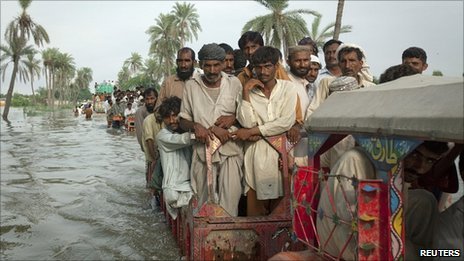
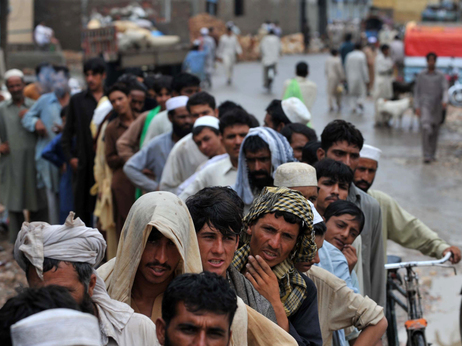
The World Bank is to loan $900m (£574m) to Pakistan to help it recover from its worst ever flooding. The devastating floods have affected up to 20 million people and left some 2,000 dead, say officials.

But the UN says international aid has been slow and that it has raised only a third of the $460m (£294m) needed for emergency relief.

Pakistan’s High Commissioner to Britain said it could take five years and $15bn (£9.6bn) for the country to recover. The World Bank funds will come through the reprogramming of planned projects and the reallocation of money, a World Bank spokesman said.

“We are reprioritising to make the funds immediately available,” he told Reuters news agency.

Health officials have warned that disease could spread quickly among the millions of displaced people and that 3.5m children are at risk.

Maurizio Giuliano, of the UN Office for the Coordination of Humanitarian Affairs (OCHA), warned that Pakistan would face “a second wave of deaths” from water-borne diseases and food shortages unless more aid arrived soon.

He estimated the number of people at risk from such diseases was six million.

Meanwhile, rival political groups in Sindh province have been accusing each other of creating breaches in embankments and dykes to save their own towns and property.

Many of the breaches were reportedly made to divert flood waters away from military garrisons in the area.

Jacobabad city, for example, has been saved, but low-lying areas around it, including Dera Allahyar and some other towns in Balochistan province, have been inundated.

In India, Prime Minister Manmohan Singh has promised more funds to help areas affected by the recent devastating floods in Ladakh, a remote mountain region in Indian-administered Kashmir.

During a visit to the heavily damaged town of Leh, he said all the destroyed homes would be rebuilt within the next two-and-a-half months with money from a government relief fund.

The flash floods over 10 days ago killed more than 80 people and caused heavy damage to property. Many people are still missing.

‘Marshall Plan’

Pakistan’s High Commissioner to Britain Wajid Shamsul Hasan told the AFP news agency that 2,000 people had now been killed by the floods – previous estimates have put the number of dead at around 1,500. He said it would take at least five years for the country to recover, and put the reconstruction bill at “more than $10 to $15bn”.

He warned that a failure to provide sufficient relief and rebuilding assistance could lead to an increase in extremism and instability in the wider region.

He called for a new Marshall Plan, referring to the extensive US development programme in Europe after World War II.

Not only have the floods affected around one-fifth of the country, they have also caused considerable damage to roads, bridges and communications, says the BBC’s Mike Wooldridge in Islamabad.

Thousands of homes and other buildings including schools and hospitals have been swept away, and crops for domestic food consumption and for export have been lost.

One of the key questions is whether farmers will be able to use their land to plant their winter wheat crop in September, our correspondent adds.

‘Image deficit’

The UN has so far only received about a third of its appeal amount – the US has made the biggest contribution so far, followed by the UK.

Aid agencies have blamed Pakistan’s “image deficit” for the shortfall, as potential donors fear the funds would be diverted into extremism in the country.

A spokeswoman for Care International told AFP the UN had to do more to convince donors that the money was “not going to go to the hands of the Taliban”.

“The victims are the mothers, the farmers, children. But in the past, information linked to Pakistan has always been linked to Taliban and terrorism,” said Melanie Brooks.

Bill Berger, USAID’s principal regional adviser for South Asia, told the BBC it had been difficult to communicate the scale of the disaster to the rest of the world:

“Remember that this flood has built up over time… I just don’t think the world has realised the magnitude of this now, because this story has just been slowly increasing. It doesn’t have the drama of an earthquake that impacts a huge number of people all at once.”

The floods began more than two weeks ago in the mountainous north-west and has swept south across a quarter of the country, including its agricultural heartland.

Pakistan Flood Crisis Bigger Than Tsunami, Haiti: UN

As reported by The Associated Press

ISLAMABAD: The number of people suffering from the massive floods in Pakistan could exceed the combined total in three recent megadisasters – the 2004 Indian Ocean tsunami, the 2005 Kashmir earthquake and the 2010 Haiti earthquake – the United Nations said Monday.

The death toll in each of those three disasters was much higher than the 1,500 people killed so far in the floods that first hit Pakistan two weeks ago. But the Pakistani government estimates that over 13 million people have been affected – two million more than the other disasters combined.

The comparison helps frame the scale of the crisis, which has overwhelmed the Pakistani government and has generated widespread anger from flood victims who have complained that aid is not reaching them quickly enough or at all.

”It looks like the number of people affected in this crisis is higher than the Haiti earthquake, the tsunami or the Pakistan earthquake, and if the toll is as high as the one given by the government, it’s higher than the three of them combined,” Maurizio Giuliano, spokesman for the UN Office for the Coordination of Humanitarian Affairs, told The Associated Press.

The UN has provided a lower number of people who have been affected in Pakistan, about 6 million, but Giuliano said his organization does not dispute the government’s figure. The UN number does not include the southern province of Sindh, which has been hit by floods in recent days, and the two sides have slightly different definitions of what it means to be affected.

The total number of people affected in the three other large disasters that have hit in recent years is about 11 million – 5 million in the tsunami and 3 million in each of the earthquakes – said Giuliano.

Many of the people affected by the floods, which were caused by extremely heavy monsoon rains, were located in Pakistan’s northwestern province of Khyber Pakhtunkhwa.

Rescue workers have been unable to reach up to 600,000 people marooned in the province’s Swat Valley, where many residents were still trying to recover from an intense battle between the army and the Taliban last spring, said Giuliano. Bad weather has prevented helicopters from flying to the area, which is inaccessible by ground, he said.

”All these people are in very serious need of assistance, and we are highly concerned about their situation,” said Giuliano.

Hundreds of thousands of people have also had to flee rising floodwaters in recent days in the central and southern provinces of Punjab and Sindh as heavy rains have continued to pound parts of the country.

One affected resident, Manzoor Ahmed, said Monday that although he managed to escape floods that submerged villages and destroyed homes in Sindh, the total lack of government help meant dying may have been a better alternative.

”It would have been better if we had died in the floods as our current miserable life is much more painful,” said Ahmed, who fled with his family from the town of Shikarpur and spent the night shivering in the rain that has continued to lash the country.

”It is very painful to see our people living without food and shelter,” he said.

Thousands of people in the neighboring districts of Shikarpur and Sukkur camped out on roads, bridges and railway tracks – any dry ground they could find – often with nothing more than the clothes on their backs and perhaps a plastic sheet to keep off the rain.

”I have no utensils. I have no food for my children. I have no money,” said Hora Mai, 40, sitting on a rain-soaked road in Sukkur along with hundreds of other people. ”We were able to escape the floodwaters, but hunger may kill us.”

A senior government official in Sukkur, Inamullah Dhareejo, said authorities were working to set up relief camps in the district and deliver food to flood victims.

But an Associated Press reporter who traveled widely through the worst-hit areas in Sindh over the past three days saw no sign of relief camps or government assistance.

The worst floods in Pakistan’s history hit the country at a time when the government is already struggling with a faltering economy and a brutal war against Taliban militants that has killed thousands of people.

The US and other international partners have stepped in to support the government by donating tens of millions of dollars and providing relief supplies and assistance.

But the UN special envoy for the disaster, Jean-Maurice Ripert, said Sunday that Pakistan will need billions of dollars more from international donors to recover from the floods, a daunting prospect at a time when the financial crisis has shrunk aid budgets in many countries. – AP