Archive for April, 2011

Why Pakistan’s Taliban Target the Muslim Majority

By Omar Waraich for Time
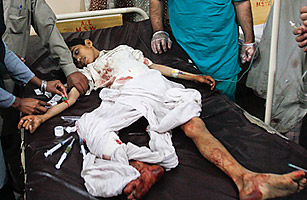
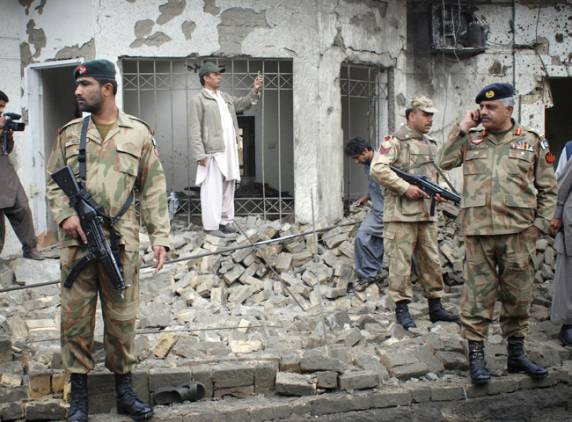
Although Pakistan’s headlines are dominated by the violent excesses of Taliban extremists, the majority of Pakistanis subscribe to the more mystical Sufi tradition of the country’s Barelvi school of Islam. And attacks on their places of worship are becoming depressingly familiar. Last Sunday, two bombers attacked the 13th Century Sakhi Sarwar shrine, near the southern Punjabi town of Dera Ghazi Khan, slaughtering 50 people and injuring twice as many. Mercifully, two other bombers failed to detonate their devices, preventing even higher casualties. Still, it was the deadliest assault yet on a Sufi shrine in Pakistan — and the sixteenth in the last two years.

The Pakistani Taliban swiftly claimed responsibility for the attack, as they have done for each previous one. Pakistan’s Taliban claims the mantle of the hardline Deobandi tradition, with many beliefs in common with the austere Wahabism of Saudi Arabia. They regard the Barelvi, who comprise more than three quarters of Pakistan’s Sunni Muslims, as irredeemable heretics. The Barelvis favor a more tolerant approach to Islam, promoting a cult of the Prophet and incorporate folkloric traditions such as seeking intercession from rural saints. Sakhi Sarwar, a mystic who is also revered by some Hindus and Sikhs, is said to grant women a son — a local legend that rouses anger among Islam’s more literalist adherents, who ascribe such powers only to Allah.

Tensions between Deobandis and Barelvis have punctuated most of Pakistan’s history. But with the arrival of al-Qaeda in the country a decade ago, local militants forged links with the global jihadists, their sectarianism sharpened to accept al-Qaeda’s “takfiri” worldview that deems adherents of other strains of Islam as deviant apostates worthy of death.

One reason for the uptick in sectarian-based terror attacks may be that the militants’ ability to strike the high profile urban targets that once grabbed global headlines has been diminished by Pakistani military offensives in their strongholds over the past two years. “It has become harder for the militants to strike hard targets,” says security analyst Ejaz Haider. “Some lessons have been learned from the previous attacks.”

So, the militants have, over the past two years, more keenly focused on sectarian attacks. Traditional Shi’ite processions are now routinely targeted by suicide bombers. In May 2010, two mosques of the minority Ahmedi sect were targeted in Lahore, killing 93 people. And there’s been an escalation of bombings directed against the majority Barelvis. After attacks on two of their most prominent shrines, Data Darbar in Lahore’s old city and Abdullah Shah Ghazi in Karachi, Barelvis came out on to the streets, wielding weapons and vowing revenge against the Taliban. They did not extend blame to the broader spectrum of Deobandis, perhaps wisely evading the beginnings of a more gruesome sectarian conflict that Pakistan can ill-afford.

Not all Barelvis are the models of peace and tolerance that some have portrayed them to be. It was a Barelvi, Mumtaz Qadri, that assassinated Punjab Governor Salmaan Taseer in January, for his opposition to Pakistan’s prejudicial blasphemy laws. The assassination was applauded by 500 Barelvi scholars in a joint statement. And the Sunni Tehreek, a Barelvi militant outfit, rewarded Qadri’s family and threatened Taseer’s daughter. While they may favor a more permissive vision of Islam, certain Barelvis are quite capable of violence where they feel the Prophet has been dishonored.

The campaign to defend Pakistan’s blasphemy laws from reform has, in fact, united Barelvis and Deobandis since last November. Barelvi anti-Taliban rhetoric was also put on pause. “We had seen the Barelvis getting ready to organize a campaign against the Taliban,” observes analyst Nasim Zehra, “but they got sidetracked by the blasphemy issue and this was forgotten.” Until last month’s assassination of Minorities Minister Shahbaz Bhatti, the religious right was able to frequently draw tens of thousands on to the streets.

Sectarian hatred aside, rural shrines are a far easier terror target than the more heavily guarded state and economic targets in the cities. Suicide bombers, especially the teenage boys favored by militants, can often evade notice before they reach the target. A crowded space helps secure the militants’ aim of causing high casualties. In the case of the Sakhi Sarwar bombers, they only had travel to a relatively short and unimpeded distance from North Waziristan to the edge of Punjab.

The bombings may also be an attempt to relieve pressure from sporadic Army actions against militants in the northern tip of the tribal areas. “Just to remain alive there, the militants have to try and force the government’s hand into diminishing pressure,” says analyst Haider. “To counter that pressure, they mount attacks in the mainland in the hope of securing some deal back in the tribal areas.” By targeting shrines across the country, the militants are able to demonstrate their enduring geographical reach and expose the state’s vulnerabilities.

The bad news is that the state is in a poor position to respond. After the latest bombings, Barelvi leaders denounced the Punjab provincial government for failing to provide security at shrines. The Punjab government dismisses the charge. “It’s happening all over,” says Ahsan Iqbal, a leading politician from the Pakistan Muslim League-N, the ruling party in Punjab. “This is not something that is province-specific.” Iqbal casts blame on the federal government for failing to share intelligence. The federal government reverses the charge, and argues that the law and order is a provincial responsibility. What no one seems to be focusing on is the desperate need to enhance the police’s capacity, with better equipment, counterterrorism training and an intelligence gathering network that reaches deep into Pakistan’s remote areas.
Teen says 400 Pakistan suicide bombers in training

As Reported by The Deccan Chronicle

A teenager arrested as an accomplice to Pakistan’s deadliest suicide bombing of the year has said that up to 400 suicide bombers are being groomed to wage carnage in the nuclear-armed nation.

Umar Fidayee, 14, said the would-be bombers were being trained in North Waziristan, the premier Al-Qaeda and Taliban fortress in Pakistan’s tribal belt where US officials want Pakistan to flush out militant strongholds.

He made the remarks in an interview aired Friday from his hospital bedside, where he is being treated after detonating a hand grenade in the April 4 attack that killed 50 people at a 13th-century Sufi shrine.

It was Pakistan’s deadliest bomb attack since November.

Police arrested Fidayee as an alleged accomplice and said they removed his own suicide vest, which he failed to detonate in a crowd of hundreds in Dera Ghazi Khan just minutes after two other bombers blew themselves up.

Shown covered in tubes and bandages, the teen appeared to express remorse and lifted the lid on harrowing details of his training at the camp in the Mir Ali district of North Waziristan, which lies on the border with Afghanistan.

“Three hundred and fifty to 400 would-be suicide bombers are getting training in Mir Ali in North Waziristan,” he said in the interview broadcast by Pakistani television channels Samaa, Express, ARY and Geo.

“I was trained for two months and saw many boys being trained there,” he said, going on to appeal on Pakistanis to “please forgive me”.

“God has given me a new life but I am sad that we killed innocent people, innocent children,” he said.

Fidayee said he was initially recruited on the understanding that he would be smuggled into Afghanistan to kill non-Muslims.

“But they brought me here to Dera Ghazi Khan. I told them ‘there is no kafir (non-believer) here’,” he said.

“They told me these people are worse than kafirs,” Fidayee said.

Exposing an apparently disturbing recruitment at the gates of an ordinary school in North Waziristan, the teenager claimed a man he identified as Qari Zafar convinced him to begin a life of militancy.

“He told me that all this education is useless and said ‘become a fighter and you will go to heaven’,” Umar told the reporters.

He said he was told to attack the shrine 30 minutes after the other two detonated their bombs, in order to cause maximum carnage among those rushing to aid casualties of the first two blasts.

In a message to other potential suicide bombers he said: “Please refuse to carry suicide attacks. Such attacks are forbidden in Islam.”

Islamist militants have increasingly targeted Sufi worshippers, who follow a mystical strain of Islam, in Muslim-majority Pakistan.

Dera Ghazi Khan is close to Pakistan’s tribal belt which is described by Washington as the most dangerous place on Earth and an Al-Qaeda headquarters.

More than 4,200 people have been killed across Pakistan in attacks blamed on homegrown Taliban and other Islamist extremist networks since government troops stormed a radical mosque in Islamabad in July 2007.

India Continues to Dominate Pakistan’s Strategic Thinking: US

As Reoported By The Times of India

Pakistan’s efforts to launch a comprehensive fight against terrorism are greatly hampered by its perceived threat perception against India, US President Barack Obama has said in a new report to Congress.

“As India continues to dominate their strategic threat perception, large elements of Pakistan’s military remain committed to maintaining a ratio of Pakistani to Indian forces along the eastern border,” Obama said in the third-quarterly report to the Congress on Afghanistan and Pakistan sent yesterday.

“This deprives the Pakistani COIN (counter-insurgency) fight of sufficient forces to achieve its ‘clear’ objectives and support the ‘hold’ efforts and causing available Army forces to be bogged down with ‘hold’ activities because there are insufficient trained civilian law enforcement personnel to assume that responsibility,” Obama said in his 38-page unclassified (rpt) unclassified version of the report.

Due to flood in Pakistan last year the offensive military operations Pakistan had envisioned for KP (Khaibar Pakhtoonwah) and the Federally Administered Tribal Areas (FATA) in the second half of 2010 were overtaken by events, he said.

“Militants were impacted by the floods as well, so we did not observe significant offensive actions on their side, but as Pakistani forces ceased offensive operations, extremists extended their control to areas without sufficient Pakistani central government-provided security and governance,” he wrote.

Between October 1 and December 31, 2010, Obama said Pakistani security forces remained largely static, generally focusing on maintaining the security of previously cleared areas in the FATA and KP and continuing to support flood relief operations.

There were small but notable security operations in November and December in Orakzai Agency and Dir District, but no major operations.

National attention during the reporting period focused on the need for continued flood relief and the start of early recovery efforts, he said.

“The military served as a force of stability during the monsoons, ensuring that Pakistani and international emergency resources were available for rescue and relief operations. The Pakistan Army, Air Force, and Navy committed large numbers of personnel and resources to the flood relief operations throughout October and November,” he said.

The civilian government’s response suffered from a lack of coordination and reflected broader shortcomings in the government’s ability to execute the civilian “hold” and “build” phases of COIN.

The last quarter of 2010 saw no progress on effectively executing the COIN cycle in KP and the FATA.

Pakistan Rejects US Taliban Report

As Reported by The BBC

The Pakistani military has dismissed the findings of a US report that says it has no clear plans to defeat the Taliban insurgency.

The report assessing the war against militants in Pakistan and Afghanistan has been submitted by the Obama administration to the US congress.

But a senior Pakistan security official told the BBC that operations against militants have been a great success.

The official said that Pakistan should be proud of the progress it had made.

The White House report said that Pakistan still has no “clear path” to defeat militants on its soil.

But the senior official – who wished to remain anonymous – said that Pakistan’s plate was full enough already.

“Instead of pushing us to do more, the other side should carry out an introspection of its own operations,” he said.

“We are quite satisfied with our counter-insurgency campaign in the Swat and Malayan regions and parts of the tribal areas. We can safely say this has been a great success story.”

The BBC’s Shoaib Hasan in Pakistan says that the White House report has been released at a time when relations between the security establishments of the two countries have been strained.

Our correspondent says that the report is likely to raise the ire of the Pakistan military – which says it has lost more men than any other country in the fight against militancy in the region.

‘Vexing’

The White House report said that in spite of “tremendous human sacrifices” made by Pakistani security forces and increased military co-operation between Pakistan and US in the last three months, the fight against militancy was making little progress.

Pakistan claims to have lost more men than any other country in the fight against militancy It cited the example of the this January’s third operation in two years to clear insurgents from Mohmand and Bajaur tribal agencies.

The Pakistani military’s efforts have been hobbled by resistance from the militants, bad weather and the need to settle internally displaced people.

“What remains vexing is the lack of any indication of ‘hold’ and ‘build’ planning or staging efforts to complement ongoing clearing operations,” the White House report said.

“As such there remains no clear path to defeating the insurgency in Pakistan, despite the unprecedented and sustained deployment of over 147,000 forces.”

The report said that Pakistan and Afghanistan needed to co-operate more to destroy insurgent havens on both sides of the border.

The US has long expressed frustration about Pakistan’s reluctance to take on militants in the tribal areas.

A Nation Overloaded with Religion

By Tanzeel for Tanzeelism

Frequent assassinations of Pakistan People’s Party leaders have not only shaken the ideology of this country but left a clear cut message for Government to avoid any confrontation against strengthening religious lobby in Pakistan.

The Tehreek e Taliban and Al Qaeda backed groups in Pakistan especially in Punjab are after the ruling party and eradicating its moderate forces one by one. As a result the PPP systematically takes back seat, and gets blackmailed by the religious forces.
Government’s evident policy shift from the party manifesto of ensuring religious harmony among all faiths in the wake of doctrine of necessity further pushes nation in the hands of extremists.

From the assassination of Benazir Bhutto to Shehbaz Bhatti, the message is clear. Let Taleban pursuit their agenda of violent Islam and whoever comes in between will become history.

In such horrific circumstances when even the ruling party leaders are not safe how unarmed liberal forces would dare voice their opinion seems to be a big ask. As a result the clouds of insanity steadily prevailing and a common man is reluctant to counter them not because of being blithe but for his own safety resulting mass surrender of journalists, civil society, liberal political forces and minority rights groups against religious forces.

A common Pakistani despite wanting to express deep displeasure is suppressed by the bearded gun totted black sheep who are gelled up in the society to take necessary ‘religious measures’ against those who prefer humanity over religion.

Salman Taseer’s assassination by his own security guard Mumtaz Qadri and the subsequent showering of rose petals by lawyers’ community is one of the shocking examples of deep rooted religious fanaticism within our society. Be it media, armed forces, politics (not to mention the historical speech of Punjab Chief Minister Shehbaz Shareef during which he proudly endorsed the agenda of Taleban), judiciary, education or even sports.

In my view the traces of religious terrorism can be found back during partition campaign when the voices of independent ‘Muslim Land’ were on rise.

At that time some of the Muslims might had opted the idea of migrating to separate land due to vested interests but by and large it was the dominating religious sentiment that caused division with the objective of turning Pakistan into the “Fort of Islam” comprised by majority of Muslims.

Two- Nation Theory which clearly rejects any of idea co existence of Muslims with Hindus is a true depiction of Pakistan’s current situation where Muslims are unable to coexist with other sects let alone religions and ethnicities.

Today, I being a moderate Muslim who is deeply concerned about his country’s image foresee not only the bleak future of Pakistan but raises the doubts whether creation of Pakistan was really an apt approach.

India’s World Cup Cricket Victory: The Measure of a Nation

By Gethin Chamberlain for The Guardian

It is 3pm in a small British bar in the tourist state of Goa about 550km south of Bombay – where the country’s cricketers are harrying Sri Lanka’s batsmen in the early overs of the World Cup final.

It is 28 years since India last won this most cherished of titles in a nation so crazy about the game. There are fewer than nine hours to go until it does so again. But we don’t know that yet.

Mohinder Amarnath, the man of the match in the 1983 World Cup, is certain, however, that the moment has arrived to repeat his team’s success. Every Indian can realise their dreams through the 11 men on the field today, he says.

He need not have worried. Corrin, the eponymous owner of the Goan bar, is reaching for a brush, and dipping it into the pot of orange acrylic paint on the table in front of her. She holds the arm of the little Indian girl in front of her, draws the first rectangle of the national flag, hands the brush to Sonny, the barman, and watches him draw the white and green stripes. The girl, the daughter of the beautician who runs the shop upstairs, beams, delighted, and skips away to show off her affirmation of support for the home team.

In the street outside, a truck thunders by, horn blaring, Indian flags fluttering in from the cab. The picture is repeated across the country; millions are glued to their televisions or radios, donning their replica shirts, daubing themselves in the national colours. India is partying; each successful delivery from its bowlers greeted by a round of beating drums. The country that has made cricket its national game is certain that this year, finally, it will capture the ultimate prize, the World Cup.

India is certain that this is no more than it is due. It has already celebrated what many in the country regard as the real final, victory over its most reviled opponent, the notoriously unpredictable – unless you happen to be a friendly bookmaker – Pakistan team, which on Wednesday managed to throw away a magnificent bowling performance to lose ignominiously.

And India was desperate for this victory; the humiliation of the Commonwealth Games corruption scandal was still fresh; the country’s recent diplomatic successes – not least towards a permanent seat on the UN Security Council – has been overshadowed by fresh concerns about its aspiration to be regarded as a first world nation.

This is a nation demanding international approval: buoyed by the news that projections now show it will overtake China as the world’s most populous nation by 2030, there is a sense that its time has come.

As Saturday dawned, prayers were said, puja [offerings to the gods] were made, anything to give the Indian team an edge. Across the country, people painted themselves in the blue of the national team strip or in the orange, white and green of the flag, and prepared to party.

Bars and hotels hiked prices and charged admission to the more rarefied environments. In many places, TV screens were set up and even when the big screen was not an option, the nation gathered anywhere that a television was on, peering over each other’s shoulders to catch a glimpse of the match.

In Corrins’, even Sonny was applauding as Sri Lanka upped the ante in their final overs, smashing the ball hither and thither. Then a nation of – according to the new census figures – 1.2 billion fell silent as top batsman Sehwag fell to the second ball of the Indian innings.

Yet important as the game was, some felt that there was a sense of anticlimax after the Pakistan game. “The excitement among people is lacking,” Manoj Kumar, a hotel manager, told the Times of India.

Not so among the Sri Lankans, who had sidled into the final without the fireworks of the Indian progress. Captain Kumar Sangakkara pulled no punches when he explained what it meant to a country even more desperate for international approval after the end of three decades of bloody civil war: “It means everything. We have come through a very tough period. A lot of people have laid down lives for our country. In this new future, hopefully we can take home the World Cup, and that will be even more occasion for celebration.”

Gautam Gambhir, the Indian batsman who stabilised the nation’s innings after the loss of influential opener Sehwag, was no less compelling when he told a news channel that India had to win to honour the dead of the 2008 terrorist attacks in Mumbai: “For me it will be dedicated to the people who lost their lives in the 26/11 massacre.”

For India, the desire to be taken seriously by other nations in sport is perhaps more important than diplomatic point-scoring. Like its neighbour China, it has been unable to translate a mass of bodies into international sporting success. In terms of international trade, it has come on in leaps and bounds, yet still it is unable to project that power into other fields.

Such desperation for success was reflected in the way many in the country fell back on superstition in their desire to ensure success. One fan, Ritangshu Bhattacharya, from Delhi, assured journalists that he would be attempting to tip the odds in India’s favour by defying nature: “I won’t pee in the entire match… I feel whenever I go to the loo, a wicket falls or India drops a catch.”

Even his stoicism was outdone by one politician from the state of Madhya Pradesh, who stood from 10am to 10pm during the India-Pakistan match.

In Corrins’, there is no doubt about who should have won: “You have to support the team, don’t you?,” she said. “We live here, we have to support the local team, however it goes.”

It is 10.45pm, and MS Dhoni, the Indian captain, is hammering the ball to the boundary again. Six to win, two overs. There are fireworks going off everywhere, drowning out the commentary. India knows it has won. It is the Pakistan game all over again: victory from defeat, India defiant.

Six runs, and he smacks it over the boundary. The fireworks explode. In the cities, there is madness; in the villages, too, people are hugging and screaming. The firecrackers are exploding, the night a blur of colour. India wins.

India, Pakistan back to bickering after Mohali bonhomie

As Reported by IBN Live

India and Pakistan had a brief bout of acrimony with both complaining that a staffer each posted at their diplomatic missions in Islamabad and New Delhi respectively were detained by the host country and later let off.

While Pakistan today claimed that a driver of its mission in New Delhi was “arrested” for unspecified reasons on Wednesday, the Ministry of External Affairs took up the matter of a ‘missing’ Indian High Commission official in Islamabad. “A driver from the High Commission was arrested. (He) has been released. We have protested,” Pakistan Foreign Office spokesperson Tehmina Janjua told PTI in Islamabad, without giving details.

However, sources in New Delhi said that on Wednesday evening a Pakistani High Commission driver was seen near the Chandigarh cantonment area and when confronted, he tried to escape. “In the process, he sustained some bruises/injury on his knee and back. He was questioned and thereafter released.Before being released, a medical check-up was conducted which showed him in good health,” sources told PTI.

Just hours after the incident, an official in Indian High Commission went ‘missing’ in Islamabad, sources said, adding there was no immediate official confirmation on his whereabouts from the Pakistan side. However, the media reported detention of the Indian official, prompting Foreign Secretary Nirupama Rao to take up the matter with her Pakistani counterpart Salman Bashir. “Apart from Indian High Commission raising the issue with Pakistan Foreign Ministry in Islamabad, the Ministry of External Affairs in New Delhi took up the issue with Pakistan High Commission seeking the safety, security and well-being of the Indian official,” sources said.

The official was later handed over to the Indian High Commission in Islamabad, sources said. Though the sources did not divulge the name of the Indian official, some reports identified him as Anand Sharma, working in the consular section of the High Commission.

The incident involving the Pakistani driver occurred at a time when the Prime Ministers of India and Pakistan were in Mohali, holding “extremely positive” conversation on the sidelines of the pulsating cricket World Cup semi-final between the two countries. The incident of the Indian official was being seen as a tit-for-tat to the Chandigarh incident.