Archive for the ‘ cricket ’ Category

Pakistan plan to spread the grief

As reported by Agence France-Presse

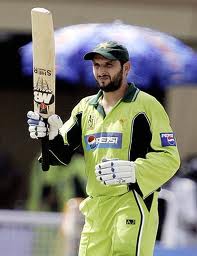
Pakistan are still reeling from the cricket corruption scandal that has dogged the side since last summer, but Shoaib Akhtar has warned that he and his teammates plan to take out their frustrations over the affair on their World Cup opponents.

Salman Butt, Pakistan’s then Test captain, and the bowlers Mohammad Asif and Mohammad Aamer were banned by the International Cricket Council (ICC) last month, after being found guilty of spot-fixing, which depleted Pakistan’s bowling options just two weeks before the start of the World Cup.

But Akhtar said the loss of the trio has helped unite the squad and galvanised them to push for a second World Cup victory to replicate their 1992 success.

“We are a hurt side so we are here to hurt others,” Akhtar said yesterday. “It’s better that it happened to us because every time a controversy happens it gathers us together and what better situation than before a World Cup?”

Pakistan beat co-hosts Sri Lanka by 11 runs in their last match after seeing off Kenya by 205 runs in their opening game.

Akhtar, 35, admitted he was missing Aamer and Asif but said others have stepped up.

“Obviously without Aamer and Asif we have suffered badly, they were the best with the new ball, it’s unfortunate what happened to them. Had they been with us it would have been the most lethal bowling attack,” he said.

“But the way [Umar] Gul and [Abdul] Razzaq have been bowling, the way [Wahab] Riaz is bowling, we can still do a much better job as we have variety in our attack.”

Akhtar, who has taken 246 wickets in 162 one-day internationals, said he had changed his bowling style to maintain his fitness, concentrating on accuracy rather than the pure pace that in the past regularly saw him bowl in excess of 100mph.

“I left this race of bowling at 100mph a long time ago,” he said. “I am nearing 36 now and am more mature, so I am focusing more on getting wickets now than bowling fast. But I crossed 98mph the other day.”

He said he is enjoying the chance to perform on the world stage after injury and discipline problems left him sidelined four years ago.

But he warned his teammates – who next face Canada in Colombo on Thursday – not to be over confident after beating Sri Lanka. “We have to move on and we shouldn’t get complacent,” he said.

Cricket: World Cup power rankings

Cricket correspondent Andrew Alderson is working for nzherald.co.nz at the World Cup.

He is ranking the teams for us on a week-to-week basis, judging from what he hears and observes at the tournament.

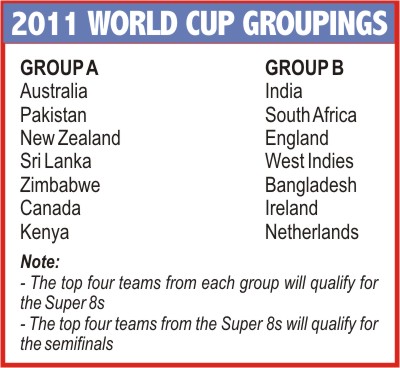
Group A

1. Australia
The power of their middle order and spin attack is yet to be truly tested but eased through their first two matches against Zimbabwe and New Zealand despite two warm-up losses. The pace attack of Brett Lee, Shaun Tait and Mitchell Johnson has been menacing, contrary to what some predicted. The best in pool A when compared to mercurial Pakistan and vulnerable Sri Lanka.

2. Pakistan
Are they tournament sleepers under skipper Shahid Afridi? He exudes charisma and already has nine wickets for 50 runs from 18 overs, despite a poor past World Cup record. The 11-run win over Sri Lanka could be crucial long term.

//

He is backed by the unpredictable Akmal brothers and the reliable Misbah ul-Haq and Umar Gul. After Pakistan’s tumultuous year it is remarkable they’re in this shape.

3. Sri Lanka
A favourite on paper. They have the batting, the spin attack and arguably the world’s best keeper/batsman in skipper Kumar Sangakkara. In practice they aren’t as assured, despite playing for Muttiah Muralitharan in his last hurrah in national colours. Winners last time the tournament was on the subcontinent in 1996, they need wins against New Zealand and Australia to boost confidence.

4. New Zealand
Living up to expectations. At this stage a quarter-final exit seems inevitable, barring a spectacular turnaround. Relying on the lower order batting and skipper Daniel Vettori with the ball isn’t a foolproof method to threaten their other key group opponents Pakistan and Sri Lanka. Need to build on batting and bowling partnerships. Could be saved by the forgiving last eight format.

5. Zimbabwe
Not to be underestimated, especially on Friday in Ahmedabad against the Black Caps. Their best weapon is making opposition batsmen force the pace off spinners Ray Price, Prosper Utseya and Graeme Cremer. Proven class is back looking after Zimbabwe these days. Past players Heath Streak, Alistair Campbell and Grant Flower have returned to the fold in various capacities which bodes well.

6. Canada
Making up the numbers… it could be their last World Cup for a while. Most notable feature is probably a trivia quirk in John Davison who at 40 years and 294 days [as of Sunday] is the oldest player in the tournament. His century off 67 balls against the West Indies in 2003 was then the fastest at a World Cup.

7. Kenya
Look wayward after a pounding from New Zealand in their first match… expect more where that came from after claims of disharmony in camp. Were gifted a semi-final spot in 2003 through terrorism-fear boycotts. Like Canada they’re unlikely to return for a while if the format reduces to 10 in four years.

Group B

1. India
India should lead this group but the tie against England has come as a shock to the nation… and the All Blacks think they face pressure. Cheering outside this hotel window piped down considerably as England recovered; crowds had also milled around television sets everywhere on the journey from Nagpur to Ahmedabad. The batting seems sussed but how their bowlers could give away 338 runs needs addressing, sharpish. The injury to preferred left-armer Ashish Nehra hasn’t helped.

2. South Africa
Look a fine, balanced unit but have failed to deliver the trophy every time since returning from isolation in 1992. With such a strong core including Graeme Smith, Hashim Amla, Jacques Kallis, AB de Villiers and Dale Steyn they should fancy their chances but bowling could let them down. There is hope Imran Tahir with four wickets against the West Indies might deliver on the spin front.

3. England
Produced a thrilling tie against India but narrowly defeated the Netherlands. Odd. All the matches saw plenty of runs but where is the consistency? The batting, led by skipper Andrew Strauss and with plans to keep opening with Kevin Pietersen, looks solid. Plenty of Ashes winners stack the bowling. The question is: can they keep firing – as in Bangalore – after months on the road for many.

4. Bangladesh
Remain an outside hope for a semi-final given they play all matches at home. New Zealand mightn’t be the only top tier nation to get tangled in their spinning web after the 4-0 whitewash last year. Shown up by the Indian batting juggernaut but held nerve to dispatch Ireland who chased close. So much rests on Shakib al Hasan as an all-rounder and Tamim Iqbal as an opening bat.

5. West Indies
The loss of injured all-rounder Dwayne Bravo means prospects are grim. The 73 from his brother Darren – a Trinidadian who is a fine replica of countryman Brian Lara – against South Africa offers hope. A couple of others, notably Chris Gayle and Kieron Pollard, also need to produce if the West Indies are to progress. Seem the most likely test-playing team to flounder.

6. Ireland
Won’t replicate their 2007 giant-killing feats but at least present stern opposition when compared to group A.

7. The Netherlands (aka Ryan ten Doeschate)
If ten Doeschate fails you suspect the Netherlands will too, although to be fair they provided stiff opposition against England – ten Doeschate’s century was backed by valuable support in the middle order. Surely it’s impossible for him to contribute like that every match?

– Herald on Sunday

Perfect Pitch

By Sonal Srivastava for The Times of India

Tickets to most India matches have been sold out,” Priyanka Saxena informed her colleagues. Her co-workers were huddled at her work station, eyes fixed on the monitor, hoping to get premium tickets for the India Vs Netherlands Cricket World Cup 2011 match in Delhi. “We were disappointed, but then we decided to go for the South Africa Vs West Indies tie, instead. I’m going to cheer for the South Africans as they haven’t won the World Cup yet,” she says. Cricket is an amazing game; it originated in Great Britain, but Commonwealth countries have adopted it as their own. The game has not only transcended international borders, it has also managed to cut across fault lines, transcending race, colour, caste, community, class and faith.

The 2011 Cricket World Cup is being hosted by three South Asian cricketing nations: India, Sri Lanka and Bangladesh. Teams from 14 countries are participating in the 10th edition of the World Cup. The event will be spread over two months and will be played in three different countries, starting off at the Sher-e-Bangla National Stadium in Mirpur, Dhaka, and ending in April at the Wankhede Stadium, Mumbai.

So much good cheer
“Sport brings communities together and helps release a lot of pent-up emotions,” says Ian Botham, former English cricketer. When you cheer for your country or any other favourite team of another country, you forget all your worries. If your team wins, it’s time to celebrate. Every time India or the team that’s being backed wins a crucial match, fans light crackers and distribute sweets; some dance to the beat of dhols. As a cricket-crazy country, we celebrate the success of Zaheer Khan and Yusuf Pathan, Harbhajan Singh and Dhoni, irrespective of their religious leanings. “People like to cheer for something; it’s a feel-good thing. If you are stressed, then watching a cricket match can bring relief; when your team wins, you feel on top of the world,” says former India cricketer Atul Wassan.

World Cup is the time for bonhomie: It’s when you can start a conversation with strangers without inhibition, exchange notes and discuss the outcome of the match. When a batsman hits sixes, you might spontaneously hug a complete stranger standing next to you — your passion for the game takes precedence over age, gender, and community. “You can play cricket even in a remote village with just a bat and a tree stump for wickets. That’s what makes cricket popular,” explains Wassan.

Ties that bind
Devoted fans of the game cheer for their favourite cricketers irrespective of the country they represent. Interestingly, even if India is knocked out, people like to see their neighbours — Pakistan and Sri Lanka — do well and bring the World Cup back to the subcontinent. The result? Fans get to see ‘some good cricket.’ During the 1996 World Cup Quarter Final, in Bangalore, Aamir Sohail hit a delivery from bowler Venkatesh Prasad for four runs. He looked at Prasad and pointed his bat towards the boundary where the ball had gone. In the very next delivery, Prasad bowled out Sohail and pointed the finger towards the pavilion. “There is traditional rivalry between India and Pakistan. The armed forces of our respective countries may have to defend borders, but cricket is something that helps people-to-people bonding. During matches, the atmosphere on the field is electric, but after the match, the cricketers hang out together like old buddies,” says former India captain, Ajit Wadekar. And so do fans!

Gentleman’s game
A one-day match is played over six hours and sometimes players do get carried away and tempers run high. But cricket is a gentleman’s game and players have to abide by the umpire’s decisions. Often there is friendly banter on the cricket field and humourous one-liners are exchanged to help lighten the mood. For instance, Inzamam-ul-Haq reportedly told Brett Lee, a fast bowler, to “stop bowling offspinners”. In another instance, when Indian all-rounder Irfan Pathan came to bat, Afridi shouted twice: “O mera shehzada aaya!” — Oh! My prince has come.

Gods of cricket
Fans adore cricketers. Those for whom cricket is religion, Sachin Tendulkar and VVS Laxman, are gods personified. The little master has such charisma and skills that Australian cricketer Matthew Hayden exclaimed: “I have seen God; he bats at no 4 for India in Tests,” referring to Sachin’s position in the Indian batting line up. “When people watch their favourite cricketers do well, it gives them self-belief. They think that if Kapil Dev or Dhoni can make it, they can also do well,” says former spin bowler Maninder Singh. Fans also manage websites dedicated to their favourite cricketers. A site called ‘Sachinism’ runs forum discussions based on Sachin’s knocks, and fans post their views on the master blaster’s innings.

Playing field
A game of cricket is a lot like life. Just like a batsman faces googlies from the bowler, we too have to deal with what life throws at us. The batsman stands alone on the field, faced with 11 opponents; but with training, discipline and good reflexes, he does the best he can. However, in the game of life we are rarely alone. We have family, friends and others willing to lend a hand. Moreover, we have the benefit of access to ancient and modern wisdom that helps us train and discipline ourselves to deal better with life’s challenges and help each other.

Cricket World Cup: England Breeze Past Pakistan

By Will Turner for The Sport Review

England cruised to a 67-run win in their final ICC World Cup warm-up match against Pakistan in Fatullah. Stuart Broad sparkled again, taking five wickets after Paul Collingwood and Kevin Pietersen struck half centuries as England set Pakistan 274 for victory.

Collingwood also contributed with the ball with his three wickets helping dismiss for Pakistan for just 206.

Pakistan, who opted to rest Abdul Razzaq and Shahid Afridi, elected to field and once again England captain Andrew Strauss fell cheaply, this time to the pace of Shoaib Akhtar.

Jonathan Trott was also dismissed in single figures however Pietersen looked solid alongside Bell.

Pietersen raced to his half century before Bell eventually departed for 39 which brought the out-of-form Collingwood to the crease.

But the Durham man appeared to find his touch, playing his way towards his half century despite the loss of Pietersen for 66.

Ravi Bopara offered good support to Collingwood with a quick-fire 35 before Matt Prior contributed with a late 24 before the tail folded with Wahab Riaz claiming three wickets.

Just as he did against Canada, Broad tore through the Pakistan top order with only Younis Khan offering any resistance.

The middle order all got starts but failed to kick on with Collingwood’s change of pace stalling a fightback.

Broad retuned to remove Khan for 80 and with his exit went Pakistan’s chance of victory, falling 67 runs short.

Collingwood admitted it was a relief to be back among the runs following his first 50 in any form of cricket for three months after the victory.

“On a personal note, it was nice to get some runs,” he afterwards. “It’s been quite a frustrating few months for me, not being able to contribute as much as I would have liked.

“Even though it was a warm-up game, I thought it was important I spent some time in the middle and tried to get that confidence going again – and thankfully, it worked out well.”

England now begin the preparations for their group opener against the Netherlands on Tuesday.

The Cup That May Brighten Up Pakistan

By Nilankur Das for The Hindustan Times
For others winning this World Cup could be a matter of pride and glory for the country. For Pakistan, which has won a World Cup and hosted a final, a lot more is at stake. A terror attack on the Sri Lanka team bus in Lahore in 2009 had put an end to Pakistan playing international matches at home an

d also taken away its rights to host World Cup ties. The country shredded by blasts and violence is now forced to host its international matches in Dubai.

Play to prove
Winning this World Cup, coach Waqar Younis feels, could change all that and pave the way to bring international cricket back to the country.

“It is unfortunate that we are not hosting. Yes, we are missing World Cup matches at home. But if we play as a unit, which we are at the moment and go on to win, I believe it will definitely help get international matches back to Pakistan,” Waqar said after Pakistan began their campaign with a win in a warm-up match against Bangladesh.

“Everyone back home is disappointed that the World Cup is not happening in Pakistan. But we are looking forward. Violence has taken international cricket away from the country but I am sure our cricket will bring cricket back,” Intikhab Alam, Pakistan’s first one-day captain who is the manager of the team here, told HT.

Ccricket Buzz
Back in Pakistan which is celebrating Id-e- Milad-un-Nabi, the birthday of Prophet Mohammad, cricket, it was learnt, is the buzz now.

“I think the people of Pakistan have already come to terms with the World Cup not happening here. Tuesday’s match was not on TV and so very few people could follow it. But people are keeping track and everywhere I went I heard cricket being discussed,” spokesperson of the Pakistan Cricket Board, Nadeem Sarwar told HT from Lahore.

“What Waqar said is right. But it will not happen overnight. Winning the World Cup will surely have a unifying effect on the country and if that means law and order is restored, the other boards too will not have problems sending their teams to Pakistan.

“We are making progress in this regard. The Afghanistan team was here. And now the Nepal women’s team is playing a T20 and one-day series here,” Sarwar said.

It’s still early days but a motto like this can definitely keep the team together. But sport has its share of such instances. When Spain, with a majority of Catalan players led by a man from Real Madrid, went on to win the football World Cup, a month-long euphoria blurred all differences.

NY Jets, NY Mets and Pakistan

By Dr Sayed Mansoor Hussain for The Daily Times

Just as most Mets and Jets fans never gave up on their teams, it is necessary that Pakistanis must not give up on Pakistan. And if the Jets can win the big one this year and the Mets do it later this year, Pakistan also has a chance

By the time this column is printed, the New York Jets (an American Football team) will either have qualified to play in the ‘Super Bowl’ or else will have been eliminated in the Sunday evening game by the Pittsburgh Steelers. For most of my adult life I have been a fan of the NY Jets and the NY Mets. Of the New York metropolitan area teams, these two probably have the longest history of losing persistently. The Jets have not won a Super Bowl since 1969 and the Mets have won the World Series (of baseball) only twice, in 1969 and then in 1986. The NY Yankees (baseball) and the NY Giants (football team that plays in New Jersey) have a much better winning record and yet I do not consider myself a fan of either one of them.

Why then did a foreigner ‘fresh off the boat’ like me become a fan of two teams with such a dismal record? Probably it is all about timing. I arrived in the US in 1971 and spent my first six years living and working in New York State barely 20 miles away from New York City. And for the next 30 years I lived just across the river from NYC. When I arrived in NY these two teams had just won the championships a couple of years ago and for the Jets, their quarterback Joe Namath (Broadway Joe) was a household name as was the star pitcher for the Mets, Tom Seaver also known as ‘Tom Terrific’.

For many years people like me waited for either of these two teams to hit the big time once again but then got used to the idea that they would not win another championship any time soon. Frankly, seeing your favourite team lose again and again builds character, brings a sense of fortitude and above all teaches patience. The Jets never did come back after their first win but the Mets did have a brief resurgence when they won the World Series in 1986 and for a couple of years were a dominant baseball team. This time around it seems that the Jets have finally got their act together and even if they do not win the ultimate prize, they will have established themselves as ‘contenders’.

Why these thoughts at just this time? Two reasons. First, if the Jets win the big one all the years of waiting will have finally paid off. And only a diehard Jet fan can really and truly understand and empathise with how I feel about this. Second, when I think of my favourite NY teams that keep losing and I keep hoping, praying and waiting for them to win I just cannot help comparing them to my other favourite team and that is Pakistan. And yes I am still waiting for Pakistan to get its act together and win the big one or at least become a contender.

About the baseball Mets, their brief and meteoric rise in the middle 80s was epitomised by two young and brilliant players, Dwight Gooden the pitcher and Darrel Strawberry the long ball hitter. Both of them within a couple of years literally flamed out and with their fall from favour of the gods of baseball, so did their team. Here I must admit that when the Mets won the World Series in 1986, it was indeed a truly ‘shining moment’ for Mets fans like me. And the sixth game of that World Series will always be etched in my memory as one of the great moments in sports history.

When I think of these two teams during those early years of my life in the US, I cannot help but compare Broadway Joe (Namath) with Jinnah. Namath put the NY Jets and the young American Football League on the sports map of the US just as Jinnah put Pakistan on the map of the world. Tom Terrific (Seaver), the star pitcher of the NY Mets, on the other hand was a person of perseverance and little flamboyance who kept the Mets going for a few more years after their win in 1969. Perhaps he could be compared to Liaquat Ali Khan, the first prime minister of Pakistan.

As far as the Mets duo of the 80s, Gooden and Strawberry are concerned, they do make me think of ZAB and his rise and fall, mediated by his own personal failings rather than by adverse circumstances surrounding his brief but brilliant career as a politician. The point is that being a fan of these two NY teams taught me the perseverance to wait for a possible resurgence. This sense of patience combined with hope has allowed me as writer for these pages over the last many years to be much more optimistic about the future of Pakistan than many in the ‘commentariat’.

Just as I have faith in my favourite teams, I have faith in Pakistan. I realise that many ‘observers’ insist that Pakistan has reached the end of its tether or its rope or whatever apocalyptic metaphor one might wish to use, but it still survives and like the players on those teams the people of this country go to work every day and more often than not do the best they can. Yes, they will benefit from better leadership and with a few ‘star’ players that actually act as role models for the rest. And I am not willing to accept the proposition that Pakistan is devoid of such ‘star’ players.

Just as most Mets and Jets fans never gave up on their teams, it is necessary that Pakistanis must not give up on Pakistan. And if the Jets can win the big one this year and the Mets do it later this year, Pakistan also has a chance. What then about the prospects of the Pakistani cricket team? Let’s not get carried away here!

The writer has practised and taught medicine in the US.  He is expressing his own opinions in this article and not connected to this website. He can be reached at smhmbbs70@yahoo.com

New Zealand Thrash Pakistan in Cricket ODI

As Reported by The Associated Press

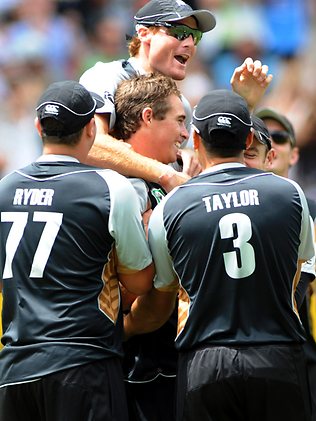
A five-wicket haul for Tim Southee and a blistering 55 by Jesse Ryder saw New Zealand shatter an 11-match losing streak in style with a nine-wicket win over Pakistan in their one-day match Saturday.

New Zealand were so dominant in the opening ODI of the six-match series that they took just 17.2 overs with the bat to wrap up the match after whipping Pakistan out for 124 at the Westpac Stadium in Wellington.

Under pressure to perform after being whitewashed in successive series against Bangladesh and India, New Zealand rejigged their batting order with swashbuckling opener Brendon McCullum dropped down to number six.

The aim was to give New Zealand strength at the top and tail but McCullum never reached the wicket as his regular opening partner Jesse Ryder carved up the Pakistan attack in a whirlwind reply to an ineffective performance.

The only success for Pakistan was when captain Shahid Afridi won the toss and opted to bat, their day going downhill from there.
The Pakistan innings lasted just 37.3 overs and the outcome was almost inevitable once Ryder opened up in the fifth over of New Zealand’s innings, taking 17 off Shoaib Akhtar including two fours and a six.

He made his 55 in only 34 balls in a batting display which complemented the bowling of 22-year-old Southee, who assumed the role of New Zealand’s senior quick for the first time and claimed his first ODI five-wicket bag.

New Zealand skipper Daniel Vettori said it was good to snap the losing streak and full credit had to go to man-of-the-match Southee.
“It was a good win for us after a long time. Tim Southee set it up for us with his swing,” he said, leaving Afridi to rue an ineffective batting performance by his side.
“I think the pitch was very good. I don’t think that was a bad decision batting first. We were missing partnerships.”
Southee destroyed Pakistan in three spells in which he ripped out the top order, came back to break up the middle and returned again to wrap up the innings.

His figures of five for 33 from 9.3 overs were backed up by three for 26 for Hamish Bennett, playing in only his third ODI and first at home, and two for 33 by the veteran Jacob Oram. Only Misbah-ul-Haq produced an innings of substance for Pakistan, reaching 50 before he was bowled by Southee to end the innings.

But the New Zealand openers Ryder and Martin Guptill showed there were no demons in the wicket as they put on 84 in 10 overs before Ryder’s departure. Ryder brought up his 50 edging Abdul Razzaq for a single and in the following over took a single off Sohail Tanvir before attempting to pick up the pace again.

He smacked another four and then went for back-to-back boundaries only to pull the ball straight to Asad Shafiq on the mid-wicket boundary.
Guptill, averaging almost a run a ball, made an unbeaten 40 but it was Ross Taylor, promoted to number three in the new-look New Zealand batting line up, who stroked the winning single, finishing on 23.

Pakistan’s innings was shaky from the start with Mohammad Hafeez dropped by McCullum in the first over, but falling soon after when he edged an outswinger from Southee.

It was the start of a penetrating period for Southee in which he took the wickets of Kamran Akmal (eight) and Asad Shafiq (four) to take three for 16 from his first spell of six overs, leaving Pakistan 32-3.

Younis Khan and Misbah-ul-Haq, who provided the backbone of each Pakistan innings in the Tests, set about repairing the situation but had added only 28 for the fourth wicket when Bennett struck.

He had Younis caught behind for 24 and then dismissed Umar Akmal with his next delivery, caught at second slip by Taylor. Shahid Afridi avoided the hat-trick but was dismissed by Southee in his second spell to have Pakistan 88-6 before the quick ended the Pakistan innings in his third turn with the ball by bowling Misbah. The second match in the series is in Queenstown on Wednesday.

Pakistan Consider Pitching up in China

As Reported by Reuters

The Pakistan Cricket Board (PCB) is considering using China as a neutral venue for its international cricket events, Chinese state media said today. The official Xinhua news agency cited sources as saying that the board’s director Javed Miandad had submitted a report to the PCB suggesting its management “take special steps to finalise China as a neutral venue.”

“We should take immediate and solid steps to decide this issue soon before the time passes away,” Miandad was quoted as saying.

Pakistan became a no-go area for cricket’s leading nations after an armed attack on the Sri Lanka team bus in Lahore in March last year killed eight people, and injured seven Sri Lankan players and their assistant coach.

Pakistan was due to host matches in next year’s World Cup. But the attack on the Sri Lanka bus saw the tournament restricted to the three remaining Asian Test nations of India, Bangladesh and Sri Lanka.

Even before the Lahore incident, countries such as Australia had refused to tour Pakistan, where thousands have died in a decade of conflict.

The security situation led Pakistan to play its “home” series against Australia in England this year. In the last two years, the nation’s “home” games have also been staged in the United Arab Emirates and New Zealand.

According to Xinhua, Pakistan will support China in its bid to host the 2012 Asia Cup in the southern city of Guangzhou, where the Asian Games recently concluded successfully with their first-ever cricket tournament.

Pakistani authorities say China’s hosting of its first major international cricket event would pave the way for making it a neutral venue.

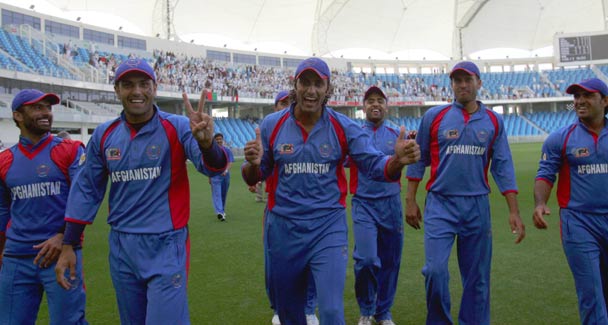
Afghan Coach Says He Used India Example To Inspire Team

As Reprted by ESPN CricInfo

Afghanistan coach Rashid Latif has said he inspired his team for the Asian Games final against Bangladesh by narrating how underdogs India beat the all-conquering West Indies to win the 1983 World Cup. “The Indians were not as fit as their rivals, nor was their skill superior to the West Indies, yet on that day they played better and won,” Latif told AFP. “My team here was the fittest and they had good skills too, but I warned the boys not to take Bangladesh lightly.”

Having stunned favourites Pakistan in the semi-final yesterday, Afghanistan proved worthy opponents against Bangladesh, taking the final to the last over before losing by five wickets.

Latif, the former Pakistan wicketkeeper, said Afghanistan’s ultimate aim was to play Test cricket. “The result proved me right, but I am happy we are on the right path. We will improve further if we play the big teams regularly. The aim is to be a Test nation soon and play against the best. I want to bring youngsters into the game so the sport continues to grow in Afghanistan.”

Afghanistan have made rapid strides, rising through the ranks from the lower divisions of the World Cricket League. They played in the World Twenty20 in the Caribbean earlier this year and narrowly missed qualifying for the 2011 World Cup.

Mohammad Nabi, the Afghanistan captain, said passion for the game kept the players going. “The war has been going on for three decades, but we have been playing cricket there for the last 10 years despite the lack of proper facilities or grounds. Cricket has caught on back home. More people are playing the game or following it on radio and TV.”

Nabi was disappointed to lose the final, but said the silver medal had buoyed his team for the five-day Intercontinental Cup final against Scotland in Dubai from December 2. “We want to play as much as possible, wherever possible. The aim is to join the big league.”

Afghanistan received backing from Bangladesh, who won their country’s first ever Asian Games gold medal. “We are celebrating, but I hope Afghanistan will celebrate too because they deserve the silver medal,” Imran Sarwar, the Bangladesh coach, said. “They are a very good side and I am sure they will become a top team in the near future. Their rise has been remarkable.

“This was not an easy win at all. We expected them to make around 100 or 110, but they went to 118 and then kept us under pressure till the end.”

Pakistanis for Peace Editor’s Note– Congratulations to the Afghan Cricket team for winning the Silver medal at the Asian Games in China. Along the way, they beat traditional cricket playing teams such as Pakistan and Sri Lanka and proved to be worthy competitors. In a country ravaged by over 30 years of war and conflict, the Afghani people should be proud of the accomplishments of their team and build upon this success in uniting their fractured nation.

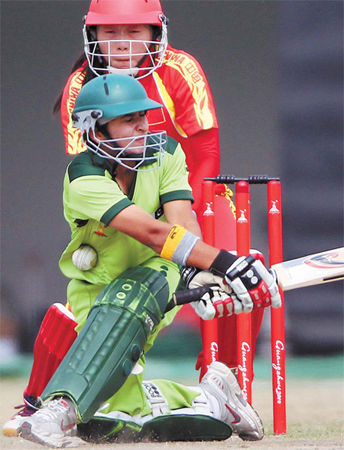
Pakistani Women Break Taboos in Winning Asiad Gold

As reported by Reuters

Sana Mir, captain of the Pakistan women’s cricket team that won a gold medal at the Asian Games in Guangzhou, had other ideas.

“I belong to Abbotabad where girls are not encouraged to take up sports leave alone cricket but my family was supportive and made it possible for me to play cricket and study as well,” Mir said after a triumphant return home on Sunday.

“I hope our victory will serve as a catalyst for women’s sports in Pakistan.”

The women’s team, wearing their green team blazers, were garlanded and showered with rose petals in a rousing welcome at Karachi airport after winning the gold medal in a one-sided final against Bangladesh on Saturday.

“This welcome is like icing on the cake after our victory,” Mir said.

Pakistani media greeted the gold medal as a victory for women in the country.  “Looking for positive faces to show the world, Pakistan need go no further than its sportswomen,” the Dawn English daily newspaper said in an editorial.

“Despite the many restrictions they face, Pakistani women have done well in the field of sports from time to time.”  “Unfortunately too little has been done to encourage these brave young women,” the News daily paper said.

“We never dreamt one day women’s cricket would be acknowledged this way,” said Mir. “The day we won the medal I called up my family to thank them for their support.”

In a country where cricket remains a passion despite the spot-fixing allegations surrounding the men’s team, the Pakistan Cricket Board (PCB) has been giving steady exposure to the women’s team.

“The fact that we have played regularly since last year in International Cricket Council (ICC) tournaments and against better opposition has helped these girls gain confidence,” said Bushra Aitzaz who heads the women’s wing in the PCB.

Pakistan Women’s Cricket Team Relishes Spotlight in Guangzhou

As Reported by The China Daily

The Guangzhou Asian Games have made Sana Mir, Captain of the Pakistan Women’s Cricket Team, feel like a big-screen star.

Pakistan, the tournament’s No 1 seed, easily won its game against newcomer China by nine wickets on Monday, but that sparkling effort was not what truly impressed Mir.

“We never get this kind of media coverage back at home. I am just so glad the sport made it to the Asian Games,” said the 26-year-old. “There is always TV coverage when the Men’s Cricket Team plays in Pakistan because it is huge, but you never see us playing on big screens or TVs,” she said.

Although Pakistan has 500 to 600 professional women players under the age of 19, and about 1,000 to 1,200 playing at the senior level, they are overshadowed by the men’s game, said Ayesha Ashhar, Manager of the Women’s Team.

“Our earnings can’t compare with what the men make. It’s the love of the sport that keeps us going,” said Mir. “We would like to be treated and rewarded just like the Men’s Team.”

Unlike some of the women players whose families are against them playing due to strict traditions, Mir’s family is happy for her to play the game. “I have to thank my parents and brother for their support, otherwise I couldn’t have made it this far.”

Meanwhile, Ashhar said women’s cricket in Pakistan has improved rapidly over the past two to three years, thanks to an effective domestic structure which helps players to train and progress at a young age.

“The team’s performance at the international level wouldn’t be as good as it is now without that.”

She also said China definitely gave the No 1 seed a surprise in Monday’s match – the first between the two countries.

“For a young team that only has three years’ of history, what China did on the field was excellent – especially the bowling,” the manager said.

Currently all of the Chinese players are converts from other sports, including Rugby, Softball, Volleyball and Athletics.

“Cricket needs many years to become established in a country. For China, the challenge is to attract enough talented players and coaches. But I believe when China chooses to develop a sport, it succeeds,” Ashhar said.

“All we need now is time,” said Liu Rongyao, Manager of China Women’s Team. “In ten years’ time, China will be among the top three women’s teams in Asia.”

What if Zulqarnain Haider Was Right About Corruption in Pakistan?

By Paul Hayward for The Guardian

The curse of the whistleblower is to be denounced as a fraud, a fantasist or a weirdo. In America, where they have an organisation for everything, the National Whistleblowers Center in Washington helps people wanting to expose iniquity, much like our own Public Concern at Work. Either may hear soon from a 24-year-old Pakistani wicketkeeper.

Let’s imagine this as a short movie, a study in motivation. Zulqarnain Haider approaches passport control at Heathrow one day and asks for sanctuary. Behind him he has left a wife and two daughters in Pakistan and the national team in Dubai, who learn of his disappearance when they find his hotel room empty.

The immediate cause of Haider’s flight is a conversation he says he had near the team hotel. An unknown man approaches him to say: “If you work with us, we will give you a lot of money. If not, we will not select you again in cricket and, if you go back home, we will kill you and your family.”

Notice the “we” in “we will not select you again in cricket”. One largely ignored facet of this drama is that if Haider’s interlocutor existed he boasted of his power to pick the Pakistan XI. All three layers are present: potential reward, intermediary punishment, and death, not just for him but his family. If Haider is for real, the offer he was made and the warning he was given imply a connection between match- and spot-fixing, team selection and serious organised crime.

In other words they suggest corruption runs through many tiers of Pakistan cricket. In a recent editorial, the country’s Daily Times speculated: “The elephant in the room is the link between people wielding power and the bookmakers. It is alleged that a top bookmaker and mafia don have connections with a powerful intelligence agency in Pakistan.”

This is as far as conjecture can be pushed in the strange tale of Haider’s dash to Britain, which featured a chaotic press conference in the backroom of a curry house in Southall. To summarise, he claims he was approached before the fourth one-day international against South Africa, in which he hit 19 winning runs, and then fled before the fifth, the second target for the alleged match-fixers.

Here in England he has said players’ phones should be tapped to assist evidence gathering and that “a lot of people” are involved in the scam. He has said, too, that he does not want any aid from the British government beyond temporary asylum and has promised to co-operate with the International Cricket Council’s Anti‑Corruption and Security Unit.

To gain a sense of Haider’s motivation it is tempting to imagine him on that flight to London, knowing what was ahead of him and what lay behind: most poignantly, grave danger for his wife and daughters. No conclusion can be drawn from such a filmic and intuitive form of analysis, but most of us would think something fairly big must have spooked him in Dubai to cause him to run away from his family and his livelihood.

We would suspect also that a professional cricketer had to break in the end, and that Haider simply looks like the first to buckle. Heroic status eludes him, so far. No senior Pakistan cricketer, either serving or retired, has praised his actions. Some asked why he waited at least four days after the threat to his life to board a flight to London.

Denunciations fly in from those who say he ought to have “reported his concerns” to the Pakistan team management and the ICC’s detectives, which protocol required him to do.

And from Pakistan’s sports minister, Ijaz Hussain Jakhrani, came the most brutal condemnation: “If he is such a weak and scared person he should not have played cricket in the first place, particularly not for the national team.” Asif Iqbal weighed in: “He has let the motherland down. There wasn’t even a reserve wicketkeeper to replace him. He just flew off.”

This censorious tone obscures the dark realities of the past year. The current cycle of trouble began with the dubious tour of Australia, with its suspicious Sydney Test and nine straight defeats for Pakistan in all formats. After the News of the World’s spot-fixing exposé, Mohammad Amir, Mohammad Asif and Salman Butt are under an ICC provisional suspension and have had their central contracts cancelled by the Pakistan Cricket Board.

As pressure builds in India, the hub of cricket betting, to legalise and therefore regulate the wild east of gambling on the country’s national sport, you wonder why more punters are not put off by all the evidence suggesting choreography on the field of play. It’s an odd kink of human nature that people will go on betting in an apparently bent casino, as if to beat a crooked system confers more pleasure than winning against an honest house.

At the centre of this vast global issue is one man who stepped off a flight in London and told the BBC on Friday: “I want to be a good citizen.”
It’s Not Just Cricket

By Alan Black for The Huffington Post

The English in their empire conquests to India and Pakistan brought the game of cricket in their armory, best understood as complicated. With the pavilion hosting tea, the sound of the leather ball on the willow bat soon spread across the verdant lands of the subcontinent. The locals embraced a game played by spectacularly white men with unimpeachable manners, in spectacularly white clothes.

Today, India and Pakistan are as mad for cricket as they are for being at each others nuclear throats. Cricket has helped keep the peace by allowing Indians and Pakistanis to throw cricket balls at each other. But while democratic India has become a stage for Western capital and its values, Pakistan sinks deeper into a sticky wicket of terrorism, biblical style floods and now something disabling and disastrous for the nation’s identity — the Pakistani national cricket team, the pride of the nation, have been caught red handed in a betting scandal that has knocked the tea cups off the saucers, spoiling the cucumber sandwiches.

Currently, Pakistan is playing England at the home of cricket in London, a sporting venue grandly named Lords. Over the last weekend, a national UK newspaper revealed a sting operation conducted by undercover journalists, who paid a man around $250,000 for information on when certain Pakistan players on the field were going to cheat. The operative, it is claimed, is linked to illegal gambling syndicates. Sure enough, the players cheated on cue and the sounds of the London bobbies running to catch the villains came shortly after. Now, the Pakistanis require something slightly stronger than tea — high powered lawyers will be a start, maybe a stolen plane to make their getaway.

For years, Pakistani cricket has been suspect. Investigators in the past were stumped and failed to prove what seemed obvious to any sentient viewer — Pakistan was cheating, throwing games to cash in on payments from gambling crime, the cricket version of baseball’s Black Socks. Pakistan has been on the back foot over the claims denying it as a conspiracy against them. But this scandal has bowled them out. The News of the World has all the evidence on videotape. It’s irrefutable — in flagrante delicto.

The London police and cricket’s governing authority are using much diplomatic nuance at this stage of the criminal investigation, Only recently, the British Prime Minister David Cameron insulted Pakistan while he was visiting their enemy, India. And now this! Cheats at Lords, the home of English cricket. This stain on the linen will provide more ammo for the prejudice merchants loading another flare to fire at poor old Pakistan — how can you trust them?

Should Pakistan be banned from international cricket, somewhat unlikely but possible if the poison goes all the way to the top of their game, the impact back home will be enormous. For millions of Pakistanis, cricket is more important than life or death. It is Pakistan’s rope to the world. A chance to show how great they are at a tremendously demanding and skillful sport. Add one more disaster to a nation seriously down on its luck.

Police Question Pakistan Cricket Team Over Newspaper’s Matchfixing Allegations

By Richard Sydenham for The Canadian Press

Police have questioned Pakistan’s cricket team over newspaper allegations of matchfixing during the current Test match against England at Lord’s, the team’s manager said on Saturday.

“I can confirm that we are aware of the allegations and Scotland Yard police are with us now at the hotel and we are helping with their inquiries,” team manager Yawar Saeed told The Associated Press. “This is as much as I can say at the moment.

” British newspaper the News of the World alleged in its Sunday edition that Pakistan players were secretly paid to deliberately bowl no-balls during the fourth and final Test against England as part of a betting scam.

The newspaper says it has secretly-filmed video footage of its undercover reporters, posing as front men for a Far East gambling cartel, in discussion with a man who appears to accept 150,000 pounds (C$244,000) in order to make sure no-balls are bowled at certain times during the match.

The News of the World says it has passed all its evidence to the police. Scotland Yard police said in a statement: “Following information received from the News of the World, we have today arrested a 35-year-old man on suspicion of conspiracy to defraud bookmakers.

” The International Cricket Council said it was aware of the situation and it, along with the England and Wales Cricket Board and the Pakistan Cricket Board, was “fully assisting” police with their inquiries.

“No players nor team officials have been arrested in relation to this incident and the fourth npower Test match will continue as scheduled on Sunday,” said the ICC’s statement. “As this is now subject to a police investigation neither ICC, ECB, PCB nor the ground authority, the MCC, will make any further comment.”

Any player found guilty of involvement in matchfixing faces a life ban from the sport. Pakistan needs to win the final Test against England at Lord’s to salvage a draw in the four-match series, but it faces an uphill task after scoring just 74 in reply to England’s first innings total of 446.

Pakistan Are Over Here But Thinking About Home

By Stephen Brenkley for The Independent

Pakistan are here to win. Anybody who thought that they were in England this summer to make up the numbers, licking their wounds, grateful to be given a temporary home, would be misguided. 

They may indeed be the refugees of world cricket, unable to play in their own country because teams refuse to go there, but they will be nobody’s fools. It is the most bizarre of tours they have embarked on. Starting on Tuesday at Lord’s, they play the first of two Tests against Australia, which will be considered as home matches.

 They then play four Tests against England in which they will be the touring side. Such have been the ramifications of the terrorist activities at home. Pakistan have been forced to play where they can. “It’s a big tour. It’s not easy to get hold of 17 boys, a lot on their first tour here, and I don’t think we have ever played six Test matches in two months,” said Yawar Saeed, their wise, veteran manager.

 “We have a young side here and it was important to keep them together. There is plenty of talent in this team. The one sitting there, Umar Akmal, is just a bundle of talent, God is so kind to him. I have told him, if he doesn’t use his talent I will beat him one of these days. I see him as a future Vivian Richards. Look at his confidence at his age and look at the way he’s playing. He’s a very good kid and I’m trying to help him and the left-arm fast bowler, [Mohammad] Aamer, who’s only 18 and can also do great things.”

There is, of course, no physical intent by Yawar towards the precocious Umar, he merely makes the point to reinforce his desire not to waste his gifts. There has been precious little sign of that so far.

Yawar is on his 26th or 27th tour – he really has lost count – as manager. At 75, he thought he had unpacked for the last time but with the shifting of officials yet again in the Pakistan Cricket Board he has returned as a safe pair of hands. He is an Anglophile who was educated at Millfield, played for Somerset for three seasons in the mid-Fifties and whose father, Mohammad Saeed, was the first captain of Pakistan post-partition and pre-Tests.

At the core of the thinking of those who run cricket in Pakistan is the day when they can play at home again. Somehow, cricket is being sustained despite the lack of international competition but Yawar and the PCB hierarchy know that cannot last while understanding the virtual boycott.

The memory is still raw of the Sri Lanka team being attacked on the way to a Test in Lahore last year. Yawar and the Pakistan team were in a coach 40 yards behind. “The whole thing is dependent on the conditions and security within the country,” he said. “You have to ask: Yawar, if you were an Australian or an Englishman, would you go there? It’s very difficult, I don’t blame any of the people who are hesitant to come there. But all I can say is it’s not as bad as it looks from here. I’m not saying it’s perfect.”

Pakistan have taken a big risk by appointing as captain Shahid Afridi, who has been in regular trouble for ill-discipline. He has not so far shown diplomatic tendencies when they may be needed. In England four years ago, Pakistan’s tour was almost derailed when the Fourth Test was abandoned amid allegations of ball-tampering.

On the tour of Australia last winter, disharmony led to a whitewash and a series of disciplinary actions later on. Shahid himself was penalised for being spotted biting a ball. “We had problems about the captain,” said Yawar. “I can see in Shahid the one who can get them all together, mould them into one team. People who matter have had a chat with Shahid. I am very confident he’s going to be OK. Even this ball-biting thing, it’s just that he’s so keen, he’s keen to win like a lot of people, so he does lose control at times. I don’t think he will as captain.”

So to Australia on Tuesday. “Playing Australia you have got to be mentally tough. That’s where I’m working on them. I have seen Australia play, I have seen these boys play, I know their psyche. I can’t say that overnight we will become X, Y, Z, but you will see a graph going up by the Test match.”

But nobody in Pakistan will rest until the next touring team arrives to play this attractive, gifted young team. “It has to be reintroduced. I can’t put a date on it but I think that something should happen within the next three or four years. I would love to see cricket being played in Pakistan again. Before I say goodbye to this world, I would love to see that.”