Archive for the ‘ cricket ’ Category

Afridi for Resumption of Indo-Pak Bilateral Cricket Series

As reported on Sify.com

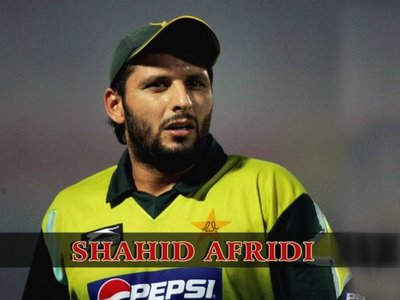
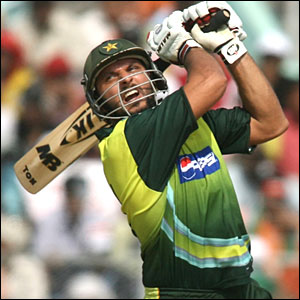
Following coach Waqar Younis’ call for resumption of bilateral cricket series between India and Pakistan, skipper Shahid Afridi also wants more encounters with the arch rivals.

Afridi said India and Pakistan must play against each other more often, which would help in toning down the heightened tension between the two neighbouring nations.

“I have always enjoyed playing against India and I have been saying we should play more often against each other as it will only help improve relations,” The Nation quoted Afridi, as saying.

Pakistan and India last played in the ICC Champions Trophy in South Africa in September 2009.

The newly appointed captain added that he was eagerly looking forward to the match against India in the Asia Cup, starting June 15 in Sri Lanka.

Afridi, however, pointed out that Pakistan’s opening match against Sri Lanka would also hold great importance.

“Certainly, the event will not be easy and the team would have to start it on a winning note to lift its morale. As a captain I would try my every bit to cash in on every opportunity to win,” he said.

Earlier, Waqar had also lamented the lack of bilateral series between India and Pakistan.

“I want to see the two teams revive bilateral cricket ties and for now I am eagerly awaiting their clash in the Asia Cup in Sri Lanka,” Waqar had said.

“It should be a great match as any contest between the two teams produces top quality cricket. It is unfortunate we are not playing against each other more often as Indo-Pak matches are watched by people all over the world and they are great for the sport,” he added.

India and Pakistan are scheduled to fight it out on June 20 in Dambulla.

Afghanistan Is Feel-Good Element in Twenty20

By Huw Richards for The New York Times

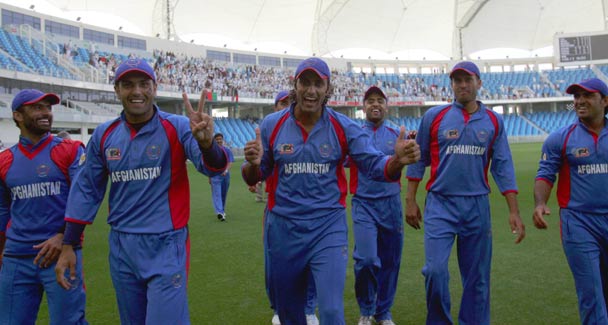
Cricketing contrast rarely comes more vividly than it will Saturday when India plays Afghanistan on day two of the World Twenty20 tournament on the West Indian island of St. Lucia.

India is cricket’s economic giant, generating around three quarters of its income. Its players count both their fans and their personal fortunes in millions. They have just been playing in the India Premier League, the hugely lucrative competition that has brought unprecedented riches — accompanied by allegations of corruption — into the game.

Afghanistan is the tournament newcomer, taking its first steps on the game’s biggest stages. It is cricket’s almost-too-good-to-be-true story.

A team from an impoverished and war-torn nation with no real cricket history has risen with incredible speed. That this success is a bizarre byproduct of those wider sufferings, with Afghans learning the game in refugee camps in Pakistan, only adds to the joyous unlikelihood of the whole story.

Saturday will be Afghanistan’s first competitive meeting with any of cricket’s established giants. Its players bring with them not only the fearlessness of youth — none admits to being older than 26 — but whose life experiences put mere sporting disappointment in context.

As Graeme Smith, captain of South Africa, the third team in the same initial pool, said when told that an Afghan batsman had declared himself unafraid of paceman Dale Steyn: “I wouldn’t be either, if I had grown up in a war zone.”

Afghanistan, a fifth-division team in the International Cricket Council’s league system only two years ago, should, logically, have finally reached the limit of its abilities. Yet that has been said of it at most stages in its rise. India will be wary. It remembers its elimination by Bangladesh in the 2007 World Cup, the last major tournament played in the West Indies. Lose to the Afghans and it will be tough for India to find a way back — it plays its second pool match only 24 hours later against South Africa, traditionally a fast starter in big tournaments.

There is nothing like an early shock to animate a championship. Ireland, the other qualifier from outside the 10 test-playing nations, will hope to provide one before Afghanistan even takes the field, when it plays host West Indies on Friday.

The West Indians will be seeking success on and off the field. It needs the 12-team, 27 match, 17 day tournament — the final is May 16 in Barbados — to be everything the 2007 World Cup was not. Then, overpriced tickets and heavy-handed crowd control seemed expressly designed to eliminate the distinctive ambience of Caribbean cricket.

It also needs its team to play with the vibrant spirit shown by Trinidad and Tobago in the Champions League competition for regional and national title-holders. Trinidad contributes four men to its 15-strong squad including the volcanic hitter Keiron Pollard.

In the tournament opener, Sri Lanka, runner-up in the 2009 World Twenty20, takes on New Zealand. The Sri Lankans field a 40-year-old member of Parliament, Sanath Jayasuriya, and a clutch of unorthodox but highly effective bowlers.

Predicting Twenty20 matches is notoriously tough. The short length of matches — only 20 six-ball overs apiece — and the limited number of international contests make for the unexpected.

There are, though, indications that Australia — which has won the World Cup, in which teams have innings of 50 overs, three times in a row — is coming to terms with the shorter format. It has won four of its last five official matches, drawing the other. Its teams dominated the Champions League. Paceman Doug Bollinger has emerged as a real force. On the other hand, it lost its warm-up contest against Zimbabwe.

This is the third Twenty20 World Cup. Pakistan won last year and was the runner-up in 2007. It comfortably has the best winning percentage in this format.

Pakistan should, by logic, be a prohibitive favorite. Logic, though, is in short supply in Pakistan. Several of its winning team, including inspirational captain Younis Khan, have since been thrown off the team following internal disputes.

Afghanistan owes much of its aggressive playing style to examples set by Pakistan. It must be hoped it will take its administrative models from elsewhere.

The pool stages might see Bangladesh trouble Pakistan’s traditionally slow starters. Two weeks beyond that, it would be no surprise to see Australia and Sri Lanka reprise their roles as finalists in 2007 World Cup in the 50-over format.

Pakistan and India- The Love-Hate Relationship of Two Brothers

By Manzer Munir for Pakistanis for Peace

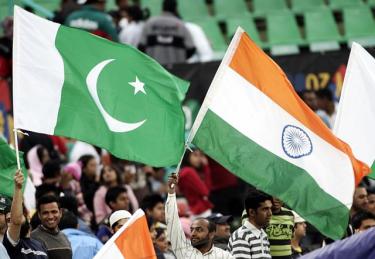
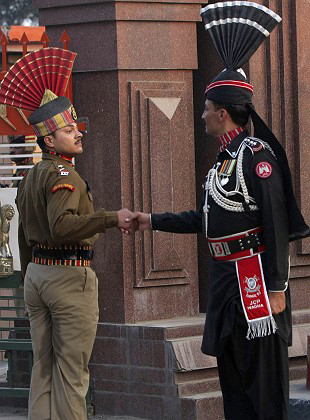
Since the bitter partition that resulted in the creation of Pakistan and India in 1947, and three subsequent wars with each other, not to mention countless near incidents, the two neighbors have not had an easy relationship, to say the least.

However, mixed in with fear and hatred towards each other is a fascination and affinity to the arch rival on the other side of the Line of Control. In fact, one could say that the two have a love-hate relationship with each other. The recent wedding of Pakistani cricketer Shoaib Malik to Indian tennis sensation Sania Mirza is an indication to the amount of interest and hype given to the couple in media from both sides of the border, making them instantly one of the hottest and most talked about young couples in this Bollywood and glamour obsessed culture.

In Pakistani schools, children are taught very little if anything at all about Pakistan’s pre-Islamic history. Instead the children are told of the glories of the Muslim Caliphate from the time of the prophet Mohammed and then the grand rule of the Moguls of India with the construction of immortal buildings like the Taj Mahal in Agra, or the Badshahi Masjid and the Shalimar Gardens in Lahore, all three built on the Islamic style of architecture. Not very much emphasis is given to the great contributions that the people of present day Pakistan made as Hindus for centuries prior to the arrival of Islam in the subcontinent.

Criticisms abound by Muslims that in India, Muslim contributions to modern India are down played or not explored in the manner they are deserved. However, In Pakistan it is well documented those Pakistani textbooks not only do not teach about Hindu history and achievements, they actually teach hatred against India and Hindus. There is an underlying culture of hate and inequality based on religious grounds that permeates in the society despite Islam teaching respect for all religions and faiths. It’s as if thinking of someone as a polytheist makes them less equal as a human.

The mindset becomes that these non believers are infidels and this somehow makes it easy to dehumanize them or in some way think them to be inferior to you as a human being. Even the current terrorism situation in Pakistan has its roots in this culture of hate and to some level a dehumanization of people of other faiths, especially non-Abrahamic like Hinduism or Buddhism. To not recognize that ancient Indian/Hindu history is also the history of Pakistan does a great injustice to the shared history of one of the most ancient of cultures.

The natural history of this region shows that the origins of the Indian/Pakistani civilization go back to the end of the last Ice Age, more than 10,000 years ago, making this one of the oldest civilizations of the ancient world. This area of the world is a place which gave the world not only Hinduism, but also Buddhism, Sikhism, Jainism, and other religions and has been a source of spiritual inspiration since the earliest of times. But maybe even more important than the contributions in the field of religion are the ancient civilization’s gifts to science and medicine.

Albert Einstein once said “We owe a lot to the Indians, who taught us how to count, without which no worthwhile scientific discovery could have been made.” Indeed, Indian civilization is credited with the creation of the decimal number system, the binary numbering system, negative number, the origins of algebra, and even the all important concept mathematically of zero came from ancient Indian mathematicians.

Archaeologically, India has the most extensive and continuous record of all ancient civilizations, much more than Egypt, Sumeria or Mesopotamia of the same time periods. The ruins in Mohenjo-Daro and Taxila in modern day Pakistan point to the fact that there was a very advanced civilization present here and even the beginnings of one of the early urban settlements of the ancient world as they were remarkably constructed, considering its antiquity. Taxila is also the site of what is believed to be the first university or school of higher learning in the ancient world.

Also the ancient Vedic literature is the largest in the ancient world and contains thousands upon thousands of pages dwarfing what little has been successfully preserved by the rest of the world. This literature contains profound spiritual concepts, skills in mathematics, astronomy and medicine. Sanskrit is the mother of all European languages and Ayurveda is the earliest school of medicine known to man.

Indian culture not only gave the world the game of chess, but was also was a place where some of the earliest innovations in the fields of surgery and advanced dentistry were developed as there is evidence of complex dental procedures being performed in the Indus valley some 8,000 years ago!

The celebrated American author Mark Twain once famously said of India that “India is the cradle of the human race, the birthplace of human speech, the mother of history, the grandmother of legend, and the great grandmother of tradition. Our most valuable and most constructive materials in the history of man are treasured up in India only.” And not so long ago, in a statement made by China’s former ambassador to the US, Hu Shih stated that “India conquered and dominated China culturally for 20 centuries without ever having to send a single soldier across her border.” This is further validated by the fact that the Indian civilization is considered unique in that it never invaded any country in the last 10,000 years of its history!

By denying its centuries old Hindu/Indian ancestry and history, modern day Pakistan is willfully abandoning its participation and hand in some of the greatest contributions made by one civilization to mankind. Not teaching children the importance of the pre-Islamic history and beginnings of what is now Pakistan is actually a disservice to its people. Also, since the ancestors of all Pakistanis were at some point or another Indian Hindus, disrespecting Hinduism and pre-Islamic Indian culture in essence disrespects one’s own ancestors!

Pakistan can learn a great deal from its ancient brother in the fields of democracy, constitutional freedoms, economic empowerment and technological advancements. A culture of hate has only bred more hate that has now begun to consume internally a nation that has for too long wearily looked outside to its larger neighbor as its chief enemy, instead of as a brother.

India Rocked By Cricket Scandal

By Mark Magnier for The Los Angeles Times
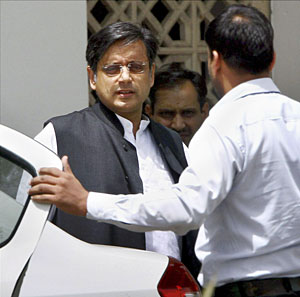
Combine two of India’s favorite pastimes, cricket and politics. Add allegations of corruption, greed, and tax evasion. Throw in the implosion of a highflying political career and it’s not difficult to understand why India’s hyperactive broadcast media are on a tear.

On Monday, India’s finance minister announced an investigation of the funding and sources behind the nation’s top cricket teams, suggesting that more bombshells are to come. The scandal underscores the cost of operating a business on steroids without creating adequate safeguards, analysts said. At issue is the questionable allocation of shares in the enormously popular Indian Premier League, which in its three-year life has become a virtual license to print money, with its “brand value” doubling to $4 billion in the last year.

Cricket has long been popular here, but the Premier League organized truncated “Twenty20” matches among Indian teams, where before, they mostly involved longer matches against foreign teams. So when word spread that the eight-team league would expand into Pune, in Maharashtra state, and Cochin, in Kerala state, it was huge news.

The political opposition soon cried foul, however, on discovering that a female friend of Shashi Tharoor, the junior foreign minister, had received $15 million in “sweat equity” shares as part of the Kerala deal, though it’s not clear how much work she undertook. This, the opposition charged, was a backdoor way to secure his help in assembling the deal.

Tharoor, a former undersecretary at the United Nations and author of several fiction and nonfiction books before entering politics, is from Kerala. His friend, real estate executive Sunanda Pushkar, is rumored to be his future bride. Tharoor and Pushkar have denied any conflict of interest. And Pushkar on Sunday offered to return the shares. That wasn’t enough, however. After a series of hurried meetings with ruling Congress party heavyweights and the prime minister, Tharoor resigned late Sunday evening.

Tharoor, 54, is hardly a stranger to controversy. Last year he spent weeks at a five-star hotel while awaiting renovations on his official residence. Although he said he’d pay for it himself, the incident was not well received during a party austerity drive. He openly challenged superiors in Twitter messages, winning plaudits with the under-30 crowd but rattling the political establishment. For many, the questionable cricket link was the final straw. “Whether he has a political career left, we’ll have to see, but I doubt it,” said Mahesh Rangarajan, a professor at Delhi University.

With Tharoor’s exit, the spotlight shifted Monday to the league and other teams’ ownership, with opposition lawmakers howling that the league was little more than a “betting and gambling ring.” Behind the league’s success is its chairman, business scion Lalit Modi, 46, who’s been termed everything from a dictator and black sheep for his arrogant style and a visionary for creating the league from scratch, reportedly modeled on soccer’s English Premier League.

Local news reports suggested Monday that Modi could lose his chairmanship in the deepening scandal. Of particular interest to tax authorities are charges that some owners used their stakes to launder money. “This could lead to a very serious investigation in today’s security environment,” Rangarajan said.

So far, the charges are unproved, but the scandal has raised concerns that Indian businesses, in their headlong rush forward, are falling short on financial disclosure, with some analysts pointing to the 2009 meltdown of Satyam, once a world-class information technology outsourcing company found to be cooking the books.

The NBA and the NFL have had decades to absorb the impact of big-money culture, but the Indian league has developed in just three years. “In India, you’ve never seen the monetization of sport like this,” said Ayaz Memon, a cricket commentator. “It’s a culture shock.”

There’s too much money, too many fashion shows at the end of cricket matches, purists argue, detracting from the essence of the game. Cricket has been overdue for reform, sports historian Boria Majumdar said. “Cricket is our only secular religion,” he said. “Everyone understands the need for a serious cleansing. Big money, big corporations, unclean money, shady deals, they’re everywhere.”