Archive for the ‘ Democracy ’ Category

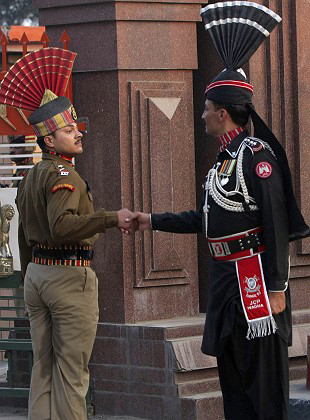
Pakistan and India- The Love-Hate Relationship of Two Brothers

By Manzer Munir for Pakistanis for Peace
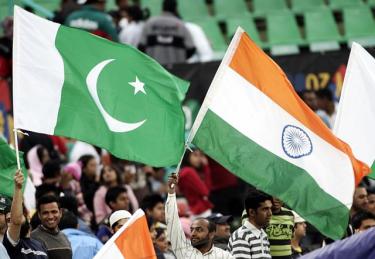
Since the bitter partition that resulted in the creation of Pakistan and India in 1947, and three subsequent wars with each other, not to mention countless near incidents, the two neighbors have not had an easy relationship, to say the least.

However, mixed in with fear and hatred towards each other is a fascination and affinity to the arch rival on the other side of the Line of Control. In fact, one could say that the two have a love-hate relationship with each other. The recent wedding of Pakistani cricketer Shoaib Malik to Indian tennis sensation Sania Mirza is an indication to the amount of interest and hype given to the couple in media from both sides of the border, making them instantly one of the hottest and most talked about young couples in this Bollywood and glamour obsessed culture.

In Pakistani schools, children are taught very little if anything at all about Pakistan’s pre-Islamic history. Instead the children are told of the glories of the Muslim Caliphate from the time of the prophet Mohammed and then the grand rule of the Moguls of India with the construction of immortal buildings like the Taj Mahal in Agra, or the Badshahi Masjid and the Shalimar Gardens in Lahore, all three built on the Islamic style of architecture. Not very much emphasis is given to the great contributions that the people of present day Pakistan made as Hindus for centuries prior to the arrival of Islam in the subcontinent.

Criticisms abound by Muslims that in India, Muslim contributions to modern India are down played or not explored in the manner they are deserved. However, In Pakistan it is well documented those Pakistani textbooks not only do not teach about Hindu history and achievements, they actually teach hatred against India and Hindus. There is an underlying culture of hate and inequality based on religious grounds that permeates in the society despite Islam teaching respect for all religions and faiths. It’s as if thinking of someone as a polytheist makes them less equal as a human.

The mindset becomes that these non believers are infidels and this somehow makes it easy to dehumanize them or in some way think them to be inferior to you as a human being. Even the current terrorism situation in Pakistan has its roots in this culture of hate and to some level a dehumanization of people of other faiths, especially non-Abrahamic like Hinduism or Buddhism. To not recognize that ancient Indian/Hindu history is also the history of Pakistan does a great injustice to the shared history of one of the most ancient of cultures.

The natural history of this region shows that the origins of the Indian/Pakistani civilization go back to the end of the last Ice Age, more than 10,000 years ago, making this one of the oldest civilizations of the ancient world. This area of the world is a place which gave the world not only Hinduism, but also Buddhism, Sikhism, Jainism, and other religions and has been a source of spiritual inspiration since the earliest of times. But maybe even more important than the contributions in the field of religion are the ancient civilization’s gifts to science and medicine.

Albert Einstein once said ā€œWe owe a lot to the Indians, who taught us how to count, without which no worthwhile scientific discovery could have been made.ā€ Indeed, Indian civilization is credited with the creation of the decimal number system, the binary numbering system, negative number, the origins of algebra, and even the all important concept mathematically of zero came from ancient Indian mathematicians.

Archaeologically, India has the most extensive and continuous record of all ancient civilizations, much more than Egypt, Sumeria or Mesopotamia of the same time periods. The ruins in Mohenjo-Daro and Taxila in modern day Pakistan point to the fact that there was a very advanced civilization present here and even the beginnings of one of the early urban settlements of the ancient world as they were remarkably constructed, considering its antiquity. Taxila is also the site of what is believed to be the first university or school of higher learning in the ancient world.

Also the ancient Vedic literature is the largest in the ancient world and contains thousands upon thousands of pages dwarfing what little has been successfully preserved by the rest of the world. This literature contains profound spiritual concepts, skills in mathematics, astronomy and medicine. Sanskrit is the mother of all European languages and Ayurveda is the earliest school of medicine known to man.

Indian culture not only gave the world the game of chess, but was also was a place where some of the earliest innovations in the fields of surgery and advanced dentistry were developed as there is evidence of complex dental procedures being performed in the Indus valley some 8,000 years ago!

The celebrated American author Mark Twain once famously said of India that ā€œIndia is the cradle of the human race, the birthplace of human speech, the mother of history, the grandmother of legend, and the great grandmother of tradition. Our most valuable and most constructive materials in the history of man are treasured up in India only.ā€ And not so long ago, in a statement made by China’s former ambassador to the US, Hu Shih stated that ā€œIndia conquered and dominated China culturally for 20 centuries without ever having to send a single soldier across her border.ā€ This is further validated by the fact that the Indian civilization is considered unique in that it never invaded any country in the last 10,000 years of its history!

By denying its centuries old Hindu/Indian ancestry and history, modern day Pakistan is willfully abandoning its participation and hand in some of the greatest contributions made by one civilization to mankind. Not teaching children the importance of the pre-Islamic history and beginnings of what is now Pakistan is actually a disservice to its people. Also, since the ancestors of all Pakistanis were at some point or another Indian Hindus, disrespecting Hinduism and pre-Islamic Indian culture in essence disrespects one’s own ancestors!

Pakistan can learn a great deal from its ancient brother in the fields of democracy, constitutional freedoms, economic empowerment and technological advancements. A culture of hate has only bred more hate that has now begun to consume internally a nation that has for too long wearily looked outside to its larger neighbor as its chief enemy, instead of as a brother.
Hamid Karzai Is Losing All His Marbles and His Credibility

By Manzer Munir for Pakistanis for Peace

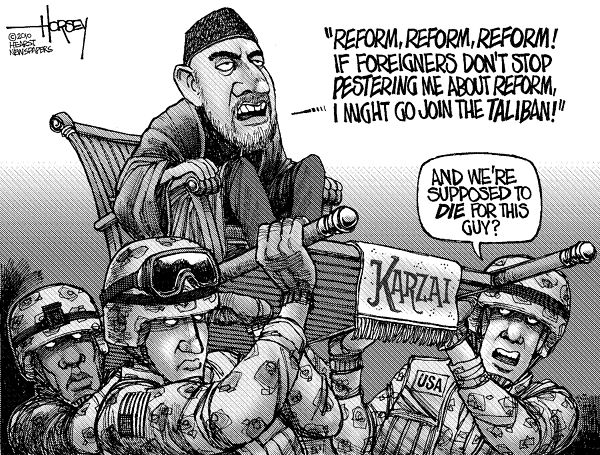
Kabul, Afghanistan- President Hamid Karzai’s troubling remarks this past Saturday that he would join the Taliban if he continues to come under pressure to reform by the United States and other ā€œoutsidersā€ has caused a stir in Washington DC. Ā Karzai’s comments came a week after President Obama’s surprise visit to Afghanistan at the end of March to pressure Karzai’s government to reform the political system, end corruption, and do a better job of fighting the Taliban.

Instead, what Karza delivered was a threat of the worse kind and quite possibly the most offensive and troubling thing one can say to a country that is risking countless soldiers lives daily to secure the country from the Taliban and other militant warlords in Afghanistan. In 8 short years, Hamid Karzai has gone from being the special guest of honor at George Bush’s State of the Union address to a leader who threatened to join our worst enemy. All because he feels that the US needs to stop badgering him to be a more responsible, fair, and an equitable leader as well as an effective partner in fighting the Taliban.

Karzai apparently made these unusual comments at a closed door meeting of lawmakers on Saturday, just days after accusing ā€œforeignersā€ presumably the Unites States of being behind the fraud of the disputed elections of 2009. ā€œHe said that if I come under foreign pressure, I might join the Talibanā€, said Farooq Marenai, a lawmaker from the eastern province of Nangarhar. Ā Mareni also stated that Karzai appeared nervous and demanded to know why parliament last week rejected legal reforms that would have strengthened Karzai’s authority over the country’s electoral institutions. Several other lawmakers confirmed that Karzai twice threatened to join the insurgency and the Taliban.

Karzai’s comments are troubling on many levels. First and foremost, he gives legitimacy and strength to the Taliban as his comments present the Taliban as an alternative option to American support or view on the situation. Karzai’s statement will no doubt have traveled the length and breadth of Afghanistan as word will spread that there is a weakness in the American-Afghan coalition that has been fighting and hunting the Taliban since October of 2001, post 9-11. The remarks by Karzai also puts every American, NATO, and Pakistani soldier at risk as instead of liberators, the foreign armies would be thought of as invaders, literally overnight. Lastly, Karzai’s remarks prove to the fact that Karzai is no longer an ally nor a credible partner for the US , NATO, and Pakistani army that have been fighting the Taliban with all their might.

There are reports of widespread nepotism, corruption, fraud, looting of the treasuries, and even drug trafficking, as Karzai’s brother,Ā Ahmed Wali Karzai, has been alleged to be a prominent figure in Afghanistan’s world leading illegal heroin production, cultivation and its global distribution. These facts along with his inability to rule effectively and assist the United States in its exit strategy out of Afghanistan by end of 2011 has made the Obama administration weary of dealing with Karzai. Also his typically slow response in instituting political and social freedoms along with a renewed focus in fighting the Taliban, has also been a factor in displeasure from Washington.

The Obama administration has refocused on the Afghan war with 30,000 additional troops to help with the war effort and that initial surge has helped the commanders on the ground in running the Taliban out of certain areas. There have also been great recent victories by the Pakistani army to go after the Taliban militants on its side of the border and in helping cut down the bases of support for the Afghan Taliban from the Pakistani tribal areas sympathetic to their cause. So these comments come at the worst possible time when the Taliban are on the run both in Afghanistan and Pakistan and a strong coalition of US-Afghan-Pakistan resistance against them could help eliminate or destroy the militants for good. But instead,Ā the US and its allies are left wondering what to do with Karzai and how much he could be trusted in this tenuous partnership against the Taliban.

Iranian Protests for Democracy is a Cry for Freedom Across the Muslim World

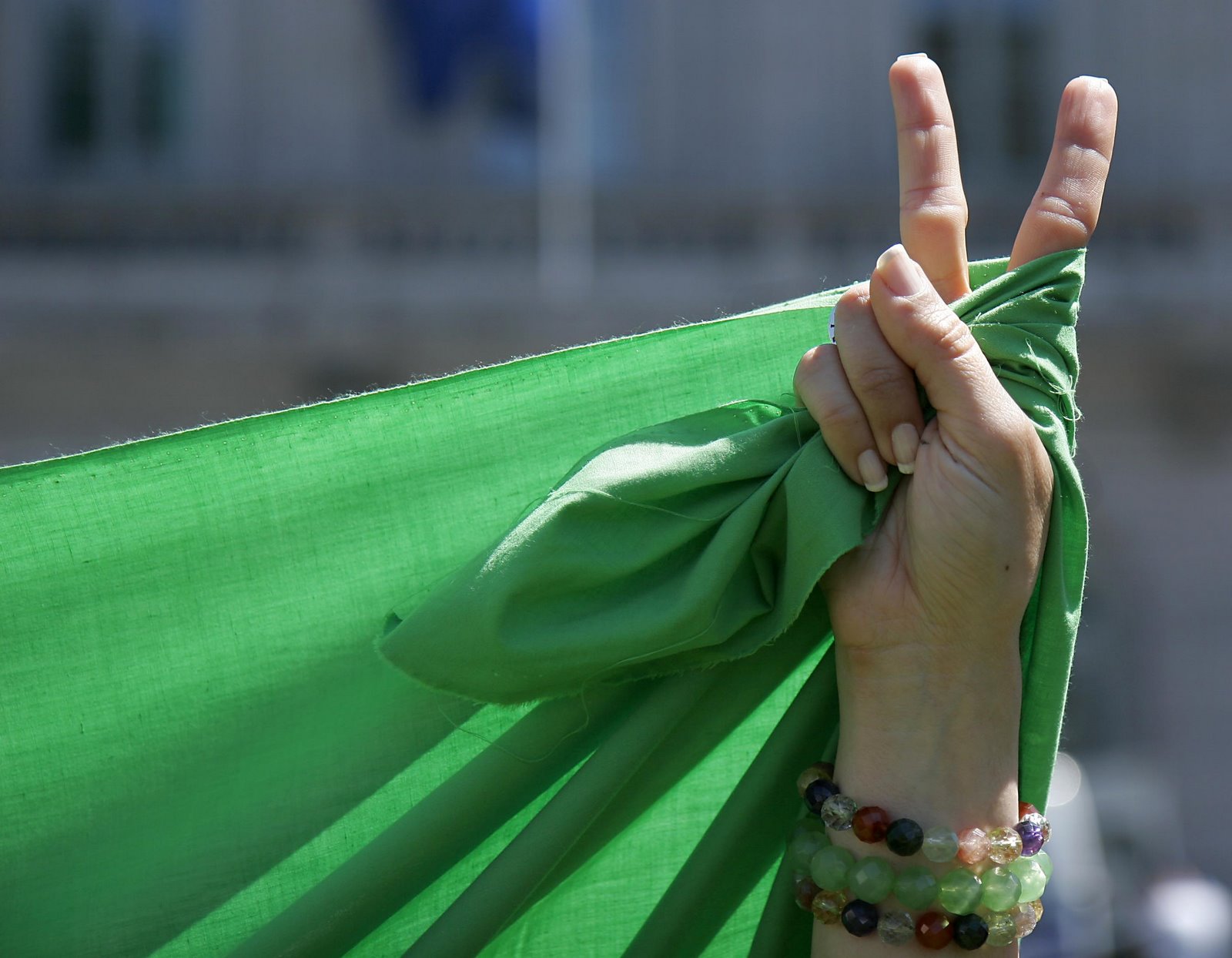
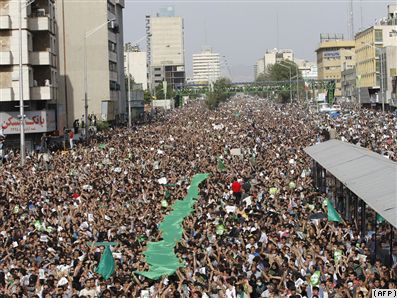
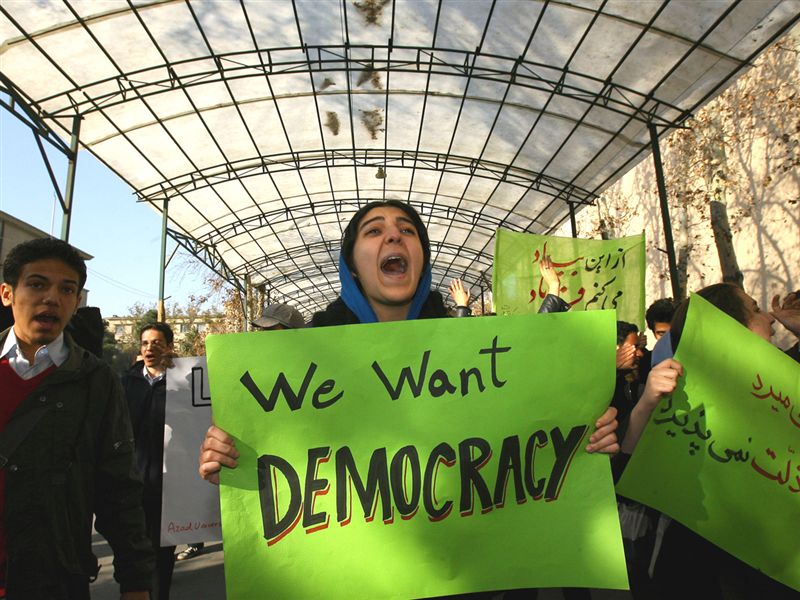
Tehran, Iran- Demonstrations in Iran continue a little over a week after the mass protests the occurred throughout Iran on the Shiite festival of Ashura as protestors defy the government’s crackdown on dissent. It appears that for the first time since the Iranian Revolution of 1979, the regime of Iran is appearing weakened. Despite the brutal violence used by government soldiers and militiamen, the Iranian people are brazenly standing up and are demanding the end of the supreme rule of Ayatollah Ali Khamenei and establishment of a democratic nation where freedom and rights of the Iranian people are respected.

For far too long the current regime has used violence and intimidation to quell revolt. However since the disputed election of last year, the majority of Iranian citizens want an end to theocratic rule. The government must sense the tide turning against them as the popular revolt is gathering steam and gaining strength. Overseas, the Iranian communities around the world are standing in support with their brothers and sisters in Iran and demanding an end to suppression and tyranny also and asking governments around the world for support of this movement by instituting embargos and sanctions on the Iranian government.

The situation is bleak in many Muslim countries around the world when it comes to prudent and competent government. If one takes a look at the Arabian Gulf region we have kingdoms such as Saudi Arabia and Jordan, Bahrain, UAE, etc. There is not a great deal of individual and civil liberties as they are normally afforded in the western world. Freedom of speech, religion and right to protest is simply outlawed in most of these countries. If one takes a look at countries like Egypt, Libya, Syria, and until recently Iraq, are all countries where there are dictatorships akin to monarchies where power is held for generations as is the case with Muammar Al-Gaddafi or it is passed on to a family member as was the case with Bashar Al-Assad of Syria. Pakistan too is a country that of its 62 years of modern history, over half have been ruled by dictatorships robbing the people of a robust democratic system as is one that flourishes in neighboring India.

Far too often, in many Muslim countries around the world, governments and individuals in power are robbing the coffers of their national treasuries for their own greed and simultaneously either brutally cracking down on human rights and dissent or neglecting their responsibilities all together and therefore not providing basic services, infrastructure, and security.

It is not as if democracy is in theory in any waysĀ in conflictĀ with Islam, rather, Islam’s set of norms and ideals that emphasize the equality of people, the accountability of leaders to community, and the respect of diversity and other faiths, is fully compatible with democracy. Yet time after time, Muslim countries are finding themselves under repressive, corrupt and Ā inept leadership that has no problem using Ā vote rigging, violence, brutality and intimidation to remain in power.

The Iranian uprising and protests currently underway in Iran should inspire Muslims in other countries to demand better governance, more accountability, and freedoms from their leaders. A country that does not have the participation of all it citizens in all fields of endeavor is not going to advance aggressively as it should. Many citizens of Iran and Iranians around the world are hoping that the repressive regime in Tehran is overthrown by the brave protesters there. One would hope that eventually this starts a chain reaction throughout the Muslim world where repressive, authoritarian and harmful governments are holding back the progress of nations. Thomas Jefferson said it bestĀ  when he stated that ā€œA bill of rights is what the people are entitled to against every government on earth, general or particular, and what no just government should refuse, or rest on inferences.ā€

Reported by Manzer Munir for http://www.PakistanisforPeace.com