Archive for the ‘ Democracy ’ Category

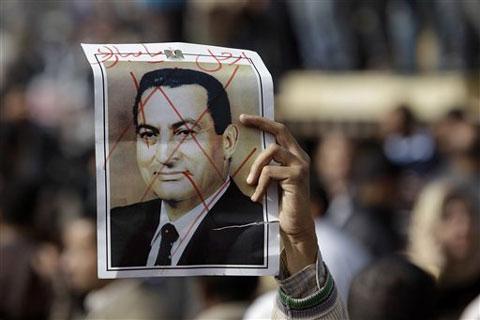
Israel Fears Unrest in Egypt Could Jeopardize Peace Treaty

By Robert Berger for The Voice of America

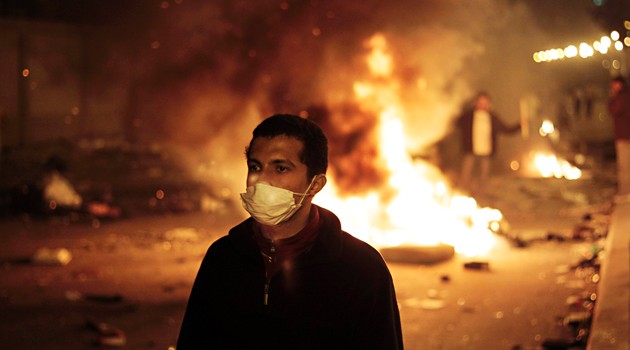
The unrest in Egypt is sending shock waves throughout the Middle East, including in neighboring Israel.

Israel is extremely concerned about the situation in Egypt because President Hosni Mubarak has preserved the peace treaty between the two countries for 30 years. Israel considers the treaty a strategic asset, and it fears that a regime change in Egypt could put the peace agreement in danger.

Israeli analyst Yoni Ben-Menachem says an Egyptian government led by opposition groups or the Muslim Brotherhood would take a harder line on Israel.

“It might be a hostile regime to Israel that will not respect the peace treaty with Israel and will cancel it, abolish this agreement, and we will go back to a situation of hostility between Israel and Egypt,” said Ben-Menachem.

That would complicate Israel’s situation strategically, because it already shares two borders with hostile elements: Hezbollah in Lebanon and Hamas in Gaza.  And Ben-Menachem believes neighboring Jordan could be next.

“This can create the domino effect, and this fall of the regime in Egypt can also continue to Jordan, and also with Jordan we have another peace treaty,” added Ben-Menachem.  “And if this will happen, if there will be a strategic change in the Middle East, that will not be for the benefit of the State of Israel.”

While the treaty between Egypt and Israel is often described as a “cold peace,” Ben-Menachem says Israel values its relationship with President Mubarak and sees him as a bridge between Israel and the Arab world.

Arab Pundits Cheer the Tunisia, Egypt Protests

By Salameh Nematt for Newsweek

Following the political earthquake that removed Tunisia’s President Zine el-Abidine Ben Ali from power nearly two weeks ago, seismic waves have been shaking ruling regimes from Algeria to Egypt, and from Jordan to Yemen. But if political earthquakes could somehow be measured on a “political” Richter scale, the question would be: Is this a magnitude 3 mild tremor that will pass, leaving behind little damage to the region’s authoritarian regimes and dictatorships? Or will it prove to be a magnitude 7 shocker, causing serious damage to a number of regimes?

Watching and reading Arab pundits and political analysts offers no conclusive answer. Most of the pan-Arab press appears to be celebrating the “Jasmine Revolution” that brought down the Tunisian dictator, cheering on protesters in Egypt, Algeria, Yemen, and Jordan and the rest of the Arab world. Meanwhile, Arab leaders have been at pains not to appear opposed to “the will of the Tunisian people” while at the same time trying not to encourage the spread of the “democracy virus” to their own countries.

It is anybody’s guess how events will ultimately unfold in Tunisia, where a transitional government made up of remnants of the “ancien regime” and a group of opposition and independent figures is trying to appease the disorganized and still angry masses, promising sweeping political reforms and democratic elections within months. But so far Tunisia’s revolution has only gone halfway, removing a president and shaking the establishment but not gutting the entrenched regime that still holds considerable power. That regime includes a military-security establishment that might decide, at any moment, to take things into its own hands and decide the future of the country, for better or worse.

It would be naive to assume that Tunisia has already made the transition from dictatorship to democracy before the current standoff unfolds, a process that may take several months and could turn bloody at any moment.

But the events in the region have certainly dispelled a number of myths and offered a few lessons for governments and observers. Perhaps the most important myth is that the Arab regimes, most of which have been ruling for decades, are too resilient and cannot be toppled, except through foreign military intervention or an inside coup or seizure of power. The other myth now being seriously questioned throughout the Arab media is that Islamists are the only alternative to these secular or apparently secular regimes. In Tunisia, the Islamists appeared to have little visible influence in the popular uprising, while the Muslim Brotherhood in Egypt has deliberately kept a low profile, perhaps for tactical reasons, leaving the disorganized popular masses of protesters of various political shades to take the lead.

Elaph.com, the Arab world’s most popular online newspaper, argues that the recent events in the region have demonstrated that “people are capable of breaking the fear barrier,” despite the ruthlessness of the ruling regimes. The paper quoted Burhan Ghalyoun, the director of a Middle East research center, as expressing surprise that the Tunisians “have achieved massive change at lightning speed, which goes to prove that change is not as difficult as we previously thought.”

Understandably, most of the official and semi-official Arab media have recognized people’s “right to peaceful demonstration and freedom of expression,” echoing calls from Washington and the West, but warned, at the same time, against actions that may undermine stability and security. Wisely, many governments in the region, including that of Jordan, have moved quickly to reduce the prices of consumer goods and promise political reforms to preempt an escalation of popular anger.

But unlike previous protests in Egypt and other Arab countries, this time the region’s leaders and their governments have not rushed to blame “foreign forces,” namely the U.S. and other Western countries, for instigating the riots. Tunisia’s government had always adopted a pro-Western stance, but today the West, which had turned a blind eye to human rights violations in that country for decades, is now almost silently watching as that regime crumbles, without any sign of wanting to do anything to save it.

However, one might argue that this month’s protests are not only the product of worsening living conditions resulting from the global economic crisis and homegrown corruption and mismanagement. They are also the product of decades of political oppression and humiliation by regimes that are now beginning to realize they can no longer oppress their own people with impunity. Social media and other modern and widely accessible communications tools have stripped these regimes of their monopoly on information. And since knowledge is power, the power is now shifting from the ruling few to the unruly masses, and these masses, in turn, are challenging the status quo throughout the region. But it is certainly too early for pro-democracy advocates in the region and beyond to bring out the Champagne glasses. It isn’t over till it’s over, and it is definitely not over yet.

Thou Shalt not Mock or It May Cost You Your Life!

By Manzer Munir for Pakistanis for Peace

In the wake of the murder of Salmaan Taseer, the Governor of Punjab a couple weeks back, I did a great deal of contemplation about the situation in Pakistan and the current state of affairs of Pakistan and indeed in much of the Muslim world.

The current situation, especially in Pakistan and when it concerns the rights of the non-Muslims, is apparently the worst of anywhere in the Muslim world. Indeed, the plight of Asia Bibi, (also known as Aasia, Ayesa Noreen) Islam and Islamic Blasphemy laws have come under rightful scrutiny as of late.

One question that tugs at the heart of the debate for me is why is it that Muslims seem to get so very offended to the point they want to KILL you over a remark or something that comes out of your mouth? As Americans, we wonder to ourselves, “Haven’t they ever heard of sticks and stones may break my bones, but words don’t hurt me?!

Sadly, what the fundamentalist preachers at all the podiums of their Friday sermon or khutbah, nor any of their brethren on the run and in caves like the Taliban and Al Qaeda fail to realize that we are all God’s children. And God, Allah, Yahweh, Jesus, or whatever name you assign him, he is One and the same God of all religions. He is too big to fit into just one religion, concept, version or story of him.

And we all are his creations. Not one of us is superior over the other in his eyes and he judges us all equally. To him, the children of these three religions and its offspring’s are all related to each other. Adam being the first man, then Eve, and then all the Biblical figures and names such as Noah, Abraham, Moses, Jesus, yes especially Jesus. He is their Messiah too!

Jesus, in fact is mentioned some 28 times in the Muslim holy book, Qu’ran whereas their own prophet Muhammad is mentioned only 4 times. And the fact that Jesus is also considered by Muslims to be the Messiah, it is sad that his followers should get such abject treatment in Pakistan and sadly, many Muslim countries.

If only the bad guys realized the connections between Christians and Jesus only then would a Pakistani Christian woman, suffering needlessly in a cell tonight going on 2 years away from her children in solitude, and constantly fearful for her life, would see her horrific ordeal come to an end.

These people are incapable of understanding basic rights, freedoms and even the unhindered concept of free will. No, they are primitive minded in their their spiritual and daily lives. They fail to see that a Christian’s God and a Muslim’s God are the one and the same. And he never would agree to laws like Pakistan’s Blasphemy laws at all. Why? Well because the Muslim God is known first and foremost as a Gracious, Merciful, Compassionate God.

In fact, the Arabic phrase Bismillah ir-Rahman ir-Rahim is a beautifully poetic phrase which offers both deep insight and brilliant inspiration to the average Muslim who says it countless times as he or she starts each day and till they rest their head to sleep. “ It has often been said that the phrase Bismillah ir-Rahman ir-Rahim contains the true essence of the entire Qur’an, as well as the true essence of all religions. Muslims often say this phrase when embarking on any significant endeavor and the phrase is considered by some to be a major pillar of Islam. This expression is so magnificent and so concise that all except one chapter of the Qur’an begins with the words Bismillah ir-Rahman ir-Rahim.”

The common translation:”In the name of God, most Gracious, most Compassionate” essentially is saying that God is compassionate, and full of grace. So how would this God punish Asia Bibi? What would he do if he is so full of compassion and mercy? Would he even punish her? And if he is such a gracious and a compassionate God, then wouldn’t he feel that nearly a two year jail sentence in solitary is already far more than her crime not to mention being away from husband and children and being worried about mob vengeance on her or the death penalty?

That God may act in a multitude of ways and we cannot ever know till said Judgment Day. That is what Judgment Day is all about after all. In fact, this is probably one day when the man upstairs works overtime judging all of us mankind, from the beginning with Adam to the last standing comes till Tribulation and the End of Days. It is only he, the Creator who will do the judging and this is something that the men with the loudspeakers who climb to the top of the minaret five times a day to call the faithful to prayers, just do not really understand, in my opinion. They apparently constantly seem to forget and pass judgment from the pulpit and this in turn helps set the “popular” opinion amongst the ultra-religious faithful of Pakistan’s society.

My only prayer to this Creator is that may he keep Asia Bibi safe tonight and continue to give her strength. And if God should call her home and have her die a death at the hands of the real savages those that not only kill but shockingly, in your name, then please Allah grant her heaven just as you should governor Salmaan Taseer, a man who was only defending the rights of all your children, including those of other faiths. He was being compassionate and gracious towards a fellow human being God, as he was only trying to emulate his creator, You Lord. Ameen.

And while you are at it Lord, will you also please let the imam at the microphone know that “Thou shall not mock, should not cost you your life.” Afterall, “Thou shall not kill is one of your top 10 commandments, whereas mocking prophets or religious figures does not make the list!

Manzer Munir, a proud Pakistani American and peace activist, is a Sufi Muslim who is also the founder of Pakistanis for Peace and blogs at www.PakistanisforPeace.com and at other websites such as www.DigitalJournal.com, www.Allvoices.com, www.Examiner.com and www.open.salon.com as a freelance journalist and writer. He asks that you like the Official Facebook Page of Pakistanis for Peace to get the latest articles as they publish here: http://www.facebook.com/home.php#!/pages/Pakistanis-for-Peace/141071882613054

Pakistan: The Voices of Reason Must not be Silenced by Fear

By Sadiq Khan for The Independent

The news that Salman Taseer, the powerful governor of Pakistan’s most populous province, had been gunned down by his own security guard for standing up against the country’s draconian blasphemy laws, came as a bleak reminder of political fissures that divide the country.

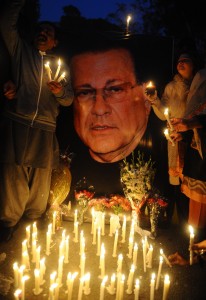
The sickening scenes of Taseer’s murderer, Mumtaz Qadri, being showered by rose petals as he entered court to lodge his guilty plea were starkly juxtaposed with images of candlelit vigils at the spot where he was shot 27 times in the back.  These contrasting responses to Taseer’s assassination are illustrative of a fundamental split between those who want to see Pakistan fulfill her potential as a thriving, liberal and tolerant democracy and those that want to terrorize and isolate Pakistani citizens under a misguided and perverted interpretation of Islam.

While denouncement of last week’s criminal act was muted amongst Pakistan’s clerics and politicians – including those from the Pakistan Peoples Party, to which Taseer belonged – British citizens of Pakistani descent have been vocal in our condemnation and our mantra is clear – this death due to terrorism, as with the 25,000 others in Pakistan in recent years, is not in our name. It is not in the name of Islam and it is not in the name of Pakistan.  And while saddened by this loss, the real tragedy of Salman Taseer’s murder would be if it stopped other progressive, liberal people in Pakistan speaking up for fear of violent repercussions.

Qadri, though responsible for his own deplorable actions, was spurred on by inflammatory rhetoric from extremists preaching hatred and inciting violence against all those who stand up for the pluralist founding ideals of Pakistan. It is not only in Pakistan where irresponsible political language has repercussions beyond the boundaries of discourse and spill over into violence, but in Pakistan there is a danger that the voices of reason will be drowned out by the increasing clamor of hate, or silenced in fear.

Moderation and liberalism in Pakistan must not be allowed to die with Governor Taseer. Right-minded politicians and religious leaders must speak up, knowing that the UK as well as Muslims and non-Muslims around the world, are behind them.  Addressing a distinguished audience at the memorial meeting for Taseer at the Pakistani High Commission in London this week, MPs from all major British political parties spoke in solidarity with Pakistan and I was encouraged by the various Pakistani leaders who attacked those who corrupt Islam’s peaceful message and sought to assure Christians and other minority groups that they will be defended and protected.

If a society is ultimately judged by how it treats its most vulnerable and marginalized, then Pakistan is at a crossroads. Those, like Salman Taseer, who believe in a modern, peaceful Pakistan, governed by the rule of law, under which all people are equal and all faiths are free to worship, need to speak out in defense of it and in condemnation of the alternative.

After being struck by a natural disaster that swept away the lives, crops and livelihoods of hundreds of thousands of people in Pakistan last year, there is the potential that Pakistan could slip into a political disaster of its own making. Salman Taseer paid the ultimate price in trying to ensure this didn’t happen, but let that not be in vain.

Pope Benedict Urges Pakistan to Repeal Blasphemy Law

By Elisabetta Povoledo for The New York Times

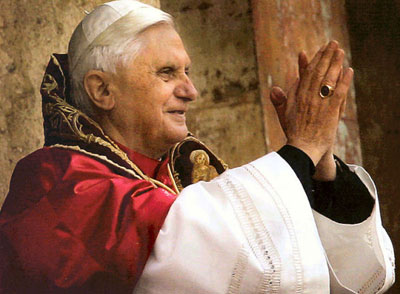
In a forceful appeal for religious freedom, Pope Benedict XVI urged Pakistan on Monday to repeal contentious blasphemy laws as he called on governments around the world to do more to enable Christians to practice their faith without violence, intolerance or restriction.

The pope was speaking in an annual address to diplomats accredited to the Vatican, a long-scheduled event. But this year, his words came after bomb attacks in Iraq and Egypt — the most recent in the Egyptian city of Alexandria less than two week ago — and the assassination last week of a leading Pakistani politician who had opposed his country’s law that makes blasphemy against Islam punishable by death.

The politician, Salman Taseer, had campaigned vigorously against the law and had petitioned the Pakistani government to re-examine the case of Asia Bibi, a Christian woman who last November was sentenced to death under the legislation.

Mr. Taseer’s “tragic murder,” the pope said, “shows the urgent need to make progress in this direction: the worship of God furthers fraternity and love, not hatred and division.”

Referring to the attacks on Christians in Iraq and Egypt, Benedict called on the governments of those predominantly Muslim countries to adopt “effective measures” to better protect religious minorities. Urging Pakistan to repeal its blasphemy law, the pope said the legislation was being used “as a pretext for acts of injustice and violence against religious minorities.”

The pope has often spoken out against religious intolerance, but his condemnations have increased after recent attacks on Christian communities in several countries, including Nigeria and the Philippines, where churches were bombed during the recent holidays.

The plight of Christians in the Middle East has been of particular concern to the Vatican, which hosted a meeting of bishops in October to address the issue.

The concerns have deepened in recent months in the face of what clerics see as sustained violence. At a New Year’s Mass at a Coptic church in Alexandria, a suicide bomber killed 23 people and wounded nearly 100. Last October, a siege at a Baghdad church killed 53 people, prompting yet another exodus of Christians from the country.

On Monday, the pope cited a message to Christians in the Middle East that he delivered during the bishop’s synod in October. “It is natural,” he said, that “they should enjoy all the rights of citizenship, freedom of conscience, freedom of worship and freedom in education, teaching and the use of the mass media.”

The pope also took Western nations to task for marginalizing religion and minimizing its role in contemporary society and called for dialogue between faiths to promote “a common commitment to recognizing and promoting the religious freedom of each person and community.”


Key Party Rejoins Pakistan’s Coalition

By J David Goodman for The New York Times

A day after Prime Minister Yusuf Raza Gilani announced a rollback of fuel price increases that were deeply unpopular in Pakistan, a major political party said on Friday that it would rejoin the ruling coalition, defusing a tense political standoff and saving Mr. Gilani’s government from potential collapse, news reports said.

The party, the Muttahida Qaumi Movement, broke with the ruling Pakistan Peoples Party over the weekend in part to protest the price increases and other reforms proposed by the government, causing a political crisis for the prime minister and President Asif Ali Zardari. Opposition parties echoed the call to reverse the increases as well as recent cuts in spending and threatened the government with a three-day deadline before a no-confidence vote.

Political tension deepened on Tuesday with the assassination of Salman Taseer, the governor of Pakistan’s most populous region and an ally of Mr. Zardari, because of his support for changes to the country’s blasphemy law.

Raza Haroon, a senior leader in the Muttahida Qaumi Movement, said on Friday that his party had decided to rejoin the ruling coalition for the sake of democracy and the country, The Associated Press reported.

While the government appears to have survived for the moment, it does so at the expense of political and economic reforms encouraged by the United States.

In a meeting with Muttahida Qaumi Movement party officials on Friday, Mr. Gilani said that he would also put off proposed changes promoted by the State Department and the International Monetary Fund to increase tax collection, Reuters reported.

Pakistan, an important American ally, still faces a widening rift between secular and religious forces within the government, even as its army battles Taliban insurgents around the country’s mountainous northwestern border with Afghanistan.

The killing of Mr. Taseer, by a religiously motivated member of his own security staff, raised concerns for the United States and exposed the deep divisions in Pakistan. His killer, who proudly confessed the crime to the police, has been celebrated by many and was greeted by affectionate crowds throwing rose petals both times he appeared in court this week.

But Adm. Mike Mullen, chairman of the Joint Chiefs of Staff, said earlier this week that Pakistan’s security relations with the United States would survive the crisis.

Salman Taseer Assassination Points to Pakistani Extremists’ Mounting Power

By Karin Brulliard for The Washington Post
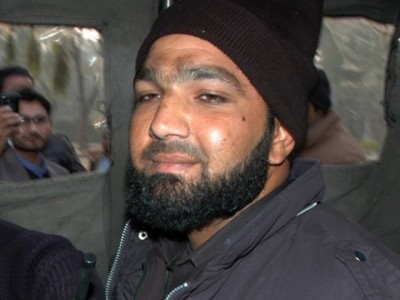
One of Pakistan’s most openly progressive politicians was gunned down Tuesday in an act that violently highlighted extremists’ tightening grip on the country even as the beleaguered government struggled to stay in power.

The killing of Salman Taseer, apparently at the hands of one of his own guards, marked the most prominent political assassination in Pakistan since former prime minister Benazir Bhutto’s death three years ago.

The razor-tongued governor of Pakistan’s most populous province was known for speaking out on behalf of women and religious minorities, and his slaying stunned the nation and alarmed U.S. officials. It also further rocked Taseer’s ruling Pakistan People’s Party, which is desperately trying to keep its government afloat following a key ally’s defection to the opposition Sunday.

The secular PPP condemned the killing and promised a swift investigation, but its weakened position undermines its ability to crack down on religious extremists.

In timing that underscored those limitations, Taseer was shot in an upscale area of Islamabad as Pakistan’s main opposition party was across town demanding that the government agree within three days to implement a list of reforms, or risk collapse.

After the killing, the party of former prime minister Nawaz Sharif said it would allow three additional days for the changes, including a slash in government spending and the reversal of unpopular fuel price increases.

Taseer was a chief ally of President Asif Ali Zardari, who in 2008 appointed him governor of Punjab, Pakistan’s wealthiest province. But Sharif’s party rules the province, making Taseer’s assassination a blow to the federal government’s influence there.

Secretary of State Hillary Rodham Clinton condemned the killing in a statement Tuesday, saying she had met Taseer and “admired his work to promote tolerance and the education of Pakistan’s future generations.”

Taseer’s apparent killer cited his boss’s stance against a controversial anti-blasphemy law in justifying his actions. As the embattled, pro-U.S. PPP sought in recent days to win back defecting allies that also include a small Islamic party, it had already said it would not support a proposal to change the blasphemy statutes. That left Taseer one of the few vocal champions of the move, which hard-line religious organizations had labeled a Western conspiracy.

The laws have drawn scrutiny since a Christian woman was sentenced to death in November for allegedly criticizing the Muslim prophet Muhammad. Taseer had called for her pardon, leading religious groups to denounce him as an “apostate” and burn effigies of him during a nationwide strike last week in support of the law. One Muslim cleric has offered $6,000 to anyone who kills the woman, who remains in jail.

Even as Pakistani television stations were dominated Tuesday by commentators condemning rising religious intolerance, supporters of Taseer’s arrested guard, Mumtaz Qadri, 26, created a page for him on Facebook. Page visitors called him a “hero” and praised his “awesome job.” No major unrest over the killing was reported, but authorities said they were on high alert.

“This shows how the religious extremists want to impose their agenda to terrorize the society,” Shahbaz Bhatti, the federal minister for minorities affairs and also a proponent of changing the laws, said in an interview. “This cowardly act cannot stop us who are raising our voice.”

Yet in a country where Taliban militants increasingly flex their muscles through bombings, religious hard-liners have great power to intimidate even though polls show that their views are not widely shared. Last week’s strike by Islamic organizations drew few supporters to the streets, but shops in major cities closed – and many merchants said they did so under threat.

Human rights activists say the blasphemy laws are also abused by extremists, who use them as a tool to persecute minorities or opponents by bullying police and courts into arrests and convictions. The laws were strengthened during the 1980s rule of Islamist military dictator Gen. Zia ul-Haq.

Taseer lamented the power of the religious mob in an interview last summer following bombings of mosques belonging to the Ahmadi sect, whose members identify themselves as Muslims but are barred by the constitution from “posing” as such. Taseer – whose appointed position gave him little direct power in Punjab – condemned the provincial government of Sharif’s center-right PML-N for what he called its tolerance of radical religious groups.

“Extremist people are not in the majority,” Taseer said at the time. “This is a very narrow minority, but . . . they are always prepared to do and die. That is their strength.”

On Dec. 24, he had posted on his Twitter account: “My observation on minorities: A man/nation is judged by how they support those weaker than them not how they lean on those stronger.”

Authorities said Taseer’s guard, a member of an elite Punjab provincial police force that provides VIP security, shot the governor multiple times outside the Kohsar market in Islamabad, a small shopping plaza near his residence that is frequented by foreigners. The guard proudly surrendered to police afterward, according to local news reports.

Most political parties condemned the killing, and the government announced a three-day mourning period, during which political activity would be suspended. Zardari, to whom Taseer was close, called the assassination “ghastly.”

“The governor of Punjab was the bravest person in our government, and the stands he took for women, minorities and on the blasphemy law were incredibly brave and will never be forgotten,” Farahnaz Ispahani, a Zardari spokeswoman, said in an interview.

Taseer, who began his political career as a PPP student activist, was a successful businessman who played polo and smoked heavily. With his flashy sunglasses and frequent Twitter dispatches, Taseer, 66, cut a rather shocking figure in a country dominated by conservative social mores.

Critics assailed him for fathering a child with an Indian journalist while he was still married to the mother of his other children. In 2008, minor scandals broke out when opponents published photos online of him holding wine glasses at parties and of one of his daughters wearing shorts and dancing.

Despite the alleged gunman’s confession, Taseer’s killing was sure to be swept up in the conspiracy theories that permeate Pakistani politics, particularly in times of turmoil. Interior Minister Rehman Malik said investigators would seek to determine whether the suspect acted alone or was “asked” to carry out the attack.

In the hours after the killing, some criticism centered on the PML-N-led Punjab government, which provided Taseer’s police guard. There was no indication Tuesday night that the party played a role.

But the PML-N might yet bring down the PPP, whose government faces growing criticism over corruption, a floundering economy and a ham-handed response to last year’s devastating floods. The ruling party’s coalition partner, the Muttahida Qaumi Movement, withdrew from the government Sunday, weakening its mandate by depriving it of a parliamentary majority.

A united opposition could pass a vote of no confidence in Prime Minister Yousaf Raza Gillani, leading to his ouster and potentially triggering early elections. That has appeared unlikely, because of divisions among opposition parties. But Sharif threatened Tuesday to “ask the opposition parties to come forward and we will give them our full support” if the government does not show progress on reforms within 45 days, according to the Associated Press.

Like many in the PPP, Taseer often criticized opposition parties for stoking political instability in a country that has been ruled by the military for half its 63-year history and where an elected government has never completed its term.

Religious extremism, Taseer said last summer, would be quashed only by the “continuous, functional position of a democratic system.”
A Brave Man Killed

A New York Times Editorial

Some twisted person has created a Facebook page in support of Malik Mumtaz Hussain Qadri, the bodyguard accused of assassinating Salman Taseer, the governor of Pakistan’s Punjab province. Mr. Taseer was a brave man who had called for the repeal of Pakistan’s outrageous anti-blasphemy law.

Whoever killed Mr. Taseer must be condemned and repudiated, not extolled. Otherwise, Pakistan will certainly continue on a downward spiral in which intolerance and self-destruction triumph.

The governor’s death is a tragedy not just for Pakistan but for all who understand that just and stable societies need honest debate and full respect for minorities. Pakistan cannot afford to lose any fair-minded leaders, especially at a time when it is struggling with a virulent insurgency, an unraveling economy and an unraveling central government.

Mr. Taseer — a longtime ally of President Asif Ali Zardari and his wife, Benazir Bhutto, who was assassinated in 2007 — was Pakistan’s most prominent defender of the rights of women and minorities. He had pressed hard for repeal of the blasphemy law, which imposes a mandatory death sentence on anyone convicted of insulting Islam.

The law is popular with the Muslim majority but is routinely manipulated to settle personal rivalries and persecute minorities. And Mr. Taseer had been particularly outspoken, calling for leniency for a Christian mother of four who was sentenced to death under the law, in a case that stemmed from a dispute in her village.

Pakistani officials, who have the bodyguard in custody, say he killed Mr. Taseer because of the governor’s opposition to the blasphemy law. But there are far too many unanswered questions: Did the suspect act alone? Why did the Punjab police assign a religious conservative to protect Mr. Taseer? News reports first said nine bullets were fired into Mr. Taseer, and hospital officials later said he was hit 24 times. Yet other members of the security detail did not shoot to stop Mr. Qadri, who surrendered with his hands up.

Pakistani authorities need to investigate thoroughly and share their full findings with the Pakistani people.

The United States and the international community must make clear their outrage over this killing. So must every Pakistani. The country’s political leaders and the Pakistani media also need to consider whether the way they have shaped the debate on the blasphemy law — some have argued that mentioning reform is blasphemy punishable by death — is further fueling conflict.

Ultimately, only Pakistanis can save their nation, and they must answer the more profound questions: Do they want a country in which Muslims and non-Muslims can peacefully co-exist? Or one in which religious zealots, espousing the most intolerant interpretation of Islam, kill anyone brave enough to defend the defenseless? That would be the true blasphemy.

Pakistan’s Political Crisis

Reported by Farhana Bokhari for CBS News

Pakistan’s pro-U.S. ruling coalition on Sunday night battled to restore calm across the country’s political landscape after a regional political party allied to president Asif Ali Zardari’s Pakistan People’s Party (PPP) quit at short notice, leaving the PPP in minority in the lower house of parliament, the national assembly.

The Muhajir Qaumi Movement (MQM), a political party mainly representing Pakistanis who migrated from India to Pakistan when the country was created in 1947, withdrew its support to the PPP, reacting to the government’s decision on Saturday to raise gasoline prices.

The move marked the first major upheaval over gasoline prices since they were raised, mainly to be kept in line with global trends. Western diplomats based in Islamabad, reacting to the latest political developments, warned it was still early to tell if Zardari or his handpicked prime minister, Yusuf Raza Gilani, were in danger of being forced out.

There were warnings that the split with the MQM may in the short term completely paralyze the government. Long term consequences are harder to predict. Pakistan has been ruled by its army for more than half the of country’s 63-year existence. Some previous periods of heightened uncertainty have been followed by the military stepping in to fill the void.

General Ashfaq Pervez Kayani, Pakistan’s present military chief, is widely known to be an apolitical figure. A western ambassador based in Islamabad, speaking to CBS News on condition of anonymity, said, “While there are no signs of the military stepping in, you have to remember that previous [military] takeovers have been preceded by fast growing turmoil. Much depends on the way things happen in future.”

For the U.S., mounting political uncertainty in Pakistan is potentially worrying. This has to do with the support that Washington receives from Pakistan in its campaign to defeat Al-Qaeda and the Taliban in the Afghanistan-Pakistan region, as well as periodic worries in the western world over Islamic hardliners making inroads into Pakistan’s politics.

A minister from the PPP who spoke on condition of anonymity to CBS News Sunday said after the split with the MQM was announced, “If a government is weak and struggling for its own survival, how will it be able to pursue interests of other countries, including the U.S.?” The minister added, “Unpopular steps like petroleum prices are forced upon governments through circumstances which are beyond their control.”

A second western diplomat in Islamabad who spoke to CBS News on condition of anonymity said while Islamic politicians have only pockets of support across Pakistan, “You can never rule out the dangerous possibility of a ground swell in their favor, especially if governments from the political mainstream become weak and unpopular.”

The Illiteracy of Hate

A News and Opinion Special Report by Manzer Munir for Paksitanis for Peace

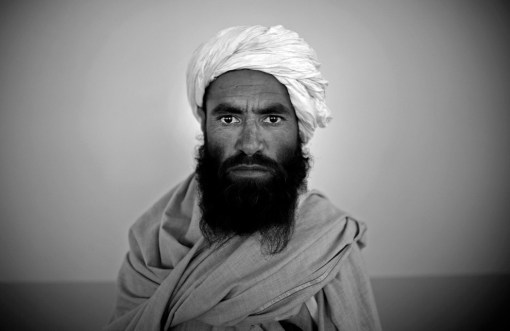
Alleged Taliban Member pic courtsey of Boston Globe

The Taliban are not just simply a bunch of illiterate thugs and bullies for they too often prove to be even worse than animals and barbarians.

Nowhere else in the world has a country experienced a more tragic and callous attack as the one on Christmas day, the birth day of Jesus, the Prince of Peace, than the one Pakistan experienced. In an attack described by President Obama as an “affront on humanity”, the cowards attacked helpless women, children and men while they queued up in food and aid distribution site such as the WFP depot, people who mind you are already suffering from the ongoing war, once in a lifetime floods, and the poverty and radicalism of a generation of desperate, hopeless and increasingly uneducated young men brainwashed by the Taliban and other radical Muslim extremists.

I am still disturbed by the disdain for basic human life that this new attack proves about this radical and extreme enemy. I imagine another one of their brain washed ‘walking zombies’, this time purportedly a woman suicide bomber, a first, even for Pakistan, killed in excess of 43 people in Bajur Pakistan at a World Food Program rations and aid storage and distribution center.

The Pakistani authorities and several domestic and foreign NGO’s who provide food aid at various centers in the area are temporarily closing these centers in order to have increased security. This means that aid distribution will come to a crawl and up to several hundred thousand people will now have to suffer at the hands of the attacker and their backers, the Taliban who have claimed responsibility. The authorities will have to ensure the safety of aid organizations and their personnel for both Pakistani and non Pakistanis relief workers involved in getting food, water and medicine to many people who are either suffering from the war or from the floods.

This catastrophe, although not of near Biblical proportions, does present both a security and humanitarian problem to both the government of Pakistan as well the suffering citizens in the northwest areas of the country where; Taliban fighters take sanctuary from the war in Afghanistan to regroup and return to the fight in warmer weather after the winter months as we have seen in years past. In fact, the reach of the Taliban in Pakistan is now not only reputed to be in the headquartered areas such as in Quetta Pakistan among the restive Baluchi population, now they are so often found to be in major cities like Karachi, Lahore, Rawalpindi, Peshawar and many points in between as they use their religious cover to endear themselves to certain impressionable, weakened or illiterate individuals that are so commonly found in throughout the country. 

Here are the some of the depressing facts. Pakistan, a nation approaching 180 million people at current estimates, perhaps only boasts to having about 60-65% of the male population at a literate level and at best, the females to be only at 40-45% of the total female population. Sadly, what this means is that 4 out of 10 Pakistani males are completely illiterate while up to as many as 6 out of 10 women are not able to read or write. Poverty breeds extremism since there is no support from any government programs or hope for any solution.

Time and time again throughout history and not just of Pakistan’s, we can see that the role of the church, synagogue or mosque in building the community is deeper than that of any government initiatives or other measures. The poverty for these young men along with the lack of jobs like for those individuals who are either very poorly paid construction site workers, household labor or servants, or beggars and sewer workers, a job sadly almost seems to have been reserved for Pakistan’s Christian community members as many can attest in Pakistan of their unfortunate and depressing state. One does not need to remind the reader of the plight of Asia Bibi (also Aasia and Ayesa), the Christian Pakistani woman who is still awaiting her fate in Pakistani courts after more than a year and a half since first being accused of a BS blasphemy charge and being in jail ever since. 

The medieval mentality of these radical extremists is not something that needs to be described as the evidence is here in this latest attack . Certainly anyone alive in any part of the world outside Pakistan and Afghanistan with eyes, TV, radio or newspaper within their reach can see plenty of near daily reminders of the carnage that many natives of these lands see, and to what they have painfully become accustomed.

 The Pakistani and Afghani Talibans have by all the various reports in newspapers and media sources over the last several years have pointed out to the fact that these groups all have too often similar goals. Not only that, these groups all share the same characteristics. The anti-Americanism, the pro-Wahaabi or Orthodox version of Islam, the need for justice for the ‘suffering of the Palestinian people’ , and the anti-colonial and often times anti western sentiment amongst these groups. The radicalization of certain Muslim groups be they Hamas and Hezbollah in the Mideast or Lashkar e taiba, or any other militant outfit operating in this part of the world as mentioned in this quote a few days before he passed, the late Richard Holbrooke of the US State department said that there are a range of militant groups such as the Afghan Taliban, the Pakistani Taliban, the Haqqani Network, Lashkar-e-Taiba, and that “an expert could add another 30.” His exact words are in quotations. 

The radical Muslim groups who take prey of the weaker, cannot think for themselves because they are scions of those abjectly illiterate segments of the society who are only educated in the madrassahs of Pakistan. This is the de facto way of educating Pakistan’s poorer children in little mosque schools which consist of nothing but Qu’ranic surahs and words of ‘wisdom’ or ‘interpretation’ by the local mullah of the said mosque/school. Most probably these children in many Pakistani madrassahs, especially the ones who live near the border areas within the NWFP or North West Frontier Province of Pakistan as this is the part of the country most affected by its close proximity to Afghanistan.

The people in this area of Pakistan, as well as their cousins in Afghanistan have been fighting one enemy or another for the better part of 100 years now. Whether to them the enemy be the British, during the height of the British Raj rule in India, or to the Soviets and the Red army and the Cold War, then in chronological order came the infighting after the Russian withdrawal as various Tajik, Afghani, Uzbek, Pakistani warlords came in to try and consolidate power to now us Americans and the Pakistanis who are our allies in this war.

Granted we do often hear that the Pakistanis can be doing more. By all accounts, the Pakistani government can do more in terms of fighting this war on terror. Numerous western reports and articles in respected dailies have alleged that small elements within both Pakistan’s Army as well as the spy agency, the ISI, have sympathizers to either the Taliban’s cause or they want to be on favorable terms with a powerful entity that most in Pakistan’s establishment believes that Pakistan will be dealing with and not a weakened Karzai once the US begins to draw down troops and end the war by 2014. If this is indeed true, then these ‘officers’ and supposed ‘leaders’ of Pakistan should realize that the colluding with the enemy, which in this case is the Taliban, is tantamount to treason, and the members of the armed forces of Pakistan as well as the intelligence community should not be assisting the enemies of all concerned: Afghanistan, Pakistan and the United States. 

Of course we must not kid ourselves and assume that only alleviating the illiteracy and poverty of the Pakistani youth will and bettering the education system of the Pakistani poor, particularly that of the refugees and residents of the northwest areas near the Afghan border. No there needs to be a study and introspection by the people of these two countries where this hatred breeds. To to get out of this darkness, the population needs be provided not only safety when delivering food aid and or medicine but aldo most importantly give them a book, a pen, and a paper. And teach them how to fish for knowledge with basic comprehension and deductive reasoning skills that can reject a radical and violent view of Islam too often manipulated by the clergy. This is the only way we can come to end this illiteracy of hate.

–Manzer Munir, is a proud and patriotic Pakistani American, an author, who plans to write a book on Pakistan, who is also a blogger and journalist, and as the Founder of Pakistanis for Peace  can be found at www.PakistanisforPeace.com, www.DigitalJournal.com ,www.Open.Salon.com, www.Examiner.com, as well at other websites as a freelance journalist and writer.

Aasia Bibi and Impurities in the Land of the Pure

By Manzer Munir for Pakistanis for Peace

The case of Aasia Noreen aka Aasia Bibi illustrates how far Pakistan has to go to secure freedoms for its religious minorities. Christians and Hindus are not the only minorities who are persecuted for their beliefs but it is also Muslim minorities such as the Ismailis, Ahmadis, and Shiites who are routinely harassed, discriminated and also killed. Sadly, it is the case of Aasia Bibi that has brought some much needed attention to Pakistan’s sad state of affairs towards the treatment of its religious minorities.

Several sections of Pakistan’s Criminal Code consist of its blasphemy laws and of all the Muslim countries of the world that have anti-blasphemy laws, Pakistan’s anti-blasphemy laws are by far the strictest. There is section 295 that forbids damaging or defiling a place of worship or a sacred object. Then there is section 295-A that “forbids outraging religious feelings.” There is also 295-B which prohibits defiling the Qu’ran and was originally punishable by life imprisonment but has since been amended to up to three years imprisonment.

No section of the blasphemy law is more controversial or harder to prove than Article 295-C, the law that Aasia Bibi is allegedly charged with having broken. In respect to prophet Muhammad, this statute states that ” Whoever by words, either spoken or written, or by visible representation, or by any imputation, innuendo, or insinuation, directly or indirectly defiles the sacred name of the Holy Prophet Muhammad shall be punished with death, or imprisonment for life and shall also be liable to a fine.”

Aasia’s case and charges against her started almost a year and a half ago when there was a quarrel over a bowl of water in a dusty village in the heart of Pakistan’s Punjab province. A group of women were working the fields in the heat of the Pakistani sun when one of them, Aasia Bibi, dipped her glass in the communal bucket of drinking water to fetch herself and others a glass of water to drink and immediately was rebuffed by the other women who claimed that the water was now unclean as it had been touched by a non-Muslim. According to witnesses, instead of quietly bowing her head and taking the indignities, Aasia’s crime was that she mounted a strong defense of her faith and remained steadfast in her demeanor that she did nothing wrong. Too often in Pakistan, the blasphemy laws are used against religious minorities to settle personal vendettas and old scores according to Pakistan’s Human Rights Watch, a watchdog group monitoring the case.

The news traveled fast in Aasia’s village of Ittan Wali, in Punjab’s Sheikhupura district that a Christian woman had insulted the prophet. The local mullah got on the mosque loudspeakers, urging the “faithful” to take action against Aasia Bibi. In sad but familiar pattern, her defense of her faith was somehow twisted into an accusation of blasphemy, according to her family and others familiar with the case. Soon as a mob gathered outside her home ready to take the law into their own hands and handing out vigilante justice, the police moved in and took her into custody. But instead of protecting her, they charged her with insulting Islam and its prophet under the blasphemy laws.

And then on Nov. 8, after suffering 18 months in prison, Aasia Bibi was sentenced to death by a district court, making her the first person to be handed the death penalty in Pakistan under the blasphemy laws. Many before her over the years have been charged, but punishment had been commuted to lesser penalties than the death sentence imposed on Aasia Bibi. No concrete evidence was ever presented against Aasia, according to Pakistan’s Human Rights Watch. Instead, the district judge relied on the testimonies of three other women, all of whom were hostile towards her.

Unfortunately this is a common insult hurled at many of Pakistan’s 2 million Christians who make up just 1.59% of the total population. Often, Christians in Pakistan are discriminated and persecuted and many times only get the lowest of the low jobs such as street sweepers, janitorial and sanitation workers. In fact, in Pakistan, the term ‘Chura‘ has become synonym with the Christian community as it relates to an unclean person akin to how the untouchables or Dalit community is seen in India. In India however, the Dalits are not subjected to arcane state blasphemy laws geared towards religious minorities as in Pakistan or are threatened with their lives at the hands of the Hindu majority.

As discussed in a couple of my previous articles, Taliban 1o1, History and Origins and Taliban 201, The Rise of the Pakistani Taliban, the Islamization of Pakistan started under the late General Zia ul Haq of Pakistan who took over the leadership of the country through a military coup in 1977 when he hung the deposed and democratically elected Prime Minister Zulfiqar Ali Bhutto. Earlier in 1973, the 1973 Constitution of Pakistan had declared that “Islam shall be the religion of the Pakistan” and had systematically begun the process of restricting the participation of religious minorities in government and politics.

Before General Zia, there were only two reported cases of blasphemy. Since the death sentence was inserted in 1986 into the Penal Code for the blasphemy laws, this number has now reached 962 — including 340 members of the Ahmadi Muslim community, 119 Christians, and 14 Hindus. A close examination of the cases reveals the blasphemy laws are often invoked to settle personal scores, or they are used by Islamist extremists as cover to persecute religious minorities, sadly with the help of the state under these laws.

General Zia began this policy of Islamization of Pakistan in conjunction with his support for the war against the Russians and assistance to the Afghan Mujahedeen as well as the building of thousands of madrassahs or religious schools across Afghanistan and Pakistan which nurtured the young men into what later became the Taliban. Many of these blasphemy laws fully came into being under his reign, although some were around since as early as more than 100 years prior when the British drew up the Indian Penal Code of 1860 which was initially an ill foreseen aim at keeping the peace among the many fractured faiths of the subcontinent. For instance, section 295-A, which “forbids outraging religious feelings”, could have been applied against a Muslim who insulted a Hindu or a Hindu who taunted a Sikh or Christian or vice versa. However under Zia, the blasphemy laws were expanded and almost exclusively applied against Muslim minorities such as the Ahmadis, Islamilis and Shiites as well as against the Christian and Hindu populations.

Recently, a religious ‘leader’ came out and has offered over $6000 to anyone who can kill Aasia Bibi while she awaits her punishment in police custody. Outrage and denunciations on this case are coming from across the world as many people are appalled at the sad state of rights for religious minorities in Pakistan. The Pope has intervened also asking for clemency for Aasia Bibi from Pakistan’s President Asif Ali Zardari. Against all manner of reason and justice, Lahore’s High Court recently issued an order on November 29, 2o1o, preventing Zardari from exercising his constitutional authority to pardon Aasia Bibi.

In a country rife with violence and chaos and one that has become synonymous with terror the world over, the case of Aasia Bibi is yet another dark stain on the country’s image around the world. The Taliban and the extremist groups ravaging Pakistan can be explained as being a violent minority and do not and should not reflect on the nation as a whole as the majority of people in Pakistan are opposed to them and their views of Islam. But the blasphemy laws, for as long as they have stayed on the books in Pakistan and in the constitution, cannot and should not be excused in any shape or form. These laws need to be repealed and the constitution needs to be amended in an emergency manner so that Aasia Bibi and other religious minority citizens of Pakistan are not subjected to cruel and subjective laws that are almost exclusively used against minorities to settle scores, personal vendettas, and instill terror in less than 3 percent of the country that is not part of the religious majority of Sunni Muslims.

There needs to be international pressure placed on Pakistan from the United Nations, the United States, Europe and others to modify the constitution immediately and to pardon this 45 year old mother of five children. It is ironic that in a country where many people sympathize with Osama’s Al Qaeda and profess to hate the west with one hand, they decry with the other why not enough western aid has came to their country when it recently saw the worst flooding in its history. Can you blame the American citizens, the Europeans or citizens of any other Christian nation from hesitating to give aid to a country that not only plays a duplicitous game when it comes to terrorists and terror havens but also treats Christians and other religious minorities in the manner as in the case of Aasia Bibi?

The name Pakistan literally translates into “The Land of the Pure”. And as a child growing up I was told that the meaning of Pakistan’s flag is this: “The green is a traditional Islamic color and the crescent moon and star are also Islamic symbols. The white stripe represents the non-Muslim minority and religious groups of Pakistan and there place in the country.” In my view, as long as the nation sanctions and tolerates these utterly unjust and biased blasphemy laws, the religious minorities of Pakistan clearly have no place in this land of the ‘pure’.

-Manzer Munir, a proud Pakistani American and peace activist, is the founder of Pakistanis for Peace and blogs at www.PakistanisforPeace.com as well at other websites as a freelance journalist and writer.

Majority of Muslims Reject Al-Qaeda

As Reported by Sandra Johnson for The Daily Mail

Muslims in many parts of the Islamic world overwhelmingly reject al Qaeda, support a large role for their faith in government and believe democracy is preferable to any other kind of political structure, according to a new survey released by Pew Research Center’s Global Attitudes Project.

The study also found falling support for suicide bombings, as well as mixed attitudes towards Hamas and Hezbollah, Islamic groups designated as terrorist organizations by Western governments but which operate extensive social services networks in parts of the Muslim world.

The survey, conducted this spring in Jordan, Lebanon, Nigeria, Indonesia, Egypt, Pakistan and Turkey, found that only in Nigeria did Muslim populations have anything approaching a favorable view of al Qaeda, with 49 percent expressing positive views and 34 percent holding an unfavorable opinion.

At least seven in 10 Muslims had unfavorable views of the group in Egypt, Turkey and Lebanon, as did lesser majorities in Jordan and Indonesia, according to the study.

But views of Hamas and Hezbollah were more mixed. Both groups got favorable ratings from a majority of Jordanian Muslims, with 60 percent supporting Hamas and 55 percent holding favorable views of Hezbollah, Pew reported.

Muslims in every nation but Turkey expressed a positive feeling about Islam’s influence in their nation’s politics. More than nine in 10 Indonesian Muslims said its influence is positive, as did more than eight in 10 Egyptian and Nigerian Muslims. In Jordan, 76 percent of Muslims approved of Islam’s influence, as did 69 percent in Pakistan and 58 percent in Lebanon.

In Turkey, 38 percent had a positive opinion of Islam’s influence in political life.

At the same time, majorities of Muslims in every country but Turkey said they were concerned about Islamic extremism in the world and their own countries.

Democracy was favored by a majority of Muslims in every country but Pakistan, although even there it received the largest share of responses. Lebanese Muslims were most favorable toward democracy, followed by those in Turkey, Jordan, Nigeria, Indonesia and Egypt.

Support for suicide bombing had also fallen by double digits since 2002 in every country except Turkey, where it was never well-received among Muslims, according to the study.

‘Bhutto’: For Pakistan’s Heroine, A Hagiography

By Ella Taylor for National Public Radio

A new documentary about Benazir Bhutto lets a full hour go by before entertaining the mildest doubts about its subject, the hugely popular prime minister of Pakistan who was assassinated on her triumphant return to Karachi from exile in 2007.

Bhutto is smart and thorough on the inflamed history of Pakistan. But as a portrait of the first woman elected head of state in an Islamic nation, it comes closer to hero-worship than to considered biography. Front-loaded with glowing testimonials from family and FOB’s East and West, the movie gives a startling degree of face time to its own co-producer, Mark Siegel, a political consultant and close friend of Bhutto who co-authored a book with her.

The director, Duane Baughman, also a political consultant, helped get Michael Bloomberg and Hillary Clinton elected, so he knows how to brand a public figure, dead or alive.

Not that this particular public figure needs much enlarging. Bhutto’s sense of mission and her personal courage, as she returned again and again to try and democratize a nation whose military leaders blithely murdered their opposition, are beyond dispute. Like her adored father Zulfikar Ali Bhutto, Pakistan’s first democratically elected head of state (and the creator of its nuclear program), she struggled to bring basic services to a country mired in poverty, illiteracy and chronic conflict across its volatile borders with India, Afghanistan and Iran — to say nothing of its ambivalent dependency on a United States worried to death by the Taliban, al-Qaida and the enriched uranium in Pakistan’s nuclear arsenals.

About Bhutto’s failings and mistakes, however, the film is discreet to the point of squeamishness. Luckily, this magnificently complicated woman’s contradictions tumble out anyway. Almost despite itself, the movie offers a riveting melodrama about a daddy’s girl born into a close but feuding Western-educated dynasty known both for its populist politics and its champagne tastes. (The Bhuttos were thought of — admiringly, Baughman implies, though given the straits in which most Pakistanis live, one wonders — as the Kennedys of Pakistan.)

From grieving family and friends (inevitably, Arianna Huffington was a pal at Oxford), we learn of a serious-minded young woman freed from her burqa by Dad while still in her teens. At Harvard, where she roomed with Kathleen Kennedy, she absorbed feminism and leftist politics.

After Bhutto’s murder, her husband, Asif Ali Zardari, became co-chairman of the Pakistan People’s Party — and the nation’s new president. After Bhutto’s murder, her husband, Asif Ali Zardari, became co-chairman of the Pakistan People’s Party — and the nation’s new president.
Yet later she willingly submitted to an arranged marriage with a Karachi playboy-entrepreneur, Asif Ali Zardari, who has been Pakistan’s president since the fall of Pervez Musharraf in 2008. She prayed to Allah in public, yet worked hard to bring schooling to girls in an Islamic state vehemently opposed to rights for women.

Bhutto inherited her father’s charm, charisma and elegant tailoring, as well as his preference for backroom wheeler-dealing. Remarkably, her father chose Benazir over her two brothers as his successor, and her political career eerily echoed his, zigzagging between triumph, prison, exile and return to repeated rapturous welcomes from adoring masses.

Bookended by footage of the sniper fire and suicide bombing that killed her, Bhutto faithfully follows the hectic arcs of her life and death. Yet the movie glides smoothly past the corruption charges — never proved or disproved — that led to Bhutto’s exile and her husband’s imprisonment, effectively dismissing them as trumped up by her enemies. Much time is spent, meanwhile, on the moving but sentimental memories of her tearful family, topped up with new but unedifying audiotapes of Bhutto herself outlining her ideals, the harshness of her incarceration in a Pakistani prison and the loneliness of exile in Dubai.

Bhutto could stand a less adulatory tone — and more reliable skeptics than her clearly disgruntled niece, for instance, when it comes to topics such as Bhutto’s role in the mysterious plane crash that killed the military dictator responsible for her father’s murder. Despite herself, and for all her efforts toward reconciliation, Bhutto proved an enormously polarizing figure.

Perhaps she had no choice, in a country so riven by internal strife and external threat. At its best, Bhutto is a fascinating study in the difficulties of bringing democracy to a radically unstable nation plagued by its colonial legacy, by the cowboy politics of a dictatorial military, by daily terrorism and the sporadic interventions of world powers arguably less interested in rural voting rights than in pushing their own interests on the global stage.

Bhutto’s untimely death at 54 years old was a private tragedy and a tremendous loss for a country desperate for moderate leadership. But she was a heroine, not a saint. Eliding this distinction, Bhutto unwittingly diminishes her.

Pakistan Looks Ahead to End of Afghan War

By Olivia Ward for The Toronto Star

As NATO forces prepare to pull out of Afghanistan, worries about the country falling back to Taliban control are paramount. But in neighbouring Pakistan, where suicide bombings and brazen attacks on security forces have become regular occurrences, the stakes are also high.

“What happens in Afghanistan affects us and vice-versa,” says Akbar Zeb, Pakistan’s High Commissioner to Canada. “We have four million Afghan refugees still living in Pakistan, and it’s in our interest to have a stable country where we can send them back. A Taliban takeover won’t be just detrimental to Afghanistan. It would harm Pakistan and the whole region.”

Zeb said that under the civilian government of President Asif Ali Zardari, relations have improved with Afghanistan, and contrary to reports of friction, there are “frequent contacts” between the two countries that would be helpful in creating stability.

But he added that Canada, and other Western countries, should not repeat the mistakes of the post-Soviet era, when the West lost interest in Afghanistan and Pakistan as soon as the Soviet troops withdrew.

During the rule of Pakistan’s military leader, President Pervez Musharraf, groups of Taliban-linked militants got a foothold in Pakistan, but were not seen as a danger to the country until internal attacks began to spread. Former prime minister Benazir Bhutto was assassinated, and suicide bombings took the lives of hundreds of civilians. Under pressure from the U.S., the Pakistani military began a massive campaign against the Taliban along the Afghan border.

“We have managed to clear a lot of areas from the Taliban,” said Zeb. “Military campaigns are the only language they understand. But they alone won’t help to win the war. We have border regions with a lot of poverty, and backward elements that have been ignored for a long time.”

Canada has announced support for road and rail projects linking Afghanistan and Pakistan to speed trade between the two countries.

“It’s a very good initiative, but scope is limited,” said Zeb.”We wish the projects were larger and not just (confined to) those that involve both Afghanistan and Pakistan.”

Talks with Islamabad are also ongoing on the use of ports in Karachi for shipping out Canadian troops and military supplies from Afghanistan.

But as the war continues, Pakistan has also been urged to be tougher on the Taliban. In the past two years it has carried out attacks against the militants in its border regions with some success, while American-launched drone strikes have killed high-ranking Taliban. The catastrophic floods that wiped out some of the most important agricultural areas of Pakistan brought a temporary truce, but militant attacks have resumed since the waters receded.

Last week, talk of a peace deal between the notorious Taliban-linked Haqqani network, and an opposing tribe in the remote northwest raised fears that it could open the way for Taliban access to strategic border areas. But the U.S. has also urged a Pakistani offensive against the network in North Waziristan, a volatile region where 400,000 civilians are vulnerable to displacement.

According to Pakistani officials, the country has lost some 7,000 security forces in a decade of fighting the militants — more than three times the coalition deaths in Afghanistan. Meanwhile 30,000 Pakistani civilians have died. The border region, a tangle of mutually hostile tribes, remains a haven for militants.

“It’s a difficult balance for Pakistan,” said Zeb. “Foreign troops may leave, and for them Afghanistan is a distant land. We’re Afghanistan’s neighbours. We helped with the fighting in the decade-long war against the Soviets. And we have to live with the outcome of this war.”

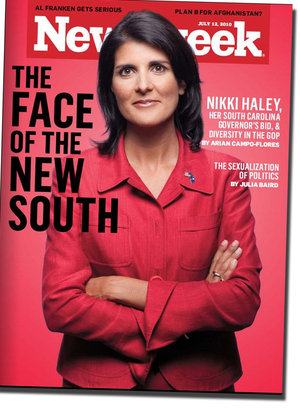
India Link in US: Nikki Haley Creates History as First Woman Governor

As Reported by The Hindustan Times

Parents of both Nikki Randhawa Haley, who on Tuesday won the governor’s election in South Carolina, and Bobby Jindal, the other Indian American governor of Lousiana, were born to immigrants from Punjab. Nikki Haley is the first woman and the second person of Indian origin after Bobby Jindal to become governor in the US. Jindal won the top job in Louisiana state in 2007.

While Nikki’s father Ajit Singh came to the US from Amritsar, Bobby Jindal’s (who name before his conversion to Christianity was Piyush Amrit Jindal) father Amar Jindal came from Malerkotla, not far from Amritsar.

Nikki’s victory is another sweet moment for Amritsar because the first Indian American Congressman Dalip Singh Saund, who served three terms (1957-1963) in the US Congress from California, also came from that city, the home of the Golden Temple, Sikhism’s most famous shrine.

Nikki, whose family is running a garment showroom called Exotica International in West Columbia since 1976, has been serving as a legislator in the South Carolina state assembly since 2004.

“I don’t do anything halfway – I’m in this race to win,” Nikki had told IANS in July taking time off her busy campaign for raising money.

“I am confident that come November, the people of South Carolina will send me to the Governor’s Mansion.

“When they (voters) do, I will immediately get to work to give them progress that makes them proud.”

Asked whether her Sikh background will matter in the race, she had said,”What matters most in South Carolina – and I imagine elsewhere in the country – is not the personalities of the candidates but the message they carry.

“Our message of bringing good government back to the people of this state, creating jobs by reforming our tax code so it’s flatter and fairer, and reminding government of the value of a dollar resonates with all the people of this state.

“I am very proud of my background and how I was raised. Just as in 2004 (when her opponents had raised the issue of background) I will hold my head up high and focus on what I can do for the people of this state.”

Nikki beat Democrat Vincent Sheheen who tried to steal her conservative agenda by projecting himself as “pro-life, pro-gun rights and pro-jobs”.

Pakistanis for Peace Editor’s  Note 11/03/2010– We at Pakistanis for Peace want to congratulate Nikki Haley for winning the governorship of South Carolina in a very tough and hard fought race. Both as an American as well as ethnically being a person from the Indian subcontinent aka Desi, we are proud to see her elected to serve as governor, despite disagreeing with her party on many issues.

Her rise as well as that of Governor Bobby Jindal of Louisiana to the top of American politics is a source of pride for all Desis, be they Indian, Pakistani, Bengali, etc. We invite people of all races, ethnicities, and backgrounds to join our Facebook group at Pakistanis for Peace and strengthen those who support peace between India and Pakistan and around the world. To join, clik  http://www.facebook.com/group.php?gid=37793413510&v=wall