Archive for the ‘ Democracy ’ Category

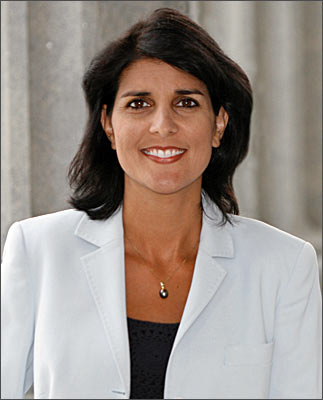
Meet Nikki Haley, the Next Indian American Governor of a US State

By Manzer Munir for Pakistanis for Peace

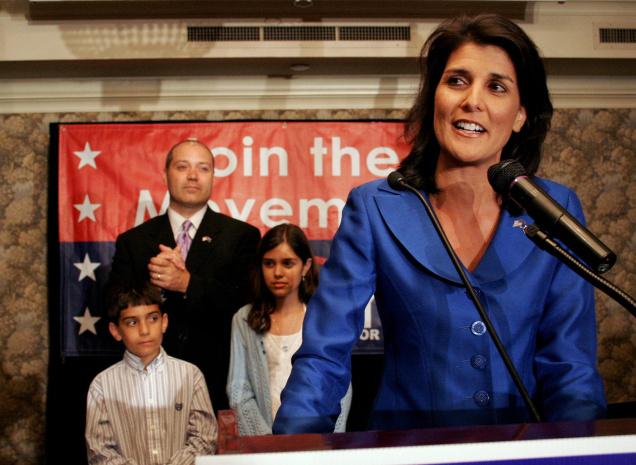
Nikki Haley is not destined to be the first Indian American governor of a US state. No that honor already belongs to Governor Bobby Jindal of Louisiana. Haley however is poised to do something greater and that is to become the first minority female governor as she competes for South Carolina’s highest office on Tuesday November 2.

Already the first Indian to hold office in South Carolina, she currently serves as a member of the South Carolina House of Representatives from the 87th district. A past president of the National Association of Women Business Owners, she is a CFO and an accountant by trade who worked in her mother’s apparel business that has grown into a multi-million dollar company.

Although born to Sikh parents, she converted to Methodism after marrying her husband Michael Haley and describes herself as a Christian. Her religious conversion as well as her ethnicity has not hampered her dreams of becoming the first female governor of South Carolina.  Neither have allegations of extramarital affairs or reports of paying taxes late.

Nikki Haley’s candidacy received a boost when Sarah Palin and Tea Party officials gave her their backing for the election and she is leading her opponent, Democrat Vincent Sheheen, in most polls. If she wins, this will not be the first time she has won in a state where politics is mainly a male run enterprise. In 2004, she challenged and won against Rep. Larry Koon who was South Carolina legislature’s longest serving member, having served 30 years in the House. She is a tough lady who also happens to have a concealed weapons permit and strongly supports gun rights, a staple of Republican Party values.

Aside from Haley, an unprecedented number of Indian Americans are contesting for office this year across the country. There is Manan Trivedi in Pennsylvania running for the House of Representatives in the state legislature. Others running for house seats in their states are Ami Bera in California, Raj Goyle in Kansas, Ravi Sangisetty in Louisiana, where Bobby Jindal is the governor, and Surya Yalamanchili in Ohio.

After making inroads into American boardrooms with top jobs in the corporate world such as Vikram Pandit, the CEO at Citibank and Indra Nooyi, the boss at PepsiCo, Indian Americans are exploring opportunities in politics which is good for America as more involvement by minorities in public service makes the country stronger and shows that there is room for everyone at the top. Many other minorities also can take encouragement from her candidacy and be mindful that race and ethnicity is not always a barrier for running for office and that the right candidate and platform can land a person in the governor’s mansion.

Should Nikki Haley be successful in winning the governorship of South Carolina, she will instantly become one of the rising young stars of the Republican Party and a face for women leaders the world over. Regardless where you stand on the political aisle, her candidacy and subsequent election will be a turning point in the US for Indian Americans and South Asians who have become an indispensable part of the nation’s fabric.

Pakistanis for Peace Editor’s  Note 11/03/2010– We at Pakistanis for Peace want to congratulate Nikki Haley for winning the governorship of South Carolina in a very tough and hard fought race. Both as an American as well as ethnically being a person from the Indian subcontinent aka Desi, we are proud to see her elected to serve as governor, despite disagreeing with her party on many issues.

Her rise as well as that of Governor Bobby Jindal of Louisiana to the top of American politics is a source of pride for all Desis, be they Indian, Pakistani, Bengali, etc. We invite people of all races, ethnicities, and backgrounds to join our Facebook group at Pakistanis for Peace and strengthen those who support peace between India and Pakistan and around the world. http://www.facebook.com/group.php?gid=37793413510&v=wall
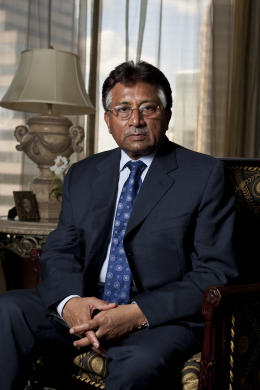
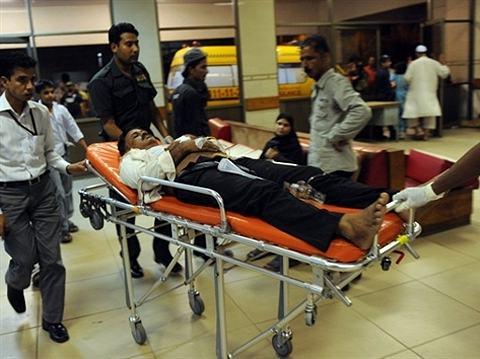
Pakistan’s Musharraf is Launching a Long-Shot, Long-Distance Bid to be President Again

By Zain Shauk for The Houston Chronicle

Former Pakistani President Pervez Musharraf hopes to retake the leadership of his country, and he is actively campaigning — in Texas.

Musharraf, who relinquished his presidency in 2008, has a set of Houston meetings planned this week with wealthy Pakistani-Americans and corporate leaders.

He is scheduled to meet today with former President George H.W. Bush and Joanne King Herring, a longtime advocate for development in Afghanistan and Pakistan who was played by actress Julia Roberts in the film Charlie Wilson’s War.

Musharraf, a London resident, announced this month the creation of a new political party and a plan to run in Pakistan’s 2013 parliamentary elections.

But he has kicked off his campaign in the U.S., a decision that could say more about the perceived influence of the Pakistani-American community in cities such as Houston than Musharraf’s chances for success, experts say.

Musharraf said he believes connecting with Pakistanis in America will give him enough backing — financially and politically — to carry him to victory in Pakistan.

“I do need financial support, and I would ask the American Pakistani diaspora to support me … because I see darkness in Pakistan,” Musharraf said. “Because I don’t see a political party or a leader in Pakistan to be able to tackle the problems that Pakistan is facing.”

While Musharraf enjoys backing from the Pakistani-American elite, experts say he will be hard-pressed to develop a political base within his country and likely does not stand a chance against more established parties.

He is also in no position to campaign within Pakistan. Safety is a concern after multiple assassination attempts during his presidency, and he would likely face prosecution in connection with several criminal cases currently pending in Pakistani courts, experts said.

Still, Musharraf’s interest in wooing deep-pocketed Pakistani-Americans is revealing, said Walter Andersen, associate director of the South Asia program at Johns Hopkins University.

Not only do Pakistani-Americans play a role in financially supporting candidates, but their meetings in America are covered by Pakistani news media and seem to give politicians the idea that they are gaining traction, Andersen said.

Former Prime Ministers Benazir Bhutto and Nawaz Sharif also visited U.S. communities while campaigning, he said.

“Whether it works is not important,” Andersen said. “The perception among them (politicians) is that it works.”

Wide-ranging itinerary
U.S. communities don’t play a visible role in Pakistani elections, but Musharraf could stand to gain from his current North America tour, said Jamal Elias, an expert on contemporary Pakistan and chairman of the religious studies department at the University of Pennsylvania.

Musharraf’s itinerary will include stops in Chicago, New York, San Francisco and Toronto. He visited Dallas last week.

“Appearing statesman-like is going to help him in Pakistan,” Elias said. “It’s not going to build a constituency, but it may help him.”

There are more than 75,000 people of Pakistani origin in the Houston area, which includes more than 800 doctors, executives in the energy and information technology industries and scores of business owners, according to the Consulate of Pakistan in Houston.

Many of them have in the past contributed financially to political parties in Pakistan and will likely do so again, said M.J. Khan, a former Houston city councilman and member of the Pakistani community.

Khan said he does not send money to Pakistani political candidates, but knows U.S. residents in Houston and elsewhere who do. “They’re an educated community, and they send a lot of resources to Pakistan,” Khan said. “So I think every politician in Pakistan feels the Pakistani-American community is an important group to reach out to.”

Tactics questioned
Some community members – including Sajjad Burki, president of a Houston chapter for a political party headed by Pakistani cricket star Imran Khan – were not sure of the former president’s legitimacy as a candidate. Burki questioned Musharraf’s campaign tactics and priorities.

“It doesn’t make sense for him to be creating a political party and campaigning abroad rather than campaigning in Pakistan,” he said.

Herring, who is hoping to build support for Musharraf’s candidacy, said she planned to back him because of his support for her development efforts in Afghanistan.

“I think that Musharraf is interested in my plan,” Herring said. “I know he is. He supports it.”

Seeks ‘legitimacy’
Musharraf, a retired general, said he hopes a possible election to office will give him “the legitimacy that maybe I didn’t have in the past” as someone who had seized control of the government in a 1999 military coup.

He spent much of a luncheon Tuesday discussing the threats to Pakistan created by instability and lack of development in Afghanistan. Asked how he would solve that and a host of other challenges, Musharraf paused and smiled at his audience.

“First of all, get me elected,” he said.

Suspected Political Violence Kills 25 in Pakistan

By Ashraf Khan for the Associated Press

KARACHI, Pakistan – Gunmen have killed at least 25 people in Karachi in the past 24 hours, raising tensions in Pakistan’s largest city as voters cast ballots Sunday to replace a provincial lawmaker murdered in August.

Police said they were still investigating the motives behind the shootings, but many so-called “target killings” in Karachi have been linked to gangs controlled by the city’s main political parties, which have been feuding for much of the last 20 years.

“We cannot say whether all the killings were politically motivated or some gangs were involved because the killings took place in different parts of the city and were not confined to the area where the elections were being held,” Karachi police Chief Fayyza Leghari said.

The two parties most linked to violence in Karachi — the Muttahida Quami Movement and the Awami National Party_ have their electoral bases in different ethnic groups that make up a large chunk of the city’s population.

The MQM claims to represent the Urdu-speaking descendants of those people who came to Karachi from India soon after the birth of Pakistan in 1947. It is secular and likes to speak out against the so-called Talibanization of the city, a jab at the Awami National Party, which represents the ethnic Pashtuns from the Taliban heartland in the northwest.

Raza Haider, the member of the provincial assembly who was gunned down in August, was a senior member of the MQM. In the wake of the shooting, the MQM accused the ANP of supporting Islamist militants suspected of being behind the murder — an allegation denied by the ANP.

Both parties were competing for Haider’s vacant seat, but the ANP announced Saturday evening that it would boycott the election, saying the MQM would rig the vote. The shootings began around the time the ANP made its announcement.

At least 25 people have been gunned down in Karachi since Saturday evening, said Zulfiqar Mirza, the home minister of Sindh province, where Karachi is the capital. He called on party leaders to come forward to “help us turn Karachi back into the city of light and peace.”

“If someone has a complaint, it should not be settled on the street,” Mirza told a news conference. “It is disappointing that we are shedding our priceless blood with our own hands.”

The dead include members of a broad range of ethnic groups in the city, he said.

Haider Abbas Rizvi, a senior MQM leader and member of Parliament, accused the ANP of being behind the shootings, saying “19 of our workers and supporters have been killed so far.”

Senior ANP member Amin Khattak denied the accusation, saying, “we are not involved in killings, and I think that this blame game should be stopped.”

Leghari, the police chief, said at least three of the killings did not seem to be politically motivated and were carried out during “other criminal offenses.”

The killings were reminiscent of the violence that followed Haider’s murder. At least 45 people died in the days following his killing.

Police have arrested at least 60 people in connection with the most recent shootings, Mirza said. But few killers in such cases have ever been brought to justice, and motives for the attacks have not been revealed.

The rising tension between the MQM and the ANP represents a serious danger to stability in Karachi, a city of some 16 million people and Pakistan’s commercial hub.

Pashtuns have been arriving in the city in greater numbers in recent years, fleeing Pakistan army offensives against the Taliban. An estimated 4 million Pashtuns are now in Karachi and many live in sprawling slums on the outskirts that are “no-go” areas for authorities.

Violence has surged in Karachi this year with hundreds of people slain in target killings. This increase has echoes of the city’s bloody past.

In the 1980s and 1990s, Karachi was regularly convulsed by violence in which hundreds were killed. MQM leader Altaf Hussain fled to London in 1992 as a result of that bloodshed and was granted asylum. He regularly addresses large gatherings of supporters by telephone link.

Playboy Son of Norh Korean Leader Raps Succession Plan

By Anita Chang for The Assoicated Press

BEIJING – The casino-loving eldest son of North Korea’s Kim Jong Il — once tipped to succeed him before trying to sneak into Japan to go to Disneyland — says he opposes a hereditary transfer of power to his youngest half-brother.

It’s the first public sign of discord in the tightly choreographed succession process, though analysts said Kim Jong Nam spends so much time outside his native land that his opinion carries little weight.

The chubby 39-year-old Kim, the oldest of three brothers who were in the running to take over secretive North Korea, is the closest thing the country has to a playboy.

Unlike many of his countrymen back home who lack the resources and connections to travel overseas, Kim travels freely and spends much of his time in China or the country’s special autonomous region of Macau — the center of Asian gambling with its Las Vegas-style casinos.

He sports the family pot belly and favors newsboy caps and an unshaven face, while frequenting five-star hotels and expensive restaurants. In June, he was photographed in Macau wearing blue Ferragamo loafers.

Speaking in Korean, he told Japan’s TV Asahi, in an interview from Beijing aired late Monday and Tuesday, that he is “against third-generation succession,” but added, “I think there were internal factors. If there were internal factors, (we) should abide by them.”

“I have no regrets about it. I wasn’t interested in it and I don’t care,” Kim said, when asked whether he is OK with the succession plan.

Kim said he hopes his brother will do his best to bring abundance to the lives of North Koreans and that he stands ready to help from abroad, according to a dubbed Japanese-language version of his remarks.

Kim Jong Un, believed to be 26, appeared with his father at Pyongyang celebrations on Sunday marking the 65th anniversary of the ruling Workers’ Party, saluting troops marching past in a massive military parade and waving to the crowd. The appearance was less than two weeks after he was named to a top political post and promoted to four-star general.

Andrei Lankov, a Russian expert on North Korea at Seoul’s Kookmin University, said Kim Jong Nam’s remarks were “almost a challenge,” but noted he has little influence due to the considerable time he spends abroad and lacks military support.

“I don’t see them rallying to Kim Jong Nam,” he added, emphasizing that key generals who run the military far prefer Kim Jong Un, who they see as young, inexperienced and thus easy to control.

Kim Jong Il is known to have three sons — one from his second wife and two from his third. He favors his youngest, Jong Un, who looks and is said to act like his father, according to the leader’s former sushi chef. He studied at a Swiss school and learned to speak English, German and French, news reports have said.

In contrast, Kim often derided the middle son, Jong Chul, as “girlish,” the chef, who goes by the pen name Kenji Fujimoto, said in a 2003 memoir. Little is publicly known about the brother, except that he also studied in Switzerland and is a fan of U.S. professional basketball.

Jong Nam is widely believed to have fallen out of favor after embarrassing the government in 2001 by being caught trying to enter Japan on a fake passport, saying he wanted to visit Tokyo Disneyland.

Experts said Kim Jong Nam will most likely continue living abroad, with fewer reasons than ever to return to Pyongyang.

“In the future Kim Jong Nam will have little influence on the political situation in North Korea. It’s very unlikely he will go back. His force within the country is now almost nonexistent,” said Cai Jian, deputy director of the Center for Korean Studies in Shanghai’s Fudan University.

For Better or Worse, White House Bets on Pakistan’s Civilian Government

Reported by Josh Rogin for Foreign Policy magazine

The Obama administration has always been clear that the path to winning the war in Afghanistan goes through Pakistan. But if Bob Woodward’s new book is accurate, the White House considers its war effort much more dependent on the success and survival of Pakistan’s civilian government than was previously known.

Woodward’s “Obama’s Wars,” which hit bookstores Monday, sheds new light on the Obama administration’s vast outreach to the Pakistani civilian government led by President Asif Ali Zardari. It paints a picture of an administration working hard to court the Pakistanis while remaining somewhat confused about Pakistani thinking on a range of issues.

Obama himself was confused about the nature of Pakistani intentions during two crucial decision points in his administration’s Afghan policy — the March 2009 strategy rollout and the deliberations in November 2009, which resulted in a troop surge and a huge expansion of covert operations in Pakistan. However, based on advice from the majority of his key advisers, he nonetheless tried to entice Pakistan to commit to a deep and long-term partnership with the United States by offering the Zardari government incentive after incentive, with relatively few pressures.

According to Woodward’s account, the centrality of Pakistan was championed early on by Bruce Riedel, the Brookings scholar who was brought on as a key figure in the Obama administration’s March 2009 Afghanistan strategy review.

Riedel, who referred to Islamist extremists in Pakistan as the “real, central threat” to U.S. national security, personally convinced Obama, only two months after he took office, that Pakistan needed to be the centerpiece of his new strategy. Riedel’s plan involved arming the Pakistani military for counterinsurgency and increasing economic and other forms of aid to the civilian government. This marked the beginning of the term “Af-Pak,” which drove the administration’s belief that stability in Afghanistan and Pakistan were inextricably linked.

Riedel’s Pakistan focus was not due to his confidence that the civilian government could control the military and intelligence services. In fact, he referred to Army Chief of Staff Gen. Ashfaq Parvez Kayani as a “liar” with regards to the activities of the secretive Inter Services Intelligence agency (ISI), which is widely suspected of aiding the Taliban insurgency. Then Director of National Intelligence Dennis Blair reportedly echoed Riedel’s views on this matter.

Inside the administration, Blair argued that Obama was approaching Pakistan with too many carrots and not enough sticks. He at one point advocated bombing inside Pakistan and conducting raids there without the Pakistani government’s approval. “I think Pakistan would be completely, completely pissed off and they would probably take actions against us … but they would probably adjust,” he once told Obama.

Obama, however, opted to pursue a less confrontational path. He concluded the central task would be convincing the Pakistani leadership to throw its lot in with the United States He said at the time of the initial strategy review in March 2009, “that we had to have a serious heart-to-heart with Pakistani civilian, military and intelligence leaders.”

Later that year, when making the decision to send an additional 30,000 “surge” troops to Afghanistan, Obama knew that his plans to also expand the U.S. military presence in Pakistan and widen drone strikes would be a hard sell to the Zardari government. In an attempt to sweeten the deal, Obama framed the policy as a new “strategic partnership” with Pakistan, even tying the success of the U.S. mission in Afghanistan to the survival of Zardari and the legacy of his deceased wife Benazir Bhutto.

“I know that I am speaking to you on a personal level when I say that my commitment to ending the ability of these groups to strike at our families is as much about my family’s security as it is about yours,” Obama wrote in a letter to Zardari delivered by National Security Advisor Jim Jones and counterterrorism advisor John Brennan.

Zardari’s response to that letter reinforced what many in the administration already suspected: Pakistan’s government was in the grips of an internal struggle over whether to embrace the United States. Zardari’s initial response focused heavily on India, though the Pakistani president only referred obliquely to his country’s strategic rival. Woodward reports that the White House believed the letter was written by the Pakistani military and the ISI. However, the Zardari government did end up accepting Obama’s offer.

Obama’s top advisors told the U.S. president that he would have to accept something short of complete success in convincing Pakistan to turn away from its longstanding obsession with the military threat it perceives from India.

When Obama had a meeting with Zardari in May 2009, he told the Pakistani president the he did not want U.S. taxpayers to be funding Pakistan’s military buildup against India “We are trying to change our world view,” Zardari told Obama, “but it’s not going to happen overnight.”

At times, Obama was downright puzzled by his advisors’ advice regarding Pakistan. For example, intelligence reports confirmed that Pakistani officials were afraid that the United States would leave Afghanistan too early, as they believed had occurred after the end of the resistance to the Soviet regime in the 1980s. On the other hand, Pakistan worried that if the United States was too involved in Afghanistan, it might aid in the establishment of a larger Afghan army than Islamabad was comfortable with.

“What am I to believe?” Obama asked his senior staff. Secretary of State Hillary Clinton, Special Representative Richard Holbrooke, and Defense Secretary Robert Gates all told him these were the types of contradictions that were commonplace when dealing with Pakistan.

For its part, the Pakistani government was just as confused and puzzled by the Obama administration. Woodward recounts one anecdote, in which Zardari tells the former U.S. Ambassador to Afghanistan Zalmay Khalilzad that he believed the United States was involved in orchestrating attacks by the Pakistani Taliban against the Pakistani civilian government.

Pakistan’s Ambassador to Washington Husain Haqqani, a key go-between, tried several times to explain to the Obama administration how to court Pakistani leaders, comparing the dynamic to “a man who is trying to woo a woman.”

“We all know what he wants from her. Right?” Haqqani said in a meeting with Jones, Deputy National Security Advisor Tom Donilon and the NSC’s Gen. Doug Lute.

“But she has other ideas. She wants to be taken to the theater. She wants that nice new bottle of perfume,” Haqqani told them. “If you get down on one knee and give the ring, that’s the big prize. And boy, you know, it works.”

Haqqani said the “ring” was official U.S. recognition of Pakistan’s nuclear program as legitimate. He also warned that the Pakistanis would always ask for the moon as a starting point in negotiations. He compared it to the salesmanship of rug merchants.

“The guy starts at 10,000 and you settle for 1,200,” Haqqani told the Obama team. “So be reasonable, but never let the guy walk out of the shop without a sale.”

Although the Obama administration has had some success improving the relationship between the two governments, Pakistan’s civilian leadership still faces a series of difficulties in its goal of exerting control over its entire national security structure. Stability has also been threatened by the enormous pressures resulting from the war that it is waging inside its own borders, and political attacks leveled against it from the media and the courts. Zardari’s perceived sluggish response to the devastating flood crisis has cost him even more credibility among the Pakistani public.

But while the end of Zardari regime has often been predicted, it appears that he will remain in place for the foreseeable future. The Obama administration, meanwhile, is aware of how crucial his cooperation remains for the success of the mission in Afghanistan.

When Woodward sat down for his interview with Obama earlier this year, he asked the president if the situation was still that Pakistan is the centerpiece of the U.S. strategy. “It continues to this day,” Obama replied.

Prominent Pakistani Politician Murdered Outside His London Home

By Laura Roberts and Heidi Blake for The Telegraph

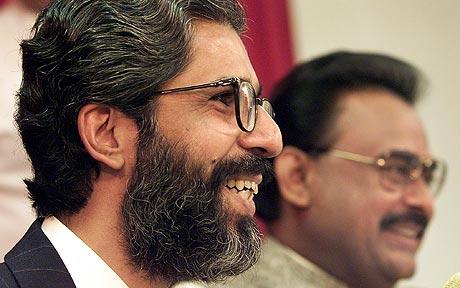
Imran Farooq, a prominent Pakistani politician, has been murdered outside his home in London. Dr Farooq, 50, was repeatedly stabbed in the head and neck during the assault in Edgware, north London.

He was a leading member of the Muttahida Quami Movement (MQM) party, which is one of the largest in Pakistan.

There were suggestions from Pakistan that he may have known his killer. When police arrived at the scene, they found Dr Farooq’s body outside his house.

A spokesman for the Metropolitan Police said officers attended an address in Green Lane, Edgware, shortly before 5.30pm after reports of a serious assault. “On arrival, officers found a single Asian man aged 50 with multiple stab wounds and head injuries,” the spokesman said.

“Paramedics attended the man but he was pronounced dead at the scene.”

Next of kin have been informed and no arrests have been made.

Dr Farooq was expected to attend a birthday celebration at the MQM headquarters on London’s Edgware Road on Thursday night but the event was cancelled at the last minute. Police said it was too early to know if the murder was politically motivated.

The politician claimed asylum in Britain after spending seven years on the run as one of Pakistan’s most wanted fugitives. He was accused of a range of charges, including murder and torture.

He has not returned to Pakistan since his arrival in England in 1992.

He claimed that year that he was wanted “dead or alive”.

“This gave licence and impunity to every individual in Pakistan to assassinate me,” he said.

Dr Farooq said he spent more than seven years in hiding in Karachi, southern Pakistan. He continued: “It was impossible for me to remain in Pakistan due to the continued threat on my life and liberty.”

He insisted the claims against him in Pakistan were politically motivated and continued his involvement with the party from Britain.

Last month Raza Haider, another MQM member, was gunned down with his guard as he attended a funeral near the centre of Karachi. The killing triggered violence in which dozens of people were killed and at least 100 wounded.

Azeem Tariq, the former chairman, was murdered in Karachi 13 years ago. Intruders entered his home and shot him as he slept.

MQM, based in Karachi, is the fourth largest party in Pakistan and is part of the ruling coalition government. It has a strong anti-Taliban stance, although rivals accuse it of exaggerating the threat of the Taliban.

The party represents mainly descendants of Urdu-speaking migrants from India who settled in Pakistan when it was created in 1947.

A statement on the MQM website said the party had declared a ten-day period of mourning in Pakistan and around the world.

London has played host to many of Pakistan’s exiled politicians. Gen Pervez Musharraf, the former president, lives in self-imposed exile in London.

$11-Million Monument to Benazir Bhutto: APPROVED

By Shirin Sadeghi for The Huffington Post

This week, as flood waters ravage Pakistan’s land and 20 million of its people, and after Pakistan’s own president, Asif Ali Zardari, managed to muster only $58,000 of his own vast wealth to the flood relief (a donation nearly doubled by Angelina Jolie), yet another devastating blow has hit Pakistan: news that the government has now approved an $11-million statue of the President’s assassinated wife, Benazir Bhutto.

And yes, this is Pakistani taxpayer money.

The statue itself will cost 4.7 million dollars, and it will be built on land that is worth another 5.9 million dollars. Apparently, Mr. Zardari, whose personal wealth is estimated to be more than 1 billion dollars, just couldn’t afford to donate the land or the statue in honor of the mother of his children.

His government decided the people of Pakistan could afford it, though. People who, according to the World Bank, have an average per capita income of $870 annually.

Admirably, the people of Pakistan have taken it upon themselves to try and stop this misguided use of funds in the midst of a national disaster. A legal action failed, but now a petition is available online.

Another day, another battle in the Pakistani people’s war for a representative government.

Musharraf Says Plans to Form New Party, Contest Pakistan Elections in 2013

By Simeon Bennett for Bloomberg News

Pervez Musharraf, the former president of Pakistan, said he plans to form a new political party and contest elections scheduled for 2013, before seeking to become prime minister or president.

“A time has come in Pakistan where we need to introduce a new political culture, a culture which can take Pakistan forward on a correct democratic path, not an artificial, make-believe democratic path,” Musharraf, 67, said in an interview with the British Broadcasting Corp.

Musharraf, a former army chief who seized power in 1999 and became a U.S. ally against terrorism, stepped down as president in 2008 to avoid impeachment charges for illegally seizing power and mishandling the economy. He left Pakistan after resigning and now lives in London, according to the BBC.

Police in Pakistan last August issued charges against him for unlawfully keeping top judges under house arrest in 2007, when he imposed emergency rule in the country.

Musharraf said if he returns to Pakistan he will face some legal cases, may risk being killed, and will answer every allegation against him, the BBC reported.

Opinion polls, which show Musharraf’s popularity is low in Pakistan, can be manipulated, he said, adding that his popularity is increasing.

“As far as Pakistan as a state and the people of Pakistan are concerned, we did wonders for them in those seven years, which should be compared with the 50 years of the past,” Musharraf said.

Republican Accuses Indian American Challenger of Playing Race Card

As Reported By The Hindu

A Democratic Indian American Congressional candidate for the November elections to the US House of Representatives has been accused by his rival of playing the race card.

“The only one who has played the race card here is him, by going to Indian-American groups to raise money,” Mark Campbell, spokesman of sitting Republican Congressman Jim Gerlach, told Congressional newspaper ‘The Hill’ in an interview.

As per latest news reports, Geralch is facing a tough challenge from Democrat Manan Tridevi in his Pennsylvania 6th District. Democratic National Committee Chairman Tim Kaine is headed to Philadelphia to raise money for him.

Cutting across party lines, the community, which has one of the highest per capita incomes across all the ethnic groups in the US, are contributing significantly for all the six Indian American candidates who are running for a record number of Congressional seats this year.

“Dr Manan Trivedi is running a campaign focused on the Pennsylvania families and businesses struggling in this economy. Gerlach, on the other hand, is making these ethnic charges to distract voters from his record of supporting the economic policies that created this recession,” Kathy Kulkarni, president of the Indian American Leadership Initiative (IALI), said in a statement.

Noting that Trivedi is now one of the Democratic Party’s top Congressional candidates, IALI said: “Let’s make Jim Gerlach regret the day his campaign attacked the Indian American community.”

It also urged the community to make a generous contribution to Trivedi’s campaign.

Terming it as an incredible accusation to make in an American political campaign where it is quite common for candidates from both parties to seek support from ethnic organisations, IALI said: “You would never see Gerlach attack an Italian American, Jewish American or Greek American candidate for raising money from their ethnic communities.”

It is ludicrous for Gerlach to say an Indian American candidate should live by different rules, Kulkarni said.

“His campaign statement shows disdain for the Indian American community and the Congressman should apologise immediately,” Kulkarni demanded.

In an election which has seen the largest number of Indian Americans running for office, this is not the first time that a candidate has experienced an attack by his/her political opponent in racial or ethnic lines.

Last month in Kansas, Republican Mike Pompeo apologised to his main rival Democrat Raj Goyle after his campaign tweeted a link to a blog post that included a racial slur aimed at Goyle and labelled President Obama as a Muslim.

The Pompeo campaign said the link to the post was sent in an error. “The statements of the blogger in no way reflect my views,” the Republican said in a statement. “There is no place in campaigns or in public discourse for language of this nature,” he added.

In California, Democratic nominee and Indian American Ami Bera returned the USD 250 received from a donor affiliated with the Council on American Islamic Relations (CARI), a group whom his Republican rivals alleged is linked with terrorists.

CARI, however, has denied these charges.

Bera has alleged that his rival Republican Congressman Dan Lungren’s campaign has been using the diversionary tactics of “fear and race” in order to deflect from jobs, the economy and healthcare — what his campaign is all about.

Lungern’s campaign denies such an allegation.

“Was it race-baiting when Barbara Boxer withdrew an award from the very same CAIR executive director? Bera is a rookie candidate making rookie mistakes,” a spokesman of Lungern told ’The Hill’

The other three Indian Americans running for the Congress are Reshma Saujani, who is giving a tough primary challenge to Congressman Carolyn Maloney in New York; Ravi Sangisetty, running for the seat left open by Congressman Charlie Melancon and Surya Yalamanchili who is challenging Republican Congressman Jean Schmidt in Ohio.

While all the six Indian American candidates running for the seats in US House of Representative are Democrats, leading the community is the Republican Nikki Haley who is running for the gubernatorial race.

The Next Ronald Reagan?

By James T Hackett for The Washington Times

Ronald Reagan was an American original and a unique political phenomenon. He combined unusual charm and personality and showed common sense that connected with the average American. He was attacked viciously by the political elites, who saw his popular appeal – and his opposition to big government and high taxes – as a threat to their domination of the nation’s politics.

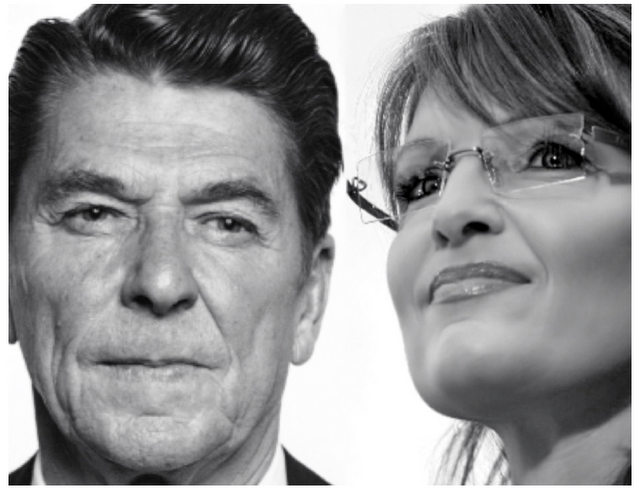
Conservatives have been searching for a new Ronald Reagan, so far without success. But perhaps the Gipper’s heir is in sight. Sarah Palin is remarkably similar to the late president. The Mama Grizzly from Alaska is certainly an American original, and her success in picking political winners against the odds has shown that she is no less a political phenomenon. And the policies she supports are similar – small government and low taxes, plus energy self-sufficiency and a balanced budget.

Just as Reagan was denigrated as an ex-movie actor with limited education, Mrs. Palin is portrayed as an ex-model with limited education, which means she did not go to Harvard or Yale, like most recent presidents and much of the liberal elite. The fact that elites from those institutions have nearly destroyed the economy and bankrupted the country does not reduce their arrogance or diminish their efforts to hold onto power.

Mrs. Palin was roundly criticized when she left the office of governor of Alaska, but since then, she has been riding a populist wave accompanied by Tea Party activists who want a return to common sense and responsible spending. President Obama promised change, which many sought after the budget excesses of the George W. Bush years and the pork-obsessed Republican Congress. But candidate Obama was unclear, telling each audience what it wanted to hear.

Now we know what he meant by change – a much bigger federal government, excessive government spending, harsh new energy and environmental regulations on business, spending in support of labor unions and the bailout of profligate state governments. Under Mr. Obama, the environmentalists are running amok, spending billions on windmills, electric cars and other green-energy schemes while blocking oil drilling in Alaska and the Gulf of Mexico.

The administration does not care that giving money to the states only perpetuates their overspending while doing little to help unemployment. At the same time, their anti-oil bias and excessive regulation are reducing jobs in the all-important private sector. The Keynesian economists in control will not accept that their policies are aggravating the problem.

Most Tea Party activists are grass-roots Americans who see what Washington elites cannot, which is why they keep winning. Sarah Palin has become a political power by encouraging Republican women to run for office and by her amazing ability to pick winners – and often help them win – even against heavy opposition spending. With Mrs. Palin’s support, Republican women are becoming politically successful in growing numbers.

Mrs. Palin has endorsed more than 20 winners in Republican primaries this year, many underdogs who were given little chance against the party’s chosen candidates. Among her notable successes have been the nominations of Nikki Haley, an Indian-American woman, for governor of South Carolina; Carly Fiorina, a former corporate executive running against Sen. Barbara Boxer in California; Rand Paul, a maverick candidate for U.S. Senate in Kentucky; and Susana Martinez, running for governor of New Mexico. Now she is supporting another maverick, Sharron Angle, in her high-profile race against Harry Reid, the Democrats’ Senate leader.

But Mrs. Palin’s biggest success has to be the amazing turnaround in last week’s Alaska election for the Republican Senate nomination. It is very hard to oust an entrenched incumbent such as Sen. Lisa Murkowski, daughter of a former senator and governor, with eight years in office. Her opponent, a virtually unknown lawyer, Joe Miller, was considered a hopeless candidate, with polls showing him far behind and practically no one picking him to win, except Sarah Palin.

Yet, with Mrs. Palin’s endorsement, he came from behind to win the Election Day count by 1,668 votes. The final result waits for the counting of absentee and contested ballots, but the turnaround has nonetheless been spectacular. Mrs. Palin has shown she is a force to reckon with, which is why the left is attacking her so relentlessly.

The question is whether she can apply her keen political instincts and the grass-roots support she generates to become the next Ronald Reagan. The liberal powers clearly fear that she can.


-James T. Hackett is a former Reagan administration official and Heritage Foundation writer.

Cutting Hillary Clinton Some Slack

By Mosharraf Zaidi for The News International

Poor Americans. This is the fellow that Secretary of State Hillary Clinton has to stand beside as she tries to squeeze more juice out of a Kerry-Lugar Bill that had its lifeblood squeezed out of it last year by the Pakistani establishment, when it first became US law. The frustration from that reaction still riles the Americans. So much so that Hillary Clinton, who is a role model and an inspiration, can’t seem to let go. On every trip she reproduces a Bin Laden outburst that is militarily and strategically irrelevant for the US, but that serves as an enduring cancerous tumour for America’s public diplomacy goals in Pakistan.

Still. Mrs Clinton needs to be cut some slack. Her tireless advocacy for health care around the world, and her enduring compassion for South Asians — Indians, Pakistanis, Bangladeshis, Muslims, Hindus, men, children, and most of all, women — is singularly unique among either Democrats or Republicans.

The western media seems as fabulously smitten by Mrs Clinton as I am. The wires, the newspapers and the electronic media all reported Mrs Clinton’s announcement of the allocation of $500 million worth of projects as headline news, when really, it represents the fulfilment of only one-third of Kerry-Lugar-Berman’s sacred covenant with the Pakistani people. One of the most telling things about that covenant? It was signed by the US House of Representatives and the US Senate. It was, in short, a covenant between the US government and the American people, with the US government acting as a proxy for the Pakistani people.

Perhaps now Pakistanis can better understand the frustration of the John Kerrys, the Hillary Clintons and the Richard Holbrookes of the earth. Top US policymakers have fought for over two years to win the Kerry-Lugar Bill. Since then, two things have kept that money from flowing into Pakistan. The first is Mr Holbrooke’s decision to dispense with the Clintonian (Bill, not Hill) model of US aid disbursement through large contracting firms that Americans often refer to as Beltway Bandits. That decision, while long overdue, was rushed and was made in the wrong country, at the wrong time. American development assistance, which is not routed solely through USAID, but often through half a dozen different US departments (or ministries), has been in desperate need of an overhaul for years. But to attempt to reform the instrument of aid delivery in Pakistan, at the climax of Obama’s war in Afghanistan, has been a disastrous decision. The American international aid community is so removed and so distant from the mainstream of western assistance thinking (spearheaded by the OECD and captured in the Paris Declaration) that it doesn’t quite know how to deal with large sums of money without the Beltway Bandits. This has meant that the Kerry-Lugar money has been parked in Washington DC, with a clear destination, but no vehicle to take it there.

The second thing that has kept the Kerry-Lugar money from being spent is the government of Pakistan itself. Pakistan has no clarity whatsoever about what its development priorities are. It required the intervention of the military chief back in March to summon the federal secretaries to begin to articulate a wishlist of pet projects this government would like to see come to fruition. Indecision and the absence of any coherent development strategy within Pakistan have meant that the US government has had to try to figure out what Pakistan wants, kind of on its own. This may seem like comedy noire, but it’s really not funny at all.

The problem with Pakistani government today is that it doesn’t enjoy the competent stability it once used to through the bureaucracy. Today’s Pakistan’s bureaucracy, while made up of individually brilliant officers, is a collection of inward-looking dinosaurs that cannot see beyond their GOR houses, their I-8 plots and their post-retirement benefits. Those officers, in years past, used to be the eyes and ears of oft-changing governments that would seek the guidance of senior bureaucrats in the federal ministries and at the provincial headquarters. While there’s been no discernable change in the quality of governance that democratically elected politicians can render, there has been a severe nosedive in the quality of officers available to either the federal or provincial governments.

Part of the reason for the exodus of top-tier officers during the Musharraf era was the curtailment of powers of district managers, under decentralised local governments. But the decentralisation argument is a red-herring for a much more fundamental shift in Pakistani bureaucracy. While being a CSP or DMG officer was an instrument of social mobility in the 1970s or 1980s, it is now a barrier to the personal and professional growth of officers. Many of Pakistan’s brightest officers can afford to be well-paid UN, World Bank and IMF staffers. Many others can do even better at Wall Street and on Madison Avenue. Still others can be brilliant academics. Across the board, since 1999 we have seen exactly this. An exodus of top-shelf talent that might have been able to deal with rents, with incompetence, and with the heat, but not with the disrespect that the military and political class have for educated Pakistanis in the employ of the government of Pakistan.

So how does all this relate to Mrs Clinton’s troubles in Pakistan? Simple. No matter how democratically legitimate, when the blind lead the blind, there is a problem of vision. Pakistani politicians are so disconnected from any kind of global narrative that it will be a generation before we produce a Chidambaram, a Krishna or a Mukherjee that can win elections without the help of their gaddi (see: Shah Mehmood Qureshi), or the kindness of the Arbab Ghulam Rahims of the world (see: Shaukat Aziz). The nauseating outburst of the foreign minister on Friday was a demonstration that winning an election does not enable you to win an argument. In short, Pakistan’s current political class cannot muster politically legitimate actors that are also competent at statecraft.

Enter the advisory class. This is where the Husain Haqqanis, the Shaukat Tarins and the Dr Hafeez Shaikhs enter the fray. No fake degrees here. Only pedigree. Their problem is of an entirely different nature. They don’t have any stake in Pakistani politics — they enter as unknowns at the thaana kuthchehri and galli-mohalla level, and they leave as unknowns at the thaana kuthchehri and galli-mohalla level. They can talk about all the right kinds of reform, but they can’t deliver. More worryingly, their reform-speak is often deluded, because it is devoid of any political rigour. “Let’s clip military powers by marketing bold ideas in Washington DC, instead of Rawalpindi.” Well. We’ve seen how that has turned out. “Let’s raise taxes!” Sure. Because nobody else has ever thought of that! “Let’s improve education.” Sure. Because it takes genius to figure out that education is a problem. Advice that is anchored in Rubinomics and Bretton Woods theology has been failing Pakistan for the entire duration of Pakistan’s lifetime. This should hardly be a surprise. It never works anywhere.

And that is why Shah Mehmood Qureshi is wrong, again. Perceptions won’t change. $500 million worth of pet projects is a supremely sweet gesture. But even $500 billion worth of aid, delivered through Beltway Bandits, NGOs, budget support or otherwise can’t change the lives of Pakistanis. Only organic reform can achieve such noble goals. When the strategic dialogue in October picks up where this one leaves, Pakistan will still have no CT strategy, no development strategy, an inflated defence budget, no civil service reform, and no hate-speech legislation. All the money in the world can’t change that. And that’s not Hillary Clinton’s fault. That one’s on us.

Clinton Reaffirms US Commitment to Pakistan

By Ayaz Gul for The Voice of America

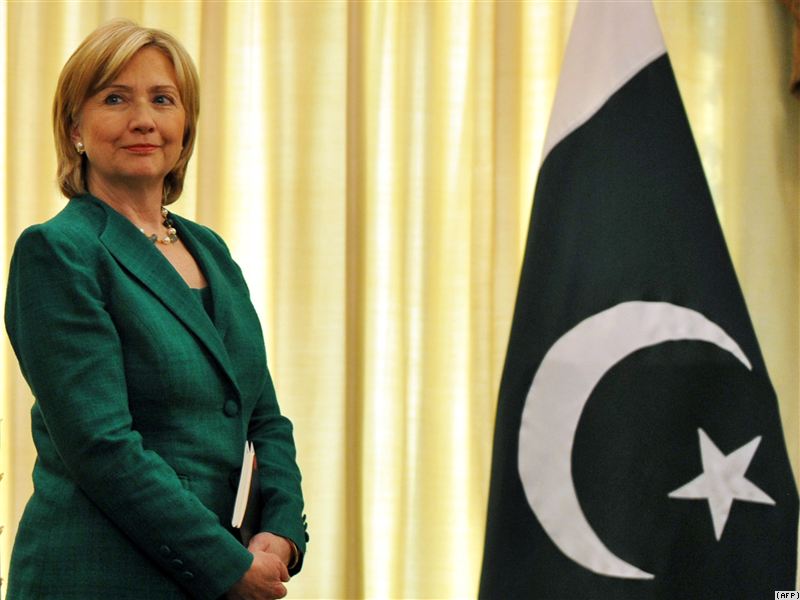
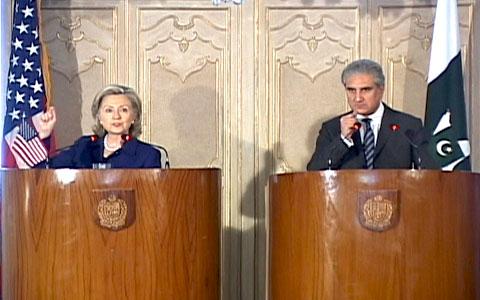
Concluding a second round of the so-called U.S.-Pakistan strategic dialogue in Islamabad, Secretary of State Hillary Clinton on Monday announced more than $500 million in several new aid programs for Pakistan.

The string of new projects unveiled by Clinton during a joint press conference with Pakistani Foreign Minister Shah Memood Qureshi are designed to help Pakistan meet its energy needs and boost power generation, health and agricultural development. The programs are the first to be launched under U.S legislation passed last year tripling civilian aid for Pakistan to $7.5 billion during the next five years.

Secretary Clinton said the United States hopes the new aid will translate into real life improvements for families and communities, describing them as long-term investments in Pakistan’s future.

“We are committed to building a partnership with Pakistan that of course strengthens security and protects the people of Pakistan, but goes far beyond security,” Clinton said. “We want to help you drive economic growth and prosperity, strengthen your democratic government institutions and expand access to the tools of opportunity.”

Pakistan is playing a key role in the international fighting against Taliban insurgents in Afghanistan. But public opinion in Pakistan still views U.S. motives with a considerable amount of suspicion. The skepticism stems from the U.S decision to abandon support for Pakistan after Soviet forces withdrew from Afghanistan.

But Secretary Clinton says she can see positive change resulting from what she called deeper and broader bilateral engagements in recent years.

“We have moved beyond a standoff of our misunderstandings that were allowed to fester and not addressed… to a position where we are engaged in the most open dialogue that I think our two countries have ever had,” she said.

Foreign minister Qureshi also agreed that the enhanced U.S cooperation in various fields such as energy, power, health, agricultural and education sector is critical for changing the public perception in Pakistan.

“The opinion of the United States will change when the people of Pakistan see that their lives have changed,” said Mr. Qureshi.

Sunday, Clinton attended the signing of a landmark trade deal reached by Pakistan and Afghanistan, after years of negotiations. The United States has been pushing Afghan and Pakistani leaders to improve bilateral relations it says will contribute to the fight against extremists.

Secretary Clinton’s next stop as part of her Asia trip will be Kabul, where she will attend an international conference on Tuesday.

At the news conference in Islamabad, she reiterated that insurgents who wish to reconcile must lay down their arms, renounce partnership with al-Qaida and accept Afghanistan’s constitution.

“It seems to us that there will be some who are willing to meet those conditions and others who are not. And we would strongly advise our friends in Afghanistan to deal with those who are committed to a peaceful future where their ideas can compete in the political arena through the ballot box, not through the force of arms.”

Taliban insurgents have stepped up attacks against Afghan and U.S-led coalition forces in recent months. More than 50 foreign troops have died in July while the previous month was the deadliest for international forces since the war against Taliban and its allies began nine years ago.

Pakistani woman appointed to Canadian Senate

By Latafat Ali Siddiqui for Dawn

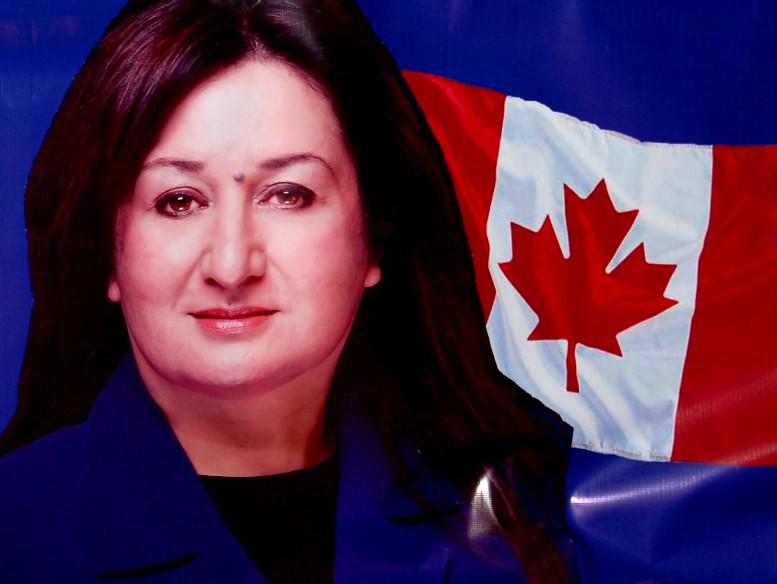
 Salma Ataullahjan on Friday became the first Canadian woman of Pakistani origin to get into the Senate when Prime Minister Stephen Harper appointed her to fill a vacancy from the province of Ontario.

“I am pleased to announce the appointment of Salma Ataullahjan to the Senate of Canada,” said Prime Minister Harper in a statement on Friday evening.

“A professional, artist, parent and strong activist for the South Asian community in the Greater Toronto Area, Ms Ataullahjan brings a remarkable dedication and energy to her new role as a senator for the province of Ontario,” he said.

The appointment comes into effect immediately. “I’m delighted to hear the good news of my appointment as a senator,” said Ms Ataullahjan, who immigrated to Canada from Pakistan 31 years ago, becoming a Canadian citizen in 1989.

She pledged to support the government in its efforts to make the Senate more democratic and accountable, including bringing in legislation to limit the Senate’s tenure and to allow provinces to elect senators.

Ms Ataullahjan, who belongs to the family of the late Khan Abdul Wali Khan, has settled in Toronto and is associated with the real estate sector for 21 years.

She has served several organizations, including as founder and chairperson of the Parent Council of David Lewis Public School, as member of the South Asian Regional Council and on the executive of the Pakistani Canadian Professionals and Academics.

She has also worked for the Toronto chapter of the Citizens Foundation, a charity that builds not-for-profit schools in poor districts of Pakistan. Ms Ataullahjan is an accomplished artist and paints in watercolours. She and husband Saleem have been married for 31 years and have two daughters.

Pakistan Set to Ban More Web Blasphemy and Monitor Yahoo!, Google, Amazon, Bing…

By Rik Myslewski for The Register

Pakistan announced Friday that it will monitor Yahoo, Google, MSN, Hotmail, YouTube, Amazon, and Bing, and will block links and content that it deems anti-Islamic.

“If any particular link with offensive content appears on these websites, the [link] shall be blocked immediately without disturbing the main website,” Pakistan Telecommunication Authority spokesman Khurram Mehran told the Associated Press.

In addition to the link-blockage of the seven named high-traffic sites, Pakistan web-watchers have also completely blocked 17 lesser sites, including, for example, Islam Exposed, which includes links to blaspheming articles such as “Muhammad, A Symbol Of Terrorism” along with over-the-top posts such as “Joe Lieberman Spews Excrement!”.

The monitoring and blockage comes in response to a court order, as did Pakistan’s recent ban on Facebook due to its hosting of an “Everybody Draw Mohammed Day” page — a page that was subsequently taken down, although Facebook officials claimed to have had no part in its removal.

The complete banning of Facebook was lifted after censorship official Najibullah Malik was satisfied that the site had lifted all all “sacrilegious material”.

In addition to the Facebook ban, Pakistan last month blocked, then unblocked YouTube for depictions of the prophet Muhammad, a practice that many Muslims find blasphemous.

“We decided that this kind of information was going to hurt people’s feelings. We have directed the [Pakistan Telecommunications Authority] to block all and any sites that display those caricatures,” Malik told The Guardian at the time of the YouTube ban.

The Guardian, reporting on internal controversy surrounding the YouTube ban, quoted one Pakistani tweeter as tweeting: “Way to go assholes. Why don’t you just cut us off from the internet and get it over and done with.”

Despite lifting the Facebook and YouTube bans, Pakistan hasn’t given up its censorship efforts. “At least 800 individual web pages and URLs have been blocked since the government’s orders to shut Facebook and YouTube,” Wahaj us Siraj, a spokesman for the Internet Service Providers Association of Pakistan (ISPAK), told AFP.

In perhaps the most bizarre development in the country’s campaign to remove blasphemy from its interwebs, Pakistan’s Deputy Attorney General recently launched a criminal investigation against Facebook founder and CEO Mark Zuckerberg for his role in the “Everybody Draw Mohammed Day” dust-up.

Although no charges have been filed in the case, the Pakistani newspaper The News International reports that the law that prompted the Zuckerberg investigation, Section 295-C of the penal code, carries with it penalties of “death, or imprisonment for life”.

Not all Pakistanis, of course, are in support of their government’s draconian crackdown on what Section 295-C refers to as “Use of derogatory remark etc, in respect of the Holy Prophet … either spoken or written, or by visible representation, or by any imputation, innuendo, or insinuation, directly or indirectly.”

“It’s absurd,” journalist and filmmaker Hasan Zaidi told The Guardian. “They haven’t thought this through. The logical conclusion is that we should shut our eyes, stick our fingers in our ears and ban the entire internet, even email.”

Nadeem Paracha of Pakistan’s Dawn news service wrote in his “Smokers’ Corner” column: “By continuing to tolerate a psychotic faith-based fringe for so long, we have actually helped it metamorphose into an unrestrained monster that has zero tolerance for what we think or do.” The problem, Paracha told The Guardian, is that “Anything to do with Allah, or the prophet, and everyone keeps quiet.”

And it must also be noted that the more extreme members of the Muslim world aren’t alone in taking angry offense at what they perceive as “blasphemy”. Remember, for example, the hue-and-cry that resulted from artist Chris Ofili’s elephant dung–encrusted The Holy Virgin Mary, or the attacks on the US National Endowment for the Arts over works such as Andres Serrano’s photograph, Piss Christ. But, to be fair, we must also note that neither Ofili nor Serrano were subject to a possible government-sanctioned death sentence.

–Editor’s note for Pakistanis for Peace- A true  democracy should  protect freedom of speech, no matter how hateful and unpleasant. Banning and censoring content on the interent is the action of communist states, dictatorships, monarchies or theocratic nations like Iran, not a democracy that Pakistan aims to be. There are certainly bigger problems in Pakistan than people visiting websites that are disparaging to Islam.  This is a clear indication of the power in the society still held by the mullahs~

Record Number of Indian-Americans Seeking Office

By Jesse Washington

Meet Reshma, Surya, Manan, Raj, Ami, Ravi, Nimrata and Kamala — a new wave of Indian-American politicians. At least eight children of Indian immigrants are running for Congress or statewide office, the most ever. The star of this trend is Nikki Haley, born Nimrata Nikki Randhawa, who is favored to win the election for governor of South Carolina.

Indian heritage is where Haley’s similarity with the other candidates seems to end. She is the only Republican, the only one who has been widely mistaken for a white woman, the only one who has been accused of abandoning her heritage for converting from the Sikh faith to Christianity.

Yet when Haley’s motives are questioned and some suggest Indians must become less “foreign” to get elected, many of these new candidates are quick to ask: Who are we to judge the mashup of American ambition with an ancient culture?

Manan Trivedi, a doctor and Iraq war veteran who recently won a Democratic primary for Congress in eastern Pennsylvania, said he did not view his ethnicity as a handicap: “The American electorate is smarter than that.”

He called criticism of Haley’s name and religion unfounded. “Nikki Haley and (Republican Louisiana Gov.) Bobby Jindal are on the wrong side, but they worked their butts off, they had the bonafides to get the votes, and I think it had so much more to do with their work ethic than the fact that they may have changed their names and adopted a different religion.”

Jindal was elected the nation’s first Indian governor in 2007, at age 36. Named Piyush at birth, he told his Hindu parents when he was 4 that he wanted to be called Bobby, like the “Brady Bunch” boy. He converted to Catholicism as a teenager.

As Jindal’s star rose, the meaning of his assimilation drew much scrutiny. Many people outside South Carolina only learned Haley is Indian after a fellow South Carolina lawmaker used a racial epithet to describe her. Now her choice of names, marriage to a white man and Methodist conversion is raising similar questions.

Christianity is a more critical issue for white Republicans than other groups — could a Hindu who worships multiple gods, or a turbaned Sikh who doesn’t cut his hair, survive a statewide Republican primary in the Bible Belt?

Vidya Pradhan, editor of India Currents magazine, thinks not.

Haley and Jindal “were really ambitious about their politics, and they could not do it being Hindu or their old religion,” Pradhan said. “I do think it was a political move. They felt that not being a Christian would hurt them.”

Haley and Jindal declined to be interviewed for this story. But J. Ashwin Madia, a Minnesota Democrat who lost a congressional election in 2008 and is a follower of the Jain religion, says their faith is irrelevant.

“They can choose to be called what they want to be called, they can worship what they want to worship,” said Madia, a board member of the Indian American Leadership Initiative, which supports Democratic candidates. “I don’t think being Indian-American is this thing they need to strive for or meet some sort of purity test. They are finding the right balance for themselves.”

Madia stopped using his first name, Jigar, when he joined the Marines about age 22. “I’m not running from something or ashamed of it. I’m proud of my name and where I come from. But I was constantly explaining it or hearing it mangled.”

Barack Hussein Obama, known as Barry in his younger days, proved that an unusual name was not an insurmountable political barrier. Some Indian politicians seem to be following his blueprint as they embrace their Indian names while describing their faith in voters’ lack of bias.

“This campaign is all about vision and values and policies,” said Raj Goyle, who is battling for the Democratic congressional nomination in his hometown of Wichita, Kan. “I don’t spend time thinking about differences, I think about ways that Kansans can come together.”

Goyle worships at an Indian temple. His first name is Rajeev, but he has gone by Raj since childhood. In 2006, he became the first Indian-American elected to the Kansas Legislature and the first Democrat to hold his statehouse district.

He said he doesn’t worry about appearing more American or more Indian. “I am who I am, I’m proud of my background and what I’ve accomplished and my family. Kansas voters absolutely will choose the best candidate based on the merits.”

Indians began immigrating to the United States in large numbers about 50 years ago, but just two have been elected to Congress: Dalip Singh Saund in 1956 and Jindal, who entered Congress in 2004 and became governor midway through his second term.

In 2008, Madia says he was the only major Indian-American candidate for Congress. Today there are six, including Goyle and Trivedi. Ami Bera in California, Ravi Sangisetty in Louisiana and Reshma Saujani in New York face upcoming primaries, and Surya Yalamanchili won a primary in Ohio.

In California, Kamala Harris, the child of an Indian mother and black father, won the Democratic nomination for state attorney general and is favored to win the election this fall. Harris was raised in a black neighborhood, attended black churches and graduated from historically black Howard University. She also worshipped in her mother’s Hindu temple and has made many visits to her family in India.

“Running for office, you have to simplify or condense or put into pre-existing boxes who you are,” Harris said, “so people will have a sense of you based on what they easily and quickly identify.”

“I grew up in a family where I had a strong sense of my culture and who I am, and I never felt insecure about that at all,” she said. “Slowly, perhaps, with each of us taking on more prominent positions, people will start to understand the diversity of the people.”

Pakistanis for Peace Editor’s  Note 11/03/2010– We at Pakistanis for Peace want to congratulate Nikki Haley for winning the governorship of South Carolina in a very tough and hard fought race. Both as an American as well as ethnically being a person from the Indian subcontinent aka Desi, we are proud to see her elected to serve as governor, despite disagreeing with her party on many issues.

Her rise as well as that of Governor Bobby Jindal of Louisiana to the top of American politics is a source of pride for all Desis, be they Indian, Pakistani, Bengali, etc. We invite people of all races, ethnicities, and backgrounds to join our Facebook group at Pakistanis for Peace and strengthen those who support peace between India and Pakistan and around the world. To join us on Facebook, click:http://www.facebook.com/group.php?gid=37793413510&v=wall