Archive for the ‘ Indian Army ’ Category

Pakistan, India Swap Nuclear Sites Lists

By Zhang Xiang for Xinhua News

Pakistan and India exchanged lists of nuclear installations and facilities on Saturday in spite of a tension over the 2008 Mumbai attacks that has disrupted the dialogue process between the two countries, the Foreign Ministry said.

The two countries exchange the lists of nuclear sites on the first day of the new year under an agreement signed in 1988 and came into force in January 1991.

“The government of Pakistan and India today exchanged lists of their respective nuclear installations and facilities in accordance with Article-II of the Agreement on Prohibition of Attacks against Nuclear Installations and Facilities between Pakistan and India of Dec. 31, 1988,” a Foreign Ministry statement said.

The statement said the Ministry of Foreign Affairs handed over the list of Pakistan’s nuclear installations and facilities to an officer of the Indian High Commission in Islamabad at the Foreign Office on Saturday morning.

The Indian side also handed over their list to an officer of the Pakistan High Commission at the Ministry of External Affairs in New Delhi, it said.

After the agreement was signed the first exchange took place Jan. 1, 1992.

Sources said it is the 20th consecutive list exchange between the two countries.

Pakistan and India conducted tit-for-tat nuclear tests in 1998. India conducted its first nuclear test in 1974, followed by five more in 1998. Pakistan conducted its six nuclear tests in 1998. Neither India nor Pakistan is a signatory to the Nuclear Non- Proliferation Treaty (NPT).

India considers the NPT discriminatory, while Pakistan has indicated that it won’t join the international agreement till its neighbor does so.

Neither of the two rival neighbors have signed the Comprehensive Test Ban Treaty.

In 2004 they launched a peace process, but that is now on hold following the Mumbai attacks, with New Delhi pressuring Islamabad to do more to punish those responsible for the carnage and to crack down on anti-India groups.

Meanwhile, both countries also exchanged Lists of Prisoners in the two countries, the Foreign Ministry said.

According to the Agreement on Consular Access signed between Pakistan and India on May 21, 2008, both countries are required to exchange lists of prisoners in each other’s custody on Jan. 1 and July 1 every year, the statement said.

“Consistent with the provisions of this Agreement, the Ministry of Foreign Affairs handed over the list of Indian prisoners in Pakistan to the Indian High Commission in Islamabad today,” it said.

Pakistan Shifted Emphasis Away From India Border, says US

As reported by The Economic Times

WASHINGTON: Pakistan was shifting its emphasis away from its eastern border with India, a decision it had taken on its own because of a “definite shift” in Islamabad’s military posture brought about by fundamental changes within the country, the US has said.

It said while it does want Islamabad to act more aggressively against extremists within Pakistan it played little role in Islamabad’s decision to move its troops away from the border with India.

“First of all, how Pakistan decides to deploy its military forces is a decision for Pakistan,” State Department spokesman P. J. Crowley told reporters Friday what role the US had played in the movement of 140,000 troops away from the Pakistani-Indian border as mentioned by Secretary of State Hillary Clinton.

“We’ve made no secret of our desire to see Pakistan take more aggressive action against extremist elements within its own borders,” he said. “That is a threat to Pakistan itself.”

“And as the Secretary said, we have seen Pakistan shift its emphasis away from the Pakistani-Indian border and more aggressively to the Swat Valley and other areas where these extremists operate.”

“And no military has suffered more significant casualties in undertaking these operations than Pakistan. But these were obviously decisions for Pakistan to make,” Crowley said.

“But the context of increasing dialogue and reducing tensions between Pakistan and India is something that we have stressed in our dialogue with both countries,” he said.

Asked if Clinton was making an announcement, Crowley said: “Yeah, we’ve seen a definite shift in the Pakistani military’s posture. (But), it wasn’t an announcement.”

“I think it was a reflection of fundamental changes that have occurred in Pakistan as part of our strategic dialogue and our cooperation on dealing with the threat on both sides of the Afghan-Pakistan border.”

Asked about India’s role in Afghanistan after the recent review of the US Af-Pak strategy, Crowley said: “Well, we do have a regional strategy. India has legitimate interest in helping with the future of Pakistan.

“It has contributed significantly to development and reconstruction projects within Afghanistan. And we encourage that activity, even as we stress the importance of dialogue between India, Pakistan, Afghanistan, other countries. So no efforts like this are misunderstood,” he said.

11/26/2008: How India Debated a War With Pakistan that November

By Pranab Dhal Samantha for Express India
The last of the 26/11 terrorists had been killed only a few hours back when Prime Minister Manmohan Singh presided over an urgently called meeting of the country’s security top brass. Present at that meeting on November 29, 2008, were Defence Minister A K Antony, the then National Security Advisor M K Narayanan, heads of both intelligence agencies and the three service chiefs — the Army was represented by its Vice-Chief Lt Gen M L Naidu as Army Chief Gen Deepak Kapoor was overseas — among other high-ranking officials. The key issue on the agenda — India’s response.

By then, there was no doubt among any of those present at this meeting, which lasted for over two hours at the PM’s residence, that the entire attack had been controlled, coordinated and plotted by the Lashkar-e-Toiba and its handlers in Pakistan. An undeniable body of evidence had already piled up from the calls monitored between the terrorists and their handlers in the course of the attack. More evidence was pouring in by the hour. There was no way any government in New Delhi could drag its feet — the Prime Minister knew he had to ask the dreaded question to all those responsible for the defence of India.

He started with the words that the people of India “will not forgive us” for what had happened and that the government had indeed failed them. This was not an empty comment. About 10 days before, US intelligence had intercepted a phone call from “somewhere in the Arabian Sea” to Pakistan-occupied-Kashmir. The input with coordinates of the boat’s position had been passed on to Indian agencies and then disseminated but not with the immediacy and urgency it deserved. Coast Guard authorities carried out reconnaissance sorties but by then it was too late. They found nothing on those coordinates except for scores of fishing boats that looked alike. The boat had obviously moved on. The Coast Guard filed a report that it needed the latest coordinates. And that’s where matters lay until the night of November 26 when the 10 terrorists surfaced in the heart of Mumbai.

Yet, the Prime Minister kept his calm and turned to the three service chiefs. He asked them whether they had any options in mind. In the same breath, he preemptively made it clear that he did not favour another Operation Parakram. That option was off the table from day one, recall sources. The then Navy Chief Admiral Sureesh Mehta chose to remain quiet. After all, the Navy was carrying out exercises in the area when the 10 terrorists slipped in without raising an alarm. The Army Vice-Chief wanted to wait for Gen Kapoor to return before they could crystallise their thoughts.

It was Air Chief Marshal Fali Major who eventually spoke up and suggested striking terror camps in PoK. The Air Chief was sure that his planes and pilots could do the job but the intelligence agencies would have to provide the coordinates. There was no further discussion on the subject that day, but it was also not the last conversation.

So, how close did India and Pakistan come to war? The views range from “very close” to “fleetingly close” but the fact which all key players confirm is that the military option was indeed on the table. It was subsumed by only a larger question of how would Pakistan react?

IN the days that followed, the military top brass went aboutnworking on the options. The Air Force, in particular, did go into the finer aspects of conducting a limited air strike in PoK but the political decision-making never moved any further.

However, the Defence Minister did hold a meeting with the three service chiefs after the PM’s first meet. At that point, the Army Chief was asked whether limited ground strikes could be carried out. Gen Kapoor is said to have responded that an operation was possible but he would need a week’s notice and that it would be a “highly risky” affair. He is said to have added that any political approval on this must include flexibility for the Army to respond anywhere along the LoC or for that matter, even the international border. In the Army’s assessment, any strike would definitely lead to an escalated military conflict and the government ought to prepared for it. The Air Force agreed that a strong Pakistani reaction was certain but was not willing to predict the levels of escalation.

While this continued, the Army proposed that it would like to prolong the stay of two of its brigades involved in a scheduled peacetime military exercise on the Rajasthan border. The go-ahead was given and the two brigades overstayed for about two weeks.

Much later, in early January, when then Foreign Secretary Shivshankar Menon, who is now the National Security Advisor, visited the US, his eloquent assertion in all his meetings about how India had not provoked Pakistan was only once challenged. Gen David Petraeus is learnt to have told him that this was not true because Indian troops had overstayed after finishing their military exercise. To Pakistan, he felt, this was a provocation to which it gave a disproportionate response by placing troops on alert and moving its fighters closer to the border.

There was also another incident about an Indian plane violating Pakistan airspace which apparently led to a F-16 scramble on the Pakistan side. Islamabad lodged a strong diplomatic protest. India denied with equal conviction. But at the same time the Air Force was asked to carry out an investigation.

The result was that there was indeed some violation by a reconnaissance plane of the Aviation Research Centre, RAW’s air wing, that was conducting a sortie along the LoC. This aircraft, perhaps, went too close to the LoC, violating the rule that both sides will not send their aircraft that near.

A few days later, a meeting was held in the nuclear bunker where the top leadership of the government is to be rushed in case of a nuclear strike. This was not provoked by 26/11. It was scheduled much before the attacks with the objective of familiarising the PM and other ministers of the emergency drill. But in the backdrop of the Mumbai attacks, the meeting could not have ignored the security environment of the day.

The PM is believed to have asked how would one distinguish a nuclear strike from any other non-nuclear, yet devastating attack. This was important because like many in the bunker, he too wanted to be sure that sufficient safeguards were in place to prevent a mistaken response. A long explanation was given. The PM then wanted to know if there was a chance Pakistan could misjudge a conventional strike by India and trigger a nuclear response.

There was near silence. Pakistan, by then, had already created “war hysteria” which many felt was unprovoked. The larger consensus was that you could not be sure about Pakistan’s response. It’s reliably learnt that it was this uncertainty which halted Indian strategists from fully backing any military response.

Under considerable pressure to show some response, the Prime Minister had independently tasked Menon to draw up a list of India’s options. Menon did carry out the exercise like a professional and gave an unsigned note that started with extreme measures like a limited military strike to less effective but dramatic steps like scaling down diplomatic relations, stopping cricketing ties, visa restrictions among others. He and Narayanan met regularly, at the PM’s instructions, to discuss the question of options in the days and weeks after the attacks.

In the wake of all the uncertainty over how Pakistan would respond, there was also talk about the “deniable option”. One which would involve covert operatives carrying out a sensational strike in Pakistan or in PoK. It’s learnt that RAW and the Army were specifically asked this question. RAW’s response to the NSA stunned all except, perhaps, Narayanan himself who is among the doyens of Indian intelligence. India’s premier external intelligence agency admitted that it had no assets in Pakistan to carry out such an action. It was explained that India lost all the meagre local support it had in pockets of Pakistan after the Babri Masjid attack and what little was left, was shut down by a prime ministerial diktat during I K Gujral’s tenure.

The Army said it had the ability to carry out commando operations but the government had to be clear what would be the approach if anyone was apprehended. Also, the Army let it be known that it was not sure how Pakistan would react if it found out.

This discussion headed nowhere after this because the ground realities were clear that India had consciously not cultivated this option. Some others felt it was pointless to discuss the “deniable option” because the whole idea of a response should be that the “other side” should know who did it.

Just as Singh deliberated these issues here, on November 29 itself, then US President George W Bush held a meeting with his security advisors and also on the video link with his missions in India and Pakistan. He told them that the last time something like this happened in the United States, “we went to war”. Prime Minister Singh, he added, was also under immense pressure and that the United States must do all it can to help him so that he does not go to war.

That eased matters a bit as Bush made it clear to Pakistan that it needed to “roll up and crush” the terror outfit behind the attack. US assistance was unprecedented, forcing Pakistan to accept that the attack was carried out from its soil.

But when the dust settled, all agreed that the unpredictability on the Pakistan side and the fear that its decision makers could opt for a disproportionate response, including the nuclear option, stymied any possible chance of military action on India’s behalf after 26/11.

After the first two weeks following the attack, the question that overtook everyone’s mind was what if there is another terror strike? Would India be able to hold back then?

Two years later, when asked if that phase is now over, a high-ranking security official remarked: “I can’t say, but I think that the question is still as serious. Can we keep quiet if there is another Mumbai? No, this question is still relevant.”
Obama Calls for India – Pakistan Peace

By Andrew Buncombe for NZ Hearald

Barack Obama has called on India and Pakistan to renew their efforts to find peace, even as he said Islamabad was not moving quickly enough to counter militants operating from inside its borders.

In comments that appeared to underscore the high-wire act of diplomacy the US president is trying to pull off while on the three-day visit to India, Mr Obama said Washington would not act as an intermediary between the two countries.

However, he told a group of students in Mumbai: “My hope is that over time, trust develops between the two countries, that dialogue begins, perhaps on less controversial issues, building up to more controversial issues. There are more Pakistanis who’ve been killed by terrorists inside Pakistan than probably anywhere else.”

The president has received criticism from some opposition parties in India after he failed to directly mention Pakistan when he arrived in India on Saturday and spoke of the 2008 attacks at the Taj Hotel and other locations in Mumbai, that left more than 160 people dead.

In the aftermath of the attacks, the so-called “composite dialogue” peace process between India and Pakistan was put on hold and while there have been a series of high-level meetings, the relationship between the two remains tense.

The president, who stayed at the seafront hotel in what aides said was a clear sign of solidarity, had talked about the militants and the terror they wrought, but was criticised by the right-wing Bharatiya Janata Party (BJP) for failing to attribute the blame to Pakistan.

Asked why he had not done so, Mr Obama reflected a reality in which the US is paying billions of dollars to Pakistan in aid as it pushes it to do more against militants responsible for cross-border strikes in Afghanistan.

“Pakistan is a strategically important country, not just for America, but for the world,” he said. “India and Pakistan can prosper and live side by side. This can happen and this should be the ultimate goal. The US can be a partner but cannot impose this process. India and Pakistan have to arrive at an understanding.”

Mr Obama started his visit to India, one of four countries he is including on a tour through Asia, by announcing more than 20 deals he said were worth up to $10bn and would help support 50,000 US jobs.

He also said the US was to relax export controls over sensitive technology, a demand of India’s that will help deepen ties between the two countries. The president is to hold formal talks today with India’s prime minister, Manmohan Singh.

On a domestic level, Mr Obama also recognised he needed to make “midcourse corrections” in the aftermath of last week’s mid-term elections if he is going to win over a frustrated and divided electorate.

Pakistan Urges US to Intervene in Kashmir Dispute

As Reported by The Associated Press

Pakistan called Friday for President Barack Obama to intervene in its longstanding dispute with India over the Himalayan region of Kashmir, the cause of two of the three wars the nuclear-armed rivals have fought.

Pakistani Foreign Minister Shah Mahmood Qureshi made the unusually blunt appeal for Obama to seek a resolution of the dispute when he visits India next month, saying he should “redeem the pledge” he made as a candidate.

The conflict over Kashmir has been the main source of friction between India and Pakistan since they won independence from Britain in 1947. Pakistan has frequently sought outside intervention to resolve it but India vehemently opposes such involvement and the United States has traditionally stayed above the fray.

Qureshi, speaking next to Secretary of State Hillary Rodham Clinton at the closing day of three days of U.S.-Pakistan talks, said Obama must get involved because a crackdown against suspected Muslim militants in Indian-controlled Kashmir threatens the entire region.

“It is in the U.S. strategic interest to work for peace, stability and resolution of the disputes in South Asia,” he said. “The starting point in this quest is justice for the Kashmiri people.”

“President Obama has always understood the importance of a Kashmir solution,” Qureshi said. “His coming visit to the region is the time to begin to redeem the pledge that he made earlier.”

As a presidential candidate in 2008, Obama suggested that the U.S. should encourage India and Pakistan to resolve the Kashmir dispute so Pakistan could better focus on fighting extremists on its own territory and Afghanistan. Although he did not advocate direct mediation, his comments were met with disdain in India.

Obama will not visit Pakistan on his upcoming trip but he plans to spend several days in India, which has cracked down on violent anti-Indian protests in Kashmir since June. The violence has killed at least 111 people, mostly teenage boys and young men in their 20s. Authorities have imposed off-and-on curfews in an attempt to halt the unrest.

Quershi expressed astonishment that the U.S. and other major powers had said little about India’s response to the protests.

“People of conscience have protested the use of force against the defenseless people of Kashmir, in particular the targeting of the Kashmiri youth,” he said. “But the Kashmiri mothers are baffled by the deafening silence of the world’s leadership. History has proved that the force of arms cannot suppress the legitimate aspirations of the Kashmiri people.”

India and Pakistan fought two wars for control of Muslim-majority Kashmir, where rebels have sought independence from India or incorportation with neighboring Pakistan.

More than 68,000 people, most of them civilians, have been killed in Kashmir since fighting began in earnest in 1989.

For Better or Worse, White House Bets on Pakistan’s Civilian Government

Reported by Josh Rogin for Foreign Policy magazine

The Obama administration has always been clear that the path to winning the war in Afghanistan goes through Pakistan. But if Bob Woodward’s new book is accurate, the White House considers its war effort much more dependent on the success and survival of Pakistan’s civilian government than was previously known.

Woodward’s “Obama’s Wars,” which hit bookstores Monday, sheds new light on the Obama administration’s vast outreach to the Pakistani civilian government led by President Asif Ali Zardari. It paints a picture of an administration working hard to court the Pakistanis while remaining somewhat confused about Pakistani thinking on a range of issues.

Obama himself was confused about the nature of Pakistani intentions during two crucial decision points in his administration’s Afghan policy — the March 2009 strategy rollout and the deliberations in November 2009, which resulted in a troop surge and a huge expansion of covert operations in Pakistan. However, based on advice from the majority of his key advisers, he nonetheless tried to entice Pakistan to commit to a deep and long-term partnership with the United States by offering the Zardari government incentive after incentive, with relatively few pressures.

According to Woodward’s account, the centrality of Pakistan was championed early on by Bruce Riedel, the Brookings scholar who was brought on as a key figure in the Obama administration’s March 2009 Afghanistan strategy review.

Riedel, who referred to Islamist extremists in Pakistan as the “real, central threat” to U.S. national security, personally convinced Obama, only two months after he took office, that Pakistan needed to be the centerpiece of his new strategy. Riedel’s plan involved arming the Pakistani military for counterinsurgency and increasing economic and other forms of aid to the civilian government. This marked the beginning of the term “Af-Pak,” which drove the administration’s belief that stability in Afghanistan and Pakistan were inextricably linked.

Riedel’s Pakistan focus was not due to his confidence that the civilian government could control the military and intelligence services. In fact, he referred to Army Chief of Staff Gen. Ashfaq Parvez Kayani as a “liar” with regards to the activities of the secretive Inter Services Intelligence agency (ISI), which is widely suspected of aiding the Taliban insurgency. Then Director of National Intelligence Dennis Blair reportedly echoed Riedel’s views on this matter.

Inside the administration, Blair argued that Obama was approaching Pakistan with too many carrots and not enough sticks. He at one point advocated bombing inside Pakistan and conducting raids there without the Pakistani government’s approval. “I think Pakistan would be completely, completely pissed off and they would probably take actions against us … but they would probably adjust,” he once told Obama.

Obama, however, opted to pursue a less confrontational path. He concluded the central task would be convincing the Pakistani leadership to throw its lot in with the United States He said at the time of the initial strategy review in March 2009, “that we had to have a serious heart-to-heart with Pakistani civilian, military and intelligence leaders.”

Later that year, when making the decision to send an additional 30,000 “surge” troops to Afghanistan, Obama knew that his plans to also expand the U.S. military presence in Pakistan and widen drone strikes would be a hard sell to the Zardari government. In an attempt to sweeten the deal, Obama framed the policy as a new “strategic partnership” with Pakistan, even tying the success of the U.S. mission in Afghanistan to the survival of Zardari and the legacy of his deceased wife Benazir Bhutto.

“I know that I am speaking to you on a personal level when I say that my commitment to ending the ability of these groups to strike at our families is as much about my family’s security as it is about yours,” Obama wrote in a letter to Zardari delivered by National Security Advisor Jim Jones and counterterrorism advisor John Brennan.

Zardari’s response to that letter reinforced what many in the administration already suspected: Pakistan’s government was in the grips of an internal struggle over whether to embrace the United States. Zardari’s initial response focused heavily on India, though the Pakistani president only referred obliquely to his country’s strategic rival. Woodward reports that the White House believed the letter was written by the Pakistani military and the ISI. However, the Zardari government did end up accepting Obama’s offer.

Obama’s top advisors told the U.S. president that he would have to accept something short of complete success in convincing Pakistan to turn away from its longstanding obsession with the military threat it perceives from India.

When Obama had a meeting with Zardari in May 2009, he told the Pakistani president the he did not want U.S. taxpayers to be funding Pakistan’s military buildup against India “We are trying to change our world view,” Zardari told Obama, “but it’s not going to happen overnight.”

At times, Obama was downright puzzled by his advisors’ advice regarding Pakistan. For example, intelligence reports confirmed that Pakistani officials were afraid that the United States would leave Afghanistan too early, as they believed had occurred after the end of the resistance to the Soviet regime in the 1980s. On the other hand, Pakistan worried that if the United States was too involved in Afghanistan, it might aid in the establishment of a larger Afghan army than Islamabad was comfortable with.

“What am I to believe?” Obama asked his senior staff. Secretary of State Hillary Clinton, Special Representative Richard Holbrooke, and Defense Secretary Robert Gates all told him these were the types of contradictions that were commonplace when dealing with Pakistan.

For its part, the Pakistani government was just as confused and puzzled by the Obama administration. Woodward recounts one anecdote, in which Zardari tells the former U.S. Ambassador to Afghanistan Zalmay Khalilzad that he believed the United States was involved in orchestrating attacks by the Pakistani Taliban against the Pakistani civilian government.

Pakistan’s Ambassador to Washington Husain Haqqani, a key go-between, tried several times to explain to the Obama administration how to court Pakistani leaders, comparing the dynamic to “a man who is trying to woo a woman.”

“We all know what he wants from her. Right?” Haqqani said in a meeting with Jones, Deputy National Security Advisor Tom Donilon and the NSC’s Gen. Doug Lute.

“But she has other ideas. She wants to be taken to the theater. She wants that nice new bottle of perfume,” Haqqani told them. “If you get down on one knee and give the ring, that’s the big prize. And boy, you know, it works.”

Haqqani said the “ring” was official U.S. recognition of Pakistan’s nuclear program as legitimate. He also warned that the Pakistanis would always ask for the moon as a starting point in negotiations. He compared it to the salesmanship of rug merchants.

“The guy starts at 10,000 and you settle for 1,200,” Haqqani told the Obama team. “So be reasonable, but never let the guy walk out of the shop without a sale.”

Although the Obama administration has had some success improving the relationship between the two governments, Pakistan’s civilian leadership still faces a series of difficulties in its goal of exerting control over its entire national security structure. Stability has also been threatened by the enormous pressures resulting from the war that it is waging inside its own borders, and political attacks leveled against it from the media and the courts. Zardari’s perceived sluggish response to the devastating flood crisis has cost him even more credibility among the Pakistani public.

But while the end of Zardari regime has often been predicted, it appears that he will remain in place for the foreseeable future. The Obama administration, meanwhile, is aware of how crucial his cooperation remains for the success of the mission in Afghanistan.

When Woodward sat down for his interview with Obama earlier this year, he asked the president if the situation was still that Pakistan is the centerpiece of the U.S. strategy. “It continues to this day,” Obama replied.

The Next Nuclear Arms Race

By Tim Sullivan and Michael Mazza for The Wall Street Journal

India and Pakistan are the two countries most likely to engage in nuclear war, or so goes the common wisdom. Yet if recent events are any indication, the world’s most vigorous nuclear competition may well erupt between Asia’s two giants: India and China.

Both countries already house significant and growing arsenals. China is estimated to have approximately 450 warheads; India, roughly 100. Though intensifying as of late, Sino-Indian nuclear competition has a long history: India’s pursuit of a weapons program in the 1960s was triggered in part by China’s initial nuclear tests, and the two have eyed one another’s arsenals with mounting concern ever since. The competition intensified in 2007, when China began to upgrade missile facilities near Tibet, placing targets in northern India within range of its forces.

Yet the stakes have been raised yet again in recent months. Indian defense minister A.K. Antony announced last month that the military will soon incorporate into its arsenal a new intermediate-range missile, the Agni-III, which is capable of reaching all of China’s major cities. Delhi is also reportedly considering redeploying survivable, medium-range Agni-IIs to its northeastern border. And just last month, India shifted a squadron of Su-30MKI fighters to a base just 150 kilometers from the disputed Sino-Indian border. An Indian Air Force official told Defense News these nuclear-armed planes could operate deep within China with midflight refueling.

For its part, China continues to enhance the quality, quantity and delivery systems of its nuclear forces. The Pentagon reported last month that the People’s Liberation Army has replaced older, vulnerable ballistic missiles deployed in Western China with modern, survivable ones; this transition has taken place over the last four years. China’s Hainan Island naval base houses new, nuclear-powered ballistic-missile submarines and affords those boats easy access to the Indian Ocean. China’s military is also developing a new, longer range submarine-launched ballistic missile which will allow its subs to strike targets throughout India from the secure confines of the South China Sea.

No single event has stoked this rise in tensions. China, already concerned about India’s growing strength and its desire to play a greater role in Asia, is even less enthused about the burgeoning strategic partnership between Delhi and Washington. While Beijing has learned to live with American forces on its eastern periphery, the possibility of an intimate U.S.-India military relationship has generated fears of encirclement. The ongoing Sino-Indian border dispute, as well as India’s position astride China’s key maritime shipping lanes, has made the prospect of a Washington-Delhi axis appear particularly troubling.

India’s surface-to-surface missile Agni-II launches off Wheelers island in Orissa state, India, on May 17, 2010.

India likewise feels encircled by China’s so-called “string of pearls”—a series of Chinese-built, ostensibly commercial port facilities in the Bay of Bengal, Indian Ocean and Arabian Sea. Beijing’s military ties to Pakistan, interference in the Kashmir dispute and references to Arunachal Pradesh, an Indian state, as “Southern Tibet” have done little to reassure New Delhi of Chinese intentions. The rapid growth of China’s conventional military might in recent years—between 2000 and 2009, China’s military spending more than tripled—and the lack of clarity as to its intentions, has spurred India to pursue its own military modernization.

These shifts in India’s and China’s nuclear force postures thus represent only the latest and most serious efforts to constrain and convey dissatisfaction with the other’s perceived regional ambitions. But they are more troubling than conventional redeployments.

First, these developments suggest that neither country has confidence in the other’s “no first use” policy. India has good reason for concern: The number of missions attributed to China’s deterrent—responding to nuclear attacks, deterring conventional attacks against nuclear assets, providing Beijing freedom from nuclear coercion and otherwise “reinforcing China’s great power status”—were enough to make the authors of the Pentagon’s annual report on China’s military power last year question the country’s commitment to its “no first use” policy. India, for its part, relies on its nuclear forces to offset gaps and imbalances between its conventional military capabilities and those of China.

Second, there is a point at which efforts to enhance deterrence can foster an arms race. Any attempt on the part of China to increase its own defenses necessarily weakens, or is perceived to weaken, the security of India, thus spurring further defense build-ups; the opposite is true as well. Shifts in nuclear force posture can be particularly disruptive, and have been known to precipitate crises. Upon the discovery of Soviet efforts to deploy missiles to Cuba in 1962, for example, the U.S. responded militarily with a naval “quarantine” of the island, bringing Washington and Moscow as close as they have ever come to a nuclear war.

Finally, the redeployments of India’s and China’s nuclear forces suggest that there is deep-seated and growing discord between the two Asian giants. This is troubling news for a region whose future peace and prosperity depends heavily on continued comity between Delhi and Beijing. It is only a matter of time before the China-India military competition begins to affect neighboring states. China’s nuclear force modernization, for instance, stands to threaten not only India, but also Korea, Japan and other U.S. partners in Asia. A dramatic defense buildup in India, meanwhile, will no doubt leave Pakistan feeling less secure.

Tensions are unlikely to ease any time soon. The two countries appear much closer to the brink of an all-out arms race than they do to any resolution of their differences. While each profits from the other’s economic growth, it is that very growth—which finances military modernization and which is so dependent on potentially vulnerable overseas trade—that creates the conditions for heightened insecurity.

Mr. Sullivan is research fellow and program manager at the American Enterprise Institute’s Center for Defense Studies. Mr. Mazza is a senior research associate at AEI.

Revisiting Pakistan’s ‘Strategic Depth’

By Syed Nadir El Edroos for The Express Tribune

Two words that hold our country hostage is our policy of maintaining ‘strategic depth’ in Afghanistan. Apart from referring to a poorly titled adult film, the policy envisages to protect Pakistan’s eastern borders from unwanted Indian influence.

However, the consequences of continuing with this policy and differentiating between the ‘good’ and the ‘bad’ Taliban, has led to accusations of Pakistan playing a ‘double-game’  in Afghanistan. For many the accusation has become quite stale and repetitive. It seems to have become an open secret, with many accepting it as a reality, a part of the status-quo for dealing with the troubles in the region.

Whether the policy has been successful is debatable. The military’s and the ISI’s continued links with the Haqqani network ensures that they are a sought after broker for any back channel attempt to woo the Taliban.

The strategy aims to maintain Pakistani influence in/over Afghanistan, and to thwart alleged Indian designs. However, the policy has at the same time made Pakistan quite unpopular with large segments of the Afghan establishment. Interfering in Afghanistan’s affairs, while demanding an end to foreign influence in Pakistan is met with much ridicule in foreign capitals; it reeks of hypocrisy.

The policy is also questionable, as it breeds violence, and is responsible for the deaths of thousands in Pakistan and Afghanistan. As the violence continues, Pakistan is sure to be in the news, accused for fostering, abating or at the very least tolerating continued bloodshed to maintain its interests.

The result is the ‘image deficit’ that haunts Pakistan. The dismal public response to the floods in Pakistan for example was attributed to this effect. It has also been more difficult for our economic managers to garner favourable trade concessions and development grants. Winning over wider public support remains a problem, as Pakistan remains associated with fostering rather than curtailing violence in Afghanistan. Politicians in the west are portrayed as weak by the right-wing media, such as Fox News in the US, for taking initiatives to support Pakistan.

Look at any article posted on any western news outlet. The comments question the calls for sympathy for Pakistan as we are branded as supporters of terrorism, who inflict material and physical damage on their interests.

An alternative strategy

There needs to be an alternative to our current strategy. The alternative need not be between defending Pakistan from India or bowing before it and allowing it a free hand in Afghanistan. We need to engage with both Afghanistan and India to leverage our geographic position to develop strategic depth with positive connotations.

The US, Afghanistan and India have been pressing Pakistan to allow the transit of Indian goods over Pakistan through to Afghanistan and vice versa for years. I say, let the goods pass, hell put them on the trains. That will help to give our faltering railways a financial shot in the arm. Extend the Iran-Pakistan pipeline into India, let the gas flow. Transit fees galore! Rather than questioning Indian development aid to Afghanistan we should support it. Geographically it’s more of an advantage for us, as any increase in economic activity in Afghanistan will immediately suck in Pakistani exports.

What would the advantages be? Imagine the headlines. Pakistan would look like the peace builder, shunning international criticism and situating itself as committed to the development of an Afghan state. We would also be seen on the diplomatic offensive vis-à-vis India. With Pakistan offering so many incentives, India will have to respond in the affirmative. After all India is cultivating its image as a regional and global superpower, the ball will firmly be in India’s court. It cannot be seen rebuffing genuine gestures from its old foe.

Importantly, a policy that leverages our geographic position economically rather than militarily negates any association with violence.  We would be treated as victims rather than the guilty.

If India is indeed developing consulates across Afghanistan housing RAW agents that ferment trouble in Pakistan, improved economic ties will help shed a spotlight on the functioning of these consulates. As Pakistan becomes vital for transporting Indian-Afghanistan exports and imports to each other, minimising any threat to these links will become a primary concern for Indian traders. This will build added pressure on those who dare concoct nefarious designs to fuel militancy in Balochistan for example.

India can switch on and off the belligerent rhetoric as India’s economy has little or no interests in Pakistan. However, a Pakistan which is vital for Indian trade, supply of resources etc will have no choice but to tone down any sabre rattling that seems to be a cyclical part of Pakistan-India relations.

So where does Pakistan’s security come in?

In any period of belligerent hostility Pakistan will have the ability to cut of energy and trade links. Containers can be seized, Indian traders in Pakistan arrested, and diplomatically we can garner support by portraying ourselves of peace. We have gone the extra mile to foster our relations with India and support a viable Afghanistan. India would be seen as the aggressor. How is that for maintaining strategic depth?

Our present policy allows for India’s security establishment to deal with her interests in Afghanistan ignoring any media or public scrutiny. A policy that places economic links at its foundations will open up Indian policy on Pakistan and Afghanistan and the actions of its security agencies to wider scrutiny. The competition between competing interests will insure that whatever policy is actually implemented is a watered down compromise that is not a real threat to Pakistan.

We have to find alternatives to the status-quo. With the nation reeling under flooding, terrorism and economic stagnation we are more dependent on foreign assistance than at any point in our history. They are not many variables that we can control for. We can’t control how the foreign press paints us, how we are perceived abroad etc. However, what little we can do to help alter these perceptions, we must. And this does not have to lead to subjugation to Indian influence that many right wing commentators would suggest.

If we are to continue with our obsession with thwarting Indian designs, can we please do it in a manner that doesn’t hold us all hostage to violence and paint us as terrorist?

Shaping global opinion is a long term effort which must start sooner than later. Our challenges for the future, access to water, natural disasters caused by climate change and development depends in a large part to interaction and support of our neighbours and the international community. Politics and security needs are always a concern, but we must get society at large, the world over on our sign. We are not the cause but the victims. Strategic depth? Sure, but by other means.

U.N. Speakers Urge Pakistan to Free Up Arms Talks

By Patrick Worsnip for Reuters

Heaping pressure on Pakistan, a high-level U.N. meeting called on Friday for talks to start immediately on a treaty to ban production of fissile material used as fuel for nuclear weapons.

But Pakistan has insisted it will continue to block such talks, arguing that a ban would put it at a permanent disadvantage to its nuclear rival India. The dispute has led to deadlock at the 65-nation Conference on Disarmament in Geneva.

At the U.N. meeting of some 70 states to discuss the paralysis at the conference, speakers avoided openly naming Pakistan, but several referred to “one country” that was causing the problem.

In a closing summary of the views expressed, U.N. Secretary-General Ban Ki-moon said there was “broad agreement on the need to immediately start negotiations on a … treaty banning the production of fissile material.”

Continued impasse could result in states going outside the Geneva conference, known as the “CD,” to tackle the issue, Ban warned.

Support has appeared to be growing in Geneva to find another approach — possibly small-group talks in parallel to CD sessions. A precedent was set when Canada and Norway moved talks on a landmine ban out of the forum, eventually clinching the landmark 1997 Ottawa Treaty.

At Friday’s U.N. meeting, Western powers sharply attacked Pakistan’s blockage of the CD, which requires consensus for its actions.

“It strikes us as unwarranted for a single country to abuse the consensus principle and thereby frustrate everyone else’s desire to resume serious disarmament efforts,” said U.S. delegate Gary Samore, a special adviser to President Barack Obama.

Washington understood that all countries needed to protect their security interests, and with that principle in place, “no country need fear the prospect of (fissile material) negotiations,” Samore said.

NO CONSENSUS

British junior foreign minister Alistair Burt said blocking the negotiations was “damaging for multilateral arms control.”

Launched in 1978, the CD has clinched treaties banning biological and chemical weapons as well as underground nuclear tests. Its members include all five official nuclear powers — the United States, Russia, Britain, France and China.

But it has been unable to reach consensus on substantive work for the past 12 years. Pakistan’s refusal since January to launch negotiations on fissile material like plutonium and highly enriched uranium is the latest obstacle.

Zamir Akram, Pakistan’s ambassador to the United Nations in Geneva, said earlier this month his country would continue to hold out, arguing that India has an unfair advantage with bigger fissile material stockpiles and “discriminatory” nuclear cooperation deals with the United States.

“Pakistan’s security concerns can be addressed only once we have developed sufficient capacity to ensure our deterrent is credible in the face of growing asymmetry,” he told Reuters. “My instructions are, ‘We continue to maintain our position.'”

Pakistan did not speak at Friday’s meeting in New York. No decisions were made, but Ban said he would ask a panel of advisers to review the issues raised.

Separately, French delegate Jacques Audibert said Paris would host a meeting of the five official nuclear powers next year to discuss their obligations stemming from a May conference on nuclear non-proliferation.

The conference called on the powers to pursue negotiations ultimately aimed at the total abolition of nuclear weapons.

What Are Chinese Troops Doing in Kashmir?

By Randeep Ramesh for The Guardian

The claim that more than 7,000 Chinese troops have been handed “de facto control” of Gilgit-Baltistan, a northern part of Kashmir, by Islamabad, has set alarm bells ringing in Delhi. India – which, like its nuclear-armed rival Pakistan, claims the entire state – has long been worried that the People’s Liberation Army was working on roads and railway projects in the Karakoram mountains.

What is true is that China plans a massive highway linking western China to the port it is building at Gwadar, Pakistan, on the shore of the Arabian Sea. The benefits are obvious: the journey time from factory gate in, say, China’s wild west, to container ships bound for the Gulf will be cut from weeks to a few days. Eventually it may even become a key energy supply route.

All of this troubles Delhi, which has long asked for China to keep its nose out of Kashmiri affairs. However, the rise of the Middle Kingdom and its need to secure passage through its own troublesome provinces of Xinjiang and Tibet through to Pakistan make this unlikely. But India suspects, too, that China is intent on becoming the hegemon of much of the eastern hemisphere – able to dictate to smaller powers the rules of the game.

In Kashmir this had led to a round of tit-for-tat diplomatic incidents. So when India refuses to allow a Chinese diplomat to visit its troubled north-eastern state of Manipur for a talk, China responds by blocking the visa of a top Indian general because it appears his command includes Kashmir.

The Himalayan state is a piece of real estate whose sovereignty has long been contested. With its demography as varied as its topography, its various peoples have long been imbued with a stubborn streak of independence.

So it may be unsurprising that when heavy rains washed away villages in the Pakistan’s “Northern Areas” and Islamabad’s response was to sit on its hands, the simmering revolt against Pakistani rule flared again. In response Pakistan, so the claim goes, turned to its all-weather friend China, which was more than happy to send boots flying.

All this is dismissed in Beijing but only after referring to Gilgit as a “northern part of Pakistan”, which simply angered Delhi further. While Pakistan’s problem in its part of Kashmir has been of too little government action, India’s rule in its portion of the state has been heavy-handed and self-defeating.

Faced with a largely nonviolent revolt which began in 2008, the Indian authorities have provoked a much larger crisis with a regime of curfews and the killings of teenagers shot dead with nothing but slogans in their mouths and rocks in their hands. It is time for India to admit that its political and military strategy has failed to stabilise Kashmir.

The actions of both Pakistan and India vitiate claims that somehow either could keep the entire state happy. China has little sympathy with separatist claims – and holds sway over large chunks of the former Kashmiri kingdom.

The only way out of this mess is for Islamabad and Delhi to start rebuilding a peace process that will eventually lead to self-governance on both sides of the de facto border and a withdrawal of substantial numbers of Indian, Pakistani and, yes, even Chinese troops from Kashmir.

Aid Flooded Pak by Withdrawing Army

By Swaminathan S Anklesaria Aiyar for The Times of India

Pakistan is suffering its greatest human tragedy since Partition. The floodwaters of the Indus are an incredible 20 miles wide, sweeping away entire towns, villages and farms. Over 20 million people have been displaced, far more than the nine million displaced by Partition in 1947. The immediate death count of 1,500 will soon increase hugely through disease and deprivation. Rehabilitation could cost $100 billion.

Some Indians might be perverse enough to rejoice that an enemy has been hit by a natural disaster — an act of God, as it were — and will be crippled economically for years. But most Indians will surely want to help their neighbours. In these traumatic times, we need to think of Pakistanis as humans in distress, not foes.

Even those who cannot think beyond realpolitik should see that the floods are potentially a strategic disaster for India too. Flood damage will create a fertile breeding ground for Islamist militancy. Islamist NGOs with links to terrorist groups like the Lashkar-e-Taiba and Jaish-e-Mohammed are at the very forefront of flood relief efforts and hence are gaining popularity. Meanwhile, the civil administration is seen as corrupt and ineffective. President Asif Zardari has further ruined his low reputation by going on foreign junkets.

The Pakistani army has in the last year battled some, though by no means all, militant groups in Swat and FATA (federally administered tribal areas). But much of the infrastructure built to reach the remote tribal areas has been destroyed by the floods. Besides, the Pakistani army is redirecting its efforts in the region, from combating militants to combating flood damage. The militants are re-occupying the resultant political vacuum.

The ISI recently came out with a study suggesting that Islamist militants had become a greater threat to the country than India. Flood damage can only deepen that perception. True, the army wants to back the Afghan Taliban even while battling the Pakistani Taliban, and this results in muddled thinking and sabotage of peace initiatives. The resolution of these contradictions is not in sight.

One day, the Pakistani army and the ISI will have no choice but to confront the reality that Islamist militants are Frankensteins that threaten their own creator. The ISI’s assessment should bring that day somewhat closer.
In the light of both human and strategic considerations, how can India help Pakistan? Individual contributions from Indian citizens must be encouraged, and red tape thwarting contributions in cash and kind must be cut. But the Indian government should not offer more than a modest amount of food and financial aid. Pakistan requires billions of dollars for relief and rehabilitation, so anything India offers will be a drop in the ocean.

Besides, recipients are rarely grateful for alms: they resent being supplicants, and suspect the motives of the donors. The US saved India from mass starvation after the twin droughts of 1965 and 1966 by giving record food aid. But this won the US very few friends and stoked resentment from many who felt India’s independence was being compromised. The US will once again be the chief donor to Pakistan, but will gain virtually no popularity or gratitude.

If food and financial aid will not help much, how can India best help Pakistan? The best way will be for the Indian Army to unilaterally withdraw from the border in Punjab, Rajasthan and Gujarat. This will pose no military risk whatsoever: flood-stricken Pakistan cannot possibly embark on military adventures against India. But the withdrawal of Indian troops will mean that the Pakistan army loses all excuses to avoid diverting manpower and financial resources from the border to flood relief and rehabilitation. This will cost India nothing, yet will release very large resources within Pakistan. Its impact on the Pakistani psyche will be significant. Even analysts who distrust Pakistan agree widely that India has no alternative to diplomatic engagement: cutting off ties will not win any minds and hearts there. Unilateral withdrawal will itself be a form of engagement, and will encourage other forms.

The wrong strategy will be to try to negotiate a mutual withdrawal of troops. Withdrawal must be unilateral and immediate. Defence hawks will express dismay that India is so soft on an enemy that encourages terrorism. But unilateral withdrawal will be a flood relief measure, not a military surrender. In the bargain, it will oblige Pakistan to withdraw its own troops and redeploy them for flood relief: its public opinion will be outraged otherwise.

Dr Manmohan Singh, you say we must be proactive in the peace process with Pakistan. The tragic floods there have given you an opportunity to be proactive in a way that will not come again. Go for it.

What They Said: Pakistan Spies Downgrade India Threat

By Vibhuti Agarwal for The Wall Street Journal

The Wall Street Journal reportedTuesday that a report from the Pakistan’s chief spy agency, the Inter-Services Intelligence, said domestic militancy had overtaken the Indian army as the greatest threat to Pakistan’s national security. This is the first time since the ISI was founded in 1948 that the ISI has found a bigger threat than its neighbor. India Real Time presents a roundup of comments from readers and others below:

The Times of India newspaper reported Wednesday that Pakistan’s acknowledgment of its internal problems comes as the country is struggling with an image problem which may be affecting the flow of international aid to help the victims of the devastating floods there. “The unexpected downgrading of the threat perception from New Delhi and waking up to the scourge of home-grown terrorism comes even as foreign aid for the thousands affected in floods in Pakistan is yet to pick up,” wrote Chidanand Rajghatta for the Times of India.

The Hindustan Times newspaper quoted analysts saying the change of mindset makes sense. “I am not surprised that the ISI has changed its strategic thinking,” Talat Masood, a retired general and analyst on defense and security issues told the newspaper. Another analyst, Imtiaz Gul, was also quoted in the article. “The ground realities have changed and have forced allies into becoming enemies,” he said.

“At this point, the Pakistan government will say just about anything the world community wants it to,” wrote H. Jere. “After seeing the response to the aid request has been disappointing, it will agree to almost anything.”

Other readers called Pakistan’s latest admission “hogwash,” adding that it may be a trick to get more funds from the United States.

“It is sheer naiveté to consider Pakistan’s ISI and Islamic terrorists as two separate entities,” said Shri K. “ISI is the quintessence of rabid Islamic fascism and has been mercilessly exporting Islamic terror all over the world.”

Some readers said Pakistan’s admission came as a ray of hope for improving the long-estranged India-Pakistan relationship.

“I hope India take this opportunity to offer real assistance to the victims of the floods,” wrote Phillip Hwee. “It’s time for India and Pakistan to reconcile with one another. A détente is very necessary so that each of the two rivals can reallocate their resources to improve the standard of living of their respective citizens.”

David Almeida agreed, adding that “one can only hope that the military establishment in Pakistan is truly serious about abjuring terrorism, regardless of whether it is targeted at Indian or Pakistani state.”

India Hints at Pakistan Role in Kashmir Unrest

By Nigam Prusty for Reuters

India’s interior minister hinted on Friday that Pakistan could be behind weeks of violent anti-India protests in the disputed Kashmir region, a move that could hurt the nuclear-armed rivals’ attempts to improve ties.

This is the first time New Delhi has linked Pakistan to the violence in Kashmir that has killed nearly 50 people since June. Earlier India had said Pakistan-based militants were inciting trouble in Kashmir, a region divided between India and Pakistan and which both claim in full.

“Pakistan appears to have altered its strategy in influencing events in Jammu and Kashmir,” Palaniappan Chidambaram told the Indian parliament during a debate on the protests, among the biggest since a separatist revolt against Indian rule broke out in 1989.

“It is possible that they believe that relying upon civilian unrest will pay them better dividends. But I am confident if we are able to win the hearts and minds of the people … those designs can be foiled.”

There were fresh pro-independence protests in several places in Kashmir on Friday. At least two people were wounded when police opened fire on thousands of protesters in Sopore town in north Kashmir.

The minister’s comments could be seen by Islamabad as a provocation, damaging prospects for improving ties that plummeted after the 2008 Mumbai attacks that killed 166 people and derailed a sluggish four-year-old peace process with Pakistan.

So far, the latest violence in Kashmir has appeared to have little impact on relations.

The two sides last held peace talks in July and those ended in acrimony over the attacks, even though the dialogue itself is seen as a tentative step towards improving ties.

Divided Kashmir remains at the heart of the dispute between India and Pakistan, with both sides claiming the Himalayan region in full. They have fought two of their three wars over it.

India accuses Pakistan of fuelling unrest in Kashmir, but Islamabad says it only lends moral support to what it calls Kashmir’s independence movement which has killed tens of thousands of people.

In June, India blamed Pakistan-based Lashkar-e-Taiba (LeT) militants for the Mumbai attacks, but Kashmiri separatists say protests by crowds of mainly Muslim youths are generally spontaneous.

LeT was founded in 1990 to fight Indian rule in Kashmir and is based in Pakistan’s Punjab province.

Militant violence has fallen dramatically in recent years but popular protests have continued. In 2008, the region witnessed the biggest protests against Indian rule in two decades.

Kashmiri separatists want to carve out an independent homeland or merge with predominantly Muslim Pakistan.

Pakistan Extends Gen. Kayani’s Term

By Zahid Hussain for The Wall Street Journal

Pakistan’s civilian government late Thursday extended the term of army chief General Ashfaq Kayani for three more years to ensure continuity in the military leadership at a crucial stage in the country’s battle against Islamic militants.  The announcement was made by Prime Minister Yousuf Raza Gilani in a televised speech.

“The decision is taken to maintain continuity in the military’s command as the country is passing through very critical times,” Mr. Gilani said. Gen. Kayani, 58 years old, was appointed army chief in December 2007 and was to retire at the end of the year under normal tenure limitations.

The general has won praise for leading two successful military operations against Islamic militants last year in Pakistan’s Swat Valley and South Waziristan tribal region. But militants have regrouped in many areas and continue to unleash suicide strikes across the country.

More than 50,000 Pakistani troops are still engaged in fighting al Qaeda backed Islamic militants in the Pakistan’s troubled northwestern region, which borders Afghanistan. They are aided by unmanned U.S. drone strikes.

The war is seen as a crucial piece of the ongoing conflict in Afghanistan as many Taliban fighters use Pakistan’s tribal regions as a safe haven.

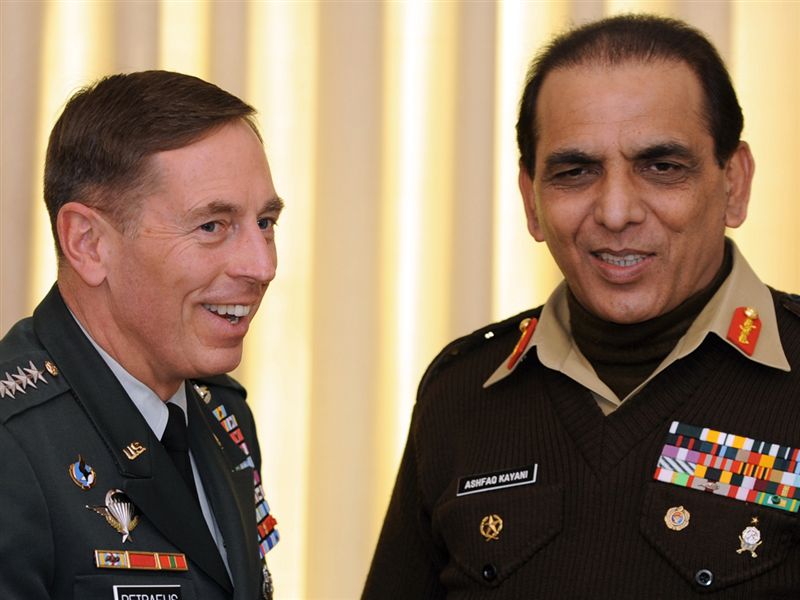
A senior government official said Gen. Kayani’s good rapport with Gen. David Petraeus, the commander of North Atlantic Treaty Organization forces in Afghanistan, and other American military leaders was a major factor in the decision to extend his term.

“He has worked closely with the current American military leadership and it is important for both Pakistan and the U.S. at this point for Gen. Kayani to stay at the helm,” said the official.

Other analysts agreed continuity was important at the current juncture of the war. “His leadership is crucial at the time when Pakistani army is fighting a decisive battle against the militants,” said Hasan-Askari Rizvi, an independent defense analyst.

Still, the extension of his tenure is likely to raise concerns among some pro-democracy activists about the pre-eminent role of the military in Pakistan.

The country has a democratically elected civilian government under President Asif Ali Zardari. But the country has been ruled more by military leaders in its 63-year history, most recently between 1999 and 2008.

Mr. Zardari’s government faces growing opposition and some analysts fear the army may step in again if they deem it necessary. Gen. Kayani, though, has focused on fighting militants. “We have to defeat them decisively,” he said during a recent discussion with a group of journalists.

Gen. Kayani received his commission in the Pakistani army in 1971. He served as the chief of Inter-Services Intelligence, Pakistan’s powerful spy agency, before his elevation to army chief.

Krishna Arrives in Pakistan, Calls Visit ‘a New Beginning’

By Omer Farooq Khan for The Times of India

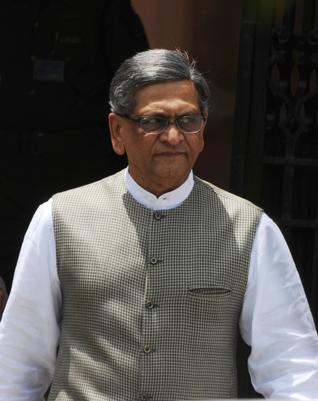
Indian external affairs minister S M Krishna, who arrived in Islamabad on Wednesday, said that he is on a mission to restore trust and increase confidence between the two countries.

“We hope to discuss all issues of mutual interest and concern that can contribute to restoring trust and building confidence in our bilateral relationship,” Krishna told journalists as he arrived here.

During his three-day visit, Krishna will hold talks with his Pakistani counterpart Shah Mahmood Qureshi on Thursday and will also meet President Asif Ali Zardari and PM Yusuf Raza Gillani. S M Krishna looks forward seeking progress on the issue of terrorism being raised by the Indian home minister P Chidambaram with his Pakistani counterpart Rehman Malik last month in Islamabad.

“I also look forward to receiving feedback on the issues raised by our home minister (P Chidambaram) during his visit to Pakistan last month on our core concern of terrorism, particularly in the light of the discussions our home minister had in Pakistan in the context of interrogation of David Headley regarding the Mumbai terrorist attack,” he said.

Krishna described his visit as important as it marks a new beginning of journey to build a prosperous, friendly and cooperative relationship between the two countries.

India is committed to resolving all issues with Pakistan through peaceful dialogue based on mutual trust and confidence, Krishna said.

“I brought a message of peace and friendship from the people of India and we hope to undertake this voyage of peace, however long and arduous, jointly with the government and people of Pakistan,” he said.
Pakistan’s foreign minister Shah Mehmood Qureshi has said that he will raise with Krishna the issue of alleged human rights in Jammu and Kashmir.

“We are approaching the meeting with a positive mindset,” Qureshi said.

The Krishna-Qureshi talks on Thursday will be the third major contact between the two countries in within a month.

Home minister Chidambaram conveyed India’s concerns and expectations on terrorism to Pakistani leadership last month when he visited Islamabad.

The Indian and Pakistani prime ministers met in April on the sidelines of a regional summit in Bhutan, which set in motion the process to revive suspended contacts at different levels of government.