Posts Tagged ‘ Pakistan’s ambassador ’

Pakistani Envoy Offers to Resign Over Memo

By Salmaan Masood for The New York Times

Pakistan’s ambassador to the United States, Husain Haqqani, has offered to resign amid a political and diplomatic storm in Pakistan over a mysterious memo, which asks for American help in dealing with the Pakistani military and Mr. Haqqani is accused of orchestrating.

Mr. Haqqani denies any involvement with the memo, but he said he offered to resign to end the continuing controversy.

The claims that Mr. Haqqani wrote the memo were made by Mansoor Ijaz, an American citizen of Pakistani origin, who said he was asked to ensure the delivery of the document to Adm. Mike Mullen, who was chairman of the Joint Chiefs of Staff at the time.

Mr. Ijaz described the memo, which he has not made public, as saying that the civilian government in Pakistan was seeking help in preventing a possible military coup in May. The military had just suffered humiliation over the American raid into Pakistan that killed Osama bin Laden.

Mr. Ijaz said that the memo indicated that Pakistan promised, in return, to dismantle a part of its premier intelligence agency — which some American officials have come to distrust.

On Wednesday, Admiral Mullen’s former spokesman, Capt. John Kirby, said that the memo was delivered, but that Admiral Mullen “did not find the memo at all credible.”

“Therefore,” Captain Kirby said, “he addressed it with no one.”

Captain Kirby added that the memo was unsigned and was delivered by someone other than Mr. Ijaz.

Supporters of Mr. Haqqani say that he maintains close contacts with American officials, including Admiral Mullen, and did not need an intermediary to deliver a message, especially one as explosive and diplomatically delicate as what was said to be included in the memo.

The controversy over the memo threatens to further aggravate the differences between Pakistan’s civilian government and the powerful military.

Many people in Pakistan view Mr. Haqqani as too close to the United States because he often pushes for closer cooperation between the countries. Before becoming ambassador, Mr. Haqqani was also a vocal critic of the military, but since taking his job he has sometimes been supportive of the military in speaking with American officials. Many in the Pakistani military view him with suspicion.

The prime minister announced this week that Mr. Haqqani had been told that he needed to return to Pakistan to answer questions about the memo.

Mr. Haqqani said the decision of whether he continued at his job or not rested with President Asif Ali Zardari.

“I do not want this nonissue of an insignificant memo written by a private individual and not considered credible by its lone recipient to undermine democracy,” Mr. Haqqani said in an e-mail.

The news of the memo first surfaced last month when Mr. Ijaz wrote an op-ed article for The Financial Times. At the time, he did not name the diplomat he said he was behind the memo. He only recently said it was Mr. Haqqani.

Thom Shanker contributed reporting from Washington, and Matthew Rosenberg from New York.
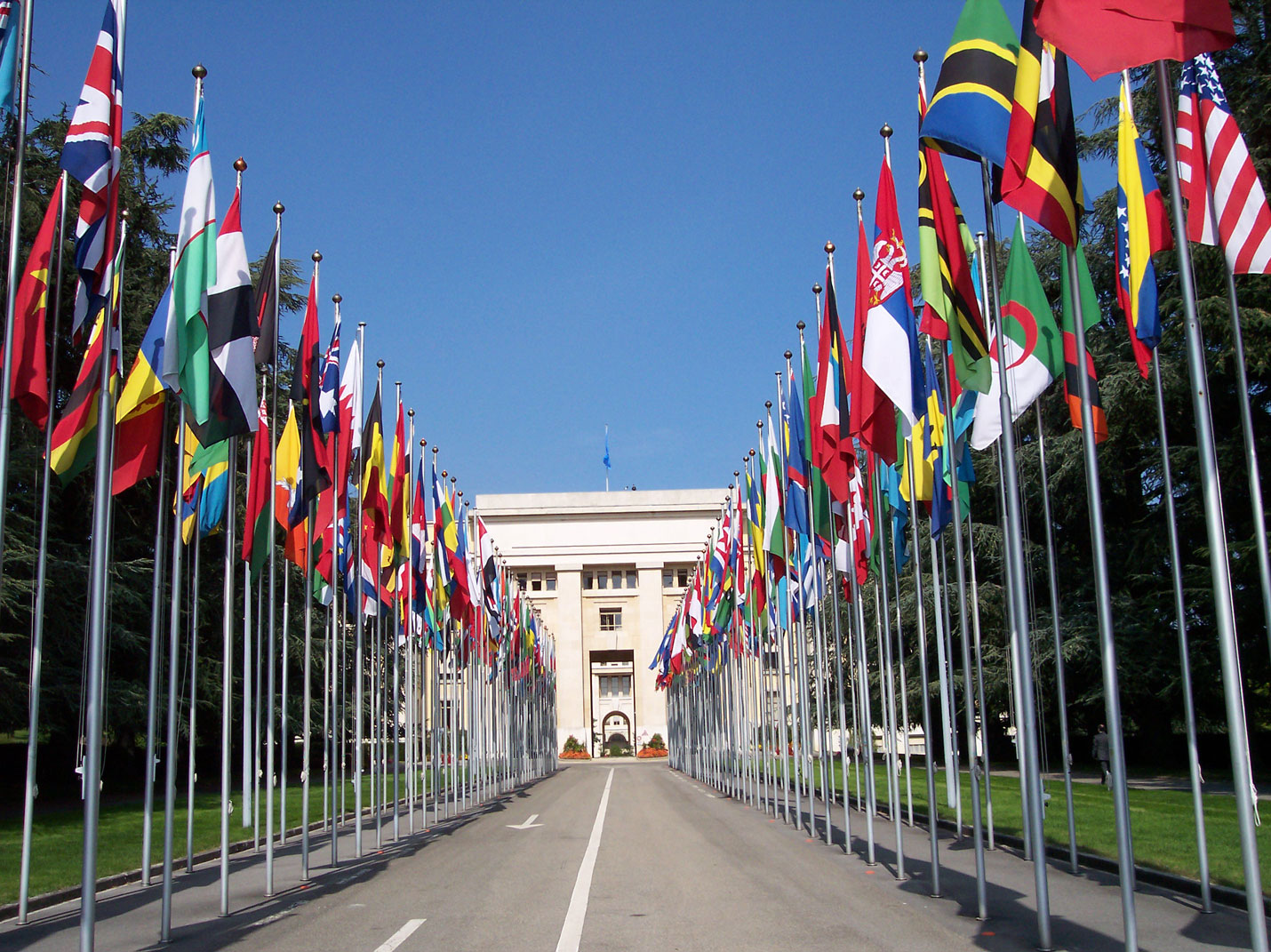
U.N. Speakers Urge Pakistan to Free Up Arms Talks

By Patrick Worsnip for Reuters

Heaping pressure on Pakistan, a high-level U.N. meeting called on Friday for talks to start immediately on a treaty to ban production of fissile material used as fuel for nuclear weapons.

But Pakistan has insisted it will continue to block such talks, arguing that a ban would put it at a permanent disadvantage to its nuclear rival India. The dispute has led to deadlock at the 65-nation Conference on Disarmament in Geneva.

At the U.N. meeting of some 70 states to discuss the paralysis at the conference, speakers avoided openly naming Pakistan, but several referred to “one country” that was causing the problem.

In a closing summary of the views expressed, U.N. Secretary-General Ban Ki-moon said there was “broad agreement on the need to immediately start negotiations on a … treaty banning the production of fissile material.”

Continued impasse could result in states going outside the Geneva conference, known as the “CD,” to tackle the issue, Ban warned.

Support has appeared to be growing in Geneva to find another approach — possibly small-group talks in parallel to CD sessions. A precedent was set when Canada and Norway moved talks on a landmine ban out of the forum, eventually clinching the landmark 1997 Ottawa Treaty.

At Friday’s U.N. meeting, Western powers sharply attacked Pakistan’s blockage of the CD, which requires consensus for its actions.

“It strikes us as unwarranted for a single country to abuse the consensus principle and thereby frustrate everyone else’s desire to resume serious disarmament efforts,” said U.S. delegate Gary Samore, a special adviser to President Barack Obama.

Washington understood that all countries needed to protect their security interests, and with that principle in place, “no country need fear the prospect of (fissile material) negotiations,” Samore said.

NO CONSENSUS

British junior foreign minister Alistair Burt said blocking the negotiations was “damaging for multilateral arms control.”

Launched in 1978, the CD has clinched treaties banning biological and chemical weapons as well as underground nuclear tests. Its members include all five official nuclear powers — the United States, Russia, Britain, France and China.

But it has been unable to reach consensus on substantive work for the past 12 years. Pakistan’s refusal since January to launch negotiations on fissile material like plutonium and highly enriched uranium is the latest obstacle.

Zamir Akram, Pakistan’s ambassador to the United Nations in Geneva, said earlier this month his country would continue to hold out, arguing that India has an unfair advantage with bigger fissile material stockpiles and “discriminatory” nuclear cooperation deals with the United States.

“Pakistan’s security concerns can be addressed only once we have developed sufficient capacity to ensure our deterrent is credible in the face of growing asymmetry,” he told Reuters. “My instructions are, ‘We continue to maintain our position.'”

Pakistan did not speak at Friday’s meeting in New York. No decisions were made, but Ban said he would ask a panel of advisers to review the issues raised.

Separately, French delegate Jacques Audibert said Paris would host a meeting of the five official nuclear powers next year to discuss their obligations stemming from a May conference on nuclear non-proliferation.

The conference called on the powers to pursue negotiations ultimately aimed at the total abolition of nuclear weapons.