Archive for the ‘ India ’ Category

Clinton Adds to Curious History of Mango Diplomacy

By Sebastian Abbot for The Associated Press

When U.S. Secretary of State Hillary Rodham Clinton offered Pakistan help last week in exporting mangoes to the U.S. in a bid to dampen anti-American sentiment, it marked the latest chapter in the fruit’s curious history of diplomacy and intrigue.

Clinton’s offer came three years after the Bush administration opened up the U.S. market to Indian mangoes in exchange for allowing Harley-Davidson to sell its famed motorcycles in India – a deal that generated goodwill as the two countries finalized a civilian nuclear agreement.

Washington’s mango-powered diplomacy this time around is part of a broader $7.5 billion aid effort that is meant to improve the image of the U.S. in Pakistan, a move officials hope will provide the Pakistani government with greater room to cooperate on turning around the war in Afghanistan.

“I have personally vouched for Pakistani mangoes, which are delicious, and I’m looking forward to seeing Americans be able to enjoy those in the coming months,” Clinton said during her visit to Islamabad last week.

The prominence of mangoes in South Asian diplomacy should come as no surprise since scientists believe the sweet and fleshy orange fruit originated in the region before Buddhist monks and Persian traders introduced the plant to other areas of the world.

Pakistan and India recognize the mango as their national fruit, and summer in both countries is defined by the sights and sounds of vendors hawking piles of soft, sweet-smelling mangoes or pureeing them to create refreshing drinks that cut through the scorching heat.

Officials from both countries have exchanged crates of mangoes over the years in an attempt to soften tensions between the nuclear-armed rivals that have fought three wars since the partition of British India created the two nations a little over 60 years ago.

Former Pakistani President Zia ul-Haq may have begun the tradition when he swapped mangoes in the early 1980s with the Indian prime minister at the time, Indira Gandhi. The exchange took place several years before ul-Haq was killed in a plane crash that conspiracy theorists blame on a crate of mangoes placed on board moments before takeoff that was supposedly sprayed with a poisonous gas that killed the pilots and other passengers.

But like almost everything else, mangoes have also been a source of tension between Pakistan and India since the two countries view each other as competitors in the export market. Indians and Pakistanis argue over who grows the best mangoes – a debate that resembles the tussle between Lebanon and Israel over who can claim the mashed chickpea dish hummus as their own.

If all goes to plan, Americans will get a chance to conduct their own taste test once Pakistani mangoes break into the U.S. market. The U.S. plans trial shipments later this year and has pledged to support a three-year program to promote the export of Pakistani mangoes by sea to America, the world’s largest importer of the fruit. The initiative is part of a $21 million program to boost Pakistan’s agriculture. The U.S. will help finance hot water treatment facilities, sorting and grading machines and cold storage facilities.

India, meanwhile, is the world’s largest mango producer with about 13 million tons each year, far exceeding all other countries, including Pakistan, which comes in fifth place with about 1.6 million tons. But both countries have struggled to build the necessary infrastructure to really boost exports.

“Farmers are very grateful for the U.S. help,” said Muzaffar Khan Khakwani, the owner of a mango farm near the central Pakistani city of Multan that is benefiting from American aid. “It’s not just the financial help. It’s the capacity building and the exposure of farmers to well managed orchards.”

But it remains to be seen how quickly Pakistan can benefit from Clinton’s recently announced initiative. India had trouble with logistics and pricing when it first tried to export its mangoes to the U.S.

It is even more uncertain whether U.S. aid will really dent anti-American sentiment in Pakistan and motivate the government to step up support for the Afghan war, a move the Pakistanis have resisted for years.

As an Indian proverb says, “You can’t hurry a mango tree to ripen its fruit.”


Going After the Haqqani Network

From the Editors of The Express Tribune

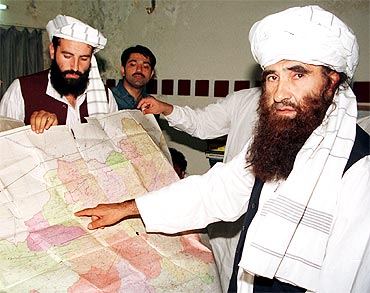
The question of the Haqqani network and how it is to be handled continues to fester. The US special envoy, Richard Holbrooke, this time in London, has suggested that Pakistan needs to go after the group with more force. The warning from Mr Holbrooke will have dashed hopes, raised during Hillary Clinton’s visit, that Washington was prepared to go along with a Pakistani strategy of dialogue with the network — led by Jalaluddin Haqqani and his son Sirajuddin. Links between the Pakistani intelligence forces and the Haqqanis have existed since the Afghan war and they have never been explicitly denied by either party. The elder Haqqani made his name as a formidable mujahideen commander during the Soviet occupation of Afghanistan when he was a member of Maulvi Yunis Khalis’s Hizb-i-Islami. He was also, according to American investigative journalist Steve Coll (who recently wrote Ghost Wars : The Secret History of the CIA, Afghanistan and Bin Laden, from the Soviet Invasion to September 10, 2001), offered a major role in the government by Afghan President Hamid Karzai some years ago.

For Islamabad, the pressure is on again. The Haqqani network is seen in Afghanistan as a key problem; it has carried out numerous attacks there. Washington believes Pakistan needs to do more to support the efforts against the militants in that country. The Pakistan military meanwhile, following its operation in South Waziristan, has avoided any move into North Waziristan – despite some gentle nudging from the US – reportedly following the intervention of the Haqqanis. They are also said to be facilitating talks with other militant factions across the conflict zone.

This brings us to an old issue: that of ‘good’ and ‘bad’ militants. It is clear that in the minds of the Pakistani military and the agencies allied to it this line of distinction continues to exist. Of course, Washington is in many ways responsible for creating this. The ghosts of the Afghan war, the alliance it formed with the mujahideen fighting the former Soviets and the engagement of Pakistan’s agencies, notably the ISI, are today coming back to haunt it. This is not to say that the CIA didn’t have its own connections to some of these actors in the past, but the point that is missed by most people is that it is America which calls the shots in this part of the world (or perhaps in most other parts as well).

There is a need for Islamabad to think things through. The division of militants into various camps, for example, so-called ‘good’ Taliban versus so-called ‘bad’ Taliban, has to stop. Essentially, these men of violence do more harm than good. The fact that a particular faction directs its wrath outside the country and avoids targeting Pakistani security forces should not be enough to cast it in the role of an ally. The effort against militancy does need to be seen in the wider regional context, and not as a matter of narrow allegiances and temporary agreements. The people who make decisions in Islamabad should keep in mind just how unsuccessful past efforts to do deals with the militants have been — with such attempts giving groups making up the complex Taliban network in the North a chance to reorganise and strengthen themselves on more than one occasion. There is reason to believe that this has contributed to the terrorism that has claimed thousands of lives. Even if the Haqqani network did not itself send out the bombers it has acted to back forces that have played a part in encouraging militant trends. The so-called Quetta Shura, led by the elusive Mullah Omar, is among these.

This having been said, Washington too needs also to review its own demands. There have been mixed signals over recent weeks. It is possible there is a lack of clarity on strategy within the US capital. This of course means the confusion in Islamabad has grown. A clear course of action needs to be planned in unison so the militants that Washington helped nurture can be driven away.

Cross-Border Unions: How Indo-Pakistani Marriages Prosper

By Vinita Bharadwaj for The National-UAE

While relations between their countries may be at an all-time low, Indians and Pakistanis who marry each other often find extended family ties confound their nations’ mutual hostility.

It is a truth universally acknowledged, that when two South Asians wed, they not only marry each other, they also marry into each other’s family.

And family matters between Indians and Pakistanis might be expected to be highly charged, given those two countries’ mutual antipathy for more than 60 years.

“When an Indian marries a Pakistani, it’s a loaded event that can only be matched by the energy of a cricket match between the two countries,” says Amra Hyder, a Pakistani.

The partition of British India into Pakistan and India is historically recorded as the largest human migration ever. It displaced millions and forced people of a common culture to choose a new geography and subscribe overnight to the idea of previously non-existent nations.

Most tragically, it split families. The ghosts of the 1947 partition loom large in the psyches of both countries’ modern histories that include three wars, a continuing dispute over Kashmir and terrorism.

Amra is originally from Pakistan and is married to Zulfiqar Hyder, who hails from India. Amra and Zulfiqar, now Canadian citizens, have lived in Sharjah with their four children since 2006.

In 1992, when the gregarious, romantic 23-year-old Amra married the 33-year old Zulfiqar, a studious man from India, she did not quite know what to expect – from married life, her in-laws and most importantly, her husband’s country. “I also never would have imagined I would be apologetic for both countries’ ridiculous obsession with ‘Shonia’,” she says of the media brouhaha over the recent nuptials of the Pakistani cricketer Shoaib Malik and the Indian tennis player Sania Mirza.

For long before the Malik-Mirza marriage, thousands of Indians and Pakistanis, mostly from families divided by the 1947 partition, have been marrying each other.

The difference is that now these marital alliances are formed outside the extended family circuit. Amra and Zulfiqar did not have an arranged marriage, and neither of them had any intention of settling in either India or Pakistan. They opted to overcome predictable visa hassles by initially residing in the UAE soon after their wedding, and migrated to Canada in 1996 to obtain citizenship, in the hope that it would ease their trips between India and Pakistan.

 
Masooma Syed, from Lahore, met her Keralan husband Sumedh Rajendran at an artists’ residency programme in Delhi. ‘I knew he understood me perfectly.’ Charla Jones

The couple first met in Abu Dhabi at a mutual friend’s party, and married within a year. The wedding took place in Karachi, with Zulfiqar’s entire family flying in from the northern Indian city of Lucknow. “It was a lovely wedding,” Amra recalls, adding that the questioning – albeit, in jest – began soon after they were married. “It was like, ‘Now you’re an Indian daughter-in-law’ and ‘Who will you support in cricket’ or even ‘Who will you support in war’?”

Her response was simple. “I married an Indian, not India. Having said that, I have been welcomed so warmly and given unbelievable respect by Indians, whenever I visit. My relationship with the people, I cherish. The politics, I don’t care for.”

Amra grew up in Abu Dhabi and returned to Lahore for university. Her childhood perception of Indians was to lump them all as people from the Southern Indian state of Kerala. “It was so wrong,” she says regretfully admitting to an error of judgment on her part, “but I honestly never really gave it any thought.” Although her grandfather was an active political leader – initially in the Indian independence struggle and later in the Muslim League, which pressed for Pakistan’s creation – she was uninterested in matters of politics.

On numerous trips to Northern India in the last 18 years, Amra has returned amazed by the cultural similarities she has observed between Indians – including non-Muslims – and her community in Pakistan. “We speak the same kind of language, we appreciate the same food, we like the same clothes, we place the same importance on family values. We even share similar pre-wedding festivities. It’s hardly an alien experience,” she says.

The differences were more to do with class and little do with the country. “Compared to my husband’s childhood, mine was very privileged. He is a self-made man and has single-handedly contributed to his family’s success. If I had to get used to anything, it was holidaying in a home that would experience power cuts and water shortages.”

Amra and Zulfiqar’s children – Hira (17), Anum (13), Zahra (11) and Ali (10) – describe themselves as desi, a generic, originally sanskrit, term used by South Asian immigrants that loosely denotes their origins. They are an animated group and debate the definition of desi among themselves, as their parents look on proudly. The conclusion: among younger generations in urban settings, desi communities have spawned a culture bound by a fondness for Bollywood, cricket, South Asian food and fused elements of their upbringing at home with the globalised, western outlook they are exposed to outside.

Having said that, India and Pakistan enjoy enormous cultural riches – largely attributable to their ethnic, regional and linguistic diversity. Both countries together are akin to the European Union – with each of their provinces having their own quirks, tastes and sensibilities. These subtleties within communities are apparent when embedded among the people in their own land.

Shadab Raza, from Lucknow, India, his Pakistani wife Sana Zehri and their six-year-old son Ali have relatives on both sides of the border. ‘There’s never been this India-Pakistan mentality in our families,’ Shadab said. Siddharth Siva / Arabian Eye

Masooma Syed, an artist from Lahore, lives in Delhi with her husband Sumedh Rajendran, also an artist, but from the south of India. They were introduced to each other at an artists’ residency programme in the Indian capital Delhi in 2003. Following that, they would arrange to meet in Manchester, Sri Lanka and New York before finally geting married in July 2008.

Their cultural backgrounds could not be more different, as are their temperaments and artistic styles. “And yet, I knew he understood me perfectly,” says Masooma of the decision to marry across the border and step into the cumbersome world of visas, soon after exchanging wedding vows in Sri Lanka.

“We never thought about a third country [to live in]. Sumedh has lived in Delhi for the last 15 years and I’ve had absolutely no problem in adjusting to living here. It’s just like Lahore. Ironically, I find Sumedh is more of a foreigner in his own country’s capital than I am. We have discussed moving to a neutral country, especially if visa regulations became tighter, but then as artists all our inspirations stem from this region. Relocating would uproot those emotions and we wonder what impact that would have on our work.”

Kerala, where Sumedh is from, however, is an altogether different milieu. “The first time Masooma visited, she was stunned,” says Sumedh.

“I thought to myself, how lucky am I to be able to see and discover these different facets of India,” she says recalling her reaction to the abundant greenery, the aromatic spices, the swaying coconut palms and the simple people.

But since marrying Sumedh, Masooma has found herself saddled with the unexpected baggage of acting as an ambassador of sorts for both countries. “It’s annoying at times,” she says. “And really it’s all because of immature media reportage in one country about the other. So I end up having to either justify, explain or make excuses for India when in Pakistan or vice versa. I’m not used to being accountable to anyone and this new role is quite tiring, even if it does come with special treatment in some instances.”
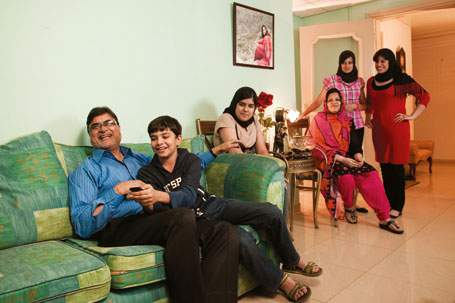
The challenges within an Indo-Pak marriage, according to Masooma, seem to be similar to any mixed-culture marriage. Except that among South Asian communities, tradition dictates the wife follows the husband to his home, or homeland. In the specific India-Pakistan context of the 21st century, the complications of visas and work permits make it harder for educated women to carve out an identity for themselves in their new environment. “It’s definitely much easier to be in a third country – either resident or citizen – when in an Indo-Pak marriage. Also, in today’s world, the younger generations of Indians and Pakistanis are meeting and interacting abroad, first as students and then as professionals. Marriages between different faiths among this demographic is on the rise and logistics is no longer a deterrent to falling in love.”

Masooma has been visiting India since 2003 and as an artist she has travelled, exhibited and worked in both countries. “I go through the same motions as all Pakistani nationals applying for an Indian visa. It’s a process and is easy or difficult depending entirely on how you want to look at it,” she says. In early June, the Indian government announced it was relaxing the requirements for granting the extension of long-term visas to four categories of Pakistani nationals, including Pakistani women married to Indian nationals and staying in India. The announcement was welcomed by individuals in her situation.

Her current visa is a ‘visit visa’ valid for nine months that is split into three visits of 90 days each. She has to exit India after each ‘visit’, but says it suits her work commitments that require her to travel abroad. “And I can visit my family in Lahore,” she adds.

Pakistani nationals issued visas to India are typically allowed to visit a maximum of three cities and must report to a police station on arrival and before leaving for their next destination. Masooma is now exempted from the police reporting, as she is a regular traveller between India and Pakistan and is also now married to an Indian national. “I’m allowed to visit more than three cities each time, but it will be a while before I am given complete freedom to travel like any other foreigner,” she says.

She could apply for a residence permit, but would be compelled to stay in India until the paperwork is completed, but it’s diffiuclt to predict how long that would take. Nationality, however, remains a touchy issue, particularly among the educated and liberal women of either country, who see no reason in giving up the passport of the country they originally belong to.

“Unfortunately, political relations keep changing and this spills over into visas and affects people-to-people relationships,” says Zulfiqar Hyder, a staunch believer in encouraging contact between the two countries. The Hyder family hold Canadian passports, but they still have to apply for visas to visit India and Pakistan.

In the wake of the David Headley arrest – a US citizen of Pakistani origin – over his alleged terrorist connections and involvement in the 2008 Mumbai attack, Zulfiqar says having the Canadian passport makes little difference towards easing the process. “I’m trying to get a PIO (Person of Indian Origin) card for the children,” he says of the document issued by the Indian government that functions as a long-term multiple entry visa. As things stand, the foreign spouse of an Indian national is eligible for the PIO card, but the spouses from Pakistan are not, effectively ruling out Amra and her two elder daughters, as they were previously travelling on her passport. “I don’t understand the logic that my children cannot get the PIO card, because their mother is Pakistani,” says Zulfiqar.

The national security argument does not resonate with him as much as it does with Amra. “Frankly, if my family can be assured of safe travel, I don’t mind a little more waiting or dealing with a bit more bureaucracy,” she says. He shakes his head furiously, looks at me and asks: “Did the 26/11 terrorists enter India with passports? Did they? How did they enter India?”

They arrived by night. Across the Arabian Sea, first on a small boat, then a hijacked fishing trawler and finally entered Mumbai’s waters on a rubber dinghy.

Visa-related policies in both countries are updated depending on the warmth or frostiness of the political relationship. Shadab Raza, a 35-year old Indian also from Lucknow, married Pakistani national Sana Zehri, who grew up in the UAE. They have a six-year-old son who has an Indian passport. The families arranged their marriage, as Shadab’s maternal aunts live in Pakistan. “There’s never been this India-Pakistan mentality in our families, because we have relatives on both sides of the border,” says Shadab.

Sana’s ancestry can be traced back to Lucknow, as her grandparents migrated to Pakistan at the time of the partition. On her first visit to the city after her marriage, she visited the ancestral home of her grandparents and filmed it to share with them. “I filmed the house, the neighbourhood and some of the people recorded messages for them. When they watched the video they were consumed by nostalgic sadness. I think partition hurt their generation the most. Our parents to a lesser extent, but they still feel the impact of it as they grew up hearing about it from their parents and visiting immediate relatives in the other country. For my generation, the degree of the trauma is even more reduced, because we haven’t experienced much of the consequences of it directly,” she says.

Shadab and Sana’s son, Ali, however, is quite clear about where he is from. “India,” he says firmly.

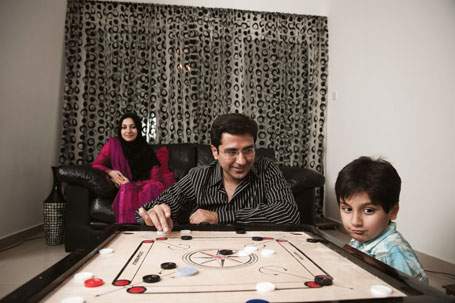
Sana laughs and recalls an incident of him wanting a carrom board specifically ‘made in India’. “My father-in-law had to get the lettering customised because the shop, where they bought it didn’t sell carrom boards with a ‘made in India’ label,” she says. In the meantime, Ali brings out his carrom board and empties out the coins from their container. He then calls out to Shadab to come and play with him.

“There’s never been this India-Pakistan mentality in our families, because we have relatives on both sides of the border,” says Shadab sitting down at the board, across from Ali, who flicks the large striker coin towards the arrangement of smaller black and white coins stacked by colour in the centre of the board. The two towers collapse, some of the coins disperse in four directions, but none of them is pocketed.

“What a mess,” exclaims Ali.
Pakistan Extends Gen. Kayani’s Term

By Zahid Hussain for The Wall Street Journal

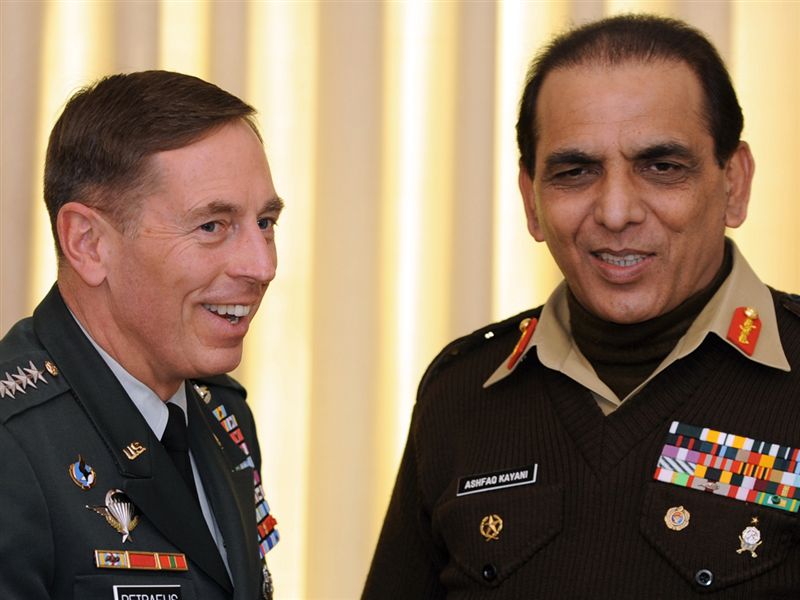
Pakistan’s civilian government late Thursday extended the term of army chief General Ashfaq Kayani for three more years to ensure continuity in the military leadership at a crucial stage in the country’s battle against Islamic militants.  The announcement was made by Prime Minister Yousuf Raza Gilani in a televised speech.

“The decision is taken to maintain continuity in the military’s command as the country is passing through very critical times,” Mr. Gilani said. Gen. Kayani, 58 years old, was appointed army chief in December 2007 and was to retire at the end of the year under normal tenure limitations.

The general has won praise for leading two successful military operations against Islamic militants last year in Pakistan’s Swat Valley and South Waziristan tribal region. But militants have regrouped in many areas and continue to unleash suicide strikes across the country.

More than 50,000 Pakistani troops are still engaged in fighting al Qaeda backed Islamic militants in the Pakistan’s troubled northwestern region, which borders Afghanistan. They are aided by unmanned U.S. drone strikes.

The war is seen as a crucial piece of the ongoing conflict in Afghanistan as many Taliban fighters use Pakistan’s tribal regions as a safe haven.

A senior government official said Gen. Kayani’s good rapport with Gen. David Petraeus, the commander of North Atlantic Treaty Organization forces in Afghanistan, and other American military leaders was a major factor in the decision to extend his term.

“He has worked closely with the current American military leadership and it is important for both Pakistan and the U.S. at this point for Gen. Kayani to stay at the helm,” said the official.

Other analysts agreed continuity was important at the current juncture of the war. “His leadership is crucial at the time when Pakistani army is fighting a decisive battle against the militants,” said Hasan-Askari Rizvi, an independent defense analyst.

Still, the extension of his tenure is likely to raise concerns among some pro-democracy activists about the pre-eminent role of the military in Pakistan.

The country has a democratically elected civilian government under President Asif Ali Zardari. But the country has been ruled more by military leaders in its 63-year history, most recently between 1999 and 2008.

Mr. Zardari’s government faces growing opposition and some analysts fear the army may step in again if they deem it necessary. Gen. Kayani, though, has focused on fighting militants. “We have to defeat them decisively,” he said during a recent discussion with a group of journalists.

Gen. Kayani received his commission in the Pakistani army in 1971. He served as the chief of Inter-Services Intelligence, Pakistan’s powerful spy agency, before his elevation to army chief.

The Pakistan America Peace Through Music Project

A Musical Journey to Peace, Freedom and Understanding
(A Collaboration of The Sonic Peace Makers and SHINE HUMANITY)

The following information in this article is taken from the Peace Through Music webpage on Global Giving at:  http://www.globalgiving.org/projects/peace-through-music/  

Peace Through Music (#5719)

Mention Pakistan today and what comes to the minds of most Americans is terrorism, poverty, and hopelessness. That’s all they see in the news. But Pakistan also has one of the world’s most diverse and rich cultures, equaled only by its spectacular natural beauty as home to part of Kashmir, the Khyber Pass and high mountain peaks like K2. Once upon a time in the not so distant past, Texan gun enthusiasts brought their prized antique revolvers to Peshawar’s gun smiths to make copies, actor Robert DeNiro posed for pictures with restaurant owners while vacationing in Chitral, and Mick Jagger tested his dance skills with Lahore’s most well-known Mujra dancers. And many of Pakistan’s greatest musicians and singers like Nusrat Fateh Ali Khan regularly collaborated with their counterparts in Europe and America such as Peter Gabriel and Pearl Jam’s Eddie Vedder.

Two decades ago, we failed to uphold our principles and fulfill a moral obligation to help rebuild Afghanistan and assist Pakistan with the painful aftermath of the Soviet-Afghan war, which included millions of Afghan refugees who still reside in Pakistan. In stark contrast, we helped rebuild our enemies Germany and Japan after WWII, but inexplicably abandoned our friends after the war in Afghanistan, a key factor in allowing extremists to begin their destructive swarm across Afghanistan and Pakistan’s western frontier and become a grave threat to the security and stability of the entire world. But today, while the wounds are deep and the challenges are great, the forces of light and sonic harmony are again on the ascendance. Pakistan today is home not just to 11 music video channels and has one of the most innovative and vibrant music scenes anywhere in the world. A country that has produced some of the greatest sitar and tabla players is today home of some of the finest singers, guitar shredders and drummers. Music pioneers like Junoon, the godfathers of “Sufi Rock,” are joined by Qawwali rockers like Mekaal Hasan and Aaroh, indie projects like Peshawar’s Sajid and Zeeshan, and Heavy Metal innovators like Akash and Karavan. In recent years Atif Aslam has become the most successful Pop singer in all of South Asia with a growing following world-wide.

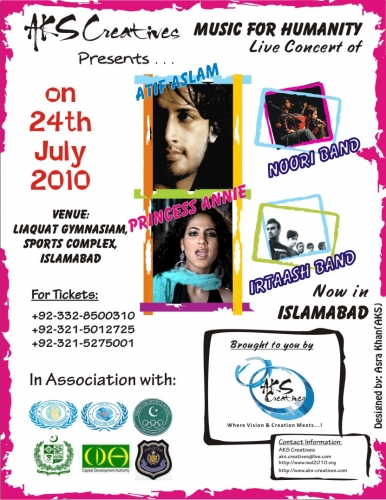
The Pakistan America Peace Through Music Project was inspired by the work of Greg Mortenson (author of the bestseller “Three Cups of Tea” and “Stones Into Schools”) and is based, among other things, on world music pioneer Manu Dibango’s declaration that musicians are “all from the same tribe” regardless of their race, nationality or religion and John Coltrane’s belief in the power of music to spread peace and harmony. Building on the millennia-long tradition of musical and cultural exchange in Pakistan and South and Central Asia more broadly, we will bring a group of leading musicians from the U.S. to Pakistan led by guitarist/producer Lanny Cordola (House of Lords, Giuffria, The Beach Boys), drummer/producer Matt Sorum (Guns ‘n’ Roses, Velvet Revolver), singer/guitarist Todd Shea and many others for a month long musical caravan throughout the country, creating and performing with some of Pakistan’s most well known, talented and innovative artists such as Atif Aslam, Shehzad Roy, Strings, Arieb Azhar, Abda Parveen, Ustad Fateh Ali Khan, Rustam Fateh Ali Khan, Beo Rana Zafar and celebrated record producer Rohail Hyatt (Vital Signs, Coke Studio). The inspiring poetry of Allama Iqbal and other revered poets will be prominently featured as an artistic and cultural base for the musical collaboration. Later on in the year, the Pakistani musicians will come to the U.S. for performances and events joined by their American comrades (including members of Guns ‘n’ Roses, Velvet Revolver, Red Hot Chili Peppers, etc.), which will also include time for more song writing and recording. Both the Pakistani and American “legs” of the gathering will be filmed for a documentary. The music and film will then be completed and released for sale on CDs & DVDs.

Goals
The project’s goals will be to bring Americans and Pakistanis closer together by erasing misconceptions and raising awareness of the diversity and beauty of Pakistan and its people, ultimately revealing the commonalities between Pakistani/Muslim and American cultures, to show Americans the Pakistan they never see in the mainstream media and to support Pakistan’s courageous artistic community, as well as raise funds and awareness to help establish and equip music schools and fund innovative health and education projects across Pakistan and Afghanistan. Once the initial project has been released, the music will continue with a series of collaborations with musicians and artists from all over the world to bring people together and help people in need.

Help bring people from all over the world closer together through a musical journey designed to erase misconceptions and build bridges of Peace and understanding between Human Beings.
Go to http://www.globalgiving.org/projects/peace-through-music and donate to the project.

More Information About this Project
Project Needs and Beneficiaries
SHINE Humanity and The Sonic Peacemakers need your support to help raise the funding needed to produce, record, film and document musical collaborations between singers and musicians from all over the world to promote peace and support humanitarian aid projects.

Activities
Musical fusion and celebration of diverse cultures will erase misconceptions and raise funding which will lead to a lasting positive effect on vulnerable children in developing nations, and help create a better, safer world for all Humanity

Funding Information
Total Funding Received to Date: $9,620
Remaining Goal to be Funded: $490,380
Total Funding Goal: $500,000

Why this Project is Important
Potential Long Term Impact

Project Message
“Music has incredible power to inspire and energize Human Beings to bridge divides and create a better world”
– Todd Shea, Chief Operating Officer

Who is Running This Project
Contact
Todd Shea
Executive Director
8020 N. Nob Hill Road
#201
Tamarac, FL 33321
Pakistan
Email: toddshea@cdrspakistan.org

Project Sponsor
GlobalGiving
Organization
Comprehensive Disaster Response Services
Chikar Rural Health Center
Chikar, Dist. Muzaffarabad 131000
Pakistan
011-92-300-502-9705
http://www.ShineHumanity.org

Additional organizations worthy of your donations
http://www.penniesforpeace.org/
http://www.ikat.org/

Pakistan Bans India Osama Bin Laden Comedy

From The BBC

Pakistan has banned an Indian comedy called Tere Bin Laden (Without You Laden), about a lookalike of Osama Bin Laden.

The country’s film censor board has objected to the way the movie portrays Bin Laden and warned that it could trigger a “terrorist attack”. The film was due to have been released in Pakistan on Friday.

Its main distributor told the BBC that an appeal has been filed against Thursday’s decision. In a statement the film board said that Tere Bin Laden was “unsuitable for public exhibition”.

They said it was a “controversial subject which depicted the character of Osama Bin Laden in a comic way… and contains vulgar and objectionable dialogue, abuses and derogatory remarks”.

The board said that the film also “portrayed a bad and negative image of law enforcing agencies of the country”. Correspondents say that it is not unprecedented for Pakistan to ban films, especially if they are linked to India – Islamabad’s longtime regional arch rival.

But the impact of such censorship is likely to be limited, correspondents say, because DVDs are the most common means of watching movies in the country and pirated ones are easily secured.

The BBC’s Syed Shoaib Hasan says that although the announcement of the ban was unexpected, it was not altogether surprising as the country’s government remains touchy on the subject of Bin Laden. His current whereabouts are unknown, with some US officials maintaining that the world’s most wanted man is hiding in Pakistan.

The main distributor for the film, Nadeem Mandviwala, told the BBC that the the ministry of culture will announce its decision against the appeal on Friday. “I find it quite disturbing that we cannot portray Osama Bin Laden and the law enforcement agencies,” Mr Mandviwala told the BBC.

“It’s acceptable that we make comedies about the president and prime minister all the time, but not Osama.” Indian films are popular in Pakistan, though only some make it to the big screens.

Tere Bin Laden is about a struggling Pakistani journalist who tries to sell an interview of a fake Bin Laden as a scoop who wants to move to the US to fulfil his American dream.

When he comes across a person who looks like Osama, he decides to sell his interview as a scoop to the international media, which results in a series of goof-ups.

Though the film is a comedy, the director says they have been careful about the authenticity of locations in Karachi, facts about Osama Bin Laden and the context of the story

Krishna Arrives in Pakistan, Calls Visit ‘a New Beginning’

By Omer Farooq Khan for The Times of India

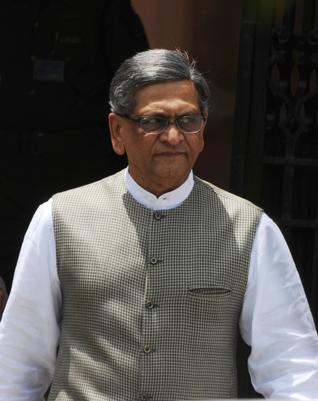
Indian external affairs minister S M Krishna, who arrived in Islamabad on Wednesday, said that he is on a mission to restore trust and increase confidence between the two countries.

“We hope to discuss all issues of mutual interest and concern that can contribute to restoring trust and building confidence in our bilateral relationship,” Krishna told journalists as he arrived here.

During his three-day visit, Krishna will hold talks with his Pakistani counterpart Shah Mahmood Qureshi on Thursday and will also meet President Asif Ali Zardari and PM Yusuf Raza Gillani. S M Krishna looks forward seeking progress on the issue of terrorism being raised by the Indian home minister P Chidambaram with his Pakistani counterpart Rehman Malik last month in Islamabad.

“I also look forward to receiving feedback on the issues raised by our home minister (P Chidambaram) during his visit to Pakistan last month on our core concern of terrorism, particularly in the light of the discussions our home minister had in Pakistan in the context of interrogation of David Headley regarding the Mumbai terrorist attack,” he said.

Krishna described his visit as important as it marks a new beginning of journey to build a prosperous, friendly and cooperative relationship between the two countries.

India is committed to resolving all issues with Pakistan through peaceful dialogue based on mutual trust and confidence, Krishna said.

“I brought a message of peace and friendship from the people of India and we hope to undertake this voyage of peace, however long and arduous, jointly with the government and people of Pakistan,” he said.
Pakistan’s foreign minister Shah Mehmood Qureshi has said that he will raise with Krishna the issue of alleged human rights in Jammu and Kashmir.

“We are approaching the meeting with a positive mindset,” Qureshi said.

The Krishna-Qureshi talks on Thursday will be the third major contact between the two countries in within a month.

Home minister Chidambaram conveyed India’s concerns and expectations on terrorism to Pakistani leadership last month when he visited Islamabad.

The Indian and Pakistani prime ministers met in April on the sidelines of a regional summit in Bhutan, which set in motion the process to revive suspended contacts at different levels of government.

Pakistan Suicide Bombing Death Toll Jumps to 102

By Riaz Khan and Nahal Toosi for The Associated Press

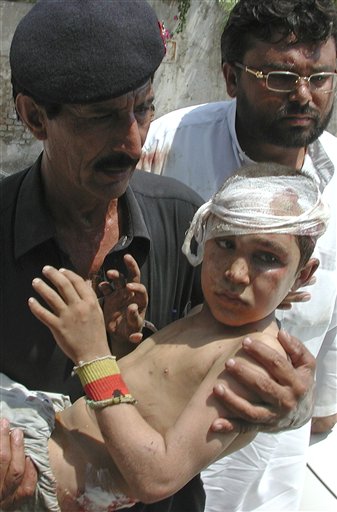
The death toll from twin suicide bombings in Pakistan jumped to 102 with 115 people wounded on Saturday, making it the deadliest attack this year in the country.

Authorities continued to remove debris from the site of the attack in the village of Yakaghund in a northwest tribal region, after two bombers struck seconds apart Friday near a government office.

One of the bombs appeared fairly small but the other was huge, officials said. At least one bomber was on a motorcycle.

The attackers detonated their explosives near the office of Rasool Khan, a deputy Mohmand administrator who escaped unharmed. Tribal elders, including those involved in setting up militias to fight the Taliban, were in the building, but none was hurt, according to Mohmand chief administrator Amjad Ali Khan.

Video footage showed dozens of men searching through piles of yellow brick and mud rubble for survivors. Women and children were among the victims.

Mohmand is one of several areas in Pakistan’s lawless tribal belt where Taliban and al-Qaida members are believed to be hiding.

Abdul Wadood, 19, was sitting in a vehicle at the time of the bombings.

“I only heard the deafening blast and lost consciousness,” said Wadood, who was being treated for head and arm wounds in Peshawar, the main city in the northwest, about 15 miles (25 kilometers) away. “I found myself on a hospital bed after opening my eyes. I think those who planned or carried out this attack are not humans.”

Some 70 to 80 shops were damaged or destroyed, while damage to a prison building allowed 28 prisoners — ordinary criminals, not militants — to flee, said Rasool Khan, who gave the casualty figures.

Friday’s was the deadliest attack this year in Pakistan. On New Year’s Day, a suicide car bomber struck a sports event near a meeting of tribesmen who supervise an anti-Taliban militia near the South Waziristan tribal area, killing 96 people.

Near the attack site, officials had been distributing wheelchairs Friday to disabled people and equipment to poor farmers, Amjad Ali Khan said. It was unclear how many participants in that event were among the victims.

Pakistani Taliban spokesmen could not be immediately reached after the attack. There were scattered reports the militant group’s branch in Mohmand had claimed responsibility and said it was targeting the elders.

The Pakistani army has carried out operations in Mohmand, but it has been unable to extirpate the militants. Its efforts to rely on citizen militias to take on the militants have had limited success there.

Nevertheless, there have been fewer attacks in Pakistan this year than in previous years — most notably in the northwest. In the last three months of 2009, more than 500 people were killed in a surge of attacks in the country.

“This Passport is valid for all the countries of the World, except Israel”

By Junaid Ghumman for Mideast Youth

The world Zionist movement should not be neglectful of the dangers of Pakistan to it. And Pakistan now should be its first target, for this ideological State is a threat to our existence. And Pakistan, the whole of it, hates the Jews and loves the Arabs. This lover of the Arabs is more dangerous to us than the Arabs themselves. For that matter, it is most essential for the world Zionism that it should now take immediate steps against Pakistan.” Ben-Gurion, the Prime Minister of Israel.

This speech was first published in Jewish Chronicles on 9th August 1967. This statement risen many controversies bloggers like me have quoted it many times; various explanations were also given to disprove this statement, but still we read it on every article related to Pakistan and Israel.

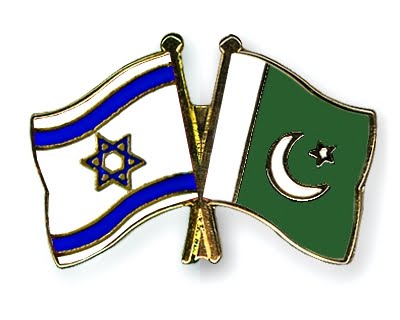
Pakistan and Israel do share some history and ideology. These are only two countries in the world created in the name of Religion; Pakistan for Islam, Israel for Judaism and both countries have taken independence from same British Empire after World War II.

Then why my passport still says, “This Passport is valid for all the countries of the World, except Israel”?

Pakistan claimed its independence from foreign invaders after two centuries of struggle. In 1757 after Battle of Plessey, East India Company started ruling Indian Sub-continent. The first armed resistance was Battle of Independence in 1857 after which the power was transferred to British government. In 1885 the political movement of independence started as Indian National Congress. Some of the Muslim leaders soon separated and launched new movement in 1906 as All India Muslim League for separate Muslim state which led to the creation of independent Islamic state Pakistan on 14th August 1947, which then became Islamic Republic of Pakistan in 1973.

For Israel the timings was same and the rulers were also same as of Indian sub-continents, but events and circumstances were totally different. Israel declared its independence on 14th May 1948 from British Mandate of Palestine. But Israel independence movement was not against British Occupation; rather it was a movement of creating a Jewish State by silently invading the markets, trades and areas to make Jewish settlements. Hovevei Zion or Hibbat Zion refers to organizations that are considered the foundations of the modern Zionist movement. These movements led to creation of Rishon LeZion in 1882 which is the first Jewish settlement in Palestine; which was at that time under Ottoman Empire. First Zionist Congress held in 1897 started the unified Zionist Movement which was converted to World Zionist Organization in 1960. This movement was successful in legalizing its demand of separate Jewish state in Palestine after Balfour Declaration 1917, in which British Mandate of Palestine’s (1917 – 1948) foreign Secretary Arthur James Balfour wrote letter to the leader of British Jewish Community Baron Rothschild, pledging British Empire support of creation of Jewish State in Palestinian Land.

So what kind of relationship does Pakistan and Israel has over period of 60 years?

While writing this blog I also tried to ask couple Pakistanis; their view points about Pakistan-Israel Relationship. Yousaf is Pakistani Engineer living and working in Saudi Arabia. Being in the region, Pakistanis here are emotionally and regionally attached to Middle East crisis. I asked him what kind of relationship both countries have. “Relationship between Pakistan and Israel are tied to the fact that how Israel government treats the Palestinians. In general, as Jerusalem is considered as one of the holiest places in Islam; this fact serves as a thorn in the eyes of Pakistanis.” Yousaf said.

Pakistan is among those 20 UN member nations which do not recognize Israel as an independent state. These 20 countries also include Afghanistan, Algeria, Bahrain, Bangladesh, Chad, Cuba, Indonesia, Iran, Iraq, Kuwait, Lebanon, Libya, Malaysia, North Korea, Saudi Arabia, Sudan, Syria, United Arab Emirates and Yemen. Unofficial media reports say that first Prime Minister of Israel David Ben-Gurion send secret message to Muhammad Ali Jinnah to formally accept its existence, but no response was given back to him. At the time of independence of Pakistan, it was reported that some 2,000 Jews remained in Pakistan, mostly Bene Yisrale Jews. Many left to Israel after its declaration of independence. Jews from Karachi, Pakistan, now live in Ramla, Israel, and they also built a synagogue they named Magen Shalome after the Pakistani Synagogue which was demolished in 1980.

60s, 70s and beginning of 80s were the decades when for the first time both countries came face to face when Arab-Israel war started. In “Six-day Arab Israeli War” of 1967; Royal Jordanian Air Force (RJAF) and Pakistan Air Force (PAF) were flying under a joint command. PAF pilot Flt. Lt. Saiful Azam became the only pilot from the Arab side to have shot down 3 IDF/AF aircraft within 72 hours.

In 1973 Arab-Israeli Yom Kippur War, 16 PAF pilots volunteered to support Syria and Egypt. On 23 October 1973 Flt. Lt. M. Hatif shot down the Israeli Phantom. On 26 April 1974, PAF pilot Flt. Lt. A. Sattar Alvi became the first Pakistani pilot, during the Yom Kippur War; to shoot down an Israeli Mirage in air combat. He was honoured by the Syrian government. Nur Khan, who was the Wing Commander received praised from Israeli President Ezer Weizman who wrote in his autobiography that: “He was a formidable fellow and I was glad that he was Pakistani and not Egyptian”. Pakistan also sent medical ambulances to Egypt and Syria.

After the Israeli attack on Iraq’s under-construction French-built nuclear Osirak-type reactor, Tammuz-I, south of Baghdad on 7 June 1981, Pakistan’s then President President Zia-ul-Haq directed PAF Air Headquarters (AHQ) to make contingency plans for a possible Israeli attack on Kahuta. Kahuta is noted for its nuclear research studies and nuclear development technologies in Kahuta Research Laboratories. On 10 July 1982, a special contingency plan was issued. In the event of an Israeli attack on Pakistan’s strategic installations, plans were drawn up for a retaliatory Pakistani strike on Negev Nuclear Research Centre. The Negev Nuclear Research Centre is an Israeli nuclear installation located in the Negev desert, about thirteen kilometres to the south-east of the city of Dimona.

On political level many statements were given. As chair of the Second Islamic Summit in 1974, then Pakistan’s Prime Minister Zulfiqar Ali Bhutto said: “To Jews as Jews we bear no malice; to Jews as Zionists, intoxicated with their militarism and reeking with technological arrogance, we refuse to be hospitable.”

In of his speeches in National Assembly of Pakistan, before Zulfiqar Ali Bhutto was hanged in 1979, he said, “Mr. Speaker Sir! This is not Desi (local) conspiracy, it’s an international conspiracy. Let me make it quite clear for the history, whatever the future and fate of this individual will be; that doesn’t matter, but let me tell you again this is not a desi (local) conspiracy, this is not PNA conspiracy, this is massive, huge and colossal international conspiracy against the Islamic State of Pakistan.” (PNA was Pakistan National Alliance against the ruling Pakistan Peoples Party). Nowadays people like to refer this international controversy as Zionist or Israeli Conspiracy.

A controversial book was published in 2003, named Charlie’s Wilson war which conspire about use of Israeli weapons supplied to General Zia ul Haq to fight Soviets in Afghanistan (1979 – 1989). Famous Hollywood movie Charlie’s Wilson War was also released in 2007. After that the back door politics started between Pakistan and Israel.

The President of Pakistan General Zia ul Haq was assassinated in plane crash on 17 August 1988. Among the conspiracy theories; Mossad (Israeli Intelligence Agency) involvement is also believed to exist. In the fall 2005 World Policy Journal, John Gunther Dean, a former US ambassador to India, blamed the Mossad for orchestrating Zia’s assassination in retaliation for Pakistan developing a nuclear weapon to counteract India and Israel.

Ali is my friend living in Middle East. I asked him, can there ever be any friendship or peace between Pakistan and Israel, to which he replied, “Yes there can be, Israel is a small country with a group of people belonging to a group of faith. And also it is in its interest that it should be at peace with every country, and especially those countries that it feels can threaten its existence.”

It is believed that, at the time of Benazir Bhutto’s Government both countries had very strong relationship especially in countering terrorism. In 1993 Benazir Bhutto, along with her then-Director-General of Military Operations, Pervez Musharraf, intensified the ISI’s liaison with Mossad in 1993, and she too began to cultivate the American Jewish lobby. Bhutto is said to have had a secret meeting in New York with a senior Israeli diplomat, who flew to the U.S. during her visit to Washington, D.C. in 1995.

In 1996, Pakistan’s Intelligence Agency, FIA, started a secret war against Extremist in Pakistan under Rehman Malik. According to sources, FIA also contacted Israeli intelligence agency Mossad to help and send its officers to investigate the extremism. Even after these strong ties, controversies never left the scenario. Benazir Bhutto was assassinated on 27 December 2007 in one political rally. This was considered to be typical Mossad Assassination style. It is believed that she was the one knowing the reality of 9/11 being inside job and death of Osama Bin Laden, which she also publicly stated in David Frost TV program. That program was edited before telecasting. But Jewish Journals and Media still believed in the opposite way. According to Jewish media, Miss Bhutto asked for Mossad help to protect her on her return to Pakistan as she was afraid she will be killed.

In 1998 Pakistan and Israel were again on the verge of war. On 27 May 1998, day before Pakistan conducted its nuclear test in Chaghi, Southern Province of Baluchistan, Pakistan; unidentified F-16 was found hovering around skies on border areas of Pakistan. Pakistan Air Force; taking is as repetition of Israeli Conspiracy similar to 1981, Air Bourne its fighters to foil any attack. But Pakistan and Israeli UN delegation met in UN soon after Pakistan Nuclear tests in 1998 to give assurance that Pakistan will not transfer its technologies to Iran, the arch enemy of Israel.

Musharraf’s nine years of rule was also golden times for both countries. In 2003, General Pervaiz Musharraf said on television interview, “Mainly Muslim Pakistan must seriously take up the issue of recognizing Israel and avoid dealing with it on emotional grounds”. This statement gave birth to local opposition, esp. among Religious Parties in Pakistan. “Jerusalem is not just an Arab issue, it is linked to the faith of every Muslim” said Qazi Hussain Ahmed, chief of Jamaat-i-Islami Pakistan, the largest and oldest religious political party. “Presenting Palestine as a sole Arab issue is a heinous conspiracy of the imperialists and colonists aimed at disintegrating the Muslims and shattering the concept of Muslim unity. It is for the same reason the colonist forces are trying to portray every Muslim issue as regional or bilateral” said Qazi.

In 2005 Pakistani Foreign Minister Khurshid Kasuri and his Israeli counterpart Silvan Shalom met in Istanbul after Israel withdrew its forces from Gaza, Palestine hoping to start peace talks. However, following the meeting Musharraf said, “Pakistan will not recognize the state of Israel until an independent Palestinian state is established”.

An unofficial Pakistan-Israel Peace Forum was created the next day of the meeting. It was created by 3 friends Waleed Ziad (Pakistan), Dror Topf (Israel), and Michael Berenhaus (US), all currently based in Washington, DC. This forum was an unsuccessful attempt to lobby in UN, US, Israel and Pakistani political establishments, hoping that Pakistani might accept Israel as independent legal state.

Pakistan and Israel are also secretly involved in Weapons and Arms Development Race. Close ties between India and Israel, and arms business between them forces Pakistan to keep an eye on Israel’s weapons industry. Like for example; Pakistan Ordinance Factory (POF) developed POF Eye Gun and exhibited in 2008 to counter the Israeli made Cornershot Rifle which is also known as Jews Gun in Arab World.

Shall Pakistan recognize Israel as an independent state to which Yousaf and Ali shared the same answer, “Pakistan should only consider recognizing Israel if it gives an independent state to the Palestinians with Jerusalem at its capital. And completely cut off itself from the internal affairs of that state, only then Pakistan should even start to consider recognizing them.”

I thought why not to ask some of Palestinians who have been living in exile for almost six decades. Abdul-Rahman is originally from Nabulus, West Bank and Qasim is from Gaza. I asked them what role Pakistan can play any role in solving Middle East Crisis, to which Abdul Rahman replied, “May be or may be not. Pakistan has its own problems with India, in Kashmir and in Afghanistan.” And Qasim said, “Pakistan cannot play any role especially with the current government which is only thinking of business but not Islam or Muslims.” Which actually hit me hard but truth is truth. On inquiring the Pakistan’s nuclear threat to Israel, Abdul Rahman said, “Israelis are even scared of stones so obviously Israel want end to Pakistan’s Nuclear technology, the Islamic Bomb.” But Qasim stuck to his same point, “If Pakistani government wants it can use nuclear technology against Israel, not in war or something but also to play politics.” Then in the end I asked, shall Pakistan Recognize Israel as independent country. Both of them came up with different and interesting answers. Abdul Rahman said, “There is should be a procedure of acceptance. Israel should balance the power and control of every city between themselves and Palestinians, then Pakistan can recognize Israel.” Whereas Qasim said, “Pakistan should recognize Israel. Sitting outside and ending any communication will not resolve the Middle East problem. We need to enter the region to solve the problem and if Pakistan wants it can do that by taking first step of recognizing Israel.”

It was interesting journey going through all the historic events which Pakistan and Israel share and knowing different ideas and opinions. All these events which I have mentioned above, cannot be confirmed from any credible or authentic source as all this happened back stage, behind the camera. But whatever governments’ relationship may be it is true that people of Pakistan still want to call every conspiracy as Zionist conspiracy and this will keep on going until some peaceful solution is devised to Middle East crisis between Muslim Palestinians and Jewish Israelis

Two Die in Gunfire at India-Pakistan Border

By Augustine Anthony for Reuters

An exchange of fire at the Indian-Pakistan border near Pakistan’s Punjab province has killed two Indian troops and wounded a Pakistani soldier and several villagers, officials said Wednesday.

The neighbours have in the past exchanged almost daily fire across what is known as the Line of Control separating the two armies in Kashmir, but the latest incident occurred in the Sialkot sector of Pakistan which rarely experiences trouble.

A spokesman for the Pakistan Rangers said Indian border security forces fired automatic weapons and mortars at a village along the Sialkot working boundary, north of the Pakistani city of Lahore.

“First they fired yesterday morning and then again in the evening and the firing continued sporadically throughout the night until Wednesday morning,” said Nadeem Raza.

“One of our soldiers and several villagers have been wounded in the Indian firing.” A senior Indian border official confirmed the incident but said Indian forces retaliated for “unprovoked firing” from the Pakistani side.

“We were facing unprovoked firing from the Pakistani side for the last two days, resulting in the death of two of our men. We were forced to retaliate,” said K. Srinivasan. “The firing was precise, but at this stage we cannot say for sure who fired at us.”

The flare-up comes ahead of Indian Foreign Minister S.M. Krishna’s trip to Pakistan next week to meet with his counterpart in a renewed bid to normalise ties.

Relations between the nuclear-armed neighbours, who have fought three wars since 1947, were frozen when Pakistan-based militants attacked the Indian city of Mumbai in 2008, killing 166 people.

A late 2003 cease-fire between the two sides across the cease-fire line in Kashmir has largely held although there have been several exchanges of fire over the past year. Raza said Pakistani forces returned fire after Indian forces “did not respond to the call for a flag-meeting” and continued firing.

The Director General of Pakistan Rangers in Punjab, Major General Yaqub Khan, said a protest had been lodged with Indian forces. “In future, a strong reply will be given by Rangers and loss of civilian lives and property will not be tolerated at any cost,” he was quoted as saying in a statement issued after visiting the area.

This was the third violation of a cease-fire in that area in the last two weeks, according to the statement. India has long accused Pakistan of backing militants fighting Indian security forces in the Himalayan region of Kashmir.

Pakistan supports what it calls a freedom struggle by the people of Kashmir against what it sees as the brutal and illegitimate Indian occupation of the region. But it denies arming the guerrillas, who have been fighting Indian forces since 1989.

China, Pakistan Reach Nuclear Energy Deal

As reported by United Press International

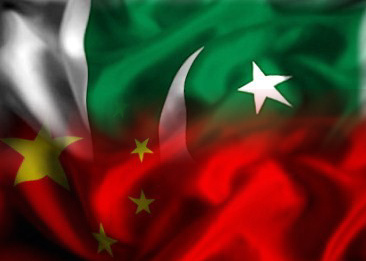
The Pakistani government has finalized a deal with China to build two new nuclear power plants in the country, the Pakistani foreign minister said.

Pakistani Foreign Minister Mehmood Qureshi said Pakistan was working with its Chinese counterparts on more than 120 different projects, including two nuclear power facilities in Pakistan, the Associated Press of Pakistan reports.

Despite concerns over the proliferation of nuclear material, the foreign minister said his country was moving ahead with its nuclear activity in line with international expectations

“We have no objections on inspections by the International Atomic Energy Agency because we are proceeding ahead in a transparent manner,” he said. Pakistan is facing a looming energy crisis that is creating rolling blackouts in parts of the country.

The energy deal comes as Pakistani President Asif Ali Zardari accepted the credentials of Liu Jian, the new Chinese envoy to Islamabad. Zardari said trade relations with China fell well short of their potential.

“Strengthening and enhancing cooperation with China in all sectors is one of the key principles guiding Pakistan’s foreign policy,” said the Pakistani president.

Aisam-Rohan Reach Wimbledon Quarter-Finals: Next Stop, Wagah

By Sehar Tariq for All Things Pakistan

Pakistan’s stellarly good-looking tennis champ Aisam-ul-Haq Qureshi became the first Pakistani to reach the quarter-finals at Wimbledon when along with his Indian partner Rohan Bopannahe beat Lucas Lacko of Slovakia and Sergiy Stakhovsky of Ukraine in straight sets in the Mens’ Double. Their straight set victory – 7-5, 7-6 (7-4), 6-2- in the Round of 16 now take them to the Mens’ Doubles Quarterfinals, and already place them in the top-8.

It was only two years ago that Aisam – who is Pakistan No. 1 and World No. 43 for Men’s Doubles –  became the first Pakistani to play at Wimbledon since 1976. Since then he has been steadily improving his game, including beating a doubles duo with Roger Federer in it last year. The news report in Dawn points out that “the Pakistani number one and world number 42 is a grass-court specialist and has been improving his performance at the world’s most prestigious tennis tournament in the last few years.”

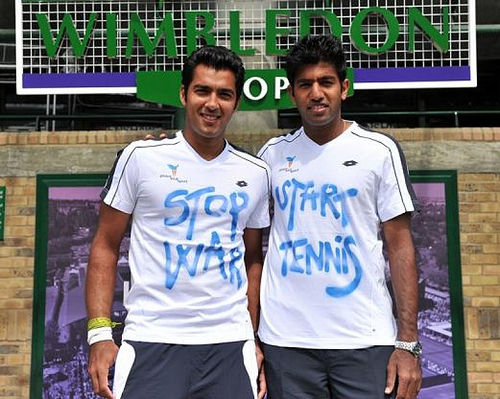
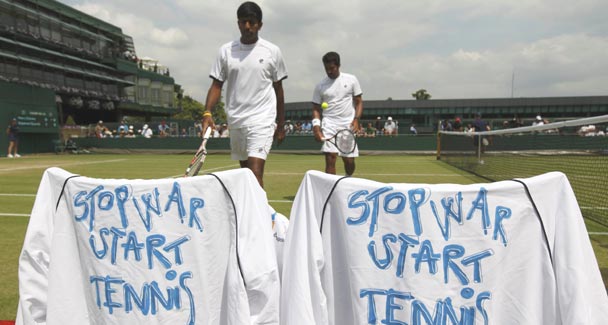
But Pakistani Aisam-ul-Haq Qureshi and his doubles partner Rohan Bopanna from India are also attracting a lot of attention for where they come from, and what they are doing together. The unlikely Indo-Pak pair have been playing as one team and they have been sporting tennis jackets that say “Stop War Start Tennis.” Now they have suggested a novel idea of a tennis match played at the Wagah border.

The world is not used to seeing India and Pakistan step onto any field as one team so the unlikely duo have been making headlines. And they are making full and good use of it by promoting the game of Tennis in the cricket dominated subcontinent and spreading the message of peace. Aisam and Rohan met at the age of 16 at a tennis camp and they have been good friends ever since. They are a good example of how friendship can overcome barriers or race, religion and nationality. While their international tennis playing status has allowed them to remain friends and see each other frequently, there are thousands of people on both sides of the border who long and yearn to see the people and places they once loved and knew as home but have been unable to see for over 60 years due to cruel visa regimes and heartless politicians who drive wedges deeper and wider between India and Pakistan for personal gain.

According to a report in the Guardian , the two tennis players want to play a tennis match at Wagah, the border separating India and Pakistan. The border will serve as the net. Aisam will play on the Indian side and Rohan will play on the Pakistani side of the border. I want very much for the two to win the Quarter-Finals at Wimbledon, but maybe even more than that I want to see them playing at Wagah Border Crossing!

The tennis stars are trying to turn this fantastic idea into reality. And at this point in time, I think that is exactly what the two countries need. Their performance at Wimbledon and the recent positive vibes coming from the governments as well as civil society in both India and Pakistan makes this a very good time to pursue this idea.

I don’t know much about tennis but I really want this match to happen! I will go to watch. And I promise to read up everything I can and ask anyone I can to help me understand the game better so I am prepared to watch the war of tennis at the border. And I’m sure a lot of other Pakistanis will too. As will many Indians. We all love a little bit of healthy competition with the Indians!

I don’t know how one goes about organizing a tennis match at an international border. But I wish I knew how to do it. So if any of you have ideas, please help.

I would like to see some Indo-Pak tennis and also some regional peace and good will. And while I watch this match, I will put aside my intensely competitive patriotic feelings and cheer loudly for Rahul Bopanna. So Rohan, you try to make this tennis match happen – and we the 170 million people of Pakistan will cheer you on with all our might!

As both Aisam and Rohan have been saying: Its time to “Stop War Start Tennis!”

World Cup 2010: Football’s India vs Pakistan

By Paul Beckett for The Wall Street Journal

It is standard for newspapers, including ours, to include the following sentence in almost any story about India and Pakistan: The two countries have fought three wars since Independence in 1947. You do not read the same about England and Germany: The two countries have fought two World Wars since 1914. Except at times like this.

For a series of reasons, part historical part psychological, there may be no match up in soccer that is quite equivalent to England versus Germany. Not for the quality of the football although Germany last night ran over England at the FIFA World Cup 2010 with some of the best football of the tournament so far, winning 4-1. Germany now advances to the quarter finals.

Nor does the significance of the game come from the fervor of football in each country. Yes, both are football crazy but there are plenty of countries that take football as seriously, if not more so, as these two do.

But there may be no bigger game when it comes to two nations who view each other as former enemies, now allies and rivals. Indeed, it is hard to imagine any other sporting event where two major nations weave so much national drama into men running around on grass, with the possible exception of when India and Pakistan play at cricket.

Why is this so?

India and Pakistan may have been separated at birth, but England and Germany have their own shared attributes (which certainly don’t get any attention at times like this): They are both northern, beer-drinking, sausage-eating nations; Britain’s current monarchy, the House of Windsor, has German origins; they may be more alike as nations than England is when compared with any nation outside the British Isles (just don;t tell the English.)

Of course, the situations have as many similarities as they do differences. England and Germany are friendly nations (despite what you read in the British press at times like this) bound together by the European Union and NATO. “It is high time to forget (World War II),” said Germany coach Joachim Loew, according to the Associated Press. “This is year 2010, we are all in the EU and it’s highly inappropriate to raise this subject.”

India and Pakistan, meanwhile, are caught in a diplomatic netherworld between war and peace that only now is showing signs of some thaw.

England and Germany, overall, have prospered in the past few decades, even if Germany’s industrial might means its economy has eclipsed that of the U.K.; India has prospered while Pakistan has struggled as the two nations took dramatically different courses, politically and economically, post Independence.

Yet there are times when sport comes to represent something that defines relations, seizes national imaginations and confirms dearly-held stereotypes, and that is the case with England versus Germany at football and India versus Pakistan at cricket.

It is not that the fans of either team hate the fans of the other (despite what you read in the British press at times like this.) It is a strange mix of respect, rivalry, historic ties, insecurities, bluster, hope, fear and a desire to read deeper meaning in a game of football that makes these games so compelling.

It is a time when entire nations stop to watch. When everything else is eclipsed in favor of one game and people want to think they are watching something that will go down in the history books, a marker of where they were when.

“It’s insane, the roads are completely empty here right now,” an Indian friend said in a text from London before yesterday’s kick-off. When Miroslav Klose in the 20th minute pierced a sloppy England defense to score, he followed with: “And the pub goes quiet.”

England also got the required controversial referee’s decision that will let it, as a nation, worry over its beads for years: a shot by Frank Lampard that clearly bounced over the line but which was not allowed as a goal.

That would have equalized the game at 2-2 and who knows what would have happened next, mate, it would have done the England team no end of good mate, you hear what I’m saying, it’s all about the psychology and that was devastating for the lads, just devastating wasn’t it and I’m not saying that Germany didn’t outplay them, mate, but you’re never gonna win when the ref’s an #%^& and mine’s a pint of lager.

“Fabio’s flops are battered in Bloemfontein,” said The Sun, a reference to English manager Fabio Capello. The headline ran on top of a picture of Frank Lampard realizing he hadn’t scored. “Three Lions Muller-ed by Germans…and the Ref,” said The Mirror, a reference to Thomas Muller, who scored goals three and four for Germany and the referee. Imagine an umpiring decision that incorrectly dismisssed Sachin Tendulkar from the crease against Pakistan.

This was a matchup that probably carried greater weight for England than for Germany, even before the opening whistle. Germany has had the better of England in big tournaments in the last several years. Germany also took a famously young side to these World Cup finals; many of them will return four years from now.

Not so England. Only are handful – and not including Steven Gerrard, John Terry, or Mr. Lampard – are likely to have a shot at Brazil 2014.

And now England can sink into its other national sport: getting depressed over the underperformance of its football team. As my friend in London texted: “All you hear is the german girl laughing. Totally quiet otherwise. This is amazing.” Not long after, he added: “This really tortured drunk guy screamed at Rooney at that last corner. And then put his head in his hands. Awesome.”

Record Number of Indian-Americans Seeking Office

By Jesse Washington

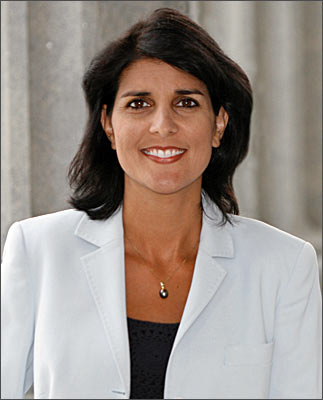
Meet Reshma, Surya, Manan, Raj, Ami, Ravi, Nimrata and Kamala — a new wave of Indian-American politicians. At least eight children of Indian immigrants are running for Congress or statewide office, the most ever. The star of this trend is Nikki Haley, born Nimrata Nikki Randhawa, who is favored to win the election for governor of South Carolina.

Indian heritage is where Haley’s similarity with the other candidates seems to end. She is the only Republican, the only one who has been widely mistaken for a white woman, the only one who has been accused of abandoning her heritage for converting from the Sikh faith to Christianity.

Yet when Haley’s motives are questioned and some suggest Indians must become less “foreign” to get elected, many of these new candidates are quick to ask: Who are we to judge the mashup of American ambition with an ancient culture?

Manan Trivedi, a doctor and Iraq war veteran who recently won a Democratic primary for Congress in eastern Pennsylvania, said he did not view his ethnicity as a handicap: “The American electorate is smarter than that.”

He called criticism of Haley’s name and religion unfounded. “Nikki Haley and (Republican Louisiana Gov.) Bobby Jindal are on the wrong side, but they worked their butts off, they had the bonafides to get the votes, and I think it had so much more to do with their work ethic than the fact that they may have changed their names and adopted a different religion.”

Jindal was elected the nation’s first Indian governor in 2007, at age 36. Named Piyush at birth, he told his Hindu parents when he was 4 that he wanted to be called Bobby, like the “Brady Bunch” boy. He converted to Catholicism as a teenager.

As Jindal’s star rose, the meaning of his assimilation drew much scrutiny. Many people outside South Carolina only learned Haley is Indian after a fellow South Carolina lawmaker used a racial epithet to describe her. Now her choice of names, marriage to a white man and Methodist conversion is raising similar questions.

Christianity is a more critical issue for white Republicans than other groups — could a Hindu who worships multiple gods, or a turbaned Sikh who doesn’t cut his hair, survive a statewide Republican primary in the Bible Belt?

Vidya Pradhan, editor of India Currents magazine, thinks not.

Haley and Jindal “were really ambitious about their politics, and they could not do it being Hindu or their old religion,” Pradhan said. “I do think it was a political move. They felt that not being a Christian would hurt them.”

Haley and Jindal declined to be interviewed for this story. But J. Ashwin Madia, a Minnesota Democrat who lost a congressional election in 2008 and is a follower of the Jain religion, says their faith is irrelevant.

“They can choose to be called what they want to be called, they can worship what they want to worship,” said Madia, a board member of the Indian American Leadership Initiative, which supports Democratic candidates. “I don’t think being Indian-American is this thing they need to strive for or meet some sort of purity test. They are finding the right balance for themselves.”

Madia stopped using his first name, Jigar, when he joined the Marines about age 22. “I’m not running from something or ashamed of it. I’m proud of my name and where I come from. But I was constantly explaining it or hearing it mangled.”

Barack Hussein Obama, known as Barry in his younger days, proved that an unusual name was not an insurmountable political barrier. Some Indian politicians seem to be following his blueprint as they embrace their Indian names while describing their faith in voters’ lack of bias.

“This campaign is all about vision and values and policies,” said Raj Goyle, who is battling for the Democratic congressional nomination in his hometown of Wichita, Kan. “I don’t spend time thinking about differences, I think about ways that Kansans can come together.”

Goyle worships at an Indian temple. His first name is Rajeev, but he has gone by Raj since childhood. In 2006, he became the first Indian-American elected to the Kansas Legislature and the first Democrat to hold his statehouse district.

He said he doesn’t worry about appearing more American or more Indian. “I am who I am, I’m proud of my background and what I’ve accomplished and my family. Kansas voters absolutely will choose the best candidate based on the merits.”

Indians began immigrating to the United States in large numbers about 50 years ago, but just two have been elected to Congress: Dalip Singh Saund in 1956 and Jindal, who entered Congress in 2004 and became governor midway through his second term.

In 2008, Madia says he was the only major Indian-American candidate for Congress. Today there are six, including Goyle and Trivedi. Ami Bera in California, Ravi Sangisetty in Louisiana and Reshma Saujani in New York face upcoming primaries, and Surya Yalamanchili won a primary in Ohio.

In California, Kamala Harris, the child of an Indian mother and black father, won the Democratic nomination for state attorney general and is favored to win the election this fall. Harris was raised in a black neighborhood, attended black churches and graduated from historically black Howard University. She also worshipped in her mother’s Hindu temple and has made many visits to her family in India.

“Running for office, you have to simplify or condense or put into pre-existing boxes who you are,” Harris said, “so people will have a sense of you based on what they easily and quickly identify.”

“I grew up in a family where I had a strong sense of my culture and who I am, and I never felt insecure about that at all,” she said. “Slowly, perhaps, with each of us taking on more prominent positions, people will start to understand the diversity of the people.”

Pakistanis for Peace Editor’s  Note 11/03/2010– We at Pakistanis for Peace want to congratulate Nikki Haley for winning the governorship of South Carolina in a very tough and hard fought race. Both as an American as well as ethnically being a person from the Indian subcontinent aka Desi, we are proud to see her elected to serve as governor, despite disagreeing with her party on many issues.

Her rise as well as that of Governor Bobby Jindal of Louisiana to the top of American politics is a source of pride for all Desis, be they Indian, Pakistani, Bengali, etc. We invite people of all races, ethnicities, and backgrounds to join our Facebook group at Pakistanis for Peace and strengthen those who support peace between India and Pakistan and around the world. To join us on Facebook, click:http://www.facebook.com/group.php?gid=37793413510&v=wall

At Talks, Pakistan, India Close the Gap

By Anita Joshua for The Hindu

Conscious of the historical baggage, but unwilling to be burdened by it, India and Pakistan on Thursday inched closer to each other during the Foreign Secretary-level talks here and both sides held out the possibility of some tangible outcome after the July 15 ministerial engagement.

However, both Foreign Secretaries refused to be drawn into chalking out a road map or identifying goal posts. “There is a constituency for peace in both countries, and we should avoid stock phrases like road map,” Foreign Secretary Nirupama Rao said at a “joint press stakeout” here, shortly after spending a greater part of the morning with her Pakistan counterpart Salman Bashir.

The talks, according to Mr. Bashir, began as an exploratory venture, but “after this round, we are much more optimistic of good prospects at the Foreign Ministers meeting.” He summed up the talks as a “good essay in mutual comprehension,” a phrase he admitted to have borrowed from Ms. Rao.

Optimism apart, both conceded that this would be a protracted process that may not yield quick results, but decided to work on the doables in the interim. As to how they proposed to insulate the process from another freeze in relations in the eventuality of a flashpoint, Ms. Rao said this would also be a subject of discussion.

The first indication of some forward movement came with the announcement of the “joint press stakeout” soon after the talks had wound up, and the Foreign Secretaries were breaking bread in the Foreign Office.

In his opening remarks, Mr. Bashir said the two sides decided to work towards restoring confidence and building trust to make it possible for a comprehensive, sustained and substantial dialogue.

Speaking in a similar vein, Ms. Rao described the talks as forward-looking with both sides trying to understand each other’s position. “We reflected on the modalities for restoring trust and confidence to pave the way for a comprehensive, sustained and meaningful dialogue in all areas. We have agreed that dialogue is the best way forward.”

Asked whether terrorism was discussed, she said both sides agreed that terrorists must be denied the opportunity to derail the process of dialogue while pointing out that Pakistan Prime Minister Yusuf Raza Gilani had made an important commitment when he told his counterpart that efforts would be made to ensure that the Pakistani soil was not used for attacks on India.

Unlike in the past, when the two countries appeared to be speaking at cross purposes, this time the Foreign Secretaries seemed to complement each other.

If Ms. Rao deftly side-stepped a leading question on India’s reluctance to continue with composite dialogue by saying there was no issue over nomenclature, Mr. Bashir returned the favour by echoing this remark and refusing to be drawn into commenting on why Pakistan was not raising the issue of Indian-sponsored terrorism in Balochistan.

Instead, he broad-brushed the issue, stating that terrorism impacted Pakistan and was a concern to the region and the world. “Essentially, we have agreed to move from the rhetoric to the ways and means of addressing these concerns,” he said.