Archive for the ‘ India ’ Category

Republican Accuses Indian American Challenger of Playing Race Card

As Reported By The Hindu

A Democratic Indian American Congressional candidate for the November elections to the US House of Representatives has been accused by his rival of playing the race card.

“The only one who has played the race card here is him, by going to Indian-American groups to raise money,” Mark Campbell, spokesman of sitting Republican Congressman Jim Gerlach, told Congressional newspaper ‘The Hill’ in an interview.

As per latest news reports, Geralch is facing a tough challenge from Democrat Manan Tridevi in his Pennsylvania 6th District. Democratic National Committee Chairman Tim Kaine is headed to Philadelphia to raise money for him.

Cutting across party lines, the community, which has one of the highest per capita incomes across all the ethnic groups in the US, are contributing significantly for all the six Indian American candidates who are running for a record number of Congressional seats this year.

“Dr Manan Trivedi is running a campaign focused on the Pennsylvania families and businesses struggling in this economy. Gerlach, on the other hand, is making these ethnic charges to distract voters from his record of supporting the economic policies that created this recession,” Kathy Kulkarni, president of the Indian American Leadership Initiative (IALI), said in a statement.

Noting that Trivedi is now one of the Democratic Party’s top Congressional candidates, IALI said: “Let’s make Jim Gerlach regret the day his campaign attacked the Indian American community.”

It also urged the community to make a generous contribution to Trivedi’s campaign.

Terming it as an incredible accusation to make in an American political campaign where it is quite common for candidates from both parties to seek support from ethnic organisations, IALI said: “You would never see Gerlach attack an Italian American, Jewish American or Greek American candidate for raising money from their ethnic communities.”

It is ludicrous for Gerlach to say an Indian American candidate should live by different rules, Kulkarni said.

“His campaign statement shows disdain for the Indian American community and the Congressman should apologise immediately,” Kulkarni demanded.

In an election which has seen the largest number of Indian Americans running for office, this is not the first time that a candidate has experienced an attack by his/her political opponent in racial or ethnic lines.

Last month in Kansas, Republican Mike Pompeo apologised to his main rival Democrat Raj Goyle after his campaign tweeted a link to a blog post that included a racial slur aimed at Goyle and labelled President Obama as a Muslim.

The Pompeo campaign said the link to the post was sent in an error. “The statements of the blogger in no way reflect my views,” the Republican said in a statement. “There is no place in campaigns or in public discourse for language of this nature,” he added.

In California, Democratic nominee and Indian American Ami Bera returned the USD 250 received from a donor affiliated with the Council on American Islamic Relations (CARI), a group whom his Republican rivals alleged is linked with terrorists.

CARI, however, has denied these charges.

Bera has alleged that his rival Republican Congressman Dan Lungren’s campaign has been using the diversionary tactics of “fear and race” in order to deflect from jobs, the economy and healthcare — what his campaign is all about.

Lungern’s campaign denies such an allegation.

“Was it race-baiting when Barbara Boxer withdrew an award from the very same CAIR executive director? Bera is a rookie candidate making rookie mistakes,” a spokesman of Lungern told ’The Hill’

The other three Indian Americans running for the Congress are Reshma Saujani, who is giving a tough primary challenge to Congressman Carolyn Maloney in New York; Ravi Sangisetty, running for the seat left open by Congressman Charlie Melancon and Surya Yalamanchili who is challenging Republican Congressman Jean Schmidt in Ohio.

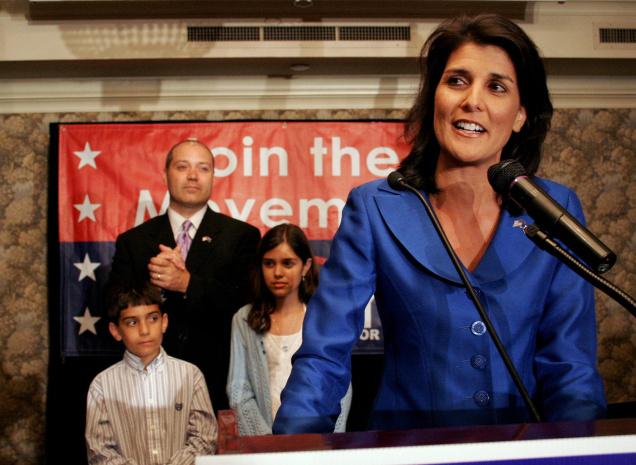
While all the six Indian American candidates running for the seats in US House of Representative are Democrats, leading the community is the Republican Nikki Haley who is running for the gubernatorial race.

What Are Chinese Troops Doing in Kashmir?

By Randeep Ramesh for The Guardian

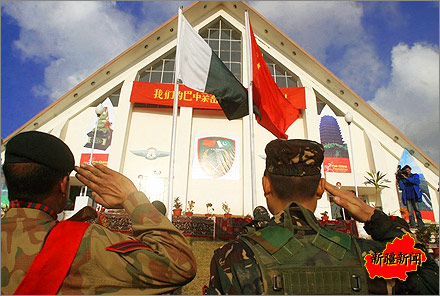
The claim that more than 7,000 Chinese troops have been handed “de facto control” of Gilgit-Baltistan, a northern part of Kashmir, by Islamabad, has set alarm bells ringing in Delhi. India – which, like its nuclear-armed rival Pakistan, claims the entire state – has long been worried that the People’s Liberation Army was working on roads and railway projects in the Karakoram mountains.

What is true is that China plans a massive highway linking western China to the port it is building at Gwadar, Pakistan, on the shore of the Arabian Sea. The benefits are obvious: the journey time from factory gate in, say, China’s wild west, to container ships bound for the Gulf will be cut from weeks to a few days. Eventually it may even become a key energy supply route.

All of this troubles Delhi, which has long asked for China to keep its nose out of Kashmiri affairs. However, the rise of the Middle Kingdom and its need to secure passage through its own troublesome provinces of Xinjiang and Tibet through to Pakistan make this unlikely. But India suspects, too, that China is intent on becoming the hegemon of much of the eastern hemisphere – able to dictate to smaller powers the rules of the game.

In Kashmir this had led to a round of tit-for-tat diplomatic incidents. So when India refuses to allow a Chinese diplomat to visit its troubled north-eastern state of Manipur for a talk, China responds by blocking the visa of a top Indian general because it appears his command includes Kashmir.

The Himalayan state is a piece of real estate whose sovereignty has long been contested. With its demography as varied as its topography, its various peoples have long been imbued with a stubborn streak of independence.

So it may be unsurprising that when heavy rains washed away villages in the Pakistan’s “Northern Areas” and Islamabad’s response was to sit on its hands, the simmering revolt against Pakistani rule flared again. In response Pakistan, so the claim goes, turned to its all-weather friend China, which was more than happy to send boots flying.

All this is dismissed in Beijing but only after referring to Gilgit as a “northern part of Pakistan”, which simply angered Delhi further. While Pakistan’s problem in its part of Kashmir has been of too little government action, India’s rule in its portion of the state has been heavy-handed and self-defeating.

Faced with a largely nonviolent revolt which began in 2008, the Indian authorities have provoked a much larger crisis with a regime of curfews and the killings of teenagers shot dead with nothing but slogans in their mouths and rocks in their hands. It is time for India to admit that its political and military strategy has failed to stabilise Kashmir.

The actions of both Pakistan and India vitiate claims that somehow either could keep the entire state happy. China has little sympathy with separatist claims – and holds sway over large chunks of the former Kashmiri kingdom.

The only way out of this mess is for Islamabad and Delhi to start rebuilding a peace process that will eventually lead to self-governance on both sides of the de facto border and a withdrawal of substantial numbers of Indian, Pakistani and, yes, even Chinese troops from Kashmir.

Grandsons of Mahatma Gandhi and Sir Abdullah Haroon Appeal for Pakistan Flood Relief

As reported by The United Nations

Miseries of millions unleashed by unprecedented floods in Pakistan brought together grandsons of two famous men in the Indian sub-continent to raise money for the sufferers.

Rajmohan Gandhi, grandson of Mahatma Gandhi and Abdullah Hussain Haroon, Pakistani ambassador to the UN, reached across the lines of history to make a joint appeal here to people to open their wallets to help the flood devastated people of Pakistan.

Acknowledging the gesture of Gandhi’s grandson, Hussain Haroon said Mahatma Gandhi was not only the father of nation to Indians, but also for Pakistanis and the people of entire sub-continent.

Appearing in a joint appeal at the UN headquarters, the Pakistani ambassador introduced Rajmohan saying “Mahatma Gandhi had a very special relationship with all of the Indian sub-continent and also the Muslims” and noted that their grandfathers were very personal friends.

Hussain’s grandfather Sir Abdullah Haroon was a close associate of Mohammad Ali Jinnah, whom the founder of Pakistan described as one of the strongest pillars of Muslim League.

But Haroon acknowledged that though Gandhi and his grandfather were on opposite side of the political spectrum, yet they had immense strength and respect for each other.

“My grandfather Sir Abdullah Haroon was a very personal friend of his (Gandhi), and when my grandfather passed away, we still have Gandhi’s letter where he said to my grandmother, I would have trusted your husband with a blank check,” Haroon said, making reference to the history.

And many a time Mahatma Gandhi proved his selflessness, he asserted.

“When I remember the fledgling Pakistani state did not receive its share from the then newly formed Indian government, the Mahatma went on a fast unto death in Delhi, and the Indian government had to buckle down and pay Pakistan its share,” the Pakistani ambassador acknowledged.

“When the Hindu-Muslim riots took place in Calcutta, he not only went there with Huseyn Shaheed Suhrawardy, he brought together both elements, and the rioting stopped in the city because he was fasting until it would stop. And people realised that it had to stop,” he said, adding it was because of one of these very reasons that he was assassinated.

Adding his voice to the appeal for generous support for the people of Pakistan, Rajmohan Gandhi said, “Now, in this catastrophe, as in all wars and conflicts, the poorest are once more the prime sufferers, losing not a portion of what they had, but all they had. Their sorrows are unrecorded, their heroism unsung, their pain unremembered. I pray that this flood will help us in South Asia to reorder our priorities.”

It’s Not Just Cricket

By Alan Black for The Huffington Post

The English in their empire conquests to India and Pakistan brought the game of cricket in their armory, best understood as complicated. With the pavilion hosting tea, the sound of the leather ball on the willow bat soon spread across the verdant lands of the subcontinent. The locals embraced a game played by spectacularly white men with unimpeachable manners, in spectacularly white clothes.

Today, India and Pakistan are as mad for cricket as they are for being at each others nuclear throats. Cricket has helped keep the peace by allowing Indians and Pakistanis to throw cricket balls at each other. But while democratic India has become a stage for Western capital and its values, Pakistan sinks deeper into a sticky wicket of terrorism, biblical style floods and now something disabling and disastrous for the nation’s identity — the Pakistani national cricket team, the pride of the nation, have been caught red handed in a betting scandal that has knocked the tea cups off the saucers, spoiling the cucumber sandwiches.

Currently, Pakistan is playing England at the home of cricket in London, a sporting venue grandly named Lords. Over the last weekend, a national UK newspaper revealed a sting operation conducted by undercover journalists, who paid a man around $250,000 for information on when certain Pakistan players on the field were going to cheat. The operative, it is claimed, is linked to illegal gambling syndicates. Sure enough, the players cheated on cue and the sounds of the London bobbies running to catch the villains came shortly after. Now, the Pakistanis require something slightly stronger than tea — high powered lawyers will be a start, maybe a stolen plane to make their getaway.

For years, Pakistani cricket has been suspect. Investigators in the past were stumped and failed to prove what seemed obvious to any sentient viewer — Pakistan was cheating, throwing games to cash in on payments from gambling crime, the cricket version of baseball’s Black Socks. Pakistan has been on the back foot over the claims denying it as a conspiracy against them. But this scandal has bowled them out. The News of the World has all the evidence on videotape. It’s irrefutable — in flagrante delicto.

The London police and cricket’s governing authority are using much diplomatic nuance at this stage of the criminal investigation, Only recently, the British Prime Minister David Cameron insulted Pakistan while he was visiting their enemy, India. And now this! Cheats at Lords, the home of English cricket. This stain on the linen will provide more ammo for the prejudice merchants loading another flare to fire at poor old Pakistan — how can you trust them?

Should Pakistan be banned from international cricket, somewhat unlikely but possible if the poison goes all the way to the top of their game, the impact back home will be enormous. For millions of Pakistanis, cricket is more important than life or death. It is Pakistan’s rope to the world. A chance to show how great they are at a tremendously demanding and skillful sport. Add one more disaster to a nation seriously down on its luck.

Aging Philanthropist is Pakistan’s Mother Teresa

By Chris Brummit for The Associated Press
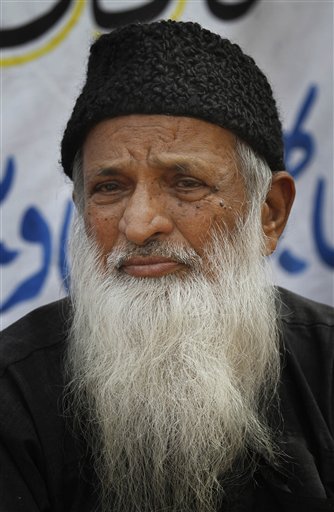
The aging man in mud-splattered, frayed clothes has barely lowered his body onto the sidewalk when the money starts piling up. Heeding his call for donations for flood victims, Pakistanis of all classes rush to hand over cash to Abdul Sattar Edhi, whose years of dedication to the poor have made him a national icon.

He thanks each donor, some of whom ask to have their photo taken next to him. Four hours later, the crowd remains — and the equivalent of $15,000 is overflowing from a pink basket in front of him.

Edhi has been helping the destitute and sick for more than 60 years, filling the hole left by a state that has largely neglected the welfare of its citizens. Part Mother Teresa, part Gandhi, with a touch of Marx, he is the face of humanitarianism in Pakistan.

Funded by donations from fellow citizens, his 250 centers across the country take in orphans, the mentally ill, unwanted newborns, drug addicts, the homeless, the sick and the aged. His fleet of ambulances picks up victims of terrorist bombings, gang shootings, car accidents and natural disasters.

Pakistan’s corruption-riddled government acknowledges Edhi and other charities do the work that in other nations the state performs. The country has no national health service, insurance program or welfare system, and few state-run orphanages or old people’s homes.

The foundation offers an alternative to charitable work performed by hardline Islamist groups in Pakistan, some with alleged links to terrorism. The spread of these organizations has triggered concerns in the West, including their work in the aftermath of this summer’s floods.

Edhi is a devout Muslim, but critical of Islamic clerics in general, not just extremists. He says they focus on ritual, preaching hellfire and defending the faith against imagined enemies, rather than helping the poor — which he says should be the cornerstone of all faiths.

The 80-something Edhi — he and his children disagree on his exact age — lives with his wife, herself a charity worker, in a tiny room in one of his welfare centers in Karachi, a bustling port city. His bed is a one-inch thick mattress on a piece of wood.

“I am a beggar for the poor,” he says, stained teeth showing in a wide smile, eyes sparkling after a week touring flood-hit areas. “Serving humanity is the biggest jihad. It is the real thing.”

___

Edhi deals with birth and death, and almost everything in between.

Just above his bedroom, a maternity ward and an orphanage are home to 18 children, many of them abandoned by their mothers in cradles left outside his centers. They wear hand-me-downs from the city’s rich. Edhi’s wife, Bilquis, tries to get the children adopted, but few Pakistanis want to take girls or older children, she says.

On a recent afternoon, the kids shouted out English nursery rhymes and danced. They then sat cross-legged on the floor, drinking tea from plastic mugs and eating spicy pastries and sticky sweets that an anonymous benefactor had dropped off.

The home was clean and bright, with plenty of toys and loving staff. But there was no place to play outside, and the roar of motorbikes from the lanes below was a constant backdrop.

Across town, workers at the Edhi morgue were dealing with latest influx of bodies. They receive around 25 a day, half of which are never claimed — the city’s unloved and unknown.

Working quickly but carefully, they cut the clothes from the bodies, lather them with a bar of soap from head to toe, rinse them with water from a jug, then wrap them in a white sheet. The bodies are bussed across town, prayed over and buried in unmarked graves.

The body of American journalist Daniel Pearl, killed by al-Qaida terrorists in Karachi in 2002, was picked up by an Edhi ambulance and taken to the morgue, the largest in the city of 14 million people.

The morgue is attached to a hospital for the homeless, a dispensary, a shelter for boys and women and children, even a wedding hall for the marriages arranged for children who have been looked after by the foundation. The smell of baking bread from an oven that churns out 9,000 loaves a day fills the air.

“The poor can come here and get a solution to all their problems,” says Ejal Hassan Zaidi, who had accompanied a neighbor to the morgue to collect the body of his 3-year-old daughter, killed in a hit-and-run incident hours earlier. “From the cradle to the grave.”

___

Born in what is now India, Edhi and his parents moved to Pakistan in 1947 when that country was created as a Muslim state at the end of British colonial rule. The family was quite well off — his father was a traveling salesman — and socially progressive.

In his biography, Edhi credits his mother for setting him on a humanitarian path. She urged him to give half his pocket money to someone poor every day and rebuked him if he didn’t.

“‘You have a selfish heart, one that has nothing to give,'” he remembers her saying. “‘What kind of human being are you? Look at the greed in your eyes. Already you have started robbing the poor. How much more will you rob from them in your lifetime?”

When she was dying, he looked after her, bathing her emaciated body and washing and braiding her hair — experiences that would also shape his life.

“The first night she spent in the grave, I dedicated my life to the service of mankind,” he says.

Edhi started small. In 1951, he bought an eight-foot-square shop in a slum neighborhood in Karachi that he converted into a dispensary. Seven years later he bought a van that he used as an ambulance, writing “Poor Man’s Van” on both sides.

He became intimately involved in the business of caring for the sick and dying. He would drive the ambulance to the scene of an accident to pick up the bodies, administer injections during a flu outbreak and travel across the country to help after earthquakes and other natural disasters.

Edhi’s record of round-the-clock service and frugal lifestyle attracted donations, and he soon had a fleet of 14 ambulances. In the 1980s and 90s, he opened centers and ambulance services throughout the country. He donated $200,000 to releif efforts after Hurricane Katrina, and his workers have also helped out in disasters in Asia and the Middle East.

___

Pakistanis are a generous people, required by their Muslim faith to give away 2.5 percent of their wealth each year. The last nationwide survey done in 1998 showed that Pakistanis gave the then equivalent of $820 million to charity, around the same as the government’s health and education budget at the time. There are no numbers on how rising terrorism and a poor economy have affected this philanthropy.

Edhi does not accept donations from international organizations or governments, including Pakistan’s, saying he doesn’t need outside help and it is important for Pakistanis to help each other. He and his wife live simply of the interest from some savings.

The foundation does not produce detailed financial statements or annual reports. Edhi points to a wall of files in one office in which he says everything is accounted for. Donors do not seem to mind, such is their trust in him.

“You ask any Pakistani on the streets, Edhi is total credible with them,” says Anjum Haque, the executive director of the Pakistan Centre for Philanthropy. “The success of the trust is down to Edhi himself.”

Last year, donations to Edhi-run charities totaled around $5 million, according to Faisal Edhi, the founder’s son and trust member. A significant chunk of the funds comes from overseas Pakistanis, who want to donate to their homeland.

The lack of transparency has caused some concern among others in the charity sector in Pakistan. Faisal Edhi acknowledges that some of their 13,000 employees — who receive very modest salaries — might skim money off donations. There have also been questions raised about the lack of professionalism and efficiency, specially as the foundation has grown.

Edhi Village, a 65-acre complex in the undulating hills beyond the northern slums of Karachi, is home to 300 children, many picked up off the streets, and 900 adults, many elderly or suffering from mental disabilities.

Most wear clean, ironed clothes, and the food is fresh. Yet there are also signs of neglect. One naked youth dragged himself through a puddle. Some had no shoes and begged visitors to buy them a pair.

The adults live in rooms around the size of three tennis courts, bare except for raised sections for sleeping. They are locked inside for part of the day. There are two doctors, four nurses and two ward boys looking after them.

“We do the most we can do with our resources,” says Billal Mohammad, a regional Edhi manager. “They would be living on the pavement under the sky. We give them shelter, food and treatment. You must not see this place throughout Western eyes.”

___

Edhi has made no secret of his dislike of Pakistan’s ruling class. So it was a surprise to see a gaggle of politicians using one of his orphanages in Karachi as a venue to mark the recent birthday of President Asif Ali Zardari.

The visitors spooned cake into the mouths of the children, shouted political slogans for television cameras and asked Edhi to be photographed next to them. He said he only let the politicians in so the children would have a party to enjoy.

“So what if the politicians are using me? They even use God,” said Edhi, who sat by himself for most of the event. “Landowners, clerics, politicians. They are all looters. There is no fear in telling the truth.”

Hardline Islamist groups have criticized Edhi for his progressive views on women and the secular nature of his work. Some have said that by accepting newly-born babies from unmarried mothers, he is promoting premarital sex.

“We meet them and we read their newspapers. They say we are non-Muslims, unbelievers and communists,” says Faisal Edhi. “The jihadi groups don’t like us. They don’t believe in humanity.”

There are questions about what will happen to the foundation when Edhi dies. He says his two sons and three daughters will take over, though without him at the helm, people may not give as generously.

For now, his children appear more concerned about their father’s health. Apart from an afternoon nap, he works just as hard as he did when he was in his 30s, they say.

“We tell him to take it easy, but he doesn’t listen,” says daughter Almas Edhi. “He wants to keep busy.”

On the Net:

  • http://www.edhifoundation.com/
  • http://www.pcp.org.pk/
  •  

    Pakistanis for Peace Editor’s Note– At a time when the Pakistani nation is in turmoil and dismay due to the epic floods, endless bombings and violence, vast corruption amongst the government, the Sialkot killings, and even the match fixing disappointment from the once cherished national cricket team, Abdul Sattar Edhi and his lifelong service to the people of Pakistan is a testament to the awesome goodness found in one Pakistani man. His service to the orphans, the destitute, homeless, and the generally downtrodden of the country make him a shining role model and a beacon of what is good about the Pakistani people. If there is anyone more deserving of a Nobel Peace Prize than Edhi, then we have not found them as of yet. May he continue to inspire not just the Pakistani people, but all people everywhere with his selflessness and humanity.
    No Change Seen in Pakistan’s View of India Threat

    By Myra MacDonald for Reuters

    The Pakistan army is unlikely to change its assessment of the threat from India despite heavy demands on its troops to provide flood relief while also fighting Islamist militants, a senior security official said.

    The Wall Street Journal said this month Pakistan’s Inter-Services Intelligence (ISI) agency had decided — for the first time in the country’s history — that Islamist militants had overtaken India as the greatest threat to national security.

    But the security official suggested this was a misinterpretation of the stance of the Pakistan army, which views the threat from militants and India in very different ways, rather than comparing them against each other.

    “These are two mutually exclusive threats. The magnitude, the type, is quite different. One is an internal threat which is insidious, difficult to quantify. It is a clear and present danger. This is a very serious threat,” he said. “The other is a conventional threat. What has India done, politically and militarily, for this threat to have been reduced?”

    Another official said the threat from India had if anything increased into both a conventional and unconventional threat, as it used its presence in Afghanistan to support those fighting against the Pakistani state in its western border regions.

    India denies accusations by Islamabad that it backs separatists in Baluchistan province, which borders Afghanistan, saying it is interested only in promoting Afghan development.

    With flooding which has uprooted some 6 million people further destabilizing a country already battling militants, the WSJ report raised the possibility the Pakistan army might revise its assessment of the threat from its much bigger neighbor.

    It keeps the bulk of its troops on the Indian border.

    INDIAN FLOOD RELIEF

    India has promised Pakistan $5 million in flood relief and analysts there see no chance of it exploiting its nuclear rival’s current vulnerability by raising tensions on the border.

    “At this time no one is thinking of anything other than how to help them get over the suffering and the damage,” said retired Brigadier Gurmeet Kanwal at the Center for Land Warfare Studies.

    “The Pakistanis should feel free to pull out their troops for flood relief as and when they want. The Indian Army obviously cannot give any written guarantees but our DGMO (Director General of Military Operations) could reassure his counterpart that we have no intention of attacking them at such a time.”

    The DGMO’s of the two countries talk by phone once a week, mainly to clear up misunderstandings over any ceasefire violations on the Line of Control dividing disputed Kashmir.

    But the security official said that Pakistan’s military deployment was based on its assessment of India’s potential offensive strength. “The configuration of any defense force is based on enemy’s capabilities and not intentions,” he said.

    Pakistan has taken more casualties in its battle with Islamist militants than in all its wars against India combined — the two countries have fought three full-scale wars since independence in 1947 along with other smaller conflicts.

    Yet for Pakistan to drop its guard against India would require progress on political disputes, including over Kashmir, officials say.

    India broke off a peace process with Pakistan after the 2008 attack on Mumbai by Pakistan-based militants and despite several attempts the two countries have been unable to get their talks back on track again.

    And even while Pakistan fights militants on its western border with Afghanistan, it remains wary of sudden Indian retaliation should there be another Mumbai-style attack on India.

    “This enforced attention to the western border has made the Pakistan army reassess its priorities,” said western military analyst Brian Cloughley, an expert on the Pakistan army.

    “But it still does not wish to drop its guard to the east, especially as the there is still the threat of a swift and dramatic attack if a terrorist outrage in India is determined by India to have been planned in Pakistan.”

    Pakistan has said it cannot guarantee there will be no more attacks on India, arguing that it too is a victim of bombings.

    Aid Flooded Pak by Withdrawing Army

    By Swaminathan S Anklesaria Aiyar for The Times of India

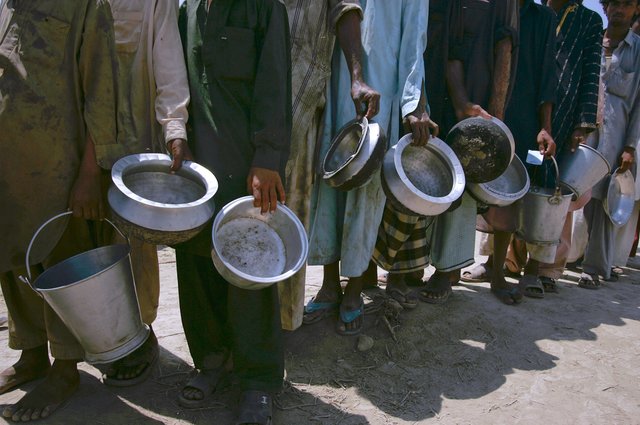
    Pakistan is suffering its greatest human tragedy since Partition. The floodwaters of the Indus are an incredible 20 miles wide, sweeping away entire towns, villages and farms. Over 20 million people have been displaced, far more than the nine million displaced by Partition in 1947. The immediate death count of 1,500 will soon increase hugely through disease and deprivation. Rehabilitation could cost $100 billion.

    Some Indians might be perverse enough to rejoice that an enemy has been hit by a natural disaster — an act of God, as it were — and will be crippled economically for years. But most Indians will surely want to help their neighbours. In these traumatic times, we need to think of Pakistanis as humans in distress, not foes.

    Even those who cannot think beyond realpolitik should see that the floods are potentially a strategic disaster for India too. Flood damage will create a fertile breeding ground for Islamist militancy. Islamist NGOs with links to terrorist groups like the Lashkar-e-Taiba and Jaish-e-Mohammed are at the very forefront of flood relief efforts and hence are gaining popularity. Meanwhile, the civil administration is seen as corrupt and ineffective. President Asif Zardari has further ruined his low reputation by going on foreign junkets.

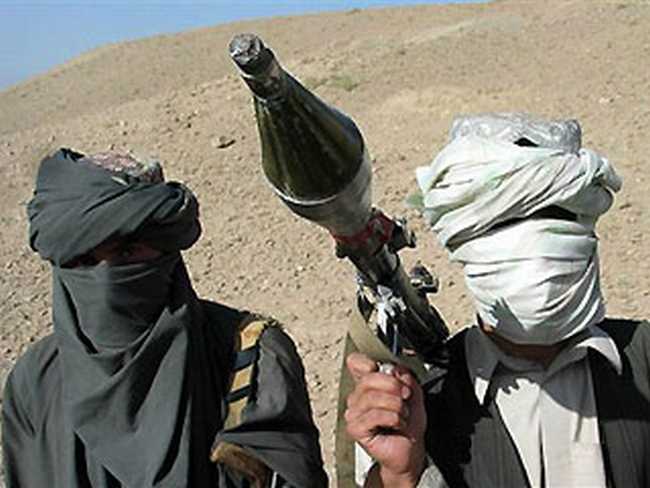
    The Pakistani army has in the last year battled some, though by no means all, militant groups in Swat and FATA (federally administered tribal areas). But much of the infrastructure built to reach the remote tribal areas has been destroyed by the floods. Besides, the Pakistani army is redirecting its efforts in the region, from combating militants to combating flood damage. The militants are re-occupying the resultant political vacuum.

    The ISI recently came out with a study suggesting that Islamist militants had become a greater threat to the country than India. Flood damage can only deepen that perception. True, the army wants to back the Afghan Taliban even while battling the Pakistani Taliban, and this results in muddled thinking and sabotage of peace initiatives. The resolution of these contradictions is not in sight.

    One day, the Pakistani army and the ISI will have no choice but to confront the reality that Islamist militants are Frankensteins that threaten their own creator. The ISI’s assessment should bring that day somewhat closer.
    In the light of both human and strategic considerations, how can India help Pakistan? Individual contributions from Indian citizens must be encouraged, and red tape thwarting contributions in cash and kind must be cut. But the Indian government should not offer more than a modest amount of food and financial aid. Pakistan requires billions of dollars for relief and rehabilitation, so anything India offers will be a drop in the ocean.

    Besides, recipients are rarely grateful for alms: they resent being supplicants, and suspect the motives of the donors. The US saved India from mass starvation after the twin droughts of 1965 and 1966 by giving record food aid. But this won the US very few friends and stoked resentment from many who felt India’s independence was being compromised. The US will once again be the chief donor to Pakistan, but will gain virtually no popularity or gratitude.

    If food and financial aid will not help much, how can India best help Pakistan? The best way will be for the Indian Army to unilaterally withdraw from the border in Punjab, Rajasthan and Gujarat. This will pose no military risk whatsoever: flood-stricken Pakistan cannot possibly embark on military adventures against India. But the withdrawal of Indian troops will mean that the Pakistan army loses all excuses to avoid diverting manpower and financial resources from the border to flood relief and rehabilitation. This will cost India nothing, yet will release very large resources within Pakistan. Its impact on the Pakistani psyche will be significant. Even analysts who distrust Pakistan agree widely that India has no alternative to diplomatic engagement: cutting off ties will not win any minds and hearts there. Unilateral withdrawal will itself be a form of engagement, and will encourage other forms.

    The wrong strategy will be to try to negotiate a mutual withdrawal of troops. Withdrawal must be unilateral and immediate. Defence hawks will express dismay that India is so soft on an enemy that encourages terrorism. But unilateral withdrawal will be a flood relief measure, not a military surrender. In the bargain, it will oblige Pakistan to withdraw its own troops and redeploy them for flood relief: its public opinion will be outraged otherwise.

    Dr Manmohan Singh, you say we must be proactive in the peace process with Pakistan. The tragic floods there have given you an opportunity to be proactive in a way that will not come again. Go for it.

    Crisis in Kashmir

    By Ashok K Metha for The Wall Street Journal

    A few months ago, Pakistan was virtually begging India to restart the dialogue process between the two governments, suspended after the 2008 Mumbai terrorist attack. Now Pakistani spokesman Abdul Basit asserts that Pakistan will not agree to “any preconditions for resuming the dialogue process.” Why did Islamabad’s attitude change?

    The answer lies in two cities: Srinagar and Kabul.

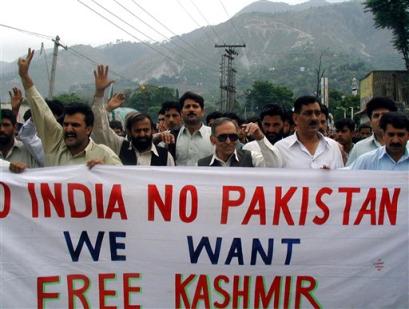
    With 62 civilian deaths in the ongoing rioting in the capital city Srinagar and two districts, over the past couple months Kashmir has witnessed a fresh uprising against the symbols of the state. Kashmiris are using every avenue they have—from stones to the Internet—to demand azaadi, or freedom. The mostly spontaneous upheaval involves young men, women and even children. Kashmiris want freedom from corruption, bad governance and the overbearing presence of soldiers.

    For decades Pakistan has been trying to wrest Kashmir away from India by sponsoring insurgency. But today, thanks to the ineffective administration in Srinagar, Pakistan doesn’t have to try very hard. After the security forces managed to restore law and order three years ago, India failed to take the political initiative, and frittered away its gains. The result is widespread disillusionment. At a ceremony commemorating India’s Independence Day this month, a local policeman threw a shoe at Omar Abdullah, chief minister of Jammu and Kashmir, whose grandfather Sheikh Abdullah ratified the state’s accession to India.

    Up until 2008, the state had a lot going for it: several round-table meetings for self rule and confidence-building measures, periodic release of economic packages, annual visits by Prime Minister Manmohan Singh, conferences connecting the people and quiet dialogue with moderate and hardline separatist leaders. The ceasefire on the Line of Control was holding, and a four-point formula for resolving the Kashmir dispute hammered out with Pakistan through back channels seemed as good as done.

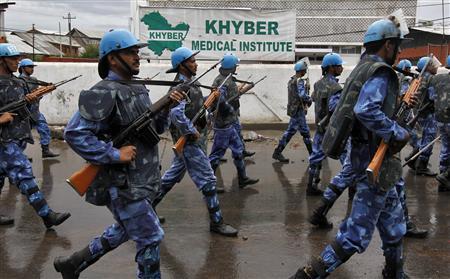
    Indian security personnel beat detained Kashmiri Muslim protesters in Srinagar, India.
    Mysteriously, the peace process then ground to a halt. The India-Pakistan dialogue began unraveling soon after Gen. Pervez Musharraf left the scene. The new Pakistani Army Chief, Gen. Ashfaq Kayani, a Fort Leavenworth graduate and favorite of the U.S. establishment, reversed the process of reconciliation. The ceasefire has become shaky, and the Pakistani government’s rhetoric on Kashmir has returned to the rights of the people to self determination and “diplomatic and moral support to Kashmir in their legitimate struggle no matter how brutally Indian forces try to suppress it.”

    The reason Gen. Kayani feels emboldened to take a harder line is easy to discern. Tensions deepened after the U.S. elevated Pakistan from “major non-NATO ally” to the linchpin of its Afghan exit strategy, and excluded India from a political solution in Afghanistan. Despite the denials of U.S. Af-Pak point man Richard Holbrooke, the Afghanistan-Pakistan free trade agreement has only underscored India’s irrelevance to Kabul.

    Civilian strife in the Kashmir Valley will only strengthen Pakistan’s case that resumption of a dialogue on Kashmir alone will enable a more focused fight against the Taliban on the Western frontier. This is not entirely true, as the Pakistan Army has already redeployed to the west 52% of its offensive and 45% of its defensive forces previously devoted to facing down India.

    The priority for Delhi is to stop the stone-throwing in Kashmir. Every death—one recent fatality was a child of eight years old—is fresh cause for protests. On an hour’s notice, 10,000 people will come out on the streets to join the funeral procession of someone they don’t know. Further, Kashmir’s moderate Islam is being radicalized by the hardline Jamaat-e-Islami, which has made even separatist leaders irrelevant. No one is willing to talk unconditionally anymore.

    Delhi will have to start from scratch in rolling back alienation by reaching out to youth. Yet Rahul Gandhi, India’s prime-minister-in-waiting and supposedly its youth leader, has not reached out to his favorite constituency in Kashmir. Neither has Congress President Sonia Gandhi or Prime Minister Manmohan Singh visited Srinagar since the troubles began in June. Until a few months back, Kashmir was the most violence-free state in India, as security forces had significantly marginalized insurgent and terrorist groups over the last three years.

    Islamabad is not about to take over Kashmir—according to a survey by London-based think tank Chatham House last month, just 2% of the population favors joining Pakistan. But as the cry for azaadi grows louder, no one has a clue when this uprising is going to stop. Even as the faithful observe Ramadan, Delhi needs to do something before U.S. President Barack Obama’s scheduled visit in November.

    India, Pakistan Can’t Break the Ice, Even in Hour of Tragedy

    Reported by Sanjeev Miglani for Reuters

    Pakistan’s catastrophic flood continues to boggle the mind, both in terms of the human tragedy and the scale of the damage it has wrought, and even more so over the longer term. One official has likened the disaster to the cyclone that devastated what was once East Pakistan, setting off a chain of events that eventually led to its secession and the birth of Bangladesh.

    Not even that spectre, raised by Pakistan’s ambassador to Britain, can however dent the steadfast hostility between India and Pakistan. For a full three weeks as the floods worked their way through the spine of Pakistan from the turbulent northwest to Sindh in the south, Islamabad made frantic appeals to the international community not ignore the slow-moving disaster, and help it with emergency aid, funds. But next-door India, best-placed to mount a relief effort probably more because of the geography than any special skill at emergency relief, was kept at arm’s length. An Indian aid offer of $5 million, which itself came after some hesitation and is at best modest,was lying on the table for days before Pakistan accepted it. ”There are a lot of sensitivities between India and Pakistan … but we are considering it very seriously,” a Pakistani embassy spokesman told our reporter in New Delhi earlier this week. Things appeared to have moved faster only after Indian Prime Minister Manmohan Singh called his Pakistani counterpart Yusuf Raza Gilani expressing sympathy and reminding him of the offer of aid. Millions of Pakistans meanwhile continued to struggle for food.

    To some extent, Pakistan’s hesitation in accepting aid from India is understandable. India is the traditional enemy. It is also the bigger country of the two. And over the last two decades it has become easily the more prosperous entity, courted by the world’s industrialists while Pakistan is “haunted by the world’s terrorists”, as columnist Vir Sanghvi writes in the Hindustan Times. A Pew poll that we wrote about a few weeks ago showed how deep-seated these Pakistani fears are: a majority of those polled said they considered India to be the bigger threat than al Qaeda or the Taliban, despite the violence they have suffered at the hands of the militant groups over the past few years.

    As Sanghvi writes:

    But, to be fair to the Pakistanis, let us accept the position that decades of hostility between our two countries have led to a situation where the Pakistanis simply do not trust us. Let us also accept that they are so resentful of India that even in their hour of greatest crisis when thousands of people have died and millions are homeless, they will still spurn India’s hand of friendship. And let us grant them their claim that given our history, they are justified in being suspicious of India.

    But then, you have to wonder, if the two nations cannot even keep up basic neighbourly ties such as offering aid and commiseration at times of natural crises, what chances they can ever come to a peace deal that will demand much more from them ?

    It was pretty much the same in 2005 when the earthquake struck Pakistani Kashmir and the authorities struggled to provide aid to the affected. And Indian aid offer was initially ignored, later blankets from India were accepted. But even then Pakistan had people cut out the label that read ‘made in India’ on each blanket.

    Indeed, some Pakistani writers are already criticising the government of bringing dishonour to the country by accepting Indian assistance. Commentator Shireen M. Mazari in a piece entitled “What Have We Become” says the Pakistani government accepted the Indian offer for help under pressure from the United States and that it was a matter of shame. By taking Indian aid, Pakistan had let the people of Kashmiri down just when they had risen in revolt against Indian forces.

    “This money has the blood of Kashmiris on it and one wonders how our Kashmiri brethren must be feeling as they face the bullets of Indian forces every day and see us taking Indian “aid”,” Mazari wrote.

    Kashmir, then, can’t be far from any discourse relating to India and Pakistan. It is the core dispute at the heart of 60 years of difficult ties, says Pakistan and must be resolved before any normalcy can take place. India doesn’t even consider the territory to be disputed, so the argument, at least in public, hasn’t changed much in over half a century.

    For the 20 million affected by the flooding in Pakistan, and facing a future that would daunt any of us, Kashmir must, at the moment, be a distant thought.

    Pakistan Accepts Flood Aid Money From Rival India

    By Issam Ahmed for The Christian Science Monitor

    Pakistan has accepted an offer of $5 million of flood aid from neighbor and longtime rival India, in a move that could spark a political backlash at home.

    In an interview with Indian news channel NDTV, Pakistani Foreign Minister Shah Mehmood Qureshi described the offer of aid, made last week, as a “very welcome initiative” which the government of Pakistan has agreed to accept, after taking some time to decide.

    But it would have been better to say “thanks, but no thanks,” according to Liaqat Baloch, secretary general of Pakistan’s second-largest religious party, the Jamaat-e-Islami.

    “Pakistan has many disputes with India, with reference to Kashmir, and the Indian Army engaging in brutality in occupied Kashmir,” he says. “In the past, when Pakistan tried to support India after their natural disasters, India never accepted. Therefore it would be better if our government refused the aid with a big thank you.”

    Al Khidmet foundation, Jamaat-e-Islami’s charitable wing, has been one of the most visible aid organizations in the flood-affected areas.

    The two countries have made efforts in recent months to repair bilateral relations, which took a plunge following the 2008 Mumbai attacks. India blames those attacks on Pakistan-backed militants. The two countries have fought three full-scale wars, most recently in 1999.

    The United States had urged Pakistan to accept India’s offer of aid earlier this week. When Indian Prime Minister Manmohan Singh called his Pakistani counterpart to offer his condolences following the worst natural disaster in Pakistan’s history, it was an event widely reported in the Pakistan media.

    “In such times of natural disasters, all of South Asia should rise to the occasion and extend every possible help to the people of Pakistan affected by the tragedy,” Mr. Singh said, according to a statement released by his office.

    According to Badar Alam, editor of Pakistan’s Herald magazine, the amount of aid pledged is “symbolic, but its effect is immense. It’s a good confidence building measure between the two countries.”

    But, he warns, Pakistan’s religious parties will try to spin the move “as a sign of weakness.”

    “They will see it as a capitulation to India, that our own government is so weak we have been forced to accept help from the historic enemy,” says Mr. Alam.

    Mosharraf Zaidi, a columnist for Pakistan’s The News, termed the decision brave: “It’s a tremendous gesture, very mature. India should be commended for donating it and Pakistan should be commended for accepting it.”

    “The whole idea in an emergency is you’ll have the Jamat ud Dawas [the charitable wing of banned militant outfit Lashkar-e-Taiba] and you’ll have competing powers working almost in tandem to support people. It shows that no matter what our value systems, we have to work together right now,” he adds.

    Some 20 million people are affected by Pakistan’s worst flooding in recent memory; Pakistan’s government estimates around 1,600 deaths and millions homeless or displaced. The United Nations appealed to the international community to donate $460 million in emergency assistance last week, and has met half of that goal. Yesterday the US increased its flood aid to Pakistan from $80 million to $150 million.

    -Pakistanis for Peace Editor’s Note- It is a good decision by the Pakistani government to accept the aid offer from India. Not only will this be a confidence building measure between the two nations, it will save countless lives, and no nation is too proud to save the lives of its citizens.

    U.S. Strategy in Pakistan Is Upended by Floods

    By Mark Landler for The New York Times

    WASHINGTON — The floods in Pakistan have upended the Obama administration’s carefully honed strategy there, confronting the United States with a vast humanitarian crisis and militant groups determined to exploit the misery, in a country that was already one of its thorniest problems.

    While the administration has kept its public emphasis on the relief effort, senior officials are busy assessing the longer-term strategic impact. One official said the disaster would affect virtually every aspect of the relationship between the United States and Pakistan, and could have ripple effects on the war in Afghanistan and the broader American battle against Al Qaeda.

    With Pakistan’s economy suffering a grievous blow, the administration could be forced to redirect parts of its $7.5 billion economic aid package for Pakistan to urgent needs like rebuilding bridges, rather than more ambitious goals like upgrading the rickety electricity grid.

    Beyond that, the United States will be dealing with a crippled Pakistani government and a military that, for now, has switched its focus from rooting out insurgents to plucking people from the floodwaters. The Pakistani authorities, a senior American official said, have been “stretched to the breaking point” by the crisis. Their ragged response has fueled fears that the Taliban will make gains by stepping in to provide emergency meals and shelter.

    “It certainly has security implications,” said another official who, like others interviewed for this article, spoke on the condition of anonymity because he was not authorized to discuss internal policy deliberations. “An army that is consumed by flood relief is not conducting counterinsurgency operations.”

    On Thursday, the United Nations will convene a special meeting devoted to the floods, hoping to galvanize what has been a lackluster global response. Secretary of State Hillary Rodham Clinton is expected to announce that American public aid has surpassed $100 million, an official said.

    “We’re obviously not oblivious to the political and strategic implications of this catastrophe, but right now, we are fully focused on the emergency relief effort and trying to get a good assessment of the needs,” said the administration’s special representative to the region, Richard C. Holbrooke.

    Noting that several weeks remain in the monsoon season, Mr. Holbrooke said, “Worse may be yet to come.”

    The disaster comes after a period in which the administration seemed to have made strides in repairing the American relationship with Pakistan. Mrs. Clinton visited Islamabad in July with a long list of pledges, including the upgrading of several power plants and a plan to promote Pakistani mangoes. Now, these projects seem almost beside the point.

    “Before, there were power plants in need of refurbishment,” said Daniel S. Markey, senior fellow for India, Pakistan and South Asia at the Council on Foreign Relations. “Now there are power plants underwater.”

    In recent days, the United States has sent 15 helicopters, rescuing nearly 6,000 people. On Wednesday, military cargo planes delivered 60,000 pounds of food and other relief supplies, bringing total deliveries to 717,000 pounds. The speed and scale of the effort, officials in both countries said, have helped bolster the checkered American image in Pakistan.

    In another hopeful sign, officials said Pakistan and India had been in close touch about the floodwaters, some of which are flowing into Pakistan from India. Such communication, between historic archenemies, could augur reduced tension in other areas, one of the officials said.

    Against that, however, are the staggering dimensions of the disaster. A senior Pakistani official told the administration on Tuesday that the next flood surge was likely to inundate much of Punjab, the densely populated region that borders India and produces much of Pakistan’s food.

    So far, this official said, the greatest damage has been in regions that are also hotbeds for Islamic insurgents, which has set back the army’s fight against extremist groups. Local governments in those places have largely collapsed, leaving the army as the only source of authority.

    With 20 million people displaced from their homes, the Pakistani authorities are girding themselves for an immense migration to the major cities, which they fear could sow further instability.

    “Americans have not yet registered the enormity of the crisis,” Pakistan’s ambassador to the United States, Husain Haqqani, said in a telephone interview from Islamabad, the capital.

    Pakistani and American officials said reports of hard-line Islamic charities providing relief were exaggerated. One pointed out that the floods had hurt the insurgents as well: there was a report of small arms and ammunition belonging to a militant group floating in the water.

    Still, people in both countries warned that if rebuilding and rehabilitation efforts bogged down, the Taliban and other militant groups would try to take advantage of it. “The real test is, can their government provide the most fundamental services?” said an administration official.

    Parallels to this crisis are hard to find. One official cited the example of the Indonesian province of Aceh, which had been racked by a three-decade insurgency fought by the separatist Free Aceh Movement. After the tsunami swept through in 2004, killing 170,000 people, the separatists and the Indonesian government quickly signed a peace treaty, in August 2005.

    There are, however, big differences between a localized separatist group and an international jihadist movement.

    “If the flood proves to tilt the balance of power in Pakistan, it’s more likely to tilt toward the militants than toward the government,” said Bruce Riedel, a former intelligence official who helped the administration formulate its initial policy for Pakistan and Afghanistan.

    Already, Pakistan’s president, Asif Ali Zardari, has been exposed to withering criticism at home for going on a trip to Europe during the early days of the flood. American officials said they were determined not to get drawn into the dispute, noting that in any event, Mr. Zardari had been stripped of many of his powers in a recent constitutional change.

    Decisions on how the flood will affect American economic aid may be influenced by a trip to Pakistan by Senator John Kerry, the Massachusetts Democrat who co-sponsored the five-year nonmilitary assistance package with Senator Richard G. Lugar, Republican of Indiana.

    Senator Kerry, accompanied by Dan Feldman, a deputy to Mr. Holbrooke, is scheduled to tour the flooded areas on Thursday. Mr. Kerry has said he is open to redirecting aid money, though some analysts said they were skeptical that Congress would approve additional financing. Military aid may also come under scrutiny, according to administration officials.

    “Every dimension of our relationship — politics, economics, security — is going to see major shifts as a result of this historic disaster,” said Lt. Gen. Douglas Lute, the White House coordinator for Afghanistan and Pakistan. “All the tools of diplomacy have to be examined in light of this new reality.”

    What They Said: Pakistan Spies Downgrade India Threat

    By Vibhuti Agarwal for The Wall Street Journal

    The Wall Street Journal reportedTuesday that a report from the Pakistan’s chief spy agency, the Inter-Services Intelligence, said domestic militancy had overtaken the Indian army as the greatest threat to Pakistan’s national security. This is the first time since the ISI was founded in 1948 that the ISI has found a bigger threat than its neighbor. India Real Time presents a roundup of comments from readers and others below:

    The Times of India newspaper reported Wednesday that Pakistan’s acknowledgment of its internal problems comes as the country is struggling with an image problem which may be affecting the flow of international aid to help the victims of the devastating floods there. “The unexpected downgrading of the threat perception from New Delhi and waking up to the scourge of home-grown terrorism comes even as foreign aid for the thousands affected in floods in Pakistan is yet to pick up,” wrote Chidanand Rajghatta for the Times of India.

    The Hindustan Times newspaper quoted analysts saying the change of mindset makes sense. “I am not surprised that the ISI has changed its strategic thinking,” Talat Masood, a retired general and analyst on defense and security issues told the newspaper. Another analyst, Imtiaz Gul, was also quoted in the article. “The ground realities have changed and have forced allies into becoming enemies,” he said.

    “At this point, the Pakistan government will say just about anything the world community wants it to,” wrote H. Jere. “After seeing the response to the aid request has been disappointing, it will agree to almost anything.”

    Other readers called Pakistan’s latest admission “hogwash,” adding that it may be a trick to get more funds from the United States.

    “It is sheer naiveté to consider Pakistan’s ISI and Islamic terrorists as two separate entities,” said Shri K. “ISI is the quintessence of rabid Islamic fascism and has been mercilessly exporting Islamic terror all over the world.”

    Some readers said Pakistan’s admission came as a ray of hope for improving the long-estranged India-Pakistan relationship.

    “I hope India take this opportunity to offer real assistance to the victims of the floods,” wrote Phillip Hwee. “It’s time for India and Pakistan to reconcile with one another. A détente is very necessary so that each of the two rivals can reallocate their resources to improve the standard of living of their respective citizens.”

    David Almeida agreed, adding that “one can only hope that the military establishment in Pakistan is truly serious about abjuring terrorism, regardless of whether it is targeted at Indian or Pakistani state.”

    Drowning Today, Parched Tomorrow

    By Steven Solomon for The New York Times

    Hard as it may be to believe when you see the images of the monsoon floods that are now devastating Pakistan, the country is actually on the verge of a critical shortage of fresh water. And water scarcity is not only a worry for Pakistan’s population — it is a threat to America’s national security as well.

    Given the rapid melting of the Himalayan glaciers that feed the Indus River — a possible contributor to the current floods — and growing tensions with upriver archenemy India about use of the river’s tributaries, it’s unlikely that Pakistani food production will long keep pace with the growing population.

    It’s no surprise, then, that Secretary of State Hillary Clinton made Pakistani headlines a few weeks before the flooding by unveiling major water projects aimed at bolstering national storage capacity, irrigation, safe drinking water and faltering electrical power service under America’s new $7.5 billion assistance program. In March, the State Department announced that water scarcity had been upgraded to “a central U.S. foreign policy concern.” Pakistan is at the center of it.

    This is because a widespread water shortage in Pakistan would further destabilize the fractious country, hurting its efforts to root out its resident international terrorists. The struggle for water could also become a tipping point for renewed war with India. The jihadists know how important the issue is: in April 2009, Taliban forces launched an offensive that got within 35 miles of the giant Tarbela Dam, the linchpin of Pakistan’s hydroelectric and irrigation system.

    Pakistan needs to rebuild and overhaul the administration of the world’s largest contiguous irrigation network. For decades, Islamabad has spent far too little on basic maintenance, drainage and distribution canals, new water storage and hydropower plants.

    To some extent, these deficiencies have been masked since the 1970s by farmers drilling hundreds of thousands of little tube wells, which now provide half of the country’s irrigation. But in many of these places the groundwater is running dry and becoming too salty for use. The result is an agricultural crisis of wasted water, inefficient production and incipient crop shortfalls.

    Like Egypt on the Nile, arid Pakistan is totally reliant on the Indus and its tributaries. Yet the river’s water is already so overdrawn that it no longer reaches the sea, dribbling to a meager end near the Indian Ocean port of Karachi. Its once-fertile delta of rice paddies and fisheries has shriveled up.

    Chronic water shortages in the southern province of Sindh breed suspicions that politically connected landowners in upriver Punjab are siphoning more than their allotted share. There have been repeated riots over lack of water and electricity in Karachi, and across the country people suffer from contaminated drinking water, poor sanitation and pollution.

    The future looks grim. Pakistan’s population is expected to rise to 220 million over the next decade, up from around 170 million today. Yet, eventually, flows of the Indus are expected to decrease as global warming causes the Himalayan glaciers to retreat, while monsoons will get more intense. Terrifyingly, Pakistan only has the capacity to hold a 30-day reserve storage of water as a buffer against drought.

    India, meanwhile, is straining the limits of the Indus Waters Treaty, a 1960 agreement on sharing the river system. To cope with its own severe electricity shortages, it is building a series of hydropower dams on Indus tributaries in Jammu and Kashmir State, where the rivers emerge from the Himalayas.

    While technically permissible under the treaty provided the overall volumes flowing downstream aren’t diminished, untimely dam-filling by India during planting season could destroy Pakistan’s harvest. Pakistan, downriver and militarily weaker than India, understandably regards the dams’ cumulative one-month storage capacity as a potentially lethal new water weapon in India’s arsenal.

    Now, on top of all this, come the monsoon floods, which have obliterated countless canals, diversion weirs and huge swaths of cropland. Pakistan needs help, and projects like those heralded by Secretary Clinton, while valuable, are not on the scale needed to turn things around.

    The best first step is a huge one: for Washington to kick-start progress on the Diamer-Bhasha dam, an agricultural and hydroelectric project on the Indus that’s been on the drawing board for decades. The project, likely to cost more than $12 billion, has languished for want of financing. It has also has run afoul of the developed world’s knee-jerk disfavor of giant dams.

    But there is simply no other project that can add so much desperately needed water storage and hydroelectricity — Pakistan is tapping just 12 percent of its hydropower potential. Giant dams, moreover, can be inspiring, iconic projects — the Hoover Dam was a statement of American fortitude at the height of the Depression. Beleaguered Pakistan could use a symbol of progress.

    There are other projects, already shown to be successful, that on a larger scale could save more water than building half a dozen giant dams. Managers at one Punjabi canal branch, for example, are working with international experts to replace the traditional supply system called warabandi — in which farmers draw water on a simple rotational basis — with one that requires less overall water but delivers it on a reliable, as-needed basis.

    Finally, President Obama should take a lesson from John F. Kennedy. In 1961 President Kennedy and President Ayub Khan of Pakistan established a technical collaboration between American experts and a young generation of Pakistani engineers who, together, largely ameliorated Pakistan’s seemingly intractable problem of waterlogging and soil salinization. Yes, Washington’s interest may have been more related to the cold war than to helping the Pakistani people, but we’ve again reached the point where national security and benevolence align.

    The Pakistanis may never come to love us. But as the current spectacle of Islamic jihadists bringing emergency aid to flooded areas warns us, we can’t afford to ignore Pakistan’s looming freshwater crisis.

    Steven Solomon is the author of “Water: The Epic Struggle for Wealth, Power, and Civilization.”

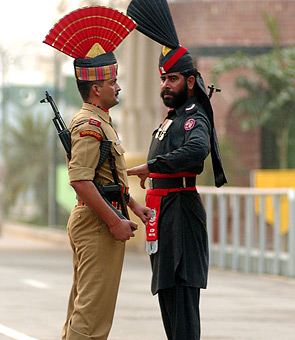
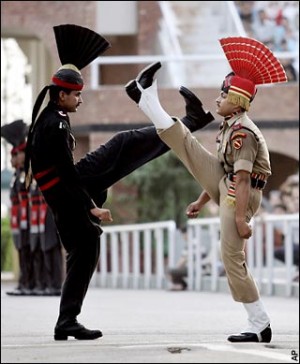
    India, Pakistan Peaceniks Hold Candlelight Vigil on Wagah Border

    By Sawinder Singh for ANI

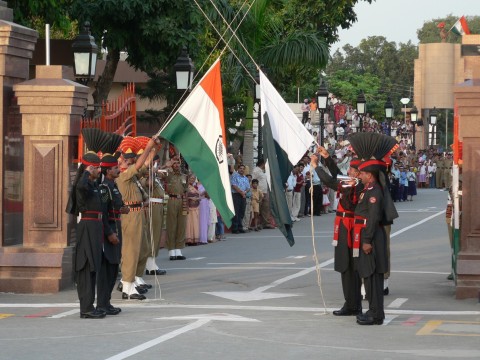
    Several intellectuals and peace activists from India and Pakistan held a candlelight vigil at Wagah border crossing in on the eve of Independence Day.

    The objective of this annual event is to spread the message of peace and brotherhood on the occasion of the Independence Day celebrations of the two neighbouring countries-India and Pakistan.

    The midnight vigil on August 14-15 was held on the 63rd Independence Day celebrations of both the countries.

    Bollywood Film Producer-Director Mahesh Bhatt, veteran Indian journalist-writer Kuldeep Nayar, Aitzaz Ahsan, former Pakistan Supreme Court Bar Association President and many social activists participated in the midnight vigil.

    The participants carrying candlelights and torches marched to the Wagah Border raising slogans of Long Live India-Pakistan Friendship.

    “Borders should be open and it should be soft and let people meet from both the countries. Because when people of both the countries will meet then governments will come under pressure and the situation will improve,” said Kuldeep Nayyar.

    “Both countries can prosper only if there is a good relationship between them, we have to remove the poverty. Both countries are stricken with acute poverty, unemployment and hunger. Both the countries need to reduce their expenditure on weapons and then only we can reduce poverty and for that it is necessary to have peace, friendship and brotherhood,” added Aitzaz Ahsan, former Pakistan Supreme Court Bar Association President.

    On this occasion, a music concert was also held.

    India and Pakistan achieved independence from Britain on the midnight of August 14, 1947. While Pakistan celebrates its Independence Day on August 14, India marks its Independence Day on August 15.

    This year Pakistan did not celebrate its independence day as a tribut to victims of recent floods in the country.

    India Hints at Pakistan Role in Kashmir Unrest

    By Nigam Prusty for Reuters

    India’s interior minister hinted on Friday that Pakistan could be behind weeks of violent anti-India protests in the disputed Kashmir region, a move that could hurt the nuclear-armed rivals’ attempts to improve ties.

    This is the first time New Delhi has linked Pakistan to the violence in Kashmir that has killed nearly 50 people since June. Earlier India had said Pakistan-based militants were inciting trouble in Kashmir, a region divided between India and Pakistan and which both claim in full.

    “Pakistan appears to have altered its strategy in influencing events in Jammu and Kashmir,” Palaniappan Chidambaram told the Indian parliament during a debate on the protests, among the biggest since a separatist revolt against Indian rule broke out in 1989.

    “It is possible that they believe that relying upon civilian unrest will pay them better dividends. But I am confident if we are able to win the hearts and minds of the people … those designs can be foiled.”

    There were fresh pro-independence protests in several places in Kashmir on Friday. At least two people were wounded when police opened fire on thousands of protesters in Sopore town in north Kashmir.

    The minister’s comments could be seen by Islamabad as a provocation, damaging prospects for improving ties that plummeted after the 2008 Mumbai attacks that killed 166 people and derailed a sluggish four-year-old peace process with Pakistan.

    So far, the latest violence in Kashmir has appeared to have little impact on relations.

    The two sides last held peace talks in July and those ended in acrimony over the attacks, even though the dialogue itself is seen as a tentative step towards improving ties.

    Divided Kashmir remains at the heart of the dispute between India and Pakistan, with both sides claiming the Himalayan region in full. They have fought two of their three wars over it.

    India accuses Pakistan of fuelling unrest in Kashmir, but Islamabad says it only lends moral support to what it calls Kashmir’s independence movement which has killed tens of thousands of people.

    In June, India blamed Pakistan-based Lashkar-e-Taiba (LeT) militants for the Mumbai attacks, but Kashmiri separatists say protests by crowds of mainly Muslim youths are generally spontaneous.

    LeT was founded in 1990 to fight Indian rule in Kashmir and is based in Pakistan’s Punjab province.

    Militant violence has fallen dramatically in recent years but popular protests have continued. In 2008, the region witnessed the biggest protests against Indian rule in two decades.

    Kashmiri separatists want to carve out an independent homeland or merge with predominantly Muslim Pakistan.