Archive for the ‘ India ’ Category

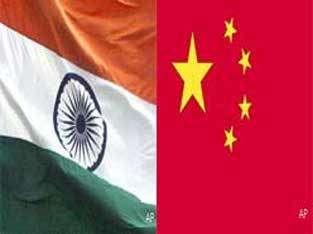
China and India: Contest of the Century

As reported by The Economist

A HUNDRED years ago it was perhaps already possible to discern the rising powers whose interaction and competition would shape the 20th century. The sun that shone on the British empire had passed midday. Vigorous new forces were flexing their muscles on the global stage, notably America, Japan and Germany. Their emergence brought undreamed-of prosperity; but also carnage on a scale hitherto unimaginable.

Now digest the main historical event of this week: China has officially become the world’s second-biggest economy, overtaking Japan. In the West this has prompted concerns about China overtaking the United States sooner than previously thought. But stand back a little farther, apply a more Asian perspective, and China’s longer-term contest is with that other recovering economic behemoth: India. These two Asian giants, which until 1800 used to make up half the world economy, are not, like Japan and Germany, mere nation states. In terms of size and population, each is a continent—and for all the glittering growth rates, a poor one.

Not destiny, but still pretty important

This is uncharted territory that should be seen in terms of decades, not years. Demography is not destiny. Nor for that matter are long-range economic forecasts from investment banks. Two decades ago Japan was seen as the main rival to America. Countries as huge and complicated as China can underachieve or collapse under their own contradictions. In the short term its other foreign relationships may matter more, even in Asia: there may, for instance, be a greater risk of conflict between rising China and an ageing but still powerful Japan. Western powers still wield considerable influence.

So caveats abound. Yet as the years roll forward, the chances are that it will increasingly come down once again to the two Asian giants facing each other over a disputed border (see article). How China and India manage their own relationship will determine whether similar mistakes to those that scarred the 20th century disfigure this one.

Neither is exactly comfortable in its skin. China’s leaders like to portray Western hype about their country’s rise as a conspiracy—a pretext either to offload expensive global burdens onto the Middle Kingdom or to encircle it. Witness America’s alliances with Japan and South Korea, its legal obligation to help Taiwan defend itself and its burgeoning friendships with China’s rivals, notably India but also now Vietnam.

This paranoia is overdone. Why shouldn’t more be asked from a place that, as well as being the world’s most-populous country, is already its biggest exporter, its biggest car market, its biggest carbon-emitter and its biggest consumer of energy (a rank China itself, typically, contests)? As for changing the balance of power, the People’s Liberation Army’s steady upgrading of its technological capacity, its building of a blue-water navy and its fast-developing skills in outer space and cyberspace do not yet threaten American supremacy, despite alarm expressed this week about the opacity of the PLA’s plans in a Pentagon report. But China’s military advances do unnerve neighbours and regional rivals. Recent weeks have seen China fall out with South Korea (as well as the West) over how to respond to the sinking in March, apparently by a North Korean torpedo, of a South Korean navy ship. And the Beijing regime has been at odds with South-East Asian countries over its greedy claim to almost all of the South China Sea.

India, too, is unnerved. Its humiliation at Chinese hands in a brief war nearly 50 years ago still rankles. A tradition of strategic mistrust of China is deeply ingrained. India sees China as working to undermine it at every level: by pre-empting it in securing supplies of the energy both must import; through manoeuvres to block a permanent seat for India on the United Nations Security Council; and, above all, through friendships with its smaller South Asian neighbours, notably Pakistan. India also notes that China, after decades of setting their border quarrels to one side in the interests of the broader relationship, has in recent years hardened its position on the disputes in Tibet and Kashmir that in 1962 led to war. This unease has pushed India strategically closer to America—most notably in a controversial deal on nuclear co-operation.

Autocrats in Beijing are contemptuous of India for its messy, indecisive democracy. But they must see it as a serious long-term rival—especially if it continues to tilt towards America. As recently as the early 1990s, India was as rich, in terms of national income per head. China then hurtled so far ahead that it seemed India could never catch up. But India’s long-term prospects now look stronger. While China is about to see its working-age population shrink (see article), India is enjoying the sort of bulge in manpower which brought sustained booms elsewhere in Asia. It is no longer inconceivable that its growth could outpace China’s for a considerable time. It has the advantage of democracy—at least as a pressure valve for discontent. And India’s army is, in numbers, second only to China’s and America’s: it has 100,000 soldiers in disputed Arunachal Pradesh (twice as many as America will soon have in Iraq). And because India does not threaten the West, it has powerful friends both on its own merits and as a counterweight to China.

A settlement in time

The prospect of renewed war between India and China is, for now, something that disturbs the sleep only of virulent nationalists in the Chinese press and retired colonels in Indian think-tanks. Optimists prefer to hail the $60 billion in trade the two are expected to do with each other this year (230 times the total in 1990). But the 20th century taught the world that blatantly foreseeable conflicts of interest can become increasingly foreseeable wars with unforeseeably dreadful consequences. Relying on prosperity and more democracy in China to sort things out thus seems unwise. Two things need to be done.

First, the slow progress towards a border settlement needs to resume. The main onus here is on China. It has the territory it really wants and has maintained its claim to Arunachal Pradesh only as a bargaining chip. It has, after all, solved intractable boundary quarrels with Russia, Mongolia, Myanmar and Vietnam. Surely it cannot be so difficult to treat with India?

That points to a second, deeper need, one that it took Europe two world wars to come close to solving: emerging Asia’s lack of serious institutions to bolster such deals. A regional forum run by the Association of South-East Asian Nations is rendered toothless by China’s aversion to multilateral diplomacy. Like any bully, it prefers to pick off its antagonists one by one. It would be better if China and India—and Japan—could start building regional forums to channel their inevitable rivalries into collaboration and healthy competition.

Globally, the rules-based system that the West set up in the second half of the 20th century brought huge benefits to emerging powers. But it reflects an out-of-date world order, not the current global balance, let alone a future one. China and India should be playing a bigger role in shaping the rules that will govern the 21st century. That requires concessions from the West. But it also requires commitment to a rules-based international order from China and India. A serious effort to solve their own disagreements is a good place to start.
Indian Hockey Fans in Seventh Heaven

By Richie Verma for The Times of India

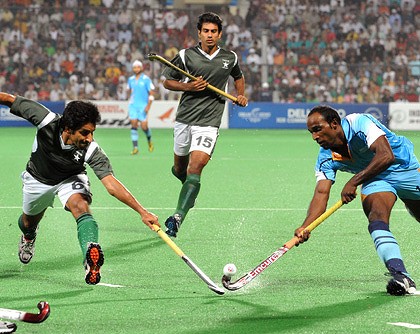
NEW DELHI: Cricket is no longer the only sport that brings out the patriotic fervour of Indian fans. India’s victory against neighbouring country Pakistan in the hockey match at the Major Dhyan Chand National Stadium on Sunday brought out a frenzy in the crowd with spectators going wild cheering for the country, dancing in the stalls and waving the Tricolour.

Hardly surprising, given that the India-Pakistan hockey match had been billed as the highest point of the Commonwealth Games and it lived up to that tag every bit. Tickets had been sold out days in advance and even after the match had begun, a few hopefuls were still walking around the stadium hoping to get inside by some miracle.

The celebrations spilled onto the streets and continued much after the match was over, with thrilled fans cheering loudly and screaming on top of their voice. Kids with their faces painted white, saffron and green, women with flags and loud men wearing team India shirts were all that could be seen in the streets around the National Stadium. Traffic cops had a tough time trying to ensure the crowd didn’t affect vehicular movement as crazy fans went dancing right on the middle of the road. The cheers could be heard from quite a distance away.

Nilesh, Samar, Ajay, Pradeep and Varun — a group of five friends from an engineering college in Ghaziabad — were too busy screaming about India’s victory to notice the glares of passersby. “It’s a great day for us and this match was worth every effort it took us to get here, the wait in the queue and going with the mob inside the stadium. We all feel so proud to be Indian,” said Samar. Sakshi Mittal from Rajouri Garden added: “It’s an ego massage for India. The applause every time India made a goal was mindblowing.” Her husband, Akhil, added: “Of course, this has a lot to do with this being an India-Pakistan match. Everyone wanted to be a part of it.”

The almost deafening silence in the field every time Pakistan scored, was a sharp contrast to the lusty cheering the contingent had received during the opening ceremony. In fact, the number of spectators who rooted for Pakistan were minimal and included mostly journalists and some Pakistani dignitaries though the last of the four goals that the subcontinental neighbours notched up was classified by many as “brilliant”. “I personally feel that the other team should have received more support from the audience. When India made a goal, the crowd would go mad but when it was Pakistan’s goal, there was silence,” said B R Pandey, a resident of Rohini, who had come to watch the match.

Loud Cheers for Pakistan, British Team Sports Indian Look

By Shivani Kala for The Indian Express

The loudest applause, predictably, was reserved for the Indian contingent. But what surprised many, perhaps even the participating athletes, was that the 60,000-plus crowd chose Pakistan for the second-loudest cheer.

If sheer crowd applause was any measure of the popularity of the participating countries, the 54-member Pakistani delegation, distinct in their green coats, was by far the most loved after India. Of course, the Indian delegation, led by flag-bearer Abhinav Bindra, was received with a standing ovation across the stadium, with even President Pratibha Patil and Prince Charles standing up to welcome the participants. UPA chairperson Sonia Gandhi was the last to sit down after the resounding applause that lasted several minutes.

In contrast, to the embarrassment of the Organising Committee (OC), as soon as its chairman Suresh Kalmadi stepped on stage to make the opening remarks, a rather cold silence descended, following by distinct booing. The only exception was when he mentioned Delhi Chief Minister Sheila Dikshit, whose name was greeted with loud cheers.

Besides Pakistan, other cricket-playing countries also received loud cheers. In fact, the British participants struck a chord with the host country with their choice of outfit — white kurta with the signature Nehru collar and a red jacket. The marching members of the 371-strong contingent turned out in the best of fashion inspired by India.

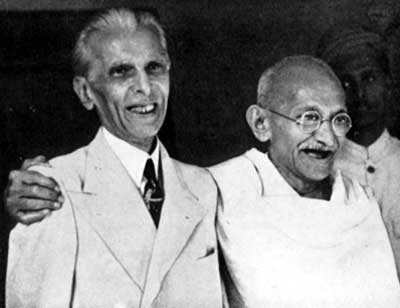
Pakistan Should Celebrate Gandhi’s Life, Legacy and Contributions

By Manzer Munir for Pakistanis for Peace

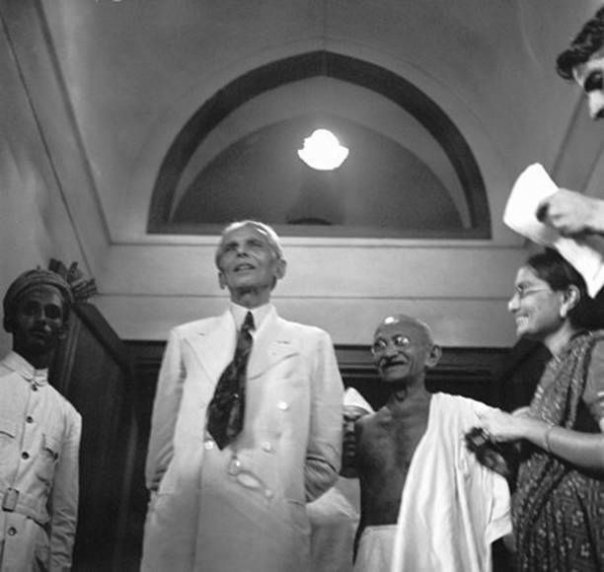
Mohandas Karamchand Gandhi, who was born 141 years ago today on October 2, 1869, is a revered figure in India as well as in many countries around the world for his peaceful civil disobedience techniques that succeeded in granting India its independence from Britain. He is also credited by Martin Luther King Jr., the American civil rights leader, as an inspiration in using similar peaceful protests to change unjust laws against blacks and other minorities in the United States. These protests and opposition eventually led to the Civil Rights Act of 1965 being passed granting all Americans of every ethnicity equal freedoms and protection in the eyes of the law.

Gandhi’s birthday, October 2nd, is celebrated by the United Nations as International Day of Non-Violence. He is an admired figure in India where his contributions for the freedom of his countrymen is celebrated on stamps, currency, and folklore. Gandhi is also appreciated in many other countries outside the Indian subcontinent. Statues of him are found in such disparate places like New York’s Union Square, Gandhi Square in Moscow, the Johannesburg city center in South Africa, and even as far away as Waikiki Hawaii where a statue to the leader stands in Kapiolani Park in Honolulu.  

Yet in Pakistan, a country that also benefitted from Gandhi’s movement for independence, he is vilified and not thought of highly. Many in Pakistan blame Gandhi for his failing to prevent the deaths of thousands of Muslims during the religious violence the precipitated the independence of both countries. In many Pakistani books he is depicted as a villain; however few people know that he died because of his great favour for Pakistan and that he was seen by right wing Hindu groups as someone who was concerned with the appeasement of the Muslims of India.

India’s first prime minister, Jawaharlal Nehru, had refused to give Pakistan their share of the money that was due to them after partition. But Gandhi went on a fast till death to protest against this injustice against the newly created Pakistani state and this pressure led to Nehru’s agreeing to pay the money so direly needed by the new Muslim nation.

He was assassinated by a young Hindu fanatical, Nathuram Godse, who felt that M.K. Gandhi was more of a hindrance to India than an asset. Godse, like many fanatical right wing Hindus felt that Gandhi was solely responsible for the partition of India into a country for Hindus and one country for the Muslims and he felt that he was a traitor to other Hindus.

Sadly, this man who ultimately gave his life in the cause of others is not very appreciated in Pakistan and neither are his contributions for freedom and independence from the British colonizers taught to today’s school children. In a country rife with violence, intolerance and instability, many Pakistanis can learn a great deal in the lessons of brotherhood and peaceful co-existence preached by Mahatma, the great soul. He would be the perfect anti-Taliban in today’s Pakistan, a country inflamed by animosity and hatred between all ethnic and religious groups. His ideas of tolerance and harmony with others would go a long way against the barbaric views of the Taliban, the enemies of man.

His belief that violence was not a solution towards any objective would benefit today’s Pakistani society if his message was given importance and taught at an early age. His reasoning towards peace and nonviolence lead him to once say that “An eye for an eye leaves the whole world blind.”  In today’s chaotic and violent Pakistan, there is a lot that my fellow Pakistanis can learn from this man and how he lived his life with humility, simplicity and non-violence as well as towards his service of others. More people inside Pakistan should be taught about Gandhi as he is as much responsible for Pakistan’s independence from Britain as was Jinnah, the founder of the country.

-Manzer Munir, a proud Pakistani American and peace activist, is the founder of Pakistanis for Peace and blogs at www.PakistanisforPeace.com as well at other websites as a freelance journalist and writer.

Indian-Pakistan Friendship Blooms Amid Games Chaos

By Amlan Chakraborty for Reuters

India has received support from an unlikely source as it races to finish preparations for the Commonwealth Games in New Delhi which start are due to start Sunday.

Following recent concerns about unhygienic athlete accommodation, security and an epidemic of Dengue Fever, in part blamed on stagnant water around unfinished construction sites, sports administrators in neighboring Pakistan are unwavering in their support for the troubled Games.

“When you host something like this, there will be issues but I’m confident it will be a success,” Lal Chand, Pakistan’s deputy chef-de-mission told Reuters by phone.

“We always had very good relation with the Indian Olympic Association and supported them. We will be arriving in full force to spread the message of peace and goodwill,” he said.

Politically, relations between the nuclear-armed neighbors, who have fought three wars, were frozen when Pakistan-based militants attacked the Indian City of Mumbai in 2008, killing 166 people.

However that has not appeared to be the case for sport and Games Organizing committee chief Suresh Kalmadi earlier this year thanked Pakistan for supporting India’s bid to host the October 3-14 event.

“Pakistan supported us to the hilt to get the Commonwealth Games to India. We can never forget their support,” Kalmadi had said in June.

‘TWO-WAY BATTLE’

“We and Canada were locked in a two-way battle for getting the hosting rights and Pakistan supported us in our bid.”

Even when complaints about dirty and unhygienic facilities at the Games Village was drawing flak from all corners, Pakistan hockey player Rehan Butt came out in support for the organisers.

“…I feel that the issue is blown out of proportion in this case. There were problems during the Manchester Games (in 2002) as well where we stayed in a university hostel,” Butt was quoted as saying by the Press Trust of India news agency.

“That was the worst experience but we did not complain. We, India and Pakistan, never do that.”

Sports historian Boria Majumdar provided a perspective on what brings the bitter neighbors closer in sport.

“I’m not surprised, after all India and Pakistan have inherited the same culture. Historically, they have always put up a united stand in international sport,” said Majumdar.

“Even when politicians were at loggerheads, sports bridged the gap,” he said.

In 1987, then Pakistan President Mohammad Zia-ul-Haq visited India for a cricket match, using the trip to help defuse tensions between the neighbors over a massive Indian military exercise held near the border just months before. The same year, the two countries jointly hosted the cricket World Cup.

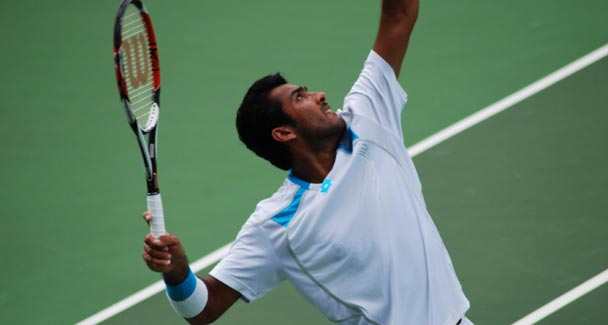
The tennis duo of Rohan Bopanna from India and his Pakistani partner Aisam-ul Qureshi were U.S. Open men’s doubles finalists earlier this month.

India’s foreign minister S.M. Krishna has invited his Pakistani counterpart to watch the Commonwealth Games, and said he hoped it could also give them a chance to move on their peace dialogue.

For Better or Worse, White House Bets on Pakistan’s Civilian Government

Reported by Josh Rogin for Foreign Policy magazine

The Obama administration has always been clear that the path to winning the war in Afghanistan goes through Pakistan. But if Bob Woodward’s new book is accurate, the White House considers its war effort much more dependent on the success and survival of Pakistan’s civilian government than was previously known.

Woodward’s “Obama’s Wars,” which hit bookstores Monday, sheds new light on the Obama administration’s vast outreach to the Pakistani civilian government led by President Asif Ali Zardari. It paints a picture of an administration working hard to court the Pakistanis while remaining somewhat confused about Pakistani thinking on a range of issues.

Obama himself was confused about the nature of Pakistani intentions during two crucial decision points in his administration’s Afghan policy — the March 2009 strategy rollout and the deliberations in November 2009, which resulted in a troop surge and a huge expansion of covert operations in Pakistan. However, based on advice from the majority of his key advisers, he nonetheless tried to entice Pakistan to commit to a deep and long-term partnership with the United States by offering the Zardari government incentive after incentive, with relatively few pressures.

According to Woodward’s account, the centrality of Pakistan was championed early on by Bruce Riedel, the Brookings scholar who was brought on as a key figure in the Obama administration’s March 2009 Afghanistan strategy review.

Riedel, who referred to Islamist extremists in Pakistan as the “real, central threat” to U.S. national security, personally convinced Obama, only two months after he took office, that Pakistan needed to be the centerpiece of his new strategy. Riedel’s plan involved arming the Pakistani military for counterinsurgency and increasing economic and other forms of aid to the civilian government. This marked the beginning of the term “Af-Pak,” which drove the administration’s belief that stability in Afghanistan and Pakistan were inextricably linked.

Riedel’s Pakistan focus was not due to his confidence that the civilian government could control the military and intelligence services. In fact, he referred to Army Chief of Staff Gen. Ashfaq Parvez Kayani as a “liar” with regards to the activities of the secretive Inter Services Intelligence agency (ISI), which is widely suspected of aiding the Taliban insurgency. Then Director of National Intelligence Dennis Blair reportedly echoed Riedel’s views on this matter.

Inside the administration, Blair argued that Obama was approaching Pakistan with too many carrots and not enough sticks. He at one point advocated bombing inside Pakistan and conducting raids there without the Pakistani government’s approval. “I think Pakistan would be completely, completely pissed off and they would probably take actions against us … but they would probably adjust,” he once told Obama.

Obama, however, opted to pursue a less confrontational path. He concluded the central task would be convincing the Pakistani leadership to throw its lot in with the United States He said at the time of the initial strategy review in March 2009, “that we had to have a serious heart-to-heart with Pakistani civilian, military and intelligence leaders.”

Later that year, when making the decision to send an additional 30,000 “surge” troops to Afghanistan, Obama knew that his plans to also expand the U.S. military presence in Pakistan and widen drone strikes would be a hard sell to the Zardari government. In an attempt to sweeten the deal, Obama framed the policy as a new “strategic partnership” with Pakistan, even tying the success of the U.S. mission in Afghanistan to the survival of Zardari and the legacy of his deceased wife Benazir Bhutto.

“I know that I am speaking to you on a personal level when I say that my commitment to ending the ability of these groups to strike at our families is as much about my family’s security as it is about yours,” Obama wrote in a letter to Zardari delivered by National Security Advisor Jim Jones and counterterrorism advisor John Brennan.

Zardari’s response to that letter reinforced what many in the administration already suspected: Pakistan’s government was in the grips of an internal struggle over whether to embrace the United States. Zardari’s initial response focused heavily on India, though the Pakistani president only referred obliquely to his country’s strategic rival. Woodward reports that the White House believed the letter was written by the Pakistani military and the ISI. However, the Zardari government did end up accepting Obama’s offer.

Obama’s top advisors told the U.S. president that he would have to accept something short of complete success in convincing Pakistan to turn away from its longstanding obsession with the military threat it perceives from India.

When Obama had a meeting with Zardari in May 2009, he told the Pakistani president the he did not want U.S. taxpayers to be funding Pakistan’s military buildup against India “We are trying to change our world view,” Zardari told Obama, “but it’s not going to happen overnight.”

At times, Obama was downright puzzled by his advisors’ advice regarding Pakistan. For example, intelligence reports confirmed that Pakistani officials were afraid that the United States would leave Afghanistan too early, as they believed had occurred after the end of the resistance to the Soviet regime in the 1980s. On the other hand, Pakistan worried that if the United States was too involved in Afghanistan, it might aid in the establishment of a larger Afghan army than Islamabad was comfortable with.

“What am I to believe?” Obama asked his senior staff. Secretary of State Hillary Clinton, Special Representative Richard Holbrooke, and Defense Secretary Robert Gates all told him these were the types of contradictions that were commonplace when dealing with Pakistan.

For its part, the Pakistani government was just as confused and puzzled by the Obama administration. Woodward recounts one anecdote, in which Zardari tells the former U.S. Ambassador to Afghanistan Zalmay Khalilzad that he believed the United States was involved in orchestrating attacks by the Pakistani Taliban against the Pakistani civilian government.

Pakistan’s Ambassador to Washington Husain Haqqani, a key go-between, tried several times to explain to the Obama administration how to court Pakistani leaders, comparing the dynamic to “a man who is trying to woo a woman.”

“We all know what he wants from her. Right?” Haqqani said in a meeting with Jones, Deputy National Security Advisor Tom Donilon and the NSC’s Gen. Doug Lute.

“But she has other ideas. She wants to be taken to the theater. She wants that nice new bottle of perfume,” Haqqani told them. “If you get down on one knee and give the ring, that’s the big prize. And boy, you know, it works.”

Haqqani said the “ring” was official U.S. recognition of Pakistan’s nuclear program as legitimate. He also warned that the Pakistanis would always ask for the moon as a starting point in negotiations. He compared it to the salesmanship of rug merchants.

“The guy starts at 10,000 and you settle for 1,200,” Haqqani told the Obama team. “So be reasonable, but never let the guy walk out of the shop without a sale.”

Although the Obama administration has had some success improving the relationship between the two governments, Pakistan’s civilian leadership still faces a series of difficulties in its goal of exerting control over its entire national security structure. Stability has also been threatened by the enormous pressures resulting from the war that it is waging inside its own borders, and political attacks leveled against it from the media and the courts. Zardari’s perceived sluggish response to the devastating flood crisis has cost him even more credibility among the Pakistani public.

But while the end of Zardari regime has often been predicted, it appears that he will remain in place for the foreseeable future. The Obama administration, meanwhile, is aware of how crucial his cooperation remains for the success of the mission in Afghanistan.

When Woodward sat down for his interview with Obama earlier this year, he asked the president if the situation was still that Pakistan is the centerpiece of the U.S. strategy. “It continues to this day,” Obama replied.

The Next Nuclear Arms Race

By Tim Sullivan and Michael Mazza for The Wall Street Journal

India and Pakistan are the two countries most likely to engage in nuclear war, or so goes the common wisdom. Yet if recent events are any indication, the world’s most vigorous nuclear competition may well erupt between Asia’s two giants: India and China.

Both countries already house significant and growing arsenals. China is estimated to have approximately 450 warheads; India, roughly 100. Though intensifying as of late, Sino-Indian nuclear competition has a long history: India’s pursuit of a weapons program in the 1960s was triggered in part by China’s initial nuclear tests, and the two have eyed one another’s arsenals with mounting concern ever since. The competition intensified in 2007, when China began to upgrade missile facilities near Tibet, placing targets in northern India within range of its forces.

Yet the stakes have been raised yet again in recent months. Indian defense minister A.K. Antony announced last month that the military will soon incorporate into its arsenal a new intermediate-range missile, the Agni-III, which is capable of reaching all of China’s major cities. Delhi is also reportedly considering redeploying survivable, medium-range Agni-IIs to its northeastern border. And just last month, India shifted a squadron of Su-30MKI fighters to a base just 150 kilometers from the disputed Sino-Indian border. An Indian Air Force official told Defense News these nuclear-armed planes could operate deep within China with midflight refueling.

For its part, China continues to enhance the quality, quantity and delivery systems of its nuclear forces. The Pentagon reported last month that the People’s Liberation Army has replaced older, vulnerable ballistic missiles deployed in Western China with modern, survivable ones; this transition has taken place over the last four years. China’s Hainan Island naval base houses new, nuclear-powered ballistic-missile submarines and affords those boats easy access to the Indian Ocean. China’s military is also developing a new, longer range submarine-launched ballistic missile which will allow its subs to strike targets throughout India from the secure confines of the South China Sea.

No single event has stoked this rise in tensions. China, already concerned about India’s growing strength and its desire to play a greater role in Asia, is even less enthused about the burgeoning strategic partnership between Delhi and Washington. While Beijing has learned to live with American forces on its eastern periphery, the possibility of an intimate U.S.-India military relationship has generated fears of encirclement. The ongoing Sino-Indian border dispute, as well as India’s position astride China’s key maritime shipping lanes, has made the prospect of a Washington-Delhi axis appear particularly troubling.

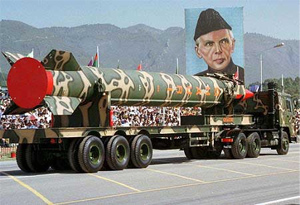
India’s surface-to-surface missile Agni-II launches off Wheelers island in Orissa state, India, on May 17, 2010.

India likewise feels encircled by China’s so-called “string of pearls”—a series of Chinese-built, ostensibly commercial port facilities in the Bay of Bengal, Indian Ocean and Arabian Sea. Beijing’s military ties to Pakistan, interference in the Kashmir dispute and references to Arunachal Pradesh, an Indian state, as “Southern Tibet” have done little to reassure New Delhi of Chinese intentions. The rapid growth of China’s conventional military might in recent years—between 2000 and 2009, China’s military spending more than tripled—and the lack of clarity as to its intentions, has spurred India to pursue its own military modernization.

These shifts in India’s and China’s nuclear force postures thus represent only the latest and most serious efforts to constrain and convey dissatisfaction with the other’s perceived regional ambitions. But they are more troubling than conventional redeployments.

First, these developments suggest that neither country has confidence in the other’s “no first use” policy. India has good reason for concern: The number of missions attributed to China’s deterrent—responding to nuclear attacks, deterring conventional attacks against nuclear assets, providing Beijing freedom from nuclear coercion and otherwise “reinforcing China’s great power status”—were enough to make the authors of the Pentagon’s annual report on China’s military power last year question the country’s commitment to its “no first use” policy. India, for its part, relies on its nuclear forces to offset gaps and imbalances between its conventional military capabilities and those of China.

Second, there is a point at which efforts to enhance deterrence can foster an arms race. Any attempt on the part of China to increase its own defenses necessarily weakens, or is perceived to weaken, the security of India, thus spurring further defense build-ups; the opposite is true as well. Shifts in nuclear force posture can be particularly disruptive, and have been known to precipitate crises. Upon the discovery of Soviet efforts to deploy missiles to Cuba in 1962, for example, the U.S. responded militarily with a naval “quarantine” of the island, bringing Washington and Moscow as close as they have ever come to a nuclear war.

Finally, the redeployments of India’s and China’s nuclear forces suggest that there is deep-seated and growing discord between the two Asian giants. This is troubling news for a region whose future peace and prosperity depends heavily on continued comity between Delhi and Beijing. It is only a matter of time before the China-India military competition begins to affect neighboring states. China’s nuclear force modernization, for instance, stands to threaten not only India, but also Korea, Japan and other U.S. partners in Asia. A dramatic defense buildup in India, meanwhile, will no doubt leave Pakistan feeling less secure.

Tensions are unlikely to ease any time soon. The two countries appear much closer to the brink of an all-out arms race than they do to any resolution of their differences. While each profits from the other’s economic growth, it is that very growth—which finances military modernization and which is so dependent on potentially vulnerable overseas trade—that creates the conditions for heightened insecurity.

Mr. Sullivan is research fellow and program manager at the American Enterprise Institute’s Center for Defense Studies. Mr. Mazza is a senior research associate at AEI.

Revisiting Pakistan’s ‘Strategic Depth’

By Syed Nadir El Edroos for The Express Tribune

Two words that hold our country hostage is our policy of maintaining ‘strategic depth’ in Afghanistan. Apart from referring to a poorly titled adult film, the policy envisages to protect Pakistan’s eastern borders from unwanted Indian influence.

However, the consequences of continuing with this policy and differentiating between the ‘good’ and the ‘bad’ Taliban, has led to accusations of Pakistan playing a ‘double-game’  in Afghanistan. For many the accusation has become quite stale and repetitive. It seems to have become an open secret, with many accepting it as a reality, a part of the status-quo for dealing with the troubles in the region.

Whether the policy has been successful is debatable. The military’s and the ISI’s continued links with the Haqqani network ensures that they are a sought after broker for any back channel attempt to woo the Taliban.

The strategy aims to maintain Pakistani influence in/over Afghanistan, and to thwart alleged Indian designs. However, the policy has at the same time made Pakistan quite unpopular with large segments of the Afghan establishment. Interfering in Afghanistan’s affairs, while demanding an end to foreign influence in Pakistan is met with much ridicule in foreign capitals; it reeks of hypocrisy.

The policy is also questionable, as it breeds violence, and is responsible for the deaths of thousands in Pakistan and Afghanistan. As the violence continues, Pakistan is sure to be in the news, accused for fostering, abating or at the very least tolerating continued bloodshed to maintain its interests.

The result is the ‘image deficit’ that haunts Pakistan. The dismal public response to the floods in Pakistan for example was attributed to this effect. It has also been more difficult for our economic managers to garner favourable trade concessions and development grants. Winning over wider public support remains a problem, as Pakistan remains associated with fostering rather than curtailing violence in Afghanistan. Politicians in the west are portrayed as weak by the right-wing media, such as Fox News in the US, for taking initiatives to support Pakistan.

Look at any article posted on any western news outlet. The comments question the calls for sympathy for Pakistan as we are branded as supporters of terrorism, who inflict material and physical damage on their interests.

An alternative strategy

There needs to be an alternative to our current strategy. The alternative need not be between defending Pakistan from India or bowing before it and allowing it a free hand in Afghanistan. We need to engage with both Afghanistan and India to leverage our geographic position to develop strategic depth with positive connotations.

The US, Afghanistan and India have been pressing Pakistan to allow the transit of Indian goods over Pakistan through to Afghanistan and vice versa for years. I say, let the goods pass, hell put them on the trains. That will help to give our faltering railways a financial shot in the arm. Extend the Iran-Pakistan pipeline into India, let the gas flow. Transit fees galore! Rather than questioning Indian development aid to Afghanistan we should support it. Geographically it’s more of an advantage for us, as any increase in economic activity in Afghanistan will immediately suck in Pakistani exports.

What would the advantages be? Imagine the headlines. Pakistan would look like the peace builder, shunning international criticism and situating itself as committed to the development of an Afghan state. We would also be seen on the diplomatic offensive vis-à-vis India. With Pakistan offering so many incentives, India will have to respond in the affirmative. After all India is cultivating its image as a regional and global superpower, the ball will firmly be in India’s court. It cannot be seen rebuffing genuine gestures from its old foe.

Importantly, a policy that leverages our geographic position economically rather than militarily negates any association with violence.  We would be treated as victims rather than the guilty.

If India is indeed developing consulates across Afghanistan housing RAW agents that ferment trouble in Pakistan, improved economic ties will help shed a spotlight on the functioning of these consulates. As Pakistan becomes vital for transporting Indian-Afghanistan exports and imports to each other, minimising any threat to these links will become a primary concern for Indian traders. This will build added pressure on those who dare concoct nefarious designs to fuel militancy in Balochistan for example.

India can switch on and off the belligerent rhetoric as India’s economy has little or no interests in Pakistan. However, a Pakistan which is vital for Indian trade, supply of resources etc will have no choice but to tone down any sabre rattling that seems to be a cyclical part of Pakistan-India relations.

So where does Pakistan’s security come in?

In any period of belligerent hostility Pakistan will have the ability to cut of energy and trade links. Containers can be seized, Indian traders in Pakistan arrested, and diplomatically we can garner support by portraying ourselves of peace. We have gone the extra mile to foster our relations with India and support a viable Afghanistan. India would be seen as the aggressor. How is that for maintaining strategic depth?

Our present policy allows for India’s security establishment to deal with her interests in Afghanistan ignoring any media or public scrutiny. A policy that places economic links at its foundations will open up Indian policy on Pakistan and Afghanistan and the actions of its security agencies to wider scrutiny. The competition between competing interests will insure that whatever policy is actually implemented is a watered down compromise that is not a real threat to Pakistan.

We have to find alternatives to the status-quo. With the nation reeling under flooding, terrorism and economic stagnation we are more dependent on foreign assistance than at any point in our history. They are not many variables that we can control for. We can’t control how the foreign press paints us, how we are perceived abroad etc. However, what little we can do to help alter these perceptions, we must. And this does not have to lead to subjugation to Indian influence that many right wing commentators would suggest.

If we are to continue with our obsession with thwarting Indian designs, can we please do it in a manner that doesn’t hold us all hostage to violence and paint us as terrorist?

Shaping global opinion is a long term effort which must start sooner than later. Our challenges for the future, access to water, natural disasters caused by climate change and development depends in a large part to interaction and support of our neighbours and the international community. Politics and security needs are always a concern, but we must get society at large, the world over on our sign. We are not the cause but the victims. Strategic depth? Sure, but by other means.

U.N. Speakers Urge Pakistan to Free Up Arms Talks

By Patrick Worsnip for Reuters

Heaping pressure on Pakistan, a high-level U.N. meeting called on Friday for talks to start immediately on a treaty to ban production of fissile material used as fuel for nuclear weapons.

But Pakistan has insisted it will continue to block such talks, arguing that a ban would put it at a permanent disadvantage to its nuclear rival India. The dispute has led to deadlock at the 65-nation Conference on Disarmament in Geneva.

At the U.N. meeting of some 70 states to discuss the paralysis at the conference, speakers avoided openly naming Pakistan, but several referred to “one country” that was causing the problem.

In a closing summary of the views expressed, U.N. Secretary-General Ban Ki-moon said there was “broad agreement on the need to immediately start negotiations on a … treaty banning the production of fissile material.”

Continued impasse could result in states going outside the Geneva conference, known as the “CD,” to tackle the issue, Ban warned.

Support has appeared to be growing in Geneva to find another approach — possibly small-group talks in parallel to CD sessions. A precedent was set when Canada and Norway moved talks on a landmine ban out of the forum, eventually clinching the landmark 1997 Ottawa Treaty.

At Friday’s U.N. meeting, Western powers sharply attacked Pakistan’s blockage of the CD, which requires consensus for its actions.

“It strikes us as unwarranted for a single country to abuse the consensus principle and thereby frustrate everyone else’s desire to resume serious disarmament efforts,” said U.S. delegate Gary Samore, a special adviser to President Barack Obama.

Washington understood that all countries needed to protect their security interests, and with that principle in place, “no country need fear the prospect of (fissile material) negotiations,” Samore said.

NO CONSENSUS

British junior foreign minister Alistair Burt said blocking the negotiations was “damaging for multilateral arms control.”

Launched in 1978, the CD has clinched treaties banning biological and chemical weapons as well as underground nuclear tests. Its members include all five official nuclear powers — the United States, Russia, Britain, France and China.

But it has been unable to reach consensus on substantive work for the past 12 years. Pakistan’s refusal since January to launch negotiations on fissile material like plutonium and highly enriched uranium is the latest obstacle.

Zamir Akram, Pakistan’s ambassador to the United Nations in Geneva, said earlier this month his country would continue to hold out, arguing that India has an unfair advantage with bigger fissile material stockpiles and “discriminatory” nuclear cooperation deals with the United States.

“Pakistan’s security concerns can be addressed only once we have developed sufficient capacity to ensure our deterrent is credible in the face of growing asymmetry,” he told Reuters. “My instructions are, ‘We continue to maintain our position.'”

Pakistan did not speak at Friday’s meeting in New York. No decisions were made, but Ban said he would ask a panel of advisers to review the issues raised.

Separately, French delegate Jacques Audibert said Paris would host a meeting of the five official nuclear powers next year to discuss their obligations stemming from a May conference on nuclear non-proliferation.

The conference called on the powers to pursue negotiations ultimately aimed at the total abolition of nuclear weapons.

Pakistan’s Strange Response Towards Indian Aid offer

by Omer Farooq Khan for The Times of India

The worst floods in Pakistan’s history provided a good opportunity for both the South Asian nations to come closer. Accepting Indian aid offers half-heartedly and that too after US insistence, Pakistan has given an impression that it is convinced that its policy on India cannot change.

Pakistan’s initial response to the Indian offer of five million dollars was a positive one but then it was unsure how to respond. It took several days for Pakistan to finally accept the offer, saying that the aid had to come through the UN. Now, a total of $25 million Indian assistance for flood relief efforts in Pakistan has to be spent by the UN.

Pakistan’s foreign minister Shah Mehmood Qureshi had said that the delay was due to the sensitivities involved in the relationship with India. Even, a section of policymakers, conspiracy theorists in media and some India-centric elements within the Pakistani establishment blamed India for opening floodgates of its dam to inundate Pakistan’s cities and towns. While building public opinion, they did not care that their contention was technically wrong. The fact is that the rivers that caused destruction in Pakistan do not originate in India.

Some defence analysts argue that Pakistan’s strange response towards India’s aid offer was meant not to get obliged. “Pakistan reacted politically towards Indian humanitarian gesture. The destruction is so colossal that petty politics must be avoided. Pakistan asks for help and when it is offered by a neighbour, its ego comes its way. The main hurdle was that Pakistan did not want to be obliged,” argues defence analyst General Talat Masood.

Kamran Shafi, Dawn’s columnist says that Indian-centric approach within the security establishment and intelligence agencies was the main predicament that the government accepted Indian offer half heartedly. “Values and wisdom demand that politics must be kept aside at time of tragedy. Pakistan needed to have warmly welcomed neighbour’s goodwill gesture.”

India and Pakistan have made major efforts in recent months to build confidence in their relations, which were badly strained by the Mumbai 2008 terror attacks that India blamed on militants from Pakistan. If Indian civil society, volunteers and NGO’s were allowed to do relief work in the flood affected areas, this could have been an ideal confidence building measure in the relations of the two countries.

Certainly, it would have served the spirit of Thimphu where Pakistani PM Yusuf Raza Gilani and his Indian counterpart Manmohan Singh tasked their top diplomats to create CBMs. An opportunity is still not lost if governments, media and civil societies in both the countries come forward and create enough space to use this calamity into an opportunity.

-Editor’s Note for Pakistanis for Peace- The writer is spot on with his analysis of Pakistan’s aid offer from India. During times of a humanitarian crisis of biblical proportions, its political response was petty and irresponsible to its citizens. Furthermore, half heartedly accepting several days after the response does little to build on the goodwill. Either accept it right away with gratitude (our advice) or reject it outright. It did neither and so was ineffective in either cause. The politicians of Pakistan continue to show their incompetence by ineffectively managing the affairs of the country both domestically and internationally.

Hero’s Welcome for Aisam

By Umar Farooq for The Express Tribune

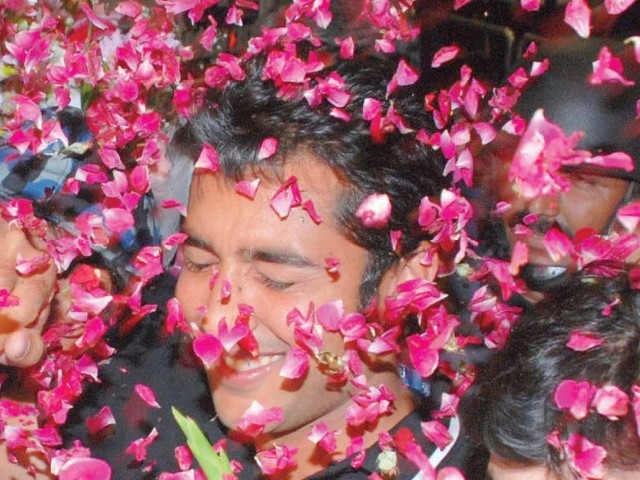
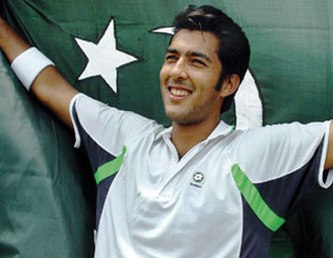
LAHORE: Aisamul Haq Qureshi returned home to a hero’s welcome with thousands of fans greeting him at Lahore airport to catch a glimpse of the Pakistan tennis sensation.

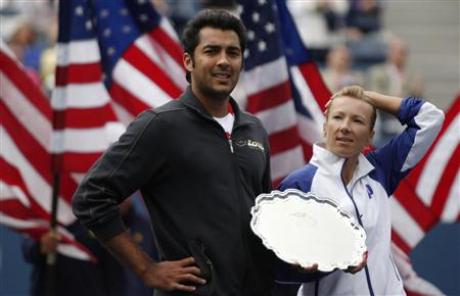
Aisam, who reached the finals of the US Open men’s doubles and mixed doubles events, became the first player from his country to achieve the feat.

“I feel like a winner,” said Aisam, who partnered Indian player Rohan Bopanna. “I might not have won the US Open title but the reception here has made me feel like I won the Grand Slam event.”

Though the Pakistan-India pair went down against top-seeds Mike and Bob Bryan 7-6, 7-6, Aisam won the hearts of millions of fans through a moving speech at the closing ceremony, acting as an ambassador of peace on behalf of the country. The 30-year-old also climbed to a career-best number six in the ATP Doubles  team World Rankings.

“Following the recent success, I am now eying the number one spot in the doubles rankings,” said Aisam, whose welcome was held in collaboration with the Pakistan Tennis Federation (PTF) and the Punjab Lawn Tennis Association.

Meanwhile, partner Bopanna was happy with the success and admitted a lot of hard work went into the win.

“This entire year was a transition period for us. We started thinking seriously about doubles, put our heads and our games together and started getting good results,” said Bopanna to The Hindu. “We were combining well and knew it was only a matter of time that comfort with each other would translate into wins.”

However, Bopanna, 30, admitted that he was nervous about playing the doubles final.

“It was a huge moment for me to play the final at Arthur Ashe Stadium. Aisam had already played the mixed doubles final there, so I was the nervous one. But as soon as I hit the first ball, everything was fine.”

A new source of inspiration

The PTF has hailed Aisam’s success and termed the 30-year-old as a ‘source of inspiration for the youth of the country’.

“He indeed is the new hero of Pakistan and I am proud of him,” said the PTF President Dilawar Abbas. “His performance and achievement is remarkable and appreciated by all Pakistanis.

“I believe sportsmen are the best ambassadors of peace and goodwill and Aisam’s gesture in the ceremony has won many hearts.

“It not only helps the country but this will boost the scope of sports in the country.

“What Aisam said in the ceremony was enough for the government to take a cue from,” said Abbas.

Aisam’s mother, a former national tennis champion, and his sister Shiza Qureshi, also a tennis player, were proud of Aisam’s achievements.

“He is a winner for us,” said Nosheen Ahtisham. “Winning and losing is part of the game. But to reach this far is impressive enough. The pair competed well throughout the match and it was touch and go in the end.”

Aisam-Ul-Haq Qureshi Delivers Message of Peace at U.S. Open After Indo-Pak Express Suffers Defeat

By Stefan Bondy for NY Daily News

Aisam-Ul-Haq Qureshi delivered his message loud and peacefully, and it had nothing to do with forehands or backhands, or even the doubles title he failed to win.

As a Muslim from Pakistan playing in the U.S. Open doubles final, he said New York needed his words the most, as post-9/11 counsel. So the 30-year-old grabbed the microphone and addressed the estimated 15,000 at Arthur Ashe Stadium – probably the biggest crowd to watch a Grand Slam doubles final – and made sure the moment wasn’t lost.

“I want to say something on behalf of all Pakistanis,” he said following Friday’s 7-6 (5), 7-6 (4) defeat to the Bryan brothers, Bob and Mike. “Every time I come here, there’s a wrong perception about the people of Pakistan.

“They are very friendly, very loving people. We want peace in this world as much as you guys.”

The crowd cheered. By now, such poignancy is expected from Qureshi and, to a lesser extent, his doubles partner, Rohan Bopanna of India. Together, they’ve formed the politically charged tandem known as the Indo-Pak Express, breaking down barriers with their kinship and jettisoning expectations with their recent play.

Their respective neighboring countries have warred with and terrorized each other since the 1940s, citing religion as their great chasm. But Qureshi and Bopanna, a Hindu, represent peace, both on and off the court. Indian and Pakistani fans filled pockets of Arthur Ashe Friday, arriving as early as two hours before the match. U.N. ambassadors from both countries sat side-by-side in the President’s Box – the second straight match they’ve attended together – cheering the same unexpected struggle their team brought to the greatest doubles team of all time, the Bryan brothers. The 16th-seeded Qureshi and Bopanna followed up their run to the Wimbledon quarterfinals with five wins in Flushing.

“They’ve proven that when Indians and Pakistanis get together we can raise fire,” Pakistan ambassador Abdullah Hussain Haroon said. “I think on a people-to-people basis, they’re setting an example that the politicians should follow.”

Prize money and rankings were never a motivating factor, Qureshi said, only good news for his flood-stricken countrymen and a platform to express his message of American misunderstanding. He also defended the decision to build a mosque near the World Trade Center site.

“For me, as a Muslim, that’s what makes America the greatest country in the world – freedom of religion, freedom of speech,” Qureshi said. “If the mosque is built, I think it’s a huge gesture to all the Muslim community out there in the world. I would really appreciate it.”

Pakistan, which borders Afghanistan, has long been considered a headquarters of Al Qaeda.

Qureshi said he’s been stopped at airport immigration “every time” in New York – three hours at a time – including after his latest flight for the Open. And on the eve of the ninth anniversary of the 9/11 attacks, he wanted to defend his country’s masses.

“Since September 11, every time I come to the States or western countries I feel people have the wrong impression about Pakistan as a terrorist nation,” Qureshi said. “I just wanted to declare that we are very friendly, loving and caring people, and we want peace in this world as much as Americans and the rest of the world wants.

“There are extremists in every religion, but just because of them you cannot judge the whole country as a terrorist nation. I just wanted to get this message across as a Pakistani.”

Qureshi Uses U.S. Open Platform to Call For Understanding

By Matt Majendie for Reuters

Pakistan’s Aisam-ul-Haq Qureshi used the platform of the U.S. Open to deliver a message of peace on the eve of the ninth anniversary of the September 11 attacks in New York and Washington.

Qureshi lost in Friday’s men’s doubles final alongside India’s Rohan Bopanna, the other half of a unique partnership nicknamed the “Indo-Pak Express.”

In his on-court after-match speech, Qureshi said: “I feel there’s a very wrong perception of Pakistan as a terrorist country.

“We are a very peace-loving country and we want peace as much as you.”

Peace has very much been the message of Bopanna and Qureshi since their doubles partnership began with them sporting “Stop War, Start Tennis” sweatshirts in a bid to improve relations between their two countries.

Qureshi delved further into the message he was trying to get across at Arthur Ashe Stadium after the 7-6 7-6 defeat to Americans Bob and Mike Bryan.

“Since September 11, every time I come to the States or Western countries, I feel people have the wrong impression about Pakistan as a terrorist nation,” he said.

“There are extremists I think in every religion but, just because of them, you can’t judge the whole country as a terrorist nation.

“I just want to get this message across as a Pakistani.”

Qureshi said he vividly recalled the moment of the 2001 attacks in New York, which resulted in the deaths of nearly 3,000 people.

An up-and-coming tennis player at the time, he had been at a training camp in Holland when he saw events unfold at the World Trade Center in lower Manhattan.

“It was strange but I was going through the channels and I actually thought it was a movie or something,” he recalled. “I switched the channel again and then felt like it was the same movie on a different channel.

“I was kind of confused. Everything was mostly in Dutch so I couldn’t really understand. Then I actually realized what had happened. It was a very shocking moment.”

Aisam-ul-Haq Qureshi – An Unlikely Hero For Pakistani Fans

As Reported by Reuters

KARACHI: For a nation devastated by floods, rocked by terrorism and embarrassed over a cricket corruption scandal, Pakistanis are pinning their hopes on an unlikely sporting star to give the country something to cheer.

Pakistani Muslims will celebrate Eid this weekend and also pray that Aisam-ul-Haq Qureshi can add to the festivities by becoming the first tennis player from his country to win a grand slam title.

Tennis tends to slip under the radar in cricket-mad Pakistan but Qureshi has already raised the sport’s profile by breaking new ground for his country after reaching the US Open mixed doubles final and semi-finals of the men’s doubles event.

“I know how important my performances are right now for my countrymen. I am eager to give them something to celebrate about after the floods and cricket scandal,” Qureshi told a local television channel from New York.

“I am really proud to become the first Pakistani to reach the knockout stage of a grand slam event but my job is still not finished as yet,” he said.

Pakistani cricket fans have been left disheartened by the latest controversy to befall the side, a spot-fixing and betting scandal in England that has led to the suspension of test skipper Salman Butt, and pacemen Mohammad Amir and Mohammad Asif.

CONTROVERSIAL PAST

Qureshi, who is ranked 34th in the ITF men’s doubles rankings, is also no stranger to controversy but has shaken off the problems to flourish as a player.

In 2002, he faced the wrath of his countrymen and national tennis federation for partnering Israel’s Amir Hadad in the doubles event at Wimbledon and the US Open.

He was also criticised when he started his current doubles partnership with India’s Rohan Bopanna three years ago, but Qureshi remains unbowed by any negativity and has always maintained that sport was above caste, creed or politics.

“He has always been a strong character and once he makes up his mind he will not change it,” his mother Nausheen Ehtesham said, adding that her son had the ability to triumph in New York.

“We all need some good news and I am confident my son can do it,” she said.

Pakistan Davis Cup coach Rashid Malik acknowledges that Qureshi’s strong tennis background, his grandfather Khawaja Iftikhar was an all- India champion, and his parents have been a source of great support.

“I think Qureshi always had talent but also had the advantage of parents who supported and financed him. In Pakistan, tennis is not taken seriously as a career although we have talent,” Malik said.

For the last three years, Qureshi has concentrated on a doubles career after attaining a highest ranking of 125th in singles but Malik believes it is still not too late for the 30-year-old to make an impact on his own.

“He just has to work on his fitness and raise its level to do well in singles,” Malik said.

Qureshi is partnering Czech Kveta Peschke in the mixed doubles at Flushing Meadows.

100 fishermen Released From Pak Jails Reach City

As Reported by The Times of India

Another batch of nearly 100 fishermen, who were captured by Pakistan and released a couple of days ago, reached Rajkot on Sunday afternoon from where they departed for their respective towns, officials said.

Senior fisheries official VS Mali said earlier a batch of 100 fishermen had come Saturday and now another batch of 100 fishermen has reached here.

Pakistan has decided to release 442 Indian fishermen of which 200 have already been released. Remaining 241 would be released in next one week in two batches, the official said.

One of the fishermen, Babu Rana, said though he had been in fishing business for last two decade, after spending days in Pakistan jail, he has decided to give up fishing. “I am the only earning person in my family and I cannot afford to be in jail. I have decided to give up fishing,” Babu said, adding he would like to work in a farm.

Another fisherman Shamji Koli said he would choose any other business but never go for fishing in future. Most of the fishermen denied being tortured by Pakistan jail authorities but admitted that the quality of food given to them was not up to the mark.