Archive for the ‘ Islam ’ Category

The Real Blasphemers

As Reported by Cafe Pyala
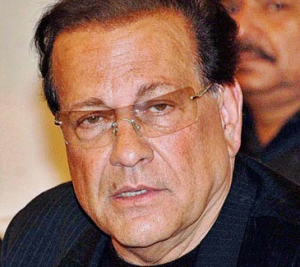
“Mera azm itna buland hai ke paraye shaulon ka dar nahin

Mujhe khauf aatish-e-gul se hai, ye kaheen chaman ko jala ne de”

[My resolve is so strong that I do not fear the flames from without

I fear only the radiance of the flowers, that it might burn my garden down] 

— Shakeel Badayuni couplet referenced by Salmaan Taseer on Twitter, 8 hours before his assassination 

I had been hoping that I could post something light-hearted, more entertaining at the start to the new year, but today’s Pakistan it seems is not the place for these sort of things any more. Four days into January and we already have yet another tragedy that has evoked not only pain and sadness but also immense amounts of disgust at the depths to which we, the unfortunate inhabitants of this blighted country, have sunk.

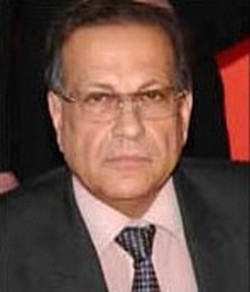
Punjab Governor Salmaan Taseer‘s brutal and senseless murder in Islamabad today (Tuesday) is not only an intensely heavy blow for his family and friends – to whom our thoughts go out to – but also to the hopes for a saner public discourse about issues that certain people endeavour to keep out of the conversation altogether. He often said things that many think but are unwilling to say in public out of fear or aversion to stoking argument. Whatever anyone may have thought about Taseer’s personal life (not that it’s any of anyone’s concern) or his business practices, there is absolutely no doubt that he was a brave and outspoken man who did not compromise his personal beliefs for the sake of cowardly politics. Along with barely a couple of other politicians on the national level (Sherry Rehman being one), his was a rare voice that was willing to take on the rightist mullah mindset in the public domain.

And contrary to what his detractors claimed, he did so with full awareness of the moral responsibilities of a public figure. In a recent interview, he was asked why he chose to raise the issue of the unjust blasphemy laws when he knew that he would receive brickbats from the rightist parties and become the target of the extremists. He replied: “Because if even I don’t, how will others get over their fears?” On December 31, he tweeted: “I was under huge pressure sure 2 cow down b4 rightest pressure on blasphemy.Refused. Even if I’m the last man standing”

In Salmaan Taseer’s untimely death we have all lost a truly courageous individual. Those within his party who opposed his just stand on the abhorrent misuse of blasphemy laws, moral pygmies such as Babar Awan, should hang their heads in shame.

At the same time, one must also feel disgust at those who have either valourized Taseer’s self-confessed lunatic murderer Malik Mumtaz Hussain Qadri, or used their weasely arguments to somehow try and justify the outrage. So-called-intellectuals like Irfan Siddiqui and bigots like Jamaat-e-Islami‘s oily Fareed Parachaand the ever-slimy Ansar Abbasi tried their best to claim (on Geo) that Taseer was somehow himself responsible for his fate because he had raised a “sensitive” issue.

I am not of the opinion that one should not speak ill of the dead only because he or she is dead, curse Zia ul Haq with every breath as far as I am concerned. But these gentlemen’s basic argument was this: even expressing your opinion about a warped law made by a warped dictator and endorsed by his warped proteges is enough to condemn you to death, so everyone should keep quiet about the misuse of religion and leave it all up to the mullah brigade. It’s time to tell them to shut the hell up themselves.

But the disgust does not end with a couple of morons trying to silence all discussion about religion to and other fanatics praising a criminal. The bigger issue, as we have been saying all along, is the refusal of society to see the inter-linkages of such acts of terrorism with the mindset that has been cultivated through the military establishment’s promotion of jihadi outfits, the propping up of so-called religious parties whose only agenda is bigotry, the pusillanimous and opportunistic silence over the treatment of minorities such as Ahmadis, Shias, Hindus and Christians and indeed all dissenters (religious scholar Javed Ghamdi being one), the valourization of criminals such as the illiterate Ilm Deen (dubbedshaheed [martyr] because he was hanged in 1929 for murdering a publisher), the rejection of rationality and logic, the marginalization of the arts and cultural traditions as something alien to our society, and the tolerance for hate-speech and incitements to violence such as that of this monkey.

It is this mindset, which has been cultivated by the state looking the other way at – if not directly promoting – acts of radicalization, that allows an entire police squad to see nothing wrong in one of their own planning to commit the murder of someone they are assigned to protect. (We now hear via Geo that Qadri had in fact confided to his colleagues in the Punjab ‘Elite Force’ about his plans and had even requested them not to shoot at him, a request they honoured.)

Our real disgust should be directed at all those parts of society that cannot put two and two together despite the evidence staring them in the face. We will inevitably hear a lot in the media about security lapses and administrative efficiency lapses that led to a criminal being part of a protective force (incidentally, Geo is also reporting through its sources that Qadri had been sacked from the Punjab Police’s Special Branch a few months ago because he was dubbed a ‘security risk’). But the only void that I think we really need to focus on is the one in our society’s collective brain.

So how do we deal with all this? I have heard a lot of dismay and hopelessness today and I can completely understand the feeling. For many people, this is another nail in the coffin of the idea of a viable future for Pakistan. The only option to counter this feeling of despondency, in my opinion, is to become more assertive and louder and to shame those who would stifle dissent.

The problem of course is that wishy-washy liberalism cannot fight fanaticism. Sometimes you have to fight fire with fire. Simply put, we can either shut up, resign ourselves to our fate and disconnect from this country and society or we can fight back and refuse to cede the space that the bastards want us to. Nobody ever said it would be easy.

As a start, let us declare Qadri, all those who support Qadri and murderers like him, the Khatm-e-Nabuwatmovement and its ilk as outside the pale of Islam. Let’s see how they like being referred to as blasphemers andmurtids. 

Nobody said this fight would not be dirty.
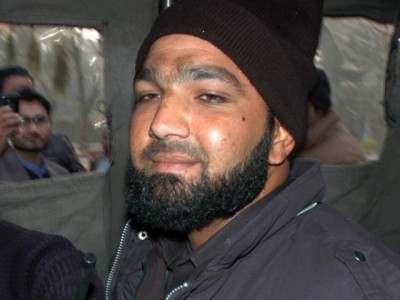
Salman Taseer Assassination Points to Pakistani Extremists’ Mounting Power

By Karin Brulliard for The Washington Post

One of Pakistan’s most openly progressive politicians was gunned down Tuesday in an act that violently highlighted extremists’ tightening grip on the country even as the beleaguered government struggled to stay in power.

The killing of Salman Taseer, apparently at the hands of one of his own guards, marked the most prominent political assassination in Pakistan since former prime minister Benazir Bhutto’s death three years ago.

The razor-tongued governor of Pakistan’s most populous province was known for speaking out on behalf of women and religious minorities, and his slaying stunned the nation and alarmed U.S. officials. It also further rocked Taseer’s ruling Pakistan People’s Party, which is desperately trying to keep its government afloat following a key ally’s defection to the opposition Sunday.

The secular PPP condemned the killing and promised a swift investigation, but its weakened position undermines its ability to crack down on religious extremists.

In timing that underscored those limitations, Taseer was shot in an upscale area of Islamabad as Pakistan’s main opposition party was across town demanding that the government agree within three days to implement a list of reforms, or risk collapse.

After the killing, the party of former prime minister Nawaz Sharif said it would allow three additional days for the changes, including a slash in government spending and the reversal of unpopular fuel price increases.

Taseer was a chief ally of President Asif Ali Zardari, who in 2008 appointed him governor of Punjab, Pakistan’s wealthiest province. But Sharif’s party rules the province, making Taseer’s assassination a blow to the federal government’s influence there.

Secretary of State Hillary Rodham Clinton condemned the killing in a statement Tuesday, saying she had met Taseer and “admired his work to promote tolerance and the education of Pakistan’s future generations.”

Taseer’s apparent killer cited his boss’s stance against a controversial anti-blasphemy law in justifying his actions. As the embattled, pro-U.S. PPP sought in recent days to win back defecting allies that also include a small Islamic party, it had already said it would not support a proposal to change the blasphemy statutes. That left Taseer one of the few vocal champions of the move, which hard-line religious organizations had labeled a Western conspiracy.

The laws have drawn scrutiny since a Christian woman was sentenced to death in November for allegedly criticizing the Muslim prophet Muhammad. Taseer had called for her pardon, leading religious groups to denounce him as an “apostate” and burn effigies of him during a nationwide strike last week in support of the law. One Muslim cleric has offered $6,000 to anyone who kills the woman, who remains in jail.

Even as Pakistani television stations were dominated Tuesday by commentators condemning rising religious intolerance, supporters of Taseer’s arrested guard, Mumtaz Qadri, 26, created a page for him on Facebook. Page visitors called him a “hero” and praised his “awesome job.” No major unrest over the killing was reported, but authorities said they were on high alert.

“This shows how the religious extremists want to impose their agenda to terrorize the society,” Shahbaz Bhatti, the federal minister for minorities affairs and also a proponent of changing the laws, said in an interview. “This cowardly act cannot stop us who are raising our voice.”

Yet in a country where Taliban militants increasingly flex their muscles through bombings, religious hard-liners have great power to intimidate even though polls show that their views are not widely shared. Last week’s strike by Islamic organizations drew few supporters to the streets, but shops in major cities closed – and many merchants said they did so under threat.

Human rights activists say the blasphemy laws are also abused by extremists, who use them as a tool to persecute minorities or opponents by bullying police and courts into arrests and convictions. The laws were strengthened during the 1980s rule of Islamist military dictator Gen. Zia ul-Haq.

Taseer lamented the power of the religious mob in an interview last summer following bombings of mosques belonging to the Ahmadi sect, whose members identify themselves as Muslims but are barred by the constitution from “posing” as such. Taseer – whose appointed position gave him little direct power in Punjab – condemned the provincial government of Sharif’s center-right PML-N for what he called its tolerance of radical religious groups.

“Extremist people are not in the majority,” Taseer said at the time. “This is a very narrow minority, but . . . they are always prepared to do and die. That is their strength.”

On Dec. 24, he had posted on his Twitter account: “My observation on minorities: A man/nation is judged by how they support those weaker than them not how they lean on those stronger.”

Authorities said Taseer’s guard, a member of an elite Punjab provincial police force that provides VIP security, shot the governor multiple times outside the Kohsar market in Islamabad, a small shopping plaza near his residence that is frequented by foreigners. The guard proudly surrendered to police afterward, according to local news reports.

Most political parties condemned the killing, and the government announced a three-day mourning period, during which political activity would be suspended. Zardari, to whom Taseer was close, called the assassination “ghastly.”

“The governor of Punjab was the bravest person in our government, and the stands he took for women, minorities and on the blasphemy law were incredibly brave and will never be forgotten,” Farahnaz Ispahani, a Zardari spokeswoman, said in an interview.

Taseer, who began his political career as a PPP student activist, was a successful businessman who played polo and smoked heavily. With his flashy sunglasses and frequent Twitter dispatches, Taseer, 66, cut a rather shocking figure in a country dominated by conservative social mores.

Critics assailed him for fathering a child with an Indian journalist while he was still married to the mother of his other children. In 2008, minor scandals broke out when opponents published photos online of him holding wine glasses at parties and of one of his daughters wearing shorts and dancing.

Despite the alleged gunman’s confession, Taseer’s killing was sure to be swept up in the conspiracy theories that permeate Pakistani politics, particularly in times of turmoil. Interior Minister Rehman Malik said investigators would seek to determine whether the suspect acted alone or was “asked” to carry out the attack.

In the hours after the killing, some criticism centered on the PML-N-led Punjab government, which provided Taseer’s police guard. There was no indication Tuesday night that the party played a role.

But the PML-N might yet bring down the PPP, whose government faces growing criticism over corruption, a floundering economy and a ham-handed response to last year’s devastating floods. The ruling party’s coalition partner, the Muttahida Qaumi Movement, withdrew from the government Sunday, weakening its mandate by depriving it of a parliamentary majority.

A united opposition could pass a vote of no confidence in Prime Minister Yousaf Raza Gillani, leading to his ouster and potentially triggering early elections. That has appeared unlikely, because of divisions among opposition parties. But Sharif threatened Tuesday to “ask the opposition parties to come forward and we will give them our full support” if the government does not show progress on reforms within 45 days, according to the Associated Press.

Like many in the PPP, Taseer often criticized opposition parties for stoking political instability in a country that has been ruled by the military for half its 63-year history and where an elected government has never completed its term.

Religious extremism, Taseer said last summer, would be quashed only by the “continuous, functional position of a democratic system.”

A Brave Man Killed

A New York Times Editorial

Some twisted person has created a Facebook page in support of Malik Mumtaz Hussain Qadri, the bodyguard accused of assassinating Salman Taseer, the governor of Pakistan’s Punjab province. Mr. Taseer was a brave man who had called for the repeal of Pakistan’s outrageous anti-blasphemy law.

Whoever killed Mr. Taseer must be condemned and repudiated, not extolled. Otherwise, Pakistan will certainly continue on a downward spiral in which intolerance and self-destruction triumph.

The governor’s death is a tragedy not just for Pakistan but for all who understand that just and stable societies need honest debate and full respect for minorities. Pakistan cannot afford to lose any fair-minded leaders, especially at a time when it is struggling with a virulent insurgency, an unraveling economy and an unraveling central government.

Mr. Taseer — a longtime ally of President Asif Ali Zardari and his wife, Benazir Bhutto, who was assassinated in 2007 — was Pakistan’s most prominent defender of the rights of women and minorities. He had pressed hard for repeal of the blasphemy law, which imposes a mandatory death sentence on anyone convicted of insulting Islam.

The law is popular with the Muslim majority but is routinely manipulated to settle personal rivalries and persecute minorities. And Mr. Taseer had been particularly outspoken, calling for leniency for a Christian mother of four who was sentenced to death under the law, in a case that stemmed from a dispute in her village.

Pakistani officials, who have the bodyguard in custody, say he killed Mr. Taseer because of the governor’s opposition to the blasphemy law. But there are far too many unanswered questions: Did the suspect act alone? Why did the Punjab police assign a religious conservative to protect Mr. Taseer? News reports first said nine bullets were fired into Mr. Taseer, and hospital officials later said he was hit 24 times. Yet other members of the security detail did not shoot to stop Mr. Qadri, who surrendered with his hands up.

Pakistani authorities need to investigate thoroughly and share their full findings with the Pakistani people.

The United States and the international community must make clear their outrage over this killing. So must every Pakistani. The country’s political leaders and the Pakistani media also need to consider whether the way they have shaped the debate on the blasphemy law — some have argued that mentioning reform is blasphemy punishable by death — is further fueling conflict.

Ultimately, only Pakistanis can save their nation, and they must answer the more profound questions: Do they want a country in which Muslims and non-Muslims can peacefully co-exist? Or one in which religious zealots, espousing the most intolerant interpretation of Islam, kill anyone brave enough to defend the defenseless? That would be the true blasphemy.

Blasphemy Cases Draw Focus in Pakistan

By Alex Rodriguez for The Los Angeles Times

NANKANA SAHIB, Pakistan | Muslim cleric Muhammad Salim isn’t worried that a court or Pakistan’s president might spare a Christian mother from this village who has been sentenced to death on blasphemy charges.

After all, if Asia Bibi escapes the hangman’s noose, he’s confident someone else will kill her.

“Any Muslim, if given the chance, would kill such a person,” Salim said calmly, seated cross-legged on a straw mat at a mosque here. “You would be rewarded in heaven for it.”

Salim isn’t the only one calling for vigilante justice. A cleric in Peshawar has offered 500,000 rupees, or $6,000, to anyone who kills Asia Bibi, if her execution doesn’t take place.

The mother of five is accused of disparaging the prophet Muhammad and the Qur’an during a dispute with three other women. She denies the charge. “My God knows that I never used those words,” she told investigators.

Her case has exposed deep rifts in Pakistan over the blasphemy law, seen by some as an appropriate measure to defend the tenets of Islam, but viewed by others as a dangerous tool easily abused in a society that is a volatile patchwork of ethnicities, religions and sects.

There have been other controversial blasphemy cases. Accused of burning pages from the Koran, Imran Latif was charged with blasphemy in Lahore but then released on bail Nov. 3. Eight days later, two men shot him to death.

This month in the southern city of Hyderabad, a Shiite doctor was arrested on blasphemy charges after police received a complaint that he had maligned the prophet Muhammad. His crime? He tossed out the business card of a pharmaceutical company representative whose first name, Muhammad, was printed on it. The doctor belongs to the smaller Shiite sect known as Ismailis.

“There’s a fundamental lunacy to it,” said Ali Dayan Hasan, South Asia researcher for Human Rights Watch. “There is no good spin to put on the blasphemy law. It’s used frequently in these preposterous ways, for preposterous reasons.”

The law dates to the 1980s and the rule of Gen. Zia ul-Haq. Since Zia’s rule, 974 people have been charged under the law, according to the Pakistani news media. No one has been put to death for a blasphemy conviction.

5 Arrested in Plot to attack Prophet Cartoon Paper

By Jan M Olsen for The Associated Press


COPENHAGEN, Denmark – Five men planning to shoot as many people as possible in a building housing the newsroom of a paper that published cartoons of the Prophet Muhammad were arrested Wednesday in an operation that halted an imminent attack, intelligence officials said.

Denmark’s intelligence service said that after months of surveillance they had arrested four men in two raids in suburbs of the capital, Copenhagen, and seized a submachine gun, a silencer and ammunition. Swedish police said they arrested a 37-year-old Swedish citizen of Tunisian origin living in Stockholm.

“An imminent terror attack has been foiled,” said Jakob Scharf, head of the Danish Security and Intelligence Service, or PET. He described some the suspects as “militant Islamists with relations to international terror networks” and said that more arrests were possible.

PET said it seized a 44-year-old Tunisian, a 29-year-old Lebanese-born man and a 30-year-old who were living in Sweden and had entered Denmark late Tuesday or early Wednesday. The fourth person detained was a 26-year-old Iraqi asylum-seeker living in Copenhagen.

The Danish intelligence service said the group had been planning to enter the building where the Jyllands-Posten daily has its Copenhagen newsdesk and had wanted “to kill as many of the people present as possible.” The four men face preliminary charges of attempting to carry out an act of terrorism. They will face a custody hearing Thursday.

“I am shocked that a group of people have concrete plans to commit a serious terrorist attack in this country,” Danish Prime Minister Loekke Rasmussen told reporters. “I want to stress that regardless of today’s event it remains my conviction that terrorism must not lead us to change our open society and our values, especially democracy and free speech.”

Danish and Swedish police, who appeared at a joint new conference with Loekke Rasmussen in Copenhagen, said they had been tailing the suspects for several months.

Anders Danielsson, the head of Sweden’s security police, said they had followed a car rented by the suspects from Stockholm to the Danish border.

“We knew that there were weapons in the car,” he said.

Zubair Butt Hussain, a spokesman for the Muslim Council of Denmark, called the plan “extremely worrying.”

The organization “absolutely condemns any act of terrorism regardless of the motives and motivations that may lie behind,” Hussain said.

There have been at least four plots to attack Jyllands-Posten or Kurt Westergaard, the artist who drew the most contentious of 12 cartoons, which were published by the daily in 2005 as a challenge to perceived self-censorship.

“The foiled plot is a direct attack on democracy and freedom of press,” Westergaard told the German tabloid Bild. “We may not and won’t let anyone forbid us to criticize radical Islamism. We may not be intimidated when it comes to our values.”

In January, a Somali man broke into Westergaard’s home wielding an ax and a knife but the artist escaped unharmed by locking himself in a safe-room in the house. In 2008, two Tunisians with Danish residence permits were arrested for plotting to kill him.

In September, a man was wounded when a letter bomb he was preparing exploded in a Copenhagen hotel. Police said it was intended for the daily, which has also been targeted in a number of thwarted terror plots in Norway and the United States.

U.S. citizen Tahawwur Rana faces trial in Chicago in February in connection with the 2008 terrorist attacks in the Indian city of Mumbai and a planned attack on the Jyllands-Posten.

The cartoons also provoked massive and violent protests in 2006 in Muslim countries where demonstrators considered the drawings as having profoundly insulted Islam. Islamic law generally opposes any depiction of the prophet, even favorable, for fear it could lead to idolatry.

In 2008, the Danish Embassy in Islamabad, Pakistan, was targeted by a car bomb that killed six people outside the mission.

The attacks and threats have caused concern and unprecedented security measures in Denmark, a country that prides itself on personal freedom and openness.

The JPPOL media group building, which includes Jyllands-Posten, is protected by metal fences and guards at all entrances. Mail is scanned and newspaper staff need identity cards to enter the buildings and the various floors.

Lars Munch, JPPOL chief executive, said his workers were worried.

“It is appalling for our group, for our employees and their families to see their workplace threatened,” Munch said.

Scharf said “there was no need to raise the terror threat alert level” in Denmark, although Danish Justice Minister Lars Barfoed described the plot as “terrifying.”

“The group’s plan to kill as many as possible is very frightening and is probably the most serious terror attempt in Denmark,” Barfoed said.

The head of Sweden’s security police, Anders Danielsson, said that “it has been possible to avert a serious terror crime in Denmark through efficient and close cooperation between PET and the (Swedish) security police.” Danielsson said the suspects who are residents in Sweden are also being investigated for suspected terror crimes in that country.

Pakistanis for Peace Editor’s Note– Muslims across the Islamic world, not just the ones who live in the western world, need to shed the notion that God Almighty needs them to go around taking revenge upon people on his behalf who said something blasphemous against him or any of his prophets, be they Muhammad, Jesus or others. Peace by upon them all.

We as a religion should be mature enough to  appreciate that people will not only not see eye to eye with our religious views many time, but that they can still have freedom of speech in their countries and the right, no matter how offensive, in ridiculing our, their own or anyone else’s faith. One just has to be mature enough to handle criticism of the most extreme measures.

The Illiteracy of Hate

A News and Opinion Special Report by Manzer Munir for Paksitanis for Peace

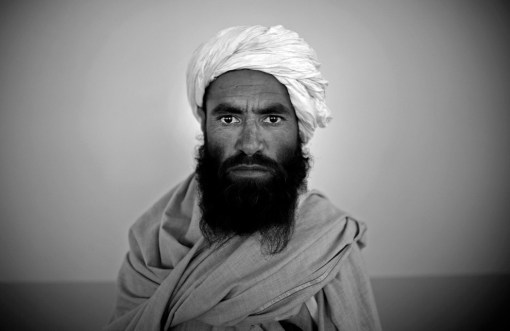
Alleged Taliban Member pic courtsey of Boston Globe

The Taliban are not just simply a bunch of illiterate thugs and bullies for they too often prove to be even worse than animals and barbarians.

Nowhere else in the world has a country experienced a more tragic and callous attack as the one on Christmas day, the birth day of Jesus, the Prince of Peace, than the one Pakistan experienced. In an attack described by President Obama as an “affront on humanity”, the cowards attacked helpless women, children and men while they queued up in food and aid distribution site such as the WFP depot, people who mind you are already suffering from the ongoing war, once in a lifetime floods, and the poverty and radicalism of a generation of desperate, hopeless and increasingly uneducated young men brainwashed by the Taliban and other radical Muslim extremists.

I am still disturbed by the disdain for basic human life that this new attack proves about this radical and extreme enemy. I imagine another one of their brain washed ‘walking zombies’, this time purportedly a woman suicide bomber, a first, even for Pakistan, killed in excess of 43 people in Bajur Pakistan at a World Food Program rations and aid storage and distribution center.

The Pakistani authorities and several domestic and foreign NGO’s who provide food aid at various centers in the area are temporarily closing these centers in order to have increased security. This means that aid distribution will come to a crawl and up to several hundred thousand people will now have to suffer at the hands of the attacker and their backers, the Taliban who have claimed responsibility. The authorities will have to ensure the safety of aid organizations and their personnel for both Pakistani and non Pakistanis relief workers involved in getting food, water and medicine to many people who are either suffering from the war or from the floods.

This catastrophe, although not of near Biblical proportions, does present both a security and humanitarian problem to both the government of Pakistan as well the suffering citizens in the northwest areas of the country where; Taliban fighters take sanctuary from the war in Afghanistan to regroup and return to the fight in warmer weather after the winter months as we have seen in years past. In fact, the reach of the Taliban in Pakistan is now not only reputed to be in the headquartered areas such as in Quetta Pakistan among the restive Baluchi population, now they are so often found to be in major cities like Karachi, Lahore, Rawalpindi, Peshawar and many points in between as they use their religious cover to endear themselves to certain impressionable, weakened or illiterate individuals that are so commonly found in throughout the country. 

Here are the some of the depressing facts. Pakistan, a nation approaching 180 million people at current estimates, perhaps only boasts to having about 60-65% of the male population at a literate level and at best, the females to be only at 40-45% of the total female population. Sadly, what this means is that 4 out of 10 Pakistani males are completely illiterate while up to as many as 6 out of 10 women are not able to read or write. Poverty breeds extremism since there is no support from any government programs or hope for any solution.

Time and time again throughout history and not just of Pakistan’s, we can see that the role of the church, synagogue or mosque in building the community is deeper than that of any government initiatives or other measures. The poverty for these young men along with the lack of jobs like for those individuals who are either very poorly paid construction site workers, household labor or servants, or beggars and sewer workers, a job sadly almost seems to have been reserved for Pakistan’s Christian community members as many can attest in Pakistan of their unfortunate and depressing state. One does not need to remind the reader of the plight of Asia Bibi (also Aasia and Ayesa), the Christian Pakistani woman who is still awaiting her fate in Pakistani courts after more than a year and a half since first being accused of a BS blasphemy charge and being in jail ever since. 

The medieval mentality of these radical extremists is not something that needs to be described as the evidence is here in this latest attack . Certainly anyone alive in any part of the world outside Pakistan and Afghanistan with eyes, TV, radio or newspaper within their reach can see plenty of near daily reminders of the carnage that many natives of these lands see, and to what they have painfully become accustomed.

 The Pakistani and Afghani Talibans have by all the various reports in newspapers and media sources over the last several years have pointed out to the fact that these groups all have too often similar goals. Not only that, these groups all share the same characteristics. The anti-Americanism, the pro-Wahaabi or Orthodox version of Islam, the need for justice for the ‘suffering of the Palestinian people’ , and the anti-colonial and often times anti western sentiment amongst these groups. The radicalization of certain Muslim groups be they Hamas and Hezbollah in the Mideast or Lashkar e taiba, or any other militant outfit operating in this part of the world as mentioned in this quote a few days before he passed, the late Richard Holbrooke of the US State department said that there are a range of militant groups such as the Afghan Taliban, the Pakistani Taliban, the Haqqani Network, Lashkar-e-Taiba, and that “an expert could add another 30.” His exact words are in quotations. 

The radical Muslim groups who take prey of the weaker, cannot think for themselves because they are scions of those abjectly illiterate segments of the society who are only educated in the madrassahs of Pakistan. This is the de facto way of educating Pakistan’s poorer children in little mosque schools which consist of nothing but Qu’ranic surahs and words of ‘wisdom’ or ‘interpretation’ by the local mullah of the said mosque/school. Most probably these children in many Pakistani madrassahs, especially the ones who live near the border areas within the NWFP or North West Frontier Province of Pakistan as this is the part of the country most affected by its close proximity to Afghanistan.

The people in this area of Pakistan, as well as their cousins in Afghanistan have been fighting one enemy or another for the better part of 100 years now. Whether to them the enemy be the British, during the height of the British Raj rule in India, or to the Soviets and the Red army and the Cold War, then in chronological order came the infighting after the Russian withdrawal as various Tajik, Afghani, Uzbek, Pakistani warlords came in to try and consolidate power to now us Americans and the Pakistanis who are our allies in this war.

Granted we do often hear that the Pakistanis can be doing more. By all accounts, the Pakistani government can do more in terms of fighting this war on terror. Numerous western reports and articles in respected dailies have alleged that small elements within both Pakistan’s Army as well as the spy agency, the ISI, have sympathizers to either the Taliban’s cause or they want to be on favorable terms with a powerful entity that most in Pakistan’s establishment believes that Pakistan will be dealing with and not a weakened Karzai once the US begins to draw down troops and end the war by 2014. If this is indeed true, then these ‘officers’ and supposed ‘leaders’ of Pakistan should realize that the colluding with the enemy, which in this case is the Taliban, is tantamount to treason, and the members of the armed forces of Pakistan as well as the intelligence community should not be assisting the enemies of all concerned: Afghanistan, Pakistan and the United States. 

Of course we must not kid ourselves and assume that only alleviating the illiteracy and poverty of the Pakistani youth will and bettering the education system of the Pakistani poor, particularly that of the refugees and residents of the northwest areas near the Afghan border. No there needs to be a study and introspection by the people of these two countries where this hatred breeds. To to get out of this darkness, the population needs be provided not only safety when delivering food aid and or medicine but aldo most importantly give them a book, a pen, and a paper. And teach them how to fish for knowledge with basic comprehension and deductive reasoning skills that can reject a radical and violent view of Islam too often manipulated by the clergy. This is the only way we can come to end this illiteracy of hate.

–Manzer Munir, is a proud and patriotic Pakistani American, an author, who plans to write a book on Pakistan, who is also a blogger and journalist, and as the Founder of Pakistanis for Peace  can be found at www.PakistanisforPeace.com, www.DigitalJournal.com ,www.Open.Salon.com, www.Examiner.com, as well at other websites as a freelance journalist and writer.

Holiday brings Muslims, Jews Together to Volunteer

By Niraj Warikoo for The Detroit Free Press

Detroit, Michigan– For the past 20 years, hundreds of local Jews have volunteered on Christmas to help needy people on a day when many Christians are busy celebrating the holiday.

But because Dec. 25 falls on a Saturday this year — a day of rest for observant Jews — the Muslim community will be filling in on Christmas, helping at soup kitchens, senior citizen homes and in impoverished neighborhoods.

The Council of Islamic Organizations of Michigan hopes to get 400 volunteers.

The Jewish community will move its volunteer efforts to today, Christmas Eve, as part of Mitzvah Month, which refers to good deeds. Last year, the Jewish community invited the Muslim community to help out on Christmas for the first time. That partnership continues this year, with some Muslims helping on Christmas Eve, too.

“The more contact we have, the more understanding,” said Freya Weberman, 51, of Huntington Woods, who will be delivering toys in Detroit today with the Jewish Community Relations Council of Metro Detroit. “There is fear of the unknown. By bringing people together and having shared experiences, we see our commonalities.”

When Micki Grossman of Farmington Hills read journalist Helen Thomas’ comments about Zionists earlier this month, the Jewish woman was hurt. “It caused a lot of pain for me,” she said.

“I also wish that we could have had more of our Muslim friends stand up and say, ‘This was not appropriate.’ ”

But some Muslims and Arab Americans were upset that Jewish leaders pressured Wayne State University to remove an award in her name.

At the annual banquet this month of the local chapter of the American-Arab Anti-Discrimination Committee, people wore buttons reading “Defender of Thomas,” said regional director Imad Hamad.

“You can’t punish someone for the right of freedom of expression,” Hamad said, referring to Thomas, who is of Lebanese descent.

Despite the differences of opinion, about 200 Jewish volunteers — along with 40 Muslim ones — will work together today to help serve poor people across metro Detroit.

Grossman will be among them, glad to help people in need while bringing two communities together.

Gigi Salka, 41, a Muslim from Bloomfield Township whose children attend bar mitzvahs, also will be volunteering — one of dozens of Muslims helping on Christmas.

It is one way in which local Jews and Muslims are trying to build ties despite their differences on politics and foreign affairs. Last month, a health fair run by Jews and Muslims was held in a Detroit mosque. And Muslim leaders spoke earlier this year before the board of the Jewish Community Relations Council of Metro Detroit.

The council organizes the event, which is usually held Christmas Day, but this year that is on the Jewish Sabbath, a day of rest for observant Jews.

Last year, the Jewish community invited Muslims to help them volunteer on Christmas. The partnership was a historic first, with about 60 Muslims helping 900 Jewish volunteers. This year, up to 400 Muslims led by the Council of Islamic Organizations of Michigan will take the lead on Christmas.

“We have many similarities,” Grossman said. “Let’s look for the sameness rather than the differences.”

Such partnerships are playing out across metro Detroit.

Victor Begg of Bloomfield Hills, a co-founder of the Islamic council who is helping to lead the volunteer effort with Muslims this week, said they “are part of an ongoing effort by our communities to bridge the gap.” He had no comment on the Thomas controversy.

Hamad said he was upset over the Jewish community’s pressure on WSU to drop the award in Thomas’ name, but he maintains contact with Jewish leaders such as Betsy Kellman, head of the Michigan branch of the Anti-Defamation League, a civil rights group.

“We are Americans first,” Hamad said. “We should not see ourselves as an extension of the external conflict abroad.”

Ismael Ahmed, a longtime Arab-American leader who is the director of the state Department of Human Services, spoke to the board of the Jewish council this month about poverty issues.

“The Jewish and Arab communities have a huge amount in common — a sense of family, a sense of community,” Ahmed said. “But we have different views on the Middle East.” At the same time, “I think that isn’t a major divide” because “we’re very much alike.”

Salka will be volunteering on Christmas because it is important to give back, she said. To her, interacting and forging ties with people of various backgrounds is part of her everyday life.

“My friends are from all different faith traditions,” Salka said. It’s on an individual level, “how you change hearts and minds, the personal connections.”

Sufi Islam: Reclaiming Muslim Spirituality

By Fahad Faruqui for The Huffington Post

After two bombs recently claimed dozens of innocent lives at the shrine of esteemed Sufi Ali Hajviri, fingers were pointed at the al-Qaeda-linked militants who see Sufism as the work of heretics. The New York Sufi Music Festival was brought to U.S. to showcase the spiritual dimension of Islam and the rich heritage of Pakistan, counteracting a view that Pakistan is predominantly a country known for its terror factories. Sadly, the image of militants waging war is overwhelming and hard to supersede.

Hearing Abida Parveen sing Bulleh Shah’s ecstatic poetry, which enriched the centuries-old Sufi tradition of the Indus valley, made me realize how the Islamists have stripped away spirituality from the religion and left believers with rituals, sketchy interpretations of the divine laws and fear of God’s wrath. Sufi Muslims of the subcontinent, who converted to Islam in the pre-partition era, were drawn to the Sufi path of knowledge that has been hijacked by the al-Qaeda ideology of violence.

The rapturous quality of Sufi poetry continues to fascinate me, but the very idea of loving and seeking God while listening to radical mullahs (like the clerics of Red Mosque) is deeply troubling. Prostration to God devoid of spirituality is no different from doing sit-ups. Surely, the label Sufi is not necessary. What’s important is the sentiment. It helps the cause of clarity to call those on the path “Sufis” rather than “mystics,” which will more likely conjure images of Aladdin on his flying carpet.

Islam is the fastest-growing religion but has too few religious scholars with requisite understanding to link rituals and divine laws to creative spiritual ascension. I reached a level of comfort with my faith through good guidance from prominent Muslim thinkers such as Hamza Yusuf, Faraz Rabbani and Zaid Shakir, who drink deeply of the Quran’s spring of wisdom.

Faith is ineffable; so is our search for God. Ecstatic poetry and Sufi treatises speaking of “annihilation of self” and “Oneness with the Creator” are merely tools to evoke the Sufi sentiment, which is not peculiar to Islam. Teresa of Avila’s “Libro de la Vida,” Bulleh Shah’s ecstatic poetry, Allama Iqbal’s intimate conversation with God in “Shikwa” (complaint) and Mansoor Al-Hallaj’s proclamation “Anal-Haq” (I am the Truth) are all expressions of the acquired wisdom gleaned from deep introspection.

Though unsuccessful, Iqbal tried to revive the true spirit of Islam. He was quick in identifying that the hardline mullah was a hopeless case. But the Sufis were either consumed in “other worldliness” or digressing from the core of Sufism. For Iqbal, a profound religious experience is one that benefits humanity, which is most unlikely if the seeker retreats to constant seclusion.

Saudi Arabia’s government is often accused of demolishing tombs of the companions of the prophet, fearing veneration of graves, and of discouraging Muslims from praying at prominent sites like the Cave of Hira (where Muhammed received his first revelation). Why they discourage is another column, but one thing is certain: visiting graves and sites mentioned in the Quran will not miraculously lead to divine illumination. The essence of Sufism is to dig into the depths of your soul to seek the One. In the shrines of Sufi masters in the subcontinent, one can expect to find numerous vagabonds pretending to be Sufis, who earn a living by giving false hopes to troubled wives, jobless men and childless couples. This defeats the premise of Sufism — absolute reliance on Almighty.

In a phone conversation, a prominent Sufi scholar, William Chittick, said, “The core of Sufism is to strive for nearness to God.” Even though God is absolutely Other, he presupposes a direct relationship with the seeker. No doubt. Allah says in the Quran (50:16): “I am closer to you than your jugular vein.”

It is our egos that have created boundaries between sects within Islam and ensuring rivalries with non-Muslims. Reviving the spiritual dimension of Islam may be the only way to fight intolerant radical elements internally.

Muslim American Artists Strive to Bridge a Chasm

By Thalia Gigerenzer for The New York Times

When Wajahat Ali, a young Muslim American playwright from Fremont, needed to build an audience for his work, he produced his plays in cramped Pakistani restaurants in the East Bay and used Facebook to get the word out.

His play “The Domestic Crusaders” went on to open at the Berkeley Repertory Theater in 2005, and then moved to Off Broadway. Now, family members who were initially skeptical of Mr. Ali’s decision to pursue writing see great power in his profession.

Mr. Ali said his uncle had told him that he wished he had “made his son into a journalist,” because “after 30 years of living in this country, I turn on the TV and see myself as a terrorist.”

Mr. Ali is one of a growing number of Bay Area artists who are reimagining one of the country’s most complicated compound identities: Muslim American.

At a time when Islam has been heavily politicized, many Muslim artists say they hope the arts can expand understanding of their faith among non-Muslims as well as bridge American and Islamic traditions.

“We’re at a point where Islam is really being defined in this country, and it’s going to be through the arts,” said Javed Ali, founder of Illume, a Muslim online news, arts and culture magazine based in Newark that serves as one of the central nodes of the Bay Area Muslim American network.

Bay Area Islamic organizations, including the much-heralded Zaytuna College in Berkeley, have embraced the shift toward culture. In January, the Islamic Cultural Center of Northern California will open a new gallery in the center to showcase Muslim artists.

The cultural center, in Oakland, decided to increase its arts programs six months ago, said Ali Sheikholeslami, its executive director. The center regularly hosts an event called “Islam and Authors,” which invites authors to discuss topics related to Islam.

“We want to break through common stereotypes and present the whole spectrum of Muslim reality,” said the cultural center’s marketing and development director, Jason van Boom.

Hatem Bazian, one of the Islamic scholars behind Zaytuna College, the first Muslim liberal arts institution in this country, echoed that thought.

“In American society,” Mr. Bazian said, “artistic expression is the way we narrate our story, so Muslims are beginning to draw their own narrative.”

The Bay Area’s Muslim population, estimated to be 250,000, is one of the most diverse in the United States.

Mr. Bazian, who is also a senior lecturer at the departments of Near Eastern and ethnic studies at the University of California, Berkeley, said the wide mix of ethnicities and large number of converts in the Bay Area’s Muslim population “creates synergies” that can be seen in new art forms that break ethnic molds.

Some local artists have taken an online entrepreneurial approach to Islam. Khadija O’Connell, a Hayward resident, started her Web-based arts and craft business, Barakah Life, in 2003 as a way to bring a modern, handcrafted aesthetic to Muslim items most commonly found in gaudy, imported styles.

Ms. O’Connell relies on online tools like blogging and Facebook to promote ideas like her pop-up crescent moon cards that would look at home on the popular crafts site Etsy.

“People used to adapt neutral Christmas ornaments, like stars, and hang them up for Ramadan,” recalled Ms. O’Connell, who converted to Islam in college. “I wanted to bring new traditions to Muslims living in the West.”

For local Muslim American artists whose art has been deemed “radical” by more conservative Muslims, the road has not been an easy one.

Audience members walked out of an early November U.C. Berkeley performance of the play “Hijabi Monologues,” which features the stories of Muslim women and contains sexual references. “I’ve spent more time and energy negotiating with the community whether music is haraam [“forbidden”] than putting out content,” said Anas Canon, a convert and the founder of the record label and Muslim artist collective Remarkable Current, which includes the Bay Area MC/spoken word artist Baraka Blue. The label’s music ranges from soul to hip hop and has collaborated with artists such as Mos Def.

When Remarkable Current, which is based in both Oakland and Los Angeles, recently held a masquerade-themed book-signing with a D.J. in an Oakland home, debate erupted online ostensibly over men and women in costumes interacting together. An impassioned Facebook note condemning the event unleashed heated comments from Muslims across the Bay Area.

In the wake of controversies like the one over a proposed Muslim cultural center near ground zero in New York City, some second-generation Muslims’ art is tinged with a sense of urgency.

“Our narrative has been stolen from us,” Wajahat Ali said, referring to the common depiction of Muslims in the American news media.

The tendency of his parents’ generation to push their children to prestigious professions like medicine and business discouraged creative voices, he said.

But Bay Area Muslim artists are fast creating new narratives. Mr. Ali’s play, which depicts a modern Pakistani-American family, is featured in McSweeney’s literary magazine this month.

For many years, Mr. Ali said, he had described the local arts scene as “latent, with a heartbeat.” But now, he said, “it’s dancing.”

What Sufi Festivals Mean to the People

By Sohail Abid at http://sohailabid.com/

It is the beginning of the Hijri year. A time that matters to me for two reasons: remembering Hussain’s determination and the Sufi festivals that will be held throughout the year across Pakistan. And this year I want to do something special: to attend all the Sufi festivals and document each of them! Wish I had undertaken this project earlier in my life when the festivals were held without any fear but I wasn’t mature enough to see what they mean to the people. I, like others, considered them ‘stupid’ and ‘superstitious’ but that’s so untre. Let’s see how:

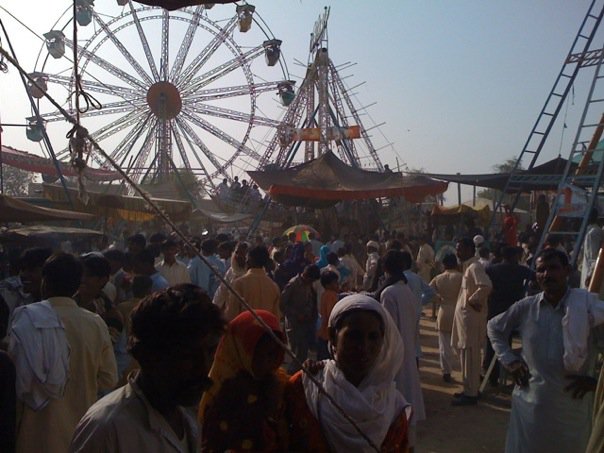
The people who actually go to the Sufi festivals don’t really call them by their urban name, Urs. They call them “mela” and it includes all kinds of activities, not just paying salam to the dead Sufi. They are *festivals* for the people, occasions to rejoice.

Last weekend, when I was on a field trip in a remote Punjabi village, a girl told me, “If you were here a couple of weeks ago, you could see our dance, Sammi; there was a wedding. We are the best in Punjab in Sammi dance! Oh, you can come to the mela next month.” Now this place, Danabad, is a small village. They remember the Sufi festival as the time they will have dance, musical concert, and what not.

On a similar visit to Chakwal, when I asked a young boy about their activities, he was so excited about this race and kabbadi they have each year. When: “during the mela”!

You see, to the people the Sufi festivals do not mean “worshipping the graves”, as some conservatives would like to put it. It is the time people await to shop, play, dance, and attend live concerts. And that’s what I would like to document because they are the events that matter to the people and keep them going. Wish me luck!

Sohail Abid is a writer, an entrepreneur, a software engineer, a cultural analyst, and a lover of all things folk. He lives in Islamabad Pakistan and manages several websites and businesses as a freelance software developer. We at Pakistanis for Peace are proud to call him a friend of the site.

Blasphemy Trials in Pakistan Reveal a Broken Justice System

By Karin Brulliard and Shaiq Hussain for The Washington Post

With its single dirt road, friendly residents and abundance of drowsing donkeys, this village hardly seems a hotbed of religious radicalism.

Nevertheless, four years ago, dozens of angry townspeople marched and chanted, “Death to the blasphemer!” Their demands were answered. Two years later, court records show, a teenaged Muslim named Muhammad Shafique was sentenced to hang for cursing the Prophet Muhammad and tossing pages of the Koran onto “cow dung and urine.”

Today, an air of regret permeates Kulluwal. Shafique’s accusers fled town, and their relatives now say the allegations were lies. Many residents call the case a setup fueled by political and personal rivalries. But as Shafique waits on death row, his appeal stuck in Pakistan’s glacial courts, no one is quite sure what to do.

“The situation at that time was emotional. It was the responsibility of the police to sift through the facts and find the truth,” said Chaudhry Safraz Ahmed, 42, a community leader whose father was one of Shafique’s accusers. “That did not happen. And Shafique is behind bars.”

Pakistan is in the midst of a heated debate over its ban on blasphemy following the sentencing to death last month of a Christian woman, Asia Bibi. The pope condemned that sentence, which has not yet been carried out. Human rights organizations, meanwhile, have demanded the repeal of a law that they say is used to harass religious and sectarian minorities in this Sunni Muslim-majority nation.

But blasphemy cases, about half of which involve Muslim suspects such as Shafique, also point to a more fundamental problem with grave implications for the nation’s U.S.-backed fight against militancy: Pakistan’s broken justice system, corrupt and lacking in expertise, often rewards vendettas and encourages radicalism.

In this system, religious extremism is less an epidemic than a menacing shadow – just as it is across Pakistan, an unstable democracy where Islamist threats often eclipse the majority’s more peaceful views.

The law against blasphemy – which encompasses vaguely worded prohibitions on insults against Islam – gives radicals a tool with which to bully those who don’t share their hardline religious views. Legal experts say lawyers, witnesses and authorities are frequently intimidated into helping to enforce the law, leading to injustices that bolster militants’ anti-government arguments.

“These are the kind of provisions that allow space for extremists to act with impunity,” Ali Dayan Hasan, a Pakistan-based representative for Human Rights Watch, said of the blasphemy law. “This country is, in that sense, at a crossroads where it is time for people to stand up.”

Just what happened on the evening of March 17, 2006, in this agrarian corner of Punjab province remains in dispute. It took a court in the nearby city of Sialkot 73 hearings over 27 months to gather enough testimony for a verdict. Lawyers’ strikes, witnesses’ absences and a funeral caused delays. In the end, the key evidence against Shafique, now 22, was witness accounts and soiled scraps of pages from a Koran, which the judge deemed impossible to fake.

“The question arises whether . . . a Muslim can think to smear the pages of the Holy Book with cow dung and urine just to create an evidence to involve his opponents,” the judge wrote in 2008. “Not an iota of evidence has been produced by the accused in this regard.”

But Shafique’s family, along with many others in Kulluwal, cite two reasons for such a plot. Shafique, an aspiring electrician, had accused his brother’s wife of adultery. And her alleged paramour had powerful allies, among them a town politician with his own motive: Shafique’s brother was challenging him in a village election.

Whatever the case, word of Shafique’s alleged rampage spread, and a crowd beat him viciously, residents recalled. Qari Qadir, the village imam, said he declined requests to announce the offense over his mosque’s loudspeaker, fearing a “serious situation.” Instead, he led a march the next day at which protesters demanded that police file charges.

“Everybody was against him,” said Ahmed, the community leader. “The police thought it could become a law-and-order situation if they did not take action.”

According to court records, two main accusers – the politician and Ahmed’s father – did not testify. Four young men who did gave nearly identical statements about seeing Shafique curse the prophet and rip the Koran.

Shafique testified that the charges were personal and political, and that he “heatedly” loved Allah.

The court sentenced Shafique to join about 7,600 others in Pakistan on death row, about 60 of whom are convicted blasphemers, according to the Human Rights Commission of Pakistan. The country has not executed anyone since 2008, and blasphemy cases are often overturned on appeal.

But for many, that potential reprieve is little help. Suspects are often murdered in prison or after release, a fact one Pakistani court used to justify the blasphemy law – in prison, it reasoned, suspects are protected from public rage.

Blasphemy was outlawed during British colonial rule but made a capital crime in the 1980s under the Islamist military rule of Mohammed Zia ul-Haq. Now, the law is being scrutinized; a bill in parliament would shorten sentences, require evidence that the crime was committed intentionally and introduce punishment for false accusation.

But while recent international attention has galvanized opponents of the current law, it has also roused defenders. Conservative religious parties have threatened mayhem if the law is changed, an idea they deem a Western conspiracy. One cleric in northwest Pakistan went further, promising $6,000 to anyone who kills Bibi, the Christian woman.

Amid this debate, Mirza Shahid Baig, Shafique’s lawyer, sticks to technical arguments. The wrong police investigated, he said, and there was no serious look at Shafique’s side of the story.

“I am a very true lover of the holy prophet, but this case was totally false,” Baig said one recent afternoon at his dusty basement office in the bustling city of Lahore. “Whether the law is correct or not correct according to the morality, this is not my job.” In Kulluwal, most everyone seems to agree that a blasphemer deserves death. But they are certain Shafique was not one.

The investigators and witnesses who testified against him have all left town, and no one else recalls seeing Shafique’s alleged rampage. Ahmed said his father is ready to recant in court.

“This is a baseless charge,” said Ahmed, calmly sipping tea with Shafique’s parents on a recent day. “The issue is religious, so it had an influence on the police. It interfered with the investigation.”

Another resident, Mohammed Ibrahim, is the brother of the politician who accused Shafique and the father of one youth who testified. Ibrahim said his son has since told him he was pressured to lie, and that his brother forced police to file charges.

“He thought of himself as important, as someone who could not be challenged politically,” Ibrahim said of his brother, who, he added, has moved to Canada. To some Kulluwal residents, the whole affair proves elders should resolve disputes, not courts.

Shafique, meanwhile, writes letters to his family from solitary confinement. In one recent missive, he said that prison guards avoid touching him. He understands, he wrote, for he reserves no sympathy for blasphemers.

“My heart weeps for the innocent ones,” he wrote. “But I have no words of sympathy for the sinners . . . I would have killed them myself if I could.”

Aasia Bibi and Impurities in the Land of the Pure

By Manzer Munir for Pakistanis for Peace

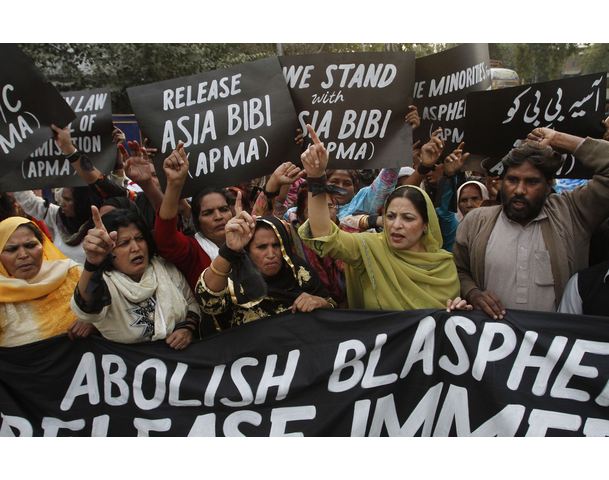
The case of Aasia Noreen aka Aasia Bibi illustrates how far Pakistan has to go to secure freedoms for its religious minorities. Christians and Hindus are not the only minorities who are persecuted for their beliefs but it is also Muslim minorities such as the Ismailis, Ahmadis, and Shiites who are routinely harassed, discriminated and also killed. Sadly, it is the case of Aasia Bibi that has brought some much needed attention to Pakistan’s sad state of affairs towards the treatment of its religious minorities.

Several sections of Pakistan’s Criminal Code consist of its blasphemy laws and of all the Muslim countries of the world that have anti-blasphemy laws, Pakistan’s anti-blasphemy laws are by far the strictest. There is section 295 that forbids damaging or defiling a place of worship or a sacred object. Then there is section 295-A that “forbids outraging religious feelings.” There is also 295-B which prohibits defiling the Qu’ran and was originally punishable by life imprisonment but has since been amended to up to three years imprisonment.

No section of the blasphemy law is more controversial or harder to prove than Article 295-C, the law that Aasia Bibi is allegedly charged with having broken. In respect to prophet Muhammad, this statute states that ” Whoever by words, either spoken or written, or by visible representation, or by any imputation, innuendo, or insinuation, directly or indirectly defiles the sacred name of the Holy Prophet Muhammad shall be punished with death, or imprisonment for life and shall also be liable to a fine.”

Aasia’s case and charges against her started almost a year and a half ago when there was a quarrel over a bowl of water in a dusty village in the heart of Pakistan’s Punjab province. A group of women were working the fields in the heat of the Pakistani sun when one of them, Aasia Bibi, dipped her glass in the communal bucket of drinking water to fetch herself and others a glass of water to drink and immediately was rebuffed by the other women who claimed that the water was now unclean as it had been touched by a non-Muslim. According to witnesses, instead of quietly bowing her head and taking the indignities, Aasia’s crime was that she mounted a strong defense of her faith and remained steadfast in her demeanor that she did nothing wrong. Too often in Pakistan, the blasphemy laws are used against religious minorities to settle personal vendettas and old scores according to Pakistan’s Human Rights Watch, a watchdog group monitoring the case.

The news traveled fast in Aasia’s village of Ittan Wali, in Punjab’s Sheikhupura district that a Christian woman had insulted the prophet. The local mullah got on the mosque loudspeakers, urging the “faithful” to take action against Aasia Bibi. In sad but familiar pattern, her defense of her faith was somehow twisted into an accusation of blasphemy, according to her family and others familiar with the case. Soon as a mob gathered outside her home ready to take the law into their own hands and handing out vigilante justice, the police moved in and took her into custody. But instead of protecting her, they charged her with insulting Islam and its prophet under the blasphemy laws.

And then on Nov. 8, after suffering 18 months in prison, Aasia Bibi was sentenced to death by a district court, making her the first person to be handed the death penalty in Pakistan under the blasphemy laws. Many before her over the years have been charged, but punishment had been commuted to lesser penalties than the death sentence imposed on Aasia Bibi. No concrete evidence was ever presented against Aasia, according to Pakistan’s Human Rights Watch. Instead, the district judge relied on the testimonies of three other women, all of whom were hostile towards her.

Unfortunately this is a common insult hurled at many of Pakistan’s 2 million Christians who make up just 1.59% of the total population. Often, Christians in Pakistan are discriminated and persecuted and many times only get the lowest of the low jobs such as street sweepers, janitorial and sanitation workers. In fact, in Pakistan, the term ‘Chura‘ has become synonym with the Christian community as it relates to an unclean person akin to how the untouchables or Dalit community is seen in India. In India however, the Dalits are not subjected to arcane state blasphemy laws geared towards religious minorities as in Pakistan or are threatened with their lives at the hands of the Hindu majority.

As discussed in a couple of my previous articles, Taliban 1o1, History and Origins and Taliban 201, The Rise of the Pakistani Taliban, the Islamization of Pakistan started under the late General Zia ul Haq of Pakistan who took over the leadership of the country through a military coup in 1977 when he hung the deposed and democratically elected Prime Minister Zulfiqar Ali Bhutto. Earlier in 1973, the 1973 Constitution of Pakistan had declared that “Islam shall be the religion of the Pakistan” and had systematically begun the process of restricting the participation of religious minorities in government and politics.

Before General Zia, there were only two reported cases of blasphemy. Since the death sentence was inserted in 1986 into the Penal Code for the blasphemy laws, this number has now reached 962 — including 340 members of the Ahmadi Muslim community, 119 Christians, and 14 Hindus. A close examination of the cases reveals the blasphemy laws are often invoked to settle personal scores, or they are used by Islamist extremists as cover to persecute religious minorities, sadly with the help of the state under these laws.

General Zia began this policy of Islamization of Pakistan in conjunction with his support for the war against the Russians and assistance to the Afghan Mujahedeen as well as the building of thousands of madrassahs or religious schools across Afghanistan and Pakistan which nurtured the young men into what later became the Taliban. Many of these blasphemy laws fully came into being under his reign, although some were around since as early as more than 100 years prior when the British drew up the Indian Penal Code of 1860 which was initially an ill foreseen aim at keeping the peace among the many fractured faiths of the subcontinent. For instance, section 295-A, which “forbids outraging religious feelings”, could have been applied against a Muslim who insulted a Hindu or a Hindu who taunted a Sikh or Christian or vice versa. However under Zia, the blasphemy laws were expanded and almost exclusively applied against Muslim minorities such as the Ahmadis, Islamilis and Shiites as well as against the Christian and Hindu populations.

Recently, a religious ‘leader’ came out and has offered over $6000 to anyone who can kill Aasia Bibi while she awaits her punishment in police custody. Outrage and denunciations on this case are coming from across the world as many people are appalled at the sad state of rights for religious minorities in Pakistan. The Pope has intervened also asking for clemency for Aasia Bibi from Pakistan’s President Asif Ali Zardari. Against all manner of reason and justice, Lahore’s High Court recently issued an order on November 29, 2o1o, preventing Zardari from exercising his constitutional authority to pardon Aasia Bibi.

In a country rife with violence and chaos and one that has become synonymous with terror the world over, the case of Aasia Bibi is yet another dark stain on the country’s image around the world. The Taliban and the extremist groups ravaging Pakistan can be explained as being a violent minority and do not and should not reflect on the nation as a whole as the majority of people in Pakistan are opposed to them and their views of Islam. But the blasphemy laws, for as long as they have stayed on the books in Pakistan and in the constitution, cannot and should not be excused in any shape or form. These laws need to be repealed and the constitution needs to be amended in an emergency manner so that Aasia Bibi and other religious minority citizens of Pakistan are not subjected to cruel and subjective laws that are almost exclusively used against minorities to settle scores, personal vendettas, and instill terror in less than 3 percent of the country that is not part of the religious majority of Sunni Muslims.

There needs to be international pressure placed on Pakistan from the United Nations, the United States, Europe and others to modify the constitution immediately and to pardon this 45 year old mother of five children. It is ironic that in a country where many people sympathize with Osama’s Al Qaeda and profess to hate the west with one hand, they decry with the other why not enough western aid has came to their country when it recently saw the worst flooding in its history. Can you blame the American citizens, the Europeans or citizens of any other Christian nation from hesitating to give aid to a country that not only plays a duplicitous game when it comes to terrorists and terror havens but also treats Christians and other religious minorities in the manner as in the case of Aasia Bibi?

The name Pakistan literally translates into “The Land of the Pure”. And as a child growing up I was told that the meaning of Pakistan’s flag is this: “The green is a traditional Islamic color and the crescent moon and star are also Islamic symbols. The white stripe represents the non-Muslim minority and religious groups of Pakistan and there place in the country.” In my view, as long as the nation sanctions and tolerates these utterly unjust and biased blasphemy laws, the religious minorities of Pakistan clearly have no place in this land of the ‘pure’.

-Manzer Munir, a proud Pakistani American and peace activist, is the founder of Pakistanis for Peace and blogs at www.PakistanisforPeace.com as well at other websites as a freelance journalist and writer.

Majority of Muslims Reject Al-Qaeda

As Reported by Sandra Johnson for The Daily Mail

Muslims in many parts of the Islamic world overwhelmingly reject al Qaeda, support a large role for their faith in government and believe democracy is preferable to any other kind of political structure, according to a new survey released by Pew Research Center’s Global Attitudes Project.

The study also found falling support for suicide bombings, as well as mixed attitudes towards Hamas and Hezbollah, Islamic groups designated as terrorist organizations by Western governments but which operate extensive social services networks in parts of the Muslim world.

The survey, conducted this spring in Jordan, Lebanon, Nigeria, Indonesia, Egypt, Pakistan and Turkey, found that only in Nigeria did Muslim populations have anything approaching a favorable view of al Qaeda, with 49 percent expressing positive views and 34 percent holding an unfavorable opinion.

At least seven in 10 Muslims had unfavorable views of the group in Egypt, Turkey and Lebanon, as did lesser majorities in Jordan and Indonesia, according to the study.

But views of Hamas and Hezbollah were more mixed. Both groups got favorable ratings from a majority of Jordanian Muslims, with 60 percent supporting Hamas and 55 percent holding favorable views of Hezbollah, Pew reported.

Muslims in every nation but Turkey expressed a positive feeling about Islam’s influence in their nation’s politics. More than nine in 10 Indonesian Muslims said its influence is positive, as did more than eight in 10 Egyptian and Nigerian Muslims. In Jordan, 76 percent of Muslims approved of Islam’s influence, as did 69 percent in Pakistan and 58 percent in Lebanon.

In Turkey, 38 percent had a positive opinion of Islam’s influence in political life.

At the same time, majorities of Muslims in every country but Turkey said they were concerned about Islamic extremism in the world and their own countries.

Democracy was favored by a majority of Muslims in every country but Pakistan, although even there it received the largest share of responses. Lebanese Muslims were most favorable toward democracy, followed by those in Turkey, Jordan, Nigeria, Indonesia and Egypt.

Support for suicide bombing had also fallen by double digits since 2002 in every country except Turkey, where it was never well-received among Muslims, according to the study.

Christian Woman Sentenced to Death in Pakistan Not Yet Pardoned

By Reza Sayah for CNN

A Christian woman sentenced to death for blasphemy has not yet been pardoned by Pakistan’s president, representatives for the president said Wednesday, a day after a provincial governor told CNN that the president is expected to pardon the woman.

Asia Bibi, who has been jailed for nearly 15 months, was convicted in a Pakistani court earlier this month of breaking the country’s controversial blasphemy law by insulting Islam’s Prophet Mohammed, a crime punishable with death or life imprisonment, according to Pakistan’s penal code. She was sentenced to death.

Two representatives of President Asif Ali Zardari said Wednesday that no action has been taken, but the president will pardon if necessary.

“No decision has been taken,” spokesman Farhatullah Babar said. “Under the constitution, the president has to act under the advise of the prime minister. He will advise the president to take whatever action he proposes.”

On Tuesday, the governor of Punjab province said Zardari will pardon Bibi.

“What basically he’s made it clear is that she’s not going to be a victim of this law,” Gov. Salman Taseer told CNN International’s “Connect the World” program.

“I mean, he’s a liberal, modern-minded president and he’s not going to see a poor woman like this targeted and executed. … It’s just not going to happen,” Taseer said.

She has filed a petition for mercy with the high court, Taseer said.

“If the high court suspends the sentence and gives her bail then that is fine. We’ll see that, and if that doesn’t happen, then the president will pardon her,” he said.

Babar said jurists and legal experts have debated about whether the president has absolute power under the constitution to grant a pardon.

But he said Bibi is not in danger of being executed.

“Asia cannot be executed now,” Babar said. “Under the law, a death sentenced issued by a session court can not be carried out until it has been endorsed by the high court.”

Farahnaz Ispahani, a spokeswoman for the president, said Pakistan remains committed to protecting religious minorities.

“Pakistan is a nation of many faiths and religions, and all Pakistanis, no matter what their religion, are equal under the law,” Ispahani said in a written statement. “President Zardari has followed the case of Asia Bibi closely and will take appropriate action, if necessary, to issue a pardon or grant clemency to insure that Asia Bibi is neither incarcerated or harmed.”

A preliminary investigation showed Bibi was falsely accused, a government official said Monday.

“The president asked me to investigate her case, and my preliminary findings show she is innocent and the charges against her are baseless,” Pakistani Minister for Minority Affairs Shahbaz Bhatti told CNN.

Bhatti has said he will submit a final report Wednesday to Zardari’s office.

Prosecutors say Bibi, a 45-year-old field worker, insulted the Prophet Mohammed after she got into a heated argument with Muslim co-workers who refused to drink from a bucket of water she had touched.

In a brief news conference at the prison where she’s being held, Bibi said last weekend that the allegations against her are lies fabricated by a group of women who don’t like her.

“We had some differences and this was their way of taking revenge,” she said.

Bibi’s death sentence sparked outrage among human rights groups, who condemned Pakistan’s blasphemy law as a source of violence and persecution against religious minorities.

But Babar said the president’s party lacks the power in parliament to repeal Pakistan’s blasphemy laws.

“The manifesto of the Pakistan Peoples Party calls for the law to be repealed, but the party has not been able to repeal it because we lack the majority in parliament,” Babar said. “We don’t have the numbers to do it.”

Visiting Each Other’s Holy Places in North America

By Habeeb Ali for Common Ground News Service

I can see your stares! I get them every time I say we are twinning our mosques and synagogues this month. “Really?” people ask, jaws dropping.

For the third year, this exercise of interfaith exchange has progressed in good faith. Synagogues agree to twin with nearby mosques, with congregants visiting each other during Jewish Sabbath and Muslim Friday prayer services and, in some cases, inviting guest speakers or jointly carrying out a community service project like doing a Hanukkah and Eid party together.

I have personally taken students to the synagogue. One young Pakistani-born boy marveled at how cordial Jews were and how familiar the service is. One Palestinian girl at first refused to enter the synagogue but after meeting a warm female rabbi, left saying how different it was from what she’d thought.

Many people wonder about the term “Twinning” to describe the event. But the history of the Muslims genealogically is an ancestral path that leads to Ishmael, a son of Abraham, while that of the Bani Israel, the Quranic term for the Jewish people, leads to another of Abraham’s sons, Isaac.

So we’re children of two brothers – a good reminder actually – since around this time Muslims commemorate Abraham’s story during the hajj, the pilgrimage to Mecca, on Eid al-Adha.

Twinning was initiated to encourage a better understanding between Muslims and Jews living in the West, regardless of political inclinations, with a more direct opportunity to have a dialogue about their faith traditions specifically.

In Toronto, in addition to Jewish visits to hear imams’ Friday sermons at mosques and Muslim visits to hear the Torah read in synagogues, the Noor Cultural Centre – which promotes cultural education and bridge-building in the Muslim Canadian community – has organized a weekend-long educational study conducted by Rabbi Dr. Reuven Firestone and Dr. Mahmoud Ayoub. The focus of the study is to reach out to students of both communities and discuss images of war and violence in Jews’ and Muslims’ scriptural texts.

According to Walter Ruby, the man behind the scenes at the New York-based Centre for Ethnic Understanding: “Twinning has brought together thousands of Muslims and Jews to jointly promote tolerance, understanding, education and goodwill in an effort to combat Islamophobia and anti-Semitism.”

It has grown from a mere 50 places joining hands last year in North America to more than 100 mosques and 100 synagogues in 22 countries on four continents.

Normally hosted the first weekend in November, Twinning events also take place throughout the month, providing meaningful exchanges for Muslims and Jews to understand each other’s faith – or participate in community initiatives, no matter how creative or how basic, like simply having a rabbi and an imam chat over coffee.

In Toronto, Dr. Barbara Landau plays a key role in promoting the Twinning and works to ensure such events are not limited only to November.

Landau is a friend and long-standing peace activist in Toronto among Jews and Muslims. She has participated in missions to conflict areas in the Middle East to share how Canadians can serve as role models. She has worked tirelessly with others, including her co-chair at the Canadian Association of Jews and Muslims, Shahid Akhtar, since 9/11 to see that young people in our communities understand each other and work on common projects for the goodness of humanity.

“The Weekend of Twinning has time and time again shown us that Jews and Muslims can not only live together peacefully as neighbors, but also partner together to build a better community at-large,” said Rabbi Marc Schneier, president of The Foundation for Ethnic Understanding and lead organizer of the Weekend of Twinning.

And, with many more mosques and synagogues notifying her of their willingness to participate in the event, Landau is optimistic that next year’s Twinning weekend will be even bigger and better.