Archive for the ‘ Nuclear ’ Category

‘Abducted’ Nuclear Scientist Returns to Iran

By Nasser Karimi and Brian Murphy for The Associated Press

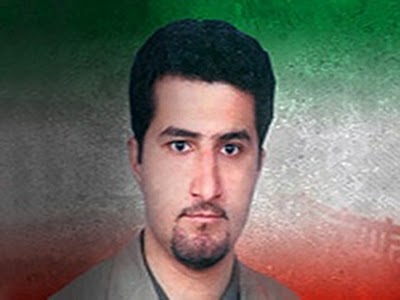
TEHRAN, Iran – Flashing a victory sign, an Iranian nuclear scientist who claims he was abducted and abused by U.S. agents a year ago returned Thursday to his homeland and into the heart of the latest crossfire between Washington and Tehran.

The conflicting accounts about Shahram Amiri — captive or defector who got cold feet — are unlikely to alter the Western-led pressure on Iran over its nuclear program.

But Iran’s leaders are expected to use Amiri to ring up as many propaganda points as possible against Washington — showing that relations remain in a deep freeze and hopes of breakthrough talks appear as distant as ever.

It also gives the ruling clerics a welcome distraction at a time when domestic protests are growing over Iran’s stumbling economy and worries about the fallout from international sanctions.

Amiri’s return “shows the strength of the Islamic republic,” boasted lawmaker Amir Taherkhani. Another prominent parliament member, Alaeddin Boroujerdi, called the alleged kidnapping a “terrorist act.”

But the Washington Post reported that the CIA paid Amiri $5 million to provide intelligence on Iran’s nuclear program. The Post in its online edition late Wednesday said the money came from a secret program aimed at inducing scientists and others with information on Iran’s nuclear program to defect.

U.S. officials also told the Post that Amiri should be unable to get to that money now that he’s returned to Iran, which is under financial sanctions.

It remains unclear how Iranian authorities will ultimately deal with Amiri — and the U.S. claims he cooperated with American authorities — despite his hero-style welcome.

Foreign Minister Manouchehr Mottaki called Amiri a “dear compatriot” and said Iran was keenly interested in learning more about the reasons for his alleged abduction.

Journalists were allowed to cover Amiri’s first steps back in Iran in a rare relaxation of media restrictions. The last such press gathering permitted at Tehran’s international airport was linked to another tussle with Washington: the May visit by the mothers of three jailed Americans arrested last year on the Iran-Iraq border.

Amiri’s pre-dawn arrival capped a stunning tumble of events over the past month that included leaked videos with mixed messages, Amiri surfacing at a diplomatic compound in Washington and the White House finally acknowledging his presence in the country.

The U.S. says he was a willing defector who changed his mind and decided to board a plane home from Washington. Amiri has told a very different tale, claiming he was snatched while on a pilgrimage in Saudi Arabia and bundled off to the United States to be harshly interrogated and offered millions of dollars by the CIA to speak against Iran.

Amiri was embraced by his family — including his tearful 7-year-old son — and greeted by a top envoy from Iran’s Foreign Ministry. The 32-year-old Amiri smiled and gave the V-for-victory sign.

Speaking to journalists after a flight via Qatar, Amiri repeated his earlier claims that he was snatched while in the Saudi holy city of Medina and carried off to the United States.

The first months were full of intense pressures, he alleged. “I was under the harshest mental and physical torture,” he said at the Tehran airport, with his young son sitting on his lap.

He also alleged that Israeli agents were present during the interrogations and that CIA officers offered him $50 million to remain in America. He gave no further details to back up the claims or shed any new light on his time in the United States, but promised to reveal more later.

“I have some documents proving that I’ve not been free in the United States and have always been under the control of armed agents of U.S. intelligence services,” Amiri told reporters.

Previously he claimed that CIA agents “pressured me to help with their propaganda against Iran,” he said, including offering him up to $10 million to talk to U.S. media and claim to have documents on a laptop against Iran. He said he refused to take the money.

Amiri refused to say how — if under guard — he could have escaped U.S. agents to release videos in which he alleges that he had been snatched by American and Saudi kidnap teams while on a pilgrimage in Saudi Arabia. He said that to disclose such information now could harm national security, and said he would explain everything later.

On Thursday, Amiri sought to play down his role in Iran’s nuclear program — which Washington and allies fear could be used to create atomic weapons. Iran says it only seeks energy-producing reactors.

“I am a simple researcher who was working in the university,” he said. “I’m not involved in any confidential jobs. I had no classified information.”

His case was often raised by Iranian officials in the past year, but Washington offered no public response. It took a higher profile after Iranian authorities decided to pursue charges against the three Americans arrested along the border with Iraq in July 2009.

Iran’s deputy foreign minister, Hassan Qashqavi, said there would be “no link” between Amiri’s return and the case of the three Americans, whose families say they were hiking in northern Iraq and that if they crossed the border, they did so inadvertently.

U.S. officials also have repeatedly asked Iran for information about Robert Levinson, a former FBI agent who disappeared in Iran in 2007.

Amiri was generally a footnote in the international showdown over Iran’s nuclear ambitions until last month. Iranian state TV aired a video he purportedly made from an Internet cafe in Tucson, Arizona, to claim he was taken captive by U.S. and Saudi “terror and kidnap teams.”

The video was shortly followed by another, professionally produced clip in which he said he was happily studying for a doctorate in the United States. In a third, shaky piece of video, Amiri claimed to have escaped from U.S. agents in Virginia and insisted the second video was “a complete lie” that the Americans put out.

U.S. officials never acknowledged he was on American soil until Tuesday, hours after he turned up at the Iranian interests section at the Pakistani Embassy in Washington asking to be sent home. Secretary of State Hillary Rodham Clinton said Amiri had been in the United States “of his own free will and he is free to go.”

On Thursday in Tehran, he asked American authorities to explain their secrecy.

“Why didn’t they allow me to have an open interview with the media in the United States?” he said. “Why didn’t they ever announce my presence?”

U.S. officials would say little about the circumstances of what they assert was a willing defection by Amiri and what went wrong. But there were suggestions that threats to his family in Iran pushed Amiri to first make the claims he was kidnapped. Amiri, however, claimed his family faced no problems. “My family was completely free and they were under financial support of the Iranian government,” he said.

“This Passport is valid for all the countries of the World, except Israel”

By Junaid Ghumman for Mideast Youth
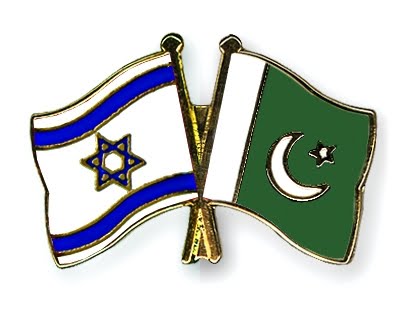
The world Zionist movement should not be neglectful of the dangers of Pakistan to it. And Pakistan now should be its first target, for this ideological State is a threat to our existence. And Pakistan, the whole of it, hates the Jews and loves the Arabs. This lover of the Arabs is more dangerous to us than the Arabs themselves. For that matter, it is most essential for the world Zionism that it should now take immediate steps against Pakistan.” Ben-Gurion, the Prime Minister of Israel.

This speech was first published in Jewish Chronicles on 9th August 1967. This statement risen many controversies bloggers like me have quoted it many times; various explanations were also given to disprove this statement, but still we read it on every article related to Pakistan and Israel.

Pakistan and Israel do share some history and ideology. These are only two countries in the world created in the name of Religion; Pakistan for Islam, Israel for Judaism and both countries have taken independence from same British Empire after World War II.

Then why my passport still says, “This Passport is valid for all the countries of the World, except Israel”?

Pakistan claimed its independence from foreign invaders after two centuries of struggle. In 1757 after Battle of Plessey, East India Company started ruling Indian Sub-continent. The first armed resistance was Battle of Independence in 1857 after which the power was transferred to British government. In 1885 the political movement of independence started as Indian National Congress. Some of the Muslim leaders soon separated and launched new movement in 1906 as All India Muslim League for separate Muslim state which led to the creation of independent Islamic state Pakistan on 14th August 1947, which then became Islamic Republic of Pakistan in 1973.

For Israel the timings was same and the rulers were also same as of Indian sub-continents, but events and circumstances were totally different. Israel declared its independence on 14th May 1948 from British Mandate of Palestine. But Israel independence movement was not against British Occupation; rather it was a movement of creating a Jewish State by silently invading the markets, trades and areas to make Jewish settlements. Hovevei Zion or Hibbat Zion refers to organizations that are considered the foundations of the modern Zionist movement. These movements led to creation of Rishon LeZion in 1882 which is the first Jewish settlement in Palestine; which was at that time under Ottoman Empire. First Zionist Congress held in 1897 started the unified Zionist Movement which was converted to World Zionist Organization in 1960. This movement was successful in legalizing its demand of separate Jewish state in Palestine after Balfour Declaration 1917, in which British Mandate of Palestine’s (1917 – 1948) foreign Secretary Arthur James Balfour wrote letter to the leader of British Jewish Community Baron Rothschild, pledging British Empire support of creation of Jewish State in Palestinian Land.

So what kind of relationship does Pakistan and Israel has over period of 60 years?

While writing this blog I also tried to ask couple Pakistanis; their view points about Pakistan-Israel Relationship. Yousaf is Pakistani Engineer living and working in Saudi Arabia. Being in the region, Pakistanis here are emotionally and regionally attached to Middle East crisis. I asked him what kind of relationship both countries have. “Relationship between Pakistan and Israel are tied to the fact that how Israel government treats the Palestinians. In general, as Jerusalem is considered as one of the holiest places in Islam; this fact serves as a thorn in the eyes of Pakistanis.” Yousaf said.

Pakistan is among those 20 UN member nations which do not recognize Israel as an independent state. These 20 countries also include Afghanistan, Algeria, Bahrain, Bangladesh, Chad, Cuba, Indonesia, Iran, Iraq, Kuwait, Lebanon, Libya, Malaysia, North Korea, Saudi Arabia, Sudan, Syria, United Arab Emirates and Yemen. Unofficial media reports say that first Prime Minister of Israel David Ben-Gurion send secret message to Muhammad Ali Jinnah to formally accept its existence, but no response was given back to him. At the time of independence of Pakistan, it was reported that some 2,000 Jews remained in Pakistan, mostly Bene Yisrale Jews. Many left to Israel after its declaration of independence. Jews from Karachi, Pakistan, now live in Ramla, Israel, and they also built a synagogue they named Magen Shalome after the Pakistani Synagogue which was demolished in 1980.

60s, 70s and beginning of 80s were the decades when for the first time both countries came face to face when Arab-Israel war started. In “Six-day Arab Israeli War” of 1967; Royal Jordanian Air Force (RJAF) and Pakistan Air Force (PAF) were flying under a joint command. PAF pilot Flt. Lt. Saiful Azam became the only pilot from the Arab side to have shot down 3 IDF/AF aircraft within 72 hours.

In 1973 Arab-Israeli Yom Kippur War, 16 PAF pilots volunteered to support Syria and Egypt. On 23 October 1973 Flt. Lt. M. Hatif shot down the Israeli Phantom. On 26 April 1974, PAF pilot Flt. Lt. A. Sattar Alvi became the first Pakistani pilot, during the Yom Kippur War; to shoot down an Israeli Mirage in air combat. He was honoured by the Syrian government. Nur Khan, who was the Wing Commander received praised from Israeli President Ezer Weizman who wrote in his autobiography that: “He was a formidable fellow and I was glad that he was Pakistani and not Egyptian”. Pakistan also sent medical ambulances to Egypt and Syria.

After the Israeli attack on Iraq’s under-construction French-built nuclear Osirak-type reactor, Tammuz-I, south of Baghdad on 7 June 1981, Pakistan’s then President President Zia-ul-Haq directed PAF Air Headquarters (AHQ) to make contingency plans for a possible Israeli attack on Kahuta. Kahuta is noted for its nuclear research studies and nuclear development technologies in Kahuta Research Laboratories. On 10 July 1982, a special contingency plan was issued. In the event of an Israeli attack on Pakistan’s strategic installations, plans were drawn up for a retaliatory Pakistani strike on Negev Nuclear Research Centre. The Negev Nuclear Research Centre is an Israeli nuclear installation located in the Negev desert, about thirteen kilometres to the south-east of the city of Dimona.

On political level many statements were given. As chair of the Second Islamic Summit in 1974, then Pakistan’s Prime Minister Zulfiqar Ali Bhutto said: “To Jews as Jews we bear no malice; to Jews as Zionists, intoxicated with their militarism and reeking with technological arrogance, we refuse to be hospitable.”

In of his speeches in National Assembly of Pakistan, before Zulfiqar Ali Bhutto was hanged in 1979, he said, “Mr. Speaker Sir! This is not Desi (local) conspiracy, it’s an international conspiracy. Let me make it quite clear for the history, whatever the future and fate of this individual will be; that doesn’t matter, but let me tell you again this is not a desi (local) conspiracy, this is not PNA conspiracy, this is massive, huge and colossal international conspiracy against the Islamic State of Pakistan.” (PNA was Pakistan National Alliance against the ruling Pakistan Peoples Party). Nowadays people like to refer this international controversy as Zionist or Israeli Conspiracy.

A controversial book was published in 2003, named Charlie’s Wilson war which conspire about use of Israeli weapons supplied to General Zia ul Haq to fight Soviets in Afghanistan (1979 – 1989). Famous Hollywood movie Charlie’s Wilson War was also released in 2007. After that the back door politics started between Pakistan and Israel.

The President of Pakistan General Zia ul Haq was assassinated in plane crash on 17 August 1988. Among the conspiracy theories; Mossad (Israeli Intelligence Agency) involvement is also believed to exist. In the fall 2005 World Policy Journal, John Gunther Dean, a former US ambassador to India, blamed the Mossad for orchestrating Zia’s assassination in retaliation for Pakistan developing a nuclear weapon to counteract India and Israel.

Ali is my friend living in Middle East. I asked him, can there ever be any friendship or peace between Pakistan and Israel, to which he replied, “Yes there can be, Israel is a small country with a group of people belonging to a group of faith. And also it is in its interest that it should be at peace with every country, and especially those countries that it feels can threaten its existence.”

It is believed that, at the time of Benazir Bhutto’s Government both countries had very strong relationship especially in countering terrorism. In 1993 Benazir Bhutto, along with her then-Director-General of Military Operations, Pervez Musharraf, intensified the ISI’s liaison with Mossad in 1993, and she too began to cultivate the American Jewish lobby. Bhutto is said to have had a secret meeting in New York with a senior Israeli diplomat, who flew to the U.S. during her visit to Washington, D.C. in 1995.

In 1996, Pakistan’s Intelligence Agency, FIA, started a secret war against Extremist in Pakistan under Rehman Malik. According to sources, FIA also contacted Israeli intelligence agency Mossad to help and send its officers to investigate the extremism. Even after these strong ties, controversies never left the scenario. Benazir Bhutto was assassinated on 27 December 2007 in one political rally. This was considered to be typical Mossad Assassination style. It is believed that she was the one knowing the reality of 9/11 being inside job and death of Osama Bin Laden, which she also publicly stated in David Frost TV program. That program was edited before telecasting. But Jewish Journals and Media still believed in the opposite way. According to Jewish media, Miss Bhutto asked for Mossad help to protect her on her return to Pakistan as she was afraid she will be killed.

In 1998 Pakistan and Israel were again on the verge of war. On 27 May 1998, day before Pakistan conducted its nuclear test in Chaghi, Southern Province of Baluchistan, Pakistan; unidentified F-16 was found hovering around skies on border areas of Pakistan. Pakistan Air Force; taking is as repetition of Israeli Conspiracy similar to 1981, Air Bourne its fighters to foil any attack. But Pakistan and Israeli UN delegation met in UN soon after Pakistan Nuclear tests in 1998 to give assurance that Pakistan will not transfer its technologies to Iran, the arch enemy of Israel.

Musharraf’s nine years of rule was also golden times for both countries. In 2003, General Pervaiz Musharraf said on television interview, “Mainly Muslim Pakistan must seriously take up the issue of recognizing Israel and avoid dealing with it on emotional grounds”. This statement gave birth to local opposition, esp. among Religious Parties in Pakistan. “Jerusalem is not just an Arab issue, it is linked to the faith of every Muslim” said Qazi Hussain Ahmed, chief of Jamaat-i-Islami Pakistan, the largest and oldest religious political party. “Presenting Palestine as a sole Arab issue is a heinous conspiracy of the imperialists and colonists aimed at disintegrating the Muslims and shattering the concept of Muslim unity. It is for the same reason the colonist forces are trying to portray every Muslim issue as regional or bilateral” said Qazi.

In 2005 Pakistani Foreign Minister Khurshid Kasuri and his Israeli counterpart Silvan Shalom met in Istanbul after Israel withdrew its forces from Gaza, Palestine hoping to start peace talks. However, following the meeting Musharraf said, “Pakistan will not recognize the state of Israel until an independent Palestinian state is established”.

An unofficial Pakistan-Israel Peace Forum was created the next day of the meeting. It was created by 3 friends Waleed Ziad (Pakistan), Dror Topf (Israel), and Michael Berenhaus (US), all currently based in Washington, DC. This forum was an unsuccessful attempt to lobby in UN, US, Israel and Pakistani political establishments, hoping that Pakistani might accept Israel as independent legal state.

Pakistan and Israel are also secretly involved in Weapons and Arms Development Race. Close ties between India and Israel, and arms business between them forces Pakistan to keep an eye on Israel’s weapons industry. Like for example; Pakistan Ordinance Factory (POF) developed POF Eye Gun and exhibited in 2008 to counter the Israeli made Cornershot Rifle which is also known as Jews Gun in Arab World.

Shall Pakistan recognize Israel as an independent state to which Yousaf and Ali shared the same answer, “Pakistan should only consider recognizing Israel if it gives an independent state to the Palestinians with Jerusalem at its capital. And completely cut off itself from the internal affairs of that state, only then Pakistan should even start to consider recognizing them.”

I thought why not to ask some of Palestinians who have been living in exile for almost six decades. Abdul-Rahman is originally from Nabulus, West Bank and Qasim is from Gaza. I asked them what role Pakistan can play any role in solving Middle East Crisis, to which Abdul Rahman replied, “May be or may be not. Pakistan has its own problems with India, in Kashmir and in Afghanistan.” And Qasim said, “Pakistan cannot play any role especially with the current government which is only thinking of business but not Islam or Muslims.” Which actually hit me hard but truth is truth. On inquiring the Pakistan’s nuclear threat to Israel, Abdul Rahman said, “Israelis are even scared of stones so obviously Israel want end to Pakistan’s Nuclear technology, the Islamic Bomb.” But Qasim stuck to his same point, “If Pakistani government wants it can use nuclear technology against Israel, not in war or something but also to play politics.” Then in the end I asked, shall Pakistan Recognize Israel as independent country. Both of them came up with different and interesting answers. Abdul Rahman said, “There is should be a procedure of acceptance. Israel should balance the power and control of every city between themselves and Palestinians, then Pakistan can recognize Israel.” Whereas Qasim said, “Pakistan should recognize Israel. Sitting outside and ending any communication will not resolve the Middle East problem. We need to enter the region to solve the problem and if Pakistan wants it can do that by taking first step of recognizing Israel.”

It was interesting journey going through all the historic events which Pakistan and Israel share and knowing different ideas and opinions. All these events which I have mentioned above, cannot be confirmed from any credible or authentic source as all this happened back stage, behind the camera. But whatever governments’ relationship may be it is true that people of Pakistan still want to call every conspiracy as Zionist conspiracy and this will keep on going until some peaceful solution is devised to Middle East crisis between Muslim Palestinians and Jewish Israelis
Two Die in Gunfire at India-Pakistan Border

By Augustine Anthony for Reuters

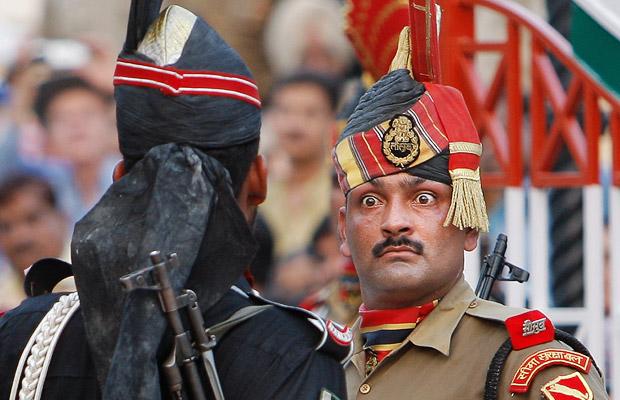
An exchange of fire at the Indian-Pakistan border near Pakistan’s Punjab province has killed two Indian troops and wounded a Pakistani soldier and several villagers, officials said Wednesday.

The neighbours have in the past exchanged almost daily fire across what is known as the Line of Control separating the two armies in Kashmir, but the latest incident occurred in the Sialkot sector of Pakistan which rarely experiences trouble.

A spokesman for the Pakistan Rangers said Indian border security forces fired automatic weapons and mortars at a village along the Sialkot working boundary, north of the Pakistani city of Lahore.

“First they fired yesterday morning and then again in the evening and the firing continued sporadically throughout the night until Wednesday morning,” said Nadeem Raza.

“One of our soldiers and several villagers have been wounded in the Indian firing.” A senior Indian border official confirmed the incident but said Indian forces retaliated for “unprovoked firing” from the Pakistani side.

“We were facing unprovoked firing from the Pakistani side for the last two days, resulting in the death of two of our men. We were forced to retaliate,” said K. Srinivasan. “The firing was precise, but at this stage we cannot say for sure who fired at us.”

The flare-up comes ahead of Indian Foreign Minister S.M. Krishna’s trip to Pakistan next week to meet with his counterpart in a renewed bid to normalise ties.

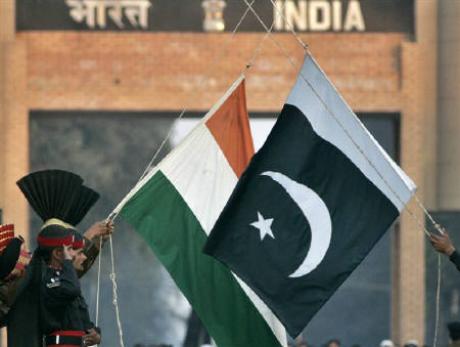
Relations between the nuclear-armed neighbours, who have fought three wars since 1947, were frozen when Pakistan-based militants attacked the Indian city of Mumbai in 2008, killing 166 people.

A late 2003 cease-fire between the two sides across the cease-fire line in Kashmir has largely held although there have been several exchanges of fire over the past year. Raza said Pakistani forces returned fire after Indian forces “did not respond to the call for a flag-meeting” and continued firing.

The Director General of Pakistan Rangers in Punjab, Major General Yaqub Khan, said a protest had been lodged with Indian forces. “In future, a strong reply will be given by Rangers and loss of civilian lives and property will not be tolerated at any cost,” he was quoted as saying in a statement issued after visiting the area.

This was the third violation of a cease-fire in that area in the last two weeks, according to the statement. India has long accused Pakistan of backing militants fighting Indian security forces in the Himalayan region of Kashmir.

Pakistan supports what it calls a freedom struggle by the people of Kashmir against what it sees as the brutal and illegitimate Indian occupation of the region. But it denies arming the guerrillas, who have been fighting Indian forces since 1989.

China, Pakistan Reach Nuclear Energy Deal

As reported by United Press International

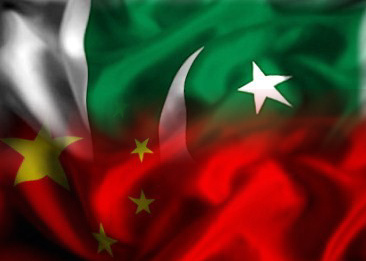
The Pakistani government has finalized a deal with China to build two new nuclear power plants in the country, the Pakistani foreign minister said.

Pakistani Foreign Minister Mehmood Qureshi said Pakistan was working with its Chinese counterparts on more than 120 different projects, including two nuclear power facilities in Pakistan, the Associated Press of Pakistan reports.

Despite concerns over the proliferation of nuclear material, the foreign minister said his country was moving ahead with its nuclear activity in line with international expectations

“We have no objections on inspections by the International Atomic Energy Agency because we are proceeding ahead in a transparent manner,” he said. Pakistan is facing a looming energy crisis that is creating rolling blackouts in parts of the country.

The energy deal comes as Pakistani President Asif Ali Zardari accepted the credentials of Liu Jian, the new Chinese envoy to Islamabad. Zardari said trade relations with China fell well short of their potential.

“Strengthening and enhancing cooperation with China in all sectors is one of the key principles guiding Pakistan’s foreign policy,” said the Pakistani president.

At Talks, Pakistan, India Close the Gap

By Anita Joshua for The Hindu

Conscious of the historical baggage, but unwilling to be burdened by it, India and Pakistan on Thursday inched closer to each other during the Foreign Secretary-level talks here and both sides held out the possibility of some tangible outcome after the July 15 ministerial engagement.

However, both Foreign Secretaries refused to be drawn into chalking out a road map or identifying goal posts. “There is a constituency for peace in both countries, and we should avoid stock phrases like road map,” Foreign Secretary Nirupama Rao said at a “joint press stakeout” here, shortly after spending a greater part of the morning with her Pakistan counterpart Salman Bashir.

The talks, according to Mr. Bashir, began as an exploratory venture, but “after this round, we are much more optimistic of good prospects at the Foreign Ministers meeting.” He summed up the talks as a “good essay in mutual comprehension,” a phrase he admitted to have borrowed from Ms. Rao.

Optimism apart, both conceded that this would be a protracted process that may not yield quick results, but decided to work on the doables in the interim. As to how they proposed to insulate the process from another freeze in relations in the eventuality of a flashpoint, Ms. Rao said this would also be a subject of discussion.

The first indication of some forward movement came with the announcement of the “joint press stakeout” soon after the talks had wound up, and the Foreign Secretaries were breaking bread in the Foreign Office.

In his opening remarks, Mr. Bashir said the two sides decided to work towards restoring confidence and building trust to make it possible for a comprehensive, sustained and substantial dialogue.

Speaking in a similar vein, Ms. Rao described the talks as forward-looking with both sides trying to understand each other’s position. “We reflected on the modalities for restoring trust and confidence to pave the way for a comprehensive, sustained and meaningful dialogue in all areas. We have agreed that dialogue is the best way forward.”

Asked whether terrorism was discussed, she said both sides agreed that terrorists must be denied the opportunity to derail the process of dialogue while pointing out that Pakistan Prime Minister Yusuf Raza Gilani had made an important commitment when he told his counterpart that efforts would be made to ensure that the Pakistani soil was not used for attacks on India.

Unlike in the past, when the two countries appeared to be speaking at cross purposes, this time the Foreign Secretaries seemed to complement each other.

If Ms. Rao deftly side-stepped a leading question on India’s reluctance to continue with composite dialogue by saying there was no issue over nomenclature, Mr. Bashir returned the favour by echoing this remark and refusing to be drawn into commenting on why Pakistan was not raising the issue of Indian-sponsored terrorism in Balochistan.

Instead, he broad-brushed the issue, stating that terrorism impacted Pakistan and was a concern to the region and the world. “Essentially, we have agreed to move from the rhetoric to the ways and means of addressing these concerns,” he said.

India, Pakistan And U.S. Strategic Dialogue

By Apoorva Shah for The American Enterprise Institute

At this week’s first U.S.-India Strategic Dialogue in Washington, D.C., talks between the two countries will cover the spectrum of bilateral and multilateral issues, from trade and economic cooperation to terrorism and regional security. 

American participants may even feel the need to bring up India’s strained relationship with Pakistan. But it would serve them well to first consider a Times of India story from earlier this year, which went almost unreported in the United States.

According to an interview in the Indian newspaper with former Pakistani foreign minister Khurshid Mahmud Kasuri, India and Pakistan in 2007 were days away from reaching a comprehensive accord on their territorial dispute over Kashmir, the axis of the countries’ six-decade-long rivalry and casus belli of three wars between the two nations.

Kasuri, Pakistani leader General Pervez Musharraf’s chief diplomat from 2002 to 2007, said in April that the secret deal had been in progress for more than three years and would have led to a full demilitarization of both Indian- and Pakistani-occupied areas of Kashmir and would have awarded the region a package of loose sovereignty at a point “between complete independence and autonomy.” Not only were Indian and Pakistani leaders on board (including, most importantly, the Pakistani military), so was every Kashmiri leader except for one hard-line separatist, Syed Ali Shah Gilani.

The accord was slated to be signed during Indian Prime Minister Manmohan Singh’s scheduled visit to Islamabad in February and March of 2007, but before the trip ever occurred, a country-wide lawyers’ protest in Pakistan had turned into a broader opposition campaign against General Musharraf. The rest of the year would be one of the most tumultuous in Pakistan’s history, marked by the siege of the Red Mosque in July, the return of former Prime Minister Benazir Bhutto in October and her subsequent assassination in December, and the return of popular leader Nawaz Sharif from exile in September.

By August of the following year, public opposition had peaked, and Musharraf was forced to resign his post as president, ending his decade-long tenure as leader of Pakistan. After Musharraf’s ouster, it appears that the deal had lost much of its momentum.

Then in November, the accord suffered another setback as ten Lashkar-e-Taiba terrorists took India’s largest city, Mumbai, hostage for almost 72 hours, killing more than 160 people and injuring scores more. The attack was quickly coined “India’s 9/11,” and the evidence pointed directly to Pakistan, where the gunmen had been trained and equipped.

In protest, India cut off all diplomatic talks with Pakistan almost immediately; there were even rumors that the country was preparing military action against its northern neighbor. Within a span of less than two years, the India-Pakistan relationship had traveled the spectrum from apparent rapprochement and compromise to mutual suspicion and renewed hostility.

Since then, the signs have only appeared to worsen: for example, in 2009, when Indian Army chief General Deepak Kapoor publicly introduced revisions to his country’s “cold start” military strategy.

This military modernization and training program, which was developed in response to the army’s sluggish mobilization to the Pakistani border following the December 2001 terrorist attacks on the Indian parliament, remained mostly under the radar for most of the early 2000s, relegated to defense journals and the occasional news article.

It was only following the 2008 attacks that “cold start” began to receive renewed attention from the media on both sides of the border and was more publicly discussed by Indian military officials like General Kapoor. Indeed, it appeared as if the next breakthrough in Indo-Pak relations would occur through hard rather than soft power.

Concomitantly, India and Pakistan’s post-Mumbai attempts to return to diplomatic talks also appeared fraught with danger and seemed to only fuel more discord rather than reconciliation.

In February this year, Indian Foreign Secretary Nirupama Rao and her Pakistani counterpart Salman Bashir resumed high-level talks for the first time since November 2008, but both sides appeared unprepared (they could not even agree on the specific subject of the talks prior to sitting down) and spent more time bickering through separate press conferences.

For example, while Bashir accused India of covertly supplying weapons to militants in Pakistan’s Balochistan province, Rao complained that Pakistan had “not gone far enough” in the 2008 Mumbai attack investigation. As India presented a dossier of evidence against one of the Mumbai attack perpetrators, Pakistan responded by calling it a “piece of literature not a dossier.”

It’s hard to see how any progress could be made on improving Indo-Pakistani relations in the midst of this hostility. But does Kasuri’s revelation provide hope that a resolution on Kashmir could be revived? First, excepting Musharraf and Kasuri, many of the supporters of the failed 2007 accord—including Pakistani Army Chief of Staff Ashfaq Kayani, Pakistan’s current track II special negotiator Riaz Mohammed Khan, and, on the Indian side, Prime Minister Singh—still hold high-level positions in their respective governments.

And second, the secrecy of the original deal shows that outward indifference, or even enmity, between the two countries can belie an internal desire for change. In a relationship where hostility is status quo and where amicable relations seem aberrant if not bizarre, a furtive accord lets ruling elites make slow, institutional changes in the relationship while preserving outward form and precedent. It also allows deal-makers to keep tempestuous domestic politicians and party leaders at arms length while deliberating sensitive issues.

Even India’s traditionally hyperactive media seems to understand: A subsequent editorial in the Times of India noted, “the fact that such a deal exists emphasizes the importance of maintaining contact with Islamabad.”

So what can we expect in the months ahead? Indian officials will undoubtedly continue to pressure Pakistan to confront Lashkar-e-Taiba and other terrorist groups that plan to attack India, and another attack could indeed result in Indian military action. There will also be more bickering between the sides—on water rights, “most-favored-nation” clauses, and even cricket.

Yet the revelation of the secret deal should be both a lesson and a sign of hope. It is a lesson because it proves that progress on an entrenched conflict like Kashmir can occur without the United States’ public mediation.

American officials at the U.S.-India Strategic Dialogue this week should keep in mind that the accord was pursued during the final years of the Bush administration, in which the United States made it a point to separate the U.S.-India relationship from the more sensitive Indo-Pak relationship.

It is a sign of hope because, despite the outward appearance of discord between the countries, internally, leaders on both sides have—at least at some point in recent memory—wanted to move forward on a resolution.

As Pakistan continues its domestic offensive against terrorists and India pursues closer economic engagement with its northern neighbor, wanting change may be the best sign that change is on the way.

India and Pakistan’s Leaders Meet

As reported by BBC.com

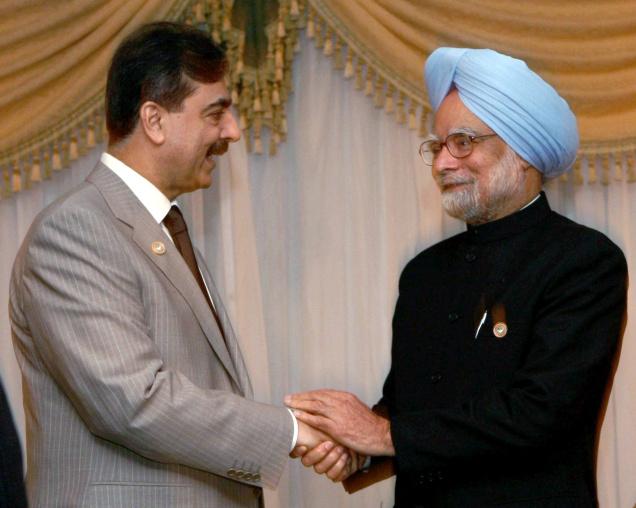
Pakistan PM Yousuf Raza Gilani spoke to his Indian counterpart Manmohan Singh at a reception hosted by the US President Barack Obama, reports said. The prime ministers of India and Pakistan met briefly during a nuclear summit attended by 47 world leaders in Washington DC.

A Pakistani embassy spokesman said it was “not a formal meeting”. cIt comes a day after Mr Singh told Mr Obama that Pakistan’s government lacked the will to punish those responsible for the Mumbai attacks. The November 2008 attacks left 174 people dead, including nine gunmen, and soured ties between India and Pakistan. Late last year, Pakistan charged seven people in connection with the attacks.

They include the suspected mastermind Zaki-ur-Rehman Lakhvi, who is allegedly the leader of the Pakistan-based militant group Lashkar-e-Taiba. Mr Singh and Mr Gilani spoke to each other at a reception hosted by Mr Obama, Pakistani embassy spokesman Nadeem Kiani said.

“Both leaders were present at the same place and so they shook hands and talked,” he said. A spokesman for India’s foreign ministry, Vishnu Prakash, told The Hindu newspaper that the two leaders “exchanged pleasantries”.
‘State elements’

India put peace talks on hold after the attacks, blaming them on Pakistan-based militants. Pakistan admitted they had been partly planned on its soil. India has also suggested what it calls “state elements” were involved. Both Pakistan and Lashkar-e-Taiba have denied any involvement.

In February, the two sides held their first formal talks since the 2008 attacks and agreed to “remain in touch”. Leaders from 40 states are attending the meeting in Washington which is expected to focus on how to secure nuclear material.

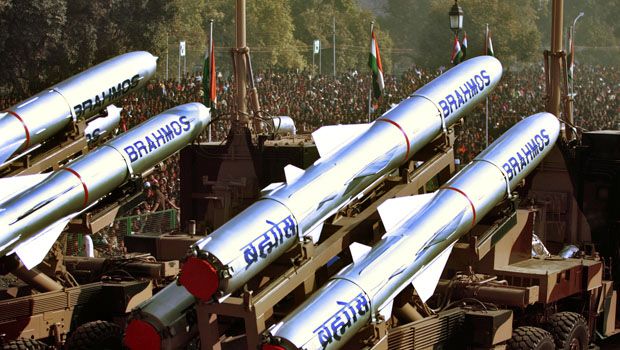
India Becomes Only Country In the World To Possess Maneuverable Supersonic Missiles

By DEUTSCHE PRESSE-AGENTUR  for ArabNews.com


NEW DELHI: India successfully tested Sunday a “maneuverable” version of the BrahMos supersonic cruise missile which it has jointly developed with Russia, news reports said.

The vertical-launch version of the 290-kilometer range BrahMos was tested from a warship in the Bay of Bengal off India’s eastern coast, the PTI news agency reported. “The vertical-launch version of missile was launched at 11:30 (0600 GMT) hours today from Indian Navy ship INS Ranvir and it manoeuvred successfully hitting the target ship. It was a perfect hit and a perfect mission,” BrahMos aerospace chief A Sivathanu Pillai was quoted as saying. ”

After today’s test, India has become the first and only country in the world to have a maneuverable supersonic cruise missile in its inventory,” Pillai said.

Named after India’s Brahmaputra and Russia’s Moskva rivers, the BrahMos can carry a 200-kilogram conventional warhead. Variants of the missile fitted with inclined launchers are already in service with the Indian Navy, NDTV news channel quoted defense sources as saying. Sunday’s firing was part of pre-induction tests for the vertical launcher variant, the sources said. The BrahMos has also been inducted into the India Army and preparations are on to develop air-launched and the submarine- launched versions, the sources said.

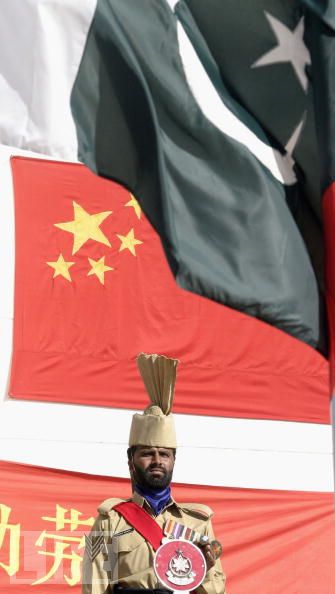
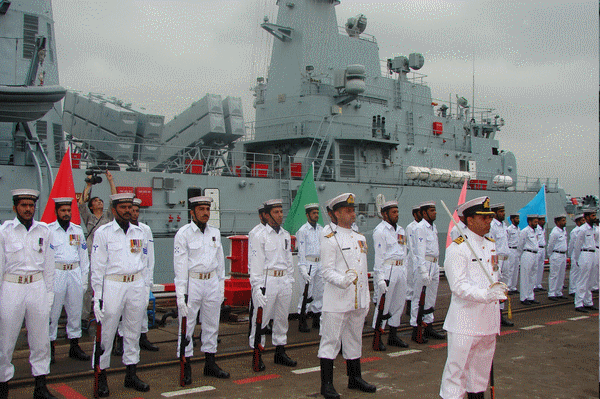
Pakistan and China increase military spending and cooperation as India shows concern

Beijing, China- A senior Chinese defense official has justified Chinese sales of warships and submarines to Pakistan on the grounds that Russia and the United States were selling similar systems to India.

The defense official also indicated that China was aware of the fact that India may not be happy with its deal with Pakistan. “The initiative may invite concerns from its neighboring countries. But the doubts are unnecessary,” Zhai Dequan, deputy director of China Arms Control and Disarmament Association , was quoted as saying by the official media.

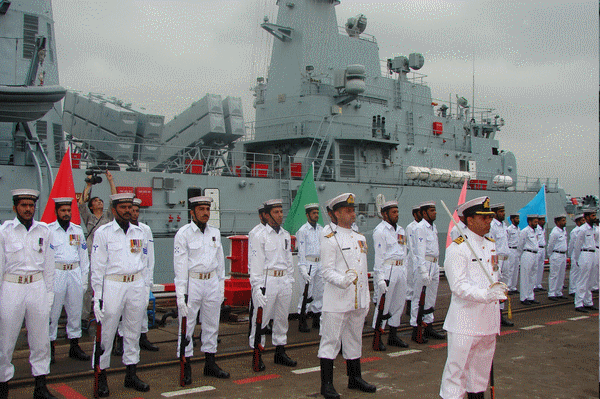
Pakistan’s chief of naval staff, Norman Bashir, also made a push to persuade China to sell higher capacity ships compared to the F22P frigates that China began delivering in June.  Chinese official Zhai said that Pakistan’s   desire for higher capacity ships is normal for an independent nation seeking to bolster its security. “India has also entered into deals for military hardware from the Unites States and Russia. India’s aircraft carrier has already cost it billions of dollars”, said Zhai.

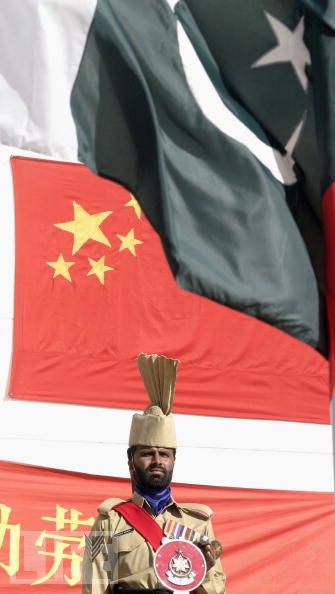
Bashir also met with the Chinese defense minister, Liang Guanglie, and discussed with him Pakistan’s needs in terms of modernizing their armed forces to try and keep up with the torrid pace of rival India’s defense spending. “The Chinese armed forces would like to improve friendly and cooperative relations with the Pakistani armed forces,” defense minister Liang Guangile said, according to China’s state-run Xinhua press agency.” China attached great importance to its traditional friendship with Pakistan, Liang said, adding that the two countries had conducted comprehensive and multi-level military exchanges and cooperation in various areas.”

“The Pakistani armed forces and people cherished their friendship with the Chinese armed forces and people”, Noman Bashir said, noting that “Pakistan would like to work with China to promote the comprehensive and cooperative partnership.” Bashir also stated that Pakistan was keen on buying bigger ships and more JF-17 fighter planes from China in addition to submarines and that Pakistan will be buying more weapons from China, including missiles. 

“These growing military ties between China and Pakistan are a serious concern to India,” stated Defense Minister A K Antony. India worries about China’s rising influence in South Asia and the Indian Ocean region, a neighborhood traditionally considered as its sphere of influence.

India’s relations with Pakistan, never easy after three wars since 1947, went downhill fast after last November’s Mumbai attacks blamed on Pakistani originated militants. Meanwhile, Chinese and Pakistani cooperation on military and economic projects has increased in the last few years. “The increasing nexus between China and Pakistan in military sphere remains an area of serious concern,” Antony said in a speech. “We have to carry out continuous appraisals of Chinese military capabilities and shape our responses accordingly. At the same time, we need to be vigilant at all times.” Tensions between India and China, who fought a brief war in 1962, flared again in recent months, especially with the re-emergence of a long-standing border dispute made worse by a visit by the Dalai Lama, the Tibetan spiritual leader, to Indian territory claimed by Beijing.

India increased defense spending by 24% for this year’s budget to $28.4 billion a year dwarfing Pakistan’s budget of $4.2 billion for the same period. Meanwhile, China and India are together set to make Asia the highest regional spender on defense in the next seven years replacing North America as their economies continue to fund their weapons appetite.

Pakistan cannot compete with the likes of India and China militarily. Just as Taiwan could not compete with China militarily, but went on to become an economic powerhouse and used its influence economically,  so too must Pakistan focus on growing its economy rather than growing militarily. Even though Pakistan possesses the nuclear bomb, and that very well may end up being a strong deterrent against India in the likelihood of a war, it still is loathe to use it, for the consequences from India would be similar and far worse due to their increased warheads and military might.

Also, although Pakistan’s military and previous leadership have articulated the right to a preemptive nuclear strike or a nuclear first use option in the event of hostilities with India, this choice is often seen as a losing option by the military due to the aftermath of a nuclear exchange between the two countries. India’s budget and its technological advancements make it impossible for Pakistan to ever win a conventional war with India. And a nuclear exchange between these two neighbors will leave neither side feeling as the winner.  

Pakistan’s most beneficial strategy must consist of directing its full armed forces against the Taliban and militant groups within its territory and re-engaging India back to the peace table in hopes of resolving the long disputed Kashmir region because war with India will certainly not leave Pakistan the victor. However a peace treaty can open the long border between India and Pakistan for trade, goods, ideas, money and people to move freely across the border and allowing much needed investments and flow of technology to Pakistan that will go a long ways in helping the country and its people catch up with the rest of the world.

Reported by Manzer Munir for www.PakistanisforPeace.com

Lone Surviving Mumbai Attacker Pleads Guilty

Mumbai, India- The only surviving gunman from last year’s Mumbai attacks in India’s financial and entertainment capital which killed at least 173 people and wounded more than 300, pleaded guilty today in an Indian court. The confession of guilt from Pakistani citizen Mohammad Ajmal Kasab, 21 years of age, took many in the court by surprise including the lead prosecutor, Ujjwal Nikam.

“He pleaded guilty in court today “a senior police officer told the Associated Press reporter. “He has confessed to his role and the fact that he was involved in the attacks that killed so many people during the attacks. He admitted to both being a part of the planning as well as the execution of the attacks”, stated the officer who was present in court.

Kasab, had earlier pleaded not guilty in May prior to the start of the trial, now faces a  possible death sentence as the court can proceed to the sentencing portion rather than continue with the trial in bringing about a guilty verdict.  During a routine interrogation of the witnesses in his trial, Kasab got up and told the court he had something to say and proceeded to confess his involvement in the attacks.  He also admitted that the closed-circuit video was of him, and he narrated the entire of sequence of events in detail to corroborate his involvement in the crime.

Analysts believe the guilty plea will help Pakistan’s President Asif Ali Zardari’s stance that the country must confront the truth about its militant ties and organizations that operate within its borders. Zardari himself is a victim of such terrorist attacks as his wife, the former Prime Minister Benazir Bhutto too was killed by suspected militants in December of 2007 while campaigning for office and running on a platform of wiping out the militant threat inside Pakistan.

This admission of guilt on the part of Kasab also should allow Pakistan to press the individuals in its custody that are believed to have been a part of Kasab’s network to be brought to justice as well. One hopes that Pakistan is able to secure guilty pleas against the individuals in its custody and brings some justice to the hundreds of families who have lost loved ones or who were seriously injured by the cowardly attackers preying on innocent civilians. A just and fair trial with guilty pleas and full cooperation is needed on the part of the Pakistani government before India would agree to move ahead with the now stalled peace process between the two nuclear armed hostile nations.

 by Manzer Munir for www.PakistanisforPeace.com

India and Pakistan to discuss relations at NAM meeting in Egypt

Sharm El-Sheikh, Egypt- The prime ministers of India and Pakistan are scheduled to meet on the sidelines of the Non-Aligned Movement Summit (NAM) in Egypt this week inviting hopes of a resumption of peace talks between the two nuclear armed neighbors.

The NAM consists of 118 member countries of developing countries from Afghanistan to Zimbabwe and make up almost 60% of the world population.  NAM countries consider themselves not formally aligned with or against any major country or power bloc such as NATO.

The importance of this meeting between the Indian Prime Minister Manmohan Singh and Pakistani PM Yousuf Raza Gilani is that this is only the second high level meeting between the Indian and Pakistani leaders since the Mumbai attacks of November 2008.  At least 173 people were killed and more than 300 wounded by terrorist attacks blamed on Pakistan based militant group Lashkar-e-Taiba.

Since the attacks, the relations between India and Pakistan worsened dramatically as India demanded Pakistan take action against the responsible parties. This week Pakistan announced that it will “probably” put the five accused attackers in its custody on trial next week. This is welcome news for the Indian government which has predictably  tied any improvement in relations with Pakistan on the prosecution of the accused for the attacks as well as curbing of violence on Indian soil from the Pakistan based militants.

Unfortunately, Pakistan has its hands full on its own soil when it comes to stopping the militants let alone preventing violence from groups inside its terroritory from carrying out attacks in India. But a willingness to fully prosecute any individuals or groups apprehended as well as dismantling the infrastructure of these organizations will go a long way in showing good faith to India in resuming a comprehensive peace agreement with its fellow nuclear armed neighbor.  Similarly India must be willing to consider Pakistan’s disputes with India over Kashmir from all sides and be able to negotiate a lasting and long term peace deal that is so desperately needed in the most dangerous neighborhood of the world and one that has been elusive for over 60 years.


Reported by Manzer Munir for http://www.PakistanisforPeace.com

US Intelligence Report: Pakistan in Danger of Becoming an Islamist State run by the Taliban and Warlords


Islamabad, Pakistan- There is growing concern in intelligence circles in the US that the Taliban in Pakistan are determined to make Pakistan an Islamist state controlled by warlords and terrorists and little or no central government authority or power to stop them.


Their strategy had its beginnings in the alarming success of the Taliban in gaining concessions from the authorities in the Swat valley this winter after fighting the Pakistan army to a standstill and getting the government to agree to instituting Islamic Shariah law in the valley and in parts of the NWFP province.


US intelligence officials believe that it is just a matter of time in as little as 10 years the the growing influence of the Taliban will overrun all the rural towns and communities and the government and the army will be relegated to city centers across the country with large swaths of land and power in the hands of the Taliban and other militant groups aligned with them and Al-Qaeda hell bent on instituting a new Islamic order throughout the country.


This scenario presents a very troubling outcome for Pakistanis, Pakistan’s immediate neighbors and the world at large. Pakistan is not a small undeveloped country torn by three decades of war like Afghanistan with only 3 million of its 30 million people living in Kabul and the rest spread out all over the country. Or like Iraq, another country of nearly 30 million people that also has experienced its share of turmoil the last 6 years.


Instead, Pakistan is the sixth most populous country in the world with over 170 million people living in major cities like Lahore (population 11 million) and Karachi the twentieth largest city in the world with a population of nearly 20 million people. With at least 100 nuclear weapons, several dozen highly organized and heavily armed militant groups, a weak and getting weaker by the day central government, abject poverty and high unemployment mixed in with rampant corruption and lawlessness, the country is ripe for a revolution. The Taliban have stepped into the vacuum created by the ineffectiveness of various governments who are more concerned with getting to and holding onto power and plundering the nation for their own personal wealth rather than be concerned with the future of the fragile nation with enemies of the state getting stronger from within. Many Pakistanis are more adept to believing in conspiracy theories of American involvement in various plots across the country rather than opening their eyes to the fact that the biggest threat and enemy of the nation is the Taliban and militants who use violence and terror in gaining bigger control across the country.


Furthermore, add religious violence amongst its Sunni and Shiite communities, a raging war and Al-Qaeda at its border in Afghanistan to the west. And an ever present historical feud with arch enemy India to the east who has fought three wars with Pakistan in the last 60 years makes this a country that has reached a boiling point. The disillusionment and hopelessness is very high amongst the majority of its moderate citizens who are intelligent and educated enough to know that the real enemy is the Taliban and militants that are determined to bring about Shariah law across the country but who do not see an effective partner in the government that will stand up to this growing threat. Instead the government capitulated to the Taliban in the Swat valley earlier this year and allowed Shari ah law there and agreed to a truce with the Taliban. Now their power and influence is growing in other parts of country as the Taliban are focusing on gaining strength in the populous Punjab state and other provinces across the country. The future has never looked bleaker for the country.


We at Pakistanis for Peace believe and have always believed that the biggest threat to the sovereignty and stability of Pakistan is the Taliban and Islamic militant menace that has begun to sweep the country after originating in the mountains of Afghanistan. The government of Asif Zardari has been quite ineffective in fighting the militant threat and there is not clear counterinsurgency strategy to tackle the Taliban and militant threat. Instead the government has done itself little favor by both half heartedly fighting and taking on the Taliban earlier this year and then agreeing to various truces with the militants to end the fighting. Pakistan needs to learn a lesson from the recent high drama at sea near the Somali coast involving the kidnapping of the American captain by the pirates. You do not negotiate and accept demands of the pirates, kidnappers, or terrorists. You speak to them in a firm manner to give up and surrender, if they do not do so, you bring the full force of your military and do so relentlessly until you gain victory. The country of Pakistan is too vital to regional and global peace for it to become a failed state like Afghanistan did in the 1980’s. Its possible failure and falling into the hands of the Taliban will be the greatest challenge and threat to US and world security for the next 30 years and all efforts must be made by Pakistan and its allies to ensure that never happens. Sometime to keep the peace, you have to go to war.


Reported by Manzer Munir for www.PakistanisforPeace.com


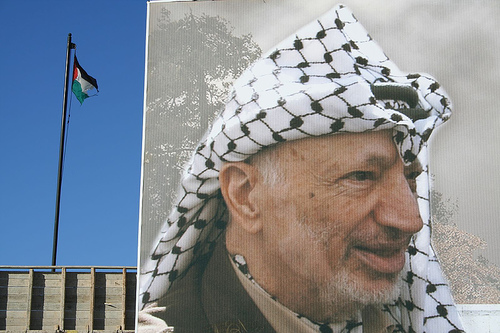
Temporary Halt in Bombings

palestinian-boy-with-arafat-in-back palestinian-boy-with-arafat-in-back1palestinian-boy-with-arafat-in-back2palestinian-boy-with-arafat-in-back3arafat


January 19, 2009, Israel announced a cease-fire after 22 days of utter
chaos and destruction in Gaza.  Twelve hours later, Palestinian
militants followed suite and declared a week long cease-fire.  More
than 1300 people have died of which 1% are Israelis.
Earlier, a summit hosted  by Egyptian President Hosni Mubarak and
French President Nicolas Sarkozy, called on International leaders to
discuss the crisis and its resolutions.

Also present were Palestinian Authority leader Mahmoud Abbas and UN
chief Ban Ki-moon.   Although no concrete resolutions came at the end
of the summit, each side did make its own unilateral declaration of
a cease fire.  Still far from any permanent peace agreement the Israelis and
Palestinians each declared their demands.  Israel demands a complete
halt to the missile attacks on their Southern border by Hamas or any
Palestinian militants.  Hamas wants Israel to withdraw from the Gaza
strip within a week and to remove all bans and allow access to
humanitarian needs.  Or as stated by Charles Clayton, the national
director of World Vision Jerusalem, an aid group, an “18-month
blockade of the 1.5 million Palestinians in Gaza,” needs to come to an
end.  And he added that this blockade has “devastated the economy,
halted services, aisraels-wailing-wall2nd rendered the people of Gaza entirely dependent on

humanitarian aid.”  In the near future, the Israeli Prime Minister Ehud Olmert has planned
a meeting in Jerusalem.  Leaders of the UK, France, Germany, Italy,
Spain and the Czech Republic are expected to attend.  What, if any,
positive outcome will be reached at this meeting, remains to be seen.  As always, unless all sides are true and honest at the negotiating table, there will not be any lasting peace between these two long warring tribes of the children of Abraham.  Pakistanis for Peace calls on its Jewish and Muslim brothers in both countries to sit down and make an ever lasting peace with the help of perhaps the most important American President since FDR coming into office in Washington DC on Tuesday January 20, 2009. These two groups of people need to realize that with Secretary Clinton and President Obama on board, they have true allies in Real and Everlasting Peace and Never a better time than now to attain it. The Jews and the Muslims greet each other the same way when they meet their families or friends on the street. They say “Shalom” and the Muslims say “Salaam”. Both mean “Peace” in Hebrew and Arabic. Interesting that such a common word and form of greeting and salutation can be so uncommon in the lands of Jesus. Let’s continue to hope for peace in the region on the eve of this historic presidency in the United States across the Atlantic.

President Barack Hussein Obama, 44th President of the United States

President Barack Hussein Obama, 44th President of the United States


As  reported by Manzer Munir in Orlando, FL USA and Taneem Ali and M. Lameesa Ali in Chicago, Illinois, USA.

Pakistan moves troops from Afghan border to Indian border

paf-jet

The US government today acknowledged that Pakistan has began shifting troops from Afghanistan border on its west to the east and the long border with India due to heightened tensions between the two countries following the Mumbai blasts of last month. There are confirmed reports inside Pakistan of the elevated national security concerns within Pakistan as well as sightings of Pakistan Air Force (PAF) jets seen patroling the border over Lahore Pakistan using US made F-16’s. US commanders in Afghanistan are worried that Pakistani troops going to the Indian border will leave them undermanned in helping fight the insurgency within Afghanistan.

As a Pakistani American with family and friends in both India and Pakistan, I am very concerned. Not only because they have nuclear weapons aimed at each other and share a huge border! But also because it is against our vital interests in the US to see south Asia explode and much of East and West Asia as well as parts of Europe affected by a nuclear holucast caused by an all out war between the two nations.

Furthermore, we need Pakistan to continue to help our American troops and personnel in Afghanistan fighting the Taliban and Bin Laden’s boys and do not need the Pakistanis to lose their focus on the war in Afghanistan against the terrorists on Pakistan’s west border with Afghanistan. So, India to the east sharing a huge border and Afghanistan to the west with another war going on over there, it is too much even for one of the largest armies in the world (Pakistan) to deal with considering how easily India could win a war with Pakistan. It would obviously come at a very very steep price and God Willing incoming president Obama and secretary of state Hillary Clinton will be up to the job of diffusing the most dangerous situation in the world when it comes to Pakistan and India.

Please check back often for near daily updates on the situation from a grassroots level as we at Pakistanis for Peace have friends on the ground in both countries monitoring the situation. Website Pakistanisforpeace.com launching soon where this blog will be integrated. Until then, please continue to visit us here at wordpress.

https://pakistanisforpeace.wordpress.com

Also, join us on Facebook under groups: Pakistanis for Peace.

Thanks and lets pray for peace on Earth or at least in some very dangerous places! Ameen.