Archive for the ‘ Pakistan Army ’ Category

U.S. Strategy in Afghanistan May Involve Greater Use of Special Operations Forces

By David S. Cloud and Julian E. Barnes for The Los Angeles Times
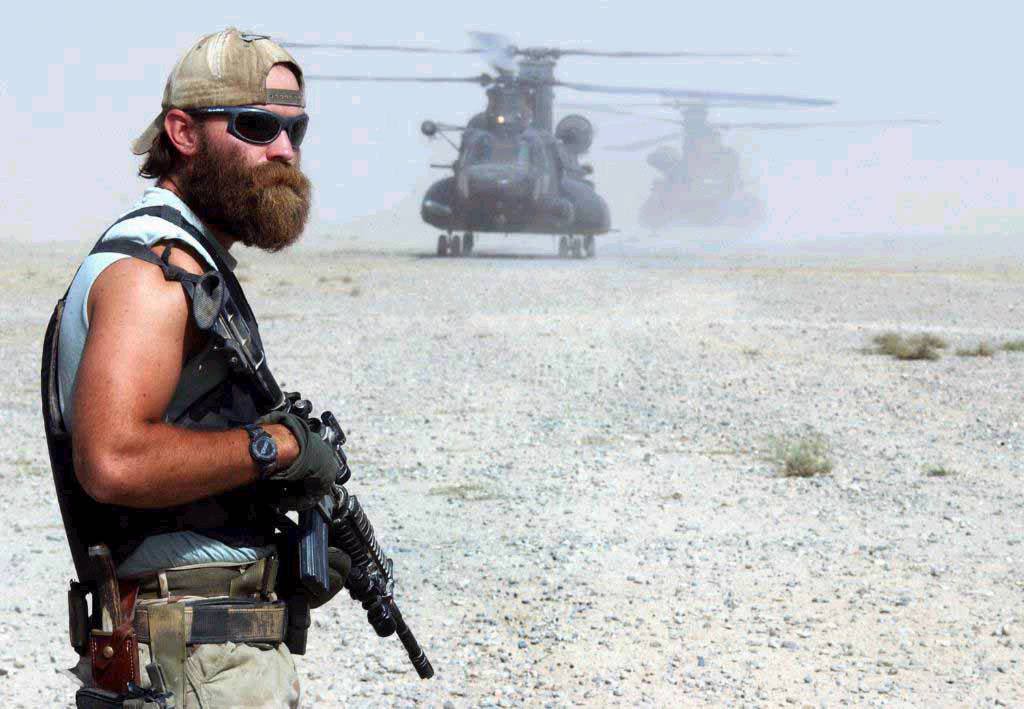
U.S. special operations troops in Afghanistan have stepped up a campaign to kill or capture insurgent leaders, senior U.S. officials say, an effort that began in March and is likely to expand as Army Gen. David H. Petraeus looks for ways to show progress.

Senior U.S. military officials said the raids by special operations troops have killed or captured 186 insurgent leaders and detained an additional 925 lower-level fighters in the last 110 days. That would mark a rare success for American troops in a war that has otherwise gone poorly in recent months.

The operations have been most effective in and around the southern city of Kandahar and in eastern Afghanistan, according to American military officials, who requested anonymity in discussing information that had not been released publicly, and outside analysts. Already, they said, there are signs in these areas that roadside bomb attacks have decreased and the Taliban control is weakening, as senior leaders are killed or captured.

A successful effort would support the contention made by Vice President Joe Biden and other administration officials who are skeptical of the military strategy in Afghanistan: Special operations troops, with their small footprint and skill at tracking and killing the enemy, can be more effective than conventional forces in the difficult conflict the U.S. faces in that country.

Biden has argued for shrinking the U.S. effort and relying largely on special operations troops and airstrikes to disrupt the Taliban and Al Qaeda, officials say.

President Obama has sided so far with those who favor using large numbers of U.S. troops as part of a far-reaching counterinsurgency effort, a point that he reiterated last week in naming Petraeus to replace Army Gen. Stanley A. McChrystal as commander of the war in Afghanistan.

But if the special operations effort is the most successful element of the war effort, Biden and those who agree with him could be in a stronger position to argue for shrinking the U.S. military presence when the strategy is reexamined, perhaps as soon as the December review Obama has promised.

Supporters of the more limited strategy advocated by Biden believe special operations should be the main military effort in Afghanistan. Petraeus, however, argues that special operations troops are just one tool, albeit a highly effective one, in fighting an insurgency.

While leading the U.S. military force in Iraq, Petraeus advocated a comprehensive counterinsurgency strategy aimed at combating militants with both special and conventional forces. He is expected to utilize the same strategy in Afghanistan.

Current and former Petraeus advisors also said the general will try to quickly reverse the perception that the Afghanistan war is going badly. When he appears before the Senate on Tuesday for a hearing on his nomination to lead the allied war effort in Afghanistan, he is likely to emphasize recent successes by special operations forces.

“Trumpeting the successes of ISAF [the North Atlantic Treaty Organization’s International Security Assistance Force] operations, Afghan operations, should be part of the strategy,” said Peter Mansoor, who served as Petraeus’ executive officer in Iraq. “The strategy is clearly to knock the Taliban back, but if you don’t show the world that is happening, what is the use?”

A senior military official in Afghanistan said the killings of leaders since March have reduced the effectiveness of the Taliban, making the militant movement less capable of threatening the Afghan population.

Officials did not release the list of 186 insurgent leaders they say have been killed since March. Last week, however, they did name two insurgent leaders slain last month in Kandahar.

In eastern Afghanistan, the U.S. has been trying to take out key commanders in the Haqqani network, a Taliban-aligned insurgency that maintains a safe haven in Pakistan, said Jeffrey Dressler, a researcher at the Institute for the Study of War in Washington.

“We have seen over the last four weeks an increase in special operation maneuvers,” Dressler said. “And it is having a significant impact on the Haqqani network’s ability to operate.”

But Haqqani fighters still are able to use their base in Pakistan’s North Waziristan region to try and mount suicide bombings across the border in Kabul, the Afghan capital, and has been linked to several recent attacks, including a mortar barrage that disrupted a peace conference convened by Afghan President Hamid Karzai this month.

U.S. officials hope that continued special operations raids against insurgent leaders will encourage lower-level followers to lay down their arms and reconcile with the government in Kabul.

Skeptics of the administration’s overall strategy see the results of the special operations campaign as a powerful argument for shifting away from the counterinsurgency campaign crafted by McChrystal toward the strategy advocated by Biden.

“This is a great opportunity to reconsider the direction of the strategy and move it more towards what is showing some success, the strategy Vice President Biden advocated from the beginning,” said Charles J. Dunlap, a retired Air Force major general who writes extensively on counterinsurgency strategies.

A plan focused first on killing insurgent leaders will ensure that the U.S. does not have to remain in Afghanistan for decades building up the central government, he said.

But advocates of the current strategy said special operations forces alone can disrupt insurgent movements, hindering their advance, but are not enough to stabilize a country and help it take charge of its own security.

“There is a misconception that in counterinsurgency there isn’t any sort of assassinations or special operation forces doing targeted killings,” Dressler said. “As we have seen from Iraq, that is not the case. It is a critical part of counterinsurgency.”
At Talks, Pakistan, India Close the Gap

By Anita Joshua for The Hindu

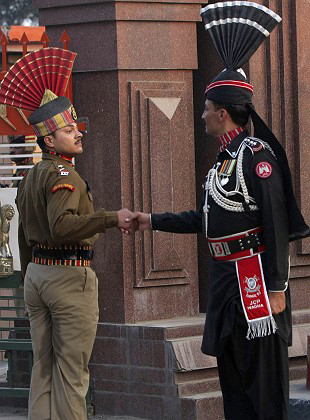
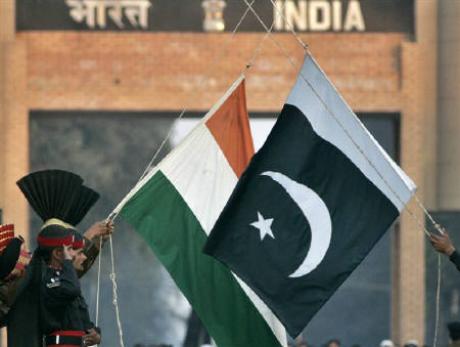
Conscious of the historical baggage, but unwilling to be burdened by it, India and Pakistan on Thursday inched closer to each other during the Foreign Secretary-level talks here and both sides held out the possibility of some tangible outcome after the July 15 ministerial engagement.

However, both Foreign Secretaries refused to be drawn into chalking out a road map or identifying goal posts. “There is a constituency for peace in both countries, and we should avoid stock phrases like road map,” Foreign Secretary Nirupama Rao said at a “joint press stakeout” here, shortly after spending a greater part of the morning with her Pakistan counterpart Salman Bashir.

The talks, according to Mr. Bashir, began as an exploratory venture, but “after this round, we are much more optimistic of good prospects at the Foreign Ministers meeting.” He summed up the talks as a “good essay in mutual comprehension,” a phrase he admitted to have borrowed from Ms. Rao.

Optimism apart, both conceded that this would be a protracted process that may not yield quick results, but decided to work on the doables in the interim. As to how they proposed to insulate the process from another freeze in relations in the eventuality of a flashpoint, Ms. Rao said this would also be a subject of discussion.

The first indication of some forward movement came with the announcement of the “joint press stakeout” soon after the talks had wound up, and the Foreign Secretaries were breaking bread in the Foreign Office.

In his opening remarks, Mr. Bashir said the two sides decided to work towards restoring confidence and building trust to make it possible for a comprehensive, sustained and substantial dialogue.

Speaking in a similar vein, Ms. Rao described the talks as forward-looking with both sides trying to understand each other’s position. “We reflected on the modalities for restoring trust and confidence to pave the way for a comprehensive, sustained and meaningful dialogue in all areas. We have agreed that dialogue is the best way forward.”

Asked whether terrorism was discussed, she said both sides agreed that terrorists must be denied the opportunity to derail the process of dialogue while pointing out that Pakistan Prime Minister Yusuf Raza Gilani had made an important commitment when he told his counterpart that efforts would be made to ensure that the Pakistani soil was not used for attacks on India.

Unlike in the past, when the two countries appeared to be speaking at cross purposes, this time the Foreign Secretaries seemed to complement each other.

If Ms. Rao deftly side-stepped a leading question on India’s reluctance to continue with composite dialogue by saying there was no issue over nomenclature, Mr. Bashir returned the favour by echoing this remark and refusing to be drawn into commenting on why Pakistan was not raising the issue of Indian-sponsored terrorism in Balochistan.

Instead, he broad-brushed the issue, stating that terrorism impacted Pakistan and was a concern to the region and the world. “Essentially, we have agreed to move from the rhetoric to the ways and means of addressing these concerns,” he said.

Indian and Pakistani Players Join Forces to Promote Peace Through Wimbledon

Valerie Amant for Peace-Support.org

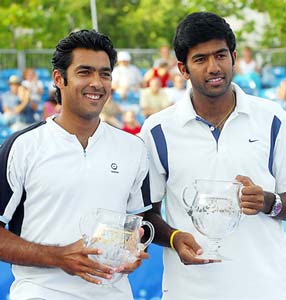
Lotto spokesmen Rohan Bopanna and Aisam-Ul-Haq Qureshi, Indian and Pakistani respectively, have decided to join forces as a doubles team at Wimbledon to help promote peace.

The two players, along with Peace and Sport, the Monaco-based and neutral international organization that works towards bringing together divided communities worldwide by encouraging dialogue and reconciliation through sport, have decided to team up at this prestigious sporting event, in order to help maintain and promote peace in their neighbouring countries.

Together with their technical supplier, Lotto Sport Italia, Bopanna and Qureshi have decided to promote this initiative by designing specially made t-shirts and sweatshirts with the high impact slogan “Stop War, Start Tennis”. The t-shirt will be worn during training sessions, whilst the sweatshirt will be used when entering the court before play.

Rohan, currently ranked 54th doubles player in the world, and Aisam, currently ranked 46th, have been friends for over ten years and have teamed up successfully for the last three years. Their respective countries have lived in a situation of unease and tension in the region of Kashmir since it won its independence from the British Empire in 1947. Peace and Sport would like to emphasise how much sport unites, as highlighted by the two players’ partnership.

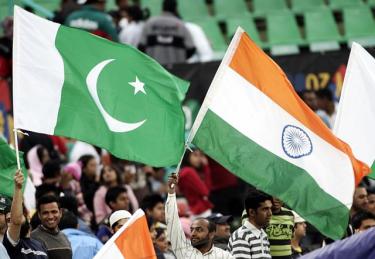
The two tennis stars took the initiative to promote peace through sport after having noticed that communities from both countries forget hostility when they support them in international competitions. Indeed, during the first ATP tournament in Mumbai in 2007, Pakistani flags were waved inside the stadium during the final.

With the message “Stop War! Start Tennis!” Rohan Bopanna and Aisam-Ul-Haq Qureshi remind us that sport is a universal language that facilitates dialogue, going beyond political, racial, religious, ethnical and social differences.

Joël Bouzou, President and Founder of Peace and Sport, said: « Rohan and Aisam are big stars in their respective countries. Their story of friendship through sport is a real inspiration for youngsters. By transmitting a message of peace, they hope to change the mentalities and attitudes in India and Pakistan as well as other areas of the world destabilized by conflict. We are extremely proud to support this message that will benefit from the extensive publicity that Wimbledon attracts.

Alberto Fraticelli Marketing & Communications Director, from Lotto Sport Italia adds : « It is with great pleasure and good will that we decided to develop this initiative, in fact we already support “FreeFromLaces”, the movement that through blogs, forums, social networks, music and video, collects and proposes to the entire web community content and ideas that invite the user to reflect and ponder on “laces” that limit our daily routine: those personal, mental, virtual, social, cultural and physical ties that often seem impossible to untie. Through their initiative and personal backgrounds, Aisam et Rohan are perfect incarnations of this philosophy; thanks to sport we can rise above the hate and prejudice that condemns mankind to perpetual conflict, and we are extremely proud to have international representation of our brand, through players like Rohan and Aisam.”

Pakistan Rejects Allegations of Taliban Ties

As reported by CNN

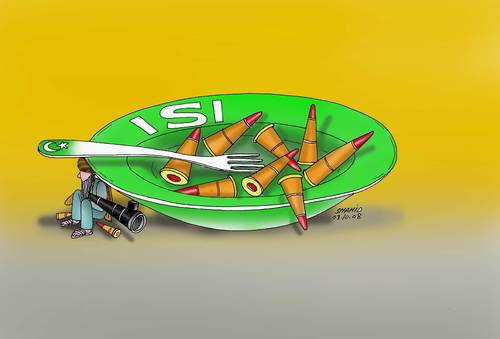
Pakistani officials Sunday rejected allegations that their country’s powerful intelligence agency still supports the Taliban and other Afghan insurgents after a paper from a Harvard academic accused the agency of continued links to the rebels.

The powerful Inter-Services Intelligence agency does not “actually control the Afghan insurgency” and does not have “the ability to bring it to an end,” Matt Waldman argues in a paper for the London School of Economics. But the ISI provides “sanctuary, and very substantial financial, military and logistical support to the insurgency,” giving it “strong strategic and operational influence — reinforced by coercion,” according to his report, which cites Taliban commanders among its sources.

The ISI is widely thought to have played a key role in creating the Afghan Taliban during the 1990s, but Pakistan officially denies supporting them now. Maj. Gen. Athar Abbas, spokesman for the Pakistani military, called the claim “rubbish” on Sunday and said Waldman’s report “does not have a credible source or authenticity.”

“At best, it is speculative and only gives open sources without naming [them],” Abbas told CNN. “So, therefore, this kind of report requires a treatment which it really deserves. We are not going to formally respond to this, but we reject these allegations and accusation. If there are hard evidence, we would like for them to be brought out and we would be able to respond accurately.”

And Farahnaz Ispahani, a spokeswoman for President Asif Ali Zardari, called Waldman’s report “one-sided” and dismissed what she called its “wild accusations.”

“If Mr. Waldman had been a seasoned academic, he would have conducted interviews in Pakistan itself to balance his so-called research report,” Ispahani said. “The Pakistani government and its military have been performing an outstanding service to the world community as well as the region in its fight against militancy and extremism, and we can count the dead we have sacrificed in the thousands.”

Waldman’s report is titled, “The Sun in the Sky: The relationship between Pakistan’s ISI and Afghan insurgents.” He based his conclusions on interviews with nine insurgent field commanders in three regions of Afghanistan, plus former Taliban officials, tribal leaders, politicians, experts and diplomats. The title comes from Taliban commanders’ claims that their relationship with Pakistani intelligence is “as clear as the sun in the sky.”

Waldman concluded that that Pakistan “continues to give extensive support to the insurgency in terms of funding, munitions and supplies.” But Abbas dismissed the unnamed sources, calling the report “rubbish.”

“Has he named any Taliban commanders in this, has he named any officials?” Abbas said. “So, therefore, if it doesn’t have any specific source, which is not willing to disclose a name, it just becomes one of those reports that keep appearing. It is a serious allegation, but unless it has a credible evidence to support it or substantiate the report, only then it warrants a serious consideration for response.”

The ISI works not only with the Taliban, but also with the armed Haqqani network, led by Jalaluddin Haqqani and his son Sirajuddin, Waldman wrote. The Haqqani network sometimes cooperates with the Taliban and sometimes fights it.

The Taliban members interviewed believe that the ISI has a heavy influence on their leadership, which some of them said amounts to control, according to the report.

One of the southern commanders claimed: “If anyone rejects that the ISI backs or controls the Taliban, he has a mental problem … all our plans and strategy are made in Pakistan and step by step it is brought to us, for military operations or other activities,” the report says.

And southern Taliban commanders all complained of heavy ISI involvement, which they blamed for some attacks on civilians.

“One southern commander described their predicament as follows: ‘Another group of Taliban is directly supported by the ISI. They will never stop fighting in the country; they want to destroy the government and bring chaos. Behind all the attacks on … NGOs, schools, teachers, doctors, this is Pakistan. We cannot deny that it is Taliban; but there are Pakistan controlled groups among us. They want destabilisation …,’ ” the report says.

Waldman’s report comes two months after a U.N. report on the assassination of former Prime Minister Benazir Bhutto in 2007 — an attack blamed on Pakistani Taliban leaders — found that intelligence agencies hindered the subsequent investigation. The report concluded that the “pervasive reach” of Pakistan’s intelligence agencies left police “unsure of how vigorously they ought to pursue actions, which they knew, as professionals, they should have taken,” the report states.

Indian PM Manmohan Singh Renews Kashmir Talks Offer

As reported by BBC

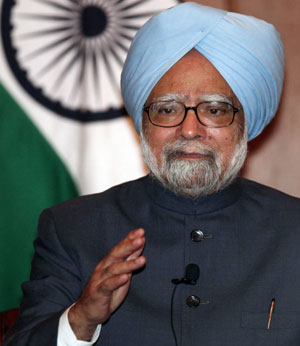
Indian Prime Minister Manmohan Singh has renewed an offer of talks with Kashmiri separatists who shun violence. He made the comments during a visit to a university in Indian-administered Kashmir. He is on a two-day trip to the state to review development schemes. Separatists have called a shutdown. The PM has disappointed those who expected him to announce a political package, the BBC’s Altaf Hussain in Srinagar says.

“We felt that the people of the state are not only interested in financial assistance and development projects, but also desire a political process that meets their aspirations,” Mr Singh told gathering at the agricultural university in Srinagar.

“We want to take the dialogue process forward. We are ready to talk to representatives of all sections who are opposed to terrorism and violence,” he said. ‘Strict instruction’  The prime minister repeated his government’s policy of “zero tolerance” for human rights violations.

“The security forces in Jammu and Kashmir have been strictly instructed to respect the rights of the civilians. We’ll act to remove any deficiency in the implementation of these instructions,” he said. The PM’s visit was greeted by protests against human rights violations  The prime minister’s visit came a day after the Indian army suspended a senior officer accused of killing three civilians in a staged gun battle.

The incident happened at Machhil near the Line of Control, the de facto border which separates Indian-administered Kashmir from Pakistani-administered Kashmir, in April. The Muslim-majority Kashmir Valley staged a total shutdown to protest against the prime minister’s visit. The strike was called by a hardline separatist leader Syed Ali Shah Geelani.

Mr Singh’s visit has also disappointed the moderate faction of the separatist Hurriyat Conference, headed by Mirwaiz Umar Farooq, our correspondent says. Mr Farooq had urged the prime minister to announce a political package during his visit.

He had demanded withdrawal of troops from cities and towns and release of political prisoners to facilitate talks between the separatist leadership and the government, our correspondent adds. Violence has declined in Kashmir in recent years, but analysts say militants opposed to Indian rule are now trying to regroup. There has been a spate of clashes in recent months along the LoC. Hundreds of thousands of Indian troops are based in Kashmir, where there has been a two decade-old insurgey against Indian rule.

India, Pakistan And U.S. Strategic Dialogue

By Apoorva Shah for The American Enterprise Institute

At this week’s first U.S.-India Strategic Dialogue in Washington, D.C., talks between the two countries will cover the spectrum of bilateral and multilateral issues, from trade and economic cooperation to terrorism and regional security. 

American participants may even feel the need to bring up India’s strained relationship with Pakistan. But it would serve them well to first consider a Times of India story from earlier this year, which went almost unreported in the United States.

According to an interview in the Indian newspaper with former Pakistani foreign minister Khurshid Mahmud Kasuri, India and Pakistan in 2007 were days away from reaching a comprehensive accord on their territorial dispute over Kashmir, the axis of the countries’ six-decade-long rivalry and casus belli of three wars between the two nations.

Kasuri, Pakistani leader General Pervez Musharraf’s chief diplomat from 2002 to 2007, said in April that the secret deal had been in progress for more than three years and would have led to a full demilitarization of both Indian- and Pakistani-occupied areas of Kashmir and would have awarded the region a package of loose sovereignty at a point “between complete independence and autonomy.” Not only were Indian and Pakistani leaders on board (including, most importantly, the Pakistani military), so was every Kashmiri leader except for one hard-line separatist, Syed Ali Shah Gilani.

The accord was slated to be signed during Indian Prime Minister Manmohan Singh’s scheduled visit to Islamabad in February and March of 2007, but before the trip ever occurred, a country-wide lawyers’ protest in Pakistan had turned into a broader opposition campaign against General Musharraf. The rest of the year would be one of the most tumultuous in Pakistan’s history, marked by the siege of the Red Mosque in July, the return of former Prime Minister Benazir Bhutto in October and her subsequent assassination in December, and the return of popular leader Nawaz Sharif from exile in September.

By August of the following year, public opposition had peaked, and Musharraf was forced to resign his post as president, ending his decade-long tenure as leader of Pakistan. After Musharraf’s ouster, it appears that the deal had lost much of its momentum.

Then in November, the accord suffered another setback as ten Lashkar-e-Taiba terrorists took India’s largest city, Mumbai, hostage for almost 72 hours, killing more than 160 people and injuring scores more. The attack was quickly coined “India’s 9/11,” and the evidence pointed directly to Pakistan, where the gunmen had been trained and equipped.

In protest, India cut off all diplomatic talks with Pakistan almost immediately; there were even rumors that the country was preparing military action against its northern neighbor. Within a span of less than two years, the India-Pakistan relationship had traveled the spectrum from apparent rapprochement and compromise to mutual suspicion and renewed hostility.

Since then, the signs have only appeared to worsen: for example, in 2009, when Indian Army chief General Deepak Kapoor publicly introduced revisions to his country’s “cold start” military strategy.

This military modernization and training program, which was developed in response to the army’s sluggish mobilization to the Pakistani border following the December 2001 terrorist attacks on the Indian parliament, remained mostly under the radar for most of the early 2000s, relegated to defense journals and the occasional news article.

It was only following the 2008 attacks that “cold start” began to receive renewed attention from the media on both sides of the border and was more publicly discussed by Indian military officials like General Kapoor. Indeed, it appeared as if the next breakthrough in Indo-Pak relations would occur through hard rather than soft power.

Concomitantly, India and Pakistan’s post-Mumbai attempts to return to diplomatic talks also appeared fraught with danger and seemed to only fuel more discord rather than reconciliation.

In February this year, Indian Foreign Secretary Nirupama Rao and her Pakistani counterpart Salman Bashir resumed high-level talks for the first time since November 2008, but both sides appeared unprepared (they could not even agree on the specific subject of the talks prior to sitting down) and spent more time bickering through separate press conferences.

For example, while Bashir accused India of covertly supplying weapons to militants in Pakistan’s Balochistan province, Rao complained that Pakistan had “not gone far enough” in the 2008 Mumbai attack investigation. As India presented a dossier of evidence against one of the Mumbai attack perpetrators, Pakistan responded by calling it a “piece of literature not a dossier.”

It’s hard to see how any progress could be made on improving Indo-Pakistani relations in the midst of this hostility. But does Kasuri’s revelation provide hope that a resolution on Kashmir could be revived? First, excepting Musharraf and Kasuri, many of the supporters of the failed 2007 accord—including Pakistani Army Chief of Staff Ashfaq Kayani, Pakistan’s current track II special negotiator Riaz Mohammed Khan, and, on the Indian side, Prime Minister Singh—still hold high-level positions in their respective governments.

And second, the secrecy of the original deal shows that outward indifference, or even enmity, between the two countries can belie an internal desire for change. In a relationship where hostility is status quo and where amicable relations seem aberrant if not bizarre, a furtive accord lets ruling elites make slow, institutional changes in the relationship while preserving outward form and precedent. It also allows deal-makers to keep tempestuous domestic politicians and party leaders at arms length while deliberating sensitive issues.

Even India’s traditionally hyperactive media seems to understand: A subsequent editorial in the Times of India noted, “the fact that such a deal exists emphasizes the importance of maintaining contact with Islamabad.”

So what can we expect in the months ahead? Indian officials will undoubtedly continue to pressure Pakistan to confront Lashkar-e-Taiba and other terrorist groups that plan to attack India, and another attack could indeed result in Indian military action. There will also be more bickering between the sides—on water rights, “most-favored-nation” clauses, and even cricket.

Yet the revelation of the secret deal should be both a lesson and a sign of hope. It is a lesson because it proves that progress on an entrenched conflict like Kashmir can occur without the United States’ public mediation.

American officials at the U.S.-India Strategic Dialogue this week should keep in mind that the accord was pursued during the final years of the Bush administration, in which the United States made it a point to separate the U.S.-India relationship from the more sensitive Indo-Pak relationship.

It is a sign of hope because, despite the outward appearance of discord between the countries, internally, leaders on both sides have—at least at some point in recent memory—wanted to move forward on a resolution.

As Pakistan continues its domestic offensive against terrorists and India pursues closer economic engagement with its northern neighbor, wanting change may be the best sign that change is on the way.

Pakistan’s Mosques, Media and Intolerance

By Zeeshan Haider for Reuters

Pakistan has been fighting Islamist militants for years, but tough measures are needed to overturn a system breeding religious intolerance after the long failure of authorities to confront mullahs and hardline groups.

Analysts say the notion of religious mistrust is deeply entrenched in the predominatly Muslim country — even in the school system — and it is now up to leaders to mobilise public.

Last week’s massacre in the city of Lahore of more than 80 Ahmadis – a minority religious sect deemed non-Muslim and heretical by the constitution – has generated a heated debate in Pakistan, a U.S. ally, on how to tackle the issue.

In a sign of how hatred is propagated, The News newspaper said one of the two surviving gunmen caught by security forces said he had been persuaded that Ahmadis were “blaspheming” Islam.

Identified as Abdullah, he told investigators that his mentors had him believe that Ahmadis were drawing caricatures of Prophet Mohammad during a recent online contest and “so their bloodshed was a great service to Islam”, the newspaper said. That raised alarm bells in a country combatting militancy.

“The nagging feeling that the government has already lost the battle against extremism has now acquired the force of conviction,” Zafar Hilaly, a former ambassador, wrote in The News last week.

After joining the U.S.-led war on terrorism after the September 11, 2001 attacks on the United States, Pakistan mounted a crackdown on militancy, outlawing several groups, arresting hundreds of suspects and warning hardline mullahs against delivering hate speeches and distributing hate literature.

The government also vowed to reform tens of thousands of Islamic seminaries, known as madrassas, many of which are considered as breeding grounds for militancy. Almost none of these measures, however, has been implemented.

Most outlawed groups have re-emerged under new names. Radical clerics still deliver fiery speeches against sects. The U.S. Embassy acknowledged the difficulties, given the importance placed on Pakistan helping Washington battle al Qaeda and its extremist allies.

“We recognise this is a problem,” an embassy official said, adding that the embassy encouraged Pakistanis to take part in exchange programmes to see a multi-faith United States.

Analysts say Pakistani leaders dating back to the 1970s, however popular, took no action to counter radicals. Hasan Askari Rizvi, a Lahore-based political and security analyst said governments have lacked the stomach to implement reforms, particularly in school curricula.

“In textbooks used in government schools, Pakistan is equated with Muslims…They teach Pakistan is a country only for Muslims. They don’t teach that non-Muslims also live here,” he said.

Journalist and analyst Ahmed Rashid described school programmes as “the most sensitive issue. But it is an issue in which any attempt to change the curriculum would have a whole host of fundamentalist groups oppose you.”

In 1974, Pakistan’s first popularly elected Prime Minister, Zulfikar Ali Bhutto, bowed to Islamic groups and won approval of a constitutional amendment declaring Ahmadis as non-Muslims. He also switched the weekly day off from Sunday to Friday.

But much of the upsurge in militancy occurred in the late 1970s and 1980s during the “Islamisation drive” by late military leader General Mohammad Zia-ul-Haq and Pakistan’s support for the U.S.-baked Afghan jihad or holy war against the Soviet invasion which saw a rapid growth of radical groups and madrasas.

Haq introduced several laws, such as the notorious blasphemy law, which are deemed discriminatory against non-Muslim minorities and fuelled tensions between different Muslim sects. Subsequent governments did nothing to reverse the laws.

Military dictators, who ruled Pakistan for more than half of its existence, have also used militant groups to further policy objectives in Afghanistan and India and marginalise liberals.

“In earlier years, in order to pursue its foreign policy using the instrument of jihad, the state actively sought to create a religiously charged citizenry,” said Pervez Hoodbhoy, a physicist and analyst. “But, now that the Pakistani military and political establishments have become a victim of extremism, they are foundering in confusion.”

Former President Pervez Musharraf, a military ruler, though he espoused a modern and liberal version of Islam, repeatedly failed to get the laws reviewed while in office from 1999-2008.

Former Prime Minister Benazir Bhutto, a pro-West politician and a vocal opponent of the militants, was killed in December 2007 in a suicide attack blamed on militants linked to al Qaeda. Civilian leaders are made even more cautious now in tackling radical groups by the tremendous fear of militants who have unleashed bomb and suicide attacks across the country.

“Religious intolerance is getting worse in Pakistan because the political leadership lacks the will to fight this,” said analyst Rizvi. “They don’t want to face the wrath of mullahs.”

Official Admits Militancy’s Deep Roots in Pakistan

By Jane Perlez and Waqar Gillani for The New York Times

LAHORE, Pakistan — Days after one of the worst terrorist attacks in Pakistan, a senior Pakistani official declared in a surprising public admission that extremist groups were entrenched in the southern portion of the nation’s most populous province, underscoring the growing threats to the state.

 The statements by the interior minister, Rehman Malik, after the killing of more than 80 people at two mosques last week here in Lahore, were exceptional because few Pakistani politicians have acknowledged so explicitly the deep roots of militancy in Pakistan. They also highlighted the seeming impotence of the civilian government to root out the militant groups, even in Punjab Province, providing a troubling recognition that decades of state policy to nurture extremism had come home to roost in the very heart of the country.

 The extent of the problem has become an increasing concern for the United States, which has pressed the government to deal with the issue with renewed urgency since the failed attempt by a Pakistani-American to explode a car bomb in Times Square.

 “We’re dealing with a problem that is so deeply burrowed into the bosom of the society,” said a senior Western official about the difficulty of loosening the grip of the militant groups. “And we’re dealing with a government that is unhappy within itself.”

The problem for Pakistan, Western officials and some Pakistani politicians said, is not only the specific acts of terrorism by these groups, but the far more pervasive jihadi mentality that has been nurtured in the society by an extensive network of extremist madrasas and mosques.

Mr. Malik’s remarks — in which he rattled off a host of extremist groups once supported by the state — were a nod to these larger problems. In contrast to the tribal areas at the nation’s periphery, where the military is battling the Pakistani Taliban on several fronts, militants were “now active” in the southern part of Punjab and were trying to “destabilize the country,” he said.

Though Mr. Malik seemed to hint at possible military action in Punjab, the civilian government, led by the Pakistan Peoples Party, the more secular of the political parties in Pakistan, has little leverage to make it happen.

The Pakistani military, which still holds most power, has shown little interest in taking on extremist groups in Punjab. The province is a major recruiting area for the army, and many of the militant groups there were created by the state decades ago and have been fostered since as arms of Pakistan’s enduring anti-India strategy.

To a large degree, they have slipped from the control of their handlers in the military and intelligence services, according to Western diplomats and Pakistani security experts, and have linked up with Taliban fighters and other militant groups that are now striking deeper into Pakistan in an effort to overthrow the state.

Today these militants move back and forth easily between the tribal areas for training and Punjab, where they carry out a rising number of spectacular attacks.

“They — Lashkar-e-Janghvi, the Sipah-e-Sohaba Pakistan and Jaish-e-Mohammad — are allies of the Taliban and Al Qaeda,” Mr. Malik told reporters in Lahore after the mosque attacks. 

The loose conglomerate of militants that Mr. Malik listed is now being grouped by officials and others under the name of the Punjabi Taliban, a designation that itself highlights the expanding nature of the threat in Pakistan’s most important province and the militants’ shifting ambitions. Under that rubric also falls Lashkar-e-Taiba, an anti-India militant group. Like the others listed by Mr. Malik, Lashkar-e-Taiba has been banned by the state, but continues to operate under a different name and apparently with the blessing of the military.

The Punjabi Taliban took credit for the assaults on the two Ahmadi mosques last Friday. At least one of the men arrested by the Pakistani authorities in connection with the Times Square bombing case is connected to Jaish-e-Mohammed, according to law enforcement officials in Karachi.  Adding to the difficulty of clamping down on the groups, the Punjabi government, led by Shahbaz Sharif, a leader of the more conservative Pakistan Muslim League-N and a chief political rival of President Asif Ali Zardari, has stopped short of condemning the militants. In some respects, he has treated them as allies.

Two months ago, Mr. Sharif asked the Taliban to stay away from Punjab, arguing that his party and the Taliban had a common enemy in the United States. The Punjab government is “in a state of denial,” said Arif Nizami, a columnist with the newspaper The News. Mr. Sharif played down the attack on the two mosques in Lahore, Punjab’s capital. Instead, he visited the wounded survivors in a hospital quietly at night without the usual television coverage.

The groups hold such sway that Pakistani politicians frequently pander to some, like the pro-Taliban Sipah-e-Sohaba Pakistan, during elections.  In a bold illustration of the power of one of the militant groups in southern Punjab, the provincial law minister, Rana Sanaullah, campaigned alongside the leader of Sipah-e-Sohaba, Maulana Muhammad Ahmed Ludhianvi, during a March by-election for the provincial assembly in the city of Jhang.

In an interview, Mr. Sanaullah, said he saw nothing wrong with campaigning with Mr. Ludhianvi. It was a good thing, he said, because it helped bring groups that he described as no longer militant into the democratic mainstream. “If they want to be law-abiding citizens, we should allow them to be,” Mr. Sanaullah said.  Mr. Sanaullah was not alone in seeking votes from Sipah-e-Sohaba. A candidate for the National Assembly running for the Pakistan Peoples Party also won with its support earlier this year. Though security is a paramount concern, government officials and others acknowledge that the problem of militancy will not be solved by military force alone. Having been nurtured through generations, it will also not be undone quickly.

A program announced by Mr. Zardari two years ago to rein in the madrasas has yet to get off the ground, blocked by bureaucratic inertia and fears of a backlash from powerful conservative religious groups, Pakistani officials say. As state-sponsored education becomes too expensive for poor parents, the number of madrasas has actually increased in the past three years, to more than 17,000 in 2010 from 13,000 in 2007. At least several thousand of the madrasas churn out militant students, experts say.

Al Qaeda Aide Believed Dead- Drone Attack in Pakistan Said to Have Killed No. 3 Official

By Kimberley Dozier for AP

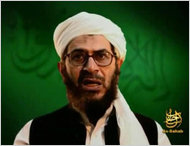
Al Qaeda’s third in command, who played key roles in a recently foiled terrorist plot against the U.S. and the 2001 terrorist attacks, is believed to have been killed by a U.S. drone strike in Pakistan’s tribal areas, potentially dealing a significant blow to the terrorist network. Mustafa al-Yazid, al Qaeda’s chief operating officer, was killed a little more than a week ago, according to two U.S. officials. This is the main person who everyone has been looking for,” one official said.

Al-Qaida announced Monday that its No. 3 official, Mustafa al-Yazid, had been killed along with members of his family — perhaps one of the most severe blows to the terror movement since the U.S. campaign against al-Qaida began. A U.S. official said al-Yazid was believed to have died in a U.S. missile strike.

A statement posted on an al-Qaida Website said al-Yazid, which it described as the organization’s top commander in Afghanistan, was killed along with his wife, three daughters, a grandchild and other men, women and children but did not say how or where.

The statement did not give an exact date for al-Yazid’s death, but it was dated by the Islamic calendar month of “Jemadi al-Akhar,” which falls in May.

A U.S. official in Washington said word was “spreading in extremist circles” of his death in Pakistan’s tribal areas in the past two weeks.

His death would be a major blow to al-Qaida, which in December “lost both its internal and external operations chiefs,” the official said on condition of anonymity because of the sensitivity of the information.

The Egyptian-born al-Yazid, also known as Sheik Saeed al-Masri, was a founding member of al-Qaida and the group’s prime conduit to Osama bin Laden and Ayman al-Zawahri. He was key to day-to-day control, with a hand in everything from finances to operational planning, the U.S. official said.

Al-Yazid has been reported killed before, in 2008, but this is the first time his death has been acknowledged by the militant group on the Internet.

Two Pakistani intelligence officials, speaking on condition of anonymity because they were not authorized to talk to the media, said al-Yazid died in a U.S. missile strike on May 21 in the North Waziristan tribal area.

Soon after the attack, officials reported that two foreigners were among the 10 people killed, but did not know their identities. Five women and two children were also wounded in the attack, which occurred in the village of Boya near the main town in the area, Miran Shah.

The intelligence officials said they received word of al-Yazid’s death last week and confirmed it by speaking to local tribal elders and Taliban members. They said their sources had not seen al-Yazid’s body and did not know where he was buried.

Al-Yazid has been one of many targets in a U.S. Predator drone campaign aimed at militants in Pakistan since President Barack Obama took office. Al-Yazid made no secret of his contempt for the United States, once calling it “the evil empire leading crusades against the Muslims.”

“We have reached the point where we see no difference between the state and the American people,” al-Yazid told Pakistan’s Geo TV in a June 2008 interview. “The United States is a non-Muslim state bent on the destruction of Muslims.”

The shadowy, 55-year-old al-Yazid has been involved with Islamic extremist movements for nearly 30 years since he joined radical student groups led by fellow Egyptian al-Zawahri, now the No. 2 figure in al-Qaida after bin Laden.

In the early 1980s, al-Yazid served three years in an Egyptian prison for purported links to the group responsible for the 1981 assassination of Egyptian President Anwar Sadat. After his release, al-Yazid turned up in Afghanistan, where, according to al-Qaida’s propaganda wing Al-Sabah, he became a founding member of the terrorist group.

He later followed bin Laden to Sudan and back to Afghanistan, where he served as al-Qaida’s chief financial officer, managing secret bank accounts in the Persian Gulf that were used to help finance the Sept. 11, 2001, attacks on New York and Washington. After the U.S. and its allies invaded Afghanistan in 2001, al-Yazid went into hiding for years. He surfaced in May 2007 during a 45-minute interview posted on the Web by Al-Sabah, in which he was introduced as the “official in charge” of the terrorist movement’s operations in Afghanistan.

Some security analysts believe the choice of al-Yazid as the Afghan chief may have signaled a new approach for al-Qaida in the country where it once reigned supreme.

Michael Scheuer, former head of the CIA unit that tracked bin Laden, believes bin Laden and al-Zawahri wanted a trusted figure to handle Afghanistan “while they turn to other aspects of the jihad outside” the country.

Al-Yazid had little background in leading combat operations. But terrorism experts say his advantage was that he was close to Taliban leader Mullah Omar. As a fluent Pashto speaker known for impeccable manners, al-Yazid enjoyed better relations with the Afghans than many of the al-Qaida Arabs, whom the Afghans found arrogant and abrasive.

That suggested a conscious decision by al-Qaida to embed within the Taliban organization, helping the Afghan allies with expertise and training while at the same time putting an Afghan face on the war.

Al-Yazid himself alluded to such an approach in an interview this year with Al-Jazeera television’s Islamabad correspondent Ahmad Zaidan. Al-Yazid said al-Qaida fighters were involved at every level with the Taliban.

“We participate with our brothers in the Islamic Emirate in all fields,” al-Yazid said. “This had a big positive effect on the (Taliban) self-esteem in Afghanistan.”

A September 2007 al-Qaida video sought to promote the notion of close Taliban-al-Qaida ties at a time when the Afghan insurgents were launching their comeback six years after their ouster from power in Kabul.

The video showed al-Yazid sitting with a senior Taliban commander in a field surrounded by trees as a jihad anthem played. The Taliban commander vowed to “target the infidels in Afghanistan and outside Afghanistan” and to “focus our attacks, Allah willing, on the coalition forces in Afghanistan.”

There is also evidence that al-Yazid has promoted ties with Islamic extremist groups in Central Asia and Pakistan, where other top al-Qaida figures are believed to be hiding.

“He definitely seems to have significant influence among the Pakistani Taliban and the Central Asian groups,” terrorism expert Evan Kohlman said. “They regularly post and share his videos on the Web, just as they would with bin Laden or al-Zawahri.”

In August 2008, Pakistani military officials claimed al-Yazid had been killed in fighting in the Bajaur tribal area along the Afghan border. However, he turned up in subsequent al-Qaida videos, all of which had clearly been made after the Bajaur fighting.

Outrage in India As Mumbai Attacks Terrorist Leader Set to Be Freed By Pakistani Courts

By Manzer Munir for Pakistanis for Peace

Pakistan’s Supreme Court on Tuesday upheld a lower court’s decision to free the leader of Lashkar e Taiba (LeT), a militant group that is blamed by India for masterminding  and orchestrating the November 2008 Mumbai attacks in India that killed 166 people.

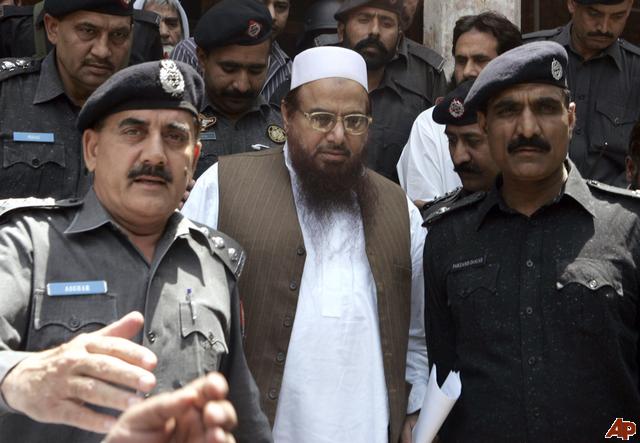
Hafiz Mohammad Saeed, the leader of the terrorist group had been placed under house arrest. However, he was released a year ago by the provincial Lahore High Court due to the fact that there was insufficient evidence against Hafiz and other members of the group. The only evidence against him and the group was the confession of Mohammed Ajmal Amir Kassab, the lone person charged with attacks in India, who was given a death sentence earlier this month. Pakistan’s government appealed the decision of the Lahore High cCourt to the Supreme Court which upheld the lower court’s decision.

Lawyers for the government of Pakistan had requested that India extradite Kassab so that he could give testimony in Pakistani courts against Saeed and the militant group. However, India understandably did not hand over Kassab for fear that the sole surviving perpetrator of the Mumbai attacks could end up in a Pakistani court that sets him free. Sadly, this now happens to be the case as the masterminds of the attacks and leader of an already banned terrorist group, Hafiz Saeed, is set to be freed soon.

This obviously is very disappointing news to India to say the least. It would be the equivalent of letting the mastermind of the September 11 attacks, Khalid Sheikh Mohammed, have a long and high profile trial in New York, only to be set free for lack of evidence and or a weak case by the prosecution. The families of the victims would not stomach such a travesty and neither would the American people. In this same manner, the families of the Mumbai attacks are very upset by this decision by Pakistan the Supreme Court to release Saeed will now surelyonly serve to stall peace talks between India and Pakistan that were slowly progressing at the sidelines of the South Asian Association for Regional Cooperation (SAARC) meeting in Bhutan in April of this year.

At a time when the world’s attention is on Pakistan and Pakistanis for being associated with terrorism due to the attempt to bomb Times Square by Faisal Shahzad, the country and its courts have shot themselves in the foot by allowing to set free a known terrorist leader of a group that is not only attacking India and trying to provoke a war between the two countries, but is believed to be behind many attacks inside Pakistan also killing many innocent people.

If the shoe was on the other foot and the attackers came from India and killed 166 Pakistanis in a busy shopping area, while simultaneously attacking a major hotel, railway station and other locations throughout any of Pakistan’s major cities, then trust me, there would be demand for blood by Pakistani citizens and militias would have formed with or without the government’s blessings, and theywould have retaliated against the Indians. The Indian government and the Indian people are showing great resolve and patience with Pakistan and all along hoping that it truly becomes 100 percent committed to fighting and rooting out terrorism and terrorist groups within its borders as it is touted to be.

But as Tuesday’s decision by the Supreme Court illustrates, Pakistan’s government has a mixed record when fighting extremist groups within the country. As mentioned in previous articles on this site, the government of Pakistan and the army have supported and helped organize some of these militant groups like Lashkar e Taiba in order for the Pakistan army to have a guerrilla outfit as an ally in the event of a war with India. That is why there is reluctance by some inside the military and ISI to fully disband Saeed’s group, believed to be one of the largest and well funded militant groups in Pakistan. The government of Pakistan needs to realize that it cannot talk out of both sides of its mouth. It cannot present itself as one of the biggest allies of the US in the War on Terror, while at the same time not deal effectively with militant groups that are hostile to India.

We at Pakistanis for Peace are outraged that Hafiz Saeed, a known terrorist leader is set to be free from Pakistani courts. Our group and website Pakistanis for Peace was founded immediately after the Mumbai attacks in 2008 by concerned Pakistani Americans in response to the cowardly terrorist attacks by individuals who snuck in from Pakistan to cause one of the biggest terrorist incidents to ever hit India. These attacks certainly became their 9-11. 

To now have the leader of this terrorist group be set free by Pakistani courts only serves to strengthen the claims of opponents of Pakistan that it is not doing enough in the fight against terrorism. Certainly the families of the 166 dead Indian nationals deserve justice and better outcome than what transpired in Pakistan’s Supreme Court this week. One should make no mistake, only a just and lasting peace with India will ever lead to a prosperous Pakistan and the sooner there is an earnest effort to stop ALL militant and terrorist groups operating within inside the country by Pakistan, the sooner the two sides can sit across from each other at the peace table.

Pakistani-Americans and Police Sharing, and Trying to Spread, Trust

By Anne Barnhard for The New York Times

STRATFORD, Conn. — Last month, a resident of Avon, Conn., received a threatening letter full of religious references. The police chief there, Mark Rinaldo, wondered whether the letter implied a broader threat from a Muslim militant.

He called Dr. Atique A. Mirza, a Pakistani-born Muslim cardiologist, who studied the letter for cultural, religious and political clues. They concluded that the threat probably involved a narrow dispute between neighbors.

Now that a Pakistani-American man from Connecticut, Faisal Shahzad, stands accused of trying to detonate a car bomb in Times Square, setting off soul-searching and unease among the state’s thousands of residents of Pakistani descent, Mr. Rinaldo and Dr. Mirza are holding up their relationship — built over three years of meetings and cooperation between Pakistani-Americans and law enforcement — as a model for communities across the state and the nation.

The comfort level is such, said Mr. Rinaldo, that Dr. Mirza “wouldn’t be insulted and say, ‘Why are you calling me,’ “ nor would the chief doubt Dr. Mirza’s analysis. “That’s the trusting relationship we are looking for,” said Dr. Mirza, who has formally assumed the role of Avon’s police-community liaison for the Pakistani American Association of Connecticut (Paact), which has similar representatives in 13 towns and hopes to increase the number to 70.

Paact’s work makes Mr. Shahzad’s case all the more upsetting to Dr. M. Saud Anwar, a pulmonologist who founded the group. He has played a role in the investigation, acting as liaison between the authorities and a Pakistani friend of Mr. Shahzad’s who feared talking to them. The friend provided e-mail messages that may shed light on Mr. Shahzad’s views on violence.

But Dr. Anwar wishes the attempt could have been stopped before it began, something he calls possible in future cases if cooperation between his community and the authorities increases by another “order of magnitude.”

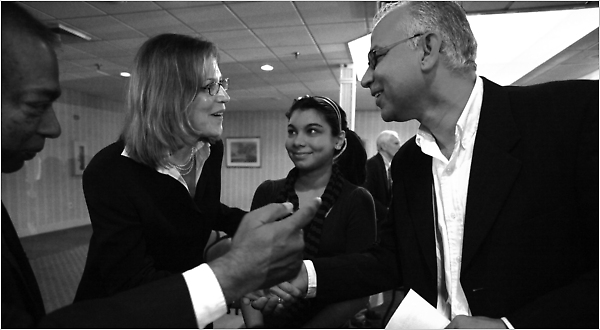
“This is not, God forbid, to spy on people, but just to live your life the way it is and if you notice something that concerns you, speak up,” he said, speaking to about 100 Connecticut residents of Pakistani descent and representatives of the F.B.I., the State Police and a dozen police departments who gathered Saturday at the Ramada Inn in Stratford. “This is someone who lived among us and under the radar without anybody in the community knowing he was radicalized.”

Paact moves beyond reminding law enforcement not to unfairly paint all Muslims as terrorists — though it still strongly takes that position. It also calls on Pakistani-Americans to acknowledge that people of Pakistani descent have been implicated in high-profile terrorist attacks, to probe the causes and in the process to remind the public that they want security as much as other Americans do.

Dr. Mirza’s wife, Faryal, an endocrinologist, took a similar approach when her son was called “terrorist” in school several years ago. She began giving annual diversity classes, in which she offered Pakistani food and talked about her culture and religion. She also goes out of her way to let patients know she is Pakistani, so they associate the country with something other than terrorism.

Although she could have argued that the burden of explaining culture should not fall on her, she said, “We have to be proactive.”

Now Paact hopes to franchise its approach to other states. On June 19, the group is holding a national conference in Hartford on radicalization and prevention, featuring the Pakistani ambassador, representatives of the National Counterterrorism Center, theologians and others.

Saturday’s meeting focused on the narrower question of how it could have been that people did not seem to remember Mr. Shahzad from a mosque or a dinner party, let alone alert the authorities about him.

Dr. Mirza said it pointed to a need to rethink the atomization of suburban culture: “Know your neighbors; say hi; help them when they need you; be attentive.”

Mr. Shahzad may have isolated himself from mosques and Pakistani organizations, but he must have had some connections; he was married to a Pakistani-American and lived in Bridgeport, where there is a relatively large Pakistani-American population, said Jaleel Rahman, a retired real estate agent.

“We have to be more vigilant,” Mr. Rahman said.

Zaheer Sharaf, Paact’s president, said that many Pakistanis were afraid of the police, because they believe that police officers in their original country are corrupt.

Add to that the post-9/11 fear that reporting a suspicion about a Muslim might lead to an overreaction by the authorities, and it made for a wide gulf between Pakistani-Americans and the police forces that Mr. Rinaldo, the police chief of Avon, said he was unaware of until he began meeting with Dr. Mirza and others.

His reaction: “Wait a minute. We’re the good guys. We have to open up to this community.”

This month, he said, he was upset to see negative reactions to Pakistani-Americans after Mr. Shahzad’s arrest.

“It seems to be one individual, yet a whole community is suffering for the crime,” Mr. Rinaldo said. “It’s not fair.”

Mateen Haider, 56, an engineer from South Windsor, said that Pakistanis, like all immigrants, simply want to fit in, so they are loath to do anything that could draw attention, including call the police.

“That is no longer enough,” he said, telling the meeting: “Today is a great day. We have spoken out. We are all united together as citizens, and we will fight this to the end.”

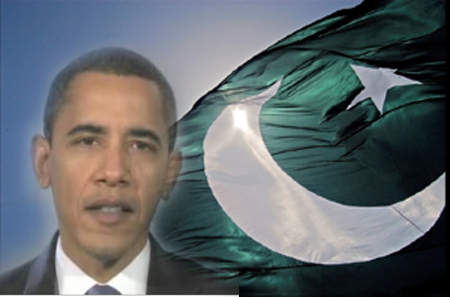
Pakistan Needs Chemotherapy, Says Obama

From The Economic Times

US President Barack Obama has said that there is growing recognition among Pakistani leaders that the `cancer’ of terrorism is the
primary threat to Pakistan’s sovereignty and not India.

“I think there has been in the past a view on the part of Pakistan that their primary rival, India, was their only concern. I think what you’ve seen over the last several months is a growing recognition that they have a cancer in their midst; that the extremist organisations that have been allowed to congregate and use as a base the frontier areas to then go into Afghanistan, that that now threatens Pakistan’s sovereignty,” Mr Obama said at a joint press conference with Afghan president Hamid Karzai. He further maintained that he was encouraged by what he has seen from the Pakistani government over the last several months.

“But just as it’s going to take some time for Afghanistan’s economy, for example, to fully recover from 30 years of war, it’s going to take some time for Pakistan, even where there is a will, to find a way in order to effectively deal with these extremists in areas that are fairly loosely governed from Islamabad,’’ he maintained.

His remarks follow some tough talking by US secretary of state Hillary Clinton and show Washington’s ‘dual policy’ towards Islamabad. “He is telling Pakistan we still have problems with you but you are still important to us,’’ said former Indian envoy to Pakistan G Parthasarathy. “He has gone out of his way to save Pakistan.

Though New Delhi has initiated the dialogue process with Islamabad, there is low expectation of any real outcome on the terror front. Experts believe that the Pakistani Army — which is the central figure — has not shed its anti-India policies and continues to perceive terror as a state policy.

US secretary of state Hillary Clinton issues a statement that sounded tough… but the real issue is has the military leadership in Pakistan changed its stand,’’ asked former foreign secretary Lalit Mansingh. “I don’t think there is any change in Pakistan’s approach on issue of terrorism.’’ He further noted that this kind of observation from the US on Pakistan has come earlier too.

Mr Obama maintained that the US aim is to build trust and continue working with the Pakistani government. “Our goal is to break down some of the old suspicions and the old bad habits and continue to work with the Pakistani government to see their interest in a stable Afghanistan which is free from foreign meddling — and that Afghanistan, Pakistan, the United States, the international community, should all be working to reduce the influence of extremists in those regions,’’ he said. He also said that the US is encouraged by Pakistan’s willingness to start asserting more control over some of these areas. “But it’s not going to happen overnight. And they have been taking enormous casualties; the Pakistani military has been going in fairly aggressively. But this will be a ongoing project,’’ he added.

Pressure Builds on Pakistan’s Military

By Omar Waraich for Time.com

“When in doubt, do nothing” could have served as the Pakistani military’s unofficial motto until now on the tricky question of tackling militant strongholds in the tribal badlands of North Waziristan. But doing nothing may no longer be an option, now that the Obama Administration is blaming the failed Times Square bomb attack on the Pakistani Taliban, or Tehrik-e-Taliban Pakistan (TTP). Washington has long cajoled the Pakistani army to extend its campaign against militants on its own soil into North Waziristan, where the TTP leadership has set up shop amid a viper’s nest of militant groups that include al-Qaeda, but the generals have until now demurred, claiming a lack of resources. Following reports that Times Square bombing suspect Faisal Shahzad was trained by TTP elements in North Waziristan, the pressure on Pakistan from Washington has sharply increased, leaving the Pakistani military leadership in an increasingly uncomfortable position.

On May 7, the top U.S. military commander in Afghanistan, General Stanley McChrystal, met with Pakistan’s army chief, General Ashfaq Kayani, reportedly to coax Pakistan into moving into North Waziristan. And on May 9, Secretary of State Hillary Clinton sternly warned of “very severe consequences” for Pakistan if an attack similar to the one tried in Times Square were to prove successful.

Pakistanis are already embarrassed at the fact that Shahzad was not only born in Pakistan and is alleged to have been trained there, but is also the son of a retired senior military officer. More alarming still is the apparent move by the TTP, until now a domestic insurgency directed at the Pakistani state, to target a U.S. city in retaliation for drone attacks in Pakistan. That leaves Pakistan’s political and military leadership to find a response sensitive to both the needs of a key ally and the concerns of a skeptical public.

Wary of U.S. motives at the best of times, Pakistani public opinion was rankled by Clinton’s warning. Even liberal newspapers committed to fighting militancy warned of the statement’s unintended effects. “Ms. Clinton’s comments are unfortunate and will rekindle suspicions here that America is no real friend of Pakistan,” said an editorial in Dawn, Pakistan’s leading newspaper. The fear is that those who oppose the campaign against jihadist militancy will turn Pakistani ire at Clinton’s perceived bullying to their advantage in the battle for Pakistani hearts and minds.

But while an offensive launched under pressure from the U.S. could antagonize the Pakistani public, there could be an even greater backlash should the U.S. decide to take matters into its own hands. This year alone has seen at least 32 U.S. drone strikes in Pakistan, principally at targets in North Waziristan, and that program — which infuriates many Pakistanis — is set to continue. While the authorities may be able to absorb the political fallout from the increasingly accurate drone strikes, their real worry is that Washington might decide to send its own ground forces into North Waziristan. “[The presence of U.S. troops] would be truly disastrous,” says Aftab Sherpao, who served as Interior Minister under former military ruler General Pervez Musharraf. The mere presence of foreign soldiers, he believes, would inflame public opinion to dangerous proportions, weakening the hand of the civilian government and the army. In September 2008, the only known case of an American boots-on-the-ground operation triggered a chorus of outrage, led by General Kayani himself.

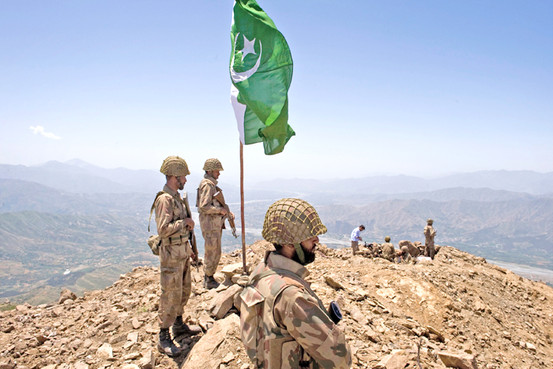
Even if the U.S. refrained from expanding its own actions on Pakistani soil, the generals and politicians also fear that failure to act could jeopardize the flow of hundreds of millions of dollars in civilian and military aid from Washington. Given the risks that follow from doing nothing, Pakistan will have to take action. “The army realizes that it must go into North Waziristan,” says retired Pakistani general and analyst Talat Masood. “They have been looking at this option for quite some time, but they have been hesitant, as they are overstretched.” Tens of thousands of Pakistani troops are already fanned out across the northwest and the tribal areas in an effort to consolidate gains made in recent offensives. “Washington should appreciate that we have covered a lot of area,” insists Sherpao, the former Interior Minister. “There have been operations in Swat, Bajaur, Mohmand and South Waziristan. We cannot move troops from the eastern border because there’s no comfort as far as India is concerned.” As the military’s decision to test-fire two ballistic missiles at the weekend demonstrates, India remains its principal focus.

The Pakistani military has long drawn a distinction between the Taliban, and related insurgent groups, using its soil as a base from which to attack NATO forces in Afghanistan and those waging war on the Pakistani state. The Afghanistan-oriented groups have been allowed to operate largely unmolested in keeping with Pakistan’s desire to recover lost influence in Afghanistan, while the military has gone after the TTP. But as the army pushed into the TTP’s strongholds in South Waziristan, the group moved north, into territory controlled by Hafiz Gul Bahadur — a militant leader who enjoys a fragile nonaggression pact with the Pakistan army. “It’s a very complex area,” says Masood, “particularly because there are elements there that are not so hostile to the Pakistani military.” By that he means the Haqqani network, an al-Qaeda linked Afghan Taliban group deemed one of the most dangerous confronting the U.S. in Afghanistan but viewed as a strategic asset by Pakistan’s intelligence services. “The army will prefer to take a limited operation, one that is confined to the Mehsud areas,” says Masood, referring to TTP leader Hakimullah Mehsud.

But North Waziristan is only one part of the jihadist infrastructure that enables terror attacks beyond Pakistan’s borders. As Shahzad’s alleged story — making contact with militant elements in Karachi before heading off to North Waziristan for training — demonstrates, there are jihadist groups seeded throughout the country, and they’re strengthening their cooperative ties with one another.

Dismantling that infrastructure will take years, say Pakistani analysts and politicians. “You can’t start operations against all these groups simultaneously,” says Sherpao. “You have to proceed step by step. You have to consolidate your gains first, then move on to the next target.” But the Shahzad case, says Sherpao, should serve as a wake-up call. “The political and military leadership have to sit down now and devise a serious response,” he says. “Otherwise, it will become very difficult.”

Pakistan and India- The Love-Hate Relationship of Two Brothers

By Manzer Munir for Pakistanis for Peace

Since the bitter partition that resulted in the creation of Pakistan and India in 1947, and three subsequent wars with each other, not to mention countless near incidents, the two neighbors have not had an easy relationship, to say the least.

However, mixed in with fear and hatred towards each other is a fascination and affinity to the arch rival on the other side of the Line of Control. In fact, one could say that the two have a love-hate relationship with each other. The recent wedding of Pakistani cricketer Shoaib Malik to Indian tennis sensation Sania Mirza is an indication to the amount of interest and hype given to the couple in media from both sides of the border, making them instantly one of the hottest and most talked about young couples in this Bollywood and glamour obsessed culture.

In Pakistani schools, children are taught very little if anything at all about Pakistan’s pre-Islamic history. Instead the children are told of the glories of the Muslim Caliphate from the time of the prophet Mohammed and then the grand rule of the Moguls of India with the construction of immortal buildings like the Taj Mahal in Agra, or the Badshahi Masjid and the Shalimar Gardens in Lahore, all three built on the Islamic style of architecture. Not very much emphasis is given to the great contributions that the people of present day Pakistan made as Hindus for centuries prior to the arrival of Islam in the subcontinent.

Criticisms abound by Muslims that in India, Muslim contributions to modern India are down played or not explored in the manner they are deserved. However, In Pakistan it is well documented those Pakistani textbooks not only do not teach about Hindu history and achievements, they actually teach hatred against India and Hindus. There is an underlying culture of hate and inequality based on religious grounds that permeates in the society despite Islam teaching respect for all religions and faiths. It’s as if thinking of someone as a polytheist makes them less equal as a human.

The mindset becomes that these non believers are infidels and this somehow makes it easy to dehumanize them or in some way think them to be inferior to you as a human being. Even the current terrorism situation in Pakistan has its roots in this culture of hate and to some level a dehumanization of people of other faiths, especially non-Abrahamic like Hinduism or Buddhism. To not recognize that ancient Indian/Hindu history is also the history of Pakistan does a great injustice to the shared history of one of the most ancient of cultures.

The natural history of this region shows that the origins of the Indian/Pakistani civilization go back to the end of the last Ice Age, more than 10,000 years ago, making this one of the oldest civilizations of the ancient world. This area of the world is a place which gave the world not only Hinduism, but also Buddhism, Sikhism, Jainism, and other religions and has been a source of spiritual inspiration since the earliest of times. But maybe even more important than the contributions in the field of religion are the ancient civilization’s gifts to science and medicine.

Albert Einstein once said “We owe a lot to the Indians, who taught us how to count, without which no worthwhile scientific discovery could have been made.” Indeed, Indian civilization is credited with the creation of the decimal number system, the binary numbering system, negative number, the origins of algebra, and even the all important concept mathematically of zero came from ancient Indian mathematicians.

Archaeologically, India has the most extensive and continuous record of all ancient civilizations, much more than Egypt, Sumeria or Mesopotamia of the same time periods. The ruins in Mohenjo-Daro and Taxila in modern day Pakistan point to the fact that there was a very advanced civilization present here and even the beginnings of one of the early urban settlements of the ancient world as they were remarkably constructed, considering its antiquity. Taxila is also the site of what is believed to be the first university or school of higher learning in the ancient world.

Also the ancient Vedic literature is the largest in the ancient world and contains thousands upon thousands of pages dwarfing what little has been successfully preserved by the rest of the world. This literature contains profound spiritual concepts, skills in mathematics, astronomy and medicine. Sanskrit is the mother of all European languages and Ayurveda is the earliest school of medicine known to man.

Indian culture not only gave the world the game of chess, but was also was a place where some of the earliest innovations in the fields of surgery and advanced dentistry were developed as there is evidence of complex dental procedures being performed in the Indus valley some 8,000 years ago!

The celebrated American author Mark Twain once famously said of India that “India is the cradle of the human race, the birthplace of human speech, the mother of history, the grandmother of legend, and the great grandmother of tradition. Our most valuable and most constructive materials in the history of man are treasured up in India only.” And not so long ago, in a statement made by China’s former ambassador to the US, Hu Shih stated that “India conquered and dominated China culturally for 20 centuries without ever having to send a single soldier across her border.” This is further validated by the fact that the Indian civilization is considered unique in that it never invaded any country in the last 10,000 years of its history!

By denying its centuries old Hindu/Indian ancestry and history, modern day Pakistan is willfully abandoning its participation and hand in some of the greatest contributions made by one civilization to mankind. Not teaching children the importance of the pre-Islamic history and beginnings of what is now Pakistan is actually a disservice to its people. Also, since the ancestors of all Pakistanis were at some point or another Indian Hindus, disrespecting Hinduism and pre-Islamic Indian culture in essence disrespects one’s own ancestors!

Pakistan can learn a great deal from its ancient brother in the fields of democracy, constitutional freedoms, economic empowerment and technological advancements. A culture of hate has only bred more hate that has now begun to consume internally a nation that has for too long wearily looked outside to its larger neighbor as its chief enemy, instead of as a brother.

India and Pakistan’s Leaders Meet

As reported by BBC.com

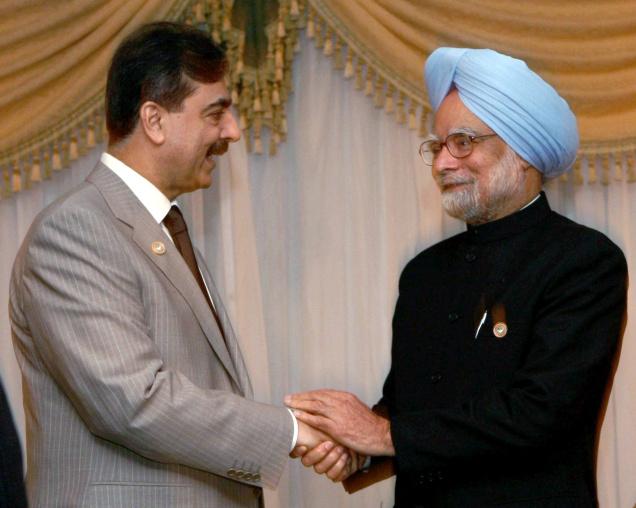
Pakistan PM Yousuf Raza Gilani spoke to his Indian counterpart Manmohan Singh at a reception hosted by the US President Barack Obama, reports said. The prime ministers of India and Pakistan met briefly during a nuclear summit attended by 47 world leaders in Washington DC.

A Pakistani embassy spokesman said it was “not a formal meeting”. cIt comes a day after Mr Singh told Mr Obama that Pakistan’s government lacked the will to punish those responsible for the Mumbai attacks. The November 2008 attacks left 174 people dead, including nine gunmen, and soured ties between India and Pakistan. Late last year, Pakistan charged seven people in connection with the attacks.

They include the suspected mastermind Zaki-ur-Rehman Lakhvi, who is allegedly the leader of the Pakistan-based militant group Lashkar-e-Taiba. Mr Singh and Mr Gilani spoke to each other at a reception hosted by Mr Obama, Pakistani embassy spokesman Nadeem Kiani said.

“Both leaders were present at the same place and so they shook hands and talked,” he said. A spokesman for India’s foreign ministry, Vishnu Prakash, told The Hindu newspaper that the two leaders “exchanged pleasantries”.
‘State elements’

India put peace talks on hold after the attacks, blaming them on Pakistan-based militants. Pakistan admitted they had been partly planned on its soil. India has also suggested what it calls “state elements” were involved. Both Pakistan and Lashkar-e-Taiba have denied any involvement.

In February, the two sides held their first formal talks since the 2008 attacks and agreed to “remain in touch”. Leaders from 40 states are attending the meeting in Washington which is expected to focus on how to secure nuclear material.