Archive for the ‘ Pakistan Army ’ Category

Pakistan Suicide Bomber Targets Mourners

As Reported by BBC News

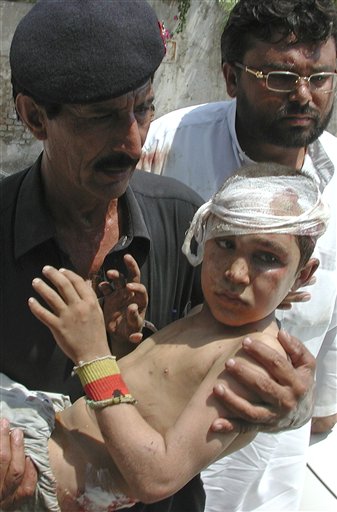
A suicide bomb near Peshawar has killed seven people near a gathering mourning a cabinet minister’s son murdered in a suspected Taliban attack, police say.

About 20 people were also injured when the bomber struck on foot near the home of Provincial Information Minister Mian Iftikhar Hussain in the town of Pabbi. Three policemen and four civilians died. The minister was not among the mourners.

The Taliban has told the BBC it killed his 28-year-old only son two days ago. The suicide bomber detonated his explosives near a mosque where people had gathered in mourning on Monday.

Police said the attacker was dropped off by a man on a motorcycle near the minister’s home in the town, 26km (16 miles) east of Peshawar.

“He [the bomber] was a young boy,” senior police officer Liaquat Ali told news agency Reuters.

“He was trying to cross the checkpost but when our policemen caught him, he exploded himself.”

Mian Iftikhar Hussain is considered the provincial government’s most outspoken critic of the Taliban militants who have carried out dozens of bombings in the area.

BBC Islamabad correspondent Ilyas Khan, whose hometown is Pabbi, says the minister and other VIPs were probably not the direct targets of this blast, as it was well known they were gathering at a college building several kilometres away.

Our correspondent says the militants may have been sending a message that they can reach Mr Hussain’s home should they choose.

A spokesman for the Pakistani Taliban, Ehsabullah Ehsan, has told the BBC the group was responsible for gunning down the minister’s son, Rashid Hussain, near his home in Pabbi on Saturday.

The town is close to the home village of Pakistani-American Faisal Shahzad, who admitted to trying to blow up New York’s Times Square in May.

Bombs and attacks blamed on Taliban and al-Qaeda-linked militants have killed more than 3,500 people across Pakistan, it is estimated, since government troops besieged a radical mosque in Islamabad in July 2007.

Much of the violence has focused on north-west Pakistan’s border area with Afghanistan, where US and Nato troops are battling to turn around a nine-year war against the Taliban.

Clinton Adds to Curious History of Mango Diplomacy

By Sebastian Abbot for The Associated Press

When U.S. Secretary of State Hillary Rodham Clinton offered Pakistan help last week in exporting mangoes to the U.S. in a bid to dampen anti-American sentiment, it marked the latest chapter in the fruit’s curious history of diplomacy and intrigue.

Clinton’s offer came three years after the Bush administration opened up the U.S. market to Indian mangoes in exchange for allowing Harley-Davidson to sell its famed motorcycles in India – a deal that generated goodwill as the two countries finalized a civilian nuclear agreement.

Washington’s mango-powered diplomacy this time around is part of a broader $7.5 billion aid effort that is meant to improve the image of the U.S. in Pakistan, a move officials hope will provide the Pakistani government with greater room to cooperate on turning around the war in Afghanistan.

“I have personally vouched for Pakistani mangoes, which are delicious, and I’m looking forward to seeing Americans be able to enjoy those in the coming months,” Clinton said during her visit to Islamabad last week.

The prominence of mangoes in South Asian diplomacy should come as no surprise since scientists believe the sweet and fleshy orange fruit originated in the region before Buddhist monks and Persian traders introduced the plant to other areas of the world.

Pakistan and India recognize the mango as their national fruit, and summer in both countries is defined by the sights and sounds of vendors hawking piles of soft, sweet-smelling mangoes or pureeing them to create refreshing drinks that cut through the scorching heat.

Officials from both countries have exchanged crates of mangoes over the years in an attempt to soften tensions between the nuclear-armed rivals that have fought three wars since the partition of British India created the two nations a little over 60 years ago.

Former Pakistani President Zia ul-Haq may have begun the tradition when he swapped mangoes in the early 1980s with the Indian prime minister at the time, Indira Gandhi. The exchange took place several years before ul-Haq was killed in a plane crash that conspiracy theorists blame on a crate of mangoes placed on board moments before takeoff that was supposedly sprayed with a poisonous gas that killed the pilots and other passengers.

But like almost everything else, mangoes have also been a source of tension between Pakistan and India since the two countries view each other as competitors in the export market. Indians and Pakistanis argue over who grows the best mangoes – a debate that resembles the tussle between Lebanon and Israel over who can claim the mashed chickpea dish hummus as their own.

If all goes to plan, Americans will get a chance to conduct their own taste test once Pakistani mangoes break into the U.S. market. The U.S. plans trial shipments later this year and has pledged to support a three-year program to promote the export of Pakistani mangoes by sea to America, the world’s largest importer of the fruit. The initiative is part of a $21 million program to boost Pakistan’s agriculture. The U.S. will help finance hot water treatment facilities, sorting and grading machines and cold storage facilities.

India, meanwhile, is the world’s largest mango producer with about 13 million tons each year, far exceeding all other countries, including Pakistan, which comes in fifth place with about 1.6 million tons. But both countries have struggled to build the necessary infrastructure to really boost exports.

“Farmers are very grateful for the U.S. help,” said Muzaffar Khan Khakwani, the owner of a mango farm near the central Pakistani city of Multan that is benefiting from American aid. “It’s not just the financial help. It’s the capacity building and the exposure of farmers to well managed orchards.”

But it remains to be seen how quickly Pakistan can benefit from Clinton’s recently announced initiative. India had trouble with logistics and pricing when it first tried to export its mangoes to the U.S.

It is even more uncertain whether U.S. aid will really dent anti-American sentiment in Pakistan and motivate the government to step up support for the Afghan war, a move the Pakistanis have resisted for years.

As an Indian proverb says, “You can’t hurry a mango tree to ripen its fruit.”


Going After the Haqqani Network

From the Editors of The Express Tribune

The question of the Haqqani network and how it is to be handled continues to fester. The US special envoy, Richard Holbrooke, this time in London, has suggested that Pakistan needs to go after the group with more force. The warning from Mr Holbrooke will have dashed hopes, raised during Hillary Clinton’s visit, that Washington was prepared to go along with a Pakistani strategy of dialogue with the network — led by Jalaluddin Haqqani and his son Sirajuddin. Links between the Pakistani intelligence forces and the Haqqanis have existed since the Afghan war and they have never been explicitly denied by either party. The elder Haqqani made his name as a formidable mujahideen commander during the Soviet occupation of Afghanistan when he was a member of Maulvi Yunis Khalis’s Hizb-i-Islami. He was also, according to American investigative journalist Steve Coll (who recently wrote Ghost Wars : The Secret History of the CIA, Afghanistan and Bin Laden, from the Soviet Invasion to September 10, 2001), offered a major role in the government by Afghan President Hamid Karzai some years ago.

For Islamabad, the pressure is on again. The Haqqani network is seen in Afghanistan as a key problem; it has carried out numerous attacks there. Washington believes Pakistan needs to do more to support the efforts against the militants in that country. The Pakistan military meanwhile, following its operation in South Waziristan, has avoided any move into North Waziristan – despite some gentle nudging from the US – reportedly following the intervention of the Haqqanis. They are also said to be facilitating talks with other militant factions across the conflict zone.

This brings us to an old issue: that of ‘good’ and ‘bad’ militants. It is clear that in the minds of the Pakistani military and the agencies allied to it this line of distinction continues to exist. Of course, Washington is in many ways responsible for creating this. The ghosts of the Afghan war, the alliance it formed with the mujahideen fighting the former Soviets and the engagement of Pakistan’s agencies, notably the ISI, are today coming back to haunt it. This is not to say that the CIA didn’t have its own connections to some of these actors in the past, but the point that is missed by most people is that it is America which calls the shots in this part of the world (or perhaps in most other parts as well).

There is a need for Islamabad to think things through. The division of militants into various camps, for example, so-called ‘good’ Taliban versus so-called ‘bad’ Taliban, has to stop. Essentially, these men of violence do more harm than good. The fact that a particular faction directs its wrath outside the country and avoids targeting Pakistani security forces should not be enough to cast it in the role of an ally. The effort against militancy does need to be seen in the wider regional context, and not as a matter of narrow allegiances and temporary agreements. The people who make decisions in Islamabad should keep in mind just how unsuccessful past efforts to do deals with the militants have been — with such attempts giving groups making up the complex Taliban network in the North a chance to reorganise and strengthen themselves on more than one occasion. There is reason to believe that this has contributed to the terrorism that has claimed thousands of lives. Even if the Haqqani network did not itself send out the bombers it has acted to back forces that have played a part in encouraging militant trends. The so-called Quetta Shura, led by the elusive Mullah Omar, is among these.

This having been said, Washington too needs also to review its own demands. There have been mixed signals over recent weeks. It is possible there is a lack of clarity on strategy within the US capital. This of course means the confusion in Islamabad has grown. A clear course of action needs to be planned in unison so the militants that Washington helped nurture can be driven away.

Pakistan Extends Gen. Kayani’s Term

By Zahid Hussain for The Wall Street Journal

Pakistan’s civilian government late Thursday extended the term of army chief General Ashfaq Kayani for three more years to ensure continuity in the military leadership at a crucial stage in the country’s battle against Islamic militants.  The announcement was made by Prime Minister Yousuf Raza Gilani in a televised speech.

“The decision is taken to maintain continuity in the military’s command as the country is passing through very critical times,” Mr. Gilani said. Gen. Kayani, 58 years old, was appointed army chief in December 2007 and was to retire at the end of the year under normal tenure limitations.

The general has won praise for leading two successful military operations against Islamic militants last year in Pakistan’s Swat Valley and South Waziristan tribal region. But militants have regrouped in many areas and continue to unleash suicide strikes across the country.

More than 50,000 Pakistani troops are still engaged in fighting al Qaeda backed Islamic militants in the Pakistan’s troubled northwestern region, which borders Afghanistan. They are aided by unmanned U.S. drone strikes.

The war is seen as a crucial piece of the ongoing conflict in Afghanistan as many Taliban fighters use Pakistan’s tribal regions as a safe haven.

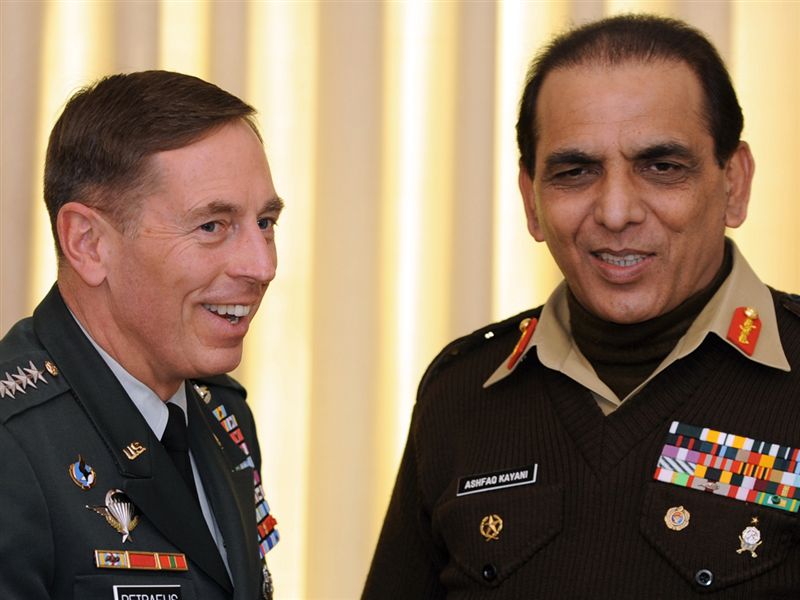
A senior government official said Gen. Kayani’s good rapport with Gen. David Petraeus, the commander of North Atlantic Treaty Organization forces in Afghanistan, and other American military leaders was a major factor in the decision to extend his term.

“He has worked closely with the current American military leadership and it is important for both Pakistan and the U.S. at this point for Gen. Kayani to stay at the helm,” said the official.

Other analysts agreed continuity was important at the current juncture of the war. “His leadership is crucial at the time when Pakistani army is fighting a decisive battle against the militants,” said Hasan-Askari Rizvi, an independent defense analyst.

Still, the extension of his tenure is likely to raise concerns among some pro-democracy activists about the pre-eminent role of the military in Pakistan.

The country has a democratically elected civilian government under President Asif Ali Zardari. But the country has been ruled more by military leaders in its 63-year history, most recently between 1999 and 2008.

Mr. Zardari’s government faces growing opposition and some analysts fear the army may step in again if they deem it necessary. Gen. Kayani, though, has focused on fighting militants. “We have to defeat them decisively,” he said during a recent discussion with a group of journalists.

Gen. Kayani received his commission in the Pakistani army in 1971. He served as the chief of Inter-Services Intelligence, Pakistan’s powerful spy agency, before his elevation to army chief.

Cutting Hillary Clinton Some Slack

By Mosharraf Zaidi for The News International

Poor Americans. This is the fellow that Secretary of State Hillary Clinton has to stand beside as she tries to squeeze more juice out of a Kerry-Lugar Bill that had its lifeblood squeezed out of it last year by the Pakistani establishment, when it first became US law. The frustration from that reaction still riles the Americans. So much so that Hillary Clinton, who is a role model and an inspiration, can’t seem to let go. On every trip she reproduces a Bin Laden outburst that is militarily and strategically irrelevant for the US, but that serves as an enduring cancerous tumour for America’s public diplomacy goals in Pakistan.

Still. Mrs Clinton needs to be cut some slack. Her tireless advocacy for health care around the world, and her enduring compassion for South Asians — Indians, Pakistanis, Bangladeshis, Muslims, Hindus, men, children, and most of all, women — is singularly unique among either Democrats or Republicans.

The western media seems as fabulously smitten by Mrs Clinton as I am. The wires, the newspapers and the electronic media all reported Mrs Clinton’s announcement of the allocation of $500 million worth of projects as headline news, when really, it represents the fulfilment of only one-third of Kerry-Lugar-Berman’s sacred covenant with the Pakistani people. One of the most telling things about that covenant? It was signed by the US House of Representatives and the US Senate. It was, in short, a covenant between the US government and the American people, with the US government acting as a proxy for the Pakistani people.

Perhaps now Pakistanis can better understand the frustration of the John Kerrys, the Hillary Clintons and the Richard Holbrookes of the earth. Top US policymakers have fought for over two years to win the Kerry-Lugar Bill. Since then, two things have kept that money from flowing into Pakistan. The first is Mr Holbrooke’s decision to dispense with the Clintonian (Bill, not Hill) model of US aid disbursement through large contracting firms that Americans often refer to as Beltway Bandits. That decision, while long overdue, was rushed and was made in the wrong country, at the wrong time. American development assistance, which is not routed solely through USAID, but often through half a dozen different US departments (or ministries), has been in desperate need of an overhaul for years. But to attempt to reform the instrument of aid delivery in Pakistan, at the climax of Obama’s war in Afghanistan, has been a disastrous decision. The American international aid community is so removed and so distant from the mainstream of western assistance thinking (spearheaded by the OECD and captured in the Paris Declaration) that it doesn’t quite know how to deal with large sums of money without the Beltway Bandits. This has meant that the Kerry-Lugar money has been parked in Washington DC, with a clear destination, but no vehicle to take it there.

The second thing that has kept the Kerry-Lugar money from being spent is the government of Pakistan itself. Pakistan has no clarity whatsoever about what its development priorities are. It required the intervention of the military chief back in March to summon the federal secretaries to begin to articulate a wishlist of pet projects this government would like to see come to fruition. Indecision and the absence of any coherent development strategy within Pakistan have meant that the US government has had to try to figure out what Pakistan wants, kind of on its own. This may seem like comedy noire, but it’s really not funny at all.

The problem with Pakistani government today is that it doesn’t enjoy the competent stability it once used to through the bureaucracy. Today’s Pakistan’s bureaucracy, while made up of individually brilliant officers, is a collection of inward-looking dinosaurs that cannot see beyond their GOR houses, their I-8 plots and their post-retirement benefits. Those officers, in years past, used to be the eyes and ears of oft-changing governments that would seek the guidance of senior bureaucrats in the federal ministries and at the provincial headquarters. While there’s been no discernable change in the quality of governance that democratically elected politicians can render, there has been a severe nosedive in the quality of officers available to either the federal or provincial governments.

Part of the reason for the exodus of top-tier officers during the Musharraf era was the curtailment of powers of district managers, under decentralised local governments. But the decentralisation argument is a red-herring for a much more fundamental shift in Pakistani bureaucracy. While being a CSP or DMG officer was an instrument of social mobility in the 1970s or 1980s, it is now a barrier to the personal and professional growth of officers. Many of Pakistan’s brightest officers can afford to be well-paid UN, World Bank and IMF staffers. Many others can do even better at Wall Street and on Madison Avenue. Still others can be brilliant academics. Across the board, since 1999 we have seen exactly this. An exodus of top-shelf talent that might have been able to deal with rents, with incompetence, and with the heat, but not with the disrespect that the military and political class have for educated Pakistanis in the employ of the government of Pakistan.

So how does all this relate to Mrs Clinton’s troubles in Pakistan? Simple. No matter how democratically legitimate, when the blind lead the blind, there is a problem of vision. Pakistani politicians are so disconnected from any kind of global narrative that it will be a generation before we produce a Chidambaram, a Krishna or a Mukherjee that can win elections without the help of their gaddi (see: Shah Mehmood Qureshi), or the kindness of the Arbab Ghulam Rahims of the world (see: Shaukat Aziz). The nauseating outburst of the foreign minister on Friday was a demonstration that winning an election does not enable you to win an argument. In short, Pakistan’s current political class cannot muster politically legitimate actors that are also competent at statecraft.

Enter the advisory class. This is where the Husain Haqqanis, the Shaukat Tarins and the Dr Hafeez Shaikhs enter the fray. No fake degrees here. Only pedigree. Their problem is of an entirely different nature. They don’t have any stake in Pakistani politics — they enter as unknowns at the thaana kuthchehri and galli-mohalla level, and they leave as unknowns at the thaana kuthchehri and galli-mohalla level. They can talk about all the right kinds of reform, but they can’t deliver. More worryingly, their reform-speak is often deluded, because it is devoid of any political rigour. “Let’s clip military powers by marketing bold ideas in Washington DC, instead of Rawalpindi.” Well. We’ve seen how that has turned out. “Let’s raise taxes!” Sure. Because nobody else has ever thought of that! “Let’s improve education.” Sure. Because it takes genius to figure out that education is a problem. Advice that is anchored in Rubinomics and Bretton Woods theology has been failing Pakistan for the entire duration of Pakistan’s lifetime. This should hardly be a surprise. It never works anywhere.

And that is why Shah Mehmood Qureshi is wrong, again. Perceptions won’t change. $500 million worth of pet projects is a supremely sweet gesture. But even $500 billion worth of aid, delivered through Beltway Bandits, NGOs, budget support or otherwise can’t change the lives of Pakistanis. Only organic reform can achieve such noble goals. When the strategic dialogue in October picks up where this one leaves, Pakistan will still have no CT strategy, no development strategy, an inflated defence budget, no civil service reform, and no hate-speech legislation. All the money in the world can’t change that. And that’s not Hillary Clinton’s fault. That one’s on us.

Clinton Reaffirms US Commitment to Pakistan

By Ayaz Gul for The Voice of America

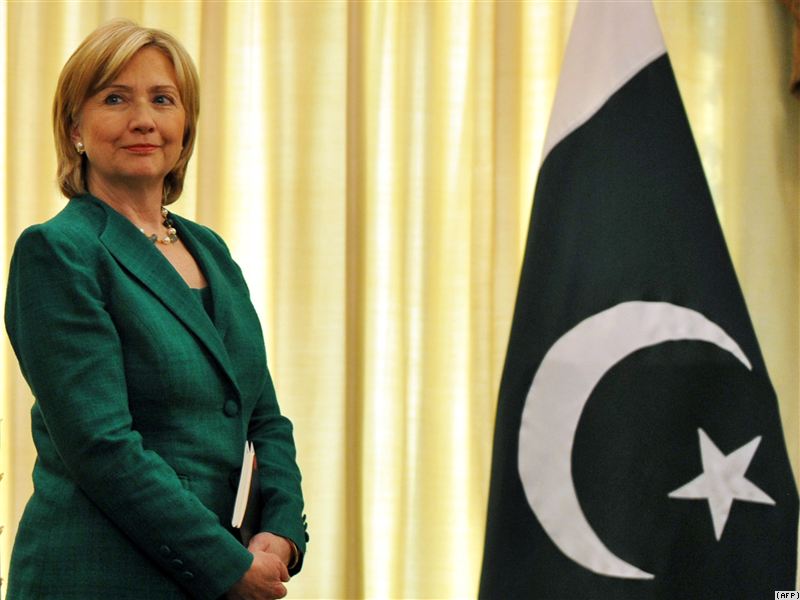
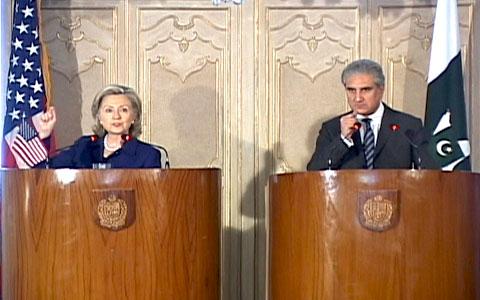
Concluding a second round of the so-called U.S.-Pakistan strategic dialogue in Islamabad, Secretary of State Hillary Clinton on Monday announced more than $500 million in several new aid programs for Pakistan.

The string of new projects unveiled by Clinton during a joint press conference with Pakistani Foreign Minister Shah Memood Qureshi are designed to help Pakistan meet its energy needs and boost power generation, health and agricultural development. The programs are the first to be launched under U.S legislation passed last year tripling civilian aid for Pakistan to $7.5 billion during the next five years.

Secretary Clinton said the United States hopes the new aid will translate into real life improvements for families and communities, describing them as long-term investments in Pakistan’s future.

“We are committed to building a partnership with Pakistan that of course strengthens security and protects the people of Pakistan, but goes far beyond security,” Clinton said. “We want to help you drive economic growth and prosperity, strengthen your democratic government institutions and expand access to the tools of opportunity.”

Pakistan is playing a key role in the international fighting against Taliban insurgents in Afghanistan. But public opinion in Pakistan still views U.S. motives with a considerable amount of suspicion. The skepticism stems from the U.S decision to abandon support for Pakistan after Soviet forces withdrew from Afghanistan.

But Secretary Clinton says she can see positive change resulting from what she called deeper and broader bilateral engagements in recent years.

“We have moved beyond a standoff of our misunderstandings that were allowed to fester and not addressed… to a position where we are engaged in the most open dialogue that I think our two countries have ever had,” she said.

Foreign minister Qureshi also agreed that the enhanced U.S cooperation in various fields such as energy, power, health, agricultural and education sector is critical for changing the public perception in Pakistan.

“The opinion of the United States will change when the people of Pakistan see that their lives have changed,” said Mr. Qureshi.

Sunday, Clinton attended the signing of a landmark trade deal reached by Pakistan and Afghanistan, after years of negotiations. The United States has been pushing Afghan and Pakistani leaders to improve bilateral relations it says will contribute to the fight against extremists.

Secretary Clinton’s next stop as part of her Asia trip will be Kabul, where she will attend an international conference on Tuesday.

At the news conference in Islamabad, she reiterated that insurgents who wish to reconcile must lay down their arms, renounce partnership with al-Qaida and accept Afghanistan’s constitution.

“It seems to us that there will be some who are willing to meet those conditions and others who are not. And we would strongly advise our friends in Afghanistan to deal with those who are committed to a peaceful future where their ideas can compete in the political arena through the ballot box, not through the force of arms.”

Taliban insurgents have stepped up attacks against Afghan and U.S-led coalition forces in recent months. More than 50 foreign troops have died in July while the previous month was the deadliest for international forces since the war against Taliban and its allies began nine years ago.

Pakistan Oil & Gas to Spend $1 Billion on Exploration, CEO Says

By Khaliq Ahmed and Farhan Sharif for Bloomberg

Oil & Gas Development Co., Pakistan’s biggest fuels explorer, plans to spend a record $1 billion this year to drill 48 new wells and increase production, to help bridge the nation’s record energy deficit.

“We are following a very aggressive exploration policy,” Chief Executive Shah Mehboob Alam said in an interview at his office in Islamabad yesterday. “We are targeting a number of discoveries.”

Improved domestic energy supplies may help Pakistan’s economy which has been hurt by terrorism and falling foreign investment. Demand for energy is three times supply and daily power outages have forced textile and engineering factories to close and caused riots across the country.

“There is a huge need and also huge potential to increase production by explorers,” said Umer Ayaz, a research analyst at JS Global Capital Ltd. in Karachi. “Pakistan has unusual risks in exploration and also unusually high potential.” A “sizeable” discovery in the northwest will be announced in “a couple of days,” Alam said, without giving details.

Shares of Oil & Gas Development rose 2.8 percent to 149.56 rupees on the Karachi Stock Exchange yesterday, the highest since Oct. 30, 2006. The stock has gained 35 percent this year compared with an 8 percent increase in the benchmark index. Oil & Gas plans to expand exploration in the western province of Baluchistan, where attacks on pipelines and installations have disrupted gas supplies, Alam said. The province is estimated to hold more than half the country’s gas reserves.

The company expects the Zin Block in Baluchistan to generate its first gas flows within two years. The block has estimated gas reserves of 10 trillion cubic feet and drilling is scheduled to start as soon as the government approves security plans within the next two weeks, he said.

“We drilled only five out a planned 15 wells in Baluchistan last year because of security issues,” he said. “Now, we have submitted a plan to the Finance Ministry under which the Frontier Corp. will raise a special force of 500 to 600 people.” Baluch nationalists want political autonomy and a share of the resources in the province, where the country’s largest gas fields, including Sui, are located. The Frontier Corp. is part of Pakistan’s paramilitary force.

The company is also working in fields in western Baluchistan, including the Samandar field, west of Karachi, and Shahana, which is near the border with Iran, Alam said. Oil & Gas will invite bids today for the development of Kunar Pasakhi Deep and Tando Allah Yar fields in the southern province of Sindh, Alam said. Previously awarded tenders had been canceled after being challenged in court for not complying with regulatory procedures. The two fields may produce 280 million cubic feet of gas a day, 360 metric tons of liquefied petroleum gas a day and 4,300 barrels of oil a day, Alam said.

The company drilled 26 wells and made six discoveries in the year ended June 30, including at Nashpa in the northwest, which is producing 15 million cubic feet a day of gas and 4,700 barrels of oil a day, he said. Oil & Gas Development discovers fuel in one out of every 2.3 wells drilled, compared with an industry average of one in every 3.8, he said.

Oil & Gas Development will increase production after installing new compressors to plug leaks at the Qadirpur gas field by September, Alam said. The company plans to buy two new rigs this year. The Qadirpur field in the southern province of Sindh contributes about 40 percent of the company’s total gas output.

Oil & Gas Development produces about 1 billion cubic feet of gas a day, or a quarter of the country’s total output. Its oil production is 60 percent of the nation’s total of 62,000 barrels a day. Pakistan imports 85 percent of its oil needs. The company’s profit in the 12 months ended June 30, will be “higher than last year,” Alam said, without giving details. Oil & Gas reported a net profit of 55.5 billion rupees ($647 million) in the year ended June 30, 2009, according to data compiled by Bloomberg.

Krishna Arrives in Pakistan, Calls Visit ‘a New Beginning’

By Omer Farooq Khan for The Times of India

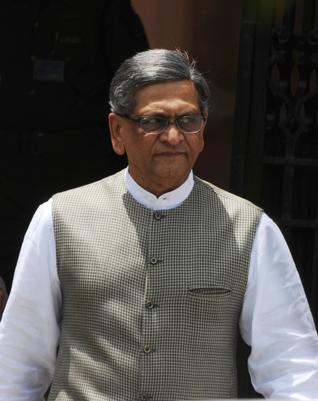
Indian external affairs minister S M Krishna, who arrived in Islamabad on Wednesday, said that he is on a mission to restore trust and increase confidence between the two countries.

“We hope to discuss all issues of mutual interest and concern that can contribute to restoring trust and building confidence in our bilateral relationship,” Krishna told journalists as he arrived here.

During his three-day visit, Krishna will hold talks with his Pakistani counterpart Shah Mahmood Qureshi on Thursday and will also meet President Asif Ali Zardari and PM Yusuf Raza Gillani. S M Krishna looks forward seeking progress on the issue of terrorism being raised by the Indian home minister P Chidambaram with his Pakistani counterpart Rehman Malik last month in Islamabad.

“I also look forward to receiving feedback on the issues raised by our home minister (P Chidambaram) during his visit to Pakistan last month on our core concern of terrorism, particularly in the light of the discussions our home minister had in Pakistan in the context of interrogation of David Headley regarding the Mumbai terrorist attack,” he said.

Krishna described his visit as important as it marks a new beginning of journey to build a prosperous, friendly and cooperative relationship between the two countries.

India is committed to resolving all issues with Pakistan through peaceful dialogue based on mutual trust and confidence, Krishna said.

“I brought a message of peace and friendship from the people of India and we hope to undertake this voyage of peace, however long and arduous, jointly with the government and people of Pakistan,” he said.
Pakistan’s foreign minister Shah Mehmood Qureshi has said that he will raise with Krishna the issue of alleged human rights in Jammu and Kashmir.

“We are approaching the meeting with a positive mindset,” Qureshi said.

The Krishna-Qureshi talks on Thursday will be the third major contact between the two countries in within a month.

Home minister Chidambaram conveyed India’s concerns and expectations on terrorism to Pakistani leadership last month when he visited Islamabad.

The Indian and Pakistani prime ministers met in April on the sidelines of a regional summit in Bhutan, which set in motion the process to revive suspended contacts at different levels of government.

Pakistan Suicide Bombing Death Toll Jumps to 102

By Riaz Khan and Nahal Toosi for The Associated Press

The death toll from twin suicide bombings in Pakistan jumped to 102 with 115 people wounded on Saturday, making it the deadliest attack this year in the country.

Authorities continued to remove debris from the site of the attack in the village of Yakaghund in a northwest tribal region, after two bombers struck seconds apart Friday near a government office.

One of the bombs appeared fairly small but the other was huge, officials said. At least one bomber was on a motorcycle.

The attackers detonated their explosives near the office of Rasool Khan, a deputy Mohmand administrator who escaped unharmed. Tribal elders, including those involved in setting up militias to fight the Taliban, were in the building, but none was hurt, according to Mohmand chief administrator Amjad Ali Khan.

Video footage showed dozens of men searching through piles of yellow brick and mud rubble for survivors. Women and children were among the victims.

Mohmand is one of several areas in Pakistan’s lawless tribal belt where Taliban and al-Qaida members are believed to be hiding.

Abdul Wadood, 19, was sitting in a vehicle at the time of the bombings.

“I only heard the deafening blast and lost consciousness,” said Wadood, who was being treated for head and arm wounds in Peshawar, the main city in the northwest, about 15 miles (25 kilometers) away. “I found myself on a hospital bed after opening my eyes. I think those who planned or carried out this attack are not humans.”

Some 70 to 80 shops were damaged or destroyed, while damage to a prison building allowed 28 prisoners — ordinary criminals, not militants — to flee, said Rasool Khan, who gave the casualty figures.

Friday’s was the deadliest attack this year in Pakistan. On New Year’s Day, a suicide car bomber struck a sports event near a meeting of tribesmen who supervise an anti-Taliban militia near the South Waziristan tribal area, killing 96 people.

Near the attack site, officials had been distributing wheelchairs Friday to disabled people and equipment to poor farmers, Amjad Ali Khan said. It was unclear how many participants in that event were among the victims.

Pakistani Taliban spokesmen could not be immediately reached after the attack. There were scattered reports the militant group’s branch in Mohmand had claimed responsibility and said it was targeting the elders.

The Pakistani army has carried out operations in Mohmand, but it has been unable to extirpate the militants. Its efforts to rely on citizen militias to take on the militants have had limited success there.

Nevertheless, there have been fewer attacks in Pakistan this year than in previous years — most notably in the northwest. In the last three months of 2009, more than 500 people were killed in a surge of attacks in the country.

“This Passport is valid for all the countries of the World, except Israel”

By Junaid Ghumman for Mideast Youth
The world Zionist movement should not be neglectful of the dangers of Pakistan to it. And Pakistan now should be its first target, for this ideological State is a threat to our existence. And Pakistan, the whole of it, hates the Jews and loves the Arabs. This lover of the Arabs is more dangerous to us than the Arabs themselves. For that matter, it is most essential for the world Zionism that it should now take immediate steps against Pakistan.” Ben-Gurion, the Prime Minister of Israel.

This speech was first published in Jewish Chronicles on 9th August 1967. This statement risen many controversies bloggers like me have quoted it many times; various explanations were also given to disprove this statement, but still we read it on every article related to Pakistan and Israel.

Pakistan and Israel do share some history and ideology. These are only two countries in the world created in the name of Religion; Pakistan for Islam, Israel for Judaism and both countries have taken independence from same British Empire after World War II.

Then why my passport still says, “This Passport is valid for all the countries of the World, except Israel”?

Pakistan claimed its independence from foreign invaders after two centuries of struggle. In 1757 after Battle of Plessey, East India Company started ruling Indian Sub-continent. The first armed resistance was Battle of Independence in 1857 after which the power was transferred to British government. In 1885 the political movement of independence started as Indian National Congress. Some of the Muslim leaders soon separated and launched new movement in 1906 as All India Muslim League for separate Muslim state which led to the creation of independent Islamic state Pakistan on 14th August 1947, which then became Islamic Republic of Pakistan in 1973.

For Israel the timings was same and the rulers were also same as of Indian sub-continents, but events and circumstances were totally different. Israel declared its independence on 14th May 1948 from British Mandate of Palestine. But Israel independence movement was not against British Occupation; rather it was a movement of creating a Jewish State by silently invading the markets, trades and areas to make Jewish settlements. Hovevei Zion or Hibbat Zion refers to organizations that are considered the foundations of the modern Zionist movement. These movements led to creation of Rishon LeZion in 1882 which is the first Jewish settlement in Palestine; which was at that time under Ottoman Empire. First Zionist Congress held in 1897 started the unified Zionist Movement which was converted to World Zionist Organization in 1960. This movement was successful in legalizing its demand of separate Jewish state in Palestine after Balfour Declaration 1917, in which British Mandate of Palestine’s (1917 – 1948) foreign Secretary Arthur James Balfour wrote letter to the leader of British Jewish Community Baron Rothschild, pledging British Empire support of creation of Jewish State in Palestinian Land.

So what kind of relationship does Pakistan and Israel has over period of 60 years?

While writing this blog I also tried to ask couple Pakistanis; their view points about Pakistan-Israel Relationship. Yousaf is Pakistani Engineer living and working in Saudi Arabia. Being in the region, Pakistanis here are emotionally and regionally attached to Middle East crisis. I asked him what kind of relationship both countries have. “Relationship between Pakistan and Israel are tied to the fact that how Israel government treats the Palestinians. In general, as Jerusalem is considered as one of the holiest places in Islam; this fact serves as a thorn in the eyes of Pakistanis.” Yousaf said.

Pakistan is among those 20 UN member nations which do not recognize Israel as an independent state. These 20 countries also include Afghanistan, Algeria, Bahrain, Bangladesh, Chad, Cuba, Indonesia, Iran, Iraq, Kuwait, Lebanon, Libya, Malaysia, North Korea, Saudi Arabia, Sudan, Syria, United Arab Emirates and Yemen. Unofficial media reports say that first Prime Minister of Israel David Ben-Gurion send secret message to Muhammad Ali Jinnah to formally accept its existence, but no response was given back to him. At the time of independence of Pakistan, it was reported that some 2,000 Jews remained in Pakistan, mostly Bene Yisrale Jews. Many left to Israel after its declaration of independence. Jews from Karachi, Pakistan, now live in Ramla, Israel, and they also built a synagogue they named Magen Shalome after the Pakistani Synagogue which was demolished in 1980.

60s, 70s and beginning of 80s were the decades when for the first time both countries came face to face when Arab-Israel war started. In “Six-day Arab Israeli War” of 1967; Royal Jordanian Air Force (RJAF) and Pakistan Air Force (PAF) were flying under a joint command. PAF pilot Flt. Lt. Saiful Azam became the only pilot from the Arab side to have shot down 3 IDF/AF aircraft within 72 hours.

In 1973 Arab-Israeli Yom Kippur War, 16 PAF pilots volunteered to support Syria and Egypt. On 23 October 1973 Flt. Lt. M. Hatif shot down the Israeli Phantom. On 26 April 1974, PAF pilot Flt. Lt. A. Sattar Alvi became the first Pakistani pilot, during the Yom Kippur War; to shoot down an Israeli Mirage in air combat. He was honoured by the Syrian government. Nur Khan, who was the Wing Commander received praised from Israeli President Ezer Weizman who wrote in his autobiography that: “He was a formidable fellow and I was glad that he was Pakistani and not Egyptian”. Pakistan also sent medical ambulances to Egypt and Syria.

After the Israeli attack on Iraq’s under-construction French-built nuclear Osirak-type reactor, Tammuz-I, south of Baghdad on 7 June 1981, Pakistan’s then President President Zia-ul-Haq directed PAF Air Headquarters (AHQ) to make contingency plans for a possible Israeli attack on Kahuta. Kahuta is noted for its nuclear research studies and nuclear development technologies in Kahuta Research Laboratories. On 10 July 1982, a special contingency plan was issued. In the event of an Israeli attack on Pakistan’s strategic installations, plans were drawn up for a retaliatory Pakistani strike on Negev Nuclear Research Centre. The Negev Nuclear Research Centre is an Israeli nuclear installation located in the Negev desert, about thirteen kilometres to the south-east of the city of Dimona.

On political level many statements were given. As chair of the Second Islamic Summit in 1974, then Pakistan’s Prime Minister Zulfiqar Ali Bhutto said: “To Jews as Jews we bear no malice; to Jews as Zionists, intoxicated with their militarism and reeking with technological arrogance, we refuse to be hospitable.”

In of his speeches in National Assembly of Pakistan, before Zulfiqar Ali Bhutto was hanged in 1979, he said, “Mr. Speaker Sir! This is not Desi (local) conspiracy, it’s an international conspiracy. Let me make it quite clear for the history, whatever the future and fate of this individual will be; that doesn’t matter, but let me tell you again this is not a desi (local) conspiracy, this is not PNA conspiracy, this is massive, huge and colossal international conspiracy against the Islamic State of Pakistan.” (PNA was Pakistan National Alliance against the ruling Pakistan Peoples Party). Nowadays people like to refer this international controversy as Zionist or Israeli Conspiracy.

A controversial book was published in 2003, named Charlie’s Wilson war which conspire about use of Israeli weapons supplied to General Zia ul Haq to fight Soviets in Afghanistan (1979 – 1989). Famous Hollywood movie Charlie’s Wilson War was also released in 2007. After that the back door politics started between Pakistan and Israel.

The President of Pakistan General Zia ul Haq was assassinated in plane crash on 17 August 1988. Among the conspiracy theories; Mossad (Israeli Intelligence Agency) involvement is also believed to exist. In the fall 2005 World Policy Journal, John Gunther Dean, a former US ambassador to India, blamed the Mossad for orchestrating Zia’s assassination in retaliation for Pakistan developing a nuclear weapon to counteract India and Israel.

Ali is my friend living in Middle East. I asked him, can there ever be any friendship or peace between Pakistan and Israel, to which he replied, “Yes there can be, Israel is a small country with a group of people belonging to a group of faith. And also it is in its interest that it should be at peace with every country, and especially those countries that it feels can threaten its existence.”

It is believed that, at the time of Benazir Bhutto’s Government both countries had very strong relationship especially in countering terrorism. In 1993 Benazir Bhutto, along with her then-Director-General of Military Operations, Pervez Musharraf, intensified the ISI’s liaison with Mossad in 1993, and she too began to cultivate the American Jewish lobby. Bhutto is said to have had a secret meeting in New York with a senior Israeli diplomat, who flew to the U.S. during her visit to Washington, D.C. in 1995.

In 1996, Pakistan’s Intelligence Agency, FIA, started a secret war against Extremist in Pakistan under Rehman Malik. According to sources, FIA also contacted Israeli intelligence agency Mossad to help and send its officers to investigate the extremism. Even after these strong ties, controversies never left the scenario. Benazir Bhutto was assassinated on 27 December 2007 in one political rally. This was considered to be typical Mossad Assassination style. It is believed that she was the one knowing the reality of 9/11 being inside job and death of Osama Bin Laden, which she also publicly stated in David Frost TV program. That program was edited before telecasting. But Jewish Journals and Media still believed in the opposite way. According to Jewish media, Miss Bhutto asked for Mossad help to protect her on her return to Pakistan as she was afraid she will be killed.

In 1998 Pakistan and Israel were again on the verge of war. On 27 May 1998, day before Pakistan conducted its nuclear test in Chaghi, Southern Province of Baluchistan, Pakistan; unidentified F-16 was found hovering around skies on border areas of Pakistan. Pakistan Air Force; taking is as repetition of Israeli Conspiracy similar to 1981, Air Bourne its fighters to foil any attack. But Pakistan and Israeli UN delegation met in UN soon after Pakistan Nuclear tests in 1998 to give assurance that Pakistan will not transfer its technologies to Iran, the arch enemy of Israel.

Musharraf’s nine years of rule was also golden times for both countries. In 2003, General Pervaiz Musharraf said on television interview, “Mainly Muslim Pakistan must seriously take up the issue of recognizing Israel and avoid dealing with it on emotional grounds”. This statement gave birth to local opposition, esp. among Religious Parties in Pakistan. “Jerusalem is not just an Arab issue, it is linked to the faith of every Muslim” said Qazi Hussain Ahmed, chief of Jamaat-i-Islami Pakistan, the largest and oldest religious political party. “Presenting Palestine as a sole Arab issue is a heinous conspiracy of the imperialists and colonists aimed at disintegrating the Muslims and shattering the concept of Muslim unity. It is for the same reason the colonist forces are trying to portray every Muslim issue as regional or bilateral” said Qazi.

In 2005 Pakistani Foreign Minister Khurshid Kasuri and his Israeli counterpart Silvan Shalom met in Istanbul after Israel withdrew its forces from Gaza, Palestine hoping to start peace talks. However, following the meeting Musharraf said, “Pakistan will not recognize the state of Israel until an independent Palestinian state is established”.

An unofficial Pakistan-Israel Peace Forum was created the next day of the meeting. It was created by 3 friends Waleed Ziad (Pakistan), Dror Topf (Israel), and Michael Berenhaus (US), all currently based in Washington, DC. This forum was an unsuccessful attempt to lobby in UN, US, Israel and Pakistani political establishments, hoping that Pakistani might accept Israel as independent legal state.

Pakistan and Israel are also secretly involved in Weapons and Arms Development Race. Close ties between India and Israel, and arms business between them forces Pakistan to keep an eye on Israel’s weapons industry. Like for example; Pakistan Ordinance Factory (POF) developed POF Eye Gun and exhibited in 2008 to counter the Israeli made Cornershot Rifle which is also known as Jews Gun in Arab World.

Shall Pakistan recognize Israel as an independent state to which Yousaf and Ali shared the same answer, “Pakistan should only consider recognizing Israel if it gives an independent state to the Palestinians with Jerusalem at its capital. And completely cut off itself from the internal affairs of that state, only then Pakistan should even start to consider recognizing them.”

I thought why not to ask some of Palestinians who have been living in exile for almost six decades. Abdul-Rahman is originally from Nabulus, West Bank and Qasim is from Gaza. I asked them what role Pakistan can play any role in solving Middle East Crisis, to which Abdul Rahman replied, “May be or may be not. Pakistan has its own problems with India, in Kashmir and in Afghanistan.” And Qasim said, “Pakistan cannot play any role especially with the current government which is only thinking of business but not Islam or Muslims.” Which actually hit me hard but truth is truth. On inquiring the Pakistan’s nuclear threat to Israel, Abdul Rahman said, “Israelis are even scared of stones so obviously Israel want end to Pakistan’s Nuclear technology, the Islamic Bomb.” But Qasim stuck to his same point, “If Pakistani government wants it can use nuclear technology against Israel, not in war or something but also to play politics.” Then in the end I asked, shall Pakistan Recognize Israel as independent country. Both of them came up with different and interesting answers. Abdul Rahman said, “There is should be a procedure of acceptance. Israel should balance the power and control of every city between themselves and Palestinians, then Pakistan can recognize Israel.” Whereas Qasim said, “Pakistan should recognize Israel. Sitting outside and ending any communication will not resolve the Middle East problem. We need to enter the region to solve the problem and if Pakistan wants it can do that by taking first step of recognizing Israel.”

It was interesting journey going through all the historic events which Pakistan and Israel share and knowing different ideas and opinions. All these events which I have mentioned above, cannot be confirmed from any credible or authentic source as all this happened back stage, behind the camera. But whatever governments’ relationship may be it is true that people of Pakistan still want to call every conspiracy as Zionist conspiracy and this will keep on going until some peaceful solution is devised to Middle East crisis between Muslim Palestinians and Jewish Israelis
Two Die in Gunfire at India-Pakistan Border

By Augustine Anthony for Reuters

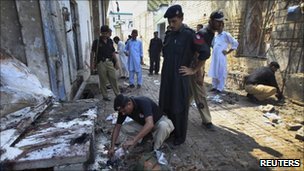
An exchange of fire at the Indian-Pakistan border near Pakistan’s Punjab province has killed two Indian troops and wounded a Pakistani soldier and several villagers, officials said Wednesday.

The neighbours have in the past exchanged almost daily fire across what is known as the Line of Control separating the two armies in Kashmir, but the latest incident occurred in the Sialkot sector of Pakistan which rarely experiences trouble.

A spokesman for the Pakistan Rangers said Indian border security forces fired automatic weapons and mortars at a village along the Sialkot working boundary, north of the Pakistani city of Lahore.

“First they fired yesterday morning and then again in the evening and the firing continued sporadically throughout the night until Wednesday morning,” said Nadeem Raza.

“One of our soldiers and several villagers have been wounded in the Indian firing.” A senior Indian border official confirmed the incident but said Indian forces retaliated for “unprovoked firing” from the Pakistani side.

“We were facing unprovoked firing from the Pakistani side for the last two days, resulting in the death of two of our men. We were forced to retaliate,” said K. Srinivasan. “The firing was precise, but at this stage we cannot say for sure who fired at us.”

The flare-up comes ahead of Indian Foreign Minister S.M. Krishna’s trip to Pakistan next week to meet with his counterpart in a renewed bid to normalise ties.

Relations between the nuclear-armed neighbours, who have fought three wars since 1947, were frozen when Pakistan-based militants attacked the Indian city of Mumbai in 2008, killing 166 people.

A late 2003 cease-fire between the two sides across the cease-fire line in Kashmir has largely held although there have been several exchanges of fire over the past year. Raza said Pakistani forces returned fire after Indian forces “did not respond to the call for a flag-meeting” and continued firing.

The Director General of Pakistan Rangers in Punjab, Major General Yaqub Khan, said a protest had been lodged with Indian forces. “In future, a strong reply will be given by Rangers and loss of civilian lives and property will not be tolerated at any cost,” he was quoted as saying in a statement issued after visiting the area.

This was the third violation of a cease-fire in that area in the last two weeks, according to the statement. India has long accused Pakistan of backing militants fighting Indian security forces in the Himalayan region of Kashmir.

Pakistan supports what it calls a freedom struggle by the people of Kashmir against what it sees as the brutal and illegitimate Indian occupation of the region. But it denies arming the guerrillas, who have been fighting Indian forces since 1989.

Sectarianism Has Poisoned Pakistan

By Basim Usmani for The Guardian

The recent attacks on a prominent shrine in Lahore demonstrate how the unrest in Pakistan is caused by a minority of few who cannot tolerate the plurality of beliefs in Pakistan. The Tehrik-e-Taliban are lying through their teeth when they claim that they do not attack public places. It’s becoming more and more apparent that these militants aren’t resisting American hegemony; this a war to determine Pakistan’s future and, by proxy, the future of Islam.

Whether the Tehrik-e-Taliban actually arranged the bombers’ suicide belts is irrelevant; they have created a domino effect that’s likely to spread from commercial capitals such as Lahore to cities with historic shrines and Pakistani historical sites, such as Multan, or Taxila.

Unlike Baghdad, where violence between Islamic sects is a product of the war America is waging, the onus of last Thursday’s blasts falls squarely on us, the citizens of Pakistan. We have been complacent about sectarianism for too long.

A good friend who works for a transportation company told me in 2007 that in villages along the highways to Waziristan where the Taliban had seized control were the bodies of butchered Shia Muslims. That year, Lahore’s public was too busy mobilising about the judiciary and President Musharraf to pay the violence any mind.

Sectarianism has a brutal history in Pakistan that existed long before militants in Afghanistan began calling themselves the Taliban. I remember as a child in Lahore the broadcasts of gun violence outside Shia houses of worship during the early 1990s.

Many Pakistanis feel that the attacks on two Ahmadiyya mosques last May, where gunmen unloaded bullets and grenades on Friday prayer-goers, were unprecedented. Certainly the Ahmadiyya community doesn’t think they are.

To have a Pakistani passport requires citizens to assert that they are not part of the Ahmadiyya community. In a sense, holding that passport also makes you complicit in the blasts that killed dozens in Lahore’s most famous Sufi shrine last week. Our inability to understand that this war is about national identity is rooted in the same complacency.

We are OK with the state deciding for us who is or isn’t Muslim. In this regard, the Pakistani government has the weakest moral fibre in taking on this growing strand of extremism. It is hypocritical to fight the Taliban in Waziristan if we are okay about denying citizenship to millions of Muslims born in Pakistan.

It may sound extreme of me, but we should be jailing clerics in Pakistan that give edicts declaring believers to be non-Muslim or anti-Pakistani. It may seem extreme to an American that writers who deny the Holocaust are imprisoned in Europe, but extreme contexts call for extreme measures.

Pakistanis must stress how being born or raised in their country is enough to be Pakistani; laws preventing Ahmadis from referring to themselves as Muslims were amended to the constitution by Zulfikar Ali Bhutto in the 1970s.

I remember being uneasy at my desk in middle school when I was studying at Aitchison College in Lahore, and some of my classmates were getting bullied for having marks on them after returning from Shia processions during Muharram. Pakistanis themselves are the only ones capable of stamping out this discriminatory culture.

Some proactiveness is necessary on our part to make it clear that mystics, Shias, Ahmadis and Christians are all fellow Pakistanis. When you are pulled over by street police in any major Pakistani city, the first bit of information the police ask for is your family name. From one name your caste, religious beliefs and affluence is determined.

This came as a shock to all of my family who have emigrated away: that collectively our stock in our own nationhood has plummeted so. In a sense, these problems are all accrued debt we’ve accumulated for being so complacent. In the light of our bigoted constitution and deterministic culture we have to – for ourselves – decide that being Pakistani is enough to make us all countrymen. Otherwise, we might as well just refer to ourselves as Taliban, Muslim extremists, Islamic militants, and so forth.

China, Pakistan Reach Nuclear Energy Deal

As reported by United Press International

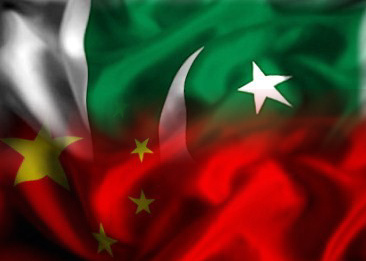
The Pakistani government has finalized a deal with China to build two new nuclear power plants in the country, the Pakistani foreign minister said.

Pakistani Foreign Minister Mehmood Qureshi said Pakistan was working with its Chinese counterparts on more than 120 different projects, including two nuclear power facilities in Pakistan, the Associated Press of Pakistan reports.

Despite concerns over the proliferation of nuclear material, the foreign minister said his country was moving ahead with its nuclear activity in line with international expectations

“We have no objections on inspections by the International Atomic Energy Agency because we are proceeding ahead in a transparent manner,” he said. Pakistan is facing a looming energy crisis that is creating rolling blackouts in parts of the country.

The energy deal comes as Pakistani President Asif Ali Zardari accepted the credentials of Liu Jian, the new Chinese envoy to Islamabad. Zardari said trade relations with China fell well short of their potential.

“Strengthening and enhancing cooperation with China in all sectors is one of the key principles guiding Pakistan’s foreign policy,” said the Pakistani president.

Vengeful New Militant Group Emerges in Pakistan

By Kathy Gannon for The Associated Press

Pakistani authorities now believe a dangerous new militant group, out to avenge a deadly army assault on a mosque in Islamabad three years ago, has carried out several major bombings in the capital previously blamed on the Taliban.

The emergence of the Ghazi Force was part of the outrage among many deeply religious Pakistani Muslims over the July 2007 attack by security forces against the Lal Masjid, or Red Mosque, a stronghold of Islamic militants.

The fierce attack, in which scores of young, heavily armed religious students died, inspired a new generation of militants. These Pakistanis have turned against a government they felt has betrayed them and, to their dismay, backed the U.S. role in neighboring Afghanistan.

The brief but bloody history of the Ghazi Force illustrates the unintended results of Pakistan’s policy of promoting Islamic extremists to fight India in the disputed area of Kashmir. That policy — which Pakistan denies it pursues — now threatens regional stability as the U.S. and Pakistan’s other Western partners pour billions of dollars into the country to stop the rise of Islamic militancy.

The new group is made up of relatives of students who died in the Red Mosque assault. It is named after the students’ leader, Maulana Abdul Rashid Ghazi, who was also killed. The mosque’s religious school, or madrassa, had been a sanctuary for militants opposed to Pakistan’s support of the U.S.-run war in Afghanistan.

Private television stations broadcast vivid scenes of the assault — commandos in black fatigues rapelling down ropes, the crackle of gunfire, bodies of black-shrouded girls carried out through the smoldering gates. Those images stunned the nation, especially families of the students and Pakistanis with deep religious feelings.

“Before the Lal Masjid, militants hadn’t yet declared war on the state of Pakistan. That changed with Lal Masjid,” said Zahid Hussain, author and terrorism expert who has written extensively about Pakistan.

Islamabad’s inspector general of police, Kalim Imam, told The Associated Press that the Ghazi Force was behind most of the deadliest attacks in the capital during the last three years. The attacks targeted the military, the Inter-Services Intelligence agency or ISI — which had ties to a number of militants — and a five-star hotel frequented by foreigners and the Pakistani elite.

The Ghazi Force helped recruit a security official who blew himself up inside the office of the World Food Program last October, killing five people, according to Imam. The force also sent a suicide bomber in September 2007 into the mess hall of the commando unit that attacked the Red Mosque, killing 22 people, he said.

Ghazi Force members may also have been involved in the audacious June 9 attack north of the capital that killed seven people and destroyed 60 vehicles ferrying supplies to NATO and U.S. soldiers next door in Afghanistan, Imam said.

Many of those attacks had been attributed to the Pakistani Taliban, which operates in the remote tribal areas of the northwest along the border with Afghanistan. There is evidence of close ties between the Ghazi Force and the Pakistani Taliban, which the government has vowed to crush.

The Ghazi Force is believed to be headquartered in the Orakzai region of the border area, where the leader of the Pakistan Taliban, Hakimullah Mehsud, held sway for years. The leader of the Ghazi Force is believed to be Maulana Niaz Raheem, a former student at the Red Mosque.

Anger over the bloodshed at the mosque was all the greater because many of the militants and their supporters felt betrayed by a government that had once supported them. Both Ghazi and his brother Maulana Abdul Aziz Ghazi, who was freed on bail this year after two years in jail, were widely believed to have been on the payrolls of both the government and the ISI intelligence service.

Their father, Maulana Mohammed Abdullah, enjoyed a close relationship with the late President Mohammad Zia ul-Haq, and the mosque was a center for recruiting volunteers to fight against the Soviets in Afghanistan in the 1980s.

As opposition grew to Pakistan’s support of the U.S. role in Afghanistan, the mosque became a center of religious agitation against the government, with armed students taking over the complex and police laying siege.

A former senior official in the Interior Ministry told The Associated Press that the police wanted to storm the mosque and end the siege at its outset, send the students home and shut down the religious school and a neighboring library until tempers cooled.

President Gen. Pervez Musharraf refused, the official said, even though police knew that members of al-Qaida’s affiliate organization Jaish-e-Mohammed, which is banned in Pakistan, were bringing in weapons for the students.

Musharraf relented and ordered the assault after militants kidnapped several Chinese nationals running a massage parlor in Islamabad, accusing them of prostitution. The death toll remains in dispute. Red Mosque officials say hundreds died. The government says fewer than 100 were killed.

In a rare interview, Abdul Aziz Ghazi told AP he warned the government that an assault on the mosque would unleash forces that no one could control.

“I have been in jail. I did not form this force and I don’t condone the violence but they are angry at the injustices done,” he said this week.

Although the assault turned many Islamic hard-liners against the government, Pakistan remains unwilling to break all ties to the militants, instead following a high-risk strategy of coddling “good militants” while fighting those deemed “bad militants,” analysts say.

“The military and the ISI have given importance to these militants as assets. But those who have openly declared war, and there is no chance of them returning back to the state, the army is going after them,” said Manzar Jameel, a terrorism expert and researcher on the growth of extremism in Pakistan. “Yet they still believe that some are still assets and that they can keep control of the assets. It’s a failure of strategy.”

Army spokesman Maj. Gen. Athar Abbas denies any assistance to militant groups, saying past ties have long since been severed. He says the Ghazi Force is among the groups the 120,000 Pakistani soldiers waging war in the tribal regions are fighting.

Yet Anatol Lieven, a terrorism expert with the Department of War Studies at London’s King College, said it’s clear that the ISI continues to protect some militant groups, even if it has broken with others.

In a June report, the Rand Corporation think tank also alleged that Pakistan’s military and intelligence still support some militant groups “as a tool of its foreign and domestic policy.”

“A key objective of U.S. policy must be to alter Pakistan’s strategic calculus and end its support to militant groups,” the report said.

Christine Fair, a co-author of that report and an assistant professor at Georgetown University’s Center for Peace and Security Studies, said the battle against extremists in Pakistan is mired in layers of subterfuge by Pakistani intelligence and a “mystifying” acceptance by the CIA of Pakistan’s “good-militant, bad-militant” policy.

She said U.S. intelligence knows Pakistan protects one group — Lashkar-e-Taiba, which India blames for the 2008 Mumbai assault and Afghanistan accuses of masterminding deadly attacks against the Indian Embassy in Kabul.

“Lashkar-e-Taiba remains intact. I have had conversations with … officials in Washington. It is not their priority. Lashkar-e-Taiba is not an issue,” she said in an interview. “Yet Lashkar-e-Taiba has been attacking us in Afghanistan since 2004.”

Imran Khan Moves Supreme Court Against Drone Attacks

As reported on Despardes.com

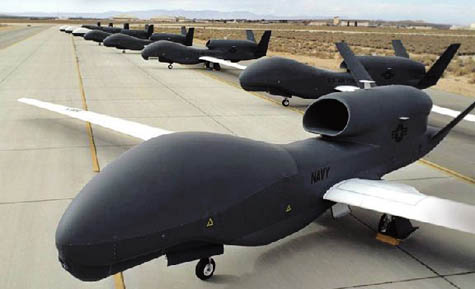
Cricketing legend-turned politician Imran Khan has filed a lawsuit in Pakistan’s apex court asking it to declare drone attacks as war crimes.

According to published reports, the Pakistan Tehrik-i-Insaf (PTI) chief on Wednesday filed a petition in the Supreme Court asking it to declare drone attacks as attacks on the sovereignty and defence of Pakistan and a war crime.

The petition, filed by Imran Khan’s lawyer Shaukat Aziz Siddiqui, argues that the provisions of logistics and facilities to any foreign country or alliance for mass destruction through drone strikes inside the territory of Pakistan resulting into killings of Pakistani citizen is illegal, unwarranted, unconstitutional, in violation the United Nations Charter, universal declaration of human rights, international law as well as the international humanitarian law, a war crime and an attack on the sovereignty, solidarity, integrity and defence of Pakistan.

Imran Khan’s petition was filed today after a Lahore court Lahore cort ruled against drone strikes and called on the government to take appropriate measures to halt strikes by unmanned drones in Pakistan if they aren’t approved by Islamabad.

Federal authorities should take measures to stop drone attacks in Pakistan if they are carried out without formal approval, the court said on Wednesday. The court was responding to a petition that said drone strikes were a violation of national sovereignty.

Drone attacks have increased under the authority of U.S. President Barack Obama, notably inside Pakistan. The CIA, a civilian entity, said it is acting according to the code of law in carrying out the strikes.

Pakistan’s government publicly objects to the attacks, saying they violate its sovereignty. But it is widely thought there is a tacit agreement between the U.S. intelligence agency, the CIA, and Islamabad to allow such strikes, reported Voice of America on its website today.(http://www1.voanews.com/english/news/asia/Suspected-US-Missile-Strike-Kills-10-in-Pakistan-97396999.html)

Two missiles believed fired Tuesday by an unmanned drone struck a village in the tribal regions of Pakistan, killing militants including Hamza al-Jufi, an Egyptian allied with al-Qaida.