Archive for the ‘ Pakistan Army ’ Category

India, Pakistan Can’t Break the Ice, Even in Hour of Tragedy

Reported by Sanjeev Miglani for Reuters
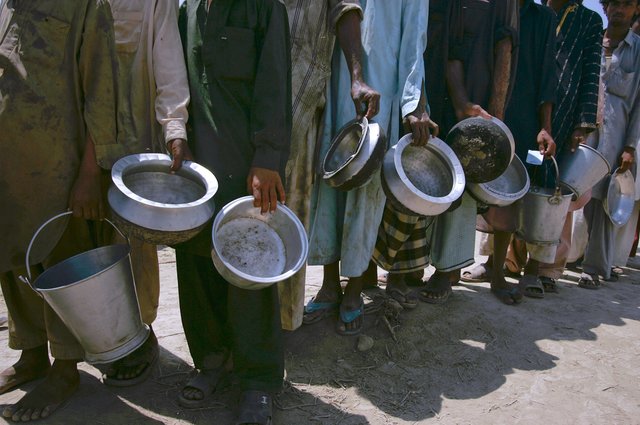
Pakistan’s catastrophic flood continues to boggle the mind, both in terms of the human tragedy and the scale of the damage it has wrought, and even more so over the longer term. One official has likened the disaster to the cyclone that devastated what was once East Pakistan, setting off a chain of events that eventually led to its secession and the birth of Bangladesh.

Not even that spectre, raised by Pakistan’s ambassador to Britain, can however dent the steadfast hostility between India and Pakistan. For a full three weeks as the floods worked their way through the spine of Pakistan from the turbulent northwest to Sindh in the south, Islamabad made frantic appeals to the international community not ignore the slow-moving disaster, and help it with emergency aid, funds. But next-door India, best-placed to mount a relief effort probably more because of the geography than any special skill at emergency relief, was kept at arm’s length. An Indian aid offer of $5 million, which itself came after some hesitation and is at best modest,was lying on the table for days before Pakistan accepted it. ”There are a lot of sensitivities between India and Pakistan … but we are considering it very seriously,” a Pakistani embassy spokesman told our reporter in New Delhi earlier this week. Things appeared to have moved faster only after Indian Prime Minister Manmohan Singh called his Pakistani counterpart Yusuf Raza Gilani expressing sympathy and reminding him of the offer of aid. Millions of Pakistans meanwhile continued to struggle for food.

To some extent, Pakistan’s hesitation in accepting aid from India is understandable. India is the traditional enemy. It is also the bigger country of the two. And over the last two decades it has become easily the more prosperous entity, courted by the world’s industrialists while Pakistan is “haunted by the world’s terrorists”, as columnist Vir Sanghvi writes in the Hindustan Times. A Pew poll that we wrote about a few weeks ago showed how deep-seated these Pakistani fears are: a majority of those polled said they considered India to be the bigger threat than al Qaeda or the Taliban, despite the violence they have suffered at the hands of the militant groups over the past few years.

As Sanghvi writes:

But, to be fair to the Pakistanis, let us accept the position that decades of hostility between our two countries have led to a situation where the Pakistanis simply do not trust us. Let us also accept that they are so resentful of India that even in their hour of greatest crisis when thousands of people have died and millions are homeless, they will still spurn India’s hand of friendship. And let us grant them their claim that given our history, they are justified in being suspicious of India.

But then, you have to wonder, if the two nations cannot even keep up basic neighbourly ties such as offering aid and commiseration at times of natural crises, what chances they can ever come to a peace deal that will demand much more from them ?

It was pretty much the same in 2005 when the earthquake struck Pakistani Kashmir and the authorities struggled to provide aid to the affected. And Indian aid offer was initially ignored, later blankets from India were accepted. But even then Pakistan had people cut out the label that read ‘made in India’ on each blanket.

Indeed, some Pakistani writers are already criticising the government of bringing dishonour to the country by accepting Indian assistance. Commentator Shireen M. Mazari in a piece entitled “What Have We Become” says the Pakistani government accepted the Indian offer for help under pressure from the United States and that it was a matter of shame. By taking Indian aid, Pakistan had let the people of Kashmiri down just when they had risen in revolt against Indian forces.

“This money has the blood of Kashmiris on it and one wonders how our Kashmiri brethren must be feeling as they face the bullets of Indian forces every day and see us taking Indian “aid”,” Mazari wrote.

Kashmir, then, can’t be far from any discourse relating to India and Pakistan. It is the core dispute at the heart of 60 years of difficult ties, says Pakistan and must be resolved before any normalcy can take place. India doesn’t even consider the territory to be disputed, so the argument, at least in public, hasn’t changed much in over half a century.

For the 20 million affected by the flooding in Pakistan, and facing a future that would daunt any of us, Kashmir must, at the moment, be a distant thought.

Pakistan Accepts Flood Aid Money From Rival India

By Issam Ahmed for The Christian Science Monitor

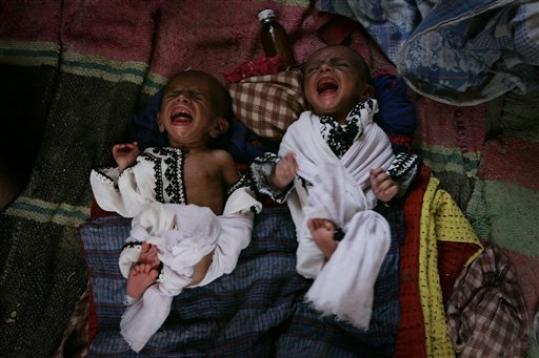
Pakistan has accepted an offer of $5 million of flood aid from neighbor and longtime rival India, in a move that could spark a political backlash at home.

In an interview with Indian news channel NDTV, Pakistani Foreign Minister Shah Mehmood Qureshi described the offer of aid, made last week, as a “very welcome initiative” which the government of Pakistan has agreed to accept, after taking some time to decide.

But it would have been better to say “thanks, but no thanks,” according to Liaqat Baloch, secretary general of Pakistan’s second-largest religious party, the Jamaat-e-Islami.

“Pakistan has many disputes with India, with reference to Kashmir, and the Indian Army engaging in brutality in occupied Kashmir,” he says. “In the past, when Pakistan tried to support India after their natural disasters, India never accepted. Therefore it would be better if our government refused the aid with a big thank you.”

Al Khidmet foundation, Jamaat-e-Islami’s charitable wing, has been one of the most visible aid organizations in the flood-affected areas.

The two countries have made efforts in recent months to repair bilateral relations, which took a plunge following the 2008 Mumbai attacks. India blames those attacks on Pakistan-backed militants. The two countries have fought three full-scale wars, most recently in 1999.

The United States had urged Pakistan to accept India’s offer of aid earlier this week. When Indian Prime Minister Manmohan Singh called his Pakistani counterpart to offer his condolences following the worst natural disaster in Pakistan’s history, it was an event widely reported in the Pakistan media.

“In such times of natural disasters, all of South Asia should rise to the occasion and extend every possible help to the people of Pakistan affected by the tragedy,” Mr. Singh said, according to a statement released by his office.

According to Badar Alam, editor of Pakistan’s Herald magazine, the amount of aid pledged is “symbolic, but its effect is immense. It’s a good confidence building measure between the two countries.”

But, he warns, Pakistan’s religious parties will try to spin the move “as a sign of weakness.”

“They will see it as a capitulation to India, that our own government is so weak we have been forced to accept help from the historic enemy,” says Mr. Alam.

Mosharraf Zaidi, a columnist for Pakistan’s The News, termed the decision brave: “It’s a tremendous gesture, very mature. India should be commended for donating it and Pakistan should be commended for accepting it.”

“The whole idea in an emergency is you’ll have the Jamat ud Dawas [the charitable wing of banned militant outfit Lashkar-e-Taiba] and you’ll have competing powers working almost in tandem to support people. It shows that no matter what our value systems, we have to work together right now,” he adds.

Some 20 million people are affected by Pakistan’s worst flooding in recent memory; Pakistan’s government estimates around 1,600 deaths and millions homeless or displaced. The United Nations appealed to the international community to donate $460 million in emergency assistance last week, and has met half of that goal. Yesterday the US increased its flood aid to Pakistan from $80 million to $150 million.

-Pakistanis for Peace Editor’s Note- It is a good decision by the Pakistani government to accept the aid offer from India. Not only will this be a confidence building measure between the two nations, it will save countless lives, and no nation is too proud to save the lives of its citizens.

U.S. Strategy in Pakistan Is Upended by Floods

By Mark Landler for The New York Times

WASHINGTON — The floods in Pakistan have upended the Obama administration’s carefully honed strategy there, confronting the United States with a vast humanitarian crisis and militant groups determined to exploit the misery, in a country that was already one of its thorniest problems.

While the administration has kept its public emphasis on the relief effort, senior officials are busy assessing the longer-term strategic impact. One official said the disaster would affect virtually every aspect of the relationship between the United States and Pakistan, and could have ripple effects on the war in Afghanistan and the broader American battle against Al Qaeda.

With Pakistan’s economy suffering a grievous blow, the administration could be forced to redirect parts of its $7.5 billion economic aid package for Pakistan to urgent needs like rebuilding bridges, rather than more ambitious goals like upgrading the rickety electricity grid.

Beyond that, the United States will be dealing with a crippled Pakistani government and a military that, for now, has switched its focus from rooting out insurgents to plucking people from the floodwaters. The Pakistani authorities, a senior American official said, have been “stretched to the breaking point” by the crisis. Their ragged response has fueled fears that the Taliban will make gains by stepping in to provide emergency meals and shelter.

“It certainly has security implications,” said another official who, like others interviewed for this article, spoke on the condition of anonymity because he was not authorized to discuss internal policy deliberations. “An army that is consumed by flood relief is not conducting counterinsurgency operations.”

On Thursday, the United Nations will convene a special meeting devoted to the floods, hoping to galvanize what has been a lackluster global response. Secretary of State Hillary Rodham Clinton is expected to announce that American public aid has surpassed $100 million, an official said.

“We’re obviously not oblivious to the political and strategic implications of this catastrophe, but right now, we are fully focused on the emergency relief effort and trying to get a good assessment of the needs,” said the administration’s special representative to the region, Richard C. Holbrooke.

Noting that several weeks remain in the monsoon season, Mr. Holbrooke said, “Worse may be yet to come.”

The disaster comes after a period in which the administration seemed to have made strides in repairing the American relationship with Pakistan. Mrs. Clinton visited Islamabad in July with a long list of pledges, including the upgrading of several power plants and a plan to promote Pakistani mangoes. Now, these projects seem almost beside the point.

“Before, there were power plants in need of refurbishment,” said Daniel S. Markey, senior fellow for India, Pakistan and South Asia at the Council on Foreign Relations. “Now there are power plants underwater.”

In recent days, the United States has sent 15 helicopters, rescuing nearly 6,000 people. On Wednesday, military cargo planes delivered 60,000 pounds of food and other relief supplies, bringing total deliveries to 717,000 pounds. The speed and scale of the effort, officials in both countries said, have helped bolster the checkered American image in Pakistan.

In another hopeful sign, officials said Pakistan and India had been in close touch about the floodwaters, some of which are flowing into Pakistan from India. Such communication, between historic archenemies, could augur reduced tension in other areas, one of the officials said.

Against that, however, are the staggering dimensions of the disaster. A senior Pakistani official told the administration on Tuesday that the next flood surge was likely to inundate much of Punjab, the densely populated region that borders India and produces much of Pakistan’s food.

So far, this official said, the greatest damage has been in regions that are also hotbeds for Islamic insurgents, which has set back the army’s fight against extremist groups. Local governments in those places have largely collapsed, leaving the army as the only source of authority.

With 20 million people displaced from their homes, the Pakistani authorities are girding themselves for an immense migration to the major cities, which they fear could sow further instability.

“Americans have not yet registered the enormity of the crisis,” Pakistan’s ambassador to the United States, Husain Haqqani, said in a telephone interview from Islamabad, the capital.

Pakistani and American officials said reports of hard-line Islamic charities providing relief were exaggerated. One pointed out that the floods had hurt the insurgents as well: there was a report of small arms and ammunition belonging to a militant group floating in the water.

Still, people in both countries warned that if rebuilding and rehabilitation efforts bogged down, the Taliban and other militant groups would try to take advantage of it. “The real test is, can their government provide the most fundamental services?” said an administration official.

Parallels to this crisis are hard to find. One official cited the example of the Indonesian province of Aceh, which had been racked by a three-decade insurgency fought by the separatist Free Aceh Movement. After the tsunami swept through in 2004, killing 170,000 people, the separatists and the Indonesian government quickly signed a peace treaty, in August 2005.

There are, however, big differences between a localized separatist group and an international jihadist movement.

“If the flood proves to tilt the balance of power in Pakistan, it’s more likely to tilt toward the militants than toward the government,” said Bruce Riedel, a former intelligence official who helped the administration formulate its initial policy for Pakistan and Afghanistan.

Already, Pakistan’s president, Asif Ali Zardari, has been exposed to withering criticism at home for going on a trip to Europe during the early days of the flood. American officials said they were determined not to get drawn into the dispute, noting that in any event, Mr. Zardari had been stripped of many of his powers in a recent constitutional change.

Decisions on how the flood will affect American economic aid may be influenced by a trip to Pakistan by Senator John Kerry, the Massachusetts Democrat who co-sponsored the five-year nonmilitary assistance package with Senator Richard G. Lugar, Republican of Indiana.

Senator Kerry, accompanied by Dan Feldman, a deputy to Mr. Holbrooke, is scheduled to tour the flooded areas on Thursday. Mr. Kerry has said he is open to redirecting aid money, though some analysts said they were skeptical that Congress would approve additional financing. Military aid may also come under scrutiny, according to administration officials.

“Every dimension of our relationship — politics, economics, security — is going to see major shifts as a result of this historic disaster,” said Lt. Gen. Douglas Lute, the White House coordinator for Afghanistan and Pakistan. “All the tools of diplomacy have to be examined in light of this new reality.”

What They Said: Pakistan Spies Downgrade India Threat

By Vibhuti Agarwal for The Wall Street Journal

The Wall Street Journal reportedTuesday that a report from the Pakistan’s chief spy agency, the Inter-Services Intelligence, said domestic militancy had overtaken the Indian army as the greatest threat to Pakistan’s national security. This is the first time since the ISI was founded in 1948 that the ISI has found a bigger threat than its neighbor. India Real Time presents a roundup of comments from readers and others below:

The Times of India newspaper reported Wednesday that Pakistan’s acknowledgment of its internal problems comes as the country is struggling with an image problem which may be affecting the flow of international aid to help the victims of the devastating floods there. “The unexpected downgrading of the threat perception from New Delhi and waking up to the scourge of home-grown terrorism comes even as foreign aid for the thousands affected in floods in Pakistan is yet to pick up,” wrote Chidanand Rajghatta for the Times of India.

The Hindustan Times newspaper quoted analysts saying the change of mindset makes sense. “I am not surprised that the ISI has changed its strategic thinking,” Talat Masood, a retired general and analyst on defense and security issues told the newspaper. Another analyst, Imtiaz Gul, was also quoted in the article. “The ground realities have changed and have forced allies into becoming enemies,” he said.

“At this point, the Pakistan government will say just about anything the world community wants it to,” wrote H. Jere. “After seeing the response to the aid request has been disappointing, it will agree to almost anything.”

Other readers called Pakistan’s latest admission “hogwash,” adding that it may be a trick to get more funds from the United States.

“It is sheer naiveté to consider Pakistan’s ISI and Islamic terrorists as two separate entities,” said Shri K. “ISI is the quintessence of rabid Islamic fascism and has been mercilessly exporting Islamic terror all over the world.”

Some readers said Pakistan’s admission came as a ray of hope for improving the long-estranged India-Pakistan relationship.

“I hope India take this opportunity to offer real assistance to the victims of the floods,” wrote Phillip Hwee. “It’s time for India and Pakistan to reconcile with one another. A détente is very necessary so that each of the two rivals can reallocate their resources to improve the standard of living of their respective citizens.”

David Almeida agreed, adding that “one can only hope that the military establishment in Pakistan is truly serious about abjuring terrorism, regardless of whether it is targeted at Indian or Pakistani state.”

How The Rest of the World Has So Far Responded To Pakistan Crisis

By James Burton and David Randall for The Independent

The world is now beginning to respond in a significant way to the almost bottomless pit of need in Pakistan. Whether – with some 20 million affected and the nation’s ability to feed itself ruined for years to come – it will be enough is very doubtful.

So far, according to the UN, some $93m (unofficial reports say $150m) has been given or promised, in cash or kind; with a further $366m needed immediately. That number is likely to increase, and the UN estimates that billions will be required to rebuild once waters have receded.

But criticisms of the British response (one newspaper called it “tight-fisted”) are ill-judged. The Government has already allocated ÂŁ17m (out of ÂŁ31.3m earmarked), and the public has donated ÂŁ12m to the Disasters Emergency Committee appeal. In terms of money given, as opposed to pledged, Britain is one of the world’s most generous givers.

All kinds of comparisons have been made between the response to this disaster and those to the Haiti earthquake, the Boxing Day tsunami, and the 2005 Pakistan earthquake, all of which raised far more from the public. But appeals for single cataclysms, such as earthquakes and tsunamis, always do better than the more creeping – but often more serious in terms of need – disasters such as food crises and floods. One aid agency source said: “What stirs people to give are high death tolls – even though nothing can help the dead – and arresting images of people amid destruction.”

By the standards of previous “creeping disaster” appeals, the DEC’s for Pakistan 2010 is doing well – ÂŁ12m in only a week. And a lot of British giving is not being logged. Members of our large Pakistan-origin diaspora are sending money, with money transfers from Britain to Pakistan up 36 per cent in the past seven days. And many mosques and community groups are organising aid. Overall, using figures supplied by the UN, international wire services and London’s Pakistan High Commission, these are the aid donations so far:

Australia: $9m plus $30m pledged; two C-17 freight aircraft.

Azerbaijan: $1m; embassy staff in Pakistan gave two days’ salary.

Belgium: $655,000.

Brazil: $700,000.

Canada: $2m; $30m pledged.

China: $1.5m; $7.4m pledged.

Denmark: $10m; $50m pledged; $771,000 provided for immediate aid.

Estonia: $84,000 for food assistance.

Finland: $1.5m.

France: $1.4m; money for water sanitisation.

Germany: $2.4m; pledged $13m for improving water, sanitation and hygiene.

Greece: $131,000.

India: Offered $5m; Pakistan considering response.

Italy: $1.8m; $3.3m pledged. Silvio Berlusconi gave $7m of own money.

Ireland: $260,000; $1.1m pledged.

Japan: $230,000 for emergency relief; $3m for aftermath.

Kuwait: $5m; plus aid flights.

Luxembourg: $327,000.

Malaysia: $1m; plus private donations.

Netherlands: $1.3m; $2.6m pledged.

New Zealand: $1.5m pledged.

Nigeria: $1m.

Norway: $16m.

Saudi Arabia: pledged $100m, plus air transport.

Spain: $855,000; plus relief plane.

Sri Lanka: $26,709.

Sweden: $3m; plus water purification.

Switzerland: $1.6m; plus relief workers.

Thailand: $75,000.

Turkey: $5m; 115 tons of aid.

UAE: $1.5m; Sheikha Fatima bint Mubarak personally donated $1.4m.

UK: ÂŁ17m ($26m); provided RAF C-17 heavy freight aircraft, which has already delivered 2,500 tents; the Queen donated an undisclosed amount through the British Red Cross; DEC total reached ÂŁ12m ($19m) last Friday.

USA: $22m; pledged $40m; provided 56,000 ready meals, 12 temporary bridges and two water filtration plants; 1,000 US marines; 25 Chinook helicopters.

Pakistan Fight Stalls for U.S.

By Julian Barnes for The Wall Street Journal

The U.S. military has stopped lobbying Pakistan to help root out one of the biggest militant threats to coalition forces in Afghanistan, U.S. officials say, acknowledging that the failure to win better help from Islamabad threatens to damage a linchpin of their Afghan strategy.

Until recently, the U.S. had been pressing Islamabad to launch major operations against the Haqqani network, a militant group connected to al Qaeda that controls a key border region where U.S. defense and intelligence officials believe Osama bin Laden has hidden.

The group has been implicated in the Dec. 30 bombing of a CIA base in Khost, a January assault on Afghan government ministries and a luxury hotel in Kabul, and in the killing of five United Nations staffers in last year’s raid on a U.N. guesthouse.

But military officials have decided that pressing Pakistan for help against the group—as much as it is needed—is counterproductive.

U.S. officials believe elements of Pakistan’s intelligence agency, Inter-Services Intelligence, are continuing to protect the Haqqani network to help it retain influence in Afghanistan once the U.S. military eventually leaves the country. U.S. officials say the support includes housing, intelligence and even strategic planning,

During a trip to Pakistan last month, Adm. Michael Mullen, chairman of the Joint Chiefs of Staff, chose not to raise the issue of an offensive against the Haqqani network—a departure from the message U.S. defense officials delivered earlier this year.

The U.S. also had intensified the pressure for Pakistani operations in North Waziristan in May after the attempted bombing of New York’s Times Square was linked to militants in Pakistan.

Pakistan officials reject the U.S. conclusions about their efforts. They say they are taking significant action against militants in North Waziristan. They say their intelligence service has severed all ties with the Haqqani network. Islamabad points to a series of surgical strikes the Pakistani military has executed in North Waziristan, and say they have ratcheted up those efforts in recent months in a precursor toward more aggressive moves.

Pakistan’s operations complement a Central Intelligence Agency drone campaign targeting militants in North Waziristan, a Pakistani official said.

Defense Secretary Robert Gates praised the Pakistani effort to rout al Qaeda and other militants from Swat and South Waziristan. “Are they doing a lot to help us? The answer is yes,” Mr. Gates said Thursday.

U.S. officials acknowledged the recent Pakistani operations, but discounted their value against the Haqqani network.

A U.S. defense official said that most of the raids have been against the Pakistani Taliban, a militant group that poses no direct threat to U.S. forces in Afghanistan, but opposes the Pakistani government.

Pakistan has failed to act on detailed intelligence about the Haqqanis provided in recent months, said a senior military official. “Our forces have put a significant dent in the Haqqani network,” said the official. “It would be good if the [Pakistanis] would do the same on their side.”

U.S. officials say they have concluded that making more demands, public or private, on Islamabad to start a military offensive against the Haqqani network will only strain U.S.-Pakistani relations.

The Haqqani network has decades-long ties with al Qaeda leaders that date back to their days of fighting the Soviets in Afghanistan prior to al Qaeda’s formation.

The network now is believed to provide al Qaeda with protection, shelter and support in North Waziristan. The group’s historic base is in Afghanistan’s Khost province and it remains the most potent insurgent force in the eastern part of the country and is closely aligned with the Taliban.

The number of al Qaeda fighters in Afghanistan is thought to be very small, under 100; Haqqani network fighters number in the thousands.

The U.S. shift partly is in recognition that the Pakistanis simply may not have the military capacity to expand operations enough to secure the North Waziristan area, one U.S. official acknowledged.

Pakistani efforts in North Waziristan so far are too small to have a significant impact, said Bruce Riedel, a former CIA analyst who headed the Obama administration’s first review of U.S. policy toward Afghan and Pakistan.

“It is mostly show to keep the Americans happy,” he said.

In the wake of Pakistan’s recent flooding, U.S. officials also are concerned the Pakistanis may ratchet back counterterrorism operations as they redeploy troops to help respond to a burgeoning humanitarian crisis.

U.S. defense officials now argue the only way to convince Pakistan to take action in North Waziristan is to weaken the Haqqani network so much that Pakistan sees little value in maintaining an alliance with the group—though they acknowledge that will be harder without Pakistani help.

The U.S. military has stepped up its own operations against the Haqqani network since April, and most significantly in the last two weeks, according to military officials. Strikes have significantly reduced the Haqqani network’s ability to mount attacks in Kabul and outside their traditional tribal areas of eastern Afghanistan, said senior U.S. military officials.

In eastern Afghanistan, a task force of elite troops assigned to target the Haqqani network conducted 19 operations in April, 11 in May, 20 in June and 23 in July. The high pace continued in the first week of August with seven operations.

The Haqqanis threatened to disrupt an international conference in Kabul last month, but were not able to make good on the threat.

U.N. Appeals for Pakistan Aid as Rains Threaten More Flooding

By Saeed Shah for The McClatchy Newspapers

The United Nations appealed Wednesday for $459 million in emergency aid for Pakistan as fresh monsoon rains raised fears that new flooding could drive more people from their homes, deepening the humanitarian catastrophe.

Storms lashed the mountainous northwest, close to the border with Afghanistan, and the northeastern Gilgit region, swelling rivers that empty into the central Indus River before it reaches the city of Sukkur in southern Sindh province, which already is full of people displaced from surrounding areas.

More flooding would prevent vital repairs to Indus River embankments and dikes that protect farmland, allowing water to spread even further when the fresh flows reach Sukkur sometime next week, officials warned.

“Once this peak passes, another flood is being formed in the mountains and then a third,” Sindh’s irrigation minister, Saifullah Dharejo, said in an interview. “If we cannot plug the breaches (in the embankments), the water will keep expanding out.”

“This is a grave situation,” he said.

Sindh is now the focus of the worst floods in Pakistan’s history. They reached the province after washing down the Indus River Valley, powered by unusually fierce monsoon rains that began in northern areas of the country some three weeks ago.

The deluge has left a trail of devastation, destroying roads, bridges and other infrastructure and overwhelming the government’s ability to cope. It’s affected some 14 million people, of whom an estimated 1,600 have been killed and about 2 million left homeless.

The overwhelmingly Muslim country of 170 million, a key U.S. ally in the fight against terrorism, already had been struggling to cope with an economic crisis and Islamic militants allied with al-Qaida when the disaster hit.

The United Nations appealed Wednesday for emergency aid, warning that even those who had been saved from drowning were threatened with sickness and hunger.

“If we don’t act fast enough, many more people could die,” John Holmes, the U.N. humanitarian aid chief, said in New York. He called the disaster “one of the most challenging that any country has faced in recent years.”

In Sukkur, the head of Sindh’s provincial government, Qaim Ali Shah, dismissed the amount of international aid pledged so far as “peanuts.”

The U.S. will be beefing up its assistance to the relief effort with 19 helicopters from the U.S.S. Peleliu, an amphibious assault vessel that is deploying off the Pakistani port city of Karachi, Secretary of Defense Robert Gates announced Wednesday in Tampa, Fla. The helicopters will be used to distribute food aid and ferry displaced people.

The ship’s aircraft will replace six U.S. military helicopters that were diverted from missions in Afghanistan.

At the Sukkur Barrage, 1.13 million cubic feet of water per second was rushing through the 66 gates of the mile-wide flood-control barrier, which the former British colonial government built on the Indus River in 1932.

Experts think that the flooding at Sukkur probably will ebb Thursday, but with more rain falling in the north, the water will remain high and the next onslaught of flooding could push it even higher, they said.

“Rainfall (in the north) takes about a week to reach Sukkur,” said Muzammil Qureshi, a retired engineer formerly in charge of irrigation for Sindh. “All five rivers converge before Sukkur.”

The onslaught has burst dike banks, drowning hundreds of thousands of acres of farmland in Sindh alone.

Only from the air do the scale of the disaster and the remoteness of the affected villages become apparent.

A McClatchy Newspapers reporter toured the region around Sukkur on a Pakistani army helicopter and saw mile after mile of water, swamp-like in some places, like the open sea in others. Thatched roofs and the tops of trees rose above the water. The outlines of abandoned villages were just visible beneath the surface.

The helicopter pilots had been diverted from battling Taliban militants in the Waziristan region bordering Afghanistan. Around 60,000 Pakistani troops are participating in rescue efforts, raising concerns about the country’s anti-terrorism campaign.

When the helicopter swooped low, it became apparent that there were people struggling to survive in the watery landscape, marooned in dozens of villages on slightly raised ground. Women, men and children could be seen in waist-high water, their buffaloes wallowing in groups.

Hundreds of people had taken refuge on raised embankments, built to hold irrigation channels or dirt roads, but they were stranded without food or shelter from the ferocious sun. Goats, donkeys and trunks of possessions kept them company.

While the military continues to rescue people, many others are refusing to leave their villages, hoping for the water to recede. However, the fresh onslaught that’s on its way from the north could make survival all but impossible.

Pakistan Flood Crisis Bigger Than Tsunami, Haiti: UN

As reported by The Associated Press

ISLAMABAD: The number of people suffering from the massive floods in Pakistan could exceed the combined total in three recent megadisasters – the 2004 Indian Ocean tsunami, the 2005 Kashmir earthquake and the 2010 Haiti earthquake – the United Nations said Monday.

The death toll in each of those three disasters was much higher than the 1,500 people killed so far in the floods that first hit Pakistan two weeks ago. But the Pakistani government estimates that over 13 million people have been affected – two million more than the other disasters combined.

The comparison helps frame the scale of the crisis, which has overwhelmed the Pakistani government and has generated widespread anger from flood victims who have complained that aid is not reaching them quickly enough or at all.

”It looks like the number of people affected in this crisis is higher than the Haiti earthquake, the tsunami or the Pakistan earthquake, and if the toll is as high as the one given by the government, it’s higher than the three of them combined,” Maurizio Giuliano, spokesman for the UN Office for the Coordination of Humanitarian Affairs, told The Associated Press.

The UN has provided a lower number of people who have been affected in Pakistan, about 6 million, but Giuliano said his organization does not dispute the government’s figure. The UN number does not include the southern province of Sindh, which has been hit by floods in recent days, and the two sides have slightly different definitions of what it means to be affected.

The total number of people affected in the three other large disasters that have hit in recent years is about 11 million – 5 million in the tsunami and 3 million in each of the earthquakes – said Giuliano.

Many of the people affected by the floods, which were caused by extremely heavy monsoon rains, were located in Pakistan’s northwestern province of Khyber Pakhtunkhwa.

Rescue workers have been unable to reach up to 600,000 people marooned in the province’s Swat Valley, where many residents were still trying to recover from an intense battle between the army and the Taliban last spring, said Giuliano. Bad weather has prevented helicopters from flying to the area, which is inaccessible by ground, he said.

”All these people are in very serious need of assistance, and we are highly concerned about their situation,” said Giuliano.

Hundreds of thousands of people have also had to flee rising floodwaters in recent days in the central and southern provinces of Punjab and Sindh as heavy rains have continued to pound parts of the country.

One affected resident, Manzoor Ahmed, said Monday that although he managed to escape floods that submerged villages and destroyed homes in Sindh, the total lack of government help meant dying may have been a better alternative.

”It would have been better if we had died in the floods as our current miserable life is much more painful,” said Ahmed, who fled with his family from the town of Shikarpur and spent the night shivering in the rain that has continued to lash the country.

”It is very painful to see our people living without food and shelter,” he said.

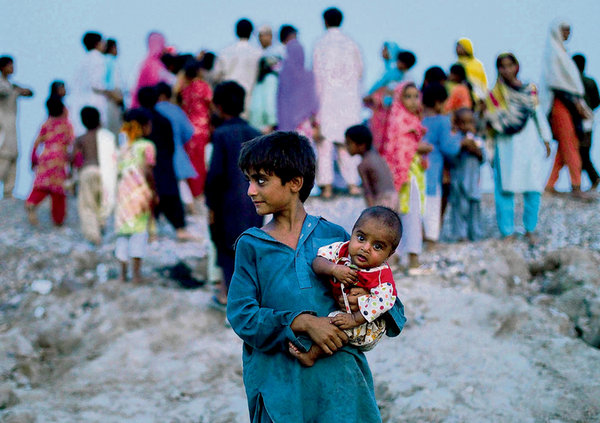
Thousands of people in the neighboring districts of Shikarpur and Sukkur camped out on roads, bridges and railway tracks – any dry ground they could find – often with nothing more than the clothes on their backs and perhaps a plastic sheet to keep off the rain.

”I have no utensils. I have no food for my children. I have no money,” said Hora Mai, 40, sitting on a rain-soaked road in Sukkur along with hundreds of other people. ”We were able to escape the floodwaters, but hunger may kill us.”

A senior government official in Sukkur, Inamullah Dhareejo, said authorities were working to set up relief camps in the district and deliver food to flood victims.

But an Associated Press reporter who traveled widely through the worst-hit areas in Sindh over the past three days saw no sign of relief camps or government assistance.

The worst floods in Pakistan’s history hit the country at a time when the government is already struggling with a faltering economy and a brutal war against Taliban militants that has killed thousands of people.

The US and other international partners have stepped in to support the government by donating tens of millions of dollars and providing relief supplies and assistance.

But the UN special envoy for the disaster, Jean-Maurice Ripert, said Sunday that Pakistan will need billions of dollars more from international donors to recover from the floods, a daunting prospect at a time when the financial crisis has shrunk aid budgets in many countries. – AP

India Hints at Pakistan Role in Kashmir Unrest

By Nigam Prusty for Reuters

India’s interior minister hinted on Friday that Pakistan could be behind weeks of violent anti-India protests in the disputed Kashmir region, a move that could hurt the nuclear-armed rivals’ attempts to improve ties.

This is the first time New Delhi has linked Pakistan to the violence in Kashmir that has killed nearly 50 people since June. Earlier India had said Pakistan-based militants were inciting trouble in Kashmir, a region divided between India and Pakistan and which both claim in full.

“Pakistan appears to have altered its strategy in influencing events in Jammu and Kashmir,” Palaniappan Chidambaram told the Indian parliament during a debate on the protests, among the biggest since a separatist revolt against Indian rule broke out in 1989.

“It is possible that they believe that relying upon civilian unrest will pay them better dividends. But I am confident if we are able to win the hearts and minds of the people … those designs can be foiled.”

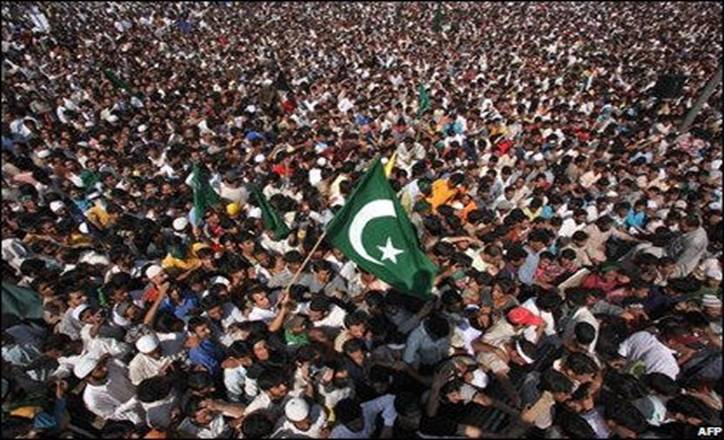
There were fresh pro-independence protests in several places in Kashmir on Friday. At least two people were wounded when police opened fire on thousands of protesters in Sopore town in north Kashmir.

The minister’s comments could be seen by Islamabad as a provocation, damaging prospects for improving ties that plummeted after the 2008 Mumbai attacks that killed 166 people and derailed a sluggish four-year-old peace process with Pakistan.

So far, the latest violence in Kashmir has appeared to have little impact on relations.

The two sides last held peace talks in July and those ended in acrimony over the attacks, even though the dialogue itself is seen as a tentative step towards improving ties.

Divided Kashmir remains at the heart of the dispute between India and Pakistan, with both sides claiming the Himalayan region in full. They have fought two of their three wars over it.

India accuses Pakistan of fuelling unrest in Kashmir, but Islamabad says it only lends moral support to what it calls Kashmir’s independence movement which has killed tens of thousands of people.

In June, India blamed Pakistan-based Lashkar-e-Taiba (LeT) militants for the Mumbai attacks, but Kashmiri separatists say protests by crowds of mainly Muslim youths are generally spontaneous.

LeT was founded in 1990 to fight Indian rule in Kashmir and is based in Pakistan’s Punjab province.

Militant violence has fallen dramatically in recent years but popular protests have continued. In 2008, the region witnessed the biggest protests against Indian rule in two decades.

Kashmiri separatists want to carve out an independent homeland or merge with predominantly Muslim Pakistan.

Toll in Karachi Riots Rises to 73

As Reported by Sify News

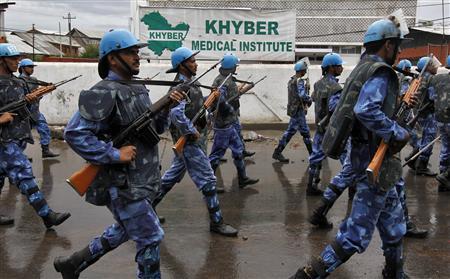
The toll in the violence that broke out in the Pakistani port city of Karachi following the murder of a Muttahida Qaumi Movement (MQM) legislator rose to 73 on Wednesday, with shootouts continuing through the night.

At least 153 injured were brought to various city hospitals in last two days after the riots triggered by the murder of MQM leader and member of Sindh assembly, Raza Haider.

The most violent areas of the city for the third day running were Isa Nagri, Quaidabad, Malir, Machar Colony, Pirabad, Orangi Town and Qasba Colony, amongst others.

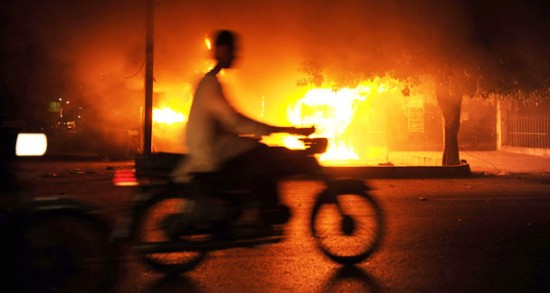
Mobs torched more than 50 vehicles and set several shops and fuel stations on fire. The city roads wore a deserted look for the second day Wednesday as the residents remained hesitant to step out. Though educational institutions and offices opened but attendance remained thin.

Federal Urdu University and Karachi University cancelled their scheduled examinations.

Firing and violence were also reported from Hyderabad, Sukhur, Mirpur Khas and other areas of interior Sindh. More than 100 suspects have been taken into custody by law enforcement agencies on various charges.

Police sources suspected the involvement of banned terrorist outfit Jindullah in the killing of Haider. The sketch of the attackers had been finalised with the help of an eyewitness, sources said.

Raza was shot dead by unidentified gunmen Monday in Nazimabad where he had gone to attend a funeral. A ten-member investigation team, headed by DIG Sultan Khwaja, is probing the case and collecting evidence.

Earlier, Interior Minister Rehman Malik had said that banned outfits like Sipah-i-Sahaba and Tehreek-i-Taliban were involved in the incident.

Dunya TV had reported that security agencies were in the know for more than a year that Raza and two other MQM leaders were on the hit list of terrorists.

The MQM leadership has openly held the Awami National Party responsible for Raza’s murder. The charge has been categorically denied by the ANP leadership, which has demanded a thorough probe to bring the culprits to book.

Both parties have remained fiercely engaged in a political tangle spanned over several decades for control over Karachi, which is Pakistan’s largest city and financial hub. Target killings have claimed more than 1,500 lives in the city over the last two years or so.

National Interest Equals 180 million

By Sibtayn Naqvi for The Blue Rickshaw

With the calamity struck upon Pakistan, many of our citizens have suffered at the hands of a horrific torrential downpour, a tragic AirBlue accident and a sickening “target killing” environment prevalent in Karachi. One would believe to look for guidance, consolation and leadership in the civilian government. To quote spider-man “with great power comes great responsibility”, but for Asif Zardari, this means pursuing “national interests” abroad, while thousands of lives have been disrupted and lost across the nation.

Now all in fairness, as one politician proudly displayed on his twitter “I cannot understand y a State visit by a President to further Pakistan’s national interests shud be politicised. It’s hard work no holiday”. Do tell me, is it absolutely vital for Mr. Zardari at this time to be pursing “national interests” by sipping tea and munching on biscuits with the very Prime Minister who stated that my country should not be allowed to “promote the export of terror”?

The President has made numerous trips abroad to pursue “national interests” since taking the reins of the Presidency. Even though such trips cost (on average) Rs. 20 million, I have rarely seen a public outcry in regards to such escapades. Being the President of a powerful nation housing 180 million people, Mr. President, some empathy in regards to the timing of your foreign affairs could have been witnessed this time around.

Was it absolutely crucial to use public money (that is already bare minimum) to travel abroad in the current circumstances? Would it not have been possible to formulate a domestic trip to Swat, Peshawar or Nowshera to stand by the unfortunate flood victims? Could the Rs. 20 million not have been used to conduct a memorial service for the tragic victims who lost their lives in the Margalla Hills? Is it too much to ask for Rs. 20 million to be spent on increased security in Karachi so we don’t read headlines on target killings every morning?

Throughout Pakistan’s turbulent history we have constantly heard drawing room chatter in regards to the Establishment not allowing the civilian government to flourish. Let’s put a spotlight over the recent weeks to see why the Pakistan Army has an image of being our savior rather than the civilian government. When target killings are carried out in Karachi, the Rangers step in. When ED202 crashed in the Margalla Hills, the Army came to the rescue (while one Minister exclaimed prematurely that there were a number of survivors), when the monsoonal floods hit the Northern regions, General Kayani surveyed the damage while expediting relief efforts, when the British Prime Minister made scathing remarks towards Pakistan, our ISI chief suspended his foreign trip to the United Kingdom. You of all people should know Mr. President public perception does matter.

Why was there a lack of civilian government presence in all the incidents mentioned above? Is the launch of Bilawal Zardari as a 21-year-old PPP-Chairman more important than the diminished livelihood of thousands across the country? Correct me if I am wrong, but didn’t the young Zardari exclaim “jaan chahyai, jaan deingay hum, khoon chahyai, khoon deingay hum”? I’d like to see some of that passion come to the forefront Mr. President.

Now let’s get to the favorite topic of the day. Fake degrees. For the 2008 general elections, there was a provision requiring all candidates to have an undergraduate degree. Regardless of whether the law is satisfactory, it was penned in ink. Do tell me, who gives the right to 47 sitting members of Parliament to provide the Election Commission of Pakistan with phony documents? Ironically, the majority of these illegal Parliamentarians are not even from the Pakistan Peoples Party. Take the high ground, the moral ground, Mr. President. Allow the report presented by the autonomous Higher Education Commission to run its proper course. Break down the barriers being constructed by the Ministry of Education.

Pakistan is a very resilient nation. Over the last decade, we have experienced the effects of an on-going war being carried out in Afghanistan. We have seen a rise in domestic violence that has cost 3,433 lives in 215 suicide attacks. Pakistan lost nearly 80,000 citizens in the tragic earthquake of 2005. Our military has suffered 8785 casualties of which 2273 soldiers have died. Karachi endured 156 incidents of targeted killings in 2009. 334 were targeted and killed in the first seven months of 2010, while their have been 889 murders in Karachi alone during the same time period. 152 Pakistani’s tragically lost their lives in the Margalla Hills, while the current flood that has swept the country has already taken the lives of more than 1,200 citizens.

But we are still standing strong. We carry out an honest day of living without electricity and ridiculously high prices of domestic commodities. Despite the hardships we have faced, our faith in this country has strengthened our confidence. In less than two weeks we will be out in the streets, waving our flags, saluting our soldiers and standing with our heads high. The globe may assume we are a fractured nation, and some may state that we export terror, but our national interests lay within our own borders. Our morals will carry us forward, but being at the helm of affairs Mr. President it is your duty to lead the way. We have suffered enough to watch Establishment dictate terms, or civilian governments bankrupting the national exchequer. It is high time the 180 million are looked after for they make up the “national interests”.

Sibtayn Naqvi is a freelance journalist and writes for The Blue Rickshaw. He may be contacted at sibtaynnaqvi@gmail.com

Pakistanis’ Anger Grows as Flood Damage Mounts

By Adam B Ellick for The New York Times

The damage from Pakistan’s worst floods in generations mounted on Monday as rescue operations continued and public fury rose in the country’s most volatile province.

The official death toll remains under 800, but on Monday the minister of information in Khyber-Pakhtunkhwa Province, formerly the North-West Frontier Province, estimated the true number to be 1,500. Another provincial official said 1.4 million people had lost their homes. As much as 70 percent of the region’s livestock is gone.

The number of people affected by the floods is 2.5 million, the International Federation of Red Cross and Red Crescent Societies said.

“The next week is critical. With further heavy rains there is a real danger that the flooding will spread further south into Sindh Province,” Ateeb Siddiqui, director of operations with the Pakistan Red Crescent Society, said in a statement.

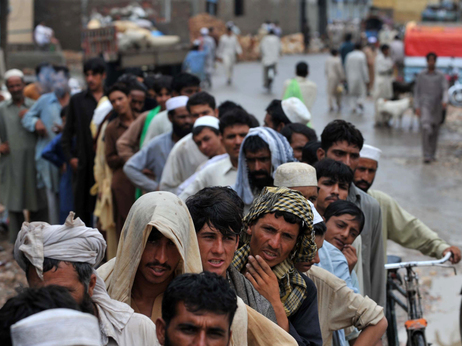
The displaced are clustered in hundreds of schools, largely fending for themselves for food and drinking water. Pakistani television channels showed survivors voicing venomous anger toward a government that has provided little immediate aid.

Meanwhile, President Asif Ali Zardari landed in France for talks with the French government.

“People think that the government is not providing anything to them,” said Adnan Khan, an official at the government’s disaster-relief management office. “But the scale is so high and huge that we cannot cater to all of the people.”

The growing frustration with the government adds to its troubles in dealing with the province, which abuts Afghanistan in Pakistan’s north and is a pivotal battleground against the Islamic militants operating in both countries.

For the past year, the government and the military have been engaged in a campaign to restore public services, trying to rebuild trust after more than two million people were displaced last year when government forces launched a major offensive against militants. But the reconstruction efforts have been painfully slow, and the public mood has shifted from frustrated to furious.

Analysts said the government’s flood relief effort would not only serve as another test of public trust, but would also most likely be exploited as a wedge by foreign governments and militant organizations.

Last summer, hard-line Islamist charities ended up providing significant aid to the displaced, while Pakistani authorities were unable to deliver enough help but refused to allow American agencies to deliver more. The authorities did not want to be associated with the United States, widely blamed here for many of the country’s ills.

That has not changed. For the moment, the United States, which has pledged $10 million in aid for flood victims and has donated thousands of meals, is handing over the supplies for Pakistan to deliver. The United States is also sending 2 water filtration systems, 7 helicopters and 12 prefabricated bridges.

One of the priorities is rebuilding a crucial bridge in Dir district, which remains largely cut off and where thousands are feared trapped or dead. And in Upper Swat, mules were being used to shuttle food rations across high waters to the hungry, an official said.

Officials: Pakistan Flood Deaths Top 1100‎

As Reported By CNN

The devastating floods in Pakistan have killed more 1,100 people, Pakistani government officials told CNN on Sunday. Another 30,000 people were stuck on their rooftops and in higher areas as they tried to escape rushing floodwaters, a United Nations official said Sunday.

“We’ve got the government sending boats and helicopters to try to reach people and bring them to safety at the same time as trying to deliver emergency relief,” said Nicki Bennett, a senior humanitarian affairs officer for the U.N.

Damaged roads and bridges have made rescuing stranded residents difficult, she said, noting that even a U.N. warehouse where the organization stores food, blankets, soaps and bucks is partially underwater. “As we are trying to reach people, we have to battle with the ongoing access problems,” she said. The rescue and recovery efforts of the Pakistan flooding could become more complicated as weather officials predict more monsoon rains starting Monday.

The Pakistan Meteorological Department said Sindh, Punjab, Kashmir, eastern parts of Khyber-Pakhtunkhwa and eastern parts of Balochistan would receive monsoon rains. Areas along the Indus River would be badly affected due to extremely high flood conditions.

The number reflects those killed only in Khyber Pakhtunkhwa province, previously known as the North West Frontier Province, said spokesman Mian Iftikhar Hussain. Flooding has also been reported in Pakistani-controlled Kashmir. Twenty-five deaths were recorded there Friday, Hussain said.

A Pakistani Red Crescent official told CNN that the number of people affected by the floods has risen to nearly 2.5 million people, with infrastructure receiving major damage. Rushing water also has washed away thousands of acres of crops, government buildings, businesses, schools, bridges and homes, officials said.

The United States will assist in relief efforts by bringing in 50,000 meals, rescue boats and helicopters, 12 pre-fabricated steel bridges and water filtration units, the embassy in Islamabad said.

According to Geo TV, 150 people are missing in a northwestern province, and 3,700 homes were swept away. Forty-seven bridges in Swat have been destroyed or damaged.

Geo TV also said 3,000 are in a camp in Nowshera and are without enough water and food. Displaced residents are unhappy with the government response, Geo TV said. Trains have also been delayed, frustrating commuters.

“They have made this a joke,” a commuter told the network. “There are young children here, but there is no water, nor is there any seating. They have taken our ticket money. Yet after every few minutes they change the train timings. They are playing a game of lies and deceit.”

Pakistani Interior Minister Rehman Malik visited Khyber Pakhtunkhwa on Saturday and found tourists and local residents trapped because of the heavy floods, the state-run Associated Press of Pakistan reported.

President Asif Ali Zardari said all available resources would be used to help those stranded by the waters, the APP reported.

Many of the victims died when flood waters swept away hundreds of mud houses in parts of Swat Valley and the districts of Shangla and Tank, according to Bashir Ahmed Bilour, a provincial minister in Khyber Pakhtunkhwa.

Hussain said flooding has cut off the Swat Valley and the districts of Shangla and Peshawar. There is no way to get to these areas by road, he said.

The Pakistani Air Force has been helping with rescue efforts, spokesman Tariq Yazdanie said in an interview on Pakistani TV. The recent torrential rains have broken all previous records of rainfall in the country, he said.

The United Nations said there is a need for help in providing emergency shelter, food, drinking water and sanitation facilities. Its agencies are geared to help with these issues.

The European Commission is providing 30 million euros ($39 million) to help the people affected by the flooding.

U.S. Embassy officials in Pakistan said the United States has committed $10 million to support flood relief priorities, four inflatable rescue boats, two water filtration units that can fulfill the daily water requirements of up to 10,000 people, and 12 pre-fabricated steel bridges to temporarily replace damaged bridges.

U.S. officials have also provided more than 51,000 halal meals (military rations tailored for people of Islamic faith) and another 62,000 will arrive Sunday.

In addition, the U.S. provided helicopters to support the Ministry of Interior’s rescue operations.

The same weather system is also responsible for flooding in bordering Afghanistan, where 65 people have died, and 61 were injured since Thursday, according to Abdul Matin Adrak, head of disaster management for Afghanistan.

The flooding started Thursday and continued for more than six hours. Rescue teams were able to access all the flooded villages using ministry of defense helicopters. Food and equipment was donated and transferred to the affected people by ISAF and Afghan Security forces.

U.S. Air Force Lt. Col. Greg “Boomer” Roberts, adviser to the Afghan Air Force, told CNN Sunday morning that the Afghan air force rescued about 2,000 villagers who were stranded. Roberts accompanied the air force during their rescue mission in the Kunar province — a known insurgent stronghold.

“They knew they could accomplish their mission. When we came into the area and the Taliban made their presence known, they continued … and picked up 2,000 people who were definitely overcome by the floods. And they did it right there in full view of the Taliban.

“There’s not a doubt in my mind that some of the folks we picked up are Taliban,” he said, adding that most were probably looking for employment with the organization. He said the rescue mission is the type of move that could sway people away from the Taliban and toward the Afghan government.

Karzai Questions Allies’ Willingness to Act on Pakistani Terror Havens

As Reported by the Voice of America

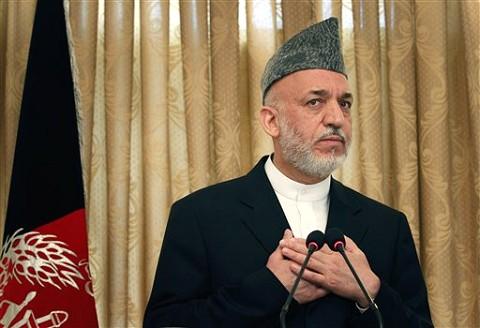
Afghan President Hamid Karzai is questioning the willingness of Western allies to go after terrorist sanctuaries in neighboring Pakistan.

Mr. Karzai said Thursday that the war against terrorism is “not in Afghanistan’s homes and villages” but in the sanctuaries and training centers that lie outside the country.

The Afghan leader told reporters in Kabul that only international forces have the ability to tackle such insurgent forces.

President Karzai’s comments come after the website WikiLeaks released thousands of classified U.S. military documents that allege Pakistan’s intelligence agency was actively collaborating with Afghan Taliban militants.

Pakistan has dismissed the allegations.

Pakistani foreign ministry spokesman Abdul Basit called Mr. Karzai’s remarks “incomprehensible.”  He said Pakistan’s ambassador in Kabul was seeking clarification, noting the neighboring nations have been closely cooperating against terrorism.

President Karzai on Thursday also condemned  WikiLeaks’ release of the military documents and said their leak endangers the lives of Afghans who worked closely with NATO forces.  He said he has ordered a government review of the files.

The 91,000 documents also contain details of civilian casualties allegedly caused by coalition forces.  

U.S. officials have also condemned the documents’ release and launched an investigation into the source of the leak.

What is Wikileaks?

By Jonathan Fildes for The BBC News

Whistle-blowing website Wikileaks is once again at the centre of attention as it makes public more than 90,000 secret records of incidents and intelligence reports from the US military about the war in Afghanistan. It is the latest in a long list of “leaks” published by the secretive site, which has established a reputation for publishing sensitive material from governments and other high-profile organizations. 

In April 2010, for example, it posted a video on its website that shows a US Apache helicopter killing at least 12 people – including two Reuters journalists – during an attack in Baghdad in 2007. A US military analyst is currently awaiting trial, on charges of leaking the material along with other sensitive military and diplomatic material.

In October 2009, it posted a list of names and addresses of people it claimed belonged to the British National Party (BNP). The BNP said the list was a “malicious forgery”.

And during the 2008 US elections, it published screenshots of the e-mail inbox, pictures and address book of vice-presidential candidate Sarah Palin.

Other controversial documents hosted on the site include a copy of the Standard Operating Procedures for Camp Delta, a document that detailed restrictions placed on prisoners at Guantanamo Bay.  It provoked controversy when it first appeared on the net in December 2006 and still splits opinion. For some it is lauded as the future of investigative journalism. For others it is a risk.

In mid-March 2010 the site’s director, Julian Assange, published a document purportedly from the US intelligence services, claiming that Wikileaks represented a “threat to the US Army”.  The US government later confirmed to the BBC that the documents were genuine. To keep our sources safe, we have had to spread assets, encrypt everything, and move telecommunications and people around the world”  “The unauthorised publication of Army and DoD sensitive documents on Wikileaks provides foreign intelligence services access to information that they may use to harm Army and DoD interests,” a spokesperson told BBC News.

The site now claims to host more than one million documents. Anyone can submit to Wikileaks anonymously, but a team of reviewers – volunteers from the mainstream press, journalists and Wikileaks staff – decides what is published.  “We use advanced cryptographic techniques and legal techniques to protect sources,” Mr Assange told the BBC in February. 

The site says that it accepts “classified, censored or otherwise restricted material of political, diplomatic or ethical significance” but does not take “rumour, opinion or other kinds of first hand reporting or material that is already publicly available”. “We specialise in allowing whistle-blowers and journalists who have been censored to get material out to the public,” said Mr Assange.

It is operated by an organisation known as the Sunshine Press and claims to be “funded by human rights campaigners, investigative journalists, technologists and the general public”.  Since it appeared on the net, it has faced various legal challenges to take it offline.

In 2008, for example, the Swiss Bank Julius Baer won a court ruling to block the site after Wikileaks posted “several hundred” documents about its offshore activities. However, various “mirrors” of the site – hosted on different servers around the world – continued to operate. The order was eventually overturned Wikileaks claims to have fought off more than “100 legal attacks” in its life, in part because of what is described as its “bulletproof hosting” The site is primarily hosted by Swedish ISP PeRiQuito (PRQ), which became famous for hosting file-sharing website The Pirate Bay.

“If it is legal in Sweden, we will host it, and will keep it up regardless of any pressure to take it down,” the ISP’s site says.  The site also hosts documents in other jurisdictions, including Belgium. Its experience of different laws around the world meant that it was drafted to help Icelandic MPs draw up plans for its Icelandic Modern Media Initiative (IMMI). The plan calls on the country’s government to adopt laws protecting journalists and their sources.

“To keep our sources safe, we have had to spread assets, encrypt everything, and move telecommunications and people around the world to activate protective laws in different national jurisdictions,” Mr Assange said at the time.

“We’ve become good at it, and never lost a case, or a source, but we can’t expect everyone to go through the extraordinary efforts that we do.”  Despite its notoriety, the site has faced financial problems. In February, it suspended operations as it could not afford its own running costs.  Donations from individuals and organisations saved the site.

Mr Assange told the BBC that the site had recently gone through “enormous growth” and had received an “extraordinary amount of material”.  “It exceeds our ability to get it out to [the] public at the moment,” he said in February.

As a result, he said, the site was changing and hoped to set up a number of “independent chapters around the world” as well as to act as a middle-man between sources and newspapers.   “We take care of the source and act as a neutral intermediary and then we also take care of the publication of the material whilst the journalist that has been communicated with takes care of the verification.”

“It provides a natural… connection between a journalist and a source with us in the middle performing the function that we perform best.” The latest documents – released in partnership with the New York Times, the Guardian and the German news magazine Der Spiegel – appear to be the first high-profile example of this new tactic.