Archive for the ‘ Pakistan Army ’ Category

Beyond Gaddafi, America Turns its Attention to Pakistan

By Peter Hoskin for The Spectator

It’s hard to recall a more grisly complement of newspaper covers than those this morning. Only the FT refrains from showing either Gaddafi’s stumbling last moments or his corpse, whereas the Sun runs with the headline, big and plain: “That’s for Lockerbie”.

The insides of the papers are more uncertain. There are doubts about the details, such as what has happened to Gaddafi’s infamous son Saif. And there are doubts about the general tide of events too. Several commentators, includingPeter Oborne, make the point that the passing of Gaddafi is only the first phase in Libya’s struggle towards democracy — and it is a struggle that might easily be forced off course by various factions, splinter groups and madmen. As the New York Times puts it, “The conflicting accounts about how [Gaddafi] was killed seemed to reflect an instability that could trouble Libya long after the euphoria fades…”

As significant as all this is, however, we should also alight on the news from another area of instability: Afghanistan and Pakistan. Hillary Clinton visited Kabul yesterday, where she not only heard about the Gaddafi’s death in photo montage-friendly fashion, but took some very clear swipes at Pakistan for being the Taliban’s favourite holiday destination. Here are some extracts from the full transcript of her speech and Q&A here:

“We will be looking to the Pakistanis to take the lead, because the terrorists operating outside of Pakistan pose a threat to Pakistanis, as well as to Afghans and others. And we will have ideas to share with the Pakistanis. We will certainly listen carefully to the ideas that they have. But our message is very clear: We’re going to be fighting, we’re going to talking, and we’re going to be building. And they can either be helping or hindering, but we are not going to stop our efforts……So my message will be as it just was to you: We have to deal with the safe havens on both sides of the border. It is not enough to point fingers across the border; we must work together to end the safe havens. We must send a clear, unequivocal message to the government and the people of Pakistan that they must be part of the solution, and that means ridding their own country of terrorists who kill their own people and who cross the border to kill in Afghanistan.I think that how we increase that pressure, how we make that commitment, is the subject of the conversations that President Karzai and I have had, and that I will have in Pakistan. But we’re looking to the Pakistanis to lead on this, because there’s no place to go any longer. The terrorists are on both sides. They are killing both people. No one should be in any way mistaken about allowing this to continue without paying a very big price. So I will deliver the message on behalf of the mothers of Afghanistan andon behalf of my own country.”

Just words, perhaps. But these words are some of the firmest that Obama’s adminstration has directed towards Islamabad since the death of Osama Bin Laden. In a news interview last night (do watch it if you’ve got two minutes), Clinton suggested that “something has changed” in the relationship between the two countries, and that Pakistan needs to “make some some serious choices”. That change could well define much of what lies ahead for Afghanistan and the wider region.

Pakistan Leans Toward Talks With Taliban, Not Battle

By Karin Brulliard and Haq Nawaz Khan for The Washington Post

ISLAMABAD — Amid growing American frustration with Pakistan’s handling of Islamic militancy, the government here appears less willing than ever to challenge insurgent groups and is more inclined to make peace with them.

In a series of recent statements, Pakistani officials have rejected the notion of robust military action against insurgents based in its tribal belt and instead called for truces. At a recent summit, political leaders issued a resolution that did not condemn terrorism but said their policy is dialogue. The decree was widely viewed as having been rubber-stamped by the powerful military, whose top two figures briefed the conference.

The approach has puzzled U.S. officials and renewed debate in Pakistan about how to handle insurgents who have killed thousands in attacks nationwide.

Much remains unclear about the potential for peacemaking, including which militant groups would be included or willing. But some analysts say Pakistan has lost the resolve to battle homegrown insurgents who many here view as disgruntled brethren.

“Everyone went along with what the army wanted” at the recent political summit, said Rahimullah Yousafzai, a Pakistani journalist and expert on militancy in the northwest. “It became obvious that the military has no appetite for military operations.”

Many here express skepticism about talks, arguing that such efforts had failed in the past. But the idea is backed by Islamic parties and other political leaders.

In interviews, politicians and security officials said Pakistan views the Pakistani Taliban, an umbrella insurgent group that is an offshoot of the Afghan movement, as splintered enough to be open to peace deals mediated through tribal elders or clerics. And the United States, they note, is supporting a similar approach in Afghanistan.

“If by giving a chance to peace, any terror is eliminated, it’s the best option,” Interior Minister Rehman Malik, a leading ruling party figure, said in an interview. He added that he had received armistice offers from militants: “They want to talk.”

Pakistan’s fragile civilian government regularly condemns terrorism, and the army has executed several operations in the country’s northwest, including against Pakistani Taliban factions in the Swat Valley and South Waziristan. The battles have scattered some militant leaders, leaving the organization weakened but still capable of carrying out deadly attacks. But there is little public enthusiasm for large-scale military action, which could displace millions of people.

Meanwhile, Pakistan is jockeying for inclusion in any Afghan political settlement, which security officials here believe will bring Afghan Taliban representatives into the government. The army therefore sees little incentive to antagonize Pakistan insurgents, who commingle with their Afghan counterparts, security analysts said.

‘A focus on peace’

Pakistani Prime Minister Yousuf Raza Gilani called last month’s political conference as tensions with the United States soared over American allegations of Pakistani state support for the Haqqani network, an Afghan group based in the Pakistani tribal area of North Waziristan. Participants, in a rare show of unity, unanimously rejected the U.S. claims and called for a “new direction and policy with a focus on peace and reconciliation” with “our own people in the tribal areas.”

Two days later, Gilani told local media that a parliamentary committee would monitor talks that could include all Taliban factions, including the Haqqani network, but warned that failure could prompt military action. Army chief Gen. Ashfaq Parvez Kayani, however, suggested otherwise to reporters, saying: “Military operation is not a solution to every problem. We’re done with those operations where we had to.”

An American official said the United States was unsure what to make of the resolution. “We’ll be watching, of course, and asking through military channels what the [Pakistanis] have in mind,” said the official, who spoke on the condition of anonymity to discuss a sensitive relationship.

The United States has stepped up a campaign of drone strikes against the Haqqani network, targeting the group with several strikes in recent days.

Taliban reaction to the Pakistani overture has been wary. One top commander, Faqir Mohammed, was quoted by local media as saying he welcomed talks — but that they must lead to the establishment of Islamic law. Mohammed later denied willingness to talk.

“There have been contacts between the government and militants through indirect channels,” said a tribal elder from the Waziristan region. “Both sides are seeking guarantees before starting.”

A Pakistani intelligence official pointed to the recent defection of one Pakistani Taliban commander, Fazal Saeed Haqqani, as an argument for truces, which he said exploit insurgent infighting. Pakistan, the official said, “met Haqqani’s demands,” including by releasing some of Haqqani’s imprisoned relatives.

Others bemoan the idea of talks as surrender, though many critics remain enthusiastic about reconciliation in Afghanistan. Javed Ashraf Qazi, a senator and former intelligence chief, said the Afghan Taliban is fighting a foreign occupation, while the Pakistani Taliban seeks to create an Islamic caliphate.

“These are our own citizens who have revolted against the state . . . and therefore they should be subjected to the law,” Qazi said. “They have the blood of innocent people on their hands.”

Pakistan’s numerous past attempts at peacemaking with domestic insurgent groups provide ample reason for doubt. Some analysts say a 2006 deal in North Waziristan helped create a haven in the area, from which the Haqqani network and other fighters now operate freely.

The Pakistani army has maintained truces with a few factions, including one led by Hafiz Gul Bahadur, whose North Waziristan-based forces attack U.S. troops in Afghanistan and are closely allied with the Haqqani network. Some analysts speculate that the army has struck other secret deals that it wants to avoid jeopardizing.

The military and the Taliban are “ happy nowadays because there are fewer attacks — on both sides,” Yousafzai said.

Special correspondent Khan reported from Peshawar, Pakistan.

Have We Hit Rock Bottom Yet?

By Shahzad Chaudhry for The Express Tribune

Attending conferences and travelling to them are the two most testing tasks these days for most Pakistanis. The airports tend to give you a full low-down as soon as the ‘green’ passport is presented: I am told by authentic sources that in as friendly country as China it takes twice the time to clear immigration for a Pakistani traveller than for someone with any other passport.

Just so that we may place our ‘higher than the Himalayas’ relationship in perspective, I was also informed that there was a daily flight between Delhi and Beijing compared to only two a week between Islamabad and Beijing. The disparity in trade figures between Beijing and Delhi, and Beijing and Islamabad, respectively, are already well-known. Call it anything, size of the economies or economic pragmatism, or whatever, the fact is China and India are unlikely to go to war with a $100 billion stake, keeping the two tied in an interdependent embrace; wish what you may, Pakistan, bosom love ain’t coming to the rescue. That is the new world ‘geconomics’.

One thing that always strengthened my hand as an ambassador for Pakistan during the Shaukat Aziz years was the perpetual good news that came out on the economic front from Pakistan. Now there may be more than one opinion about Musharrafian economy, but I have always held, and with some conviction I might add, that economies work on few sound fundamentals and a lot of good sentiment. This last word is key. So if the services sector — telecom, construction, finance — all seemed to be galloping under Shaukat Aziz’s mantra of economic progress, he perhaps understood well the significance of looking dapper and sounding happy. He held the dollar pegged and the stock market boomed: the first was clever policy, the latter sentiment. After all what is in the story of an ‘Incredible’ India — the incredibility indeed of a well-manufactured fable and from there on the critical mass of success takes on.

It was famously reported that a particular British chancellor of the Exchequer was singing in the bathroom: the veil of pessimism lifted and the economic sentiment began its own hum. But when you sit on a dredged economy and scooped-out resources there is little that you can offer to the world as hope. Words remain just that, words. Give Hafeez Shaikh something to hum about, and he will hum. The difficulty is he himself remains incapable of carving one.

I haven’t heard a sicker pronouncement of Pakistan’s economic predicament than someone quoting to me the likely $12-16 billion flowing in remittances, as the ultimate trigger for turning around our fortunes. There cannot be a darker indictment of our lows. Incapable of generating revenues inside, we hope like hell for the world and the people to resuscitate us from the outside. Even in that, though, madness must have a method. Investments, portfolio or otherwise, flow into congenial environs; some, Hafeez Shaikh will have to conjure, some we, as partners in crime, will have to relent and enable.

I am not an economist, and certainly never pretended to be one, but I have been subjected enough to the pains of a few that even I could venture to suggest a course to the hapless finance minister. For instance, capital flight is a growing reality and industry needs an injection of support and sustenance under a dwindling availability of energy. The approaching winter months may just provide some respite from domestic energy consumption, enabling diversion to the industry sector. Where possible, policy measures can enable relief and sectoral benefits to industries that wish to work through the difficult times. That might just sustain the benefits emerging from an export boost last year.

Many have tended to qualify the boost in different ways and perhaps each has a point but then how long can you keep a merchant down; there is something called “recess fatigue”, and he must break from it to keep the wheels going. One hopes that a finance minister may recognise such trends and then have the wits to turn them into triggers of rebound. If not, paralysis may just be a more enveloping reality in Islamabad.

Agriculture is half policy, half divine. The policy side has seen some attention while divinity is mostly earned. Our erstwhile brothers in East Punjab seem to have hit a good combination and are worth a reflection. So if there is a formula for our finance gurus to follow in the short-term, it must reside around energy, industry and agriculture. Once out of the hole, we can then begin to embellish our societal existence.

What will bring back a smile on the finance minister’s face? An enabling environment? A country in war, and a 10-year-old war at that, cannot be given to economic congeniality. We need to wean this country away from war. Seriously taken, the All Parties Conference urgings to ‘give peace a chance’ is a worthy, if catchy slogan, and must find the necessary politico-military resolve. The difficulty in our prevailing discourse is that few are willing to find solace in a political effort alone. As the refrain is that military runs the policy, perhaps that is where one may head. So then, over to General Kayani.

With two years to go in his tenure, here are a few things that General Kayani must do: get us out of this war — the lesser the pain the better; shun militancy in all its manifestations — and here the word manifestation to my mind carries all its consequences; and cleanse the military system of this ill-advised and ill-conceived baggage of the yore. We need not depend on the augmenting effect of an irregular effort in enhancing our national agenda. For some time let us simply look inside and avoid external diversions. With General Kayani convinced of such disposition, no arm whatever can practice any part of our rather sad legacy in regional ambitions.

I do not know who killed Rabbani and why; I also don’t know if the Pakistani military alone supports the Haqqani network and to what extent, but I do know that defending accusations of Pakistani culpability is becoming a harder task. The time when any such insinuation will stick is when we will have hit rock bottom.

I wish we were out of this predicament. I wish to see my country relevant and respected; and, I wish to see a smile on a humming Hafeez Shaikh.

Wake up Pakistan

By Najam Sethi for The Friday Times

US- PAK relations have broken down. The United States has “ suspended” military aid and all but closed the Kerry- Lugar- Berman tap of funds for the civilians. Proud Pakistanis have puffed up their chests and vowed to eat grass, if necessary, in order to defend their country’s “sovereignty”. What’s the big deal, they aver, US aid was peanuts anyway, and our traditional friends like China and Saudi Arabia can bail us out of our problems.

To be sure, our relationship with the US has been no small disaster.

In the 1950s, we begged the US to befriend us instead of India, cheerily going along with the US into the Cold War against the USSR when it wasn’t our war at all. In consequence, the military became the dominant theme of our life and wrecked the budding impulse of democracy. Once again, in the 1980s and 2000s, we tripped over ourselves to rent out our services to the US in Afghanistan.

Today we are reaping the terrorist whirlwind of our greed and opportunism.

But a little introspection is in order to prove that we don’t need the US as an enemy because we are our own worst enemies.

More Pakistanis are eating “ grass” now than ever before. The number of Pakistanis below the poverty line has increased from 27 per cent five years ago to 33 per cent in 2011. And this has nothing to do with the US. The growth rate of the economy has fallen from 6.5 per cent five years ago to 3 per cent now. The fiscal deficit is yawning at 7.5 per cent of the GDP today compared to 4.5 per cent five years ago. And this has nothing to do with the US. The Rupee has fallen from 77 to the dollar five years ago to 90 today. General inflation is running at 15% and food inflation at 25%. And this has nothing to do with the US. The tax to GDP ratio is down to 8.7% in 2011 from 11.5% five years ago. And this has nothing to do with the US. Floods continue to devastate the lives and produce of millions of poor people across the country.

And this has nothing to do with the US. Sunni extremists are rampaging, killing Shias. Ethnic parties continue to mow down people in Karachi. And this has nothing to do with the US. Power breakdowns have made the lives of tens of millions wretched and miserable while rendering millions of others jobless.

And this has nothing to do with the US. Instead of rooting for Pakistani nationalism, we are proud to undermine it as Muslims first, or Sindhis, Muhajirs, Baloch, Pakhtun, Punjabi, Seraiki, Hazarajat, Kashmiri, Sunni, Shia, Deobandi, Barelvi. And this has nothing to do with the US. We are counted amongst the most corrupt countries of the world. We have waged four wars with India and lost each of them, in the bargain losing half of Pakistan.

And this has nothing to do with the US. As if this litany of self- induced failures isn’t enough, there is the hypocrisy of double standards to contend with too. Of course, the US has violated our sovereignty by raining drones on FATA. But so have the Afghan Taliban and Al- Qaeda who have established safe havens there too. But we are quick to blast the US and quicker still to pretend that Al- Qaeda doesn’t exist and the Taliban are innocent refugees for whom our traditional hospitality is on offer.

The story doesn’t end here.

The IMF is not welcome. How dare it demand that we tax the rich, plug the bleeding in public sector corporations, stop the theft of power, and spend according to our means. US aid is dispensable.

We don’t need to build dams and reservoirs for managing our natural resources, we don’t need schools and teachers for our children and hospitals for the poor.

Our all- weather friends are China and Saudi Arabia. Never mind that China doesn’t help us much when we are ravaged by earthquakes and floods or when we are short of cash to pay our foreign bills.

NEVER MIND that Saudi Arabia treats our migrant workers like slaves, rents our military to crack down on Shia majorities in Bahrain and exports extremist “ Islam” to our lands.

At the end of the day, who eats grass when we rise to defend our sovereignty? Not our pot- bellied traders and businessmen. Not our golf- playing generals. Not our Defence Housing Society residents.

Not our foreign- asset holding politicians whose kids go to English- medium private schools at home and abroad. Not our self righteous media Mughals who berate our slavish black- skins and white masks. Not our corrupt judges and civil servants. It’s the wretched of the earth, the poorest of the poor, who eat grass.

For too long we have made foreign scapegoats for our own failures and corruptions. It is time to wake up and set our house in order without begging or berating the US.

Analysis: Pakistan’s Double-Game: Treachery or Strategy?

By John Chalmers for Reuters

Washington has just about had it withPakistan.

“Turns out they are disloyal, deceptive and a danger to the United States,” fumed Republican Representative Ted Poe last week. “We pay them to hate us. Now we pay them to bomb us. Let’s not pay them at all.”

For many in America, Islamabad has been nothing short of perfidious since joining a strategic alliance with Washington 10 years ago: selectively cooperating in the war on extremist violence and taking billions of dollars in aid to do the job, while all the time sheltering and supporting Islamist militant groups that fight NATO troops in Afghanistan.

Pakistan has angrily denied the charges, but if its critics are right, what could the explanation be for such duplicity? What strategic agendas might be hidden behind this puzzling statecraft?

The answer is that Pakistan wants to guarantee for itself a stake in Afghanistan’s political future.

It knows that, as U.S. forces gradually withdraw from Afghanistan, ethnic groups will be competing for ascendancy there and other regional powers – from India to China and Iran – will be jostling for a foot in the door.

Islamabad’s support for the Taliban movement in the 1990s gives it an outsized influence among Afghanistan’s Pashtuns, who make up about 42 percent of the total population and who maintain close ties with their Pakistani fellow tribesmen.

In particular, Pakistan’s powerful military is determined there should be no vacuum in Afghanistan that could be filled by its arch-foe, India.

INDIA FOCUS

Pakistan has fought three wars with its neighbor since the bloody partition of the subcontinent that led to the creation of the country in 1947, and mutual suspicion still hobbles relations between the two nuclear-armed powers today.

“They still think India is their primary policy,” said Talat Masood, a retired Pakistani general and prominent political analyst. “India is always in the back of their minds.”

In an interview with Reuters on Tuesday, Pakistani Prime Minister Yusuf Raza Gilani – unprompted – complained that Washington’s failure to deal even-handedly with New Delhi and Islamabad was a source of regional instability.

Aqil Shah, a South Asia security expert at the Harvard Society of Fellows, said Islamabad’s worst-case scenario would be an Afghanistan controlled or dominated by groups with ties to India, such as the Tajik-dominated Northern Alliance, which it fears would pursue activities hostile to Pakistan.

“Ideally, the military would like Afghanistan to become a relatively stable satellite dominated by Islamist Pashtuns,” Shah wrote in a Foreign Affairs article this week.

Although Pakistan, an Islamic state, officially abandoned support for the predominantly Pashtun Taliban after the 9/11 attacks on the United States in 2001, elements of the military never made the doctrinal shift.

Few doubt that the shadowy intelligence directorate, the Inter-Services Intelligence (ISI), has maintained links to the Taliban that emerged from its support for the Afghan mujahideen during the 1979-1989 Soviet occupation of Afghanistan.

Until recently, there appeared to be a grudging acceptance from Washington that this was the inevitable status quo.

That was until it emerged in May that al Qaeda leader Osama bin Laden – who was killed in a U.S. Navy SEALs raid – had been hiding out in a Pakistani garrison town just two hours up the road from Islamabad, by some accounts for up to five years.

Relations between Pakistan and the United States have been stormy ever since, culminating in a tirade by the outgoing U.S. joint chiefs of staff, Mike Mullen, last week.

Mullen described the Haqqani network, the most feared faction among Taliban militants in Afghanistan, as a “veritable arm” of the ISI and accused Islamabad of providing support for the group’s September 13 attack on the U.S. embassy in Kabul.

The reaction in Islamabad has been one of stunned outrage.

Washington has not gone public with evidence to back its accusation, and Pakistani officials say that contacts with the Haqqani group do not amount to actual support.

However, Imran Khan, a Pakistani cricketer-turned-populist-politician, said this week that it was too much to expect that old friends could have become enemies overnight.

He told Reuters that, instead of demanding that Pakistan attack the Haqqanis in the mountainous border region of North Waziristan, the United States should use Islamabad’s leverage with the group to bring the Afghan Taliban into negotiations.

“Haqqani could be your ticket to getting them on the negotiating table, which at the moment they are refusing,” Khan said. “So I think that is a much saner policy than to ask Pakistan to try to take them on.”

REGIONAL GAME

The big risk for the United States in berating Islamabad is that it will exacerbate anti-American sentiment, which already runs deep in Pakistan, and perhaps embolden it further.

C. Raja Mohan, senior fellow at New Delhi’s Center for Policy Research, said Pakistan was probably gambling that the United States’ economic crisis and upcoming presidential elections would distract Washington.

“The real game is unfolding on the ground with the Americans. The Pakistan army is betting that the United States does not have too many choices and more broadly that the U.S. is on the decline, he said.

It is also becoming clear that as Pakistan’s relations with Washington deteriorate, it can fall back into the arms of its “all-weather friend,” China, the energy-hungry giant that is the biggest investor in Afghanistan’s nascent resources sector.

Pakistani officials heaped praise on Beijing this week as a Chinese minister visited Islamabad. Among them was army chief General Ashfaq Kayani, arguably the country’s most powerful man, who spoke of China’s “unwavering support.”

In addition, Pakistan has extended a cordial hand to Iran, which also shares a border with Afghanistan.

Teheran has been mostly opposed to the Taliban, which is dominated by Sunni Muslims while Iran is predominantly Shi’ite. But Iran’s anti-Americanism is more deep-seated.

“My reading is the Iranians want to see the Americans go,” said Raja Mohan, the Indian analyst. “They have a problem with the Taliban, but any American retreat will suit them. Iran in the short term is looking at the Americans being humiliated.”

ARMY CALLS THE SHOTS

The supremacy of the military in Pakistan means that Washington has little to gain little from wagging its finger about ties with the Taliban at the civilian government, which is regularly lashed for its incompetence and corruption.

“The state has become so soft and powerless it can’t make any difference,” said Masood, the Pakistani retired general. “Any change will have to come from the military.”

Daniel Markey, a senior fellow for South Asia at the U.S. Council on Foreign Relations, said the problem lies with a security establishment that continues to believe that arming and working – actively and passively – with militant groups serves its purposes.

“Until … soul-searching takes place within the Pakistani military and the ISI, you’re not likely to see an end to these U.S. demands, and a real shift in terms of the relationship,” Markey said in an online discussion this week. “This is the most significant shift that has to take place.”

U.S. Refrains From Declaring Haqqani Terrorist Group on Pakistan Concerns

By John Walcott and Viola Gienger for Bloomberg News

The Obama administration isn’t ready to declare the Haqqani group in Pakistan a “foreign terrorist organization” even after Admiral Mike Mullen, chairman of the Joint Chiefs of Staff, said the group attacked the U.S. embassy and American troops in Afghanistan.

“We are continuing to review whether to designate” the Haqqani organization, State Department spokeswoman Victoria Nuland said yesterday.
Mullen’s declaration in Senate testimony last week that Haqqani operatives acted as a “proxy” for Pakistan’s intelligence service may have further complicated the question.

Taking the first step — adding the Haqqani group to the list of terrorist organizations — would lead to demands that Pakistan be declared a state sponsor of terrorism. That would put at risk Pakistan’s cooperation as the U.S. tries to snuff out al-Qaeda’s core and other militants in the country’s tribal areas.

For now, the U.S. has designated the Haqqani network’s founder and other leaders. It has made clear to Pakistan that clamping down on the group “is job one, that we want to do it together, and that’s the conversation that we’re having now,” Nuland said.
Designating Pakistan a state sponsor of terrorism would put it in the company of only four other countries — Cuba, Iran, Sudan and Syria — and might trigger a nationalist backlash in Pakistan. It would require halting U.S. aid to Pakistan, force the U.S. to oppose World Bank loans to Pakistan, and end cooperation between the two countries in fighting terrorism and trying to stabilize Afghanistan.

Pariah State

Naming Pakistan a sponsor of terrorism “would turn it into a pariah state,” Robert Lamb, a senior fellow at the Center for Strategic and International Studies in Washington, said in a telephone interview. “That would complicate a lot of aspects of the relationship, which is complicated enough already. It’s ugly, but it’s not unsalvageable.”

The administration is under new pressure to designate the Haqqanis a terrorist organization alongside 49 others, including al-Qaeda, Lebanon’s Hezbollah, and Hamas, the Palestinian Islamist group that controls the Gaza Strip.

After Mullen testified to the Senate Armed Services Committee, Senator Dianne Feinstein, a California Democrat and chairman of the Senate Intelligence Committee, wrote Secretary of State Hillary Clinton that the Haqqani group “meets the standards for designation” as a terrorist organization. So far, said congressional officials, Clinton hasn’t responded.

Congressional Pressure

“I think there’s going to be increasing congressional pressure on them to list the Haqqani network as a foreign terrorist organization,” said Lisa Curtis, a former CIA analyst and now a senior research fellow at the Heritage Foundation policy group in Washington.
“If we know that the Haqqani network is behind these major attacks on U.S. interests and we fail to confront them, that is a signal of weakness and it simply invites more attacks,” she said.

Nuland and other administration and military officials signaled a reluctance to sanction Pakistan.
Pentagon Press Secretary George Little said yesterday that the U.S. wants to “maintain a relationship with Pakistan that’s grounded in common interests, to include going after terrorists that threaten both countries.”
“There are differences from time to time,” Little told reporters at the Pentagon. “Those differences have been made public, and we continue to discuss those differences in private. We look forward to working with the Pakistanis to try to resolve them.”

Stretched Thin

Pakistani military officials told reporters in Islamabad on Sept. 25 that they had decided not to take action against the Haqqani group because their forces are stretched too thin.

If tensions escalated, Pakistan might again, as it did in a previous diplomatic confrontation, cut supply lines to U.S., NATO and Afghan forces in Afghanistan from its port city of Karachi. Alternative land or air routes are more costly and difficult.
The Pakistanis, said two U.S. intelligence officials, also might abandon secret agreements that permit unmanned U.S. drones to collect intelligence and attack targets in designated areas of Pakistan.

The U.S. already is restricted from operating over the Haqqanis’ suspected base in North Waziristan or the border city of Quetta, home to the main Afghan Taliban group. They also might expel some or all of the classified number of U.S. intelligence officers and special operations forces who are training Pakistani troops and helping target drone attacks, the officials said.

ISI Role

Designating the Haqqani network a terrorist organization would do little to stop the group, said Curtis of the Heritage Foundation. The Haqqanis, she said, probably still would be able to garner financial support from their allies in the Persian Gulf region and backing from the Pakistan spy agency, the Directorate of Inter-Services Intelligence, known as ISI.
A U.S. designation of the Haqqanis isn’t likely to change Pakistani policy either, said Christine Fair, a Pakistan expert at Georgetown University in Washington.

The ISI and the Pakistani military regard the Haqqani network and other militants as allies in their campaign to maintain Pakistani influence in Afghanistan and prevent arch- rival India from getting a toehold on Pakistan’s western border, said Fair and other specialists.
“They believe that the Haqqanis would protect Pakistan’s interest in any future setup in Afghanistan,” Curtis said.
Rejecting the charges that his government uses the Haqqanis as a proxy, Pakistani Prime Minister Yousuf Raza Gilani said in a Sept. 25 statement that U.S. policy on Afghanistan shows “confusion and policy disarray.”

“We may just let this ride,” said Marvin Weinbaum, a former Afghanistan and Pakistan intelligence analyst at the State Department and director of the Center for Pakistan Studies at the Middle East Institute in Washington. “We know what direction the U.S.-Pakistan relationship is going, and now we have no idea what the bottom looks like.”

Pakistani Commanders Meet After US Criticism

By Sebastian Abbot for The Asssociated Press

Pakistan’s army chief convened a special meeting of senior commanders Sunday following U.S. allegations that the military’s spy agency helped militants attack American targets in Afghanistan, the army said.

The government also summoned home the country’s foreign minister early from a trip to the United States to attend a meeting of all major political parties to discuss the American allegations of support for the militant Haqqani network.

Senior Pakistani officials have lashed out against the allegations, accusing the U.S. of trying to make Pakistan a scapegoat for its troubled war in Afghanistan. The public confrontation has plunged the already troubled U.S.-Pakistan alliance to new lows.

Pakistan’s leaders have shown no indication they plan to act on renewed American demands to attack the Haqqani network in its main base in Pakistan, even at the risk of further conflict with Washington, which has given the country billions in aid.

U.S. officials have implied that American forces could carry out unilateral raids inside Pakistan against the Haqqani network, operations that could have explosive implications in a country where anti-American sentiment is widespread.

Pakistanis were outraged by the covert U.S. commando raid that killed al-Qaida chief Osama bin Laden in a garrison town not far from Islamabad in May. The U.S. did not tell the Pakistani government about the operation beforehand for fear bin Laden would be tipped off.

Pakistani Interior Minister Rehman Malik warned the U.S. on Sunday against sending troops into Pakistan.

“Any aggression will not be tolerated,” Malik told reporters in Islamabad. “The nation is standing united behind the armed forces, which is the front line of Pakistan’s defense.”

The top U.S. military officer, Adm. Mike Mullen, last week accused Pakistan’s Inter-Services Intelligence agency of supporting Haqqani insurgents in planning and executing a 22-hour assault on the U.S. Embassy in Afghanistan on Sept. 13 as well as a truck bomb that wounded 77 American soldiers days earlier.

Pakistan’s army chief, Gen. Ashfaq Pervez Kayani, widely considered the most powerful man in Pakistan, has dismissed the allegations, saying they were baseless and part of a public “blame game” detrimental to peace in Afghanistan.

Pakistan army spokesman Maj. Gen. Athar Abbas said Kayani presided over Sunday’s commanders meeting but would not provide detail on the discussions.

Later in the day, Prime Minister Yousuf Raza Gilani’s office issued a statement saying Foreign Minister Hina Rabbani Khar was summoned back to attend a meeting of all major political parties on “threats emanating from outside the country.”

Gilani slapped down the U.S. allegations in a separate statement issued late Saturday.

“We strongly reject assertions of complicity with the Haqqanis or of proxy war,” Gilani said in a statement. “The allegations betray a confusion and policy disarray within the U.S. establishment on the way forward in Afghanistan.”

Pakistan claimed to have severed its ties with Afghan militants after the 9/11 attacks and supported America’s campaign in Afghanistan, but U.S. officials have long suspected it maintained links. The comments by Mullen, who is chairman of the Joint Chiefs of Staff, were the most serious yet accusing Pakistan of militant ties, although he didn’t cite any specific evidence.

Despite the seriousness of the U.S. claims, which appear to accuse Pakistan of state-sponsored terrorism, Mullen and other U.S. officials have said Washington needs to keep engaging with Islamabad, a reflection of its limited options in dealing with the country. Washington is also concerned about the danger of further instability in the nuclear-armed state.

The head of U.S. Central Command, Gen. James Mattis, called for continued cooperation after a meeting with Kayani in Islamabad. In a statement issued Sunday by the U.S. Embassy, Mattis emphasized “the need for persistent engagement among the militaries of the U.S., Pakistan and other states in the region.”

Mattis also met with the Pakistani military’s chief of staff, Gen. Khalid Wynne, who expressed his concern about “negative statements emanating from the U.S.” and stressed the need to address “the irritants in the relationship,” according to a statement issued by the military.

Around half of the U.S. war supplies to Afghanistan are trucked over Pakistani soil, and even as it accuses Islamabad of complicity with Afghan insurgents, Washington knows that it will likely need Islamabad’s cooperation in bringing them to the negotiating table.

Gilani also called for greater cooperation.

“Let’s avoid mutual recrimination and recommit ourselves to working together for eliminating terrorism and for reconciliation and peace in Afghanistan,” he said.

Pakistan Warns U.S. Against Hot Pursuit On Its Soil

As Reported by The Detroit Free Press

Pakistan’s foreign minister today warned the United States against sending ground troops to her country to fight an Afghan militant group that America alleges is used as a proxy by Pakistan’s top intelligence agency for attacks in neighboring Afghanistan.

The warning came as a top U.S. military commander was in Pakistan for talks with the army chief at a time of intense strain between the two countries. The U.S. Embassy said Gen. James Mattis, head of U.S. Central Command, arrived in Pakistan late Friday, and that he will meet the army chief, Gen Ashfaq Parvez Kayani.

Ties between Islamabad and Washington are in crisis after American officials stepped up accusations that Pakistan’s Inter Services Intelligence was aiding insurgents in neighboring Afghanistan, including those who took part in an attack on the U.S. Embassy last week in Kabul.

Pakistan’s Foreign Minister Hina Rabbani Khar said in an interview today that there are red lines and rules of engagement with America, which should not be broken.

“It opens all kinds of doors and all kinds of options,” she told Pakistan’s private Aaj News TV from New York. The comment was in response to a question about the possibility of U.S. troops coming to Pakistan.

Khar, however, insisted that Pakistan’s policy was to seek a more intensive engagement with the U.S. and that she would like to discourage any blame game.

“If many of your goals are not achieved, you do not make someone a scapegoat,” she said, addressing the U.S.

The U.S. allegations have seen a strong reaction from Pakistan.

Kayani, the Pakistani army chief, said on Friday that the charges were baseless and part of a public “blame game” detrimental to peace in Afghanistan. Other Islamabad officials urged Washington to present evidence for such a serious allegation. Khar warned the United States is risking losing an ally in the war on terror.

The row began when Adm. Mike Mullen, chairman of the Joint Chiefs of Staff, on Thursday accused the ISI agency of supporting Haqqani insurgents in planning and executing last week’s 22-hour assault on the U.S. Embassy and a truck bombing that wounded 77 American soldiers days earlier.

Kayani said the allegations were “very unfortunate and not based on facts.”

The claims were the most serious yet by an American official against nuclear-armed Pakistan, which Washington has given billions in civilian and military aid over the last 10 years to try to secure its cooperation inside Afghanistan and against al-Qaida.

The Haqqani insurgent network is widely believed to be based in Pakistan’s North Waziristan tribal area along the Afghan border. The group has historical ties to Pakistani intelligence, dating back to the war against the Soviets in Afghanistan in the 1980s.

The relationship between the two countries has never been smooth, but it took one of its hardest hits when U.S. commandos slipped into Pakistan on May 2 without informing the Pakistanis of their mission and killed al-Qaida chief Osama bin Laden in a garrison town not far from Islamabad.

Pakistanis for Peace Editorial Note– We hope that the United States and Pakistan can get through this incredibly difficult period in their long and close relationship. The United States should present the concrete evidence that it has that there is collusion on the part of individuals in the Pakistani government with the terrorists and the Pakistanis for their part must do a lot more to end terror networks within their borders, and this certainly includes sending troops into North Waziristan, Quetta and any other city in the country where the terrorists are based. The already unstable and dangerous neighborhood that is South Asia can not afford further deterioration in US-Pakistan relations.

India, Pakistan To Open New Trade Check-Post

By Tom Wright for The Wall Street Journal

While India and Pakistan trade barbs over terrorism, the country’s trade officials are making small but notable steps toward opening up their economies to one another.

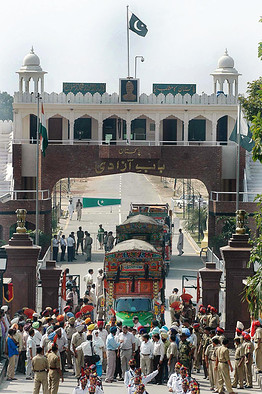
In October, authorities plan to open a second trade check-post at the Wagah border in Punjab state, the only land-crossing between the two hostile neighbors, in an attempt to boost trade volumes. The commerce ministers of both countries are expected to formally announce the new check-post at a meeting in New Delhi later this month.

It might look like a baby step in normalizing frozen trade relations. But with so much else going wrong in India-Pakistan ties, it’s a welcome bit of positive news and one that is energizing Indian businessmen who work close to the border.

Currently, trucks that carry the meager flow of trade between India and Pakistan have to stop unloading at 3 p.m. because that’s when tourists from both sides start arriving at the Wagah border for the evening “Beating Retreat” ceremony – a display of nationalistic bravado that precedes the formal closing of the gates between the countries each evening.

The new terminal will allow trade to continue until 7 p.m. and hopefully increase volumes passing through the check-post.

Some business groups in Amritsar, a city near the Indian side of the border,  are betting on an expansion of trade. Suneet Kochhar, director of a paper company based in Amritsar, is involved with a group of investors who have accumulated land to develop a freight terminal near the second trade check-post.

“Once it’s operational, things will change,” Mr. Kocchar says. Land near the border has doubled in value in the past two years, he adds.

To be sure, Pakistan and India have looked like moving ahead on trade in the past but things have gotten nowhere. Another attack like the one carried out by Pakistani militants on Mumbai in 2008, killing over 160 people, could easily nip the current optimism in the bud.

Two-way India-Pakistan trade was a paltry $1.8 billion in the year ended March 31, 2010, basically unchanged over the past five years, while India’s trade with China has skyrocketed to $60 billion.

Indian Prime Minister Manmohan Singh has said that India won’t be able to fulfill its economic potential unless it normalizes relations with Pakistan, which is a gateway to the Central Asian republics and beyond. For Pakistan, India is a huge potential market of 1.2 billion people. For now, businesses that want to get around restrictions have to ship goods at extra cost via ports like  Dubai.

The new check-post is a good start. Indian officials estimate two-way trade could easily jump to $2.7 billion in the short term. But there won’t be a seismic shift in trade volumes until both countries make serious efforts to expand the list of products that they can trade with one another. The current list encompasses just over 1,000 items.

That has frustrated some business people. Sunil Behal, director at Poplon Chemie, an Amritsar-based company that makes chemicals to treat leather, says some of its key products are not on the list. The company currently exports only $7,000 worth of products to Pakistan each month out of its total global exports of over $180,000 in the same period, he says.

But like many businesspeople in the area, he’s hopeful that politicians really mean to make progress this time. The check-post, he say, “will definitely boost business.”

There are tentative signs of seriousness. Ahead of the commerce ministers’ meeting later this month, officials from both sides met in New Delhi and thrashed out their differences. The minutes of the meeting  are here.

The officials were candid about the challenges. The new check-post, they agreed, will only be effective if both sides take other measures like simplifying customs procedures.

Pakistan officials complained they were not even aware of the customs rules followed by India, and faced a number of non-tariff barriers to trade such as cumbersome testing of products by Indian authorities that can take weeks, according to the minutes.

India lamented that Pakistan continues to put blocks in the way of trade, including proscribing a number of goods that aren’t allowed to enter Pakistan by road but instead have to come by rail. Mr. Kochhar, the paper company director, says he would export newsprint to Pakistan, but it’s uneconomical at the moment to ship via rail.

Both sides complain about the difficulty of getting business visas and have promised to remove bureaucratic obstacles.

The key, though, might be plans that India and Pakistan have to allow trade in most products, only protecting weak and strategic industries. The two countries are currently drawing up a list of these industries – known as a negative list – to submit to the other side.

Don’t expect these issues to be ironed out overnight. Still, there’s movement which both nations are trying to build on.

US Links Militant Group to Pakistan Government

As Reported by ABC News

The United States says there is evidence linking the Pakistani government to the militant group that carried out last week’s attack on the US embassy in Kabul.

The US ambassador to Pakistan, Cameron Munter, claims there are links between the Pakistani government and high-profile terrorist group the Haqqani network.

In blunt comments broadcast by state-run Radio Pakistan, Mr Munter said: “Let me tell you that the attack that took place in Kabul a few days ago that was the work of the Haqqani network,” he said, referring to a deadly miltant attack in on Tuesday.

“There is evidence linking the Haqqani network to the Pakistan government. This is something that must stop.

“We have to make sure that we work together to fight terrorism.”

Asked to provide evidence of the link with the Pakistani government, Mr Munter said only “we believe that to be the case”.

The Haqqani network, which is closely allied to the Taliban, has been blamed for several high-profile attacks against Western, Indian and government targets in Afghanistan.

The group is believed to be based in Pakistan but Islamabad has consistently denied links with militant groups.

The US has long urged Pakistan to take action against the Haqqani network and suspected the group had support within the Islamabad administration.

Strained ties
Acknowledging that the past year had been tough, Mr Munter urged joint action against terrorism and said that the United States and Pakistan were “fundamentally on the same side”.

But the public comments are a mark of strained ties between the fragile anti-terrorism allies, with relations fractious since the US raid on Pakistani soil that killed Al Qaeda leader Osama bin Laden in May.

The Haqqani network is thought to have been behind a number of attacks in Afghanistan, where NATO plans a gradual withdrawal of troops after a gruelling 10-year war.

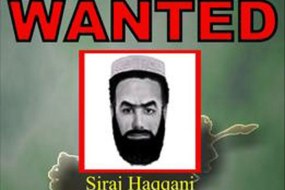
Jalaluddin Haqqani, founder of the network, and his son Sirajuddin, who now runs the group, have both been designated “global terrorists” by Washington.

Mr Munter’s remarks follow a warning by US defence secretary Leon Panetta, who said after the Kabul attack that the US would retaliate against Pakistan-based insurgents.

“Time and again we’ve urged the Pakistanis to exercise their influence over these kinds of attacks from the Haqqanis and we’ve made very little progress in that area,” Mr Panetta said Wednesday, a day after the Kabul siege.

“I’m not going to talk about how we’re going to respond. I’ll just let you know that we’re not going to allow these kinds of attacks to go on,” he said.

Pakistan’s foreign ministry condemned those remarks as “out of line”, saying that “terrorism and militancy is a complex issue”.

Al Qaeda’s Roots Grow Deeper in Pakistan’

As Reported in Zee News

Ten years after the 9/11 terrorist attacks and the subsequent “war on terror” launched by United Stated-led forces against al Qaeda, the terrorist outfit “continues to pose a serious threat to the world as it keeps surviving and thriving mainly on the Pakistan-Afghanistan tribal belt”, a senior Pakistani journalist and author has said.

“In these rugged areas, it [al Qaeda] has established an effective jihadi network that increasingly exploits its Pakistani affiliates to carry on the global jihadi agenda of Osama bin Laden, despite his May 02 killing in a United States military raid in Abbottabad in Pakistan,” Amir Mir wrote in a piece for Asia Times Online.

Until recently, analysts have been mostly focusing on the dangers posed by the growing Talibanisation of Pakistan, he noted.

“Yet, it has now become abundantly clear that the time has come to pay more attention to the bigger dangers posed by the Pakistanisation of al Qaeda,” he added.

Mir, who has written several books on the subject of militant Islam and terrorism, the latest being ‘The Bhutto murder trail: From Waziristan to GHQ’, said that the al Qaeda leadership’s choice of using the FATA region, especially the North and South Waziristan tribal agencies as their hideout, has enabled the terror outfit to build a new power base, separate from Afghanistan.

“As a result, despite Pakistan’s extensive contribution to the “war on terror”, many questions persist about the extent to which al Qaeda and its allied groups are operating within Pakistan,” he observed.

He said that al Qaeda’s success in forging close ties to Pakistani jihadi groups has given it an increasingly secure haven in Pakistan’s mountainous tribal areas, which have “replaced Afghanistan as the key training and indoctrination grounds for al Qaeda recruits to be used in operations abroad and for training those indoctrinated and radicalised elsewhere.”

The journalist also said it appears that al Qaeda not only remains in business in its traditional stronghold in the Waziristan tribal region, it has “also clearly advanced to the urban areas in all four provinces of Pakistan”.

“This is confirmed by the growing belief of the Barack Obama administration that if there is one country that matters most to the future of al Qaeda, it is Pakistan,” he added.

No Evidence Pakistan Helped Osama Bin Laden: U.S. Security Adviser

As Reported by The International Business Times

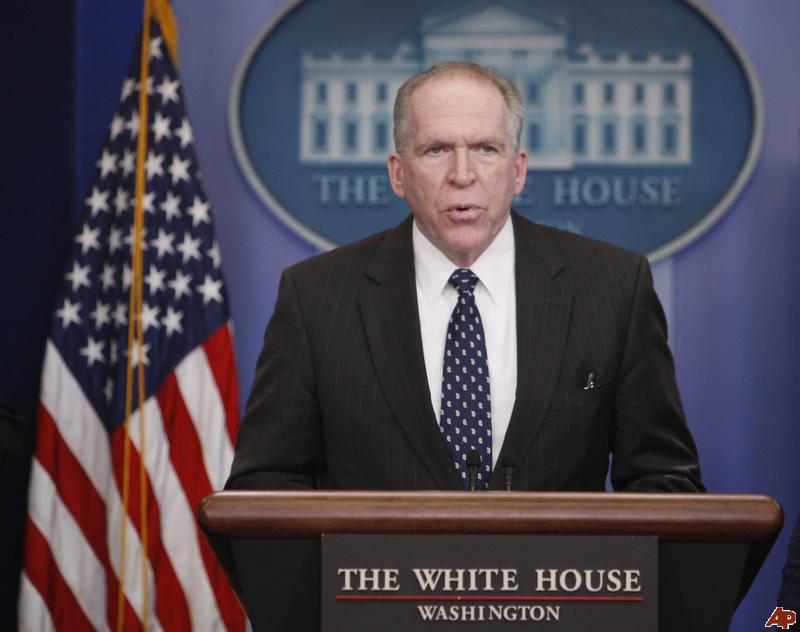
There is no evidence that Pakistan government officials helped and protected Osama bin Laden, claimed John Brennan, Deputy National Security adviser and President Barack Obama’s chief counter-terrorism adviser.

Brennan, speaking to reporters at a morning briefing said “I have not seen anything that the Pakistanis were aiding his refuge there.”

In May, Osama was found and killed by U.S. Navy SEALS in a large compound in the town of Abbottabad in northern Pakistan, near the capital Islamabad. Since that time, rumors have swirled that Pakistani intelligence officials had been aiding the former al-Qaeda terror chief as well as many other militants.

Brennan also said that based on examination of documents and data found and seized at Osama’s compound, it became apparent that bin Laden was “a little out of touch about how debilitated his organization was” after fighting for almost a decade against the U.S.

“It did reveal an organization in distress,” Brennan said.

Brennan also reportedly praised Pakistan’s offensive against terrorist groups operating the country and that Washington has a close working relationship with Islamabad in this joint effort.

He cited the recent arrest in Pakistan of Younis al-Mauritani, a senior al-Qaeda official, is proof that Islamabad is taking its responsibilities seriously.

He noted that al-Qaeda “has taken it on the chin” and has been “degraded significantly over the past couple of years.”

Brennan’s latest comments dramatically contradict assertions he made in May (just after the killing of Osama) when he declared that it was “inconceivable” that bin Laden did not have the support of officials within Pakistan.

Analysts: China Unlikely to Replace US in Pakistan

By William Idle for The Voice of America

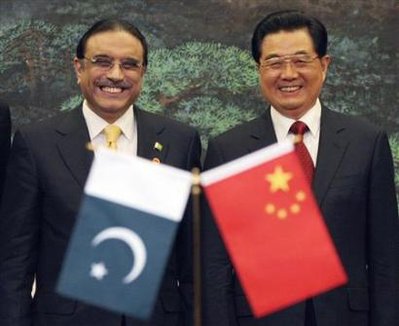
Pakistan’s President Asif Ali Zardari made a three-day visit to China this week at a time when relations between Islamabad and Beijing appear to be growing stronger. Regional analysts say that while China is of growing importance to Pakistan, it is unlikely to replace the U.S. role as a dominant influence there.

The opening ceremony at the first China Eurasia Expo was full of pomp and fanfare. Greeted with applause and smiles, Pakistan President Asif Ali Zardari ended his visit to China standing on stage next to the man who is widely expected to be the country’s next leader – Vice Premier Li Keqiang.

Ties have long been strong between Pakistan and China, a country Islamabad endearingly calls its “all-weather friend.” Mr. Zardari has visited China twice since the raid on Osama bin Laden’s compound – seven times since becoming president.

Some regional analysts say the recent deterioration of U.S.-Pakistan ties has pushed Pakistan into Beijing’s arms. They argue the combination of repeated drone strikes in Pakistani territory, the raid on Osama bin Laden’s compound, and suspension of $800-million in military American aid to Pakistan has brought Beijing and Islamabad closer together.

But regional analyst Tarique Niazi, an associate professor at the University of Wisconsin Eau Claire, says Mr. Zardari’s most recent visit to China is part of an ongoing effort by Pakistan to seek help to address its urgent needs and boost trade. And not necessarily a sign of shifting alliances.

“Pakistan is short of energy resources. It has about 4,000 megawatts of electrical shortage. So, China is helping Pakistan meet that shortage of electricity,” Niazi said.

One of the ways that China is doing that is by building massive hydropower projects in both Pakistan’s northern region of Gilgit-Baltistan and Pakistani-controlled Kashmir.

Niazi notes that representatives from both regions traveled to China this week with Mr. Zardari. Pakistan’s president is constantly focused on three things, he adds: investment, trade and economic development.

“President Zardari, especially I must say, that he is the first leader of Pakistan whose focus is almost entirely on economic development and developing business relationships with not only the public sector and the government sector of China, but the private sector also,” Niazi said.

When Mr. Zardari stepped into office, he pledged to visit China every three months – and for the most part has kept that promise. Since then, analysts say he has inked deals that will raise China’s overall investment in Pakistan from $20-billion to more than $50-billion.

China is eager to boost trade and investment in the region too.

At the opening ceremony of the China Eurasia Expo, Commerce Minister Chen Deming highlighted how China was reaching out to Asian and European countries at a time when the world economy has yet to recover from the global financial crisis.

Chen says China is moving faster in opening its western region and border areas to promote regional development. He says China is taking a big step forward to deepening development and cooperation between Asian and European countries.

And the benefits flow both ways.

“I would say that the best way to think about the current situation is that China is expanding in all directions, its power is growing, and it is looking north, south, east and west. And when it looks to Pakistan it sees potential in terms of access to Central Asia, Central Asia energy markets. It sees access to the Arabian Sea, the Indian Ocean,” said Daniel Markey, a senior fellow at the Council on Foreign Relations for India, Pakistan and South Asia.

Markey says that while Pakistan has been reaching out recently to China, in part to show Washington it has options, he is not convinced Beijing is interested in seeing a real rupture between Islamabad and Washington.

“My sense is that, yes, over the long term, China would like to be the dominant influence in Pakistan and really expand its influence throughout the region, which would probably mean a lesser influence for the United States. But, in the short time, China has been very comfortable essentially free-riding off of whatever stability and security the United States has provided and that they do not want to change,” Markey said.

He says one reason for that is because a rupture in ties between Pakistan and the United States could trickle over into relations between Beijing and Washington, and there the two already have enough to deal with as it is.

Pakistan’s Bitter, Little-Known Ethnic Rebellion

By Carlotta Gall for The New Times
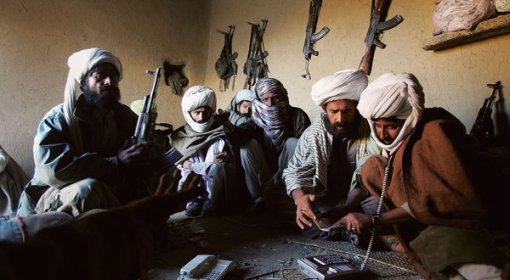
A slim figure in a dark suit, Brahumdagh Bugti, 30, could pass for a banker in the streets of this sedate Swiss city. But in truth he is a resistance leader in exile, a player in an increasingly ugly independence war within Pakistan.

He has been on the run since 2006, when he narrowly escaped a Pakistani Army operation that killed his grandfather and dozens of his tribesmen in the southwestern province of Baluchistan. And since then, the government’s attempt to stamp out an uprising by the Baluch ethnic minority has only intensified, according to human rights organizations and Pakistani politicians.

The Baluch insurgency, which has gone on intermittently for decades, is often called Pakistan’s Dirty War, because of the rising numbers of people who have disappeared or have been killed on both sides. But it has received little attention internationally, in part because most eyes are turned toward the fight against the Taliban and Al Qaeda in Pakistan’s northwestern tribal areas.

Mr. Bugti insists that he is a political leader only, and that he is not taking a role in the armed uprising against the government. He was caught up in a deadly struggle between his grandfather, Nawab Akbar Khan Bugti, a former minister and a leader of the Bugti tribe, and Pakistan’s military leader at the time, Gen. Pervez Musharraf, over control of Baluchistan’s rich natural resources and the establishment of military bases in the province.

Baluch nationalists have never accepted being part of Pakistan and have fought in five uprisings since the country’s formation in 1948. Their demands range from greater control over Baluchistan’s gas and natural resources, fairer distribution of wealth (Baluchistan suffers from the lowest health, education and living standards in the country), to outright independence.

When the Pakistani Army shelled their ancestral home in Dera Bugti in December 2005, Mr. Bugti took to the hills with his grandfather, who was 80 and partly disabled, and they camped for months in mountain caves. Then, in August 2006, the military caught up with them. “I escaped, but he could not,” Mr. Bugti said.

From a hide-out two miles away, he watched the military assault, a furious three-day bombardment by attack jets, helicopter gunships and airborne troops. On the evening of the third day, the government triumphantly announced that Nawab Bugti had been killed. Thirty-two tribesmen died with him, Mr. Bugti said. The day after learning of his grandfather’s death, Mr. Bugti gathered his closest tribal leaders, and they urged him to leave and save himself, he said.

Pakistan and neighboring Iran were hostile to the Baluch, and the only place to go was Afghanistan, though it was consumed by the war with the Taliban. It took 19 days, on foot, to trek from a mountain base near Sibi to the Afghan border. But he had an armed tribal force and scouts with him and made the escape without incident, crossing into Afghanistan along a mountain trail, he said.

Although he had few contacts there, tribal links and traditions of hospitality assured him a welcome. He sent for his wife, his two children — a third was born in Afghanistan — and his mother, and after an elaborate dance to confuse government watchers, they crossed the border to join him days later.

Yet Afghanistan was not a safe haven. The family moved about 18 times over the next 18 months, and despite never going outside, he said, they became the target of repeated suicide bomb attacks by the Taliban and Qaeda militants, who they believe were sent by the Pakistani military. At least one bomb attack, in the upscale residential Kabul neighborhood of Wazir Akbar Khan, was specifically aimed at Mr. Bugti, a Western diplomat and an Afghan intelligence official said.

The Pakistani government has branded Mr. Bugti a terrorist, the leader of the militant Baluch Republican Army, and has made no secret of its desire to kill or capture him. It has repeatedly demanded that Afghanistan hand him over and has accused India of supporting Baluch rebels through its consulates in Afghanistan.

Pakistan’s remonstrations over Mr. Bugti became so insistent that the United States and other NATO members urged Afghanistan to move Mr. Bugti elsewhere, Western diplomats and Afghan officials said, speaking on condition of anonymity because of the politics involved. In October 2010, he and his family arrived in Switzerland and sought political asylum.

Though Mr. Bugti says he supports only peaceful political activism rather than armed resistance, he does share the rebels’ demand for independence for the Baluch. “I support the political struggle and the idea for liberation because the Baluch people demand it,” he said.

He formed a political party shortly after his grandfather’s death, distancing himself from the established parties. The manner of his grandfather’s death, his call for political opposition to the government and his youth have won him broad support beyond his own Bugti tribe, among the educated Baluch middle class and student movements and appointed representatives in every district.

“We got a very good response from all the Baluch,” he said.

It proved to him that people in Baluchistan still hoped and believed in political change, he said. Yet government retribution was swift. Eight members of his political party in Baluchistan have been killed, five members of its central committee are missing since its formation in 2007 and the top leaders have been forced into exile. Even the party’s 76-year-old secretary general, Bashir Azeem, was detained for two months in 2009 and tortured — including being beaten and hung upside down, in a case documented by Human Rights Watch.

It is part of an increasingly deadly government crackdown on political and student nationalist leaders in the province over the last 18 months, politicians and human rights officials say. “They are trying to kill the activists, anyone who is speaking out,” Mr. Bugti said.

Amnesty International and Human Rights Watch have documented a rising number of abuses by the Pakistani security forces in Baluchistan. Amnesty International describes the use of “kill and dump” tactics, under which activists, teachers, journalists and lawyers, even teenagers, have been detained and their bullet-ridden bodies dumped on roadsides at a rate of about 20 a month in recent months.

Human Rights Watch says hundreds of people have disappeared since 2005 in Baluchistan, and it has documented 45 cases of enforced disappearances and torture by Pakistani security forces in the province in 2009 and 2010. Human Rights Watch has also reported a growing trend of retaliation by armed rebels on non-Baluch settlers, including the targeted killings of 22 teachers.

Despite the end of General Musharraf’s rule and Pakistan’s return to a democratic government in 2008, military repression of the Baluch has only increased, Mr. Bugti and others say. Members of the civilian government say they have no power over the military, and the army is obsessed with crushing an uprising that it sees as an effort by India to undermine Pakistani sovereignty.

Mr. Bugti has called on the United States to end aid to the Pakistani Army, which, he said, was diverting resources from intended counterterrorism goals and using them to suppress the Baluch. “If the U.S. stopped the military and financial assistance, they could not continue their operations for long,” he said.

The increased violence has pushed the Baluch far beyond their original demands for greater autonomy and recognition of their rights and toward an armed independence movement. “Ninety-nine percent of the Baluch now want liberation,” Mr. Bugti said.

“The people are more angry and they will go to the side of those using violence, because if you close all the peaceful ways of struggle, and you kidnap the peaceful, political activists, and torture them to death and throw their bodies on roadsides, then definitely they will go and join the armed resistance groups,” he said.

He sees little hope of change from within Pakistan and seeks intervention by the United Nations and Western nations. “We have to struggle hard, maybe for 1 year, 2 years, 20 years,” he said. “We have to hope.”
Pakistan Partnership Raches For the Stars

By Syed Fazl-e-Haider for The National

By teaming up with China on a satellite launch, Pakistan has taken a bold step forward with its space programme. And there are mutual benefits to the arrangement, Syed Fazl-e-Haider writes. The recent launch of the advanced communication satellite Paksat-1R was not only a big stride forward for Pakistan’s 2040 space programme, but also Sino-Pakistan space collaboration.

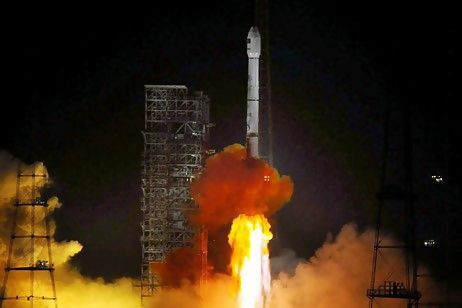
Last week, China launched Paksat-1R with the Long March-3B carrier rocket from Xichang Satellite Launch Centre in south-west Sichuan province. The new satellite will replace Paksat-1, which will complete its useful life this year.

Critics have questioned whether Pakistan can really take the credit for the development of a satellite that was made by China, financed by China and ultimately launched by and from China. But Pakistan is now able to achieve several strategic objectives through Paksat-IR, including serving an expanding client base, which includes the military. With the launch of the satellite, the country has entered into a long-term relationship with its manufacturer towards acquiring the know-how to produce satellites in the future, with the ultimate aim of achieving self-reliance. Now it is also able to establish and maintain ground control stations for operating Paksat-1R from Pakistan.

Pakistan’s space programme owes its existence to China’s cooperation that spans from climate science, clean energy technologies, clean water technologies, cyber security and basic space, to atmospheric, Earth and marine sciences. It was China that launched the country’s first low-orbit satellite Badr-A in July 1990. In 2006, China committed to work with Pakistan to launch three earth resource satellites.

Islamabad sought more than US$200 million (Dh734.5m) financing from China for Paksat-1’s replacement. The two countries signed the procurement contract during the first state visit by Asif Ali Zardari, the president of Pakistan, to Beijing in 2008.

Paksat-1, Pakistan’s first geostationary satellite, was launched in February 1996. It served TV broadcasters, telecommunications companies, data and broadband internet service providers, and government organisations.

With a lifespan of 15 years, Paksat-1R will have great economic implications for the country. The satellite will provide high-power communication and weather monitoring facilities, besides strategic defence applications. The Space and Upper Atmosphere Research Commission will operate it from its ground control stations in Karachi and Lahore. With advance communication antennas, it will cover some regions of Europe, South Asia, the Middle East and eastern Africa. It will facilitate the introduction of new services including broadband internet, digital TV broadcasting, rural telephony, emergency communications, tele-education and tele-medicine.

Pakistan is also making efforts to get space technology from China. It plans to launch the Pakistan Remote Sensing Satellite (PRSS) in the near future with the technical and financial assistance of China. Launching PRSS is now the first priority for Pakistan, because such a satellite can help it in cartographic studies. China has not only achieved the capability of placing its satellites in space, but is also developing rockets. It has created a powerful carrier rocket with military capabilities that can launch multiple satellites into space.

China is conquering new frontiers in space technology. Shenzhou 7, the third manned spaceflight, has established a new threshold for China. It has already planned Shenzhou 8, which will be docked with the Tiangong-1 space module that will place the first portion of China’s planned space laboratory in orbit.

China’s space technology industrial base is rapidly expanding, and its sales overseas have so far focused on its traditional allies including Pakistan. Space and rocket technology from China would help Pakistan achieve its ambitious goals of economic progress and impregnable defence. While China can transfer space technology to Pakistan, in return Pakistan could assist China in space by establishing a station on its soil to track Chinese satellites.

Syed Fazl-e-Haider is a development analyst in Pakistan. He is the author of many books, including The Economic Development of Balochistan, published in May 2004