Archive for the ‘ Pakistan Army ’ Category

Panetta: ‘No Choice’ in US Relations with Pakistan

By David Gollust for Voice of America
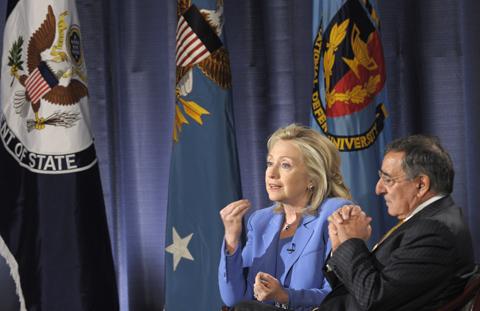
Defense Secretary Leon Panetta said Tuesday that the United States has no choice but to maintain close relations with Pakistan, despite government links with Islamic militants including the Haqqani network. The State Department, meanwhile, put sanctions on another Haqqani network commander.

Panetta, who took over as defense secretary in June after two years of heading the CIA, declined comment on news reports that Pakistan allowed China to inspect the wreckage of an advanced U.S. helicopter lost in the raid that killed Osama bin Laden.

But at a public forum with Secretary of State Hillary Clinton at Washington’s National Defense University, the defense chief was unusually candid about U.S. problem issues with Pakistan.

Panetta said Pakistan has “relationships” with the Haqqani network – militants based in western Pakistan who conduct cross-border attacks on U.S. forces in Afghanistan, and with Lashkar-e-Taiba militants who have attacked India.

Both groups are listed by the United States as terrorist organizations. Despite complaints that Pakistan has withheld visas for U.S. citizens being posted there, Panetta said the relationship remains essential.

“There is no choice but to maintain a relationship with Pakistan,” said Panetta. “Why? Because we are fighting a war there. We are fighting al-Qaida there. And they do give us some cooperation in that effort. Because they do represent an important force in that region. Because they do happen to be a nuclear power that has nuclear weapons, and we have to be concerned about what happens with those nuclear weapons. So for all of those reasons, we’ve got to maintain a relationship with Pakistan.”

Secretary of State Clinton said the Obama administration considers relations with Pakistan to be of “paramount importance.”

She said there have been “challenges” in bilateral ties for decades with valid complaints on both sides, and that she credits the Islamabad government with lately recognizing its shared interest with Washington in confronting terrorism.

“I was very pleased when the Pakistanis moved into [the] Swat [Valley] and cleaned out a lot of what had become a kind of Pakistani Taliban stronghold,” said Clinton. “And then they began to take some troops off their border with India, to put more resources into the fight against the Pakistani Taliban. Now, as Leon [Panetta] says, we have some other targets that we discuss with them – the Haqqanis, for example. And yet it’s been a relatively short period of time, two-and-a-half years, when they have begun to reorient themselves militarily against what is, in our view, an internal threat to them.”

The State Department on Tuesday designated a key Haqqani network commander – Mullah Sangeen Zadran – a terrorist under a 2001 White House executive order, freezing any U.S. assets he has and barring Americans from business dealings with him.

At the same time, Sangeen was designated a terrorist by the U.N. sanctions committee, which will subject him to a global travel ban, an asset freeze and an arms embargo.

A State Department statement said Sangeen, is a “shadow governor” of Afghanistan’s southeast Paktika province and a senior lieutenant of network leader Sirajuddin Haqqani. It said Sangeen has coordinated the movement of hundreds of foreign fighters into that country and that he is linked to numerous bomb attacks and kidnappings.
U.S. Says Pakistan Let China See Copter

By Mark Mazzetti for The Seattle Times

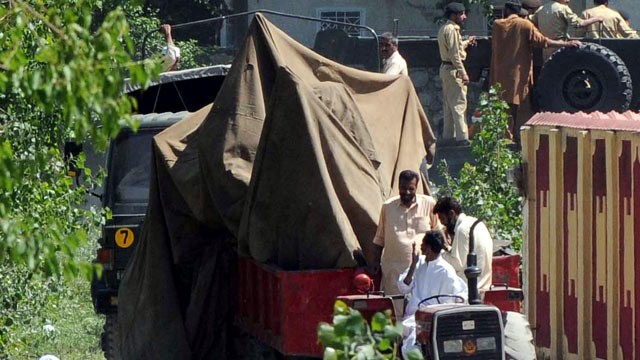
In the days after the raid that killed Osama bin Laden, Pakistan’s intelligence service probably allowed Chinese military engineers to examine the wreckage of a stealth American helicopter that crashed during the May operation, according to U.S. officials and others familiar with the classified assessments.

Such cooperation with China would be provocative, providing further evidence of the depths of Pakistan’s anger over the bin Laden raid, which was carried out without Pakistan’s approval.

U.S. spy agencies have concluded it is likely that Chinese engineers took detailed photographs of the severed tail of the Black Hawk helicopter equipped with classified technology designed to elude radar, the officials said.

The members of the Navy SEALs team who conducted the raid had tried to destroy the helicopter after it crashed at bin Laden’s compound in Abbottabad, but the tail section remained largely intact.

U.S. officials cautioned they did not yet have definitive proof the Chinese were allowed to visit Abbottabad. They said Pakistani officials had denied they showed the technology to other foreign governments.

One person with knowledge of the intelligence assessments said the U.S. case was based mostly on intercepted conversations in which Pakistani officials discussed inviting the Chinese to the crash site.

He characterized intelligence officials as being “certain” that Chinese engineers were able to photograph the helicopter and even walk away with samples of the wreckage. The tail has been shipped back to the U.S., according to American officials.

The U.S. assessments were disclosed Sunday by The Financial Times. The newspaper cited Pakistani officials who denied the accusations.

Rights Violations: Pakistan Maintains Discreet Silence Over Syria Protest

By Saba Imtiaz for The Express Tribune

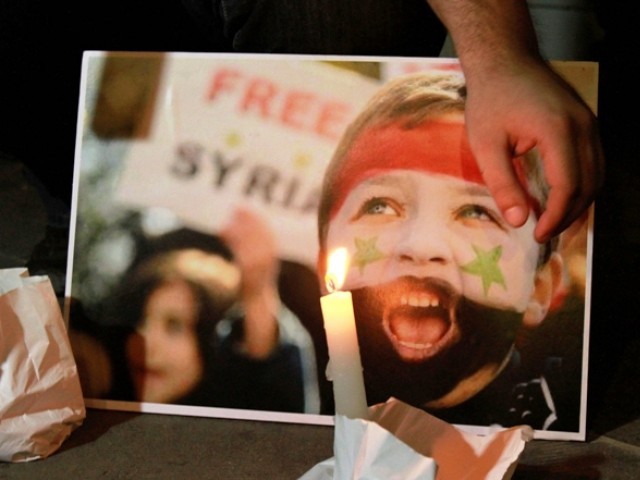
As the chorus against the Syrian government grows louder, Pakistan remains silent on the issue of human rights abuses in Syria. According to Amnesty International, over 1,500 people have been killed since March in the protests against Syrian President Bashar alAssad’s regime. Pressure against Syria appeared to grow over the weekend from Arab states, as the Gulf Cooperation Council asked for an immediate end to bloodshed.

On Monday, Saudi Arabia’s King Abdullah issued a written statement on the situation. “What is happening in Syria is not acceptable for Saudi Arabia. Syria should think wisely before it is too late and issue and enact reforms that are not merely promises but actual reforms. Either it chooses wisdom on its own or it will be pulled down into the depths of turmoil and loss.” Soon enough, Saudi Arabia, Kuwait and Bahrain had recalled their ambassadors from Damascus for ‘consultations’.

In April, Pakistan joined China and Russia in voting against a resolution by the UN Human Rights Council condemning the violence in Syria. Pakistan’s ambassador to the UN Zamir Akram was quoted as saying, “My country has always believed that ‘naming and shaming’ is an approach which is counterproductive.”

Three months and over a thousand dead bodies later, no public statement has yet to be made on the situation in Syria. The Foreign Office spokesperson did not respond to a query till the filing of this report.
According to former foreign minister Khurshid Mahmud Kasuri, Pakistan’s silence is a product of “historical links between the Bhutto and alAssad families”.

President Bashar’s father, the late president Hafez alAssad, was believed to be a close ally of former prime minister Zulfikar Ali Bhutto. Murtaza and Shahnawaz Bhutto travelled to Syria in 1979 to seek support for their campaign to save Bhutto and were offered asylum by the elder alAssad. Murtaza spent several years in Syria before returning to Pakistan in 1993. In 1981, a Pakistan International Airlines flight was hijacked and forced to land in Kabul, and then Damascus. The hijacking is widely believed to be the work of the Al Zulfikar Organisation.
Kasuri said that given the high death toll, “the government of Pakistan needs to make its position clear [and say] that it stands with the people of Syria.”

Pakistan’s silence, according to former foreign secretary Shamshad Ahmad, shows lack of a foreign policy. “Foreign policy is a reflection of a country’s internal state of affairs. If the state is in disorder, it has no foreign policy. Forget Syria or any other Arab country – Pakistan has enough problems at home and has no time to focus on international issues. No one is going to pay any attention to what Pakistan says because it has no credibility. No country is looking to Pakistan for support.”

Pakistanis for Peace Editor’s Note– The writer makes some valid points about Pakistan’s foreign policy or lack thereof. Being complicit also in the suppression of the civilians in Bahrain by providing troops as illustrated in this article shows that the country is often found on the wrong side of terrorism, women and religious minorities rights, and democratic and human rights. Not a good equation and no excuse for any of it any way one looks at it.

Karachi Attack: Pakistan Officers Face Court-Martial

As reported by the BBC

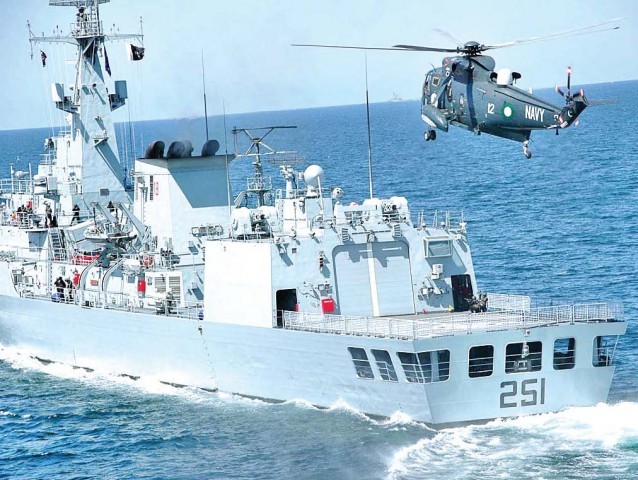
Three Pakistani naval officers are to face a court martial on charges of negligence after a militant attack on a naval air base in Karachi in May.

Ten soldiers died and 15 were wounded in the attack which took place at the Mehran naval aviation base on 22 May. It took the security forces some 17 hours to secure the base.

A naval official said the three officers were facing trial because they held positions of responsibility, not because of a connection to the attack.

The accused are Cmdr Raja Tahir, base commander at the time of the attack, and two officials beneath him, at the rank of captain and commander, according to naval sources quoted by several news agencies.

Daring attack

Cmdr Tahir was replaced two days after the attack during which several foreigners were taken hostage before being rescued.

“They face charges of negligence during the attack on PNS Mehran in May,” an unnamed official told Agence France Presse.

No date was given for the start of the court martial.

“They are being tried because they were at a responsible position, and were responsible for the security and other affairs of the base,” an unnamed official was quoted as telling Reuters.

The Pakistan Taliban said the raid was to avenge Osama Bin Laden’s killing by US special forces in the Pakistani town of Abbottabad on 2 May.

The attack at the heart of Karachi, the country’s economic hub and Pakistan’s largest city, underlined the military’s vulnerability.

Two attackers were killed and a third blew himself up during the attack when militants disguised as naval officials stormed three hangars housing aircraft at the naval base.

During the daring raid, they used rocket-propelled grenades to damage and destroy several warplanes, including two multi-million dollar anti-submarine and marine surveillance aircraft – the US-made P-3C Orion.

The planes were believed to be crucial for Pakistan’s maritime surveillance capabilities. A former Pakistani navy commando, Kamran Ahmed, has been detained along with his brother in connection with the attack.

Musharraf Moves to Mend US-Pakistan Relations

By Lydia Mulvany for The Mimami Hearld

Former Pakistani President Pervez Musharraf said Thursday that his country wasn’t complicit in hiding Osama bin Laden but was “extremely negligent” for not knowing that the al-Qaida leader was living a 75-mile drive from the Pakistani capital.

Speaking in Washington, the former military dictator sought to heal a U.S.-Pakistani relationship that’s become badly strained since the American raid May 2 that killed bin Laden, saying mutual interests in the global war on terrorism bound the countries and that blaming each other was counterproductive.

“The United States and Pakistan must restore trust,” Musharraf told an audience at the Woodrow Wilson International Center for Scholars. “Confrontation would be most unwise.”

The bin Laden incident pushed U.S.-Pakistani relations to their lowest point in years. American officials weren’t happy when, after a decade-long hunt, they found al-Qaida’s leader living in a garrison town so close to Islamabad. Pakistani officials were outraged that they weren’t told about the unilateral raid beforehand.

Since the raid, Pakistan has restricted visas for American officials and expelled military trainers. The U.S. has cut off $800 million, about one-third of its aid to Pakistan’s military. The U.S. has long complained of ties between Pakistan’s military and insurgent groups that have attacked American-led forces in neighboring Afghanistan.

But Musharraf said that if Pakistani intelligence had colluded with bin Laden, it also would have known that the CIA was operating a safe house nearby and whisked the al-Qaida leader away. He described bin Laden’s high-walled compound in the town of Abbottabad as a normal dwelling that wouldn’t have raised suspicion.

He also claimed that Abbottabad – which is home to a major military college that’s been described as Pakistan’s West Point, as well as other military installations – wasn’t a garrison town but a touristy resort area with many colleges.

The recent raid was a “violation of sovereignty,” Musharraf said, echoing a widespread Pakistani complaint. He added that Pakistani antipathy toward the U.S. also stems from the American campaign of drone strikes on militant targets, which reportedly have caused civilian casualties, as well as lingering bitterness over U.S. sanctions for developing nuclear weapons in the 1990s.

The way forward for Pakistan, Musharraf said, is to show that it isn’t complicit with terrorists and to deal with domestic extremism. It also needs to establish an honest, stable government in the 2013 elections, said the former leader, who’s expected to mount a run for president.

Musharraf, who seized power in a military coup in 1999 and resigned in 2008, embodied the frustration and contradictions of American policy toward Pakistan.

Mark Quarterman, a senior adviser at the Center for Strategic and International Studies, a nonpartisan Washington research center, said that many wanted to see Musharraf as a modern, progressive leader: He wasn’t an extremist, his wife and daughter didn’t wear veils and the family even had a dog, an animal many Muslims view as impure. Ultimately, however, Musharraf’s rule was a military dictatorship and, according to many experts, he didn’t do enough to rein in Taliban militants who were operating in remote corners of Pakistan.

Clinton Says US Encouraged by India-Pakistan Talks

By Matthew Lee and Ravi Nessman for The Associated Press

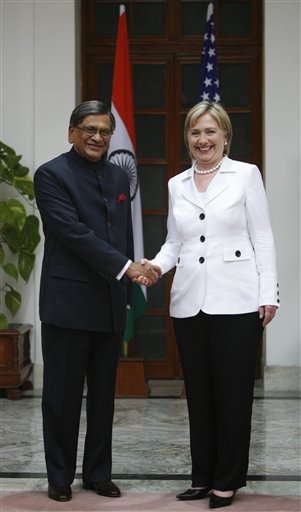
U.S. Secretary of State Hillary Rodham Clinton said Tuesday that the United States was “encouraged” by the ongoing talks between nuclear-armed rivals India and Pakistan and promised to give full support to Indian efforts to protect itself from terror.

Clinton’s visit to India came less than a week after a triple bombing killed 20 people in India’s financial capital of Mumbai, the worst terror strike in the country since 10 Pakistan-based gunmen rampaged through the city in 2008.

Her meetings with top Indian officials Tuesday focused on fighting terror, the U.S. withdrawal plans from Afghanistan and ways to broaden economic and security ties between the United States and India.

She also called for a swift resolution to their dispute over investments in nuclear energy, calling on India to ratify by the end of the year the Convention on Supplementary Compensation for Nuclear Damage and to adapt its liability laws to conform with the treaty.

The U.S. views India’s new nuclear liability law as too stringent on nuclear plant suppliers, making it difficult for private U.S. companies to compete against state-owned companies in India’s multibillion dollar nuclear reactor market.

Clinton’s trip here is part of a new round of U.S.-India strategic dialogue established last year to deepen ties between the world’s oldest and largest democracies.

S.M. Krishna, India’s foreign minister, expressed concerns that the planned U.S. troop withdrawal from Afghanistan that began this month could lead to a resurgence in Islamic extremism.

“It is in the larger interests of the region that it is necessary for the United States to work very closely with (Afghan) President (Hamid) Karzai and the government of Afghanistan and thereby create conditions where terrorists do not take any more advantage in Afghanistan,” Krishna said after 2 1/2 hours of talks with Clinton.

Clinton said she had outlined the drawdown strategy and stressed that the United States will not support Afghan reconciliation with insurgents unless it is inclusive and protects the rights of minority groups, religions and women.

Clinton also assured India of U.S. support in the fight against terror.

“We are allies in the fight against violent extremist networks. And homeland security is a high priority and a source of increasing partnership,” Clinton said.

While the U.S. and India have already signed agreements to cooperate in counterterrorism efforts, “the events in Mumbai have driven home how important it is that we get results,” she said.

Though India has not blamed Pakistan for last week’s attack, it has accused its neighbor of harboring violent extremist groups responsible for other attacks in India and of not doing enough to crack down on those responsible for the 2008 Mumbai siege.

For its part, U.S. officials fear Pakistan is not fully committed to combatting radical plots, such as the failed 2010 Times Square bombing in New York.

“We have made it clear to the Pakistani government that confronting violent extremists of all sorts is in its interest,” Clinton said.

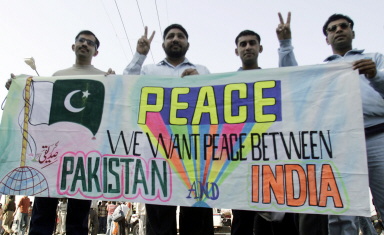
India recently resumed peace talks with Pakistan that broke off following the 2008 Mumbai siege, and the two countries’ foreign ministers are expected to meet next week.

The U.S. is eager for the fragile talks to pick up steam, in part to allow Pakistan to focus its forces on the chaotic Afghan border.

“We are encouraged by the dialogue between India and Pakistan,” Clinton said, calling talks “the most promising approach” to build more confidence between them.

During the meeting Tuesday, Clinton and Krishna agreed to strengthen their countries’ ties in energy, security, education, the economy, science and promoting stability across the region. The two countries also signed an agreement promoting closer cooperation in cybersecurity.

Once frosty relations between India and the United States have warmed considerably in recent years as Washington has looked to India as stable ally in the turbulent South Asia region and its growing economy as a valuable market for U.S. goods.

President Barack Obama hosted Prime Minister Manmohan Singh at his first state dinner and visited India for three days last year, praising it as a new regional power. Clinton was to meet with Singh later Tuesday.

Growing business ties were among the top issues in the talks.

Western officials have looked to India’s rising economy and its 1.2 billion people as a coveted market to help stimulate growth in their own troubled economies.

“Each of our countries can do more to reduce barriers, open our markets, and find new opportunities for economic partnership,” Clinton said. “Taking these steps is in our mutual interest. We can improve millions of lives and increase both of our nations’ economic competitiveness.”

She praised India’s fight against piracy, and pushed for greater sales of U.S. arms to India — the world’s largest arms importer —as a way of deepening security cooperation between the two nations.

U.S. officials were annoyed earlier this year when Indian officials chose two European companies as finalists for an $11 billion order for 126 fighter jets. However, last month India signed an agreement to buy 10 Boeing C-17 cargo and troop-carrying aircraft for more than $4 billion.

From New Delhi, Clinton on Wednesday will move on to the southeastern port of Chennai, where she plans to deliver a speech on the importance of U.S.-Indian relations, the benefits of enhanced bilateral commercial ties and India’s role in South Asia and the greater Asia-Pacific region.

Clinton is in India on the third leg of a 12-day, around-the-world diplomatic tour that has already taken her to Turkey and Greece. After India, she will visit Indonesia, Hong Kong and southern mainland China before returning home July 25.

Pakistan threatens to withdraw troops from Afghan border over US aid reduction

By Rob Crilly for The Telegraph

Pakistan has warned it will withdraw troops from the Afghan border where they are fighting Taliban and al-Qaeda-linked insurgents if the US does not reinstate $800m in military assistance which has been suspended amid a worsening diplomatic row.

The cash includes $300m to reimburse the Pakistan military for deploying troops in the mountainous tribal areas close to Afghanistan.

Chaudhry Ahmad Mukhtar, the country’s defence minister, said without it Pakistan could not afford to keep troops at 1,100 checkpoints near the mountainous border.

“The next step would be that the government or the armed forces will pull back the forces from the border areas,” he told the Express 24/7 news channel. “We cannot afford to keep military out in the mountains for such a long period.”

Officials say 147,000 troops are deployed in the tribal areas, where they are engaged in operations against Taliban and al-Qaeda cells.

Relations between the two countries have been fraught ever since they were forced into an awkward alliance in the aftermath of 9/11. This year they have plunged to new depths.

You might like:Prince Harry’s new girlfriend is his cousin (eight times removed)29 Jun 2011(Telegraph News)
News of the World final crossword has a message for ‘ catastrophe’ Rebekah Brooks10 Jul 2011(Telegraph News)
As Gordon and Sarah Brown learnt of son’s illness, The Sun editor Rebekah Brooks called to say she knew11 Jul 2011(Telegraph News)

Pakistan’s military officers are furious that the Pentagon did not inform them of a covert raid to kill or capture Osama bin Laden in May in the town of Abbottabad, only 30 miles from the capital Islamabad.

Since then they have stepped up condemnation of CIA drone strikes against terror suspects and expelled American military trainers, as they try noisily to distract domestic attention from their own failure to find bin Laden or spot the American helicopters as they flew through Pakistani air space.

In return, US officials have questioned Pakistan’s commitment to tackling militants and accused the government of assassinating a troublesome journalist.

At the weekend it emerged that the Pentagon was to end a third of its annual $2.7bn assistance to the Pakistan military.

In Washington, Colonel David Lapan, Pentagon spokesman, said the military aid could be resumed if Pakistan increased the number of visas for US personnel and reinstated the training missions.

However, analysts in Islamabad said such threats would be counterproductive and warned of an anti-American backlash.

“The US needs to treat Pakistan as a country it’s not trying to bully into submission,” said Cyril Almeida, a columnist with Dawn newspaper.

In the meantime, the US has begun using land routes through Central Asia to resupply troops in Afghanistan in case Pakistan shuts the Khyber Pass to convoys carrying food and fuel.

A fresh wave of drone attacks may also exacerbate tension. At least 45 suspected militants were killed by missiles in Pakistan’s northwest, according to local intelligence officials on Tuesday, one of the largest death tolls to date in the controversial air bombing campaign.

US Suspends Pakistan Military Aid as Diplomatic Relations Worsen

By Saeed Shah for The Guardian

The Pakistan military declared it did not need US military aid as the White House confirmed that it would withhold some $800m (£498m) in assistance to the country’s armed forces.

The row will worsen the already poisonous relationship between the two “allies”, which since the unilateral US raid to kill Osama bin Laden in May has lurched towards breakdown.

Pakistan recently expelled US military trainers from the country, limited the ability of US diplomats and other officials to get visas, and restricted CIA operations on its territory. “The Pakistani relationship is difficult but it must be made to work over time. But until we get through these difficulties we will hold back some of the money that the American taxpayers have committed to give them,” William Daley, the White House chief-of-staff, told ABC News on Sunday.

At stake is Pakistani co-operation against al-Qaida, the Taliban and other extremist groups, which the increasingly bitter relationship is putting at risk. Much of al-Qaida’s remaining leadership is believed to be hiding in Pakistan, while Pakistani territory is used as a safe haven by Afghan Taliban and the allied Haqqani network, fighting across the border in Afghanistan.

The new US defence secretary, Leon Panetta, said over the weekend that he believed Bin Laden’s successor, Ayman al-Zawahiri, was in Pakistan’s tribal area and “he’s one of those we would like to see the Pakistanis target”. Pakistan responded by asking for the US to share the intelligence on Zawahiri’s whereabouts.

Nuclear-armed Pakistan is meanwhile fighting its home-grown extremists in the tribal area on the border with Afghanistan, where a new offensive was launched earlier this month. Major General Athar Abbas, the chief spokesman for the Pakistan military, said that the military had received no formal notification of any aid being cut. He also pointed out that the army chief, General Ashfaq Kayani, had already declared that cash reimbursements to the military, known as coalition support funds, should go instead to the civilian government, where there was more need.

“We have conducted our [anti-extremist] military operations without external support or assistance,” said Abbas. “Reports coming out of the US are aimed at undermining the authority of our military organisations.”

Critical stories about Pakistan are leaked on an almost daily basis to the American press, riling Pakistani public and official opinion against Washington. Many in Pakistan believe there is a concerted American effort to weaken Pakistan and its armed forces, which are some of the largest in the world.

For Washington, Pakistan’s refusal to launch an offensive against the Haqqani network and suspicions that Bin Laden benefited from some kind of official support to live in Pakistan has corroded ties.

There are also questions hanging over future civilian aid, which is meant to provide $1.5bn a year in economic help.

Cyril Almeida, a columnist with Pakistan’s Dawn newspaper, said the country was in danger of becoming internationally isolated, while US policy towards Pakistan was muddled.

“The US can’t decide they if they want to stay in this relationship or cut Pakistan off,” he said. “These leaks and pressure tactics just confirm to the army generals the view that America is no friend of Pakistan and it wishes Pakistan harm.”

Since 2001, the US has provided $21bn in civilian and military assistance, including $4.5bn in the 2010-2011 financial year, as aid was increased under the Obama administration. Two proposed bills in Congress over the last week, which were voted down, would have cut off aid to Pakistan altogether.

Pakistan’s economy is spiralling downwards, with electricity shortages shutting down industry, and rising food and fuel prices causing protests on the streets. Karachi, the country’s economic powerhouse, is often shut down by ethnic gang violence, which has claimed more than 100 lives in the current spate of bloodshed.

Pak, India Talks to Mark New Beginning

By Hameed Shaheen for The Pakistan Observer

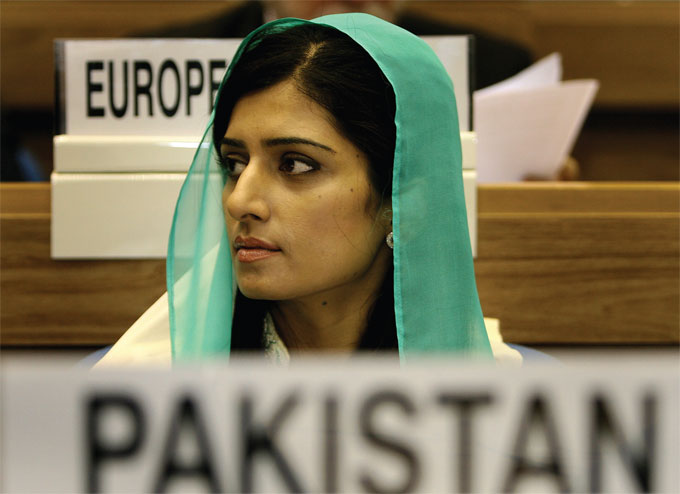
The outcome from the forthcoming July 26-27 talks between Foreign Ministers of Pakistan and India in New Delhi is expected to usher in a new beginning in the bilateral relations of both countries. The optimism is hyped by the recent statements of Pakistan Prime Minister Syed Yusuf Raza Gilani describing India as “most important neighbour” and a recent TV interview of Indian Foreign Secretary Nirupuma Rao displaying growing realization of her country for the continuity of dialogue with Pakistan. Much before these scheduled talks Pakistan’s Minister of State for Foreign Affairs Ms Hina Rabbani Khar is sure to be upgraded to full minister status.

Prior to the 2-day Delhi meetings of the Foreign Ministers on July 26-27, 2011, Foreign Secretaries of both countries will meet on July 25, 2011, in New Delhi to fine tune recommendations of two separate technical groups on trans-Kashmir trade and travel CBMS and nukes CBMs.

The additional trans-Kashmir travel and trade CBMs likely to be announced at the conclusion of the Foreign Ministers meeting on July 27, 2011, are opening of Skardu-Kargil passengers bus service, increasing the current run of Muzaffarabad-Srinagar bus service from weekly to bi-weekly duration and upping trading days from 2-day per week to 4-day a week besides making it bankable trade.

The expert level panel from both countries consisting of Ms Sehra H Akberi, DG South Asia of Pakistan and Y K Sinha JS from India is likely meet by middle of next week in Delhi.

Kashmiris strongly demand opening of Sialkot-Suchet Garh railway service for trading Sialkot industrial products to occupied Jammu and beyond. In pre-1947 era the major business market and education center of Jammu was Sialkot.

Pakistan Issues Shoot-On-Sight Order as Karachi Violence Escalates

As Reported by The Voice of America

Pakistani security forces have been ordered to shoot on sight when confronting disorders in Karachi, where days of political and ethnic violence have left up to 85 people dead.

About 1,000 additional police and paramilitary forces were deployed in Karachi on Friday with new orders to shoot any armed “miscreants” they encounter.

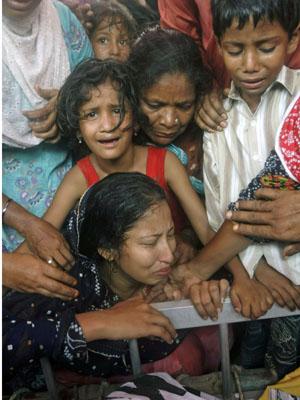
Interior Minister Rehman Malik told reporters that dozens of suspects have been detained in connection with a series of targeted killings since Monday. At least 34 people died on Thursday alone when gunmen opened fire on buses.

Police say the killings are part of clashes between political groups in Sindh province, including the Muttahida Qaumi Movement and its rival, the Awami National Party (ANP).

The MQM largely represents the Urdu-speaking community, and until last month was part of the ruling coalition in Sindh. ANP represents ethnic Pashtuns. Both those groups and the ruling Pakistan People’s Party are believed to have links to armed groups in Karachi.

Shops were closed and streets were deserted in the southern port city Friday after the MQM called for a day of mourning and protest rallies.

MQM leader Raza Haroon has said his movement’s supporters are being targeted because the party quit the coalition.

The Human Rights Commission of Pakistan says 490 people were victims of targeted killings in Karachi in the first half of this year.

On Friday, Pakistani Prime Minister Yousuf Raza Gilani appealed for peace and security in Karachi, saying it was important for the economic development of the country.

U.S. Ambassador to Pakistan Cameron Munter called on all parties to refrain from further violence and work toward a “peaceful resolution of differences.”

Amnesty International criticized the government’s order for security forces to “shoot on sight” armed men involved in the violence. The rights group said Friday that by giving troops such power the government is effectively declaring Karachi “a war zone” and encouraging further lawlessness and violence, citing what it said was the army’s record of human rights violations.

About 18 million people live in Karachi, the country’s economic hub. The city also has been the scene of sectarian violence between Sunni and Shi’ite Muslims and militant attacks.

Meanwhile, in Pakistan’s northwest, military officials say troops backed by jets have killed 11 militants in the Kurram tribal region along the Afghan border. Officials say nearly 50 militants have been killed in Kurram since a military operation began there this week.

Military Puppet. Or Rising Star?

By Rubab Shirazi for Tehelka Magazine

If The unfolding political crisis in Pakistan does not upset junior foreign and economic affairs minister Hina Rabbani Khar’s elevation as full-fledged foreign minister, she appears all set to travel to New Delhi for meeting her Indian counterpart SM Krishna this month for the ministerial meeting of the resumed dialogue process. Her promotion is needed to remove the protocol hitch for the ministerial meeting.

When Khar, 34, became the minister of state for foreign affairs in February, hardly any eyebrows were raised — more so because the ceremonial position has been used since 2004 to accommodate scions of influential families in the Federal Cabinet. Khar’s entry was instead seen as a bid by the government to prioritise the economic aspect in its diplomacy.

But the news of her elevation was met with strong criticism because she was seen as being too young and raw to handle complex foreign policy issues, even though she had been part of the Cabinet since 2004. For a good part of her political career, which started with her election as member of the National Assembly in 2003, Khar has been a low-key politician.

In a country that already has an accidental president (Asif Ali Zardari) and prime minister (Yousuf Raza Gilani), it wouldn’t be a surprise if the foreign minister is also accidental. If things go as planned, she would take oath this month as Pakistan’s 26th foreign minister and bag the honour of being the first woman to hold the post. But, Foreign Office (FO) bureaucrats, who derisively refer to her as “the girl” in private, say that she is no match for most who have occupied this crucial post.

Khar comes from a privileged background, being the daughter of well-known politician Ghulam Noor Rabbani Khar and niece of infamous playboy and former Punjab governor Ghulam Mustafa Khar. The latter’s wife Tehmina Durrani wrote My Feudal Lord, which caused controversy by describing her abusive and traumatic marriage with Ghulam Mustafa and her experience of life in a patriarchal society. Despite her feudal upbringing, Khar graduated from Pakistan’s best business school, Lahore University of Management Sciences and obtained her masters in hospitality from the University of Massachusetts.

Khar’s likely appointment is coming at a time when the country’s foreign relations are not in the best of shape — the alliance with the US is withering away fast; cross-border controversies are marring Pak-Afghan bonhomie; and though the Indo-Pakistan dialogue is progressing, the Thimphu spirit is fading as indicated by recent bilateral meetings.

Even if Khar succeeds in getting the post, diplomatic observers think she will not be the real decision maker — the power would still lie with the military. Having an inexperienced person like Khar as the FO boss, who would depend heavily on bureaucracy for policy as well as administrative matters, suits the military establishment at Rawalpindi GHQ in maintaining its control over Pakistan’s foreign policy.

Unlike her predecessor Shah Mehmood Qureshi, who lost his job for taking a hardline position on immunity for CIA operative Raymond Davis (involved in fatally shooting two youth in January), Khar isn’t thought to be independent minded.

No one at the FO knows about Khar’s views on important issues like relations with the US, Europe, India, Afghanistan and about the War on Terror. She hasn’t given any interviews or delivered speeches on foreign policy ever since she moved to the FO in February, even though she was the de facto boss during this time.

Though much has been written about her meteoric rise in politics, she still remains an enigma. Her credentials for being considered for the crucial post are her two stints as minister of state for economic affairs; a brief assignment as special assistant to the prime minister on finance, revenue and economic affairs; and more lately her FO job.

No one knows Khar’s views on important issues like the war on terror, Indo-Pak relations, or the strained partnership with the US

According to her curriculum vitae, foreign affairs was not a subject of interest until lately. She avows interest in finance, economic affairs and agriculture development. But, quite contrary to her fondness for the three subjects, she runs an upscale restaurant in Lahore. Her husband Feroze Gulzar is a textile industrialist. For most of her career, Khar had been dealing with international loans and grants. Foreign Service officials, who don’t want to be named, caution that real-time diplomacy is a different ball game.

Administrative chaos at the FO, another officer says, grew under the overachieving lady, who had been promoted by the PPP government as an astute manager. Khar was responsible for economic affairs during Gen Pervez Musharraf’s regime. Economic mismanagement turned out to be the major cause of the defeat of her previous party, PML(Q), in the 2008 elections. Fearing that she wouldn’t be given a party ticket, she changed her loyalties weeks before the polls and joined the PPP.

IF SUCCESSFUL in achieving the prized foreign ministership, it would not be the first time she would be filling someone’s shoes. In 2003, she contested elections in place of her father, who couldn’t run for National Assembly as he was not a graduate; in 2009 she became the first woman minister to present the federal budget because former finance minister Shaukat Tarin was not an elected Parliamentarian.

Her inexperience aside, party colleagues say that Khar is deceptively wily and ambitious as they point to how she smartly outmanoeuvered other contenders in the race for the foreign ministry, including former law minister Babar Awan, former foreign minister Sardar Assef Ali and National Assembly speaker Dr Fehmida Mirza — all political heavyweights.

One of her weaknesses is that she isn’t a media darling. Searching online for her interviews turns up a little-known Saturday Post article, that too dated several years ago. On this count, she would turn out to be a weak and ineffectual representative of her country’s foreign policy. In her first media appearance alongside a visiting US functionary Thomas Nides, Khar was unimpressive. Foreign Secretary Salman Bashir hurriedly scripted a few lines for her to deliver before PTV cameras, but according to one official, she struggled with it. Days later, when speaking to the media alongside UK Foreign Secretary William Hague, when she was asked about the prospects of a peace deal with Afghan Taliban, Khar started speaking about a failed peace deal with militants in Swat to prove Islamabad’s commitment to peace with militants. Pakistan, she probably forgot, does not equate Afghan and local Taliban. The government has been treating the two entities differently.

Online discussion boards have been filled with negative comments on her expected elevation. “What a farce. We are at one of the most critical junctures in our foreign affairs, so we decide to hand out perhaps the most important portfolio to a 34-year-old with a degree in hospitality management!” reads a posting on a discussion platform called Pakistan Defense.

What goes in her favour is that apart from allegations by her critics of tax evasion, something normal for a Pakistani politician, she has no major controversies attached to her name.

Did Pakistan Have Reporter Killed?

By Jennifer Epstein for Politico

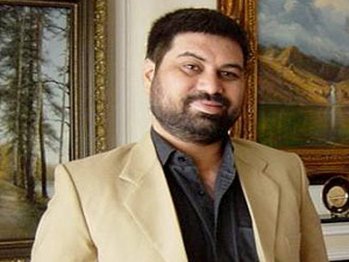
In another possible blow to U.S.-Pakistan relations after the killing of Osama bin Laden, Obama administration officials believe that the country’s intelligence service ordered the “barbaric and unacceptable” killing of a journalist who had written about ties between the country’s military and Al Qaeda militants, according to a report Tuesday.

Intelligence surrounding the late May killing of Pakistani reporter Saleem Shahzad, 40, suggests that senior officials at Pakistan’s Directorate for Inter-Services Intelligence ordered the murder to silence his criticism, The New York Times reported Tuesday, citing two senior US administration officials.

American officials consider the intelligence to be “reliable and conclusive,” the Times said, with one official describing the actions of the spy agency, known as the ISI, as “barbaric and unacceptable.” Shahzad suffered 17 lacerated wounds, a ruptured liver and two broken ribs in the deadly attack.

Relations between the United States and Pakistan have become increasingly frayed since the early May killing of bin Laden in a Pakistani town with a heavy military presence, where he’d been holed up for several years. U.S. officials suspect that some members of the military and the ISI helped harbor him there, even if top Pakistani officials truly were kept in the dark about bin Laden’s presence there.

The Times’s report comes after journalists and others within Pakistan accused the ISI of being behind Shahzad’s death, and since the Pakistani government – under pressure — launched an investigation of the killing.

A Pakistani official, meanwhile, shot down the Times’s report.

“There is an international conspiracy to malign the law enforcement agencies and security forces,” Pakistani information minister Firdous Ashiq Awan said Tuesday, the Hindustan Times reported.

The allegations made by the Obama administration “are part of that conspiracy,” she said.

Awan also said that “good relations are in the interest of both” the United States and Pakistan, though “everybody safeguards their own interests” in a conflict and there have been some “ups and downs.”

Pakistan Kicks U.S. Off Air Base

By Farhan Bokhari for CBS News

The U.S. faces the challenge of quickly establishing alternative facilities from which to launch drone aircraft inside Afghanistan after Pakistan ordered U.S. personnel and hardware out of a base believed to have been used in the past for CIA drones, two senior Western defense officials tell CBS News.

Concern mounted Wednesday over the future of Pakistan’s clandestine support for Washington’s use of drones after the country’s defense minister announced Pakistan had told the U.S. to vacate the small Shamsi air base in the southwestern Baluchistan province.

Only “Pakistani aircraft will be flown from Shamsi in future,” Pakistani defense minister Chaudhary Ahmed Mukhtar told reporters. “No U.S. aircraft will fly from Shamsi.”

“U.S. personnel will not be allowed to use the Shamsi air base,” a senior Pakistani government official added to CBS News.

Another senior Pakistani official, who spoke Thursday to CBS News on condition of anonymity, said there previously “have been U.S. activities at the Shamsi air base. All those activities are being ceased now.”

The news comes as the Obama administration details its new strategy for combating extremism across the globe — a strategy which shifts the focus sharply away from the large-scale ground operations espoused by President George W. Bush, to smaller “surgical” strikes, like drone attacks.

The official refused to specify the types of U.S. activities that have now been ceased at Shamsi.

Pakistan has always publicly criticized the U.S. for carrying out attacks using pilotless drones, and has never acknowledged that it cooperates with Washington on the use of such aircraft. The drones have become widely unpopular across Pakistan after some of the attacks reportedly resulted in civilian casualties, including women and children.

“The damage to the U.S. drone program will not be substantial. But Pakistan’s decision is a setback for efforts to improve U.S. relations with Pakistan,” a senior Western defense official based in Islamabad told CBS, also speaking on the condition of anonymity. “It will take some time for the Americans to establish the program in Afghanistan. It can be done.”

Relations between the U.S. and Pakistan have remained frosty since U.S. Navy SEALs killed Osama bin Laden in the country’s northern city of Abbottabad.

That attack was undertaken without the U.S. offering advanced information to Pakistan, out of fear that militant sympathizers in Pakistan’s intelligence and security establishment might have alerted al Qaeda or the Taliban.

The 2nd May operation has been followed by a hardening of attitude by Pakistan’s influential military, which claims the attack violated Pakistan’s sovereignty. In reaction to the raid, Pakistan has already ordered more than 150 U.S. military trainers to leave the country.

Cost Of Wars In Iraq, Afghanistan, Pakistan To Reach $3.7 Trillion: Report

By Elise Foley for The Huffington Post

Costs of War: 225,000 Lives and up to US$4 Trillion from Watson Institute on Vimeo.

WASHINGTON — The United States will have spent a total of $3.7 trillion on wars in Iraq, Afghanistan and Pakistan, costing 225,000 lives and creating 7.8 million refugees, by the time the conflicts end, according to a report released on Wednesday by Brown University.

The report, written by more than 20 economists, political scientists, lawyers, anthropologists and humanitarian personnel for Brown’s Watson Institute for International Studies, gives staggering estimates for the cost of military action in those three countries. Nearly ten years since U.S. troops first entered Afghanistan, the report estimates the final cost of all three conflicts will be between $3.7 trillion and $4.4 trillion — far higher than the $1 trillion price tag referenced by President Barack Obama earlier this year. The report estimates the U.S. government has already spent between $2.3 trillion to $2.7 trillion and will spend at least a trillion more over the next fifty years.

In a video op-ed exclusive to HuffPost, some of the report’s authors explained the high costs — both past and future — of the wars.

Long-term obligations to war veterans will cause the price tag of the conflicts to climb for decades after troops have returned home. The report puts the cost of health care for veterans at between $600 to $950 billion, not peaking until the 2050s.

“Wars, in a sense, are never over when they’re over,” Catherine Lutz, a Brown University anthropologist, said in the video op-ed. “They go on for decades, and the peak costs for this war will be incurred forty years from now.”

Because the wars have had no true front-lines, there have been a huge number of injuries, primarily to young people serving in the military. There has been a particularly large amount of casualties in Pakistan, the report says.

“The costs have been borne unevenly,” Lutz said. “The military families, contractor families, the people of Iraq and Afghanistan and Pakistan, have borne a tremendous cost.”

Even just paying the interest on the United States’ war debt will be a large endeavor, according to the report, at a time when the country is set to exceed its current debt limit of $14.29 trillion. The government has already paid about $185 billion in interest on war spending, and could accrue another $1 trillion — an amount not included in the $3.7 trillion estimate — in interest by 2020, according to the report.

“We have borrowed virtually all of the money that has been used to pay for the Iraq and Afghanistan conflicts, and that has been very expensive, adding at least $1.5 trillion to our national debt,” Linda Bilmes, an economist with Harvard University, said in the video op-ed.

Now the country is at a decision point, aligned with the current showdown over a deal to raise the debt ceiling by August.

“There is immense and urgent requirement to learn from the experience of the past decade and to try to ensure we don’t make the same mistakes all over again,” Andrew Bacevich, a Boston University military historian and veteran, said in the video.

Nominee Questions Pakistan’s Battle Plan

By Julian E Barnes for The Wall Street Journal

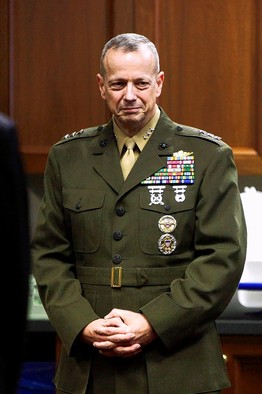
WASHINGTON—The Marine general chosen by President Barack Obama to lead the Afghanistan war raised doubts about Pakistan’s willingness to go after militants who cross the Afghan border to attack U.S. and allied troops.

In a confirmation hearing before the Senate Armed Services Committee, Lt. Gen. John Allen also said he believed that the Afghan insurgency’s momentum has been halted and even reversed in key parts of the country, and backed Mr. Obama’s troop drawdown plans.

But Pakistan, as a haven for militants, looms large over the war in Afghanistan. Gen. Allen said Pakistan continues to “hedge” against a precipitous U.S. withdrawal from Afghanistan by supporting anti-American militant groups, including the Haqqani network.

The statements were a rare public show of military skepticism about Pakistan’s intentions, reflecting the military’s increasing view that relations with Pakistan are deteriorating.

Gen. Allen, deputy commander of the U.S. Central Command, argued that it would be ultimately in Islamabad’s interest to expel militant groups from their sanctuaries in Pakistan.

“We will encourage and will continue to encourage our Pakistani friends to bring pressure to bear upon those safe havens,” he said. “It’s not just good for the outcome of our strategy and for the president’s vision on the outcome in Afghanistan; it’s good for Pakistan as well.”

Appearing alongside Gen. Allen, Adm. William McRaven, nominated to lead Special Operations Command, also said Pakistan is unlikely to move against the frontier militant havens anytime soon.

The admiral oversaw the Navy SEAL team that last month killed Osama bin Laden at his hideout in a Pakistani garrison town.

The officers’ testimony shined a light on the fragile state of U.S.-Pakistan relations, which have grown combative in the wake of the bin Laden raid.

Military leaders have made plain they are displeased with the declining cooperation by Pakistan, but insist the U.S. can’t walk away from the relationship.

“We’re giving them $4 billion,” said Sen. Scott Brown (R., Mass.). “And yet sometimes we don’t know if they’re in or they’re out, are they with us or [are] they not?”

After Adm. McRaven said Taliban leader Mullah Mohammad Omar is likely hiding in Pakistan, Sen. Lindsey Graham (R., S.C.) demanded Pakistan hand him over.

Pakistani officials have said limited military capacity—not lack of will—is inhibiting their operations against militant groups.

Gen. Allen said he backs President Obama’s decision to pull 10,000 troops out of Afghanistan this year, and the remaining 23,000 surge troops by the end of next summer. After the drawdown, the U.S. would still have 68,000 troops in the country, he said.

But he acknowledged that the military didn’t recommend a drawdown schedule as aggressive as the one Mr. Obama chose.

Under questioning from Sen. Joe Lieberman (I., Conn.), a critic of the Obama administration’s drawdown plan, Gen. Allen suggested that if conditions deteriorate he would advise Mr. Obama to alter the plan.

“It is my responsibility to the chain of command and to our commander-in-chief to ensure—should I be concerned about the progress or the execution of the campaign—that I so advise the chain of command,” he said.

Neither the Afghan Taliban nor the Haqqani network has directly targeted the Pakistani government. And Islamabad remains wary of a hasty U.S. withdrawal and sees the militant networks as potential future allies in Afghanistan.

Gen. Allen said even as troops leave Afghanistan, the military would continue to implement its current counterinsurgency strategy, which is aimed at protecting civilians from the insurgents while helping the government extend its reach and legitimacy.

Sen. Graham asked if Gen. Allen would have enough forces to continue that strategy, which requires large numbers of troops to secure population centers.

“How can we maintain counterinsurgency if all the surge forces have gone?” Sen. Graham asked.